Aparna Vats shares a narrative around female infanticide centring her story around a BBC interview and an interview with the journalist who unfolded the narrtive. Click here to read.
Dolly Narang recounts how she started a gallery more than four decades ago and talks of her encounter with world renowned artist, MF Husain. Click hereto read.
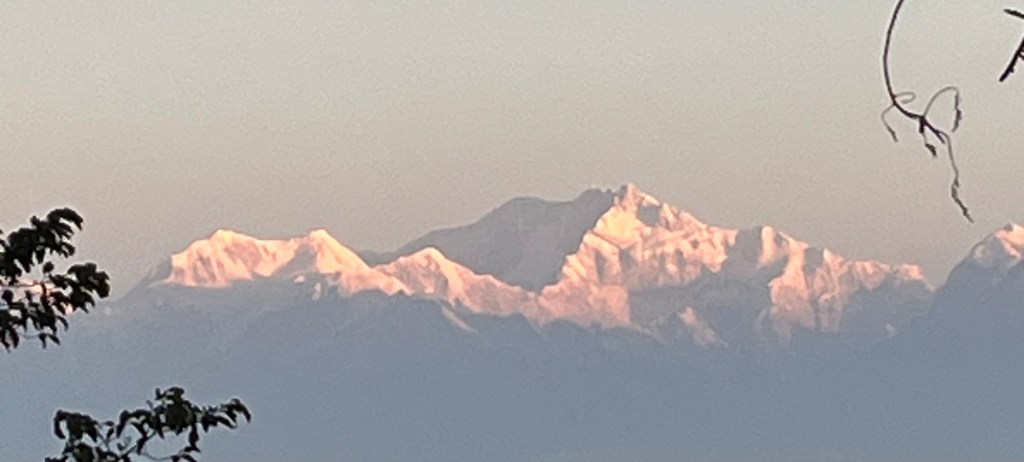
Ghoom, Darjeeling, is almost 2.5 km above sea level. Standing in the rarified air of Ghoom, you can watch the Kanchenjunga turn gold as it gets drenched in the rays of the rising sun. The phenomenon lasts for a short duration. The white pristine peak again returns to its original colour blending and disappearing among the white cirrus clouds that flit in the sky. Over time, it’s shrouded by mists that hang over this region. The event is transitory and repeats itself on every clear morning like life that flits in and out of existence over and over again…
Witnessing this phenomenon feels like a privilege of a lifetime as is meeting people who shine brightly and unusually, like the Kanchenjunga, to disappear into mists all too early. One such person was the founder of pandies’ 1 who coordinated the pandies’ corner for Borderless Journal, the late Sanjay Kumar (1961-2025). The idea of starting this column was to bring out the unheard voices of those who had risen above victimhood to find new lives through the work done by pandies’. In his book, Performing, Teaching and Writing Theatre: Exploring Play, published by Cambridge Scholars Publishing, he described his scope of work which in itself was stunning. His work ranged from teaching to using theatre and play to heal railway platform kids, youngsters in Kashmir, the Nithari survivors and more — all youngsters who transcended the scars seared on them by violations and violence. We hope to continue the column in coordination with pandies’.
Another very renowned person whose art encompassed a large number of social concerns and is now lost to time was the artist, MF Husain (1915-2011). This issue of Borderless is privileged to carry an artwork by him that has till now not been open to the public for viewing. It was a gift from him to the gallerist, Dolly Narang, on her birthday. She has written nostlgically of her encounters with the maestro who walked bare-feet and loved rusticity. She has generously shared a photograph of the sketch (1990) signed ‘McBull’ — a humorous play on his first name, Maqbool, by the artist.
Drenched with nostalgia is also Professor Fakrul Alam’s essay, dwelling on more serious issues while describing with a lightness his own childhood experiences. Many of the nonfiction in this issue have a sense of nostalgia. Mohul Bhowmick recalls his travels to Bhutan. And Prithvijeet Sinha introduces as to a grand monument of Lucknow, Bara Imambara. Lokenath Roy takes us for a stroll to Juhu, dwelling on the less affluent side. Suzanne Kamata describes her source of inspiration for a few stories in her new book, River of Dolls and Other Stories. A darker hue is brought in by Aparna Vats as she discusses female infanticide. But a light sprays across the pages as Devraj Singh Kalsi describes how his feisty grandmother tackled armed robbers in her home. And an ironic tone rings out in the rather whimsical musing by Farouk Gulsara on New Year days and calendars.
Everyone was at each other's throats, insistent that the world was ending. But I felt differently, as though I were just beginning, or just beginning again…
Poets, like visionaries across time and cultures, often see hope where others see despair. And humour always has that hum of hope. In a lighter tone, Rhys Hughes makes one laugh or just wonder as he writes:
I once knew a waiter who jumped in alarm when I somersaulted across his restaurant floor after entering the front door on my way to my favourite table: he wasn’t able to control his nerves and the meal he was bearing ended up on the ceiling with people staring as it started to drip down.
Translations feature poetry. Lyrics of Nazrul (1899-1976) and Tagore (1861-1941) appear together in Professor Alam’s translations of their love songs from Bengali. He has also transcreated a Bengali poem by Jibananada Das (1899-1854). Profoundly philosophical lines by Atta Shad (1939-1997) in Balochi has been rendered to English by Fazal Baloch for his birth anniversary this month. Ihlwah Choi has translated his poem from Korean, taking up the poignant theme of transience of life. A Tagore poem called ‘Kheya (Ferry)’, inspired by his rustic and beautiful surroundings, has been brought to us in English.
Huge thanks to all our contributors, the Borderless team for all these fabulous pieces. Thanks to Gulsara, Kamata, Bhowmick and Sinha for the fabulous photography by them to accompany their writings. Heartfelt gratitude to Sohana Manzoor for her cover art and to Dutta for her artwork accompanying her poem. Without all your efforts, this issue would have been incomplete. And now, dear readers, thank you for being with us through this journey. I turn the issue over to all of you… there is more as usual than mentioned here. Do pause by our contents page.
pandies’ was started in 1987. It’s spelled with a small ‘p’ and the name was picked by the original team. Read more about pandies’ by clicking here. ↩︎
It's strange; about work-- You work for a number of years. Your employers are impressed by your substantial experience. 'You're just what we're looking for. An asset to the company. Welcome on board!'
So you work a few more years and all that experience just keeps accumulating… Till one day they call you in, say how sorry they are to let you go; how, now, despite all your years of experience, you're just too old for the job!
VICTIM
They found him dead upon the ground outside the tube at Camden Town. At first they thought he was dead drunk, another victim that succumbed -- not dead drunk, though, but only dead (drank a lot as well, they said). Strangers filed past, on their way home.
He lay there as he'd lived, alone. Some winos around said they knew him; name was Tim, or maybe it was Jim. Seems he'd once had a big job in the city, but he lost it, took to drink; such a pity. The ambulance rolled up in the cutting light, the body was then whisked away into the night. The winos said they were glad to know him. 'Good bloke, that Tim. Or maybe it was Jim'.
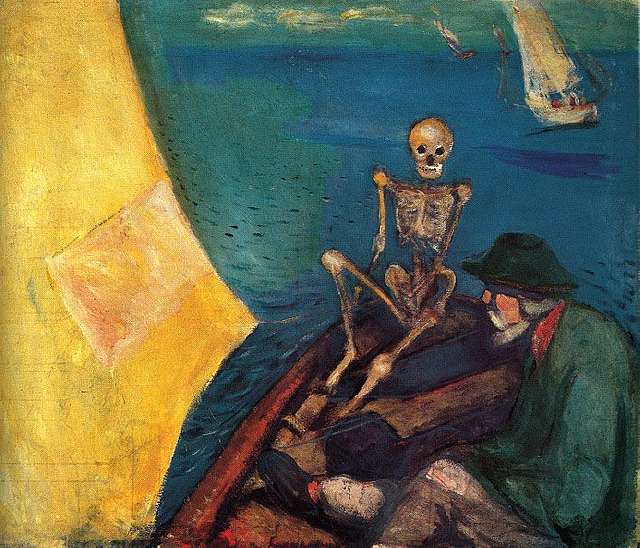
Death at the Helm (1944) by Edvard Munch (1863-1944). From Public Domain
Stuart McFarlane is now semi-retired. He taught English for many years to asylum seekers in London. He has had poems published in a few online journals.
.
PLEASE NOTE: ARTICLES CAN ONLY BE REPRODUCED IN OTHER SITES WITH DUE ACKNOWLEDGEMENT TO BORDERLESS JOURNAL
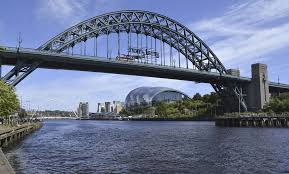
The Tyne is still, the water's calm, a restful, reassuring balm. In Newcastle our train has stopped. From here it seems the perfect spot. Where the iconic bridges span, where, once, a different river ran; well, different water, anyway, flowing on into yesterday. An errant cloud floats in the sky, as if it's only passing by. Nimble fingers unpick its seams; on water sunlight softly gleams. Transporting good to buy and sell; the stories this river could tell! Riverside harbours, wharfs and docks, today replaced by concrete blocks. Where there was muck once there was brass; now buildings of shimmering glass, high-tech hubs, computer centres; the past flees; the future enters. Newcastle, grimy, built on coal; Have you now sold your northern soul? Those hardy people of the past? How long will their memory last?
II
Will the march of modernism harm that fabled humour, Geordie charm? Will your essential being change, or will it just remain the same? We're too busy with our smartphones to dwell on our ancestors' bones. To get on YouTube; that's our goal; we are not used to heaving coal. Those people, they belong to then; yet the people now come from them. Through generations runs a thread; They are by shared history wed. Yet, perhaps, they who once were here, who, too, enjoyed a pint of beer, are still with us; at least in thought, their lives unfinished; dreams still sought. Will our hopes, too, be unfulfilled, our vision struck, our voices stilled? We share with them. husband and wife, the fickle randomness of life. Now the train jolts into motion and dispels my idle notions. One final glance, one final time. The Tyne is still; and still the Tyne.
Stuart McFarlane is now semi-retired. He taught English for many years to asylum seekers in London. He has had poems published in a few online journals.
.
PLEASE NOTE: ARTICLES CAN ONLY BE REPRODUCED IN OTHER SITES WITH DUE ACKNOWLEDGEMENT TO BORDERLESS JOURNAL
Art by Sohana ManzoorCourtesy: Suzanne Kamata Some of our visuals in 2024
As we wait for the new year to unfold, we glance back at the year that just swept past us. Here, gathered together are glimpses of the writings we found on our pages in 2024 that herald a world of compassion and kindness…writings filled with hope and, dare I say, even goodwill…and sometimes filled with the tears of poetic souls who hope for a world in peace and harmony. Disasters caused by humans starting with the January 2024 in Japan, nature and climate change, essays that invite you to recall the past with a hope to learn from it, non-fiction that is just fun or a tribute to ideas, both past and present — it’s all there. Innovative genres started by writers to meet the needs of the times — be it solar punk or weird western — give a sense of movement towards the new. What we do see in these writings is resilience which healed us out of multiple issues and will continue to help us move towards a better future.
A hundred years ago, we did not have the technology to share our views and writings, to connect and make friends with the like-minded across continents. I wonder what surprises hundred years later will hold for us…Maybe, war will have been outlawed by then, as have been malpractices and violences against individuals in the current world. The laws that rule a single man will hopefully apply to larger groups too…
Courtesy: Ratnottama Sengupta Courtesy: Farouk GulsaraSome of our visuals in 2024
Amalkantiby Nirendranath Chakraborty has been translated from Bengali by Debali Mookerjea-Leonard. Click hereto read.
The Mirror by Mubarak Qazi has been translated from Balochi by Fazal Baloch. Click hereto read.
Homecoming, a poem by Ihlwha Choi on his return from Santiniketan, has been translated from Korean by the poet himself. Click here to read.
Pochishe Boisakh(25th of Baisakh) by Tagore (1922), has been translated from Bengali by Mitali Chakravarty. Click here to read.
Nazrul’sGhumaite Dao Shranto Robi Re(Let Robi Sleep in Peace) has been translated from Bengali by Professor Fakrul Alam. Click hereto read.
Jibananada Das’sAndhar Dekhecche, Tobu Ache (I have seen the dark and yet there is another) has been translated from Bengali by Professor Fakrul Alam. Click here to read.
Tagore’sShotabdir Surjo Aji( The Century’s Sun today) has been translated from Bengali by Mitali Chakravarty. Clickhereto read.
A narrative by Rabindranath Tagore thatgives a glimpse of his first experience of snowfall in Brighton and published in the Tagore family journal, Balak (Children), has been translated from Bengali by Somdatta Mandal. Clickhere to read.
Suzanne Kamata discusses the peace initiatives following the terrors of the 1994 Rwandan Genocide while traveling within the country with her university colleague and students. Click here to read.
A story by Sharaf Shad, has been translated from Balochi by Fazal Baloch. Click here to read.
Conversations
Ratnottama Sengupta talks to Ruchira Gupta, activist for global fight against human trafficking, about her work and introduces her novel, I Kick and I Fly. Click here to read.
A conversation with eminent Singaporean poet and academic, Kirpal Singh, about how his family migrated to Malaya and subsequently Singapore more than 120 years ago. Click hereto read.
Jibananada Das’sAndhar Dekhecche, Tobu Ache (I have seen the dark and yet there is another) has been translated from Bengali by Professor Fakrul Alam. Click here to read.
Manish Ghatak’sAagun taader Praan (Fire is their Life) has been translated from Bengali by Indrayudh Sinha. Click hereto read.
Manzur Bismil’s poem,Stories, has been translated from Balochi by Fazal Baloch. Click here to read.
Homecoming, a poem by Ihlwha Choi on his return from Santiniketan, has been translated from Korean by the poet himself. Click here to read.
Tagore’sShotabdir Surjo Aji( The Century’s Sun today) has been translated from Bengali by Mitali Chakravarty. Clickhereto read.
Paul Mirabile wraps his telling like a psychological thriller. Clickhere to read.
Conversations
Ratnottama Sengupta converses with Divya Dutta, an award-winning actress, who has authored two books recently, Stars in my SkyandMe and Ma. Clickhere to read.
Painting by Claud Monet (1840-1926). From Public Domain
Acknowledging our past achievements sends a message of hope and responsibility, encouraging us to make even greater efforts in the future. Given our twentieth-century accomplishments, if people continue to suffer from famine, plague and war, we cannot blame it on nature or on God.
–Homo Deus (2015),Yuval Noah Harari
Another year drumrolls its way to a war-torn end. Yes, we have found a way to deal with Covid by the looks of it, but famine, hunger… have these drawn to a close? In another world, in 2019, Abhijit Banerjee had won a Nobel Prize for “a new approach to obtaining reliable answers about the best ways to fight global poverty”. Even before that in 2015, Yuval Noah Harari had discussed a world beyond conflicts where Homo Sapien would evolve to become Homo Deus, that is man would evolve to deus or god. As Harari contends at the start of Homo Deus, some of the world at least hoped to move towards immortality and eternal happiness. But, given the current events, is that even a remote possibility for the common man?
Harari points out in the sentence quoted above, acknowledging our past achievements gives hope… a hope born of the long journey humankind has made from caves to skyscrapers. If wars destroy those skyscrapers, what happens then? Our December issue highlights not only the world as we knew it but also the world as we know it.
In our essay section, Farouk Gulsara contextualises and discusses William Dalrymple’s latest book, The Golden Road with a focus on past glories while Professor Fakrul Alam dwells on a road in Dhaka , a road rife with history of the past and of toppling the hegemony and pointless atrocities against citizens. Yet, common people continue to weep for the citizens who have lost their homes, happiness and lives in Gaza and Ukraine, innocent victims of political machinations leading to war.
Just as politics divides and destroys, arts build bridges across the world. Ratnottama Sengupta has written of how artists over time have tried their hands at different mediums to bring to us vignettes of common people’s lives, like legendary artist M F Husain went on to make films, with his first black and white film screened in Berlin Film Festival in 1967 winning the coveted Golden Bear, he captured vignettes of Rajasthan and the local people through images and music. And there are many more instances like his…
It's always the common people who pay first. They don’t write the speeches or sign the orders. But when the dust rises, they’re the ones buried under...
Echoing the theme of the state of the common people is a powerful poem by Manish Ghatak translated from Bengali by Indrayudh Sinha, a poem that echoes how some flirt with danger on a daily basis for ‘Fire is their life’. Professor Alam has brought to us a Bengali poem by Jibanananda Das that reflects the issues we are all facing in today’s world, a poem that remains relevant even in the next century, Andhar Dekhecche, Tobu Ache (I have seen the dark and yet there is another). Fazal Baloch has translated contemporary poet Manzur Bismil’s poem from Balochi on the suffering caused by decisions made by those in power. Ihlwha Choi on the other hand has shared his own lines in English from his Korean poem about his journey back from Santiniketan, in which he claims to pack “all my lingering regrets carefully into my backpack”. And yet from the founder of Santiniketan, we have a translated poem that is not only relevant but also disturbing in its description of the current reality: “…Conflicts are born of self-interest./ Wars are fought to satiate greed…”. Tagore’s Shotabdir Surjo (The Century’s Sun, 1901) recounts the horrors of history…The poem brings to mind Edvard Munch’s disturbing painting of “The Scream” (1893). Does what was true more than hundred years ago, still hold?
Reflecting on eternal human foibles, Naramsetti Umamaheswararao creates a contemporary fable in fiction while Snigdha Agrawal reflects on attitudes towards aging. Paul Mirabile weaves an interesting story around guilt and crime. Sengupta takes us back to her theme of artistes moving away from the genre, when she interviews award winning actress, Divya Dutta, for not her acting but her literary endeavours — two memoirs — Me and Ma and Stars in the Sky. The other interviewee Lara Gelya from Ukraine, also discusses her memoir, Camels from Kyzylkum, a book that traces her journey from the desert of Kyzylkum to USA through various countries. In our book excerpts, we have one that resonates with immigrant lores as writer VS Naipual’s sister, Savi Naipaul Akal, discusses how their family emigrated to Trinidad in The Naipauls of Nepaul Street. The other excerpt from Thomas Bell’s Human Nature: A Walking History of the Himalayan Landscape seeks “to understand the relationship between communities and their environment.” He moves through the landscapes of Nepal to connect readers to people in Himalayan villages.
The reviews in this issue travel through cultures and time with Somdatta Mandal’s discussion of Kusum Khemani’s Lavanyadevi, translated from Hindi by Banibrata Mahanta. Aditi Yadav travels to Japan with Nanako Hanada’s The Bookshop Woman, translated from Japanese by Cat Anderson. Jagari Mukherjee writes on the poems of Kiriti Sengupta in Onenessand Bhaskar Parichha reviews a book steeped in history and the life of a brave and daring woman, a memoir by Noor Jahan Bose, Daughter of The Agunmukha: A Bangla Life, translated from Bengali by Rebecca Whittington.
We have more content than mentioned here. Please do pause by our content’s page to savour our December Issue. We are eternally grateful to you, dear readers, for making our journey worthwhile.
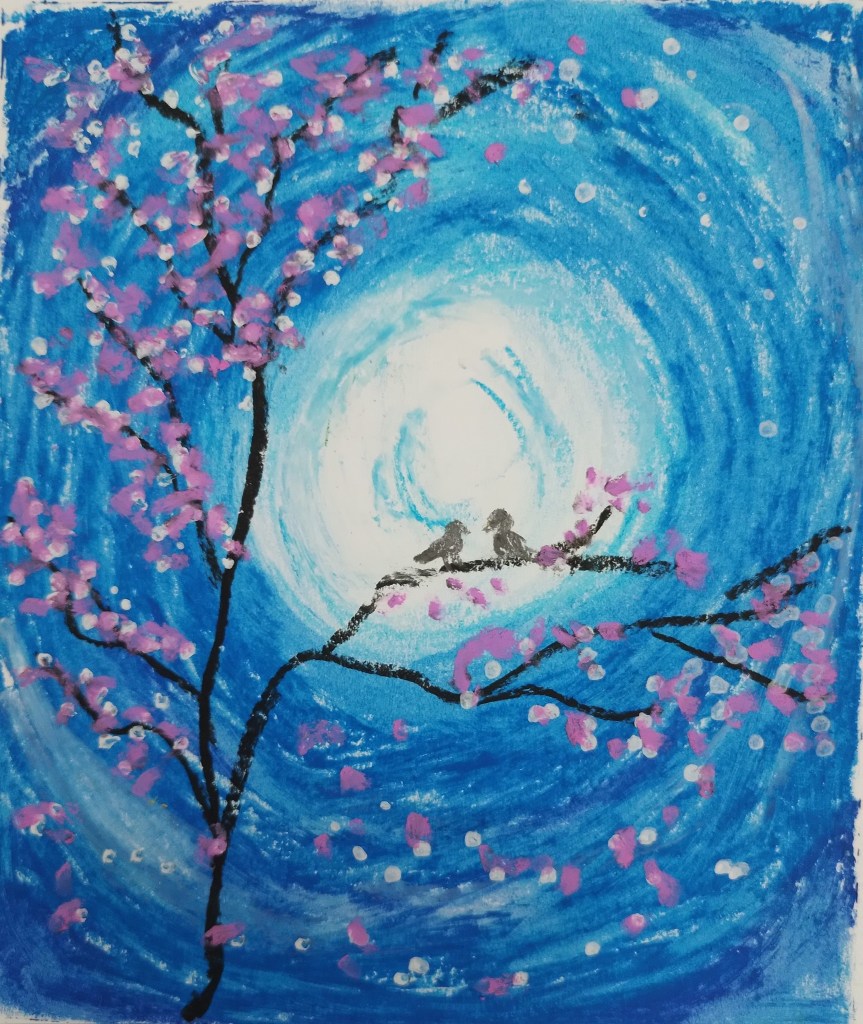
Huge thanks to all our contributors for making this issue come alive with their vibrant work. Huge thanks to the team at Borderless for their unflinching support and to Sohana Manzoor for sharing her iconic paintings that give our journal a distinctive flavour.
With the hope of healing with love and compassion, let us dream of a world in peace.
A million stars are out tonight, a million more burn out of sight. Our world is bathed in radiant light; and we are all witness to its might.
What, then, is Time? Who of us can say? No-one knows, at the end of the day. One by one we will surely decay; our lives, like seconds, just tick away.
A thousand years, they will come and go, yet, still, none of us shall ever know why some seeds perish, while others grow; we can only accept it is so.
Who can tell what days may become, cold as the moon or hot as the sun? What you do now, it soon will be done; moments, like sparks, flash bright - then are gone.
IF I HAD A HORSE
If I had a horse I'd set out at dawn, when sunlight sifts the morning grey, and by the time the sky was bright, the light was sure, I'd be galloping hard and free. And there, the mountains. Beyond, the sea! Somewhere, out of view, a distant feel of blue. For a thousand miles or more we'd thunder over the land, embrace our green tomorrows, leave yesterday behind. And, always, the sun would shine, a bright shower in the morning; in evening a golden gleam. And, deep in the night, I'd taste the sweet taste of the earth and feel the tang of cold air. In starlight I would know what it means just to breathe; beneath a silver halo I'd know just what it means to be free. If I had a horse.
Stuart McFarlane is now semi-retired. He taught English for many years to asylum seekers in London. He has had poems published in a few online journals.
.
PLEASE NOTE: ARTICLES CAN ONLY BE REPRODUCED IN OTHER SITES WITH DUE ACKNOWLEDGEMENT TO BORDERLESS JOURNAL
Nazrul’s Tumi Shundor Tai Cheye Thaki(Because you are so beautiful, I keep looking at you) has been translated from Bengali by Professor Fakrul Alam. Click here to read.
Hotel Acapulco, has been composed and translated from Italian by Ivan Pozzoni. Click hereto read.
Farouk Gulsara pays a tribute to a doctor and a friend. Click hereto read.
Musings of a Copywriter
InBecoming a ‘Plain’ Writer, Devraj Singh Kalsi explores the world of writer’s retreats on hills with a touch of irony. Clickhere to read.
Notes from Japan
In Educating for Peace in Rwanda, Suzanne Kamata discusses the peace initiatives following the terrors of the 1994 Rwandan Genocide while traveling within the country with her university colleague and students. Click here to read.
Bijoy K Mishra writes of cyclones in Odisha, while discussing Bhaskar Parichha’s Cyclones in Odisha – Landfall, Wreckage and Resilience. Clickhereto read.





 Borderless