Categories
Review

Ebrahim Alkazi: Holding Time Captive

Book Review by Satya Narayan Mishra

Title: Ebrahim Alkazi: Holding Time Captive

Author: Amal Allana

Publisher: Vintage Books, Penguin

During an extensive interview, Pankaj Kapur, the highly acclaimed actor, director and writer, nostalgically remembered his days in NSD[1] as a student in the 70s and of Ebrahim Alkazi who was the guiding light of the school as the Director from 1962-77. Mandi House was the vibrant cultural hub where the quartet of NSD, Triveni Kala Sangam, Sriram Art Centre and Kamani Auditorium breathed cadences of art, music, dance and theatre. As the presiding deity of NSD, Alkazi’s prodigious talent in all aspects of theatre except costume (where his wife was the moving spirit) brought his dynamic genius into the quest for intercultural and interdisciplinary thinking in artistic expressions that was both transformative and liberative for his myriad students like Sai Paranjpye, Nasir, Om Puri, Surekha Sikri, Uttara Baokar and Pankaj Kapur[2], who later on lit the stage and celluloid  though their exceptional talents and skill. He would have been a hundred this month. Amal Allana, his daughter has authored a biography of her father, Ebrahim Alkazi: Holding Time Captive. The book  makes an absorbing read.

She brings out Alkazi’s early encounters and reception by the Hindi Theatrewallas of Delhi in the early 60s. It is the story of a western educated Bombayite who was presumptuous enough to think he could teach Delhi theatre buffs a thing or two. As a second-year student, Sai Paranjpye recalls Ebrahim as a storm under whom a metamorphosis took place in the NSD overnight. Walking in to the den of Hindiwallah writers’ camp, Alkazi caught them unawares by picking up the works of the most cerebral and experimental of the Hindi new wave movement; Mohan Rakesh’s Aashadh Ka Ek Din[3]and Dharmavir Bharat’s Andha Yug[4]Aashadh ka Ek Din, a play with a rural background, was the story of the Indian villager, whose lifestyle, pace and values were succumbing to the inevitable onslaught of urbanisation. The basic theme was autobiographical to Mohan Rakesh himself, where he identified himself with a classical playwright like Kalidas. This mix of history and the present entwined in to a single entity, was a modernist strategy that Alkazi too had attempted while contemporising myths. He exquisitely crafted the mise en scene[5]that sparkled with delicate, nuanced performances from young student actors such as Sudha Sharma as Mallika and Om Shiv Puri as Kalidas.

 India had lost a war with China in 1962.  Alkazi had chosen Andha Yug, set during the last days of the Kurukshetra war, when Aswasthama stood in rage, prepared to use the ultimate weapon to annihilate the mankind. It was just not the play’s topicality, its anti-war thrust that drew Alkazi to it. Alkazi tried to shrug off the baggage of European modernism he was carrying, embarking now on a foundational journey towards a deeper ‘discovery of India.’ Through Andha Yug, Alkazi came closer to learning about India’s value system and philosophy as explored in the Mahabharata, while Aashad gave him an appreciation of the artistic sensibility of the great Sankrit poet-dramatist Kalidas, India’s veritable Shakespeare. From now on, he would engage with the idea of India between the two polarities: India as a myth and India as a kind of documented reality. Alkazi was introducing the idea that theatre was a performance art, not literature performed on stage. He was creating a language of performance that was distinct from the language of words.

The making of Tughlaq and its staging in Purana Qila is a watershed event in the theatre landscape of Delhi. Alkazi was greatly drawn to Girish Karnad’s play Tughlaq. Karnad had confided in him how Tughlaq was the most idealistic, the most intelligent king ever to come on the throne of Delhi and one of the greatest failures also. And how in the early sixties India had also come very far in the same direction. Alkazi felt that this play effectively reflected the trials and opposition a visionary leader faced, while trying to function within a corrupt political scenario. The cast of Tughlaq had some of the most brilliant actors, each painstakingly trained by Alkazi himself. There was Manohar Singh who was playing Tughlaq, Surekha Sikri and Uttara Baokar were doubled as Sauteli Ma, Nasiruddin Shah as the Machiavellian Aziz, Rajesh Vivek as Najeeb. The young reporter members included Pankaj Kapur, KK Raina, Raghuvir Yadav, a veritable who is who of latter-day cinema. Tughlaq was staged in 1972 at the Purana Qila (Old Fort) in Delhi, utilising the historical ruins as a backdrop for the dramatic spectacle. This production is considered a landmark event in Indian theatre, combining history, politics and performance to create a commentary on the reign of Tuqhlaq[6] and politics of the 60s.

Nehru’s dream of reconstructing the nation needed a powerful and unitary concept of ‘nationalism’ to recognise all productive forces in the country. Culture was very much a part of the reconstructive process that needed to be systematised and brought under one umbrella and for this purpose, three national academies had been set up: the Sangeet Natak Academy, the Lalit Kala Academy and the Sahitya Akademi. The desire to modernise Indian theatre was part of the same reconstructive cultural policy. And Alkazi was the mascot of the theatre movement and Mandi House, the epicentre of cultural conflation and crescendo.

The Purana Qila festival in 1972, with Tughlaq, Sultan Razia and Andha Yug became the most talked about cultural event of the decade He wanted to offer both the hoi polloi and the cognoscenti, including burqa clad women, high quality theatre that did not conform to ‘popular taste’; theatre that had a social relevance, that both instructed and entertained. This was Alkazi’s ideal of what constituted national theatre.

There have many stars in firmament of Indian theatre. Ebrahim revitalised Indian theatre. Habib Tanvir, blended folk traditions with modern drama. Badal Sirkar revolutionised Bengali theatre by challenging conventional norms. They are like the great troika of Indian Cinema, Satyajit Ray, Ritwick Ghatak and Mrinal Sen.

Alkazi left NSD as it was denied autonomy by scheming bureaucrats. Allana brings out how Alkazi passionately believed that an artist belongs to no political party, and has no religious ideology. An artist has to distance himself from each one of these in order to see each one of these objectively. “And finally, he has to distance himself from himself.” He wrote: “ It is our duty and moral responsibility to study history dispassionately, but with a passion for the truth, with humility and with a profound sense of responsibility and to ask ourselves seriously: What is the legacy that we shall leave behind?

[1] National School of Drama

[2] Well known Indian actors

[3] A Day in Aashadh (June-July) was a Hindi play that debuted in 1958

[4] Blind Age was a verse-play in Hindi written in 1953

[5] Placed on stage

[6] A 1964 Kannada play by Girish Kannad, translated to Urdu in 1966 in NSD and most famously performed for in Purana Qila, New Delhi, in 1972

Satya Narayan Misra is a Professor Emeritus and author of seven books. The latest, Against the Binary, was published in December 2024. He is a regular columnist and reviewer of books for several leading newspapers in Odisha and digital platforms likeScroll.in and The Wire. He was associated with the NSD in the 70s.

.

PLEASE NOTE: ARTICLES CAN ONLY BE REPRODUCED IN OTHER SITES WITH DUE ACKNOWLEDGEMENT TO BORDERLESS JOURNAL

Click here to access the Borderless anthology, Monalisa No Longer Smiles

Click here to access Monalisa No Longer Smiles on Kindle Amazon International

Categories
Poetry

Rosencranz and Guildenstern

By William Miller

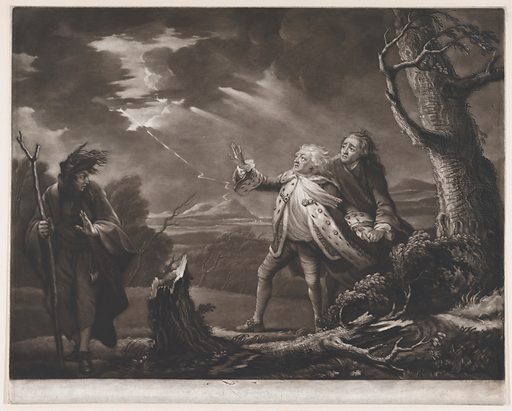
Rosencranz and Guildenstern are characters from Shakespeare’s Hamlet (1599-1601), also revived in 1966 in an absurdist play by Tom Stoppard (Rosencranz and Guildenstern are Dead). From Public Domain.
The world is filled with them.
They file through the streets and into
our courtyards. Well-dressed, respectful,
they ask leading questions, smile politely
and walk away.
Who are they and why do we
suffer them? Hardly princes,
mad or not, we give up our secrets
or lie outright, send them
on their way.
Someone is collecting a file on us,
grist for a data bank, an all-knowing
intelligence in the blue ether.
They can only plot our demise,
total destruction. Their questions
are simple tools in a mad
King’s hands. Something is rotten
in the state of everywhere
and all of us will stand for judgement.
in front of a review board,
our files opened and reviewed
with bureaucratic heartlessness,
a final assessment typed and filed away.
Paranoids, even paranoids,
have real enemies.

William Miller’s ninth collection of poetry, Under Cheaha, is forthcoming from Shanti Arts Press in 2025.  His poems have appeared in many journals, including The Penn Review, Shenandoah, Prairie Schooner and West Branch.  He lives and writes in the French Quarter of New Orleans.

.

PLEASE NOTE: ARTICLES CAN ONLY BE REPRODUCED IN OTHER SITES WITH DUE ACKNOWLEDGEMENT TO BORDERLESS JOURNAL

Click here to access the Borderless anthology, Monalisa No Longer Smiles

Click here to access Monalisa No Longer Smiles on Amazon International

Categories
Bhaskar's Corner

Can Odia Literature Connect Traditional Narratives with Contemporary Ones?

By Bhaskar Parichha

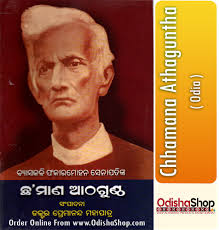
Odia literature is characterised by a profound tradition of classic narratives, with notable examples such as Fakir Mohan Senapati’s timeless Chha Mana Atha Guntha[1].  This literary corpus is further enhanced by an array of mythological and folk narratives that hold significant importance in the cultural legacy of Odisha.

These narratives persist through time because they reflect universal human experiences, encompassing themes such as land, power, family, and morality, all while being intricately linked to the historical context and cultural identity of the region. They serve not only as stories but also as reflections of society, having been shaped and refined over the years.

Readers are consistently attracted to these literary works for reasons similar to those that draw us to the writings of Shakespeare or the epic narrative of the Mahabharata: their themes are enduring, and the insights they provide remain pertinent. Similarly, publishers and curators, even at the national level, often revisit these classic tales, a trend that is entirely justifiable.

However, it is the transition to contemporary matters that strikes a significant chord. Odia literature has been progressing, albeit perhaps not as prominently or visibly as certain other Indian literary landscapes. Modern voices are addressing current issues—urban isolation, the influence of technology, caste relations, and environmental deterioration. The change is evident, yet it remains less pronounced than it has the potential to be.

What accounts for this? There may be multiple reasons.

The literary tradition of Odisha is profoundly embedded in its heritage. Classic literature is not only revered and taught but frequently eclipses modern works. Both publishers and readers exhibit a conservative inclination, preferring established texts. This trend is not unique to Odia literature; for example, Tolstoy remains a central figure in Russian literary discourse. As a result, this inclination obstructs the acknowledgment of new authors.

Modern Odia literature faces considerable challenges in its distribution. In contrast to Bengali or Tamil literature, which benefits from larger urban readerships and established translation networks, Odia books often struggle to reach broader audiences.

While digital platforms are making significant strides in this domain, the overall development is still sluggish. Without a strong market, numerous authors may opt to concentrate on more conventional themes that are viewed as more commercially viable.

The demographic composition of Odisha is primarily rural, where numerous readers find a stronger connection with stories that delve into village life or ethical dilemmas, as opposed to genres like cyberpunk or themes focused on existential angst. Although there are urban Odia authors, their readership is frequently limited in range. As a result, contemporary themes may seem alien to those who maintain a deep bond with traditional cultural settings.

The literary language of Odia typically possesses a formal tone, significantly influenced by its classical roots. This can lead to a conflict with modern terminology and global themes, posing challenges for writers who wish to innovate without jeopardising their connection to the audience. In contrast, languages such as Hindi and Malayalam readily incorporate colloquial expressions, which thrive in contemporary literature.

Nonetheless, modern Odia literature is dynamic and progressing. Short story writers are exploring a variety of topics including religion, science fiction, feminism, leftist ideologies, and climate change. Prominent authors such as Sarojini Sahu, Satya Mishra, Rabi Swain, Sadananda Tripathy, Jyoti Nanda, Bhima Prusty, Janaki Ballabh Mohapatra, Ajaya Swain, Biraja Mohapatra, Sujata Mohapatra and young writers like Debabrata Das  are actively investigating these contemporary themes. Publications like Kadambini, Rebati, and Katha are offering platforms for these creative narratives.

Despite this, the main obstacle remains the need to improve visibility. Social media and over-the-top (OTT) platforms have the potential to revolutionise this landscape—just picture an Odia adaptation of Black Mirror[2]!

There is an immediate need for greater investment in Odia storytelling to effectively bridge the gap between traditional and modern narratives.

.

[1] Six acres and a Third, a novel by Fakir Mohan Senapati(1843-1918) published in 1902

[2]Black Mirror is a British dystopian science fiction television anthology series that started in 2011 and is still on the run.

.

Bhaskar Parichha is a journalist and author of Cyclones in Odisha: Landfall, Wreckage and ResilienceUnbiasedNo Strings Attached: Writings on Odisha and Biju Patnaik – A Political Biography. He lives in Bhubaneswar and writes bilingually. Besides writing for newspapers, he also reviews books on various media platforms.

.

PLEASE NOTE: ARTICLES CAN ONLY BE REPRODUCED IN OTHER SITES WITH DUE ACKNOWLEDGEMENT TO BORDERLESS JOURNAL

Click here to access the Borderless anthology, Monalisa No Longer Smiles

Click here to access Monalisa No Longer Smiles on Amazon International

Categories
Essay

The Year of Living Dangerously by Fakrul Alam

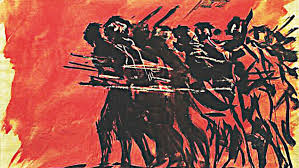
Painting by Zainul Abedin. From Public Domain

1971 began and ended on a note of hope but in the course of the year we went through the whole gamut of human emotions: love for our motherland and hate for its enemies; desire for freedom and abhorrence at those who had curtailed our right to be ourselves; feelings such as anxiety, fear, even terror caused by the knowledge that at any moment we might be abducted and murdered; and excitement and elation at the thought that relief could not be far away. 1971 was the year when for months we lived from day to day, totally insecure in a Dhaka which had become like a city of the dead; it was also the year when we discovered what it meant to hope against hope. 1971, in short, was a cataclysmal year; for every Bengali it was the year of living dangerously.

The year must have begun innocuously enough; at this point in time, I have simply no recollection what I did or how I felt in January and February of that year. But certainly, hope must have been in the air; after Sheikh Sahib’s massive election victory all of us must have been feeling confident and secure in the knowledge that we were finally about to master our destiny. For me—temperamentally apolitical and not yet out of my teens at the beginning of that year—the first sign that something was seriously wrong came one day while we were watching a test match in Dhaka Stadium on the first of March. Suddenly, the game was interrupted and then abandoned as news came about Yahya Khan’s decision to not call a meeting of the Pakistani National Assembly. Pandemonium ruled for a while in the field, but soon everyone left, muttering that this cannot be, indignant that the army chief could not go against the resounding mandate given to the Awami League to change the course of Pakistani history.

And then for a while: hartals[1], demonstrations, slogans, meetings, public displays of discontent, and the will to oppose and resist on one side and display of the carrot as well as the stick on the other. In fact, the month of March showed a whole nation in a state of ferment, ready to go to any length against a brutal but posturing force.

A first climax was Sheikh Saheb’s[2] speech of March 7. Hearing it now, I cannot but think: is it as stirring for people of this generation as it was for ours? Contemplated in retrospective, the speech seems to be the quintessence of the Bengali spirit in 1971: inspired, defiant, pulsating, and resolute. It considers the dangers ahead but is emphatic about the need to put up resistance and counter whatever measures were taken to contain us.

The real climax, of course, came on the night of March 25. That night I was in Sylhet, visiting my sister and her husband, along with my father and two other sisters. In Sylhet that night we could have no idea that Dhaka had become the scene of carnage or that our family, friends, and acquaintances were in the greatest of danger. It was only next morning, waking up to discover that Sylhet town was under curfew, and listening to Indian radio and the BBC, that we began to have an inkling of how devastated Dhaka had become in a night and in how much jeopardy our loved ones were.

Throughout the next week we alternated between a feeling of joy at the knowledge that Bengalis were fighting back and a foreboding that a grievous wound had been inflicted on us. We were elated by Major Zia’s declaration on the radio about independence and the reports of resistance everywhere; we were depressed by the news items transmitted in the air waves about Dhaka as a city that had been flattened by heavy weapons and was still burning. Since, our house was close to Farmgate, we were full of anxiety: had my mother and the sister we had left behind survived the mass slaughter of Dhakaites that was being narrated everywhere except on Radio Pakistan?

After a few days my father decided that he had had enough of waiting and uncertainty; he and I would head for Dhaka and determine for ourselves the fate of my mother and sister. My brother-in-law and three other sisters would remain in what seemed the relative safety of Sylhet. Little did we realise as we left them on a day in early April the hardship and suffering they would go through in the next few months, fleeing from tea garden to tea garden and even to the safety of Tripura[3] to escape the pillaging Pakistani army. Only after we were reunited with them in Dhaka in July did we get to know of their travails as they attempted to evade the marauding forces.

The trip to Dhaka was a tense and an unforgettable one. A few images are etched in my memory vividly: driving through the tea gardens, we saw tea garden workers with bows and arrows, determination wrought on their faces. In Brahmanbaria, we heard gripping stories of the confrontations that had taken place in Comilla and saw the intense preparations being taken in the town itself to resist the Pakistani onslaught. But the most vivid memory of the journey are the scenes of mass exodus we witnessed as we neared Dhaka: men, women, and children on foot or on rickshaws, looking harrowed, wearily fleeing to village homes from the city to escape genocide. Not a few of the people we met told us not to be so foolhardy as to return to Dhaka.

Thankfully, we managed to reach our Indira Road home without facing any unpleasant situations and found that my mother and sister were safe. But there were troop movements all the time and stories of mass arrests of young men during curfew. The elders of my family decided that I would be safer in my uncle’s house in Dhanmondi than in a house in the Farmgate area.

In the few weeks that I stayed in Dhanmondi I managed to get in touch with some of my friends. The news they told me was horrifying: Dr. Jyotirmoy Guhathakurta, my tutorial teacher, and the man who first made me feel that I had the sensitivity to be a student of Shakespeare, and who went beyond his role as a tutor to talk to me about his passion for radical humanism, as well as Mr. Rashidul Hasan, who taught us Blake and was as humble and meek as some of the denizens of The Songs of Innocence and of Experience, had been brutally murdered. More horror stories: one of my school friends, Arun Chowdhury, and his father, could no longer be traced after they had been abducted from Ranada Prasad Saha’s Narayanganj home along with the millionaire philanthropist; one of my uncle’s in-laws, a Rajshahi University professor, had also disappeared after being picked up by the army; other people that we knew had been shot at or humiliated or hurt. A friend who had joined her family in Bogra had witnessed their house being burned and the family had barely managed to escape with their lives. The whole Bengali nation appeared to be bleeding and bruised.

Nevertheless, no one felt defeated and hope still flickered as a candle newly lit and solidly fixed will even in the darkest night. For one thing, there were the daily broadcasts from Swadhin Bangla Betar Kendra[4]containing news about Mujibnagar and organised resistance all over the country. Then there was the knowledge that some friends had crossed the border and were receiving training so that they could be inducted into the Mukti Bahini[5]. Everywhere one could view the resentment against the Pakistani army being concentrated to the point when it would rebound upon them.

Eventually, my parents decided that we would take a house in a part of the city which was relatively free from regular army patrolling and I rejoined them in a Central Road flat. But, really, no part of the city was completely safe. One night, to take just one example, the boys of the neighbouring family climbed the wall separating our two houses because the army had raided the house next door and stayed with us till next morning. I still remember how tense we were that night and nervous and indignant.

Gradually, we learned to sleep better and not hear the stray shots that were fired into the night by who knows whom. Inevitably, we adapted to a life lived mostly indoors, listening to the radio or the tape recorder all day, or reading, or playing cards. But we had to be very careful about everything that we did: the radio had to be toned down, books with insidious sounding titles not read, and visit to and from friends of our age restricted. Fear of army raids constricted us and forced us to make life a diminished thing. Only my father would go out regularly to spend the day in office or shopping; his greying hair gave him a kind of limited freedom that we could not hope to have.

However, consolations for lives lived under such strained circumstances were not impossible to seek even in those days when we would rarely venture into natural light. By June, bombs which were beginning to explode at regular intervals all over the city announced loudly to us that the Bengali capacity to resist, far from being diminished, had transformed itself in spectacular fashion. My father told us one day that he was one of many people who had been donating money for freedom fighters who were now infiltrating into the city in large numbers. In July and August, the Mukti Bahini activity in Dhaka intensified and I even met a few of them. Also, every once in a while, a close friend suddenly disappeared from Dhaka and those of us who still remained in the city still unsure of what we should do talked about his decision to join the freedom struggle and his daring with a mixture of admiration and envy.

Of course, we knew that the life of a freedom fighter was far from a glamorous one, and full of risks. Exactly how hazardous their life could be was driven home to us when in late August a number of them were caught and murdered. Because we knew a few of these valiant fighters personally or by name, for some time, indeed for perhaps the only time that year, we felt depressed and shaken. But another few weeks and many amongst us roused ourselves and felt hopeful again. True, there had been a setback and some of the muktis[6]who had become legendary in a short time because of their exploits had been killed or imprisoned, but September showed that the spirit of resistance was very much alive.

Explosions could once again be heard in and around Dhaka and were signs to us of the vigour and irrepressible nature of our freedom fighters. By October, Swadhin Bangla[7]Radio broadcasts regularly reassured us that there were advances being made on the diplomatic front by our government-in-exile and that on the battlefield our reconstituted Bangladesh army were beginning to engage the Pakistani forces and defeat and demoralise them.

By early November, Nasim Mohsin, my best friend at that time, decided that it was time for him to join the freedom fighters and that the moment for a decisive assault on the Pakistani army was near. I was with him when he contacted some local muktis about crossing over to training camps in Tripura. They told him that the borders were already the site of daily skirmishes and that he should postpone the journey for a while till they could confirm a safe crossing. Desperate to become part of the freedom struggle, Nasim ignored their advice and our pleas to be patient and left us, never to be seen again. Much later, we were to discover that he had been captured by collaborators of the Pakistani army in a village in the Comilla border. They then handed him over to the local Pakistani troops who summarily shot him.

Late November and our excitement grew: the Bangladesh army was no longer content with skirmishes and raids and was now attacking the Pakistanis frontally. By late November war looked inevitable as desperate Pakistani tactics drew India into the campaign. Finally, on the night of December 3, the Dhaka night sky was spectacularly lit by tracer bullets and then invaded by Indian bombers targeting military installations. The next day all of us were on roof-tops watching dog-fights and cheering Indian jets attacking the airport and the cantonment, oblivious to the danger from shrapnel and debris from shattered planes.

Over the next two weeks, our joy grew by the hour, for every Swadhin Bangla Radio broadcast or Indian radio bulletin informed us of Pakistani reverses and detailed advances made by the liberation forces. In our enthusiasm we did not realise that we were going through dangerous times in the capital city as the Pakistani army and its collaborators, their backs against the wall, were becoming more and more vicious. It was only later that we discovered that the brother of a friend who had joined the freedom fighters had been picked up by the Pakistani army during this time and would disappear from our sights forever. And as the liberation forces closed in on Dhaka, rumours spread of youths and prominent people being abducted. Undoubtedly, the scariest memory I have from this period is of a Pakistani plane droning one night, which we knew had dropped bombs on an orphanage the previous night in a bid to discredit the Indian Air Force. It was a moment when we felt totally vulnerable and at the mercy of forces whose reason had become warped to the extent that they could indulge in mass destruction of innocents merely to smear India in the eyes of the world.

Nothing the vicious Pakistani military/propaganda machine could do, however, could thwart the logic of history and prevent liberation, and by December 15 we were hearing the booming of artillery in and around Dhaka. On December 16, we headed for the Ramna Race Course area because we heard that a surrender ceremony was scheduled there in the afternoon.

But we could only go as far as the Hotel InterContinental, where we got caught in a cross-fire. A friend who was with me got slightly hurt as a splinter from a bullet pierced his leg. We took him to his house and then scattered, telling ourselves that we had not survived nine months of occupation only to get killed at the moment of liberation. But by evening we were out in the streets celebrating with muktis, among whom I could see at least one close friend, firing his Sten gun into the air. The year of living dangerously was ending, and the time for unmitigated hope had finally come to stay with us, at least for a while!

(Published on March 31, 2019, The Daily Observer)

[1] Strikes

[2] Sheikh Mujibur Rahman (1920-1975)

[3] A northeastern state of India

[4] Independent Bengali Wireless Centre

[5] The freedom vehicle: The army that fought to free Bangladesh as an independent entity

[6] Freedom fighters

[7] Free Bengal

Fakrul Alam is an academic, translator and writer from Bangladesh. He has translated works of Jibonananda Das and Rabindranath Tagore into English and is the recipient of Bangla Academy Literary Award (2012) for translation and SAARC Literary Award (2012).

PLEASE NOTE: ARTICLES CAN ONLY BE REPRODUCED IN OTHER SITES WITH DUE ACKNOWLEDGEMENT TO BORDERLESS JOURNAL

Click here to access the Borderless anthology, Monalisa No Longer Smiles

Click here to access Monalisa No Longer Smiles on Amazon International

Categories
Review

Voices from Beyond

Book Review by Swagata Chatterjee

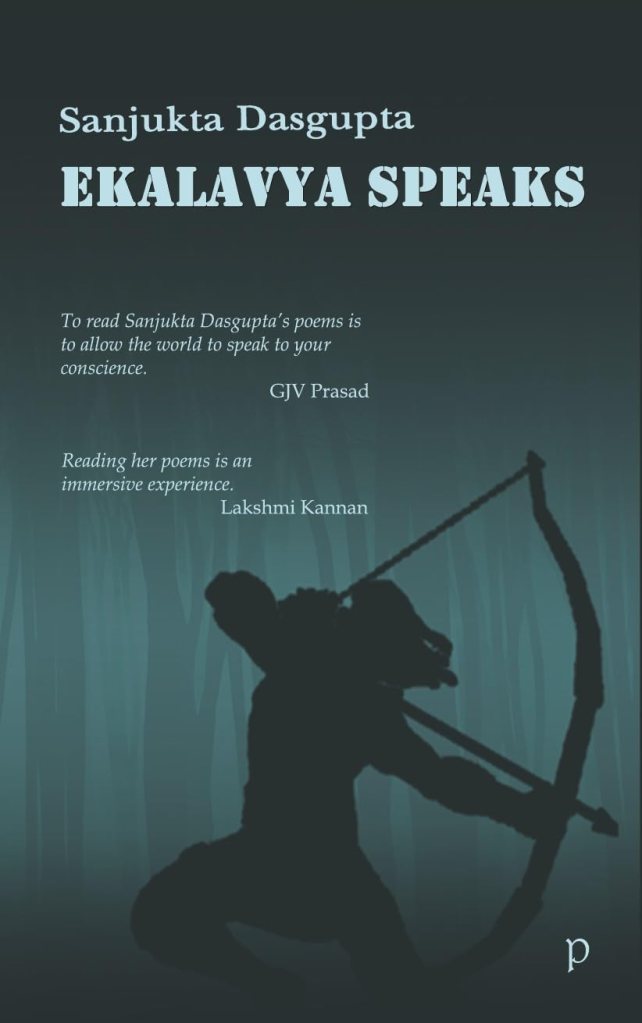
Title: Ekalavya Speaks

Author: Sanjukta Dasgupta

Publisher: Penprints

Poetry which goes beyond the boundaries of words and speaks for a greater cause calls for a captivating read. The lines become more significant when the verses address multiple socio-politico-cultural issues, aesthetically and without didacticism. Poet and academician Sanjukta Dasgupta’s latest book of poems Ekalavya Speaks is not merely a gathering of words, they rather, “[…] spread out their wings untiring/ And never rest in their flight” (Yeats) and attempt to hark at deaf ears and represent unheard voices. She is a strong voice for the otherized, marginalised sections raising issues from multiple spheres of life. Caste, gender, myth, history, pre-history, and technology all find space in her chosen selection of poems. The very last lines of the first poem, ‘Accident of Birth’ says,

“No accident could be 
More catastrophic than
The accident of birth, alas.”

This sets the tone of the whole collection, bringing out the angst of not one voice or one poet but an entire nation. The poet is a strong voice, at times ironic as she says in her titular poem ‘Ekalavya Speaks’-

“The Sun also Rises for us
I may claim your thumb some day.”

These lines are from Dronacharya, the tutor of the royal princes who asks his disciple to gift him his thumb after lopping it off  as a fee to maintain his allegiance to the throne. Ekalavya, the tribal prince could not question the ‘guru’ in the Mahabharata, whereas the poet in the surreal space gives him the voice to speak for the treachery of the great guru. The guru reappears in the poem ‘Dronacharya: The Teacher of Princes’ where questions are thrown at the intentions of a biased guru who was  “The glamourised bonded labour/ Leashed to the regal court.”

Her poem, ‘Kurukshetra-The Killing Field’, goes beyond the boundaries of territories and is akin to any war where lives are lost. At once Kurukshetra becomes the battleground of Ukraine or Gaza where humanity is killed every day. The crying mothers and wailing children are the same everywhere and they are representatives of the universal sorrow of pain and loss and how peace is a mere myth as “Peace was restored at the price/ of rivers of blood […]”. In fact, ‘In the Holy Land’, she talks of dying children and the toxic air of war-trodden Gaza; of the grief-ridden Bethlehem and Jerusalem.

In her greater narrative, Ekalavya and Karna unite to quest for justice, for a space in the mainstream, and for a better liberated world. In Dasgupta’s poetry,  Ekalavya, Shambuka or Shikhandi are not figures from the great epics, they represent the backwards sections of society who perhaps after eons of silence they have now found the time to come out of death, saying– “ I rise from my ashes/ Resurrected!”

With Shikhandi, Draupadi’s brother in the Mahabharata, who was born a female and exchanged gender with a yaksha (nature spirit) for that of a male, Dasgupta brings in the suffering caused by gender identity. She sensitively writes about Oscar Wilde’s homosexuality in her poem ‘The Poet In Reading Gaol’. One’s sexual orientation can ironically be treated as a heinous crime. Heterogeny is also a kind of capitalism as the poet strongly urges and questions progressiveness and maligning of human rights.

In her earlier books Lakshmi Unbound, Sita’s Sisters, and Indomitable Draupadi. Dasgupta has primarily addressed the feminist question. Her latest includes poems like ‘Bapu’ and ’Manipur’. In ‘Bapu’, she talks about the rape of a 12-year-old child in the name of religion in India with sensitivity.

‘The Coffee Shop’ is an interesting and ironic poem. Dead leaders meet in a surreal space where neither murderer nor violence can touch them. They are ‘immortals’ and ‘martyrs’ and, now, are even invincible. It is utopian when Gandhi, Jesus, Martin Luther, and Julius Caesar meet each other. Religion and politics, peacemakers and warriors, all blend in a higher realm of understanding. The flavour of this poem is unique and different from the rest of the poems in the collection and yet thematically it stands out as a statement against violence and death. Death cannot bring an end to the ones whose deeds and ideals are immortal. The same can be said about another visionary poem, ‘Shakespeare and Kalidasa’.

In all the poems, the poet comes across as a strong, sensitive voice whose pen cuts across dogmas, blind faiths, violence and otherization. At the same time, she speaks for the cause of humanity. There are personal poems, like ‘I can’t breathe’; a brilliant poem describing psychological claustrophobia in a world where no peace or no prayers can end the suffering of souls. ‘The Exit’ or ‘Loss’ add richer gravity .

As a poet Dasgupta’s language is lucid and she draws her allusions and examples from the myths, from the past and the projected the future. She strongly voices her opinion. As an educator and as a responsible human being she becomes the voice of the many. Each poem unfolds a story to guides our way through obstructions, which are not physical but mental barriers from which one must liberate oneself. As I read her, I am reminded of a few lines by the great Urdu poet, Faiz Ahmad Faiz, who wrote:

Speak, your lips are free.
Speak, it is your own tongue.
Speak, it is your own body.
Speak, your life is still yours.

Swagata Chatterjee is an Assistant Professor of English at a state-aided college under Vidyasagar University. She is an academician and a keen reader.

.

PLEASE NOTE: ARTICLES CAN ONLY BE REPRODUCED IN OTHER SITES WITH DUE ACKNOWLEDGEMENT TO BORDERLESS JOURNAL

Click here to access the Borderless anthology, Monalisa No Longer Smiles

Click here to access Monalisa No Longer Smiles on Kindle Amazon International

Categories
Interview Review

The Subliminal World of Radha Chakravarty’s Poetry

In conversation with Radha Chakravarty about her debut poetry collection, Subliminal, published by Hawakal Publishers

Radha Chakravarty

Words cross porous walls
In the house of translation—
Leaf cells breathe new air.

We all know of her as a translator par excellence. But did you know that Radha Chakravarty has another aspect to her creative self? She writes poetry. Chakravarty’s poetry delves into the minute, the small objects of life and integrates them into a larger whole for she writes introspectively. She writes of the kantha — a coverlet made for a baby out of soft old sarees, of her grandmother’s saree, a box to store betel leaves… Her poetry translates the culture with which she grew up to weave in the smaller things into the larger framework of life:

Fleet fingers, fashioning
silent fables, designed to swaddle
innocent infant dreams, shielding
silk-soft folds of newborn skin
from reality’s needle-pricks,
abrasive touch of life in the raw.

--'Designs in Kantha’

She has poignant poems about what she observes her in daily life:

At the traffic light she appears 
holding jasmine garlands
selling at your car window for the price
of bare survival, the promise
of a love she never had, her eyes
emptied of the fragrance
of a spring that, for her, never came.

--‘Flower Seller’

Some of her strongest poems focus on women from Indian mythology. She invokes the persona of Sita and Ahalya — and even the ancient legendary Bengali woman astrologer and poet, Khona. It is a collection which while exploring the poet’s own inner being, the subliminal mind, takes us into a traditional Bengali household to create a feeling of Bengaliness in English. At no point should one assume this Bengaliness is provincial — it is the same flavour that explores Bosphorus and Mount Everest from a universal perspective and comments independently on the riots that reft Delhi in 2020… where she concludes on the aftermath— “after love left us    and hate filled the air.”

The poems talk to each other to create a loose structure that gives a glimpse into the mind of the poetic persona — all the thoughts that populate the unseen crevices of her being.

In Subliminal, her debut poetry book, Radha Chakravarty has brought to us glimpses of her times and travels from her own perspective where the deep set tones of heritage weave a nostalgic beam of poetic cadences. Chakravarty’s poems also appear in numerous journals and anthologies. She has published over 20 books, including translations of major Bengali writers such as Rabindranath Tagore, Bankim Chandra Chatterjee, Mahasweta Devi and Kazi Nazrul Islam, anthologies of South Asian writing, and several critical monographs. She has co-edited The Essential Tagore (Harvard and Visva-Bharati), named ‘Book of the Year’ 2011 by Martha Nussbaum.

In this conversation, Radha Chakravarty delves deeper into her poetry and her debut poetry book, Subliminal.

Your titular poem ‘Subliminal’ is around advertisements on TV. Tell us why you opted to name your collection after this poem.

Most of the poems in Subliminal are independent compositions, not planned for a pre-conceived anthology. But when I drew them together for this book, the title of the poem about TV advertisements appeared just right for the whole collection, because my poetry actually delves beneath surfaces to tease out the hidden stories and submerged realities that drive our lives. And very often, those concealed truths are startlingly different from outward appearances. I think much of my poetry derives its energy from the tensions between our illusory outer lives and the realities that lurk within. In ‘Memories of Loss’, for example, I speak of beautiful things that conceal painful stories:

In a seashell held to the ear
the murmur of a distant ocean

In the veins of a fallen leaf
the hint of a lost green spring

In the hiss of logs in the fire,
the sighing of wind in vanished trees

In the butterfly’s bold, bright wings,
The trace of silken cocoon dreams

So, when and why did you start writing poetry?

I can’t remember when I started. I think I was always scribbling lines and fragments of verse, without taking them seriously. Poetry for me was the mode for saying the unsayable, expressing what one was not officially expected to put down in words. In a way, I was talking to myself, or to an invisible audience. Years later, going public with my poems demanded an act of courage. The confidence to actually publish my poems came at the urging of friends who were poets. Somehow, they assumed, or seemed to know from reading my published work in other forms, that I wrote poetry too.

Did being a translator of great writers have an impact on your poetry? How?

Yes, definitely. In particular, translating Tagore’s Shesher Kabita (as Farewell Song), his verses for children, the lush, lyrical prose of Bankimchandra Chatterjee (Kapalkundala) and the stylistic experiments of contemporary Bengali writers from India and Bangladesh (in my books Crossings: Stories from India and Bangladesh, Writing Feminism: South Asian Voices, Writing Freedom: South Asian Voices and Vermillion Clouds) sensitised me to the way poetic language works, and how the idiom, rhythm and resonances change when you translate from one language to another. Translating poetry has its challenges, but it also refined my own work as a poet. Let me share a few lines of poetry from Farewell Song, my translation of Tagore’s novel Shesher Kabita:

Sometime, when you are at ease, 
When from the shores of the past,
The night-wind sighs, in the spring breeze,
The sky steeped in tears of fallen bakul flowers,
Seek me then, in the corners of your heart,
For traces left behind. In the twilight of forgetting,
Perhaps a glimmer of light will be seen,
The nameless image of a dream.
And yet it is no dream,
For my love, to me, is the truest thing …

What writers, artists or musicians have impacted your poetry?

For me, writing is closely associated with the love for reading. Intimacy with beloved texts, and interactions with poets from diverse cultures during my extensive travels, has proved inspirational.

Poetry is also about the art of listening. As a child I loved the sound, rhythm and vivacity of Bengali children’s rhymes in the voice of my great-grandmother Renuka Chakrabarti. She has always been a figure of inspiration for me, a literary foremother who dared to aspire to the world of words at a time when women of her circle were not allowed to read and write. A child bride married into a family of erudite men, and consumed by curiosity about the forbidden act of reading, she took to hiding under her father-in-law’s four-poster bed and trying to decipher the alphabet from newspapers. One day he caught her in the act. Terrified, she crept out from her hiding place, and confessed to the ‘crime’ of trying to read. Things could have gone badly for her, but her father-in-law was an enlightened individual. He understood her craving to learn, and promised that he would teach her to read and write. Under his tutelage, and through her own passion for learning, she became an erudite woman, equally proficient in English and Bengali, an accomplished but unpublished poet whose legacy I feel I have inherited. Subliminal is dedicated to her.

As a child I absorbed both Bengali and English poetry through my pores because in our home, poetry, and music were all around me. I was inspired by Tagore and Nazrul, but also by modern Bengali poets such as Jibanananda Das, Sankho Ghosh and Shamsur Rahman. In my college days, as a student of English Literature, I loved the poetry of Shakespeare, Donne, Yeats, T. S. Eliot and the Romantics.

Later, I discovered the power of women’s poetry: Emily Dickinson, Sylvia Plath and Adrienne Rich, to name a few. I am fascinated by the figure of Chandrabati, the medieval Bengali woman poet who composed her own powerful version of the Ramayana. Art and music provide a wellspring of inspiration too, for poetry can have strong visual and aural dimensions.

You translate from Bengali into English. How is the process of writing poetry different from the process of translation, especially as some of your poetry is steeped in Bengaliness, almost as if you are translating your experiences for all of us?

Translation involves interpreting and communicating another author’s words for readers in another language. Writing poetry is about communicating my own thoughts, emotions and intuitions in my own words. Translation requires adherence to a pre-existing source text. When writing poetry, there is no prior text to respond to, only the text that emerges from one’s own act of imagination. That brings greater freedom, but also a different kind of challenge. Both literary translation and the composition of poetry are creative processes, though. Mere linguistic proficiency is not enough to bring a literary work or a translated text to life.

English is not our mother tongue. And yet you write in it. Can you explain why?

Having grown up outside Bengal, I have no formal training in Bengali. I was taught advanced Bengali at home by my grandfather and acquired my deep love for the language through my wide exposure to books, music, and performances in Bengali, from a very early age. I was educated in an English medium school. At University too, I studied English Literature. Hence, like many others who have grown up in Indian cities, I am habituated to writing in English. I translate from Bengali, but write and publish in English, the language of my education and professional experience. Bengali belongs more to my personal, more intimate domain, less to my field of public interactions.

Both Bengali and English are integral to my consciousness, and I guess this bilingual sensibility often surfaces in my poetry. In many poems, such as ‘The Casket of Secret Stories,’ ‘The Homecoming’ or ‘In Search of Shantiniketan’, Bengali words come in naturally because of the cultural matrix in which such poems are embedded. ‘The Casket of Secret Stories’ is inspired by vivid childhood memories of my great-grandmother’s  daily ritual of rolling paan, betel leaves stuffed with fragrant spices, and arranging them in the metal box, her paaner bata[1]. When she took her afternoon nap, my cousins and I would steal and eat the forbidden paan from the box, and pretend innocence when she woke up and found all her paan gone. Of course, from our red-stained teeth and lips, she understood very well who the culprits were. But she never let on that she knew. It was only later, after I grew up, that I realised what the paan ritual signified for the housebound women of her time:

In the delicious telling,
bright red juice trickling
from the mouth, staining
tongue and teeth, savouring
the covert knowledge
of what life felt like in dark corners
of the home’s secluded inner quarters,
what the world on the outside looked like
from behind veils, screens,
barred windows and closed courtyards
where women’s days began and ended,
leaving for posterity
this precious closed kaansha* casket,
redolent with the aroma of lost stories

*Bronze

But I don’t agree that all my poetry is steeped in Bengali. In fact, in most of my poems, Bengali expressions don’t feature at all, because the subjects have a much wider range of reference. As a globe trotter, I have written about different places and journeys between places.

Take ‘Still’, which is about Mount Everest seen from Nagarkot in Nepal. Or ‘Continental Drift’, about the Bosphorus ferry that connects Asia with Europe. Such poems reflect a global sensibility. My poems on the Pandemic are not coloured by specific Bengali experiences. They have a universal resonance. I contributed to Pandemic: A Worldwide Community Poem (Muse Pie Press, USA), a collaborative effort to which poets from many different countries contributed their lines. It was a unique composition that connected my personal experience of the Pandemic with the diverse experiences of poets from other parts of the world. The poem was nominated for the Pushcart Prize. I guess my poems explore the tensions between rootedness and a global consciousness.

What are the themes and issues that move you?

I tend to write about things that carry a strong personal charge, but also connect with general human experience. My poems are driven by basic human emotions, memory, desire, associations, relationships, and also by social themes and issues. Specific events, private or public, often trigger poems that widen out to ask bigger questions arising from the immediate situation.

Sometimes, poetry can also become for me what T. S. Eliot calls an “escape from personality,” where one adopts a voice that is not one’s own and assume a different identity. ‘The Wishing Tree’ and the sequence titled ‘Seductions’ work as “mask” poems, using voices other than my own. This offers immense creative potential, similar to creating imaginary characters in works of fiction.

There are a lot of women-centred poems in Subliminal. Consider, for example, ‘Designs in Kantha’, ‘Alien’, ‘River/Woman’, ‘That Girl’, ‘The Severed Tongue’ and ‘Walking Through the Flames’. These poems deal with questions of voice and freedom, the body and desire, and the legacy of our foremothers. Some of them are drawn from myth and legend, highlighting the way women tend to be represented in patriarchal discourses.

The natural world and our endangered planet form another thematic strand. I am fascinated by the hidden layers of the psyche, and the unexpected things we discover when we probe beneath the surface veneer of our exterior selves. My poems are also driven by a longing for greater connectivity across the borders that separate us, distress at the growing hatred and violence in our world, and an awareness of the powerful role that words can play in the way we relate to the universe. ‘Peace Process’, ‘After the Riot’ and ‘Borderlines’ express this angst.

How do you use the craft of poetry to address these themes?

Poetry is the art of compression, of saying a lot in very few words. Central to poetry is the image. A single image can carry a welter of associations and resonances, creating layers of meaning that would require many words of explanation in prose. Poems are not about elaborations and explanations. They compel the reader to participate actively in the process of constructing meaning. Reading poetry can become a creative activity too. Poems are also about sound, rhythm and form. I often write “in form” because the challenge of working within the contours of a poetic genre or form actually stretches one’s creative resources. In Subliminal, I have experimented with some difficult short forms, such as the Fibonacci poem, the Skinny, and the sonnet. Take, for instance, the Skinny poem called ‘Jasmine’:

Remember the scent of jasmine in the breeze?
Awakening
tender
memories
bittersweet,
awakening
buried
dormant
desires,
awakening,
in the breeze, the forgotten promise of first love. Remember?

The last two lines of the poem use the same words as the beginning, but to tell a different story. The form demands great economy.

I pay attention to the sound, and even when writing free verse, I care about the rhythm.  Endings are important. Many of my poems carry a twist in the final lines. I mix languages. Bengali words keep cropping up in my English poems.

Are your poems spontaneous or pre-meditated?

The first attempt is usually spontaneous, but then comes the process of rewriting and polishing, which can be very demanding. Some poems come fully formed and require no revision, but generally, I tend to let the first draft hibernate for some time, before looking at it afresh with a critical eye. Often, the final product is unrecognisable.

Which is your favourite poem in this collection and why? Tell us the story around it.

It is hard to choose just one poem. But let us consider ‘Designs in Kantha’, one of my favourites. Maybe the poem is important to me because of the old, old associations of the embroidered kantha with childhood memories of the affection of all the motherly women who enveloped us with their loving care and tenderness. Then came the gradual realisation, as I grew into a woman, of all the intense emotions, the hidden lives that lay concealed between those seemingly innocent layers of fabric. The kantha is a traditional cultural object, but it can also be considered a fabrication, a product of the creative imagination, a story that hides the real, untold story of women’s lives in those times. Behind the dainty stitches lie the secret tales of these women from a bygone era. My poem tries to bring those buried emotions to life.

As a critic, how would you rate your own work?

I think I must be my own harshest critic. Given my academic training, it is very hard to silence that little voice in your head that is constantly analysing your creative work even as you write. To publish one’s poetry is an act of courage. For once your words enter the public domain, they are out of your hands. The final verdict rests with the readers.

Are you planning to bring out more books of poems/ translations? What can we expect from you next?

More poems, I guess. And more translations. Perhaps some poems in translation. My journey has taken so many unpredictable twists and turns, I can never be quite sure of what lies ahead. That is the fascinating thing about writing.

Thank you for giving us your time.

[1] Container for holding Betel leaves or paan

(The online interview has been conducted through emails and the review written by Mitali Chakravarty.)

Click here to read poems from Subliminal.

PLEASE NOTE: ARTICLES CAN ONLY BE REPRODUCED IN OTHER SITES WITH DUE ACKNOWLEDGEMENT TO BORDERLESS JOURNAL. 

Click here to access the Borderless anthology, Monalisa No Longer Smiles

Click here to access Monalisa No Longer Smiles on Kindle Amazon International
Categories
Editorial

As Imagination Bodies Forth…

Painting by Sybil Pretious
And as imagination bodies forth
The forms of things unknown, the poet's pen
Turns them to shapes and gives to airy nothing
A local habitation and a name

 A Midsummer Night's Dream (1595) by William Shakespeare

Famous lines by Shakespeare that reflect on one of the most unique qualities in not only poets — as he states — but also in all humans, imagination, which helps us create our own constructs, build walls, draw boundaries as well as create wonderful paintings, invent planes, fly to the moon and write beautiful poetry. I wonder if animals or plants have the same ability? Then, there are some who, react to the impact of imagined constructs that hurt humanity. They write fabulous poetry or lyrics protesting war as well as dream of a world without war. Could we in times such as these imagine a world at peace, and — even more unusually — filled with consideration, kindness, love and brotherhood as suggested by Lennon’s lyrics in ‘Imagine’ – “Imagine all the people/ Livin’ life in peace…”. These are ideas that have been wafting in the world since times immemorial. And yet, they seem to be drifting in a breeze that caresses but continues to elude our grasp.

Under such circumstances, what can be more alluring than reflective Sufi poetry by an empathetic soul. Featuring an interview and poetry by such a poet, Afsar Mohammad, we bring to you his journey from a “small rural setting” in Telangana to University of Pennsylvania, where he teaches South Asian Studies. He is bilingual and has brought out many books, including one with his translated poetry. Translations this time start with Bankim Chandra Chattopadhyay’s advice to new writers in Bengali, introduced and brought to us by Abdullah-Al-Musayeb. Tagore’s seasonal poem, ‘Megh or Cloud’, has been transcreated to harmonise with the onset of monsoons. However, this year with the El Nino and as the impact of climate change sets in, the monsoons have turned awry and are flooding the world. At a spiritual plane, the maestro’s lines in this poem do reflect on the transience of nature (and life). Professor Fakrul Alam’s translation of Masud Khan’s heartfelt poetry on rain brings to the fore the discontent of the age while conveying the migrant’s dilemma of being divided between two lands. Fazal Baloch has brought us a powerful Balochi poet from the 1960s in translation, Bashir Baidar. His poetry cries out with compassion yet overpowers with its brutality. Sangita Swechcha’s Nepali poem celebrating a girl child has been translated by Hem Bishwakarma while Ihlwha Choi has brought his own Korean poem to readers in English.

An imagined but divided world has been explored by Michael Burch with his powerful poetry. Heath Brougher has shared with us lines that discomfit, convey with vehemence and is deeply reflective of the world we live in. Masha Hassan is a voice that dwells on such an imagined divide that ripped many parts of the world — division that history dubs as the Partition. Don Webb upends Heraclitus’s wisdom: “War is the Father of All, / War is the King of All.” War, as we all know, is entirely a human-made construct and destroys humanity and one cannot but agree with Webb’s conclusion.  We have more from Kirpal Singh, Ryan Quinn Flanagan, Nivedita N, John Grey, Carol D’Souza, Vernon Daim, George Freek, Saranyan BV, Samantha Underhill and among the many others, of course Rhys Hughes, who has given us poetry with a unique alphabetical rhyme scheme invented by him and it’s funny too… much like his perceptions on ‘Productivity’, where laziness accounts for an increase in output!

Keith Lyons has mused on attitudes too, though with a more candid outlook as has Devraj Singh Kalsi with a touch of nostalgia. Ramona Sen has brought in humour to the non-fiction section with her tasteful palate. Meredith Stephens takes us on a picturesque adventure to Sierra Nevada Mountains with her camera and narrative while Ravi Shankar journeys through museums in Kuala Lumpur. We travel to Japan with Suzanne Kamata and, through fiction, to different parts of the Earth as the narratives hail from Bangladesh, France and Singapore.

Ratnottama Sengupta takes us back to how imagined differences can rip humanity by sharing a letter from her brother stationed in Bosnia during the war that broke Yugoslavia (1992-1995). He writes: “It is hard to be surrounded by so much tragedy and not be repulsed by war and the people who lead nations into them.” This tone flows into our book excerpts section with Red Sky Over Kabul: A Memoir of a Father and Son in Afghanistan by Baryalai Popalzai and Kevin McLean. Popalzai was affected by the Russian invasion of Afghanistan in 1980 and had to flee. A different kind of battle can be found in the other excerpt from The Blue Dragonfly – healing through poetry by Veronica Eley – a spiritual battle to heal from experiences that break.

In our reviews section, KPP Nambiar reviews The Stolen Necklace: A Small Crime in a Small Town by Shevlin Sebastian and VK Thajudheen, a book that retells a true story. Sangeetha G’s novel, Drop of the Last Cloud, we are told by Rakhi Dalal, explores the matrilineal heritage of Kerala, that changed to patriarchal over time. Bhaskar Parichha reviews Burning Pyres, Mass Graves and A State That Failed Its People: India’s Covid Tragedy by Harsh Mander. Parichha emphasises the need never to forget the past: “It is a powerful book and sometimes it is even shattering. The narrative is a live remembrance of a national tragedy that too many of us wish to forget when we should, instead, etch it in our minds so that we can prevent another national tragedy like this one from recurring in the future.”  While we need to learn from the past as Parichha suggests, Somdatta Mandal has given a review that makes us want to read Ujjal Dosanjh’s book, The Past is Never Dead: A Novel. She concludes that it “pays tribute to the courage and tenacity of the human spirit and its capacity for hope despite all odds.”

We have more content than mentioned here… all of it enhances the texture of our journal. Do pause by our July issue to savour all the writings. Huge thanks to all our contributors, artists, all our readers and our wonderful team. Without each one of you, this edition would not have been what it is.

Thank you all.

Have a wonderful month!

Mitali Chakravarty

borderlessjournal.com

.

Visit the July edition’s content page by clicking here

READ THE LATEST UPDATES ON THE FIRST BORDERLESS ANTHOLOGY, MONALISA NO LONGER SMILES, BY CLICKING ON THIS LINK.

Categories
Review

Reconstructing a Broken World with Sufism

Book Review by Basudhara Roy

Title: Evening with a Sufi: Selected Poems

Poet: Afsar Mohammad

Translator: Afsar Mohammad and Shamala Gallagher

Publisher: Red River

I’m sorry, my Lord. 

My poem is not your slave,
it’s a sickle with its head to the sky. 

My poem is not a damsel timid in your moonlight,
it’s a tiger prowling in a shadowed forest. 

My poem won’t be your grand constitution, 
devoted to your happiness 
at all costs.

-	‘Outcast’s Grief’ from Evening with a Sufi

Not all poetry can be read with the same eye or ear. Certain poems demand to be seen and heard on their own terms, offering to the reader their own canons of understanding and appreciation in imaging an idea that, through them, has just been born into thought. Afsar Mohammad’s Evening with a Sufi sets out to be one such thought-provoking book of poems.

A slim collection of twenty-six verses selected and translated from Afsar Mohammad’s extensive oeuvre in Telugu by Shamala Gallagher and the poet himself, these are existential political poems that are as theoretically perspicacious as they are urgent and astounding in their overwhelming sincerity. Like Eliot’s The Waste Land, Afsar Mohammad’s Evening with a Sufi aesthetically documents a difficult world, especially one criss-crossed with systemic hegemony, and bereft of equality. An engagement with these poems is a direct invitation to the reader to embark on an epistemological tour into a sharp symbolic landscape that encapsulates visceral records of social meaning.

The title, to begin with, itself upholds a strong symbolism. Its ‘evening’ bespeaks the twilight of civilisation, the personal-social moment of the unleashing of despair, and a decadent global landscape thriving on inequity and deprivation. And yet, evening, in these poems, is also the transitional period of awareness, self-reflection, evaluation, and the collective envisioning of an egalitarian dawn. These poems, therefore, become investigations and articulations of both fatigue and rest, of falling apart and re-gathering, and of old failures and new beginnings, leading us to look at the idea of the Sufi or Sufism anew.

“For me, Sufism is nothing but a tool of resistance,” avers the poet, indicating how Sufism, as a philosophy, offers a vigorous counternarrative to transnational policies and practices of discrimination, marginalisation, disempowerment and exclusion. “In my village Sufism, I see how people of diverse colours and castes share food, rituals and stories. As a village person, it’s not a far-fetched utopia for me — but an everyday reality. My writings are nothing but reminders of that shared realm of life.”

In Afsar’s poems, Sufism becomes a political as well as existential search for a vision of oneness. This vision is, at the same time, philosophical and social, local and global, integrating and intimidating in the way that most revolutions are – “The drop that can swallow a desert” (‘Another Word’) or “Where walls are knocked down,/ we won’t need the splendour of curtains” (‘The Spectator is Dead’) or “I always speak the language of war.” (‘A Green Bird and the Nest of Light’)

Identity surfaces as a significant theme in this book. Most of the twenty-six poems in Evening with a Sufi embark on a complex exploration of identity on geographical, cultural, social, historical or linguistic terrains. However, the book’s conceptualisation of identity is far from monolithic. Germane to the vision of these poems is the essentially dialogic space of identity and its characterization as an ever-contingent work-in-progress.

Mark the first poem in the collection, for instance. Titled ‘Name Calling’, an ambiguous phrase that poignantly addresses the phenomenon of naming as an act of use and abuse, the poem captures the essential seamlessness of names and identities. The protagonist of the piece is a boyhood contemporary called Usman who is visibly an ‘other’ to the speaker of the poem, the difference between them marked out distinctly in class terms and perhaps also (less evidently) in terms of physical ability – “You scared all the children/ away from the river./ A body like a wound/ peeks from your torn shirt.” It is, however, to this social pariah – “the one street dog doggedly haunted by a ball” that the speaker feels affiliated in his later life:

Now I don’t see much difference between you and me. 
We are the same.[…]
Usman, times never change 
only the roles change.

Muslim, Telugu and Third-world migrant, the poet reads the theory and experience of otherness on a number of sociological axes and through a variety of cultural lenses. In ‘The Accented Word’, he uses the idea of accent to explore the complex genealogies of language on the intersections of purism and cultural hegemony, contemplating variously, through the three sections of the poem, on linguistic integrity, capitalist subordination, and postcolonial erasure:

Words 
are stillborn babies. 

Their blood has gone bad with white poison, 
their words have gone bad from the accent. 

I’ve been poured, shared, and bathed in white poison 
since I was little 
and now I want to speak out for myself. 

But my voice is in chains 
and my language is poisoned, 

and the language of my time is poisoned. 

We live on the brackish water of life.

While Shakespeare’s Caliban in The Tempest felt that the colonizer’s language profited him by teaching him “how to curse”, Afsar’s poems approach language with utmost caution, forever mindful of the possibility of trampling and obscuring buried histories of domination and betrayal. Many of the poems, here, are metapoetic in their thrust, assiduously exploring the value of meaningful postcolonial poetic creation from the inescapable inequities and ideological loopholes of language: “a market piles up words sounding like poetry” (‘The Accented Word’) or “How long this slavery to white poems?” (‘Outcast’s Grief’) or again as in “Poetry: / just one dried leaf.” (‘Walking’)

In ‘A Piece of Bread, a Country, and a Shehnai’, bread, music, war and pain – all come together to avow our subcontinent’s shared heritage of poverty and cultural intimacy brutally shredded by politico-religious separation. In ‘No Birthplace’, the speaker of the poem is as much the Indian subcontinent as its hapless postcolonial citizen faced with the inability to reconcile its historical legacy of cultural plurality with the blind spots in its mythological and ideological machinery:

Come, divide me by myself, I say. 
Not by forty-seven. 

My laughs, screams, harangues, deaths, and rapes — 
They’re all yours too! 

It is interesting to note how Afsar’s poems consistently invigorate and socially translate the idea of spirituality through sinewy sociological imagery with the result that spirituality is transformed from a closeted and socially-indifferent personal practice to a welfare-oriented everyday social ritual. In ‘Iftar Siren’, the idea of fasting as self-purification is ironically brought to bear on the understanding of the hunger-stricken socially dispossessed as perpetually cleansed while the overfed victimisers walk about unconcerned:

What a great life. 
In the holy month, 

do you see how you are all becoming pure? 
I’ve been like this for years 

burning in the divine fire. 
Unable to turn into ashes. 

I’m a fire-pit you try 
and try to stamp out. 

Yes, the fire-pit 
is tired too.

The haunting and incendiary metaphor of hunger as fire and the stomach/body as the fire-pit, tired of being stamped out or dispossessed, makes these poems powerful bandages for social injustices as well as flaming flags of protest. In ‘Qibla’, the posture of prayer, again, pivots on the stomach – “a belly turned deep/ into itself/ in which I obscure my body,/ feet, hands and everything/ for a long time” – suggesting the omnipotence of hunger as surpassing all acts of asocial faith. The poem concludes with considerable uncertainty of the efficacy of prayer and with an ideological pun on “arms” (arm/armament) as a means of erasing human hatred.

The stupendous yet composed energy of the book needs no forestatement. Every single word here is deftly chosen, well-placed, and tersely poised to make emotional leaps on command. The images are taut, the sentiments thoroughly grilled in the fire of creative originality, and everywhere, there is a sense of potential unruliness held firmly in check by a balanced and farsighted imagination.

In considering these poems, one must not forget, also, their complex linguistic history. Though translated from the original Telugu, the Telugu language itself includes, for the poet, “the entangled history of Urdu, Hindi and English — the languages that indeed shaped my emotional realm.” Arriving into English via such multi-layered linguistic travails and travels, these exceptionally well-translated poems infuse postcolonial English with a visceral depth, a spiritual profundity and a razor-sharp urgency that would be difficult to come by in the original English.

Accompanied by a very relevant author interview and insightful essays by the translator and  valuable first readers of this collection, Evening with a Sufi arrives, in its essential philosophy and call for humanitarian action, with a new theory and praxis for the world, determined to reconstruct rather than redeem it.

Basudhara Roy teaches English at Karim City College affiliated to Kolhan University, Chaibasa. Drawn to gender and ecological studies, her four published books include a monograph and three poetry collections. Her recent works are available at Outlook India, The Dhaka Tribune, EPW, Madras Courier and Live Wire among others.

.

Click here to read the book excerpt from Evening With a Sufi

PLEASE NOTE: ARTICLES CAN ONLY BE REPRODUCED IN OTHER SITES WITH DUE ACKNOWLEDGEMENT TO BORDERLESS JOURNAL

Categories
Slices from Life

King Lear & Kathakali?

By P.G.Thomas

With guttural grunts as from an alpha male on a testosterone high, King Lear in the opening scene strutted and swaggered as the drums and cymbals emphasised his every gesture and expression, in an act of supreme braggadocio.  His fool’s theatrical gestures of servility only enhanced King Lear’s demonstration of his character and of his mindset, which wonderfully set the stage for his actions and eventual downfall.

This was long ago in another time, in 2018 when the performance finally came home to India. It was being staged in Trivandrum, Kerala, finally.  Interesting and controversial, this opera had done its rounds in Europe, including the Globe Theatre in the 1970s, and had now come home to the land that had given birth to the dance form. 

I was watching an unusual intercultural presentation of Shakespeare’s King Lear, choreographed by French dancer Annette Leday and adapted for the occasion by Australian playwright David McRuvie.  It was being presented through the medium of Kathakali, the classical dance of Kerala.  The production seemed to have run the gauntlet of risks such intercultural attempts are prone to.  Besides much appreciation, the word ‘baffling’ had been used to describe it in the UK, and it was reported that informed Kathakali enthusiasts were left unmoved, for it seemed to be neither here nor there.  But for me it was a worthwhile experience, and I feel that if a viewer were to approach this opera without preconceived expectations, his would enjoy it better. 

Annette Leday, a Kathakali dancer herself, has choreographed this opera with aplomb.  David McRuvie has made the play suitable for Kathakali by drastically thinning the text and retaining only the story of King Lear and his daughters.  Much would have been lost here, but its suitability for this performance cannot be denied.  The role of King Lear is performed well by the Kathakali exponent Peesappilly Rajiv and the endearing fool brilliantly portrayed by Manoj Kumar.            

 A young tradition in comparison to other Kerala dance forms, Kathakali has retained a greater degree of innovation and improvisation, and this malleability has been tapped well by Annette.  Kathakali performances traditionally draw their subject from Hindu mythology, and portray archetypal characters and situations.  And King Lear’s story of kingship, inheritance, family disputes and dowry are all themes that an Indian audience would understand.

The elaborate costumes and face makeup are typical to characters portrayed.  And thus Goneril and Regan are presented with the black faces of demons, the radiant goodness of Cordelia is conveyed through minukku (shining) face makeup, and King Lear wears the garb of the anti hero.  But it is when the opera starts that one realises Kathakali’s gift for sheer theatre.  As the rippling drums and cymbals enliven the dance, the chanting tells the story, emotions flow from structured facial expressions and demonstrative gestures, and meaning flows from hand gestures called mudras.  It is a very structured art form, but with a wonderful ability to convey — through lively choreography and vibrant rhythmic percussion music — archetypal human situations and emotions.

Whatever the purists may say, this performance was hugely enjoyable and made unique with the intermingling of different cultural lores.

.

P.G.Thomas, hailing from Kerala, India; has been intrigued by the changing phases of his land, its people and their way of life.  He draws on a lifetime of actual experience to write about it.   

PLEASE NOTE: ARTICLES CAN ONLY BE REPRODUCED IN OTHER SITES WITH DUE ACKNOWLEDGEMENT TO BORDERLESS JOURNAL

Categories
Stories

Viral Wisdom

By Rhys Hughes

Courtesy: Creative Commons

The Optimistic Hypochondriac

“I caught covid last week but I already had typhoid, rabies and malaria, and they all cancelled each other out.” The Optimistic Hypochondriac

I like the Optimistic Hypochondriac. I regard him as my friend, but not a close friend, oh no! I don’t want to get too close to him in case he gives me his germs. I am sure he has plenty of germs, more than he needs for himself. And he has always been a generous chap, the sort of man who would be very happy indeed to share his illnesses with anyone else.

I remember in the old days how hypochondria wasn’t an infectious disease. But there is now growing evidence that the virus that causes hypochondria has undergone a mutation and is starting to spread among people who never believe they are ill. This means that hypochondria will probably become rampant in the next few years. What a dreadful notion!

I keep myself fit by going for regular runs on the beach. This morning I ran five miles on the beach. I am pleased with my performance, but my fear is that after finishing I will be stopped by the police. “Why are you out of breath? Why are you sweating? Why do you have a high temperature? You must have the virus. It’s off to quarantine with you — on Devils’ Island!”

Devils’ Island is an extremely unpleasant place. It was where all the devils in the world lived before they emigrated. The devils’ diaspora is one that hasn’t been studied in great depth yet by academics. Some of the devils went North, East and South, but most of them went West.

To “go west” can also mean to perish or disappear. The devils who went North went west, if you see what I mean, but the devils who went East didn’t, nor did the devils who went South. It gets rather confusing. But if you meet a devil, no matter where you happen to be, you can be sure that originally he was an inhabitant of Devils’ Island, which is still covered with cooling lava. People who are imprisoned there have to keep hopping.

I keep hopping too, or rather I keep hoping — hoping that I will never be sent to Devil’s Island just because I have broken the quarantine rules imposed by my government at short notice. I ought to pack a swimsuit in a suitcase just to be prepared for that horrible eventuality.

Some women pack swimsuits that are radioactive in their luggage if they think there’s a chance they might be sent to Devils’ Island. Radioactivity keeps any remaining devils away. Are there any remaining devils? Difficult to say, but not as difficult to say as “imagine an imaginary menagerie” which is a sequence of words I often have trouble with.

Better to be safe than sorry! If you are a woman in danger of being sent to Devils’ Island, be sure to pack a radioactive swimsuit. Is it bad advice to suggest the wearing of a radioactive swimsuit? No, because there’s nothing wrong with bikinis atoll. Now let’s move on —

Well, I moved on, and here I am. The Optimistic Hypochondriac has called me on the telephone to tell me that a new pandemic has started.  The singer Buster Octavius is going to give a concert to raise money, but no one knows what the money is being raised for. Buster Octavius says it is being raised because that’s better than letting it fall onto the ground.

It will be a socially distanced concert, which means that members of the audience will have to stand six feet apart. Most audience members don’t have six feet. They are human beings and only have two legs, like you and I. The six feet rule might be good for insects but for mammals it’s a disaster waiting to happen. And have you ever seen a disaster waiting to happen? They get nervous and pace up and down and growl in the wings.

The reason they wait in the wings has nothing to do with the fact that such shows as Buster Octavius is planning usually take place in a theatre. No, they wait in the wings because birds have wings and bird flu is a disease that is always a strong pandemic candidate.

Buster Octavius is a pseudonym. His real name is a closely guarded secret and the guards who guard it cannot be bribed. I have already tried. And so has the Optimistic Hypochondriac. He says, “He broke twelve semitones and that’s why he calls himself Buster Octavius.”

Quarantine regulations are coming into force and it has only been a couple of hours before the new pandemic was officially announced. My movements will be restricted once again to my home and a small area around it. I might begin to dig a tunnel in my cellar, both to pass the time and to enable me to travel further than I am allowed. The tunnel will point in the opposite direction to my office. Just to give me some illusion of freedom!

I can’t honestly say I dislike my job. When I started there last year, I was warned by my new colleagues that my new boss was a “micromanager” but when I started work at the laboratory the conditions were relaxed and no one criticised the details of anything I did.

In fact, there didn’t seem to be a manager of any sort present in the work space. Then one morning I happened to glance through a microscope and saw him jumping about on the slide and tearing his hair out. He was very angry but his voice was far too quiet to be heard.

I had never expected him to be a virus instead of a man!

The Optimistic Hypochondriac advises me to wear a mask. In fact, he tells me to wear two masks — over my ears. If the singing of Buster Octavius doesn’t kill the virus in a fifty-mile radius and help to end this new pandemic, then nothing will. It is good advice and I take it. But then, having taken it, I change my mind and put it back. But he doesn’t want it back. We argue and tussle for almost half an hour before we both admit defeat.

If the pandemic is already here, then why not just quarantine the whole world in one go, instead of sections of it? That way, we will technically be in quarantine, as all the health authorities recommend, but able to travel around freely just like we used to, and everything will continue on the surface of the planet as before. I think this is an excellent solution. A win-win!

We would only have to deal with that tiny minority who call themselves “astronauts” by refusing to let them back into the atmosphere and presto! This approach would save a lot of money and time and effort. Lots of my friends at school were interested in outer space and wanted to be astronauts but I don’t think many of them managed it. When I was little and was asked what I wanted to be when I grew up, I replied, “An adult.”

An impractical choice, I feel.

Buster Octavius is allowed to sing his doleful dirges, highly amplified, out at the captive inhabitants of the innocent city, but all the theatres have been closed and actors are out of work. This seems unfair.

To put it another way: thanks to this new pandemic, all theatre has become Japanese in style because ‘Noh Plays’ are being performed on every stage. Even Shakespeare’s Globe Theatre is about to close. But I bet they will stage one last play there… “Two Gentleman of Corona”.

The rules are being tightened. Now we aren’t allowed out of the house at all. I doubt if the Optimistic Hypochondriac will conform to this restriction. He will be arrested for breaking the law and sent to Devil’s Island instead of me. One thing I still find baffling. If people aren’t allowed out at all because of the risk of spreading the virus, why are the police allowed to approach and arrest those who do venture out? Surely the police spread the virus just the same as any other human? Oughtn’t there to be a second set of police to approach and arrest the first set, and a third set to approach and arrest the second set, and a fourth to approach and arrest the third.

And so on, forever? If not, the process isn’t logical.

As part of the fight against the virus I note that Washington DC has changed its name to Washinghands DC.  This news doesn’t concern me very much at the moment, but when I have finished tunnelling under the Atlantic Ocean I surely will sit up and take notice

It will take me at least nine months to tunnel as far as the comfortable home of the Optimistic Hypochondriac. In the meantime, Devils’ Island is rapidly filling up with arrested police officers. It will take me centuries to tunnel as far as the city of Washinghands DC. Even nine months is too long to dig tunnels. But that is how I intend to keep myself busy.

How will other people occupy their enforced leisure time? I am supposing that there will be a baby boom in nine months. And thirteen years after that, we will witness the rise of the “quaranteens”.

It turns out that the Optimistic Hypochondriac is also digging a tunnel of his own — in the direction of my house.

Therefore, we meet each other after only four and a half months of toil. He has some strange news for me. The virus responsible for this pandemic is one that hypochondriacs are immune to. But everyone else can catch it. He knows that I have never been a hypochondriac.

“I think you should change your name,” he tells me.

“To what?” I ask him.

“Virusman,” he says, and he grins.

Virusman. Unlike other superheroes he never catches criminals, they catch him instead! There is a little song that will be associated with him and it goes like this: “Virusman, Virusman / does whatever a virus can. / Can he replicate inside the cells / of all the jails in Tunbridge Wells? / You bet! / Atchoo! / Here comes the Virusman…” But I have my doubts. I have never been to Tunbridge Wells. What if it is worse than Devils’ Island?

I knew it was rash to sign the new contract sent to me by my virus provider, but I never imagined how itchy the rash would be. Fortunately, I was able to use the get-out claws to scratch myself.

Buster Octavius has been sent to Devils’ Island. Those poor remaining devils, how I feel sorry for them!

Courtesy: Creative Commons

The Polite Antibody

An antibody met a germ and said, “How do you do? I am very happy to make your acquaintance. Would you like a cup of tea? May I fetch you a cake? If you require anything to improve your comfort, please let me know and I’ll do my best to provide it. I like your colour, shape and other physical characteristics. What a fine germ you are! I admire you so much.”

 “Well, that reaction wasn’t what I was expecting!” cried the germ. “I came here to infect this bloodstream, but I don’t think I’ll do that now. I am too charmed by your kind words.”

 “It’s a new style of resistance and I’m glad it seems to work. It’s called diplomatic immunity,” said the antibody.

Courtesy: Creative Commons

Rhys Hughes has lived in many countries. He graduated as an engineer but currently works as a tutor of mathematics. Since his first book was published in 1995 he has had fifty other books published and his work has been translated into ten languages.

.

PLEASE NOTE: ARTICLES CAN ONLY BE REPRODUCED IN OTHER SITES WITH DUE ACKNOWLEDGEMENT TO BORDERLESS JOURNAL