“Other echoes
Inhabit the garden. Shall we follow?
Quick, said the bird, find them, find them…”

— TS Eliot, ‘Four Quartets: Burnt Norton’(1936)
Humans have always been dreamers, ideators and adventurers.
Otherwise, could we have come this far? From trees to caves to complex countries and now perhaps, an attempt to reach out towards outer space for an alternative biome as exploring water, in light of the recent disaster of the Titan, is likely to be tougher than we imagined. In our attempt to survive, to live well by creating imagined constructs, some fabrications backfired. Possibly because, as George Orwell observed with such precision in Animal Farm, some perceived themselves as “more equal”. Of course, his was an animal allegory and we are humans. How different are we from our brethren species on this beautiful planet, which can survive even without us? But can humanity survive without Earth? In science fiction, we have even explored that possibility and found home among stars with the Earth becoming uninhabitable for man. However, humanity as it stands of now, continues to need Earth. To live amicably on the planet in harmony with nature and all the species, including our own, we need to reimagine certain constructs which worked for us in the past but seem to have become divisive and destructive at this point.
Ujjal Dosanjh, former Minister in the Canadian cabinet and former Premier of British Columbia, in his autobiography, Journey After Midnight – A Punjabi Life: From India to Canada, talks of regionalism as an alternative to narrow divisive constructs that terrorise and hurt others. He writes in his book: “If humanity isn’t going to drown in the chaos of its own creation, the leading nations of the world will have to create a new world order, which may involve fewer international boundaries.” We have a candid conversation with him about his beliefs and also a powerful excerpt from his autobiography.
An interview with Professor Fakrul Alam takes us into Tagore’s imagined world. He discussed his new book of Tagore translations, Gitabitan: Selected Song-Lyrics of Rabindranath Tagore. He has brought out a collection of 300 songs translated to English. In a bid to emphasise an inclusive world, we also have a translation of Tagore’s ‘Musalmanir Galpa’ (A Muslim Woman’s Story) by Aruna Chakravarti. A transcreation of his poem, called ‘Proshno or Questions’ poses difficult challenges for humanity to move towards a more inclusive world. Our translation by Ihlwha Choi of his own Korean poem to English also touches on his visit to the polymath’s construct in the real world, Santiniketan. All of these centring around Tagore go to commemorate the month in which he breathed his last, August. Professor Alam has also translated a poem from Bengali by Masud Khan that has futuristic overtones and builds on our imagined constructs. From Fazal Baloch we have a Balochi translation of a beautiful, almost a surrealistic poem by Munir Momin.
We travel to Andaman with Mohul Bhowmick and further into Sierra with Meredith Stephens. Ravi Shankar travels back in nostalgia to his hostel and Kathleen Burkinshaw dives into the past — discussing and responding to the media presentation of an event that left her family scarred for life, the atomic holocaust of 1945 in Japan. This was a global event more than seven decades ago that created refugees among the survivors whose homes had been permanently destroyed. Perhaps, their stories are horrific, and heart wrenching like the ones told by those who suffered from the Partition of India and Pakistan, a divide that is celebrated by Independence Days for the two nations based on a legacy of rifts created by the colonials and perpetrated to this day by powerbrokers. Aysha Baqir has written of the wounds suffered by the people with the governance gone awry. Some of the people she writes of would have been refugees and migrants too.
A poignant narrative about refugees who flock to the Greek island of Lesbos by Timothy Jay Smith with photographs by Michael Honegger, both of whom served at the shelters homing the displaced persons, cries out to halt wars and conflicts that displace them. We have multiple narratives of migrants in this issue, with powerful autobiographical stories told by Asad Latif and Suzanne Kamata. Paul Mirabile touches on how humans have adopted islands by borrowing them from seas… rather an unusual approach to migrations. We have an essay on Jane Austen by Deepa Onkar and a centenary tribute to Chittaranjan Das by Bhaskar Parichha.
The theme of migrants is echoed in stories by Farouk Gulsara and Shivani Shrivastav. Young Nandani has given an autobiographical story, translated from Hindustani to English by Janees, in which a migration out of various homes has shredded her family to bits — a narrative tucked in Pandies Corner. Strange twists of the supernatural are woven into fiction by Khayma Balakrishnan and Reeti Jamil.
I would like to give my grateful thanks to our wonderful team at Borderless, especially to Sohana Manzoor for her fabulous artwork. Huge thanks to all our gifted contributors and our loyal readers. Borderless exists today because of all of you are making an attempt to bringing narratives that build bridges, bringing to mind Lennon’s visionary lyrics:
You may say I'm a dreamer
But I'm not the only one
I hope someday you'll join us
And the world will live as one
Ujjal Dosanjh left his village in Punjab in quest of a better life. He had a bare smattering of English, very less money and some family overseas when he left his home at Dosanjh Kalan at the age of seventeen. That was in 1964. He spent the first three years in Britain and then, moved to Canada to become a prominent lawyer, activist and political figure.
When he started in the 1960s, to earn a livelihood in England, he shunted trains in the British Railways. He left for Canada in hope of a better future. He had to work initially in sawmills and factories to support himself. Eventually, he could get an education and satisfy his ambitions in British Columbia, which became his home. Coming from a family which contributed to the freedom struggle of India, it was but natural that he would turn towards a public life. His uprightness, courage, tolerance, openness and commitment had roots in his background, where his parents despite different political ideologies, lived together in harmony. His family, despite their diverse beliefs, stood by him as he tried to live by his values.
Dosanjh voiced out against separatist forces that continue to demand an autonomous country for Sikhs to this day. In 1985, he was beaten almost to death by such Khalistani separatists as he boldly opposed the movement that had earlier led to the assassination of the Indian Prime Minister, Indira Gandhi (1917-1984) and to the bombing of an aircraft where all 329 people aboard died. However, undaunted by such attacks, he continues to talk unity, welfare for the underprivileged and upholds Mahatma Gandhi as his ideal. He went into Canadian politics with unfractured belief in the Mahatma. Dosanjh was the Health Minister of Canada and earlier the Premier of British Columbia. He has been honoured by both the Indian and Canadian governments. In 2003, he received the highest award for diaspora living outside India, Pravasi Bharatiya Samman, and, in 2009, he was a recipient of the Top 25 Canadian Immigrant Award.
Now, sixty years from the time he left his country of birth, he shares his narratives with the world with his updated autobiography — the first edition had been published in 2016 — and also with fiction. As an immigrant with his life spread over different geographies, he tells us in his non-fiction, Journey After Midnight – A Punjabi Life: From India to Canada:“Canada has been my abode, providing me with physical comforts and the arena for being an active citizen. India has been my spiritual refuge and my sanctuary.”He writes of what he had hoped could be a better future for humankind based on the gleanings from his own experiences and contributions to the world: “If humanity isn’t going to drown in the chaos of its own creation, the leading nations of the world will have to create a new world order, which may involve fewer international boundaries.”
In this interview, he shares his journey and expands further his vision of a world with diminishing borders.
You travelled from a village in Punjab, through UK and ended up in the Canadian cabinet to make changes that impacted humanity in your various public roles as a politician. Would you have been able to make an impact in a similar public role if you had never left India? Was the journey you went through necessary to help you become who you are?
It’s almost next to impossible to imagine what actually would have happened to my life in India had I stayed there. The most complicating element would be the standards that I would apply in such reimagining, the standards I most certainly wouldn’t have known or applied to my Indian life’s journey. I do think though and I have said it often in conversations with friends that had I stayed in India I would have either turned into a saint or devil; nothing in between for one who in 1964, the year I left, already hated the beginnings of the corruption that has now almost completely enslaved the country’s polity and ensnared the society.
Even though what has guided me throughout my life were the lessons I learnt from my freedom fighter maternal grandfather, my activist father and Mahatma Gandhi’s life, I believe the ethics and mores of public life, first in Britain and then in Canada helped shape and sculpt who I became and how I conducted myself. Had I not been to Britain and not lived most of my life in Canada, it’s impossible even to imagine the ‘me’ that would now be walking upon our planet earth.
While within five years of landing in Canada, you were studying in University of British Columbia and driving an Austin, some other immigrants fifteen years down the line continued in abject poverty. What does it take to rise out of endemic poverty? Do you see that happening in the world around us today?
The way you phrased the question conceals the fact that before I resumed full time college in January 1970s and went on to complete my BA and then LL.B. in 1976, I had spent full six years of my life in UK and Canada working jobs including shunting trains with British Rail, making crayons in a factory, being a lab assistant in a secondary school and pulling lumber on the green chain in a saw mill in Canada while often attending night school.
And I must add that my extended family and my spouse were largely responsible for paying my way through my B.A. and LL.B.
While even then it wasn’t easy, I do recognise the union wage then available to students in summer employment enabled them to save enough for the school year; with most summer jobs that’s not the case now. The students now more often than not have to depend on loans or help from the parents.
A significant section of the immigrant diaspora has done reasonably well while for many it’s becoming harder and harder to just make ends meet.
And by the way the Austin, you refer to, was the used Austin 1100, Austin Mini’s sister, I had bought for the then princely sum of six hundred dollars; it took mere six dollars to fill its tank.
That’s truly interesting. At the beginning of your biography, you stated ‘politics is a noble calling’. Later you have written, “I had realized I needed to make a clean break from thepettiness of politics.” Which of these is true? And why the dichotomy — pettiness as opposed to nobleness? And what made you change your perspective?
No, I have not changed my view of politics. It is a noble calling but only if you do it for the right reasons. More and more I found that a significant number of people seeking public office did so for glory that they perceived the elected public office bestowed upon them. Shorn of any lofty ideals and the pursuit of public good politics often degenerates into petty squabbles rather than the giant battles of great and contrasting ideas.
The pettiness is the result of small minds pursuing the mirage of glory in phony battles that barely move the needle on the bar of public good. I often refer to the absence of great leaders in the political landscape of India and the world; Canada has not escaped the current curse of the dearth of great minds in the political arena. Hence my exasperation at the situation I found myself in.
The world over, politics seems to have become the refuge of intellectual dwarfs—no offence intended to our shorter brothers and sisters. The small minds tend not to see too far into the future; they are oblivious to the need to constantly challenge the world to be what it could be.
After a lifetime of activism and close to eighteen years of elected office it was only natural for me to tire of the myopia and pettiness in what otherwise remains a noble endeavour.
You met Indira Gandhi — the second woman to lead a country in a prime ministerial role — and had this to say of her “Indira Gandhi loved India immensely. One can be an imperfect leader and yet a patriot”. Do you think she was an effective leader for India?
My wife and I spent an hour speaking with Indira Gandhi on the afternoon of January 13, 1984. We spent the first few minutes comparing notes about our grandparents and parents as freedom fighters and activists before discussing the issues related to the agitation in Punjab, its growing militancy and increasing violence in and outside the Golden Temple. From what she said it was clear she was extremely troubled about the dangerous situation of the militants holed up in the Temple and the toll it was taking on the peace, politics and the economy of the state. I sensed a certain helplessness in this otherwise quite brave woman when describing the unsuccessful efforts she and her office had made to reach a peaceful settlement of the issues raised by the Sikh agitation. Because I had met both the militant Bhindranwale and the peace loving leader of the agitation, Longowal, and understood the tension between the two men and their followers, I knew she was grappling with a political minefield. All of this and much more that we discussed left me in no doubt about her love for the country and all its people.
But I do believe she allowed the situation at the Golden Temple to linger too long and deteriorate before trying to bring it under control; thus, it and the Operation Bluestar, her ultimate response to the armed militants holed up in the Temple, remains one of her great misjudgements—perhaps as grave as the declaration of the National Emergency in 1975.
Imperfection being part of the human condition, one isn’t surprised that Indira Gandhi who saw all Indians as equally Indian, too, was imperfect; a strong but imperfect leader.
“Sikri was the capital for the new world of unity that Akbar had wanted to create. Ashoka took a similarly bold leap toward peace after a bloody war. Two millennia after Ashoka and four centuries after Akbar, Mahatma Gandhi shared with India a similar vision and a path out of colonialism. India killed him.” Please explain why you feel India killed Gandhi.
One can’t and mustn’t blame an entire country for the actions of one or two persons and yet what I said of Gandhi’s assassination, at least figuratively if not literally, can be said with ample justification; not one but several attempts were made to end Gandhi the mortal. If many Indian hearts and minds—and there were many in his lifetime, perhaps not as many as there are in Modi’s India—wanted Gandhi and his philosophy of nonviolence and love for all dead, then I must say, even without resorting to the writers’ licence, India stands accused and guilty of his January 30th, 1948 assassination; India killed Gandhi.
Even before the advent of Modi on the national scene India’s politicians had substantially diminished and damaged Gandhi’s legacy of Truth, Love and Non-violence. Considering the so few prominent voices in the public domain criticising the Modi regime’s single-minded undermining of Gandhi’s legacy, almost to the point of extinction, it can be said that if it already hasn’t done so, India is close to annihilating Gandhi’s Truth, Love and Non-violence.
“To India’s shame, the rich and ruling classes of today mimic the sahibs of yore. Some of them still head to the hills with their servants, the Indian equivalent of the slaves of the United States.” As Gandhi is seen as one of the architects of modern India, what would have Gandhi’s stand been on this?
When Gandhi lived in England and South Africa, he was part of the diaspora of his time and learnt new things as such. Today with social and digital media one hopes even living in India he would have been aware of the yearning of humanity for equality and economic and social justice. The way most rich and powerful treat the poor and the weak in India is absolutely antithetical to what an egalitarian India would demand of them.
I’m aware of how Gandhi didn’t support the abolition of caste and of his position or lack thereof on the question of equality for the blacks of South Africa at the time. But different times throw up leaders with different and perhaps better approaches to the fundamental issues. Were he alive today, he would have argued for the abolition of caste, equality for all and he wouldn’t have accepted or ignored how India treats its workers, poor and the powerless.
You have told us “India leads the world in the curse of child slavery and labour. Millions of India’s children are trapped in bonded labour, sex trafficking and domestic ‘help’ servitude.” Most people plead poverty and survival when they talk of children working. Do you see a way out? Is there a solution?
Yes, like all problems, this, too, has a solution:
Legislate, legislate and legislate.
Enforce, enforce and enforce the legislation.
I know some laws do exist but we need legislation with more teeth. The laws regarding minimum wage, hours of work, overtime and holiday pay and health regulations must be strengthened and more vigorously enforced, in particular, in the so-called domestic help sector. Better wages and working conditions rigorously enforced would attract adult workers who would be able to send their children to proper schools rather than thrust them in to slavery in exploitative homes, factories and workplaces.
Not much will improve on this front though unless Indians end the endemic corruption in law enforcement. You see corruption confronts and stares us in almost all, if not all, issues Indian; it is the elephant almost in each and every room.
“Violence can never be a tool for change in a modern, democratic nation.” You tried to use Gandhian principles through your life — even in Canada. Do you think non-violence can be a way of life given the current world scenario with wars and dissensions? How do you view Gandhi sanctioning the participation of soldiers in the first and second world wars? Can wars ever be erased or made non-violent?
First let’s deal with Gandhi’s sanction of the soldiers in the two world wars. Whether or not he had sanctioned their participation, the soldiers would have gone to war; most of them fought for wages, not for the love of war or the country except those for whom the Second World War was a war against fascism and hence justified.
I don’t believe Gandhi ever stated that in fighting a violent enemy or a perceived enemy one was not allowed to use violence. All I ever remember him saying was that you throw your unarmed body wrapped in soul force in front of the enemy but if you are too chicken to do so or can’t do so for some other reason but fight an aggressor you must, violence is better than doing nothing.
As for countries fighting each other I don’t believe he ever said that, in an uncertain world where the military of another country could invade at any moment, a country must forego a military of its own.
As for nonviolence being a way of life, it can and must be for a country in its internal life. On the borders however one always has to deal with what one is presented with; you can’t ask Ukraine to not fight; in the face of a suddenly expansionist China or a belligerent Pakistan, Gandhi wouldn’t have urged the Buddha’s meditational pose for India; he didn’t do so in late 1947 when Pakistani fighters invaded Kashmir.
As for wars being non-violent, they can never be if the likes of Russia continue to invade others.
You opposed the Khalistani separatists and stood for a united India. What is your stand on Khalistan, given the recent flare up? Did you do anything this time to allay the situation in Canada?
I have always been opposed to countries being carved out on ethnic, linguistic or religious basis; I am a firm believer in multilingual, multi-ethnic, multi-religious and multi-racial populations living together in peace within the boundaries of peaceful countries; for that to happen, secularism remains a sine qua non[1]. That is why I so passionately continue to support a secular and inclusive India.
As for me doing something in the face of what is happening in Canada today vis a vis the Khalistanis, I didn’t say anything because I don’t believe it would have added to the debate; everyone already knows what I think and believe.
What does concern me though is the weak-kneed response and reaction of the public leaders of Canada; they have not unconditionally condemned the glorification of terrorists, known murderers or those who on the streets of Canada glorify and revere the killers of Air India passengers or of Mrs. Indira Gandhi. For me, someone who immigrated to Canada in 1968 when the elder Trudeau became the Prime Minister of the country, the near silence of our politicians on Khalistani violence and its glorification has been a low point; the older Trudeau knew how to deal with the terrorists; he didn’t and wouldn’t have pussy footed around terrorism or its glorification.
When your autobiography was published the first time in 2016, your column in Indian Express was cancelled. As many of us grew up in India of the past, we believed in secularism and democracy with freedom of expression. How has it changed over a period of time?
After I left India and particularly when I was introduced to the Hyde Park, I reflected on India and it seemed to be one of the freest places in the world; any intersection of a city road or a corner of the village served as a mini Hyde Park; from the millions of speeches made in such Hyde Parks all over India, millions of ideas tumbled forth from the lips of ordinary but engaged Indians.
Of course, I do realise that in the lives of the poor and the powerless, the freedom hadn’t shone as bright. The imprisoning of the Naxalites without charges and Indira Gandhi’s Emergency were the first real jolts of un-democracy and unfreedom I felt India as a whole had suffered. From there it went downhill; that sporadic communal riots continued; that Godhra was done to the Muslims as was done the post Indira assassination violence to the Sikhs; lynchings of Muslims and Dalits continue today.
India’s response to the first major unfreedom, Indira’s Emergency censorship, was encapsulated in the blank front pages of the censored Indian Express, that symbol of the Journalism of Courage. That symbol may still burn today but it is smouldering and clearly less bright enveloped as it and others are in the atmosphere of fear of the likes of ED[2] and CBI[3]; almost none amongst the traditional media homes shines much or at all; the digital media has thrown up some brave examples like The Wire. But the overall scene is dismal. India needs many revolutions; one of them is the reawakening of some semblance of fortitude in India’s Godi[4] media outlets.
Over repeated trips to India, you observed that people did not want to talk of major issues like availability of potable water but wanted to discuss issues like the eroding culture among the diaspora. Why do you think this has happened? Is there a way to change this mindset?
Human mind is an amazing thing; it seeks engagement but when the immediate is painful to observe and feel, it finds solace in contemplating the scenes afar; for sheer survival in its troubled and troubling milieu it develops numbness; such numbness shields it from the immediate while thinking about the distant problems, imagined or real, offer it a sense of engagement. Such is what I thought happened to many in Punjab.
Another troubling thing was that much beyond the essential human pride a sense of chauvinism and superiority, at least among its rich and powerful, has plagued Punjab for a long time which has blinded it to the need for change and progress—one didn’t need to improve what one believed to be perfect and hence superior.
Punjab has significantly slipped in the Human Development Index. That this humbling fact is now quite widely acknowledged in intellectual and political circles gives me some hope that things may improve.
“There are massive water shortages across the country. There’s a crisis in health care…Under the weight of crippling debts and droughts, small and marginal farmers are killing themselves. There aren’t enough jobs being created for the millions of youth joining the job market every year. The human-rights record of the Indian State inKashmir, the Northeast and other parts in the grip of insurgency is horrific and shameful. Dalits and Muslims are lynched with impunity by Hindutva-inspired mobs for skinning dead cows, or being in the vicinity of meat that may or may not be beef.” Do you see a way out? What can India do to step out of the condition you have described so accurately?
I have argued for some time that what India needs is a new freedom struggle, a Values’ Revolution, to rid itself of corruption—rishwat[5], unethicality, religious and cultural fanaticism that impinges on many Indians’ right to life, dignity and liberty. In arguing this I am aided by Gandhi’s dictum—that I have always alluded to in my own writings—that he was engaged in not creating a new India but a new Indian; my reading of what he said has led me to conclude he meant a caring, humane, compassionate, egalitarian and an ethical Indian. To create an India with 1.4 billion ethical and progressive Indians requires a mammoth revolutionary change in our values; hence a Values’ Revolution.
At the moment I see the country’s civil society under constant attack by the forces of social division whereas in fact social solidarity and cohesion are sorely needed. A Values’ Revolution will require giant leaders; I see none on the scene today but I’m not disheartened because once begun the Revolution itself may, as do all revolutions, throw up the necessary giants.
You are an immigrant who has lived out of India for almost half a century. Do you think as part of the diaspora living outside India, we could all act together to heal a region broken by its own inability to live up to the vision created by those who wrote the constitution of the country? What would be your vision of India?
The diaspora coming together to even slightly nudge India forward is an emotionally compelling and noble thought; many of us constantly dream of doing something for the country we have left behind. Some of us do so while others revel in its imaginings only.
A major stumbling block to the diasporic unity on this question has been the ideological divisions amongst the Indians abroad which usually mirror India’s domestic political fault lines and unfortunately those difference have been only rendered sharper by the way elements of the diaspora have recently been employed in aid of India’s domestic political machinations. The old diasporic divisions now seem and feel more rabid; it is as if the political battles of India now rage equally actively in the diaspora itself.
I always dream of India as a caring, compassionate, egalitarian and ethical India. One that values all its citizens equally and brims with social and economic justice.
That is such a wonderful thought with which many of us agree wholeheartedly. You have written: “If humanity isn’t going to drown in the chaos of its own creation, the leading nations of the world will have to create a new world order, which may involve fewer international boundaries.” What is the world order you suggest?
For starter no order can be imposed by the so-called leading nations, no matter how powerful. It may take a significant amount of nudging and cajoling by them to change anything.
When I wrote my autobiography, I was imagining the world moving, at least to begin with, in the direction of regional groupings like the European Union. We saw that as the number of member states of the United Nations trended upwards, Europe witnessed the opposite where many countries dared to create the EU practically erasing borders; granted Britain rebelled – but even within its borders a referendum held today would most likely approve it re-joining the EU.
As a possible beginning for the rest of the world, our best hope lies in grand imaginings such as a South Asian Common Market at once reducing the expense of standing militaries staring angrily at each other across the borders; Southeast Asia, Africa, South America could follow; North American Free Trade Agreement already exists creating at least an economic union.
If to begin with the countries regionally moved toward the free flow of human beings along with the necessary and more convenient local trading, one could foresee the international will and desire developing toward a world populated by fewer borders and more freedom. Hopefully that would move humanity toward more international egalitarianism, prosperity and fewer wars.
Hopefully, the vision materialises. Thank you very much for giving us your time and wonderful books that make us think and emote.
Migrant stories of yore from Malaysia by Farouk Gulsara
“There she goes again,” thought Saraswati as she cut vegetables she had never seen in her native country. “Here goes Ah Soh cooking her stinky dish again.”
Ah Soh with Nand Lal, Sarawswati’s son.(Photo taken circa the early 2000s).Courtesy: Farouk Gulsara
Saraswati, Ah Soh and the rest of the pack are people commonly called fresh off the boat. They hail from various parts of China and India.
The loud beating of a metal ladle against a frying pan, accompanied by the shrilling Chinese opera over the radio and her shrieking at her children, need no guessing whose kitchen ‘aroma’ is coming from. Everyone knows Ah Soh is frying belacan, a fermented Malay shrimp paste.
A house in the New Village (Photo taken circa the early 2000s). Courtesy: Farouk Gulsara
Ah Soh is Saraswati’s immediate neighbour in a New Village in Ipoh. Ah Soh, by default, is the self-appointed leader of the pack. Since she is one of the oldest occupants of New Village, she leads the group of housewives, all living along the same row of single-story wooden houses. These houses were the brainchild of the British when they wanted to keep the communist at bay in the 1950s. More than ten years into its inception, the houses are still strong and are a catch for many newcomers to Malaya.
Ah Soh and her husband, Ah Leong, hail from Canton, China. Escaping poverty and famine, Ah Leong scrapped the bottom of the barrel to buy himself a one-way ticket to Singapore in the early 1950s, then an up-and-coming international port, to try his luck.
After trying a few odd jobs here and there, Ah Leong heard of an opening in newly opened tin mines in Ipoh. He made a dash for it and found Ipoh and the work he liked. Soon, he saved enough cash and paid an agent to bring over the newly married wife that he left behind in China. Ah Leong, Ah Soh and later, their two young daughters develop roots in the New Village.
Life was no bed of roses for Saraswati either. Losing most of her family members to famine, a 13-year-old Saraswati was bundled off to a distant relative’s house in Bihar. Saraswati is pretty sure she was sold off to work as a maid, as she scrubbed and cleaned from dawn to dusk.
Lady Luck manifested most peculiarly. Saraswati was labelled bad luck when many mishaps hit her new family soon after joining them. One of the kids died of diarrhoea, and a big branch of a peepal tree growing in the compound fell on the house, destroying the roof. So, when the family heard of an elderly widower looking for a suitable bride, Saraswati was bundled off yet again.
Hence, Saraswati’s next phase of life started with her boarding a ship, S Rajula, from Calcutta to Penang, Malaya. She spent an entire month suffering from motion sickness, not only from the ship’s motion but by the various smells of people and their cooking. Starting life as a complete vegetarian, by the time she arrived in Malaya, after overexposure to a plethora of aromas and sights, she had garnered enough courage to taste various types of meat.
So, Ah Soh’s pungent belacan was tolerable to Saraswati’s smell buds, even though she hails from the Hindi heartland where, by design, everybody in her community was vegetarian.
Saraswati’s husband, Lal, had his own tale of melancholy. After losing his family to famine, he became an orphan and a guardian to his 12-year-old sister. With much difficulty, he somehow, doing odd jobs, managed to sustain his little family to adulthood. He was in the marriage market after getting his little sister happily married off. Unfortunately, three months into his marriage, the young bride succumbed to tuberculosis, then a deadly death sentence to anyone. Even the President of Pakistan had died of TB.
Nursing a heartbreak, he heard the news that some people he knew were going to try their luck in Malaya. The talk around town was that Malaya, the land of milk and honey, was the darling was the Empire and had great job opportunities. So that is how he landed in Malaya.
Again, after doing whatever work that came by, he landed in a more secure job washing the British Army’s dirty laundry in a camp in Ipoh. Cleaning, starching and ironing kept him busy, but he was happy for the first time. With money in his pocket and regular meals to look for, he ventured out for humble accommodation. That is how this New Village house came about.
He returned to his hometown in Bihar, India and got a bride for himself. So, here he is, with his second wife, Saraswati, and two young boys.
The New Village is a melting potpourri of people escaping from famine and depravity. If in the 1950s, this place protected the country from communist threat, in the 1960s, it was a pillar of hope for displaced people to start life anew.
Ah Soh had her kind, who hailed from China, and Saraswati had hers hail from various parts of India. It is incredible that despite the skirmishes between the two countries, they were bosom buddies here. These economic immigrants soldiered on, straddled in unfamiliar circumstances, struggling towards an uncertain future with zest in their chests and youth in their limbs. They go on to build their camaraderie, work, mingle, and live in harmony. Graduating from convenient sign language, they have now mastered the art of communication. Like how a cat would communicate with a dog in an adverse situation, such as absconding from the animal catcher, they cling to each other desperately as they go on with life.
Saraswati’s new home gave them, the newcomers, a simple language that contained many Chinese and Indian words to use. Language or no language, they were still able to communicate and fulfil each other’s needs. If one person from one part of China or India could not connect with a fellow compatriot, here they had a motley crew of economic migrants from these countries speaking, eating and looking out for each other.
Lal’s contract workers took him to various towns and kept him away from the family for months. An illiterate Saraswati with only street smartness skills would go on to manage the children and household on her own. With the convoy of housewives from New Village, Saraswati would do her marketing and grocery. Pointing and making gesticulating would constitute making an order, and hawkers were honest enough to return correct change. Slowly, she began to develop a liking for Chinese food.
Monthly grocery was by credit, and things were obtained from Ah Meng’s sundry shop, packed to the brim with everything under the sun. Lal would pay the bills at the end of the month as he returned from numerous contract jobs.
Besides her Chinese neighbours, Saraswati had neighbours from Punjab, Tamil Nadu and Andhra Pradesh. Ajit Singh had a few dairy cows at the back compound of his house. From Ajit, Saraswati and her children had an uninterrupted supply of fresh milk.
R-L: Shobha(Saraswati‘s daughter) , Ah Soh(by then in her early 70s), Meela (Sarawati’s daughter), Saraswati and Kamala. (Photo taken circa the early 2000s). Courtesy: Farouk Gulsara
Two doors away from Saraswati’s house was Kamala’s. It was always a hive of activities from day to night. Kamala had so many children that Saraswati had lost count. People came and went as if it were the marketplace, and their main door was always open. There were always people singing, dancing or simply yakking there.
Ah Soh’s house was next to Devi’s house. Her household was loud, too, at the end of the month, but for a different reason. Devi has five children to show for her seven years of marriage. Her husband, a postman, also had something to offer, a mistress. Somewhere along the way, he picked up drinking, and his frequenting at the local liquor shop introduced him to a dancer. It was a routine that at the end of the month, as everyone received their pay, the neighbourhood would be filled with much noise; the clanging of kitchen utensils from Devi’s, music from Kamala’a and shuffling of mahjong tiles from Ah Soh’s front porch. Devi’s family quarrel noise over money got buried over the rest.
Saraswati has been feeling easily lethargic these days. She realises that her monthlies have been delayed. Her husband’s monthly visit has been productive. She now has to get used to the idea that there will be an addition to the family.
Maybe it is the pregnancy; she is getting a little pensive these days. She sometimes reminisces about the life that she had. Uprooted from her family by the forces of nature, she started a life as a child labour. Because of superstition, she was packed off again into marriage. Driven by economic hardship, she and her husband crossed the dreaded Black Waters to try their luck in a new land.
From an illiterate teenager, now she has morphed into a woman who could command leadership in her circle of friends and care for her family. From a meek non-adventurous vegetarian, she has savoured all meats and dishes, some of which her ancestors would have never dreamt of tasting.
She wonders what the future holds for her, her husband and the three kids she will raise to adulthood in this independent young country called Malaya as it crawls into the mid-1960s.
The foreground: Rohan, Saraswati’s grandson. In the background, Kamala’s son, Raja, in deep conversation with Nanda Lal and Shobha (Saraswati’ kids). The same house they all grew up in, albeit the extensions and refurbishments. (Picture taken circa the early 2000s) Courtesy: Farouk Gulsara
.
Farouk Gulsara is a daytime healer and a writer by night. After developing his left side of his brain almost half his lifetime, this johnny-come-lately decided to stimulate the non-dominant part of his remaining half. An author of two non-fiction books, ‘Inside the twisted mind of Rifle Range Boy’ and ‘Real Lessons from Reel Life’, he writes regularly in his blog ‘Rifle Range Boy’.
.
PLEASE NOTE: ARTICLES CAN ONLY BE REPRODUCED IN OTHER SITES WITH DUE ACKNOWLEDGEMENT TO BORDERLESS JOURNAL
Title: Red Sky Over Kabul: A Memoir of a Father and Son in Afghanistan
Authors: Baryalai Popalzai and Kevin McLean
Publisher: Speaking Tiger Books
One
Kabul, Afghanistan, 4 October 1980
On a breezy October day, a kite-flying day, my cousin Kader surprised me with a visit. He looked much older than I remembered, his hair thinner, his once smooth face now lined with worry. He was a well-known political writer who had worked for the Ministry of Education before the Spring Revolution. He was also known for his short stories.
For generations, his family had been one of the most important families in Kabul. Kader looked at me with his deep-set black eyes and spoke in a frantic voice, ‘Bar, you must leave immediately. The National Security and Russian soldiers are now searching house to house. They’ve already searched half of your neighbourhood and they won’t stop. You must come to my house immediately. It’s the only place that will be safe for you now.’
I did not know what to think. Things were so bad now, I wondered if I could trust my own cousin. He could have given in to the Communists; or he could be telling me this because they were holding someone in his family hostage.
I hated the Russians for making me doubt him, and I hated myself for doubting him.
‘Tashakor (Thank you). I’ll be okay,’ I assured him. ‘I have a hiding place that the National Security will never find.’
But he was adamant. ‘You must come to my house. It’s the only place that will be safe for you now.’
‘I need time to think,’ I said, deflecting his request.
‘There’s no time!’ he said.
I told him, ‘I have to think of my wife and children, my father and mother. I’m the only one who can take care of them.’
‘You won’t be much use to them dead,’ he said.
‘That is true, Kader. But before I leave my family and go to your house, I must speak with my father.’
Kader just sighed. ‘God be with you.’
That night I lay on the floor, unable to sleep. I could hear the National Security guards in the street outside my house shouting at people, ‘What is the password for tonight?’ If there was no response, there would be the sound of gunfire and I would flinch as if the bullet had ripped through me.
As soon as the sun appeared, I went up to my father’s bedroom where he spent most of his time since losing his leg years before. I told him about Kader’s visit. ‘Things have changed,’ I said. ‘Every house is being searched now. They will even search the general’s house. I can no longer hide from these crazy people.’
‘So, you think you should go stay with Kader?’ Baba asked.
‘We don’t know who’s honest anymore,’ I replied. Then the words I had dreaded saying for so long escaped my lips.
‘The time has come for me to leave.’
Baba didn’t say anything at first. This unsettled me because my father was never at a loss for words. When he finally did speak, his voice was weak. ‘I was afraid it might come to this,’ he said. ‘I’ve spoken with Abbas. He agreed that when the time comes, he would go with you. I will get word to him. You can leave tomorrow at first light.’
When I told my mother, who I called Babu, her body shuddered, but her lips were silent. My mother had a habit of never sitting still when she was nervous. First, she paced back and forth in the room. Then she walked from one room to the other. Then from one house in our compound to another.
She returned to our living room and continued pacing back and forth until I could take it no longer.
‘Sit!’ I told her. But she never sat. My wife Afsana was asleep in another room with our two children. I couldn’t find the tongue to tell her. But I knew I must.
‘Afsana?’ I called, waking her.
‘Baleh? (Yes?)’
‘It’s not safe for me here anymore…I must leave tomorrow.’
‘What do you mean?’ she asked, panic rising in her voice.
‘Kader came to see me. Things have become too dangerous now. Abbas is coming for me in the morning. He’ll make sure I get out safely. I’ll send for you and the children as soon as I can.’
A painful silence followed. Afsana started to speak, but stopped. She knew there was nothing she could say or do now. We both lay awake all night.
As dawn approached, I went to say goodbye to my father.
He was sitting up in bed staring at nothing, his books and newspaper lying next to him, unread.
‘Ah, the time has come,’ he said. He seemed to be searching for something else to say; some last words of wisdom, some final advice from father to son. When he finally spoke, he spoke slowly, the words sticking in his throat, ‘Take care of yourself.’
I could not do this. ‘I won’t leave without taking you and Babu. I can’t leave without Afsana and the children,’ I said.
‘We’ll all go together!’
He was silent for a moment, his eyes never leaving my face. ‘Nay, you know that’s not possible,’ he said.
‘I can get friends to help us. They can take all your things. We’ll go to Jalalabad. Everything will be all right.’
‘Nay, Bar. It is not practical. I’m too old and weak to be moved. The Russians won’t bother Babu, or Afsana, or the children. We’ll be safe here. If we try to leave, none of us will survive. Things are very bad, but I still have my house and my writings. But it is true, you are no longer safe here, so you must leave to save yourself. Let’s pray that in a few months, things will change.’
‘If that is your wish,’ I gave in.
‘Say goodbye to me now,’ Baba said. ‘I’m afraid you won’t see me again.’
‘How can you say that?’ I protested, feeling the pain of those words as though he were already dead.
Extracted from Red Sky Over Kabul: A Memoir of a Father and Son in Afghanistan by Baryalai Popalzai and Kevin McLean. Published by Speaking Tiger Books, 2023.
ABOUT THE BOOK
Red Sky Over Kabul is the deeply personal, moving and dramatic story of a royal Pashtun family—the Popalzais—intimately connected with Afghanistan’s history from the 1800s. After the Soviet invasion in 1980, the narrator, Baryalai—Bar—is forced to leave his beloved country as National Security guards carry out a house-to-house search for young men who refuse to fight for the Russians against their fellow Afghans. He flees to Pakistan, where he is imprisoned as a spy, eventually making his way to the US, to make a new life for himself. He returns twenty years later, to reclaim his family homes in Kabul and Jalalabad, only to find them occupied by drug dealers and warlords.
This memoir is as much a story of Bar as it is a story of Afghanistan: Bar’s father, Rahman, was tutor to Zahir Shah, who would become the last king of the country after the assassination of his father in 1933; Rahman Popalzai continued to serve Zahir as his advisor and confidant for 40 years. At the heart of this book is the relationship between a father and son—Rahman and Bar— who share a fierce love for their homeland, but whose paths diverge.
Red Sky Over Kabul is also a vivid portrait of a vanished Afghanistan—a world of kite flying, duck hunting and sitar lessons; a world lost to unending, horrific violence. But even in loss and tragedy, the human spirit finds hope and resilience—which is Afghanistan’s triumph, as it is Bar’s.
ABOUT THE AUTHORS
Baryalai Popalzai was born in Kabul, Afghanistan in 1952. After the Russian invasion in 1980, he fled the country and eventually settled in San Diego. When the Taliban were ousted in 2002, Bar returned to Kabul for the first time in twenty years and has been returning a few times every year since then.
Kevin McLean received his JD from Boston University School of Law and practised law for many years in Boston and San Diego. He is the author of Crossing the River Kabul (2017).
PLEASE NOTE: ARTICLES CAN ONLY BE REPRODUCED IN OTHER SITES WITH DUE ACKNOWLEDGEMENT TO BORDERLESS JOURNAL
O dancer!
Come and dance
with ecstasy and trance
to set my heart aflame.

This dark and ebony night
may never see dawn's light.
May the jingle of your anklets
never cease into silence,
even for a moment.

As long as lingers the hangover,
Move forth, stretch out your hands
and see how the colourful cash floats.

Why think of honour and modesty?
You're helpless, so am I.
You're famished, so am I --
You, for a crumb of bread.
I, of an anguished heart.
Who is chaste? Who is wanton?
Who is innocent? Who a sinner?
I know each and everyone.
Sealed are my lips.

These perfidious Masters and Chiefs,
shameless Mullahs and Pirs,
blood sucking oppressors
Are Man's eternal enemies.

Keep shaking your body,
till it crumbles apart
and all your organs shatter
like crystal on the floor.

O dancer!
Come and dance
With ecstasy and trance
And set my heart aflame.
.
Bashir Baidar belongs to the generation of the Balochi poets that emerged on the horizons of Balochi literature in the 1960s. Drawing inspiration from Progressive Writers Movement, Baidar’s poetry is widely cherished for his political undertone. So far, he has published four anthologies of his poetry. This poem is taken from Gowarbam (second edition) published by Pak News Agency Turbat in 2021.
.
Fazal Baloch is a Balochi writer and translator. He has translated many Balochi poems and short stories into English. His translations have been featured in Pakistani Literature published by Pakistan Academy of Letters and in the form of books and anthologies.
PLEASE NOTE: ARTICLES CAN ONLY BE REPRODUCED IN OTHER SITES WITH DUE ACKNOWLEDGEMENT TO BORDERLESS JOURNAL
Ratnottama Sengupta shows the impact of Gandhi and his call for non-violence on her father, Nabendu Ghosh as she continues to emote over his message of Ahimsa and call for peace amidst rioting
Eka Naukar Jatri (Journey of a Lonesome Boat)Gandhi. Courtesy: CReative Commons
The ferocity and senselessness of riots — Nabendu Ghosh had personal experience of both. In his autobiography, Eka Naukar Jatri (Dey’s Publication, 2008, Journey of a Lonesome Boat), he writes at length about grappling with the riots that had rocked Calcutta, Bengal — nay, the entire Subcontinent on 16th August 1946.
The Direct Action Day call was given out by Mohammad Ali Jinnah to press the demand for a separate Muslim State, Pakistan. The epicentre was Calcutta, a flourishing centre of business and education, that had Suhrawardy of Muslim League as its chief minister. On that black Friday, they unleashed unprecedented bloodletting along communal lines. At least 4000 deaths were reported on the very first day of the ‘Great Calcutta Killing’ that continued for more than four days. Many women were raped, many were kidnapped, many killed and hung naked in public areas… Dismemberment, forced conversion, bustees set on fire… Violence spread to Khulna in East Bengal, and Bihar. Within a year the hatred ignited on religious grounds culminated in the Partition of India.
The savagery of the mindless bloodbath had left such a deep dent on the yet-to-be-thirty writer, that he wrote a number of stories and novels on the theme: Phears Lane, Dweep, Trankarta, Ulukhar, ‘Chaaka’(Full Circle), and ‘Gandhiji’.
Gandhiji builds majorly on the author’s own memories of a darshan[1]of Mohandas Karamchand Gandhi while he was passing through Patna, sometime in early 1931. This is how he records his ‘encounter’ with the Saint of Sabarmati who worked magic on the masses with the mantra of Ahimsa, non-violence.
“By 1930 all of India and its British rulers too were uttering one name with awe: Gandhi. One evening it came to my ears that the Mahatma would reach Patna at 7 am the next morning, spend the day in the city and leave by the Punjab Mail at night.
“I did not sleep well that night. I was up at the crack of dawn and left home at 5 am on the pretext of getting a book from a friend. But I could not get anywhere near the Patna railway station, which was teeming with people who had arrived before sunrise. It was no different along the path he would be driven down. I hung around at one end of the platform, eyes glued to the exit gate.
“Policemen on horseback trotted past me. A police van was parked close by. Those patrolling the platform carried bayonets and batons. Because of my green years and my small built, I was allowed to inch ahead. From time to time the sky was rent with the cry of ‘Mahatma Gandhi ki jai! Long live the Mahatma!’
“All of a sudden, perhaps to steel myself, I started to whisper: ‘Vande Mataram! I salute you, my Motherland!’ As if on a cue, the man next to me cried out aloud: ‘Vande Mataram!’ The crowd roared in an echo: ‘Vande Mataram! Vande Mataram!!’
“Suddenly a train rolled in with a long whistle. And people all around me broke into the cries of ‘Mahatma Gandhi ki jai!’ ‘Bharat Mata ki jai!’ ‘Vande Mataram!’ I found myself matching their voice…
“Soon people started saying, ‘There he goes…’ Some cars came forward with Gandhi-topi clad volunteers. And then, there was the face so familiar from the newspapers, peering out of a hood-open Ford. Mahatma Gandhi, clad in a knee-length khadi dhoti, a chadar draped over his bare torso, a volunteer on either side, was greeting everyone with folded hands. What an inspiring image!
“I also broke into the cry of ‘Mahatma Gandhi ki jai!’‘ The crowd had started running behind the moving car. I joined them, without a pause in the slogan. A few paces later, I bumped into someone and fell down by the wayside. As an elderly gentleman lifted me up and soothingly dusted me off. I felt a resolve surface in my thoughts: ‘Freedom must be won!'”
*
Nabendu Ghosh may or may not have had another prototype for the protagonist Ratan in Gandhiji. But it is said there actually lived close to College Street — where Nabendu lived at the time — a person named Gopal Mukherjee who owned a meat shop. He was a devotee of Subhash Chandra Bose and a critique of Gandhi. Reportedly this ‘paatha‘ — butcher — was funded by some Marwari businessmen and he led his team to retaliate from the fourth day of riots. After Independence, when he was urged to surrender his guns, knives and sword to Gandhiji, he apparently refused, saying, “I would willingly lay down my arms for Netaji, but not for Gandhiji. Why didn’t he stop the killings in Noakhali?”
The author may have woven in some traits of Gopal Paatha but, like a mirror image that is identical yet opposite, his protagonist Ratan is transformed by the iconic personality so that he surrenders his weapons — expressed symbol of violence — at the feet of the Mahatma.
*
As I watched Kamal Hasan’s Hey! Ram (2000), I was reminded of this story, ‘Gandhiji’ that was published in the collection Raater Gaadi (The Night Train) in 1964. Perhaps unknowingly the character played in the film by Om Puri reflects the protagonist Ratan.
In Hey! Ram, A rioteer who has snuffed out scores of lives walks up to the fasting Gandhi in Beliaghata, throws a roti towards him and says, “I have bloodied my hands with many lives but I will not have your death on my conscience.” He resonates Ratan, the butcher who finds his biggest high in draining out human blood but once he rests his eyes on the frail sage, something happens deep inside him. He who wondered why his taking a life should matter to ‘Gendo’, stakes his own life to protect a Muslim.
*
Nabendu Ghosh experienced the magic of the Mahatma at age fourteen, long years before he became my father.
I felt the magic of the man whom Rabindranath Tagore gave the name of Mahatma when I was well into my forties, and was doing a Fellowship in Oxford, on a Charles Wallace award, on John Ruskin and his Influence on Gandhi and Tagore.
Then, almost 20 years later, we were at the critical juncture in time when we were completing 70 years of Gandhi’s passing and approaching his Sesquicentennial Birth Anniversary. That is when I started wondering: “What does Mohandas Karamchand mean to those acquiring voting rights in India now? Is he only the face on every Indian currency note? Is he only ‘M G Road’ — the high street of every city in India? Is he a boring memory who forces every one of his countrymen to shun drinking on his birthday?”
Or, is there any valid reason to recall what he said — in Natal and Transvaal and Pietermaritzburg; in Kolkata and Noakhali, Chowri Chowra and Dandi, Bombay and Delhi? Is there anything in his actions that can change the lives of not only Indians but everywhere in the world where people are tired of terror strikes and gunshots and discrimination in the name of caste or creed or colour?
For, influence he certainly did, the lives of so many personalities… Not for nothing was Mohandas of Porbandar to become Gandhiji, Mahatma, Bapu, Father of the Nation.
Ratnottama Sengupta, formerly Arts Editor of The Times of India, teaches mass communication and film appreciation, curates film festivals and art exhibitions, and translates and write books. She has been a member of CBFC, served on the National Film Awards jury and has herself won a National Award.
.
PLEASE NOTE: ARTICLES CAN ONLY BE REPRODUCED IN OTHER SITES WITH DUE ACKNOWLEDGEMENT TO BORDERLESS JOURNAL
Delhi in the 1960’s:
Nostalgia about Lahore was high.
Partition displaced refugees spoke of
misery, mayhem, murder. Deda Ji regretted
that, at the time of leaving, a pillowcase of house jewels
was misplaced. Bhabhi Ji had similar regrets--
leaving priceless possessions behind in Lahore
and friends.

But what struck us-- newcomers to the grand city
were the names of shops.
So many of them were
named after places in Western Punjab,
or those now in Pakistan. For instance,
A popular eatery called ‘Lahorian di Hatti’
‘Quetta DAV School’.
Small eateries served dishes called ‘Pindi ke Chholey Bhatoorey’.
A shop with the name ‘New Lyallpur Cloth House’.
There were ‘Lahorian Jewellers’, ‘Sindh Wood & Ply’,
Karachi Sweet Shop, Karachi Stationery Mart, Quetta Store,
Peshawar Sweet Bhandar, Lahore Watch Co., Sialkot Jewellers
and also ‘Abbott Drycleaner’s’, whose shop, it turned out,
had not been named after some monastery’s abbot
but after ‘Abbottabad’ --a town in Pakistan
(made famous by the capture of Osama Bin Laden by US Navy Seals)
Thus, many places in erstwhile undivided India,
but no more in India now.
Lahore, Quetta, Rawalpindi, Lyallpur, Sindh,
Abbottabad, Karachi, Peshawar, Sialkot
made their presence felt in a walk in any area of Delhi.
The Partition displaced people had suffered immense tragedies and losses
And had also brought a little bit of their homeland with them.
Abdul Jamil Urfi published ‘Memoirs of the bygone century,Beeswin Sadi- Growing up in Delhi during the 1960’s and 70’s’, which was extracted and reviewed in The Friday Times (Lahore), Firstpost, India of the Past, Caleidescope, New Asian Writing, Scroll.in and The Quint. He works in Delhi as a university teacher. His poems have appeared in ‘Skylark’, NAW and Vayavya.
.
PLEASE NOTE: ARTICLES CAN ONLY BE REPRODUCED IN OTHER SITES WITH DUE ACKNOWLEDGEMENT TO BORDERLESS JOURNAL
August in Kabul:America’s Last Days in Afghanistan and the Return of the Taliban is a real-life account of a journalist who returned to Kabul from Dubai to be with his “friends”, to let them know that their well-wishers had not abandoned them, even while the American forces withdrew and the Taliban took over. Most, including President Ghani, were flying out of Kabul while acclaimed photojournalist who had spent eight years there, Andrew Quilty, flew back from Dubai on 14th August, 2021.
His account traces the history of the takeover, the inception of the Taliban, the reactions of the people to their earlier regime dating from 1996 to 2001: “The Taliban were initially welcomed there, and many young, uneducated male residents, enamoured by the group’s piety, joined their ranks. But to Soviet-era communist officials, senior Hezb-i Islami figures and those with tertiary educations or financial means, the Taliban’s devoutness foretold merciless intolerance, and they left the country, travelling to the West through costly smuggling networks or to neighbouring Pakistan or Iran, joining the millions who had moved there during the Soviet war, as refugees.”
He is vocal about the Doha Agreement made by the Trump regime and executed by Biden, where the handing over left gaps which caused suffering not only among foreigners but also the local population of Afghanistan. Citizens died trying to find safety for themselves and their loved ones. Chaos prevailed and both Taliban forces and American soldiers killed innocents. With more than hundred interviews, Quilty brings the plight of these people to light. What touches the heart in this narrative is the human suffering caused by political games and beliefs. This has been captured well in the account.
That the current acknowledged rulers of Afghanistan, the Talibans, have reverted in certain senses to their past stance, especially pertaining to a major issue, the freedom of women has been acknowledged. But is this an issue that is related essentially to Taliban only or does it run deeper within the culture? Through the narrative of a young girl, Nadia, the author relates the equation for Afghani women: “Preserving the safety of women is a common sleight of hand used by Afghan men to keep those within their family under control. Neglecting such a duty and allowing a young woman the freedom to walk when they wish in the streets, to socialise with unrelated men, and to develop their understanding of the world outside the home and their ideas about their place therein, is deduced by many outside the immediate family to imply the woman is what Nadia refers to euphemistically as a ‘bad girl’. Boiled down, a ‘bad girl’ is one who cavorts and sleeps with men out of wedlock—a prostitute in Afghan terms, a great stain on a family’s honour. To avert such a possibility, rather than confront those who deliberately misinterpret the young woman’s ways and use it to undermine her family, instead, her brothers, father and male members of the extended family more often elect to restrain her behaviour.”
Women are not the only victims of a society that balks at liberal or out of the box thinking. The book is an eye-opener and reveals how the events of that August unfolded in 2021. It was an amazing coincidence that the takeover was completed on a date that coincided with the Independence Day celebrations of its neighbours, India (15th August) and Pakistan (14th August).
This account varies from an earlier account of Afghanistan written almost a century ago in its tone – that was humorous essays, a memoir by Syed Mujtaba Ali translated by Nazes Afroz from Bengali, called In a Land Far from Home: A Bengali in Afghanistan. This is a journalistic account. But one thing that runs through both the narratives is the bonding both these writers experienced with the locals, perhaps a bond born of friendship with people who have lived in oppressed communities and the need to get the world to hear their voices. The social norms still sound the same with wild gun shots marking celebrations. But what was not mentioned in the earlier were the scars left by Soviets and American weapons – because Mujtaba Ali’s account ended at the start of the civil war (1928-29), long before the superpowers intervened in a major way, even though the then-ruler Amanullah Khan (1892-1960) had abdicated and escaped to British India.
Andrew Quilty in Kabul. Photo provided by Quilty
Andrew Quilty who gives a splendid coverage of the current scenario, had been in Afghanistan since 2013. He is the recipient of nine Walkley Awards, including the Gold Walkley, for his work on Afghanistan. He has also received the George Polk Award, the World Press Photo Award and the Overseas Press Club of America award for his investigation into massacres committed by a CIA-backed Afghan militia. In this conversation, Quilty tells us more about the writing of the book and his own responses to the change in regime and the takeover, and most of all what made him return to a conflict zone.
What made you return to Kabul, when others were fleeing from a Taliban takeover?
There were two things: as a journalist and photographer, the days ahead of when I decided to return to Afghanistan were going to be the country’s most pivotal since the US invasion in 2001. Having covered the country for eight years at that point, despite the risk, I really wanted to be present to cover the period that was to follow. But more than that, at the time I really just wanted to be with my friends, both foreign and Afghan, with whom I had experienced so much with in the country over the years leading up to August 2021. While many of my Afghan friends felt the international community was abandoning them, I didn’t want them to feel their friends had as well.
In your ‘Epilogue’, you tell us that the book turned out to be different from what you had thought it would be at the start. What was it that you had wanted to start with and how has it departed from the way you had visualised it earlier?
I had envisaged writing a book about the way international military special forces had, through their tactics of night raids and air strikes, turned much of the rural Afghan population against the central government and the US-led military coalition.
You are a well-known photo-journalist and yet your book is written only in words. Why did you opt to use words instead of photographs this time?
I am currently working on a photo book that will cover the entire time I spent in Afghanistan (2013 – 2022). But my photos of the events of 2021 alone wouldn’t have been sufficient to tell the story of what happened in the detail the way words can.
In the twentieth century, a book had been written by Syed Mujtaba Ali in Bengali and translated by a journalist who was in Afghanistan, Nazes Afroz, talks of the dislodging of Amanullah by Bacha-ye-Saqao (Habibullah Kalakani) during the civil war. Can Bachai-ye-Saquao be seen as some kind of a precursor to the making of Taliban? Please elaborate.
Not really. He was of Tajik descent and so didn’t have the support of the majority Pashtuns. Also, his rule didn’t even last a year. The Taliban that took control of Afghanistan in 1996 are a closer replica of the Taliban that took control of the country in 2021 than Kalakani.
Afghanistan seems to be a country torn by the politics induced by Cold War, which of course is said to have concluded now. How would you compare the Soviet intrusion from 1979 to 1989 with the recent American intrusion which concluded with the Taliban takeover? You have mentioned how bio warfare by Soviets ruined the countryside. Please elaborate.
There are a lot of comparisons that could be made. Both the Soviets and the US-led coalition had superior technology, equipment and training. The Mujahedin and the Taliban (whose fighters call themselves Mujahedin) had poor quality weapons, funding and training, but they had a motive to fight that invading nations could never match. The nature of the style of warfare they used also made them very hard to defeat — ie. an insurgency that lives among the population, whose fighters are very difficult to distinguish from the local non-combatants.
Reading some of the case stories that you have taken up in your non-fiction, the oppression of women seems to be an accepted social norm in Afghanistan and persisted before the current invasion of the Taliban. Can you please comment on this?
While there were improvements for women in Afghanistan after the Taliban were ousted in 2001 — education was once again permitted, they were allowed to work in all sectors of the workforce and allowed to own property etc. — across much of the country, especially in rural areas, many women’s lives were still highly restricted by conservative cultural norms. Despite the constitution giving women many more rights than they had previously, culture often overrode the law. That said, the Taliban have now enshrined the most conservative interpretation of cultural norms in law, and so for those families who had permitted women to live under the more permissive post-2001 laws, the choice is no longer theirs to make.
One of the major issues one gathers from various narratives as well as yours in Afghanistan is not only the lack of freedom to women but also extends to freethinkers. Is this a cultural issue, religious issue or Taliban induced?
I think this is more about stamping out dissent as well as ideas that don’t conform to the Taliban’s worldview, like communism or democracy for example. So, it’s both religious as well as a means for the Taliban to enforce those under their control to follow their very strict worldview.
The Taliban destroyed the Bamiyan Buddha. Have they changed since then to become more accepting of diverse thought?
I had hope that they might be. Most Afghans cautioned my optimism, and they seem to have been proven vindicated. While the Taliban haven’t yet destroyed any cultural heritage like the Buddhas, it took them five years in control to do that in 2001. The way they have rolled back rights in the 18 months they have been in control, it doesn’t bode well for what the next few years will bring. So far, however, they don’t seem to have been targeting ethnic minorities specifically or systematically.
The Taliban had taken control once earlier to be driven out by Americans in 2001. Can you tell us a bit about the origin of Talibans? Are they the same as Mujahedins?
The Taliban emerged from several groups that, combined, were known internationally as the Mujahedin. Once the Soviets left Afghanistan in 1989, the seven Mujahedin factions fought for control of the country. The Taliban, whose fighters were mostly drawn from religious madrasas, and known to be better-disciplined than the other lawless factions, promised to bring order to the country. Initially they were welcomed.
Photo provided by Andrew Quilty
You had moved to Afghanistan in 2013. Would you think of returning there now? Why?
I hadn’t planned to live in Afghanistan. Initially I went for two weeks to photograph the Afghan cricket team for an Australian magazine. I only planned to stay two weeks but quickly fell in love with the country and my work there and stayed nearly a decade. I have no plans to return as yet, but it will always be close to my heart, and I would love to return one day when it feels right.
Are you planning more books in the future? On Afghanistan?
Yes. As I mentioned, I will publish a photo book on Afghanistan later this year with Melbourne University Press. After that, let’s see.
Thank you for your time.
(This review and the online interview conducted through emails are by Mitali Chakravarty)
How do you define India to an erudite person or to a layman? This huge subcontinent with its multifarious regions, climate, culture, and history, is simply awesome to define in simplistic terms. Among the different ways in which the history of a nation state can be defined, visual anthropology and ethnographies of material studies for analysing histories of archaeology seem quite unique. This 688-pageA History of India Through 75 Objects by Sudeshna Guha provides a panoramic view of the rich histories of the subcontinent through a curatorial selection of objects from the prehistoric ages through twenty-first century India. It follows the trend of studying ‘object-driven’ history books that has been gradually gaining popularity since the last decade. Doing away with the traditional division of the terms Ancient, Medieval and Modern, they do not constitute historiographic markers of a periodisation. They have been simply used as convenient reference points, and have no bearing, whatsoever, to equivalence with a Hindu, Muslim, or British historical period for India.
It is very difficult to classify the 75 objects described in this book under neat categories. Some of them, like the Eastern Torana of Sanchi, the Ajanta paintings, the Didarganj Yakshi, The Sarnath Buddha, the 11th century Nataraja of Tamil Nadu are well known, but many objects allow us to recall histories that have been sidelined. Thus, the Akluj Hero Stone, Monkey Skull, Pabuji’s Phad painting and Sidi Sayyid’s Jaali in a mosque highlight the histories of pastoralist and tribal societies, oral traditions and slave trade, and the importance of situating them within the mainstream and popular histories of India. For instance, the Jadelite Necklace of Mohenjodaro that is displayed in the National Museum in New Delhi found during the excavations of 1925-26 conveys the erasure of histories in nation-making. The Necklace, divided and restrung into two for India and Pakistan, therefore appears in the book as a historic object affected by the Partition of 1947.
The Chintz rumaal or handkerchief tells the story of the fashioning of a transcultural object and provides a glimpse of the social histories of mercantilism that are often overlooked within the histories of the East India Companies and exhibits the transnational nature of things often used for crafting national histories. Also, the looted and rescued sculpture of the Yogini Vrishanana from the 10th century commands critical enquiries into collecting practices, as they entail removing things from situated places and complicate the issues of securing provenance.
Of the objects that have accrued value as particularly Indian, the Temple Sari, or the ‘Kanjivaram Silk’ to use a colloquial description, documents the invention of old traditions in modern times, while the Ambassador Car highlights the anomaly of heritage making that overlooks the manpower that creates the heritage objects. Non-Indian objects also appear in the book as they relate to histories of India, and one such example is the handheld Tibetan Prayer Wheel which recalls the efficacy of Indians as human instruments in the British imperialist projects of ruling the East.
Lesser-known things which feature include an 1857 bed with an image of the Relief of Lucknow, and native histories of antiquarianism, especially of the Mughal emperor Jahangir. Among the ancient artefacts mentioned we have the Pallavaram Spear Head, the Prehistoric Art Gallery of Bhimbhetka, the Sarai Khola Jar at Burzahom, an Indus Scale, a Daimabad Bronze, a Copper Anthropomorph, a portrait of Kanishka I, the Pompeii Yakshi, Samudragupta’s Gold Coin, Fortuna Intaglio, Kharoshthi Tablet and the Chandraketugarh Plaque of Harvesting. One interesting entry comes in the form of a Chenchu Flute (the picture of which adorns the cover of the book too) and this flute evokes the travails and tribulations of the Chenchu tribe, a hunting-gathering and foraging community now living largely in the Nallamala Hills of Telengana who claim inalienable rights to the forest lands they inhabit.
Apart from Garuda’s and Jagannatha’s rathas (chariots), there are several entries that relate to the Mughal times. These include Jahangir’s meteorite knife, a Mughal wine cup, and more. Among books and manuscripts mention is made of the copy of the Ashtasahasrika Prajnaparamita inscribed on palm leaves, Kalhana’s Rajatarangini (where the entire history of the Kashmiri kings, from antiquity to the 12th century is inscribed). The Baburnama, Akbar’s Razmnama, Jatashur, the Millstone of Caste (being one among the sixteen cartoons that were created by Gaganendranath Tagore, one of India’s foremost modernist painters sardonically lampooning the greed, hypocrisy and malpractices of the Brahmins and priests of contemporary Bengal), Bharatuddhar: A Proscribed Print (from a series of prints that were produced in one of the first offset presses in Calcutta in 1930) add to the value of the book. A Kashmiri novel, Munnu is Malik Sajad’s debut graphic novel as a cultural artefact of the political world and is an intensely poignant tale of all the munnus, or little ones, of Kashmir who grow up in war and who hope to forget history that only rationalises the punishments they are subjected to.
Closely related is also the series of ‘Company Paintings’, namely the painting of India commissioned by Europeans from the late 18th century onwards which were done for European consumption and hence obliterated many histories, including those of the contributions of native artists who produced them. The Tanjore paintings that depicts a politically powerless monarch who created the resplendence of Tanjore, and which provides a view of the ways in which collections endowed enlightened powers to their royal collectors also deserves a significant mention.
Several interesting entries relate to popular culture as well. The game board of ‘Snakes and Ladders’, the Godrej Lock (this springless device is still continuously produced till date and in it we see the enduring legacy of the Indian design technology for building a decidedly Indian entrepreneurism), The Quit India Pamphlet (the flyers printed with phrases of Hindi and Urdu prompting reflections of the practices of collecting documentation and archive-making to exemplify the need for careful ethnographies), The Refugee Map (created in December 1941 as a rare surviving example of the shortest and safest routes over land from Burma to India that was most certainly reserved for the exclusive use of the British – their military men and civilians – and the small cadre of European elites who lived in Burma), the LIC Logo (bearing the image of two hands protecting the flame of a diya or an earthen lamp that appear ubiquitous in India and every Indian possibly knows that it symbolizes jeevan bima or life insurance), the Film Poster of Mother India (created in 1980 with the re-release of the film, speaks of an abiding classic that is memorialised to date as a national epic that conveyed the hopes, courage and struggles of the young nation), the many lives of India’s first aircraft carrier INS Vikrant, and the ubiquitous Amul Girl Billboards first created in 1966 (the charming, impish, smart, intelligent moppet in a pigtail and dress of polka dots, she being the only brand ambassador of a product that has also come to represent the uniquely milk-marketing system based on farmer cooperatives), along with the Electronic Voting Machine (the veneration of which as objects to worship, to which one may do puja, illustrates the uniquely Indian social lives of many modern technologies) speak of different kinds of Indian representation in more contemporary times.
The brief essays in this collection detail not just objects but the histories of their reception: examining how with the passage of time people also change their attitudes in responding and interpreting the past. Photographs or illustrations, as well as a list of reference books at the end of each entry, make this volume not a mere coffee-table book focusing on a medley of objects, but a serious academic enterprise as well. Thus, A History of India through 75 Objects inspires us to interrogate our own notions of a knowable past and fixed national history. The essays focus on the continuous processes by which histories are constructed whether the objects are either of value or not. They highlight the inaccuracies of historicising essentialisms, including an essence of the Indian culture and tradition. What is the most unique selling point of the author’s theory is how simple objects often become historical sources and though discussion about each of the seventy-five entries is impossible within the purview of a review, this book definitely guides the reader to see that history is not static but is always in the making.
This volume therefore evaluates in great depth how objects, whether ‘authentic’ or reflected through reproduction or representation, fashion experiential and social effects, thereby highlighting the importance of engaging with their powerful materiality and their multiple and changing meanings in the scholarship of history. Thus, in this superbly arranged and delightfully illustrated book, Sudeshna Guha uses her scholarship and engagement to show how select objects illuminate the complex histories of India. The range of artefacts encompassed here demonstrates that objects’ significance shifts across boundaries, alters with time and place, and can never be reduced to a dominant story of nation or creed. It demonstrates the many ways in which they construct multiple and changing meanings, and thereby illustrates the historic flaw of ascribing immutability to a nation’s history by fixing such a valuation as an innate object of cultural heritage. Once again, we see how with the lithographs, posters, and graphic novels, photographs too bring us to note the inordinate power of visual histories for resisting moves of authoritarianism. A wonderful read indeed.
Somdatta Mandal, critic and reviewer, is a former Professor of English at Visva-Bharati University, Santiniketan, India.
PLEASE NOTE: ARTICLES CAN ONLY BE REPRODUCED IN OTHER SITES WITH DUE ACKNOWLEDGEMENT TO BORDERLESS JOURNAL
Title:Ashoka and the Maurya Dynasty: The History and Legacy of Ancient India’s Greatest Empire
Author: Colleen Taylor Sen
Publisher:Speaking Tiger Books
In The Outline of History, H. G. Wells wrote of Ashoka: “In the history of the world, there have been thousands of kings and emperors who called themselves their highnesses, their majesties their exalted majesties and so on. They shone for a brief moment, and as quickly disappeared. But Ashoka shines and shines brightly like a bright star, even unto this day.”
Ashoka and The Maurya Dynasty: The History and Legacy of Ancient India’s Greatest Empire by Colleen Taylor Sen is a refreshingly ravishing account of the Mauryan empire. Two things stand out prominently in the book: flawless and wide-ranging. Sen has done something extraordinary in dealing with the most powerful empire in India – the amount of material she has used to write the book.
Says the blurb: “At its peak in 250 BCE the Maurya Empire was the wealthiest and largest empire in the world, extending across much of modern India, except a small area in the far south, Pakistan, and parts of Afghanistan up to the Iranian border. The Maurya capital, Pataliputra, was one of the largest cities of antiquity. India (although it was not yet called by that name) was a global power that traded and maintained peaceful diplomatic relations with its neighbors, as far afield as Greece and Egypt.”
Chicago-based, Dr. Colleen Taylor Sen is a culinary historian – having authored several books on food from across continents. A widely translated author, this book does full justice to the subject.
Says the book: “[O]f the seven or eight Maurya emperors, two are remembered today as among India’s greatest leaders: Chandragupta Maurya and his grandson Ashoka. Chandragupta, the founder of the Maurya dynasty, created his empire through both war and peaceful means. He was the first Indian leader known to have signed an international treaty (with the Greeks in the northwest). His grandson Ashoka, after conquering Kalinga in a bloody war in 261 BCE, renounced violence. He then spent the rest of his life advocating and propagating a policy of religious tolerance, kindness to all creatures, and peaceful coexistence in a multicultural society—a policy he called Dhamma.”
Sen discusses Emperor Ashoka’s life, achievements, and his legacy in her book. It also explores the legacy and influence of the Mauryas in politics throughout Southeast Asia, China, and India, as well as in contemporary popular culture. That makes the book broad-based.
An anecdotal reference to the book is in order. While searching for food histories in India, Sen found herself intrigued by Ashoka and began exploring more about him. After conquering Kalinga in a bloody war in 261 BCE, Ashoka renounced violence. He spent the rest of his life propagating religious tolerance and peaceful coexistence in a multicultural society.
In a book of about two hundred sixty adrenaline-charged pages, Sen deals with the rise, the highest point it reached, and the fall of the dynasty. She focuses on the accomplishments of Ashoka. In addition to a truthful account, she discusses Buddhist legends, the legacy of the Mauryas, and colonial South Asia. A captivating add-on tells the story of the rediscovery of the long-forgotten historical Mauryas in the 19th and 20th centuries. The intricacies of Mauryan historiography do not take her away from storytelling and she tells it rather profoundly. The result is a glowing record of one of the world’s most remarkable political eras.
The appendix to the book is as fascinating as it is inquisitive. She does a thorough analysis of how several historians unearthed the Mauryas and what led to those explorations. In her view, the post-Independent Indian historians took a ‘patriotic line’ and presented Ashoka as a ruler free of foreign influences. India’s first Prime Minister, Jawaharlal Nehru, saw in Ashoka the embodiment of a secular role. The Marxist historian, DD Kosambi, wrote that the Ashoka edicts were the first bill of rights for citizens. Then she says, despite extensive scholarship, many questions about the Mauryan empire remain unanswered. For example, what did the city of Pataliputra look like, and will it ever be excavated?
The book is a brilliant addition to the existing literature on Ashoka and the Mauryan Empire. A must-read for history professionals and general book lovers.
.
Bhaskar Parichha is a journalist and author of Unbiased, No Strings Attached: Writings on Odisha and Biju Patnaik – A Political Biography. He lives in Bhubaneswar and writes bilingually. Besides writing for newspapers, he also reviews books on various media platforms.
PLEASE NOTE: ARTICLES CAN ONLY BE REPRODUCED IN OTHER SITES WITH DUE ACKNOWLEDGEMENT TO BORDERLESS JOURNAL
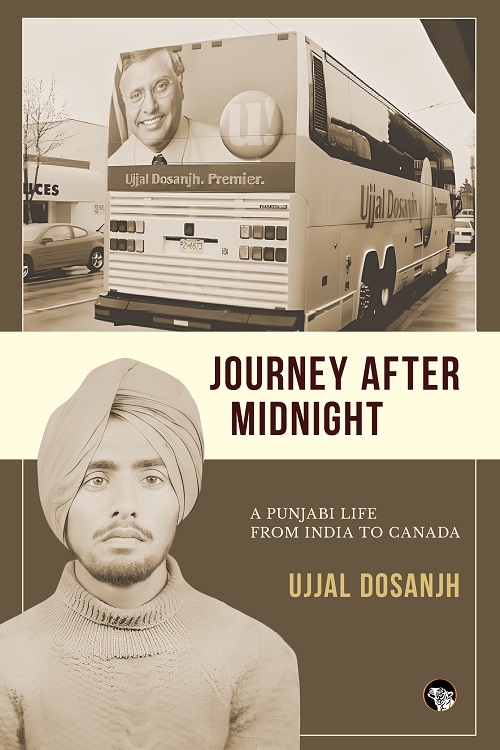
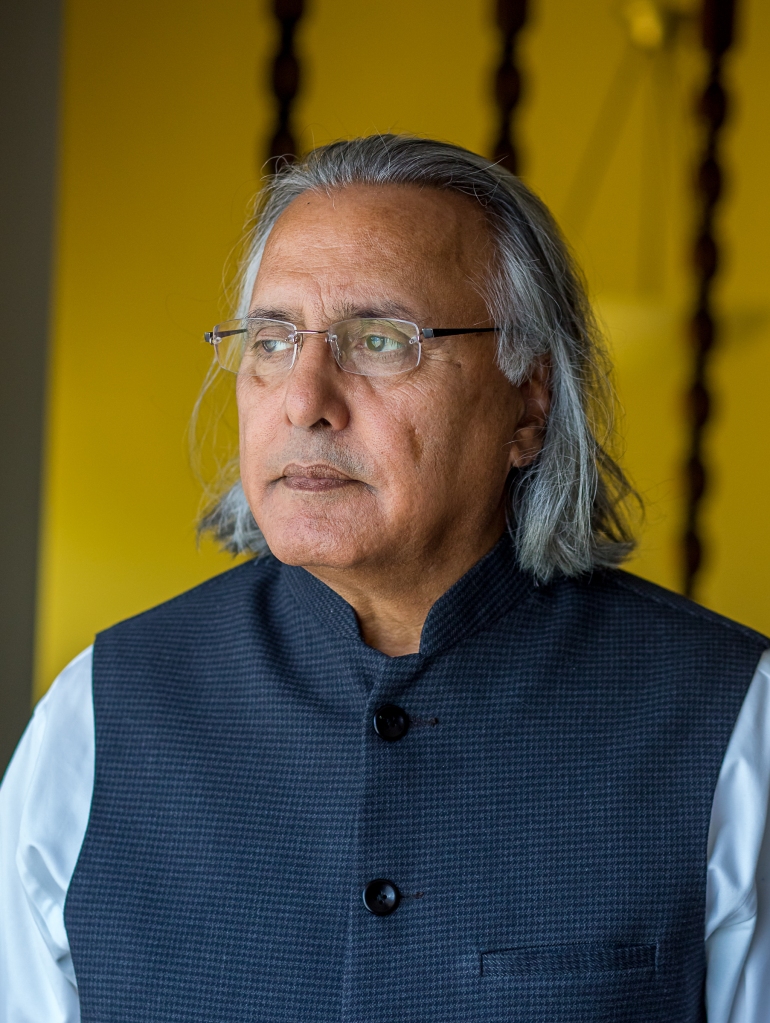
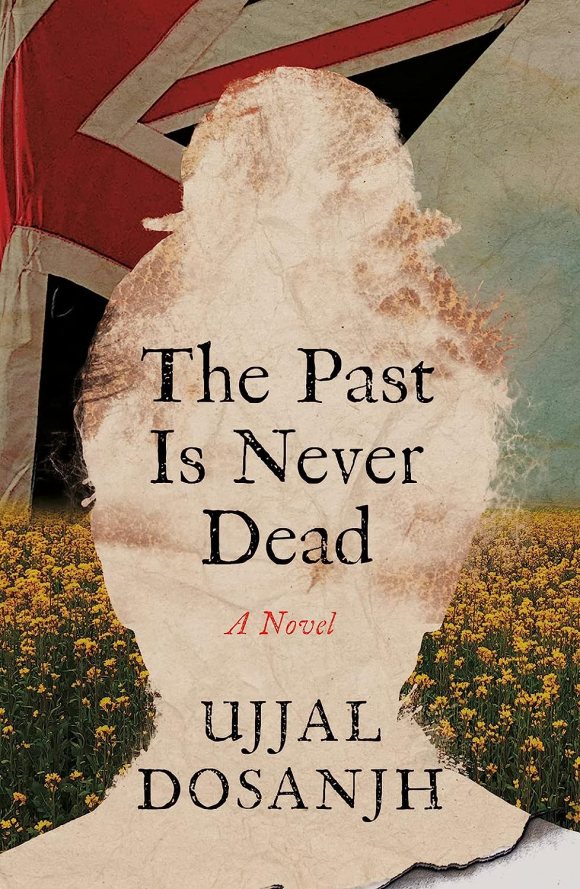


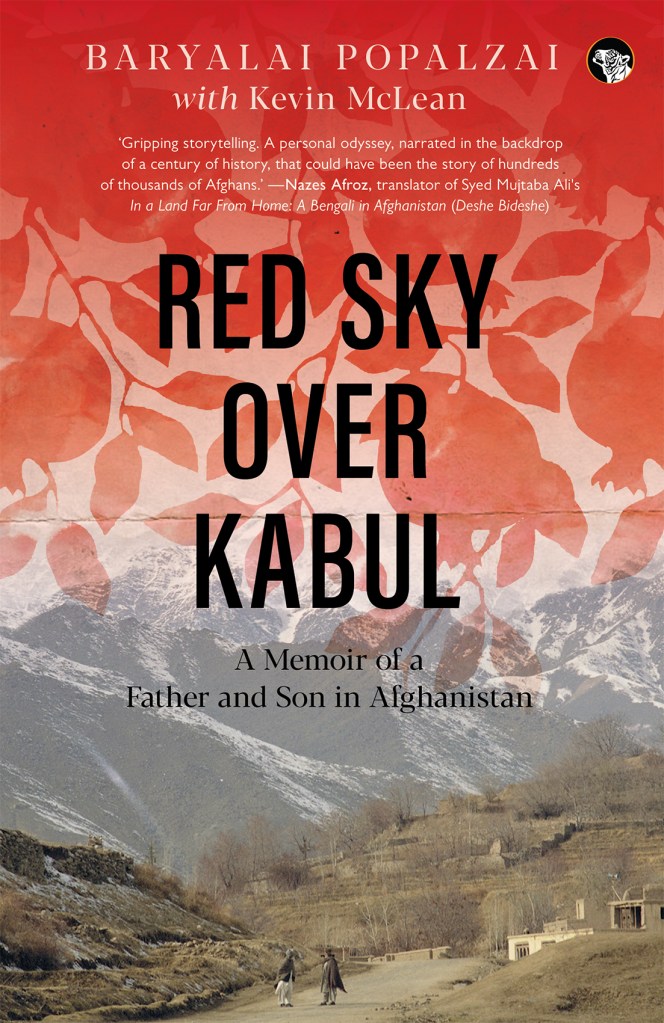
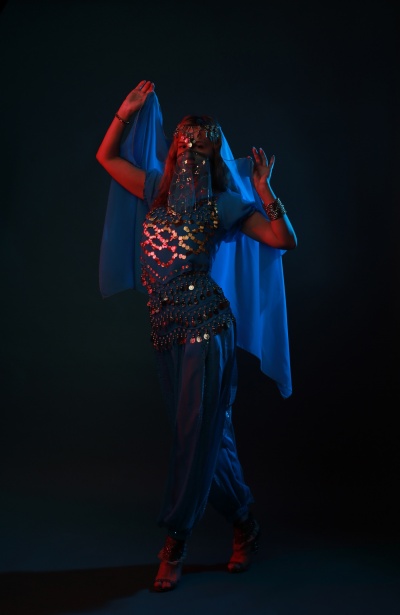

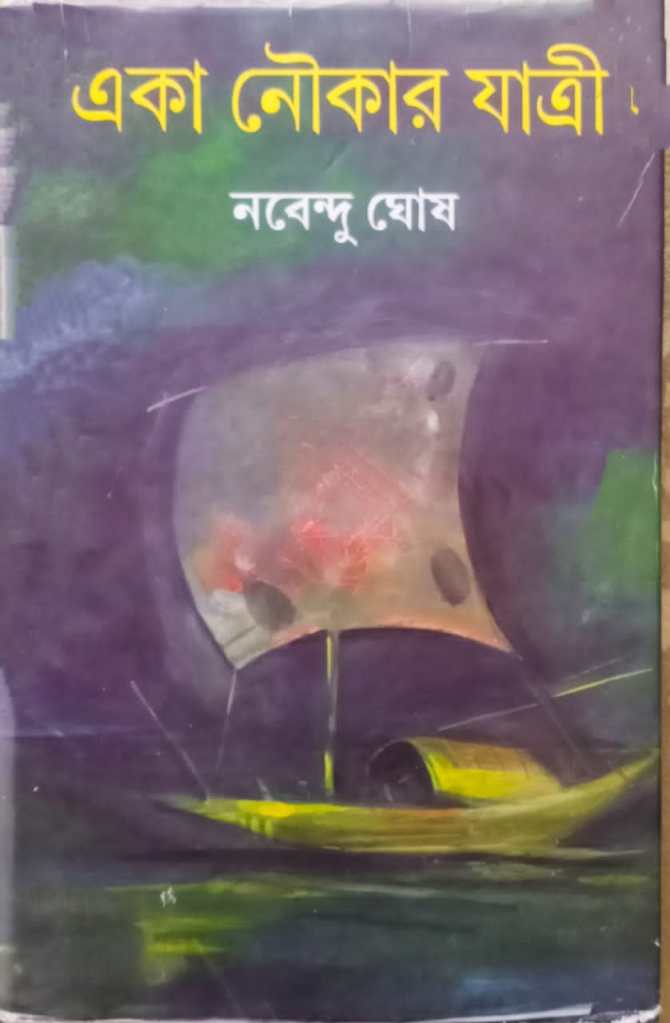
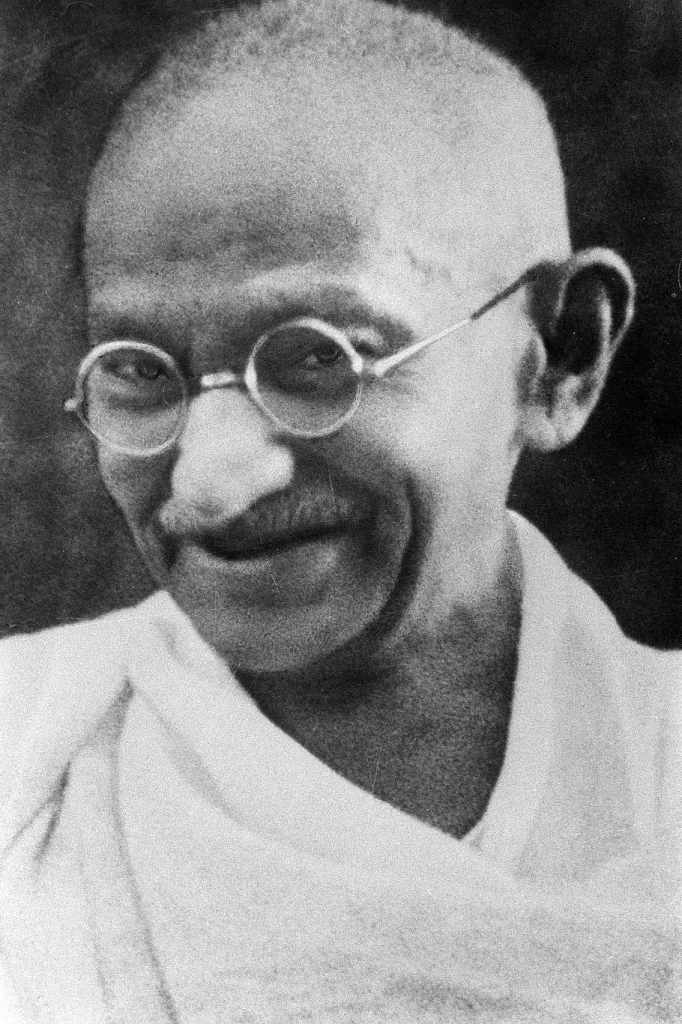


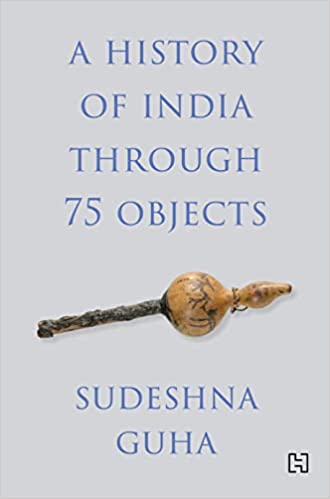

 Borderless