Categories
A Special Tribute

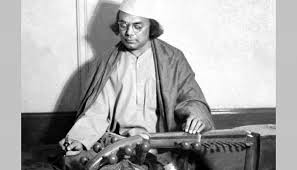
Blazing across the Darkness: Kazi Nazrul Islam

Why fear destruction? It’s the gateway to creation!
The new will arise and rip through the unlovely.
Hair disheveled and dressed carelessly
Destruction makes its way gleefully.
Confident it can destroy and then build again!
Ring bells of victory!

-- Prolloyullash (The Frenzy of Destruction) by Nazrul; translated from Bengali by Professor Fakrul Alam

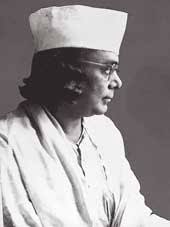
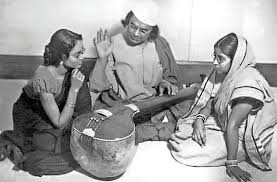
As the world swerves in disarray, Kazi Nazrul Islam, who died the same month as Tagore, leaves behind a treasury of prose and poetry which, if we imbibe into our blood and bones, could perhaps heal dysfunctional constructs made by humans. Given the current situation, one cannot but help recall Nazrul’s lines from his poem, Prolloyullash (The Frenzy of Destruction), hoping for better times. Known as the rebel poet of Bengal, in his poem, Bidrohi (Rebel), he becomes the force that creates the change. His powerful writing and idealism continues to inspire over the decades.

Tagore saw brilliance in him and even wrote a poem for him that Radha Chakravarty has shared in her essay as a tribute on his 48th death anniversary. We also revisit his own inspiring words with translations of his poetry, lyrics and fiction by Professor Alam and Sohana Manzoor, along with the tribute by Chakravarty.

Poetry

Rebel or ‘Bidrohi’ by Nazrul has been translated by Professor Fakrul Alam. Click here to read.

Two Songs of Parting by Nazrul have been translated by Professor Fakrul Alam. Click here to read. 

Prose

The Snakecharmer, Shapuray by Nazrul, has been translated from Bengali by Sohana Manzoor. Click here to read.

The Comet’s Trail: Remembering Kazi Nazrul Islam

Radha Chakravarty pays tribute to the rebel poet of Bengal. Click here to read.

Categories
Contents

Borderless, August 2024

Art by Sohana Manzoor

Editorial

A Sprinkling of Happiness?… Click here to read.

Conversation

A review of and discussion with Rhys Hughes about his ‘Weird Western’, The Sunset Suite. Click here to read.

Translations

Two Songs of Parting by Nazrul have been translated by Professor Fakrul Alam. Click here to read.

The Snakecharmer, Shapuray by Nazrul, has been translated from Bengali by Sohana Manzoor. Click here to read.

Leaving for Barren, Distant Lands by Allah Bashk Buzdar has been translated from Balochi by Fazal Baloch. Click here to read.

Loneliness has been translated from Korean by the poet, Ihlwha Choi. Click here to read.

Tagore’s Olosh Shomoy Dhara Beye (Time Flows at an Indolent Pace) has been translated from Bengali by Mitali Chakravarty. Click here to read.

Poetry

Click on the names to read the poems

Michael Burch, Arshi Mortuza, Jason Ryberg, Saranyan BV, Koiko Tsuuda, Jane Hammons, Noopur Vedajna Das, Adeline Lyons, George Freek, Naisha Chawla, John Grey, Lakshmi Chithra, Craig Kirchner, Nia Joseph, Stuart MacFarlane, Sanjay C Kuttan, Nilsa Mariano, G Javaid Rasool, Ryan Quinn Flanagan, Rhys Hughes

Musings/ Slices from Life

Breaking Bread

Snigdha Agrawal has a bovine encounter in a restaurant. Click here to read.

That Box of Colour Pencils

G Venkatesh writes of a happy encounter with two young children. Click here to read.

The Chameleon’s Dance

Chinmayi Goyal muses on the duality of her cultural heritage. Click here to read.

Musings of a Copywriter

In Godman Ventures Pvt. Ltd., Devraj Singh Kalsi looks into a new business venture with a satirical glance. Click here to read.

Notes from Japan

In In Praise of Parasols, Suzanne Kamata takes a light look at this perennial favourite of women in Japan. Click here to read.

Essays

The Comet’s Trail: Remembering Kazi Nazrul Islam

Radha Chakravarty pays tribute to the rebel poet of Bengal. Click here to read.

From Srinagar to Ladakh: A Cyclist’s Diary

Farouk Gulsara travels from Malaysia for a cycling adventure in Kashmir. Click here to read.

Bottled Memories, Inherited Stories

Ranu Bhattacharyya takes us back to Dhaka of the 1930s… and a world where the two Bengals interacted as one with her migration story. Click here to read.

Landslide In Wayanad Is Only The Beginning

Binu Mathew discusses the recent climate disaster in Kerala and contextualises it. Click here to read.

Stories

The Orange Blimp

Joseph Pfister shares a vignette set in the Midwest. Click here to read.

A Queen is Crowned

Farhanaz Rabbani traces the awakening of self worth. Click here to read.

Roberto Mendoza’s Memoirs of Admiral Don Christopher Columbus

Paul Mirabile explores myths around Christopher Columbus in a fictitive setting. Click here to read.

Book Excerpts

An excerpt from Syed Mujtaba Ali’s Shabnam, translated from Bengali by Nazes Afroz. Click here to read.

An excerpt from Maaria Sayed’s From Pashas to Pokemon. Click here to read.

Book Reviews

Somdatta Mandal reviews Upamanyu Chatterjee’s Lorenzo Searches for the Meaning of Life. Click here to read.

Meenakshi Malhotra reviews Shuchi Kapila’s Learning to Remember: Postmemory and the Partition of India. Click here to read.

Rakhi Dalal reviews Namita Gokhale’s Never Never Land. Click here to read.

Bhaskar Parichha reviews Malvika Rajkotia’s Unpartitioned Time: A Daughter’s Story. Click here to read.

.

Click here to access the Borderless anthology, Monalisa No Longer Smiles

Click here to access Monalisa No Longer Smiles on Amazon International

Categories
Editorial

A Sprinkling of Happiness?

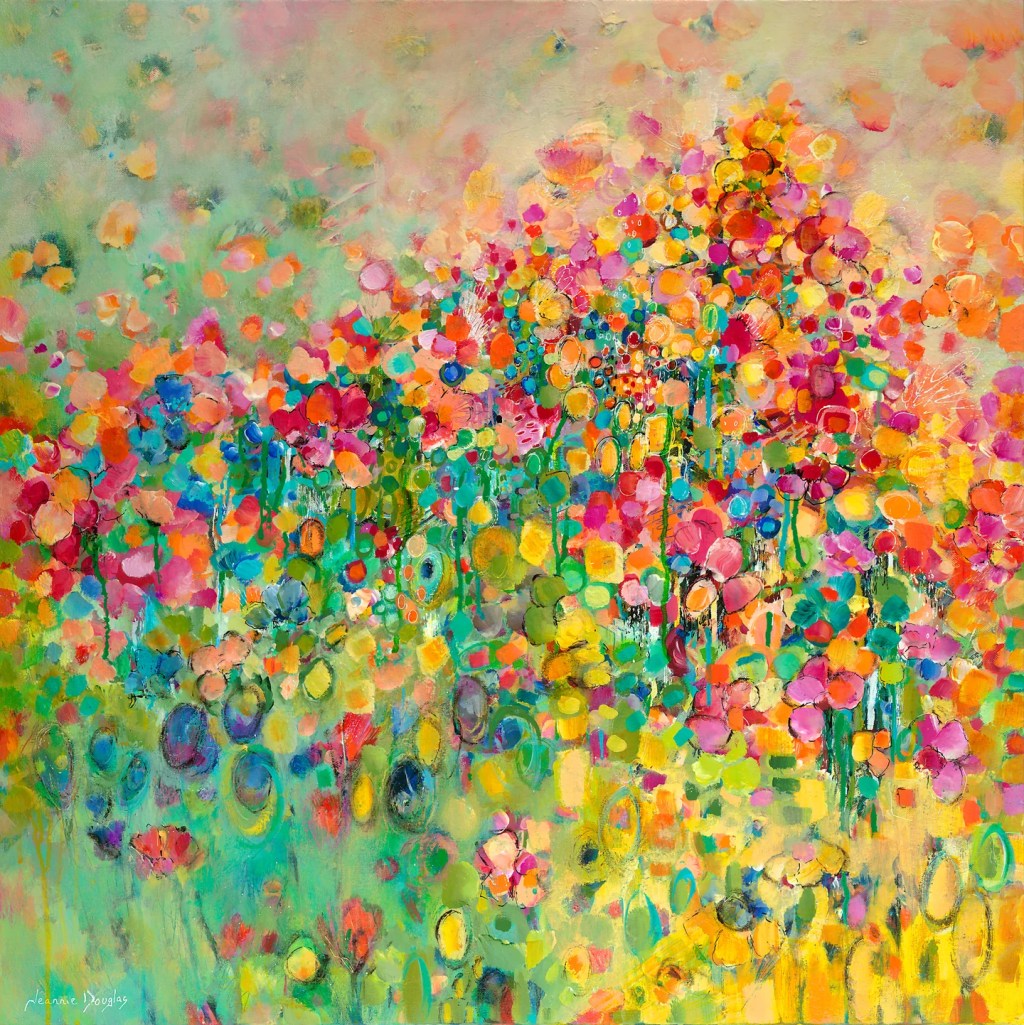
A Pop of Happiness by Jeanie Douglas. From Public Domain

Happiness is a many splendored word. For some it is the first ray of sunshine; for another, it could be a clean bill of health; and yet for another, it would be being with one’s loved ones… there is no clear-cut answer to what makes everyone happy. In Harry Potter and the Half Blood Prince (JK Rowling, 2005), a sunshine yellow elixir induces euphoria with the side effects of excessive singing and nose tweaking. This is of course fantasy but translate it to the real world and you will find that happiness does induce a lightness of being, a luminosity within us that makes it easier to tackle harder situations. Playing around with Rowling’s belief systems, even without the potion, an anticipation of happiness or just plain optimism does generate a sense of hope for better times.  Harry tackles his fears and dangers with goodwill, friends and innate optimism. When times are dark with raging wars or climate events that wreck our existence, can one look for a torch to light a sense of hope with the flame of inborn resilience borne of an inner calm, peace or happiness — call it what you will…?

It is hard to gauge the extreme circumstances with which many of us are faced in our current realities, especially when the events spin out of control. In this issue, along with the darker hues that ravage our lives, we have sprinklings of laughter to try to lighten our spirits. In the same vein, externalising our emotions to the point of absurdity that brings a smile to our lips is Rhys Hughes’ The Sunset Suite, a book that survives on tall tales generated by mugs of coffee. In one of the narratives, there is a man who is thrown into a bubbling hot spring, but he survives singing happily because his attacker has also thrown in packs of tea leaves. This man loves tea so much that he does not scald, drown or die but keeps swimming merrily singing a song. While Hughes’ stories are dark, like our times, there is an innate cheer that rings through the whole book… Dare we call it happiness or resilience? Hughes reveals much as he converses about this book, squonks and stranger facts that stretch beyond realism to a fantastical world that has full bearing on our very existence.

Poetry brings in a sprinkling of good cheer not only with a photo poem by Hughes, but also with more in a lighter vein from Ryan Quinn Flanagan, Michael R Burch, Arshi Mortuza, Jason Ryberg and others. Sanjay C Kuttan has given a poem dipped in nostalgic happiness with colourful games that evolved in Malaysia. Koiko Tsuuda, an Estonian, rethinks happiness. George Freek, Stuart MacFarlane and Saranyan BV address mortality. Nilsa Mariano and G Javaid Rasool have given us powerful migrant poetry while John Grey, Craig Kirchner, Jane Hammons, Nia Joseph, Noopur Vedajna Das and Adeline Lyons refer to climate or changes wrought by climate disasters in their verses.

A powerful essay by Binu Mathew on the climate disaster at Wayanad, a place that earlier had been written of as an idyllic getaway, tells us how the land in that region has become more prone to landslides. The one on July 30th this year washed away a whole village! Farouk Gulsara has given a narrative about his cycling adventure through the state of Kashmir with his Malaysian friends and finding support in the hearts of locals, people who would be the first to be hit by any disaster even if they have had no hand in creating the catastrophes that could wreck their lives, the flora and the fauna around them. In the wake of such destructions or in anticipation of such calamities, many migrate to other areas — like Ranu Bhattacharya’s ancestors did a bit before the 1947 Partition violence set in. A younger migrant, Chinmayi Goyal, muses under peaceful circumstances as she explores her own need to adapt to her surroundings. G Venkatesh from Sweden writes of his happy encounter with local children in the playground. And Snigdha Agrawal has written of partaking lunch with a bovine companion – it can be intimidating having a cow munching at the next table, I guess! Devraj Singh Kalsi has given a tongue-in-cheek musing on how he might find footing as a godman. Suzanne Kamata has given a lovely summery piece on parasols, which never went out of fashion in Japan!

Radha Chakravarty, known for her fabulous translations, has written about the writer she translated recently, Nazrul. Her essay includes a poem by Tagore for Nazrul. Professor Fakrul Alam has translated two of Nazrul’s songs of parting and Sohana Manzoor has rendered his stunning story Shapuray (Snake Charmer) into English. Fazal Baloch has brought to us poetry in English from the Sulaimani dialect of Balochi by Allah Bashk Buzdar, and a Korean poem has been self-translated by the poet, Ihlwha Choi. The translations wind up with a poem by Tagore, Olosh Shomoy Dhara Beye (Time Flows at an Indolent Pace), showcasing how the common man’s daily life is more rooted in permanence than evanescent regimes and empires.

Fiction brings us into the realm of the common man and uncommon situations, or funny ones. A tongue-in-cheek story set in the Midwest by Joseph Pfister makes us laugh. Farhanaz Rabbani has given us a beautiful narrative about a girl’s awakening. Paul Mirabile delves into the past using the epistolary technique highlighting darker vignettes from Christopher Columbus’s life. We have book excerpts from Maaria Sayed’s From Pashas to Pokemon and Nazes Afroz’s translation of Syed Mujtaba Ali’s Shabnam with both the extracts and Rabbani’s narratives reflecting the spunk of women, albeit in different timescapes…

Our book reviews feature Meenakshi Malhotra’s perspectives on Shuchi Kapila’s Learning to Remember: Postmemory and the Partition of India and Bhaskar Parichha’s thought provoking piece on Malvika Rajkotia’s autobiographical Unpartitioned Time: A Daughter’s Story. While both these look into narratives around the 1947 Partition of the Indian subcontinent, Rakhi Dalal’s review captures the whimsical and yet thoughtful nuances of Namita Gokhale’s Never Never Land. Somdatta Mandal has written about Upamanyu Chatterjee’s latest novel, Lorenzo Searches for the Meaning of Life, which is in a way a story about a migrant too.

When migrations are out of choice, with multiple options to explore, they take on happier hues. But when it is out of a compulsion created by manmade disasters — both wars and climate change are that — will the affected people remain unscarred, or like Potter, bear the scar only on their forehead and, with Adlerian calm, find happiness and carpe diem?

Do pause by our current issue which has more content than mentioned here as some of it falls outside the ambit of our discussion. This issue would not have been possible without an all-out effort by each of you… even readers. I would like to thank each and every contributor and our loyal readers. The wonderful team at Borderless deserve much appreciation and gratitude, especially Manzoor for her wonderful artwork. I invite you all to savour this August issue with a drizzle of not monsoon or April showers but laughter.

May we all find our paths towards building a resilient world with a bright future.

Good luck and best wishes!

Mitali Chakravarty

borderlessjournal.com

Click here to access the content’s page for the August 2024 Issue.

.

READ THE LATEST UPDATES ON THE FIRST BORDERLESS ANTHOLOGY, MONALISA NO LONGER SMILES, BY CLICKING ON THIS LINK.

Categories
Nazrul Translations

Songs of Parting by Nazrul

Translations from Bengali by Professor Fakrul Alam

Nazrul’s Bidai Shondha Ashilo has been translated as ‘The Evening of Parting’

THE EVENING OF PARTING 

The evening of parting is here; darkness encases the eyes.
Dearest, don’t let tears make my path of parting more slippery.
Like a flower would, I drifted with the tide and came here
Unintentionally. Why, dearest, did you err and pick the flower up?
Why did you put the flower in your tresses, only to fling it away,
Letting it drift once again with the tide? Here no one understands
Each other. The one you crave only slights you; the one you desire
Won’t be your own. Here there is no real love in the heart’s depths.
How will you understand how my pain wilts the garland of union?
The song I sing takes wings and reaches the sky, craving for you.

Nazrul’s Masjideri Pashe Amai Kabar Diyo Bhai has been translated as’Bury Me’

BURY ME 

Make sure to bury me next to a mosque, dear brother of mine,
So that from my grave I’ll hear the muezzin’s prayer call all the time.
As those in the congregation pass me by, I’ll hear too their holy steps
This sinner will thus be saved from the evil spirits close to the grave!
So many pious people—God’s devotees and our prophet’s disciples—
Come to this mosque and recite verses from the Holy Quran here.
Those verses uplift my soul and mind. Many dervishes and fakirs
Come to the mosque’s compound too. Till deep into the night
They recite God’s name repeatedly, though hidden from sight.
I too would like to repeat with them His Holy name, all in tears.
I too would so like to keep repeating His Holy name thus!


.

Fakrul Alam is an academic, translator and writer from Bangladesh. He has translated works of Jibonananda Das and Rabindranath Tagore into English and is the recipient of Bangla Academy Literary Award (2012) for translation and SAARC Literary Award (2012).

.

PLEASE NOTE: ARTICLES CAN ONLY BE REPRODUCED IN OTHER SITES WITH DUE ACKNOWLEDGEMENT TO BORDERLESS JOURNAL

Click here to access the Borderless anthology, Monalisa No Longer Smiles

Click here to access Monalisa No Longer Smiles on Amazon International

Categories
Nazrul Translations

Kazi Nazrul Islam’s “Shapuray” or The Snake Charmer

Translated from Bengali by Sohana Manzoor

From the Public Domain

Far away from the densely populated civilised world, the nomadic tribes of snake charmers make their temporary homes sometimes right beneath the deep blue mountains, sometimes among deserted and impassable forests, and sometimes by the foamy mountain brooks or in vast stretches of barren land.

He was the headman of one such band of snake charmers. His name was Jahar. He was a god among his people. His men were terrified of him, and yet they also worshipped him. Only one man in his tribe was jealous of Jahar’s hold over his people and scorned him in secret. Yet, he did not dare to question his authority in public. This man was called Bishun. He also had a few disciples. His ardent wish was the demise of Jahar. He plotted to destroy the man and become the leader of the clan himself.

Then came the day of naga-panchami.[1]

Jahar had gone to the foot of the hill to look for poisonous snakes. On his snake charmer’s flute, he played an enchanting tune that would arouse one’s entire being. The tune attracted a dangerously poisonous black cobra which came out of the woods with a swaying hood. Jahar’s eyes burned with excitement. Suddenly, he threw away his flute and placed his palms in front of the raised hood of the snake. One snap and Jahar’s body turned blue because of the venom. His clansmen were stupefied with fear and stood surrounding him. Jahar was unperturbed. He began to chant some spells in a composed manner and soon he was cured of the venom. The astounded crowd cheered their hero. Only Bishun moved away with a darkened countenance.

This is how Jahar had taken on snakebites ninety-nine times and also cured himself. Now he was preparing himself for the hundredth time. If he succeeded in taking out the venom for this last time, he would be completing a difficult penance. Being successful in serpent-cult was the ultimate aim in Jahar’s life. To complete this, he had been practicing celibacy with utmost sincerity.

While Jahar’s disciples and followers awaited the great day ardently, one night something unprecedented happened. Did he ever pause to think that anything like that could happen?

Jahar had roamed around the world like a gypsy. Distancing himself from women he came to think that women were only hindrances to attain his target. He even started to be disdainful towards women in general.

Then one day, he saw a plantain raft carrying the corpse of a beautiful girl. According to tradition, people bitten by snake were not buried, but were placed on such rafts and set afloat in rivers. Jahar could only do what he was taught to do as a snake charmer—to revive the girl.

Now he was in deep trouble. The young woman had forgotten her past because of the strong snake poison. She could recall nothing about her family or friends. She just kept on staring at him piteously. He could not just leave her behind. His once tremendous hatred turned into pity and compassion. He provided a home for her. What could one call this except irony of fate? But his long harboured disdain for women made him dress the girl as a boy. He made her drink a strong potion that would control her womanly nature.

Jahar named her Chandan (a boy’s name) and joined a different tribe of snake charmers. The old leader of the new tribe was so charmed by Jahar that before his death he named Jahar his successor. So, Jahar became the undisputed leader of the half-civilised nomadic tribe.

None of this new tribe, however, knew that Chandan was not a boy. Jhumro, a favourite disciple of Jahar, was her only good friend. Jhumro cared a lot for Chandan.

At this time, the celibate Jahar, who had passed the test of ninety-nine snakebites successfully, suddenly realised that he was in danger of falling from his highest point of honour.

That night when he was preparing to go to sleep, Chandan’s unparalleled beauty affected him like an arrow and turned him mad for a moment. It is with utmost self-control that he was able to restrain himself. He ran to the idol of the goddess Mansa and sat at her feet repenting through the night for his momentary delusion. He prayed and cried as atonement.

But the desire that was aroused, could not be extinguished so easily. Then on that very day, it was heard that the king’s men of the country had started tormenting the snake charmers because they blamed the nomadic tribe for the increasing number of abductions of children lately.

Jahar immediately gathered his band and traveled a long way and camped in a wild forest frequented by ferocious animals. They ignited fire to keep the wild beasts away and started to make merry. Jahar, Jhumro, Chandan, Bishun, Bishun’s son, Tetule, the magician with blue glasses, the fortune-teller, the old bell-keeper—all were enjoying the amusements played in the moonlight-drenched night.

A fight between Jhumro and Tetule started over a trivial matter. In the beginning, they just yelled at each other, but gradually it developed into fist-fighting. Chandan stood apart, however, at one point, unable to bear Jhumro’s predicament, she jumped between the two men. In the ensuing scuffle, she lost her breastplate, and the people suddenly realized that Chandan was a beautiful woman in disguise.

At this point, another beauty rushed into the scene. Her name was Mowtushi. She took off the scarf she was wearing and covered Chandan with it. All this while, she was secretly in love with Chandan with the abandonment of a youthful love. Realising that Chandan was a woman just like her, all her pent-up love turned into a sisterly affection. Meanwhile, Jahar appeared and dragged the embarrassed Chandan to his tent. The members of his tribe were astonished to say the least. Nobody thought in their wildest dream that an austere celibate like Jahar could keep such a disguised beauty with him.

The only person who did not seem surprised was the old bell-keeper. He was a strange man who drank heavily and told fortunes through clay marks on the ground. Yet he never revealed the complete truth. He shook his head and broke into a shrill laughter.

In the meantime, Jahar had cornered Chandan in his tent and was trying to draw her in his embrace saying, “Chandan, Chandan, you are only mine.”  His self- restraint of all these years was taken over by an overwhelming desire that made him blind.

Chandan tried in vain to move away from him. Finally, she reminded him of his vow and the goal of his life—to be successful in his serpent-cult. The words hit their mark and Jahar came to his senses. What was he doing? His gaze fell upon the effigy of the goddess Mansa, and he rushed out of the tent in pain. He would have to do it that very night. He would have to take the hundredth bite from a venomous snake and complete his vow.

Finally, he found such a snake and was about to start the ritual when Bishun came with the news that Jhumro had run off with Chandan. Mowtushi had helped them in this venture.

Jahar could not complete his vow. All the preparations he had taken for so many years were absolved by this one piece of news. His rage made him mad, and he rushed off to find the guilty pair. Nobody, however, could tell him about their whereabouts; he felt his entire body was set on fire.

Returning to his tent, Jahar opened the basket of the venomous black cobra and went to the temple of Shiva. He used sacred texts as enchantment and set the snake after Jhumro.

By that time, the deliriously happy Chandan and Jhumro had journeyed out towards the unknown. They dreamt of a nest of happiness in some far-off land where they would live happily ever after.

The venomous black cobra appeared right at that moment, bit Jhumro, and disappeared. Immediately, the deadly poison caused Jhumro to fall on the ground.

Chandan stood there thunderstruck. She felt helpless and hopeless. The only way to save Jhumro was to approach Jahar. But how could she possibly do that? Blinded by tears Chandan traced back her steps to the tent she had deserted earlier.

Jahar sat like a lifeless statue. A tearful Chandan approached him and said in a trembling voice that she loved Jhumro more than her life. If Jahar could save him, she was even willing to sell her soul to him. Jahar did not utter one word, but followed Chandan in a trance till they came to Jhumro’s body that had turned blue.

Jhumro was saved. Chandan happiness knew no bound. But she did not have time. She had sold herself to Jahar to save Jhumro. She belonged to Jahar now and hence she said to Jhumro in a shaky voice, “Go away, Jhumro. Go far away. I am not yours anymore.”

How could she chase away the man she loved most? Tears fell from eyes ceaselessly, her heart hurt too.

Jahar was watching the heartbreaking scene standing not far away. He held the black cobra that had returned to retrieve poison from Jhumro’’s body. He looked at Chandan once and then again at Jhumro. He seemed immersed in deep thought.

Then he took the snakebite on his own chest willingly. Jhumro cried, “What did the Master do?” Both Jhumro and Chandan ran toward Jahar who replied angrily, “Take her away from here, Jhumro. I will consume the poison now. This is my last snake, and I must cast the spell, but it won’t work before womenfolk. Take her away from this forest, country even. Go far away to some other land.”

Chandan and Jhumro left accordingly. The master saw that his disciples were gone, but he did not chant his spell. He smiled to himself and muttered, “Those spells are not mine to utter. I will call on Shiva, Shiva, Shambhu, Shambhu…”

The poison of the black cobra was turning his body blue and the light of his eyes were dimmed. Yet, his face caught on the ray of some other world that illuminated his visage with joy. It seemed that his suffering soul had finally found peace.

He had been successful in this final battle of the serpent-cult.

From the Public Domian

[1] Naga-panchami is a day that might fall either in the Bengali month of Aashar or Shravan when serpents are worshipped.

.

Kazi Nazrul Islam (1899-1976) was born in united Bengal, long before the Partition. Known as the  Bidrohi Kobi, or “rebel poet”. Nazrul is now regarded as the national poet of Bangladesh though he continues a revered name in the Indian subcontinent. In addition to his prose and poetry, Nazrul wrote about 4000 songs.

Sohana Manzoor is an Associate Professor at the Department of English and Humanities at ULAB, a short story writer, a translator, an essayist and an artist. 

PLEASE NOTE: ARTICLES CAN ONLY BE REPRODUCED IN OTHER SITES WITH DUE ACKNOWLEDGEMENT TO BORDERLESS JOURNAL

Click here to access the Borderless anthology, Monalisa No Longer Smiles

Click here to access Monalisa No Longer Smiles on Kindle Amazon International

Categories
Tribute

A Hundred Years from Today…

A hundred years from today…
Who are you reading my poetry
With eager curiosity?

-- One Hundred Years Later,Tagore
Rabindranath Tagore (May 7th 1861-August 7 1941). From Public Domain.

One of the greatest minds of centuries, Tagore wondered about life and death… about posterity. He lost his wife, some of his children and many more loved ones in his lifetime. He took a philosophical stance on death. On his death anniversary, we bring to you his ideas on death and life too…

As a salute to his pen, we start with his poems and stories, mostly in translation, and move on to tributes by Nazrul (translated by Professor Fakrul Alam), by Aruna Chakravarti , by the late Sunil Gangopadhyay and more…

Tagore’s Poetry   

The Child, a poem by Tagore originally written in English. Click here to read. 

Tagore in Translation  

Tagore’s Achhe Dukhu, Achhe Mrityu(Sorrow Exists, Death Exists): These lyrics were composed by the poet when on the death of his wife. It has been translated by Fakrul Alam. Click here to read.

Mrityu or Death, a poem by Tagore has been translated by Mitali Chakravarty. Click here to read.

One Small Ancient Tale: Rabindranath Tagore’s ‘Ekti Khudro Puraton Golpo (One Small Ancient Tale)’ from his collection Golpo Guchcho ( literally, a bunch of stories) has been translated by Nishat Atiya. Click here to read.  

Tributes

Nazrul’s Ghumaite Dao Shranto Robi Re(Let Robi Sleep in Peace) has been translated from Bengali by Professor Fakrul Alam. Click here to read.

The Myriad Hues of Tagore by Aruna Chakravarti : Aruna Chakravarti writes on times and the various facets of Tagore. Click here to read.

Rabindranath Tagore: A Universal Bard :This conversation between Aruna Chakravarti and Sunil Gangopadhyay that took place at a Tagore Conference organised by the Sahitya Akademi in Kochy in 2011. Click here to read.

A book review by Meenakshi Malhotra of Somdatta Mandal’s The Last Days of Rabindranath Tagore in Memoirs, a translation from a conglomeration of writings from all the Maestro’s caregivers. Click here to read.

Categories
Contents

Borderless, July 2024

Art by Sohana Manzoor

Editorial

Seasons out of TimeClick here to read.

Conversation

A brief introduction to Suzanne Kamata’s Cinnamon Beach and a conversation with the author about her latest novel. Click here to read.

Translations

Tagore’s Achhe Dukhu, Achhe Mrityu, (Sorrow Exists, Death Exists) has been translated from Bengali by Fakrul Alam. Click here to read.

Nazrul’s Ghumaite Dao Shranto Robi Re (Let Robi Sleep in Peace) has been translated from Bengali by Professor Fakrul Alam. Click here to read.

Amalkanti by Nirendranath Chakraborty has been translated from Bengali by Debali Mookerjea-Leonard. Click here to read.

Speech Matters, a story by Naramsetti Umamaheswararao, has been translated from Telugu by Johnny Takkedasila. Click here to read.

Every Day by Hafeez Rauf has been translated from Balochi by Fazal Baloch. Click here to read.

The Long Journey by Ihlwha Choi has been translated from Korean by the poet himself. Click here to read.

Mrityu or Death by Tagore has been translated from Bengali by Mitali Chakravarty. Click here to read.

Poetry

Click on the names to read the poems

Jared Carter, Michael Burch, Kirpal Singh, Rakhi Dalal, Stuart MacFarlane, Averi Saha, John Grey, Surbhi Sharma, David Francis, Pramod Rastogi, David Mellor, Saranyan BV, Jim Bellamy, Tasneem Hossain, Thompson Emate, George Freek, Mitra Samal, Lizzie Packer, Shamik Banerjee, Ryan Quinn Flanagan, Rhys Hughes

Musings/ Slices from Life

Stop, Look, Think!

Farouk Gulsara muses with a slice irony at a traffic junction. Click here to read.

Norman Rockwell: Out of the Closet

Wayne F. Burke gives a vignette of the life of the legendary illustrator. Click here to read.

Unveiling the Magic of Mystical Mangroves

Sai Abhinay Penna travels to the second largest mangrove forest in the world. Click here to read.

Glimpses of an Indian Summer

Madhuri Bhattacharya nostalgically captures the nuances of a hot summer. Click here to read.

The Pearl of the Indian Ocean

Ravi Shankar travels to Colombo. Click here to read.

Essays

The Myriad Hues of Tagore by Aruna Chakravarti

Aruna Chakravarti writes on times and the various facets of Tagore. Click here to read.

Picked Clean

Snigdha Agrawal writes of the impact from the loss of green cover in Bangalore. Click here to read.

Fast Food for a Month

Keith Lyons gives an in memoriam about the late documentarian, Morgan Spurlock. Click here to read.

Stories

In the Shadows…

Paul Mirabile gives us a story steeped in art and mental health. Click here to read.

The Last Hyderabadi

Mohul Bhowmick talks of the passage of an era. Click here to read.

Alvin and the Curious Case of Spoilt Milk

Anagha Narasimha gives a light hearted piece about the impact of demonetisation. Click here to read.

Book Excerpts

An excerpt from The Poisoner of Bengal/The Prince and the Poisoner by Dan Morrison. Click here to read.

An excerpt from The Sunset Suite by Rhys Hughes. Click here to read.

Book Reviews

Somdatta Mandal reviews Knife:  Meditations After an Attempted Murder by Salman Rushdie. Click here to read.

Basudhara Roy reviews Wild Women: Seekers, Protagonists and Goddesses in Sacred Indian Poetry by Arundhathi Subramaniam. Click here to read.

Navleen Multani reviews Mapping the Mind, Minding the Map, edited by Basudhara Roy and Jaydeep Sarangi. Click here to read.

Bhaskar Parichha reviews Derek Waller’s The Pundits: British Exploration of Tibet and Central Asia. Click here to read.

.

Click here to access the Borderless anthology, Monalisa No Longer Smiles

Click here to access Monalisa No Longer Smiles on Amazon International

Categories
Editorial

Seasons Out of Time

...the horror of dark red sky – the gates of hell opened wide so they say that even atheists prayed to save the souls of the dead...

— Lizzie Packer, 'Hot Dry Summers'

The description in ‘Hot Dry Summers’ is not of hell but what is perceived as happening on certain parts of Earth due to global warming or climate change. Forest fires. Nearer the equator, the storms have become harsher with lightning strikes that seem to connect the Earth to the sky. Trees get uprooted as the soil is softened from excessive rain. Sometimes, they fall on passers-by killing or injuring them. There is no rain in some places, forest fires or flooding in others… The highest temperatures touched 55 degrees Celsius this year. Instead of worrying about losing our homes lodged on land masses to the oceans that continue to rise, becoming dark heat absorbers due to loss of white ice cover, we persistently fight wars, egged on by differences highlighting divisive constructs. It feels strange that we are witness to these changes which seem to be apocalyptic to doomsday sayers. Are they right? Our flora, fauna and food will also be impacted by global climate change. How will we survive these? Will we outlive these as a species?

Keeping the myriad nuances of living on this planet in mind, we have writings from more than a dozen countries showcased in this issue, with a few highlighting climate change and wars — especially in poetry. Michael Burch has given us poetry on weather. John Grey has celebrated nature. Other than Lizzie Packer, Mitra Samal has a subtle poem on climate change. Stuart McFarlane and David Mellor bring the disaster of war to our doorstep. Jared Carter, Kirpal Singh, Ryan Quinn Flanagan, Averi Saha, Shamik Banerjee, David Francis, George Freek, Rakhi Dalal and more have reflected on the varied nuances of life. Rhys Hughes has brought in humour and a comment on our perspectives, with his poem ‘Devil’s Bridge to Istanbul’… Can a shortcut be found across continents with the magic of a signboard?

Poetry in our translations’ section travels to Balochistan, from where a Hafeez Rauf translated from Balochi by Fazal Baloch, talks of burning tyres, again conflicts. It takes on a deeper hue as Ihlwha Choi translates his poignant poem from Korean, reflecting on the death of his mother. We have a translation of Tagore’s less popular poem, Mrityu[1], reflecting on the same theme. His reflections on his wife’s death too have been translated by Professor Fakrul Alam who has also shared a song of Nazrul, written and composed on the death of Tagore. Another lesser-known poet but brilliant nonetheless, Nirendranath Chakraborty, has been translated for us by Debali Mookerjea-Leonard. And what a tremendous poem it is when the person called Amalkanti wanted to be sunshine! We have a story too — ‘Speech Matters’ by Naramsetti Umamaheswararao translated by Johny Takkedasila.

Our stories as usual travel around the world — from Holland (by Paul Mirabile) to Hyderabad (by Mohul Bhowmick) and with a quick pause at Bangalore (by Anagha Narasimha). Travels in the real world are part of our non-fiction. Sai Abhinay Penna takes to a the second largest mangrove forest in the world and Ravi Shankar to Colombo. Madhuri Bhattachrya gives us a glimpse of an Indian summer and Snigdha Aggrawal explores the impact of climate change in her part of the world. Farouk Gulsara actually writes his reflections at a traffic junction. And it reads droll…

We have an in memoriam by Keith Lyons on Morgan Spurlock, the documentary maker who ate McDonald fare for a month and then made a film on it. We have two tributes to two legends across time. Wayne F Burke has given a brief piece on the iconic illustrator, Norman Rockwell. And Aruna Chakravarti, the queen of historic fiction who brought the Tagore family alive for us in her two very well researched novels, Jorasanko and Daughters of Jorasanko, has given us a fabulous tribute to Tagore on the not-so common aspects of him.

We have excerpts from another historical novel set in Bengal of Tagore’s time, Dan Morrison’s The Prince and the Poisoner: The Murder that Rocked the British Raj and Hughes’ The Sunset Suite, a set of absurd tall tales that make you smile, squirm or wonder…  Reviews of Salman Rushdie’s Knife: Meditations After an Attempted Murder by Somdatta Mandal and of Arundhathi Subramaniam’s Wild Women: Seekers, Protagonists and Goddesses in Sacred Indian Poetry by Basudhara Roy bring two latest books to our readers. Navleen Multani reflects on Mapping the Mind, Minding the Map, edited by Basudhara Roy and Jaydeep Sarangi. And Bhaskar Parichha tells us about a group of men called Pundits during British Raj, “In the closed files of the government of British India, however, they were given their true designation as spies…” in his review of Derek Waller’s The Pundits: British Exploration of Tibet and Central Asia.

Suzanne Kamata, the novelist who does a column from Japan for us normally, has spoken to us about her new novel, Cinnamon Beach, which overrides multiple manmade constructs. It’s an interesting read from someone who lives her life across multiple cultures and transcends many boundaries.

This is a bumper issue, and it is difficult to convey the vibrant hues of words that colour this edition. Please do pause by our contents page for a more comprehensive look.

This issue would not have been possible without all our fabulous contributors and a wonderful, dedicated team. We are delighted that Rakhi Dalal — who has done many reviews and shares her poetry with us in this issue — has agreed to be a writer-in-residence with us. A huge thanks to all of you, and especially Sohana Manzoor for her artwork. I am truly grateful to our readers for popularising our efforts to put together an online space with free and vibrant reads.

I would like to end with a few lines that gives me hope despite climate change, wars and doomsday predictions.

There’s more to life,
he says to me,
than what you choose to see.

— George Freek, 'The Imponderables'

Enjoy the reads.

Mitali Chakravarty

borderlessjournal.com

[1] Death

Click here to access the content’s page for the July 2024 Issue.

.

READ THE LATEST UPDATES ON THE FIRST BORDERLESS ANTHOLOGY, MONALISA NO LONGER SMILES, BY CLICKING ON THIS LINK.

Categories
Nazrul Translations

Nazrul’s Lines for Tagore

Ghumaite Dao Shranto Robi Re (Let Robi Sleep in Peace) was written by Nazrul in 1941 for Tagore, when he died. It has been translated from Bengali by Professor Fakrul Alam

Tagore takes his leave on August 7, 1941. Photo from Public Domain
Let the spent Robi sleep on.
Please, please don’t try to wake him up.
Let not the one who spread light all his life
Be awakened; don’t disturb his sleep.
Let the one who gave light and delighted thousands,
And has now collapsed at mother earth’s bosom,
Be ritually smeared with sandal paste on his forehead;
Don’t redden his face by weeping incessantly!
Even at the risk of straining yourself, stretch out your palms
To accept the power and the strength he has given you.
The departed Sun and Supreme One will enable us to succeed
Let the poet sleep on!
The departed Sun’s glow will still light up our interiors.
So, from within yourself pay him homage every day.
Don’t make him weep by shedding continuous tears!

A recording of the first performance of Nazrul’s lyrics in Bengali

Born in united Bengal, long before the Partition, Kazi Nazrul Islam (1899-1976) was known as the  Bidrohi Kobi, or “rebel poet”. Nazrul is now regarded as the national poet of Bangladesh though he continues a revered name in the Indian subcontinent. In addition to his prose and poetry, Nazrul wrote about 4000 songs.

.

Fakrul Alam is an academic, translator and writer from Bangladesh. He has translated works of Jibonananda Das and Rabindranath Tagore into English and is the recipient of Bangla Academy Literary Award (2012) for translation and SAARC Literary Award (2012).

.

PLEASE NOTE: ARTICLES CAN ONLY BE REPRODUCED IN OTHER SITES WITH DUE ACKNOWLEDGEMENT TO BORDERLESS JOURNAL

Click here to access the Borderless anthology, Monalisa No Longer Smiles

Click here to access Monalisa No Longer Smiles on Amazon International

Categories
Contents

Borderless, June 2024

Art by Sohana Manzoor

Editorial

Fly High…Like Birds in the Sky… Click here to read.

Translations

Nazrul’s Nur Jahan, the Mughal empress, has been translated from Bengali to English by Professor Fakrul Alam. Click here to read.

Eight Short Poems by Munir Momin have been translated from Balochi by Fazal Baloch. Click here to read.

An Age-old Struggle by Ihlwha Choi has been translated from Korean by the poet himself. Click here to read.

Okale or Out of Sync by Tagore has been translated from Bengali by Mitali Chakravarty. Click here to read.

Poetry

Click on the names to read the poems

Michael Burch, Ryan Quinn Flanagan, Kumar Sawan, LaVern Spencer McCarthy, Shamik Banerjee, Prithvijeet Sinha, Gregg Norman, Rinku Dutta, Alex S. Johnson, Anushka Chaudhury, Wayne Russell, Nusrat Jahan Esa, Ahmad Rayees, Ivan Ling, Swetarani Tripathy, R.L.Peterson, Ayesha Binte Islam, Rhys Hughes

Musings/ Slices from Life

In the Grip of Violence

Ratnottama Sengupta muses on acts of terror and translates a Bengali poem by Tarik Sujat which had come as a reaction to an act of terror. Click here to read.

Meeting the Artists

Kiriti Sengupta talks of his encounter with Jatin Das, a legendary artist from Bengal. Click here to read.

A Musical Soiree

Snigdha Agrawal recalls how their family celebrated Tagore’s birth anniversary. Click here to read.

A Cover Letter

Uday Deshwal muses on writing a cover letter for employment. Click here to read.

Musings of a Copywriter

In Berth of a Politician, Devraj Singh Kalsi muses on an encounter with a politician. Click here to read.

Notes from Japan

In A Day with Dinosaurs, Suzanne Kamata visits the ancient dino bones found in Fukui Prefecture. Click here to read.

Essays

From Place to Place

Renee Melchert Thorpe recounts her mother’s migration story, hopping multiple countries, starting with colonial Calcutta and Darjeeling. Click here to read.

My Love Affair with (Printed) Books

Ravi Shankar writes of his passion for print media. Click here to read.

A Story Carved in Wood, Snow and Stone  

Urmi Chakravorty travels with her camera and narrative to a scenic village in the Indo China border. Click here to read.

Stories

Spunky Dory and the Wheel of Fortune

Ronald V. Micci takes the readers on a fantastical adventure. Click here to read.

Rani Pink

Swatee Miittal sheds light on societal attitudes. Click here to read.

The Ghosts of Hogshead

Paul Mirabile wanders into the realm of the supernatural dating back to the Potato Famine of Ireland in the 1800s. Click here to read.

Conversations

In conversation with eminent Singaporean poet and academic, Kirpal Singh, about how his family migrated to Malaya and subsequently Singapore more than 120 years ago. Click here to read.

In conversation with Jessica Muddit, author of Once Around the Sun: From Cambodia to Tibet, and a review of her book. Click here to read.

Book Excerpts

An excerpt from Suzanne Kamata’s Cinnamon Beach. Click here to read.

An excerpt from Ryan Quinn Flanagann’s These Many Cold Winters of the Heart. Click here to read.

Book Reviews

Somdatta Mandal reviews Maya Nagari: Bombay-Mumbai A City in Stories, edited by Shanta Gokhale and Jerry Pinto. Click here to read.

Basudhara Roy reviews Trailokyanath Mukhopadhyay’s Tales of Early Magic Realism in Bengali, translated by Sucheta Dasgupta. Click here to read.

Rakhi Dalal reviews Damodar Mauzo’s Boy, Unloved, translated from Konkani by Jerry Pinto. Click here to read.

Bhaskar Parichha reviews The Dilemma of an Indian Liberal by Gurcharan Das. Click here to read.

.

Click here to access the Borderless anthology, Monalisa No Longer Smiles

Click here to access Monalisa No Longer Smiles on Amazon International