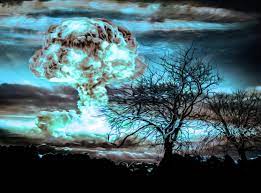
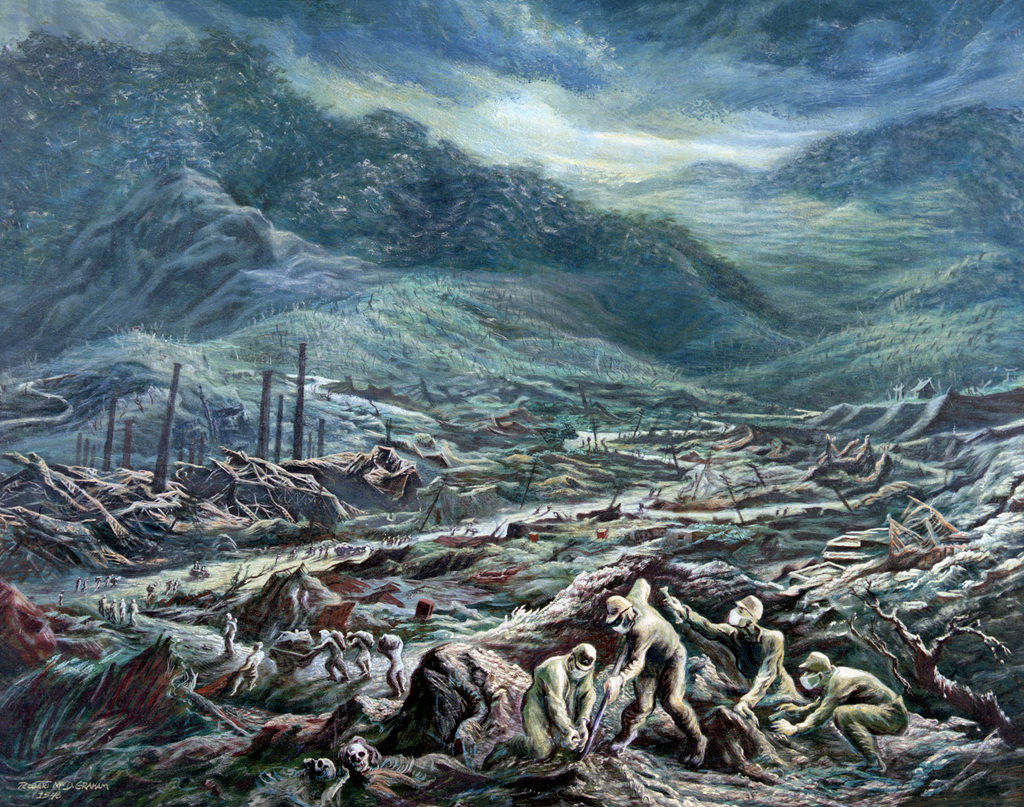
Atom Nuclear Bomb Explosion- Illustration “Atomic Landscape” Nagasaki, Japan 1946 Art by Robert Graham Courtesy: Creative Commons
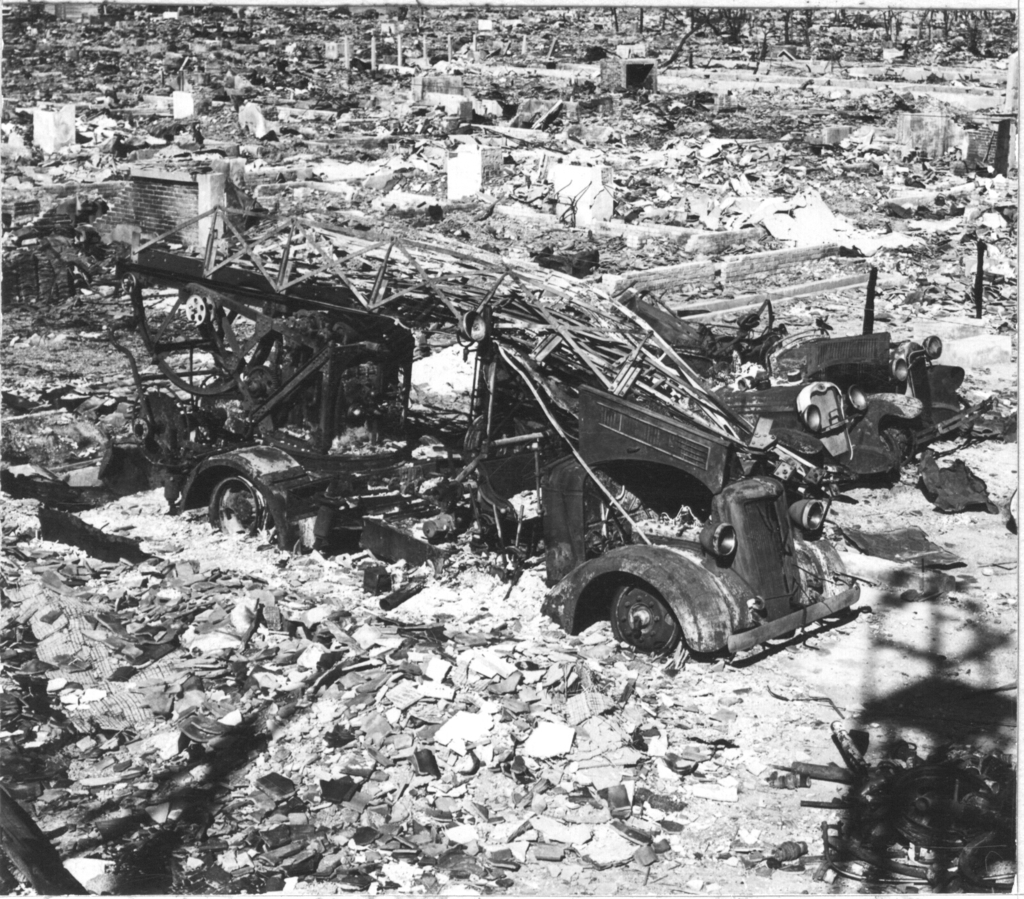
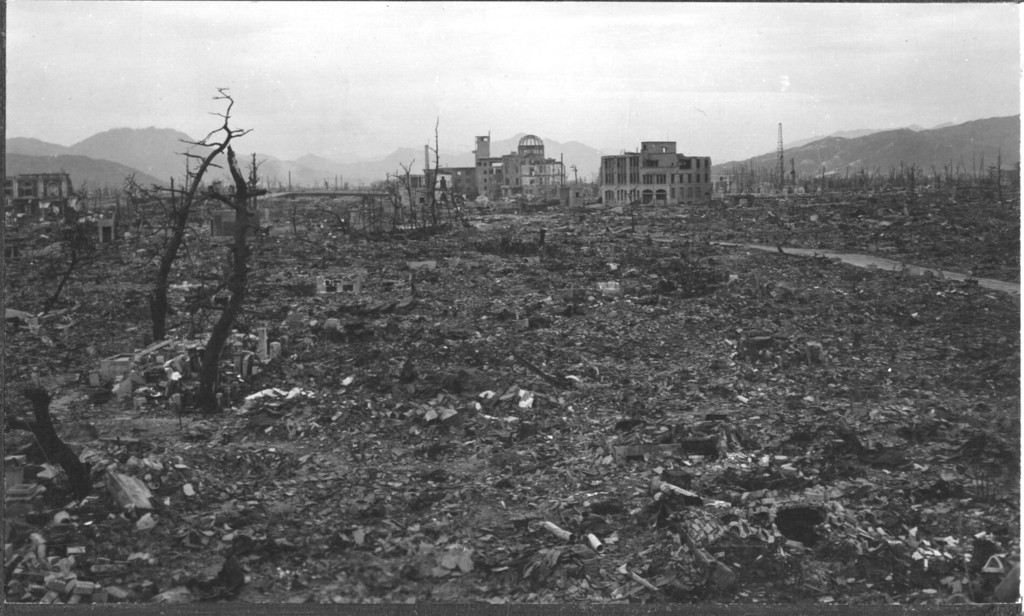
When in 1945, the Allied forces dropped atom bombs on August 6th in Hiroshima and on August 9th in Nagasaki, the Second World War drew Japanese aggression to a halt. But what was the impact on the lives of those innocents whose home, family and future changed forever? Their lives were wrecked — within a few seconds for no fault of their own. The impact clearly continues to ravage the second generation, as can be seen from the narrative of a hibakusha’s daughter who shares her travails while expressing her candid views on the recent movie, Oppenheimer, and the sale of ‘Boppenheimer’ products. She writes: “I live with it1 now having a chronic progressive nerve pain disease. My damaged immune system is attributed to my mother’s exposure to radiation from the atomic bombing.”
Are we forgetting that past, where two whole towns were decimated by atomic bombings with uncountable numbers of deaths and suffering handed down generations? Will we repeat the horrific story again to resolve issues as conflicts continue to ravage the planet with weapons, without considering their impact on the already felt climate crises? Will there be a replay of the bombing of 1945 to annihilate a people, their way of life and create suffering among all humanity? We may not be around to comment on the outcome!
Way back in 2017, climate experts contended that in case of another such bomb blast, “The effect would be similar to that of the giant meteor believed to be responsible for the extinction of the dinosaurs. This time, we would be the dinosaurs.”
With that in mind, we hope for a world without wars. In this special edition, writings look for peace by creating awareness and suggesting alternatives. Kathleen Burkinshaw writes about the 1945 bombings and her perspectives on media packaging of mushroom clouds. We have a story from a soldier’s perspective during the First World War by the eminent Bengali poet, Nazrul, who fought in it as a soldier for the British army. Current conflicts show up in the writing of Ramy-Al-Asheq, who was born in a refugee camp in the Middle East. They move to Ukraine with voices of Lesya Bakun, a refugee on the run, and Ron Pickett, a US army veteran. Poetry on Myanmar in the past by Sister Lou Ella Hickman and a story of the Rohingya’s plight by Shaheen Akhtar brings the focus into civil wars within Asia. More poems by Don Webb and Michael Burch urge for peace through poetry. Awareness about conflicts that nonetheless impact an interconnected world are brought in with interviews with journalists who were in Afghanistan (Andrew Quilty) and Myanmar (Jessica Muddit) when the takeovers by the current regimes started. We conclude with a discussion for alternatives towards a better future with Anthony Sattin.
Non-Fiction
Mushroom Clouds and Movies: Response from a Hibakusha’s Daughter:Kathleen Burkinshaw, a second generation victim who suffers nerve disorders from the atom bomb dropped on Hiroshima, where her mother watched her own father perish, responds to the recent media packaging of the event. Click here to read.
The Refugee and the Other, an excerpt from Ever Since I Did Not Die by Ramy Al-Asheq, translated by Isis Nusair. Click here to read.
Poetry
I am Ukraine by Lesya Bakun, a refugee from Ukraine. Click here to read.
Wars and Rumours of War, a response on the war in Ukraine by Ron Picket, a a retired naval aviator with over 250 combat missions and 500 carrier landings. Click here to read.
My Visit to Myanmar in 1997, a poem about peace in the land where Buddha flourished by Sister Lou Ella Hickman. Click here to read.
Henais a short story by Nazrul from the perspective of a soldier during the first world war, translated from Bengali by Sohana Manzoor. Click here to read.
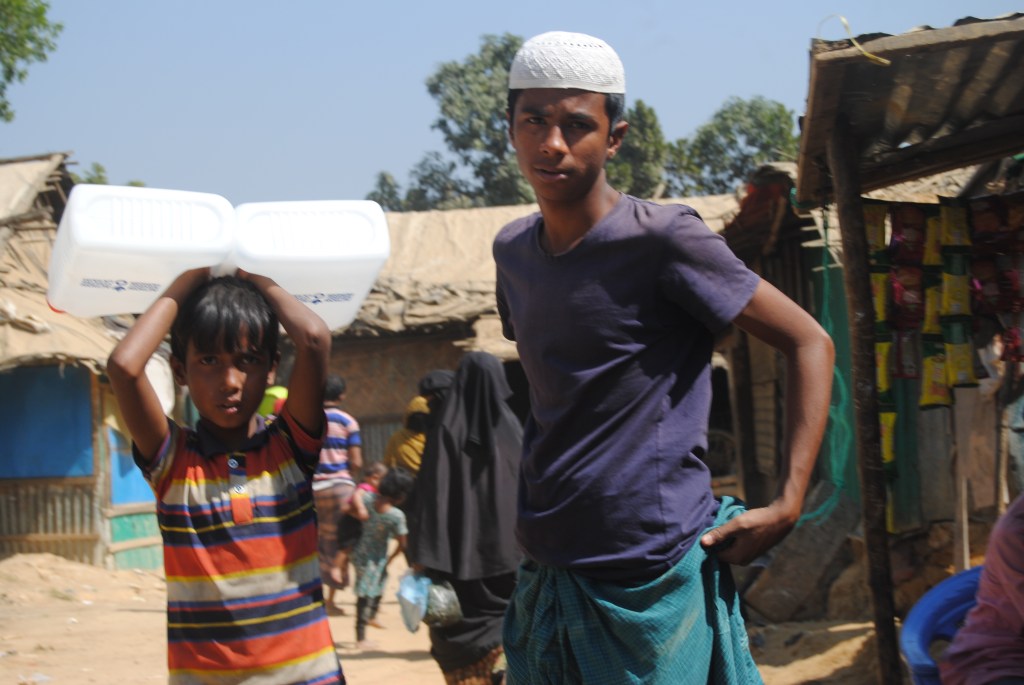
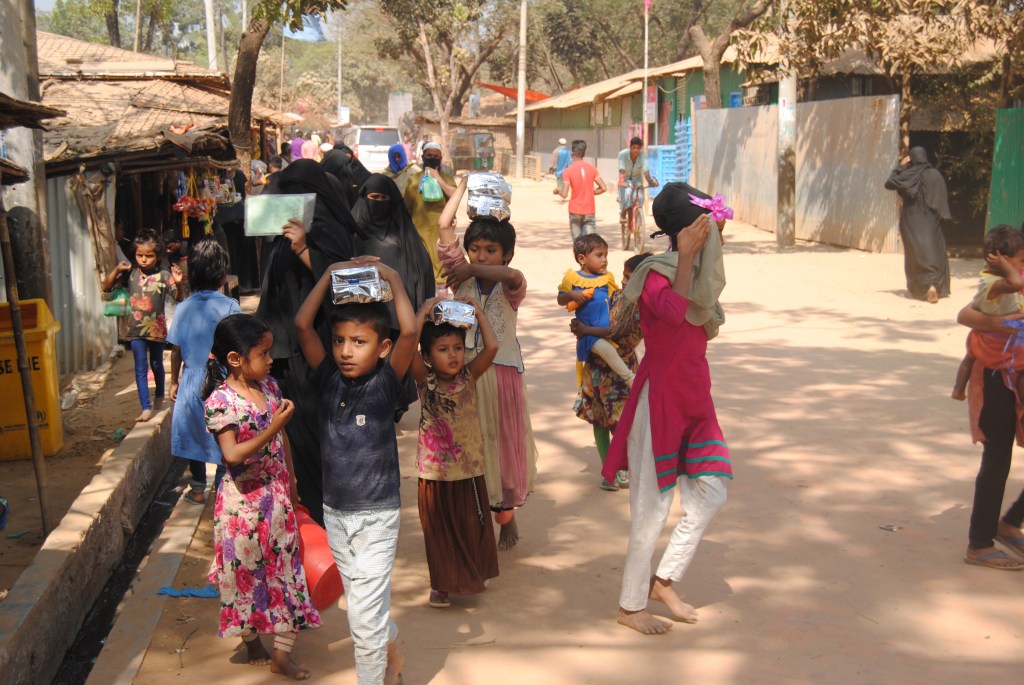
The Magic Staff is a poignant short story about a Rohingya child seeking refuge by Shaheen Akhtar, translated from Bengali by Arifa Ghani Rahman. Click here to read.
Interviews
A discussion about Afghanistan, with journalist Quilty who went back to Kabul as Taliban entered the city. Click here to read.
Keith Lyons talks to Jessica Mudditt, who watched from within the country as the Myanmar Junta took over. Click here to read.
Could there be a way out of this world wide unrest? A discussion with Anthony Sattinas he explores concept of brotherhood unique to earlier times, when borders were not this well defined. Click here to read.
*
Hiroshima after August 6th, 1945Hiroshima after bombingCourtesy: Creative Commons
Does having a to-do list help or hinder your journey, whether it be exploring the world or having a sense of achievement in your life? Keith Lyons ponders on the pointlessness and purpose of such lists.
In an article I recently came across on how to live with no regrets, it started out with the words ‘Make a bucket list’.
I admit, I didn’t read further. I dislike the term ‘bucket list’. Whether it is a list of random destinations you want to visit before you die, or some vague wish list of goals and accomplishments, there is something fundamentally flawed about creating ‘The List’.
So what’s so bad about coming up with a list of goals and experiences you’d like to complete in your lifetime? I have several qualms about this approach to life.
Firstly, bucket lists imply that you have to be close to actually ‘kicking the bucket’ before you start working on that list. That means they can be put off until there is time. Wait til you’ve raised your family. Defer til you’ve retired from work. Pull out the list when your doctor gives you half a year to live.
The second issue I have about bucket lists is we never know when we are doing to die. The assumption of a bucket list is often that we will live well into old age. Perhaps even make it to 100. But as Allen Saunders pointed out in 1957 Reader’s Digest (and John Lennon later echoed), ‘Life is what happens while you’re busy making other plans’. The upshot is that by ‘kicking the can down the road’ , we end up putting off what we desire the most.
Thirdly, often the formation of these lists comes from fantasy, illusion and magical thinking. We add sights or experiences to the list not from our own innermost selves, but to conform to the aspirations, social norms, and dreams of others. We might hear about a friend’s amazing holiday experiences, be inspired by a travel documentary, or adopt someone’s wish list items, without having compelling reasons or an authentic ownership of the list.
I’ve seen how this plays out in my previous roles as a professional tour guide and travel writer. Some readers have admitted to me that after coming across an article I’ve written about a remote island eco-resort in the Andaman Sea or a Buddhist temple on the hill flanks of a bamboo forest where monks serve green tea to pilgrims that they’ve added the location to their bucket list. But given that we all experience places differently, how can they hope to replicate my (peak) experience? The other problem with having a bucket list is that it creates great expectations, and those perfect ideals might not match the harsh realities.
I believe we shouldn’t focus so much on external achievements and tick-box experiences because often the joy and satisfaction they possibly offer can sometimes be fleeting, ephemeral or non-existent. I’ll give you three examples from my own life of some bucket list goals and how their attainment wasn’t all it was made out to be. Maybe you have the same three on your list: running a marathon, seeing the Taj Mahal, and having a story published in a major newspaper.
Crossing the finish line after 42.195km is a wonderful feeling of completion and exhaustion, and while I still look back on that marathon and marvel at how I managed to sustain my effort over three plus hours, I gained greater satisfaction in training for the run on the coastal hills near my hometown. Perhaps it was the ‘runners high’ and the feelings of agency, freedom and bodily locomotion. I do know the day after the marathon I couldn’t walk up any stairs.
Not all bucket list endeavours are over-hyped. When I finally made it to Agra to witness for myself the immense white marble mausoleum of the Taj Mahal, I got the standard photo sitting on a bench in front of the reflected structure. But just as memorable were the hours I spent on-site before the tourist throngs packed the grounds, meditatively wandering and pausing to observe and appreciate the monument as the sun rose over the Yamuna River. For me, my time and experience there exceeded my expectations. But other visitors I met during my travels reported vastly different perceptions of the heritage ‘Wonder of the World’.
When I was studying post-graduate journalism at university, I had a bet with a colleague about paying our fees by selling articles to newspapers. The first story I had published took up the front page of the features section of the newspaper, and I got two copies of the newspaper to keep for posterity’s sake. So, imagine how I felt the next day seeing a discarded newspaper floating in the lake beside the university library. Working on bigger projects such as books can also be a roller coaster of emotions varying from elation and excitement to anxiety and relief. Still harbour the deep desire to turn your life story into a book? If so, what have you done lately to put your pen to paper?
As you can see from my examples — and from your lived experience — there is often a gap between how we reckon things will be and how they pan out in the end. There are also another couple of issues with having bucket lists. What we want and truly desire can change over time. What’s important in our 20s or what we are expected to do by our peers and communities can evolve over the decades. Swimming with dolphins might drop from the list if you learn about the treatment of marine mammals. Driving on Route 66 might not have that allure and mystique when you look at the practicalities. Crashing a stranger’s wedding to object to the coupling might have other consequences. As we mature, we might find that our achievement orientation and ambition for success wanes, and that being becomes more important than doing.
I suspect that many people who do have bucket lists don’t actually do many of the things they have declared will signal they have accomplished something in their lives. They might talk about the things they want to have and exotic places they wish to see, but it is easy to have those items on the list unfulfilled. Not today. Maybe later.
By the same token, there are many, many people who aspire to better themselves by getting their dream job, migrating to a faraway country, or winning the lottery who never succeed. Having a bucket list is a First World problem. Going through a divorce, developing an addiction, and clocking up debt might be other life experiences we didn’t think we’d signed up for.
The term bucket list comes from the Justin Zackham’s screenplay which was made into the 2007 film featuring Jack Nicholson and Morgan Freeman as two terminally ill guys making a list of things to do before they die. In another (better-known) movie, The Shawshank Redemption, Freeman as Red is told by Andy Dufresne (played by Tim Robbins) the sage advice ‘Get busy living or get busy dying’. Perhaps that is the answer to living in the now without regret, rather than having a list of unobtainable items. What’s the best motivation for you?
Palliative nurse Bronnie Ware compiled a list, but it wasn’t a bucket list. Instead, through her work with the ill and dying, she put together their top five regrets. Number one was ‘I wish I’d had the courage to live a life true to myself, not the life others expected of me’. The second was ‘I wish I hadn’t worked so hard’ — every male patient said this, missing their children’s youth and their partner’s companionship.
Third on the list was ‘I wish I’d had the courage to express my feelings’. Many people suppressed their feelings in order to keep peace with others. As a result, they settled for a mediocre existence and never become who they were truly capable of becoming. According to Ware, many developed illnesses relating to the bitterness and resentment they carried as a result.
Number four on the list of regrets was ‘I wish I’d stayed in touch with my friends’, while the fifth regret was ‘I wish I’d let myself be happier’. “Many did not realise until the end that happiness is a choice. Fear of change had them pretending to others and their selves, that they were content, when deep within, they longed to laugh properly and have silliness in their life again.”
How about you? Anything on this list that resonates with you? Carpe the hell out of this Diem (Don’t let life pass you by!)
.
Keith Lyons (keithlyons.net) is an award-winning writer and creative writing mentor originally from New Zealand who has spent a quarter of his existence living and working in Asia including southwest China, Myanmar and Bali. His Venn diagram of happiness features the aroma of freshly-roasted coffee, the negative ions of the natural world including moving water, and connecting with others in meaningful ways. A Contributing Editor on Borderless Journal’s Editorial Board, his work has appeared in Borderless since its early days, and his writing featured in the anthology Monalisa No Longer Smiles.
.
PLEASE NOTE: ARTICLES CAN ONLY BE REPRODUCED IN OTHER SITES WITH DUE ACKNOWLEDGEMENT TO BORDERLESS JOURNAL
To care,
Nurture and
Cherish till
Death do us part —

A day to celebrate the
Fecundity
Fertility and the
Rites of the passage of
Time.

-- Earth Day, Countercurrents,org
Earth Day is a celebration of our planet that has been our cradle and our home for the last 200,000 years, though the Earth itself is much, much older. It is more 4.5 billion years in age…Perhaps a number unimaginable in the small speck of our existence…
Our oeuvre for this occasion starts with non-fiction that celebrates the beauty, the fecundity of the planet along with its colours — travel stories from Himalayas to Antarctica. We meet whales and sail or climb mountains to see what we have done to Earth and its other residents. Through poetry and fiction, including translations of greats like Tagore, Jibanananda Das and Nazrul, we quest to understand the needs of our planet better… Do join us in celebrating our home — yours and mine…
Non-Fiction
In A view of Mt Everest, Ravi Shankar travels in the freezing cold of Himalayan splendour and shares magnificent photographs of Mt Everest. Click here to read.
In Sails, Whales, and Whimsical Winds, Meredith Stephens writes of her sailing adventures in New South Wales and spots some sporting whales. Click here to read.
In Climbing Sri Pada, Rhys Hughes takes us on a trek to the hilltop with unusual perceptive remarks which could evoke laughter. Click here to read.
“Here with a Loaf of Bread beneath the Bough,
A Flask of Wine, a Book of Verse -- and Thou
Beside me singing in the Wilderness --
And Wilderness is Paradise enow.”

― Omar Khayyám (1048-1131); translation from Persian by Edward Fitzgerald (Rubaiyat, 1859)
I wonder why Khayyam wrote these lines — was it to redefine paradise or just to woo his beloved? I like to imagine it was a bit of both. The need not to look for a paradise after death but to create one on Earth might well make an impact on humankind. Maybe, they would stop warring over an invisible force that they call God or by some other given name, some ‘ism’. Other than tens of thousands dying in natural disasters like the recent earthquake at the border of Turkiye and Syria, many have been killed by wars that continue to perpetrate divides created by human constructs. This month houses the second anniversary of the military junta rule in Myanmar and the first anniversary of the Ukrainian-Russian war that continues to decimate people, towns, natural reserves, humanity, economics relentlessly, polluting the environment with weapons of mass destruction, be it bombs or missiles. The more weapons we use, the more we destroy the environment of our own home planet.
Sometimes, the world cries for a change. It asks to be upended.
We rethink, reinvent to move forward as a species or a single race. We relook at concepts like life and death and the way we run our lives. Redefining paradise or finding paradise on Earth, redefining ‘isms’ we have been living with for the past few hundred years — ‘isms’ that are being used to hurt others of our own species, to create exclusivity and divisions where none should exist — might well be a requisite for the continuance of our race.
Voices of change-pleaders rang out in the last century with visionaries like Tagore, Gandhi, Nazrul, Satyajit Ray urging for a more accepting and less war-bound world. This month, Ratnottama Sengupta has written on Ray’s legendary 1969 film, Goopy Gyne, Bagha Byne: “The message he sent out loud and with laughter: ‘When people have palatable food to fill their belly and music to fill their soul, the world will bid goodbye to wars.’” Shantanu Ray Chaudhuri has given an essay on one of the greatest pacifists, Gandhi, and his attitudes to films as well as his depiction in movies. What was amazing is Gandhi condemned films and never saw their worth as a mass media influencer! The other interesting thing is his repeated depiction as an ethereal spirit in recent movies which ask for changes in modern day perceptions and reforms. In fact, both these essays deal with ghosts who come back from the past to urge for changes towards a better future.
Delving deeper into the supernatural is our interviewee, Abhirup Dhar, an upcoming writer whose ghost stories are being adapted by Bollywood. While he does investigative stories linked to supernatural lore, our other interviewee, Andrew Quilty, a renowned journalist who has won encomiums for his coverage on Afghanistan where he spent eight years, shows in his book, August in Kabul:America’s Last Days in Afghanistan and the Return of the Taliban, what clinging to past lores can do to a people, especially women. Where does one strike the balance? We also have an excerpt from his book to give a flavour of his exclusive journalistic coverage on the plight of Afghans as an eyewitness who flew back to the country not only to report but to be with his friends — Afghans and foreigners — as others fled out of Kabul on August 14 th 2021. While culturally, Afghans should have been closer to Khayyam, does their repressive outlook really embrace the past, especially with the Taliban dating back to about only three decades?
This intermingling of life and death and the past is brought to life in our fiction section by Sreelekha Chatterjee and Anjana Krishnan. Aditi Yadav creates a link between the past and our need to travel in her musing, which is reminiscent of Anthony Sattin’s description of asabiyya, a concept of brotherhood that thrived in medieval times. In consonance with wanderlust expressed in Yadav’s essay, we have a number of stories that explore travel highlighting various issues. Meredith Stephens travels to explore the need to have nature undisturbed by external interferences in pockets like Kangaroo Island in a semi-humorous undertone. While Ravi Shankar travels to the land’s end of India to voice candid concerns on conditions within Kerala, a place that both Keith Lyons and Rhys Hughes had written on with love and a sense of fun. It is interesting to see the contrasting perspectives on Southern India.
Professor Fakrul Alam has also translated poetry where a contemporary Bengali writer, Masud Khan, cogitates on history while Ihlwha Choi has translated his own poem from Korean. A translation of Tagore’s poem on the ocean tries to capture the vastness and the eternal restlessness that can be interpreted as whispers carried through eons of history. Fazal Baloch has also shared a poem by one of the most revered modern Balochi voices, that of Atta Shad. Our pièce de resistance is a translation of Premchand’s Balak or the Child by Anurag Sharma.
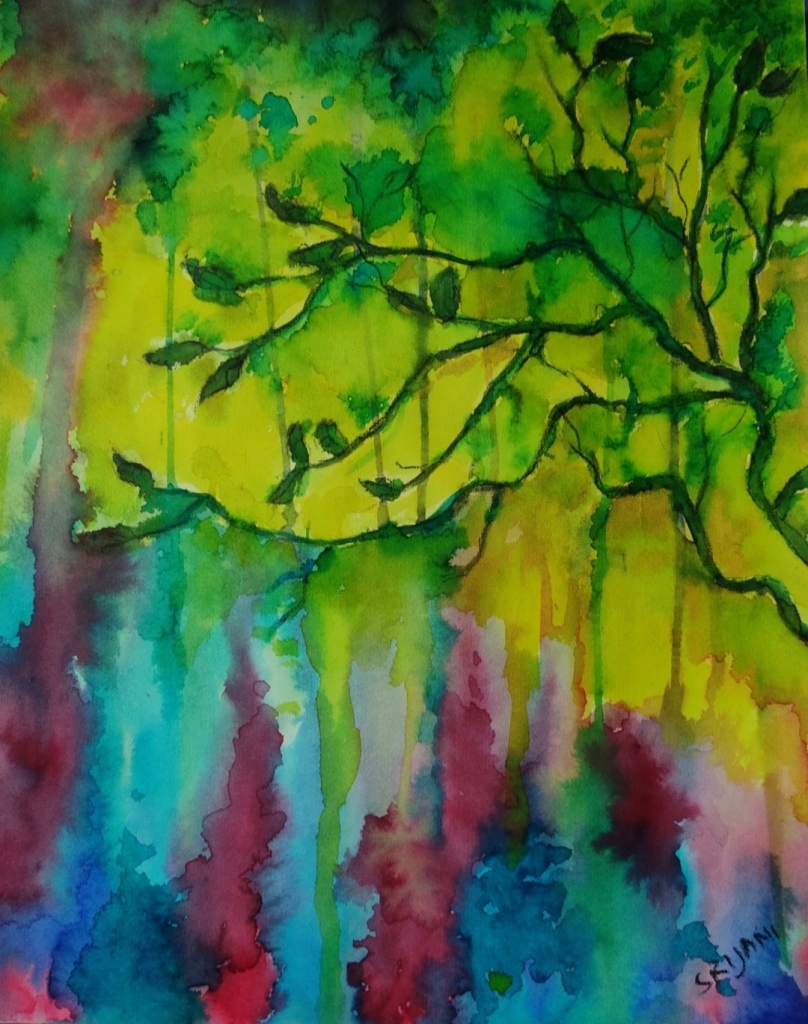
This vibrant edition would not have been possible without all the wonderful translators, writers, photographers and artists who trust us with their work. My heartfelt thanks to all of you, especially, Srijani Dutta for her beautiful painting, ‘Hope in Winter’, and Sohana for her amazing artwork. My heartfelt thanks to the team at Borderless Journal, to our loyal readers some of whom have evolved into fabulous contributors. Thank you.
Do write in telling us what you think of the journal. We look forward to feedback from all of you as we head for the completion of our third year this March.
A poignant short story about a Rohingya child by Shaheen Akhtar, translated from Bengali by Arifa Ghani Rahman
Shaheen Akhtar
Musa was born in the year when the girl child in his region was allowed to live and the sons were being killed. Dadi, his father’s mother, Bismillahjaan, had named him. There were no celebrations, no events to mark this ceremony, and not even an insignificant penny was spent on incense. However, as a tax for the arrival of a child into this world, a fat sum had to be donated to the nearby police station. That is how Dadi Bismillahjaan described the heavy term ‘birth registration’ used by people.
And Musa had landed on this side of the Naf River last night without that Dadi. He did not know at the time that his grandmother was not on the boat. She had paid for both their passages with six thousand kyat[1]. Then ensued the hullabaloo as people vied to get on the boat under cover of the darkest of nights.
A stream of salty tears ran down Musa’s cheeks as he stared down the endless river. Had his lungi been tied to his Dadi’s Thami,[2] he would never have let her float away. God forbid! Why would the old woman have floated away? She probably had not boarded the boat in the first place. She had ensured her grandson’s passage and quietly withdrawn from the back.
That was what Bismillahjaan had wanted from the very beginning. Musa was the sole heir to his family name, she used to say with every breath. If he survived in any corner of the earth, at least his bloodline would live on. And so, she had pulled her old, skeletal body across the hills and through the jungles. In all this time, she had held on to the enamel pot in which she cooked rice. Along the way, she had boiled whatever leaves she could gather and served them to Musa.
Musa had not paid attention to this at the time. His eye had been on the mountain along their path – perhaps he might see the light of God, the light which burned the mountain, but not Musa, the prophet. But none of these mountains were named Sinai. He had found a staff on the way though, and he had tied the bundle of clothes and the cooking pot to one end.
When Musa’s caravan arrived at the sandy banks of the Naf, he had relieved the stick of its burden. The sandy banks were like Karbala – with no water to drink nor food. The salty water where the river and the ocean met only made them vomit, cry, and struggle. In the meantime, when one woman gave birth, Musa, the learned student of the village religious school, was summoned to sound the azaan, the call for prayer, in the baby’s ear. Two days and two nights passed. There was no boat in sight. The Burmese army was hunting them down like the Pharaoh’s soldiers. Secretly, Musa had extended his arms once towards the river but to no avail. So, under cover of the night, he had thrown his staff into the water. This too was fruitless. The stick was swept away by the current. But at that moment, an engine boat puttered over from the other side and stopped at the bank. It was in that boat that Musa had piled in to arrive at this unknown destination last night. In the midst of this, he had lost Dadi, Bismillah.
How would Dadi traverse that long road again? Where would she go? What would she eat? Home burnt, fields burnt – their land had been destroyed by the ruling goons. If the family graveyard was still intact, she could probably find shelter in a foxhole. This must have been her plan all along. Musa’s sleep-deprived, numb, dizzy brain now recalled the rambling hints she had dropped about this. Five years ago, Bismillahjaan’s only son, Musa’s father, had been laid to rest in that graveyard. Musa had been a child of eight then. As he watched the gravedigger shovelling in the earth, he thought about the ancestors that were lying there. Baba had suffered much in life and his death had been worse. The military junta soldiers had shot him in the chest and then his throat had been slit by the monks. As he lay in his grave, Baba would tell of his travails to his dear ones who had led comparatively peaceful lives.
Musa wiped the tears from his eyes and sat on the rocks of the dam. He was closer to the water’s edge from here. Countless people stood squashed together on this side of the Naf, their eyes trained on the other bank. As darkness descended, a lantern or two lighted up on the river, and there was the occasional flicker of a flashlight. Musa drew in his breath sharply. Did the battery-operated lights belong to the military junta?
Perhaps there were still thousands of people waiting on the tarpaulin laid out on the sands he had left behind yesterday. Some would be giving birth; some would be dying – their bodies burned or maimed by bullets. There was no medicine, no proper food. For what sin were they suffering this hell on earth? Was Dadi still burning in the hell at the sandy banks?
As soon as a fleet of boats docked along the bank, Musa jumped into the water. He could not move forward as the crowd shoved through the neck-deep water from the opposite direction. He did not even have a light to shine on the faces of the swarm of people to find Dadi’s. Whatever light there was on this side came from the flash of cameras or the flashlights of the BGB[3] or the coastguards. They were using their flashlights to search through the refugees’ belongings that had been dumped on the banks – their plastic sacks, cooking utensils, urns, broken wall clocks, solar panels, and piles of quilts and pillows. At that moment, lightning in the sky heightened the tremors in Musa’s heart. What if Dadi drowned in the middle of the river in a storm? Raindrops fell on Musa’s head while he was still chest-deep in the water. In the meantime, boats docked relentlessly, as countless as the waves in the sea, compounded by the lapping of the water on the bank and the ear-splitting noise of their engines.
When it began to pour, Musa took shelter in the barn, or rather, a goat shed, of a nearby house. The shed shared a wall with the hut and was covered by the Nipa palm leaf with the other three sides open. In this tiny space stood two closely tethered goats. Musa crowded in with them. Who knew how late it was now. The homeowners must be sleeping soundly. He thought he would leave when the rain eased off but just then, the thunder clapped and he grabbed one of the goats around the neck and sat down. It was a familiar touch after so many days and the smell was exactly the same. When lightning struck a little later, he looked timidly, for the first time, at any creature from this unknown land. It did not look unfamiliar though. In fact, the eyes looked as tender as his pet goat’s. So what if Musa was a scholar in the maktab[4], at heart he was a shepherd – of a pair of golden buffalos and two goats with four or so kids. How much pain those goats must have suffered when they struggled in the fire that engulfed them!
Before the army set fire to their homes, the buffalos had been set free and Dadi had taken refuge in the forest with twelve-year-old Musa. Perhaps she had thought nothing would happen to a woman, child, and a few innocent goats. What Bismillahjaan did not know was that the tyranny of the army had heightened by the day. Even the girls were not spared. These tyrants used to rape before, but now they resorted to spilling blood. When Musa returned home two days later, all he found were ashes and destruction. They had taken shelter in Dadi’s sister’s home a little to the south that day and that is where they stayed for a full year prior to their migration.
When Musa thought of his mother, he recalled a woman sprawling on the front yard with a child in her lap. The child’s pigeon-like pink feet hung over one side of Ma’s lap. Where were his young siblings now? His mother? Musa was awoken by his own cries. He found himself lying curled up on the straw in the goat shed, the pair of goats standing next to him. Someone had wrapped his entire body with a torn quilt – just as his mother used to silently cover him up during the heavy monsoon or winter nights. Even so, Musa left the shed before the first light of dawn. He did not return to the dam. Instead, he began to wade through the muddy path in the opposite direction.
The marketplace ahead was already buzzing at this ungodly hour. City dwellers, alighting from the intercity buses, rushed to the stalls for breakfast, their bags hanging from their shoulders. Aromatic smells filled the dawn air. As hunger pangs rose in Musa’s empty stomach, he began to loiter around the stalls.
When someone came out of a stall and aimed a camera at him, Musa took shelter behind the stall. The camera was a lure – this person was actually a kidnapper, thought Musa. He hissed inwardly like a snake. When the same man, however, returned with a plate of food from inside the stall and called to him, Musa dragged his feet forward. Then he wolfed down the food. He cared nothing at all for the number of clicks the camera made or how many pictures were taken of his starved face. As he burped after polishing off the plate, Musa thought that he would be willing to allow photographs if it meant meals twice a day. He was actually waiting to find a staff that would transform magically into a snake. This was now his aim in life.
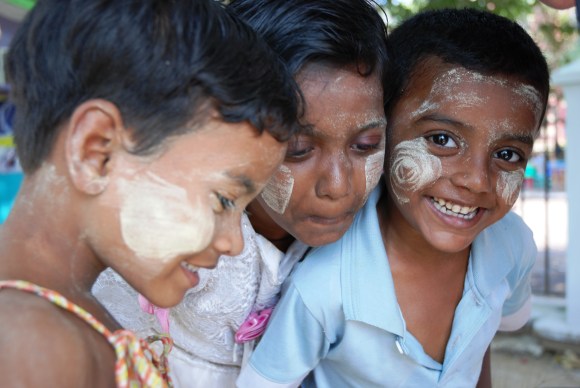
With his life’s goal determined, Musa could now afford to look around casually. The place may not have been a township but it was quite busy regardless. There were some paved stores. A schoolhouse stood nearby, some mud-splattered sleeping people crowding its veranda. In the middle stood a pile of their dirty household belongings. When someone emerged from behind a plastic sack of this rootless group, Musa was taken by surprise. Was this boy his twin or was he looking at himself in the mirror? The only difference was that the boy had a white clay mark of Thanaka[5] on his cheek. He was dressed in light blue denim shorts chopped off at the knees. With these and some other differences, the two of them stood in the shade of the stall, next to each other. Neither seemed to have the strength or the inclination to speak.
When the cameraman appeared with a local in tow, Musa quickly turned his back on them to face the wall. Why was this man so overenthusiastic? Wasn’t he satisfied with the bunch of photos he had already taken of his starving, beggarly face? But this time it was not the click of the camera, but the man’s words that drew attention. Musa realised he was taking interviews. In the beginning, the boy next to him also stood silently. Perhaps he was mute, deaf. But the next moment, he began to stammer. Musa felt goosebumps. Did everything become topsy-turvy when doomsday loomed? Was Musa glib of tongue and Harun a stammerer? Of course, he had no idea if this boy’s name was even Harun.
‘So many murders, rapes, arson – did you see these with your own eyes?’ The local translated the cameraman’s words into Rohingya.
What could be the answer to this question? And how could it be described? Did the kid next to him stammer so he did not have to answer such questions? Musa’s heart was in a turmoil. To save the boy who looked like his twin, Musa turned his face away from the wall.
Holding his Dadi’s hand, he had been escaping – Musa began to pour out his story in Rohingya. There was black smoke and fire behind, the sound of screams and bullets chasing them. Body after body lay dead along the road. Bullet-ridden. Throats slit. Then the thunder of the ocean. It seemed to be howling, wanting to divide itself into two. But the stick in his hand did not have that power.
The two men, like the Pharaoh, looked at Musa in disbelief. But the twin-like kid was happy, even though his name was not Harun, but Shah Alam.
As they walked towards the schoolhouse, Shah Alam said that they had crossed over on a raft the night before from the village of Fatongja in Maungdaw. Shah Alam’s father was missing and his older brother had been murdered. His three other siblings were with his mother.
“With Musa, you are now four,” said his mother to Shah Alam as she sat on the veranda and rolled up a plastic mat. A truck was due to arrive shortly and they would be transferred to a nearby refugee camp. Musa felt suffocated. The air was moist and heavy like a full mashk[6]. Dazed people walked around, vacant looks in their sleepless, tired eyes. No face reflected any sign of joy at the prospect of a new life. Did Musa’s face show any sign of delight? He did not want to live the life of an insect in a camp.
When the convoy of trucks arrived in the marketplace, Musa ran the other way as fast as he could. Government forces of this land chased him back. Shah Alam was standing in the truck and sucking his thumb. His mother had let out a cry as if a child of her own womb was running away. Standing in the open truck like cattle, Musa growled in anger. He was more upset with Shah Alam’s mother than with the authorities here. Musa did not want an adoptive mother or brother – he wanted a staff, one that would magically turn into a snake.
“You must not take the words of the Book literally, Musa!” Bismillahjaan came into Musa’s dreams that night. “It is foolishness to do so. Forget about me. Your entire life awaits you. Go forward on your own.”
“Where will I go, Dadi?” Sad and angry, Musa asked in a teary voice. “I want to go back – to that graveyard where you are headed to take shelter in a foxhole.”
Musa shut up when he heard someone groan in their sleep. He began to sweat profusely as he lay under the tarpaulin. His stomach had encountered some rice after many days, refugee rice – and he had not been able to digest it properly. Yet, the day before, a lot had been accomplished. The authorities had done a family headcount and provided ration cards. They had collected and brought their rations of rice, lentils, sugar, and oil to their tarp-covered shelter. Shah Alam’s mother had instantly set up house and Musa had become a part of the family. He was now spending his nights under the same tarp.
Chores were distributed in the morning. Shah Alam’s mother and siblings would stand in line at the ration shop while Musa and Shah Alam were responsible for collecting firewood from the forest and water from the pump. “Don’t fight like Habil and Qabil,[7] my dears,” Shah Alam’s mother poked her face through a hole in the tarp as they walked toward the jungle. “Be good brothers like Musa and Harun.[8]”
Musa’s heart danced with joy when he heard the names Musa-Harun pronounced together. He immediately wanted to address Shah Alam’s mother as Ma, but he suppressed that desire by turning to look at Shah Alam. What a fool! He did not look like he could be good for anything other than gathering firewood. Anyhow, going into the forest did not just mean collecting firewood for the stove – it also meant that he might find the staff he had been searching for. By Allah’s infinite mercy, Shah Alam’s mother had not made him stand in line like a beggar with a bowl, waiting for handouts of food. Moreover, he did not have to remain confined to the camp.
Besides going into the forest, Musa also climbed the mounds around the camp with the others when he heard that the Burmese military had yet again set fire on the other side of the Naf. His people howled, the women wailed and beat their chests. Musa joined them: “Oh Dadi! My heart aches for you!” Sometimes, he cried in tune. “How will I live without Dadi!” When his tears dried up, there was fire in his eyes.
When he received news that a boat had sunk on the Naf, Musa rushed to see. He went close to the dam and sat on the stone slab to stare out into the river. In his hand was a branch of the gojari tree he had found in the forest. He muttered to himself as he struck the water with the branch.
What sort of justice was this? No one would remain – no father or mother, sister or brother, no home or land, no country, no earth. What was his fault? Why did he have to spend his life at a camp – like a cockroach under a tarp? And then there were other troubles. Young girls kept disappearing. As soon as their wounds healed, the young men plotted evil deeds while the police invaded at odd hours of the night. Children cried, old women lamented. Was there no way out of this hell?
“Of course, there is! There is only one route out of this place,” said a trafficker to Musa one day by the riverside. Musa could test his fortune by crossing the river like Sindabad the Sailor. There was a boat nearby and he would not even have to pay for passage.
Musa had no desire to test his fortune. He did not care either about the camp’s development like the light-skinned men who rolled in on expensive cars to find fault. He just wanted to return to his own land. For that he needed a magic staff that would turn into a snake and chase his enemies away. He wanted to see the land overrun with frogs, lice, and locusts that would put fear into the hearts of the Burmese soldiers and drive them out of Rakhine. Or blood would flow in the river instead of water, just like it did when his people were tortured by the commanding forces on his land.
The idea of blood flowing down the river appealed to the militant who waited by the mound everyday for Musa. He had no beard on his face or cap on his head and Musa had no idea where he came from or where he lived. Perhaps he hid beneath the grass like an insect or burrowed into the dark trunk of the enormous banyan tree. But no matter where he lived, the militant ignored the staff in Musa’s hand. As he stood on the mound and looked out onto the fire and smoke on the other side of the Naf, he said to Musa, “If you want blood to flow in the river, you must be trained in arms. It is not possible to do it with a mere gojari branch.”
“Who said this is merely a gojari branch?” Musa questioned. He had no use for an AK-47, grenades, or bombs. He wanted to tell him about the magic staff that would instantly turn into a snake and save his people.
The militant grew quite angry with Musa. He said, “Listen, O Musa, doomsday is near. Bullets and guns are the final answer.”
Musa felt helpless. Couldn’t he show the militant even a little bit of magic now? Like a tiny frog? Musa opened up his palm. Instead of a frog, his palm felt the brush of the breeze.
But neither of the paths suggested by the trafficker or the militant appealed to him. What would he do now? Musa wanted to howl. In anger and frustration, he flung away the branch in his hand. Instantly, it turned into a snake and disappeared into the wilderness around the mound.
(First published in Bengali in Prothom Alo on July 15, 2018)
[5]Thanaka is made from barks of trees and used like Sandalwood paste to decorate and protect people from sunburns
[6] A traditional water carrying bag made from goat skin
[7] The Quranic equivalent of the Biblical Abel and Cain
[8] The Quranic equivalent of the Biblical Moses and Aaron
Shaheen Akhtar is a notable Bangladeshi short story writer and novelist. She received the Bangla Academy Literary Award (2015) for her contributions to literature and the Asian Literary Award (2020) for her novel The Search.
Arifa Ghani Rahman is Associate Professor and Head of English and Humanities at the University of Liberal Arts Bangladesh, Dhaka. In addition, she is a freelance editor and translator.
.
PLEASE NOTE: ARTICLES CAN ONLY BE REPRODUCED IN OTHER SITES WITH DUE ACKNOWLEDGEMENT TO BORDERLESS JOURNAL
San Lin Tun writes of how, in Yangon, he spends the lockdown watching a travel blog by Eva Zu Beck
Screenshot of Eva Zu Beck
Neither do I know Eva Zu Beck nor did I know Marco Polo, personally. But both of them are travellers who have impacted many. There is a difference between them because one is the traveller of 14th Century while the other is a contemporary 21st Century traveller. Marco Polo had travelled through the kingdom of Myanmar but Eva zu Beck has not yet been to Yangon.
One records his travel in a book or a diary while the other documents her travel by posting it on YouTube, Instagram, and other social media. I wonder who has got more followers, Marco Polo or Eva zu Beck? Or will it be a faux pas to compare like this?
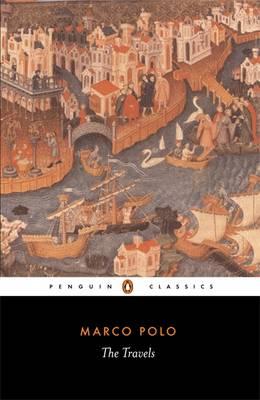
Marco Polo, explorer and writer was a denizen of Venice as well as a Venetian merchant who travelled through Asia along the Silk Road between 1271 and 1295. His travels are recorded in The Travels of Marco Polo that is also known as Book of the Marvels of the World and Il Milione, c. 1300.
It is a book that revealed to Europeans the mysterious culture and inner workings of the Eastern world, including the wealth and great size of the Mongol Empire and China in the Yuan Dynasty, while giving their first comprehensive look into China, Persia, India, Japan and other Asian cities and countries.
He, in fact, dictated his stories to a cellmate named Rustichello da Pisa while in a Genoan prisoner of war. Notably and truly, his travel book inspired Christopher Columbus and many other travellers, ensuing after him.
*
You might not know Eva Zu Beck or you might have already known her. But, I think her name can precipitate some interest in you. As for me, I like to watch her vlog on YouTube and so, I plan to subscribe her channel later.
In fact, she is a young girl from Poland and she has travelled a lot for her vlogs. She says that she is a professional traveller and that means that she lives on travelling. I wonder if someone lives on traveling or not.
*
Recently, I happened to buy a smart television, especially for my two children — for their education and entertainment. When the TV is available for me to watch, I switch channels one after another.
These days, I like to watch new movies for getting rid of my boredom caused by stay-at-home measures of the pandemic. It is the only way to overcome that dilemma. If you lose your interest in life, imagine what living will be like.
During this time, my taste in movies has noticeably changed. Now, I like to watch Russian, Iranian, Tamil movies among others. These films seem to be more artistic and better-developed than yesteryear’s movies to me. I feel that way because I had been a staunch fan of Hollywood, Bollywood and Kung Fu movies. I find new flavours in them and watch them again and again. Then, I like to watch documentaries and other interesting channels relating to travel, vacation, nature etc.
During my surfs through the internet, I unintentionally found Eva Zu Beck’s vlog while I was on a lookout for engrossing channels to ward off my fatigue and weariness of the mind. Then, I found her vlog. I do not know what exactly attracted me to her vlog.
I watch one vlog and I have become hooked to her other vlogs one after another. She took me to new places I have not been before. Her charm and simplicity are part of her charism. She is not pompous, less of a show-off. The down-to-earth style nurtured by her is very well suited to travel blogs.
I like to follow her wherever she leads me to. She leads me on her cycling experiences across Poland to Germany for some days. It is a daunting task for her. Here in Myanmar, two years ago, the founder of Uncharted Horizon, a real lanky and strongly built man named JochenMeissner went on a cycling venture from Yangon to Singapore in hope of raising funds for good causes.
When I met him for an interview, he eagerly told me that it took them nearly a month to reach the destination. He briefed me that he would do the cycling to Nepal in the next year. He postponed it because of the outbreak of the pandemic.
*
In terms of cycling, I find that Eva is a daring cyclist. She stops at camp sites for resting and carried on her cycling tour until she reached her destination. Even, she cried bitterly when she faced real difficulties, I felt sorry for her.
She explained that she was inspired by her grandfather, also a great traveller. She read out some texts from her grandfather’s notebook in a tent. It was truly inspirational. When I watch her explanation of how she got a million subscribers, I felt she really deserved it.
In one of her interviews, she answered that she gave up everything including her previous job to travel fully and to become a full-time traveller. I learnt quite a lot from watching her vlogs. Her vlogs gave me new experiences and new dimension to life.
Nowadays, if I want to travel, I just need to switch on the YouTube channel and watch Eva’s vlog I don’t need to have passport or visa for travelling. It is one of the best things in life. I just watch her vlog and she will be my travelling guide and companion who will take me to places which I have never been or experienced before.
I feel wonderful because I feel belonged to those places and feel like I have become a global nomad while I am just sitting in my small living room without spending anything thanks to Eva Zu Beck.
San Lin Tun is a freelance writer of essays, poetry, short story and novel in Myanmar and English.His publications have appeared in several magazines such as Asia Literary Review, Kitaab, NAW, PIX, Mad in Asia Pacific, Mekong Review, Ponder Savant and others. He is the author of a novel “An English Writer.”
.
PLEASE NOTE: ARTICLES CAN ONLY BE REPRODUCED IN OTHER SITES WITH DUE ACKNOWLEDGEMENT TO BORDERLESS JOURNAL.
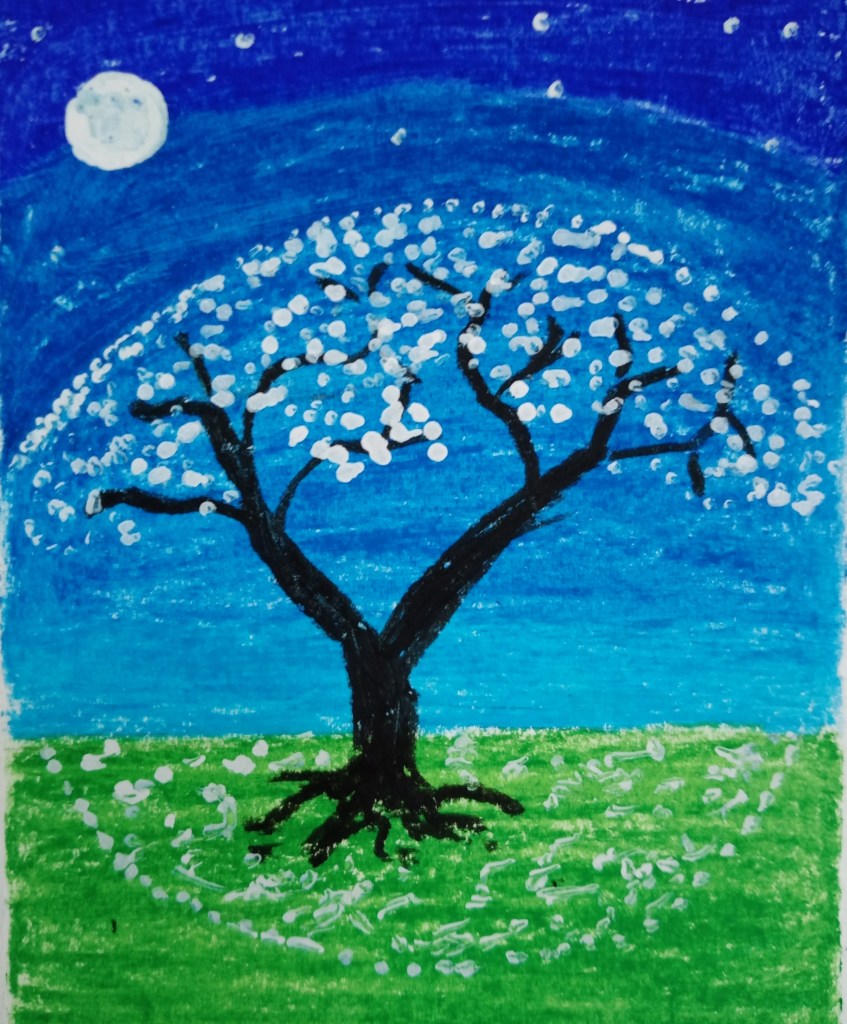
What will the New Year bring? Will it connect us all like a tree that has its roots deep in the Earth but reaches out to the sky with its branches rearing high? Its blooms seem like stars on the planet, connecting all life and non-living in its embrace. We hope as global consciousness grows for living in harmony with nature and science, love and kindness, may we all move towards a better more connected world. We, at Borderless Journal, wish you all a happy start to a wonderful New Year!
Our oeuvre this time brings to you a selection from the year 2021 that showcases the change makers we met, and writing that with their values connect us or ring with goodwill and look forward to a better future.
Meet & Greet
These are people you can meet on our pages — people who impact the world in a way that touches lives.
Goutam Ghose, who finds colouring the world with syncretic lore as the best alternative to sectarian violence. Click here to read.
Anvita Abbi, an empathetic linguist who builds bridges to create a seamless world, accepting and co-existing with different ways of life as colours of a rainbow. Click here to read.
Nazes Afroz translated a book on Afghanistan by Tagore’s disciple, Syed Mujtaba Ali, a memoir that shows the roots of the current crises go deep. Also, a senior BBC editor of South Asia, Afroz takes us through the situation with compassion. Click here to read.
Jessica Mudditt travelled to Myanmar and wrote a book, which is an eye-opener about the current situation. She was brought to focus by Keith Lyons who interviewed her for us. Click hereto read.
Sanjay Kumar founded Pandies, an activist theatre group that educates, bridging gaps between the divides of University educated and the less fortunate who people slums or terror zones. Click here to read.
Sybil Pretious, a teacher who has taught in six countries to impact children, starting her career in Africa and living through and beyond Apartheid. Click here to read.
Poetry
Robert Burns & Tagore in Harmony : A transcreation of Tagore’s song, Purano Sei Diner Kotha, based on Robert Burn’s poem associated with new year’s revelries. Click here to read.
Snowball Earth: A long poem by Rhys Hughes in the spirit of a modern man’s Auld Lang Syne, touching on our climate debacle. Click here to read.
Gathering Blossoms: Poetry by Michael R Burch that lingers in the heart. Click here to read.
Near the River Chenab and Under The trees: Sunil Sharma in a poignant telling takes us on a journey to the banks of a river where life, love and death sheathed in terrorism cumulate to a peak. Click here to read.
December is often a time when we look forward to a vacation and travel. Through the pandemic ravaged years, moving out of the house itself had become a challenge. Now as the world opens up slowly (hopefully the Omicron variant of the virus will be more benign), travel stretches its limbs to awaken to a new day with new trends and rules. Borderless invites you to savour of writing that takes you around the world with backpackers, travellers, hikers, sailors and pirates — fantastical, imaginary or real planned ones in a post-pandemic world. Enjoy!
Rhys Hughes time travels back to the first century voyaging vicariously with his imagination and a Welsh king who resisted Roman invasion. Click here to read.
Do you enjoy babysitting nieces, nephews on trips and have you ever traveled with ‘hundreds of pieces of luggage, a few coolies, five women and only one man’? Tagore did. Somdatta Mandal translates hilarious writings from young Tagore on travel. Click here to read.
Travel through Bengal with Shorodhoni, a woman dubbed a ‘Daini’ or witch, in her quest to find a home in Aruna Chakravarti’s translation of Tarasankar Bandhopadhyay’s poignant story. Click here to read.
“Stories that tell us about human lives and human emotions highlight one simple thing: Humans are the same everywhere.” That is what Ratnottama Sengupta concludes as she vicariously travels through the famed route from the past. Click here to read.
One of the countries often in news nowadays is Myanmar or Burma. George Orwell’s novel,Burmese Days (1934), showcased a society afflicted by racism, exclusivity, nepotism and ignorance. Was his depiction accurate? What has changed from then to now? While the international community looks on, waiting for the country to solve its internal crises, citizens are victimised not only by the pandemic but also by a military coup. Some of them have been stateless for some time now, thrown out altogether for being ‘a threat to Buddhism’. Jessica Mudditt, an author and journalist, who spent four years in Myanmar saw fit to voice her experiences within a country with 135 ethnicities. Her memoir, Our Home in Myanmar – Four Years in Yangon ( 2021), showcases a country where anyone can be displaced at any point like the Rohingyas. With 90% of the populationfollowing Buddhism, how is the religion, born of the compassionate quest of a prince to alleviate human suffering, being interpreted? Recently, in an interview, Muddit said, “Most people outside Myanmar assume that Buddhism is a religion of peace, so they don’t understand why so much violence has taken place, or that Buddhism can turn militant and be infected with extreme nationalism.”
This special showcases Myanmar from various perspectives: from that of an expat journalist, from a travellers’, a local writer’s and it even has a translation of a Tagore poem that reflects on the compassion of a Buddhist sage revered in Myanmar, called Shin Upagutta or Upagupta. Why should Shin Upagutta’s devotees resort to violence? Seeking answers, we present this selection from our treasury.
Content
The Tryst, a story poem about Upagupta’s mercy by Rabindranath Tagore translated from Bengali. Click here to read.
In Once Upon a Time in Burma: Land of a Thousand Pagodas, John Herlihy explores the magnificent sites of Mandalay in company of a Slovenian friend in the first episode of his quartet on his Myanmar, set in the pre-covid world. Click here to read.












 Borderless