Categories
Excerpt

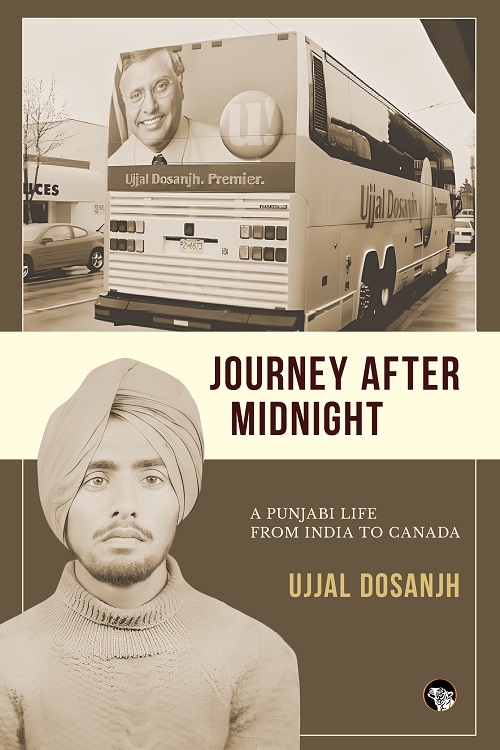
Journey After Midnight

Title: Journey After Midnight: A Punjabi Life from Canada to India

Author: Ujjal Dosanjh

Publisher: Speaking Tiger Books

50

A variation on the common Indian expression “Mullan de daur maseet taeen,” which roughly translates as “An imam’s ultimate refuge is the mosque,” sums up my relationship with the world: India is my maseet. I have lived as a global citizen, but India has been my mandir, my masjid, and my girja: my temple, my mosque, and my church. It has been, too, my gurdwara, my synagogue, and my pagoda. Canada has helped shape me; India is in my soul. Canada has been my abode, providing me with physical comforts and the arena for being an active citizen. India has been my spiritual refuge and my sanctuary. Physically, and in the incessant wanderings of the mind, I have returned to it time and again.

Most immigrants do not admit to living this divided experience. Our lack of candour about our schizophrenic souls is rooted in our fear of being branded disloyal to our adopted lands. I believe Canada, however, is mature enough to withstand the acknowledgement of the duality of immigrant lives. It can only make for a healthier democracy.

Several decades ago, I adopted Gandhi’s creed of achieving change through non-violence as my own. As I ponder the journey ahead, far from India’s partition and the midnight of my birth, there is no avoiding that the world is full of violence. In many parts of the globe, people are being butchered in the name of religion, nationalism and ethnic differences. Whole populations are migrating to Europe for economic reasons or to save themselves from being shot, beheaded or raped in the numerous conflicts in the Middle East and Africa. The reception in Europe for those fleeing mayhem and murder is at times ugly, as is the brutal discrimination faced by the world’s Roma populations. The U.S. faces a similar crisis with migrants from Mexico and other parts of South America fleeing poverty and violence, in some cases that of the drug cartels. Parents and children take the huge risk of being killed en route to their dreamed destinations because they know the deathly dangers of staying. Building walls around rich and peaceful countries won’t keep desperate people away. The only lasting solution is to build a peaceful world.

Human beings are naturally protective of the peace and prosperity within their own countries. A very small number of immigrants and refugees, or their sons and daughters, sometimes threaten the peace of their “host” societies. But regardless of whether the affluent societies of western Europe, Australia, New Zealand and North America like it or not, the pressure to accept the millions of people on the move will only mount as the bloody conflicts continue. Refugees will rightly argue that if the West becomes involved to the extent of bombing groups like ISIS, it must also do much more on the humanitarian front by helping to resettle those forced to flee, be they poverty-driven or refugees under the Geneva Convention. With the pressures of population, poverty and violence compounded by looming environmental catastrophes, the traditional borders of nation states are bound to crumble. If humanity isn’t going to drown in the chaos of its own creation, the leading nations of the world will have to create a new world order, which may involve fewer international boundaries.

In my birthplace, the land of the Mahatma, the forces of the religious right are ascendant, wreaking havoc on the foundational secularism of India’s independence movement. I have never professed religion to be my business except when it invades secular spaces established for the benefit of all. Extremists the world over—the enemies of freedom—would like to erase both the modern and the secular from our lives. Born and bred in secular India, and having lived in secular Britain and Canada, I cherish everyone’s freedom to be what they want to be and to believe what they choose to believe.

I have always been concerned about the ubiquitous financial, moral and ethical corruption in India, and my concern has often landed me in trouble with the rulers there. Corruption’s almost complete stranglehold threatens the future of the country while the ruling elite remain in deep slumber, pretending that the trickle of economic development that escapes corruption’s clutches will make the country great. It will not.

Just as more education in India has not meant less corruption, more economic development won’t result in greater honesty and integrity unless India experiences a cultural revolution of values and ethics. The inequalities of caste, poverty and gender also continue to bedevil India. Two books published in 1990, V.S. Naipaul’s India: A Million Mutinies Now and Arthur Bonner’s Averting the Apocalypse, sum up the ongoing turmoil. A million mutinies, both noble and evil, are boiling in India’s bosom. Unless corruption is confronted, evil tamed, and the yearning for good liberated, an apocalypse will be impossible to avert. It will destroy India and its soul.

On the international level, the world today is missing big aspirational pushes and inspiring leaders. Perhaps I have been spoiled. During my childhood, I witnessed giants like Dr. Saifuddin Kitchlew of the Indian freedom movement take their place in history and even met some of them. As a teenager, I was mesmerized by the likes of Nehru and John F. Kennedy. I closely followed Martin Luther King and Robert Kennedy as they wrestled with difficult issues and transformative ideas. I landed in Canada during the time of Pierre Trudeau, one of our great prime ministers. Great leaders with great ideas are now sadly absent from the world stage.

The last few years have allowed me time for reflection. Writing this autobiography has served as a bridge between the life gone by and what lies ahead. Now that the often mundane demands of elected life no longer claim my energies, I am free to follow my heart. And in my continuing ambition that equality and social justice be realized, it is toward India, the land of my ancestors, that my heart leads me.

Extracted from the revised paperback edition of Journey After Midnight: A Punjabi Life from Canada to India by Ujjal Dosanjh. Published by Speaking Tiger Books, 2023.

About the Book: Born in rural Punjab just months before Indian independence, Ujjal Dosanjh emigrated to the UK, alone, when he was eighteen and spent four years making crayons and shunting trains while he attended night school. Four years later, he moved to Canada, where he worked in a sawmill, eventually earning a law degree, and committed himself to justice for immigrant women and men, farm workers and religious and racial minorities. In 2000, he became the first person of Indian origin to lead a government in the western world when he was elected Premier of British Columbia. Later, he was elected to the Canadian parliament.

Journey After Midnight is the compelling story of a life of rich and varied experience and rare conviction. With fascinating insight, Ujjal Dosanjh writes about life in rural Punjab in the 1950s and early ’60s; the Indian immigrant experience—from the late 19th century to the present day—in the UK and Canada; post-Independence politics in Punjab and the Punjabi diaspora— including the period of Sikh militancy—and the inner workings of the democratic process in Canada, one of the world’s more egalitarian nations.

He also writes with unusual candour about his dual identity as a first-generation immigrant. And he describes how he has felt compelled to campaign against discriminatory policies of his adopted country, even as he has opposed regressive and extremist tendencies within the Punjabi community. His outspoken views against the Khalistan movement in the 1980s led to death threats and a vicious physical assault, and he narrowly escaped becoming a victim of the bombing of Air India Flight 182 in 1985. Yet he has remained steadfast in his defence of democracy, human rights and good governance in the two countries that he calls home—Canada and India. His autobiography is an inspiring book for our times.

About the Author: Ujjal Dosanjh was born in the Jalandhar district of Punjab in 1946. He emigrated to the UK in 1964 and from there to Canada in 1968. He was Premier of British Columbia from 2000 to 2001 and a Liberal Party of Canada Member of Parliament from 2004 to 2011. In 2003 he was awarded the Pravasi Bharatiya Samman, the highest honour conferred by the Government of India on overseas Indians. 

Click here to read the interview with Ujjal Dosanjh

.

PLEASE NOTE: ARTICLES CAN ONLY BE REPRODUCED IN OTHER SITES WITH DUE ACKNOWLEDGEMENT TO BORDERLESS JOURNAL. 

Categories
A Special Tribute

Will Peace Come Dropping by?

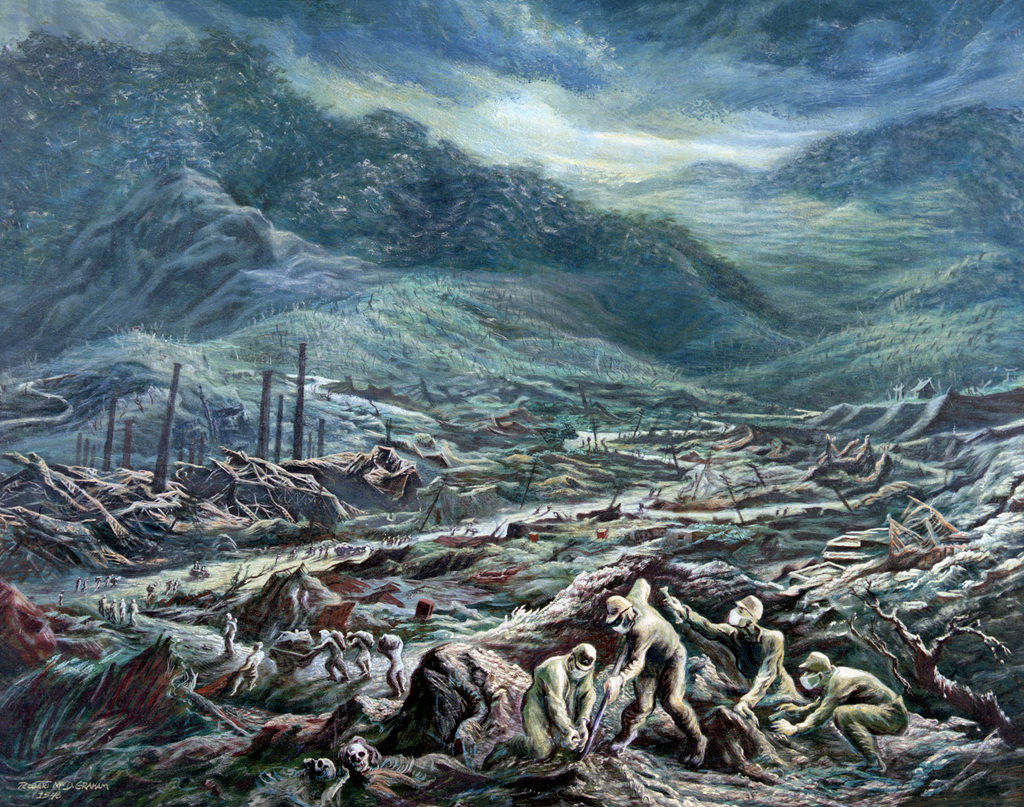
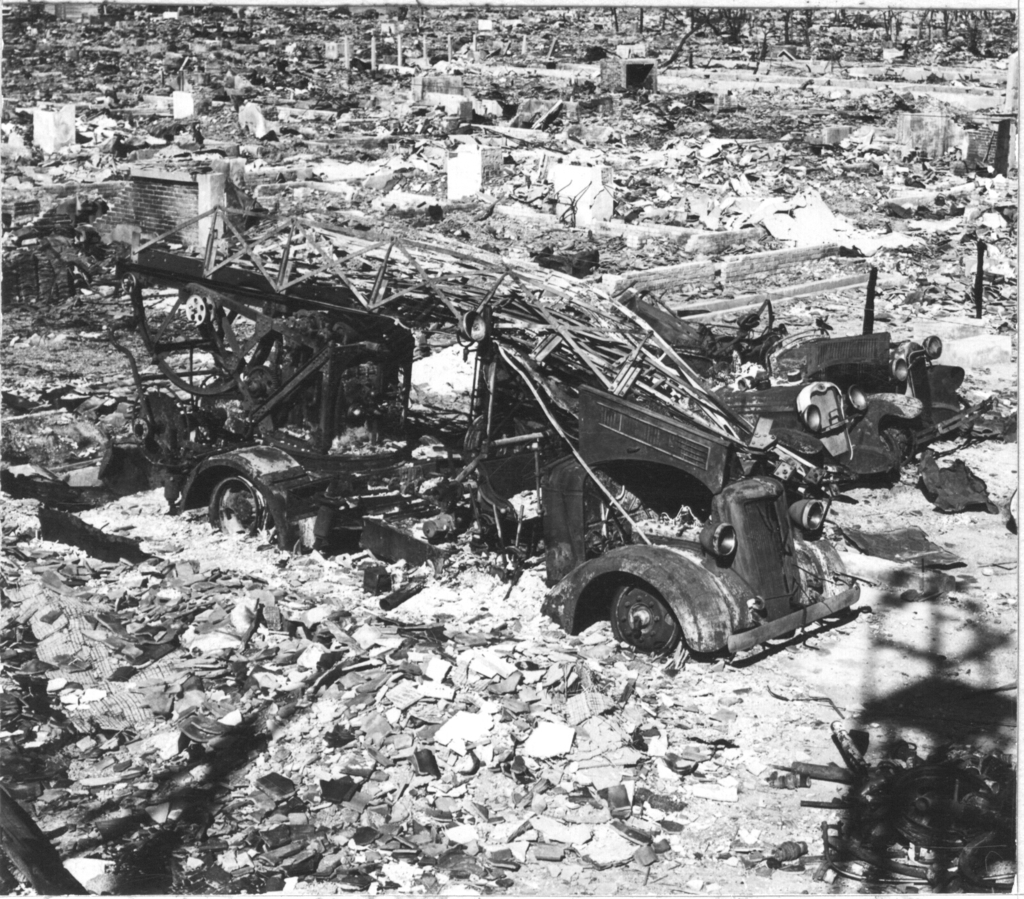
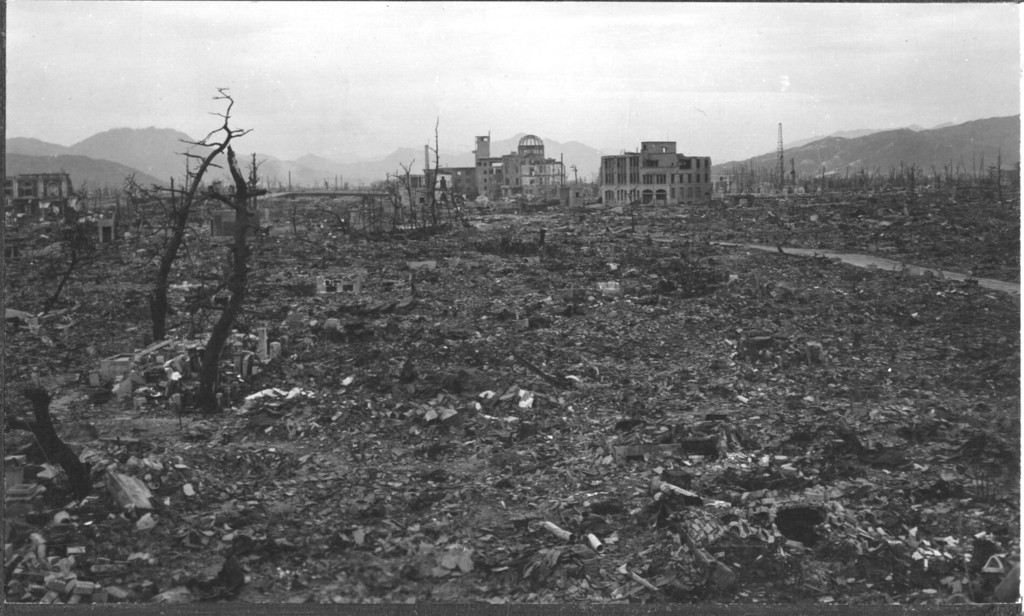
When in 1945, the Allied forces dropped atom bombs on August 6th in Hiroshima and on August 9th in Nagasaki, the Second World War drew Japanese aggression to a halt. But what was the impact on the lives of those innocents whose home, family and future changed forever? Their lives were wrecked — within a few seconds for no fault of their own. The impact clearly continues to ravage the second generation, as can be seen from the narrative of a hibakusha’s daughter who shares her travails while expressing her candid views on the recent movie, Oppenheimer, and the sale of ‘Boppenheimer’ products. She writes: “I live with it1 now having a chronic progressive nerve pain disease. My damaged immune system is attributed to my mother’s exposure to radiation from the atomic bombing.”

Are we forgetting that past, where two whole towns were decimated by atomic bombings with uncountable numbers of deaths and suffering handed down generations? Will we repeat the horrific story again to resolve issues as conflicts continue to ravage the planet with weapons, without considering their impact on the already felt climate crises? Will there be a replay of the bombing of 1945 to annihilate a people, their way of life and create suffering among all humanity? We may not be around to comment on the outcome!

Way back in 2017,  climate experts contended that in case of another such bomb blast, “The effect would be similar to that of the giant meteor believed to be responsible for the extinction of the dinosaurs. This time, we would be the dinosaurs.” 

With that in mind, we hope for a world without wars. In this special edition, writings look for peace by creating awareness and suggesting alternatives. Kathleen Burkinshaw writes about the 1945 bombings and her perspectives on media packaging of mushroom clouds. We have a story from a soldier’s perspective during the First World War by the eminent Bengali poet, Nazrul, who fought in it as a soldier for the British army. Current conflicts show up in the writing of Ramy-Al-Asheq, who was born in a refugee camp in the Middle East. They move to Ukraine with voices of Lesya Bakun, a refugee on the run, and Ron Pickett, a US army veteran. Poetry on Myanmar in the past by Sister Lou Ella Hickman and a story of the Rohingya’s plight by Shaheen Akhtar brings the focus into civil wars within Asia. More poems by Don Webb and Michael Burch urge for peace through poetry. Awareness about conflicts that nonetheless impact an interconnected world are brought in with interviews with journalists who were in Afghanistan (Andrew Quilty) and Myanmar (Jessica Muddit) when the takeovers by the current regimes started. We conclude with a discussion for alternatives towards a better future with Anthony Sattin.

Non-Fiction

Mushroom Clouds and Movies: Response from a Hibakusha’s Daughter: Kathleen Burkinshaw, a second generation victim who suffers nerve disorders from the atom bomb dropped on Hiroshima, where her mother watched her own father perish, responds to the recent media packaging of the event. Click here to read.

The Refugee and the Other, an excerpt from Ever Since I Did Not Die by  Ramy Al-Asheq, translated by  Isis Nusair. Click here to read.

Poetry 

I am Ukraine by Lesya Bakun, a refugee from Ukraine. Click here to read.

Wars and Rumours of War, a response on the war in Ukraine by Ron Picket, a a retired naval aviator with over 250 combat missions and 500 carrier landings. Click here to read.

My Visit to Myanmar in 1997, a poem about peace in the land where Buddha flourished by Sister Lou Ella Hickman. Click here to read.

Philosophical Fragments by Don Webb, an anti-war poem. Click here to read.

Poetry for Peace by Michael Burch. Click here to read 

Fiction 

Hena is a short story by Nazrul from the perspective of a soldier during the first world war, translated from Bengali by Sohana Manzoor.  Click here to read.

The Magic Staff is a poignant short story about a Rohingya child seeking refuge by Shaheen Akhtar, translated from Bengali by Arifa Ghani Rahman. Click here to read.

Interviews 

A discussion about Afghanistan, with journalist Quilty who went back to Kabul as Taliban entered the city. Click here to read.

Keith Lyons talks to Jessica Mudditt, who watched from within the country as the Myanmar Junta took over. Click here to read.

Could there be a way out of this world wide unrest? A discussion with Anthony Sattin as he explores concept of brotherhood unique to earlier times, when borders were not this well defined. Click here to read.

*

  1. the impact of the atomic bomb ↩︎
Categories
Editorial

The Stars were Shining There for You & Me, for Liberty…

Painting by Sohana Manzoor

“It just so happens that their[1] universes were different from ours: because why would their imaginations be constrained by a nation-state that would not exist for another thousand years?”

Anirudh Kansetti, the print.in

These lines from a recent article on conquests carried out by the Indian subcontinent in ancient times brings to focus that earlier countries or nation-states as we know of them today did not exist till the industrial revolution set the concept in motion. In the month many countries in Asia celebrate their independent existence or rather the drawing of borders based on colonial mapmakers’ whims, we should perhaps relook at the way the world stands divided.

Is this what we want as humans? Where are we headed? While conquerors write the history, we tend to gloss over what is left unsaid. The millions who died crossing borders, in race riots and of hunger, starvation and disease in refugee camps is overlooked, or worse, used to justify the divisions that still hurt the residents of the sub-continent and try to destroy any sense of oneness among the human species. We tend not to forget the atrocities of the colonials but we overlook the violence of the mobs that incensed with hatred instilled by politics annihilated and murdered. Their story is reduced to “us” and “them”. In our mood of jubilation, the recent bombings in the Middle East and the Ukraine-Russia war have already been delegated to the newsreels. But these are all people who are killed and displaced without any justification for the need to do so. One of the things that George Orwell had depicted in 1984 was an acceptance of a constant state of war. Are we stepping into that frame of mind with our cold acceptance of the situation worldwide?

In the last century, many united against the atrocities of the empire builders. They wanted to rise above the divides. At least greats like Nazrul vociferously objected to the basis of divides that were used to draw the borders. Translations brought to us by Professor Fakrul Alam showcase such poetry as does much of Tagore’s own writing and actions. Tagore organised a protest march against the colonial proposal of Partition of Bengal in 1905 by taking a procession in which he encouraged Hindu and Muslim women to tie rakhis[2] on men from the other community and make them their brothers. Tagore put the welfare of humanity above nationalism as can be seen in his writings and speeches. Reflecting on humanity, we have Munshi Premchand’s powerful story, Pus Ki Raat or A Frigid Winter’s Night, translated from Hindi by C Christine Fair, dwelling on the sad state of peasantry under the Raj. In a bid to rouse people like the protagonist of Premchand’s story, Tagore wrote inspirational songs, one of which, Hobe Joye (Victory will be Ours) has been translated on our pages. We also continue sharing Rabindranath’s humour with a skit translated by Somdatta Mandal from Bengali.

Humour is also stirred into Borderless by Rhys Hughes with a series of mini sagas in his column and a trip around the world in eighty couplets. These couplets actually are more in number — I tried counting them — and are guaranteed to make you laugh. We have travel stories in plenty too. Ravi Shankar again treks to the Himalayas and brings us wonderful photographs of his journey and G Venkatesh stops over at Istanbul airport to find a friend from across the border. Meredith Stephens travels to a French colony called Lifou Island — sounds unbelievable as in the month we celebrate the independence of so many countries across Asia, there is still a country in the Pacific that owes allegiance to a democratic European power! But other than writing about the beaches, Stephens talks of a temporary pet dog while Suzanne Kamata gives us cat talk in her notes from Japan in a lighter vein — a very pleasant glimpse of life. Devraj Singh Kalsi brings a grin when he talks of his stint at trying to run a restaurant.

Interesting non-fictions from a book lover, Sindhu Shivprasad, and from PG Thomas who talks of King Lear performed a la classical Indian dance mode, Kathakali, by an international caste add to narratives that focus on bringing the pleasanter side of life to our readers. Such stories are a welcome relief in dark times when people find themselves caught between price hikes due to the pandemic and wars. An essay by Candice Louisa Daquin looks for a way out of the stresses of these times. Erwin Coombs gives us a funny, poignant and tragic classroom encounter which reminds me of the 1967 Sidney Poiter movie, To Sir, with Love. We have darker tones brought into our journal also with Aysha Baqir’s story on child exploitation, a sad but hopeful narrative from Nepal by Santosh Kalwar about the rejection of a girl-child by her mother and a horrific murder brought to us by Paul Mirabile.

Our poetry section this time flows over with poems from Michael R Burch, Ryan Quinn Flanagan, George Freek, Mike Smith, Gigi Baldvino Gosnell and even Ratnottama Sengupta, who has also given us a powerful essay on an acclaimed dancer called Zohra Sehgal whose life was changed by the Partition of the Indian subcontinent in 1947, basing her essay on Ritu Menon’s Zohra: A Biography in Four Acts and her own personal encounters with the irrepressible artiste. Michael Burch has also shared an excerpt of his book dedicated to his wife, O, Terrible Angel.

An excerpt from B. M. Zuhara’s The Dreams of a Mappila Girl: A Memoir, translated from Malayalam by Fehmida Zakeer, brings us close to a community we know very less about in the Southern part of India. Meenakshi Malhotra has reviewed Tagore’s Four Chapters translated from Bengali and introduced by Radha Chakravarty, a book that is a powerful voice against violence in the name of nationalism touching on the independence of women, a theme that is reiterated in another book that has been visited by Rakhi Dalal. While exploring Neelum Saran Gour’s Requiem in Raga Janki, Dalal contends that the book familiarises us with a singer “who carved her own destiny and lived life on her own terms, in times when women were generally subjugated and confined to roles given by society”. Gracy Samjetsabam has visited Mamang Dai’s Escaping the Land, a novel that tries to weave issues faced in the Northeast of India and integrate it with the mainstream by stirring human emotions.  Bhaskar Parichha has reviewed Rakesh Batabyal’s Building a Free India, a collection of powerful speeches from the past.

Within the confines of the Raj, there was a long court case where a prince who had been declared dead resurfaced as a Naga sadhu[3], a claimant to the throne, this time not to abuse his power as of past but to be a sympathiser of the people in their tryst to fight the Raj. Aruna Chakravarti has woven a historical fiction around this controversy centring around the prince of Bhawal. In an exclusive interview, she tells us the story behind the making of The Mendicant Prince — her novel that was published just last month. Her responses could well teach us how to write a historical novel.

We have much more than the fare that has been mentioned here. Pause by on our contents page to take a look. My heartfelt thanks to the whole team at Borderless for helping with this issue, which we managed to get out in a shorter time than usual and Sohana Manzoor for her wonderful artwork. I am grateful to all our contributors as well as our readers. We could not have made it this far without all of you.

In the spirit of uniting under a borderless sky, let us look forward to cooler climes and happier times.

Cheers!

Mitali Chakravarty

borderlessjournal.com


[1] Guptas (4-6 century CE), Cholas (300 BCE -1279 CE) and other ancient rulers in the Indian sub-continent

[2] A festival held in August where sisters of all ages tie a talisman or amulet called the rakhi around the wrists of their brothers, who promise to protect them.

[3] Mendicant

Categories
Stories

The Bus Conductor by Dalip Kaur Tiwana

Short story by Dr. Dalip Kaur Tiwana, translated from the original Punjabi by C. Christine Fair

Dr Dalip Kaur Tiwana. Courtesy: Creative Commons

Dr. Dalip Kaur Tiwana (4 May 1935 – 31 January 2020) is recognised as one of the most consequential Punjabi authors who substantially contributed to the development of modern Punjabi literature. Prior to her death, she published twenty-seven novels, seven collections of short stories as well as a literary biography. Tiwana was also a distinguished academic. She was the first woman in the region to obtain a Ph.D. from Punjab University in 1963.  She joined the Punjabi University at Patiala from which she retired as a Dean as well as a Professor of Punjabi. Dr. Tiwana garnered innumerable regional as well as national awards within India, including the prestigious Sahitya Akademi Award and the Padma Shri, India’s fourth largest civilian honor. She surrendered her Padma Shri in 2015 expressing “Solidarity with other writers who are protesting against the increasing cultural intolerance in our society and politics and the threat to free speech and creative freedom.”

The Bus Conductor

Art by C Christine Fair

The lady doctor, Polly, had been transferred from Nabhe to Patiala. Her family members were trying to get the transfer rescinded. That is why, instead of taking a house and living in Patiala, she got permission from the senior doctor to come from Nabhe every morning by bus and return in the evening.

She felt ill at ease because of the shivering sound of the idling buses, the heat, the sweat, the crowds, the ludicrous indolence of the conductors, and the rude banter. Thinking to herself, “But this is just a matter of days,” she suffered it all. On the days when Jit was on duty for that bus, she would feel a bit comfortable because that conductor seemed to be good natured.

One day, a man asked Jit, “Where does that girl with the bag work?”

Jit said discretely as he was handing over the ticket, “Aho[1] sir!  She is a lady doctor. A very senior lady doctor. People say that her salary is a full three hundred rupees.”

“Sir, these days women are earning more than men. That’s why men are no longer the boss,” said the man as he sat down on a seat nearby.

“Sir, no matter what they earn, girls of a good household still must lower their eyes when they speak…and this lady doctor, I go to Patiala all the time and by god, she doesn’t even speak…,” said the Sardar who was sitting behind while gazing towards Polly.

“By god! I also….” He stopped mid-sentence when Jit, while handing the ticket to this dandy in a pink shirt, glowered at him and said, “So, brother. Do you want to go? Or should I toss you off the bus now?”

“Conductor Sir.  I didn’t anything. Why are you getting angry like this?”

While Jit was handing the ticket over to Polly, she began to give him the ten she took out.

“I don’t have any change. Forget about it and pay in full tomorrow.” Having said this, Jit moved on.

Ahead, there was elderly woman who also took out a ten. “Ma’am, I don’t have change. The entire fare is 10.5 annas[2] and you take out such a large note and hand it to me? Fine. Go and get change and then come back,” Jit said in a rather stern voice.

“Young man! In that time, the bus will have left and it’s urgent that I go.  You can return the rest of the money to me in Patiala,” the elderly woman begged of him.

“Fine, ma’am. Sit down,” he said as he began to cut her a ticket.

Polly was thinking about the hospital, all of the patients, the medicines, the nurses, and the various duties as the bus left behind Rakhra, then Kalyan and then Rony and neared the Chungu toll booth.

Jit told the driver, “Yaar[3]!  Today drive towards this blue building right here.”

The passengers who were travelling to the gurdwara grumbled a bit, but by now the bus had turned and was once more on the direct route. Near the Flower Cinema the conductor rang the bell to stop the bus, opened the door, and began to tell Polly, “You get down here, the hospital will be nearby.”

Polly got down quickly. She even forgot to say thank you. She thought to herself, “That poor fellow is such a nice conductor.”

By the time she reached the bus station that evening to begin her journey home, the bus was already full. With great difficulty she waited 45 minutes for another bus. A bus conductor, with his shirt unbuttoned, passed her three times while mumbling the song from the film Awaara[4]. He gave an anna to a female beggar to get rid of her for some time. She didn’t know why, but people were staring at her wide-eyed.

The next day, it happened by chance, that when she reached the Nabha bus station, the buses were already full, and Jit was turning away additional passengers without a ticket. Jit approached her and said, “You can pick up the bag on the front seat and sit down. I saved a seat for you.”

Polly passed by several gawking passengers and sat down. Jit immediately rang the bell for the bus to move forward.

“This conductor is so good-natured,” Polly thought to herself.

As the delays in getting her posting to Nabha stretched over time, she became depressed. The sound of the idling buses and fears of the bus leaving were constantly on her mind. Whenever she was forced to sit next to a fat passenger, her nice clothes would get wrinkled, and the stench of sweat would make her dizzy.

Then one day when she was about to give money for her ticket, Jit said, “No madam, forget about it,” and moved ahead.

“No sir, please take the money,” Polly emphatically requested.

“What difference will it make whether I take your money or not?” he asked. He walked further ahead and began to give a ticket to someone.

Polly, feeling self-conscious from the argument, sat down quietly but throughout the journey she was wondering why the conductor didn’t take money from her. She did not like it at all. For someone earning Rs. 300 what is the value 10.5 annas?

The next day she intentionally left five minutes late, thinking, “Today I won’t go on the Pipal Bus. Instead, I’ll take the Pepsu Roadways Bus.  What nonsense is this that he won’t take the money!”

She was stupefied to see that the driver had started the bus and was standing yelling at the conductor.

“Oye! I am just coming. Why are you yelling? Why do want to leave so early? Is it about to rain?” Jit said, while walking very, very slowly.

“Are we going to the next station or not? You’re taking your sweet time getting here,” the driver said.

“Get over here, Madam and take the front seat, and open the window,” Jit said to Polly.

“How can the bus leave without Madam?” mumbled a clerk in the back who took the bus from Nabhe to Patiala every day.

Jit glared at him. Everyone fell silent. The bus left. Polly took out the money but despite her repeated attempts, Jit refused to take it. Polly became very angry. “Jit is making me a part of this scam…But why is he neither charging me nor giving me a ticket?… Still, this is defrauding the company…” She was thinking this just as the bus stopped and a ticket-checker boarded. When he was checking the tickets of the other passengers, Polly broke out in a nervous sweat.

“How humiliating it is that I don’t have a ticket…. I will tell him that the conductor didn’t give me a ticket even though I asked for one,” she thought. “But what will the poor man say? No. I will tell him that I forgot. But no. How can I lie,” she debated with herself.

Then the checker approached her.

As soon as he said, “Madam…ticket,” Jit, taking a ticket out of his pocket, called out, “She…. she…This woman is my sister. I have her ticket.”

Seeing the ticket, the checker glanced at the conductor whose pants were threadbare at the knees and whose khaki uniform was worn at the elbows. Then, he looked over the woman in the expensive sari.  He smiled with his eyes.

Jit became flustered. The checker quickly got down from the bus.

Polly, surprised and worried, was thinking that perhaps this man, who earns a paltry Rs. 60 per month, didn’t eat during the day so that he could pay for my entire fare.

In the hospital, she kept thinking about this. She felt so uneasy about it.

In the evening when she reached the station, Jit was sad as he slowly made his way towards her.

“My older sister also studied medicine in Lahore…and she died there during the riots of partition. The rest of my family perished too. I somehow managed to make it here alive. How could I even think about studying when I could barely feed myself?  Then I became a conductor. When I saw your bag and stethoscope, I remembered Amarjit…and…and….” Then he choked up.

Polly was very distraught. She didn’t know how to respond.

Meanwhile, the bus came.  He quickly walked towards it and Polly kept on watching him walk away with affection in her moist eyes.

(Translated and published with permission from the Punjabi publisher at https://punjabistories.com. Link to the Punjabi story: https://punjabistories.com/tag/bus-conductor-by-dalip-kaur-tiwana/)


[1] A Punjabi expletive like Oh!

[2] Equal to 1/16 of a rupee

[3] Friend

[4] A 1951 movie – Awaara means vagabond

C. Christine Fair is a professor in Georgetown University’s Security Studies Program.  She studies political and military events of South Asia and travels extensively throughout Asia and the Middle East. Her books include In Their Own Words: Understanding the Lashkar-e-Tayyaba (OUP 2019); Fighting to the End: The Pakistan Army’s Way of War (OUP, 2014); and Cuisines of the Axis of Evil and Other Irritating States (Globe Pequot, 2008). She has published creative pieces in The Bark, The Dime Show Review, Furious Gazelle, Hypertext, Lunch Ticket, Clementine Unbound, Fifty Word Stories, The Drabble, Sandy River Review, Barzakh Magazine, Bluntly Magazine, Badlands Literary Journal, among others. Her visual work has appeared in Vox Populi, pulpMAG, The Indianapolis Review, Typehouse Literary Magazine, The New Southern Fugitives, Glassworks and Existere Journal of Arts. Her translations have appeared in the Bombay Literary Magazine, Bombay Review, Muse India and The Punch Magazine. She reads, writes and speaks Punjabi, Hindi, and Urdu.

.

PLEASE NOTE: ARTICLES CAN ONLY BE REPRODUCED IN OTHER SITES WITH DUE ACKNOWLEDGEMENT TO BORDERLESS JOURNAL

Categories
Poetry

Omid

by Smitha Vishwanath

Seven years she’d waited for him

She’d prayed five times each day

At fajr, zuhr, asr, maghrib and isha

On the nineteenth day of Ramadan

twelve thousand seven hundred and seventy five prayers

Had been answered

She thought, as his tiny fingers wrapped

Around hers,  his eyes still closed

‘Ya Allah!’ she thanked God

for Omid

‘Omid’ – it means hope

His body still warm

From being nursed

At her breast

Now he lay still

His pure, fresh blood splattered on the white floor

I want to understand why Omid died

Was it her punishment?

For giving birth to hope –

an unforgivable mistake in the eyes of non-believers.

 .

I thought like them that thrust the bullet

Into his tender chest. It shattered his ribs

and punctured his heart. 

I cannot understand

I think, maybe, because I am not as bad.

I thought like the merciful God who gave him life

Seventeen seconds of motherhood He had granted

In exchange for her every prayer

I cannot understand

I think, maybe, because I am not as good

 .

For God is always good

and merciful

my mother says

I cannot understand

So, I pray –

For Omid and

 his mother

And others like Omid-

crushed

before they knew what, it means ‘to be alive.’

 .

Smitha Vishwanath is a banker turned writer. A management professional, she embarked on the writing journey in 2016, with her blog, https://lifeateacher.wordpress.com, while still heading the regional Cards Operations of a bank. After having worked for almost two decades in senior roles in the banking industry, in the Middle East, she quit and returned to India in July 2018 when her husband was transferred on an assignment. Her poems and articles have been published in various anthologies. In July 2018, she co-authored a book of poetry: Roads – A Journey with Verses. Other than writing, she enjoys reading, travelling, and painting.

.

PLEASE NOTE: ARTICLES CAN ONLY BE REPRODUCED IN OTHER SITES WITH DUE ACKNOWLEDGEMENT TO BORDERLESS JOURNAL.