How often have we, as fully realised human beings, found ourselves in the ironic situation of proving our human status to a computer programme? We have ticked boxes to identify zebra crossings, traffic lights, and buses, only to be told we were wrong, as if we did not know what a bus was. It is as if our fingers were too stubby to press the right keys or too daft to understand. And now, we are deciphering distorted words, as only a human could read wavy or cursive writing.
Now we understand. The verification exercises did not just stop automatons from spying on our data. They were meant to aid computers in digitising old books[1]. Computers sometimes struggle with old pages when converting physical books into digital versions. Due to wear and tear and fading caused by oxidation, the text may appear distorted. Computers use this mundane verification process by making humans interpret these unreadable texts. We play a crucial role in this process, creating a training module to help identify issues and errors to improve digitisation.
While CAPTCHA[2] (acronym for Completely Automated Public Turing test to tell Computers and Humans Apart) was initially designed to prevent bot attacks and spam, it is now used by computers to distinguish between humans and bots among users. Alan Turing, the father of theoretical computer science, proposed a test[3] which was later named after him to evaluate a machine’s ability to exhibit intelligent behaviour indistinguishable from a human. Although many machines and AI programmes have passed this test, humans now face a reverse Turing Test to prove our organic status.
The funny thing is, while all this is happening, with automation and the diminishing need for human interaction, humans are gradually losing their humanity. We have lost the ability to look into each other’s eyes and start a conversation just for fun. Suppose Alan Turing proposed the test to gauge machine intelligence, and modern computers give a reverse Turing Test[4] to exclude unwanted chatbots. In that case, humans perhaps need a Turing-like test to confirm they still have some grey cells. We are increasingly losing our capacity for idle chats. We are all just prisoners, best left to our own devices.
Talking about looking into each other’s eyes and melting into the passion of each other’s aura, the dating scene these days is no longer like that. Enter any dimly-lit romantic restaurant, couples are not lost looking at one another but lost in the abyss of cyberspace, looking at the digital restaurant menu or perhaps into each other’s social media or Tinder hits to see what the other half has been up to.
While it is true that automation is changing the job market, it’s also creating new opportunities. My son, for instance, worries about his job, but I remind him that the world has created jobs that were non-existent just half a century ago. Who has heard of social media managers, cloud architects, or veterinary psychologists? My mother told me that my grandfather worked in a printing press. He used to come back smelling of turpentine, which he used to clean off the ink that stuck on his body. Nowadays, printing is done at home with a button, a slight whirring and a whooshing, and out comes a printed document at one’s convenience.
My grandfather later became a chauffeur to a successful business magnate. Once we have sorted out the finer points of bringing self-driving cars to market, we may not need drivers in the future. Now, many self-proclaimed gig entrepreneurs give up their full-time paying jobs to become delivery boys. Do we have news for these boys? Drones are dying to get up and replace you.
If one were to think that only the blue-collar job is at risk, think again. Conveyancing jobs currently carried out by paralegals can be taken over by an AI programme to churn out beautiful Sales and Purchase Agreements[5].
These programmes have also learnt to say the appropriate words during grief and crises. Increasingly, call-in helplines are ‘manned’ by AIs. The field of psychiatry may be at risk of not needing doctors. Even as we speak, we may already be conversing with chatbots about our bank transactions without realising it. This raises ethical questions about the role of AI in sensitive areas of human life and the potential loss of human connection in these interactions.
I remember a time in mid-1990 when the Malaysian civil society expressed concern over Malaysia’s uncontrolled influx of foreigners and our overdependence on the foreign labour force[6]. Someone suggested automation and mechanisation as a possible way to avert this. Still, apparently, the financiers were not too keen to increase business expenses, which would possibly reduce foreign investment. The general acceptance was that third-world nations were not ready to fully automate. They had not been able to provide universal employment to their citizens. This historical perspective highlights the complex relationship between automation, economic development, and social equity.
Moving forward, we sometimes find ourselves in zombie states, clicking reel after reel on social media as if we have so much time. Examples of children turning violent against the hands that feed them when their demand to go online is denied are not uncommon. Have we not heard of spouses immersed in full-blown affairs living under the same roof with the other half with ease, with a bit of help from the need for data privacy? A husband does not know what the wife does behind his back because access to devices is guarded by passwords.
Rock bands once thought using synthesisers on their songs was sacrilegious. The legendary British rock band, Queen, proudly boasted that they never used synthesisers to maintain a traditional, raw, organic feel to their sounds. Now, we must be happy with the digital manipulation of music and voice. Even though AI can compose music at a philharmonic level, music connoisseurs are far from contented. They say it lacks emotion, probably because great music comes from lived experience[7].
What started as automation, where machines aided humans to ease work, has now evolved to something which can learn and mimic human actions. It has come to be called intelligence, albeit artificially developed by the human mind. Like a student surpassing his teacher, the real fear now is that AI is evolving consciousness. If AI is the future, the person who controls the future will be King. Does that not mean that tech entrepreneurs will be the world’s future leaders? The world will indeed be borderless, only determined by digital connectivity.
We already long for the good old days when talking to customer service did not start with, “press 1 for English and this conversation will be recorded for self-improvement.” What they mean is that it will be used against you. Dealing with a computer chatbot already feels Kafkaesque. It feels like talking to a wall without recourse to “talking to the manager!”
Farouk Gulsara is a daytime healer and a writer by night. After developing his left side of his brain almost half his lifetime, this johnny-come-lately decided to stimulate the non-dominant part of his remaining half. An author of two non-fiction books, Inside the twisted mind of Rifle Range Boy and Real Lessons from Reel Life, he writes regularly in his blog, Rifle Range Boy.
PLEASE NOTE: ARTICLES CAN ONLY BE REPRODUCED IN OTHER SITES WITH DUE ACKNOWLEDGEMENT TO BORDERLESS JOURNAL
The spin of a shuttlecock The thwack and strum as it is slung Across the court, across the air Sieving light, writes moments in the eyes Of those at the right place, the right time The next time you are there See it spin, see its arc
Arthur Neong hails from Malaysia and taught for eleven years before doing his MA in Creative Writing. He finds poetry and short prose capture essence like nothing else.
.
PLEASE NOTE: ARTICLES CAN ONLY BE REPRODUCED IN OTHER SITES WITH DUE ACKNOWLEDGEMENT TO BORDERLESS JOURNAL
Storytelling is central to the life and work of Malaysian author, editor and teacher, Daphne Lee. Keith Lyons finds out what keeps her up at night.
When I1 first met Daphne Lee in person, in a Chinese Buddhist cafe in Christchurch, New Zealand, on a summery day. I was struck by her curiosity. And I came away impressed, not just by how she delights in hearing ghost stories, myths, supernatural tales, and folklore but how she makes connections to the universality of storytelling, and what lies beneath.
Daphne Lee
As well as being a collector and curator of stories, she’s a writer, a creative writing teacher, and an editor—since 2009 she’s been consulting editor at Scholastic Asia. She’s been active in supporting the work of writers and illustrators of children’s and young adult literature with Asian content. Daphne curated and edited Malaysian Tales: Retold & Remixed (ZI Publications) in 2011 and Remang: An Anthology of Ghostly Tales (Terrer Books) in 2018, while Bright Landscapes, Daphne’s first collection of short stories, was published in 2019. She’s working on a new short story collection, and her first novel, which she is currently revising while in New Zealand on a writing retreat, far from the streets of Kuala Lumpur and her Roman Catholic school upbringing.You can find out more about the multi-talented Daphne at her website https://daphnelee.org/.
Interview with Keith Lyons
What inspired you to create Remang: An Anthology of Ghostly Tales?
Malaysians love ghost stories. We would rather any misfortune or unusual occurrence be caused by a spirit or other supernatural phenomena than try to figure out a logical reason. Having said that, I don’t believe in ghosts, but I do enjoy ghost stories. I thought it would be fun to edit a collection of these, but I was wrong …
How do you approach writing and curating ghost stories? What elements do you feel make a truly eerie and memorable tale?
I prefer a story to suggest a mood and to be atmospherically or suggestively spooky than to be full of gory and blood-curdling details. I like the sort of ghost stories that are frightening only if you read between the lines or that seem unremarkable at first, but months later, you suddenly realise what it all means.
Your work often draws from Asian folklore and supernatural beliefs. Are there any particular myths or legends that have influenced your storytelling?
Nothing in particular, but I have heard the same stories all my life and with surprisingly few variations and differences. I enjoy retelling the old tales or building on elements in them. Hopefully, I make a completely new story, but with recognisable features because I like reading stories in which there are some familiar details.
Do you have a personal ghost story or supernatural experience that shaped your interest in this genre?
My family lived in a haunted house in my hometown (Segamat in Johor, the peninsula’s southern-most state) and we experienced things like lights going on and off, footsteps, odd, unexplained sounds, and so on. I can’t remember much, but I don’t think any of us ever felt threatened during the eight years we lived there. If there were spirits, they were not malevolent. My interest in the supernatural was probably more shaped by the films I watched as a child, including The Exorcist and the Hammer House of Horror — Dracula films starring Christopher Lee.
As an editor, what do you look for in a compelling ghost story?
The problem with the ghost stories we tell one another is that they are usually just anecdotal fragments. I look for fully-formed stories with well-developed characters—the ghostly element might even seem merely incidental to the plot yet be significant enough to make an impression. It should haunt you a long time after you’ve stopped reading.
How do you balance creative freedom with maintaining a strong thematic or narrative structure in an anthology?
I’ve curated two anthologies—one of ghost stories and the other of retellings of folktales, myths and legends. For both the brief was quite open and I welcomed a variety of styles and voices.
What are some of the challenges you face when working with authors, particularly in speculative fiction and folklore-based stories?
I find that when it’s an open call, it can be challenging to gather enough suitable stories for an anthology. Once you’ve made the selection, the editing process is usually long and laborious, with more back and forth than the deadline allows. It’s a much more straightforward process when experienced authors are invited to contribute to an anthology. With the authors published by my day-job (at Scholastic Asia), the major challenge is when the author is too precious about what they’ve created and is adamant about retaining something that doesn’t work or refuses to/is unable to develop a half-formed idea. Fortunately, that has rarely been the case. It’s imperative that authors trust their editors and, thankfully, I’ve had a good relationship with most of the writers with whom I’ve worked.
You’ve been deeply involved in the Malaysian publishing scene. How has the landscape for local horror and supernatural fiction evolved over the years?
I’m not directly involved in the scene as most of my work as an editor is with an American publishing house, albeit its Asian imprint. However, I am a reader of locally published books and do read some supernatural fiction written in the Malay language. When I was a teenager, I was a fan of a series of books with the series title Bercakap Dengan Jin (Talking with a Jinn)—they were dark tales that featured a witch doctor, set in rural Malaysia, with lurid covers and badly designed interior pages. The production value of horror fiction has improved, but the stories that are most popular are still the ones we are familiar with, especially about the ghosts that haunt every school and hospital in the country. They are hastily written and barely edited, with high print runs—horror sells, second only to romance novels.
How important is it for Malaysian and Asian supernatural stories to be represented in the broader literary world?
The world needs to realise that there is more to Asia than just what the West is showing it. Right now, a handful of houses controls what most of us are exposed to and end up reading. Even if Asian fiction is getting on the shelves, it’s only what these publishing houses have decided is worthy. In Asia, especially those countries that were colonised, readers are still stuck with the idea that books out of the UK and the US are better than those published locally. In Malaysia, we have some authors who have ‘made it’ in the West—people like Tan Twan Eng, Tash Aw, Preeta Samarasan and Zen Cho. They are excellent writers, but I don’t know if many Malaysians would pay attention to their work if they were published by Malaysian houses. Unfortunately, we don’t appear to be very discerning readers. Penguin Random House SEA, which runs out of Singapore and is riding on the Penguin brand, fails to offer sufficient editorial support to its authors and seems to be prioritising marketability and quantity over quality. Readers buy the books because Penguin is supposed to equal quality. Writers sign contracts with the house because they recognise PRH as a popular brand with a great reputation. They complain about the poor editing but choose to stay with the company. This is a kind of horror story too!
Do you think traditional ghost stories still resonate with modern readers? How do you adapt them to contemporary audiences?
I think so. I think part of the attraction of ghost stories is that people like to be scared as long as they can also feel safe while feeling terrified. Traditional ghost stories are the perfect comfort reads. They are thrilling yet familiar. You know what’s coming—all the scary bits, but there’s usually a happy ending too, when the ghosts are put to rest and the humans go back to their boring lives.
Many Western readers are familiar with ghosts like the vengeful spirit or the haunted house trope. What uniquely Malaysian or Asian ghostly elements do you wish more people knew about?
The Asian ghosts most familiar to Western readers are probably the Japanese yokai. Once again, there is a degree of gatekeeping going on. A Malaysian author I know was looking for a lit agent and was told that although her writing was good, her stories were ‘too South-east Asian’. What does that even mean? Western publishers and agents underestimate the ability of readers to relate to subjects unfamiliar, especially when they originate in South-east Asia. Often you hear that a publisher or agent already has a South-east Asian on their list and does not have room for more. Yet, there are officially eleven countries that make up the region. They are not interchangeable, and do not share a common language, history or culture. Malaysia has many types of ghosts and they each reflect the various beliefs and attitudes Malaysians have towards life and all its big and petty questions. To know these spirits is to know the fears and anxieties of the common Malaysian.
You’re planning an online archive of Malaysian folktales. Could you share more about this project and why it’s important to preserve these stories?
I was recently on a panel about folktales with two other Malaysian authors who write books that draw on folktales for inspiration and one of them said that the folktales that stick around are the ones that mean something to the community. This may have been true in the past when folktales were shared orally. These days, the ones that survive are those that get included in collections or are retold and reimagined into films etc. The same ones get recycled time and time again, probably because they are the most dramatic or sentimental. Collecting as many folktales as possible and storing them online gives them all a fair chance of surviving. What may be insignificant to one generation, may resonate for another. The main thing is to let each generation decide, and for the stories to be available and accessible.
Bright Landscapes was your first personal collection of short stories. How did that experience differ from curating Remang?
For Bright Landscapes I had only myself with whom to argue and disagree. My editor and I were, fortunately, on the same wavelength, but she really helped me improve on the quality of the stories. I wouldn’t undertake another project like Remang unless more time and more resources were available.
Can you share any details about your upcoming novel? What themes or ideas are you exploring?
During the pandemic I completed a novel but on reading it, I realised how rubbish it was. It’s very close to my heart, but I think it’s not quite the right time for a rewrite. It needs to ‘cook’ more, in my subconscious. That novel is set in a world where gods and humans live side-by-side, during a time of religious reform. The protagonists are a priest and a deity, and the story deals with questions of friendship, integrity, religious belief, and faith. I have a second novel that I am currently working on—a coming-of-age story set in a convent school in a small Malaysian town in the 1980s. It also explores questions of friendship and faith. I attended two Convent schools from age five to seventeen, and I was raised Roman Catholic. I did think of becoming a nun when I was in my early teens, like the protagonist of my novel, but I have been an atheist since my early twenties, although I am now probably more agnostic than anything. Religious belief and faith are subjects fascinating to me.
As a creative writing teacher, what advice would you give to aspiring writers interested in supernatural fiction?
The same advice I would give any aspiring writer: Read widely and voraciously. And write every day, about anything and everything.
If you could collaborate with any author—living or deceased—on a ghost story, who would it be and why?
I don’t want to collaborate with anyone, but I would like to have a conversation with Elizabeth Bowen about the handful of ghost stories she published. They are my favourites—quiet, mysterious, melancholy, sardonic. I have questions about them that still keep me up at night, decades after I first read them.
Keith Lyons (keithlyons.net) is an award-winning writer and creative writing mentor originally from New Zealand who has spent a quarter of his existence living and working in Asia including southwest China, Myanmar and Bali. His Venn diagram of happiness features the aroma of freshly-roasted coffee, the negative ions of the natural world including moving water, and connecting with others in meaningful ways. A Contributing Editor on Borderless Journal’s Editorial Board, his work has appeared in Borderless since its early days, and his writing featured in the anthology Monalisa No Longer Smiles.
.
PLEASE NOTE: ARTICLES CAN ONLY BE REPRODUCED IN OTHER SITES WITH DUE ACKNOWLEDGEMENT TO BORDERLESS JOURNAL.
Borderless Journal started on March, 14, 2020. When the mayhem of the pandemic had just set in, we started as a daily with half-a-dozen posts. Having built a small core of writings by July, 2020, we swung to become a monthly. And we still continue to waft and grow…
Art by Sohana Manzoor
We like to imagine ourselves as floating on clouds and therefore of the whole universe. Our team members are from multiple geographies and we request not to be tied down to a single, confined, bordered land. We would welcome aliens if they submitted to us from another galaxy…
On our Fifth Anniversary, we have collected celebratory greetings from writers and readers stretched across the world who share their experience of the journal with you and offer suggestions for the future. We conclude with words from some of the team, including my own observations on being part of this journey.
Aruna Chakravarti
Heartiest congratulations to Borderless on the occasion of its fifth anniversary! Borderless, an international journal, has the distinction of carrying contributions from many eminent writers from around the world. From its initiation in 2020, it has moved from strength to strength under the sensitive and skillful steering of its team. Today it is considered one of the finest journals of its kind. I feel privileged to have been associated with Borderless from its very inception and have contributed substantially to it. I wish to thank the team for including my work in their distinguished journal. May Borderless move meaningfully towards the future and rise to greater and greater heights! I wish it every success.
Professor Fakrul Alam
Five years ago, when Borderless set out on its literary voyage, who would have imagined the length and breadth of its imaginative crossings in this span of time? The evidence, however, is digitally there for any reader who has seen at least some of its issues. Creative writing spanning all genres, vivid illustrations, instant links giving resolute readers the option to track a contributor’s creative voyaging—here is boundless space always opening up for those seeking writing of considerable variety as well as originality. The best part here is that unlike name-brand journals, which will entice readers with limited access and then restrict their spaces unless you subscribe to them, all of Borderless is still accessible for us even though it has attracted a wide readership in five years. I certainly hope it will stay that way.
And what lies ahead for Borderless? Surely, more opportunities for the creative to articulate their deepest thoughts and feelings in virtual and seemingly infinite space, and innumerable avenues for readers to access easily. And let us hope, in the years to come Borderless will extend itself to newer frontiers of writing and will continue to keep giving space to new as well as emerging writers from our parts of the world.
May the team of Borderless, continue to live up to their claim that “there are no boundaries to human imagination and thought!”
Radha Chakravarty
Since its inception, Borderless Journal has remained true to its name, offering a vital literary space for writers, artists and scholars from around the world to engage in creative dialogue about their shared vision of a world without borders. Congratulations Borderless, and may your dream of global harmony continue to inspire.
Somdatta Mandal
According to the famous Chicana academic and theorist Gloria Anzaldua, the Borderlands are physically present wherever two or more cultures edge each other, where peopIe of different races occupy the same territory, where under, lower, middle and upper classes touch, where the space between two individuals shrinks with intimacy. Hatred, anger and exploitation are the prominent features of this landscape. There, at the juncture of cultures, languages cross-pollinate and are revitalized; they die and are born. Borders are set up to define the places that are safe and unsafe, to distinguish us from them. A border is a dividing line, a narrow strip along a steep edge. A borderland is a vague and undetermined place created by the emotional residue of an unnatural boundary. It is in a constant state of transition. The prohibited and forbidden are its inhabitants.
About five years ago, when a new online journal aptly called Borderless Journal was launched, these ideas which we had been teaching for so long were simply no longer applicable. Doing away with differences, with limits, it became a suitable platform where disparate cultures met, where people from all disciplines could express their views through different genres, be it poetry, translation, reviews, scholarly articles, creative writing and so on. Many new writers from different parts of the world became regular contributors to this unique experimentation with ‘borderlessness’ and its immense possibilities are very apt in this present global context where social media has already changed many earlier notions of scholarship, journalism, and creativity.
Jared Carter
In its first five years Borderless has become an important witness for international peace and understanding. It has encouraged submissions from writers in English based in many different countries, and has offered significant works translated from a wide range of national literatures. Its pages have featured writers based in India, Pakistan, China, Taiwan, Japan, South Korea, Australia, the UK, and the US. In the future, given the current level of world turmoil, Borderless might well consider looking more closely toward Africa and the Middle East. As the magazine continues to promote writing focused on international peace and freedom, new horizons beckon.
Teresa Rehman
The best part of this journal is that it is seamless and knows no margins or fringes. It is truly global as it has cut across geographical borders and has sculpted a novel literary genre called the ‘borderless’. It has climbed the mountains of Nepal, composed songs on the Brahmaputra in Assam, explored the hidden kingdom of Bhutan, walked on the streets of Dhaka, explored the wreckage of cyclones in Odisha, been on a cycling adventure from Malaysia to Kashmir, explored a scenic village in the Indo-China border, taken readers on a journey of making a Japanese-Malayalam dictionary, gave a first-hand account of the war in Bosnia-Herzegovina and described the syncretic culture of Bengal through its folk music and oral traditions. I hope it continues telling the untold and unchartered stories across mountains, oceans and forests.
Kirpal Singh
In a world increasingly tending towards misunderstandings across borders, this wholesome journal provides a healthy space both for diverse as well as unifying visions of our humanity. As we celebrate five distinguished years of Borderless Journal, we also look forward to another five years of such to ensure the underlying vision remains viable and visible as well as authentic and accurate.
My heartfelt Congratulations to all associated with this delightful and impressive enterprise!
Asad Latif
The proliferation of ethnic geographies of identity — Muslim/Arab, Hindu/Indian, Christian/Western, and so on — represents a threat to anything that might be called universal history. The separation and parcelling out of identities, as if they are pre-ordained, goes against the very idea (proclaimed by Edward Said) that, just as men and women create their own history, they can recreate it. Borders within the mind reflect borders outside it. Both borders resist the recreation of history. While physical borders are necessary, mental borders are not. This journal does an admirable job in erasing borders of the mind. Long may it continue to do so.
Anuradha Kumar
I have been one of Borderless’ many readers ever since its first issue appeared five years ago. Like many others, I look forward with great anticipation to every issue, complete with stories, , reviews, poems, translations, complemented with interesting artwork.
Borderless has truly lived up to its name. Within its portal, people, regardless of borders, but bound by common love for literature, and the world’s heritage, come together. I would wish for Borderless to scale even greater heights in the future. As a reader, I would very much like to read more writers from the ‘Global South’, especially in translation. Africa, Asia and Australasia are host to diverse languages, many in danger of getting lost. Perhaps Borderless could take a lead in showcasing writers from these languages to the world. That would be such an invaluable service to readers, and the world too.
Ryan Quinn Flanagan
To me, Borderless Journal is a completely free and open space. Topics and styles are never limiting, and the various writers explore everything from personal travelogues to the limp of a helpful druggist. Writers from all corners of the globe contribute, offering a plethora of unique voices from countless circumstances and walks of life. Because of this openness, Borderless Journal can, and likely will continue to grow and expand in many directions simultaneously. Curating and including many new voices along the way. Happy 5th Birthday to a truly original and wonderfully eclectic journal!
George Freek
I feel the Borderless Journal fills a special spot in the publishing world. Unlike many journals, which profess to be open-minded and have no preference for any particular style of poetry, Borderless actually strives to be eclectic. Naturally, it has its own tastes, and yet truly tries to represent the broad spectrum which is contemporary poetry. I have no advice as to where it should go. I can only say keep up the good work, and stooping to a cliche, if it’s not broken, why try to fix it?
Farouk Gulsara
They say time flies when one is having fun. It sure does when a publication we love regularly churns out its issues, month after month, for five years now.
In the post-truth world, where everybody wants to exert their exclusivity and try to find ways to be different from the person standing next to them, Borderless gives a breath of fresh air. At a time when neighboring countries are telling the world they do not share a common history, Borderless tries to show their shared heritage. We may have different mothers and fathers but are all but “ONE”!
We show the same fear found in the thunderous sounds of a growling tiger. We spill the exact hue of blood with the same pain when our skin is breached. Yet we say, “My pain is more intense than yours, and my blood is more precious.” Somehow, we find solace in playing victimhood. We have lost that mindfulness. One should appreciate freedom just as much as we realise it is fragile. Terrorism and fighting for freedom could just be opposing sides of the same coin.
There is no such thing as a just war or the mother of all wars to end all wars as it has been sold to us. One form of aggression is the beginning of many never-ending clashes. Collateral damage cannot be justified. There can be no excuse to destroy generations of human discoveries and turn back the clock to the Stone Age.
All our hands are tainted with guilt. Nevertheless, each day is another new day to make that change. We can all sing to the tune of the official 2014 World Cup song, ‘Ola Ola,’ which means ‘We are One.’ This is like how we all get together for a whole month to immerse ourselves in the world’s favourite sport. We could also reminisce about when the world got together to feed starving kids in Africa via ‘Band-Aid’ and ‘We Are the World’. Borderless is paving the way. Happy Anniversary!
Ihlwha Choi
I sincerely congratulate Borderless Journal on its 5th anniversary. I am always delighted and grateful for the precious opportunity to publish my poetry in English through this journal. I would like to extend my special thanks for this.
Through this journal, I can read a variety of literary works—including poetry, essays, and prose—from writers around the world. As someone for whom English is a foreign language, it has also been a valuable resource for improving my English skills. I especially enjoy the frequent features on Rabindranath Tagore’s poetry, which I read with great joy. Tagore is one of my favourite poets.
I have had the privilege of visiting Santiniketan three times to trace his legacy and honor his contributions to literature and education. However, one aspect I find a little disappointing is that, despite having published over 30 poems, I have yet to receive any feedback from readers or fellow writers. It would be wonderful to have such an opportunity for engagement.
Additionally, last October, a Korean woman received the Nobel Prize in Literature—the first time an author from South Korea has been awarded this honor by the Swedish Academy. She is not only an outstanding novelist but also a poet. I searched for articles about her in Borderless Journal but was unable to find any. Of course, I understand that this is not strictly a literary newspaper, but I would have been delighted to see a feature on her.
I also feel honoured that one of my poems was included in the anthology Monalisa No Longer Smiles: An Anthology of Writings from across the World. I hope such anthologies will continue to be published. In fact, I wonder if it would be possible to compile and publish collections featuring several poems from contributing poets. If these were made available on Amazon, it would be a fulfilling experience for poets to reach a broader audience.
Moving forward, I hope Borderless Journal will continue to reach readers worldwide, beyond Asia, and contribute to fostering love and peace. Thank you.
Prithvijeet Sinha
The journey of authorship, self-expression and cultural exchange that I personally associate with Borderless Journal’s always diverse archives has remained a touchstone ever since this doorway opened itself to the world in 2020. Going against the ramshackle moods of the 2020s as an era defined by scepticism and distances, The journal has upheld a principled literary worldview close to the its pages and made sure that voices of every hue gets representation. It’s also an enterprise that consistently delivers in terms of goodwill and innocence, two rare traits which are in plenteous supply in the poems, travelogues, essays and musings presented here.
The journey with Borderless has united this writer with many fascinating, strikingly original auteurs, buoyed by a love for words and expression. It is only destined for greatness ahead. Happy Birthday Borderless! Here’s to 50 more epochs.
From Our Team
Bhaskar Parichha
As Borderless Journal celebrates its fifth anniversary, it is inspiring to see its evolution into a distinguished platform for discourse and exploration. Over the years, it has carved a unique niche in contemporary journalism, consistently delivering enlightening and engaging content. The journal features a variety of sections, including in-depth articles, insightful essays, and thought-provoking interviews, reflecting a commitment to quality and fostering dialogue on pressing global issues. The diverse contributions enrich readers’ understanding of complex topics, with a particular focus on climate change, which is especially relevant today. By prioritising this critical issue, Borderless informs and encourages engagement with urgent realities. Having been involved since its inception, I am continually impressed by the journal’s passion and adaptability in a changing media landscape. As we celebrate this milestone, I wish Borderless continued success as a beacon of knowledge and thoughtful discourse, inspiring readers and contributors alike.
Devraj Singh Kalsi
Borderless Journal has a sharp focus on good writing in multiple genres and offers readable prose. The platform is inclusive and does not carry any slant, offering space to divergent opinions and celebrating free expression. By choosing not to restrict to any kind of ism, the literary platform has built a strong foundation in just five years since inception. New, emerging voices – driven by the passion to write fearlessly – find it the ideal home. In a world where writing often gets commercialised and compromised, Borderless Journal is gaining strength, credibility, and wide readership. It is making a global impact by giving shape to the dreams of legendary poets who believed the world is one.
Rakhi Dalal
My heartiest congratulations to Borderless and the entire team on the fifth Anniversary of its inception. The journal which began with the idea of letting writing and ideas transcend borders, has notably been acting as a bridge to make this world a more interconnected place. It offers a space to share human experiences across cultures, to create a sense of connection and hence compassion, which people of this world, now more distraught than ever, are sorely in need of. I am delighted to have been a part of this journey. My best wishes. May it continue to sail through time, navigating languages, literature and rising above barriers!
Keith Lyons
Is it really five years since Borderless Journal started? It seems hard to believe.
My index finger scrolls through Messenger chats with the editor — till they end in 2022. On the website, I find 123 results under my name. Still no luck. Eventually, in my ‘Sent’ box I find my first submission, emailed with high hopes (and low expectations) in March 2020. ‘Countdown to Lockdown’ was about my early 2020 journey from India through Thailand, Malaysia, Indonesia, and Australia to New Zealand as COVID-19 spread.
Just like that long, insightful trip, my involvement with Borderless Journal has been a journey. Three unique characteristics stand out for me.
The first is its openness and inclusiveness. It features writers from all over the globe, with various contributions across a wide range of topics, treatments and formats.
The second feature of the journal is its phenomenal growth, both in readers and writers, and in its reach. Borderless really does ‘walk the talk’ on breaking down barriers. It is no longer just a humble literary journal — it is so much bigger than that.
The third unique aspect of Borderless is the devotion endowed in nurturing the journal and its contributors. I love the way each and every issue is conceived, curated, and crafted together, making tangible the aspiration ‘of uniting diverse voices and cultures, and finding commonality in the process.’
So where can we go from here? One constant in this world is change. I’d like to think that having survived a global pandemic, economic recession, and troubling times, that the core values of Borderless Journal will continue to see it grow and evolve. For never has there been a greater need to hear the voices of others to discover that we are all deeply connected.
Rhys Hughes
I have two different sets of feelings about Borderless Journal. I think the journal does an excellent job of showcasing work from many different countries and cultures. I want to say it’s an oasis of pleasing words and images in a troubled sea of chaos, but that would be mixing my metaphors improperly. Not a troubled sea of chaos but a desert of seemingly shifting values. And here is the oasis, Borderless Journal, where one can find secure ideals of liberty, tolerance, peace and internationalism. I appreciate this very much. As for my other set of feelings, I am always happy to be published in the journal, and in fact I probably would have given up writing poetry two years ago if it wasn’t for the encouragement provided to me by regular publication in the journal. I have written many poems especially for Borderless. They wouldn’t exist if Borderless didn’t exist. Therefore I am grateful on a personal level, as a writer as well as a reader.
Where can Borderless Journal go from here? This is a much harder question to answer. I feel that traditional reading culture is fading away year after year. Poets write poetry but few people buy poetry books. They can read poems at Borderless for free and that is a great advantage. I would like to see more short stories, maybe including elements of fantasy and speculative fiction. But I have no strategic vision for the future of the journal. However, one project I would like to try one day is some sort of collaborative work, maybe a big poem with lots of contributors following specific rules. It’s an idea anyway!
Meenakshi Malhotra
Borderless started with a vision of transcending the shadow lines and has over time, evolved into a platform where good writing from many parts of the world finds a space , where as “imagination bodies forth/ The forms of things unknown, the poet’s pen/Turns them to shapes and gives to airy nothing/A local habitation and a name.”
It has been a privilege to be a part of Borderless’s journey over the last few years. It was a journey based on an idea and a vision. That dream of creating solidarity, of transcending and soaring over borders and boundaries, is evident in almost every page and article in the journal.
Mitali Chakravarty
Looking at all these responses, thinking on what everyone has said, I am left feeling overwhelmed.
Borderless started as a whimsical figment of the imagination… an attempt to bring together humanity with the commonality of felt emotions, to redefine literary norms which had assumed a darker hue in the post Bloomsbury, post existentialist world. The journal tried to invoke humour to brings smiles, joys to create a sense of camaraderie propelling people out of depression towards a more inclusive world, where laughter brings resilience and courage. It hoped to weave an awareness that all humans have the same needs, dreams and feelings despite the multiple borders drawn by history, geographies, academia and many other systems imagined by humans strewn over time.
Going forward, I would like to take up what Harari suggests in Homo Deus — that ideas need to generate a change in the actions of humankind to make an impact. Borderless should hope to be one of the crucibles containing ideas to impact the move towards a more wholesome world, perhaps by redefining some of the current accepted norms. Some might find such an idea absurd, but without the guts to act on impractical dreams, visions and ideas, we might have gone extinct in a post-dino Earth.
I thank the fabulous team, the wonderful writers and readers whose participation in the journal, or in engaging with it, enhances the hope of ringing in a new world for the future of our progeny.
Art by Sohana ManzoorCourtesy: Suzanne Kamata Some of our visuals in 2024
As we wait for the new year to unfold, we glance back at the year that just swept past us. Here, gathered together are glimpses of the writings we found on our pages in 2024 that herald a world of compassion and kindness…writings filled with hope and, dare I say, even goodwill…and sometimes filled with the tears of poetic souls who hope for a world in peace and harmony. Disasters caused by humans starting with the January 2024 in Japan, nature and climate change, essays that invite you to recall the past with a hope to learn from it, non-fiction that is just fun or a tribute to ideas, both past and present — it’s all there. Innovative genres started by writers to meet the needs of the times — be it solar punk or weird western — give a sense of movement towards the new. What we do see in these writings is resilience which healed us out of multiple issues and will continue to help us move towards a better future.
A hundred years ago, we did not have the technology to share our views and writings, to connect and make friends with the like-minded across continents. I wonder what surprises hundred years later will hold for us…Maybe, war will have been outlawed by then, as have been malpractices and violences against individuals in the current world. The laws that rule a single man will hopefully apply to larger groups too…
Courtesy: Ratnottama Sengupta Courtesy: Farouk GulsaraSome of our visuals in 2024
Amalkantiby Nirendranath Chakraborty has been translated from Bengali by Debali Mookerjea-Leonard. Click hereto read.
The Mirror by Mubarak Qazi has been translated from Balochi by Fazal Baloch. Click hereto read.
Homecoming, a poem by Ihlwha Choi on his return from Santiniketan, has been translated from Korean by the poet himself. Click here to read.
Pochishe Boisakh(25th of Baisakh) by Tagore (1922), has been translated from Bengali by Mitali Chakravarty. Click here to read.
Nazrul’sGhumaite Dao Shranto Robi Re(Let Robi Sleep in Peace) has been translated from Bengali by Professor Fakrul Alam. Click hereto read.
Jibananada Das’sAndhar Dekhecche, Tobu Ache (I have seen the dark and yet there is another) has been translated from Bengali by Professor Fakrul Alam. Click here to read.
Tagore’sShotabdir Surjo Aji( The Century’s Sun today) has been translated from Bengali by Mitali Chakravarty. Clickhereto read.
A narrative by Rabindranath Tagore thatgives a glimpse of his first experience of snowfall in Brighton and published in the Tagore family journal, Balak (Children), has been translated from Bengali by Somdatta Mandal. Clickhere to read.
Suzanne Kamata discusses the peace initiatives following the terrors of the 1994 Rwandan Genocide while traveling within the country with her university colleague and students. Click here to read.
A story by Sharaf Shad, has been translated from Balochi by Fazal Baloch. Click here to read.
Conversations
Ratnottama Sengupta talks to Ruchira Gupta, activist for global fight against human trafficking, about her work and introduces her novel, I Kick and I Fly. Click here to read.
A conversation with eminent Singaporean poet and academic, Kirpal Singh, about how his family migrated to Malaya and subsequently Singapore more than 120 years ago. Click hereto read.
I reported to Kuala Pilah[1]District Hospital on 11th August 1989. Just having passed out from medical school a year earlier, followed by a year of housemanship training, I was rearing to go. Like Dr. David Livingstone, who explored the interior of Africa to treat the needy (and convert them), I thought I would change the world.
1989 Kuala Pilah District Hospital was a secondary 100-bedded hospital with a resident Obstetrician-Gynaecologist, a few medical officers and a functioning operating theatre. Many seriously ill patients who needed tertiary care were transferred to a general hospital about 40km away.
The hospital administrator was pleasantly surprised to meet me. He thought I would join the team when the rest of the doctors reported on the first of the month. Truth be told, I was down with a case of occupational hazard. I was down with chicken pox after delivering a mother with the disease. I had to extend my training ten days after exhausting my annual leave.
After the cursory formalities, I was given time off to help settle in. The hospital did not have any accommodation facilities for its staff. They only had a vacant but rundown wooden attap house just outside the hospital. It had all the basic amenities, electricity and water supply. I thought I would use it temporarily before getting better accommodation elsewhere. That is when I was introduced to CK. CK was to be my housemate.
CK was working as an anaesthetic medical officer in the hospital. He was a year senior to me in service and was training to be an anaesthetic specialist. He alternated with another medical officer trained in anaesthesia to do daily calls in the Kuala Pilah District Hospital.
CK walked in when I was talking to the hospital administrator, Dr Teng.
“Oh yes. This is Dr. CK. He can be your housemate,” Dr Teng said. He will move into a new place once he gets one.”
“I think I’ll stay with CK and probably share his new place,” I said, “…that is if he is okay with sharing.”
CK was a lovable chap with a smiling face and an approachable demeanour. Slightly chubby, he resembled a cuddly teddy bear. His affable charm put everyone at ease, which helped him in his career as an anaesthetist. I later found that, understandably, the one thing he loved in his life was his food. He would later jokingly say that his paunch was an asset for him in his job. It helped to stabilise patients’ heads when he was intubating them.
A tall Minangkabau roof. From Public Domain
Before the phrase ‘living out of a suitcase’ became vogue, I was already living that life. Uprooting from point A to point B meant shoving everything into a couple of suitcases into the car’s boot, and off I went. My needs were few.
My stay was at an old wooden house built with a tall Minangkabau-styled roof. At any time of the day, it was cool. A cool breeze constantly swept through the length of the house. The tall ceiling helped. Despite its location in the heart of Kuala Pilah town, it was eerily quiet. The only noise one hears is the squeaking of its wooden floor when someone walks. As mentioned, the home had modern electricity and water supplies. The quarters pleasantly surprised me with a newly installed telephone line.
It was a time before digital mobile devices came into existence. All we had were landlines and pagers. Telephones were essential to medical treatment as they remained the only way to track down doctors on the go, from ward to ward, in a compound with single-story buildings. It was comical to see musical chairs at play. Sometimes calling someone is like playing ‘Whac-a-Mole’. One calls Ward B only to be told the doctor has gone to Ward A, which has just been called. In emergencies, if a doctor could not be tracked down, a runner (literally the most agile of the staff) would run from point to point to hunt the doctor down. The public announcement system was available but would forever be under repair, and the person holding the key to the audio room would be AWOL[2].
As CK was the anaesthetic medical officer (MO) on call, attending cases that needed surgery, he did not need to sleep in the hospital. He could return to his quarters (the one I was to share) after midnight to retire for the night. He would typically hang around the hospital before leaving for his quarters when the coast was clear.
Now, CK was a heavy sleeper. Like Kumbhakarna[3], he was one of those who could sleep through a nuclear holocaust. The only thing that CK woke up to was a telephone ringing—the first ring at that! No, the bleep of the pager would not do.
Later that evening, after meeting around the new colleagues, CK and I walked to a nearby food court for dinner. The char koay teow[4] stall there later became our favourite hunting ground for dinner for the next year while we were there in Kuala Pilah.
Ah Chong, the char koay teow seller, who had known CK for his regular patronage, ran out. Ah Chong was born and bred in Kuala Pilah. He ran Kuala Pilah’s famous halal char koay teow stall and took a keen interest in every little gossip around town. A simple-looking man whose wardrobe probably had two types of garments — white pagoda tee-shirts and black knee-length trousers — must probably be one of the wealthiest men in Kuala Pilah.
“Hello, boss. What happened early this morning, ah? So much commotion, with lights, honking and ambulance sirens. What happened? A bus accident or something like that? I think the whole of Kuala Pilah got up!”
CK sheepishly told Ah Chong, “No, nothing. The hospital just wanted to contact me.” Ah Chong left to prepare our dish.
After Ah Chong left our table, CK started to chuckle.
“You know what he is talking about?” asked CK.
“No.” I shrugged.
“The day I arrived here, I knew I would be on-call. And I took the quarters to stay before getting a proper house. Teng, the administrator, told me to do calls on the third day I arrived.” CK started. “I told Teng he needed to install the telephone line at the quarters immediately as they may need to contact me after late.”
“Teng told me he will get it done next week. He said, “You know, these small towns, they do things slowly.”
“I told him I was doing calls and that I am a deep sleeper. The only thing that wakes me up is the sound of a phone ringing.”
“But he said he would get it done as soon as possible.”
“Yesterday, I was on call. I don’t know why; maybe it was because it was the start of the hungry ghost month or something, and the wards were eerily quiet. There were no cases after 4pm.”
“I was at the doctors’ lounges watching TV and dosed off. Can you imagine there were bed bugs on the settee cushion?”
“I started scratching and scratching like a monkey on heat. I left for the quarters, telling the Operation Theatre (OT) staff to contact me if needed.”
“I left close to midnight. As luck would have it, a mother came in just as I left, after being in labour at home since morning. Our friend, Morrison, thought she needed a Caesarian Section. They paged me. Twice. No reply. So, Wahab, the OT attendant, ran to the quarter.”
“Wahab came to the quarters’ gate. He was just too shy to come in. So, he started calling for me. I must have been in my deepest sleep state. I guess I was just too tired yesterday. Too tired, not doing any work.”
“After a few times, he started throwing pebbles at my window. No response. Then he ran back to the nurse to tell the situation. The OT nurse, now in desperate mode, called the ambulance driver. She thought the ambulance driver, being good at raising the alarm, could raise me from a dead sleep!”
“What?” I exclaimed. I had no clue in which direction this story was going.
“Now, the ambulance driver is a smart man. He knew it was 4 o’clock on a Tuesday morning. He can’t simply turn on the ambulance siren at full blast. People had to go to work the next morning. He had to answer if any of the townfolks were to complain.”
“He brought the ambulance near the quarters, parked it facing the main gate and turned on the high beam. No reply. Then he flickered it repeatedly. All were quiet in the rooms.”
“Then the genius thought, why not turn on the beacon? So, up came the stroboscopic red light twirling around town, waking everybody!”
“He was not prepared for what came next. Lights from nearby shophouses started flickering, too. Soon, he could see silhouettes of people drawing their curtains, trying to figure out the commotion. One by one, everyone was up!”
“Still, I was sleeping, it seemed. As a last measure, before calling the police, the driver started blaring the siren!”
“Luckily, I got up. As an instinct, I saw my pager and the numerous messages there.”
“I ran out like the Merry Melodies cartoon character. I got the shock of my life when I came out to the gate. Outside, to greet me were the uncles and aunties, with their sarongs[5]and nighties, all with blurry eyes trying to make sense of the pandemonium. I could see through the windows that the lights were on. People were craning their necks trying to see all the excitement — lights, ambulance lights, siren and crowd.”
“KP is a peaceful town. I think people never get more excitement in their lives. Ever.”
“Anyway, the surgery went fine and baby too.”
That was how our first day started. A few days after that episode, we moved to a single-storey house some 10 minutes from the hospital. Filled with quirky moments like that and many more, we got embroiled in our respective works. A year flew past by. CK went on to be a consultant anaesthetist a few years later. We have been in contact since.
One October morning, 2024, I heard CK was found slouched in the bathroom. He had an apparent coronary event. Nothing could arouse CK this time, not even the 1,000 elephants who allegedly walked over Kumbhakarna to wake him up.
.
[1] Kuala Pilah is the second in the State of Negeri Sembilan, Malaysia. It is 36 km from the state capital, Seremban, and 101 km from Kuala Lumpur.
[3] In Ramayana, Ravana’s (the king who abducted Sita) brother is Kumbhakarna. An intellectual and physically menacing prince was tricked into receiving the boon of sloth. He remained asleep for six months, just to get up, eat and sleep again. Legend has it that he could only be awakened by having 1,000 elephants walking over him.
[4] A popular stir-fried flat rice noodle dish of Southern Chinese origin
[5] A loose cloth wrapped around the lower body, worn by men and women of the Malay Archipelago.
Farouk Gulsara is a daytime healer and a writer by night. After developing his left side of his brain almost half his lifetime, this johnny-come-lately decided to stimulate the non-dominant part of his remaining half. An author of two non-fiction books, Inside the twisted mind of Rifle Range Boy and Real Lessons from Reel Life, he writes regularly in his blog, Rifle Range Boy.
.
PLEASE NOTE: ARTICLES CAN ONLY BE REPRODUCED IN OTHER SITES WITH DUE ACKNOWLEDGEMENT TO BORDERLESS JOURNAL
I fondly remember my first place of work after graduation and the lessons it taught me. My education and house surgency had prepared me well for medical practice. I was removed from the cocoon of my alma mater and learned to practice medicine in the community. I have not visited the place after I left, and the ensuing three decades must have brought about a lot of changes. Unsure if any of my colleagues are still working at the hospital. I owe a debt of gratitude to the nurses, fellow resident doctors, specialists and others who got me started on the long road toward independent medical practice!
I recall… in the 1990s, the time was after two in the afternoon when I reached Perumpaddapa in Malappuram district of Kerala state in India. I had used public transport. Public transport in Kerala is mainly provided by private buses. I was happy to meet two of my seniors working at the KMM hospital as medical officers. The hospital had advertised a resident medical officer (RMO) post in local dailies, and I had travelled to apply for the position.
Coincidentally, two seniors both had the same name as me — Ravi, and they strongly recommended me for the position. The Medical Superintendent was a paediatrician. Based on my academic records and my friends’ recommendations, I was offered the position. The hospital was a busy one and it was my first job after graduation and house surgency. Soon we had three Ravis as RMOs at the hospital. The other two RMOs were named Abdul Ghafoor.
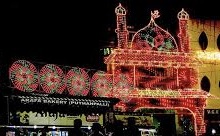
The hospital was next to the famous Puthenpalli (new mosque in Malayalam) and was located at the Southern border of Malappuram district. There was a strong influence from the neighbouring district of Thrissur where I did my undergraduate medical degree. The nearest town was Kunnamkulam. I had frequented the town many times before. We, the RMOs were posted in different departments, and had to take emergency duty in turns. There was an emergency duty room. We spent the evening and night there while on duty. The hospital had a psychiatry department and a coronary care unit (CCU). These were not common in the 1990s. In the evening, we accompanied the psychiatrist and the internal medicine specialist on their rounds in the psychiatry ward and the CCU. The hospital was not built to a central plan, and buildings had been added as per need leading to a warren of buildings and structures.
During the mornings I worked in the Paediatrics outpatient department (OPD) and assisted the Paediatricians. Our lead child specialist was very popular in the region and had a lot of patients. Most doctors working in the hospital did private practice in the afternoon and evenings. On my non-duty days, I would be free by around two in the afternoon. I stayed in a quarter provided by the hospital. The quarter was a two-story building surrounded by swaying coconut and betel nut trees. I was on the top floor and my apartment had a small sit out, a living room and a bedroom and a kitchen. There were two quarters on the top floor while the ground floor only had one large quarter occupied by our orthopaedic surgeon. There were two buildings in proximity.
The rooms had basic furniture — armchairs, cots and beddings. There were no curtains and old fashioned open wooden cupboards fitted into the walls. These consisted of wooden planks and frames recessed into the wall. These are often depicted in older Malayalam movies.
I occasionally made house calls. The region had a lot of individuals working in the ‘Gulf’. Remittances had made the region prosperous.
It was a short three-minute walk to the hospital. Puthenpalli was a popular place for pilgrimage. The mosque contains the maqbara (grave) of a renowned Sufi saint, Sheik Kunjahmed Musaliyar. Devotees believe that his blessings keep the place safe and radiant. The consecrated water at the mosque is believed to have divine healing powers.
Puthenpalli MosqueDuffu Muttu danceFrom Public Domain
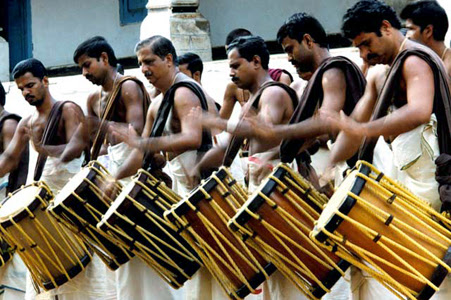
Puthenpalli Nercha[1] was the annual festival and drew pilgrims from far and wide. Ghee rice was distributed to the pilgrims and the needy. Ghee rice is a popular delicacy in the Malabar region. The flavour was largely syncretic as the festival was in December around Christmas and it catered to all communities irrespective of religious inclinations. A grand procession involving elephants and traditional musical performances like Chenda Melam using the traditional drums of Kerala and Mapila Pattu… dances like Kol Kali and Duffu Muttu followed.
Chenda MelamKol Kali — a stick dance From Public Domain
It is typical of Kerala that religious festivals have both a religious and a community purpose. Over centuries, different religions have co-existed in harmony. Elephant processions are common in Hindu temple festivals and are also increasingly used in church and mosque celebrations.
In the olden days these festivals were also important locations for commerce as various stalls were set up selling a variety of goods. Today with online shopping sites and home delivery this may be less important though the shopping attraction still exists. These festivals enable people to forget the challenges of daily life and be transported to a different world for a few days. The Hindu festivals are called Poorams or Velas, the Christian ones are termed Perunnal and the Muslim ones are called either Nercha or Perunnal. Puthenpalli Nercha also boasted a mesmerising fireworks display at night.
The mosque committee served the community by running a school and an orphanage.
We were provided with food from the school hostel. The food was usually par boiled rice and sardines. We were provided with both spicy sardine curry and sardine fries. Two sardines in the curry and two or three well fried and crispy ones for both lunch and dinner. Eating the same food day after day could get a bit boring though! There would also be a vegetable that used to vary daily. And Kerala papadam. The Kerala fish curry used plenty of coconut and tamarind. A coconut and chilly paste was coated on the sardine and it was then deep fried in coconut oil before being part of the curry. Shallots, Kashmiri chillies and curry leaves are common ingredients. I discovered as you travelled up the Malabar coast toward Mangalore, the coating became less spicy.
The emergency department was busy during the evenings, but things usually quietened down at night. I always found night duty tiring as it took me a long time to go back to sleep after attending to a case. Injuries were common and we also received psychiatric patients for admission to the psychiatry ward and cardiac patients as we had an CCU. We were not sufficiently trained to handle aggressive patients. We did have a security person on duty outside the emergency. There were also other security personnel on duty at the entrance to the CCU and at different outpatient departments.
The hospital was surrounded by village homes, and we often walked along the quiet by lanes. The quarter next to me on the top floor was occupied by a lab technician and he was good company and had a wealth of stories to tell. The buses were usually very crowded.
The coast was not far, and you could also walk on the beach and watch the fishermen set out in their boats. The mosque was usually crowded. There were no academic activities at the hospital, and we learned by doing. We would get a break after finishing our night duty and I used to combine my leaves and spend two or three days with my uncle in Palakkad once every two months. KMM hospital was a good place to work. I eventually left to join a small hospital and clinic at Areacode further north in the same district.
Dr. P Ravi Shankar is a faculty member at the IMU Centre for Education (ICE), International Medical University, Kuala Lumpur, Malaysia. He enjoys traveling and is a creative writer and photographer.
.
PLEASE NOTE: ARTICLES CAN ONLY BE REPRODUCED IN OTHER SITES WITH DUE ACKNOWLEDGEMENT TO BORDERLESS JOURNAL
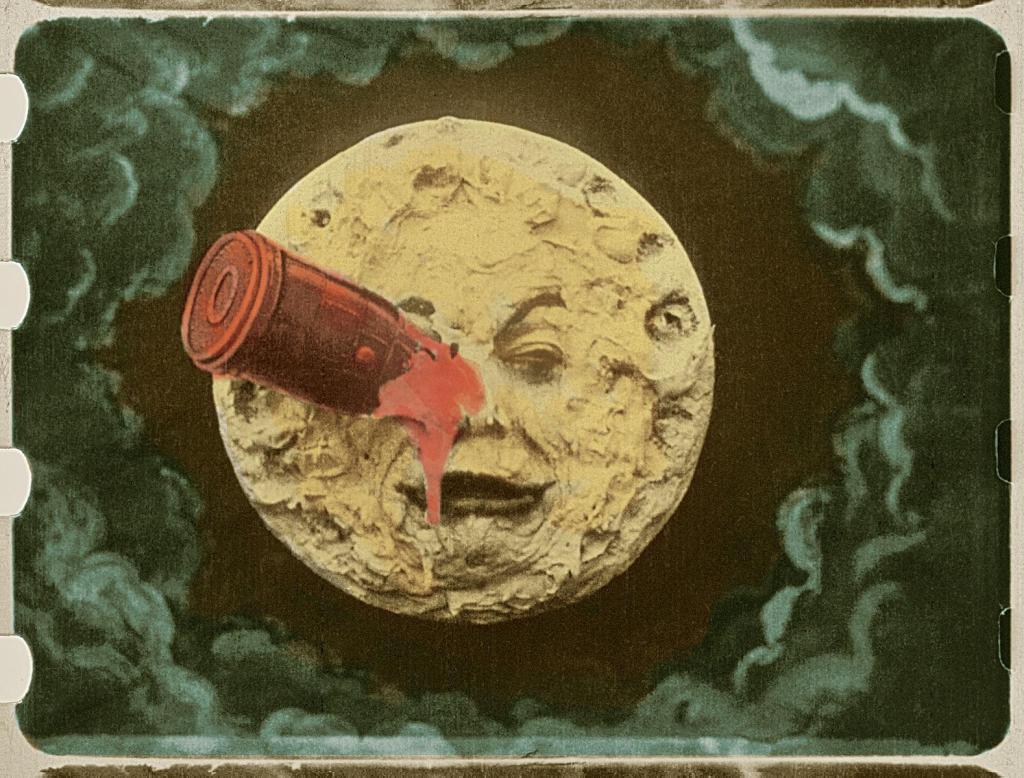
From A Trip to the Moon, a 1902 film by Georges Méliès (1861-1938). From Public Domain
A teacher lost all her life savings, around RM 200,000, to spammers. Over 400 children were rescued from orphanages in two states from sexual predators in Malaysia. Stories like these are not ground-breaking anymore but happen on a daily basis. The worrying trend of late is that these are no isolated incidents perpetrated by individual wackos with ill intents. It is, in fact, a well-organised, well-lubricating establishment with vast tentacles lurking all over the globe.
The brains behind all these schemes are super intelligent, erudite people who can judge what is good and what is evil. They are also aware of what is beneficial and what is detrimental and brings misery. Yet, these same people wilfully devise newer schemes to prey on people’s weaknesses year after year.
They know how every action has an equal and opposite reaction. They understand what goes around comes around. Yet, without an iota of guilt, they carry on life.
Is the lure of materialism too strong to resist? Is the power that money yields too compelling that it becomes an addiction? Is this business a quicksand too strong to extricate one out of? Like a politician trapped in a quagmire that needs to feed his cronies, perhaps this scamming business is multilayered and needs to be fed at many levels, from mafias to enforcement units.
Only the conscientious person worries and regrets any of their deeds. He will have sleepless nights pondering and regretting his actions. He would fear its implications or pursuant legal ramifications. He would shudder to visualise how it hurt his reputation or embarrass his family.
So, when people say humanity lives in each of us and that there is still goodness in the world, are they correct? Are we all innately evil and only conditioned to behave in a particular way because our wise ancestors told us so?
Have we developed a consciousness so advanced that we can justify all our devious actions? We say the people who lost their hard-earned savings can afford to lose some. It is all part and parcel of the circle of life’s ups and downs, karma, warts and all. It is a zero-sum game. One party loses for the other to live. Life is not fair, and we have to live with it. Nature is hostile and humans are part of nature. Our duty, first and foremost, is that we are obliged to take care of ourselves and our own at all costs. In the meantime, the conscientious brood over the evil that is spewed throughout the world. They make their lives purpose to correct the balance. They yearn for equality and social justice and lose valuable sleep over it.
Meanwhile, fraudsters and psychopaths cheat without an iota of guilt. They justify all their crimes. In fact, they feel entitled to do what they do and obtain inner gratification from their manipulations. On the other hand, the conscientious ones constantly assess and reassess their actions, aiming to do the correct thing. These thinkers carry much guilt and regret. They consider their own actions and try to do the ‘right’ thing.
This topic is nothing new. It was tackled by the legendary Tamil philosopher-poet Valluvar[1]. His origin is hazy, but many parties claim him to be part of their tradition. He was probably a Jain-Hindu poet. His short couplets are recited daily by most primary schoolchildren in Tamil schools. These couplets generally talk about righteousness, love and wealth. He sarcastically comments in one of his lines (Kural #1072), “Blessed are the cheats who do not think about good and bad.”
[1] Dated to have lived between 4th and 5th century BC
Farouk Gulsara is a daytime healer and a writer by night. After developing his left side of his brain almost half his lifetime, this johnny-come-lately decided to stimulate the non-dominant part of his remaining half. An author of two non-fiction books, Inside the twisted mind of Rifle Range Boy and Real Lessons from Reel Life, he writes regularly in his blogRifle Range Boy.
.
PLEASE NOTE: ARTICLES CAN ONLY BE REPRODUCED IN OTHER SITES WITH DUE ACKNOWLEDGEMENT TO BORDERLESS JOURNAL
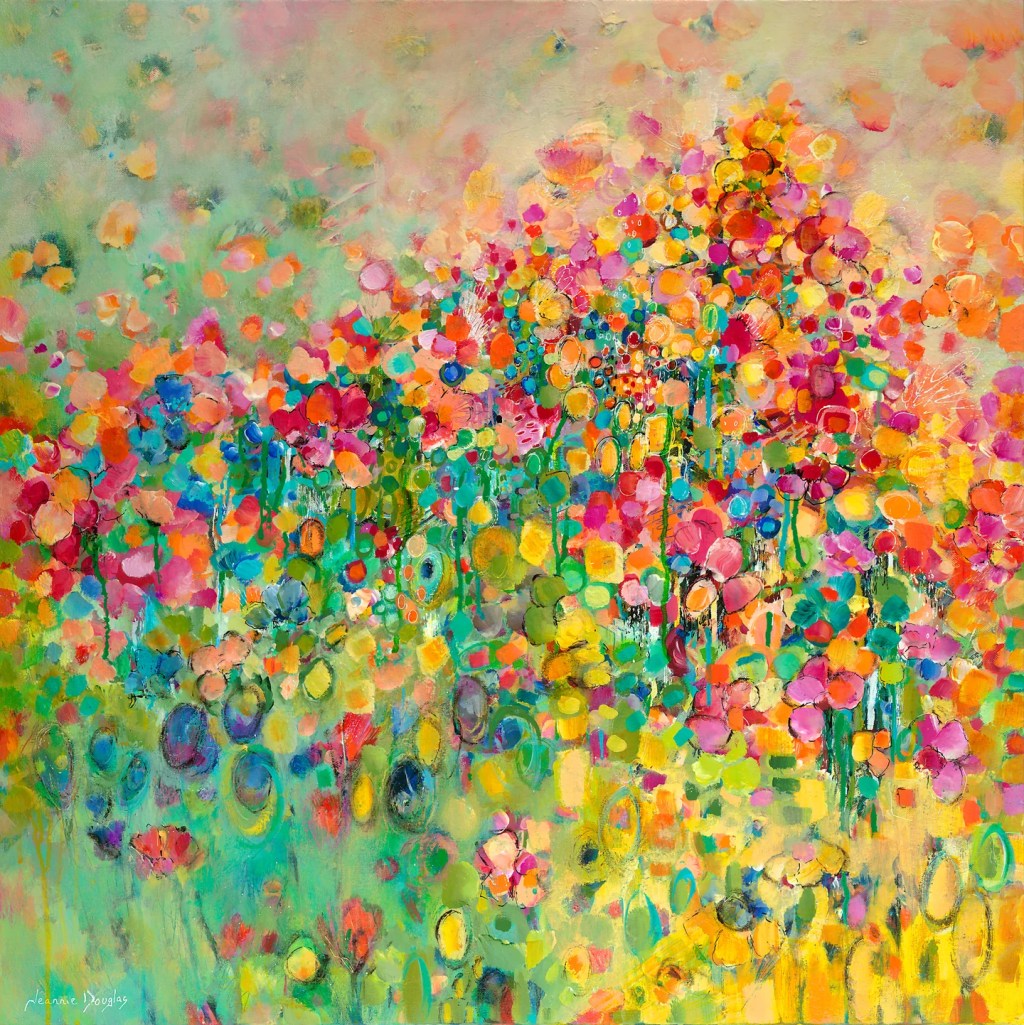
A Pop of Happiness by Jeanie Douglas. From Public Domain
Happiness is a many splendored word. For some it is the first ray of sunshine; for another, it could be a clean bill of health; and yet for another, it would be being with one’s loved ones… there is no clear-cut answer to what makes everyone happy. In Harry Potter and the Half Blood Prince (JK Rowling, 2005), a sunshine yellow elixir induces euphoria with the side effects of excessive singing and nose tweaking. This is of course fantasy but translate it to the real world and you will find that happiness does induce a lightness of being, a luminosity within us that makes it easier to tackle harder situations. Playing around with Rowling’s belief systems, even without the potion, an anticipation of happiness or just plain optimism does generate a sense of hope for better times. Harry tackles his fears and dangers with goodwill, friends and innate optimism. When times are dark with raging wars or climate events that wreck our existence, can one look for a torch to light a sense of hope with the flame of inborn resilience borne of an inner calm, peace or happiness — call it what you will…?
It is hard to gauge the extreme circumstances with which many of us are faced in our current realities, especially when the events spin out of control. In this issue, along with the darker hues that ravage our lives, we have sprinklings of laughter to try to lighten our spirits. In the same vein, externalising our emotions to the point of absurdity that brings a smile to our lips is Rhys Hughes’ The Sunset Suite, a book that survives on tall tales generated by mugs of coffee. In one of the narratives, there is a man who is thrown into a bubbling hot spring, but he survives singing happily because his attacker has also thrown in packs of tea leaves. This man loves tea so much that he does not scald, drown or die but keeps swimming merrily singing a song. While Hughes’ stories are dark, like our times, there is an innate cheer that rings through the whole book… Dare we call it happiness or resilience? Hughes reveals much as he converses about this book, squonks and stranger facts that stretch beyond realism to a fantastical world that has full bearing on our very existence.
A powerful essay by Binu Mathew on the climate disaster at Wayanad, a place that earlier had been written of as an idyllic getaway, tells us how the land in that region has become more prone to landslides. The one on July 30th this year washed away a whole village! Farouk Gulsara has given a narrative about his cycling adventure through the state of Kashmir with his Malaysian friends and finding support in the hearts of locals, people who would be the first to be hit by any disaster even if they have had no hand in creating the catastrophes that could wreck their lives, the flora and the fauna around them. In the wake of such destructions or in anticipation of such calamities, many migrate to other areas — like Ranu Bhattacharya’s ancestors did a bit before the 1947 Partition violence set in. A younger migrant, Chinmayi Goyal, muses under peaceful circumstances as she explores her own need to adapt to her surroundings. G Venkatesh from Sweden writes of his happy encounter with local children in the playground. And Snigdha Agrawal has written of partaking lunch with a bovine companion – it can be intimidating having a cow munching at the next table, I guess! Devraj Singh Kalsi has given a tongue-in-cheek musing on how he might find footing as a godman. Suzanne Kamata has given a lovely summery piece on parasols, which never went out of fashion in Japan!
Radha Chakravarty, known for her fabulous translations, has written about the writer she translated recently, Nazrul. Her essay includes a poem by Tagore for Nazrul. Professor Fakrul Alam has translated two of Nazrul’s songs of parting and Sohana Manzoor has rendered his stunning story Shapuray (Snake Charmer) into English. Fazal Baloch has brought to us poetry in English from the Sulaimani dialect of Balochi by Allah Bashk Buzdar, and a Korean poem has been self-translated by the poet, Ihlwha Choi. The translations wind up with a poem by Tagore, Olosh Shomoy Dhara Beye (Time Flows at an Indolent Pace), showcasing how the common man’s daily life is more rooted in permanence than evanescent regimes and empires.
Fiction brings us into the realm of the common man and uncommon situations, or funny ones. A tongue-in-cheek story set in the Midwest by Joseph Pfister makes us laugh. Farhanaz Rabbani has given us a beautiful narrative about a girl’s awakening. Paul Mirabile delves into the past using the epistolary technique highlighting darker vignettes from Christopher Columbus’s life. We have book excerpts from Maaria Sayed’s From Pashas to Pokemonand Nazes Afroz’s translation of Syed Mujtaba Ali’sShabnamwith both the extracts and Rabbani’s narratives reflecting the spunk of women, albeit in different timescapes…
When migrations are out of choice, with multiple options to explore, they take on happier hues. But when it is out of a compulsion created by manmade disasters — both wars and climate change are that — will the affected people remain unscarred, or like Potter, bear the scar only on their forehead and, with Adlerian calm, find happiness and carpe diem?
Do pause by our current issue which has more content than mentioned here as some of it falls outside the ambit of our discussion. This issue would not have been possible without an all-out effort by each of you… even readers. I would like to thank each and every contributor and our loyal readers. The wonderful team at Borderless deserve much appreciation and gratitude, especially Manzoor for her wonderful artwork. I invite you all to savour this August issue with a drizzle of not monsoon or April showers but laughter.
May we all find our paths towards building a resilient world with a bright future.
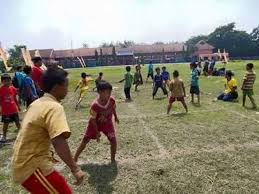
Chaptek: The feathered shuttlecock is kicked with the heel to keep it in the air as long as possibleBelon acah (or galah pajang) is a team sport where players cross against the barricading opponents.
LIFETIME BY MAIN MAIN

wooden blocks, wooden trains,
ageing memory still remains.
     friends divide, police and thief,
     evening sweat a stress relief.
Belon acah on badminton court,
cari lobang through the fort.
      colourful feathers adorn chaptek,
      mesti main during pagi break.
hantam bola with acrobatics,
ducking projectile, elak tactic.
       rounders, imperfect diamond,
       home runners jadi legend.
ceper with five bottle caps,
navigating past the 3D traps.
     guli lined up without blame,
     mata sempit taking aim.
tightened cord, to spin gasing,
if too loose kepala pusing,
     whack the stick, gili danda,
      count back jangan salah.
Hide and seek, every little nook,
hearts like pages of an open book.


Glossary
main main: play, playing
Belon acah: name of the game
cari: look; lobang: gap or hole
chaptek: featherball
mesti: must
pagi: morning;
hantam: strike / hit; bola: ball
elak: avoid
jadi: become
ceper; bottle cap
guli: marble
mata: eye; sempit: narrow slit
gasing: tops that spin
kepala: head
pusing: turn, context is disoriented
gili danda: name of the game
jangan: don’t: salah: error / mistake
You can check out more about the games mentioned in the poem by clicking here.
A game of Ceper
.Sanjay C Kuttan, poet, philosopher and writer, was born in Malaysia, lives in Singapore, has his poetry published in Where Fires Rage, In One Breath, Under the Spell of Flickering Lights, Quilted Sails and in other anthologies.
.
PLEASE NOTE: ARTICLES CAN ONLY BE REPRODUCED IN OTHER SITES WITH DUE ACKNOWLEDGEMENT TO BORDERLESS JOURNAL









 Borderless