The story of Hawakal Publishers, based on a face-to-face tête-à-tête, and an online conversation with founder Bitan Chakrabortywith his responses in Bengali translated by Kiriti Sengupta. Clickhere to read.
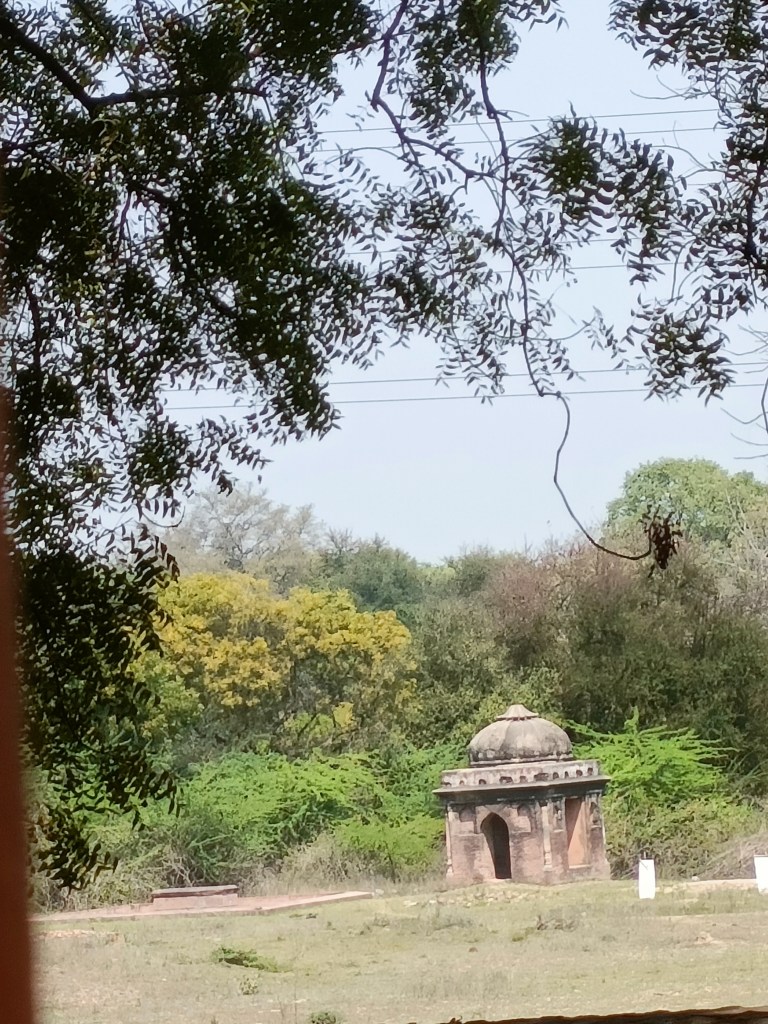
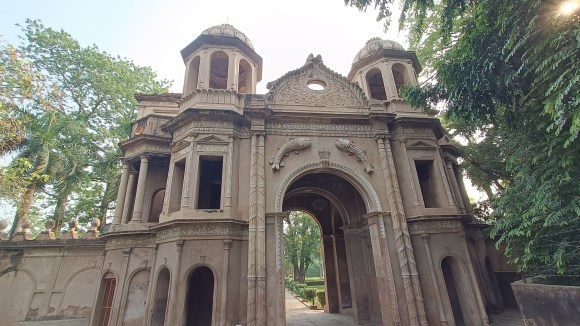
Talking about Vilayati Bagh as being an isolated cousin among the many gardens and monuments of Lucknow would be feasible given its elusive nature. I say elusive because it is nestled in the lush environs of the cantonment area and forested canopy that lies ahead of Dilkusha Palace which is one of the city’s many frequently visited wonders. Within this canopy lies Vilayati Bagh, “Vilayati”(foreign) referring in no small terms to not only a colonial past but also the stark fact that it is home to three tombs of erstwhile British officers who perished in the high noons of 1857’s First War of Independence. It was only a year ago that I, myself, had the opportunity to go there for the very first time. But that March morning changed everything. I have been there twice already to revel in its tranquility.
Its history is quite like other gardens and leisure spots of Awadh. It was built in the earlier parts of 19th Century by Ghazi Ud-Din Haider[1], the Nawab of Awadh, as a gift for his beloved European consort. During the revolt of 1857, it fell prey to shellings and other bombardments. But like most of Lucknow’s quintessential monuments, the spirit of renaissance did not elude it for long. In the present day, it is still tucked away in its quiet corner, slumbering and awakening for discerning eyes (and minds) who go there to capture crucial echoes of its unique identity.
Flanked by the Gomti close by and a cemetery in the middle of a spacious compound, the property begins its enchanting passage as one takes a straight drive (or walk) from Dilkusha Palace, approaches Kendriya Vidyalaya and then continues to move ahead to encounter a railway crossing, opposite which lies the cantonment granary, quarters and the grand and haunting Bibiapur Kothi. Taking a left turn from that location brings one to the verdure of old, huge trees, a moderately spacious road and pleasant sounds of cicadas and birds. In this pithy journey to Vilayati Bagh, the feeling of time-traveling to a gracious era of architectural elegance comes into sight the moment we reach its immediate premises. A beautiful Sufi dargah bathed in impressive green lies on the left and a few moderate homes of those who probably maintain this compound meet us.
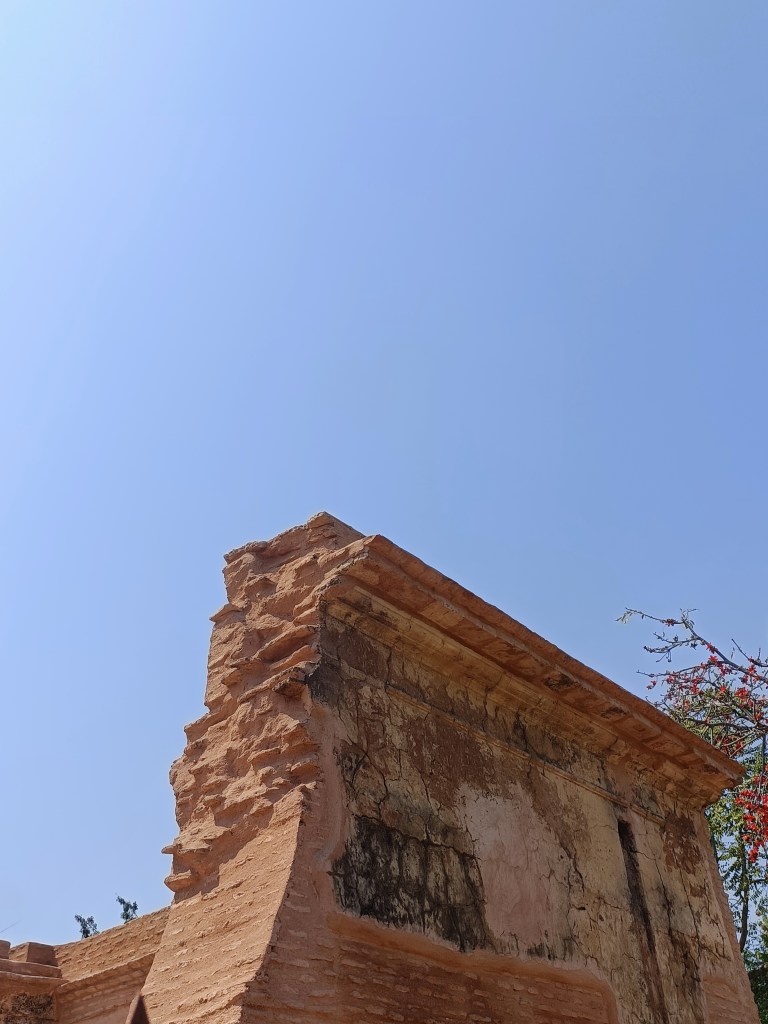
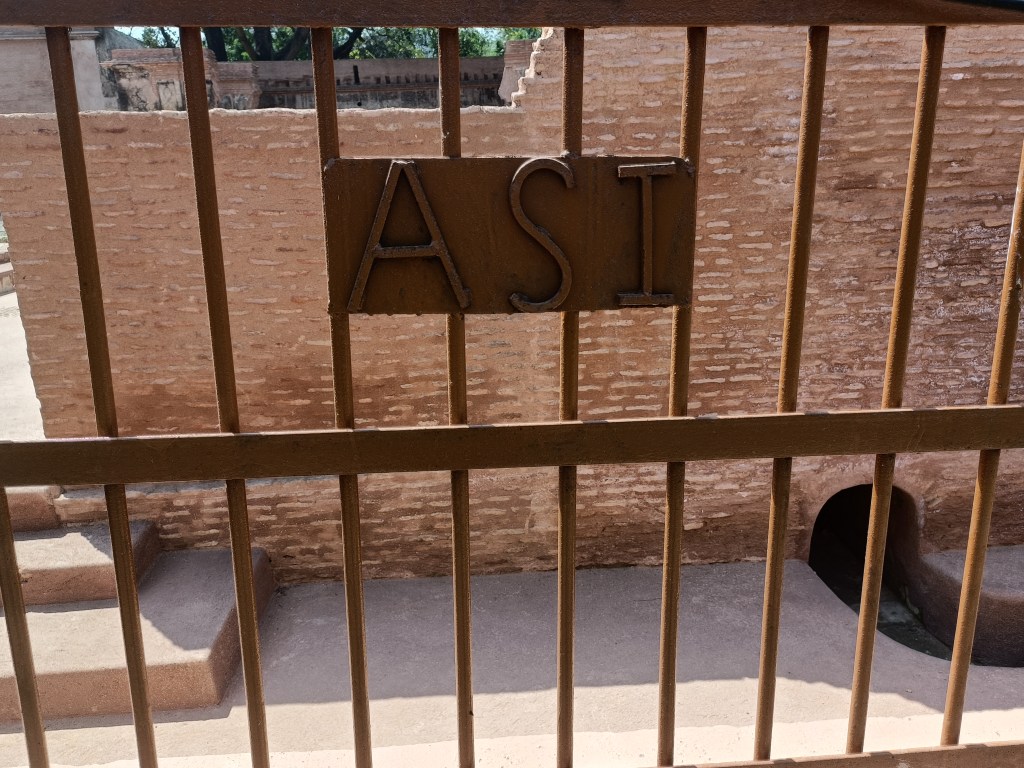
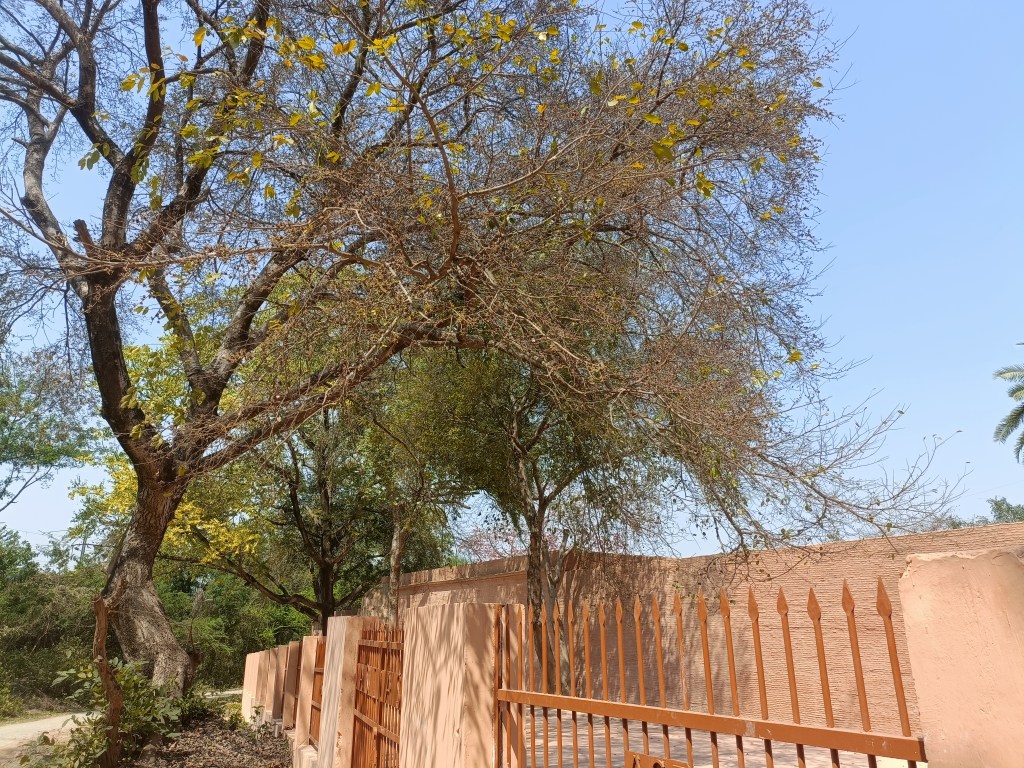
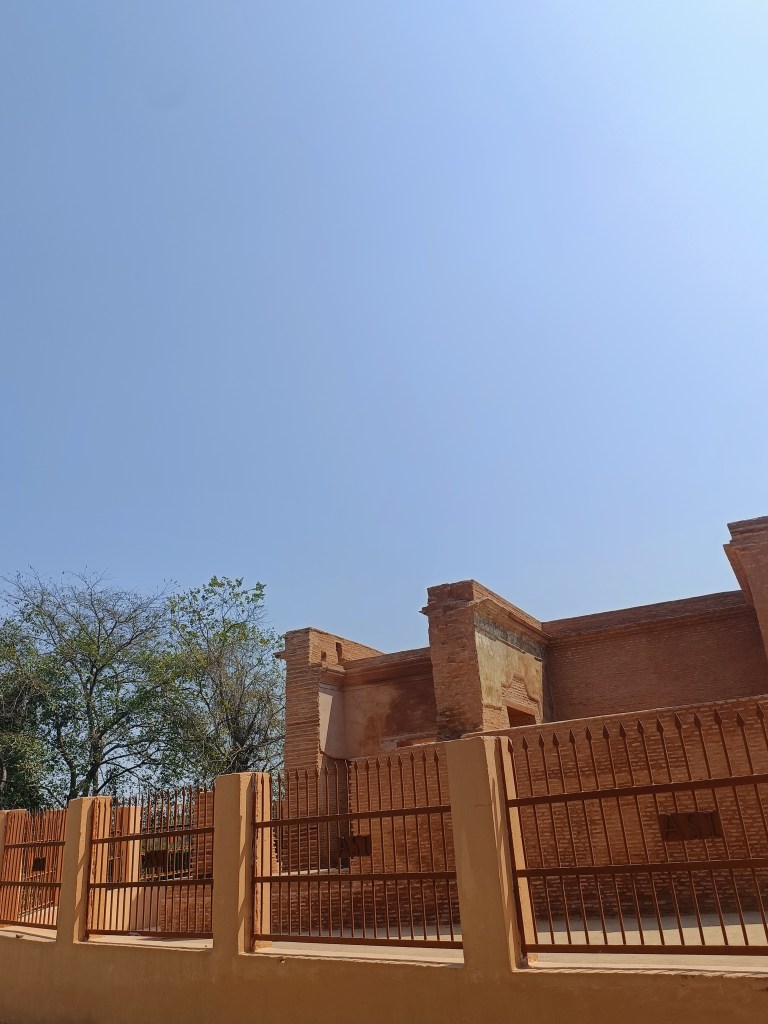
Then the real journey begins. A sophisticated sense of the building blocks of this elusive garden are elucidated by its brown- yellow, almost auburn walls. The lakhauri[2]paint and plaster give it luster on a sunny day. These ramparts retain their history of age, war and past reckonings. Yet it’s the sun that designs their colour schemes in the most sublime shades. Archeological Survey of India has restored its lost glory in recent years and the result is there for all to see.
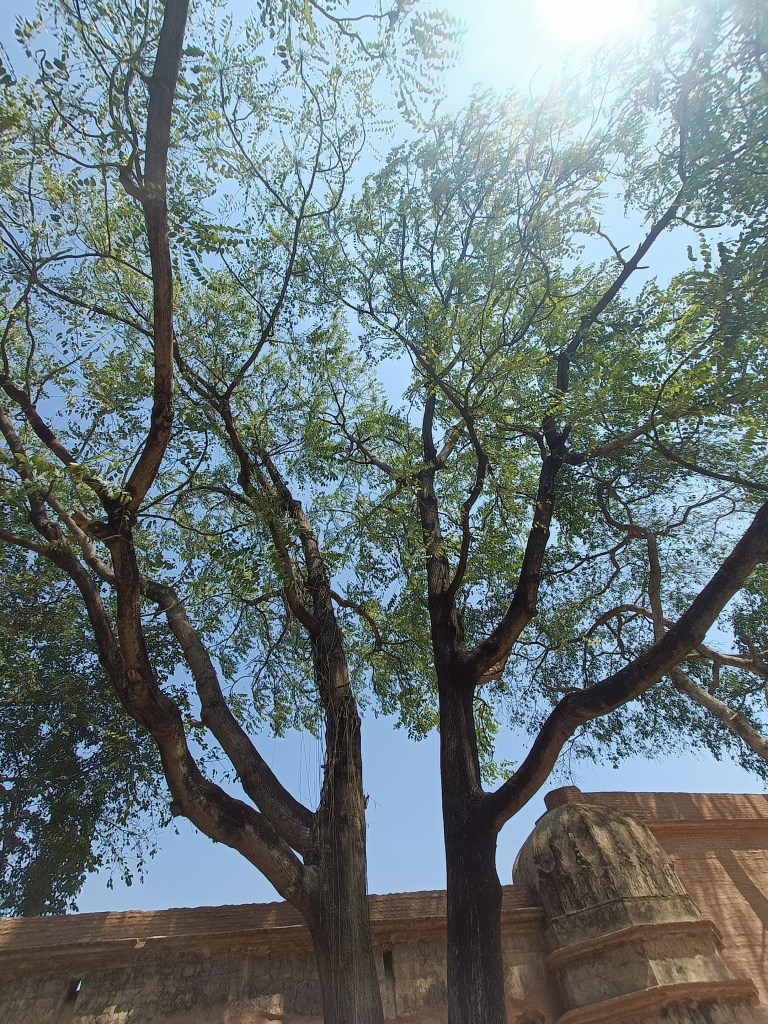
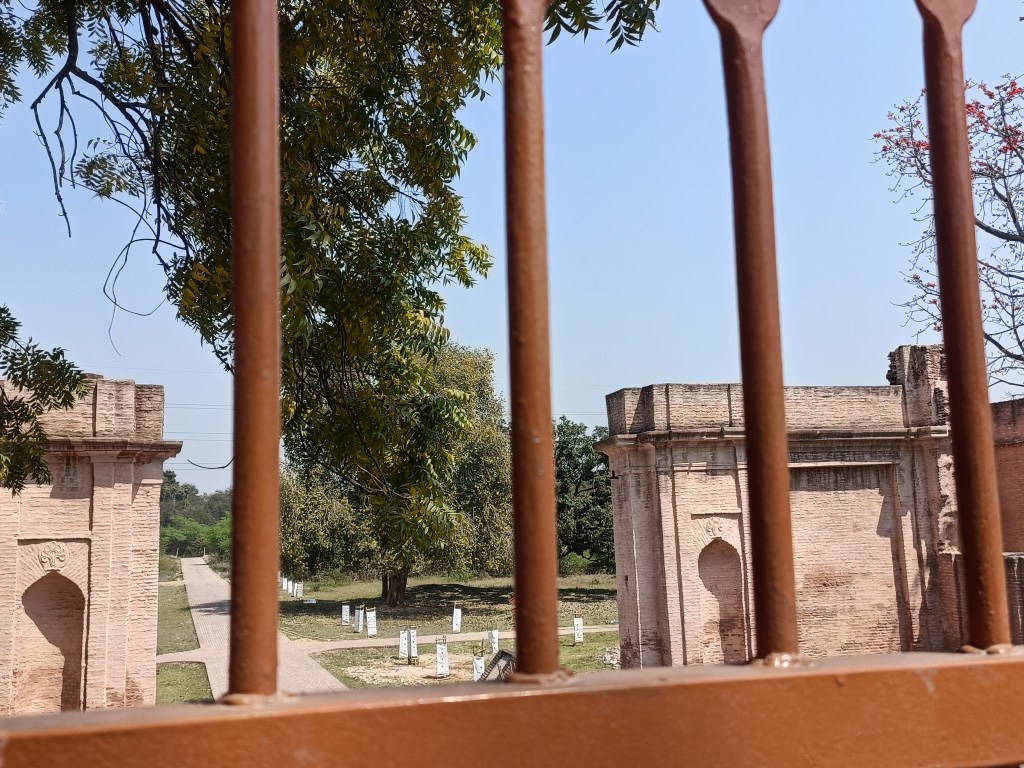
The boundary walls have a sturdy presence and are enclosed by arrow-shaped iron structures painted in pleasant brown. As one explores the interiors of the garden compound, little monoliths, corrugated outer flanks that look like barracks emerge, the exposed bricks red and pink in their sublimity of skin tones. A Y-shaped drain also flanks them. There is an aura of extraordinary peace all around. This isn’t meant to be a tourist spot. This is the one for aesthetes and true aficionados of history. The mind wanders and is arrested by trees whose branches are shaped like pitchforks.
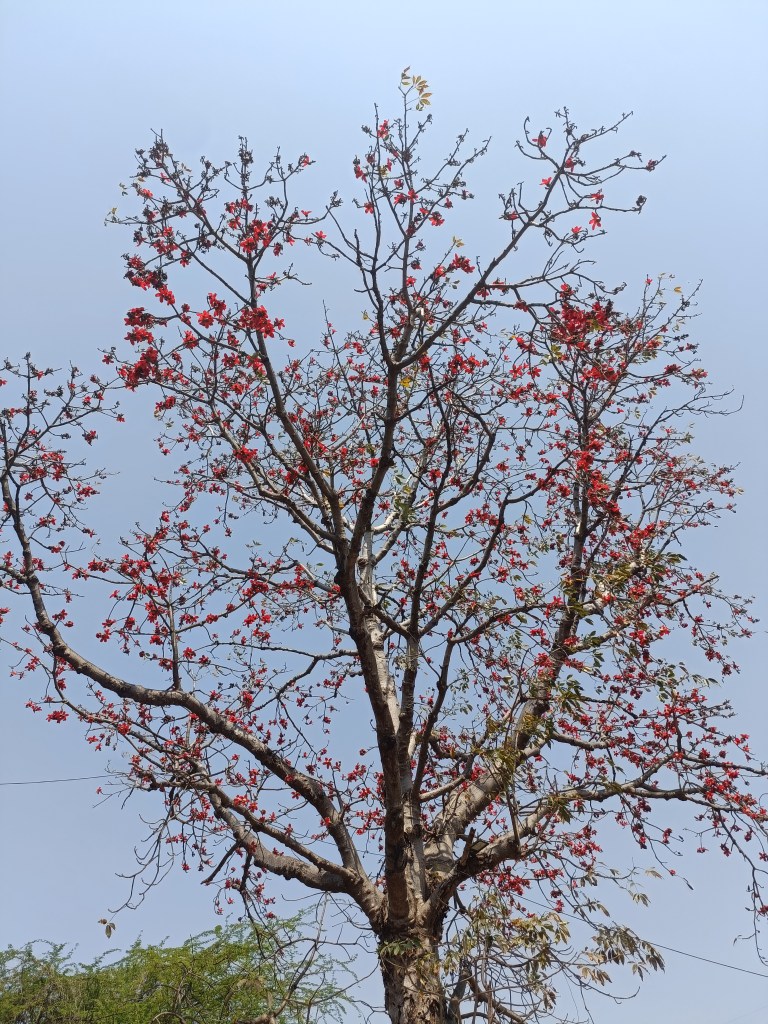
A dargah (miniature Sufi shrine) greets one at the outer end of the compound while a majestic gulmohar tree seems to appear like a tall fellow wearing red scarves. Arches and domes subsist in this sturdy network of walls.
The saga of Vilayati Bagh is one of beauty but the starkness of its melancholy is evident in the cemeteries that lie in a little distance from the main gateway. They belong to fallen English soldiers Henry P. Garvey, Captain W. Helley Hutchinson and Sergeant S. Newman. These tombs are made in the image of a wide basin, crypts depicting that no one side can win or lose a war. Everybody has formidable stakes, and the dead don’t preach the gospel of victory or sombre defeat. Flanking these resting places are miniature pavilions with domes; they are surrounded by white rectangles made from cloth supported by twigs — sobering symbols of lives lost and the unpredictable designations of mortality.
Despite this unique mixture of melancholy and beauty, sobriety reigns. Of course, the obvious euphoria of discovery overrides every other emotion. Lucknow is a city that lives and breathes in such possibilities where a monument or elusive corner of its expanse can prompt an awakening for its discerning residents. Going further than the limitations imposed by acquired knowledge is always a source of deeper reckoning. This garden that houses nature and ghosts of mortality in its inner sanctum gives me another reason to keep my curiosity intact.
[1] Ghazi-ud-Din Haidar Shah (1769-1827), The first King of Oudh and the last Nawab Wazir of Oudh. He started a line of kingship which ended with the exile of Wajid Ali Shah(1822-1887).
[2] Traditional natural ingredients, often dyes or pastes from plants, used for coating buildings in Lucknow
Prithvijeet Sinha is an MPhil from the University of Lucknow, having launched his prolific writing career by self-publishing on the worldwide community Wattpad since 2015 and on his WordPress blog An Awadh Boy’s Panorama. Besides that, his works have been published in several journals and anthologies.
PLEASE NOTE: ARTICLES CAN ONLY BE REPRODUCED IN OTHER SITES WITH DUE ACKNOWLEDGEMENT TO BORDERLESS JOURNAL
In Did He Ever?,Rhys Hughes gives fun-filled verses on Lafcadio Hearn, a bridge between the East and West from more than a hundred years ago. Clickhere to read.
Dolly Narang muses on Satyajit Ray’s world beyond films and shares a note by the maestro and an essay on his art by the eminent artist, Paritosh Sen. Clickhere to read.
Poetry, prose — all art forms — gather our emotions into concentrates that distil perhaps the finest in human emotions. They touch hearts across borders and gather us all with the commonality of feelings. We no longer care for borders drawn by divisive human constructs but find ourselves connecting despite distances. Strangers or enemies can feel the same emotions. Enemies are mostly created to guard walls made by those who want to keep us in boxes, making it easier to manage the masses. It is from these mass of civilians that soldiers are drawn, and from the same crowds, we can find the victims who die in bomb blasts. And yet, we — the masses — fight. For whom, for what and why? A hundred or more years ago, we had poets writing against wars and violence…they still do. Have we learnt nothing from the past, nothing from history — except to repeat ourselves in cycles? By now, war should have become redundant and deadly weapons out of date artefacts instead of threats that are still used to annihilate cities, humans, homes and ravage the Earth. Our major concerns should have evolved to working on social equity, peace, human welfare and climate change.
One of the people who had expressed deep concern for social equity and peace through his films and writings was Satyajit Ray. This issue has an essay that reflects how he used art to concretise his ideas by Dolly Narang, a gallery owner who brought Ray’s handiworks to limelight. The essay includes the maestro’s note in which he admits he considered himself a filmmaker and a writer but never an artist. But Ray had even invented typefaces! Artist Paritosh Sen’s introduction to Ray’s art has been included to add to the impact of Narang’s essay. Another person who consolidates photography and films to do pathbreaking work and tell stories on compelling issues like climate change and helping the differently-abled is Vijay S Jodha. Ratnottama Sengupta has interviewed this upcoming artiste.
Reflecting the themes of welfare and conflict, Prithvijeet Sinha’s essay takes us to a monument in Lucknow that had been built for love but fell victim to war. Some conflicts are personal like the ones of Odbayar Dorj who finds acceptance not in her hometown in Mongolia but in the city, she calls home now. Jun A. Alindogan from Manila explores social media in action whereas Eshana Sarah Singh takes us to her home in Jakarta to celebrate the Chinese New Year! Farouk Gulsara looks into the likely impact of genetic engineering in a world already ripped by violence and Devraj Singh Kalsi muses on his source of inspiration, his writing desk. Meredith Stephens tells the touching story of a mother’s concern for her child in Australia and Suzanne Kamata exhibits the same concern as she travels to Happy Village in Japan to meet her differently-abled daughter and her friends.
As these real-life narratives weave commonalities of human emotions, so do fictive stories. Some reflect the need for change. Fiona Sinclair writes a layered story set in London on how lived experiences define differences in human perspectives while Parnika Shirwaikar explores the need to learn to accept changes set in her part of the universe. Spandan Upadhyay explores the spirit of the city of Kolkata as a migrant with a focus on social equity. Both Paul Mirabile and Naramsetti Umamaheswararao write stories around childhood, one set in Europe and the other in Asia.
Do pause by our contents page for this issue and enjoy the reads. We are ever grateful to our ever-growing evergreen readership some of whom have started sharing their fabulous narratives with us. Thanks to all our readers and contributors. Huge thanks to our wonderful team without whose efforts we could not have curated such valuable content and thanks specially to Sohana Manzoor for her art. Thank you all for making a whiff of an idea a reality!
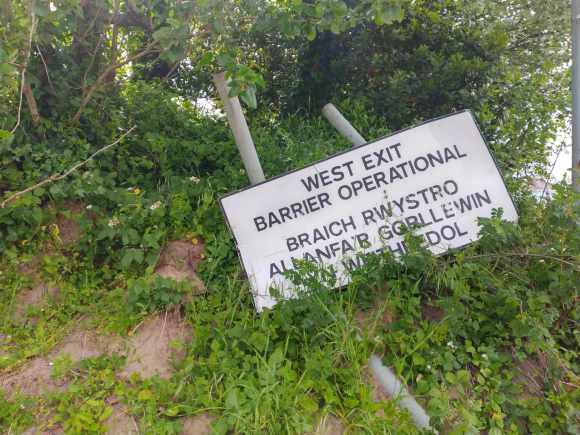
West Exit Barrier Operational,
declares the sign,
but I ask you: is this really the
best way to ease
my considerable stress?

I am a carrier for a postal outfit.
Dressed in a vest
and shorts and little else,
I confess to feeling
vexed by the implications.
The package I carry contains
something sensational.

Dare I risk passing under such
a rickety barrier?
Don’t look now but my precious
cargo has come all the way from
Lucknow in India,
and I am supposed to deliver it
safely to Ludlow,
a town on the border of Wales.

But the West Exit Barrier doesn’t
look to me as operational
as it claims to be
and I find this fact worrying.

What’s the point of hurrying if I
run into a trap?
My package is full of sweets
from the streets
of the City of Nawabs, wrapped
carefully and warily.

Shahi Tukda, Sheermal, Nawabi
Zafrani Kheer, Makhan Malai,
Kali Gajar ka Halwa…
All as pleasing to the famished
eye as they are
to the drooling mouth.

I suspect an ambush ahead.
Some villain with a craving for
sweets intends to
knock me over the head
and render me unconscious.

Then he will loot my package
and gorge himself
and in my unplanned sleep I
will dream that I am
forging ahead on my mission.

But when I awake with a skull
as heavy as lead,
throbbing and wobbling on my
aching neck,
it will become apparent that I
failed to fulfil
my vow to my regular clients.

I promised to defend
their sweets with all my might!
What a sight it will be
if I am found asprawl,
able only to crawl, victim of an
outrageous robbery!

What should I do
to assure the safety of delights
that can be chewed?
I might as well open the parcel
and eat them myself
just to keep them out of the hands
of the scoundrels
who plan to steal and scoff them.

Then the sweets
will be safe for eternity
in my stomach and the West Exit
Barrier will hold no
terrors for me, operational or not.

Yes, that’s the best
solution to the difficulty I face.
Waste not, want not.

With maximum grace
I devour the lot
and now my vest no longer fits
me: I slump in
satisfied torpor, a justified hero,
chomping jaw
swollen slightly, adjacent to the
West Exit Barrier,
and I no longer care about how
operational it is.
Rhys Hughes has lived in many countries. He graduated as an engineer but currently works as a tutor of mathematics. Since his first book was published in 1995 he has had fifty other books published and his work has been translated into ten languages.
.
PLEASE NOTE: ARTICLES CAN ONLY BE REPRODUCED IN OTHER SITES WITH DUE ACKNOWLEDGEMENT TO BORDERLESS JOURNAL
What if I tell you that History is my neighbour? It would sound like hyperbole to a lay person. But if you are a resident of the historic and expansively beautiful urban area of Hazratganj that is the heart of the city, it will seem a shorthand for reflections in time.
Hazratganj is a state of mind, not only a piece of land stretching across kilometres and hosting the best that humanity has to offer, whether natural or man-made, including the Imambaras, gardens and riverfronts and gateways that define Lucknow as also the mass of commercial institutions, cultural centres and culinary establishments elevating its profile as a diverse area of activity.
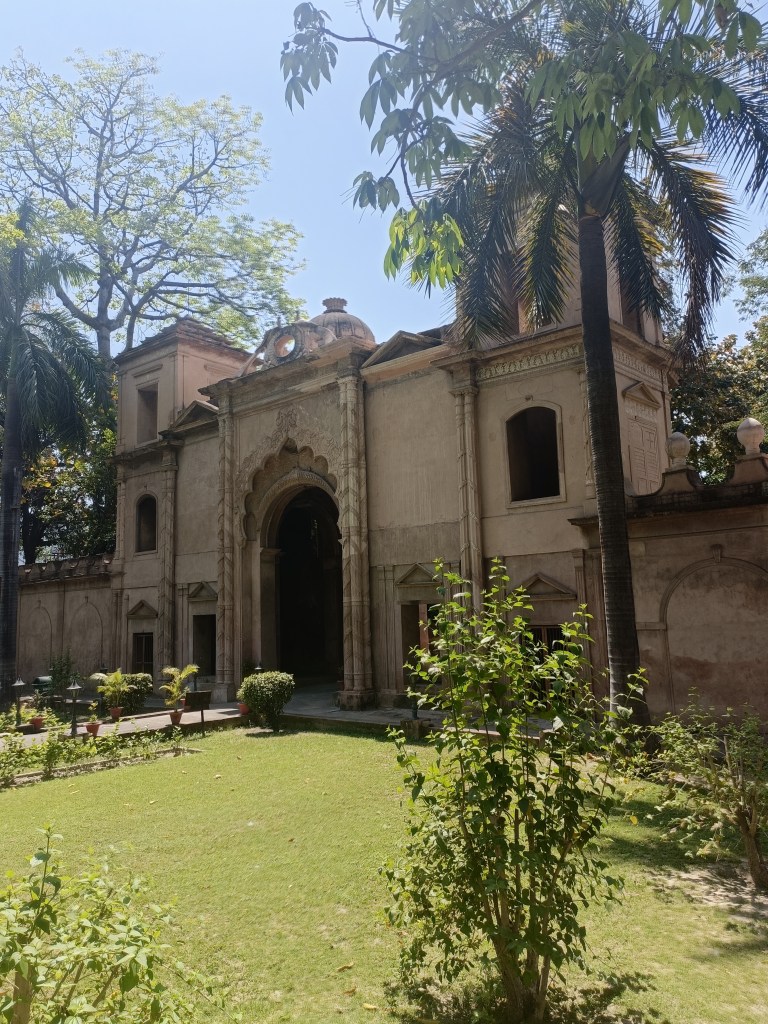
In this beautiful centre of a glorious city lives yours truly and one of the most evocative of the historic gardens dotting Hazratganj also happens to be a mere five-minute walk from his home. I’m talking about Sikandar Bagh, a garden complex that is a sight for sore eyes and retains history in its structure, with lime yellow walls of lakhauri[1], a beautiful gateway bearing the city’s fabled fish symbol and a pagoda style arch signifying the melange of influences in its multidimensional whole.
The domes and ramparts retain the haunting afterglow of history but also the dark days that led to its tragic unraveling.
Built around the mid 1840s by Nawab Wajid Ali Shah[2], the great aesthete and ruler of Lucknow, Sikandar Bagh was a private residence, a garden of elegance and a performance art venue made to honour his love for Sikandar Begum, his beloved wife. The intimacy of this saga of love and mutual respect shared between two life-partners is reflected in the way the place comes alive for any visitor. There’s nothing grand here. Yet there’s the gift of verdure, the protection of huge, dome-like trees and remnants of the original structure that reminds us of a place preserved in its handsome inception and prevalence down the ages.
But Sikandar Bagh is a cultural outlier because apart from its blessed beginnings and present serene state, it had also been scarred by the First War of Independence in 1857[3]. This was the site that was used by sepoys of Awadh (a hallowed title for the region comprising Lucknow and its neighbouring districts that continues to this date) to mount their rebellion against British supremacy. This was a private garrison and hiding place in those erstwhile days of November 1857 where the plotting of a historic rebellion took place. History was not kind to the rebels, and nearly all were slain by the colonial establishment. Knowing that the serenity here could hold so much ballast in its open space makes one ponder. To know about this is to understand that we are progeny of these brave and the remains of the walls facing this garden and continuing up till the Shahnajaf Imambara seem to take the toll of all that bloodshed and hurt that lies embedded within these bricks.
Of course, knowing the background is imperative but so is being inured to its beauty. I am an eternal walker, a flaneur, so for me Sikandar Bagh has been a favourite place to revel in the humbling and aesthetic aspects of Lucknow. Sikandar Bagh befits my desire to saunter and take in the bouquet of nature.
*
It’s been my morning ritual to be comforted by the breeze, swayed and lulled to satisfaction with the lullaby of the trees within its compound and behold a distant beehive in the tallest Goliath among these ancient trees, looking at nestling birds and squirrels in the lower branches of their trunks.
As I write this after a brief stroll in this garden on a pleasant Sunday afternoon, the summer seems to have been evoked to spread its sunny yellow carpet with mellow repose instead of scorching us with humid darts and blows.
The thing with Sikandar Bagh is that history is alive here but also a natural companion. Always the silent, sturdy type, an occasional morning walker or casual passers-by make for rare sights inside its premises in the early hours. It always makes me feel like the chosen one, allowed to roam its length and breadth, making it a regular haunt.
*
A lot of times while going from one place to another, I see young people seated on its green benches, relieving themselves of their pressures and sometimes enjoying a quiet meal here. I also look at people who, besotted by its unique beauty and structure, walk leisurely and photograph its stretches. Their eyes register the special place it holds for them.
Today, Sikandar Bagh is overseen by the Archeological Survey of India. Around early 2022, it commissioned a refurbishment that restored its walls, ramparts with the lakhauri , a far cry from the concrete jungle that is an urban reality in the modern era.
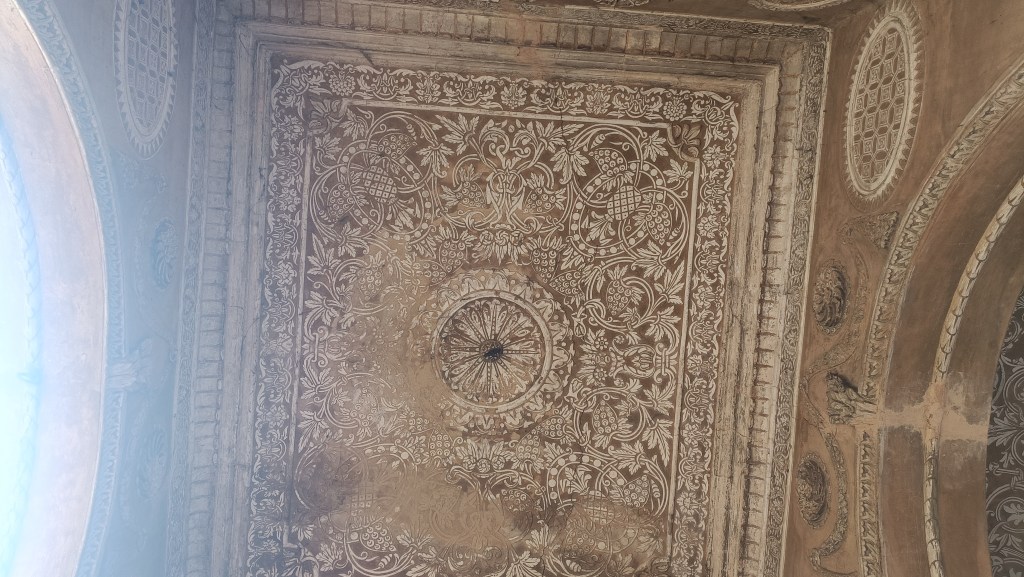
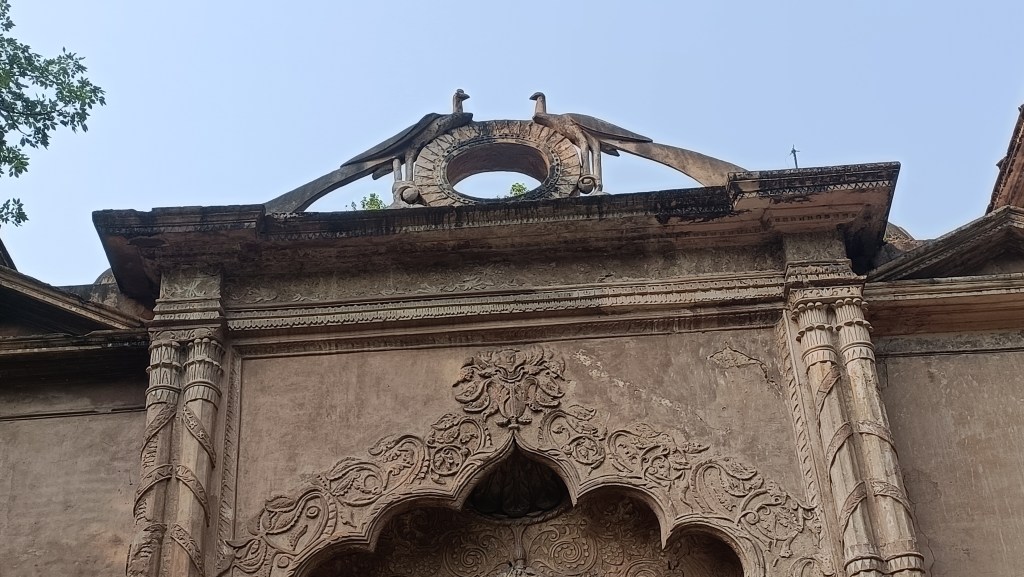
It always comes down to these columns, frescoes, ramparts, a humble mosque within this secular compound, the pavilion signifying what once was an open theatre and the palatial remains, all blended in the unique textures and colours of centuries; worn out by time but never denuded of glory, a stark yet humbling reminder that Sikandar Bagh is a labour of love. Writing this, I am enchanted by its gateway’s peacock iconography, how they seem to call out to the actual birds who visit from the neighbouring Botanical Gardens premises facing this little slice of verdure and architectural wonder.
I inhale the sights, simultaneously rattled by the annoyance of traffic outside its main gate intruding upon its peculiar, unique position within the heart of the city. Yet I know it’s sealed by a dignified reserve, as if these domes and the gateway spell quietude and ubiquity like the red eyes of the pigeons flying near the roof and peering down its height.
*
Honeybees on the tallest trees here go from the nectar of one season to the next and the sun shades this compound in moods invoking the spirit of a poet in me. It’s so easy to be wrapped in the peace and calm of this open space and its historical representation, so easy to know that creative inspiration fed by such a pleasant source is far from just a fictional device. It is a living, breathing ally to diurnal times.
Being in the lap of nature within cities can be a novel intervention. But my love affair with Sikandar Bagh – my own paradise — never waits for a distinct memento. It came to be from a place of love. It is my composite love for it that makes it stand out.
[2] Nawab Wajid Ali Shah was the eleventh and last nawab of Awadh. His kingdom was annexed by the East India Company in 1856 and he was exiled to Kolkata.
[3] Revolt of 1857: The sepoys – Hindus and Muslims – rose united in rebellion against the British Raj. As a result, the British adopted the weapon of Divide and Rule successfully, and the subcontinent continues to be scarred by the fanning of the same flame to this day.
Prithvijeet Sinha is an MPhil from the University of Lucknow, having launched his prolific writing career by self-publishing on the worldwide community Wattpad since 2015 and on his WordPress blog An Awadh Boy’s Panorama. Besides that, his works have been published in several journals and anthologies.
PLEASE NOTE: ARTICLES CAN ONLY BE REPRODUCED IN OTHER SITES WITH DUE ACKNOWLEDGEMENT TO BORDERLESS JOURNAL
Jibanananda Das’ poems on war and for the common masses have been translated from Bengali by Professor Fakrul Alam. Click here to read.
A Scene with an Aged Queen, a poem by Ihlwha Choi has been translated from Korean by the poet himself. Clickhere to read.
Tagore’sEsho Bosonto, Esho Aj Tumi(Come Spring, Come Today) has been translated from Bengali by Mitali Chakravarty. Click here to read.
Pandies’ Corner
For Sanjay Kumar: To Sir — with Love has been written for the founder of pandies’ theatre by Tanvir, a youngster from the Nithari village where pandies’ worked with traumatised victims. Over time, these kids have transcended the trauma to lead fulfilling lives. The late Sanjay Kumar passed on this January. This is a tribute to him by one of his students. It has been translated from the Hindustani original by Lourdes M Surpiya. Click here to read.
Drops of water gather to make a wave. The waves make oceans that reshape land masses over time…
Five years ago, on March 14th, in the middle of the pandemic, five or six of us got together to start an online forum called Borderless Journal. The idea was to have a space that revelled with the commonality of felt emotions. Borderless was an attempt to override divisive human constructs and bring together writers and ideators from all over the Earth to have a forum open to all people — a forum which would be inclusive, tolerant, would see every individual as a part of the fauna of this beautiful planet. We would be up in the clouds — afloat in an unbordered stratosphere— to meet and greet with thoughts that are common to all humans, to dream of a world we can have if we choose to explore our home planet with imagination, kindness and love. It has grown to encompass contributors from more than forty countries, and readers from all over the world — people who have the same need to reach out to others with felt emotions and common concerns.
Borderless not only celebrates the human spirit but also hopes to create over time a vibrant section with writings on the environment and climate change. We launch the new section today on our fifth anniversary.
Devraj Singh Kalsi with a soupçon of ironic amusement muses on humans’ attitude to the fauna around him and Farouk Gulsara lays on a coating of sarcasm while addressing societal norms. Meredith Stephens brings us concerns for a green Earth when she beachcombs in a remote Australian island. Prithvijeet Sinha continues to familiarise us with his city, Lucknow. Suzanne Kamata, on the other hand travels to Rwanda to teach youngsters how to write a haiku!
Professor Fakrul Alam takes us to libraries in Dhaka with the hope that more will start writing about the waning of such paradises for book lovers. Other than being the month that hosts World Environment Day, March also homes, International Women’s Day. Commemorating the occasion, we have essays from Meenakshi Malhotra on the past poetry of women and from Ratnottama Sengupta on women in Bengali Cinema. Sengupta has also interviewed Poulami Bose Chatterjee, the daughter of the iconic actor Soumitra Chatterjee to share with us less-known vignettes from the actor’s life. Keith Lyons has interviewed Malaysian writer-editor Daphne Lee to bring to us writerly advice and local lores on ghosts and hauntings.
We also have a translation by Lourdes M Supriya from Hindustani of a student’s heartrending cry to heal from grief for a teacher who faced an untimely end — a small dirge from Tanvir, a youngster with his roots in Nithari violence who transcended his trauma to teach like his idol and tutor, the late Sanjay Kumar. With this, we hope to continue with the pandies corner, with support from Lourdes and Anuradha Marwah, Kumar’s partner.
Borderless has grown in readership by leaps and bounds. There have been requests for books with writings from our site. On our fifth anniversary, we plan to start bringing out the creative writing housed in Borderless Journal in different volumes. We had brought out an anthology in 2022. It was well received with many reviews. But we have many gems, and each writer is valued here. Therefore, Rhys Hughes, one of our editorial board members, has kindly consented to create a new imprint to bring out books from the Borderless Journal. We are very grateful to him.
We are grateful to the whole team, our contributors and readers for being with us through our journey. We would not have made it this far without each one of you. Special thanks to Sohana Manzoor for her artwork too, something that has almost become synonymous with the cover page of our journal. Thank you all from the bottom of my heart.
Wish you all happy reading! Do pause by our content’s page and take a look at all the wonderful writers.
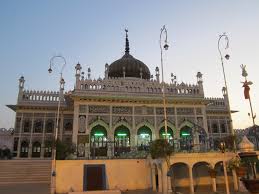
A land known and globally recognised for its mannerisms, poetry and an old-world graciousness that never seem to be at odds with the churning that defines our supercilious modern lives, Lucknow is exuberant and mildly attuned to the speed of hurtling motions. Amidst its chaotic hustle of life, the Chota Imambara is like a syncretic island of serenity in the tumult that thrives around it.
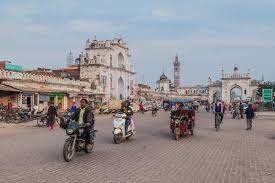
Built by Mohammad Ali Shah[1] around 1838 as a religious congregation site, it is both a mausoleum and a monument. This spirited inter-dependence often springs forth from Lucknow’s erstwhile Nawabi realm as in the Chota Imambara. But above all, it offers a tranquility that verges on the sublime, in no small part because of its architecture. A mere five minute walk from the inimitable Bara Imambara, it is adorned with Quranic verses in impeccable calligraphy on its outer walls. Sunlight beams through its surface against the silvery backdrop like a revelation to the senses; the eyes trained to its humble beauty are no less transfixed by it than the other sites on its way, the historic expanse of the Hussainabad corridor converging in this final corner. The historic Hussainabad corridor is the crown of Lucknow as it’s suffused with natural beauty that is visible and transcendent. The cobble stone roads, erstwhile havelis (mansions), gateways, a picture gallery, the iconic Clock tower and bridges with characteristic craftsmanship, Teele Wali Masjid (the iconic mosque on a hill) and ancient temples invite instant awe, a continuum for those who dwell within the city to avidly become guides for the uninitiated.
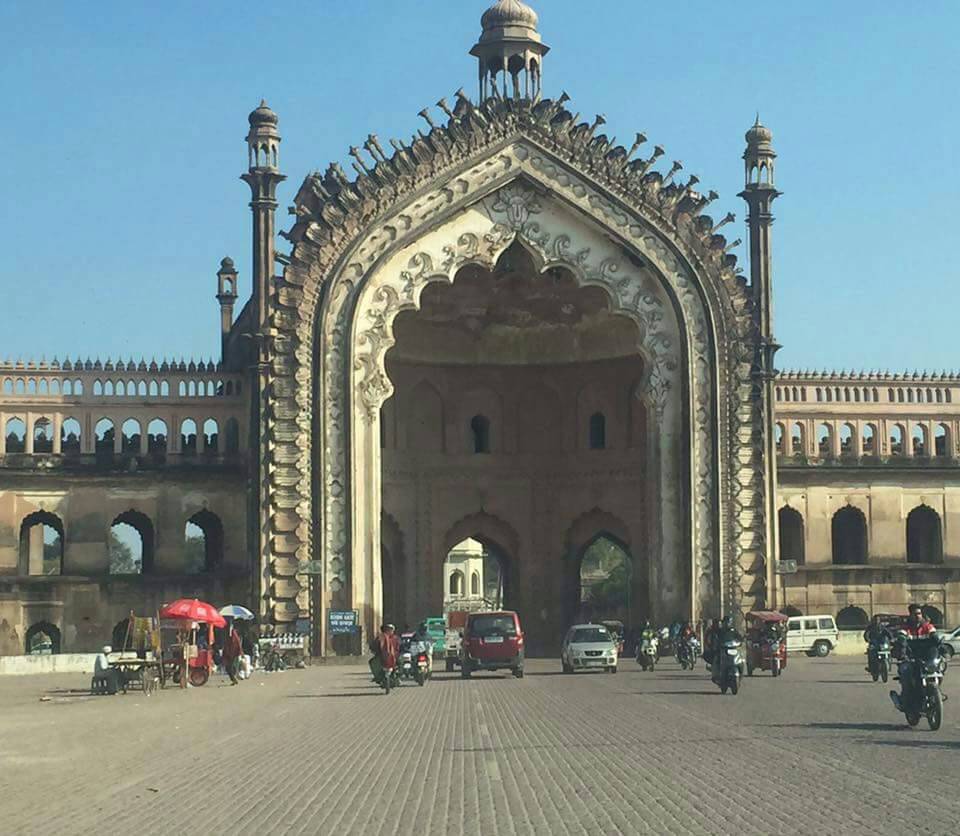
Rumi Gate; Photo Courtesy: Prithvijeet SinhaHussainabad Corridor: From Public Domain
When you look at this mausoleum in the afternoon shaded by the sun, the turrets and intricate design of its gateway welcome you first as if receiving a weary traveller, offering him reprieve from the heat and the crowds that have preceded his journey to the Bara Imambara and Rumi Gate, the legendary doorway that is a sight for sore eyes. There’s a beauty to the colour of the Chota Imambara’s gateway, the golden anemometer(a geographical instrument used to indicate the wind’s direction) in the shape of the fish and an Anglicised statue in the middle of this compound that’s startling and comforting. Then there are the pond and the fountains further ahead. Something about the water, especially shimmering during hot summer days, already prepares one for the holy glint there is in the entire structure or in the Taj Mahal styled miniatures on both sides, one of which bears Muhammad Ali Shah’s beloved daughter Asiya Begum’s tomb. The symmetry of the place hence doesn’t overwhelm but is subdued in subtle colours and muted moods of light and shadows.
*
It’s the inner part of the Imambara that is a burst of red, green, yellow, blue and white, their variations dazzling and sensuous on account of the distinctive placement of Belgian chandeliers and tazias (religious processional items of great significance especially during Muharram). Both attest to a paradox- of luxury and faith coalescing. Both come draped in these bold colour schemes that delight the onlooker who soon beholds them. There’s also a throne and mirrors in this hall — indicating a rich past and illusions of grandeur that have now become mists, the air filled with memories yet redolent of individual stakes.
*
In essence, the Chhota Imambara maintains its privacy at the further end of Lucknow and when looking at its almost moon-like silver glow, the promise of Sham-e- Awadh ( fabled evenings of the city) gets more romanticised. These evenings where food, cultural activities, long walks and conversations with animated strangers and friends alike take centre stage diffuse its historic community where boundaries of faith and personal beliefs blur into a beautiful embroidered fabric.
The Chhota Imambara’s peculiarity is that despite so many elements to its structure including a hamam (bath) in the outer realm, there’s a simplicity to it all. Nothing screams out for attention. Each aspect invites individual perspectives shorn of tacky symbolism or a mishmash of styles. Every colour, every inch ultimately soothes.
It’s all about the aesthetics of grace and charm which is particularly unique to Lucknow. At the end of the day, there’s no humungous historical backstory behind Chhota Imambara or a grave precedent to its place in the Awadhi pantheon, Awadhi relating to both the region within which Lucknow stands and which it shapes ceaselessly into joyful forms. But it has always been here, rescuing itself from elusive murmurs and forgetfulness daily. Yet never adhering to overexposure. That is its greatest gift to the city and its loyal custodians.
Every visitor is a beholder here and his spirit becomes as free and unburdened like the pigeons finding home in this structure’s spires and dome, a picture of harmony.
[1]Nasser-ud-daula Mu’in ad-Din Muhammad Ali Shah(1774–1842), was the ruler of Awadh, the former name of Lucknow.
Prithvijeet Sinha is an MPhil from the University of Lucknow, having launched his prolific writing career by self-publishing on the worldwide community Wattpad since 2015 and on his WordPress blog An Awadh Boy’s Panorama. Besides that, his works have been published in several journals and anthologies.
PLEASE NOTE: ARTICLES CAN ONLY BE REPRODUCED IN OTHER SITES WITH DUE ACKNOWLEDGEMENT TO BORDERLESS JOURNAL
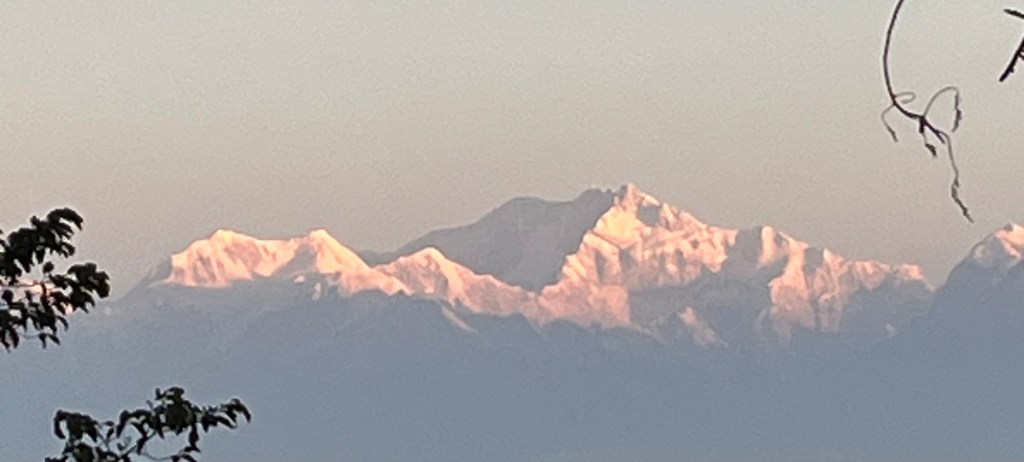
Ghoom, Darjeeling, is almost 2.5 km above sea level. Standing in the rarified air of Ghoom, you can watch the Kanchenjunga turn gold as it gets drenched in the rays of the rising sun. The phenomenon lasts for a short duration. The white pristine peak again returns to its original colour blending and disappearing among the white cirrus clouds that flit in the sky. Over time, it’s shrouded by mists that hang over this region. The event is transitory and repeats itself on every clear morning like life that flits in and out of existence over and over again…
Witnessing this phenomenon feels like a privilege of a lifetime as is meeting people who shine brightly and unusually, like the Kanchenjunga, to disappear into mists all too early. One such person was the founder of pandies’ 1 who coordinated the pandies’ corner for Borderless Journal, the late Sanjay Kumar (1961-2025). The idea of starting this column was to bring out the unheard voices of those who had risen above victimhood to find new lives through the work done by pandies’. In his book, Performing, Teaching and Writing Theatre: Exploring Play, published by Cambridge Scholars Publishing, he described his scope of work which in itself was stunning. His work ranged from teaching to using theatre and play to heal railway platform kids, youngsters in Kashmir, the Nithari survivors and more — all youngsters who transcended the scars seared on them by violations and violence. We hope to continue the column in coordination with pandies’.
Another very renowned person whose art encompassed a large number of social concerns and is now lost to time was the artist, MF Husain (1915-2011). This issue of Borderless is privileged to carry an artwork by him that has till now not been open to the public for viewing. It was a gift from him to the gallerist, Dolly Narang, on her birthday. She has written nostlgically of her encounters with the maestro who walked bare-feet and loved rusticity. She has generously shared a photograph of the sketch (1990) signed ‘McBull’ — a humorous play on his first name, Maqbool, by the artist.
Drenched with nostalgia is also Professor Fakrul Alam’s essay, dwelling on more serious issues while describing with a lightness his own childhood experiences. Many of the nonfiction in this issue have a sense of nostalgia. Mohul Bhowmick recalls his travels to Bhutan. And Prithvijeet Sinha introduces as to a grand monument of Lucknow, Bara Imambara. Lokenath Roy takes us for a stroll to Juhu, dwelling on the less affluent side. Suzanne Kamata describes her source of inspiration for a few stories in her new book, River of Dolls and Other Stories. A darker hue is brought in by Aparna Vats as she discusses female infanticide. But a light sprays across the pages as Devraj Singh Kalsi describes how his feisty grandmother tackled armed robbers in her home. And an ironic tone rings out in the rather whimsical musing by Farouk Gulsara on New Year days and calendars.
Everyone was at each other's throats, insistent that the world was ending. But I felt differently, as though I were just beginning, or just beginning again…
Poets, like visionaries across time and cultures, often see hope where others see despair. And humour always has that hum of hope. In a lighter tone, Rhys Hughes makes one laugh or just wonder as he writes:
I once knew a waiter who jumped in alarm when I somersaulted across his restaurant floor after entering the front door on my way to my favourite table: he wasn’t able to control his nerves and the meal he was bearing ended up on the ceiling with people staring as it started to drip down.
Translations feature poetry. Lyrics of Nazrul (1899-1976) and Tagore (1861-1941) appear together in Professor Alam’s translations of their love songs from Bengali. He has also transcreated a Bengali poem by Jibananada Das (1899-1854). Profoundly philosophical lines by Atta Shad (1939-1997) in Balochi has been rendered to English by Fazal Baloch for his birth anniversary this month. Ihlwah Choi has translated his poem from Korean, taking up the poignant theme of transience of life. A Tagore poem called ‘Kheya (Ferry)’, inspired by his rustic and beautiful surroundings, has been brought to us in English.
Huge thanks to all our contributors, the Borderless team for all these fabulous pieces. Thanks to Gulsara, Kamata, Bhowmick and Sinha for the fabulous photography by them to accompany their writings. Heartfelt gratitude to Sohana Manzoor for her cover art and to Dutta for her artwork accompanying her poem. Without all your efforts, this issue would have been incomplete. And now, dear readers, thank you for being with us through this journey. I turn the issue over to all of you… there is more as usual than mentioned here. Do pause by our contents page.
pandies’ was started in 1987. It’s spelled with a small ‘p’ and the name was picked by the original team. Read more about pandies’ by clicking here. ↩︎

 Borderless