I was in Oxford on a Charles Wallace fellowship to study John Ruskin’s influence on M K Gandhi and R N Tagore. Like any other student I lived in a hostel, walked up to the Ruskin School of Art and Ashmolean Museum, to the High Street and the flea market, to the Bodleian Library, and – of course – the book stores that continue to make that ancient city of academic excellence such a delight for a person like me who started crawling in the midst of books.
What caught my fancy on the book-lined shelves in the hometown of a ‘legal deposit’ library? The screenplays of Quentin Tarantino. Countless books on Elizabeth 1 – perhaps because Shekhar Kapur’s Elizabeth had just released worldwide. And the volumes on art. The gorgeous reproductions halved the tedium of walking miles of museums and galleries. And the history of art rekindled my love for paintings from our collective past.
But what I didn’t take kindly to was the neglect of – if not bias against — art from my homeland. There were books on Greek, Chinese, Japanese , African, Egyptian, Mayan, Roman art, on Russian Icons and Stained Glass windows, on French Impressionists and German Expressionists, Cubists and Moderns… But Indian art? For crying out loud, where was Ajanta-Ellora? The glass paintings and Miniatures? Pichwai and Patachitra, Nathdwara and Kalighat Pat, Warli and Madhubani, Santiniketan and Baroda?
That’s when I told myself, “Put the journey of Indian paintings between covers.” For, which other country has a continuity that I can boast, of a tradition that has continued unchequered for three thousand years and more?
Once I was back home, my friend Reeta Dutta Gupta approached me to edit an Encyclopedia of Culture for the India Series she was nursing. And Dr Jain of Ratna Sagar entrusted me to author a Notebook that would recount for school-going children the story of Indian art from Bhimbetka to the present millennia. What luck!
*
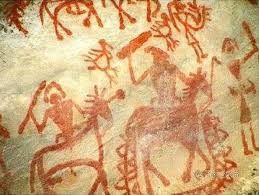
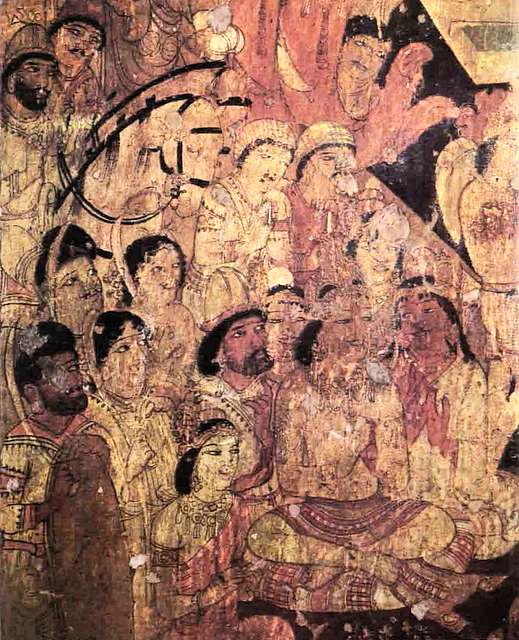
Be it the hunters and the hunted of Bhimbetka, the rock art now on the UNESCO list of World Heritage, or Kolam and Alpana and Rangoli, the decorative designs of Kerala and Bengal and Maharashtra. Be it the Buddha of Ajanta Frescoes or the ploughmen and blacksmith of the Haripura Congress panels painted by the Bengal master Nandalal Bose, be it the illuminations in the Jain manuscripts or the Mughal manners immortalised by the kalams: art in India has grown out of everyday life. These art expressions have been an integral part of the people’s existence, regardless of the style or the period in which they were painted. Yes, down centuries Indian art has withstood change of regiments, religions, philosophy, social content, historical setbacks. And, aesthetic excellence has found an outlet in forms and lines, strokes and colours, whether these were obtained by crushing gems or pounded rice.
This has helped India enjoy a continuity that is rare even in the developed societies. From the sketches of Bhimbetka to those of the tribal artists of Warli, from the murals of ancient India to the art of contemporary masters, from the miniaturised figures to the Tantric patterns – art in India has reinvented itself again and again. And each time it has emerged with renewed vigour and vitality. Because, every age has related to art in an intimate way. By painting on the wall. Decorating the floor. Placing it on the altar. Or simply by keeping an account of the times.
Bhimbetka Cave paintings from prehistoryA fresco from the Ajanta caves, 2nd century BCE to 6th century CEArt from Indian past. From Public Domain
As A Ramachandran – then professor of art at Jamia Millia Islamia in Delhi – had said to me, “Even when our ancient language that was deemed the language of the gods, fell into oblivion, art transcended centuries because it was communicating through a universal language – the visual language of colours and hues.” The lines defined the form, and also created a unitary area for the use of colour, he had further explained. “No matter what the subject, comprehension was never a problem for the Indian – until he was confronted by the art that was imposed by the colonialists.”
The Western overemphasis on realism played havoc, with the native sensibility that allowed for imagination and stylization, Nair Sir had pointed out. That sensibility had no problem accepting a ten-armed goddess, Dasabhuja Durga, or Dasanan, the ten-headed Ravan. “Lifestyle changes too have led to the dilution of Indian aesthetics that once enveloped our workaday lives. The only living art today is the visual art traditions in the villages, but that too might not last as villagers now want to ‘rise’ to the level of the urbans!” he had lamented.
In such a situation, art becomes doubly significant in the life of a child. When she or he is exposed to it, the child can not only access the history and the continuity of a culture but also nurture it with love that can ensure it lives in the days to come… With this in mind, I will write to focus on the high points of Indian art.
Ratnottama Sengupta, formerly Arts Editor of The Times of India, teaches mass communication and film appreciation, curates film festivals and art exhibitions, and translates and writes books. She has been a member of CBFC, served on the National Film Awards jury and has herself won a National Award.
.
PLEASE NOTE: ARTICLES CAN ONLY BE REPRODUCED IN OTHER SITES WITH DUE ACKNOWLEDGEMENT TO BORDERLESS JOURNAL
I often find myself amidst the crumbling cliffside, mumbling words to myself. Within the mouth of the weeping river, I must disperse the ashes of an awakening. Through the darker brush, colour would soak the dry paper. In the corner of an eroding house, I lack the search I'm entrusted. The mist I've felt this morn, now buries me in a shawl of memories.
The tiny tendril holding onto the iron railing, unwinds in the solitude it enjoys. It swirls in the nightly gale, swaying in its shallow reflection.
A feeling surges in me, as the poison in a pitcher leaf. It urges the nightly stillness to visit the lonely house, its amber curtain still intact. The long lane, in front of me, is waning under the new moon. It was once the pen, I had written my childhood with. The ink had flowed evenly, such as the poison in my drink. And now it must end abruptly, the tiny man in his bottle of wine. The twilight sky drinks the last few rays of the sun, while I sink in my purple drink.
Gautham Pradeep was born in Kerala, India. He is now pursuing an MBBS degree. He tries to explore the existential dilemmas of the his generation. His poems have been published widely.
.
PLEASE NOTE: ARTICLES CAN ONLY BE REPRODUCED IN OTHER SITES WITH DUE ACKNOWLEDGEMENT TO BORDERLESS JOURNAL
Festivals are affirmations of joy and love that bind humanity with their sense of hope even in a world torn by violence and climate change. As the end of the year approaches, we invite you to savour flavours of festivals past and, a few, yet to come, before the cycle starts again in the new year. The colours of celebrations are vibrant and varied as shades of nature or the skies.
We have new years spread out over the year, starting with January, moving on to the Chinese New Year around February, the Bengali new year in April to festivals of environment, light, darkness as in Wiccan beliefs, Tagore’s birth, more conventional ones like Deepavali, Eid, Durga Puja and Christmas. People celebrate in different ways and for different reasons. What we have also gathered is not only the joie de vivre but also the sadness people feel when celebrations are muted whether due to the pandemic, wars or for social reasons. In some cases, we indulge in excesses with funny results! And there are of course festivals of humanity … as celebrated by the bauls — the singing mendicants of Bengal — who only recognise the religion of love, compassion and kindness.
Ramakanta Rath’sSri Radha celebrating the love of Radha and Krishna have been translated from Odiya by the late poet himself, have been excerpted from his full length translation. Click here to read.
Bijoya Doushumi, a poem on the last day of Durga Puja, by the famous poet, Michael Madhusudan Dutt, has been translated from Bengali by Ratnottama Sengupta. Click here to read.
A Clean Start: Suzanne Kamata tells us how the Japanese usher in a new year. Click here to read.
Shanghai in Jakarta: Eshana Sarah Singh takes us to Chinese New Year celebrations in Djakarta. Click here to read.
Cherry Blossom Forecast: Suzanne Kamata brings the Japanese ritual of cherry blossom viewing to our pages with her camera and words. Clickhere to read.
Pohela Boisakh: A Cultural Fiesta: Sohana Manzoor shares the Bengali New Year celebrations in Bangladesh with interesting history and traditions that mingle beyond the borders. Clickhere to read.
The New Year’s Boon: Devraj Singh gives a glimpse into the projection of a new normal created by God. Click here to read.
A Musical Soiree: Snigdha Agrawal recalls how their family celebrated Tagore’s birth anniversary. Click here to read.
An Alien on the Altar! Snigdha Agrawal writes of how a dog and lizard add zest to Janmashtami (Krishna’s birthday) festivities with a dollop of humour. Click here to read
Memories of Durga Puja : Fakrul Alam recalls the festivities of Durga Puja in Dhaka during his childhood. Click hereto read.
KL Twin Towers near Kolkata?: Devraj Singh Kalsi visits the colours of a marquee hosting the Durga Puja season with its spirit of inclusivity. Click here to read.
Hold the roast turkey please Santa: Celebrating the festive season off-season with Keith Lyons from New Zealand, where summer solstice and Christmas fall around the same time. Click here to read.
Shadows vanish under his watch, seedlings sprout in the autumn sun, munching on unattended grass, a cow converses with the ants.
The silent hills open paths to a different plane, where one finds his space to smile. When the monsoon hits west, she awakens from her long slumber.
Mountains show beautiful avenues. Snow is replaced by shallow dunes. Rain fills the world. Man traces his existence.
Gautham Pradeep was born in Kerala, India. He is now pursuing an MBBS. He tries to explore the existential dilemmas of the present generation through his poetry.
PLEASE NOTE: ARTICLES CAN ONLY BE REPRODUCED IN OTHER SITES WITH DUE ACKNOWLEDGEMENT TO BORDERLESS JOURNAL
Ratnottama Sengupta tracks the journey of Leslie Carvalho over a quarter century
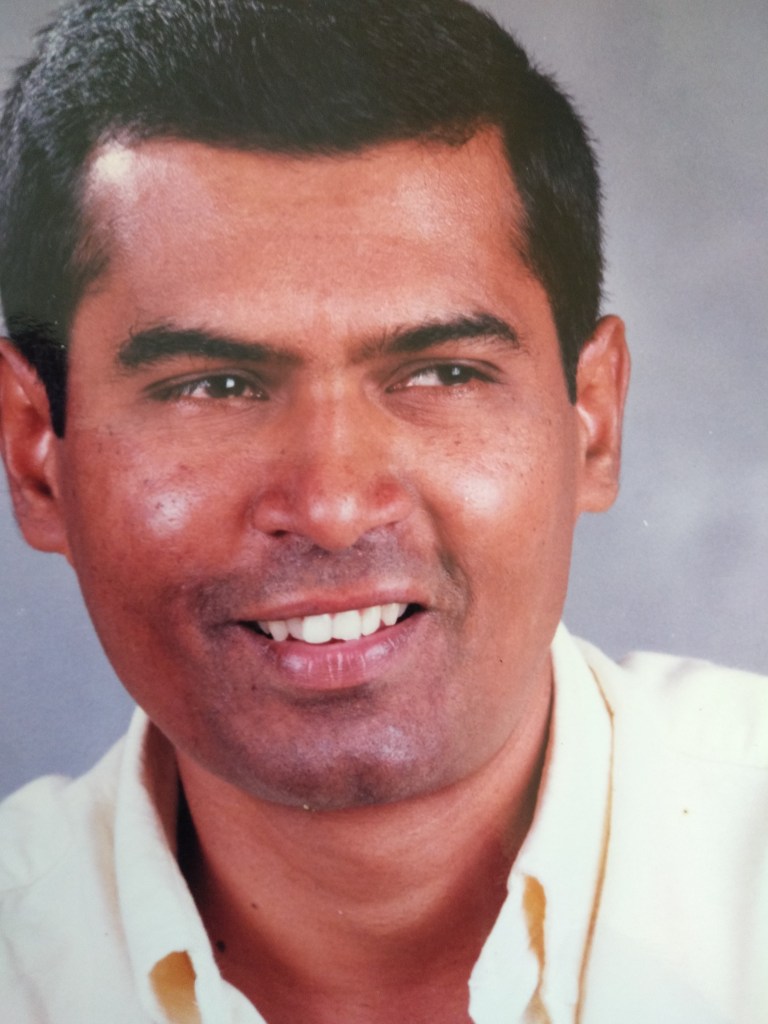
Leslie CarvalhoPhotos provided by Ratnottama Sengupta
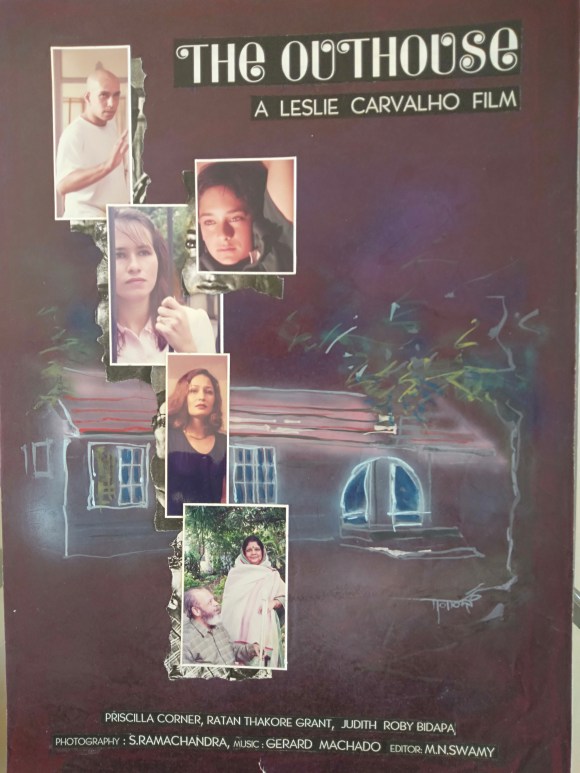
It seems like only the other day. The International Film Festival of India, IFFI, 1998 was on. Along with a colleague, I was seated on the steps outside Siri Fort I auditorium connected to a long corridor going to Siri 2. Someone introduced Leslie Carvalho. “Aha! The young filmmaker from Mangalore?” I responded. “There’s a write up on you in The Times of India today. It says there’s a lot of expectation from The Outhouse.”
The “delightfully sweet” film had lived up to the expectation of the critics. It was bestowed the Aravindan Puraskaram, presented by the Kerala Chalachitra Film Society to commemorate the iconic Malayalam director, and the first Gollapudi Srinivas award, another national level award to recognise filmmakers marking their debut in Indian cinema. So I was not surprised to meet him next as a co-member of the jury for the National Film Awards 2000.
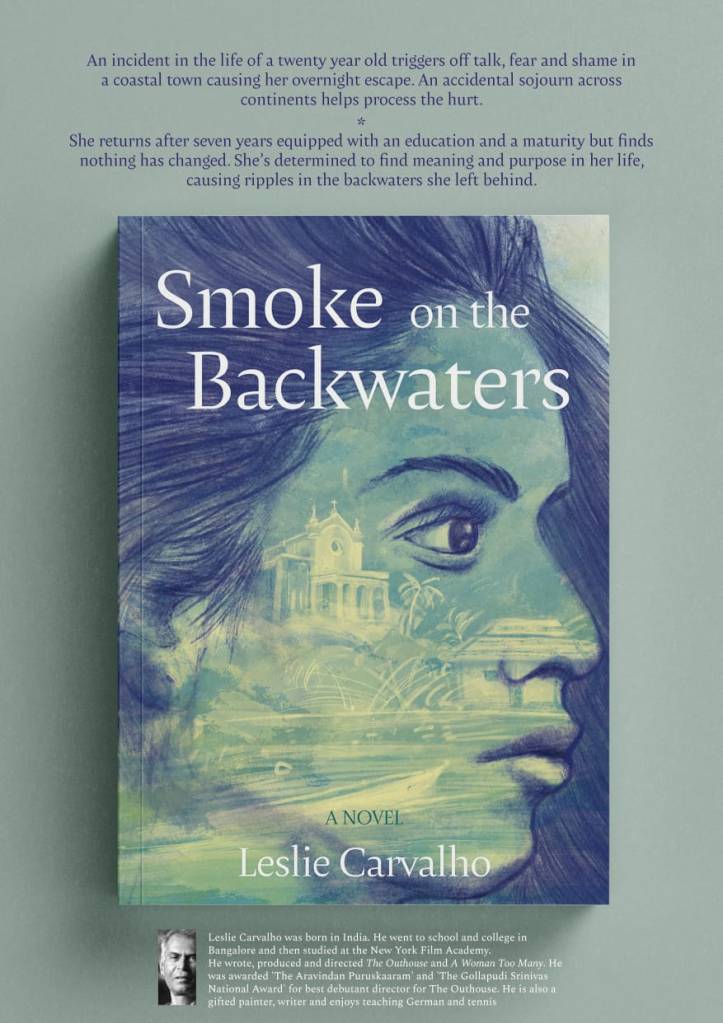
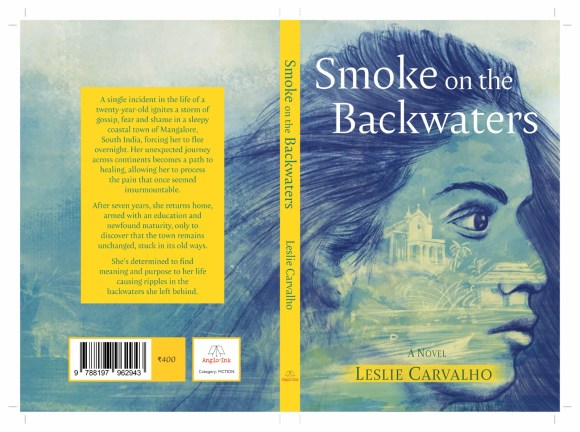
The Tennis coach who is also a German language teacher with a passion for painting has now published his first novel, Smoke on the Backwaters. It centres on Rosa, a twenty-year-old from Mangalore, who is forced to flee overnight because of the storm of gossip, fear and shame unleashed by a single incident in her life. Her unexpected journey across continents becomes a path of healing. Seven years later, armed with education and maturity, she returns home, determined to pursue her purpose in life. But how much had the town she left altered from its old ways?
RS: Leslie, before we talk Backwaters, can we briefly revisit The Outhouse? From where did you derive its content? And what was your compulsion for choosing that subject?
Provided by Ratnottama Sengupta
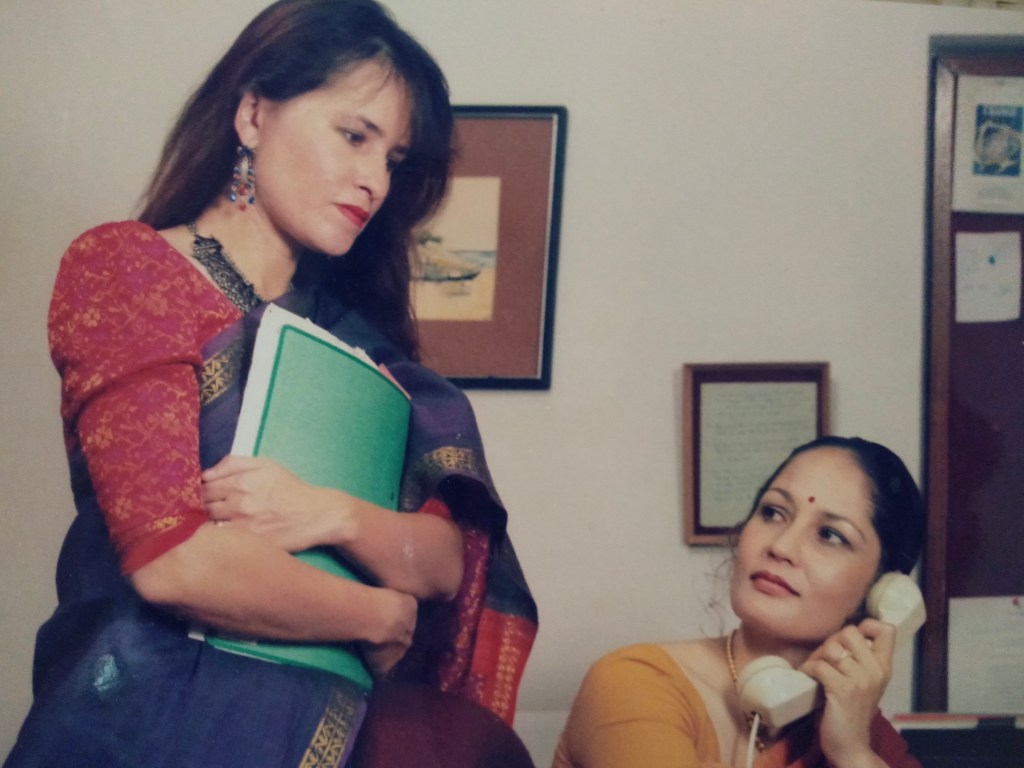
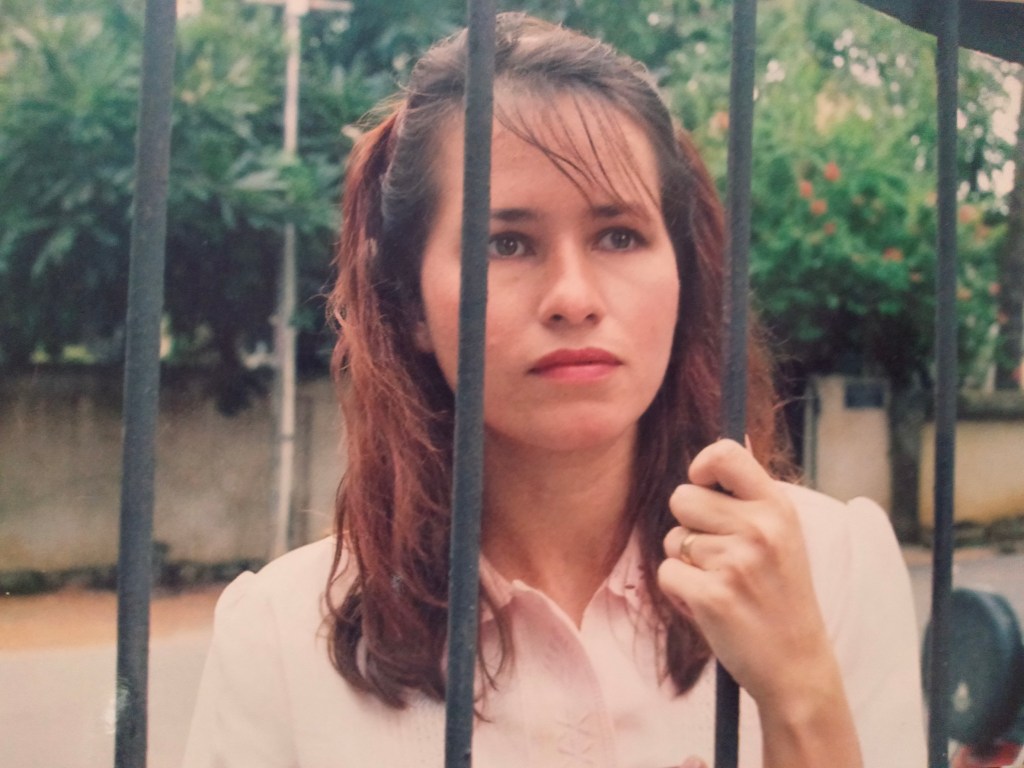
LC: The Outhouse was a simple, linear narrative about moving on in life despite the odds. A young mother’s need to gain economic independence to supplement the family income; the help she received from her financially independent sister; a kind hearted Bengali landlady’s generosity which causes stress and violence in the Anglo-Indian couple’s day to day life, and how it affects the two children growing up.
RS: Why did you choose this subject as your debut vehicle? If you were to travel in a time machine, would you choose a ‘mainstream’ subject?
LC: I chose this subject as my debut vehicle as I had seen quite a bit of violence in the Anglo- Indian community in the Lingarajapuram area of Bangalore I grew up in.
I was itching to make a movie after my six-month course at the New York Film Academy. As I was working on a very tight budget, I just stuck to what was taught — to keep it simple, straightforward and just tell a story using the various tools of cinema — in short, to make it cinematic.
If I were to go back in time, I don’t think I would have chosen a ‘mainstream subject’. I derived immense satisfaction along with the cast and crew as we felt we were working on something we were passionate about. We all felt drawn towards the characters, the story and the theme of the film.
RS: How did you get interested in cinema? And what were the problems you faced while filming The Outhouse – in terms of funding, casting, shooting location, distribution?
LC: I grew up watching Tamil, Kannada, Hindi, a couple of Konkani and lots of Hollywood films. My mother tailored clothes at home, and she taught a whole lot of women stitching. They were fans of Tamil cinema, especially of Sivaji Ganesan, MGR, and the heroes of Kannada cinema, Dr. Rajkumar and Vishnuvardhan. She also enjoyed the Hindi films of Rajesh Khanna, Dharmendra, Hema Malini, Amitabh Bachchan, Sanjeev Kumar, Jaya Bhaduri and Rekha — that is the popular cinema.
And my father, being an Army person, took us to see English films, like The Ten Commandments, The Bible, Hatari, To Sir, With Love[1]. Also, St. Germain’s School where I studied, screened English films every Friday afternoon in the Hall, from spools off a projector that made a jarring sound. It was an amazing experience — black and white Charlie Chaplin, Laurel & Hardy films and also Patton with all the bad words. Later, when in college, we would bunk classes to watch most of the popular Hindi and English movies.
At the New York Film Academy, I was exposed to an entire range of the world’s best in cinema. Satyajit Ray, Akira Kurosawa, Ingmar Bergman, Antonioni, John Ford, William Wyler, Fellini, Jean Renoir… And I watched a whole lot of films on the American Movie Chain (AMC). There I discovered all of Spencer Tracy’s films and fell in love with his sense of timing and under playing. It was also a time when I discovered Guru Dutt and marveled at his brand of filmmaking from Pyaasa, Kaagaz Ke Phool, Chaudhvin Ka Chand, Sahib Biwi Aur Ghulam to Aar Paar and Mr & Mrs 55[2].
It is hard to believe I began the shoot for The Outhouse on September 18, 1996, and completed it in 14 days – on October 1. After we went through the rushes, we required two more shots to link the gaps. Since I was on a shoestring budget of a few lakh rupees, I had rehearsals with the cast for close to three months. I doff my hat to them in gratitude as 90% of the film was canned on first takes. I could not afford retakes, and I worked with a brilliant cameraman, S Ramachandra, who was very supportive and encouraging. He shot most of B V Karanth, Girish Karnad, and Girish Kasaravalli films as well as the popular tele-serial Malgudi Days[3]. A number of first-time directors like myself, had benefitted immensely by his generosity and patience.
Since it was an independent film, whatever little finance I had, I sunk into the film. And then it took me a year to complete post-production for lack of finance.
I was particular about the casting. I wanted the Anglo-Indian look, feel, mannerisms, costume, interiors to be authentic. I met each cast member and spoke to them at length about the vision I had for my film. Almost all of them were from the Bangalore English Theatre, and all of them were cooperative. Moreover, Cooke Town is a quaint little place with many English bungalows and outhouses. After some struggle, I found one on Milton Street which suited my story perfectly.
After The Outhouse was selected for the Indian Panorama in IFFI ’98 and received the two national awards, I just walked into Plaza Theatre on MG Road in Bangalore and met the owner, Mr Ananthanarayan. He had heard about the film and asked me to meet the distributor, Nitin Shah of Hansa Pictures in Gandhi Nagar, the biggest distributor of English films. He put it on for a noon show for three weeks while Fire was on for the matinee and evening shows. The distributor then put it in Mangalore and Udupi for a week. And when I received the Gollapudi Srinivas National Award in Chennai, Aparna Sen was one of the honoured guests. She saw a small portion of the film and said that she would speak to Mr Ansu Sur to screen it at Nandan in Kolkata — founded by Satyajit Ray to help screen small independent films. A theatre owner in Kolkata recommended a person who took the film to the North East. It was also screened in parts of Kerala.
Coincidentally, this April 30th, The Outhouse will be screened in the leafy neighbourhood of Cooke Town next to the outhouse where the film was shot.
Still from The Outhouse, provided by Ratnottama Sengupta
RS: In the last 50 years we have seen films by directors like Aparna Sen, Ajay Kar, Anjan Dutt. Even before these, Ray had touched upon Anglo Indians in Mahanagar. These are all films made in Kolkata. Is it because this is the erstwhile capital of the Raj?
LC: Many of the films on Anglo-Indians were based in Calcutta. It was the influence of the British Raj and its culture that was so much a part of their long history of ruling there. Of course their influence was in other parts of the country as well like Madras, Hyderabad, Bangalore, Whitefield and Kolar Gold Fields, the railway colonies all over the country, the hill stations, and many other cities which has pockets of Anglo-Indians.
RS: I remember one Hindi film, Julie that had an Anglo-Indian protagonist. How has the community been projected in popular culture? Was it lopsided or biased?
LC: Throughout our film history Anglo-Indians have played bit roles here and there. Some significant roles came their way in Bhowani Junction, the teleserial Queenie, 36 Chowrighee Lane, Bow Barracks Forever, Bada Din, Cotton Mary, The Outhouse, Saptapadi, Mahanagar, Julie, and Calcutta I’m Sorry[4].
Some of the characterisations have been quite biased; some not well fleshed out; some in passing fleeting moments of drunkenness, prostitution. The song and dance sequences have not helped the community, sadly.
RS:What led you to writing? The screenplay for The Outhouse?
LC: I wrote the screenplay of The Outhouse on plain A4 sheets of paper, on both sides. This is not done but I did it to save on cost. I gave the screenplay to my cinematographer S. Ramachandra, and in his generosity he understood my purpose. I went by what was taught at the New York Film Academy. Of course, I had to combine all the elements to make it whole. The idea of the screenplay came to me while I was at the film school in 1995.
RS: What was the trigger for writing Smoke in the Backwaters?
LC: As an artist, filmmaker, and writer, I have tried to combine all the elements of story-telling – fact and fiction — keeping in mind the flow of ideas, pace and momentum to engage and interest my audience and readers.
I remember beginning to write the novel two decades ago when my mother — who studied in Kannada medium — said, “I hope you will write it in simple English so I can read it too.”
And I wanted it to be reader friendly with regard to the font size, the brightness of the paper, the spacing, the clarity and the size of the book. I was lucky my publisher ‘Anglo-Ink’ was supportive and combined well to find that centre.
Provided by Ratnottama Sengupta
RS: How are you marketing the book? Through Litfests? Bookstore readings? Airport bookstalls? A H Wheelers?
LC: Since Anglo-Ink is a small-time publisher, we’ve had a dream launch in my hometown Bangalore at the Catholic Club. My book seller is Bookworm on Church Street in the heart of Bangalore and for people in Cooke Town it is in The Lightroom’ library.
We are looking at launches in various cities as well, through book readings, LitFests, Airport book stalls, AH Wheelers, readings at schools and colleges.
Since a major portion of the novel is set in Germany, we are looking at translating it into German. I hope to get it translated in a few Indian languages as well.
RS:Since the sunset decade of 1900s, Anglo Indians have been migrating to Australia and Canada. What triggered this migration? Economics or politics?
LC: The migration of Anglo-Indians was inevitable. It was bound to happen for reasons more than one, be it political, economic or social. First under the ‘Whites Only’ policy, many fair skinned Anglo-Indians migrated — the brown and dark skinned were left behind. Slowly they opened up and even they left. Some felt they would adapt better to a western culture, and have adopted their new country as their homeland.
RS:You were a big support for me when my son joined NLSUI in 2000. Again, when I curated Anadi, the exhibition of paintings by Contemporary and indigenous artists from MP and Chhattisgarh. Bangalore has since become an international megalopolis. How has life changed for the locals?
LC: Bangalore has changed dramatically and drastically. The change was bound to happen because of its growing prominence of an International City. The IT industry brought jobs, slowly other industries, started picking up from real estate, fashion, digital technology and social media platforms, start-ups, academics, sports, games, recreational and tourism.
The moderate climate was a huge bonus that attracted people from all over. Bangalore has always been cordial, encouraging and accommodative of people from all over through their mild manners, hospitality and gentleness.
Today Bangalore is unrecognisable. Still, some pockets retain that old world charm of neat, clean and green Bengaluru from the old Pensioners Paradise of Bangalore.
.
[1]The Ten Commandments (1956), The Bible (1966), Hatari (1962), To Sir, with Love (1967)
[2]Pyaasa (Thirsty, 1957), Kaagaz Ke Phool (Paper flowers, 1959), Chaudhvin Ka Chand (The Full Moon, 1960), Sahib Biwi Aur Ghulam (The Master, the Wife and the Slave, 1962), Aar Paar (This shore or that, 1954), Mr &Mrs 55 (1955).
[4]Bhowani Junction (1956), TV miniseries Queenie (1987), 36 Chowrighee Lane (1981), Bow Barracks Forever (2004), Bada Din (1998), Cotton Mary (1999), Saptapadi (Seven Steps, 1981), Mahanagar (The Big City, 1963), Julie (1975), and Calcutta I’m Sorry (2019)
Ratnottama Sengupta, formerly Arts Editor of The Times of India, teaches mass communication and film appreciation, curates film festivals and art exhibitions, and translates and write books. She has been a member of CBFC, served on the National Film Awards jury and has herself won a National Award.
.
PLEASE NOTE: ARTICLES CAN ONLY BE REPRODUCED IN OTHER SITES WITH DUE ACKNOWLEDGEMENT TO BORDERLESS JOURNAL
As a curator, Ratnottama Sengupta writes about the long trajectory of films by artists, beginning with Husain’s Berlinale winner, down to the intrepid band she screened at the just concluded 30th Kolkata International Film Festival
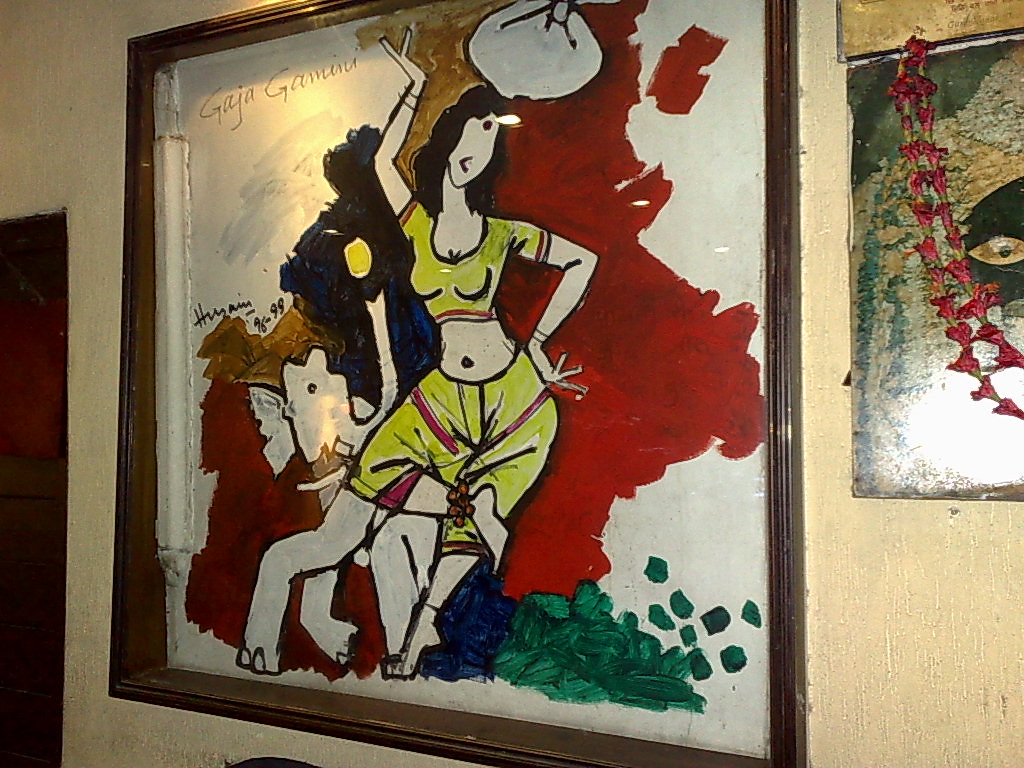
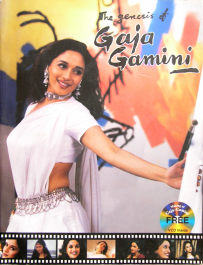
Gaja Gamini: Painting by MF Hussain Gaja Gamini (An elephant’s walk) Movie by MF Hussain
When Maqbool Fida Husain won the Golden Bear in the 17th edition of the Berlin Film Festival, the year was 1967. I, in my pre-teen years, knew little about painting. But growing up in a family of filmmakers I was already conversant with the art of looking through the camera. So I was disoriented that the film critics of the time were baffled by what had impressed the international jury.
Royalty, tigers, ruins, hawks, school children, anklets, on the river bank – all these images moving only to music, not a word uttered. The jury at Berlinale were astounded by the richness of the artist’s idiom that had breathed life into a Rajasthan that is rich in architecture as it is in painting, in costume as in music.
This dawned on me years later, when I curated the exhibition, 3 Dimensions, forthe All India Fine Arts and Crafts Society in New Delhi. It featured paintings, sculpture and graphic art or drawings by artists from Husain, Satish Gujral, Ghulam Mohammad Sheikh, Jatin Das to Sanjay Bhattacharya, Paresh Maity, Mimi Radhakrishnan, Shadab Hussain, among others.
A unique feature of this exhibition was that all the participating artists had interest in another expression of art. So every evening of that week had seen a Ram Kumar and Mimi read their short stories; a Narendra Pal Singh and Jatin Das read their poems; a Sanjay Bhattacharya render Tagore songs of and a Shruti Gupta Chandra perform Kathak. Ratnabali Kant had staged a Performance Art in the presence of Prime Minister V P Singh who had inaugurated the week-long exhibition by reading his poems. And, on the closing day, I had screened Through a Painter’s Eyes. That’s when it dawned on me: it was the originality of vision captured by the 7-minute short film had won over Berlin as also Melbourne and our very own National Awards too.
Subsequently Husain, who had started out from the tenements of Bombay by painting oversized hoardings of Hindi films on the sleeping tramlines at the dead of night, had at the ripe age of 84 made Gaja Gamini (2000) with stars such as Madhuri Dixit, and Minaxi — A Tale of Three Cities (2004) with Tabu and Naseeruddin Shah. Ironically these films baffled the critics just as much as the earlier short film had. However the dazzling visuals of vibrant figures and colourful structuring of the (non)-narrative had found acceptance in the Marche du Film section of Cannes 2004.
*
I have since then tried to fathom what drives artists who are skilled at painting with oil or watercolour, or sculpting wood or stone, metal or clay, or creating graphic images on paper or linoleum, to wield the megaphone. Now, instead of holding the camera or editing the celluloid strips with their hands, they use their mind, their mind’s eyes, their creative imagination.
Some other contemporaries of Husain too had, after attaining glory in the plastic arts, turned to experimenting with the new, ever evolving, ever contemporary art form — cinema. In 1970, Tyeb Mehta, who had briefly worked as an editor, made Koodal, meaning ‘Meeting Ground’ on the Bandra station of Mumbai’s Western Railway. The synthesis of images of humans and animals had won him the Filmfare Critics Award.
Cartoonist Abu — born Attupurathu Mathew Abraham — was a journalist and author who had worked for Punch, Tribune and The Observer in London before returning to work with The Indian Express. He was given a special award by the British Film Institute for the short animation No Ark, clearly a cryptic message deriving from the Biblical tale of Noah’s Ark.
Equally engrossing is the story of Syzygy, also produced by Films Division, and directed by Akbar Padamsee. This 16-minute short, premiered at a UNESCO screening in Paris 1969, had no narrative, no sound, or even colour. It only had lines evoking shapes typically used to refer to the alignment of celestial bodies. Only one man had stayed back till the end of the screening — and he had said to Padamsee, “Most people could not understand your film — it’s a masterpiece.”
Reportedly that man had gone on to become the programming director at Cinematheque Francaise – world’s largest film archive. That’s where Indian filmmaker found Ashim Ahluwalia found a copy of Events in a Cloud Chamber, Padamsee’s second film that was sent for screening at the Delhi Art Expo — never to be returned to the artist. The lost-in-transit film has now been professionally reinterpreted by Ahluwalia.
NB: All these films were supported by filmmaking bodies, and though often baffled, cineastes realised theirs was a new way of seeing the visual expression that goes under the arching umbrella of cinema.
*
This desire to understand, adapt, and get under the skin of a modern medium had driven Tagore, a century ago from today, to paint expressionistic forms and also to film Natir Pujo (1931). And today we find a band of artists from Delhi, Mumbai, Kerala and Baroda making films that bridge disciplines from landscape and abstraction to mimetic movement and drama.
What are the notable features of these films that are mostly made on video? They too have little need for dialogue. Instead, their sight is supported by music of natural sound. If the objects they capture through the lens are arresting forms, vacant spaces can be just as inviting. When they have humans as their protagonists, they are keen to capture body language rather than drama. Colourful palette is not a foregone conclusion – monochromes and black and white can be more poignant. Because? Their visuals are but vehicles for commenting on social reality and for communicating philosophic content.
Legends or veterans, seasoned or sprouting, this intrepid band of adventurers includes Vivan Sundaram, Ranbir Kaleka, Gopi Gajwani, Rameshwar Broota, Bharti Kapadia, Babu Eshwar Prasad, Gigi Scaria, Protul Dash, and Sanjay Roy. They are a continuum of the spirit of experimentation that had driven Husain and Tyeb, Abu Abraham and Akbar Padamsee.
Films by Artists at KIFF*

1 *Disclaimer* 2016/ 9:40 min
By *Gigi Scaria* focuses on the sleight of hands by a magician
2 *On the Road* 2021/ 5:7 min
By *Babu Eshwar Prasad* is a nostalgic look at road movies that are part documentary, part adventure.
3 *Sabash Beta* 3 min
By *Rameshwar Broota* with Vasundhara Tewari applauds the galloping of a fleighty horse.
4 *Leaves Like Hands of Flame* 2010/ 5:34 min
By *Veer Munshi* likens the fallen chinar leaves to the autumn in the lives of uprooted Kashmiris.
5 *L for…* 2019/ 13:14 min
By *Bharti Kapadia* plays with the sight and - surprisingly - the sound of the alphabet.
6 *Fruits Ripen and Rot* 2022/ 4:21 min
By *Sanjay Roy* is a surrealistic look at the divergent responses to food that is central to everyman's existence.
7 *How Far…?* 2023/ 12:37 min
By *Ranveer Kaleka* is an elegy, a dirge, mourning the losses wrought to Planet Earth by human destruction such as war.
8 *Burning Angel* 2024/ 4:37 min
By *Pratul Dash*  is an abstract story of the same destruction.
9 *Turning 2008/ 11 min
By Vivan Sundaram is a silent, colourful comment on the waste created by consumerist civilization.
10 *Time* 1974/13 min
By *Gopi Gajwani* is a riveting tale of how relative a minute is to one in mourning, one waiting, and for one in love.


*Kolkata International Film Festival
.
Ratnottama Sengupta, formerly Arts Editor of The Times of India, teaches mass communication and film appreciation, curates film festivals and art exhibitions, and translates and write books. She has been a member of CBFC, served on the National Film Awards jury and has herself won a National Award.
.
PLEASE NOTE: ARTICLES CAN ONLY BE REPRODUCED IN OTHER SITES WITH DUE ACKNOWLEDGEMENT TO BORDERLESS JOURNAL
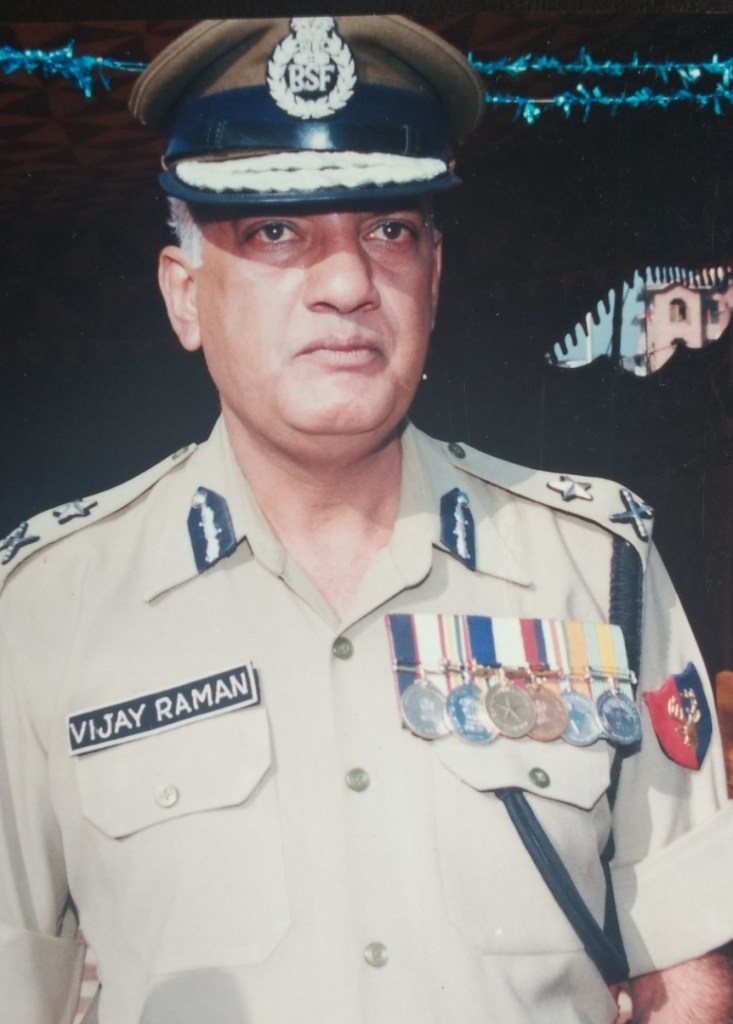
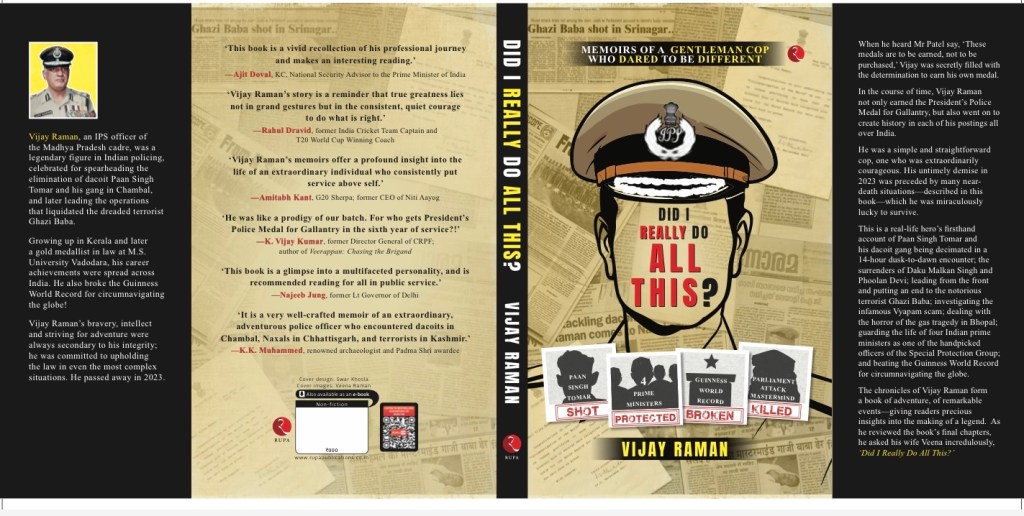
Ratnottama Sengupta, introduces the late Vijay Raman and converses with Veena Raman, the widow of this IPS[1] officer, about his book, Did I Really Do All This: Memoirs of a Gentleman Cop Who Dared to be Different. The memoir was recently launched by Sengupta and brought out posthumously by Rupa Publications.
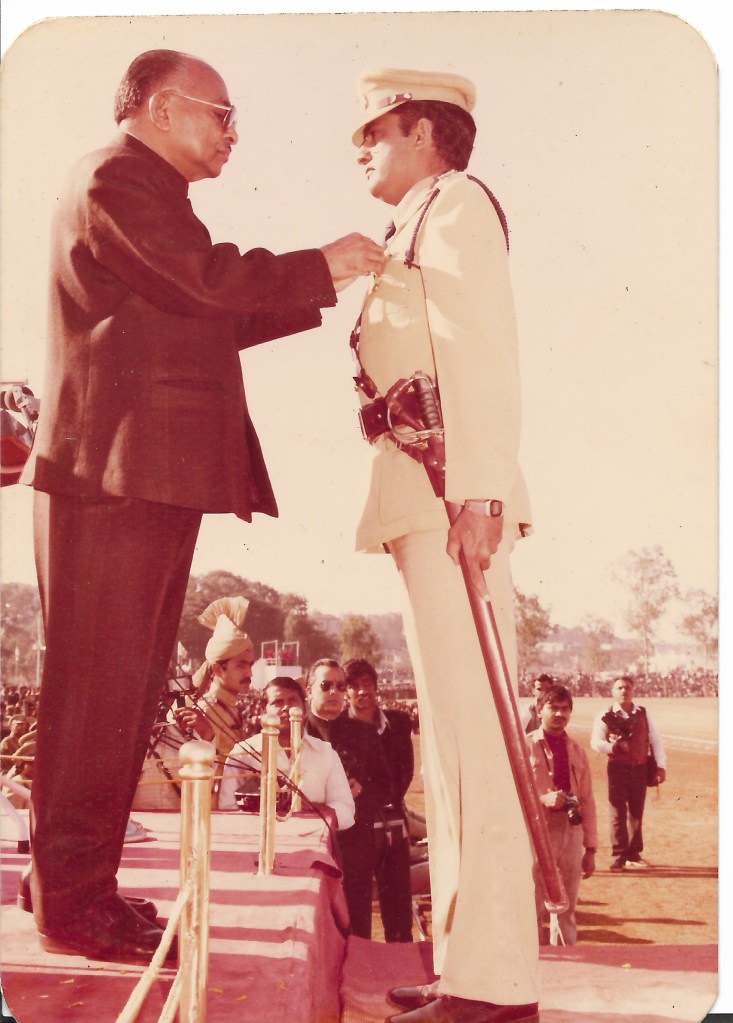
Vijay Raman (1951-2023)Vijay Raman receiving the President’s Police Medal for Gallantary in 1985Photos provided by Veena Raman
Vijay Raman’s success as a police officer was not merely a personal triumph. The career of this IPS officer traced the changes in the history of India’s security measures. India’s police organisation in 1947 — the Intelligence Bureau, Assam Rifles and CRPF[2] — were legacies from the British Raj. The 1962 Indo-China War led to the creation of the ITBP[3]; the 1965 war with Pakistan formed the BSF[4]. Investments in the Public Sector Undertakings led to the establishment of CISF[5]. Indira Gandhi’s assassination in 1985 led to crafting of SPG[6]. The sabotaged crash of Air India’s Kanishka[7] and the Operation Blue Star prompted the formation of NSG[8], and the 2008 terror attack on Mumbai was followed by NIA[9]. Vijay Raman’s life was intertwined with these organisations. He was also responsible for bringing in a number of terrorists and dacoits, including the notorious women dacoit, Phoolan Devi[10] (1963-2001)…He died last year.
In this conversation, Veena Raman[11] reflects on his life and his memoir, Did I Really Do All This: Memoirs of a Gentleman Cop Who Dared to be Different.
Veena this book is a tribute to a police officer who brought honour to his uniform. Having met Vijay Raman I know how wonderful a person he was – deeply loved by not only his family and friends but also many VIPs he interacted with in his professional life. Is this your way of mourning his sudden demise?
When Vijay passed away we — my son Vikram, daughter-in-law Divya, grandson Shaurya and I — were devastated. The cruel illness was swift and relentless: within months he grew weaker before our eyes, and before we were ready to accept the loss. We had no choice but to face it. While we tried to console each other Vikram said, “Mamma we should be grateful that we had him for all these years. After all, Papa was that proverbial cat with nine lives!”
Really?
Absolutely. And why nine? I can give you 19 instances in our years together when his life was in danger and he miraculously escaped.
I am all ears Veena!
At the very outset, in November 1978, when Vijay was in his first posting as assistant superintendent of police (ASP) in Dabra, Madhya Pradesh, a country-made bomb was flung at his jeep by agitating students in Gwalior. It fell and exploded nearby. Fortunately, no one was harmed.
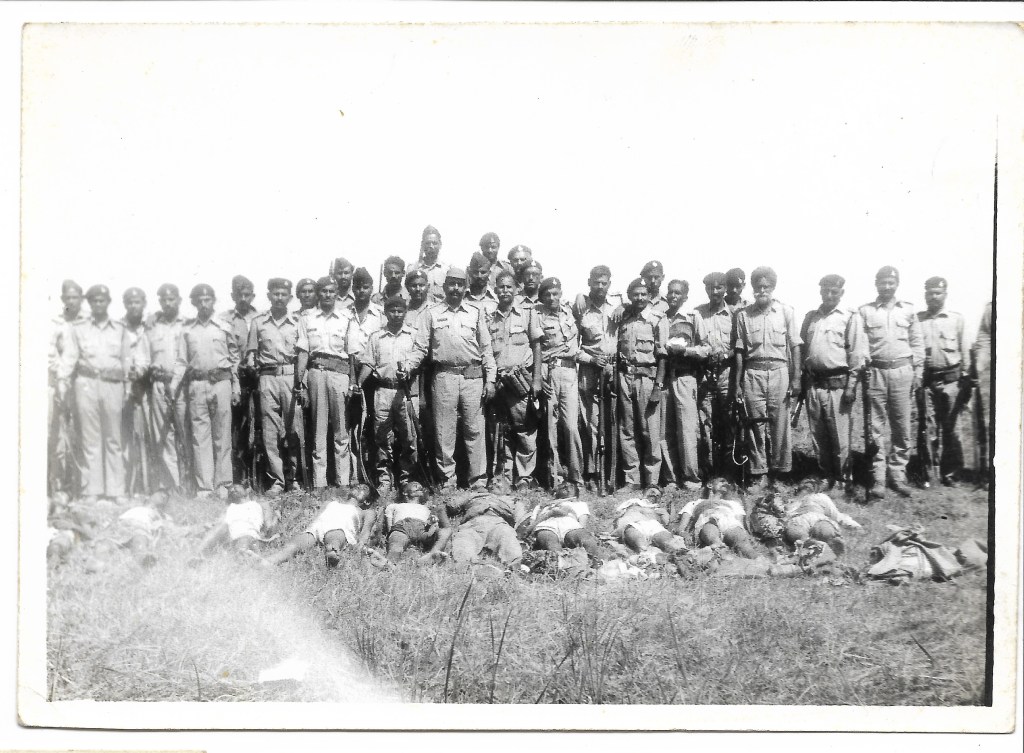
In 1981, based as he was in the Chambal, notorious for dacoits who stalked the nooks and crannies of the ravines, my illustrious husband had already faced dacoit encounters. The most dramatic of these took place in October, when he led the team that wiped out Paan Singh Tomar who, with his gang, had terrorised the region for years. As he describes in the book, bullets had rained on the encounter team from all sides, caught in the crossfire between the dacoits and the police.
The Pan Singh Tomar gang after a dusk to dawn encounter submits to the police: Photo provided by Veena Raman
He was superintendent of police (SP), Special Branch in Bhopal when the world’s worst industrial disaster took place. On the night of 3 December 1984, more than 40 tons of methyl isocyanate (MIC) gas leaked from the Union Carbide pesticide plant. At exactly that time Vijay was driving to the railway station. “Why inconvenience the driver to stay up late when I want to receive my parents myself?” he had argued.
Within minutes the gas had created havoc. He was shocked to see hundreds killed and untold hundreds maimed. Somehow he and his parents, so close to the scene of destruction, were spared.
In 1998, as inspector-general of police (IGP) Security, Jammu and Kashmir, while Vijay was in Srinagar, a bomb blast took place on the route during the hour he routinely travelled to office. He was saved that day because his driver had taken an alternative route!
In 2000, as IG-Border Security Force (BSF), Jammu, Vijay was responsible for erecting a much-needed part of the fence between Pakistan and India under highly adverse conditions. Enemy bullets rained down from across the border throughout the operation. That forced him to take some daring and potentially controversial decisions. How very relieved and thankful we were when he came home safe!
Vijay was appointed IG, BSF, Kashmir, in 2003 with the secret mandate to get Ghazi Baba, the mastermind of the 2001 attack on the Indian Parliament. Along with an informer, he had gone on an undercover exploration of the site where the encounter eventually took place. Most unexpectedly the informer pointed out the man himself! Vijay instinctively tried to open the car door and rush out to apprehend the terrorist. The informer roughly pulled him back and screamed to the driver to step on the accelerator and escape immediately. Later the informer explained that Ghazi Baba never left his lair unless he was strapped with explosives, and an attack would have spelled explosions that would have been the end of everyone in the vicinity.
Did he ever face a situation that he regretted?
One of the most dangerous situations Vijay ever faced in his risk-fraught career was as Special Director General (DG), Anti-Naxal Operations of the Central Reserve Police Force (CRPF). In April of 2010, many of his men were massacred in Dantewada by Naxalites. The loss weighed so heavily on him that his health declined: he neglected his meals and even forgot to take his medicines. He had moved from the headquarters in Chhattisgarh to Kolkata; Vikram and I were in Delhi. We understood the intensity of what he was going through only later, when he suffered a stroke.
Did your angst-ridden years end with his retirement?
Not really. For, four years after he retired, in 2015, Vijay was handpicked to be a member of a special investigation team (SIT) to investigate the Vyapam (Vyavasayik Pariksha Mandal[12]) examination scam. This was a challenging assignment because the entrance examination admission and recruitment had been going on since the 1990s and had come to light only in 2013.
Did he do anything that was not challenging? What got him a place in the Guinness Book of World Records?
Vijay came close to death even in the personal adventure he undertook with a friend. Together they circumnavigated the globe in an Indian-made car in the last 39 days of 1992. Don’t forget, that was an era when Indian manufacturing was just coming of age. Though this tremendous feat earned him a place in the Guinness Book of World Records, he was exposed to danger of a different kind. For 39 days, they drove at very high speeds, in different countries, different terrains, and different political climates. Let alone sleep on a bed, many a night they could not even catch 40 winks. And still they had only one accident! Yes, it left him badly injured, but he found the strength to complete the challenge and beat the record.
Doesn’t every policeman court danger — even death — in the course of duty? What made him stand apart from other men with stripes?
True, every policeman faces bullets in the course of duty. And Vijay, throughout his career, was inviting them, to see what they could do to him. His faith in the divine, in his own destiny, made him fearless. How very fortunate we were that, time and again, they were deflected.
Another thing that made him stand out was his sheer artlessness. In a field of work steeped in the dregs of humanity, he stood unwavering by the principles of human rights and democracy. Again, fortunately, he came out unscathed, retaining faith in humanity all through life.
This dream run surely merited documenting. And Vijay had a flair for writing. So why did he not pick up the pen until the last hours of his life?
It was indeed a dream run. And that was precisely why I urged Vijay for years to write a book. Yes, many people have achievements, but his narrative was different. Winning without challenges is victory, but winning after overcoming challenges is history!
I remember that, when you visited us in Pune in 2019, you had said that the range and scope of what he had done, deserved to be recorded. I myself maintained that the consistently straightforward way in which he had done it, had to be recorded for posterity. But whenever this was suggested Vijay would say, “Who would be interested in such a book!”
None of us agreed with him. We read books by many other police officers which made it clear that Vijay’s experiences were unique. While the others excelled in certain areas of policing, Vijay’s was a whole range of spectacular achievement!
He may be the only police officer in the country who has dealt with all the aspects of policing — and been successful at each. He was at the forefront of dealing with the changing nature of crime in the country and also at the epicentre of varied policing challenges.
Doesn’t he write about how his actions led to change in tackling crime and criminals?
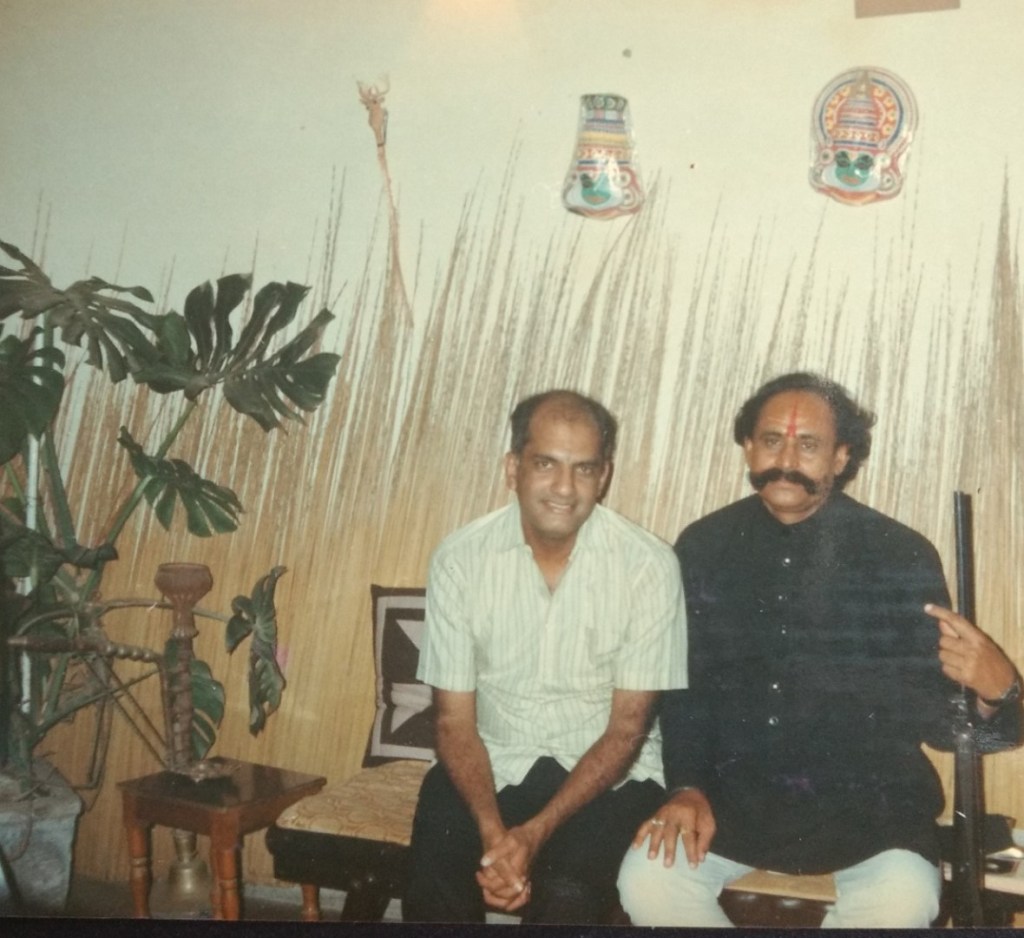
Yes, his successes invariably led to major changes in the law-n-order situation in the region. In Bhind, removing the Paan Singh[13] gang led to the surrender of a large number of dacoits who previously considered themselves invincible. This list includes the most notorious Malkan Singh[14] and the celebrated Phoolan Devi.
Surprise visitor Dacoit Malkhan Singh (right) with Vijay Raman Photo provided by Veena Raman
Similarly, when Vijay initiated the Indo-Pak border fencing, it was a major deterrent because most of the infiltration was from Jammu and there was a marked decline once the fence came up. Ghazi Baba too was seen as invincible, so the encounter destroyed a formidable opponent and also sent a clear message to enemies across the border.
Vijay’s success was not merely personal triumph. His career as an IPS officer traces the changes in the history of India’s security measures, right?
Indeed, his life and career were intertwined with an entire spectrum of events that enhanced the security of Indians. But let me point out that his daily life also contained an extraordinary range of experiences. He grew up in a village in Kerala, and later lived in villages among the most primitive of peoples in other Indian states. But he also lived in the cities, a privileged urban Indian. He had travelled in bullock carts on rutted roads and often walked 30 km in the course of an ordinary day through ravines. And he had also jetted across the world with the prime ministers he protected.
Vijay exemplified the essential truth of India being one, from Kashmir to Kerala!
Without a spec of doubt Vijay was that quintessential Indian who was intimately connected in different ways to the length and breadth of India. He grew up in Kerala, the deepest south, and spent some of the most significant years of his career in Jammu and Kashmir, the farthest north. His higher education took place in Gujarat; when he retired, we came to live in Pune.
The western part of India was his beloved home as an impressionable youngster, and then again in his final years. There were formative experiences in the east when, as a probationer in the Police Academy, he was taken to explore and understand India’s verdant Northeast. And he was in Calcutta for induction training at the ordnance factory, and later during his stint as Special Director General, Anti-Naxal Operations of the CRPF.
With these influences of north, south, east and west, it was only fitting that Vijay should be allotted the Madhya Pradesh cadre, at the very heart of India.
And he met his darling wife – then a hockey champion – in Nagpur! How did you meet? And how did you sustain your enchantment when the miles kept you in different corners of the land?
Vijay was an excellent writer. Of late I’ve been reading his letters to me over the years, from before we were married as well as during the tenures of separation induced by our work and careers. I can only marvel at his intellectual ability. Even at a very young age, he articulated his thoughts and feelings beautifully, and the letters reflect his tendency to introspect often, and be constantly self-critical.
I see a proud wife sitting before me.
I have always been extremely proud to be the wife of such an exceptional human being. But Vijay disliked being praised. At the peak of achievement, when his heroic deeds were earning him medals and he was surrounded by people singing his praises to the sky, when he was achieving success after success, he tried to ignore it all. Specifically he would tell me, “Please Veena, you don’t praise me. It’s all right that so many people are praising me. But if you start doing it, it’ll go to my head.”
Stupidly, I took him at his word. Of course, I boasted to others that the outstanding police officer was also the best husband, and the best father, ever. Even in the 1970s, when so few women had careers, he supported my ambitions. He knew he was marrying a woman who had her own dreams, who wanted to see the world. And yes, he knew that I had not learnt to cook!
I admired many other things about him. His commitment to perfection no matter how inconsequential the task. His commitment to service, to justice, to humanity. His love for reading. His wry sense of humour. His care for his parents and members of both our families. The deep respect he drew from whosoever knew him well — his family, his colleagues, his subordinates, his superiors, and even many criminals he came in contact with in the course of his duties.
But because he stopped me from praising him, I could never convey to him in words how much I admired him. It was only when he grew weaker that we worked fast and furious to get down on paper all that he was telling us. And as we approached the final pages of this book he said to me, with some surprise and wonder, “Veena, did I really do all this?”
So this book is Vijay’s story in his words. When he became too weak to speak, and when we lost him, my memories continued to pour in and I took the liberty to fill a few gaps.
May his legacy live on!
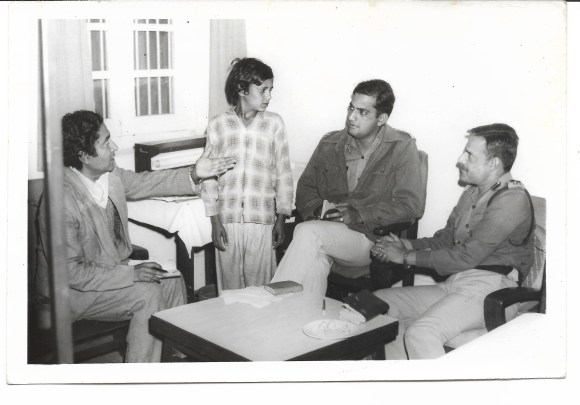
Vijay Raman at work with a kidnap victim. Photo provided by Veena Raman
The A B C of Vijay Raman

Adventure: Awarded citation in Guinness Book of World Records and Limca Book of Records for his around the world tour in an Indian Contessa car in 39 days 7 hrs 55 minutes
Brains: Gold Medals in Law
Courage: Presidents Police Medal for Gallantry

Experience: Over 34 years of rich experience in General Administration, Policing, handled PM Security, CM Security, anti-dacoity operation in Chambal, anti- terrorist operations in Jammu & Kashmir , anti-Naxalite operation, Investigated Vyapam Scam.

Awards
•	Presidents Police Medal for Gallantry.
•	Presidents Police Medal for Distinguished Service
•	Presidents Police Medal for Meritorious Service.
•	Gold medals in Law
[10]Phoolan Devi (1963-2001) was married at the age of eleven and sexually assaulted before she became a dacoit. She was jailed for eleven years and then joined politics till she was assassinated.
[11] Veena Raman retired as General Manager Marketing, Madhya Pradesh Tourism, after serving for 29 years. After retirement, she joined two NGO organisations, University Women’s Association Pune and Pune Women’s Council working towards empowerment of women. She was part of the national hockey team of India in 1975.
[12] Madhya Pradesh Professional Examination Board
[13]Paan Singh Tomar (1932-1981) was an Indian athlete and soldier who became a dacoit due to family feud.
[14]Malkan Singh (born 1943) is a former dacoit who has turned to politics
.
Ratnottama Sengupta, formerly Arts Editor of The Times of India, teaches mass communication and film appreciation, curates film festivals and art exhibitions, and translates and write books. She has been a member of CBFC, served on the National Film Awards jury and has herself won a National Award.
.
PLEASE NOTE: ARTICLES CAN ONLY BE REPRODUCED IN OTHER SITES WITH DUE ACKNOWLEDGEMENT TO BORDERLESS JOURNAL
I fondly remember my first place of work after graduation and the lessons it taught me. My education and house surgency had prepared me well for medical practice. I was removed from the cocoon of my alma mater and learned to practice medicine in the community. I have not visited the place after I left, and the ensuing three decades must have brought about a lot of changes. Unsure if any of my colleagues are still working at the hospital. I owe a debt of gratitude to the nurses, fellow resident doctors, specialists and others who got me started on the long road toward independent medical practice!
I recall… in the 1990s, the time was after two in the afternoon when I reached Perumpaddapa in Malappuram district of Kerala state in India. I had used public transport. Public transport in Kerala is mainly provided by private buses. I was happy to meet two of my seniors working at the KMM hospital as medical officers. The hospital had advertised a resident medical officer (RMO) post in local dailies, and I had travelled to apply for the position.
Coincidentally, two seniors both had the same name as me — Ravi, and they strongly recommended me for the position. The Medical Superintendent was a paediatrician. Based on my academic records and my friends’ recommendations, I was offered the position. The hospital was a busy one and it was my first job after graduation and house surgency. Soon we had three Ravis as RMOs at the hospital. The other two RMOs were named Abdul Ghafoor.
The hospital was next to the famous Puthenpalli (new mosque in Malayalam) and was located at the Southern border of Malappuram district. There was a strong influence from the neighbouring district of Thrissur where I did my undergraduate medical degree. The nearest town was Kunnamkulam. I had frequented the town many times before. We, the RMOs were posted in different departments, and had to take emergency duty in turns. There was an emergency duty room. We spent the evening and night there while on duty. The hospital had a psychiatry department and a coronary care unit (CCU). These were not common in the 1990s. In the evening, we accompanied the psychiatrist and the internal medicine specialist on their rounds in the psychiatry ward and the CCU. The hospital was not built to a central plan, and buildings had been added as per need leading to a warren of buildings and structures.
During the mornings I worked in the Paediatrics outpatient department (OPD) and assisted the Paediatricians. Our lead child specialist was very popular in the region and had a lot of patients. Most doctors working in the hospital did private practice in the afternoon and evenings. On my non-duty days, I would be free by around two in the afternoon. I stayed in a quarter provided by the hospital. The quarter was a two-story building surrounded by swaying coconut and betel nut trees. I was on the top floor and my apartment had a small sit out, a living room and a bedroom and a kitchen. There were two quarters on the top floor while the ground floor only had one large quarter occupied by our orthopaedic surgeon. There were two buildings in proximity.
The rooms had basic furniture — armchairs, cots and beddings. There were no curtains and old fashioned open wooden cupboards fitted into the walls. These consisted of wooden planks and frames recessed into the wall. These are often depicted in older Malayalam movies.
I occasionally made house calls. The region had a lot of individuals working in the ‘Gulf’. Remittances had made the region prosperous.
It was a short three-minute walk to the hospital. Puthenpalli was a popular place for pilgrimage. The mosque contains the maqbara (grave) of a renowned Sufi saint, Sheik Kunjahmed Musaliyar. Devotees believe that his blessings keep the place safe and radiant. The consecrated water at the mosque is believed to have divine healing powers.
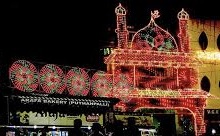
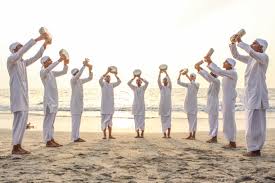
Puthenpalli MosqueDuffu Muttu danceFrom Public Domain
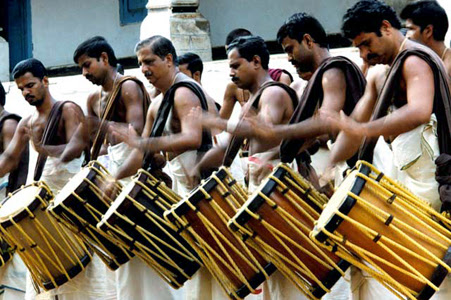
Puthenpalli Nercha[1] was the annual festival and drew pilgrims from far and wide. Ghee rice was distributed to the pilgrims and the needy. Ghee rice is a popular delicacy in the Malabar region. The flavour was largely syncretic as the festival was in December around Christmas and it catered to all communities irrespective of religious inclinations. A grand procession involving elephants and traditional musical performances like Chenda Melam using the traditional drums of Kerala and Mapila Pattu… dances like Kol Kali and Duffu Muttu followed.
Chenda MelamKol Kali — a stick dance From Public Domain
It is typical of Kerala that religious festivals have both a religious and a community purpose. Over centuries, different religions have co-existed in harmony. Elephant processions are common in Hindu temple festivals and are also increasingly used in church and mosque celebrations.
In the olden days these festivals were also important locations for commerce as various stalls were set up selling a variety of goods. Today with online shopping sites and home delivery this may be less important though the shopping attraction still exists. These festivals enable people to forget the challenges of daily life and be transported to a different world for a few days. The Hindu festivals are called Poorams or Velas, the Christian ones are termed Perunnal and the Muslim ones are called either Nercha or Perunnal. Puthenpalli Nercha also boasted a mesmerising fireworks display at night.
The mosque committee served the community by running a school and an orphanage.
We were provided with food from the school hostel. The food was usually par boiled rice and sardines. We were provided with both spicy sardine curry and sardine fries. Two sardines in the curry and two or three well fried and crispy ones for both lunch and dinner. Eating the same food day after day could get a bit boring though! There would also be a vegetable that used to vary daily. And Kerala papadam. The Kerala fish curry used plenty of coconut and tamarind. A coconut and chilly paste was coated on the sardine and it was then deep fried in coconut oil before being part of the curry. Shallots, Kashmiri chillies and curry leaves are common ingredients. I discovered as you travelled up the Malabar coast toward Mangalore, the coating became less spicy.
The emergency department was busy during the evenings, but things usually quietened down at night. I always found night duty tiring as it took me a long time to go back to sleep after attending to a case. Injuries were common and we also received psychiatric patients for admission to the psychiatry ward and cardiac patients as we had an CCU. We were not sufficiently trained to handle aggressive patients. We did have a security person on duty outside the emergency. There were also other security personnel on duty at the entrance to the CCU and at different outpatient departments.
The hospital was surrounded by village homes, and we often walked along the quiet by lanes. The quarter next to me on the top floor was occupied by a lab technician and he was good company and had a wealth of stories to tell. The buses were usually very crowded.
The coast was not far, and you could also walk on the beach and watch the fishermen set out in their boats. The mosque was usually crowded. There were no academic activities at the hospital, and we learned by doing. We would get a break after finishing our night duty and I used to combine my leaves and spend two or three days with my uncle in Palakkad once every two months. KMM hospital was a good place to work. I eventually left to join a small hospital and clinic at Areacode further north in the same district.
Dr. P Ravi Shankar is a faculty member at the IMU Centre for Education (ICE), International Medical University, Kuala Lumpur, Malaysia. He enjoys traveling and is a creative writer and photographer.
.
PLEASE NOTE: ARTICLES CAN ONLY BE REPRODUCED IN OTHER SITES WITH DUE ACKNOWLEDGEMENT TO BORDERLESS JOURNAL
Fakrul Alam writes nostalgically of his visits to Feni in Noakhali, a small town which now suffers from severe flooding due to climate change. Click here to read.
Rakhi Dalal reviews Swadesh Deepak’s A Bouquet of Dead Flowers translated from Hindi by Jerry Pinto, Pratik Kanjilal, Nirupama Dutt, Sukant Deepak. Click here to read.






 Borderless