There is a unique charm around books that talk of books and bookstores. Nanako Hanada’s The Bookshop Woman is an honest and touching memoir where she recounts and reflects on real life incidents that transpired in the rock-bottom phase of her life. Seamlessly translated from the Japanese by Cat Anderson, the narrative opens on a certain night in January 2013, with a distraught Nanako sitting listless and dejected in a restaurant at 2 a.m. in Yokohama. She had parted ways with her husband, and moved out of their flat. Living out of a suitcase, she moves through cheap hotels and public bathhouses, like a homeless drifter with an uncertain future.
Nanako is a manager at a branch of Village Vanguard, a bookshop chain. She is depressed with the thought that there’s a lot lacking in her life. However, as we flip through the pages, we see the resilient side of Nanako. She intends to rise above the mess and her depression. She learns to walk with her head held high without feeling sorry for herself. She moves into a cramped apartment near Yokohama station, and also happens to join a new social networking site, the ‘Perfect Strangers’, which provides dating services. She embarks on her ‘Perfect Strangers’ journey with a profile that reads, “I’m the manager of a very unusual bookshop. I have access to huge database of over ten thousand books, and I’ll recommend the one that’s perfect for you.” Although a trivial trend of the modern times, joining this new virtual platform proved a turning point in Nanako’s life.
Through several encounters with random strangers, Nanako discovers a world beyond her broken relationship and self doubt. Meeting new people puts her social skills to test and starts her on a journey of self-discovery. She learns to open up without being over-conscious of herself. In the larger picture, she understands that accepting changes in life is the right way to embrace it. The discussions that Nanako holds with people provide insight into the conditions of the modern day world and human relationships. However, through the eyes of Nanako, Tokyo which “had only felt cold and inhospitable” turns interesting beyond her dreams when she just “tried opening! What freedom there was here!” , and all she wanted to do with this freedom was to introduce more people to new books.
Meanwhile, as the manager of the Village Vanguard, she passionately continues to do her best, innovating with selling strategies and tending to her customers. She gradually learns to “discern what was special about books that perhaps didn’t look so promising at first, and to distil their charm in words”. She talks of the ‘joy of bookselling’ and gives a first-hand account of the challenges of her business. Nanako introduces readers to a host of books through the recommendations she offers during her Perfect Stranger sessions. There is even an appendix in the book that provides more details about these recommendations.
Experimenting with her ideas, Nanako also holds book jam sessions where people come over at a designated spot at an assigned time and share about their favourite books. These book jam sessions humbled her, as she realises that she had hitherto been ‘slightly condescending’ in recommending new books to people. This realisation transforms her outlook immensely.
Weaving through myriads of book suggestions and social meet-ups, Nanako evolves as a person and finds her footing in the real world. Even in the professional sphere she follows her heart and makes changes that resonate with her personal evolution. Her love for books and devotion to bookselling make her empathetic to the extent that she “would inadvertently get a glimpse of something deep in a person’s heart”.
Within a year of that dreary lonesome night in Yokohama, life comes a full circle for Nanako. As a result of her adventures and experiments, she finds peace within herself. Her divorce gets amicably finalised and she even quits the virtual platform to immerse herself in the natural flow of the delightful world she’d discovered — one full of meaningful human connections, friendships, the warmth of books and bookstores. We see Nanako wondering about the day when someone else would pick her books and recommend it to others, triggering an infinite loop– such is the power of books that turns drifters into trendsetters and dreams into reality. The book is indeed a must read to discover this incredible power and reaffirm one’s faith in resilience of human spirit!
Aditi Yadav is an amateur writer from India. She is also a South Asia Speaks fellow (2023). Her works appear in Rain Taxi Review, EKL Review, Usawa Literary Review, Gulmohur Quarterly, Narrow Road Journal, Borderless Journal and the Remnant Archive.
.
PLEASE NOTE: ARTICLES CAN ONLY BE REPRODUCED IN OTHER SITES WITH DUE ACKNOWLEDGEMENT TO BORDERLESS JOURNAL
To conquer fear is the beginning of wisdom.
—Bertrand Russell, Unpopular Essays (1950)
This is one of the dedications that precedes the narrative of Mineke Schipper’s non-fiction, Widows: A Global History. Her description of misapprehensions and the darkness around widowhood, as well as the actions that have been taken and suggestions on how more can be done to heal, weave a narrative for a more equitable society.
Starting with mythological treatment of widows, the book plunges into an in-depth discussion, not just with case studies but also with a social critique of the way these women are perceived and treated around the world, their need to heal from grief or a sense of devastation caused by their spouse’s death, concluding with stories that reflect the resilience of some of those who have overcome the odds of being repulsed. It is a book that inspires hope… hope for a world where despite all stories of misogyny covered in media, there are narratives that showcase both the human spirit and humanity where the ostracised are moving towards being integrated as a part of a functional social sphere.
Schipper, best known for her work on comparative literature mythologies and intercultural studies, navigates through multiple cultures over time and geographies to leave a lingering imprint on readers. She writes: “In Book V of his Histories, Herodotus (485-425/420 BCE) described life among the Thracians: Each man has many wives, and at his death there is both great rivalry among his wives and eager contention on their friends’ part to prove which wife was best loved by her husband. She to whom the honour is adjudged is praised by men and women alike and then slain over the tomb by her nearest of kin. After the slaying she is buried with the husband.” And yet she tells us of the dark past of Europe, “A Polish text asserts with great certainty that, after the burning of the body of her husband, ‘every wife allowed herself to be beheaded and went with him into death’.” She tells us stories of wife burning, killing and dark customs of yore across the world that seem like horror stories, including satis in India. The “motivation” is often greed of relatives or customs born of patriarchal insecurities. She contends, “wherever desperate poverty reigns, widows are at an increased risk.”
She argues: “The story is much the same everywhere; widows who are well educated know what rights they have or are able to find the right authorities to approach with their questions, while women with little or no education continue to suffer from malevolent practices.”
She has covered the stories that reflect the need for the welfare of widows, of how early marriages lead to widowhood even in today’s world ( “ Every year around twelve million girls under the age of eighteen get married, one in five of all marriages.”), of social customs like dowry, which can be usurped by a widow’s spouse’s family, of steps that are being taken and changes that need to be instituted for this group of women often regarded in the past and even in some places, in the present, as witches. In fact, she has written of such ‘witch villages’ in Africa, which have been developed to help widows who have been treated badly and turned away from their homes. Such stories, she tells us prevail all over the world, including India, where widows are sent or go to Varanasi.
She asserts that despite these efforts, “there is often still a significant gap between declarations of gender equality and their day-to-day enforcement and application.” She ends with case studies of four women: “Christine de Pisan, Tao Huabi, Laila Soueif and Marta Alicia Benavente examples of widows who dared to fully throw themselves into a new life following the death of their husbands.” And with infinite wisdom adds: “We cannot change history, but we can look to the past with new knowledge and to the future with new eyes.” She concludes with a profound observation: “Time does not heal sorrow, but out of the centuries-old ashes, grief, strict commandments and prohibitions, new prospects can also rise. The fact that every person’s life is finite makes every day unique and precious. The same goes for widows.”
In this interview Mineke Schipper (née Wilhelmina Janneke Josepha de Leeuw), an award-winning writer from Netherlands, tells us what started her on her journey to uncover the stories of this group of people.
What got you interested in widows as a group from around the world? Why would you pick this particular group only for a whole book?
Yes, whence this topic? The widow had been a tiny part of Never Marry a Woman with Big Feet. Women in Proverbs From Around the World (Yale UP 2004), an earlier book I wrote about proverbs referring to women’s lives, from girl babies to brides, wives and co-wives, mothers and mothers-in-law, grandmothers and old women. It was a long and breathtaking study about more than 15,000 proverbs, collected over many years, apparently widely appreciated and translated with two relatively recent editions published in India, in English and in Marathi. For those interested: the complete collected material is accessible and searchable at www.womeninproverbsworldwide.org, including proverbs about widows. That small but striking section about widows had made me curious, but other books, as it goes, pushed ahead, before I came back to them. In January 2020, I had to look up something in that book about proverbs, and the pages about widows looked so weird that I proposed the widow as my new topic to my Dutch publisher who responded enthusiastically.
You have written of so many cultures and in-depth. How long did it take you to collect material for this book and put it together?
All over I found obvious warnings and distrust viz a viz a woman whose husband dies. Interestingly, a widow was associated with death—and a widower was not. Take heed, suitor, when you replace the dead husband in the widow’s conjugal bed! Better not! Was it the fear that she had killed him? Or the creepy thought that the dead man’s hovering ghost was still hanging around? A widow was supposed to mourn intensely over her husband, preferably the rest of her life. In the meantime, proverbial messages openly expressed the widower’s happiness at the news of his wife’s death: ‘Grief for a dead wife lasts to the door’ (all over Europe) or ‘A wife’s death renews the marriage’ (Arabic). I came across well-known names—such as Confucius, Herodotus, Boniface, and Ibn Battuta—and lesser-known names of early travellers, historians, and philosophers with their commentaries on widows, compulsory or non-mandatory prolonged mourning, voluntary or prescribed chastity, and a surprisingly common choice of suicide as the best option for her. Amazingly many widows obediently followed their husbands to death. In all continents, monuments and documents witness how women joined dead men—buried or burnt alive, hanged, strangled or beheaded, drowned, stabbed or shot. A preference for strangling was inspired by the idea that the victim would enter the next world ‘intact’. So, from the narrow diving board of no more than a few dozen proverbs I plunged into the hidden history of widowhood for about three years.
How do women perpetrate the victimisation of widows? Would you say that widows as a group are more victimised against than other groups of women?
Conceptions about women as interchangeable objects were widespread. If a woman was ‘no longer of use’, a man would need to get a new one, much as you would do with a broken watch, rifle, knife or whip. A man cannot or will not do without a wife, but what about when the tables are turned? The need to present women without husbands as inept and dependent must have been great. A widow managing all by herself was rather met with obvious disapproval. Widowhood has traditionally been associated with emptiness. In Sanskrit, the word vidhua means ‘destitute’, and the Latin viduata (‘made destitute, emptied’) is the root of the word for widow in many European languages, including Witwe (German), veuve (French) and weduwe (Dutch).
Nonetheless there have always been plenty of widows who have lived wonderfully independent lives, but this is not the image seared into the public consciousness. The notion that a woman is unable to live her own life after the death of her husband is an amazingly deep-rooted one. The Japanese word for widow (mibōjin) literally means ‘she who has not yet died’, that is, a widow is simply sitting in Death’s waiting room for her own time to come. Interestingly, the status of widower on the other hand was usually so short-lived and temporary that some languages even lack a word for it all together!
What makes widows more vulnerable than others?
Every widow has her own story, but social systems play an important role. In traditions where goods, land and property are inherited through the mother’s family line with matrilocality, a groom comes to live with his bride’s family, although this often ended up working out slightly differently as men were not best pleased with this living arrangement, so in reality there would be negotiation. However, over the centuries patrilineal systems, lineage and inheritance significantly became the dominant system. According to the patrilocal rules, a man had to remain ‘at home’, a system which to this day obliges countless brides to move in with their parents-in-law, an environment foreign to them. They are forced to comply with the demands and expectations of their family-in-law, while the husbands remain comfortable in the familiar surroundings they grew up in, with major consequences for the lives of women who become widows. This patrilocal living situation has often resulted in greater inequality between marital partners and harsh rules for widows, often preventing a wife from any material heritage after her husband’s death. According to the work of evolutionary psychologists, married women who live with or in close contact with their matrilineal family run a significantly lower risk of violence in the form of (physical) abuse, rape and exploitation than those who move in with their husband’s family. This is all the more true for a widow with a distrustful family-in-law who accuse her of killing her husband, a danger that is greatest in areas where poverty reigns.
At a point you have said, “The Aryan period, which preceded later negative social developments, saw a differently structured society in which there was more space for women: to a certain extent women had religious autonomy, they were entitled to education at all levels (with some even becoming celebrated authors), they participated in public life and also held important positions… However, by the year 200 AD, their position had considerably worsened.” Do you have any idea why their condition worsened in India? What were the ‘negative social developments’ you mention?
In matters of religion the woman was increasingly dependent on the services of her husband or of priests, possibly also on her sons or male relatives, to carry out the rituals she required. Simultaneously she became largely excluded from all types of formalised education. This lasting effect can be seen even today in the global difference in the rate of female and male literacy. The negative stance towards women in India dates back to Brahmin commentaries of ancient Vedic texts, which referred to women as lesser humans; widows subsequently occupied an even lower rung on the social ladder and were forced to work hard towards their religious salvation through extreme asceticism. One example: ‘At her pleasure [after the death of her husband], let her emaciate her body by living only on pure flowers, roots of vegetables and fruits. She must not even mention the name of any other men after her husband has died.’ (Manusmriti Kamam 5/160) Patriarchal relations have developed gradually in different parts of the world and at different times, but not everywhere in the same rigorous forms.
In the Abron-Kulango culture in the northeast of his native Côte d’Ivoire, you have told us “[B]oth widows and widowers were required to accompany their spouse to the next world” but eventually due to societal realisations, such practices stopped. Do you think this can happen in other cultures too. Have you seen it happen in other cultures?
As far as I know, such practices do not exist anywhere anymore. The most problematic obstacle for the rights of widow’s in less-well off regions is the unfortunate combination of illiteracy, fear of witchcraft and covetous in-laws, particularly during periods of mourning and grief. The good news is that even in the most unexpected places initiatives are emerging to help inform women in rural areas of their equality before the law. Self-aware widows become inspiring role models; conscious of their rights, they share their knowledge with others so that more of their fellow widows can find the right legal aid when injustice rears its head.
Would you hold as culprit people who enforce the death of widows? Would you address these people too as criminals in today’s context? Please elaborate.
It wouldn’t help much to do this! Marriage is still frequently presented as the utmost peak that a woman can achieve during her life. From this supposed top spot married women often still look at single and widowed women in a new light—with pity, contempt, suspicion or even hostility: they are out to seduce your own husband! When death comes calling, not only men’s but also women’s negative feelings easily bubble up from the morass of fear at the dreaded prospect of becoming a widow. Over the centuries such reactions towards widows have become part of the constrictive hierarchy meant to keep so many women in their place.
Can sati be justified[1](even though they are deemed illegal as is suicide) by saying the widow immolated herself willingly? Please explain.
The social pressure on widows must have been immense, but we are living now and no longer in the past. It is true that in poorer regions far out of the reach of cities, countless numbers of widows still have to traverse a long road towards a humane and dignified existence. However, instead of justifying the willingness to immolate herself as her own choice, it is better to insist on the positive news that, after the loss of their partner, today not only men but also women have the right to stay alive and further explore their own talents and new possibilities.
You have told us dowry started as a European custom. Is it still a custom there as it is in parts of South Asia, even if deemed illegal? Was it brought into Asia by Aryans/colonials or a part of the culture earlier itself?
The dowry is the gift that the bride’s family would contribute to the couple’s new home. Even though colonisation may have reinforced this ancient custom, but in many communities, it was already a custom and still is in many parts of the world. In Europe it stayed on until the late nineteenth century. In cultures where the bride provided a dowry, the death of a wife would bring benefits to a widower, as a new wife with a new dowry would enrich his home with new assets such as silver tableware, jewellery, bed linen and other valuables. For centuries, among Christians, divorce was forbidden, and from the perspective of widowers the prospect of a second chance provoked a sense of euphoria, as expressed in quite some sayings where his sadness does not go beyond the front door. Across Europe such messages confirm a husband’s profit of his wife’s death: ‘Dead wives and live sheep make a man rich.’ (French; UK English). However, most widows were denied such liberating feelings or didn’t experience any profit from the change. Often, they did not even allow themselves to get over her loss and indulge in any new freedom. They usually were subject to the paralysing fear of other people’s gossip.
In many places a widow who remarried would even lose entitlement to her own dowry or other input she had contributed to her marriage. Many women who remarried felt unable to invoke any right they had on the property of their deceased husband. Little wonder, therefore, that widows were heavily discouraged from remarrying, for example in China. The use of far-reaching laws still re-enforced the highly recommended chaste and sexless existence of widows after the death of her husband. Of course, the considerable number of child marriages in sub-Saharan Africa and South Asia easily robbed child widows from the legal rights wherever they had. According to the World Widows Report, the situation for widows with children is still exceptionally alarming in many parts of the world. Daughters, in particular, remain a huge problem in traditions where women have to contribute a dowry when daughters get married. For this reason alone, poorer parents have a preference for sons: they are more likely to inherit from their father’s family, while their widowed mother can expect little.
Has the condition of widows across the world improved over time? Please elaborate.
Over the centuries far too many widows have been convinced that their only future was conditioned by their dead husband. In my book there are examples from different areas of courageous widows who changed their own lives. Looking around in one’s own neighbourhood, there are always exemplary models of independent widows who do not let themselves be deterred by the doom of whatever prejudiced people think or say.
All emancipation starts with the opportunity to acquire knowledge, but if we are to believe what tradition tells us, women had little need for that, based on an assumption that knowledge did nothing to encourage and promote female obedience, and even less for virtue. ‘Knowledge goes before virtue for men, virtue before knowledge for women’ is an old saying in Europe, while a Chinese saying also agrees that a woman without knowledge is already doing very well. The fact that this message has had such a wide-ranging effect can be seen in the vast difference in levels of education and training among boys and girls in global education statistics.
What did a man look out for when it came to finding a wife? In order to facilitate control over women, various warnings have been passed down to men. One such proverb found the world over clearly expresses this sentiment: ‘Never marry a woman with big feet.’ It comes from the Sena language in Malawi and Mozambique. In China, India and other parts of the world, I came across literal iterations of this proverb. In spite of geographic or cultural distances and differences, this saying reflects a widespread consensus: hierarchy in male-female relations seemed to be essential, and someone had to be in charge. Should he become the main breadwinner for the duration of their married life, his wife will be even more dependent on him.
Significantly the big feet metaphor points to male fear of female talents and power. Hardly surprising therefore that becoming a widow was the worst possible catastrophe for women. Worldwide the solidarity between wives and widows is growing and literacy support within local communities as well, while the former unwavering prejudices against widows are shrinking, and more and more widows with big feet do manage. The old anti-widow stronghold of local prejudice is slowly but surely crumbling into ruins. We cannot change history, but widows can look to the past with new knowledge and into the future with new eyes and new hope.
In 1974, the modest, starless Hotel du Commerce, at 14, Rue[1] Sainte Geneviève, in Paris became my home for over six months, and its owner, Madame Marie, my adopted mother.
A young, aspiring journalist, I was sent to Paris by the editor of a worthless monthly magazine in Palermo, Sicily, to write an article on the monuments of Paris. I took up my long residence at the Hotel du Commerce for two reasons: it was very cheap — that is, ten francs a day — and conveniently located in the centre of the city, only a ten minute walk to the Notre-Dame Cathedral. Madame Marie, ninety kilos of joy and laughter, rented me a room on the fifth floor (without a lift) with two other residents: Caban across from me and Paco at the end of the corridor. The rooms had neither attached toilets – there was one for each floor — nor showers (none). Like all residents and tourists, we washed from the washbasin in our rooms. My little window looked out on to the red-tiled rooftop of a Russian bookshop.
To tell the truth I never wrote that article on the monuments of Paris. What a boring subject! On the other hand, my stay at Madame Marie’s hotel afforded me enough material to write a book — a sketch of her and her residents, their trades, joys and sorrows … their uncelebrated destinies. My editor would have probably sacked me for this ‘breach of contract’, but as luck would have it, his magazine went out of business before my return to Palermo.
I shall never know why Madame Marie took such a liking to me. Everyday, she would invite me for coffee and a chat. We would even watch television in the evenings in her sitting-room which separated the tiny kitchen from the reception. From there she kept an alert eye on the comings and goings of everyone. She was a jolly old woman, and this, despite the loss of her husband at an early age, and the terrible events that occurred in her hotel during the Algerian war in the fifties and sixties[2]. She was indeed fat, but quick-witted with plenty of pluck. She had rolls of flesh rumbling under her eye-catching flower-dotted red robe.
“You know, I was a young girl during the Second World War. I hid some French Resistance fighters in my parents’ house in the Alps. The Germans who hunted down the French fighters couldn’t scare me with their rifles and threats. I sent them packing whenever they pounded at our door!” she would repeat proudly when I was alone with her. When her husband died, she was left on her own to manage the hotel, and in the 50’s that was no asset. Deserters, police informers, merciless OAS members[3] and their equally ruthless adversaries, the FNL[4] all came and went causing rows, arrests, even murders. The plucky Madame Marie handled it all with her sang-froid and flair for compromise.
“My sixth-sense got me through that lot,” she would laugh, her jowls shaking. By the 1970’s, however, things had calmed down in Paris. The lodgers were mostly Japanese and American tourists with a sprinkling of North Europeans. No more brawls, police raids or murders. Madame Marie spoke no foreign language but she understood everything that she needed to understand. She had hired an old woman to clean the rooms. The sprightly widow had learned how to say in English, after having knocked on the lodger’s door at eight in the morning: “You stay or you go?” It was enough to get her point across.
Madame Marie disliked the police. She flared at their scent even before they stepped through the front door in incognito on the trail of someone except on one occasion. I shall let her narrate that exceptional episode: “How that flic[5] fooled me I’ll never forget. Dressed like a hippy, long hair, a torn knapsack, he took a room in the courtyard. He spent two weeks here and never said a word. He got in no later than eight o’clock at night. I thought he played the guitar on the metro[6] for money. Then one day, dozens of police stormed through the front door into the courtyard. I was in the sitting-room and rushed out the back door of the kitchen to see what all the hullabaloo was about. The door of one of my clients was wide open, a young bloke who used to play the guitar on the metro; he had been handcuffed by the ‘hippy’ and was being walked out. I couldn’t believe it. It was like a film. When everything settled down, a police officer came over to me and politely explained that my lodger was a notorious drug-dealer and had been under surveillance for weeks by the ‘hippy’. He apologised for the inconvenience and paid the rent for both the dealer (who hadn’t paid me) and the hippy-policeman.” Madame Marie sighed. “He’s the only flic who ever fooled me.” And she laughed her usual jolly laugh.
She got up to make some more coffee for at that moment Caban and Bebert came in for a chat, both a bit tipsy from their usual drinking bouts before, during and after work. Then Bebette made her appearance, the prostitute to whom Madame Marie ‘lent’ one of the courtyard rooms every now and then to exercise her profession. Madame Marie had no moral qualms about such professions. Everyone had to earn a living … Close behind sailed in an elderly woman whose name I no longer recall. Madame Marie considered the woman to be her best friend. She would sit in front of the television and shout insults at the politicians whom she disliked, much to the displeasure of the others, especially Bebert, who would shower her with mocking abuse. When things got too rowdy Madame Marie would shout them all down or threaten to turn them out if they didn’t settle down.
Madame Marie was at times brusque but fair. She liked Caban, the former butcher and now factory worker hailing from southern France, shy and lonely, drunk by mid-morning. He had been living in Hotel du Commerce since the late sixties. She was fond too, of Bebert, the chimney-sweep, a small, taciturn, melancholic chap straight out of Dicken’s David Copperfield, drunk before ten in the morning. He constantly coughed. His clothes were impregnated with soot and cigarette smoke. Bebert hardly spoke at the table, smoking like a chimney, drinking his coffee whilst Caban smiled and winced at the others’ ridiculous jokes and jibes. Day after day and night after night that sitting-room typified for me – and for the others, I suppose — a sanctuary of friendship and convivial exchange. Oftentimes, I read myself into a page of Balzac’s novel Le Père Goriot [7].
The other two residents rarely joined at that cheery table. One of them, Bolot, stayed in a room in the courtyard. He was a former German soldier who joined the French Foreign Legion after his capture during World War II. The other was called Paco, a Republican Spaniard, who escaped Franco’s persecutions after the Spanish Civil War[8].
I got to know them all, save Bebert. We had no time to get really acquainted. “Poor Bebert,” Madame Marie would sigh. One evening as we sat watching a film Bebert knocked at her kitchen door, then staggered in towards us, blood streaming from his mouth, drenching his night-shirt. His face was ghost white. He kept murmuring, “Madame Marie … Madame Marie,” through clenched, blood-filled teeth. The chimney-sweep appeared lost in a daze. Madame Marie quickly took him by the shoulders, laid him on the sofa then trotted off to get the police. They arrived quickly (the station was two doors away). An ambulance shortly followed. Bebert was placed carefully on a stretcher and carried out.
We never saw Bebert again nor had any news of him. Madame Marie presumed that he had died of a haemorrhage from too much smoking, drinking and chimney soot. She had his room cleaned and fumigated. His belongings amounted to a pair of torn slippers, two shirts and trousers and two used razor blades. On the other hand, she gasped at the hundreds of empty packs of cigarettes. Bebert’s world had been compressed into a nebulous routine of cigarette and alcohol fumes and chimney soot. A bleak, Dickensian world to say the least.
Poor Bebert. He had been living at Hotel du Commerce for eleven years. A fellow without a family, friends … known to no one. He practiced a trade that was gradually dying out. No one ever asked for him at the reception — never a phone call. He was the unknown toiler whose burial stone carries no name because he had no money for a headstone. He was probably buried in the fosse commune[9].
Caban, whom I knew much better than Bebert, fared no better. His salary flowed away upon the torrent of fumes of cigarettes and drink, or as Madame Marie put it coarsely: “He pissed it all against a wall!” Too much gambling, too. So his wife left him, after that, his sixteen-year-old daughter. They were never to be heard from again. Caban was soft-spoken, very shy. Quite frankly, I never saw Caban sober, except at six in the morning before catching the bus to work at the wine-bottling factory. He had asked the foreman, Mister Tomas, to have me hired on for the summer since many of the workers had gone off on holiday. In the café whilst waiting for the morning bus, he began his inglorious day with coffee and a few shots of cognac. He continued his indulging all through the working day on the first floor of the factory where he drank the last dregs of wine from the bottles that were to be washed. By five o’clock he was completely sloshed! Mister Tomas kept him on out of pity. Besides, Caban was inoffensive. Madame Marie even told me he had saved a girl from drowning in the Seine River in Paris. But let Madame Marie tell this very true tale: “He was walking along the banks of the Seine after work when he heard the screams and splashings below him. Caban was a strong swimmer at that time, so he took off his shoes, dived in and grabbed the girl in the water. In a few minutes he had brought her back to the banks safe and sound where a crowd of people had gathered, applauding him. The young girl cried and cried but was unhurt. And you know, her father was the owner of the France-Soir daily newspaper. So, to thank Caban, he gave him a certain sum of money and offered him the France-Soir freeeveryday for the rest of his life. All he had to do was give his name at the news-stands.”
“Does Caban read the France-Soir? I never see him reading a newspaper,” I asked naively.
She laughed. “No, Caban never reads. He never had much instruction.”
I became quite friendly with Caban since we worked together at the factory, although he would constantly upbraid me for not joining him in his ritualised morning concoction. I insisted that I never drink. He would snicker and shrug his bony shoulders. “All men drink!” he slurred. That of course was a subject of conjecture which, and this goes without saying, I never pursued with him.
One day whilst I translated for Madame Marie at the reception, I mentioned that I hadn’t seen Caban for more than a week. Neither had she. Mister Tomas had telephoned, too. Caban never missed a day at work … never. She told me to go upstairs and knock at his door. Which I did for several minutes. Silence. When I returned without news of him she immediately dawdled out to the police station. She was back in no time with two policemen. I accompanied them upstairs. They pounded at the door then kicked it open. There knelt Caban over his bed, his face black as coal. The stench in his room made us gag. I hurried down to tell Madame Marie. And as we stood in the reception, the ambulance arrived and four men, escorted by the police, placed Caban’s frail, limp body into a plastic bag and dragged it down the steps, one by one : thump … thump … thump … Madame Marie started to cry. I covered my ears …
Poor Caban had been dead for over a week, due no doubt to a blood clot of the brain. Madame Marie never forgot those thumps on the flight of stairs. Nothing was said of his death in the newspapers, even in the tabloids. Like Bebert, he succumbed to a companionless death, without flowers or prayers. Without sorrow or tears … He too was probably buried in a fosse commune. He had no bank account. The police found six Francs in his pocket … Six more than in Bebert’s …
Paco, the Spanish refugee, had been living in Hotel du Commerce for seven years. His lack of good French isolated him from the Paris scene, so he took refuge in the clusters of Hispanic scenes that peppered the Parisian streets, especially the taverns where flamenco music could be heard on Rue Moufftard, only a fifteen-minute walk from our hotel.
Since I speak Spanish quite well, I had on many occasions accompanied Paco to these musical haunts of his, where the paella was copious, the sangria flowed like water, the music, if not excellent, loud enough to forget one’s trials and tribulations of the day. Above all, it was cheap …
Paco drank heavily, rum and coke or sangria, but never behaved uncivilly. His deep, black eyes bore into mine whenever he spoke of his luckless past: “My older brother was killed in the war against Franco. I escaped via the Pyrenees leaving behind my parents. Since 1940, I’ve been living in France, working in factories or in the fields. And you know, I still don’t have my French papers. I have no identity! I can’t go back to Spain because of Franco[10], so I must stay here unloading lorries at the Halle Market or washing dishes in grotty gargotes[11].” Paco clapped to the sound of tapping feet and to the rhythmic chords of a furious guitar. “Every now and then I repair the toilets at the hotel which are constantly clogged up.” He snapped his fingers, ordered tapas[12], spoke to his friends in the language of his parents.
The fiery Spaniard would introduce me to his Spanish artist friends, all of them sullen, sad figures whose love of Spain had evaporated into hazy fumes of sangria, nostalgia, gaudy flamenco music, tasteless tapas and brief love affairs. As to Paco, he appeared to be a loner, an ill-starred chap lost in a huge city of lost souls, of crowds so busy that their business took no heed of such a shadowy figure, fugitive and fleeting, drifting from tapas to tapas, sangria to sangria.
Paco hated Paris, but it proved the only place for a stateless refugee to avoid police roundups. For Paco, Hotel du Commerce symbolised a haven for marginals, the homeless and stateless. “Madame Marie is my guardian angel,” he would croak. “My very fat guardian angel” as he clapped and stamped to the riotous music. “The police will never find me … never!” he boasted raising his glass to Madame Marie’s health.
He was wrong. One hot September week, Paco couldn’t be found in the hotel. Madame Marie suspected foul play. Two days later the police arrived, informing her that a certain Paco Fuentes had been apprehended without papers. He had been extradited to his country of origin. His belongings? He had none, like Bebert and Caban. The little he did possess were thrown into a bag and out into a rubbish bin. Poor Paco — would he ever find his parents?
On my many jaunts through Spain, after Franco’s death, I tried to locate Paco Fuentes, but it was like finding a needle in a haystack as the expression goes. Here, however, I must thank the excellent Spaniard, for it was he who introduced me to the world of flamenco.
Bolot kept very much to himself. Unlike the other residents he never drank nor smoked. You didn’t want to muck about with Bolot — a massive fellow, indeed. But then again who would muck about with a former French Foreign Legion soldier?
Yet, Bolot’s aloofness and reserved demeanour attracted many people to him. He had that sort of winning smile, and since he spoke very good French, albeit with a heavy German accent, he befriended those who came into contact with him. Moreover, he shared a passion for stamp-collecting. That was Bolot’s raison d’être[13]! His collection had become very well known to both specialists and amateurs. I would accompany him to the Flea Market on Sundays and there he would trade stamps with the best of stamp-collectors. Stamps from the Soviet Union, China, India, Cuba, several African states, Turkey and Libya. Bolot didn’t need the money, his pension as a soldier was comfortable enough. He simply enjoyed the thrills.
One day as we strolled back to the metro as he towered above me, Bolot acknowledged his good luck: “I volunteered for the army at seventeen, an enthusiastic patriot. Was captured by the French after two days of combat and given a choice: prison or the Foreign Legion. I chose the second, changed my nationality and name.”
“What was your German name?” He smiled but left the question unanswered.
“So I fought for the French. A traitor to my homeland. Call me what you like, I couldn’t sit out the war in a prison for years and years. You know, I never went back to Germany. When I quit the Legion I received my pension and came straight to Paris, the City of Lights.”
“To do what?”
“To sell stamps!” Bolot laughed. “No, I worked as a mechanic in factories until retiring.”
I got to know Bolot as well as Caban since all three of us worked at the same wine-bottling factory in the summer of 1974. He left earlier than me because of a fight between him and an obnoxious individual who abhorred Germans, even though Bolot had acquired French nationality long ago. Bolot refused to fight him, despite the other’s punches, which the former Legionnaire dodged or blocked with considerable ease. If Bolot had really fought, he would have killed him. Mister Tomas broke up the squabble, sacked the young rowdy on the spot and apologised to Bolot. Bolot exercised the noble art of self-restraint.
When I left for grape-picking at the end of September, then on to Italy and Sicily, it was Bolot who helped me repair the broken spokes of my bicycle. Outside Hotel du Commerce, Madame Marie and Bolot wished me the best of luck, inviting me back whenever it suited me. There would always be a spare room for me she insisted. I cycled out of Paris in the direction of Burgundy. I had spent six months at Hotel du Commerce …
After a month of grape-picking I returned to Palermo only to discover that the magazine had failed due to lack of interest … and funds. Relieved, I went to Madrid to begin a career as a flamenco guitarist. Time passed quickly. Or as Madame Marie would philosophically say: “It’s not time that passes but us!” Exhausted from so much playing in studios and taverns, I decided to take a break and travel to France and visit Hotel du Commerce.
It was under new ownership. The manager, an Italian, informed me that Madame Marie had died years ago from dementia after a spell in a nursing home. How everything had changed: the reception room had been refurbished and Madame Marie’s Balzacian sitting-room had become a dining-room for guests. The once starless hotel had become a three-star hotel.
I stayed two nights and paid sixty euros a night! In the seventies, I paid the equivalent of one and a half euros! True, all the rooms had been painted in bright, cheery colours, fitted out with toilets and showers. But sixty euros? Besides, I like a hotel that is lived in, not just slept in …
With the death of Madame Marie, a whole era had come to a close. Hotel du Commerce had decidedly conformed to the standards of kitsch. There were no more residents, only tourists. All the single rooms on the fifth floor had become large rooms suitable for modern travelling couples. Gone were the days and nights round Madame Marie’s convivial table, her coffees and conversation. Those colourful figures who had imprinted their existence there, whose joys and sorrows had been shared by Madame Marie and myself, no longer painted those refurbished walls simply because the epoch ignored the very existence of such figures.
Indeed, who during those two nights reminisced the glittering epoch of Madame Marie’s Hotel duCommerce? Who even imagined her singular story and those of her likeable, touching residents? No one. No one, perhaps, except me, who vouched to safeguard those memories. Memories of the anonymous whose faces will never be seen on photos, nor names ever printed in books.
Paul Mirabile is a retired professor of philology now living in France. He has published mostly academic works centred on philology, history, pedagogy and religion. He has also published stories of his travels throughout Asia, where he spent thirty years.
.
PLEASE NOTE: ARTICLES CAN ONLY BE REPRODUCED IN OTHER SITES WITH DUE ACKNOWLEDGEMENT TO BORDERLESS JOURNAL
In late September, I visited Rwanda with a professor of Naruto University of Education in Japan and two Japanese graduate students. We traveled from Kigali, the capital city, to the Kayonza District, a rural area, to learn about the 1994 Genocide against Tutsi which necessitated peace education in Rwanda. In one month, around a million Tutsis and their sympathisers were systematically and viciously slaughtered by members of the Hutu ethnic group following government directives. This “final solution” was enacted via machetes and spears, often by classmates, co-workers, and neighbors. Just about everyone in Rwanda was affected by the horror in some way. Our driver told us that his father, sister, and brother were murdered at that time. Our interpreter, Claude Mugabe, was also a genocide survivor. He had been eight years old at the time, and he said that he remembered everything.
The animosity between two ethnic groups may be traced to the colonial period, when Belgians favoured the Tutsi, who typically had tall, slender bodies, high foreheads, and narrow features, for prestigious positions and privileges. Periodic violence against the Tutsis began in the 1950s and continues to this day, but Rwandans have made great efforts to ensure that the events of 1994 never occur again. We learned that Rwandan citizens are no longer required to carry identity cards indicating their ethnicity.
We visited a center which is a part of the Peace Education Initiative Rwanda. The three pillars of their program are peacebuilding and reconciliation, youth empowerment, and social economic development. We first gathered in tent where some photos of the massacre were displayed. Some community members, including those who had been alive at the time of the genocide and high school students, were gathered to share their thoughts and experiences with us.
Photograph by Suzanne Kamata
As birds sang and chickens squawked in the background, Mugabe explained some ways in which the people of his community have sought reconciliation, including sharing goats, building together, and working alongside one another. He emphasised that it’s important that everyone have their basic needs met. To this end, the community members fight against malnutrition, which can lead to diseases, through gardening vegetables and rearing animals such as goats and chickens, which provide milk and eggs.
Another important part of reconciliation, as we learned, is forgiveness. We heard moving –and often shocking – testimonies from both a victim and a perpetrator. We first heard from a woman who was a victim. She told us how she was harassed by her teachers after they learned that she was a Tutsi, and ultimately forced to drop out of school. She said that she spent some days and nights hiding in the bush. Her house was burned, and nothing remained. On April 9, she left her hiding place and sought refuge in the Catholic church. It was full, however, so she went to the cinema. On April 14, the Hutus attacked the church. Although the woman lost her sight, she said that she later received health insurance, and “Today we’re living in peace and harmony.”
Next, we heard from a man who was 30 years old, with a wife and two children, at the time of the genocide. He admitted that he had critical thinking ability, but he participated in the attack on the church, anyway, along with other civilians and members of the military. They were armed with machetes, guns, and grenades, and given thirty minutes to exterminate everyone in the church. They surrounded the church and opened fire, but they “succeeded” in killing only thirteen people the first day. He did not return the second day because his wife was sick. Later, he fled to Tanzania, but after being repatriated to Rwanda, he, like many others, was arrested and sent to prison. “I internalized what I did,” he said through the interpreter. He was filled with remorse. When he was released, he bought a cow for the victims, and asked for forgiveness. In the beginning, only 12 people were involved, but now almost 3,000 participate in peace education in the village.
In addition to these community activities, peace education is an important part of the school curriculum in Rwanda. As in Japan, where students go on field trips to Hiroshima and Nagasaki to learn about the atomic bombing of those cities, Rwandan students visit sites related to the genocide, such as churches which now serve as memorials to those who died. We visited two such memorials. In one, the blood-stained clothing of the murdered was stacked on the church pews, while their photos were displayed on the wall. There were glass cases full of skulls, some with bullet holes, or larger gashes caused by clubs or machetes, as well as coffins full of bones. Though graphic and disturbing, these exhibits gave us an understanding of this particular tragic event and of the horrors of war in general.
As I thought about the divisions among people in my own country, the United States, all of the hate-filled rhetoric spewing from the mouths of politicians, and the move to silence voices from outside the mainstream, I couldn’t help thinking that some of these measures might be applied there, as well. What if we truly acknowledged that past? What if we shared our bounty? What if we asked for forgiveness? For now, I will remember what I learned in Rwanda. I will cling fast to hope.
Photographs by Suzanne Kamata
Suzanne Kamatawas born and raised in Grand Haven, Michigan. She now lives in Japan with her husband and two children. Her short stories, essays, articles and book reviews have appeared in over 100 publications. Her work has been nominated for the Pushcart Prize five times, and received a Special Mention in 2006. She is also a two-time winner of the All Nippon Airways/Wingspan Fiction Contest, winner of the Paris Book Festival, and winner of a SCBWI Magazine Merit Award.
PLEASE NOTE: ARTICLES CAN ONLY BE REPRODUCED IN OTHER SITES WITH DUE ACKNOWLEDGEMENT TO BORDERLESS JOURNAL
So there I was, jacket zipped, MP3 player charged and loaded, sneakers laced and tied. Just as I was about to go out the door to embark on my power walk, I realised that I’d left the keys on the table in the other room. No one else was in the house. What a bother!
I considered my options. One, I could go out and leave the house unlocked, but I didn’t want to do that. Two, I could try to crawl on my hands and knees to the table without letting my feet touch the floor. Three, I could take off my jacket, lay it down like a carpet, and step on that instead of the bare wooden floor. Four, I could untie, unlace, and step out of my shoes and, in my socks, go get the keys.
I’ve lived in Japan for over 20 years, so I know better than to wear shoes in the house. After all this time, I can’t bring myself to wear shoes indoors in the United States, either, though I was brought up treading on carpet while shod. Most of my footwear is of the slip-on variety—clogs, flip-flops, pumps, loafers—but I still prefer lace-up athletic shoes for exercise.
On this day, I managed to walk on my knees to the table, grab the keys, and get back to the entryway, all without letting my soles touch the floor.
Shortly after that, I was again standing in an entryway while visiting an American friend in Kamakura. My shoes were laced and tied. She had just pulled on her boots and zipped them when she discovered that she had forgotten something. I was prepared to commiserate with her about the nuisance of taking off one’s shoes when, to my surprise, she re-entered the house with her boots on, to retrieve the forgotten bag.
My jaw dropped. This friend had also lived in Japan for a very long time. “You go into your house with your shoes on?” I asked.
She shrugged. “Sometimes. It’s too much trouble to take them off.”
Perhaps this was common. Maybe all over Japan, people were secretly stepping onto the floors of their homes in spike-heeled sandals and hiking boots, and who knows what else!
Curious to know, I asked a Japanese friend—an older woman, with grown children—if she’d ever done such a thing.
“Well,” she said, leaning close, “sometimes in winter, when I’ve already got my boots on, I quickly step inside and hope no one’s watching.”
Again, my jaw dropped. “And what about your children?”
“If they did it, I would scold them,” she assured me. “We’re not supposed to wear shoes in the house.”
Suzanne Kamatawas born and raised in Grand Haven, Michigan. She now lives in Japan with her husband and two children. Her short stories, essays, articles and book reviews have appeared in over 100 publications. Her work has been nominated for the Pushcart Prize five times, and received a Special Mention in 2006. She is also a two-time winner of the All Nippon Airways/Wingspan Fiction Contest, winner of the Paris Book Festival, and winner of a SCBWI Magazine Merit Award.
PLEASE NOTE: ARTICLES CAN ONLY BE REPRODUCED IN OTHER SITES WITH DUE ACKNOWLEDGEMENT TO BORDERLESS JOURNAL
“Singapore is intimately linked with home and, yet for me, home has always been a process of lifelong search. Partly because of the early months of my birth. The record says I was born in March 1949, but the time was not certain as I do not have a birth certificate. My father forgot to register my birth,” reminisces Dr Kirpal Singh, an internationally recognised scholar. Born in the Straits Settlement of Singapore, before the island emerged as an independent entity, he has lived through much of history. He tells a story of multi-racial, multi-cultural growth that the island afforded him.
His father, he tells us, was “well known throughout Malaya — Jeswant Singh nicknamed as ‘Just One’ — a boxer who would knock people down with his left hook. In 1954, he left boxing when he killed someone during a match.” His mother, a Jewish Scot who he cannot recollect, he tells us, “ might have been David Marshall’s sister according to my stepsister but no one else has said that.” Marshall[1] was the first Chief Minister of Singapore from 1955 to 1956 and then Singapore’s Ambassador to France, Portugal, Spain, and Switzerland 1978 to 1993. He is the founder of the Worker’s Party. His parents had emigrated from Baghdad to Singapore in 1908 according to current resources.
How did Singh’s parents come to be in Singapore? Were they immigrants or colonials?
He responds with what he knows: “My grandfather and grandmother came to Singapore on board a ship in 1900. They left Jullunder, Punjab, in 1899. By the time they reached Singapore, it was the end of 1900. They left to seek their fortune. They were from the farming community. My grandfather was only sixteen and my grandmother was about twelve. They were in transit in Penang for six months. They came to Singapore in 1901. Actually, it was all Malaya — Singapore was part of the Straits Settlement. They came to Singapore by train. Trains were just starting out. It was around August 1901.
Trains in Malaya
“My uncle was conceived during this journey. They halted in Singapore for only two or three weeks. My grandfather’s cousin was in Perak[2], in Malaya. So, he wanted to be with his cousin. His cousin had cattle. Most of the Sikhs were cattle farmers. They settled in Pahang[3], an area which eventually became a nuclear dump[4] for Australia. It is closed to public now. There was a stone that proclaimed the land was a nuclear dump when I went with my son a few years ago.
“My father moved to Singapore as his prospects were better here as a boxer. This is where he met my mother. I was born here. He actually met mum because my mother’s two brothers had invited her to come from Glasgow. My mother is Scottish, from an industrial background. Her brothers came to the Far East to make money. She finished her school leaving exams and came to visit her brothers during her vacation. She would go with her bothers to watch boxing, where she saw my father, the champ. She was only fifteen or sixteen. The next thing the brothers knew was she was pregnant with me.”
Jeswant Singh was popular with colonials. Kirpal Singh tells us: “Some Europeans saw him box and offered him a job then in the Base Ordinance Depot. This was the British Military camps in the Far East. There were three bases in Singapore: the naval base, Kranji and one in the South. He worked there for thirty years and retired after that. In 1972[5], after the final British withdrawal from Singapore, dad’s formal employment status ended. After that he just did odd jobs, ending up as a security guard, looking after the factories in Jurong, earning about two to three hundred dollars a month.”
Kirpal Singh spent his childhood with his grandmother and uncle. Before he started schooling, his father left him with his grandmother and divorced his mother in favour of a new bride. Dr Singh tells us the story of how he returned to Singapore: “I was basically in Perak with my grandmother. My uncle, who was the first Sikh to become a Christian in Southeast Asia, left home because his father gave him a beating for changing his religion. My uncle was an Anglican. His conversion saved him from the Great Depression as the clergy was very well looked after. From 1929 to 1933, the church looked after him because he was the priest in Seramban. My father was still young. My uncle was born in 1911 and my dad in 1923. My grandmother bore eighteen children. Five of the infants passed away before they were one month old. But thirteen survived. She passed away at 95… I knew when I left for my doctorate programme in Adelaide that that was the last time I would see her. I had a hunch and was crying on the plane. Six weeks later, I got a letter with the news of her death.”
He adds: “Dad was in not in a position to look after me. The responsibility fell on his brother William. His full name was William Massa Singh s/o Deva Singh. He had studied at the Ipoh Chinese school, topped the school, eventually worked as an insurance agent. He was very good in English. The principal of his school, a New Zealander, arranged for my uncle to move to Singapore. Then my father moved there too. Singapore was the metropolis even then. It was the centre of English education. Penang was the other one. In 1956, I was sent to Singapore from Perak on a train — a one-and-a-half-day journey to my uncle.”
His grandmother joined them within a few months as his uncle was, he says, “more interested in aiding Lee Kuan Yew get rid of the colonials. Lee Kuan Yew was a self-made man. He met Goh Keng Swee[6] and Rajaratnam[7] as students in England. They became buddies and wanted to move out of colonial rule and be independent.”
Then, how did a young child survive? Dr Singh tells us: “I used to earn my pocket money from age five six by watering gardens. I have had very interesting experiences. When I was in primary two, I used to give tuition to primary one students. With enough gumption, you can survive in this world.”
Kampongs in Singapore’s past
“I grew up with my uncle’s wards, who were brought home to be educated. There was even one who was a Chinese-Japanese mix. So, I grew up being familiar cross-cultural marriages and in a multicultural home. I grew up in the kampong with a Chinese boy and we became friends from the age of seven-and-a-half when we were in primary two. His name is Tan Jwee Song — I call him Jwee, ‘my good saint’. He told me after O-levels he would support me to study further and took to teaching. At that time, you could become a teacher after completing your O level. I joined Raffles late during my time in high school because it was too expensive for me. I taught in night classes started by Lee Kuan Yew and studied. I owed Jwee $80,000 dollars and I wanted to pay his widow back — but she would not accept it. When I graduated in 1973 with an honours’ degree, I was $44 thousand in debt. Then, I was given a scholarship.”
And slowly, Kirpal Singh came to his own. When television came into being, he tells us: “I was often on TV in 1970s — days of early television — debates and interviews as a guest.” Kirpal Singh grew into an intellectual of repute as he worked and studied with the support of the many races and many people who, often like him, were migrants to Singapore.
As time moves forward, these stories — that are almost as natural as the sand, the wind and the sea — ask to be caught in words and stored for posterity, stories from life that show how narrow borders drawn by human constructs cannot come in the way of those with ‘gumption’.
(Written by Mitali Chakravarty based on a face to face conversation with Kirpal Singh. Published with permission of Kirpal Singh)
Formative years can imply simply a growing body or the development of a complex outlook on life. My mother, born Mary Ann Hostetler in Pontiac, Illinois, lived her formative years in colonial India. Here is what I know about two formative migrations that made her who she was. She was a quick study, a keen photographer, and resourceful traveler, but she also had an uncanny sensitivity to the need of people to feel welcome anyplace.
She had a deeply fond memory of arriving with her family in West Bengal when she was a mere 2 years old. On the dock of Calcutta, waiting to greet the Hostetlers, was another Mennonite missionary, a man who would escort the family to the mission compound. Dispatched aloft by her mother, little Mary Ann absolutely “sailed into his arms”, feeling sincere love and comfort from this steady and attentive new man. He would sometimes take her for walks in the farms and villages, letting her reach out safely. There was nothing to fear in this new place, and she was allowed to build her confidence.
Crates and luggage would have been handled by porters, a first lesson in India’s system of echelons, privileges and defenses, which even Anabaptists would adopt. India would embrace Mary Ann with her cacophony and vibrancy. There was always the conservative life at home and in the classroom, but she could escape into the chowrasta[1], eat street food, and read the discarded letters such food was wrapped in.
From the age of 5, she boarded at a dreary school in the extraordinary altitude of Darjeeling, wintered in the rural outskirts of Calcutta, spoke street dialect like an urchin, and learned to draw from memory a Mercator map of the world showing the borders of all the British colonies. During school break back in her parents’ mission compound, she and her brother might pass time picking fat ticks from the tender hide of a little bullock her parents kept, but her favourite activity in those warm days was to climb an old mango tree which stood just out of range of her mother’s call and read a book. Any book. She was never without one.
She and her family made two returns to the US, the first in 1936 for a Mission Board furlough, and again in 1944, when she had graduated from high school and the war, closing in first on the Straits Settlements, and soon after striking the Calcutta docks, was too close for comfort.
For that 1936 furlough, the family stayed a few days in Calcutta’s Salvation Army hotel while her mother shopped for items to bring back with them to the States. Her list would have included a tablecloth and sheeting, cotton yardage, British wool, perhaps a few sandalwood items. These things would not have been exotic souvenirs but rather, practical items for their year ahead enduring America’s Great Depression. They were, after all, the family of a pastor, disinclined to appear exceptional or proud.
Through their Salvation Army hotel window, my mother gazed down at the Fairlawn Hotel next door, where well-heeled families relaxed with tea service on white rattan furniture, children scattered gleefully on the vast greensward, late afternoon birdsong above, and a distant Victrola warbling from inside the forbidden edifice. She longed to experience such pleasures, and decades later, she did finally stay a few nights at the Fairlawn in 1992, with me, as I had chosen the hotel without knowing its gnawing maneuvers deep in my mother’s soul.
Checking in, we met the flamboyant and zaftig British redhead in charge of the place, my mother’s very age, daughter of the owner from those last days of the Raj. That woman could scream gutter Bengali at the top of her lungs, and the next moment turn to my mother and politely ask about some little thing important only to little girls from a faraway garden city. I watched as these two disparate women embraced and laughed together.
The day she and her own mother arrived in the Los Angeles port of San Pedro, she was astonished to disembark and hear sweaty stevedores yelling and chattering in English. This told her more about America and what was purportedly its classless society, than any adult’s own description could have. She thrilled at this discovery. She was unconcerned about fitting in with new school mates, got along well with them, even though they whispered amongst themselves about “her brogue.”
She never told me anything about her trip back to India, a year later. But she would have sailed again, stuffed into Second Class. I imagine her trying to lose her parents, availing herself of the ship’s library. But I don’t know.
She graduated from Mount Hermon School as the “Best Girl,” although if you visit there, you can discover that the clueless new headmaster from her graduation year neglected to have the big silver trophy emblazoned with her name for the class of 1944. Her brother’s is there with the year 1943 on the school’s “Best Boy” cup. But he simply forgot to put in the engraving order when it was Mary Ann Hostetler’s honor. My mother harbored few resentments, but this was a sore point, as she had worked very hard at academics.
I have never seen Bombay Harbour, where she finally left India as a young woman, but this is what she has told me. It was wartime, 1944, but she was full of hope and thrilled to be out of that grim and cold school in the clouds.
Mary Ann and her family boarded a passenger liner repurposed to carry a large number of troops. A little sister had been born in India, making the family five, now billeted in what was once a First Class cabin, as were other American families leaving India. Of course, no monogrammed towels or French milled soaps awaited them, but she relished the luxury of portholes and her own bunk.
The ship left Victoria Dock in April of 1944, mere days before the catastrophic accident of the munitions-laden SS Fort Stikine accidental fire and explosion, which destroyed every vessel in the harbor. Wartime secrecy held successfully for decades, and my mother never learned of the near miss until many years after the war was over.
All kinds of security measures were taken, even though the atmosphere on the crowded ship was convivial and relaxed. No flags flew. And they sailed a zigzag course as a precaution against torpedoes. They were in a convoy with two other soldier and civilian transports, but never saw the other ships except when in harbour. One of those harbours was Melbourne, where boarded dozens of Australian war brides, and every last one of those young women, my mother said, had a screaming infant. Those women shared second class cabins. Two mother/baby pairs had bunks and one pair slept on their cabin floor.
Everyone aboard seemed to be flirting with the soldiers and welcoming distraction. My mother and her new girlfriends, and even a few of the young Australian mothers, were nurturing chaste romances and enjoying their youth. It was so much fun, and so stress-free, that my mother looked down at her wrist one day, where there had flourished for many months a large filiform wart, resembling some sort of fleshy agave plant; it had vanished.
They went through the Panama Canal, a surprise for everyone aboard as well as for their stateside families. All had been told by the war department that the convoy would land in San Francisco. Instead, they went to Boston. Plans were upset, lives were disrupted, and thousands of families who had made their way to California were now faced with crossing the wide country to meet their loved ones. Typical instance, my mother said, of the war and the US government inflicting the population with whimsy, wasted efforts, or red tape in the name of national security.
To glimpse at last the American flag flying in Boston harbour gave my mother an indescribable feeling of safety and delight. Worries carefully buried were truly gone. The war would end in a little over a year’s time. She had the rest of her life ahead of her.
The USA was a safe harbour for a few years of university before she was off again, this time to Japan. Decades later, with an empty nest, she and my father chose Italy. Migrations were just part of living, and wherever she went, if she met another person displaced by whatever reason, she had a new best friend. I knew them, too. The Finnish dry cleaner, the Salvadorian woman who answered the phone at the Honda repair shop, or the Japanese lady who ran an art supply store: these people came from away, and so had she.
A brief overview of Rajat Chaudhuri’s Spellcasters, published by Niyogi Books, and a conversation with the author.
Spellcasters by Rajat Chaudhuri is a spellbinding fast paced adventure in a phantasmagorical world against the backdrop of climate change and environmental disasters. Chaudhuri, a proponent of solarpunk[1], has nine books under his belt, including the Butterfly Effect (2018) a few fellowships (like Charles Wallace), and a sense of fun as the characters hurtle through the book gripping the readers with their intensity.
In this novel, Chaudhuri’s universe is run by a council, based on Akbar’s Navratnas[2]. They seem to be people in charge of running a chaotic world. This group — though not drawn from Akbar’s court but from various parts of the world — are known as the ‘Nine Unknown Men’. They are said to host great people from the past in another dimension. As they “fold the dimensions and transform matter from one form to another”, manipulating and yet healing characters like Chanchal Mitra, his protagonist, putting the world to ‘rights’ by destroying villainous capitalists who sport shrunken heads of their enemies and indulge in creating drugs that can lead to annihilation of humankind, there is a fine vein of coherence which gives credibility to Chaudhuri’s imagined world.
The locales are all fictitious but highlight real world problems of climate change, unethical scientific research and uncontrolled economic growth that only pamper the pockets of the rich craving power. He weaves in episodes that had made headlines in Indian media, like Ganesha drinking milk, and Himalayan disasters, a result of interferences by human constructs like dam building and ‘development’. A sensuous mysterious woman with curly hair, Sujata, who sets Mitra back on track and is as good as a Marvel heroine when accosted with villains, adds to the appeal of the book.
He describes a barefoot tribe which seems more idyllic than real. But given that it is a phantasmagorical fantastical novel, one would just accept that as a part of the Spellcasters’ world. However, the import of the message the tribal leader conveys to the characters on the run is astute. “We take little from this land and try to return what it gives us. So did our forefathers and all those who walk this country with the animals. But the settlers in villages and cities never tire of drawing out the last drop of earth’s riches…” A similar take on nomadism and settler communities can be found in nonfiction in Anthony Sattin’s Nomads: The Wanderers Who Shaped our World, who talks of the spirit of brotherhood, or asabiyya, that bound the nomads together, a concept borne in the fourteenth century in the Middle East. One wonders if the Nine Unknown Men who cast spells are also bound by some such law as at the end the ‘Perfect Lovers’ disappear into another adventure in time… perhaps, to resurface in Chaudhuri’s next book?
Chaudhuri is poetic with words. He writes stunning descriptions of storms and climate events: “The rivers are boisterous and overflowing, the skies are being torn apart by forests of lightning. The great snow-capped peaks from where these rivers emerge have vanished behind walls of water tumbling down from the skies.”
The thing that makes his book truly unique is the way his characters seem to internalise or grow out of the miasma that encapsulates the world below the mountains. They seem like an extension of the chaotic external environment with strange happenings. Even in the council meeting held by the Nine Unknown Men, some of the crowd seem to be wisps of mists. Chanchal Mitra has to go above the hovering fog to start healing back to normal. The novel starts in a seemingly dystopian setting. The ending is more of a fantasy. There is a strain of Bengaliness in his wry humour, in small factual details, like we find Jagadish Chandra Bose seated in the council hall, though LJ drawn from RL Stevensons’ fictional pirate from Treasure Island (1883), Long John Silver, and Caligari from The Cabinet of Dr Caligari (1920), have larger and more crucial roles in the novel. Spellcasters is a thriller that entices with words, a gripping plot and suspense — set against a backdrop of strange climate events that are becoming a reality in today’s world, though the characters are more interesting than those drawn from real life.
The novel is written by an author who is compelled by perhaps more than a need to record his times. He has a vision… though not clearly laid out as a didactic message. But it hovers in the fog that is part of the book. One of the things that came across[3] was to create utopia, we need the chaos of dystopian existence…a theme that rebel poet Nazrul addresses in his poem, ‘Proloyullash’ (The Frenzy of destruction): “Why fear destruction? It’s the gateway to creation!”
Rajat Chaudhuri
In a past life, Chaudhuri had been a consumer rights activist, an economic and political affairs officer with a Japanese Mission and a climate change advocate at the United Nations, New York. Working in such capacities could have generated his vision, his worldview. Let us find out more about it by asking him directly:
What made you turn to writing from being an activist and climate change advocate? How long have you been writing fiction? What made you turn to fiction?
I am still involved with activism through my work with NGOs and my writing for popular media and other venues. However, I have gradually shifted my energies to creative fiction through which, nowadays, I try to engage with climate change and other planetary crises.
I have been writing fiction for nearly two decades now, my first novel, Amber Dusk was published seventeen years ago. As a full-time activist I have had the opportunity to interact and work with people from various strata of society right from the villages of India to international fora like the United Nations, where I have often noticed a tug-of-war of ideas between big business, sections of civil society, governments and other major groups like women, indigenous people and so on. While watching and participating in these, I had begun to realise how stories can open another flank in our efforts to communicate our ideas.
Today, you see, storytelling is everywhere. Stories are being recruited for issues big or small, important or completely worthless, even dangerous! In my case, I realised that stories can be an important vehicle for communicating issues surrounding planetary crises to my audience. Stories tend to be sticky — they remain with us for a long time and studies are now showing that well told stories can trigger changes in perceptions, beliefs and ideas. But it took me a long time to transform this realisation into book projects. Before that I had written other books – contemporary fiction, urban fantasy and so on.
What made you conceive Spellcasters? How long did it take you to write?
There are two or three strands that came together in the writing of Spellcasters. Most important among these is my interest in psychology and mental disorders and specifically in the fact that the ideas that dominate the world today, you can call them spells too, make us behave like we are affected by some kind of mental illness. Ideas and practices like limitless growth, conspicuous consumption and so on, make us behave as if we have lost our minds as we go on plundering the planet for energy and resources despite the fact that `nature’ is striking back at us with ever-increasing fury. So, our mental illness is causing planetary illness and at the centre of all this are these powerful, mesmerising, false beliefs, which right from the time of the Club of Rome have been known to be dangerous.
So, when I began to plan this novel, all these thoughts were in my mind partly driven by my activism. And at the same time, I had been reading Sudhir Kakar’s works about magic and mysticism in India and the parallels between Indian and western psychology so all of that came together. It took me about five years to complete Spellcasters not at one go, there was other stuff I have worked on in between.
What kind of research went into making the book?
To create the main character, the journalist Chanchal Mitra, I worked closely with my psychoanalyst friend Anurag Mishra who happens to be a student of Sudhir Kakar. And that research was really intense. We had long face-to-face and online sessions and I read a lot about the varieties and specificities of mental disorder.
Then there is of course that background layer of interest which oftenseeds ideas in your mind. This usually comes from your reading, and I had been interested in reading about the occult traditions of the East and the West for many years. Characters like Mme Alexandra David-Neel[4], the magic healers among indigenous peoples, the power of entheogenic substances like mushrooms have always fascinated me, and some of that came back while researching this book. Writing the climate layer of the story was comparatively easier because of my first-hand activist experience.
Do you have a vision or a message that you tried to address in this novel? I felt it moved from a dystopian setting to that of a fantasy — though not to utopia. Do you think a dystopian vision is necessary to evolve utopia?
The message is simple, and we all know it: Ideas of limitless growth have affected us mentally and so we behave and act in ways (resource extraction, carbon emission) that are making the planet sick. We are passing on our illness to the planet. The belief in limitless growth is a zoonotic disease that our species has transferred to the living planet. Still, we do not act because we are under the effect of these powerful ideas, these powerful spells, that’s where the novel gets its name. The message, if we can call it one, is to be aware of this and try to break out of these spells.
The path to utopia is not necessarily through dystopia. We can start hoping and acting today before things get really bad. Which is the locus of the whole solarpunk movement with which I am closely associated as an editor and creator. But `darkness’ can be redeeming too. Jem Bendell writes about this in detail. Grief and sorrow can indeed make us stronger; author Liz Jensen navigates grief and encounters hope in Your Wild and Precious Life, which is a must read for everyone asking these questions. But coming back to Spellcasters it is really neither dystopia or utopia if we are talking about the climate layer of the story, it’s very much set in the present. What might look dystopian are the gothic and magical elements and settings which serve as a counterpoint to the cold logic of the scientist character, Vincent.
Your novel has broken various barriers by mingling different constructs. So, tell us, how do you combine realism with fantasy, science with literature and create your own world?
It’s not difficult actually. Fantasy, magic and `unreason’ are woven around the borders of the familiar. We see them often without noticing it. Leaping a little higher or using a prescription eye-cleanser can do the trick!
To answer the other part of your question, science and literature or nature and culture were never apart in the first place. They were sundered because of the partitioning project of modernity which goes back to the work of Hobbes and Boyle and has its own history and protagonists. Science fiction as you know does not care much for this division. Climate fiction because of its scaffolding of science and reason needs to bring the two together. As a climate fiction writer, I try to keep the scientific complexities in the background, but they remain as building blocks of the story. In this book however we have a full chapter which is out of a scientist’s journal, and I did that for a change in flavour and in the spirit of experimentation.
Are your imaginary locales based on real cities? Please elaborate.
Often so. In Spellcasters the cities of Anantanagar and Aukatabadare modelled on Calcutta and Delhi respectively. A close reader can easily pick out the similarities but then I also enjoy changing some details especially when I am writing mixed-genre work like this one. So, there is no Chinese joint (like the one Chanchal hangs out at) in Calcutta where you can openly smoke weed but there are places quite similar to the one I described and there is indeed a real person with an eye of glass who used to hang out in one of these.
You have spoken of storms on the hills. Do you also see this as an impact of climate change? Do you think building roads, tunnels or hydel power stations on the hills can, over a period of time, have adverse effects on climate or humanity? Can you suggest an alternative to such ‘development’?
The avalanches, the unseasonal rains, especially the cloudbursts are all closely connected to climate change. Having said that, we also have to be careful to avoid climate reductionism. Often it is a concatenation of factors (including carbon emissions and climate change) and processes, their effects amplified by feedback loops, that precipitate disasters. This is very true if we study migration, for which climate change can be one of the driving forces but there could be other factors like economic opportunities, cultural patterns etc implicated in such flows.
Mindless development which does not take into account the fragility of nature and the interconnections between all beings big and small, microscopic or enormous, animate or inanimate, will set into motion processes that will precipitate crises like climate change. Yes, big dams are definitely a problem and small hydro is always a better option. We often hear that nature is self-healing or that there have been many previous extinctions, and that the planet has made and remade itself, but that’s like telling ourselves, please prepare for suicide while the super-rich and the cults of preppers, especially in the advanced industrialised nations, can escape to their doomsday bunkers.
The alternatives to the current development model is to be found in the ideas of Gandhi, of Schumacher, in solarpunk literature, in Vandana Shiva’s works among plenty of other places. The basic idea is to live in harmony with the planet, cut down on emissions, reduce resource extraction, try community based participatory solutions to problems instead of relying on economic, high-tech or market-based instruments, step back, go slow and let nature cloth and feed us so that we can live with dignity while forsaking greed.
In Spellcasters, you show climate change as an accepted way of life at the end. Do you think that can be a reality? Do you think climate change can be reversed?
A novel often presents itself as a bouquet of ideas without the author demonstrating any clear bias for one over the others. But as an activist-writer I usually drop clear hints as to what is more desirable without making it too obvious. There is always this ongoing duel between politics and aesthetics in a novel and the best among us balance the two quite well.
Climate change can of course be engaged with, controlled and reversed, if we can stick to the ambitious targets of the Paris climate agreement with the rich nations facilitating the process with more funds to poorer nations. Both producers and consumers have a role to play here, and we need serious lifestyle changes in the advanced industrial nations (or rather the global North) and a serious focus on climate justice for any meaningful change to occur. Only planting trees and carbon-trading won’t do.
Your language is very poetic. Do you have any intention of trying poetry as a genre?
Thank you. I haven’t ever thought of writing poetry because I am not gifted with the art of brevity which I think is essential there. But I have enjoyed translating poetry from Bengali to English, which was published as a book. I plan to do more of that.
What can we next expect from your pen?
I have been trying to finish a work of non-fiction about climate change and I hope to do this by the end of the year.
Let me also take this opportunity to thank you Mitali and your team at Borderless Journal for your service to literature. You are doing important work here and I am really grateful for your interest in my novel.
Thank you so much for giving us your time and sharing your wonderful book.
.
[1]Solarpunk is a sci-fi subgenre and social movement that emerged in 2008. It visualizes collectivist, ecological utopias where nature and technology grow in harmony. Read more by clicking her
[2]Navratnas or the nine gems were a bunch of very gifted men in his court, like Birbal and Tansen.
[3]The author does not agree to this reading in the interview. He sees his novel evolve out of the solarpunk movement.
At the end of April and the beginning of May, several Japanese holidays fall close together. This special time of year is called Golden Week. Often, a few work/school days fall between the holidays, however many people take advantage of the break and travel. I have a hard time remembering which days are which holidays, however I do remember that one of them is Midori-no-hi, or Green Day (which falls on the Showa Emperor’s birthday, May 4).
Not long after I graduated from college, I came to Japan to work as an assistant English teacher. I was assigned to a high school in Naruto, a city in Shikoku, southeast of Osaka, noted for its tasty seaweed and huge, natural whirlpools.
The principal of the high school was very friendly and often invited me to drink tea and chat with him, so I was none too surprised when he called me to his office one April afternoon. This, however, wouldn’t turn out to be a typical encounter.
The principal began to tell me about the annual Midori-no-hi (Green Day) ceremony. Each year, it’s held in a different prefecture, and that year it was Tokushima’s turn. The Emperor and Empress are always in attendance. Only a select group of people would be invited to attend the proceedings, the principal told me, and I had been chosen to participate.
How could I refuse? I imagined meeting the Emperor and Empress and telling them about my hometown in America. Maybe we’d sip green tea together from the locally-crafted pottery cups.
A full rehearsal was scheduled a couple of weeks in advance of the actual event. I boarded a bus at 5 a.m. along with a group of high school band members who would be performing during the ceremony.
As we approached the park settled in the mountains of Tokushima, I noticed that the formerly rough road had been paved. The roadside was lined with marigolds which had been freshly planted in anticipation of the imperial couple’s visit.
At the park, we all practiced our separate parts. Mine would be quite simple. Two other young women — a Brazilian of Japanese descent and an Australian who’d just arrived in the country — and I would be escorted to a spot in front of the Emperor and Empress. We would then bow, accept a sapling from the governor, and plant it in the ground with the help of boy scouts.
As the Emperor would be there and the entire ceremony would be broadcast on national television, everything had to be perfect. We practiced bowing many times with our backs straight and our hands primly layered.
Finally, Midori-no-hi arrived. The day was cloudy and occasional rain drops spotted my silk dress. Everyone hoped that the weather would not ruin the proceedings.
Marching bands, an orchestra, and a choir made up of students from various local high schools and colleges filled the morning with music. Instead of the sun, we had the bright brass of trombones, trumpets and cymbals.
Modern dancers in green leotards enacted the growth of trees. Later, expatriate children from Canada, France, Peru and other countries announced “I love green” in their native languages. This was followed by the release of hundreds of red, blue and yellow balloons into the grey sky. A hillside of aging local dignitaries were on hand to view the pageantry.
About mid-way through the ceremony, the Emperor and Empress arrived. They followed the red carpet laid out to the specially-constructed wooden dais, the Empress a few steps behind her husband as protocol demanded, to “Pomp and Circumstance”. The rustle of Japanese flags waved enthusiastically in the air threatened to drown out the orchestra.
After many solemn addresses and much bowing, the Emperor and Empress stepped down to “plant” trees. His Highness pushed some dirt around the base of a cedar sapling with a wooden hoe. His pink-suited consort did the same while balancing on high heels. The placement of the trees was only for show. Later, everything would be transplanted to a more suitable location.
At last, it was my turn. The other young women and I were led to the grass stage to the accompaniment of a harpist. I accepted my tree and buried its roots in the ground. The tree was a sudachi, which bears small green citrus fruit and is the official tree of Tokushima Prefecture.
The music and majesty of the occasion made me feel like I was doing something important on Earth. I was adding to the verdure of the world, enabling Nature. I felt a sense of awe.
When all of us were finished planting, we bowed in unison to the Emperor and Empress, then filed off the field. Afterwards, there was a mass-gardening session as all of the attendants on the hillside began planting prepared saplings.
I didn’t get to meet the royal couple after all. Although they passed by within a few meters of where I was standing, there were no handshakes, no pleasantries, not even any eye contact.
What I did get was a big bag of souvenirs — a cap, a small wooden folding chair, commemorative stamps, a flag, sudachi juice, and a book of photos so that I could always remember that misty day, that baby tree.
Sudachi treeSudachi fruit
Suzanne Kamatawas born and raised in Grand Haven, Michigan. She now lives in Japan with her husband and two children. Her short stories, essays, articles and book reviews have appeared in over 100 publications. Her work has been nominated for the Pushcart Prize five times, and received a Special Mention in 2006. She is also a two-time winner of the All Nippon Airways/Wingspan Fiction Contest, winner of the Paris Book Festival, and winner of a SCBWI Magazine Merit Award.
PLEASE NOTE: ARTICLES CAN ONLY BE REPRODUCED IN OTHER SITES WITH DUE ACKNOWLEDGEMENT TO BORDERLESS JOURNAL


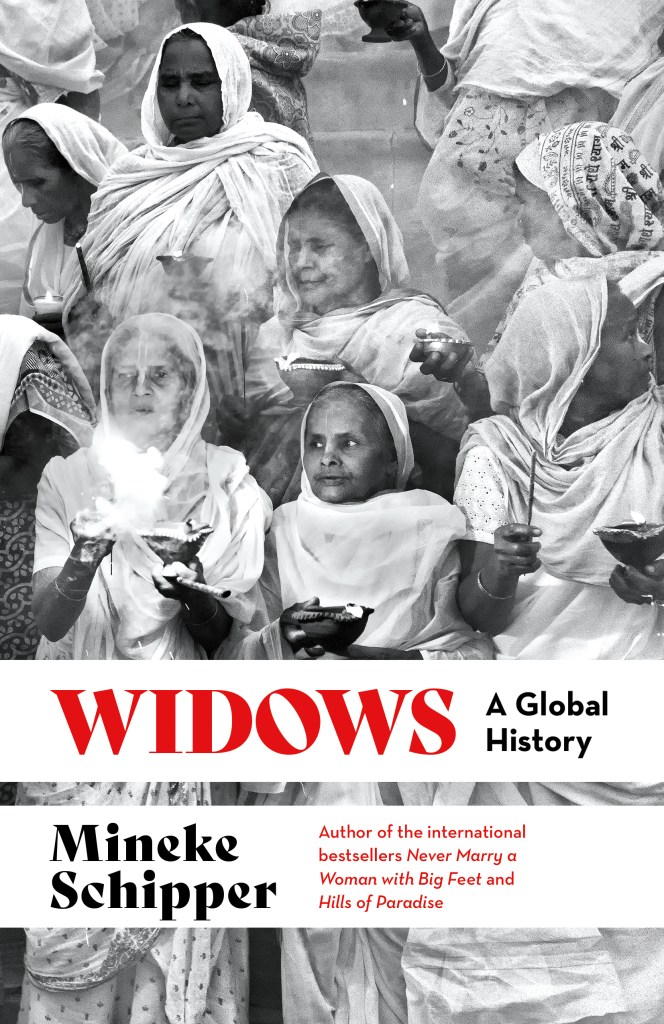
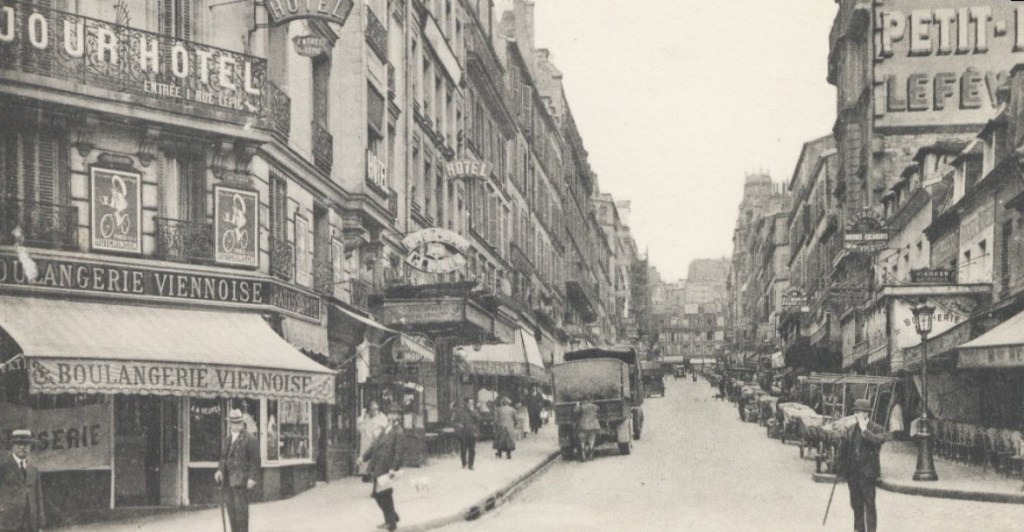

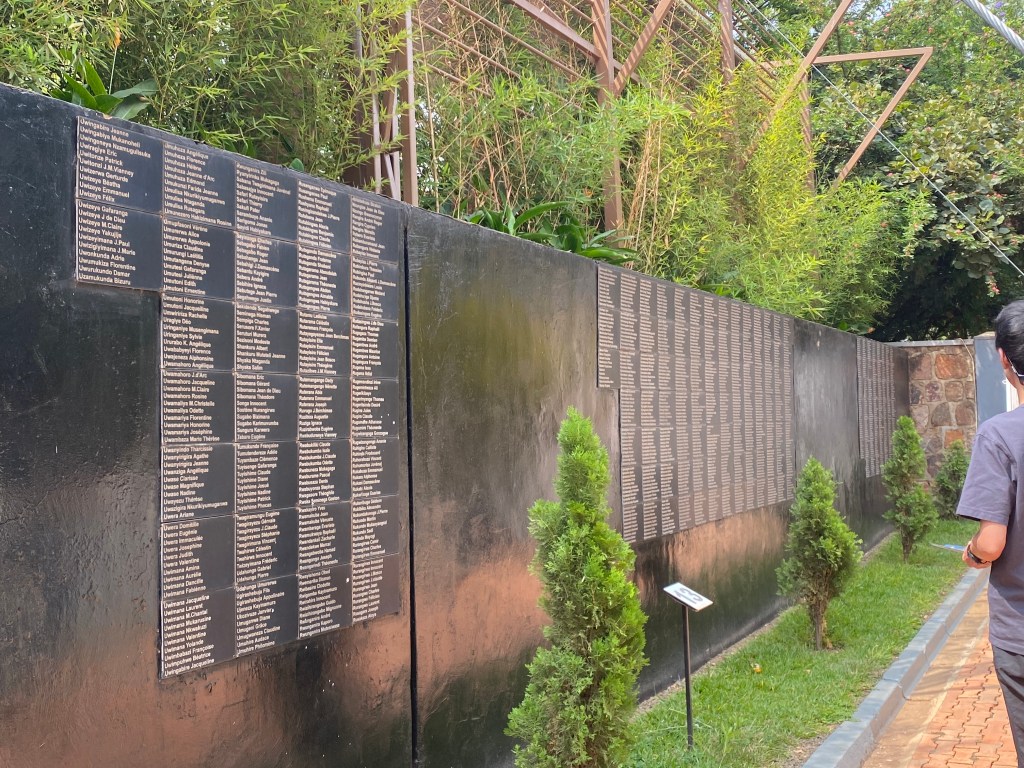


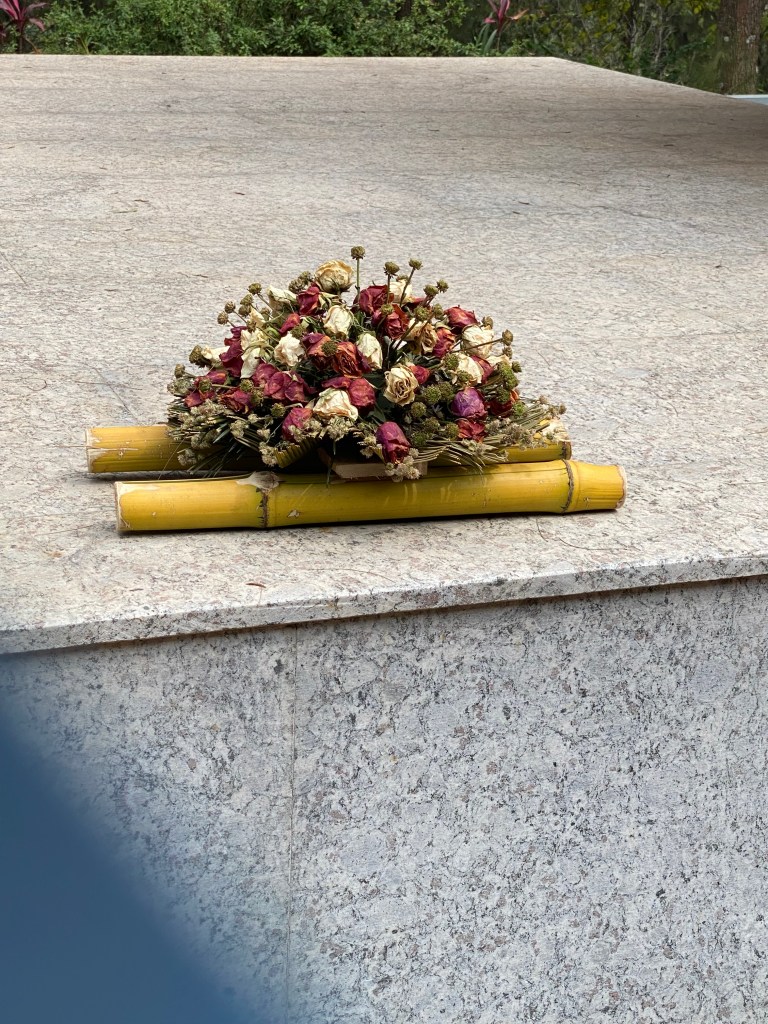



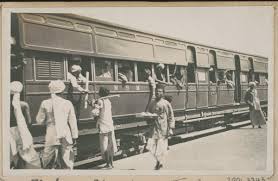

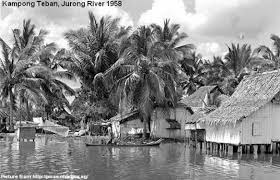


 Borderless