I’m upstate New York, something like a hundred miles south
of Chase Twichell, a Zen poet I greatly admire, and once actually met.
She hated me (some poets will, other poets…?), but that doesn’t matter.
What does matter is, I think, that goldfinch there—the first
I’ve ever seen—on the disc of a sunflower, pecking away at the seeds,
cracking some, dropping others.
That’s the way it is with seeds.
AN ISLAND IN GREECE
Whatever had been there must have fallen among the soft corals … – Donna Masini
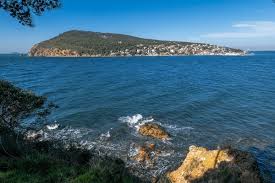
A former girlfriend posts a photo of the view from her desk window on an island in Greece—
all that blue …
You could imagine a hero falling into all that blue.
TRUTH
A strange old man Stops me, Looking out of my deep mirror. – Hitomaro (tr. Kenneth Rexroth)
how elevated the Japanese masters apprehending truth
in so few syllables whereas I fill paragraph after paragraph
page after page with words and more words and now and then
some punctuation
QUESTION
If you ask me you’re asking the wrong guy.
But what?
Tim Tomlinson is the author, most recently, of Listening to Fish: Meditations from the Wet World, a poetry-prose-photography hybrid collection concerning the perils facing the world’s coral reefs. He is the director of New York Writers Workshop, and he teaches in New York University’s Global Liberal Studies.
.
PLEASE NOTE: ARTICLES CAN ONLY BE REPRODUCED IN OTHER SITES WITH DUE ACKNOWLEDGEMENT TO BORDERLESS JOURNAL.
Ogden Nash is the finest. The snobs who dismiss his work are knobs and jerks whose heads should be examined and given an F minus. Of his talent they have not a tenth. I mean, flipping heck! Lacking depth is his strength.
And now for some HAIRY QUESTIONS… Werewolf? Whywolf? Howwolf? Whenwolf? Whatwolf? Whowolf?
Questions like those never can be answered because the facts are tactless and the fangs will leave you gutless on nights of a full moon. The lycanthropic topic is one best avoided and thus I will always avoid it.
I made myself a sandwich. I made it for my health. I am a self-made man despite my lack of wealth.
I made myself a promise I would be a bitter gourd cut into fancy segments by an even fancier sword.
Unlike okra I’m not slimy. If you ever dare to try me I’m a vegetable Cockney, I must say, “gourd blimey.”
Is that all? No, it certainly isn’t.
Lady Rickshaw claims we are all ghost ships on the streets of cities, drifting here and there.
That’s modern civilisation for you: please join the queue for the time machine.
But in more barbaric times in chillier climes…
Our cavemen noses glow in the cold. They never grow when we are old but snowmen’s noses linger for longer and their nostrils resemble craters.
The comet made from ice, interstellar, vast, oblivious, very fast, will strike that fellah dead when it hits his head.
And now let’s take a trip to ANCIENT GREECE
A gorgon’s internal organs must be clever forgeries. She turns heroes to stone, in pairs or if they’re alone, and when destiny calls and Greece finally falls those statues will be taken to Rome, their new home.
But the gorgon’s heart will never beat a rhythm you can dance to. It won’t thump like a man-bull’s hoof-shaped shoes, that’s true. No swirling sonic brews amuse our motley crews.
I’ve had better days lost in this maze: one time I almost found my way out, said the Minotaur…
Fenugreek Mythology featuring Hercules and Coriander leaves, Turmeric and Ulysses, Centaurs and Bottle Gourds on a bed of saffron rice is nicer to devour than plain old Greek mythology.
Tell me honestly: have you ever seen A GHOST?
Death’s anniversary, is a ghost’s birthday: blowing out cake candles with supernatural breezes he teases the ectoplasm, a professional phantasm.
Are spooks international?
I am turning Japanese after a sneeze because some wasabi went up my nose. Kimonos are my clothes.
Also, I play shogi with my toes. (Shogi is a kind of chess: I’m glad to get this off my chest).
Now let’s have a SELF-REFERENTIAL HAIKU
Counting syllables when confronted with haiku ruins the effect.
That’s done. Where else can we find our fun?
Do you know the tale of Patriarchy and Mehitabel? Do you know the tail that twitches on the windowsill?
The proof is in the pudding, or so they say, but I think I know a better way: the waterproof is in the puddling duck.
A vestige of a visage? My face is the place where my luck never runs out. It may lack grace, a waste of features belonging to other creatures, but each to their own.
The philosopher doesn’t like my tone: he tells me to ponder harder but not to think about swamp imps named Marsha. Easily done: I don’t know anyone with that name.
Harsher, he calls me timid, says I am a coward. Coward? But how? I don’t know the meaning of that word but I can work it out and applied to me it’s quite absurd. It means to move in the direction of a cow, or many cows, a herd.
Have mercy if you’re thirsty. Be ruthless if you’re toothless.
Do farm girls grow on you over time, seasonally?
A question I can’t answer because I am a scarecrow. No one planted me, I do not grow. I do not know a single thing.
But I can take a guess about the mess made by guests at dinnertime. Billabong Monkeys dunk their feet in the soup in groups much larger than gorillas are long.
Is that a SONG? Somehow, I don’t think so.
And now let’s have some Soliloquies for Stringless Guitars.
Kiss her through the mask. Miss her through the cask.
Foxglove Alley. Weasel Stockings. Garter Snakes, real and fake. Rotten Shed and Rusty Rake. I venture down the Cul-de-Sac of Frogs. I lost my way in the fogs.
That isn’t fog: it’s sand. That’s no frog: it’s a panda. Are you an understander? There is no great demand for sand disguised as mist and so we insist you redo the list of things you wish to purchase in the sopping shops that underwater lie.
Swinging on a garden gate, it’s far too late to palpitate at sunset but the day’s still too early to fly away and so you may barbaric be, barbaric bee, barbaric beer.
Beer comes in at the mouth. Jokes come in at the ear. Foam comes out of the nose. POOR ATTILA lost his clothes during a drunken stupor. It’s not ideal but he is super.
Attila was very short. Only one metre tall and nocked with battle scars at one centimetre intervals. No wonder he was such an effective ruler!
He wanted his wife to call him ‘Darling’ in the marriage bed but she insisted on calling him ‘Hun’ instead.
Oh dear! Have no fear: King Lear has shed a tear that splashes on the lashes of the whip that thickens cream in dreams.
When I was younger I had a narrow mind and only thought of narrow things: tight corridors, blocked canals, mountain ledges, malnourished gulls, ladders designed for stick insects, crevices into which no man could fall.
But now I am older and think only of wide things like canyons and gulfs, the open mouths that shout bravo at gigs, the taste in literature of well-read people, the square bases of the mighty steeples perched on churches in historical towns, the flapping gowns of aristocratic vamps, the pipe bowl of my eccentric gramps and the prehistoric snouts of pigs snuffling for unripe but fallen figs.
Listen closely, my dear…
My love for you might sound hyperbolic to hyperactive alcoholics. But it will sound perfectly fine to good romantic folks.
Now here’s a thing: sea roofs on the inside are called sea lings.
Freshwater otters in Goa. Salty authors in the shower. Both are so clean but only the latter dare dream of rivers of cash. The former dream only of fish.
FOR A FLUTE?
Love for a flute is holy love because a flute without holes is a stick and love for sticks makes me sick but flutes have holes thus my stomach will settle at the base of the kettle and I will laugh: tea-hee cough-hee.
The frozen lion thaws before he roars.
A thaw in the old ball bearings and the machinery of his desire began working again.
The machine marks time like a strict examiner puffing out his metal cheeks in the weeks before the summer holidays.
Do machines really play the drums?
As a rule of thumb, yes! Keeping the beat with steel feet. How neat. What a treat. The soul of the dance is deep in the soles. The heels heal the heart.
We have our whole lifetimes A HEAD of us in which to try out new hairstyles, she said. She knew what she was talking about. The barber’s wife.
The gentle love drizzle puzzles the riddler. The lion is sizzling in the meri jaan frying pan over the fire of our heartfelt desire.
And that’s the end of the line for the wandering rhymes and the Nomads of the Bone will soon end up back home.
*meri jaan is an endearment in Hindi meaning my life
Rhys Hughes has lived in many countries. He graduated as an engineer but currently works as a tutor of mathematics. Since his first book was published in 1995 he has had fifty other books published and his work has been translated into ten languages.
.
PLEASE NOTE: ARTICLES CAN ONLY BE REPRODUCED IN OTHER SITES WITH DUE ACKNOWLEDGEMENT TO BORDERLESS JOURNAL
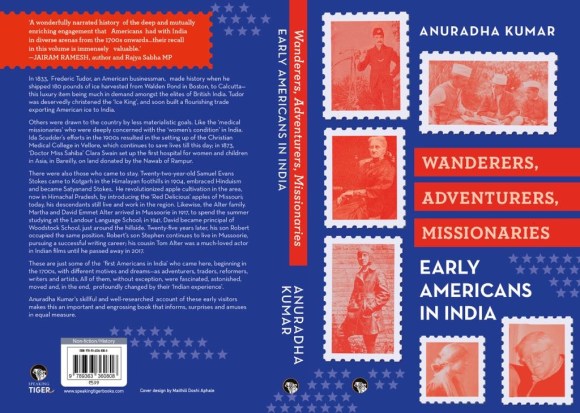
A review of Anuradha Kumar’s Wanderers, Adventurers, Missionaries: Early Americans in India (Speaking Tiger Books) and an interview with the author
Migrants and wanderers — what could be the differences between them? Perhaps, we can try to comprehend the nuances. Seemingly, wanderers flit from place to place — sometimes, assimilating bits of each of these cultures into their blood — often returning to their own point of origin. Migrants move countries and set up home in the country they opt to call home as did the family the famous Indian actor, Tom Alter (1950-2017).
Anuradha Kumar’s Wanderers, Adventurers, Missionaries: Early Americans in India captures the lives and adventures of thirty such individuals or families — including the Alter family — that opted to explore the country from which the author herself wandered into Singapore and US. Born in India, Kumar now lives in New Jersey and writes. Awarded twice by the Commonwealth Foundation for her writing, she has eight novels to her credit. Why would she do a whole range of essays on wanderers and migrants from US to India? Is this book her attempt to build bridges between diverse cultures and seemingly diverse histories?
As Kumar contends in her succinct introduction, America and India in the 1700s were similar adventures for colonisers. In the Empire Podcast, William Dalrymple and Anita Anand do point out that the British East India company was impacted in the stance it had to colonisers in the Sub-continent after their experience of the American Revolution. And America and India were both British colonies. They also were favourites of colonisers from other European cultures. Just as India was the melting pot of diverse communities from many parts of the world — even mentioned by Marco Polo (1254-1324) in The Kingdom of India — America in the post-Christopher Columbus era (1451-1546) provided a similar experience for those who looked for a future different from what they had inherited. The first one Kumar listed is Nathaniel Higginson (1652-1708), a second-generation migrant from United Kingdom, who wandered in around the same time as British administrator Job Charnock (1630-1693) who dreamt Calcutta after landing near Sutanuti[1].
Kumar has bunched a number of biographies together in each chapter, highlighting the commonality of dates and ventures. The earliest ones, including Higginson, fall under ‘Fortune Seekers From New England’. The most interesting of these is Fedrick Tudor (1783-1864), the ice trader. Kumar writes: “In Calcutta, Dwarkanath Tagore, merchant and patron of the arts (Rabindranath Tagore’s grandfather), expressed an interest to involve himself in ice shipping, but Tudor’s monopoly stayed for some decades more. Tagore was part of the committee in Calcutta along with Kurbulai Mohammad, scion of a well-established landed family in Bengal, to regulate ice supply.”
Also associated with the Tagore family, was later immigrant Gertrude Emerson Sen (1890-1982, married to Boshi Sen). She tells us, “Tagore wrote Foreword to Gertrude Emerson’s Voiceless India, set in a remote Indian village and published in 1930. Nobel Laureate Rabindranath Tagore called Emerson’s efforts, ‘authentic’.” She has moved on to quote Tagore: “The author did not choose the comfortable method of picking up information from behind lavish bureaucratic hospitality, under a revolving electric fan, and in an atmosphere of ready-made social opinions…She boldly took in on herself unaided to enter a region of our life, all but unexplored by Western tourists, which had one great advantage, in spite of its difficulties, that it offered no other path to the writer, but that of sharing the life of the people.’” Kumar writes of an Afro-American scholar, called Merze Tate who came about 1950-51 and was also fascinated by Santiniketan as were some others.
Another name that stuck out was Sam Higginbottom, who she described as “the Farmer Missionary” for he was exactly that and started an agricultural university in Allahabad. Around the same time as Tagore started Sriniketan (1922), Higginbottom was working on agricultural reforms in a different part of India. In fact, Uma Dasgupta mentions in A History of Sriniketan: Rabindranath Tagore’s Pioneering work in Rural Reconstruction that Lord Elimhurst, who helped set up the project, informed Tagore that “another Englishman” was doing work along similar lines. Though as Kumar has pointed out, Higginbottom was a British immigrant to US — an early American — and returned to Florida in 1944.
There is always the grey area where it’s difficult to tie down immigrants or wanderers to geographies. One such interesting case Kumar dwells on would be that of Nilla Cram Cook, who embraced Hinduism, becoming in-the process, ‘Nilla Nagini Devi’, as soon as she reached Kashmir with her young son, Sirius. She shuttled between Greece, America and India and embraced the arts, lived in Gandhi’s Wardha ashram and corresponding with him, went on protests and lived like a local. Her life mapped in India almost a hundred years ago, reads like that of a free spirit. At a point she was deported living in an abject state and without slippers. Kumar tells us: “Her work according to Sandra Mackey combined ‘remarkable cross-cultural experimentation’ and ‘dazzling entrepreneurship.’”
The author has written of artists, writers, salesmen, traders (there’s a founder/buyer of Tiffany’s), actors, Theosophists, linguists fascinated with Sanskrit, cyclists — one loved the Grand Trunk Road, yet another couple hated it — even a photographer and an indentured Afro-American labourer. Some are missionaries. Under ‘The Medical Missionaries: The Women’s Condition’, she has written of the founders of Vellore Hospital and the first Asian hospital for women and children. Some of them lived through the Revolt of 1857; some through India’s Independence Movement and with varied responses to the historical events they met with.
Kumar has dedicated the book to, “…all the wanderers in my family who left in search of new homes and forgot to write their stories…” Is this an attempt to record the lives of people as yet unrecorded or less recorded? For missing from her essays are famous names like Louis Fischer, Webb Miller — who were better known journalists associated with Gandhi and spent time with him. But there are names like Satyanand Stokes and Earl and Achsah Brewster, who also met Gandhi. Let’s ask the author to tell us more about her book.
Anuradha Kumar
What made you think of doing this book? How much time did you devote to it?
These initially began as essays for Scroll; short pieces about 1500-1600 words long. And the beginnings were very organic. I wrote about Edwin Lord Weeks sometime in 2015. But the later pieces, most of them, were part of a series.
I guess I am intrigued by people who cross borders, make new lives for themselves in different lands, and my editors—at Scroll and Speaking Tiger Books—were really very encouraging.
After I’d finished a series of pieces on early South Asians in America, I wanted to look at those who had made the journey in reverse, i.e., early Americans in India, and so the series came about, formally, from December 2021 onward. I began with Thomas Stevens, the adventuring cyclist and moved onto Gertrude Emerson Sen, and then the others. So, for about two years I read and looked up accounts, old newspapers, writings, everything I possibly could; I guess that must mean a considerable amount of research work. Which is always the best thing about a project like this, if I might put it that way.
What kind of research work? Did you read all the books these wanderers had written?
Yes, in effect I did. The books are really old, by which I mean, for example, Bartolomew Burges’ account of his travels in ‘Indostan’ written in the 1780s have been digitized and relatively easy to access. I found several books on Internet Archive, or via the interlibrary loan system that connects libraries in the US (public and university). I looked up old newspapers, old magazine articles – loc.gov, archive.org, newspapers.com, newspaperarchive.com, hathitrust.org and various other sites that preserve such old writings.
You do have a fiction on Mark Twain in India. But in this book, you do not have very well-known names like that of Twain. Why?
Not Twain, but I guess some of the others were well-known, many in their own lifetime. Satyanand Stokes’ name is an easily recognisable still especially in India, and equally familiar is Ida Scudder of the Vellore Medical College, and maybe a few others like Gertrude Sen, and Clara Swain too. I made a deliberate choice of selecting those who had spent a reasonable amount of time in India, at least a year (as in the case of Francis Marion Crawford, the writer, or a few months like the actor, Daniel Bandmann), and not those who were just visiting like Mark Twain or passing through. This made the whole endeavour very interesting. When one has spent some years in a foreign land, like our early Americans in India, one arguably comes to have a different, totally unique perspective. These early Americans who stayed on for a bit were more ‘accommodating’ and more perceptive about a few things, rather than supercilious and cursory.
And it helped that they left behind some written record. John Parker Boyd, the soldier who served the Nizam as well as Holkar in Indore in the early 1800s, left behind a couple of letters of complaint (when he didn’t get his promised reward from the East India Company) and even this sufficed to try and build a complete life.
How do these people thematically link up with each other? Do their lives run into each other at any point?
Yes, I placed them in categories thanks to an invaluable suggestion by Dr Ramachandra Guha, the historian. I’d emailed him and this advice helped give some shape to the book, else there would have been just chapters following each other. And their lives did overlap; several of them, especially from the 1860s onward, did work in the same field, though apart from the medical missionaries, I don’t think they ever met each other – distances were far harder to traverse then, I guess.
What is the purpose of your book? Would it have been a response to some book or event?
I was, and am, interested in people who leave the comforts of home to seek a new life elsewhere, even if only for some years. Travelling, some decades ago, was fraught with risk and uncertainty. I admire all those who did it, whether it was for the love of adventure, or a sense of mission. I wanted to get into their shoes and see how they felt and saw the world then.
Is this because you are a migrant yourself? How do you explain the dedication in your book?
I thought of my father, and his cousins, all of whom grew up in what was once undivided Bengal. Then it became East Pakistan one day and then Bangladesh. Suddenly, borders became lines they could never cross, and they found new borders everywhere, new divisions, and new homes to settle down in. They were forced to learn anew, to always look ahead, and understand the world differently.
When I read these accounts by early travellers, I sort of understood the sense of dislocation, desperation, and sheer determination my father, his cousins felt; maybe all those who leave their homes behind, unsure and uncertain, feel the same way.
You have done a number of non-fiction for children. And also, historical fiction as Aditi Kay. This is a non-fiction for adults or all age groups? Do you feel there is a difference between writing for kids and adults?
I’d think this is a book for someone who has a sense of history, of historical movements, and change, and time periods. A reader with this understanding will, I hope, appreciate this book.
About the latter half of your question, yes of course there is a difference. But a good reader enters the world the writer is creating, freely and fearlessly, and I am not sure if age decides that.
You have written both fiction and non-fiction. Which genre is more to your taste? Elaborate.
I love anything to do with history. Anything that involves research, digging into things, finding out about lives unfairly and unnecessarily forgotten. The past still speaks to us in many ways, and I like finding out these lost voices.
What is your next project? Do you have an upcoming book? Do give us a bit of a brief curtain raiser.
The second in the Maya Barton-Henry Baker series. In this one, Maya has more of a lead role than Henry. It’s set in Bombay in the winter of 1897, and the plague is making things scary and dangerous. In this time bicycles begin mysteriously vanishing… and this is only half the mystery!
Narrative by Meredith Stephens & Photographs by Alan Noble
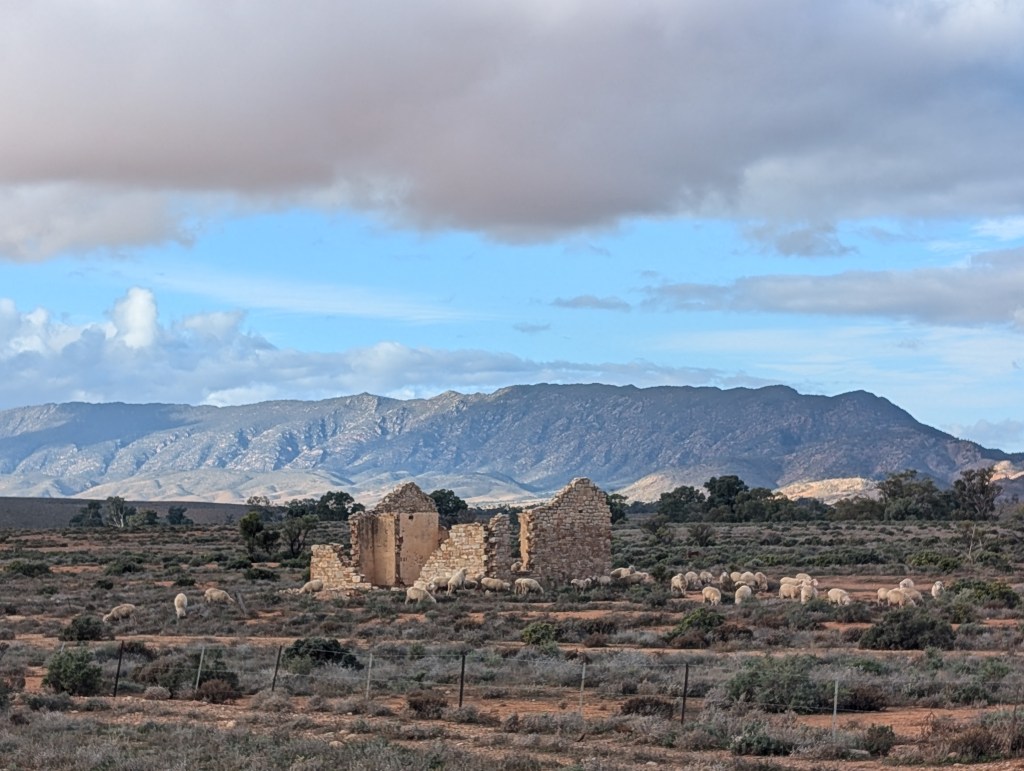
I have read about overtourism in Spain and Greece. Locals have been overwhelmed with the visitors, and some even displayed signs for tourists to go home. According to Fortune magazine (17 July 2024), some locals in Barcelona turned on tourists with water pistols, and others in the Canary Islands embarked on a hunger strike in response to the numbers of tourists. Images of overtourism in Santorini, Greece prompted me to search for an unpopulated area, and I didn’t have to look much further than our own state of South Australia. We hoped to visit deserted towns, dotted with ruins, where there are more sheep than people.
Alex, Verity and I headed out of Adelaide on a bleak wintery day, caravan in tow, to the outback. First stop was Burra, a former mining town where copper was mined from 1845 until 1877. Copper brought prosperity to the state of South Australia saving it from bankruptcy. The small town centre featured a proudly-standing rotunda. Businesses were open, and there were grand buildings and churches which overwhelmed this small town, standing testament to a thriving past.
The caravan was too big for a parking spot, so we parked it parallel to the kerb straddling several spots. We entered the tourist bureau, and as there was no-one in line, headed straight to the desk. We were greeted warmly by the assistant, who handed us a map and explained the various places where we could stay overnight in a caravan. There were free sites, a caravan park, and if you bought a meal at the pub you could camp in their grounds.
Then she pointed out the many historic sites on the map, fixing her eyes on me with a wide smile. I could sense Alex pulling away ever so slightly, as he was anxious to secure a caravan site and do some sightseeing before nightfall, but I was captivated by the enthusiasm of the guide and tried to remember as much as I could of what she was telling us. We headed to one of the recommended sites for the night and investigated the former mining sites with original equipment that had been shipped out from Cornwall, England, in the1800s. We were the only tourists at the site.
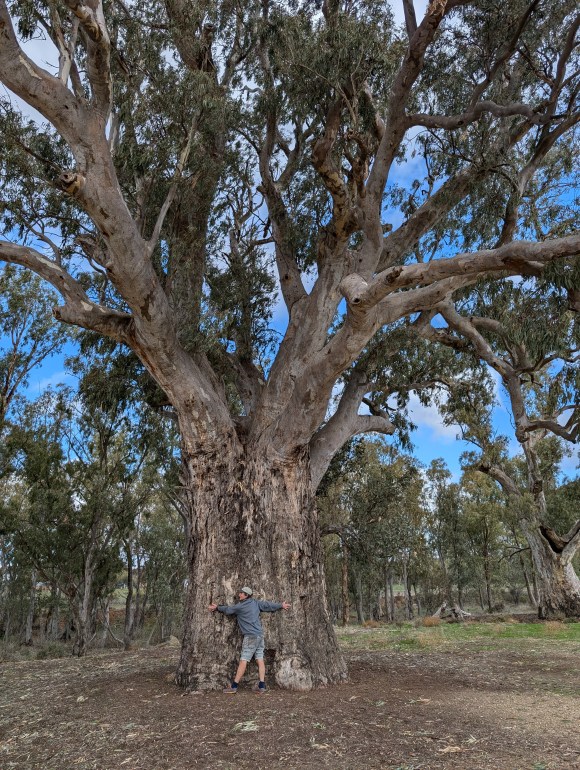
The next day we drove through Peterborough and Orroroo. We entered the cafe in Orroroo for lunch and asked the assistant what there was to see there. She gave us a map and explained that we absolutely had to see a spectacularly large 500-year-old tree on the outskirts of town.
Tree outside Orroroo
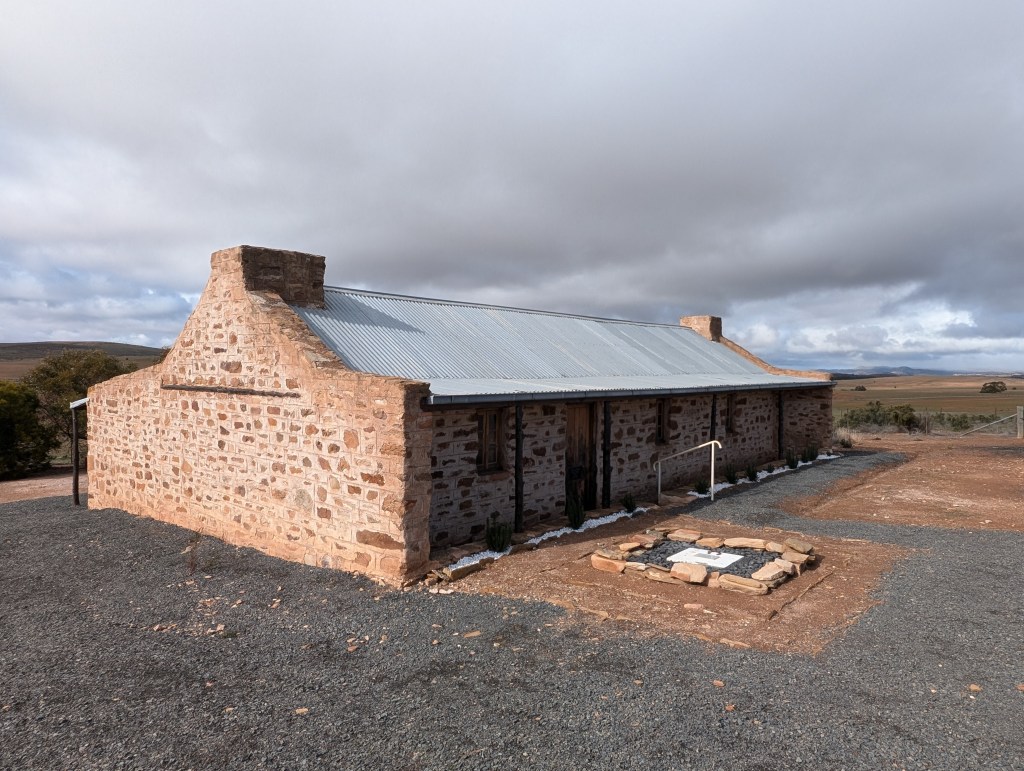
Next, we headed to the very small town of Hallet. There at the general store we asked for a key which would open the door to the now deserted birthplace of the polar explorer and aviator, Sir Hubert Wilkins. It was the first time we had been given a key to let ourselves into a tourist attraction, and we felt very privileged. We drove twenty kilometres to the home along dirt roads. Again, we were the only visitors. We made our way to the front door and unlocked it. This home, formerly rubble, had been lovingly restored by the Australian Geographic Society as a tribute to the explorer.
Ruins in the OutbackRestored home
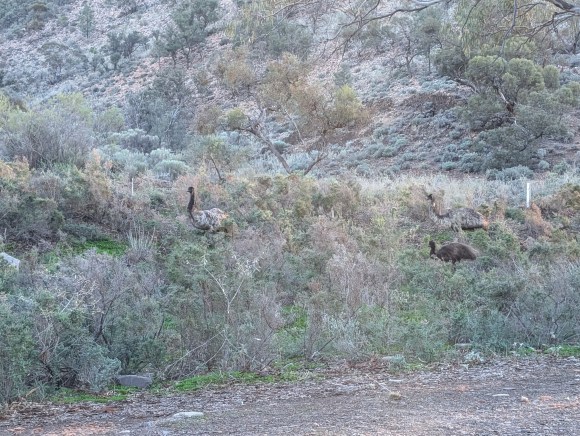
We continued to the Parachilna Gorge in the Flinders Ranges where we spent the night. Alex made a campfire, and we dined outside. Again, we were surrounded by ancient trees with generous girths in a dry riverbed. In the morning Alex woke to spot families of emus passing by, camouflaged by the foliage.
Emu family in Parchina Gorge
We continued onto the deserted nineteenth-century town of Farina that day. People started to abandon the town in the late 1800s, and the last of the inhabitants had left by the 1960s. Fortunately volunteers are keen to preserve the history and the ruins and manage the town during the school holidays. We were given a hearty welcome by a volunteer at the entrance to the bakery and received a map of the town.
Finally, on the 700kilometre drive back to Adelaide, we were low on diesel and made a brief detour to a small town off the highway. After putting the diesel in the car, I went inside to pay.
“Thanks, darling!” the cashier gushed.
“I like your dog! Is he a kelpie?” I asked.
Then I was given an enthusiastic account of how the kelpie had been rescued from a shelter. I think the owners may have been deprived of human company and were glad to see a new face. Alex came in because he was wondering what had become of me, engrossed in conversation. We had the impression that we were their only clients for the day. Eventually, I managed to extricate myself.
On this trip we had no experience of overtourism. Rather we visited sites where few tourists could be seen. Guides were so enthusiastic that they fawned over us. One reason that there were so few tourists is that it was the middle of winter and there was intermittent rain. Another was the geographical isolation of the outback. Australia is distant from countries with large populations. South Australia is distant from the large Australian cities on the east and west coasts and the outback further still—although closer to Adelaide than any other Australian capital city.
The landscape of the outback feels as different as another country. Our city, Adelaide, has a multitude of houses and new freeways, but the outback has few houses and many ruins. These ruins attest to a time of optimism when settlers believed the rains would be consistent. We enjoy hitching up the caravan and driving to the outback, where there are so few tourists that the sight of another human being results in an effusive welcome.
.
Meredith Stephens is an applied linguist from South Australia. Her recent work has appeared in Syncopation Literary Journal, Continue the Voice, Micking Owl Roost blog, The Font – A Literary Journal for Language Teachers, and Mind, Brain & Education Think Tank. In 2024, her story Safari was chosen as the Editor’s Choice for the June edition of All Your Stories.
PLEASE NOTE: ARTICLES CAN ONLY BE REPRODUCED IN OTHER SITES WITH DUE ACKNOWLEDGEMENT TO BORDERLESS JOURNAL
Poetry, prose — all art forms — gather our emotions into concentrates that distil perhaps the finest in human emotions. They touch hearts across borders and gather us all with the commonality of feelings. We no longer care for borders drawn by divisive human constructs but find ourselves connecting despite distances. Strangers or enemies can feel the same emotions. Enemies are mostly created to guard walls made by those who want to keep us in boxes, making it easier to manage the masses. It is from these mass of civilians that soldiers are drawn, and from the same crowds, we can find the victims who die in bomb blasts. And yet, we — the masses — fight. For whom, for what and why? A hundred or more years ago, we had poets writing against wars and violence…they still do. Have we learnt nothing from the past, nothing from history — except to repeat ourselves in cycles? By now, war should have become redundant and deadly weapons out of date artefacts instead of threats that are still used to annihilate cities, humans, homes and ravage the Earth. Our major concerns should have evolved to working on social equity, peace, human welfare and climate change.
One of the people who had expressed deep concern for social equity and peace through his films and writings was Satyajit Ray. This issue has an essay that reflects how he used art to concretise his ideas by Dolly Narang, a gallery owner who brought Ray’s handiworks to limelight. The essay includes the maestro’s note in which he admits he considered himself a filmmaker and a writer but never an artist. But Ray had even invented typefaces! Artist Paritosh Sen’s introduction to Ray’s art has been included to add to the impact of Narang’s essay. Another person who consolidates photography and films to do pathbreaking work and tell stories on compelling issues like climate change and helping the differently-abled is Vijay S Jodha. Ratnottama Sengupta has interviewed this upcoming artiste.
Reflecting the themes of welfare and conflict, Prithvijeet Sinha’s essay takes us to a monument in Lucknow that had been built for love but fell victim to war. Some conflicts are personal like the ones of Odbayar Dorj who finds acceptance not in her hometown in Mongolia but in the city, she calls home now. Jun A. Alindogan from Manila explores social media in action whereas Eshana Sarah Singh takes us to her home in Jakarta to celebrate the Chinese New Year! Farouk Gulsara looks into the likely impact of genetic engineering in a world already ripped by violence and Devraj Singh Kalsi muses on his source of inspiration, his writing desk. Meredith Stephens tells the touching story of a mother’s concern for her child in Australia and Suzanne Kamata exhibits the same concern as she travels to Happy Village in Japan to meet her differently-abled daughter and her friends.
As these real-life narratives weave commonalities of human emotions, so do fictive stories. Some reflect the need for change. Fiona Sinclair writes a layered story set in London on how lived experiences define differences in human perspectives while Parnika Shirwaikar explores the need to learn to accept changes set in her part of the universe. Spandan Upadhyay explores the spirit of the city of Kolkata as a migrant with a focus on social equity. Both Paul Mirabile and Naramsetti Umamaheswararao write stories around childhood, one set in Europe and the other in Asia.
Do pause by our contents page for this issue and enjoy the reads. We are ever grateful to our ever-growing evergreen readership some of whom have started sharing their fabulous narratives with us. Thanks to all our readers and contributors. Huge thanks to our wonderful team without whose efforts we could not have curated such valuable content and thanks specially to Sohana Manzoor for her art. Thank you all for making a whiff of an idea a reality!
Vasiliki and Nico boarded the passenger steamer for Burgaz Island at Sirkeçi pier at Istanbul. As the steamer moved out slowly from the crowded port, Nico gazed at the dreamy silhouette of this storiedcity where for four days they had woven in and out of lanes and alleys, gardens and markets, prayed in the Greek churches.
They had left Hydra six days ago by boat and bus, arriving in Istanbul after a night spent in Thessaloniki. Now they were off to Vasiliki’s island of birth. He had never been back since his departure at the age of twelve, and the thought of returning excited him. “Look grandpa at the setting sun over Topkapı Palace,” shouted an elated Nico. And indeed Nico’s elation was not feigned.
The cypress trees and domes of the mosques and minarets were outlined against a sky alive with streaks of reddish flames whose reflections could be discerned in the unruffled waters of the Marmara Sea. The crenelated walls of Topkapı Palace undulated eerily in the ruddy, pastel twilight as did the silhouettes of the many domed mosques that embossed the mighty palace with a pinkish tinge. Nico stood hypnotized at the stern imagining himself as part of one of the yarns of A Thousand and One Nights. A sensation of estrangement, of magical transport had arrested his movements. Suddenly a flock of seagulls descended screaming into the wake of the steamer, snatched as many fish as possible and flew off towards Galata Tower, which they circled and circled until vanishing in the evening shadows beyond the hilly banks of the Bosphorus Strait, the yalıs[1], Dolmabahçe[2] and Berlerbeyi Palace.
“A fairytale city, Nico.” Vasiliki said, interrupting his grandson’s spellbound state.
“Yes, grandpa. It looks like one of the coloured pages of my A Thousand and One Nights.”
Vasiliki chuckled. “Perhaps it is, my boy.” And they both contemplated that marvellous city until it, too, disappeared under the orb of the sea …
They disembarked two hours later …
“Burgaz ,” sighed Vasiliki, stepping foot on to the soil of his birth. He took Nico’s hand and hurried him from the throngs of the port into the quiet of the main plaza where the statue of Saït Faïk greeted them. “There he is, Nico, one of the finest poets and short-story writers of the Turkish language.” Nico moved closer :
“He looks very thoughtful, grandpa. What do you think he’s thinking about?”
“That’s a good question. But for now we have to get a horse-drawn carriage to Zorba’s home before nightfall.”
For some unknown reason Nico’s thoughts roamed back to his Nefteli. “Do you think the Nefteli lay anchor at this island on her voyage to China, grandpa?” Vasiliki knitted his brows.
“I’m not so sure. She would have taken a more westerly route.” Nico nodded, unable, however, to imagine his beautiful Nefteli never having moored at this beautiful island with such a famous poet standing so thoughtful in the middle of the plaza. Whilst the boy ruminated these thoughts, Vasiliki hailed a horse-drawn carriage, and in broken Turkish directed the driver to take them to Soknar Sokak [3]located on the western side of the island.
“You speak good Turkish, grandpa,” Nico commented.
“My parents spoke it at home, but when we left Burgaz to settle in Greece, they chose to speak more Greek than Turkish. The Greeks never took a liking to us Greeks who lived in Turkey.”
“Why?”
“Oh, that’s a long and sad story. I’m too happy to be here on Burgaz to tell you now.” So Nico was left unsatisfied. “My brother’s friend’s name is Zorba,” Vasiliki continued. “He’s in the textile business in Istanbul. He comes to Greece often. His wife died two years ago and now lives alone in a big villa on a hillside overlooking the sea. He’s very wealthy and in his spare time writes poetry.”
“Like Saït Faïk?” Vasiliki puckered his lips.
“No one can write poetry like someone else, Nico. If that happens, it’s like imitating a poet’s poems and you shouldn’t do that. Anyway, you’ll soon meet him. And you’ll also meet my father’s friend Abi Din Bey, a Turkish Alevite who lives down on the beach. He knew Saït very well. He writes poetry, too. I remember one of his verses: ‘I wished to smell a rose./It feigned reluctance./No, it said, bring my scent …’ Oh, I forgot the rest.”
“But why did the rose not want to be smelt?” asked Nico curiously.
“I have no idea, my boy. It’s only poetry. Besides, I’m a fisherman, I haven’t had much instruction on those things.” And on that unscented note, Nico espied a flock of seagulls chasing the early evening cloudlets galloping far off towards the East.
They arrived. Vasiliki paid the driver and up they climbed a long flight of wooden stairs through a well-kept garden of intoxicating scents. Above them loomed a massive sun-bleached white, wooden pillared portico, above which rose three-balconed stories, surmounted by two towering turrets in the middle of which spiralled even higher a fretted gable. Nico stood awestruck as if he had come upon one of Zeus’s palaces. A minute later a huge, flabby-faced, moustachioed man burst through the front portico door to greet them in broken Greek.
“Welcome! Welcome! Come into my humble home, please,” Zorba gesticulated theatrically, dragging both guests into his home, which in the eyes of his two guests was far from humble …
Dragged I say through the lofty portico whose colonnade must have counted over twenty Doric-like pillars, then into a vestibule at the end of which a floating double staircase wound breezily above a bubbling marble fountain then on to a cambered, U-shaped landing bedecked with azaleas, wisteria and dwarfish palm plants. Hanging on the walls of the vestibule and the cambered landing were landscape paintings and several stately portraits. Zorba immediately escorted them into a brightly lit drawing-room whose frescoed ceiling teemed with Greek heroes and from which a shone a gigantic chandelier. Deep velvet-red draperies afforded a nineteenth century posh atmosphere, an atmosphere of opulent repose. They were seated on a plush, baize-covered ottoman. Refreshments were hurried into the room by a maid, set delicately on a superb pearl-inlaid coffee-table.
“Welcome to Burgaz, Vasiliki and Nico,” Zorba beamed, delicately seeping a large glass of mango juice. “Where will be your first visit if I may ask?” Vasiliki set his mango juice down, licking his lips.
“To Abi Din Bey’s beach home,” replied Vasiliki.
Zorba frowned. “Rather a shabby place his cabin on the beach,” he retorted gruffly.
“Perhaps, but I must see him. You know, he was a very good friend to my father.”
“Yes … yes, of course,” grumbled Zorba, ostensibly displeased at the mention of the beach comber. “Whatever ! You are my guests here and may stay as long as you please.” He looked at Nico affectionately: “What a wonderful adventure for your grandson. To relive his grandfather’s and father’s past …”
“And who knows, Zorba … perhaps his future …”
Zorba, a bit puzzled by that remark, smiled a gold-toothed smile, nevertheless. The smile seemed to set his well-fed, pasty face aquiver.
“Excellent, Vasiliki. But now we must dine.” Zorba ushered his guests into the tapestry-hung adjoining dining room where a long table had been set with all the delicacies that Burgaz Island could offer : sumptuous mezes[4]: stuffed vine leaves, eggplant caviar, marinated red peppers, homus[5], followed by lentil soup, fish and köfte[6]. This gargantuan meal terminated with strawberry sorbet and künefe[7].Two hours laterVasiliki and Nico sat back in their red upholstered chairs utterly exhausted.
Refusing any liquor, Zorba showed his guests their enormous room on the first floor whose bay-window overlooked a dark stretch of forest which gradually merged with the slow-moving lights of the steamers and cargoes on the Marmara Sea. Vasiliki and Nico, after unpacking, fell asleep as soon as their heads touched the pillows.
They awoke at nine o’clock, washed and rushed down the elegant, floating staircase for a quick breakfast. They ate alone, Zorba having breakfasted very early in order to meet customers in Istanbul, so said the maid. They set out for Abi Din Bey’s beach home, a half-hour’s walk down a winding path through the wooded hillside.
The sound and smell of the sea below, the laughing seagulls above thrilled Nico with an unequivocal joy. He felt drawn into an adventure. Once on the beach, they veered to the right and in two or three minutes stood at the Alevite’s welcoming gate, open to all and sundry. Charging out of the front door of a flat-roofed, one-storey little house, a handsome, stalwart, balding man greeted them with so many handshakes and kisses on the cheeks. He led them inside his three-room home, built under an arching rock shelf, overhung with a thick network of running vines and bougainvillaea which dangled over the front walls of the house.
Nico was astonished at all the books strewn on the rug-covered floor or lying open on the arms of a worn-out sofa. A low, wooden table, where a tea-pot and glasses had been set, comprised the rest of Abi Din’s ‘drawing-room’ furniture. The walls lay bare of pictures and the two front pane less windows bore no curtains. One naked lightbulb hung limply from a rafter. Nico, seated on the sofa, stared at the bareness of Abi Din’s abode. He could not decide whether the poet lived in poverty or simplicity.
As if reading his thoughts, Abi Din Bey, who had since served them black tea, said in his deep, authoritative voice: “Simplicity remains the poet’s true companion. All he needs is the whistling of the wind, the lapping of the waves, the rustling of the leaves. The true poet touches reality with his or her ears more than the eyes before voicing that reality, poetically. But I will acknowledge that the poet opens his or her senses to the moon at night and to the horizon-filled fishermen tossing their nets at the edge of the briny sea in the day.”
“You have been afflicted with Saït Faïk’s poetic madness,” laughed Vasiliki, translating his friend’s words for Nico.
“Anyone who came into contact with Saït became a poet … good or bad I am not to judge ! Who else listened to the talking seaweed or the weeping mussels?” Vasiliki agreed with a nod then translated for his grandson.
“Grandpa, how can seaweed talk and mussels weep?”
“Well, poets can hear things that we cannot, Nico.”
After tea, Abi Din Bey led them out to his front garden where the fragrances of oleander and honeysuckle muddled Nico’s imagination, already running amok due to all this talk of weeping mussels and talking seaweed. Out beyond the wooden fence the glint of Marmara glowed turquoise.
Vasiliki and Abi Din Bey spoke of Vasiliki’s father and grandfather, of a time when Burgaz bathed in a mellow light of unruffled peace and perfumed tranquillity. “And now look — Istanbul’s ‘hippies’ camp on weekends in the forests and on the beaches littering, smoking and drinking. Tourists swarm the island as if it were la Côte d’Azure. If Saïk or your father were alive … “ Abi Din Bey would repeat … but would never finish …
Towards late afternoon after a pleasant nap in their host’s hammocks, Vasiliki and Nico left Abi Din Bey to his domestic chores to stroll along the beach, avoiding the vast wracks of seaweed. “Let’s walk up to the Monastery of the Transfiguration on Bayrak Tepe,” Vasiliki suggested. “It’s the highest spot on the island. The monastery was built in the XIXth century and has never changed, so my father told me. We can talk to the Pope and his wife, they’re Greek … well, Turkish Greek.”
“You said there’s a difference, grandpa.”
“You see, the Greeks who came from Turkey to settle in Greece were never really liked by the Greeks because of their way of speaking Greek and their Turkish customs.”
“Why?” the boy insisted. But at that moment they halted in their tracks. A shirtless and shoeless man was busy erecting little pyramidal piles of stones here and there on the beach. Before Nico could enquire about this curious occupation the man turned towards the sea, opened his muscular arms wide, and in an eerie, sing-song voice chanted:
“Women light the lamps of spirit with a blue light as they warm up coffee.
During the nights, in the darkness, on the peak of a mountain
a miller, his eyes closed,
sleeps, face down.
Villagers would come
To sell their copperware at the market,
To sell yogurt.
A naked child, begging in the street, was knee-deep in snow.
The man turned his back to the sea and resumed his Sisyphean labour …
“What did the man chant, grandpa?”
“A poem by Saït, I think. A sad poem. You know, the life of a fisherman is not easy, but the life of a poet is not to be romanticised. Outwardly life may seem merry and bright. But deep inside, Nico, a poet’s lot is not to be envied. Saït’s short stories and poetry are filled with solemnity. Zorba thinks he understands this solemnity. Abi Din Bey is less pretentious; he leads a simple, lonely life and reads Saït for comfort. This solemnity has offered him a gratifying livelihood. He liked Saït so much and sought his companionship. But Saïk chose alcohol for a companion. Abi Din is a religious man, he doesn’t drink alcohol. Alcohol should never be a poet’s companion.”
Nico said nothing as they trudged up Bayrak Tepe to the Greek monastery, where after tea and honey cakes with the pope and his wife, they hurriedly trekked down the opposite side of the island, keeping the sea to the right. Two hours later they reached Zorba’s hillside home before nightfall. The sky blazed a crimson red as the sun set under the waveless Marmara.
Dinner having finished, Zorba and Vasiliki were served wine in the drawing-room and Nico a glass of lemonade. Zorba, exceptionally cheerful after a fruitful day in Istanbul, stood, poured himself another glass of wine and recited a few verses of his poetry :
“Honey is certainly a special nourishment;
Is truly medicinal.
He who eats honey thinks soundly;
He who does not, thinks ignorantly.”
Zorba sat down absorbed in the silence of his guests. “How I try to imitate Saïk,” he sighed at length.
Zorba placed a pudgy hand to his heart: “Poets live to write and not write to live.”
Vasiliki agreed, heard the grandfather clock strike midnight, yawned and sleepily suggested that they be off to bed. Zorba acquiesced, promising a few more strophes the following night. A weary Vasiliki smiled perfunctorily …
Waking up with the larks, Vasiliki and Nico were served breakfast. Zorba had again left for Istanbul very early. The two tourists walked to the centre of town to visit Saint John the Baptist’s[9] church, then Saïk Faïk’s house-musuem and gardens. Saït’s former two-storey, balconeyed home rose into the blue island sky, the gable rising even higher than the palm trees that served as sentinels. The gardens were similar to Zorba’s — exceptionally well-kept. Inside, Nico was taken aback by the refined taste of the poet’s family: the exquisite, velvet cushioned chairs and sofas, the poet’s private library where many bookshelves contained poetry magazines, dictionaries and novels in Turkish, French and Greek. Nico surmised that the poet was a studious man.
“A very well-educated man,” whispered Vasiliki. “He translated too. His knowledge of languages inspired his short story and poetry writing.”
“Do you speak French, grandpa?”
“I’m afraid I don’t, my boy. You know, I’ve had little instruction. But you, Nico, look at those leather-bound volumes ; you may become a boat-building poet someday if you work hard at school.”
Nico’s little round eyes glowed a brilliant glow. How he loved to read, to touch the crispy pages of a book, to smell the print and paper. Spellbound by all this literature, he suddenly heard a fey voice :
The mysterious voice trailed off. Nico searched the room frantically for his grandfather. There he stood in front of a hanging portrait of Saït Faïk.
“Grandpa.”
“Yes, my boy.”
“I would like to be a poet.,” Nico asserted.
“A boat-building poet?”
“Yes, write poems and short stories like that man hanging on the wall. He has such a handsome face … a kind, smiling face. He must have been a gentleman.”
Vasiliki nodded. “I’ve no doubt he was. Those eyes speak the tremors of his soul, a soul filled with the love of life, all life : mineral, animal, vegetable, human.”
Nico screwed up his eyes which met those of Saït’s, a deep blue like the sea. Laughing eyes, like the seagulls’ … Five minutes later they stepped into the blazing Burgaz sun, white white …
The rest of the morning and afternoon was spent in Abi Din’s front garden, drinking tea, chatting about Burgaz fishermen. They ate grilled-cheese sandwiches and sardines for lunch.
The loquacious Abe Din turned to Nico: “A poet’s life has its highs and lows. It’s best to keep to the middle, no jealous rivals to spread scandal, no avaricious publishers to milk you like a cow. Thieves, all of them ! Just write poems, Nico. Don’t waste your energy on market reception, critic’s reviews or what publishers expect from you. Your poems speak for themselves. And do you know why ?”
Nico did not know why for two reasons: he couldn’t understand Turkish and he never wrote a poem. The animated man continued, nevertheless: “Because you organise the movement of the poem with your own voice, a poem is an activity not a product. Poems make poetry; poetry does not make poems. A poet has no regards for schools of poetry, for modes of poetry, for signs-of-the-time poetry. Writers of poetry express the signs of their times; writers of poems suggest images of untimely inspiration. Writers of poetry idolize poetic forms ; writers of poems organise their poems subjectively, free from poetic occult pedantry and cryptic complexity. Listen ! Listen to those outer and inner inspirations.”
Vasiliki translated his friend’s fiery tirade as best he could and when Nico had understood the ‘Listen! Listen!’ The obedient boy listened even harder. Abi Din Bey’s voice rose higher: “A poem is first heard in the heart then expressed by word of mouth or on paper. Open your ears wide, Nico, open them wide!” When those last words of wisdom were translated, Nico attempted to open his ears as wide as he could. It was not an easy task, much harder than opening his eyes wide …
When the sun began to set Vasiliki and Nico bid farewell to the poet, promising to return the following year. Little did they know that the solitary poet would pass from this world in the near future …
They spent four more nights as Zorba’s guests eating like kings, listening to their host’s business conquests and after-dinner poetry over a glass of wine or lemonade. They left Zorba on the long flight of steps, he waving good-bye with a pudgy hand as the horse-drawn carriage bounced his guests up and down towards Burgaz pier.
“Grandpa, I’m going to work hard at school and read Saït Faïk’s short-stories and poems.”
“We’ll find translations of them, Nico. I told you that Burgaz Island plays strange things on people who come here. Her soil inspires us. Her energy rises from the core of the earth into our hearts and spirits. Burgaz possesses a mystery that no one has ever solved.”
“Not even Saït Faïk, grandpa?” Vasiliki scratched his white beard.
“I have no answer to that one, my boy. Maybe he did solve it. Poems and stories were his livelihood, like my fishing, a daily labour of love and effort. Perhaps someday you’ll solve the mystery of Burgaz.”
“By boat-building and writing poems?” Vasiliki gazed up at the circling seagulls.
Nico was not sure. Meanwhile, ahead lay the pier and the steamer now steaming into port, smoke bellowing from her stack. Ropes had been thrown down to moor her as passengers straggled off and on. Grandfather and grandson rushed into the vortex of that rolling movement and disappeared within the bustling throngs …
[1] Wooden mansions or villas along the Bosphoros Strait.
[7] A sweet dessert made of angel hair, (kadaif), cheese, butter and topped off with honey sirop and crushed pistachios.
[8] Losely translated from ‘Bir Zamanlar’ ‘One Time’.
[9] Iohannas Prodromos in Greek. It was built in 1899.
[10] From Sait Faik’s poem ‘Masa’ ‘Table’, partially translated.
Paul Mirabile is a retired professor of philology now living in France. He has published mostly academic works centred on philology, history, pedagogy and religion. He has also published stories of his travels throughout Asia, where he spent thirty years.
.
PLEASE NOTE: ARTICLES CAN ONLY BE REPRODUCED IN OTHER SITES WITH DUE ACKNOWLEDGEMENT TO BORDERLESS JOURNAL
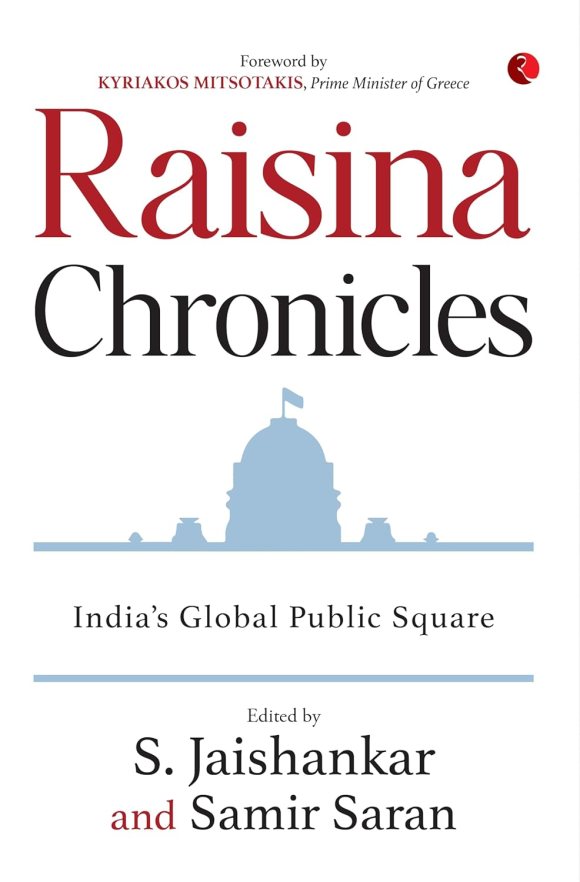
Title: Raisina Chronicles: India’s Global Public Square
Author: S. Jaishankar & Samir Saran
Publisher: Rupa Publications
Raisina Chronicles: India’s Global Public Square by S. Jaishankarand Samir Saran commemorates a decade of the Raisina Dialogue, India’s flagship geopolitical and geo-economics conference. The book reflects on the journey of the Raisina Dialogue and its impact on global discourse. It brings together contributions from leaders, thinkers, and diplomats, scholars, and policymakers worldwide, offering insights into addressing global challenges through collaboration and dialogue.
S. Jaishankar has been India’s External Affairs Minister since May 2019 and represents Gujarat in the Rajya Sabha. He was the Foreign Secretary from 2015 to 2018 and has held ambassadorial roles in the U.S., China, and the Czech Republic, as well as High Commissioner to Singapore. He authored notable books like The India Way: Strategies for an Uncertain World and Why Bharat Matters. Samir Saran is the President of the Observer Research Foundation (ORF), a leading Indian policy think tank. He has enhanced ORF’s influence in the U.S. and the Middle East and provides strategic guidance at the board level. Saran curates the Raisina Dialogue, co-chairs the World Economic Forum’s Global Future Council on Geopolitics, and serves on the Board of Governors of The East West Centre in the US. He has written five books, edited key monographs and journals, and contributed to numerous academic papers and essays, appearing in both Indian and international media.
The book brings together voices from across the world—of leaders and thinkers reflecting on the Raisina Dialogue’s impact on how we may navigate global challenges and create solutions that work. Putting India at the forefront of leading the change, the effect of these Dialogues is felt across policies and projections.
The editors emphasise that diversity, dissent, discord, and divergence of opinion make for the necessary ingredients for a sustainable future, shaped and owned by all. Ten years since its inception, the Raisina Dialogue has become the paramount platform for bringing together cultures, peoples and opinions. It is now India’s flagship geopolitical and geo-economics conference and has truly become a global public square—located in New Delhi, incubated by the world.
It emphasises the importance of diversity in thought, approaches, beliefs, and politics. It highlights how pluralism and heterogeneity contribute to resilience and societal evolution. Raisina Dialogue serves as a platform for inclusive participation, welcoming voices from underrepresented geographies and institutions.
While it showcases India’s emergence as a global leader in addressing development challenges and fostering international cooperation, it reflects the philosophy of Vasudhaiva Kutumbakam (the world is one family) and its efforts to harmonise local solutions with global needs.
Through initiatives like the G20 Presidency, India has shared transformative models such as digital public infrastructure (e.g., India Stack), offering templates for financial inclusion and tech-enabled development globally.
Alongside the carefully organised discussions, Raisina Chronicles examines the evolution of the Dialogue and presents its audience with a comprehensive volume that offers deep insights and an unwavering optimism for achieving shared solutions to worldwide issues.
As the globe approaches significant structural and historical transformations, the core aspiration of this work is to ensure that the voices of the populace are prioritised in global politics and policymaking, echoing through influential circles and reaching the broader community. For leaders to effect change, it is essential for society to unite and take a decisive step forward in the right direction.
Raisina Dialogue is also portrayed as a crucial venue for bridging divides in a fractured world. It fosters open discussions among diverse stakeholders—diplomats, scholars, business leaders, civil society members—to discover shared futures and solutions. The book underscores the importance of dialogue over polemics and inclusivity over exclusivity in shaping global policies.
Contributions from high profile global leaders such as Kyriakos Mitsotakis (Prime Minister of Greece), Mette Frederiksen (Prime Minister of Denmark), Penny Wong (Australian Foreign Minister) and others enrich the book with perspectives on international cooperation, climate goals, defence partnerships, and multilateralism.
The book serves as both a retrospective of the Raisina Dialogue’s achievements over ten years and a forward-looking guide for navigating global challenges. It positions India at the heart of global conversations, highlighting its role in fostering equitable dialogue and creating solutions that resonate across borders.
This volume is not just a collection of essays but also an intellectual testament to the transformative power of dialogue in shaping a sustainable future for humanity.
Bhaskar Parichha is a journalist and author of Cyclones in Odisha: Landfall, Wreckage and Resilience, Unbiased, No Strings Attached: Writings on Odisha and Biju Patnaik – A Political Biography. He lives in Bhubaneswar and writes bilingually. Besides writing for newspapers, he also reviews books on various media platforms.
.
PLEASE NOTE: ARTICLES CAN ONLY BE REPRODUCED IN OTHER SITES WITH DUE ACKNOWLEDGEMENT TO BORDERLESS JOURNAL
Mine is a diminishing language. Once universal, so healthy and happy, I sang in the forests, had many specialised terms for aspects of leaf that flutter or cry in the tiniest wind. I gave oxygen, and not botany classes, which come late to save ecosystems now. I do my best to instruct, offering pot-plants as semi-colons that help you to rest in your homes but where is the weight of my vocabulary? I'm ever shrinking, slinking away in Brazil, decapitated by acid in Northern Germany. I am almost a leprechaun trying to explain how an emerald isle is different in feel to planet Uranus. Your mythology gone, how will you cope with dryads in Greece or the outlaws of Sherwood Forest, which exists only in verdigris I wish my world was a young girl sick of chlorosis as conservationists offer fruit, mowers brush hair
Mark Wyatt lives in the UK after teaching in South and South-East Asia and the Middle East. His pattern poems have appeared in or are forthcoming from Ambit, Full Bleed, Greyhound Journal, Hyperbolic Review, Ink Sweat and Tears, Osmosis,P.E.N. New Poetry II (Arts Council/Quartet), Sontag Mag, Typo, and elsewhere.
.
PLEASE NOTE: ARTICLES CAN ONLY BE REPRODUCED IN OTHER SITES WITH DUE ACKNOWLEDGEMENT TO BORDERLESS JOURNAL
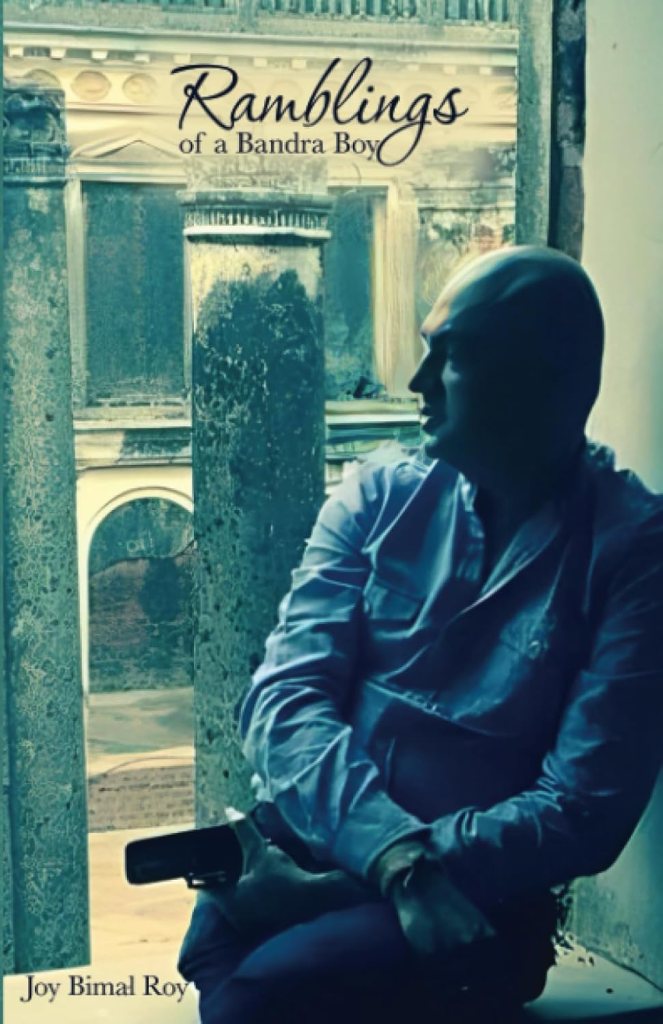
‘So what is it like being the son of Bimal Roy[1]?’ Ratnottama Sengupta asked the author of Ramblings of a Bandra Boy
Ratnottama Sengupta and Joy Bimal Roy. Photo Courtesy: Debashish Sengupta
Rambling, when used for writing – or speech – implies unmapped, confused or, at worst, inconsequential flow of thoughts. In another usage, the word applies to walking in the countryside for sheer pleasure. It is in this second sense that Joy Bimal Roy’s digitally published text, Ramblings of a Bandra Boyis a perfect match of form and content. For, its sweeping take hops from landscape to landscape and life to life of persons who have peopled the world of the author born in a typical Bandra household precisely 70 years ago.
Why typical Bandra household? Because Bandra – derived from the word bandar, meaning harbour – is the Queen of Mumbai’s suburbs. This pocket of history in the heart of the Financial Capital of India is also the home of VIPs, of Bollywood and of political variety too. As the time-weathered Bandra Fort overlooking the Arabian Sea vouches, Bandra predates the British ownership of the Seven Islands gifted to the Crown when Charles II married Princess Catherine of Portugal. Indeed, St Andrew’s Church, in existence since 1575, came up on the strength of Jesuit Priests who won over Koli fishermen winning Christians a stronghold in this part of coastal Maharashtra, much like in Goa.
In the 21st century, Bandra is where Mehboob Studios and Lilavati Hospital stand. Where the Bandra-Kurla Complex defines the dreams of the rich and the rising, overshadowing Asia’s biggest shanty town, Dharavi. And where the awe inspiring Bandra-Worli Sealink bridges the southern extreme of ‘Bombay’ with its ever growing ‘suburbs’.
But all through my lifetime, Bandra has been better recognised as the home of celebrities. Bollywood thespians, Dilip Kumar and Sunil Dutt, to Shah Rukh Khan and Salman Khan; art personalities, KK Hebbar to Kekoo Gandhy; actors, Rekha to Raakhee; directors, Nitin Bose and Hrishikesh Mukherjee, writer Gulzar and cricketer Sachin Tendulkar; umpteen fashion designers and models too have boasted 400050 as their Pincode.
Joy Bimal Roy’s Ramblings takes you on a multi-stop tour of this ‘port’ of India’s social fabric. For, as you skid from one story to another, in no predetermined chronology or thematic order, you get to meet his Yusuf Uncle (Dilip Kumar of Devdas[2] fame) and Bhoba Kaka (Ritwik Ghatak of Madhumati[3]fame), Lata Bai (Mangeshkar) and the Dutts — father Sunil and daughter Priya — who have represented North West Bombay in Parliament even as one member of that family slogged in a jail.
Take a quizzical look at Bollywood divas and peep at actors in their skin labouring on in a posh gym. Get a warm handshake with Shashi Kapoor and gift a sari to Sanjana. Riveting tales of travels to Lebanon, Beirut, Abu Dhabi, Greece, Switzerland, England, San Francisco and San Jose – they’re crowned by nuggets like “I delved into my sister’s recipe book… it has taken the place of Bhagvad Gita in my life” and “I do wish food wasn’t such an important feature in my life. Because it directly correlates to my expanding waistline.”
That’s not all. Here’s a reverential insight into what constituted Shyam Benegal’s greatness — and several irreverent accounts of the crème de la crème schools and colleges that have shaped the author who could have been a top notch contemporary artist, a charming singer, an enviable fashion designer, or an accoladed filmmaker.
Joy Bimal Roy chose not to be either of these. Instead, he stitched together Imagesof Kumbha Mela when he chanced upon the footage that were to be Bimal Roy’s last film. And he directed Remembering Bimal Roy[4]when his father’s birth centenary came around. He has mounted a series of world class exhibitions to showcase the photography of his mother, Manobina Roy, who, along with her twin Debalina Majumdar, was one of India’s earliest woman photo artist. And in her memory he has installed an imposing sculpture of two hands raised in prayer, ‘Requeim’, at the Bandstand promenade. He has got a road named after his venerable father. He has designed the career of musical talents like Alisha Chinai. He has up-cycled heritage saris and jewellery to support hospices. And he has been editing a newsletter chronicling the life of Bandra, the neighbourhood he was born in, grew up in, and continues to breathe life into.
Now Joy has given us Ramblings, a compilation of his posts on social media between 2017 and 2020. These slices of life “served without any extra seasoning or fancy garnish” as he puts it, have been described by Rachel Dwyer, professor of Indian Cultures and Cinema at SOAS[5], London, as jottings in kheror khata, the traditional cloth bound notebook that Satyajit Ray — and his father Sukumar Ray before him — used to pen down thoughts and visuals that are world’s treasure. In this exclusive, he converses about his book and his life.
What is your earliest memory of being the son of Bimal Roy?
Finding out in school from classmates that my father was famous!
What is the strongest impression you retain of 8th January 1966 – the day Bimal Roy passed into eternity?
I remember hearing a song from the basti[6] behind our house while I was taking a bath. That song still haunts me. I wasn’t allowed into the living room where Baba’s body was kept, so I peered in through the slats of the back door of the living room. We lived in an old Parsi Bungalow where the wooden doors were 8 ft high and had moveable wooden shutters. The room was packed to capacity but there was pin drop silence. Time stood still. It hadn’t yet sunk in that I would never see Baba again.
Did you develop a deeper understanding of what Bimal Roy was, in the process of makingRemembering Bimal Roy?
Absolutely. It was a cathartic and moving experience to hear the memories of people he had worked with over 60 years ago. Not only Tapan Sinha, who was with him in New Theatres; poet, lyricist, director Gulzar who had started as assistant in Bandini; Sharmistha Roy, daughter of his art director Sudhendu Roy; and his accountant Amrit Shah – even next generation personalities like Javed Akhtar and Ashutosh Gowarikar remembered him with so much love and respect that it brought tears to my eyes. I discovered anew that Baba was not only a superlative filmmaker but also a wonderful human being.
Did you likewise get to know Manobina Roy a little more through her photography?
Not really. I was fortunate to have her presence for 46 years of my life. So I grew up being photographed and seeing her photos. But it was only after her death that I discovered from a Bengali book called Chhobi Tola that she and her sister Debalina were two of the earliest known women photographers of India.
Has the insight into Bimal Roy films equipped you to be a responsible filmmaker? Or did you gain greater practical experience as an understudy/ through your interactions with Shyam Benegal, Girish Karnad[7], Basuda[8], and Hrishi Kaku[9]?
I had no interaction with Basuda and Girish in connection with film making. What I learned after watching the making of Chaitali[10] — the last film made under the banner of Bimal Roy Productions, nine years after Baba passed away — was how NOT to make a film.
Whatever I learned about filmmaking was from watching Baba’s films and my work experience with Shyam Benegal.
I wouldn’t really describe myself as a ‘filmmaker’ after making one documentary on Baba. However it is true that I have very high standards and living up to them was a big responsibility. After all, I am my father’s son. He was a perfectionist and so am I. It took me six months to edit a one-hour film simply because I was striving to do the best possible job with the material I had in hand.
Before you got into films you have ‘dabbled’ in fashion designing, worked with HMV[11], and now you are a most absorbing and prolific writer. Personally, I have always admired your painting (which I seldom see you do now). And I know you have mesmerised your college events with your singing. Which of these is your natural calling?
All of them unfortunately, which is why I didn’t know which one I should follow. As a result I have been a ‘dabbler’ — to use your own word. You could accuse me of being a dilettante but as I said before, I have high standards. So whatever I did, it was with all my heart and soul.
Tell me about the joys and woes of assisting Shyam Benegal.
That is impossible to describe as one question in an interview. It would be an entire interview! You can, however, get some answers in my book.
Which of the film stars of Bimal Roy’s team have you been closest to?
None. Because I was not even eleven when Baba passed away. But we did keep in touch with Yusuf Uncle. He was incomparable.
What difference in the work culture or cinematic ethics have you noticed between these two legends?
Baba and Shyam? I can only judge Baba from his films, but I worked with Shyam. It’s a difficult question to answer.
Please tell us about Uttama, Papri, Roopu, Sharmistha (Buri?), Aloka – essentially, about the extended Family of Bimal Roy?
That’s what all of them were and are: Family. One accepts and embraces them as they are.
What led you to the Ramblings which has been described as ‘social document of our times’?
My Facebook friends led me to Ramblings. They drove me mad demanding a book. I did it more to oblige them and make them stop making demands.
What next — cinema a la Bimal Roy — or books after Monobina Roy, who, besides being an ace photo artiste and a fabled cook, wrote Jato Door Tato Kachhe?[12]
A Bengali translation of Ramblings of a Bandra Boy.
[2] Hindi movie, 1955, Dileep Kumar (1922-2021) played the titular role
[3] Hindi movie, 1958, written by Ritwick Ghatak (1925-1976)
[4] Joy Bimal Roy lost his father filmmaker Bimal Roy when he was 11 years. Joy remembered very little of his father. ‘Remembering Bimal Roy’ made by Joy Bimal Roy is the search of a son for his father.
Ratnottama Sengupta, formerly Arts Editor of The Times of India, teaches mass communication and film appreciation, curates film festivals and art exhibitions, and translates and write books. She has been a member of CBFC, served on the National Film Awards jury and has herself won a National Award.
.
PLEASE NOTE: ARTICLES CAN ONLY BE REPRODUCED IN OTHER SITES WITH DUE ACKNOWLEDGEMENT TO BORDERLESS JOURNAL



 Borderless