Categories
Excerpt

The Naming of Rabindranth

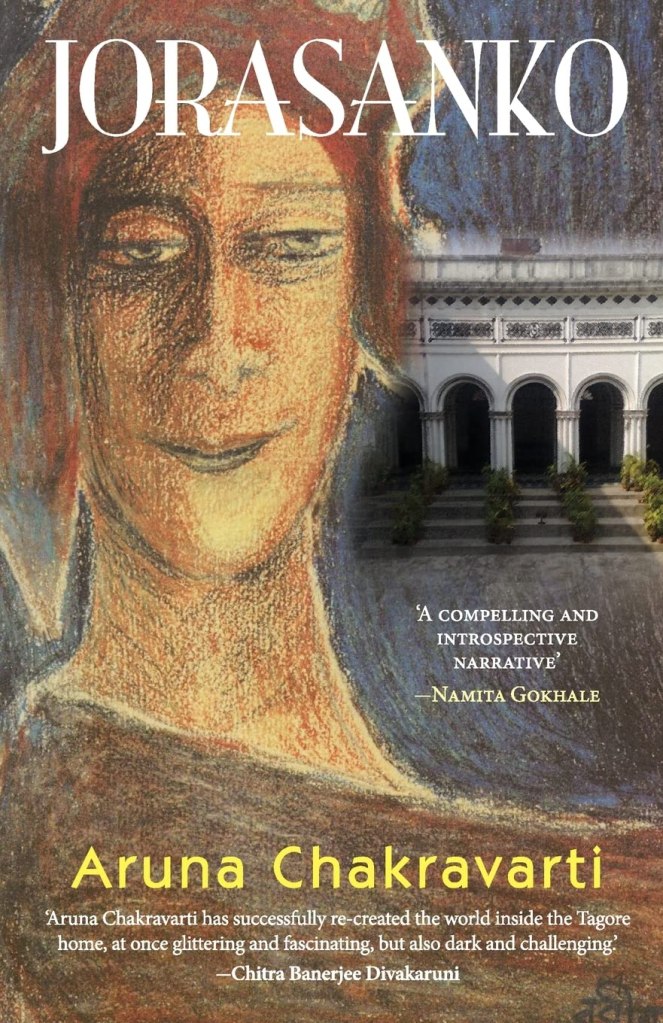
Title: Jorasanko

Author: Aruna Chakravarti

Publisher: HarperCollins India

Genu stood where she was as though rooted to the ground. Her eyes were fixed on the masses of gold and gems that hung from Sarada’s neck and trailed down her vast bosom. Her ears were filled with the jingling from the rows of bangles that encased her mother-in law’s fat arms as she put the finishing touches to her daughter’s toilette. Then the girl turned and walked away.

As soon as she reached the door she started running. Stuffing the end of her sari into her mouth, willing the lump to stay stuck in her throat, she ran like a wild thing down the gallery towards her room. Suddenly, she heard a cry and her feet stopped. She stood nonplussed for a moment. Where had the cry come from? From within her? Had the pain she had tried so hard to suppress burst out of her chest in a wail so bitter? So piteous? Then she pulled herself together. Of course not. It was her mother-in-law’s newborn baby crying. A boy two months and twenty days old…

Following the direction of the sound, she came to a tiny room adjoining the birthing chamber. The room was dark and the child lay, all alone, on a narrow bed. There was no sign of the wet nurse or of anyone else. Everyone was busy enjoying the wedding. Lifting the baby in her arms, she felt something flow out of him, something that warmed and comforted her. They were of a kind, she thought. Both alone. Both unloved. She remembered what Subhankari had told her some days after the child was born. Though she had given birth to a boy, Sarada, she had said, was rather disappointed.

‘He’s ugly.’ Sarada had muttered, looking askance at her newborn.

‘He’s not ugly at all’ Subhankari had retaliated indignantly. ‘You’re too fussy, Saro.’

‘Well he’s certainly darker than my other children. And look at his cars. How big they are! And how they stick out!’ Instructing the midwife to bathe him in milk, she had turned over on her side and gone to sleep.

But what neither Subhankari nor Genu knew was that Debendranath had sent for Anandachandra Vidyabagish soon after the birth and asked him to prepare the little one’s horoscope as he had done for all the other children. And, a few days later, Anandachandra had burst into the baar mahal, his mouth stretched in an exultant grin. ‘An outstanding conjunction of planets! he had cried. ‘A birth like this happens once in hundreds of years. This child’s sun is so strong – he will dazzle the world with the light of his genius.’

Debendra had smiled. ‘A good thing,’ he had said. ‘One of my tasks has been simplified. I’ve been racking my brains to find a suitable name for the boy. Since he was born on a Monday, it could have been Somendranath but that, as you know, has already been taken. Now that you say his sun is so strong, I shall name him Rabindranath. But your calculations had better be correct, Ananda. I don’t want you coming to me with a long face, confessing you bungled them.’

(Excerpted from Jorasanko by Aruna Chakravarti, published by HarperCollins India)

About the Book:

In a sprawling novel that spans a unique phase in the history of Bengal and India, Aruna Chakravarti provides a fascinating account of how the Tagore women influenced and were in turn influenced by their illustrious male counterparts, the times they lived in and the family they belonged to. Jorasanko mirrors the hopes and fears, triumphs and defeats that the women of the Tagore household experienced in their intricate interpersonal relationships, as well as the adjustments they were continually called upon to make as daughters and daughters in law of one of the most eminent families of the land. ‘In her meticulously researched novel, Aruna Chakravarti has successfully re-created for the reader the world inside the Tagore home, at once glittering and fascinating, but also dark and challenging. The women of the Tagore family who are at the heart of this novel are complex beings who will raise many questions in the modern reader regarding the role of women in today’s society’, Chitra Banerjee Divakaruni, author of Palace of Illusions and One Amazing Thing.

About the author:

Aruna Chakravarti  had been the Principal of a prestigious women’s college of Delhi University for ten years. She is also a well-known academic, creative writer and translator with seventeen published books on record. They comprise five novels, two books of short stories, two academic works and eight volumes of translation. Her first novel The Inheritors (published by Penguin Random House) was shortlisted for the Commonwealth Writers’ Prize and her second, Jorasanko (published by HarperCollins India)received critical acclaim and also became a best seller. Daughters of Jorasanko, a sequel to Jorasanko, (HarperCollins India) has sold widely and received rave reviews.Her novel Suralakshmi Villa, published by Pan Macmillan Ltd under the Picador imprint, has been adjudged “Novel of the year (India 2020)” by Indian Bibliography published in The Journal of Commonwealth Literature U.K. Her latest work, The Mendicant Prince, a semi-fictional account of the Bhawal legal case, was released by Pan Macmillan Ltd, in July this year to widespread media coverage and acclaim. Her second book of short stories Through a Looking Glass: Stories has just been released by Om International Ltd.

Her translated works include an anthology of songs from Rabindranath Tagore’s Gitabitaan, Sarat Chandra Chattopadhyay’s Srikanta and Sunil Gangopadhyay’s Those Days, First Light and Primal Woman: Stories. Among the various awards she has received are Vaitalik Award, Sahitya Akademi Award and Sarat Puraskar.

She is also a script writer and producer of seven multi- media presentations based on her novels. Comprising dramatised readings interspersed with songs and accompanied by a visual presentation by professional artists and singers, these programmes have been widely acclaimed and performed in many parts of India and abroad.

.

PLEASE NOTE: ARTICLES CAN ONLY BE REPRODUCED IN OTHER SITES WITH DUE ACKNOWLEDGEMENT TO BORDERLESS JOURNAL

Click here to access the Borderless anthology, Monalisa No Longer Smiles

Click here to access Monalisa No Longer Smiles on Kindle Amazon International
Categories
Slices from Life

Belongingness and the Space In-Between

By Disha Dahiya

Humans are in a perpetual state of motion — be it intercity, interstate, or inter-country — and the relentless quest to assimilate commences. Embracing a new culture, blending seamlessly with the locals, and adopting regional slangs and accents become daily endeavours. In this race without a finish line, a persistent anxiety takes hold. “What if I don’t quite fit in?” “Will people forever perceive me as an outsider?” “Could I lose touch with my roots?” Trust me, this apprehension intensifies when one immigrates to a foreign land.

The inner conflict of belonging experienced in transcultural migrations casts light on the concept of cultural dysphoria. When I first encountered this term, it piqued my interest in how individuals navigate their daily lives while carrying this weight. Cultural dysphoria, a recent term, is an extension of the concept of dysphoria. EverydayFeminism defines cultural dysphoria as: “…the dissonance between the societal expectations for an individual’s broad cultural performance or identity and their desired embodiment of that culture, or uncertainty about where they fit into cultural categories.”

In simpler terms, someone experiencing cultural dysphoria feels like an alien in a new culture. They grapple with the space between two distinct cultures. While their mind urges them to embrace the tenets of the new cultural paradigm, their heart insists on preserving their native cultural heritage.

It was only recently that I comprehended how the concept of cultural dysphoria applied to both me and my family. This understanding took nearly two decades to crystallise, but as the adage goes, “better late than never.” Such realisation would not have dawned upon me without the pursuit of my Ph.D. thesis. Over time, I delved into novels penned by first-generation South Asian American writers such as Chitra Banerjee Divakaruni, Amulya Malladi, Naomi Munaveera, and Bapsi Sidhwa. These authors were born in South Asian countries and subsequently migrated to America. Their literary works often delve into the challenges faced by immigrant families in a foreign land. Reading allows us to explore the world, but essays and books also furnish a window through which we can empathise with someone’s narrative. Nevertheless, one’s own story offers a distinct and nuanced perspective. Indeed, first-hand experiences yield unique vantage points.

I was a mere eight-years-old when my father obtained Canada’s Permanent Residency Card, and our journey towards establishing roots in a foreign land began. As a second grader, comprehending that you’re about to traverse over 7,000 miles is no small feat. At times, the gravity of such a situation eluded me. On other occasions, I found excitement in the impending turbulence. It was exhilarating, even though questions like ‘why are we relocating?’ and ‘why must I leave my school?’ continually lingered in my mind, spanning the distance from Delhi to our future home in Calgary.

This is the nature of belongingness – it doesn’t instantaneously manifest if you’ve have never before contemplated the possibility of residing in a country far removed from your homeland. The initial step in transcultural migration involves recognition, transcendence, and integration. One must acknowledge the reality of transcending boundaries, leaving behind their original cultural heritage, and stepping foot in a foreign land with its own distinct cultural tapestry. I refer to this stage as ‘Acceptance’, as it encompasses a multitude of thoughts regarding one’s capacity to accept and be accepted within this new environment.

For my family, the journey of assimilation began the moment we exited YYC Calgary International Airport in November 2006. A friend of my maternal uncle’s son welcomed us—a network woven through connections—a common phenomenon in Indian culture. Connecting with familiar faces, who then introduce you to others, and this chain keeps expanding, is deeply ingrained in our cultural fabric. From being surrounded by individuals of a different ethnicity to grappling with the nuances of time zones, my family sought to adapt to our new Canadian milieu. Isn’t it peculiar how one day you’re in the tranquility of your home, and the very next day, you soaring through the skies, crossing international borders?

Recalling the sequence of events surrounding our immigration, nearly two decades later, is no simple task. Much has evolved, particularly my perspective on life. What once seemed normal has shifted, no longer aligning with my current perceptions. This is the natural progression of personal growth – forgetting, reminiscing, comprehending, and de-constructing. Each emotion makes sense in hindsight, guided by wisdom acquired over time.

At times, we relegate certain emotions to the shadows of our heart. We normalise the experience of residing in the in-between and the accompanying sense of non-belongingness, presuming it to be an idiosyncrasy. However, South Asian diaspora members share these particular sentiments of the in-between. We accept our role as outsiders among the locals, convinced that this is the way it should be, right?

Navigating the new environment while endeavouring to retain a strong connection to one’s roots becomes paramount when relocating to a foreign country. A part of me yearned to return to India to celebrate the Festival of Lights with those left behind, while another part was eager to explore innovative ways of preserving our culture and traditions amidst the bustling streets of a land predominantly inhabited by individuals of a different ethnicity.

During those years, Canada had not yet become the Mecca for Indian students pursuing higher education, as it is today. The immigrant community consisted mainly of those who had relocated in the ’70s or ’80s in pursuit of a brighter future for their children. Consequently, the Indian community was relatively smaller.

The question of belongingness emerged from as early as my first day at school. Where does one truly belong in a classroom of over twenty students with varied ethnicity? Among these students, four were of Indian descent, two hailed from Pakistan, one each from Australia and France, while the remainder were Canadian natives. Yet none of these students were unequivocally ‘Indian.’

The logical assumption might be that I belonged with the group of four Indian-origin students. However, this was not the case because, fundamentally, I was Indian. A subtle distinction lies between being Indian and being of Indian origin. It wasn’t a matter of passports; it ran deeper. I was too Indian to seamlessly integrate with non-Indians and just slightly more Indian than those of Indian origin. I existed as an ‘other’ amidst the ‘others,’ with the four Indian-origin students occasionally amused by my Indian accent. Emerging from a decent background, having received education in a convent school, initiating casual conversations with a simple ‘hey, what’s up?’ was effortless. Yet, adopting a foreign accent was not within my purview. My peers of the same age knew precisely when and how to employ phrases like ‘screw it,’ ‘for God’s sake’, I’m not interested,’ and ‘nahhhh…’ The only phrase that came to mind whenever I wished to express my lack of interest was ‘it doesn’t matter’. As a non-native English speaker, it was the most apt phrase I could muster. Apparently, seamless alignment in terms of accent, language, and communication is pivotal to establishing friendships in a foreign land. Failure to do so results in being cast aside as an outsider.

The nagging thought that permeated my family’s collective consciousness during those early days in Canada was this: Do we belong here among people who do not perceive us as one of themselves? We had successfully traversed the initial stage of transcultural migration. Consequently, the second stage — which I’ve labelled ‘Non-belongingness’ — became a pivotal moment, shedding light on our lack of alignment with both people of Indian origin and non-Indians. Our cultural identity remained a poignant question mark, casting a shadow over our Canadian experience.

For my father, commuting to work entailed a daily two-hour journey to and from his workplace. Occasional weekend outings, mostly for groceries, marked the extent of our excursions. Indian suits were my mother’s customary attire, but how long would that persist? After a few months, she transitioned to wearing jeans and long shirts. While Indian suits exude grace and elegance, she lamented the difficulty of blending in. “Passing by a row of foreigners while wearing a salwar kameez is a daunting task; one becomes the subject of unwarranted stares,” she confided. Her eyes betrayed a longing for the life she left behind in India, where she could choose her favourite salwar kameez and embellish it with the most exquisite dupatta in her wardrobe without attracting undue attention. I sensed her yearning for India, particularly when my maternal grandfather — whom I affectionately called Nanu — phoned. Each call filled her with joy, and her countenance radiated even more than usual. Perhaps Nanu sensed her yearning to return, which manifested as glistening tears on my mother’s cheeks.

Life in Canada was a far cry from what it used to be in India. As Diwali approached, I eagerly anticipated the deluge of sweets and gifts that would typically inundate our home in India. However, that year, those customary tokens of celebration were conspicuously absent, a stark reminder that we had yet to establish a substantial social network in Canada. Everything had changed. People in Canada appeared disinterested in the Festival of Lights. It was just another day for them. Some were engrossed in preparations for Christmas, while others seemed oblivious to the existence of Diwali, India’s most eagerly awaited festival. With no candles adorning our home, no gifts to fuel our excitement, and nothing resembling the grandeur of an Indian Diwali, our spirits plummeted upon realising that we had yet to sever our emotional ties to our culture. It was a perplexing sensation. While I yearned to embrace the festivities of Christmas, the absence of enthusiasm for Diwali contrasted starkly with my Canadian expectations. I believe my parents experienced a similar sentiment because on that day, an uncharacteristic sombreness shrouded our smiles. We smiled for each other, but the glint in our eyes bespoke our longing for our true home, India.

In this narrative, where did we truly belong? Some may argue that we belonged where we resided at that moment, while others might reflect on their immigrant experiences and ponder their sense of belonging. This is where the bitter realisation of cultural dysphoria takes root. The inability to fully integrate into a foreign land, the feeling of being an outsider, and the disconnect between cultural expectations and reality culminate in a dysphoric sensation, marking the onset of the third stage in an individual’s transcultural migration journey. At this juncture, it becomes imperative to recognise that while certain aspects of one’s former culture must be relinquished, others must be preserved. I refer to this third stage as the ‘In-Between.’

The third stage of the transcultural migration experience delineates the unique space an individual occupies, betwixt and between two cultures. As immigrants, we embraced certain facets of the new culture while shedding some of our own, and vice versa, to carve out a niche that could accommodate and harmonise both cultures. Within this ‘In-Between,’ a new persona emerged. We remained too Indian for the world outside, yet our hearts affirmed it was for the best.

That year in Canada unfolded with a plethora of surprises. And then, we returned to India. But that’s a story for another essay!

The feeling of cultural dysphoria is far from uncommon. A majority of migrants grapple with the turmoil of cultural conflicts when transitioning to a new country. While this narrative offers a glimpse into how transcultural migrations can affect an individual, there exist countless other stories waiting to be shared with the world. In the area of transcultural migration, each thread tells a unique story, and my narrative is but one strand in this rich fabric of human experience. As my family and I navigated the in-between of two cultures, I am reminded that our journey is a testament to resilience, adaptability, and the enduring power of cultural identity. While the road may be fraught with challenges, the experience has imbued us with a profound appreciation for new cultures. Cultural dysphoria may cast its shadow, but it also offers a canvas for personal growth and understanding. It is my hope that by sharing our story, we illuminate the path for others embarking on similar journeys and foster a deeper understanding of the intricate web of the transcultural in-between.

Disha Dahiya is a PhD Research Scholar in English Literature. She has a keen interest in exploring the South Asian narrative across borders and boundaries while focusing on the cultural aspect of transcultural migrations.

.

PLEASE NOTE: ARTICLES CAN ONLY BE REPRODUCED IN OTHER SITES WITH DUE ACKNOWLEDGEMENT TO BORDERLESS JOURNAL

Click here to access the Borderless anthology, Monalisa No Longer Smiles

Click here to access Monalisa No Longer Smiles on Kindle Amazon International

Categories
Contents

Borderless, April 2023

Painting by Sohana Manzoor

Editorial

Can Love Change the World?… Click here to read.

Conversation

Keith Lyons interviews Asian Australian poet Adam Aitken about cross-cultural identity, and the challenges of travel, writing, and belonging. Click here to read.

Translations

Gandhiji, a short story by Nabendu Ghosh, has been translated from Bengali by Ratnottama Sengupta. Click here to read.

Khaira, the Blind, a story by Nadir Ali, has been translated from Punjabi by Amna Ali. Click here to read.

Clothes of Spirits, a folktale, has been translated from Balochi by Fazal Baloch. Click here to read.

Many Splendored Love, four poems by Masud Khan, have been translated from Bengali by Fakrul Alam. Click here to read.

Birds are Alive, has been written and translated from Korean by Ihlwha Choi. Click here to read.

Nobo Borshe or on New Year, Tagore’s poem on the Bengali New Year, has been translated from Bengali by Mitali Chakravarty for the occasion this April. Click here to read.

Poetry

Click on the names to read the poems

Michael R Burch, Vipanjeet Kaur, William Miller, Sutputra Radheye, Jim Landwehr, Namrata Varadharajan, Phil Wood, Akshada Shrotryia, Richard Stevenson, Abdul Jamil Urfi, Scott Thomas Outlar, Anasuya Bhar, George Freek, Malachi Edwin Vethamani, Ryan Quinn Flanagan, Rhys Hughes

Poets, Poetry & Rhys Hughes

In My Love for RK Narayan, Rhys Hughes discusses the novels by ths legendary writer from India. Click here to read.

Musings/Slices from Life

Magic of the Mahatma & Nabendu

Ratnottama Sengupta shows the impact of Gandhi and his call for non-violence on Nabendu Ghosh as she continues to emote over his message of Ahimsa and call for peace amidst rioting. Click here to read.

Kindred Spirits

Anjali V Raj writes of an endearing friendship. Click here to read.

Colorado comes to Eden

Meredith Stephens sails to meet more people in Eden. Click here to read.

Us vs Them

Shivani Agarwal talks of sharing the planet with all creatures great and small. Click here to read.

Musings of a Copywriter

In To Be or Not to Be, Devraj Singh Kalsi muses on food fads. Click here to read.

Notes from Japan

In Olives and Art in the Inland Sea, Suzanne Kamata explores the island of Sodoshima. Click here to read.

Essays

Charlie and I: My Visit to Corsier-sur-Vevey

Nirupama Kotru talks of her trip to Charlie Chaplin’s home and writes about the legendary actor. Click here to read.

The Wonderland of Pokhara

Ravi Shankar explores, Pokhara, a scenic town in Nepal. Click here to read.

Stories

Sparks

Brindley Hallam Dennis captures the passing of an era. Click here to read.

The Moulting

PG Thomas brings us a glimpse of Kerala — the past merging to create a new present. Click here to read.

The Book Hunter

Paul Mirabile gives a tale about a strange obsession. Click here to read.

Book Excerpts

An excerpt from What Will People Say?: A Novel by Mitra Phukan. Click here to read.

An excerpt from The Wistful Wanderings of Perceval Pitthelm by Rhys Hughes. Click here to read.

Book Reviews

Somdatta Mandal reviews Chitra Banerjee Divakaruni’s Independence. Click here to read.

Rakhi Dalal reviews Song of the Golden Sparrow – A Novel History of Free India by Nilanjan P. Choudhary. Click here to read.

Basudhara Roy reviews Ukiyo-e Days… Haiku Moments by Bina Sarkar Ellias. Click here to read.

Bhaskar Parichha reviews Japanese Management, Indian Resistance: The Struggles of the Maruti Suzuki Workers by Anjali Deshpande and Nandita Haksar. Click here to read.

.

.

Click here to access the Borderless anthology, Monalisa No Longer Smiles

Click here to access Monalisa No Longer Smiles on Kindle Amazon International

Click here to learn more about our first anthology, Monalisa No Longer Smiles

Categories
Editorial

Can Love Change the World?

The night has nearly come to an end.
The old year is almost past.
Under this dust, it will lay down
Its worn-out life at last.
Whether friend or foe,      wherever you go,
Old wrongs cast
Away. On this auspicious day,
Old grievances shed as the old year parts.

— Nobo Borshe or on New Year by Tagore

Art by Sohana Manzoor

Mid-April, Thailand celebrates Songkran and Cambodia, Thingyan — water festivals like Holi. These coincide with the celebration of multiple New Years across Asia. Sikhs celebrate Baisakhi. Kerala celebrates Bishu and Tamil Nadu, Puthandu. Nepal celebrates Nava Varsha and Bengal Nobo Borsho or Poila Boisakh. A translation of Tagore’s poem on the Bengali New Year in spirit asks us to dispense with our past angst and open our hearts to the new day — perhaps an attitude that might bring in changes that are so needed in a world torn with conflicts, hatred and anger. The poet goes on to say, “I want to tie all lives with love” but do we do that in our lives? Can we? Masud Khan’s poems on love translated by Professor Fakrul Alam explore this from a modern context. From Korea, Ihlwha Choi tells us in his translation, “Loving birds is like loving stars”. But the translation that really dwells on love bringing in changes is Nabendu Ghosh’s ‘Gandhiji’, translated by Ratnottama Sengupta, his daughter. The short story by Ghosh highlights the transformation of a murderous villain to a defender of a victim of communal violence, towering above divides drawn by politics of religion.

Another daughter who has been translating her father’s works is Amna Ali, daughter of award-winning Punjabi writer, Nadir Ali. In ‘Khaira, the Blind‘, the father-daughter duo have brought to Anglophone readers a lighter narrative highlighting the erasure of divides and inclusivity. A folktale from Balochistan, translated by Fazal Baloch, echoes in the footsteps of ‘Emperor’s New Clothes’ — a story that can found in the Andersen’s Fairy Tales published in the nineteenth century. I wonder which narrative had come first? And how did it cross cultures retaining the original ideas and yet giving it a local colour? Was it with traders or immigrants?

That such narratives or thoughts are a global phenomenon is brought to the fore by a conversation between Keith Lyons and Asian Australian poet Adam Aitken. Aitken has discussed his cross-cultural identity, the challenges of travel, writing, and belonging. Belonging is perhaps also associated with acceptance. How much do we accept a person, a writer or his works? How much do we empathise with it — is that what makes for popularity?

Cross cultural interactions are always interesting as Rhys Hughes tells us in his essay titled ‘My Love for RK Narayan’. He writes: “Narayan is able to do two contradictory things simultaneously, namely (1) show that we are all the same throughout the world, and (2) show how cultures and people around the world differ from each other.” The underlying emotions that tie us together in a bond of empathy and commonality are compassion and love, something that many great writers have found it necessary to emphasise.

Mitra Phukan’s What Will People say?: A Novel is built around such feelings of love, compassion and patience that can gently change narrow norms which draw terrifying borders of hate and unacceptance. We carry an excerpt this time from her ‘Prologue’. Somdatta Mandal has reviewed Chitra Banerjee Divakurni’s latest , Independence. Starting from around the time of the Indian Independence too is Song of the Golden Sparrow – A Novel History of Free India by Nilanjan P. Choudhary, which has been discussed by Rakhi Dalal. The Partition seems to colour narratives often as does the Holocaust. Sometimes, one wonders if humanity will ever get over the negative emotions set into play in the last century.

Closer to our times, when mingling of diverse cultures is becoming more acceptable in arts, Basudhara Roy introduces us to Bina Sarkar Ellias’s Ukiyo-e Days…Haiku Moments, a book that links poetry to a Japanese art-form. While a non-fiction that highlights the suffering of workers by enforcing unacceptable work ethics, Japanese Management, Indian Resistance: The Struggles of the Maruti Suzuki Workers by Anjali Deshpande and Nandita Haksar has been reviewed by Bhaskar Parichha. The narrative, he writes, “tells the story of the biggest car manufacturer in India through the voices of the workers, interviewed over three years. They give us an understanding that the Maruti Suzuki revolution wasn’t the unmitigated success it was touted to be when they tell us about their resistance to being turned into robots by uncompromising management.” That lack of human touch creates distress in people’s hearts, even if we have an efficient system of management and mass production is well elucidated in the review.

To lighten the mood, we have humour in verses from Rhys Hughes and Richard Stevenson’s tongue-in-cheek dino poems. Michael Burch’s poetry explores nuances of love and, yet, changes wrought in love has become the subject of poetry by Malachi Edwin Vethamani and Anasuya Bhar with more wistful lines by George Freek highlighting evanescence.  Sutputra Radheye and Jim Landwehr bring darker nuances into poetry while Scott Thomas Outlar mingles nature with philosophical meanderings. We have more poetry by Ryan Quinn Flanagan, Abdul Jamil Urfi and many more exploring various facets of changes in our lives.

These changes are reflected in our musings too. Sengupta has written on how change is wrought on a murderous villain by the charisma of Gandhi in her father’s fiction, as well as this world leader’s impact on Ghosh and her. Devraj Singh Kalsi addresses food fads with a pinch of sarcasm. From Japan, Suzanne Kamata has written of a little island with Greek influences, a result of cultural ties brought in by the emperor Hirohito. Ravi Shankar takes us to Pokhara, Nepal, and Meredith Stephen expresses surprise on meeting a shipload of people from Colorado in the far reaches of the Southern Hemisphere while on her sailing adventures with beautiful photographs. Stories by moderns reflect diverse nuances depicting change. While Brindley Hallam Dennis writes of the passing of an era, PG Thomas integrates the past into the present to reflect how they have a symbiotic structure in the scheme of creating or recreating natural movements through changes wrought over time in his story. Paul Mirabile explores the darker recesses of the human existence in his fiction. As if in continuation, the excerpt from Rhys Hughes’ The Wistful Wanderings of Perceval Pitthelm seems to step out of darker facets of humanity with a soupçon of wit at its best.

To create a world that endures, one looks for values that create inclusivity as reflected in these lines from Charles Chaplin’s My Autobiography, “Mother illuminated to me the kindliest light this world has ever known, which has endowed literature and the theatre with their greatest themes: love, pity and humanity.” This quote starts off a wonderful essay from film-buff Nirupama Kotru. Her narrative carries the tenor of Chaplin’s ‘themes’ to highlight not only her visit to the actor’s last home in Switzerland but also glances at his philosophy and his contributions to cinema across borders.

Our issue rotates around changes and the need for love and compassion to rise in a choral crescendo whirling with the voices of Tagore, Charles Chaplin as well as that of twenty-first century writers. Perhaps this new year, we can move towards a world – at least an imagined world — where love will wipe away weapons and war, where love will take us towards a future filled with the acceptance of myriad colours, where events like the Partition and the Holocaust will be history, just like dinosaurs.

Huge thanks to all our readers and contributors, some of whom may not have been mentioned here but are an integral and necessary part of the issue. Do pause by our April edition. I would also like to give my thanks to our indefatigable team whose efforts breathe life into our journal every month. Sohana Manzoor needs a special mention for her lovely artwork.

Thank you all and wish you a wonderful April.

Mitali Chakravarty

borderlessjournal.com

.

Read reviews and learn more about Monalisa No Longer Smiles: An Anthology of Writings from across the World by clicking here

Categories
Review

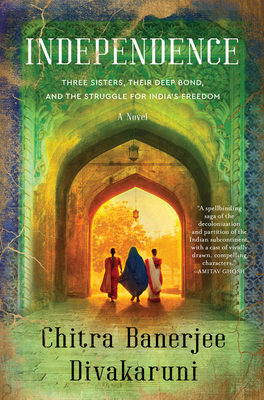
Independence by Chitra Banerjee Divakaruni

By Somdatta Mandal

Title: Independence

Author:  Chitra Banerjee Divakaruni

Publisher: Harper Collins 

Over the last two or three decades, the Indian American writer, Chitra Banerjee Divakaruni, has managed to carve a niche for herself by regaling in stories of cross-cultural issues prevalent in India and the United States with special emphasis on experiences of diasporic immigrant women. Though most of her stories are women-centric, with time one notices a gradual tectonic shift in her selection of themes. Initially she would write on problems of immigration and culture clash plaguing Indians in the New World. In Palace of Illusions, she went back to the Indian epic and narrated the story of the Mahabharata told from Draupadi’s point of view. In her novel The Forest of Enchantments, she brought Sita at the centre of the epic narrative The Ramayana and accorded her parity with Ram, revealing her innate strength. Then she took recourse to Indian history and rebuilt the story of Maharaja Ranjit’s Singh’s empire in Punjab narrating it from the viewpoint of Rani Jindan Kaur, his last wife as one of the most fearless women of the nineteenth century. Apart from the available historical data, she filled in The Last Queen by imagining many things Jindan would have said and done and thus painted a complete picture of a woman from all perspectives. A perfect blending of fact with fiction, the novel interested all categories of readers, serious and casual alike.

Now with Independence, Divakaruni widens her canvas to tell us the story of a doctor’s family and his three daughters against the freedom movement in India, particularly Bengal, beginning from August 1946 till the epilogue in 1954. The story of India’s independence is narrated through the eyes of three sisters, each of whom is uniquely different, with her own desires and flaws. They live in a rural village Ranipur and right at the beginning of the novel, which is divided into five parts and an epilogue, the author manages to give us the idyllic ambience of the place in very selective poetic language:

    “Here is a river like a slender silver chain, here is a village bordered by green gold rice-fields, here is a breeze smelling of sweet water-rushes, here is the marble balcony of a grand old mansion with guards at its iron gates and servants transporting trays of delicacies up the stairs, here are a man and a woman on carved teak chairs. Here is the country that contains them all.
     “The river is Sarasi, the village is Ranipur in Bengal, the mansion belongs to Somnath Chaudhury, zamindar. He is playing chess with Priya, daughter of his best friend, Nabakumar Ganguly. The country is India, the year is 1946, the month is August.
      “Everything is about to change."

Doctor Nabakumar Ganguly is an idealist and with his practice in their native village Ranipur, where the family resides, he also treats patients in a slum region in Calcutta. He is highly regarded but earns little as he refuses to charge patients without sufficient means. His wife Bina complains about this but supplements the family income by making exquisite quilts for sale and gifting them to those in need. Among the three daughters, Priya is intelligent and idealistic, and resolved to follow in her father’s footsteps she wants to become a doctor, though society frowns on it. She is fortunate to have the support of zamindar Somnath Chowdhury, her father’s best friend. The eldest daughter Deepa is very beautiful and is determined to make a marriage that will bring her family joy and status. The third daughter, Jamini, is devout, sharp-eyed, and a talented quiltmaker, with deeper passions than she reveals.

Theirs is a home of love and safety, a refuge from the violent events taking shape in the nation. This idyllic setting changes rapidly, as the violence of Direct Action Day in August 1946 takes Nabakumar’s life and introduces fear and a communal bitterness in the once largehearted Bina’s veins. Soon their neighbours turn against them, bringing the events of their country closer to home. Deepa is estranged from her mother and eventually isolated on the other side of the border in what becomes East Pakistan, when she falls in love with Raza, a Youth Leader at the Muslim League. As Priya is determined to pursue her career goal, her attempts to get into medical school in India are thwarted by a gender bias, and she finds herself at a college in America. But due to several reasons she cannot complete her degree there and comes back to India to run the clinic where her father worked. And Jamini attempts to hold her family together, even as she secretly longs for the handsome Amit, her sister’s fiancé. When India is partitioned, the sisters find themselves separated from one another, afraid of what will happen to not only themselves, but also each other. It is only then that they understand what it means to be independent, and the price one must pay for it.

After a lot of twists and turns to the story, including smuggling of arms and rescue mission on the Ichhamati River dividing the two Bengals, Amit shot to death, by the time we come to the Epilogue it is 1954 where we learn about Deepa’s daughter Sameera, Jamini’s son Tapan, Deepa managing the zamindari estate and Manorama and Somnath eager to find a suitable match for Priya when she tells them that she is happy as she is now. Feminism, communal amity, empathy, and self-growth are among the requisite qualities Divakaruni identifies for both a country and a human being to be truly independent. Though set in households more than seventy years ago, towards the end we still find some hope. The Postscript to the story is rather interesting as it comes even after the epilogue. It reads thus:

   “Here is a river. Here is a wind rising. Here is a village. Here is the year.
   “The river is time, ebbing, flooding. The wind is memory, it can carry flowers, it can carry flames. The village is the world, and you are at its centre. The year is now.
   “What will you do with it? What will you do?”

As a Professor of Creative Writing in an American university, Divakaruni has gained the expertise of playing her cards well – her narrative technique in each of her novels and short story anthologies preaches what she teaches – the saleability and marketability of a book in this electronic age should be of utmost concern. Like her earlier novel The Oleander Girl, which seemed to have been written as a sort of film script in mind, (incidentally two other novels are being made into motion pictures at the moment), Independence too seems to follow suit with the right amount of ingredients necessary for promoting the book to different kinds of readers and in different forms as well. One is therefore taken by surprise to find a QR code even before the Contents page which tells us to “Listen to the soundtrack for Independence. A playlist of songs that inspired the freedom movement.” For her Western readers, Divakaruni managed to blend history and fiction very well where along with the fictitious characters we get to read about Mahatma Gandhi and the Noakhali riots, Sarojini Naidu, Nehru and others as they played their parts in the freedom movement. Here we find Priya actively engaged in conversation with Sarojini who gives a letter of recommendation to Bidhan Chandra Roy to help Priya to run a clinic.

One praiseworthy aspect of the novel is how Divakaruni manages to give us details of the streets and sounds of Calcutta – the Calcutta of the 1950s with her double decker buses, the shops at New Market, the quaint little restaurants with curtained cubicles to maintain privacy in a public place – all brought back from memory of the city in which she was born and brought up. The novel is also full of translations of several patriotic songs in Bangla which the swadeshis sang during that period. Several lines from Tagore’s songs are also interspersed to express the moods of characters – a technique used by Divakaruni in some of her earlier fiction as well. The exoticism of India, especially rural Bengal of the time is deftly portrayed through many other incidents of killing and looting at different regions of undivided Bengal. As for her Indian readers we are given the story of Priya’s brief stay in America to study medicine at the Woman’s Medical College in Philadelphia where along with her homesickness, we have Arthur, a lovelorn American doctor, who lends her support and patiently waits for her to come back to him as “his heart has been empty” without her.

Despite such manipulations to the story to bring in as wide a canvas as possible, including sufficient examples of Hindu-Muslim amity and hatred as well, the novel remains a page-turner no doubt and can be recommended for its lucid and racy style of narration, something that Chitra Banerjee Divakaruni excels in.

Somdatta Mandal, author, critic, and translator, is former Professor of English at Visva-Bharati, Santiniketan, India.

PLEASE NOTE: ARTICLES CAN ONLY BE REPRODUCED IN OTHER SITES WITH DUE ACKNOWLEDGEMENT TO BORDERLESS JOURNAL

Click here to access the Borderless anthology, Monalisa No Longer Smiles

Click here to access Monalisa No Longer Smiles on Kindle Amazon International