Categories
Contents

Borderless, December 2025

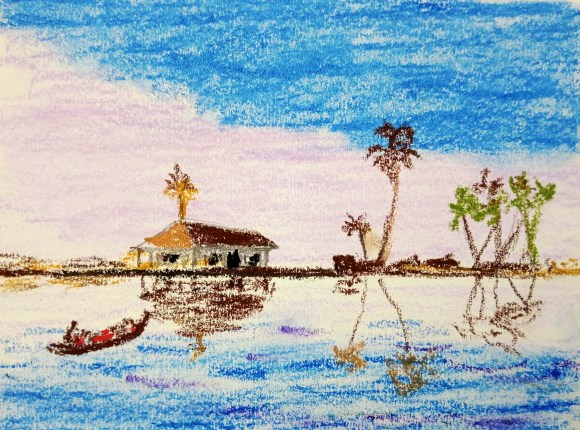
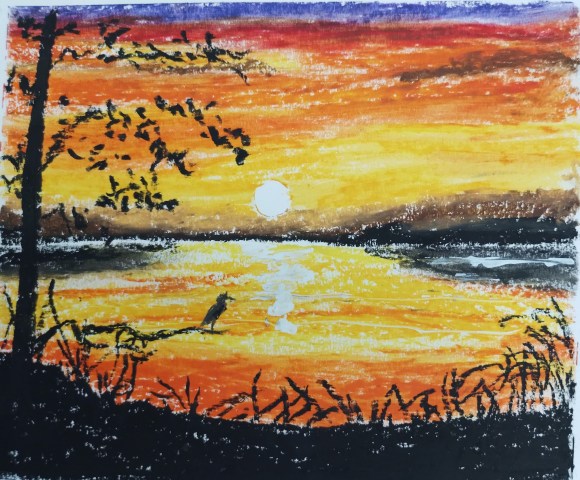
Art by Sohana Manzoor

Editorial

‘I wondered should I go or should I stay…’ …Click here to read.

Translations

Nazrul’s Shoore O Baneer Mala Diye (With a Garland of Tunes and Lyrics) has been translated from Bengali by Professor Fakrul Alam. Click here to read.

Four of his own Malay poems have been translated by Isa Kamari. Click here to read.

Five poems by Satrughna Pandab have been translated to English from Odia by Snehaprava Das. Click here to read.

A Lump Stuck in the Throat, a short story by Nasir Rahim Sohrabi translated from Balochi by Fazal Baloch. Click here to read.

Tagore’s Jatri (Passenger) has been translated from Bengali by Mitali Chakravarty. Click here to read.

Conversation

Keith Lyons in conversation with Harry Ricketts, mentor, poet, essayist and more. Click here to read.

Poetry

Click on the names to read the poems

Harry Ricketts, Luis Cuauhtémoc Berriozábal, Laila Brahmbhatt, John Grey, Saba Zahoor, Diane Webster, Gautham Pradeep, Daniel Gene Barlekamp, Annwesa Abhipsa Pani, Cal Freeman, Smitha Vishwanath,John Swain, Nziku Ann, Anne Whitehouse, Tulip Chowdhury, Ryan Quinn Flangan, Ramzi Albert Rihani, Rhys Hughes

Poets, Poetry & Rhys Hughes

In Said the Spook, Rhys Hughes gives a strange tale around Christmas. Click here to read.

Musings/ Slices from Life

Your call is important to us?

Farouk Gulsara writes of how AI has replaced human interactions in customer service. Click here to read.

Honeymoon Homecoming

Meredith Stephens visits her old haunts in Japan. Click here to read.

Cracking Exams

Gower Bhat discusses the advent of coaching schools in Kashmir for competitive exams for University exams, which seem to be replacing real schools. Click here to read.

The Rule of Maximum Tolerance?

Jun A. Alindogan writes of Filipino norms. Click here to read.

How Two Worlds Intersect

Mohul Bhowmick muses on the diversity and syncretism in Bombay or Mumbai. Click here to read.

Musings of a Copywriter

In The Monitoring Spirit, Devraj Singh Kalsi writes of spooky encounters. Click here to read.

Notes from Japan

In One Thousand Year Story in the Middle of Shikoku, Suzanne Kamata takes us on a train ride through Japan. Click here to read.

Essays

250 Years of Jane Austen: A Tribute

Meenakshi Malhotra pays a tribute to the writer. Click here to read.

Anadi: A Continuum in Art

Ratnottama Sengupta writes of an exhibition curated by her. Click here to read.

Sangam Literature: Timeless Chronicles of an Ancient Civilisation

Ravi Varmman K Kanniappan explores the rich literary heritage of Tamil Nadu. Click here to read.

A Brickfields Christmas Tale

Malachi Edwin Vethamani recounts the flavours of past Christmases in a Malaysian Kampung. Click here to read.

Bhaskar’s Corner

In The Riverine Journey of Bibhuti Patnaik, Bhaskar Parichha pays a tribute to the octegenarian writer. Click here to read.

Stories

Evergreen

Sayan Sarkar gives a climate friendly and fun narrative. Click here to read.

The Crying Man

Marc Rosenberg weaves a narrative around childhood. Click here to read.

How Madhu was Cured of Laziness

Naramsetti Umamaheswararao gives a fable set in Southern India. Click here to read.

Book Excerpts

Excerpt from Ghosted: Delhi’s Haunted Monuments by Eric Chopra. Click here to read.

Excerpt from Leonie’e Leap by Marzia Pasini. Click here to read.

Book Reviews

Rakhi Dalal reviews Anuradha Kumar’s Love and Crime in the Time of Plague. Click here to read.

Andreas Giesbert reviews Ariel Slick’s The Devil Take the Blues: A Southern Gothic Novel. Click here to read.

Gazala Khan reviews Ranu Uniyal’s This Could Be a Love Poem for You. Click here to read.

Bhaskar Parichha reviews Indira Das’s Last Song before Home, translated from Bengali by Bina Biswas. Click here to read.

.

Click here to access the Borderless anthology, Monalisa No Longer Smiles

Click here to access Monalisa No Longer Smiles on Amazon International

Categories
Bhaskar's Corner

The Riverine Journey of Bibhuti Patnaik

By Bhaskar Parichha

Bibhuti Patnaik (born: 1937). Photo provided by Bhaskar Parichha

Bibhuti Patnaik’s literary career unfolds like a long river—steady, persistent, and quietly transformative—running through the landscape of Odia literature for more than six decades. From the late 1950s onward, he wrote with a rare combination of emotional honesty and narrative discipline, giving voice to the evolving inner lives of middle-class Odias.

His writing emerged at a time when Odia literature was searching for a new expression after Independence, trying to reconcile classical traditions with modern psychological sensibilities. Into this space stepped a young writer who was not concerned with ideology or grand social systems, but with the stirrings of the human heart.

A defining feature of Pattanaik’s oeuvre is his meticulous representation of the Odia middle class. His novels, whether Aswamedhara Ghoda (Horse of Aswamedha)Sesha Basanta (Last Spring), or Prathama Sakala (First Dawn), foreground the ethical tensions, emotional fragilities, and moral negotiations embedded in quotidian life.

What distinguished Patnaik from many of his contemporaries was his unwavering commitment to emotional realism—a faith that the complexities of human relationships, especially love and desire, could carry as much literary weight as any political or social theme.

In his earliest works, Patnaik revealed a sensitivity to the fragile moral dilemmas that shape everyday life. His characters were not heroic figures or tragic archetypes; they were ordinary men and women negotiating expectations, impulses, and the confines of middle-class respectability. His prose, clean and unadorned, immediately established a new relationship with the reader—intimate, direct, and unpretentious.

For Odia readers of the 1960s, accustomed to more stylized narrative forms, this was refreshing. Young readers in particular embraced his novels, drawn to a writer who articulated emotional experiences with clarity and sincerity. Even at this early stage, Patnaik showed a remarkable ability to create female characters with depth and interiority, granting them agency in a literary culture that often placed women on symbolic pedestals rather than treating them as independent subjects.

As Patnaik moved into the 1970s and 1980s, his literary world expanded. The emotional tensions that shaped his early novels did not disappear, but they began to encounter new social realities. Odisha was changing—economically, culturally, and morally—and Patnaik’s novels became sensitive mirrors to these shifts. Urbanisation, job insecurity, the erosion of joint families, and the anxieties of modern aspiration found their way into his fiction.

He continued to write about intimate relationships, but these relationships were now embedded in broader pressures: generational conflict, economic burdens, and shifting gender dynamics. His characters struggled not only with their feelings but also with the demands of a changing society. Through this evolution, Patnaik maintained a narrative clarity that made his writing accessible to a wide audience, allowing him to be both widely read and critically noticed.

The 1990s marked a turning point in his career. While he continued to produce fiction, Patnaik increasingly turned his attention toward literary criticism and self-reflection. His essays—fearlessly honest, sometimes provocative—revealed a writer deeply engaged with the ethical health of the literary world. He wrote about the politics of awards, the failures of institutions, the erosion of literary standards, and the compromises that authors often make.

These writings unsettled the comfortable spaces of Odia literary culture but also enriched the discourse by demanding accountability and sincerity. At a time when many writers preferred diplomatic silence, Patnaik chose frankness. This choice, while controversial, made him an indispensable voice in understanding the dynamics of Odia letters in the late twentieth century.

His memoirs and autobiographical writings in the 2000s and 2010s further broadened his contribution. They are not mere recollections of a long literary life but important historical documents that offer insight into the personalities, politics, and conflicts of Odisha’s literary circles. The candour with which he narrates his experiences—sometimes tender, sometimes critical—makes these works stand apart in Odia autobiographical literature.

They reveal a writer who, despite being celebrated, never hesitated to critique himself or the milieu in which he worked. The tone of these later writings is marked by a late-style simplicity: calm, distilled, and enriched by decades of observation. Unlike many of his generation who grew stylistically heavier with age, Patnaik’s prose became lighter, clearer, and emotionally more resonant.

One of the most enduring features of his work is his representation of women. Throughout his career, Patnaik returned again and again to the complexities of female experience—women torn between personal desire and social expectation, women who resist, women who compromise, and women who assert themselves. His empathy for his female characters is evident not in idealisation but in the dignity he grants to their doubts, choices, and vulnerabilities. In a literary tradition long dominated by male narratives, this alignment with women’s emotional truth marked a significant departure and set a model for subsequent writers.

What ties Patnaik’s diverse phases together—novels, essays, memoirs—is an ethical thread. At the heart of his writing lies an insistence on sincerity: sincerity in feeling, sincerity in storytelling, sincerity in literary practice. His criticism emerges from the same commitment that shaped his fiction—the belief that literature must remain close to life, uncorrupted by pretension or institutional manipulation. Even when he critiques, he does so with the conviction that honesty is necessary for a healthy literary culture.

Today, looking back at his multi-decade journey, it becomes clear that Bibhuti Patnaik’s importance extends far beyond his widespread readership. He shaped the emotional vocabulary of several generations of Odia readers. He penned some of the most psychologically astute portrayals of love and moral conflict in Odia fiction.

He exposed the fissures in literary institutions through his bold essays. And he preserved the history of Odia literary life through his memoirs. His evolution—from a young chronicler of quiet emotions to a mature critic of cultural politics—mirrors the transformations of post-Independence Odisha itself.

Bibhuti Patnaik’s legacy is defined by this continuity of purpose. Whether writing a tender love story or a sharp critical essay, he remained committed to the integrity of human experience. His work endures because it speaks, with remarkable clarity, to the fears, hopes, and contradictions that shape ordinary lives.

 In doing so, he carved a place for himself as one of the most authentic voices in modern Odia literature—unshakeable in sincerity, unafraid of truth, and unforgettable in the emotional clarity of his storytelling.

.

Bhaskar Parichha is a journalist and author of Cyclones in Odisha: Landfall, Wreckage and ResilienceUnbiasedNo Strings Attached: Writings on Odisha and Biju Patnaik – A Political Biography. He lives in Bhubaneswar and writes bilingually. Besides writing for newspapers, he also reviews books on various media platforms.

PLEASE NOTE: ARTICLES CAN ONLY BE REPRODUCED IN OTHER SITES WITH DUE ACKNOWLEDGEMENT TO BORDERLESS JOURNAL

Click here to access the Borderless anthology, Monalisa No Longer Smiles

Click here to access Monalisa No Longer Smiles on Amazon International

Categories
Contents

Borderless, November 2025

Art by Sohana Manzoor

Editorial

Spring in Winter?… Click here to read.

Translations

Nazrul’s Musafir, Mochh re Aankhi Jol (O wayfarer, wipe your tears) has been translated from Bengali by Professor Fakrul Alam. Click here to read.

Four of his own Malay poems have been translated by Isa Kamari. Click here to read.

Five short poems by Munir Momin have been translated from Balochi by Fazal Baloch. Click here to read.

Five poems by Rohini K.Mukherjee have been translated from Odia by Snehprava Das. Click here to read.

S.Ramakrishnan’s story, Steps of Conscience, has been translated from Tamil by B.Chandramouli. Click here to read.

Tagore’s poem, Sheeth or Winter, has been translated from Bengali by Mitali Chakravarty. Click here to read.

Poetry

Click on the names to read the poems

Ryan Quinn Flanagan, Usha Kishore, Joseph C. Ogbonna, Debadrita Paul, John Valentine, Saranyan BV, Ron Pickett, Shivani Shrivastav, George Freek, Snehaprava Das, William Doreski, Mohit Saini, Rex Tan, John Grey, Raiyan Rashky, Luis Cuauhtémoc Berriozábal

Poets, Poetry & Rhys Hughes

In Nomads of the Bone, Rhys Hughes shares an epic poem. Click here to read.

Musings/Slices from Life

When Nectar Turns Poisonous!

Farouk Gulsara looks at social norms around festive eating. Click here to read.

On a Dark Autumnal Evening

Ahmad Rayees muses on Kashmir and its inhabitants. Click here to read.

The Final Voyage

Meredith Stephens writes of her experience of a disaster while docking their boat along the Australian coastline. Click here to read.

Embracing the Earth and Sky…

Prithvijeet Sinha takes us to the tomb of Saadat Ali Khan in Lucknow. Click here to read.

Musings of a Copywriter

In A Fruit Seller in My Life, Devraj Singh Kalsi explores the marketing skills of his fruit seller a pinch of humour. Click here to read.

Notes from Japan

In Return to Naoshima, Suzanne Kamata takes us to an island museum. Click here to read.

Essays

The Trouble with Cioran

Satyarth Pandita introduces us to Emil Cioran, a twentieth century philosopher. Click here to read.

Once a Student — Once a Teacher

Odbayar Dorj writes of celebrating the start of the new school year in Mongolia and of their festivals around teaching and learning. Click here to read.

Bhaskar’s Corner

In ‘Language… is a mirror of our moral imagination’, Bhaskar Parichha pays a tribute to Prof. Sarbeswar Das. Click here to read.

Stories

Visions

Fabiana Elisa Martínez takes us to Argentina. Click here to read.

My Grandmother’s Guests

Priyanjana Pramanik shares a humorous sketch of a nonagenarian. Click here to read.

After the Gherkin

Deborah Blenkhorn relates a tongue-in-cheek story about a supposed crime. Click here to read.

Pause for the Soul

Sreenath Nagireddy writes of migrant displacement and adjustment. Click here to read.

The Real Enemy 

Naramsetti  Umamaheswararao gives a story set in a village in Andhra Pradesh. Click here to read.

Feature

A conversation with Amina Rahman, owner of Bookworm Bookshop, Dhaka, about her journey from the corporate world to the making of her bookstore with a focus on community building. Click here to read.

Book Excerpts

An excerpt from from Love and Crime in the Time of Plague: A Bombay Mystery by Anuradha Kumar. Click here to read.

An excerpt from Wayne F Burke’s Theodore Dreiser – The Giant. Click here to read.

Book Reviews

Somdatta Mandal reviews M.A.Aldrich’s Old Lhasa: A Biography. Click here to read.

Satya Narayan Misra reviews Amal Allana’s Ebrahim Alkazi: Holding Time Captive. Click here to read.

Anita Balakrishnan reviews Silver Years: Senior Contemporary Indian Women’s Poetry edited by Sanjukta Dasgupta, Malashri Lal and Anita Nahal. Click here to read.

Bhaskar Parichha reviews Diya Gupta’s India in the Second World War: An Emotional History. Click here to read.

.

Click here to access the Borderless anthology, Monalisa No Longer Smiles

Click here to access Monalisa No Longer Smiles on Amazon International
Categories
Review

‘A Story of Moral Contradictions and Human Cost’

Book Review by Bhaskar Parichha

Title: India in the Second World War: An Emotional History

Author: Diya Gupta

Publisher: Rupa Publications

When we think of the Second World War, the images that most often come to mind are those of Europe’s ruin — the Blitz in London, the camps in Poland, the victory parades in Paris. India, though one of the largest contributors of men and material to the Allied cause, usually slips to the margins of that global story.

Diya Gupta’s India in the Second World War: An Emotional History sets out to correct that imbalance — and does so not by recounting battles or strategies, but by uncovering the feelings, memories, and private sufferings that shaped India’s wartime experience.

In this groundbreaking work, Gupta turns away from generals and governments to listen instead to soldiers, families, poets, and activists. Through letters, diaries, photographs, memoirs, and literary texts in both English and Bengali, she reconstructs the emotional life of a country caught in the contradictions of fighting for freedom while serving an empire. Her book is as much about the inner weather of a people at war as it is about history itself.

The story begins with the strange binary of India’s position in the 1940s. The British declared India a participant in the war without consulting its leaders. While nationalist politics in the country were reaching their boiling point, over two million Indian men were dispatched to fight on foreign fronts — from North Africa to Burma — under the Union Jack. They fought for a cause that was not their own, for a government that denied them liberty.

Gupta’s focus on emotion allows her to expose this moral paradox with nuance. The letters of sepoys from the Middle East reveal homesickness, confusion, and occasional pride; families back home are haunted by anxiety, caught between imperial propaganda and the whisper of rebellion. The result is a portrait of divided loyalties — of men and women who inhabited both the empire’s war and the nationalist struggle at once.

But it was the Bengal Famine of 1943 that made the war’s cost most brutally visible. Triggered by colonial economic mismanagement and wartime policies, it claimed nearly three million lives. Gupta’s chapter, ‘Every Day I Witness Nightmares’, captures this catastrophe through eyewitness accounts and literature that tried to make sense of it. Hunger, she suggests, became not only a physical condition but an emotional state — an emblem of the moral starvation of empire.

In poems and essays by writers such as Sukanta Bhattacharya and Mulk Raj Anand, the famine appears as a mirror held up to civilisation’s collapse. Tagore’s haunting late work, ‘Crisis in Civilisation’, forms a central thread in Gupta’s narrative — the poet’s disillusionment with humanity, his grief at the world’s descent into barbarism, and his call for renewal through compassion.

One of Gupta’s greatest achievements lies in her ability to braid together the intimate and the historical. The war years, she shows, were also years of reflection and redefinition. In the chapter named ‘The Thing That Was Lost’, she explores how the idea of “home” was transformed by displacement — whether through the departure of men to distant fronts or through the forced migrations caused by famine and air raids. Home, once a site of safety, became a space of longing and loss.

Another chapter, ‘Close to Me as My Very Own Brother”, turns the spotlight on male friendships in Indian war writing. Here, Gupta uncovers the tenderness that often underpinned comradeship — relationships that blurred the lines between duty and affection, and that offered emotional sustenance amid violence and uncertainty. In these pages, she challenges the stereotypes of stoic masculinity, showing that vulnerability and empathy were also part of the soldier’s story.

While the battlefield has long been the focus of war history, Gupta gives equal weight to those who remained behind. The women who waited, worked, and wrote — often in silence — emerge as witnesses in their own right.

Activists such as Tara Ali Baig, nurses and doctors on the Burma front, and countless unnamed mothers and wives populate the emotional landscape she paints. Through their letters and memoirs, we see how war invaded domestic spaces, transforming everyday life into a theatre of endurance.

Gupta writes of “anguished hearts” not as metaphor but as historical evidence. The fear of air raids, the sight of hungry children, the absence of loved ones — these, too, were the realities of India’s war. By restoring emotion to the historical record, she argues that feelings are not soft data but vital clues to understanding how societies survive crisis.

What makes the book so compelling is its insistence on looking at the global war from the Indian perspective. For Britain, the war was a fight for democracy and civilisation; for India, it was also a confrontation with the hypocrisy of those ideals. As Gupta notes, the same empire that called for liberty in Europe jailed Gandhi and suppressed the Quit India movement at home.

Seen from Calcutta rather than London, the war ceases to be a heroic narrative of Allied victory and becomes instead a story of moral contradictions and human cost. Gupta’s intervention is both historiographical and ethical: she reminds us that global history must include the emotions of those who bore its burdens without sharing in its glory.

A historian with literary sensibility, Gupta writes with precision, empathy, and grace. Her prose balances academic rigour with narrative warmth, allowing the reader to move effortlessly between archival fragments and the larger questions they evoke. Each chapter unfolds like a story, yet the cumulative effect is that of a symphony — voices rising and blending, carrying echoes of pain, pride, and endurance.

Gupta’s work has been widely celebrated for its originality and emotional depth. Shortlisted for the 2024 Gladstone Book Prize, it has drawn praise from scholars and critics alike for its fresh approach to war history. What distinguishes her study is not only its range of sources but its refusal to treat emotion as peripheral. For Gupta, feelings are the connective tissue of history — the invisible threads binding individuals to events, memory to nationhood.

The book is  more than the  war. It is about the human capacity to feel in times of fracture — to love, mourn, and imagine even amid devastation. It shows that the emotional life of a people can illuminate their political choices, their artistic expressions, and their vision of freedom.

By reassembling scattered memories and forgotten emotions, Diya Gupta offers a new way of reading both India and the world in the 1940s. Her India is not a passive colony swept along by imperial tides, but a living, feeling community navigating grief and hope in equal measure. The war, as she reminds us, did not just redraw maps; it reshaped minds and hearts.

In giving voice to those who seldom found one in history books — the sepoy writing from the desert, the poet confronting famine, the mother waiting for news — Gupta transforms statistics into stories, and stories into testimony. Her book stands as a reminder that history is not only written in treaties or timelines but in tears, silences, and the fragile language of feeling.

It ensures that those emotional histories, too long buried under the dust of archives, are heard again — quietly, insistently, and with the full weight of their truth.

.

Bhaskar Parichha is a journalist and author of Cyclones in Odisha: Landfall, Wreckage and ResilienceUnbiasedNo Strings Attached: Writings on Odisha and Biju Patnaik – A Political Biography. He lives in Bhubaneswar and writes bilingually. Besides writing for newspapers, he also reviews books on various media platforms.

PLEASE NOTE: ARTICLES CAN ONLY BE REPRODUCED IN OTHER SITES WITH DUE ACKNOWLEDGEMENT TO BORDERLESS JOURNAL

Click here to access the Borderless anthology, Monalisa No Longer Smiles

Click here to access Monalisa No Longer Smiles on Amazon International

Categories
Bhaskar's Corner

‘Language… is a mirror of our moral imagination’

By Bhaskar Parichha

Prof. Sarbeswar Das (1925–2009): A scholar of depth, a teacher of light. Photo Provided by Bhaskar Parichha

In the intellectual history of modern Odisha, Professor Sarbeswar Das stands as one of those rare figures who seamlessly bridged scholarship, ethics, and social commitment. A luminous teacher, an erudite writer, and a quiet Gandhian, his life and work embodied the moral seriousness and intellectual curiosity that marked a generation shaped by the freedom struggle and the promise of a newly independent India.

Born in Sriramchandrapur village in the Puri district of Odisha in 1925, Sarbeswar Das grew up in a milieu where simplicity, discipline, and community values were deeply ingrained. His brilliance shone early—he topped the matriculation examination across Odisha and Bihar, a distinction that foreshadowed a lifetime of academic excellence.

His educational journey took him first to Ravenshaw College, Cuttack, the cradle of higher education in Odisha, where he absorbed the liberal spirit and rigorous intellectual training that the institution was known for. He later studied at Allahabad University, one of India’s foremost centers of learning, before proceeding to the University of Minnesota, for advanced studies in English literature.

His exposure to American academia at a time when few Indian scholars ventured abroad profoundly shaped his intellectual orientation. The years in Minnesota opened to him a new world of thought—modern literary criticism, American fiction, and the philosophy of democratic humanism—all of which left a deep imprint on his teaching and writing in later years.

On returning to India, Das joined the teaching profession, which he would pursue with remarkable dedication and grace for several decades. He served as a professor of English in some of Odisha’s most respected institutions—Christ College (Cuttack), SCS College (Puri), Khallikote College (Berhampur), and Ravenshaw College (Cuttack).

As a teacher, he was known not only for his formidable command of English but also for his clarity of expression, quiet humour, and empathetic engagement with students. He could bring Shakespeare and Emerson alive in the classroom, weaving them into the moral fabric of everyday Indian life. His pioneering initiative was the introduction of American Literature as a formal subject of study in Indian universities, long before it became fashionable to do so.

In an age when English studies in Odisha were largely confined to the British canon, he expanded its horizons by introducing writers like Walt Whitman, Emily Dickinson, William Faulkner, and Mark Twain to Indian classrooms.

Das believed that literature must connect with lived experience. He often told his students: “Language is not just a means of expression; it is a mirror of our moral imagination.” This conviction shaped generations of students who went on to become writers, teachers, and civil servants. Among them was the late Ramakanta Rath, later one of Odisha’s most celebrated poets, who fondly remembered Prof. Das as a teacher who inspired intellectual courage and aesthetic sensitivity.

Alongside his teaching, Prof. Das was a prolific writer and scholar. He authored around twenty-five books spanning essays, literary criticism, translations, and reflections on education and society. His writings in English and Odia reveal a mind steeped in both classical and modern traditions. Fluent in English, Odia, and Sanskrit, he was at ease quoting from the Bhagavad Gita and Hamlet in the same breath.

His essays in English reflected on the role of language in education, the cultural responsibility of intellectuals, and the need for moral clarity in modern life. He consistently argued for a vernacular humanism—a belief that English education must not estrange Indian students from their cultural roots but rather help them view their own traditions through a broader, universal lens.

As a principal, he brought administrative efficiency and human warmth to his role. His tenure is remembered for reforms that encouraged academic discipline, faculty collaboration, and student participation. He believed that education was not merely about acquiring degrees but about shaping ethical citizens.

Prof. Das’s intellectual life was inseparable from his moral and civic commitments. As a young man, he participated in the Quit India Movement, aligning himself with the Gandhian values of simplicity, non-violence, and service throughout his life.

Late in life, Prof. Das turned inward to recount his journey in his autobiography, Mo Kahani (My Story), which has since acquired the stature of a modern Odia classic. Spanning eight decades of personal and social history, it offers not only a memoir of a life well-lived but also a vivid ethnography of Odisha across the twentieth century.

In Mo Kahani, he paints rich, affectionate portraits of his family—his parents and sisters, Suruji and Hara Nani—and evokes the rhythms of village life, with its festivals, hierarchies, and hardships. His account of the great famine of 1919, passed down through family memory, is a haunting narrative of suffering and resilience.

The autobiography captures the moral universe of rural Odisha—its compassion, faith, and silent endurance—while chronicling the social changes wrought by modernity, education, and political awakening.

The book transcends personal recollection to become a social document of rare authenticity, preserving the voices and values of an era in transition. Scholars have hailed it as a valuable resource for understanding Odia social and cultural history, as well as a significant contribution to Indian autobiographical writing.

Prof. Sarbeswar Das passed away in 2009 at the age of 84, leaving behind a legacy of intellectual depth and human kindness. Those who knew him remember his calm demeanour, his Gandhian simplicity, and his unwavering belief in the power of education as a moral force. His students and colleagues regarded him not merely as a teacher but as a guide who exemplified integrity and humility in every aspect of life.

His contributions to English literary education in Odisha were transformative. By introducing American literature, promoting cross-cultural study, and insisting on a pedagogy grounded in ethical reflection, he helped modernise the study of English in the state and inspired a generation to approach literature as a bridge between worlds.

Even today, his writings—both critical and autobiographical—continue to speak to the challenges of our times: the search for meaning in education, the reconciliation of global and local cultures, and the enduring need for moral clarity in a rapidly changing world.

In the final measure, Prof. Sarbeswar Das remains not only a scholar and educator but also a moral historian of his age—one who chronicled the soul of Odisha with the sensitivity of a poet and the precision of a teacher. His Mo Kahani endures as his final lesson: that learning is not a mere accumulation of knowledge, but a lifelong practice of understanding, empathy, and truth.

.

Bhaskar Parichha is a journalist and author of Cyclones in Odisha: Landfall, Wreckage and ResilienceUnbiasedNo Strings Attached: Writings on Odisha and Biju Patnaik – A Political Biography. He lives in Bhubaneswar and writes bilingually. Besides writing for newspapers, he also reviews books on various media platforms.

PLEASE NOTE: ARTICLES CAN ONLY BE REPRODUCED IN OTHER SITES WITH DUE ACKNOWLEDGEMENT TO BORDERLESS JOURNAL

Click here to access the Borderless anthology, Monalisa No Longer Smiles

Click here to access Monalisa No Longer Smiles on Amazon International
Categories
Review

A Woman of No Consequence

Book Review by Bhaskar Parichha

Title: A Woman of No Consequence: Memory, Letters and Resistance in Madras

Author: Kalpana Karunakaran

Publisher: Westland/Context

When a historical account of a housewife’s quest for intellectual growth and her quiet defiance of twentieth-century orthodoxies in Madras comes alive through words and memory, it has every reason to be celebrated. A Woman of No Consequence: Memory, Letters and Resistance in Madras by Kalpana Karunakaran is a remarkable work precisely for that reason—an intimate, yet deeply analytical, exploration of the life of the author’s maternal grandmother, Pankajam (1911–2007).

Kalpana Karunakaran, Associate Professor in the Humanities and Social Sciences Department at IIT Madras, is known for her research on gender, poverty, microcredit, women’s work in the informal sector, and solidarity-based collective action. In this book, she brings both her academic depth and personal tenderness to bear on the telling of one woman’s extraordinary life.

Karunakaran achieves something rare: she captures the singularity of an exceptional woman while situating her firmly within the complex social universe of Tamil Brahmin orthodoxy. She shows how the “utterly ordinary” life of a “woman of no consequence,” as Pankajam once described herself, was in truth far from ordinary.

Drawing upon letters, semi-autobiographical short stories, and a lifetime of writing—from Pankajam’s first autobiographical fragment in 1949 to her final reflections in 1995—the book offers a riveting portrait of a woman’s inner world. Through heartbreak and endurance, yearning and creativity, Pankajam emerges as a housewife with a philosopher’s mind and an artist’s courage, whose friendships and intellectual pursuits transcended cultural and geographic boundaries.

In her foreword, Karunakaran reflects on Pankajam’s motivation to write: “A humble housewife tied to mundane work may have a story or two worth telling,” Pankajam writes, “and I write to show that my soul has ever been trying to soar up and break the bondage of the flesh.”

It is here that the book finds its deepest resonance. Pankajam understood that women—forever consigned to their bodies—were denied a life of the mind. Yet she wrote as a way of freeing herself, of realising a soul not enslaved by gender or domesticity. Her faith offered a language of liberation, but her writing offered the means to enact it in the here and now.

Set against the vast canvas of twentieth-century India, Pankajam’s story unfolds amid momentous change: the World Wars, the freedom movement, the Japanese bombing of Madras in 1943, and the dawn of Independence. Through her eyes, we see a young mother building a home and nurturing her children while also fashioning herself as a progressive patriot in a nation-in-the-making.

In its essence, this is as much a social history as it is a biography. Pankajam’s writings provide a unique window into the domestic, cultural, and intellectual world of an era often missing from mainstream histories.

 In one of her later Tamil essays—written, perhaps, in the 1960s—she muses that history only records “governments, kings, wars, and conflicts,” not the “people’s everyday lives.” She wrote, therefore, so that her grandchildren might know her not merely as a loving grandmother but as a witness to history, a woman who lived fully and thought deeply.

Through Pankajam’s voice and Karunakaran’s scholarship, A Woman of No Consequence restores dignity to what is often dismissed as ordinary. It chronicles the spiritual and intellectual evolution of a woman who sought transcendence within the rhythms of domestic life, turning the everyday into a site of resistance and renewal.

Ultimately, this book is not only about one woman’s life but also about the birth of a nation as seen through its daughters—restless, self-aware women who compelled both home and nation to confront their own contradictions.

A Woman of No Consequence is a moving, layered, and profound testament to women’s inner lives, and to the quiet power of writing as an act of freedom.

.

Bhaskar Parichha is a journalist and author of Cyclones in Odisha: Landfall, Wreckage and ResilienceUnbiasedNo Strings Attached: Writings on Odisha and Biju Patnaik – A Political Biography. He lives in Bhubaneswar and writes bilingually. Besides writing for newspapers, he also reviews books on various media platforms.

PLEASE NOTE: ARTICLES CAN ONLY BE REPRODUCED IN OTHER SITES WITH DUE ACKNOWLEDGEMENT TO BORDERLESS JOURNAL

Click here to access the Borderless anthology, Monalisa No Longer Smiles

Click here to access Monalisa No Longer Smiles on Amazon International
Categories
Contents

Borderless, September 2025

Art by Sohana Manzoor

Editorial

Seasons Out of Time Click here to read

Translations

Nazrul’s Karar Oi Louho Kopat (Those Iron Shackles of Prison) has been translated from Bengali by Professor Fakrul Alam. Click here to read.

Five poems by Ashwini Mishra have been translated from Odia by Snehprava Das. Click here to read.

The Dragonfly, a poem by Ihlwha Choi,  has been translated from Korean by the poet himself. Click here to read.

Tagore’s Aaj Shororter Aloy (Today, in the Autumnal Light) has been translated from Bengali by Mitali Chakravarty. Click here to read.

Poetry

Click on the names to read the poems

Ryan Quinn Flanagan, Onkar Sharma, Ron Pickett, Arshi, Joseph K Wells, Shamim Akhtar, Stephen House, Mian Ali, John Grey, Juliet F Lalzarzoliani, Joseph C.Obgonna, Jim Bellamy, Soumyadwip Chakraborty, Richard Stimac, Sanzida Alam, Jim Murdoch, Rhys Hughes

Poets, Poetry & Rhys Hughes

In Soaring with Icarus, Rhys Hughes shares a serious poems. Click here to read.

Musings/ Slices from Life

Parenting Tips from a Quintessential Nerd

Farouk Gulsara relooks at our golden years and stretches it to parenting tips. Click here to read.

Instrumental in Solving the Crime

Meredith Stephens takes us to a crime scene with a light touch. Click here to read.

What’s in a Name?

Jun A Alindogan writes about the complex evolution of names in Phillippines. Click here to read.

Bibapur Mansion: A Vintage Charmer

Prithvijeet Sinha takes us for a tour of Lucknow’s famed vintage buildings. Click here to read.

Musings of a Copywriter

In Demolition Drives… for Awards?, Devraj Singh Kalsi muses on literary awards. Click here to read.

Notes from Japan

In Contending with a Complicated History, Suzanne Kamata writes of her trip to US from Japan. Click here to read.

Essays

The Bauls of Bengal

Aruna Chakravarti writes of wandering minstrels called bauls and the impact they had on Tagore. Click here to read.

The Literary Club of 18th Century London

Professor Fakrul Alam writes on literary club traditions of Dhaka, Kolkata and an old one from London. Click here to read.

Stories

Looking for Evans

Rashida Murphy writes a light-hearted story about a faux pas. Click here to read.

Exorcising Mother

Fiona Sinclair narrates a story bordering on spooky. Click here to read.

The Storm

Anandita Dey wanders down strange alleys of the mind. Click here to read.

The Fog of Forgotten Gardens

Erin Jamieson writes from a caregivers perspective. Click here to read

The Anger of a Good Man

Naramsetti Umamaheswararao makes up a new fable. Click here to read.

Feature

A review of Jaladhar Sen’s The Travels of a Sadhu in the Himalayas, translated from Bengali by Somdatta Mandal, and an online interview with the translator. Click here to read.

Book Excerpts

An excerpt from Jaladhar Sen’s The Travels of a Sadhu in the Himalayas, translated from Bengali by Somdatta Mandal. Click here to read.

An excerpt from Prithvijeet Sinha’s debut collection of poems, A Verdant Heart. Click here to read.

Book Reviews

Somdatta Mandal reviews Aruna Chakravarti’s selected and translated, Rising From the Dust: Dalit Stories from Bengal. Click here to read.

Rakhi Dalal reviews Mohua Chinappa’s Thorns in My Quilt: Letters from a Daughter to her Father. Click here to read.

Pradip Mondal reviews Kiriti Sengupta’s Selected Poems. Click here to read.

Bhaskar Parichha reviews Kalyani Ramnath’s Boats in a Storm: Law, Migration, and Decolonization in South and Southeast Asia, 1942–1962. Click here to read.

.

Click here to access the Borderless anthology, Monalisa No Longer Smiles

Click here to access Monalisa No Longer Smiles on Amazon International
Categories
Editorial

Seasons Out of Time

Today, as I gaze in this autumnal light,
I feel I am viewing life anew.

— Tagore's Aaj Shororter Aloy (Today, in the Autumnal Light)
Autumn Garden by Vincent Van Gogh (1853-1890). From Public Domain

September heralds the start of year-end festivities around the world. It’s autumn in one part and spring in another – both seasons that herald change. While our planet celebrates changes, dichotomies, opposites and inclusively gazes with wonder at the endless universe in all its splendour, do we? Festivals are times of good cheer and fun with our loved ones. And yet, a large part of the world seems to be in disarray with manmade disasters wrought by our own species on its own home planet. Despite the sufferings experienced by victims of climate and war-related calamities, the majority will continue to observe rituals out of habit while subscribing to exclusivity and shun change in any form. Occasionally, there are those who break all rules to create a new norm.

One such group of people are the bauls or mendicants from Bengal. Aruna Chakravarti has shared an essay about these people who have created a syncretic lore with music and nature, defying the borders that divide humanity into exclusive groups. As if to complement this syncretic flow, we have Professor Fakrul Alam’s piece on a human construct, literary clubs spanning different cultures spread over centuries – no less an area in which we find norms redefined for, the literary, often, are the harbingers of change.

Weaving in stories from around the world, our non-fiction section offers parenting tips ( or are these really nerdy meanderings?) from Farouk Gulsara who looks inclusively at all life forms — big and small, including humans. Meredith Stephens brings us a sobering narrative with a light touch from the Southern Hemisphere. Prithvijeet Sinha takes us to explore an ancient monument of Lucknow and Jun A. Alindogan tells us “what’s in a name” in Philippines — it’s quite complex really  — it reads almost as complicated as a Japanese addresses explained in her column by Suzanne Kamata. In this issue, she takes us through the complexities of history in South Carolina, while Devraj Singh Kalsi analyses literary awards with a dollop of irony!

Humour is brought into poetry by Rhys Hughes, though his column houses more serious poems. Joseph C.Obgonna has an interesting take on his hat — if you please. We have poetry on climate by Onkar Sharma. Verses as usual mean variety on our pages. In this issue, we have a poem (an ekphrastic, if we were given to labelling) by Ryan Quinn Flanagan on a painting, by Ron Pickett on aging and on a variety of issues by Arshi, Joseph K Wells, Shamim Akhtar, Stephen House, Mian Ali, John Grey, Jim Murdoch, Juliet F Lalzarzoliani, Jim Bellamy, Soumyadwip Chakraborty, Richard Stimac and Sanzida Alam. We have translations of poetry. Ihlwha Choi has self-translated his poem on a dragonfly from Korean. Snehprava Das has brought to us another Odia poet, Ashwini Mishra. Tagore’s Aaj Shororter Aloy (Today, in the Autumnal Light) has been translated from Bengali. Though the poem starts lightly with the poet bathed in autumnal light, it dwells on ‘eternal truths’ while Nazrul’s Karar Oi Louho Kopat (Those Iron Shackles of Prison), transcreated by Professor Alam, reiterates breaking gates that exclude and highlight differences. In the same spirit as that of the bauls, Nazrul’s works ask for inclusivity as do those of Tagore.

We have more poetry in book excerpts with Sinha’s debut collection of poems, A Verdant Heart, and in reviews with veteran poet Kiriti Sengupta’s Selected Poems, reviewed by academic Pradip Mondal. Rakhi Dalal has written on Mohua Chinappa’s Thorns in my Quilt: Letters from a father to a Daughter. while Bhaskar Parichha has discussed Kalyani Ramnath’s Boats in a Storm: Law, Migration, and Decolonization in South and Southeast Asia, 1942–1962, a book that explores beyond the boundaries that politicians draw for humanity. The pièce de résistance in this section is Somdatta Mandal’s exploration of Aruna Chakravarti’s selected and translated, Rising from the Dust: Dalit Stories from Bengal. The book stands out not just for the translation but also with the selection which showcases an attempt to create bridges that transcend linguistic and cultural barriers.

Mandal, herself, has a brilliant translation featured in this issue. We have a review of her book, an interview with her, and an excerpt from the translation of Jaladhar Sen’s The Travels of a Sadhu in the Himalayas. Written and first published in the Tagore family journal, Bharati, the narrative is an outstanding cultural bridge which even translates Bengali humour for an Anglophone readership. That Sen had a strictly secular perspective in the nineteenth century when blind devotion was often a norm is showcased in Mandal’s translation as well as the stupendous descriptions of the Himalayas that haunt with elegant simplicity. 

Our fiction this month seems largely focussed on women’s stories from around the world. While Fiona Sinclair and Erin Jamieson reflect on mother-daughter relationships, Anandita Dey looks into a woman’s dilemma as she tries to adjust to the accepted norm of an ‘arranged’ marriage. Rashida Murphy explores deep rooted social biases that create issues faced by a woman with a light touch. Naramsetti Umamaheswararao brings in variety with a fable – a story that reflects human traits transcending gender disparity.

The September issue would not have been possible without contributions of words and photographs by many of you. Huge thanks to all of you, to the fabulous team and to Sohana Manzoor, whose art has become synonymous with our journal. And our heartfelt thanks to our wonderful readers, without who the effort of putting together this journal would be pointless. Thank you all.

Looking forward to happier times.

Mitali Chakravarty

borderlessjournal.com

.

CLICK HERE TO ACCESS THE CONTENTS FOR THE SEPTEMBER 2025 ISSUE

.

READ THE LATEST UPDATES ON THE FIRST BORDERLESS ANTHOLOGY, MONALISA NO LONGER SMILES, BY CLICKING ON THIS LINK.

Categories
Review

Boats in a Storm: Migrant Narratives

Book Review by Bhaskar Parichha

Title: Boats in a Storm: Law, Migration, and Decolonization in South and Southeast Asia, 1942–1962

Author: Kalyani Ramnath

Publisher: Westland/Context

The legal frameworks established during the period from 1942 to 1962 in South and Southeast Asia played a crucial role in shaping migration patterns and influencing decolonisation processes. This era witnessed significant changes as countries in these regions sought to redefine their legal systems in the wake of colonial rule, which in turn affected the movement of people across borders.

Migration patterns were influenced by various factors, including the aftermath of World War II, the struggle for independence, and the establishment of new national identities. Additionally, the decolonisation processes during this time were marked by the emergence of new legal frameworks that aimed to address the complexities of post-colonial governance and the rights of migrants. Understanding the interplay between these legal frameworks, migration trends, and decolonisation efforts provides valuable insights into the socio-political landscape of South and Southeast Asia during this transformative period.

Boats in a Storm: Law, Migration, and Decolonization in South and Southeast Asia, 1942–1962  authored by Kalyani Ramnath is a thoroughly researched work. This book is  part of the series South Asia in Motion and was originally published by Stanford University. Ramnath serves as an Assistant Professor of History at the University of Georgia and has conducted extensive research on migration.

Says the blurb: “For more than a century before World War II, traders, merchants, financiers, and laborers steadily moved between places on the Indian Ocean, trading goods, supplying credit, and seeking work. This all changed with the war and as India, Burma, Ceylon, and Malaya wrested independence from the British empire.”

This captivating book is set against the backdrop of the tumultuous post-war period. It delves deeply into the legal struggles encountered by migrants who are determined to maintain their traditional ways of life and cultural practices. The narrative highlights their experiences with citizenship and the broader process of decolonisation. Even as new frameworks of citizenship emerged and the political landscapes of decolonisation created complexities that often obscured the migrations between South and Southeast Asia, these migrants consistently shared their cross-border histories during their engagements with the legal system.

These narratives, often obscured by both domestic and global political developments, contest the notion that stable national identities and loyalties emerged fully formed and free from the influences of migration histories after the fall of empires.

In her book, Kalyani Ramnath draws on archival materials from India, Sri Lanka, Myanmar, London, and Singapore to illustrate how former migrants faced legal challenges in their efforts to reinstate the prewar movement of credit, capital, and labour. The book is  set against the  backdrop of a climate marked by rising ethno-nationalism, which scapegoated migrants for taking away jobs from citizens and monopolising land.

Ramnath fundamentally illustrates in the book that the process of decolonisation was marked not just by the remnants of collapsed empires and the establishment of nation-states emerging from the debris of imperial breakdown. It also encompasses the often-ignored stories of wartime displacements, the unexpected consequences that arose from these events, and the lasting impacts they have had on societies.

This perspective highlights the complex and multifaceted process of decolonisation, demonstrating how it was shaped not only by significant political transformations but also by the personal narratives and experiences of individuals who faced the challenges of conflict and displacement.

An excellent book to read!
.

.

Bhaskar Parichha is a journalist and author of Cyclones in Odisha: Landfall, Wreckage and ResilienceUnbiasedNo Strings Attached: Writings on Odisha and Biju Patnaik – A Political Biography. He lives in Bhubaneswar and writes bilingually. Besides writing for newspapers, he also reviews books on various media platforms.

PLEASE NOTE: ARTICLES CAN ONLY BE REPRODUCED IN OTHER SITES WITH DUE ACKNOWLEDGEMENT TO BORDERLESS JOURNAL

Click here to access the Borderless anthology, Monalisa No Longer Smiles

Click here to access Monalisa No Longer Smiles on Amazon International
Categories
Editorial

Storms that Rage

Storm in purple by Arina Tcherem. From Public Domain

If we take a look at our civilisation, there are multiple kinds of storms that threaten to annihilate our way of life and our own existence as we know it. The Earth and the human world face twin threats presented by climate change and wars. While on screen, we watch Gaza and Ukraine being sharded out of life by human-made conflicts over constructs made by our own ‘civilisations’, we also see many of the cities and humankind ravaged by floods, fires, rising sea levels and global warming. Along with that come divides created by economics and technology. Many of these themes reverberate in this month’s issue.

From South Australia, Meredith Stephens writes of marine life dying due to algal growth caused by rising water temperatures in the oceans — impact of global warming. She has even seen a dead dolphin and a variety of fishes swept up on the beach, victims of the toxins that make the ocean unfriendly for current marine life. One wonders how much we will be impacted by such changes! And then there is technology and the chatbot taking over normal human interactions as described by Farouk Gulsara. Is that good for us? If we perhaps stop letting technology take over lives as Gulsara and Jun A. Alindogan have contended, it might help us interact to find indigenous solutions, which could impact the larger framework of our planet. Alindogan has also pointed out the technological divide in Philippines, where some areas get intermittent or no electricity. And that is a truth worldwide — lack of basic resources and this technological divide.

On the affluent side of such divides are moving to a new planet, discussions on immortality — Amortals[1] by Harari’s definition, life and death by euthanasia. Ratnottama Sengupta brings to us a discussion on death by choice — a privilege of the wealthy who pay to die painlessly. The discussion on whether people can afford to live or die by choice lies on the side of the divide where basic needs are not an issue, where homes have not been destroyed by bombs and where starvation is a myth, where climate change is not wrecking villages with cloudbursts.  In Kashmir, we can find a world where many issues exist and violences are a way of life. In the midst of such darkness, a bit of kindness and more human interactions as described by Gower Bhat in ‘The Man from Pulwama’ goes some way in alleviating suffering. Perhaps, we can take a page of the life of such a man. In the middle of all the raging storms, Devraj Singh Kalsi brings in a bit of humour or rather irony with his strange piece on his penchant for syrups, a little island removed from conflicts which seem to rage through this edition though it does raise concerns that affect our well-being.

The focus of our essays pause on women writers too. Meenakshi Malhotra ponders on Manottama (1868), the first woman-authored novel in Bengali translated by Somdatta Mandal whereas Bhaskar Parichha writes on the first feminist Odia poet, Bidyut Prabha Devi.

Parichha has also reviewed a book by another contemporary Odia woman author, Snehaprava Das. The collection of short stories is called Keep it Secret. Madhuri Kankipati has discussed O Jungio’s The Kite of Farewells: Stories from Nagaland and Somdatta Mandal has written about Chhimi Tenduf-La’s A Hiding to Nothing, a novel by a global Tibetan living in Sri Lanka with the narrative between various countries. We have an interview with a global nomad too, Neeman Sobhan, who finds words help her override borders. In her musing on Ostia Antica, a historic seaside outside Rome, Sobhan mentions how the town was abandoned because of the onset of anopheles mosquitos. Will our cities also get impacted in similar ways because of the onset of global ravages induced by climate change? This musing can be found as a book excerpt from Abiding City: Ruminations from Rome, her book on her life as a global nomad. The other book excerpt is by a well-known writer who has also lived far from where he was born, MA Aldrich. His book, From Rasa to Lhasa: The Sacred Center of the Mandala is said to be “A sweeping, magnificent biography—which combines historical research, travel-writing and discussion of religion and everyday culture—Old Lhasa is the most comprehensive account of the fabled city ever written in English.”

With that, we come to our fiction section. This time we truly have stories from around the globe with Suzanne Kamata sending a story set in the Bon festival that’s being celebrated in Japan this week for her column. From there, we move to Taiwan with C. J. Anderson-Wu’s narrative reflecting disappearances during the White Terror (1947-1987), a frightening period for people stretched across almost four decades.  Gigi Gosnell writes of the horrific abuse faced by a young Filipino girl as the mother works as a domestic helper in Dubai. Paul Mirabile gives us a cross-cultural narrative about a British who opts to become a dervish. While Hema R touches on women’s issues from within India, Sahitya Akademi Award Winner, Naramsetti Umamaheshwararao, writes a story about children.

We have a powerful Punjabi story by Ajit Cour translated by C.Christine Fair. Our translations host two contemporary poets who have rendered their own poems to English: Angshuman Kar, from Bengali and Ihlwha Choi, from Korean. Snehaprava Das has brought to us poetry from Odia by Aparna Mohanty. Fazal Baloch has translated ‘The Scarecrow’, a powerful Balochi poem by Anwar Sahib Khan. While Tagore’s Shaishabshandha (Childhood’s Dusk) has been rendered to English, Nazrul’s song questing for hope across ages has been brought to us by Professor Fakrul Alam.

Professor Alam has surprised us with his own poem too this time. In August’s poetry selection, Ron Pickett again addresses issues around climate change as does Meetu Mishra about rising temperatures. We have variety and colour brought in by George Freek, Heath Brougher, Laila Brahmbhatt, Luis Cuauhtémoc Berriozábal, Snigdha Agrawal, William Miller, Ashok Suri, Scott Thomas Outlar, Dustin P Brown, and Ryan Quinn Flanagan. Rajorshi Patranabis weaves Wiccan lore of light and dark, death and life into his delicately poised poetry. Rhys Hughes has also dwelt on life and death in this issue. He has shared poems on Wales, where he grew up— beautiful gentle lines.

 In spring warm rain will crack
the seeds of life: tangled
roots will grow free again.

('Tinkinswood Burial Chamber' by Rhys Hughes)

With such hope growing out of a neolithic burial chamber, maybe there is hope for life to survive despite all the bleakness we see around us. Maybe, with a touch of magic and a sprinkle of realism – our sense of hope, faith and our ability to adapt to changes, we will survive for yet another millennia.

We wind up our content for the August issue with the eternal bait for our species — hope. Huge thanks to the fantastic team at Borderless and to all our wonderful writers. Truly grateful to Sohana Manzoor for her artwork and many thanks to all our wonderful readers for their time…

We wish you all a wonderful reading experience!

Gratefully,

Mitali Chakravarty.

borderlessjournal.com

[1] Homo Deus: A Brief History of Tomorrow (2015) by Yuval Noah Harari

.

Click  here to access the contents for the August 2025 Issue

.

READ THE LATEST UPDATES ON THE FIRST BORDERLESS ANTHOLOGY, MONALISA NO LONGER SMILES, BY CLICKING ON THIS LINK.