Categories
Interview Review

In Conversation with a People’s Doctor

An introduction to Ratna Magotra’s Whispers of the Heart: Not Just a Surgeon (Konark Publishers) and a conversation with the doctor who took cardiac care to the underprivileged.

“I slept and dreamt that life was joy. I awoke and saw that life was service. I acted and behold, service was joy?”— Tagore, Whispers of the Heart: Not Just a Surgeon by Ratna Magotra

“There are at least five estimates of the number of poor people in India, which put the number of poor in India between 34 million (equivalent to the population to Kerala) to 373 million (more than four times the population of West Bengal). This puts the number of the poor between 2.5% of the population to 29.5%, based on different estimates between 2014 and 2022.”

— Scroll India, 5/5/2023, Nushaiba Iqbal, IndiaSpend.com

How are the healthcare needs of the poverty stricken met in a country with a vast number who are unable to foot their daily food, housing, and potable water needs? This has been a question that confronts every doctor in cities where labourers who build housing for the middle class are themselves homeless just like the street side immigrants who beg. Even dwellers of shanties that spring up around colonies of the well-to-do to provide informal labour to the affluent are hardly any better off. Few in the medical profession move towards finding solutions to bridge this gap.

Dr Ratna Magotra, who moved from Jammu to find a career in healthcare in Mumbai, is one such person. Recently, she wrote an autobiography which has consolidated the work being done by cardiologists to bridge this gap. In her book, Whispers of the Heart: Not Just a Surgeon, while identifying this divide, she writes: “Poverty, inequality, deficient primary healthcare, unequal access, and the escalating commercialisation of medical care were causing an angst that I found difficult to make peace with. As medical practitioners, our expertise lies in providing treatment, but we often overlook the broader social factors underlying ill health. It might escape the attention of a surgeon performing intricate heart surgery that a child who survived a complex heart surgery could succumb to diarrhoea due to the lack of access to clean drinking water. Issues like malnutrition, skin infections, superstitious beliefs, and poverty may be the harsh realities in the patient’s actual living conditions beyond the confines of sanitised medical environment. /Medical training, regrettably, seldom includes the connection between poverty and disease.”

The land reforms laws that followed post-Partition[1] led to her family losing their wealth. But Magotra bears no ill-will or scars that have crippled her ability to contribute to a world that needs to heal — of taking healthcare to those who can’t afford it. She starts her biography with vignettes from her childhood: “I recall that the agricultural land we owned in our village in Jammu was considered very fertile with the best Basmati rice grown there. Though I was very young, I have faint memories of the house amidst lush paddy fields and a small stream that we had to cross to enter the village. It was very close to the international border between India and Pakistan. The way my mother was respected reflected the high esteem that villagers had for my father. Though their tenant status had changed to that of being landowners, the villagers visited the house as they did before and received generous gifts from her. /They would indulge us children with home-made sweets made of peanuts, jaggery and spices. Rolling in heaps of post-harvest grains piled up in open fields was great fun.”

She lost all that and her father. But with supportive family and friends, drawn to healthcare, she became a doctor in times when women doctors were rare. If they at all specialised, it was mainly in gynaecology. She chose cardiac surgery trained in UK and US. She made friends where she went and with a singular dedication, found solutions to access the underprivileged. She elaborates: “The quantum leap in India’s healthcare sector occurred during the 1990s following the economic reforms and the liberalisation of the economy. The end of the licence raj system facilitated the imports of advanced technology and medical equipment. Specialists, who had long settled abroad, began contemplating a return to India.”

While she attended an International Course in Cardiac Surgery at Sicily to update her skills, she tells us: “During our interactions, some German surgeons raised questions about the rationale behind a developing country like India engaging in an expensive speciality like cardiac surgery. I realised how biased opinions can be formed and spread, though rooted in ignorance. /By this point, however, I had grown accustomed to explaining the paradox — why it was essential for India to advance in specialised care alongside its priorities in basic healthcare and poverty alleviation.”

She cites multiple instances of cases that she dealt with from the needy rural population, for who to pay prohibitive costs would mean an end to their family’s meals. Magotra writes, “I had seen numerous poor heart patients who suffered not only from the ailment itself but also from financial burden of the treatment. The medical expenses incurred for a single family member affected the well-being of entire household, depleting their limited resources and savings. Unfortunately, medical education does not include health economics as a subject. As a result, doctors, especially specialists, trained in a reductionist approach to diseases tend to move away from a holistic perspective. They readily embrace new technological advances, often neglecting proven and cost-effective treatment options. This, in turn, drives up healthcare costs and makes it unaffordable for the common man.”

Living through a series of historical upheavals, she brings to light some interesting observations. She came in contact with Jinnah’s personal physician while looking for a placement in Mumbai. There she mentions that many wondered if the Partition of India could have been averted if this doctor had shared the information that Jinnah had limited life expectancy as he had advanced tuberculosis. She has lived through floods in Mumbai and riots and wondered: “I was staring at the blood on my clothes, which had come from multiple patients. In that quiet moment, I couldn’t help but wonder if there was a ‘test’ to distinguish between a Hindu blood and a Muslim blood.” She joined the anti-corruption movement started by Anna Hazare and fasted! She has travelled and watched and collected her stories and she jotted these down during the pandemic to share her world and her concerns with all of us. In the process, recording changes in health care systems over the years… the historic passing of an era that documents the undocumented people’s needs.

Dr Ratna Magotra

An award-winning doctor for the efforts she has made to connect with people across all borders and use her experience, she talks to us in this interview about her journey and beliefs.

What made you write this book? Who were the readers you wanted to reach out to?

I had asked myself the same questions before I started and even while I was writing:  Why and for whom?

Some younger friends and family members would find the anecdotes and stories, I would relate to them from time to time, interesting. They would often prod me to write about these. People, situations, my travels to places — not the usual popular tourist destinations, invoked further curiosity in them to know more about my life. As such I like to write my thoughts (usually for myself) and have been contributing small articles to newspapers, magazines, and Bhavan’s Journal for their special Issues. The pandemic provided me an opportunity to contemplate further when I seriously considered about writing an autobiographical narrative.

As I progressed with my account, I envisaged a wider readership outside the medical community as multiple facets emerged about places, people and events of varying interests. 

What were the hurdles you faced while training as a doctor — in terms of gender and attitudes of others?

Fortunately, I can’t recall any specific hurdle or adverse experience because of my being a woman. Studying for MBBS degree at Lady Hardinge Medical College (LHMC), made it a normal affair as LHMC was an all-women medical college.

The struggle that I faced in getting PG admission in Bombay also had nothing to do with gender. The problem was being an outsider in Bombay when number of seats were limited. Students from local medical colleges and rest of Maharashtra had first preference for selection to PG courses. Anyone in my place would have had to go through a similar grind as I did.

Once PG admission was secured, it was smooth sailing through training and working alongside male colleagues! I asked for no concessions being a woman and worked as hard as they did or may be little more. We had a very close and harmonious working relationship with healthy mutual respect leading to lasting friendships.

What made you choose cardiac surgery over other areas of specialisation?

The decision to become a doctor and a surgeon was firmed very early in life. Interest in Cardiac surgery was acquired much later when I started working with Dr Dastur in Bombay. Seeing and touching a beating heart was fascinating and at the same time very challenging at that time. I was tempted to take it up for further specialisation. And yes, it was a very glamorous specialty at that time with names like Denton Cooley[2] and Christiaan Barnard [3]making waves in mainstream conversations!

Cardiac surgery was perceived by some as the forte of the rich, but you have shown how many villagers also had the need for the same specialised care. So, what was it that made you realise that? What could be seen as the incident that made you move towards closing social gaps in your horizon?

Heart disease affects the rich as also the poor. In fact, in earlier times when lifestyle diseases were not as common, it was the poor who suffered more from many afflictions including heart disease. Rheumatic heart disease was the bane of the underprivileged, living in overcrowded spaces with repeated streptococcal throat infections that eventually ravaged their heart valves. Congenital heart disease was common though not diagnosed as often. While the rich and affluent could afford to travel abroad to get treatment, in turn costing precious foreign exchange to the nation, others had to make do with whatever was available. Indian surgeons stretched their resources, skills and imagination to fill the gaps in the infrastructure.

Working in teaching hospitals, I saw the suffering and helplessness of the poor from very close.  Inadequacies in healthcare stared at us every day. Moreover, those days cardiac surgery was being performed only in 4-5 teaching hospitals in the country.

I tried looking beyond the patient, connecting their illness with the social and economic environment they came from.  Their personal courage, resilience and faith in overcoming difficult moments of life stirred something inside me. One such incidence involved a patient, Ahir Rao, from interiors of Maharashtra. His surgery at KEM and my subsequent visit to his home opens the chapter on ‘Reaching the Unreached’ in my book.  

Ironically flip side of development and changing economic status, is that lifestyle diseases like hypertension, diabetes and heart disease are affecting less affluent even more. Lack of awareness about diet, and rapidly adopting urban fads have changed the rural-urban spectrum of heart disease.

The prejudices and biases of the developed countries influenced many in the country also to question a developing country like India from investing in super-specialty like cardiac surgery instead of focussing on providing basic amenities to the people.

It was amusing to see the BBC presenters asking the chronic questions as recently as the landing of Chandrayaan on moon in August 2023 — whether India should have space missions? Persistence of same mind set exposed their ignorance about the benefits the technology and the science bring to common man as also reluctance to accept the progress India has made!

How did your travels to other countries impact your own work and perspectives?

Traveling is a great education to broaden one’s horizon. My travels in India and to different countries contributed towards my personal growth by helping me connect to the geography, nature as also the people belonging to different cultures and sensibilities.  Different foods, attires or attitudes but with one common underlying bond of humanity with similar aspirations. 

Professionally, going to advanced centres exposed me to a work culture that was very different from ‘chalta hai’ [4] attitude back home.  Staying ahead with the best research, better working conditions, new technology were just the stimulants I needed in doing better for our patients.

There were many people you have mentioned who impacted you and your work. Who would you see as the persons/organisations who most inspired and led you to realise your goals?

I owe so much to so many people, whom I met at different stages of my life and who influenced my thinking, values and my work. It is difficult to pick one or two, however, if asked to narrow down to three or four most important individuals, these would be my mother and Prof Rameshwar in early years, and Dr K. N Dastur in my professional choice and career. However, biggest influence in my later life has been my Guru, Swami Ranganathananda — who imparted the wisdom of practical vedanta giving ultimate message of oneness and freedom of thought and action for universal good as propagated by Swami Vivekananda.  

Why did you join Anna Hazare and his organisation? How did it impact you? What were your conclusions about such trysts?

I had heard of Anna Hazare as an anti-corruption crusader and had met him once at his village while accompanying Dr Antia. It was very admirable the way he had motivated the village people to participate voluntarily in the economic and social development making Ralegaon Siddhi a model village. This simple rustic person could stand up to the high and mighty and often made news in local newspapers; the politicians took his protests seriously at least in Maharashtra. When India Against Corruption (IAC) came into existence in 2011, I didn’t think twice before joining the unique coming together of civil society to fight corruption in the highest corridors of power. I was personally convinced that corruption had eroded and marred the dream of India keeping the common people poor and backward even as the corrupt flourished. As an individual, one could not do much beyond complaining and paying a price for a principled life. It required the civil society to stand up collectively to oppose the corrupt who were (are) actually very powerful!

There was nothing personal to gain by joining the protest but only lend my voice to the common objective of checking, if not eradicating, the menace of corruption.

The experience, highs and lows of the movement form a chapter in my book. The movement becoming political and losing the momentum of a countrywide movement was a big disappointment.

What would be the best way of closing the divides in healthcare?

There has been some forward movement in healthcare at grass root levels in last two decades or so. These gains need to be streamlined as at present we have islands of excellence with vast areas of dismal healthcare — the imbalance needs correction.  

Increased spending by the State for healthcare, forward looking national health policy keeping in mind the diverse needs of such a vast country, rural urban realities are the way forward. Investment in medical and nursing education, primary health care, paramedics, rational use of appropriate technologies — all these need to be considered in totality and not in isolation. 

Lot of the healthcare work is bridged by NGOS as per your book. Do you think a governmental intervention is necessary to bring healthcare to all its citizens?

My narrative belongs to the eighties and nineties when NGOs were vital in taking basic medical services to remote places where none existed. These organisations did a herculean task and several continue to be a significant provider even as the governments, both at the Centre and State level, have initiated many schemes that include healthcare besides general rural development.  I personally think that the NGOs too need to retune their earlier approach of being stand-alone providers seeking funding from government and foreign donors to remain relevant.  NGOs, though a vital link between the governments and the communities, have traditionally taken adversarial position to the governments. While keeping their independence of work, maybe they should strive to avoid duplication of services; provide authentic data, and create awareness. These along with constructive criticism and cooperation would benefit the communities and the stakeholders alike. Health education, women empowerment, strengthening the delivery of healthcare integrated with holistic rural development are best done by NGOs working at ground level.

What reform from the government would most help bridge these gaps and can these reforms be made a reality?

The question has been partially answered as above. Increase in budgetary allocation and intent are the prime requirement with focus on nutrition, clean drinking water, sanitation (end of open defecation, provision of toilets, is a major reform) and clean cooking fuel impact public health at grassroots substantially, especially that of women and children. These alone should reduce the load of common diseases and prevent 70 to 80 percent of maladies in a community. This is similar to what Dr Antia used to advocate — “People’s health in People’s hands”. No medical specialists are required, and community health workers would be fully capable of taking care of routine illness. The gains would need to be evaluated periodically to see the impact by way of reduced infant mortality, maternal health, reduction in school dropouts and increase in rural household incomes. Use of technology is an important tool to connect the masses with healthcare centres for more advanced care.

More thought is necessary for specialist oriented medical care. I am aware that we have some very wise and thinking people at the top deciding on national medical policy that should actually map the number of specialised centres and the doctors in each specialty and super specialities (SS) required over say next 10 years. The number of training programmes should be tailored accordingly.  It is saddening to know that so many seats for post-doctoral training continue to remain vacant. It is specially so in surgical SS like cardiovascular, pediatric, and neurosurgery that are seeing less demand with interventional treatment making roads in treatment.

The change in the attitudes of administration as also the medical community is important. The benefits should be harvested with honest appraisals for course correction where needed for better planning in consultations with doctors, civil society, and the NGOs working in the rural areas. 

Another idea close to my heart has been to motivate or even incentivise the senior medical practitioners to serve the rural areas for 2-3 years prior to their retirement from active service. They would carry experience and wisdom to manage medical needs even with limited resources as compared to enforced bonds for fresh graduates who are short of practical experience, anxious about their future and that of the families. Seniors on the other hand have fulfilled their responsibilities and may be really looking forward to satisfaction of giving back to the society.  Having secured their future and relatively in good health, can be very useful human resource for the governments and the communities. This should be entirely out of volition and not under any pressure from the authorities.

Now that you have retired, what are your future plans?

Life is unpredictable at my age. I would, however, wish to remain in reasonable health to be able to be a useful citizen. I have no firm plans and will go where the life takes me like I have done so far.

 I am aware that the age would no longer allow me to continue with specialised and highly technical profession I am trained for. Modern communication has narrowed the distances and made it possible to stay connected.  I should be satisfied if I can provide any meaningful inputs, retain the attitude of service and remain contended in my personal being.

[1]JAMMU AND KASHMIR AGRARIAN REFORMS ACT 1976

https://law.uok.edu.in/Files/5ce6c765-c013-446c-b6ac-b9de496f8751/Custom/local%20laws%20(4%20files%20merged).pdf. With the end of Dogra rule in 1947, a historical legislation called the Jammu and Kashmir Big Landed Estate Abolition Act was passed in 1950. The Act abolished the large, landed estates by fixing the ceiling area.

[2] American cardiothoracic surgeon (1920-2016)

[3] South African thoracic surgeon (1922-2001)

[4] Casual attitude that anything works

CLICK HERE TO READ AN EXCERPT FROM WHISPERS OF THE HEART

(The online interview has been conducted through emails and the review written by Mitali Chakravarty.)

PLEASE NOTE: ARTICLES CAN ONLY BE REPRODUCED IN OTHER SITES WITH DUE ACKNOWLEDGEMENT TO BORDERLESS JOURNAL. 

Click here to access the Borderless anthology, Monalisa No Longer Smiles

Click here to access Monalisa No Longer Smiles on Kindle Amazon International

Categories
Contents

Borderless, January 2024

Art by Sohana Manzoor

Editorial

Imagine all the People, Sharing All the World’Click here to read

Conversations

Interviewing Bulbul: Remembering Mrinal SenRatnottama Sengupta introduces Bulbul Sharma to converse with her on Mrinal Sen, the legendary filmmaker, reflecting on Bulbul Sharma’s experience as an actress in his film, Interview. Click here to read.

In conversation with Gajra Kottary, eminent screenplay writer, and a brief introduction to her recent book of short stories, Autumn Blossoms. Click here to read.

Translations

Nazrul’s poem, Samya or Equality, has been translated from Bengali by Niaz Zaman. Click here to read.

Masud Khan’s Fire Engine has been translated from Bengali by Fakrul Alam. Click here to read.

Short Poems by Mulla Fazul have been translated from Balochi by Fazal Baloch. Click here to read.

Disaster Alert by Ihlwha Choi has been translated from Korean by the poet himself. Click here to read.

Prarthona or Prayer by Rabindranath Tagore has been translated from Bengali by Mitali Chakravarty. Click here to read.

Poetry

Click on the names to read the poems

Radha Chakravarty, David Skelly Langen, Urmi Chakravorty, Avantika Vijay Singh, JM Huck, Isha Sharma, Stuart McFarlane, Saranyan BV, Ron Pickett, Mereena Eappen, Ahmad Al-Khatat, Ganesh Puthur, George Freek, Rhys Hughes

Poets, Poetry & Rhys Hughes

In Some Differences Between India and Sri Lanka, Rhys Hughes relates his perceptions of the two countries with a pinch of humour. Click here to read.

Musings/Slices from Life

When the Cobra Came Home

Antara Mukherjee nostalgically recalls her past and weaves it into the present. Click here to read.

The Old Man

Munaj Gul Muhammad describes his encounter with an old Balochi man. Click here to read.

Corner

Anita Sudhakaran muses on the need for a quiet corner. Click here to read.

Musings of a Copywriter

In Taking Stock…Finally, Devraj Singh Kalsi writes of stocks that defy the laws of gravity. Click here to read.

Notes from Japan

In A Sombre Start, Suzanne Kamata talks of the twin disasters in Japan. Click here to read.

Essays

Abol Tabol: No Nonsense Verses of Sukumar Ray

Ratnottama Sengupta relives the fascination of Sukumar Ray’s Abol Tabol, which has  just completed its centenary. Click here to read.

Peeking at Beijing: Fringe-dwellers and Getting Centred

Keith Lyons shares the concluding episode of his trip to Beijing. Click here to read.

Stories

The Gift

Rebecca Klassen shares a sensitive story about a child and an oak tree. Click here to read.

Healing in the Land of the Free

Ravi Shankar gives the story of a Nepali migrant. Click here to read.

Pigeons & People

Srinivasan R explores human nature. Click here to read.

Phôs and Ombra

Paul Mirabile weaves a dark tale about two people lost in a void. Click here to read.

Book Excerpts

An excerpt from Srijato’s A House of Rain and Snow, translated from Bengali by Maharghya Chakraborty. Click here to read.

An excerpt from The Kidnapping of Mark Twain: A Bombay Mystery by Anuradha Kumar. Click here to read.

Book Reviews

Somdatta Mandal reviews Sudha Murty’s Common Yet Uncommon: 14 Memorable Stories from Daily Life. Click here to read.

Meenakshi Malhotra reviews Rhys Hughes’ The Coffee Rubaiyat. Click here to read.

Rakhi Dalal reviews Ajit Cour’s Life Was Here Somewhere, translated by Ajeet Cour and Minoo Minocha. Click here to read.

Bhaskar Parichha reviews Scott Ezell’s Journey to the End of the Empire: In China Along the Edge of Tibet. Click here to read.

.

Click here to access the Borderless anthology, Monalisa No Longer Smiles

Click here to access Monalisa No Longer Smiles on Kindle Amazon International

Categories
Editorial

‘Imagine all the People, Sharing All the World’

Art by Sohana Manzoor

Let’s look forward to things getting better this New Year with wars tapering off to peace— a peace where weapons and violence are only to be found in history. Can that ever happen…?

Perhaps, all of us need to imagine it together. Feeling the need for peace, if we could dwell on the idea and come up with solutions, we could move towards making it a reality. To start with, every single human being has to believe firmly in the need for such a society instead of blaming wars on natural instincts. Human nature too needs to evolve. Right now, this kind of a world view may seem utopian. But from being hunter-gatherers, we did move towards complex civilisations that in times of peace, built structures and created art, things that would have seemed magical to a cave dweller in the Palaeolithic times. Will we destroy all that we built by warring – desecrating, decimating our own constructs and life to go on witch-hunts that lead to the destruction of our own species? Will human nature not evolve out of the darkness and chaos that leads to such large-scale annihilation?

Sometimes, darkness seems to rise in a crescendo only to be drowned by light emanating from an unknown source. This New Year — which started with an earthquake followed the next day by a deadly plane collision — was a test of human resilience from which we emerged as survivors, showing humanity can overcome hurdles if we do not decimate each other in wars. Bringing this to focus and wringing with the pain of loss, Suzanne Kamata, in her column tells us: “Earthquakes and other natural disasters are unavoidable, but I admire the effort that the Japanese people put into mitigating their effects. My hope is that more and more people here will begin to understand that it is okay to cry, to mourn, to grieve, and to talk about our suffering. My wish for the Japanese people in the new year is happiness and the achievement of dreams.”

And may this ring true for all humanity.

Often it is our creative urges that help bring to focus darker aspects of our nature. Laughter could help heal this darkness within us. Making light of our foibles, critiquing our own tendencies with a sense of humour could help us identify, creating a cathartic outcome which will ultimately lead to healing. An expert at doing that was a man who was as much a master of nonsense verses in Bengal as Edward Lear was in the West. Ratnottama Sengupta has brought into focus one such book by the legendary Sukumar Ray, Abol Tabol (or mumbo jumbo), a book that remains read, loved and relevant even hundred years later. We have more non-fiction from Keith Lyons who reflects on humanity as he loses himself in China. Antara Mukherjee talks of evolving and accepting a past woven with rituals that might seem effete nowadays and yet, these festivities did evoke a sense of joie de vivre and built bridges that stretch beyond the hectic pace of the current world. Devraj Singh Kalsi weaves in humour and variety with his funny take on stocks and shares. Rhys Hughes does much the same with his fun-filled recount on the differences between Sri Lanka and India, with crispy dosas leaning in favour of the latter.

Humour is also sprinkled into poetry by Hughes as Radha Chakravarty’s poetry brings in more sombre notes. An eminent translator from Bengali to English, she has now tuned her pen to explore the subliminal world. While trying to explore the darker aspects of the subliminal, David Skelly Langen, a young poet lost his life in December 2023. We carry some of his poems in memoriam. Ahmad Al-Khatat, an Iraqi immigrant, brings us close to the Middle East crisis with his heart-rending scenarios painted with words. Variety is added to the oeuvre with more poetry from George Freek, Ganesh Puthur, Ron Pickett, Stuart McFarlane, Urmi Chakravorty, Saranyan BV, JM Huck and many more.

Our stories take us around the world with Paul Mirabile from France, Ravi Shankar from Malaysia, Srinivasan R from India and Rebecca Klassen from England, weaving in the flavours of their own cultures yet touching hearts with the commonality of emotions.

In conversations, Ratnottama Sengupta introduces us to the multifaceted Bulbul Sharma and discusses with her the celebrated filmmaker Mrinal Sen, in one of whose films Sharma ( known for her art and writing) had acted. We also have a discussion with eminent screenplay writer Gajra Kottary on her latest book, Autumn Blossoms and an introduction to it.

Somdatta Mandal has reviewed Sudha Murty’s Common Yet Uncommon: 14 Memorable Stories from Daily Life, which she says, “speaks a universal language of what it means to be human”. Bhaskar Parichha takes us to Scott Ezell’s Journey to the End of the Empire: In China Along the Edge of Tibet. Parichha opines: “The book evokes the majesty of Tibetan landscapes, the unique dignity of the Tibetan people, and the sensory extremity of navigating nearly pre-industrial communities at the edge of the map, while also encompassing the erosion of cultures and ecosystems. Journey to the End of the Empire is both a love song and a protest against environmental destruction, centralised national narratives and marginalised minorities.” Meenakshi Malhotra provides a respite from the serious and emotional by giving us a lively review of Rhys Hughes’ The Coffee Rubaiyat, putting it in context of literature on coffee, weaving in poetry by Alexander Pope and TS Eliot. Rakhi Dalal has reviewed a translation from Punjabi by Ajeet Cour and Minoo Minocha of Cour’s Life Was Here Somewhere. Our book excerpts from Anuradha Kumar’s The Kidnapping of Mark Twain: A Bombay Mystery introduces a lighter note as opposed to the intense prose of Srijato’s A House of Rain and Snow, translated from Bengali by Maharghya Chakraborty.

Translations this time take us to the realm of poetry again with Fazal Baloch introducing us to a classical poet from Balochistan, the late Mulla Fazul. Ihlwha Choi has self-translated his poetry from Korean. Niaz Zaman brings us Nazrul’s Samya or Equality – a visionary poem for the chaotic times we live in — and Fakrul Alam transcribes Masud Khan’s Bengali verses for Anglophone readers. Our translations are wound up with Tagore’s Prarthona or Prayer, a poem in which the poet talks of keeping his integrity and concludes saying ‘May the wellbeing of others fill my heart/ With contentment”.

May we all like Tagore find contentment in others’ wellbeing and move towards a world impacted by love and peace! The grand polymath always has had the last say…

I would like to thank our contributors, the Borderless team for this vibrant beginning of the year issue, Sohana Manzoor for her fabulous art, and all our readers for continuing to patronise us.

With hope of moving towards a utopian future, I invite you to savour our fare, some of which is not covered by this note. Do pause by our contents page to check out all our fare.

Mitali Chakravarty

borderlessjournal.com

Click here to access the contents page for the January 2024 issue

.

READ THE LATEST UPDATES ON THE FIRST BORDERLESS ANTHOLOGY, MONALISA NO LONGER SMILES, BY CLICKING ON THIS LINK.

Categories
Notes from Japan

A Sombre Start

By Suzanne Kamata

Unlike the rowdy reveling in my native US, the New Year’s holiday in Japan is usually a solemn and sedate affair, spent quietly with family. Usually, schools and businesses allow a holiday of a few days.

My adult children had returned home from Kyoto and Tokyo, and we enjoyed an American holiday meal complete with roast chicken, mashed potatoes, lemon-flavored squash, and cranberry sauce. The next day, New Year’s Eve, we started in on the o-sechi ryori, the food traditionally eaten on January 1, and the following days. In the past, the woman of the house spent days preparing these special foods, each with a particular meaning. For example, fish eggs are meant to encourage fertility, and sweetened black beans signify good health. The food is beautifully arranged in lacquer boxes.

In our family, my Japanese husband has been in charge of the New Year’s cooking in recent years, sometimes with help from our children. This year, however, we opted to buy already-made o-sechi ryori. We gathered at the table and sampled the various delicacies, then watched a music competition show on TV — another traditional Japanese activity. All across Japan, many other families were doing the same.

According to the Chinese zodiac, 2024 is the year of the wood dragon. In dragon years, it is said that people can harness the creature’s powers to unleash creativity, passion, courage and confidence. It is thought to be the ideal time to achieve one’s dreams, a time of hope and opportunity.

My family and I awoke on January 1st, feeling renewed and refreshed, ready to continue pursuing our dreams. However, our moods changed when an earthquake occurred that afternoon in Ishikawa Prefecture. TV broadcasts were interrupted by frantic voices telling those in the affected area to evacuate immediately and to take cover. All across Japan, we were reminded of the devastating earthquake and tsunami of the Great East Japan Earthquake on March 11, 2011 which claimed nearly 20,000 souls (with many more remaining missing). I remembered, as well, being shaken awake in our fifth-floor apartment by the Great Hanshin Earthquake of January 17, 1995, during which 6,434 people were killed.  

Although the loss of life in Ishikawa (still being tallied as I write this) has not been quite so severe, the devastation displayed on TV, in newspapers, and online is heartbreaking. We have heard of middle-aged parents who lost their two daughters who were home for the holidays, of thousands whose home were reduced to rubble, of hundreds of people in an evacuation center with only two toilets. The day after the initial earthquake, a Japan Airlines plane crashed into a smaller Coast Guard plane on the runway at Haneda airport. The latter was preparing to carry supplies to earthquake victims in Ishikawa. Again, my family was glued to the TV, unable to look away as the jet burned to the ground. We were relieved to learn that all crew and passengers escaped from the plane, but saddened by the deaths of five Coast Guard members who were seeking to help others.

The foreign media often celebrates the resilience of the Japanese people: all those earthquakes and landslides and floods, and still they get on with their lives! However, Japan ranks only 54th on the 2022 Happiness Report, and suicide is the leading cause of death for men between the ages of 20-44 and women 15-34. The Japan Times reported in 2019 that according to a survey conducted by The Policy Institute and King’s College, London, only 24% of respondents in Japan agreed that “seeing a mental health professional is a sign of strength.”

Two of the first expressions that I learned when I first came to Japan were, “gaman wo suru” (“be patient”/ “endure”) and “shikata ga nai” (“it can’t be helped”). I came to understand that many Japanese have a sense of fatalism and helplessness, which might account for the general malaise in spite of Japan being a safe, peaceful, prosperous, orderly country with an excellent education system and exemplary healthcare.

During this past week, however, I have also been reflecting upon the changes wrought in response to disasters. After the 1995 earthquake in Kobe, schools stepped up their earthquake drills, and a disaster prevention center was established in our town. The school my daughter attended held a workshop on how to make dishes out of newspapers in the event of a disaster and began holding “disaster camps” simulating evacuation centers in the summer. Neighbourhood-wide disaster drills also increased, and signs were put up indicating sea levels and designated evacuation centers. Although it has been reported that evacuation centers in Ishikawa do not support those with disabilities, at least there is now an awareness of what needs to be changed.

Earthquakes and other natural disasters are unavoidable, but I admire the effort that the Japanese people put into mitigating their effects. My hope is that more and more people here will begin to understand that it is okay to cry, to mourn, to grieve, and to talk about our suffering. My wish for the Japanese people in the new year is happiness and the achievement of dreams.

Suzanne Kamata was born and raised in Grand Haven, Michigan. She now lives in Japan with her husband and two children. Her short stories, essays, articles and book reviews have appeared in over 100 publications. Her work has been nominated for the Pushcart Prize five times, and received a Special Mention in 2006. She is also a two-time winner of the All Nippon Airways/Wingspan Fiction Contest, winner of the Paris Book Festival, and winner of a SCBWI Magazine Merit Award.

PLEASE NOTE: ARTICLES CAN ONLY BE REPRODUCED IN OTHER SITES WITH DUE ACKNOWLEDGEMENT TO BORDERLESS JOURNAL

Click here to access the Borderless anthology, Monalisa No Longer Smiles

Click here to access Monalisa No Longer Smiles on Kindle Amazon International

Categories
Tagore Translations

Prarthona or Prayer by Rabindranath Tagore

Written in August 1906,‘Prarthona or Prayer’, was first published in Tagore’s collection called Kheya (Boat) brought out the same year.

Art by Rabindranath Tagore(1861-1941)


PRARTHONA OR PRAYER

Despite all odds, I will not sell
Myself.
I want to stand with everyone
As a part of a queue.
In the morning light,
Shame should not sully me.
May I be enlightened by the
Permeating radiance.
I will not sell, not sell
Myself.

I will have a clear accord
With the world.
I will breathe in the breeze
That flits in the open skies.
My body will be purified by the
Affectionate touch of the Earth.
The trees will sway with the
Delight I experience.
I will be content with this
Accord with the world.

I will care for others and feel happy
In my heart.
Let no discordant notes sound
from the tunes of my bina*.
Whatever I experience, give me the
Strength to accept, let my
Heart be filled with the joyousness
Of the skies.
May the wellbeing of others fill my heart
With contentment.


*Veena, a string instrument
Veena by Anurag Mehta

This poem has been translated by Mitali Chakravarty with editorial input by Sohana Manzoor

.

PLEASE NOTE: ARTICLES CAN ONLY BE REPRODUCED IN OTHER SITES WITH DUE ACKNOWLEDGEMENT TO BORDERLESS JOURNAL

Click here to access the Borderless anthology, Monalisa No Longer Smiles

Click here to access Monalisa No Longer Smiles on Kindle Amazon International

Categories
Interview Review

How Gajra Kottary Blossoms with ‘Short Tales’

A conversation with Gajra Kottary, focusing on her new short-story collection, Autumn Blossoms, published by Om Books International.

Gajra Kottary is an eminent screenplay writer on Indian television. She has had many awards and accolades for teleplays that ran into a few thousand episodes, including the very popular Astitva Ek Prem Kahani (Existence: A Love Story, 2002-2006). Trained as a journalist, she turned into a screenplay writer, and now, she opts to go back to writing books.

Her collection of fifty stories in Autumn Blossoms bloom through five hundred pages with an epigraphic verse at the start of each story summing up the intent of the narrative. The focus group of the content is mainly upper middle-class women in India—people who have studied in privileged schools and colleges, though there is a story about a tribal woman who “evolves” to be a leader. The language flows capturing the nuances of her characters, replete with their values, biases, and attitudes. The stories, like her tele series, bring to light not only societal issues but also the interactions between different economic and social strata within the country. They give a glimpse of the world she inhabits. 

Forwarded by Anupam Kher, a well-known actor, director and producer, the narratives despite being women-centric are not feminist in intent. There is a story about a girl who while opposing the patriarchy of her married home, runs away to that of her guru only to discover he lives by even more stringent rules and has an extremely gifted wife who practically gave up her life to look after the needs and career of her husband. The turn of events is such that the protagonist returns home, changed in her outlook. The story in a way upends the current norms towards concepts like patriarchy and yet, it dwells on the strength that can be found among common women, women who are housewives and ostensibly live in the shadows of men. The character of the guru’s wife brings to mind Scarlett O Hara’s mother in Margaret Mitchell’s original novel, Gone with the Wind (1936).

The plots of the stories are involved. And each story takes you through a different world. It’s like you have lived the lives of umpteen women within the social constructs of India. You live through murders, weddings, divorces, parties, terrorist kidnappings and even revolutions! In the centre of it all, are the stories of all humanity with their varied moods and flavours, their loves, compassion, happiness, grief, disappointments, and achievements.

In her ‘Afterthought’ — what in common parlance would be afterword — Kottary tells us the name, Autumn Blossoms, is the “generic descriptions of the stories” in the collection. She contends she is “a firm believer in the fact that women, and for that matter men too, bloom and discover strength in the autumn of their lives. As do many protagonists in these stories, where autumn stands as much for the vagaries of age as for what they are experiencing in life which gives them a new perspective.”

There is a story behind the book told in the afterword… how all the stories were curated into this collection. Some of the stories from her earlier collections were redone by the writer to suite her current needs. As there were many stories, she tells us the editor, Shantanu Ray Chaudhuri, “suggested that we categorise them into three sections”. She further elucidates: “The first would be the section about women’s relationships with men. The second section would be women’s relationships with other women. The third would be about women’s relationships with themselves, by far the most complex of them all. Of course, there are bound to be overlaps – these categories have permeable boundaries, so that it is possible for one story in one category to resonate in another. That too provides a sort of unity to the entire collection – apart from the overarching commonality of women being at the centre of each narrative.”

We invite you here to read what the queen of screenplay has to share with us about her journey as a writer and also on her current book, Autumn Blossoms.

Since when have you been writing? Tell us about your writerly journey.

I have been writing ever since I learned to write – quite literally. Ironically as a kid, like many silly things kids do, it was about trying to connect thoughts and make them rhyme in poems. I went to a convent school but more than my English poetry, it was my Hindi writing that got noted. I edited the Hindi section of our school magazine and I always knew I would end up with some sort of career in writing. Then in college, I tried my hand at writing middles and short journalistic pieces for The Times of India, Hindustan Times and some evening papers and women’s magazines. I was emboldened when they got published. So I did the next best thing for those times. I enrolled for a journalism diploma at the Indian Institute of Mass Communications. The course was great, but when I got down to brass tacks, I didn’t enjoy myself at all – reporting and subbing were not my scene at all. I did it for a while, but then took a motherhood break since I had married by then. My break and the quietude it brought helped me to analyse where I was going, helped me find my true calling within writing … which was fiction.

Starting with two short-story collections, I soon moved to writing for film and television and it consumed me completely for more than a decade. Until I realised that I also needed to write purely for myself too. I wrote my first novel in 2011 and have written three more after that, simultaneously with my TV work. The former has no deadlines beyond the self-imposed, while TV is all about deadlines so it’s a great mix. 

What gets your muse going?

Random thoughts triggered by happenings around … whether it’s in the news or through people’s conversations around. Basically the ‘what ifs’ part of any incident or happening is what triggers the chain of a story in my mind. There is a lovely term in Hindi called ‘udhed-boon’. By now my mind is attuned to churning the thoughts around the ‘what ifs’ to design it into a tale. One has learnt to also decide to design the idea around as a story for a TV show or a short story or a novel. For most of the time, the idea itself speaks in a manner that can be easily identified or slotted. For example, when I read about the phenomena of bride buying in Haryana, I knew I could write a whole TV show around it – so Molkki was born. Similarly the concept of age difference in marriages … it’s thematic and therefore lends itself to exploration of its myriad aspects and nuances through a long-format series like Astitva and Na Umr Ki Seema Ho did. Similarly, most of the short stories in Autumn Blossoms are short tales that can’t be stretched very long, or else they would lose their punch. 

Tell us briefly what made you opt towards moving back towards books when you are a well-known screenplay writer?

That’s my favourite question to answer. When you write for the screen you train to be collaborative. To cooperate, convince and compromise. Since the ownership of the final product is going to be shared, democracy is the need of the medium.

Published in 2011

But it is important for a writer to be in touch with their solo voice to know what it sounds like, apart from coping with the cacophony of many voices involved in screenwriting. In fact I don’t really understand why more scriptwriters don’t feel this urge to have their individual voices heard and write for print too. It is a most empowering and self-affirming thing to do, but maybe scriptwriting is so tiring that inertia creeps in.

As far as I am concerned, I desperately needed to hear my own voice after more than a decade of collaborative writing, although I started writing short fiction way before scriptwriting. So, I finally wrote my first novel in 2011. I really loved the process though it was an edgy and confusing one all through. Once I had written Broken Melodies and gauged for myself what it added to my skill set, I made a habit of periodically hearing my own voice, along with participating in the chorus of the songs of scriptwriting.  

How is writing a book different from writing a screenplay?

I am not a ‘go with the flow’ writer and need to have my goal or destination in sight before I embark on writing a new story. In that sense the process is the same for me in both kinds of writing. But after having done that basic planning for structure, while writing a book, spontaneity takes over. While writing a screenplay one has to be so much more conscious of the craft and style, the judicious part of what ideas to keep and what to discard. In a book one looks at editing much later. Although every good story should have the three-act structure working quietly in the head of the writer, I find that a book or writing for television has most of its texture in the mid portion. The first and third acts are the bookends, the former is a diving board and the latter is a climb to the crescendo. If one can get the middle right, one is sorted. Writing a book is like taking a walk in the park or the open … there’s unpredictability, adventure, mystery, open skies, fresh air to breathe and sights to savour on the way. Scriptwriting is much like walking on a treadmill – you get the required exercise and benefit but it’s not like an entire life experience.

By what I gathered from your ‘Afterthought’, these are stories that have been written over a period of time. How old is the first story and how recent the latest story? What made you think of bringing them out as a collection now?

Yes, these are virtually all the stories in the category of short fiction that I have ever written, including audiobooks. My last published collection of short stories came out in 1996, which is therefore nearly thirty years ago. The audiobooks are fairly recent. Many were written more than a decade ago when I was in between full-time writing for TV. And the last two were written a few weeks before the book went to press, so that we could reach the magical number of 50!

About the reason of bringing them out as a collection. Well it’s every writer’s dream to have a lifetime collection out, I wasn’t actively working towards it.

This book has happened solely because of its editor Shantanu Ray Chaudhuri. He is also a columnist and was writing a piece on my writing journey. As part of his research I shared with him my published, slim volumes of short stories. After he had read them – at record speed at that – he asked if I had written any more that were as yet unpublished. One thing led to another and now we have this door stopper of a volume titled Autumn Blossoms. Both Shantanu and I believe in short fiction, which frankly is challenging to sell. But the challenge is what has driven us both to bring an entire compendium out. Frankly, logically there is no real reason why short fiction shouldn’t be selling even more than novels, in these days of shorter attention span.

Why did you feel the need to have epigraphic verses at the beginning of each story? Are these epigraphs your first attempt at writing poetry … you mention in your ‘Afterthought’ they got you in touch with the ‘closet poet’ in yourself?

The idea to have epigraphic verses at the beginning of the stories was again an innovative suggestion that came from Shantanu after he read some lyrics that I had written in Hindi, and a few in English. They had all been commissioned lyrics, for music albums and the odd theme song for my own shows on TV. Shantanu is quite a poet, having published his poetry too. For me, it was like going back to my early days as a writer who had tried out all genres before I settled for quintessential storytelling. Writing these quatrains was some work and a lot of fun too and discovering the closet poet in myself gave me something to look forward to doing as an option for the coming years. A retirement activity when I perhaps won’t get story ideas anymore. It also gave me a kind of perspective of the essence of each story that I might not have made the effort to analyse otherwise.

Is your writing impacted by any writer, art or music?

My father was a classical musician, though I never pursued music. I love to listen to his music, as well as soulful Hindi film music, and for me the lyrics are as important as the melody. I love Hrishikesh Mukherjee’s films and their music and my regret over the last few years is that I have not been reading as much as I should or would have liked to. I used to love Roald Dahl, Manto, Jane Austen, and most of all Tagore. In recent times I was bowled over by Elif Shafaq’s Forty Rules of Love. I suppose when one admires an art form or artiste, influences do seep in, in terms of both style and content, so all these people’s works have impacted my writing. And also, the aspiration to be as impactful as they have been, since they have been influential across art forms.

You are writing a novel too. Tell us a bit about the novel. Would they too have something to do with these short stories?

Published in 2017

I am almost ready with two novels. Both have male protagonists at the centre which is unusual for me. They are both very different stories from each other. One is a slice-of-life story that is light-hearted in its telling – quite a challenge for me actually – and is tentatively titled Sibling Revelry. The other is a thriller, also a social commentary. It’s tentatively titled Bonds and Bondage. Both the stories, like my earlier novel Girls Don’t Cry have their roots in stories from Autumn Blossoms, that tugged away at me to develop them more, which I eventually did. My forthcoming novels are broader versions of the stories titled ‘Hello, Goodbye’ and ‘Sugar and Spice and All Things…’ respectively.

I don’t know whether this happens with other writers, but this crossover writing does happen with me at times, as I write across media and genre. By now I have come to enjoy the process of finding more and more layers to my own story as I develop some of them from one medium to another.

There are yet some more stories in Autumn Blossoms that I didn’t see as possible novels when I wrote them. But in the process of revisiting them for the collection, I feel they merit a longer format … ‘Friends Indeed’ is a case in point.

What is your favourite genre as a writer?

Honestly, there is no favourite genre. They are all flavours of the season, and I don’t mean that in a disparaging way. Currently it is the short-fiction genre, but I know that it will be my new TV show next and when that hopefully settles, my novels will draw me to them. I guess this makes my imagination more agile, though when there is an unplanned overlap of projects, I get very tired and these days, I get anxious too as energy levels are not as high as they were a few years ago.

What can we expect from you in the near future – more books or serials or both?  

God willing, there should be both, but I need to calibrate my involvement in both spheres. I am going to distance myself from the very tiring process of everyday series writing. Though of course, I will still be involved as I am experienced and can bring some wisdom to the table. I dream of writing books at a more leisurely pace; quite literally blossoming in the autumn of my life.

Thank you for the wonderful answers and your writings across the screen and in books

(The online interview has been conducted through emails and the review written by Mitali Chakravarty.)

PLEASE NOTE: ARTICLES CAN ONLY BE REPRODUCED IN OTHER SITES WITH DUE ACKNOWLEDGEMENT TO BORDERLESS JOURNAL. 

Click here to access the Borderless anthology, Monalisa No Longer Smiles

Click here to access Monalisa No Longer Smiles on Kindle Amazon International

Categories
Nazrul Translations

Equality by Kazi Nazrul Islam

Samya (Equality) by Nazrul, translated from Bengali by Niaz Zaman

I sing the song of equality – 

Of a country where fresh joy blossoms in every heart
And new life springs in every face.
Friend, there is no king or subject here,
No differences of rich and poor.
Some do not feast on milk and cream here,
While others grovel for leftovers and broken grains.
No one bows before the feet of horses here,
Or before the wheels of motor cars.
Disgust does not arise in white men’s minds here
At the sight of black bodies.
Here, in this land of equality,
Black and white are not buried in separate graveyards;
Nor do black and white pray in separate rooms and churches.
In this land there are no footmen or guards,
No policemen to evoke fear.
There are no conflicting religions here,
No cacophony of conflicting scriptures.
The priest and the padre, the mullah and the monk
Drink water from the same glass here.
The Creator’s house of prayer
Is contained in the human body and mind here;
Here His throne of sorrow
Is formed by human suffering.
He responds readily here
To whatever name He might be called,
Just as a mother responds readily
To whatever name her child might call.
No one comes to blows here
Over the different apparel one wears –
Payjama, trousers or dhoti.
Clad though in soiled or dusty garb,
All are happy here.

Born in united Bengal, long before the Partition, Kazi Nazrul Islam (1899-1976) was known as the  Bidrohi Kobi, or “rebel poet”. Nazrul is now regarded as the national poet of Bangladesh though he continues a revered name in the Indian subcontinent. In addition to his prose and poetry, Nazrul wrote about 4000 songs.

Niaz Zaman is an academic, writer and translator from Bangladesh. She has published a selection of Kazi Nazrul Islam’s work in the two-volume Kazi Nazrul Islam: Selections. In 2016, she received the Bangla Academy Award for Translation. This translation was first published in Kazi Nazrul Islam Selections 1, edited by the translator and published by writers.ink in 2020.

.

PLEASE NOTE: ARTICLES CAN ONLY BE REPRODUCED IN OTHER SITES WITH DUE ACKNOWLEDGEMENT TO BORDERLESS JOURNAL

Click here to access the Borderless anthology, Monalisa No Longer Smiles

Click here to access Monalisa No Longer Smiles on Kindle Amazon International

Categories
A Special Tribute

Abol Tabol: No Nonsense Verses of Sukumar Ray

Ratnottama Sengupta relives the fascination of Sukumar Ray’s legendary Abol Tabol, which has  just completed its centenary

Sukumar Ray, the creator of Abol Tabol[1], came into my life long before Upendra Kishore Roy Chowdhury, the author of Goopy Gyne Bagha Byne. Pather Panchali, the timeless novel, cast its spell when I outgrew the ghost stories penned by the father for kishore-kishoris, the young adults of Bengal. And Satyajit Ray, Sukumar’s son, became an icon only after I got my primary lessons in film viewing. 

But, to go back to the beginning: I was a pravasi toddler growing up in Bombay when I would lisp, Baburam Sapure, kotha jaas bapu re/ Where are you off to, snake-charmer Baburam! And I’d recite, Ramgarurer chhana, haanste taader maana[2]! No no no no, we shall not laugh, I’d say, trying to choke my own laughter at the thought of forbidding laughter. For, by now, I would also fondly spout, Maasi go maasi, pachhe haansi – Neem gaache tey hocche seem… Aunt dear Aunt, I’m rolling in laughter that broad beans are growing on the neem tree! The mushroom wants to be an umbrella for the elephant, and a crow’s hatching the egg of a stork! Yes, I would laugh too as I recited these lines. For I had learnt that contradictions are funny.

There were other poems that I learnt by rote without knowing they were limericks, not mere rhymes. Some, I later realised, told stories; some were satires aimed at Sukumar’s own Banga samaj – the Bengali society – and some were oblique critiques of the Imperialists then Lording over his land. Hunko mukho hyangla, bari taar Bangla, do you know his dour-faced compatriot? And have you encountered the three pigs maathay jaader neiko tupi? The three pigs wearing no hat! 

But most of all, his critique of his compatriots comes through in Sat Patra, A Suitable Boy. I won prizes for reciting it, long before I understood the critique of a Bengali father’s keenness to marry off his daughter to a ‘suitable boy’ – even if the proposed groom is dark or deaf, drunkard or devil…

It took years of growing up, in the literary family of Nabendu and Kanak Ghosh, to realise that some of the lines I heard every day were not abol tabol katha, mumbo jumbo words spewed out perfunctorily. So, my mother never took ‘No’ for an answer: “Utsahey ki na hoy, ki na hoy chestaay?” She’d quote Haaturey to say, “what can not be achieved by enthusiasm and effort?” And if I screamed to protest, she’d simply smile and ‘admire’ like the he-owl, “Khasa tor chechani, how sensationally you scream!”  While Baba, come winter, would keep repeating, “Kintu sabar chaitey bhalo, powruti aar jhola gur[3]!” Who would have thought of clubbing the daily bread of the rulers with the winter delicacy of the ruled rustics!

When I visited Kolkata, I often heard the phrases “Narad! Narad! (let the fight begin)”, “Gechho Dada (here now, off again now)”, and “Nyara beltala jaay ka baar (how often does a bald-pated man walk under the wood-apple tree).” And I wondered, did Sukumar Ray weave poems around the phrases, or did they become part of our colloquialism, thanks to Abol Tabol?

It was Baba who brought me alive to the literary merits of the verses sans sense. And even as I studied Edward Lear as a student of literature, I recognised that Sukumar Ray pulled off the harnessing of contradictions with as much ease as he surprised us with his endings. Ei dekho notebook, pencil e haatey,/ Ei dekho bhara sab Kil bil lekhatey[4]. Yes, Ray’s Kheror Khaata – handmade rough red cotton cloth wrapped scroll book — was overflowing with thoughts, words and illustrations. If he was talking of the lack of coherence in God’s own country, Shib thakurer aapan deshe, he was also making fun of Ekushey Aiin, The Law of 21, whereby Karur jodi gof gajaay, a man would have to pay a hefty tax for even the natural occurrence of whiskers! And Abaak Kando! How strange that he ate with his hand, se naaki roj haat diye bhaat maakhey!

Like Satyajit Ray’s reading of his granddad’s Goopy Gyne Bagha Byne, Larai Khyapa has nuggets hidden in the lines to protest the war mongering of nations. So, Saat German, Jagai eka, tabuo Jagai larey! And Paanch byata ke khatam karey Jagai Dada molo! Jagai, a homegrown brawny, alone takes on seven strapping Germans! And breathes his last only when the last of them is dead!

To conclude, I will quote Bujhiye Bola [5]and say, Ki bolchhili, esab sudhu abol  tabol bakuni? Bujhtey holey magaj laagey, bolechhilam takhuni![6]

Didn’t I tell you, you need to read and re-read Sukumar Ray, to understand the truth lining his nonsense poems?

*

“Sukumar Ray’s drawings are a unique part of our art tradition. And Swapan Maity has dared to give sculptural forms to those two-dimensional line drawings.” It is tough to put in words the significance of these miniatures in terracotta, of those humour-induced fun-filled drawings of the quirky protagonists of Abol Tabol, said Partha Pratim Deb. The former Dean, Faculty of Visual Art at Rabindra Bharati University, Kolkata was speaking at the inauguration of ‘Ajab Kumar’, a weeklong exhibition of reliefs and miniatures in terracotta along with portraits of Sukumar, his father Upendra Kishore, his son Satyajit Ray, and grandson Sandip  – each of them a legend in their own right. What made the portraits so special was that they were all done in a single stroke of one unbroken line.

Sukumar Ray – born October 30, 1887; died September 10, 1923 — is easily identified as a pioneer in Bengal’s literary art. His father was not only a writer, he played the violin, he painted, he dabbled in composing music, he was an amateur astronomer, and he was an entrepreneur in printing technology. Upendra Kishore Ray studied block-making, conducted experiments and set up a business in making blocks. His sister, Mrinalini, was married to Hemen Bose, elder brother of pioneer scientist Jagadish Bose, who was an entrepreneur of renown.

Sukumar too grew up to be an expert in Printing Technology. To master that, he travelled to London on a scholarship to train in Photography and Printing Technology at the School of Photo Engraving and Lithography. On his return, he worked to further the family firm, M/s U Ray and Sons, where he was involved with his brothers, Subinay and Subimal. And his sisters, Sukhalata Rao and Punyalata, too were involved in the magazine published by Upendra Kishore Ray,  Sandesh[7], which carved a distinct place in the realm of children’s literature in Bengali.

Sandesh covers. The Journal was started in 1913

Born at the peak of the renaissance in Bengal when literature to art, religion to fashion, were all experiencing a regeneration after coming in contact with European lifestyle and industrial revolution, Sukumar had among his friends the literary genius Rabindranath Tagore, the scientists Jagadish Chandra Bose and Prafulla Chandra Ray, composer Atul Prasad Sen. Multitalented like his father, Sukumar was adept at photography and had joined the Royal Photographic Society. And apart from limericks, he wrote the stories of Pagla Dashu[8], technical essays on the new methods he had developed in halftone block-making in journals like the Penrose Annual, plays like Abaak Jalpan (The Curious Thirst), a wealth of literature for young readers in Khai Khai[9]. And within days of his passing was published Abol Tabol – mumbo jumbo that etched his name in the mind and heart of every child born to the language spoken by Tagore and Bankim, Nazrul and Sarat Chandra.

*

The year was 1993. Swapan Maity, thirty years ago, was a student in the Visual Art Department of Rabindra Bharati University on the campus housed in the ancestral residence of the Tagores at Jorasanko. When his other batchmates spent time singing, playing, painting or simply leg pulling their friends, Maity would tirelessly bury himself in crafting figurines in clay. Some of these figures had naturally different tint – pink or red earth – determined by their source, Ganga in Kolkata or the clay of Rangamati near his hometown Midnapore.

Once satisfied with the finish, the learner would lay them out in the long corridors of the heritage architecture to let them dry in the sun. Even his friends who teased him over his ceaseless devotion to sculpture were left speechless when they recognised the life-like recreation in lifeless mud of the snake charmer, Baburam Sapure; of Uncle’s Contraption, Khuror Kal; of Kumro Potash, the Pumpkin Prince; of the Theft of the Whiskers in Gonf Churi.

The expressive miniatures have added volume to the body of illustrations imaged by the genius of Sukumar Ray. The miniatures, unique then, are still a marvel. Reviewed in the popular magazine Desh [10]of April 9, 1994, they were exhibited in the closing month of 2023 – at Kolkata’s celebrated Academy of Fine Arts – to mark the completion of a hundred years of their creation in a Bengal – nay, an India that was ruled by the imperialist government in the name of King George V of Britain.

Along with the miniatures Maity – whose statue of Don Bosco is a landmark of Kolkata’s busy Park Circus area – had added a few relief sculptures to encapsulate the entire range of the satire robed in rhymes that amazingly continue to be repeated decade after decade by generation after generation, and still are so pertinent.

[1] Literal translation from Bengali: Mumbo Jumbo. First published on 19th September 1923

[2] Literal translation from Bengali: Ramgarur’s children, they are not allowed to laugh

[3] Bengali literal translation: But the most supreme food is bread with liquid molasses…

[4] Bengali literal translation: See the notebook, pencil in hand,/ See it filled with all squiggly writing

[5] Bengali literal translation: Explaining clearly

[6] Bengali literal translation: Were you saying this is all nonsensical talk? You need brains to understand what I was saying…

[7] A traditional Bengali desert

[8] Mad Dashu

[9] Literal Bengali Translation: Eat, Eat.

[10] Literal Bengali Translation: Country

Ratnottama Sengupta, formerly Arts Editor of  The Times of India, teaches mass communication and film appreciation, curates film festivals and art exhibitions, and translates and write books. She has been a member of CBFC, served on the National Film Awards jury and has herself won a National Award. 

.

PLEASE NOTE: ARTICLES CAN ONLY BE REPRODUCED IN OTHER SITES WITH DUE ACKNOWLEDGEMENT TO BORDERLESS JOURNAL

Click here to access the Borderless anthology, Monalisa No Longer Smiles

Click here to access Monalisa No Longer Smiles on Amazon International

Categories
Poetry

Through an Electron Microscope…

Poetry by Rhys Hughes

END OF DECEMBER


At the end of December
in the year 2023
I wrote this poem about a bee
who held a key
in his little legs, delicately.

He flew to a door in a big tree
and turned the lock
in the trunk
with a dramatic clunk
and I’ll remember
for quite a while
how slender was his smile.

Behind the door
was a cup of tea
brewed especially for me
in a clean teapot
but strained afterwards through
a smelly old sock.

Plus a ginger biscuit like the moon
that took up most
of the room in the gloom
of the tree’s interior,
and I was grateful for these gifts.

“Thankee kindly,” I said to the bee
as I dunked and drunk
from the porcelain cup.
Then unexpectedly he said to me:
“Nothing is free
in this material world. That’ll be
six hundred rupees.
I will take a cheque, pay up now
or by heck there’ll be a mighty row
and you will never
see tomorrow.”

That, to my sorrow, is a true tale
and now I avoid tea
offered to me by bees in a forest.
And it is why
I only accept
cautiously at best
black coffee brewed by butterflies.


LOST LOVE

We parted near the marble fountain
in the twilight of a magic year,
she was a scientist at the university
and said I was too simple for her.

She also said I was far too small
to make the affair feel quite right,
that our love was just a game but I
was an intriguing specimen all the same.

Although I have not seen her since
and indeed I have now lost all hope,
I suspect she nonetheless is watching me
through an electron microscope.

Rhys Hughes has lived in many countries. He graduated as an engineer but currently works as a tutor of mathematics. Since his first book was published in 1995 he has had fifty other books published and his work has been translated into ten languages.

.

PLEASE NOTE: ARTICLES CAN ONLY BE REPRODUCED IN OTHER SITES WITH DUE ACKNOWLEDGEMENT TO BORDERLESS JOURNAL

Click here to access the Borderless anthology, Monalisa No Longer Smiles

Click here to access Monalisa No Longer Smiles on Kindle Amazon International
Categories
Poets, Poetry & Rhys Hughes

Some Differences Between India and Sri Lanka

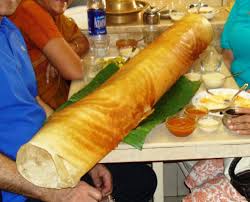
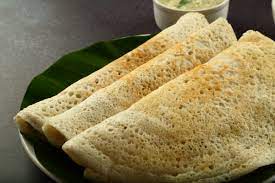
I went to Sri Lanka before I travelled to India. I wanted to travel to India but it turned out to be easier to go to Sri Lanka first. I supposed the countries would be similar, and in many ways they are, but there are significant differences too. Obviously, I only learned about the differences after I departed Sri Lanka and reached India. The first difference I noted is that dosas are better in India, or to be more accurate they are better in South India. I have no idea what dosas are like in the northern parts of the subcontinent. But in Sri Lanka I didn’t care for them very much. They were spongy, soggy and filled with cold mashed potato, almost as if the very notion of ‘crisp’ had been expunged from the minds of the cooks who made it. In India, conversely, I found the magnificent ‘paper dosa’, so crispy I only had to glance at it to make it crackle. Thick green chutney and filter coffee and paradise is near at hand.

In Sri Lanka the tuk-tuks are called tuk-tuks, as they are in Africa, but in India they are called autos, which is short for auto rickshaw. I don’t suppose it’s much of a difference, really. When I was in Sri Lanka I was told that drivers in India never stop for pedestrians who are crossing the road but deliberately try to run them over, so that they will be reincarnated as higher beings. In Sri Lanka, drivers are willing to wait for Nature to take its course. No point being reborn as an elephant or dolphin prematurely. What I actually found was traffic chaos on the highways of both countries, but India being much bigger has more chaos, of course. Nobody tried to deliberately run me over in either country, at least not to any noticeable degree, but I won’t make light of the dangers of walking along a road without a pavement. It is harrowing.

At least for me it is. I have always taken pavements for granted. I wonder if they have taken me for granted in return? Never again. Whenever I happen to catch sight of a pavement now, I feel like I am greeting a long-lost friend. “My dear flattened sir! Where have you been? And where are you going? Would you object to me walking with you for a spell, perhaps as far as the bookshop or the restaurant or the metro station? My, but you are looking well. And how are your little potholes? Off to college soon, no doubt! Ah, they grow fast. It seems only a week ago they were tiny cracks in the concrete and already they are yawning chasms. Good heavens, what is this? Motorcycles appear to believe you are an extension of the highway. How improper!”

Pavements are like paper dosas, they shatter at a glance. But this is true in both countries equally, India and Sri Lanka, and doesn’t constitute a difference. I am on the lookout for differences, not overlaps. Monitor lizards. Now that’s a thing! In Sri Lanka there are monitor lizards and although there may be monitor lizards in India too, in Sri Lanka, I saw them by the hundreds and none in India so far. Saree styles too. I don’t mean that monitor lizards wear sarees differently in these countries but that women do. I only know this because I was told it. To my untrained eye, they looked exactly the same, lengths of cloth wound around the body, somewhat complicated, like an ancient toga but more colourful. The existence of ginger biscuits is another difference. They are plentiful in Sri Lanka, but I haven’t located a single packet in India. Ginger biscuits shatter like paper dosas on pavements, so crispy are they.

India won its independence in 1947, Sri Lanka in 1948, which means that for about six months Sri Lanka was a part of the British Empire when India was free. Could those six strange months have had any lasting impact? Probably not but how can I be sure? Sri Lanka has squarish electrical socket holes, India has roundish ones. Sri Lanka has roundish ginger biscuits, India has none, probably because they don’t constitute a ‘square meal’. In India, ‘milk’ is a liquid that is derived from a cow, in Sri Lanka it comes from a coconut. A cow is a mammal, a coconut is not. However, milk was created by Mother Nature to feed infants. Cow’s milk was originally intended for calves while coconut milk was intended for baby coconuts. In India there are many festivals, in Sri Lanka fewer. In fact, there are so many festivals in India that I own a calendar which marks the days of the year that aren’t festivals. It’s easier.

Bookshops. There are many great Sri Lankan writers and I have been told that there are many bookshops on the island, but I didn’t see one. I searched for them in vain. Not a single bookshop anywhere! I must have been looking in the wrong places, but all the same it seemed mighty strange. I did find shops calling themselves bookshops that turned out to sell bottle openers or corkscrews, but I never found a place selling those flippable cuboids filled with words that one is pleased to read in the evenings. In India the opposite situation prevailed. There are so many bookshops that it is difficult to find anywhere selling corkscrews or bottle openers. There are shops that claim to sell corkscrews and bottle openers but in fact they sold books, highbrow literature mostly, none of it doubling up as a tool to uncork wine or give access to beer.

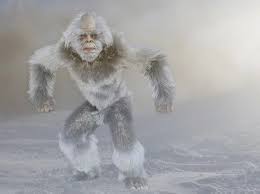
The final difference I wish to mention is one that is somewhat unfair to the phenomenon known as ‘temperature’. Let me explain. In Sri Lanka I boiled, it was hot all day, every day, and even at night it was very warm. The ceiling fans kept me comfortable and without them I should have turned into a human kettle with steam coming out of my nose and ears. In India I found the climate perfect, warm but not hot, and the ceiling fans were allowed to take the day off. Yet the reason for this marvellously cool India is simply that I was based in Bangalore, which lies at a fairly high altitude. Altitude makes all the difference, a truth that I learned in many countries along the equator. Roast on the coast, cool off in the hills. Go up, keep going, and you will eventually have snow on your brow, no matter your latitude. This is the philosophy of Yetis. And if anyone thinks I am obsessed with Yetis, I will admit it. Yes, I am.
Rhys Hughes has lived in many countries. He graduated as an engineer but currently works as a tutor of mathematics. Since his first book was published in 1995 he has had fifty other books published and his work has been translated into ten languages.

.

PLEASE NOTE: ARTICLES CAN ONLY BE REPRODUCED IN OTHER SITES WITH DUE ACKNOWLEDGEMENT TO BORDERLESS JOURNAL

Click here to access the Borderless anthology, Monalisa No Longer Smiles

Click here to access Monalisa No Longer Smiles on Kindle Amazon International