Crabs scuttle there, lonely hearts of purblind pleasure

You yearn to scoop up with a child’s shovel,

Relishing the tingle of sand’s reanimated matter.

In the corkscrewed nexus of a god’s naked palm

You discover butts and unusable flotsam

Blackened by barnacle rust from history’s rime:

The timelessness where you bear witness

To a soggy past with these craggy sentinels

Watching marshmallow clouds slowly morph

Through hazy days of mist-ridden skies.

Rock becomes pillow to your nodding head,

For one cannot sleep under destiny’s rainbow

With scattered rain eclipsing the diurnal wend

Of conflicting elements?

Your lips bear a garlanded surprise, perhaps,

Of entwining seaweed still growing yet,

Into lungs of possibly pandemic rot

Where the airs of your humanity expire

Under the crags of dubious spiritual shelter;

You’re no longer witness to urban banality

Outside where a gross mechanised landscape

Looms in retinal configurations of cold dust.

You won’t have to breathe airborne droplets

Fastening a bleak curtain of acidic rain, either:

The grey confetti choking those homeless ones

Pushing shopping carts filled with dumpster leftovers,

While sparrows with limpid wings descend

To peck at that detritus of rife, decaying flora.

Under the crags the helix of humanity crumbles

As you finally emerge to sit atop one,

Meditating as an outcast Buddha of sorts

On the inevitability of seasons forever

Eroding these basaltic, ocean thrones –

and the secrets beneath left to other sad beachcombers?


****


Under the crags you found an old cell phone

Ringing, and the voice said “under the crags

Hip crabby beachcombers live scuttling there,

And they forage under the littoral’s rocks

Of old volcanic upheaval beneath cloud-ridden skies

Where brave explorers once ruled the sea.

They mapped nearby landscapes, my friend,

As long-billed terns strutted gaily everywhere,

Pecking for food … (Under the crags of eternity,

Or boulders of outsized granite, with gemstone stanchions

Like god pebbles thrown there by Gulliver’s sturdy hand):

Until you’re meditating with the drowning Buddha today

On the inevitability of seasons eroding these ocean thrones

You sit like a beached saviour in silence beneath …”


Then I hung up –
Peter Magliocco writes from Las Vegas, Nevada, where he’s been active as writer, poet, editor, and artist. He has recent poetry in A Too Powerful Word, Trouvaille Review, Lothlorien Poetry Journal, Flashes of Brilliance, dyst, Dreich, and elsewhere. His latest poetry books are The Underground Movie Poems (Horror Sleaze Trash), Night Pictures from the Climate Change (Cyberwit.net), and Particle Acceleration on Judgement Day (Impspired press).
.
PLEASE NOTE: ARTICLES CAN ONLY BE REPRODUCED IN OTHER SITES WITH DUE ACKNOWLEDGEMENT TO BORDERLESS JOURNAL
Title: Faking It : Artificial Intelligence In a Human World
Author: Toby Walsh
Publisher: Speaking Tiger Books
AI, or Artificial Intelligence, has become an integral part of our daily lives. It has revolutionised industries, from healthcare to transportation and manufacturing. However, some people may seek to artificially enhance AI to deceive others. This is called “faking AI”. There are several reasons why someone might fake AI.
Faking AI can enable individuals to impersonate someone else or appear as experts in a particular field. This can have negative consequences, such as fraud or phishing scams. Creating AI from scratch can be complex and time-consuming. By pretending to have AI, individuals can save time and effort while still achieving their desired results. In some cases, individuals may prefer to keep certain aspects of their AI-driven projects confidential. Faking AI can provide privacy and discourage further investigation.
One of the most common methods of fake AI is to manipulate data. By selectively choosing or modifying data, individuals can create artificial patterns or results that seem AI-generated. Another approach is to use pre-trained models, which are AI systems based on large datasets. These models can be repurposed and fine-tuned to deliver specific results without significant effort.
Machine Learning as a Service (MLaaS) platforms enable individuals to create AI models without technical expertise. These platforms often offer pre-trained models to generate fake AI results. Fake AI APIs, or Application Programming Interfaces, can simulate AI functionality. These APIs provide AI-driven responses or data but rely on predetermined algorithms or scripts.
While pretending to have AI may have certain advantages, it also has several disadvantages. Faking AI can mislead consumers about AI quality and authenticity. This can erode trust in AI technology and hinder its widespread adoption.
Faking AI may violate ethical guidelines and legal requirements. The use of AI without disclosing its true origins or limitations can contribute to legal consequences, including breach of contract or fraud. Faking AI can result in inaccurate predictions and decisions. This can lead to serious consequences in industries where AI plays a significant role, such as healthcare or finance.
Faking It: Artificial Intelligence In a Human World by Toby Walsh goes into the subject. A world leader in artificial intelligence, Walsh has spent his life dreaming about and researching how machines think. Scientia Professor of AI at the University of New South Wales and Fellow of the Australian Academy of Science. Toby is passionate about ensuring AI improves, not harms, our lives. He authored It’s Alive! From the Logic Piano to Killer Robots, which was named one of the year’s best books by the New Statesman. Toby contributes to American Scientist, New Scientist and The Guardian.
The blurb says: “Faking AI has become an increasingly prevalent concern in today’s digital age. It is crucial for individuals and organizations to be aware of the methods and motivations behind faking AI and take appropriate measures to detect and protect against it. By implementing best practices and promoting transparency, we can build trust and preserve the integrity of the AI-driven world. Artificial intelligence is, as the name suggests, artificial and fundamentally different to human intelligence. Yet often the goal of AI is to fake human intelligence. This deceit has been there from the very beginning. We’ve been trying to fake it since Alan Turing answered the question ‘Can machines think?’ by proposing that machines pretend to be humans.”
As Walsh argues in his book, we are on the verge of developing artificial intelligence that can be used to deceive us. ChatGPT is an example of an artificial intelligence that is capable of fooling us into believing that it is intelligent and blurring the line between what is real and what is not. The truth is that they are devoid of true understanding, sentience, and common sense.
In spite of this, they are still capable of making a difference in the world. He raises fundamental questions in the book, including: Can artificial intelligence be creative? Can they be moral? What can we do to ensure they are not harmful?
Toby Walsh takes us through all the ways artificial intelligence mockups human emotion in this exciting and fascinating book. Also, he examines the implications of this for humanity in the present and the future of our planet.
.
Bhaskar Parichha is a journalist and author of Unbiased, No Strings Attached: Writings on Odisha and Biju Patnaik – A Political Biography. He lives in Bhubaneswar and writes bilingually. Besides writing for newspapers, he also reviews books on various media platforms.
.
PLEASE NOTE: ARTICLES CAN ONLY BE REPRODUCED IN OTHER SITES WITH DUE ACKNOWLEDGEMENT TO BORDERLESS JOURNAL
Down with these bloodied walls,

where love is held prisoner,

life’s journey stalls.

Time has no purpose.


Down with these graffitied walls,

where hate binds all pain,

voices imprisoned in

confined spaces echo.


Down with these white-washed walls,

where prejudice abides,

ignorance crawls,

dust never settles.


Down with these bullet-holed walls,

where peace is wanting,

liberty mauled,

humanity cries.


Down with these surrounding walls,

so, birds return to nest,

dreams reinstalled,

and life breathes again,


    and souls become songs,

    and spirits begin to sing,

    and the lame dance,

    being alive to the heartbeat,

    as the healing begins.
Sanjay C Kuttan, poet, philosopher and writer, was born in Malaysia, lives in Singapore, has his poetry published in Where Fires Rage, In One Breath, Under the Spell of Flickering Lights, Quilted Sails and in other anthologies.
.
PLEASE NOTE: ARTICLES CAN ONLY BE REPRODUCED IN OTHER SITES WITH DUE ACKNOWLEDGEMENT TO BORDERLESS JOURNAL
My aunt Ranjita and uncle Praphulla Ghosh were tenants of a barsati[2] at 4A Motilal Nehru Road. Next door lived Padma Khastagir, who would become the first woman chief justice of West Bengal. And if you walked through the gate separating the two houses, you would walk into the house owned by Purabi Chakladar — Khokondi to us.
One day, while we were visiting from Bombay, Baba abruptly stopped in his track. “Mrinal Babu!!” he called out. The gentleman in white kurta and Aligarhi churidar spun around, and responded at the same pitch, “Nabendu da[3]!!”
I was taken aback. I did not know Mrinal Sen then. Instead, I knew his lanky young lad, Kunal, though only by sight. I knew him because, as my friend Haabu — ‘good name’ Tapan — told me, he used to call his dad ‘bandhu[4]‘. In return, his father too calls him bandhu, Haabu had added, to my amusement and intrigue. Leapfrogging through time, I am now reading with a smile on my lips that Bandhu is the title of the biography of Mrinal Sen penned by his worthy son Kunal…
I also knew that Kunal’s mama[5], Anup Kumar, lived with them in that house. So was the actor famous as ‘the’ Palatak[6] really his maternal uncle? Naah! But I wasn’t intrigued. After all, Dulal mama and Amal kaku[7] and Sudhir mama too lived with us, in our tiny house in Bombay…
Soon I got to know Mrinal Sen. The director. Because I got to watch Bhuvan Shome[8]in a private screening at Indrapuri Studios. I had tagged along with baba[9] for the screening where the only other viewers were the Hrishi kaku — the famous Hrishikesh Mukherjee — and the lights wizard, Tapas Sen, and the man who had played the eponymous role of Bhuvan Shome. Yes, Utpal Dutt. And let me excerpt from my piece in Sillhouette and my piece in Blue Pencil’s Tribute to Mrinal Sen and provide a glimpse of that evening.
*
It was the summer of 1968. Hrishikesh Mukherjee, Nabendu Ghosh, Utpal Dutt, Tapas Sen and Mrinal Sen had gathered in Indrapuri Studios. A special preview had been organised for a film Mrinal — an associate of the other four from those IPTA [Indian People’s Theatre Association] days at Paradise Cafe — had just completed for Film Finance Corporation [FFC]. A 12-year-old – me – had tagged on. They watched in complete silence as the strict bureaucrat [Bhuvan Shome] from a metropolis took a break from his Rail Board office in the Kutch Backwaters, went on a wild duck shoot, was charmed by an innocent village belle and pardoned her husband, a corrupt ticket collector. The viewers were engrossed in the pristine landscape, the unspoilt villager, the incorrigible bribe-seeker. And they laughed when the quirky disciplinarian stood before a mirror, stripped, made faces, yelled and danced in joy, feeling liberated from the harness of doing the ‘right’ thing.
The scene was straight out of Mrinal’s own life: he’d enacted it in 1951, when he quit as a medical rep in Jhansi. All through the evening at Indrapuri, Mrinal was tense, wondering how the viewers would respond to the Bonophul story he’d wanted to make since 1959. The seasoned group of writers, directors, actors and theatre persons were a barometer the director trusted completely. Although he had eight films behind him, Mrinal was starting from a ‘zero point’. It was a radical departure for even him — and Indian viewers had certainly not seen such idyllic outdoors, such visual poetry, such disregard for romantic conventions. No sets, no stars, no songs, no happy endings, the dark comedy thumbed its nose at morality. FFC had agreed to fund it only because the amount was so low. But after the failure of the Oriya Matira Manisha (1966), Mrinal was sitting idle, with no Bengali producer willing to back him. He simply had to prove himself with this Hindi film.
Little did the man with salt-n-pepper hair, silver sideburns, rumpled kurta and Aligarhi churidar know that the evening’s youngest viewer — who had been completely ignored by the grey heads — could indicate the popular response to Bhuvan Shome. Here was a movie that had thrown traditional narrative to the winds and replaced it with a sweeping vision! It would sweep off its feet an entire generation of filmgoers who had no affection for mainstream affectation, social tragicomedies, or action drama. Unwittingly, Mrinal had ushered the New Wave in Indian cinema.
*
Wind the clock and set it forward by a few years. Mrinal da‘s biography was being launched at Kolkata’s Park Hotel. Baba arrived at the venue accompanied by me. Mrinal da got off the stage and headed straight for him. On his own he signed a book and placed it in Baba’s hand.
On the 90th birthday of Nabendu Ghosh, 27 March 2007, Mrinal Sen wrote:
“As a writer and a creative individual, Nabendu Ghosh has never believed evil is man’s natural state. Along with his characters, he has been confronting, fighting, and surviving on tension and hope.”
That same year, on 15 December 2007, Baba passed away. The minute he got the news, Mrinal da called me up. “Where are you people going (to take him)? Keoratala? I will be there.”
Without waiting for anybody — from the family or the press — he rushed to the cremation ground.
When we reached there, that presence was a balm for us in our bereavement.
[1] These musings are occasioned by the ongoing Birth Centenary of Mrinal Sen, which has seen the publication of two books on the cine maestro this month. These are Blue Pencil’s ‘Tribute to Mrinal Sen’ in English, and Bally Cine Guild’s Prasanga Mrinal Sen in Bengali. It is a matter of great joy for me that my writing is part of both the books.
Of equal joy to cineastes is that three films have been made in the Centenary year – by contemporary masters. Palan is Kaushik Ganguly’s sequel to Sen’s Kharij (1982). Padatik is Srijit Mukherjee’s biopic of the master featuring Chanchal Chowdhury of Bangladesh. And Chalchitra Ekhon traces Anjan Dutta’s journey with his mentor that started with Chalchitra/ The Kaleidoscope (1981).
But let me circle back to the very beginning – the story of Mrinal Sen and Nabendu Ghosh…Clickhere to read an excerpt from Nabendu Ghosh’s autobiographywhere he describes his interactions with Mrinal Sen.
[2] Rooftop housing, literal translation, a shelter from rain
[3] A respectful honorific for someone older – elder brother.
[6] Translates to Runaway, 1963 Bengali movie is the title of a Bengali movie by Jatrik, remade by Tarun Majumdar in Hindi as Raahgir/ The Traveler (1969)
[9] The late screenwriter and director, Nabendu Ghosh, is Ratnottama Sengupta’s father
Ratnottama Sengupta, formerly Arts Editor of The Times of India, teaches mass communication and film appreciation, curates film festivals and art exhibitions, and translates and write books. She has been a member of CBFC, served on the National Film Awards jury and has herself won a National Award.
.
PLEASE NOTE: ARTICLES CAN ONLY BE REPRODUCED IN OTHER SITES WITH DUE ACKNOWLEDGEMENT TO BORDERLESS JOURNAL
Poetry by Masud Khan, translation from Bengali by Professor Fakrul Alam
MOTHER


In the dust smeared evening

Far away, almost at the margins of the horizon,

The one who is resting all by herself


In a bed laid out under the open sky

Is my mother.

Her bed smells of grass and the antiseptic Dettol.

A tube in her nose supplies her with oxygen,

A saline bottle is attached to her arm,

And she is tied to a catheter too—

It is as if she is getting entangled inextricably

In a jungle of plastic and polythene reeds.


A smoky surreal unreal canopy encircles her bed.


Seemingly after ages, dusk descends on the world,

A few birds and insects form a chorus,

Wailing throatily obscure and dissonant tunes

In amateurish over-excited zeal,

Seeking refuge timorously in that plastic hedge,

At the margin of the horizon,

In the shadow of primeval motherhood.


A FRAGRANT TALE


The world is full of misleading, minus signs and foul smells.


At times, the world feels as heavy and unbearable

As the weight of a son’s dead body on his dad’s shoulder,

Or as stressful as playing the role of a dead soldier,

Or as formidable as a physically challenged person’s ascent up a mountain

Or as painful as caring for a precocious, traumatised child...


Nevertheless, occasionally such stress-laden memories will blur,

And suddenly, wafting on the wind’s sudden mood swing,

A fragrant moment comes one’s way!
Masud Khan (b. 1959) is a Bengali poet and writer. He has, authored nine volumes of poetry and three volumes of prose and fiction. His poems and fictions (in translation) have appeared in journals including Asiatic, Contemporary Literary Horizon, Six Seasons Review, Kaurab, 3c World Fiction, Ragazine.cc, Nebo: A literary Journal, Last Bench, Urhalpul, Tower Journal, Muse Poetry, Word Machine, and anthologies including Language for a New Century: Contemporary Poetry from the Middle East, Asia, and Beyond (W.W. Norton & Co., NY/London); Contemporary Literary Horizon Anthology,Bucharest; Intercontinental Anthology of Poetry on Universal Peace (Global Fraternity of Poets); and Padma Meghna Jamuna: Modern Poetry from Bangladesh(Foundation of SAARC Writers and Literature, New Delhi). Two volumes of his poems have been published as translations, Poems of Masud Khan (English), Antivirus Publications, UK, and Carnival Time and Other Poems (English and Spanish), Bibliotheca Universalis, Romania. Born and brought up in Bangladesh, Masud Khan lives in Canada and teaches at a college in Toronto.
Jahar sang out, “Bimal Roy, the Director of Udayer Pathey! He was all praises for one of your writings. So I offered to escort you — and introduce you if he so wished. He said, ‘He is a creative talent, I’d surely likely to meet him.’ Forthwith I set out on this venture.”
I was stunned. Overwhelmed. My experience of the craze in Rajsahi – when the police had to lathi charge on the crowds that thronged the theatre where Udayer Pathey had released — flashed through my mind. I recalled my deep seated desire to work with him.
At this point Kanaklata stepped into the room. Jahar sprung forward and despite her vehement protest he bowed to the ground and touched her feet. “Boudi,” he spoke to her, “renowned director Bimal Roy has expressed his wish to meet Nabenduda. I’m here to escort him.”
“Sure, after you’ve tasted some sweetmeat and had a drink of water. The fish curry rice can wait for you to come back for lunch.”
“Thy wished is my command Boudi!” Jahar bowed again.
*
Bimal Roy lived on Sardar Shankar Road in South Calcutta. Tall, fair complexioned, attractive looking with a commanding presence, Bimal Roy was a heavy smoker.
After a while of polite conversation he said, “I’ve read your Daak Diye Jaai[3]and Phears Lane. As an admirer of your writing I can say that it has all the essentials of a screenplay.”
This observation brought me alive to a latent aspect of my writing. I kind of rediscovered myself. Gratefully I thanked him.
“Why don’t you narrate a story that can be made into a film?” he said. “Something new, different, and arresting,” he added.
So I narrated the storyline of my new novel, Ajab Nagarer Kahini (Tales of a Curious Land). It was an allegorical story about contemporary civilisation, about the state, and about love too. His face lit up as he listened to the story. He sat still for a couple of minutes. When I stopped, I waited eagerly for his response. Tense.
“I liked the story very much,” Bimal Roy pronounced. “It’s a peerless but relatable and captivating emblematic story. But there’s a slight problem. Mr B N Sircar, the proprietor of New Theatres must hear the story. I firmly believe he will also like it. But right now he is not in Calcutta. Just a few days ago he left for Europe. He will be back after two months. So you will have to wait this while.”
“I will wait,” I replied, earnestly.
*
Two months went by.
One day Mrinal Sen came over.
“Welcome Mrinal Babu, do come in.” Soon as he sat down Mrinal excitedly said, “I’ve got a producer. I’ll direct a film – so I need a good story.”
I narrated two stories, of which Mrinal liked one. Then, after some random conversation I spilled out that “Bimal Roy of Udayer Pathe fame has selected a story of mine.” Mrinal was naturally curious and I had to narrate the storyline to him as well.
The minute I stopped the narration Mrinal clasped my hand, “Give this story to me.”
“But Bimal Roy…” I started out but before I could finish the sentence Mrinal said,“Ritwik [Ghatak] and Hrishikesh [Mukherjee] will both be working with me.”
“Who’s Hrishikesh?”
“He is a well-known assistant in the Editing department of New Theatres. Very intelligent.”
“I cannot give you the story without having a word with Bimal Roy,” I told Mrinal. Mr Sircar will be back in a matter of days.”
Mrinal left for the day.
*
I met Bimal Roy the very next day. He informed me that Mr Sircar’s return had been delayed, it will be some more weeks before he returns.
But more than a fortnight went by and I did not hear from Bimal Roy. Besides, I was facing financial hardship. I needed money to keep the kitchen fire going.
Suddenly Mrinal showed up again. “I must have that story Nabendu Babu,” he said and shoved 500/- rupees in my hand.
I ended up saying ‘Yes’ to Mrinal Sen.
Two days later we signed an agreement.
On the third day a postcard landed in my flat. Bimal Roy was writing to say that, “Mr Sircar is back from Europe. He has also liked the story idea of Ajab NagarerKahini. Come over right away, we must meet Mr Sircar to sign the contract with him.”
The next morning I went to his house and told Bimal Roy about Mrinal Sen. The solemn gentleman turned grave.
I sat still with bowed head.
The Shubh Mahurat, two months later spelt the ‘auspicious commencement’ of the film. The lead character of Arindam was to be played by Sambhu Mitra, the famous theatre personality who is still revered as an actor, director, playwright, and reciter. In Technicians Studio, the clapstick was sounded on a shot of him by the eminent actor of Bengali theatre and screen ‘Maharshi’, whose name was Monoranjan Bhattacharya. But why was he called ‘Maharshi’? Because the very first role he essayed was of Maharshi Balmiki in Sita produced and acted by Sisir Kumar Bhaduri[4]. His Ramchandra was an amazing portrayal of Lord Rama. So long back he had portrayed the author of Ramayan, yet that remained his calling card in popular imagination, for decades. Why? Because he was a stalwart as far as his wisdom and character was concerned too.
Mahurat, yes, but that initial instalment of Rs 501 was not followed up by another. So what if an agreement was drawn up and signed!
“Oh sir!” I complained to Mrinal Sen, “I need…”
“Yes, he will give,” Mrinal assured me, “in a few days you will get the second instalment. I have spoken with him.”
Six months later Mrinal himself told me, “This producer does not have any fund. You better send him a notice.”
So I sent him a notice – to the effect that unless you clear all my dues within 15 days, then the agreement will stand cancelled. Null and void. The producer did not bother to grace me with a reply. So legally the rights to the story was now mine again.
*
Forthwith I visited Bimal Roy again.
“Come, come Nabendu Babu…”
His gracious welcome was encouraging. I said, “It’s been a while since I was here. So, what’s keeping you busy?”
Bimal Roy smiled, “Your story was not available, so I am currently shooting a film about Netaji’s INA.”
“Who is the author?”
” Nazir Hussain, a gentleman who was formerly with INA.”
“Excellent,” I said. Then I murmured in a low voice, “Necessity obfuscates clarity of thought. That’s what happened with me Mr Roy. But my story is back with me now. Those who had acquired the right did not have the wherewithal to film it.”
“Let me complete this film,” Bimal Roy said, “I will speak with Mr Sircar after that. I’ll be happy if we can film your story.”
I drank up the tea, greeted him with folded hands and came away.
*
Then I went through a difficult phase. To put it bluntly, I was in dire need of money. Here’s why.
Literature was my main occupation. However, writing the scripts for Putul Nacher Itikatha and SwarnaSita[5]had spelt a certain prosperity and made life easier. But both literature and cinema was dealt a blow by the political development of 1947.
I think of the Partition as a national curse. I still think so. The direct impact of that was I was alienated from my birthplace, Dhaka, which had become East Pakistan. I still had a link – Bengali Literature and Bengali Cinema. But Pakistan was Pakistan, be it East or West. So the Pak mind thinks differently – rather, quite the opposite. Iconic dramatist Dwijendralal Roy’s classic play Shahjahan had a scene revolving around Danishmand, a celebrated figure from Persia who came to India and was the court jester during Aurangzeb’s rule. Then, he went by the name of Dildar. In the aforementioned scene he discussed the Hindus and Muslims and commented that “These two communities will remain opposites. One prays facing East, the other faces West; one writes from left to right, the other from right to left. One wears a pleated dhoti, the other wears the unpleated lungi. One has a pig tail at the back of his head; the other nurses nur, a tuft of hair on his chin.”
I recalled the scene in the fading days of 1948 when the government of East Pakistan dealt a blow to Bengali language and films by declaring Urdu as the national language of Pakistan at the cost of Bengali, the language of the people’s heart.
In fact, those deciding the fate of the people from distant Islamabad mandated that Bengali too should be written in the Arabic script. What is more, to destroy every emotive link between Bengalis on either side of the divide, Bengali books and Bengali movies were banned in East Pakistan. As a result, once again the middle class and upper class Hindus started deserting their home and hearth and crossing the borders even to live as refugees in West Bengal.
This dealt a massive blow to the commerce of publishing and cinema.
I had just completed a short novel; I started doing the rounds of publishers to try my luck with it. My household was crying out for money to keep the kitchen fire alive.
I went over to Bengal Publishers. Manoj Da said, “I will definitely publish this Nabendu but after two-three months. The market is stymied right now.”
Sachin Babu of Baak Sahitya also said the same thing in polite words.
I walked over to Cornwallis Street and into the office of D M Library. Gopal Das Majumdar warmly welcomed me and treated me to tea and sandesh[6]. Then he said, “You leave the manuscript with me. I will most certainly publish it but not right away. The market is reeling under this attack by Pakistan. Just wait for a couple of months. Meanwhile here’s an advance for you.”
That’s what I did eventually. That novel was titled Nahe Phoolhaar[7].
Meanwhile, since Gana Natya Sangha, the radical theatre group or People’s Theatre Association that attempted to bring social and political theatre to rural villages in the 1930s and 1940s, was banned by the West Bengal government. Bijon Bhattacharya, the famed dramatist of the classic Nabanna (1944), and other major members founded another organisation named Natyachakra. On its very first night of performance Neel Darpan[8], written by Dinabandhu Mitra in 1858-1859 and pivotal to the Indigo Revolt of 1859, raised a storm amongst the theatre lovers. We the members of Natyachakra were inspired by that.
*
Almost a year had passed by. One day I was visiting my friend Santosh Kumar Ghosh in Bhowanipore. One of the majors in the editorial department of the newspaper, Ananda Bazar Patrika, who was acclaimed as the author of Kinu Gowalar Gali, this friend of mine lived on the first floor of a house opposite Bijoli Cinema. On this visit I noticed that Bijoli was showing Pahela Aadmi[9].
I glanced at my wrist watch — 5.30 pm. “I feel like watching a movie,” I told Santosh Babu. “Care to join me?”
“Which film?”
“That one playing in Bijoli – Bimal Roy’s latest creation. The evening show starts at 6 pm.”
“I’m game for it,” Santosh Kumar said in English. “Let’s go.”
Right away the two of us friends made our way to the balcony of Bijoli Cinema.
Some of the scenes of Azad Hind Fauj[10] excited us and made us feel proud. The structuring of the story and direction made me salute Bimal Roy once more. “Jai Hind[11],” I said to myself in his honour. Santosh Ghosh also highly praised the film. ‘’This gentleman Bimal Roy is a rare talent – and this film once again proves that. Well done.”
As soon as I reached home I told Kanaklata about Pahela Aadmi. She was happy and unhappy, “Such a nice film but I didn’t get to see it.”
“I will take you to watch the film – it is worth a second viewing.”
Next morning at 9 am, I told Kanaklata, “I need to buy some writing paper, I’ll just be back from the market.” But I did not go to the market. I headed straight for Sardar Sankar Road, to Bimal Roy’s residence.
“Come Nabendu Babu, step inside.” Bimal Roy was, as before, holding a cigarette between his fore fingers.
“I watched Pahela Admi yesterday,” I started the conversation.
“In which theatre?” he asked, smiling. “Bijoli. And with me was Santosh Kumar Ghosh of Ananda Bazaar Patrika.”
“Yes Sir. Both of us liked the film very much. It’s very courageous. To make a film concerning INA[13] calls for a lot of courage. We congratulate both New Theatres and you Sir.”
“Thank you,” he replied with a smile. Then he called out, directing his voice inward, “Two cups of tea here, please.”
“Yes, I will send…” a lady’s voice replied. Then he puffed his cigarette in silence. After a few seconds I mumbled what I had actually come for, “Now that Pahela Aadmi has released, will you consider my story?”
“No,” Bimal Roy looked straight at me and shook his head. “And I am sorry to say this. Because I am leaving New Theatres to go to Bombay. There, no one will value your story the way Bengali cinema would. Besides, I am going to Bombay to make a Hindi film for Bombay Talkies.”
He fell silent. And I felt darkness descend around me.
Bimal Roy had not finished. He took a puff off his cigarette and then spoke again, “Himangshu Rai’s wife Devika Rani has sold all the rights over Bombay Talkies and left. At present thespian Ashok Kumar is the owner of the Bombay Talkies. He has invited me to make a film.”
“Waah!” I was overwhelmed on hearing the name, Ashok Kumar.
Bimal Roy went on speaking, “Bombay is at the other end of India. The demands of the Hindi film world are quite different, so there is a risk involved in this. Besides, the financial condition of Bombay Talkies is not robust at the moment. If I cannot make a film that is both good and successful, then…” his voice trailed off.
Silently I started pondering over what options I had before me.
A maid brought tea and biscuits for us. “Have the tea,” Bimal Roy’s voice cut into my thoughts. I kept thinking even as I downed the tea, “What now? Pakistan has as good as killed the markets for both, books and films. Everything was uncertain at the moment. I had no option but to send off Kanaklata and our four year old son to live with her parents in Malda.”
“Nabendu Babu,” Bimal Roy’s voice floated into my ears. I looked at him. He smiled a bit as he said, “My chief assistant Asit Sen is going with me and so is Hrishikesh Mukherjee as the editor in my team. Can you join us as our screenplay writer?”
‘Ayn!’ Surprised, I looked at him with renewed attention. “Are you asking me to go to Bombay with you?” I sought to clarify my own thoughts perhaps. “Yes. Screenplay writing is a very serious part of filmmaking. Not everybody can become a screenplay writer. Along with the ability to wield the pen the person must also possess a sound sense of drama. You have that.”
Am I dreaming! Was I dreaming?! After watching Udayer Pathe in Rajsahi I had secretly desired to work with that film’s director. God seemed to have heard me then and was all set to fulfil that desire.
“I will be happy to do so, Mr Roy,” I replied, gratitude overflowing in my voice.
“Our future is uncertain, let me caution you Nabendu Babu. You will have to treat it as an adventure. And, another thing: Asit, Hrishi, all these guys will go alone for now, leaving their families here.”
“So will I Mr Roy,” I stressed. “I will go with you to Bombay — ”
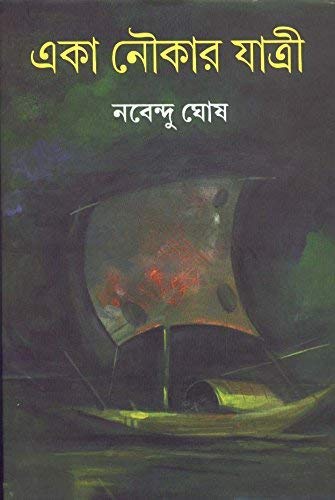
About the Book: Published in 2008, this is the autobiography of the legendary screenplay writer and Bengali litterateur, Nabendu Ghosh. Spanning through Pre-Partition India to the modern times, it is both a political and an artistic commentary of his times.
About the author: Nabendu Ghosh was born 27 March 1917 in Dhaka (now in Bangladesh). At the age of 12 he became a popular actor on stage. As an acclaimed dancer in Uday Shankar style, he won several medals between 1939 and 1945. Ghosh lost a government job in 1944 for writing Dak Diye Jaai, set against the Quit India Movement launched by Indian National Congress. The novel catapulted him to fame and he moved to Calcutta in 1945. He soon ranked among the most progressive young writers in Bengali literature.
Nabendu Ghosh has written on all historical upheavals of 1940s – famine, riots, partition – as well as love. His oeuvre bears the distinct stamp of his outlook towards life. His literary efforts are ‘pointing fingers.’ There is a multi-coloured variety, a deep empathy for human emotions, mysterious layers of meaning, subtle symbolism, description of unbearable life. Love for humanity is also reflected in his writings. He has to his credit 26 novels and 14 collections of short story. He directed the film Trishagni (1988), based on Saradindu Bandopadhyay‘s historical short story Maru O Sangha.
He died on 15 December 2007.
About the Translator: Ratnottama Sengupta, formerly Arts Editor of The Times of India, teaches mass communication and film appreciation, curates film festivals and art exhibitions, and translates and write books. She has been a member of CBFC, served on the National Film Awards jury and has herself won a National Award.
.
PLEASE NOTE: ARTICLES CAN ONLY BE REPRODUCED IN OTHER SITES WITH DUE ACKNOWLEDGEMENT TO BORDERLESS JOURNAL
The decision to retire was a long, tough, and protracted one. The traditional wisdom always gave out doctors never retire. But we needed time to ourselves. We had long and fulfilling lives and now was the time to take things slow. The body was ageing and required more time to complete various activities. Some tasks were no longer possible.
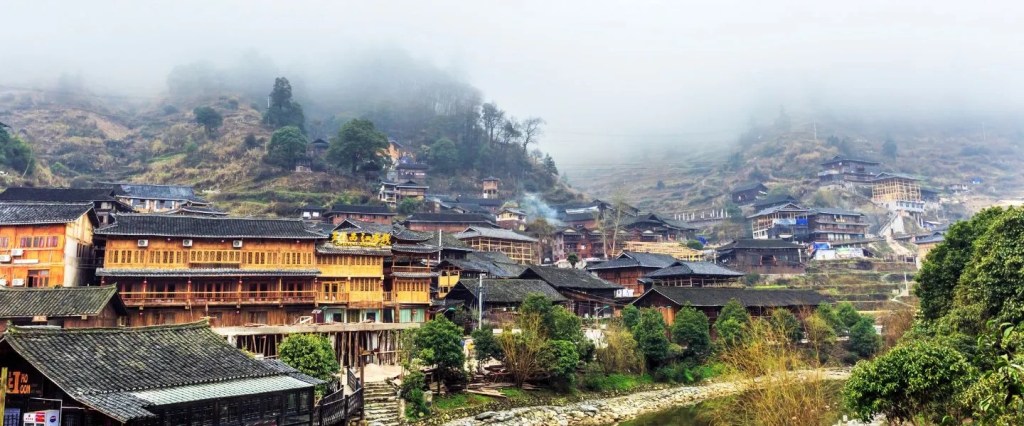
Jiri, Nepal
I still remember the first day I met Rajendra on the orientation day of the Family Medicine residency program in upstate New York. Rajendra was from Jiri in the Himalayan country of Nepal. For a few decades, Jiri was the gateway to the Everest region. Then the hikers and mountaineers started flying to the air strip at Lukla. Roads were also progressing further and further in the country. We grew closer during the residency. We shared many interests including nature, hiking, photography, creative writing, and a strong empathy for the underdog. Our friendship slowly deepened, and by the end of the residency we decided to spend the rest of our life together.
We were also different in so many ways. I was a girl of mixed German and Colombian heritage. My family was well-to-do, and I had a privileged childhood. Raj was from a poor family and had to face many struggles in his life. He went to medical school on a government scholarship. Like most graduates of the Institute of Medicine in Kathmandu he then concentrated on being selected for a residency in the United States. Even in the early eighties this was a long, hard struggle.
He did a few ‘observerships’ and research attachments. He eventually went on to become a chief resident and we both worked for around two years in the Northeast health system after residency. Soon we had to decide on what to do next. I would have liked to continue in the United States. Raj however, was increasingly considering whether we should go back to Nepal. I told him that though I had never even visited Nepal I was OK with whatever he decided.
Though his family had settled in Jiri, Raj was a Newar. His full name was Rajendra Shakya. The religion of the Newars was complex tapestry of Hinduism and Buddhism. His family home was at Bungamati, a Newar village in Lalitpur district at the southern part of the Kathmandu valley. Newar Gods and Goddesses were complex and had both good and more wrathful aspects. Women were considered ritually impure during menstruation and were not allowed into the kitchen during this period, and they could not visit temples. In some rural parts of the country, the Chaupadi system was still followed, and women were banished to a cow shed during their periods. The Newars had their own caste system, and the concept of purity was important. In the Kathmandu valley the Newars had their ritual feasts (bhoj) and the buffalo was the most important animal in Newari cuisine.
The cow was sacred and killing one was a grave sin, but the poor black buffalo was fair game. I often reflected on this injustice. We first worked at the United Missions to Nepal hospital at Tansen at the foothills of the Himalayas. Tansen was a small town with a significant Newari influence and the hospital was the major and often only source of health care for a large population. The hospital was overcrowded, and we had to deal with a variety of patients. The houses for the doctors were lovely and picturesque, and we had a great community of both Nepalese doctors and expats. We stayed in Tansen for nearly a decade. There were delightful walks in the surrounding hills and a rather long hike to the Rani Mahal on the banks of the Kali Gandaki, often called the Taj Mahal of Nepal.
There was an opening for a doctor couple at Khunde hospital in the Everest region and as he was from Jiri, Raj wanted to apply. The hospital was at a height for around 4000 m and was set up by Sir Edmund Hillary. The hospital provides care to local residents, hikers, mountaineers, and porters from the lowlands. Initially it was a very isolated existence. Later a satellite phone was set up and eventually an internet connection followed. We dealt with all kinds of patients. The weather was cold, but I loved the picturesque cottage near the hospital. The region was becoming a popular trekking region and during the peak seasons of autumn and spring several thousand trekkers passed through.
Patan hospital is one of the old and famous hospitals of Nepal located in the city of Lalitpur also known as Patan in the Kathmandu valley. Migration of doctors to developed nations was a major challenge for Nepal and the Institute of Medicine was not very successful in producing doctors for the country as most graduates left for developed nations. The importance of a family medicine/general practice programme was understood by the policy makers and the Patan Academy of Health Sciences (PAHS) was set up. MD was the postgraduate medical qualification in the country and a MD in General Practice and Emergency Medicine (MDGP) was started in this institution.
We were among the faculty for this program, and we were now working at Patan hospital. We had some family land at Bungamati and built a traditional Newari style house. There were smiling mustard fields around though the area was rapidly urbanising. Flowers grew well. In winters, the Himalayas could be seen on a clear day but air pollution and dust made this a rarer phenomenon.
My brother had retired and settled in our family land on the outskirts of Albany, New York. We had a rather large plot of land, and I was thinking of settling near him. We had followed different life trajectories, and it would be nice to spend some together in the autumn of our lives.
Our work at Patan Hospital was hectic. After long conversations we decided to retire from the hospital and offer our expertise to the MDGP program as Emeritus Professors. Raj’s sister and brother had retired and were now living in Bungamati. Patan hospital would have loved for us to stay on.
We decided to divide our time between Albany and Bungamati. Summers in Albany and winters in Bungamati. Winters in upstate New York can be harsh and unforgiving. The long flight between the two locations will be a challenge as we did not handle long flights well. Let us see what fate had in store for us. Our son was a vascular surgeon in New York and we could be near to him. We were happy that we finally decided to retire and spend time with our families and our grandchildren. It was time to explore the road less travelled!
.
Dr. P Ravi Shankar is a faculty member at the IMU Centre for Education (ICE), International Medical University, Kuala Lumpur, Malaysia. He enjoys traveling and is a creative writer and photographer.
.
PLEASE NOTE: ARTICLES CAN ONLY BE REPRODUCED IN OTHER SITES WITH DUE ACKNOWLEDGEMENT TO BORDERLESS JOURNAL
Ten Thousand Miles along the Yellow River (datable to 1690–1722). Qing dynasty (1644–1911). China.
THE PAINTER CHING HAO*


He brushes in the sky.

He sees it as yellow.

He colours the river

and sees that as yellow, too.

Leaves will not fall on

ground where bones

lie in earthen shrouds.

Where death is not,

it cannot be proud.

The truth is in my mind,

He seems to say. He works

in the cold, in the rain.

When nights are clear,

He sits on a balcony

to stare at the stars,

gleaming like

the eyes of gods,

he hopes are still there.


*Also known as Jing Hao, Chinese landscape painter(855-915CE)
George Freek’s poetry has recently appeared in The Ottawa Arts Review, Acumen, The Lake, The Whimsical Poet, Triggerfish and Torrid Literature.
PLEASE NOTE: ARTICLES CAN ONLY BE REPRODUCED IN OTHER SITES WITH DUE ACKNOWLEDGEMENT TO BORDERLESS JOURNAL
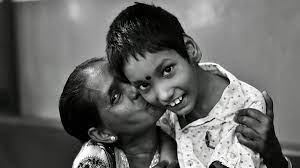
Disability is an inevitable condition that affects nearly everyone at some stage, and its duration can vary from brief to prolonged. It is an inherent aspect of human beings. Recently, I read An Unplanned Journey: Stories of Empathy from the Frontiers of Intellectual and DevelopmentalDisabilities by Naval Pant which offers a tapestry of poignant and compelling accounts of real-life experiences of individuals with developmental and intellectual disabilities that comprise both children and adults with special needs.
Naval Pant, the author, has discovered an invigorating perspective on the complex subject of disability. Spanning a wide range of disabilities, such as autism, language and speech impairments, Down syndrome, cerebral palsy, and Intellectual and Developmental Disabilities (IDD), the author offers a nuanced, in-depth knowledge of the characteristics of these challenges, as well as specific strategies for assisting children in maximising their cognitive and emotional capabilities.
He obtained a degree in Mathematical Statistics but transitioned to Educational Philosophy for his postgraduate studies and PhD. In 2005, he established an organisation dedicated to providing high-quality services for individuals with intellectual and developmental disabilities (IDDs). He strongly advocates for their comprehensive development, rehabilitation, and vocational training within an inclusive setting. His book contains a collection of fourteen stories straight from the heart. This book is unique. The book’s unconventional subject matter, crafted by a perceptive author, compelled me to hold the book in my hand and examine its plush velvet cover, awestruck by its captivating title.
I commenced reading swiftly flipping through the pages with eager speed. The author employs a distinctive storytelling style and smoothly transitions the readers from one story to another. In the introductory chapter, Naval Pant declares that “This narrative is thus at once an autobiographical account, a memoir of the institution we built, a chronicle of the heroic struggles of young children and some of my learnings from serving in the field of special needs education.”
The first story is the only fictionalised account in the collection. The rest emanate from deep lived experiences of Naval Pant and his team of dedicated teachers. “Until you have a kid with special needs, you have no idea of the depth of your own strength, tenacity, and resourcefulness” is the quote which begins the second chapter, “An Unplanned Journey”. It sets the tone of the book as well. It tells us, “There is no roadmap on this island…You don’t know its topography…your situation is unique…Gradually, you learn to accept your situation.”
The concluding chapter delves into the various services extended by his institution, its fundamental tenets and educational philosophy, and the difficulties encountered in a post-pandemic society. It adequately reiterates the organisation’s spiritual drivers that result in the forging relationships between the teachers and the students free from dominance or authority and encourages communication between them. He shows how it is beneficial to prioritise a culture of engagement in educational institutions not rooted in hierarchy. What stood out most prominently for me was the language and tone of the book. The text is highly readable, resembling a casual dialogue between intimate acquaintances. It employs common words, concepts, and ideas, rendering it remarkably engaging and riveting. The book lacks is a narrative that fleshes out the myriad challenges and barriers that caregivers and their children are confront with in society on a daily basis. While it alludes to the topic, it does not extensively investigate or analyse it.
The strength of the book resides in its consistent provision of solutions for every topic it addresses. Naval Pant’s book offers valuable motivation for individuals with impairments and parents and educators who must confront daunting challenges. These stories serve as sources of inspiration, promoting good change in students’ lives and fostering hope, peace, and potential for transformation. Although the book extensively explores the topic of disabilities and its related difficulties, the main message that resonates is the admirable quality of a courageous and tenacious individual who perseveres and harnesses his experiences to foster personal growth rather than succumbing to bitterness. The author does not experience the sorrow that accompanies the task of raising a child with disability. The book illustrates the significant endeavour required to effect substantial transformations worldwide.
The book will be of enormous interest to parents, special educators, disability experts and non-profit organisations interacting with these stakeholders. Unquestionably, engaging with this book will undoubtedly stimulate contemplation over the future of education in Disability Studies for both theorists and practitioners.
Meenakshi Pawha is a retired professor from the University of Lucknow.
.
PLEASE NOTE: ARTICLES CAN ONLY BE REPRODUCED IN OTHER SITES WITH DUE ACKNOWLEDGEMENT TO BORDERLESS JOURNAL
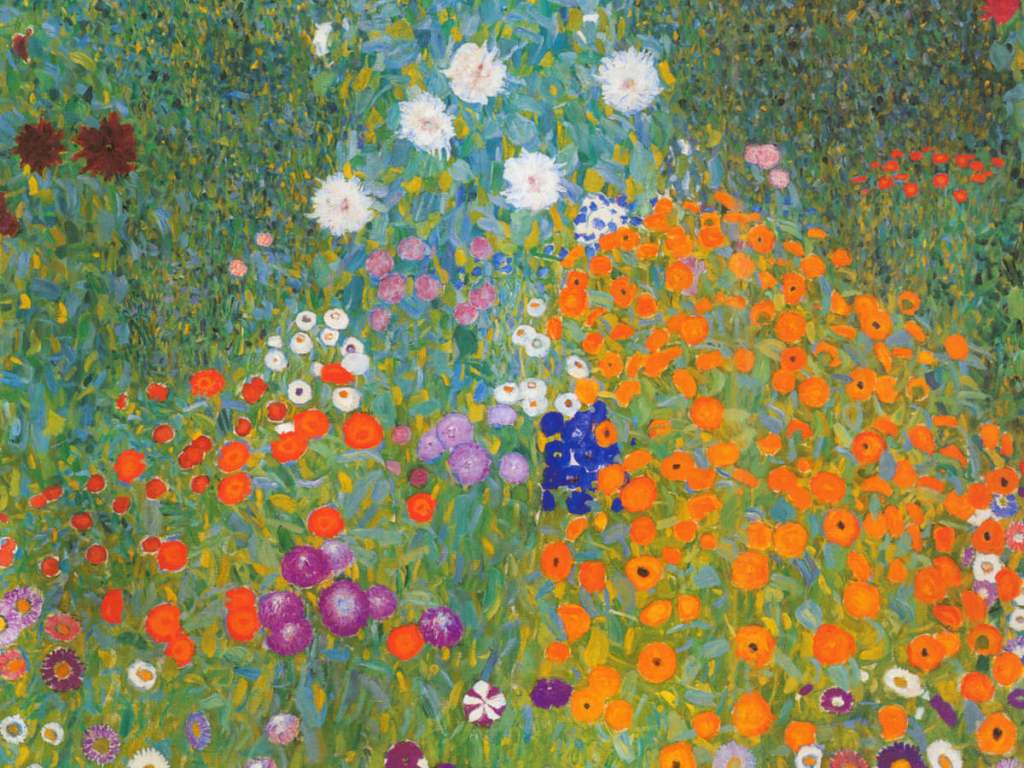
Nature has shed her wintry robes
to adorn brighter clothes.
A cornucopia of colours – bold
yellow, crimson, purple, gold.
Far away the ample hills repose
where a new light softly grows.
The sky is blue, the wind is fair.
A lone bird flies into the air.
In winter, silent seeds have toiled
to deny the grip of frozen soil.
Soon in the garden, green will
bloom with tulips, roses, and daffodils
And the nourished roots shall bring
forth the joyful fruits of spring.
UNTITLED
I feel a silky silence grow
as if all the world has died.
Night is as black as the crow,
no light to show habitation,
but the far off, orange glow
of firelight on the hillside.
I hear a rippling river flow
through a valley, dark and wide.
The white of an owl swoops low –
wings spread, I watch it glide
and the distant orange glow
of firelight on the hillside.
Stuart McFarlane is now semi-retired. He taught English for many years to asylum seekers in London. He has had poems published in a few online journals.
.
PLEASE NOTE: ARTICLES CAN ONLY BE REPRODUCED IN OTHER SITES WITH DUE ACKNOWLEDGEMENT TO BORDERLESS JOURNAL






 Borderless