Categories
Poetry

Poems by George Freek

THE NECESSARY THINGS


My wife watches flowers grow,
while I gaze at a cloudy sky.
She sees beauty.
I see darkness closing
like a lizard’s eye.
Soon it will snow.
She’s rooted in the earth
like an oak tree.
I’m always drifting
into outer space.
She says a rose has grace.
I tell her the moon
has a nasty face.
When I say tomorrow
Won’t be fair,
She isn’t listening.
She’s busy
trimming my unruly hair.


SEPTEMBER IN EARLY MORNING

Flowers have dropped their petals
like a child loses its toys.
Leaves are dry and wrinkled,
like an old woman’s eyes.
Summer has come and gone,
and birds which nested in my trees,
have left on their flight south.
My wife is in the ground.
This morning even her nagging
would be a welcome sound.
I don’t drink wine.
Drunken memories are unkind.
I drink a cup of bitter tea.
I have suddenly grown old.
I feel neither love nor pity.
I watch the moon slowly die,
but I can hardly see it.
It barely lights the sky.

George Freek’s poetry has recently appeared in The Ottawa Arts Review, Acumen, The Lake, The Whimsical Poet, Triggerfish and Torrid Literature.

PLEASE NOTE: ARTICLES CAN ONLY BE REPRODUCED IN OTHER SITES WITH DUE ACKNOWLEDGEMENT TO BORDERLESS JOURNAL

Click here to access the Borderless anthology, Monalisa No Longer Smiles

Click here to access Monalisa No Longer Smiles on Amazon International

Categories
Musings of a Copywriter

Taking Stock…Finally

By Devraj Singh Kalsi

Reading stories of investors with the foresight to invest in the right kind of stocks that created wealth for them is truly motivational as it showcases their bravery. Without much technical data to support their decision-making decades ago, it is rather difficult to believe the sound fundamental homework they conducted before tossing their hard-earned money into the choppy seas of equity markets.

The sight of a charging bull on the road is certainly a fearful sight, but the bullish run on the bourses warms the cockles of the heart when you read your money has fetched four-fold, multi-bagger returns in just a few months and you wish to plough back the profits and stake the capital on another dark horse that only you know can pull off a major rally that takes all financial experts for a ride. You really wish God to whisper the name of the stock that can make you a billionaire and save you from the struggles and uncertainties of a writer’s life.

Not all writers churn out best-sellers to get hefty paychecks from publishers and there aren’t too many maharanis or dowagers left to sponsor an indulgent lifestyle in exchange of literary companionship.

Stock market, despite all the risks, offers a window of opportunity for writers to build a retirement corpus. There needs to be a smart sense of investing to get a rocking portfolio that draws envy from experts who wonder how this non-financial wizard operates. If profit is indeed imagination, writers are also entitled to imagine it in abundance.

Optimism and positive outlook is important as the stock market is similar to life in many ways. You have to be patient and stay invested for long term as those who saw their wealth perish during the recession of 2008 without suffering a heart attack were able to bounce back with double their earnings in just a decade. This is the most recent story of stock market success that is read out as a template to every investor who thinks it is the place to gamble away all you are left with.

The story of recovery is supported by facts and the financial experts give credible example of a modest investment of how a few thousands has given over fifty times in certain stocks and this makes you determined to try your luck when the EMI[1] lifestyle fails to leave behind much for you. Driven by the greed to grow wealth manifold, middle-class families now talk of mutual funds, IPOs, and shares. Homemakers and students also invest some amount in blue-chip shares to fund their lifestyle needs. With the share market giving handsome returns consistently, hopes are high that 2024 will repeat the successful rally seen in the previous year.

With elections lined up, the aspect of volatility is a concern. With nations going to war like having a tournament, nobody knows how this year is going to pan out. But the strong fundamentals of the economy and a robust banking system fuel hopes that even if it is a slower than expected, it would still be a good year for the stock market indices. The fear of another recession does not intimidate the small investor or the big player as diversification mitigates the risks involved. He continues to park his funds in the leading sectors promising double-digit returns.

For a salaried middle-class householder, the stock market makes it easy to meet the growing demands of his family without stress. Greed is no longer a bad word and a better option than trying out foul means to fund big dreams. This paradigm shift in the mindset is the biggest achievement in a decade.

Now you hear parents proudly declare they have bought blue chip shares of the best companies and leading banks to ensure higher education and marriage of their kids. With stocks entering the life of the new generation, the older generation is also forced to do a rethink. The liberalised economy with a huge market size is not going to make the banks fail. With retail banking turning out to be more attractive than corporate banking, with housing and car loans growing, it is most unlikely they will crash. The instances of recent bail-out by the government further cements the faith of investors.

Buy business class tickets with stock market gains and go for a holiday trip abroad. Relish the experience of five-star exotic dining with family and friends. Everything is possible if you scoop up a big chunk of profit by selling your shares. You do not mind spending it as the windfall gain came sparkling just like your Diwali bonus to sponsor your fancy outings. The ‘live for the day’ mantra makes people free from guilt as they know they have not wasted their hard-earned money but sponsored the treat with the profit earned from the stock market. Some divine force collaborates and delivers lucrative returns to make life a roller-coaster ride for you!

When it comes buying consumer durables, a similar mindset prevails. The stock option is the best way to bring home a smart LED or a side-by-side refrigerator by utilising the profit from the shares to avoid the pocket pinch. Meeting the rising aspirations, ranging from branded apparel to gadgets and luxury watches to durables, in the times of inflationary market trends without banking on a salary hike is quite within the realm of possibility.

Exercising prudence and displaying the tendency to create wealth for the long term, even if the shares do not deliver positive returns in the short term, there is always the scope to deny you have put it in the wrong basket and keep boasting that the fundamentals are strong and your research analysis says the chosen stock would soar twenty times after a decade of staying investing to deliver windfall gains. It is most comforting to forget the investment and continue with the journey to buy profitable stocks instead of mourning over the lost opportunity. Such is the philosophy of life that matches with the snakes and ladders kind of movement of stock indices. One has to move ahead in life and look forward to better times instead of mulling over the wrong choices and decisions made in the past.

When you see your driver or the housemaid trading in shares and offering you tips regarding the best picks for the day, it is time to realise you are a late entrant in a market that has already broken the class barriers with commendable success.

[1] Equated Monthly Instalment

Devraj Singh Kalsi works as a senior copywriter in Kolkata. His short stories and essays have been published in Deccan Herald, Tehelka, Kitaab, Earthen Lamp Journal, Assam Tribune, and The Statesman. Pal Motors is his first novel.  


PLEASE NOTE: ARTICLES CAN ONLY BE REPRODUCED IN OTHER SITES WITH DUE ACKNOWLEDGEMENT TO BORDERLESS JOURNAL

Click here to access the Borderless anthology, Monalisa No Longer Smiles

Click here to access Monalisa No Longer Smiles on Kindle Amazon International

Categories
Poetry

Final Chapter in the History of Atonement

By Saranyan BV

Courtesy: Creative Commons
Imagine a situation, 

where Earth instructs the gravitational force
to stop wasting its energy
holding together earthlings…
Earth is not God,
yet it speaks against God’s own subjects.
The earthlings comprised of us --
we always come as primary --
then the animals, the flora
-- the trees, plants the shrubs --
and the pale green cloud of fungus,
the water, the seas, the oceans,
the rivers, the lakes with or without bunds,
dams, reservoirs, dead tree-trunks sprouting from under,
the loose sand, the tight sand, the clay, the quartz, rocks
tnd the angry embryo of core --
the magma, anything in that or any other order.

Imagine a situation,
where the gravitational force decides
to stop wasting energy…
We would all be flying -- away from one another,
trying to wrest air in our lungs, those of us living beings,
try and find happiness for the left-over period of our life --
which is the primary purpose of everything,
of being alive, of breathing and of being. In that short time,

we delight in listing our achievements,
listing them as pinnacles to the sun,
to the moon and to that God, who has no ear for trivia,
and to God’s keeper of records,
who watches earthlings disintegrate. Some atone, atone and atone--
atoning for everything, in no particular order,
for the fear of truth behind some halfwits propounding
that death would place us at the crossroad,
between hell and paradise in which we no longer have a say.

Saranyan BV is poet and short-story writer, now based out of Bangalore. He came into the realm of literature by mistake, but he loves being there. His works have been published in many Indian and Asian journals. He loves the works of Raymond Carver.

.

PLEASE NOTE: ARTICLES CAN ONLY BE REPRODUCED IN OTHER SITES WITH DUE ACKNOWLEDGEMENT TO BORDERLESS JOURNAL

Click here to access the Borderless anthology, Monalisa No Longer Smiles

Click here to access Monalisa No Longer Smiles on Kindle Amazon International

Categories
Review

Along the Tibetan Edge in China

Book Review by Bhaskar Parichha

Title: Journey to the End of the Empire: In China Along the Edge of Tibet

Author: Scott Ezell 

Publisher: Speaking Tiger Books

This is one of the rare travelogues written by a gifted writer. The topic Scott Ezell covers is equally intriguing- China and Tibet. In about two hundred eighty pages, he takes readers on a tour of the most contentious part of China. Journey to the End of the Empire: In China Along the Edge of Tibet is an essential read.

American musician and poet Scott Ezell has a background in Asia and indigenous cultures. Between 1992 and 2004, he lived in Taiwan and traveled extensively in China, India, and Japan. He has been working on a project since 2009 that documents the impacts of centralised state power, civil conflict, and destructive resource extraction in the China-Southeast Asia border region. A Far Corner is an account of his experiences living and working with an indigenous artist community in Taiwan over a period of three years.

Says the blurb: “On foot, by rattling truck and local bus, by jeep and motorcycle, American poet and musician Scott Ezell explores the Tibetan borderlands in the twenty-first century Chinese empire. The journey starts in Dali, in the foothills of the Himalaya in southwestern China, and extends north a thousand miles through towns and villages along the edge of Tibet, finally arriving at Kekexili, the highest plateau in the world, and crossing the Kunlun Mountains. Ezell takes us through landscapes of blond and gold barley fields, alpine meadows ablaze with wildflowers, silver-blue rivers beneath ‘clouds like burning aluminium’, and snow peaks ‘cracking and shattering into jagged resplendence against the sky’.”

Along the way, Ezell speaks Mandarin with farmers, shopkeepers, lamas, nomads, and police officers. Throughout Ezell’s account, there is also outrage, as he observes the rise of militarization, surveillance, destructive resource extraction, and the destruction of entire river ecosystems by massive dams over the course of many years and numerous trips.

Writes Ezell in the introduction: “In September 2004 I set out on a journey along the edge of Tibet. Starting from the foothills of the Himalayas in southwest China, I traveled north into further, higher landscapes by local bus, hitchhiking, and a motorcycle I bought along the way. I speak Mandarin, which allowed me to communicate all down the road with villagers, Buddhist lamas, nomads with chunks of bone braided in their hair, and police at security checkpoints. After six weeks and 1,200 miles, I reached Kekexili, a wilderness reserve 17,000 feet above sea level. From there I crossed the Kunlun Mountains and descended to Golmud, a city at the crossroads of Tibet, China proper, and Xinjiang. That journey is the basis for the narrative.

“Over the next fifteen years I returned a dozen times to Tibet and southwest China. I witnessed transformations so shocking that I felt I was taking blows to my own bones. Massive dam systems killed rivers and displaced communities, mountains were raked apart to provide gravel for construction projects, and the region was increasingly militarized and surveilled as China tilted toward its grim police state superpower status.”

Ezell strikes a sympathetic note when he says : “Today China holds one million Uyghurs in concentration camps in Xinjiang, democratic freedoms have been smashed in  Hong Kong, human rights lawyers are held in black jails, and the government openly surveils its population. But the systematic oppressions of ‘empire’ are not unique to China. The seizure of land and genocide against indigenous peoples in the United States and elsewhere, the legacy of slavery and the present-day wage-slavery of the global economy, and the colonization of Tibet as a means of territorial expansion and resource extraction these are all variations of centralized authority exerting power over minority, marginalized, and disenfranchised peoples.”

The book evokes the majesty of Tibetan landscapes, the unique dignity of the Tibetan people, and the sensory extremity of navigating nearly pre-industrial communities at the edge of the map, while also encompassing the erosion of cultures and ecosystems. Journey to the End of the Empire is both a love song and a protest against environmental destruction, centralised national narratives and marginalised minorities.

.

Bhaskar Parichha is a journalist and author of UnbiasedNo Strings Attached: Writings on Odisha and Biju Patnaik – A Political Biography. He lives in Bhubaneswar and writes bilingually. Besides writing for newspapers, he also reviews books on various media platforms.

.

PLEASE NOTE: ARTICLES CAN ONLY BE REPRODUCED IN OTHER SITES WITH DUE ACKNOWLEDGEMENT TO BORDERLESS JOURNAL

Click here to access the Borderless anthology, Monalisa No Longer Smiles

Click here to access Monalisa No Longer Smiles on Kindle Amazon International

Categories
Poetry

Live and Let

By JM Huck

LIVE AND LET


Life doesn’t believe in magic dirt
Who settled what
Who was there first
Who makes or stakes a claim today

Life doesn’t believe in magic flags
The flying stars
The burning stripes
The cloths contained and held captive

What life does believe is music
A mother’s heart
A lover’s song
A lion’s breath to lullaby the madness

Judi Mae “JM” Huck is an arts administrator currently based in Las Vegas, Nevada. She is the Clark County Poet Laureate coordinator and a teaching artist for both literary and visual arts. Follow her on Instagram @bandittrl. 

.

PLEASE NOTE: ARTICLES CAN ONLY BE REPRODUCED IN OTHER SITES WITH DUE ACKNOWLEDGEMENT TO BORDERLESS JOURNAL

Click here to access the Borderless anthology, Monalisa No Longer Smiles

Click here to access Monalisa No Longer Smiles on Amazon Internationa

Categories
Stories

The Gift

By Rebecca Klassen

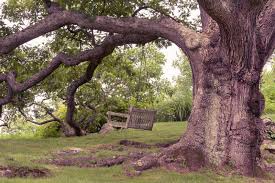
The oak stood in the field at the end of their parallel gardens, just over the fence. The branch stretching out over Orla’s lawn creaked like a rocking chair as she swung back and forth on the rope swing her mum had made years ago. The creak had grown louder since she’d turned nine. She watched her mum talk to their neighbour Ray over the fence, which had once come up to his chin. Since he’d walked with a cane and his wife had died, he could just about see over it on tiptoes. When her mum folded her arms, Orla stopped swinging and listened to them talk.

“I can’t get out there anymore.” Ray’s voice was strained. “I’ve only managed the trip twice since I scattered Hetty’s ashes.”

“I’ll take you out there on Sundays, Ray. I’m more than happy to drive you.”

“I couldn’t be a burden to you like that, Tamara. It would be easier if we just cut it down. England has millions of oaks.”

Orla’s mum looked over at her, noticing the creaking had stopped. Orla began to swing again, the branch speaking over the rest of her mum and Ray’s conversation. She looked up at the pistachio-coloured leaves whispering above her, some yellowing at their tips.

.

After lunch, Orla took her crayons into the garden and peeled the papers off them like sweet wrappers. Gathering some of the oak’s fallen leaves, she rested them on a paving slab near the swing and placed sheets of paper over them. Rhythmically, she rubbed the crayons back and forth, the spines and veins blooming on the paper.

“You’re a big girl now, aren’t you? Too big for that swing.”

Ray’s white fingers gripped the top of the fence, knuckles peaked, watching her beneath crêpe eyelids.

Orla had liked Ray’s wife, Hetty. She’d regularly made Orla biscuits, given in a biscuit tin with robins on it. Whenever Hetty went on a trip, she’d always bought Orla a little present; a magnet of an ‘O’ for Orla from Blackpool, a bottle of multi-coloured sand from the Isle of Wight, a keyring with a plastic wedge of cheese on it from Cheddar Gorge. They were always wrapped and sealed in bright tissue paper. Once, Hetty had brought back a red kite’s feather from her Sunday walk. Even that, she’d wrapped in pink tissue paper and brown twine before giving it to Orla.  

Sometimes, when Orla played with the oak, she would hear Hetty humming in the garden, and she’d stare at the trunk, imagining Hetty’s song was fairies’ singing as they worked.

Orla guessed that all these beautiful things about Hetty were why she had barely noticed Ray until the day she’d seen him crying in her kitchen, her mum patting his papery hand as he clutched his handkerchief. Orla had lined up all the trinkets from Hetty on her windowsill. That had been over six months ago.

“A swing is for tiny ones. You’re all grown up now.” The effort to make his voice singsong made Ray cough.

Orla watched the swing’s wooden seat pendulum in the breeze, her leaf rubbings fluttering on the ground.

“I like my swing. Even Mum goes on it sometimes. I don’t think you can be too grown up for a swing.”

Ray sank behind the fence momentarily, muttered something, then pulled himself back onto his toes. “You remember my lovely Hetty? Her ashes are scattered up on the hill over there.” He lifted a shaky finger from the fence towards the hill beyond the field. Orla had seen the hill in winter through the oak’s spiny boughs. “I want to see my Hetty every day from the window. I can’t see the hill with this great thing in the way.”

Orla continued pushing the crayons across the paper, her eyes down. She imagined Hetty on the hilltop and opening the robin biscuit tin, letting Orla take some lemon shortbread, fresh slithers of zest zinging on her tongue as Hetty smiled at her. Orla felt a knot in her chest and squeezed her crayon. She knew the knot in Ray’s chest was bigger and tighter, so she didn’t mention that he wouldn’t see Hetty up on the hill, tree or no tree in the way.

Ray coughed again. ‘I need to get this tree out of the way.’

Orla didn’t hear him, the leaves shushing in the wind, drowning out his voice.

“Pardon?”

“I said the tree needs to go!” His voice bounced off their houses, and birds flew from the treetop.

“What about the squirrels?” Orla asked.

“I put nuts out for them.”

“They can’t live in a dish of nuts.”

She knew she had been cheeky, so she didn’t look up until his tapping cane faded away.

.

The next day Orla took some paint pens to the end of the garden. She harvested twelve acorns from the grass and slotted them into her front dungarees pocket. Laying them in a line on her paving slab, she coloured them in pastel shades. Then she turned them upside-down and drew faces on them, their cupules acting as jaunty hats. Herby scents from the greenhouse behind her made her hungry, and she wondered what an acorn tasted like, even though she knew they were poisonous. Finding one in the grass without paint, she rolled its smoothness across her lips, the tip of her tongue licking it. Orla felt a sharp smack on her head. A twig with a cluster of leaves and acorns had fallen, reprimanding her. She tossed the acorn, shiny with her spit, over the back fence into the field.

Footsteps came down the path, accompanied by a familiar beat. It was Mum, followed by Ray with his cane. Her mum looked weary.

“Orla, Ray has said he’s going to buy you a present. A swing set. Isn’t that kind?”

Ray rested on his cane with a clownish grin.

“Yes, that’s kind. Thank you,” Orla said as enthusiastically as possible. “I can still keep my tree swing, though?”

Her mum sighed. “I told you she’d want to keep it, Ray. Honestly, it’s no bother to drive you up the hill every week. Besides, having that tree felled will cost you a lot more than a swing set, and I’m not convinced the council will give you permission anyway.” She looked up at the tree, and Orla watched the dappled sunlight flash across her mum’s face. “It would be a shame to see it go. Don’t you think it’s beautiful?”

“Hetty was beautiful!”

Ray threw his cane to the ground. It hit the path, making Orla jump, a couple of her acorn people rolling away. Ray took his handkerchief from his pocket and covered his face.

.

Orla dreamed she was aboard a boat on a rough sea, a pirate ship chasing her vessel through a dark night. Relentless rain pummelled the creaking deck, and the sails whined against the fierce gusts. The chasers fired a single cannon shot – a crack and wail in the night. Her ship had sunk, icy waves pulling her down as the groaning boat went under with her.

Morning brought peace and land as she awoke in her bed. A storm and a lethal shot had been true. Orla’s swing branch had ripped from the trunk and landed on her paving slab, splitting it in two. The splintered swing lay under the branch’s body, sodden rope snaking across the puddled grass. The branch’s crown had shattered the greenhouse. Glass shards and acorns sprinkled over toppled tomato vines and pots of mint, basil, and thyme. The back fence of Orla and Ray’s gardens had been thrown down, the trunk base and roots exposed for all to see.

Orla watched the two men with their chainsaws from her bedroom window, their woodchipper spraying bark fragments like snow. She traced the spine of the red kite feather from Hetty with her finger as she heard her mum talking with workmen. “That branch could’ve fallen on my daughter. What if the whole damn thing comes down?”

One of the men said, “It’s a strong tree; it just needs proper maintenance, regular pruning.” Her mum had sounded uncertain. When they left, Orla heard Ray at the front door. He sounded cross and mentioned the fallen fence several times.

“I’ve filled in the council application to have it felled. I just need your signature too, Tamara.”

“Fine, Ray,” her mum said. “It can go.”

When her mum came to her room later, Orla wouldn’t remove the pillow from her face.

Ray was impatient for the repairman to arrive. He didn’t like the idea of walkers gawking into his garden or dogs darting in and peeing on his flowerbeds. The repairman couldn’t make it until next week, suddenly overwhelmed with work delivered by the storm. Ray surveyed the fallen panels. Two of the fenceposts had snapped at the bottom, clearly rotten. He wondered if he could prop some panels up on the remaining posts to give himself some privacy. Holding his cane with one hand, he bent down and grabbed a fallen panel. The weight was unexpected, but he anticipated the fall, managing to roll and land on his back in the grass. He panted, waiting for pain, but it didn’t come.

“Stupid fool!”

His cane had gone one way, and he’d gone the other. He tried to turn and bring his hands under him.

“I’m like a bloody capsized tortoise!”

He called for help, shouting for Tamara before he remembered seeing them go out in their car earlier. He kept shouting, hoping a passing walker might hear him from the field. His throat began to hurt, and he knew he should slow his heart rate down.

It was a grey day, and the news had forecast showers. The freshness in the air told him they were on their way. Oak leaves trembled above him. Hetty had often admired the tree. He didn’t think she’d have wanted it gone, but he knew she’d understand why he would.

“I know I’m right. You’ve got to go. Supposing the branch had fallen on the girl.”

He heard the rain pattering above, but he didn’t feel it, the oak sheltering him. Two squirrels rushed up the trunk and screeched at a wood pigeon who took flight, sending acorns to the ground. Ray shielded his face, but none of them hit him. A single leaf landed on his chest, and he ran his thumb repetitively along its crinkled edges. Dots of honeybees explored the oak’s limbs, and bluetits hopped about at its crown.

“You’re a busy tree, aren’t you. So big. You’re still huge even looking at you from far away up on that hill.”

He remembered standing on the hill with Hetty on their Sunday walks, roast gammon and apple crumble heavy in their stomachs. Shielding their eyes from the sun’s glare, Hetty would point to the oak and say, “The perfect beacon to find our way home.” They’d walk back across the field, the oak guiding them home.

A red kite soared above the oak into the field to search for mice and voles. Remembering Hetty giving Orla the feather, he ripped the leaf in his hand again and again until it was mulch in his fingertips.

.

When Orla and her mum found Ray, it was getting dark. They warmed him up and fed him tomato soup, bread and butter, and tea and biscuits. Her mum called the paramedics. They came and said his stats were normal. As they left, Orla heard her mum speak quietly to them at the door.

“He doesn’t seem himself. He’s barely said a word.”

They said he was in shock, he’d had a long afternoon, and he’d recover.

Orla sat with Ray while her mum washed up.

“I’m sorry you fell,” she said. Ray kept his eyes on the newsreader on the television, and she wasn’t sure if he’d heard her. “The tree didn’t mean to drop the branch.”

He stroked the hot water bottle in his lap like a cat. Orla spotted the council form on the coffee table. She stood up.

“You don’t need to get me a swing set.”

She waited by the front door until her mum was ready to go.

.

At midnight, Ray couldn’t sleep. The soup and bread had made him feel stronger. Taking his cane with him, he went out into his dark garden. The clouds covered the stars, and the earlier rain soaked his slippers. He went to the shed and got a length of rope and a small step ladder. Draping the rope around his shoulders, he dragged the step ladder to the tree, dropping his cane.

.

The next morning was Sunday. Orla got up early to watch television while her mum lay in. Something caught her eye through the patio doors.

The base of the oak’s trunk shimmered with silver.

Orla put her wellies on and went outside. Foil was wrapped around the trunk’s bottom half and lashed down with a spiral of rope. It had been tied off in a bow at the centre of the wrappings. She ran to it. The foil chimed against the tree bark in the wind as though the tree approved of its new attire.

Tucked into the rope was an envelope with Orla’s name on it. Inside it were confetti-sized shreds of paper. She pieced some together and recognised the print, saw the word council. It was the felling application torn into scraps.

Rebecca Klassen is from the Cotswolds and is co-editor of The Phare. She has had over forty publications in journals and anthologies, and recently won the London Independent Story Prize. The Gift was shortlisted for this year’s Laurie Lee Prize.

Categories
Poetry

Poems by Ahmad Al-Khatat

GATES OF GRIEF WARMED


At thirty-four years old, I'm still experiencing psychic illness.
Why are my grief warmed gates sealed, I wonder?
Who made me miserable because I missed you, brother?
I weep thirsty, but the clouds and the rain do not seem to be satisfied.

From my depressed expression, the candle learns to cry.
Your perfume teaches my depressed face to read poetry.  
Your fragrance learns to fade without getting in my way.
My habits of smoking and consuming alcohol have caused
damage to my throat.

Using brutal chains of no mercy, accept me for who I am.
I don't have the right to wish for dreams like the previous
children that passed away. They passed away without leaving a
name, having learned the meaning of both love and war.
As though angels of God.


GRADUATION PARTY

Moses, Jesus, and Muhammad
were three of my most powerful pals.
They each had a flower in the vase and
our enemy destroyed all the vases and
stole all their flowers.

I recall their parents having inscribed.
their names on their two arms and legs.
Just to be able to track them down after
graduation party. We often forget about
our assignments because of armed troops.

"Evacuate, damn it!" they yelled at our door.
Ignoring the agony of an empty stomach,
Ignoring the stillness, Ignoring the absence
of our grandfathers, who taught us to live
and die for the soil and air of free Palestine.

We buried our hopes behind the fig and olive.
trees because we wanted to live, to love,
and to be free of the vocabulary of callous
conflicts that neglected mankind.
Nonetheless, we are still magnificent bare trees.

Together in the moonless night,
we prayed then slept in peace until the graduation
began to draw closer and closer with
daggers in our hearts, bullets screeching towards
our chests, missiles burst at the conclusion
of the party.

We were picked up by one of our parents.
many hours later. Whether you believe it or not!
We're all in the same bloody coffin. We wonder.
whether when the people of the globe cease turning
our reality the other way, they want to deafen both ears
and blind both eyes.


UNTOLD HABITS

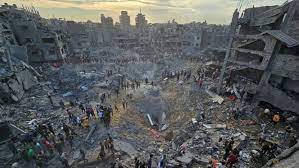
During the present genocide,
we learn of untold habits.
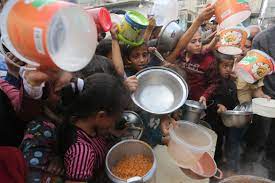
My father comes home sad with
an empty grocery bag,
which is more than a routine.

My mother often tells us to
wash our hands and occasionally our bodies.
She pretends to prepare,
places our empty and shattered dishes,
and then sobs alongside my father.

Then we all say bismillah
before we eat and Alhamdulillah's after
we’ve finished licking our empty fingers.
We then listen to my parents' prayers as
we elevate to the skies.

Ahmad Al-Khatat is an Iraqi Canadian poet and writer. His poetry has been translated into other languages and his work has been published in print and online magazines abroad. He resides in Montreal, Canada, now with his spouse. 

PLEASE NOTE: ARTICLES CAN ONLY BE REPRODUCED IN OTHER SITES WITH DUE ACKNOWLEDGEMENT TO BORDERLESS JOURNAL

Click here to access the Borderless anthology, Monalisa No Longer Smiles

Click here to access Monalisa No Longer Smiles on Kindle Amazon International

Categories
Excerpt

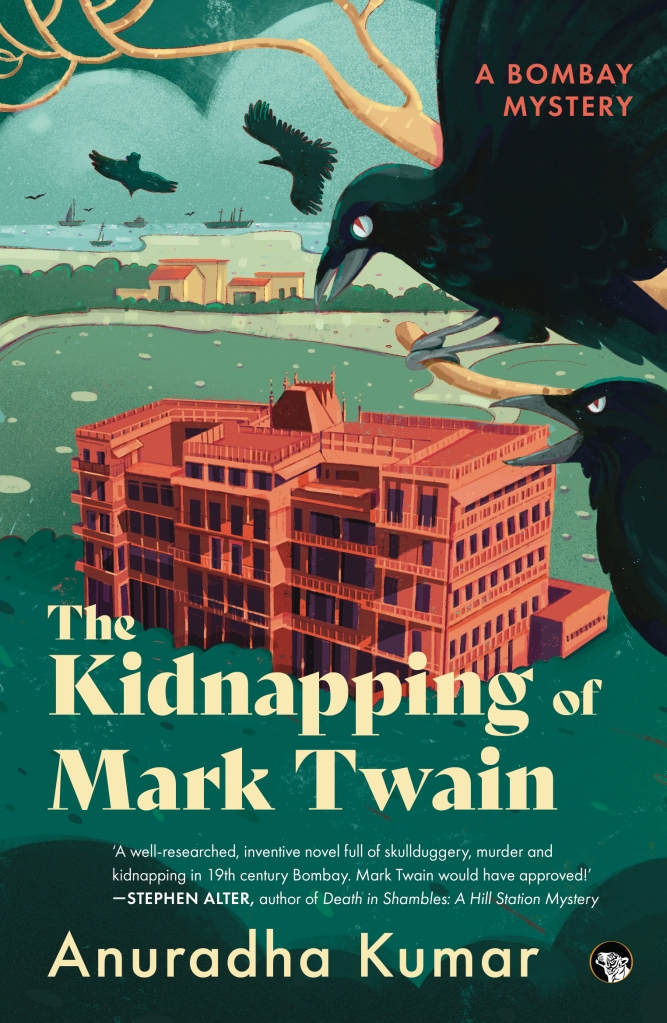
The Kidnapping of Mark Twain

Title: The Kidnapping of Mark Twain: A Bombay Mystery

Author: Anuradha Kumar

Publisher: Speaking Tiger Books

An hour passed as Henry, back in his rooms at the Byculla Club, waited for Abdul to return from the doctors’ bungalow. He had taken a message from Henry to Maya. He would not be back to have dinner with the Clemenses that evening. ‘Don’t give Maya memsahib the message in front of them,’ Henry warned, and Abdul gave him his usual long-suffering look. He really wasn’t an idiot, Henry thought to himself ruefully. ‘And if she asks more, tell her some urgent business came up.’ Henry’s face darkened, for he wouldn’t tell her about his intentions of tailing Bancroft, even accosting him. ‘And come back fast, we need to…’

Abdul looked at him expectantly, but Henry paused, pursed his lips. ‘I will tell you when you are back.’

He looked toward his desk, where his prized Colt Bisley lay in the locked second drawer. A brand-new model, with its five-inch barrel, that he had bought in London. Henry didn’t want to use it, especially on Bancroft and he hoped the other man wouldn’t make it difficult for him. Freddie Bancroft had quite a reputation, one that preceded him. He had first trained as a dentist and then worked as an insurance agent in Philadelphia before he had set out to make a magician of himself. It was an ambitious hope, and Bancroft could be impatient. The time when the

New York papers had reported unfavourably about his show, when his illusions had not worked, and his card tricks had bored much of the audience, Bancroft had thrown a tantrum, throwing his magician’s props on the seated audience. He had then burst into the offices of the New York Journal. He had accosted the editor on the late evening shift, accusing him, and the paper, of favouring the other magician Alexander Hermann, and insisted that the next day the office itself would vanish into thin air.

A portion of the office was indeed found ablaze early the next morning, but Bancroft had an alibi. There were many people who had seen him on the return train to Philadelphia. And the culprits were found to be two workers who were part of the union of newspaper workers. But Bancroft later bragged about it, that he could indeed hypnotize people to do his bidding.

He had made sure people in Bombay knew about this too, and he was determined to stage his own show at the Rippon Theatre on Grant Road. Bancroft had dropped flyers all over, had demanded advertising space for himself in the Gazette, and was also soliciting funds from the likes of Albert Sassoon, Shapoorji Bengalee, and the others, to build those elaborate sets he so wanted. But, of course, Henry, his fellow countryman, hadn’t been of much help, nor had he pulled his weight with the customs people.

Henry sighed. He was letting his jealousy get to his head. Bancroft must have added to his skills in the months he was in Bombay. For he had impressed Maya, and in a far shorter period of time, Mark Twain too, it would appear. And perhaps, Henry thought, Bancroft wanted Twain to write about him, an entire piece in the American papers about the magician’s immense popularity in the East. And now, it would appear that Bancroft may have been the last person to actually see Mark Twain, for he must have peered into his room, as he had Boehme’s, and it was likely, he did know a thing or two.

Henry looked at his notes on the table, and realized with some consternation that he had forgotten a meeting. With a man he disliked as much as he did Bancroft, but when business mattered, Henry knew he had to be quite the professional. Arthur Pease, the tireless campaigner against opium, the vices of drinking, and prostitution, had expressed an interest in the electric fans. They were needed, Pease had said, for the big meetings and assemblies he called every once in a while, in the Parsi meeting halls, and the town hall, and especially at the Reformatory Institute that was a particular favourite of his, for he always found a willing and suppliant audience here.

An hour later, Henry felt there was little point waiting for Abdul in his study. The longer he was on his own, the more he would fret over Twain and think sullenly about Bancroft. So Henry resolutely set off first for the police headquarters, and then to meet with Arthur Pease in Khetwadi, that lay a bit after Crawford Market. This was where Pease lived in a small bungalow, part of which doubled up as a healing centre for addicts.

Henry left a note for Abdul by the table near the hat stand, next to the silver embossed tray that usually held the keys, messages, and letters. Come to…, and he wrote the address. House next to Daji clinic. Crawford Market. Come as soon as you see this.

He called for a carriage, from the many standing aimlessly by the club. The coachman, a Pathan judging from his build and turban, saluted smartly as he jumped down from his seat to hold the door open. ‘The police station first,’ Henry said in a low voice, ‘and then someplace else. I will tell you later. You do have the time, I hope?’

‘Good, sahib, very good,’ the coachman said, nodding to his helper who would ride with him. The boy resting at the foot of the statue that everyone called the Standing Parsi, came running up, and the carriage shook momentarily as he jumped up behind. ‘Go fast, all right?’ Henry said, looking through the window.

The man nodded, gently tapping the pony, a young, spirited brown animal, with his whip, and then, looking over his shoulder said, ‘They are sending a lot of the police toward Sewree and Parel, the workers are angry. They really anticipate trouble, and they are stopping us from going there.’

(Extracted from The Kidnapping of Mark Twain: A Bombay Mystery by Anuradha Kumar. Published by Speaking Tiger Books, 2023)

About the Book: In 1896, Mark Twain arrives at the docks of Bombay, wife and daughter in tow, and, after attending a party in his honour, vanishes from his room at the iconic Watson’s Hotel in the dead of night.

Desperate to find the legendary writer and avoid an international incident between his country and Britain, the American Trade Consul, Henry Baker, teams up with Abdul, his trusted aide, and Maya Barton, a free-spirited Anglo- Indian with surprisingly intuitive detective skills. But they have their task cut out for them: Mark Twain’s disappearance appears to be entangled with a thriving opium trade; an intimidating, self-righteous preacher; an anxious magician who walks on stilts; a professional thief on the run; and a powerful labour leader, Tuka, whose young wife is found strangled in her bed.

Full of fascinating period detail and delightful cameos—and awash with suspense—The Kidnapping of Mark Twain is a thrilling page-turner.

About the Author: Anuradha Kumar was born in Odisha. She studied history at Delhi University and management (specializing in human resource management) at the XLRI School of Business, Jamshedpur. She has worked for the Economic and Political Weekly. She has an MFA in Writing from the Vermont College of Fine Arts (VCFA). Her stories have won awards from the Commonwealth Foundation, UK, and The Little Magazine, India. She writes regularly for Scroll.in. Her stories and essays have appeared in publications like Fiftytwo.in, The India Forum, The Missouri Review, among others. She has written for younger readers as well. This present work is her 11th novel.

PLEASE NOTE: ARTICLES CAN ONLY BE REPRODUCED IN OTHER SITES WITH DUE ACKNOWLEDGEMENT TO BORDERLESS JOURNAL

Categories
Poetry

Tribes

By Ron Pickett

TRIBES

I’m distressed, dejected - in denial,
I don’t see a way out.
Conflict, terrorism, wars.
Devastation, destruction, where homes once stood.
Winners – Losers – Neither - Both.
Tears and blood,
Blood and tears.
Peace, Love, Joy, Noel.
I see the signs,
I know what they mean.
I was an optimist.
I’m a depressed pessimist.
How did we get here?
How can we get out?
Peace, Love, Joy, Noel.
We are bright, curious, imaginative.
We are emotional, egocentric, entitled.
We form tribes. Tribes that we protect.
Tribes that protect us.
That is our past, our strength.
We fight other tribes, that is our future, our demise.
We are an endangered species.
Our only inescapable danger is us.
Tears and blood,
Blood and tears.
Peace, Love, Joy, Noel
Can’t we unite tribes to fight the common enemy?

Ron Pickett is a retired naval aviator with over 250 combat missions and 500 carrier landings. His 90-plus articles have appeared in numerous publications. He enjoys writing fiction and has published five books: Perfect Crimes – I Got Away with It, Discovering Roots, Getting Published, EMPATHS, and Sixty Odd Short Stories.

.

PLEASE NOTE: ARTICLES CAN ONLY BE REPRODUCED IN OTHER SITES WITH DUE ACKNOWLEDGEMENT TO BORDERLESS JOURNAL

Click here to access the Borderless anthology, Monalisa No Longer Smiles

Click here to access Monalisa No Longer Smiles on Amazon International

Categories
Slices from Life

    When the Cobra came Home

By Antara Mukherjee

A strange thing happened.

A cobra came to our house in Burdwan two days ago. It stayed for few minutes in the washroom downstairs and then vanished in the dark. The caretakers were terribly frightened. They wanted to kill it by any means. When I got the call, I told them to wait for some time without even trying to do anything. Somehow, I knew it would go away on its own. And it did.

My mind raced back to the years when I was in school. One evening, to our horror, a cobra was discovered in my brother’s bedroom on the second floor. We shouted our heart out while my mother kept staring at it in silence with folded hands. After few seconds, it magically vanished. She looked at the calendar, hanging from the wall, and in a calm tone, declared that it wasn’t an ordinary cobra but Goddess Manasa, the Goddess of snakes, who came to ask for her annual worship; she further told us that whenever this would happen in future no one should try to do any harm to the snake but prepare to offer favourites to the Goddess.

Strangely, snakes kept visiting our house, infrequently though, before Manasa puja[1] and my mother wasted no time in preparing for her annual offerings. She, however, never cooked the day before, as was the usual practice related to the annual worship known as Aarandhan or No-Cooking Day. It is a ritual where Bengali households refrained from cooking on the day of worship and ate whatever had been cooked the day before, after offering the same to the Goddess. Neither the typical menu associated with Aarandhan— for instance, five types of vegetable fritters, vegetable mishmash, mixed vegetables, varied fish preparations and sweet dishes — nor the practice of eating previously cooked meal was a part of my mother’s annual worship of the Goddess. Her way of honouring the Goddess was a matter of pleasing her with a personal touch, something that was beyond the shackles of set rituals. As I grew up and got entangled in all sorts of activities, I hardly cared to ask her about such serpentine visitations. I don’t recall any such occurrences in the last seven-eight years until day before yesterday.

My mother was deeply religious and immensely superstitious. She had her own worldview about things, especially anything related to Goddess Kali — Goddess Manasa, being an incarnation, was quite honoured by her, though Manasa was not the coveted Goddess to be worshipped. In our locality, Viswakarma[2] puja, which falls on the last day of the Bengali month Bhadra, that is mid-September, is observed with huge pomp and glitter as we live in the same locality where the main power supply plant of Burdwan is located. On the same day of Viswakarma puja, Manasa puja is also observed. Close to the boundary of our house, every year a huge pandal is constructed by the working-class people and a sort of community meal is served. My mother never went to the power supply plant to offer puja, but to the pandal for Manasa. She strongly believed that it is her devotion that kept the snakes/evil away from her three children. When we would become unmindful of the power of Goddess, she told us, Manasa would send her agent to remind us!

As I have hardly believed in my mother’s self-constructed logic, I never subscribed to her practices. But, this time, with the cobra coming home, I felt I was being instructed to offer something to Manasa. I couldn’t believe myself doing this, but I called up the caretakers and coordinated so that Manasa got her favourites from us.

“Rinku, please buy some fruits, milk and a packet of sweets and offer it to Goddess Manasa tomorrow. Make sure that you remember doing this.”  I gave clear instructions to our homehelp.

In my mind, I prepared myself to visit the Goddess the next day, to see how she was doing!

Before the car took a turn towards Power House Para, my locality, Kumar Sanu[3]‘s powerful nasal tone that dominated my adolescence, reached my ears:

“Tu meri zindegi hai/Tu meri har khushi hai/Tu hi pyaar tuhi chahat /Tu hi aashiqui hai…(You are my life/You are my joy/You are my desire/You are my love) [4]

This song from the movie, Aashiqui[5], welled up fragments of my past. There used to be a time when I waited for ‘Pujor gaan‘ or  Bengali songs released during the puja. Almost all the notable singers of the time came up with new albums, yet Kumar Sanu was the unrivalled King. I passed my teens and jumped into adulthood with his superhit song – ‘Priyotoma mone rekho (‘Keep me in your heart, sweetheart’).’ That afternoon, after more than two decades, I heard him singing, again – ‘Koto je sagar nadi periye elam ami /Koto poth holam je paar/Tomar moton eto oporup shundor/ Dekhini to kauke je aar...(‘I crossed the seas/I walked through ways/ The beauty that you are/ I haven’t met’).’ Almost hypnotised, I got down from the car and walked straight to the direction of the pandal. I needed no Pied Piper from Hamlin; we, Bengalis have our own, the nasal Sanu. The closer I got, the louder he sang. Soon, familiar faces surfaced —

“Good to see you.” Lahiri Aunty shouted from her balcony.

“Same here.” I shouted back

The Lahiris and the Mukherjees are literally ‘samne wali khidki’[6], existing on the opposite lane, of Power House Para[7]. While my mother and Aunty went on talking for hours from their respective balconies, the doctor husbands silently attended to their respective patients in their respective chambers downstairs — a practice that went on for almost forty years.

The weather-beaten balconies have witnessed to the transformations in both the families. Lahiri Aunty was still standing on hers, while ours was empty. Instantly, I found myself standing there at the wee hours of a certain nineties morning, when Kumar Sanu was ruling the music industry and Uncle, the field of Dermatology, watching my father rushing to the Lahiris. Within few moments, our red telephone rang. I came inside and my mother told me to follow her immediately to the Lahiris. Inside their first-floor bedroom, for the second time in my life, I saw a dead body. Uncle’s eyes were closed. Aunty sat motionless. My mother went the window and sat beside her dear friend. I had nothing to do. I kept staring at various showpieces collected by them from all over the world. When my grandfather died couple of years earlier than Uncle, I had my cousin, Tiya, to play with me. We had our freedom then; the elders were busy. It was fun. Death had no power to scratch me, even though I saw a dead body for the very first time.

At the Lahiris that morning, not a sound could be heard. A house where harmonium, tabla and sitar existed in harmony, was unusually quiet. After Uncle, however, Aunty continued to sing but Kumar Sanu never ever dared to peep into her bedroom. She had the classics of Bengali music for her company. In contrast, I welcomed everyone in my life. From Kishore Kumar to Rafi, from Kumar Sanu to Udit Narayan, from Baba Saigal to Apache Indian etc[8], I brought all the cassettes that were available in the market. I was largely spoiled by my elder brother. Madonna, Michael Jackson, Backstreet Boys, Spice Girls, Harry Belafonte, Elton John, Phil Collins etc[9] were supplied by him and by some of my school friends. It was my elder brother who inculcated in me a deep love for what he called the four pillars of Hindi music: Kishore Kumar-Asha Bhonsle -R.D. Burman-Gulzar. I was in class eight when I heard ‘Sei rate rat chilo purnima/Mon chilo falguni hawate[10] (‘It was a full moon night/ my mind wandered in the spring air’)’. I replayed it ten times in our old, black tape-recorder. A hot and humid afternoon seemed so breezy then. And when dusk came, I became a moon-gazer. I have never stopped looking at the gorgeous lady ever since.

Since Viswakarma, Manasa and Kali pujas were observed in our locality with much gusto, I got the chance to listen to and update myself with the recent puja releases. At the same time, I also became aware of the oldies. A locality mostly consisting of doctors, engineers and professors, the choice of songs played was up to a certain standard. It was only when I went to one of the most notorious of colleges in town that I became acquainted with the masala numbers and I loved them! With time, the second generation took hold of the pujas and likewise the choice of songs to be played underwent a rapid change. Soft, romantic numbers as well as Jhankar beats were preferred. It was a time when Kumar Sanu gave voice to all the Khans — Shah Rukh, Salman, Amir [11]— and to seniors like Jackie, Anil and Sanjay[12]. Amongst Bengali Puja songs, Kumar Sanu somehow managed to coexist with the neo-liberal paracetamols of the nineties – Suman, Anjan and Nachiketa[13]. When ‘Bhoomi’, a Bengali band, swayed us with their hit songs, all sweethearts or ‘priyotomas’ were earnestly desired through Sanu’s nasal voice. The loudspeakers constantly amplified Sanu’s songs — be it the contemporary Bengali numbers or Bollywood hits. He was, as if, the unavoidable menu in our daily music-buffet.

My mother was cool about the change in the songs being played in our para-pandals but her friend, Lahiri Aunty, probably, was not. Bathed in the classics of Nirmala Mishra, Kanika Bandyopadhyay, Satinath Mukhopadhyay et al, she shut all her doors and windows when the speakers howled – ‘Ke bole Thakuma tomar / boyesh periye geche aashi! (It is unbelievable that Grandma/ you have crossed eighty)’– another Sanu blockbuster! She kept herself confined within the four walls and rarely came out in the balcony. Ma was always downstairs, on the streets, without caring which song was being played. Her attention was fixed at the puja, be it Kali or Manasa.

I don’t remember Lahiri Aunty joining her during Manasa Puja. But she enthusiastically participated during Kali Puja’s final ritualistic bidding adieu to the goddess, boron, and then,  in sindoor khela[14], a community practice where married women smear each other’s cheeks with vermilion powder. Aunty was the first to do boron and then to start the typical sindoor khela. Unmarried girls like us were not spared either. I disliked the rubbing of vermilion in my cheeks but who had the courage to say ‘no’ to her? After Uncle passed away, she stopped coming for boron and my mother, in solidarity, refrained herself from participating in the play. But nothing, absolutely nothing, could deter her from the elaborate preparation for the puja.

“So, puja means you would get a chance to harm your body by eating those items which you are not supposed to eat, right?” I often rebuked my mother.

“You are mistaken. I don’t eat anything. I offer everything to the Lord.” She was always ready with her defence.

I strongly believe that it was her blind devotion and irrationalities that drove her astray. I could no longer tolerate any ritual after her cremation. However, within one-and-half-year of her passing away, strangely enough, that same me, was standing in front of a Snake Goddess and repeating what her mother used to do.

*

“Here, take some prasad[15],” Nitai, the little boy of yesteryear, now a responsible local boy, in-charge of the Durga puja, offered a plate full of fruits and sweets. I don’t know for how long I was standing at the steps to the mandir[16]. His husky voice jolted me out of my inertia.

“How are you doing?” I asked him.

“Oh, I am very busy. Where were you yesterday?” He questioned

“I have just come.”

“I hope you’ll be with us during Durga puja?”

With no one waiting for me at home, why should I come to Burdwan during that time? I asked myself. Why should I pray to the Goddess whose annual visit, three years back, robbed me of my greatest treasure? My wounds were still fresh.

 He probably read my silence.

“Don’t worry at all. Uncle and Aunty have left the world but we are there for you. It’s where you were born. It’s your locality. Your roots are here. You must come.”

The para or locality where I grew up has changed a lot. My life, too, underwent massive transformations. Nobody awaits my arrival here anymore. Yet some things remain. Most importantly, my past remains, my root remains, my delightful memories remain. And in them, my parents still breathe. Why should I stop myself from generating further memories? Why won’t I live for my happiness too?

 I smiled and assured him that I will be back. He was still holding the plate of Prasad.

“I have given up sweets. I am taking a piece of cucumber, okay?”

“This is the blessing from Goddess. Nothing will happen if you take some,” he insisted.

Greedily, I picked up a batasha, a flat, coarse whitish sweet, and started to munch on. Ah! that heavenly feeling! When did I last eat a full batasha? I could not remember. We now have fancy sweets as prasad. The indigenous sweets like batasha, nokuldana — tiny, roundish sugary substance —  are fast vanishing from the platter of Bengali prasad.

During our childhood, nokuldanas and batashas had been middle-class Bengalees’ coveted folk-sweets. Roshogollas, pantuas or even malpuas, traditional Bengali sweets, were prepared by my mother on special days. But we always had jars of nokuldanas and batashas readily available at home. For an unannounced guest, a domestic help, a hungry beggar, the next-door child and, most importantly, for me, always looking out for something to munch on, batashas were generously distributed. However, she disliked my habit of stealing them from her Gods! Normally, after daily puja, I, reflexively, snatched batashas from her offerings and, in no time, crunched them inside my mouth. She cursed me for being so impatient. In those days, contrary to the softness of Bengali sweets, the crispy sound and feel of both nakuldana and batasha gave me an unparalleled satisfaction of winning over an invisible opponent.

After the ritualistic offerings, when my mother went inside her room to change (normally, she wore a special white and red saree for Puja purposes), I practically, ‘stole’ all the nokuldanas and batashas from the small silvery plates of her Gods and Goddesses. They were readily available candy to me. After her evening worship or during Satyanarayan puja, I watched with rapt attention the making of shinni– a semi liquid mixture of flour, banana, batasha, sweets, milk and dry fruits, treated as a special offering to the Gods. Particularly, I watched her hands, mercilessly squeezing the bananas, breaking the batashas and mixing milk and curd until it formed a smooth, soft semi-solid paste. We were at loggerheads, for her unmindful crushing of the batashas irked me to the core. It was, as if, she was bent on breaking the backbone of my childhood fantasies. I enjoyed the masculinity of the batashas amongst her otherwise feminine palate of prasad. I still avoid crushing batashas. I feel terrible to see them silently  disintegrate.

My precious memories of this rustic sweet were challenged by the Bengal politician, Anubrata’s gur-batasha politics; like a palimpsest, the visuals of my mother’s white cream-like smooth right hand, adorned with gold rings, a red and golden bangles, submerged in a copper tumbler full of flour, milk, fruits and batasha, surfaced in my mind. Ironically enough, the last desert which she ate before she passed away was shinni and, in all probability, it caused infection in her blood. An insulin-dependent, dialysis patient, after all, was not supposed to take such concentrated sweet items. But it was impossible to rationalise her. In Nitai’s plate of prasad, I saw her hand and felt the touch on my palm, as if asking me to take another sweet from it. But I controlled myself. I am not going to spoil my body after having witnessed the gradual disintegration of my mother’s body due to uncontrolled diabetes.

“Goodbye. We shall meet soon.” I waved at Nitai and left the pandal.

As I came home, instructions followed: “Rinku, please spread carbolic acid properly. We cannot take any risk with snakes.”

“Don’t worry. Snakes won’t come now. It came to ask for Puja. Your mother used to worship Manasa. Now that she is not there, you’ll have to carry forward the tradition.”

Rinku spoke like a philosopher. I was surprised to find her so relaxed! Just two days back she almost fainted when the Cobra had come.

I looked at my mother, hanging from the wall, and smiled.

“So you will make me do such things even in your invisible mode!” I communicated to her in silence.

Just then, it started to rain. I saw her smiling back at me.

Like the images of my mother’s jars of mixed pickle, her stories are stored in the depth of my unconscious mind. Whenever I need to energise myself, I take a scoop out and revitalise myself, the physical destruction of her body notwithstanding.

.

[1] Praying, normally in a community festival in this case

[2] The architect to the Hindu pantheon of Gods.

[3] Kedarnath Bhattacharya, popularly known as Kumar Sanu, a playback singer in India

[4] Hindi Bollywood song

[5]  Bollywood film translates to ‘Romance’ from Hindi  

[6] A reference to a popular Bollywood song – translates to ‘the window in front’

[7] Locality

[8] Indian popular singers

[9] Western pop singers

[10] A song by Kishore Kumar

[11] Bollywood actors

[12] Bollywood actors

[13] Bengali pop singers

[14] Sindoor is the vermilion powder worn by married women in the partings of their hair and Khela means play in Bengali. Women play with sindoor to bid the Goddess farewell.

[15] Offering of food for Gods

[16] Temple

Antara Mukherjee is the editor of three books and a Member of Review Boards of International Journals. She is a part of West Bengal Educational Service, Govt of West Bengal. She is presently teaching at the Dept. of English, Durgapur Govt College.

.

PLEASE NOTE: ARTICLES CAN ONLY BE REPRODUCED IN OTHER SITES WITH DUE ACKNOWLEDGEMENT TO BORDERLESS JOURNAL. 

Click here to access the Borderless anthology, Monalisa No Longer Smiles

Click here to access Monalisa No Longer Smiles on Kindle Amazon International