The stockpile of melodies and memories

of the love-drenched days I lost,

masquerades the choking, cherry-red landscape

of my torrid heart.

Intertwined by a breadcrumb trail

of desire and penitence, it gleams,

varnished with a tawdry coat of worldly indulgence!


My fragile allegory of yesterday

melds with the brittle rhetoric of today

and gossamer tomorrows.

Together, they scoff at my callow youth,

and at the whorls of smoke

rising from the ashes of my clipped wings

and broken dreams.

A shot of black coffee, spilled on the edges,

helps me splice and braid

the frayed fibres of my soul’s fractured tapestry.
Urmi Chakravorty is a former educator and presently, a freelance writer and editor. She has been published by The Hindu, The Times of India, TMYS Reviews, Borderless Journal, Mean Pepper Vine, eShe, The Chakkar, Kitaab International and The Wise Owl, among others.
Rhys Hughes’ creative adaptation of Edward Fitzgerald’s translation of the Rubaiyat of Omar Khayyam[1] is a delightful read. Located somewhere between tribute and parody, it has recreated the tonal and prosodic rhythms of the original translation, quartet by quartet. Yet, there is a thin line between parody and subversion, and Hughes’s adaptation negotiates this with a tongue-in cheek flippancy.
To illustrate the close parallel of the original 1st quartrain of Fitzgerald’s translation and Hughes creative adaptation:
Awake! For Morning in the Bowl of Night

Has flung the Stone that puts the Stars to Flight:

And lo! the Hunter of the East has caught

The Sultan's Turret in a Noose of Light.
The original aubade is wittily recast as:
Awake! For the alarm clock next to the bed

Is ringing the bells that can wake the dead:

And Lo! The ruby rays of the rising sun

Colour the espresso machine a pinkish red.
This paean to coffee is replete with personifications –“Dawn’s lips are coffee-smeared”(vi).
Some of Hughes odes to coffee poke fun at the metropolis and its quirky inhabitants, the poem(s) capture the rhythms of life and its frenetic pace in the urban metropolis. Thus in quatrain 18, we get a glimpse, a veritable word-picture of the tube/metro train commuter:
I sometimes think that never blows so hard,

The commuter who is late, reputation marred,

To cool his coffee so he can catch his train

Before all the doors are closed by the guard.
Literary- and other-Histories of Coffee
In a ‘Brief History of Coffee around the World’, Garrett Oden clarifies that , unlike tea and alcohol which have been around and in use for more than five thousand years, coffee has had a relatively recent history. Although it has supposedly been around for over a 1000 years, its first verifiable documented use was about 500 years ago. Accidentally discovered by a goat herder whose goats turned unusually frisky after consuming some red beans, it became popular in Yemen and the areas surrounding it, the area we know now as the Middle East or as west Asia. The journey of coffee to Europe and beyond is replete with narratives of colonialism, plunder, pillage and scandal. This murky history was often forgotten as the roasted magic bean became a rage in coffee houses across the world.
The dubious antecedents of this heady brew derived from the magic bean is invoked in literary works such as Alexander Pope’s ‘The Rape of the Lock’ where the effects of coffee are thus described:
“Coffee, (which makes the Politicians wise, And see thro’ all things with his half-shut eyes)/Sent up in vapours to the Baron’s brain new stratagems” to fulfil his nefarious designs. Closer to our own times, we have T.S. Eliot’s line in ‘The Love Song of J. Alfred Prufrock’ where his persona declares, summing up the urban ennui of his quotidian existence, “I have measured out my life with coffee spoons”, a line which is yet another testimony to the fact that coffee has become an inseparable and indispensable part of our everyday life.
Echoes of Fitzgerald’s Rubaiyat are interwoven into each quatrain and the poems follow the chronology of the original sequence. From the chess board (p 56-XLVIX) to the image of the “moving finger” which is replaced by the “moving tongue” (LI, p58), in poem after poem, we have many hyperboles to capture the effects of this drink which stands for a way of life. It is a way of life familiar to inhabitants of the modern metropolis where one’s life is lived under the glare of neon lights, and where sleeplessness, stress are all par for the course.
Although the poems employs the resources of several figures of speech like metaphor, personification, hyperbole, perhaps the most apt and commonly used figure is that of bathos. It is an effect of anticlimax created by a lapse in mood from the sublime to the trivial. A typical example is Pope’s line in ‘The Rape of the Lock’ where he says, “Great Anna, whom three realms obey/ Dost sometimes counsel take — and sometimes tea”: In Hughes’s case, “the cosmos is nothing but a frappucino” ,”the inverted cup we call the sky.”
The poems are crafted in a spirit of irreverent good humour and this book is definitely a little nugget, worth savouring. Even if (to persist in the metaphor) one’s cup does not run over, it is definitely a cup that cheers.
[1] The translation was first published in 1859. Omar Khayyam, an astronaut, mathematician, a philosopher and a poet lived from 1048–1131 and wrote in Persian.
.
Dr Meenakshi Malhotra is Associate Professor of English Literature at Hansraj College, University of Delhi, and has been involved in teaching and curriculum development in several universities. She has edited two books on Women and Lifewriting, Representing the Self and Claiming the I, in addition to numerous published articles on gender, literature and feminist theory. Her most recent publication is The Gendered Body: Negotiation, Resistance, Struggle.
.
PLEASE NOTE: ARTICLES CAN ONLY BE REPRODUCED IN OTHER SITES WITH DUE ACKNOWLEDGEMENT TO BORDERLESS JOURNAL
There are no droplets of
Wine on my lips,
But the blood of poetry,
Dripping in darkness.
I am a desert which
Was once an ocean;
Where I lie, hid treasure chests,
Deep inside the coral reef.
It is just me, you,
And an endless garden of daffodils.
How can spring not arrive
When butterflies hover
Around the arms you raise
Towards that blue mountain?
Ganesh Puthur is a bilingual poet and a recipient of Sahitya Akademi Yuva Puraskar (Sahitya Akademi Youth Award). He is a native of Kerala. Email: ganeshputhurvkm@gmail.com.
PLEASE NOTE: ARTICLES CAN ONLY BE REPRODUCED IN OTHER SITES WITH DUE ACKNOWLEDGEMENT TO BORDERLESS JOURNAL
The wind blowing across the Long Island Sound chilled his bones. The day was cloudless and the sky blue, but the sun lacked warmth. New York. Dr Ram Bahadur had called the big apple home for over three decades. Winters were cold and snowy. There were cold snaps and the dreaded northeaster brought snow and freezing temperatures. Summers could be surprisingly warm. February in New York was the depth of winter.
Long Island was blanketed in snow. He had spent the morning clearing snow from the driveway of his home. The suburb of Woodbury was quiet and peaceful. The trees had lost their foliage and were waiting for the warmth of spring to put on a new coat of green. He had a large house with floor to ceiling picture windows. The house was two storied with an attic. There were two bedrooms on the ground and three on the first floor. He had done well in life and was now prosperous.
He still recalled his first days in the big apple. He had just come to the United States from Nepal after completing his postgraduation in Internal Medicine. The first years were tough. He had some seniors doing their residency in New York city. The state of New York offered the largest number of residencies in the country. He did his residency again in internal medicine and then a fellowship in endocrinology.
All his training was completed in New York. He worked for over two decades in large hospital systems. But, for the last five years he started his own private practice. Compared to most other countries medicine in the States paid well. Private practice was certainly lucrative, though the cost of living in New York was high.
He did sometimes think about his home country of Nepal. The Kathmandu valley was still a beautiful place. His visits were few and far in between. Unplanned urbanisation had made the valley dusty and dirty. Winters in Kathmandu were cold but milder compared to New York. The Institute of Medicine (IOM) was the first medical school established in the country. The original intention was to create doctors for rural Nepal. The selection was tough and competitive. He still remembered his joy on learning that he had been selected for the medical course. During the closing decades of the twentieth century Nepal was in turmoil. The insurgency was ongoing, and blockades were the order of the day. Violence was rife and a lot of blood was spilled.
Most doctors from IOM migrated in search of greener pastures. The others mostly practiced in the valley, the historic heartland of the country. Ram was originally from Gorkha, in the centre of the country but his family had migrated to the capital when he was a few years old. His father was a civil servant while his mother was a housewife. Civil servants did not make much and money was always in short supply. His father was a man of principle and never accepted bribes or tolerated corruption. He still remembered the argument he had with his father when he put forward the plan to migrate to the United States (US) to pursue his residency.
His parents had both passed away and his siblings were also settled in North America. He rarely visited Nepal these days. The insurgency was followed by the overthrow of the monarchy and then a new constitution was promulgated. A federal structure was set up and while this did have benefits, the expenditures also increased. Each state had to set up an entirely new administrative machinery. He married an American academician who taught Spanish literature at the City University of New York. His wife’s family hailed from the country of Colombia.
New York had a substantial Hispanic population these days. He was now fluent in several languages: Nepali, his mother tongue; English, Spanish and Hindi. He also understood Newari, the language of the Newars, the original inhabitants of the Kathmandu valley. He did think on and off about his motherland. Many Nepali doctors left the country. Working conditions were hard and the pay was poor. To advance, you required political patronage. The frequent changes in government required you to be on good terms with several political parties.
He still missed the food of his childhood. New York was a very cosmopolitan place. There were several Indian restaurants and even a few Nepali ones. He was very fond of bara (a spiced lentil patty) and chatamari (Newari pizza), traditional Newari foods. These had earlier not been available in New York. Luckily for him, two years ago a Newari restaurant had opened in Queens. He was also particular to Thakali food. The Thakalis were an ethnic group who lived in the Kali Gandaki valley north of Pokhara. He particularly fancied green dal, sukuti (dried meat), kanchemba (buckwheat fries) and achar (pickle). Anil was a decent cook and had learned to cook a decent Nepali thali[1]and dhido (thick paste usually made from buckwheat or corn). He also made tasty momos (filled dumplings that are either steamed or fried) and these were much in demand among his companions.
Ram loved the professional opportunities that his adopted homeland provided. He had become a US citizen. Working in the US was more rewarding though the paperwork associated with medical care had steadily increased. Many of his batchmates and seniors lived and worked in New York state and across the state border in New Jersey.
Many of them did miss their homeland and had a vague feeling of guilt for not contributing their share to their original homeland. A few of them were working on a proposal of developing a hospital at the outskirts of Mahendranagar in the far west of Nepal. The Sudurpashchim province had a great need for quality medical care. The details were still being worked out. There were about twenty IOM graduates involved and they decided on an initial contribution of a million dollars each. Despite inflation twenty million dollars was still a substantial sum in Nepal.
This group of friends collaborated on different social projects. They were also active in promoting a more liberal America where each citizen and resident had access to quality healthcare. The hospital would be their first project outside the US. A strong community outreach component was also emphasised in their project.
The US had made him wealthy. He was a proud American. However, he also owed a deep debt to his home country for educating him and creating a doctor. Now was the time for him to repay that debt, not wholly or in full measure but substantially to the best of his abilities!
[1] Plate made of a few courses, completing the meal
.
Dr. P Ravi Shankar is a faculty member at the IMU Centre for Education (ICE), International Medical University, Kuala Lumpur, Malaysia. He enjoys traveling and is a creative writer and photographer.
.
PLEASE NOTE: ARTICLES CAN ONLY BE REPRODUCED IN OTHER SITES WITH DUE ACKNOWLEDGEMENT TO BORDERLESS JOURNAL
Fanning the gigantic ears,
wandered the cold-black tusker Arikomban--
the lonely, popular wild elephant of the South
entered the red-warm forest
--an escapade into the immense emerald entity.

Free of shouts and free of pomp now,
the tortured and broken giant shall never return to
the punitive world of the human race.
Fingerless nails and a long trunk are further
soil coated, but then again, he can sense
the transparency of woodlands.
Canopies one after the other
fantasise him and they are unlike
the human land of scorching roads.

Gone away from plastics and away from motor horns,
he may overhear simply the music of nature.
The sunbeams dance on the green grass and
Urge the chirping birds to welcome the new guest.
Many on crossing rails, many by electric fences,
and many more on hunting lost their lives,
but who upkeeps them anymore!
"Dear Arikomban, please don’t come back
to this merciless, dying artificial world,”
yelled the innocent natives of the busy world.
Mereena Eappen is a Ph.D. scholar from the English Department of St.Thomas College-Palai, India. Her poems are housed in The Alipore Post, Poet’s Choice and Madras Courier. She also does musings on life, photography and content writing.
.
PLEASE NOTE: ARTICLES CAN ONLY BE REPRODUCED IN OTHER SITES WITH DUE ACKNOWLEDGEMENT TO BORDERLESS JOURNAL.
BOOM! Another big BOOM! And here, my scared Kittu runs to find a peaceful and tranquil corner in our usually quiet home. The cracker ban was only on paper; Kittu will attest to that vehemently. While she was frantically searching for a corner, I was lost in her movements. Sitting and staring at her took me away from her, and I found myself sculpted as le penseur and was thrown into a deep ocean of thoughts, where just one question popped out loud, clear, and flashing; Am I too looking for a corner? A Peaceful, tranquil, no fetters, no concept of pain and gain corner?
Usually on breaks, I visit my home, pushing aside the flash and pomp of Delhi, and I step into another world. Adulting has been a breath of fresh air and yet bizarre to me, realising and answering many unanswered questions hovering in my head. Nonetheless, there are few which will I think remain unanswered forever and some will not have very satisfactory answers. Sometimes, I don’t fully know the question and the answers I look for, and I remain in a perpetual state of being hopelessly muddled.
To my mind, one thing I came to terms with beautifully, is the concept of uncertainty; impermanence is permanence. Often when I switch something, change places or things, or when people come and go in my life, I am learning to enjoy the changing process and that’s exactly what life is. Change. Even when I am sad about the process, I see the silver lining and cheer up to the fact, that I will be one day equally comfortable and content with what will come to me in my here and now.
We have often heard the phrase ‘this too shall pass’, but how many of us have thought through it and made it a tool to cope with the future? I have realised, that we humans are extremely convenience-oriented beings. Convenience is everything to us. Just like using this phrase at a time of grief and despair and not when we are brimming with positivity, success, and abundance.
The ability to be calm amidst the storm, to be present in each moment and not pile up thoughts; good or bad, is the one I need to learn because there is no way I will find my corner where I will be free of societal shackles, rewriting norms and notions. Living in the present doesn’t invoke the action of inactivity. Rather, it promotes being actively present with graceful focus on what is there right now and shuns the act of what I call ‘conveniently everywhere’. Finally, Kittu found her corner, just at the centre of the main entrance hall where the BOOM is loud and clear. She fell into deep sleep as I woke up from the dream.
.
Anita Sudhakaran comes from two states, Kerala and Rajasthan and currently residing in Delhi. She is an avid reader and a lost thinker.
.
PLEASE NOTE: ARTICLES CAN ONLY BE REPRODUCED IN OTHER SITES WITH DUE ACKNOWLEDGEMENT TO BORDERLESS JOURNAL.
See not the blemished skin,
See not the greying hair,
See not the jangling bellies,
Judge not the external appearance
For they are merely illusions...
Where are the boundaries
that divide man from man
but in the shallow pans
of our minds?
What a colossal waste
are these judgements
that birth duality
when in reality
the universe knows only unity!
Melt away the barriers,
for nature knows no walls.
Melt into nature
to dance with the diversity
in the exuberance of the universe’s
musical extravaganza.
Who can judge
if a toucan's colours
Are any prettier than a flamingo's?
Or the smell of petrichor finer than aspens'?
Melt away the barriers of the mind.
For they are just illusions...
And find yourself
Lighter…
Released from the burden of judgement.
Find yourself
Floating like
gold dust on sunbeams,
warm sunshine on a winter morning.
Avantika Vijay Singh is the author of Flowing…in the river of Life and Dancing Motes of Starlight.
PLEASE NOTE: ARTICLES CAN ONLY BE REPRODUCED IN OTHER SITES WITH DUE ACKNOWLEDGEMENT TO BORDERLESS JOURNAL
The following story is an intertwined thread of two independent narratives. The odd numbered paragraphs concern the title Pigeons while the even numbered ones are to be read with the title People.
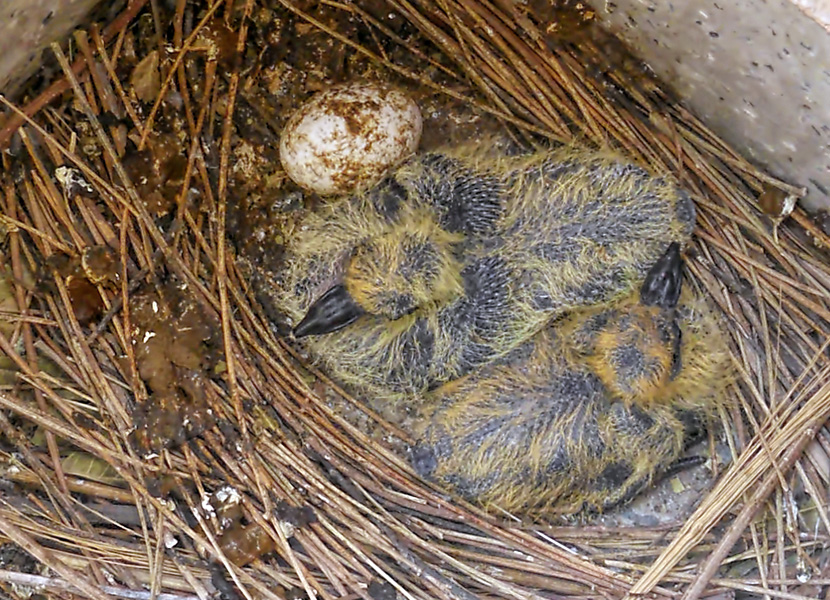
[1] It was in early November that I saw a pigeon perched on our balcony’s sunshade. It was on our neighbour’s sunshade, to be more precise, which adjoins ours. It was an ember breasted grey one. A common variety which I had seen afar many times. Not the one with a fan tail or some exotic racing varieties which were more prized. Soon it was joined by what I assume was its partner. Now, I’m no ornithologist to point out which among the two was the male or female but I can tell you that they wanted to make the barren flowerpots on our balcony their nesting ground.
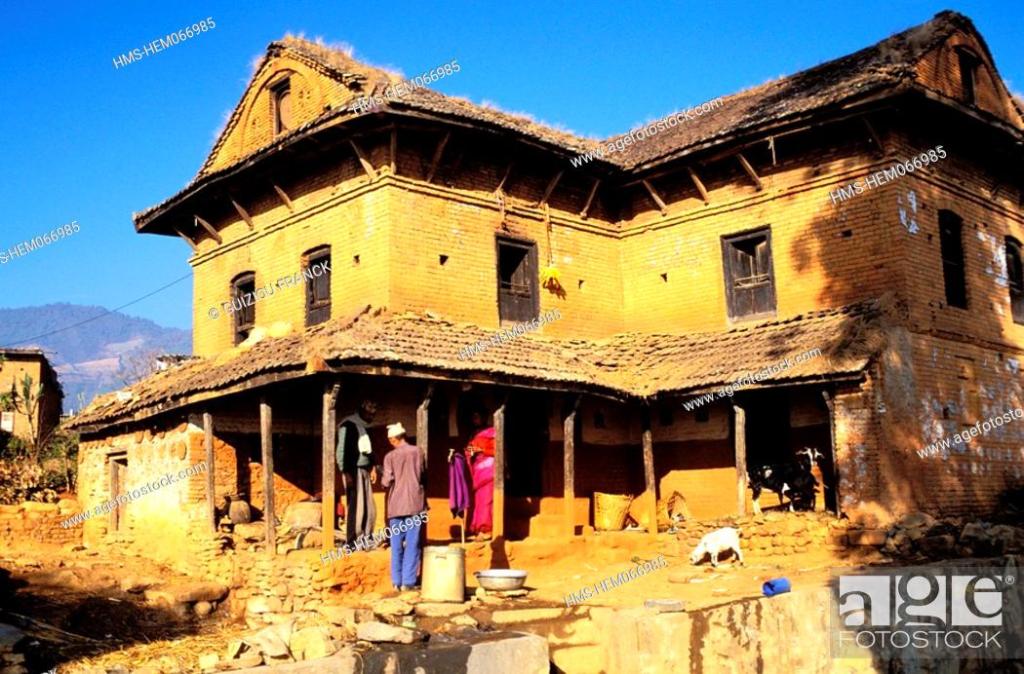
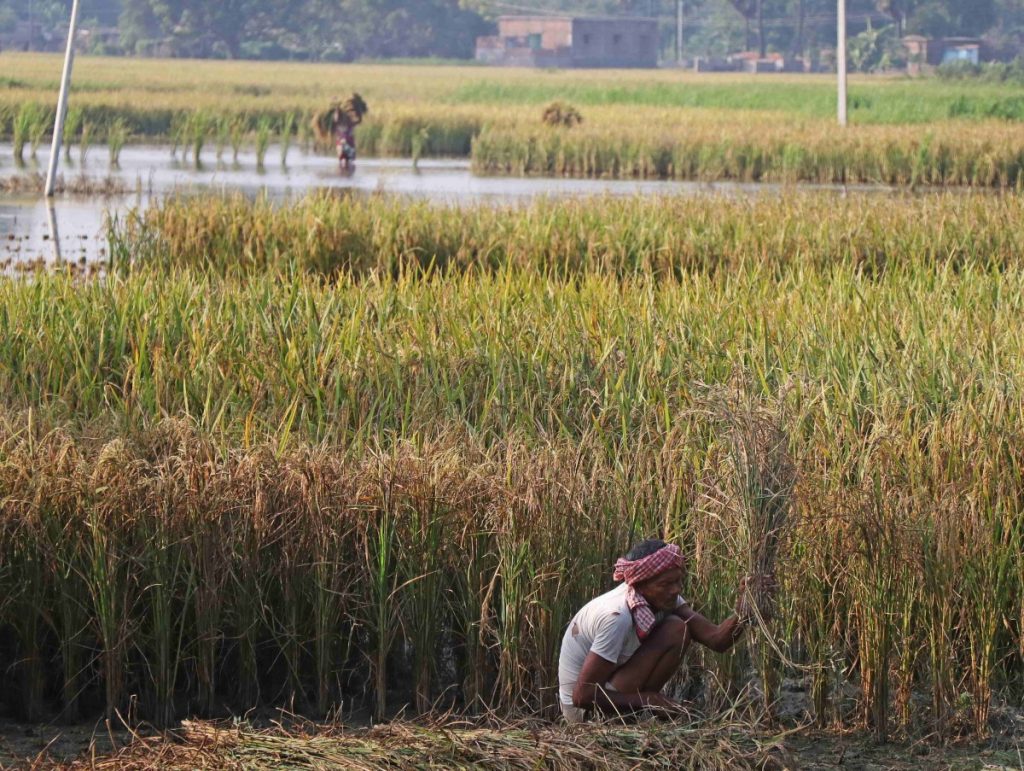
[2] The farms and fields were lying barren for quite some time. No cultivation had been done on these barren lands for the lack of manpower as most of the folk who had once cultivated it had moved to the cities. So, it was with some interest that I watched the immigrant farmer who had leased these barren lands for cultivation from the council. Now, I’m not familiar with his native land or his native tongue but something about his appearance seemed exotic. Soon he was joined by his partner, and they built a home for themselves on these lands.
[3] The pigeon pair went about their work with alacrity and within a few days they had a nest and the dull looking pigeon, which I rightly assumed was the female, sat on the nest for hours together. The ember breast went about collecting food or doing whatever it is that the male kind of its species do all day. Soon, the pigeon nest was the talk of the house.
“They look stupid to me,” my son said. “Why don’t they talk with us?”
“You want the pigeons to talk to you? Have you tried talking to them instead? “ I told him.
“My friend has a parrot, and it talks to him,” he said.
“Parrots are different, they like humans and are comfortable to handle. These are wild pigeons. Not exactly domesticated.” I told him.
“I don’t like them.” He stated.
[4] The first thing that the immigrant farmer did was to put a fence made of dried thorn bushes around the perimeter of the farm. Locals frowned at the sight of this new fence.
“Why do they have to put a fence?” Their immediate neighbours frowned.
“Good fences make good neighbours I suppose,” I said.
“No one has ever put a fence in the village, not with thorns at least. Grazing flocks may brush up against it,” he said.
“Maybe we should talk to them,” I suggested.
“Can you speak, whatever it is that they speak?” he asked.
“No but you can just mime it and probably they would understand,” I responded.
“Mime? do I look like a clown?” he asked.
[5] The female pigeon soon laid two eggs. As she brooded on her eggs, we soon discovered, to our surprise, that there were now not one but two adult pigeons that accompanied her. Those occupied the adjoining pots, some of which still had healthy plants in them. My wife, who till recently was tolerant of the pigeon family, now started showing signs of uneasiness.
“Did you notice? now there are three? Soon there will be five!” she said.
“Yeah, I noticed. Five? That would take some time,” I said.
“Our maid told me that these things usually take only around two weeks or so from the time they hatch to being fully mature,” she added.
“How does she know? She keeps pigeons?” I asked.
“She’s from the village and she’s more knowledgeable than you are in these things.” She looked at me with scorn.
“So, should I call for help and move the nest while they are breeding?” I asked.
“No, that would be cruel,” She said.
[6] No one in the village had noticed the arrival of the two young men. So, when the neighbour saw them working the fields along with the man, they began talking.
“Where did those two come from?” he asked.
“Probably their sons…” I responded.
“Soon they are going to swarm this place,” he grumbled.
“Swarm a twenty-five-acre farm with four people? Aren’t you overdoing it?” I asked.
“Sam told me that these people are up to no good,” he said.
“Does he know their native land or speak their tongue?” I asked.
“Probably. He’s well-travelled you know, better than you and me,”
“So, should I inform the village committee that we should have a word with them about the fence?” I asked.
“No, they’ve leased land. We will wait and watch.”
[7] When the female pigeon left the nest in short breaks, probably foraging for food, I had a chance to look at the eggs and the nest. Littered within the straw and some unidentifiable earths, were two eggs. Strewed around them were little feathers and the whole nest had a pungent smell. It’s just the way they are — I thought — but the sight of pigeon droppings and small unfinished food lying around made the place a mess.
“Our maid says that it’s going to get worse,” my wife told me when I told her of my inspection.
“It’s better that we keep the balcony door shut,” she continued.
“You want to shut the sun out of the house just because a pigeon built a nest in the balcony?” I asked.
“What if they fly inside the house and don’t know the way out?” she asked.
“Try hanging some signs saying “EXIT” pointing to the nearest door,” I told her as her insinuations irritated me.
“You don’t take these things seriously. What if this thing flies inside the house and gets itself killed by the ceiling fan? I am not the one picking it up.” She raised her voice.
“What do you want me to do? Call the bird gypsies and make them catch these for pigeon biryani?” I could not resist this.
“Chhee[1]! Don’t talk such things at the dinner table. Do what you want. I am not going in that balcony anymore.” She said with an air of finality.
“It will probably fly away once the egg hatches and the fledgelings are able to fly,” I said.
“You wait and see,”she said.
[8] The village councillor knocked the entrance gates of the farm and waited for a response. Seeing that no one answered and since we knew that there were no dogs, we decided to enter. The one storey house was more of a log cabin. The yard leading up to the house was unkempt. Farm tools, a wooden plough, and some odd unidentifiable things were scattered along both sides of the staircase leading up to the front door which was bolted from outside with a lock. An unfamiliar smell of broth came from the kitchen. The counsellor peered inside the house which only had a living room, a bath, and a kitchen. From the signs on the floor, we could make out that animals, probably sheep and poultry, also made their home with the folks inside the house.
“How could they live like that?” enquired the councillor.
“They are probably used to having animals around them.” I suggested.
“What kind of people bring sheep and poultry into the living room?” he wondered. A faint smell at the back of the house beckoned us to that place.
“Is that a dump? That explains why they don’t hand over anything to the municipal garbage van,” he continued.
“There is nothing wrong in composting organic waste. In fact, it’s a good farm practise.” I responded.
“So, you just let your bathroom sewage mix with the kitchen waste and pour the rotting mess in your field?” He pointed towards the heap.
“It’s probably a cultural thing. It may be common practise in their native land. Organic farming, it is called,” I said.
“Well, not here” – He said.
[9] It was late in the evening when I reached home and found that both my wife and son were waiting for me in the hall. Wife was agitated and I could see that my son was scared about something.
“They’ve hatched. The eggs, I mean and now they are five and counting,” my wife started.
“Counting? Are there more in the nest?” I asked.
“Don’t know. Why don’t you go and check?”
“Can’t you or your son, do it? Why should I do everything around here?” I said. The long work hours made me irritable.
“He did and those flying mongrel bats attacked him. See the bruises he suffered? You don’t care about us at all,” She whimpered.
“Bruises? Show me. How did that happen?”I asked my son.
“He went to the balcony out of curiosity and those wretched things attacked him.” My wife sounded upset.
“Attack? Why should they? They are not eagles. He probably scared them or something.”
“It flew right at me, the chic, it jumped out, stumbled and fell down and its father came flying and attacked me!” my son exclaimed. What he failed to tell me was that he went too close to the fledgelings.
“Didn’t I not warn you not go near them? They are young…” I was not allowed to finish.
“And he’s not?” my wife said pointing at my son.
“You don’t seem to take it seriously at all. I’m unable to go the balcony and water the plants. The roses have all but died. We are not even able to use the cloth hangers in that balcony… Look at the mess these things create on the floor and now this attack…” She was at the point of hysteria.
“Listen, don’t shout at me. I’m not a pigeon catcher. Just wait till they are old enough to fly by themselves and they would go away.” I shouted.
“You are not a pigeon catcher, but how do you know that they will fly away after some time? That balcony smells like a… I don’t know what but smells bad and their droppings are everywhere. My aunt tells me that pigeon droppings can cause avian flu. Some kind of insect breeds in it and causes skin irritation and asthma.” She turned pale while saying this.
“Don’t act up. Do all those pigeon breeders drop dead in their scores?” I asked.
“Yeah, keep talking. When I or your son are hospitalised, you will understand.”
I wanted this thing settled so I said, “Okay. I will see what I can do. I will ask the pet shop owner if he can catch them.”
“I want it done by tomorrow,” my wife said.
“Alright. Alright.” I said not wanting to escalate it further.
[10] When I entered the meeting hall, it was already noisy. Most of the village folk had gathered and there was pandemonium everywhere.
“What happened?” I asked.
“Those immigrant rats have blocked the way to the riverbed. How are we supposed to fish?” one of the farmers shouted.
“There are other places to fish too and why should you go through their farm to the river?” I asked.
“What are you saying? Don’t you not know that the fishing pier is on their side of the river? This is trout season and that’s the best place to fish. They are not opening their gates,” the councillor said. What he failed to say was that the immigrant farmers had found out about our visit had refused to open the gates out of fear.
“Did you speak to them about this? I mean that it is not proper to close a public path?” I asked.
“Yeah, we tried and that’s when they attacked us,” one of the farmers said.
“Attacked? Really?” I queried.
“The man shouted some gibberish, and his sons came charging at us,” the farmer reiterated.
“Probably they too did not understand what we were trying to say,” I told them.
“This must stop. Either they come out and mend their ways or they can go back to wherever they came from,” the farmer concluded forcefully.
“I don’t see how we can drive them back. The council has leased the land to them,” I said.
“You care more about them than about your own folk? Why don’t you go speak to them? I want them out and now.” The farmer was now shouting. I could hear a murmur of approval from others.
“They keep animals in their living rooms. Pestilence spreads from animals to humans. Who knows what they carry?” another farmer added.
“Don’t we not keep the very same animals in our farm and tend to them?” I asked.
“Not in the living room. In pens and stables,” the farmer replied.
“Alright, let me talk to the council,” I said.
[11] “It would cost you two thousand rupees,” the pet shop owner said.
“Alright. Just get it done.” I wanted it over.
I told my family that coming morning that the pet shop owner would catch the pigeons and take them away.
“How do you know that they won’t come back? Pigeons have a way of returning to its nests” my wife said.
“Should we change houses then?” I asked.
“No, we need put a metal mesh outside the balcony,” she said.
“Do you even know how much it costs? I don’t have that kind of budget.” I was irritated.
“Okay. Have it your way but when these things come back, you are going to need another two thousand. Why don’t you understand? Spend some more now and protect the house rather than taking such half measures.” She was unrelenting in her offense.
“Alright. I will talk to the metal framer.”
It would cost the upward of twenty-five thousand rupees to fully fence off the balconies with a steel mesh which would allow sun and rain but no pigeons.
[12] “They are willing to let go of their land, but the cost is exorbitant. As per contract, we need to pay them back five years of their lost revenue. But the council has decided to raise taxes and borrow funds to take the land back,” the councillor stated.
“That would only be a temporary measure. How do you guarantee that more such people don’t grab our lands?” a farmer asked.
“Should we put up a barbed fence and a warning sign?” I asked.
“No, we need a law which forbids them from buying or leasing our land.” The farmer’s stance had vocal support from others.
“That needs a bill in parliament. It needs overall approval, and it costs a lot,” I argued.
The counsellor said: “It is better that we spend now to protect our lands than to take some ad hoc measures.”
A bill was later passed in the parliament barring non-natives from buying or leasing cultivable land.
*
A ship load of immigrants just drowned in the channel trying to cross and a flock of pigeons flew southwards trying to find new nesting grounds.
A fame, so undoubtable, a flame, unputoutable; where lesser lights faded, their sentiments jaded, his words still shone bright, a timeless delight; as, slow, the world turns so still Rabbie burns.
ONLY THE RAIN
So how are you? Nice to see you again.
“I know your face but can’t place the name”.
That sound you can hear? It’s only the rain. And how have we been?
“Oh, much the same. The pills they give me help dull the pain”.
I’m sorry I’m late. I missed the first train.
“Whoever you are I’m glad that you came. But that sound gets louder. It beats in my brain.”
Don’t worry now. Sleep. It’s only the rain.
UNTITLED
1
Now I am gone -- I wonder was I ever really there? For a while I merely filled an empty space. The empty space remains. And what was my life, after all? Was there ever any substance? As, in water, my reflection briefly glimpsed, then scattered by a sudden wind. Now there’s only water, as there was before.
2
Heaped high, I helped myself, never noticed it was shrinking. Nonchalant, I scooped another spoonful of time; even spilled a few grains. I sense a dull sound of metal on ceramic, for the bowl is empty now.
3
If tomorrow never comes how come I keep meeting it? I know when it comes it’s today and, not long after, yesterday. Time is like an airport carousel, an endless loop in perpetual motion, past, present and future, all entwined, each moment returning to where it once began.
THE YEARS
I no longer believe what once was true. Here’s what the years do.
My world has grown old, once it was new. Here’s what the years do.
I once had many friends, now only a few. Here’s what the years do.
I once knew the alphabet, all the way through. Here’s what the years do.
Now the sky’s black, once it was blue. Here’s what the years do.
You say you know me but I don’t know you. Here’s what the years do.
Treurende Oude Man (At Eternity’s Gate), 1890, by Vincent Vangogh (1853-1890). Courtesy: Creative Commons
Stuart McFarlane is now semi-retired. He taught English for many years to asylum seekers in London. He has had poems published in a few online journals.
.
PLEASE NOTE: ARTICLES CAN ONLY BE REPRODUCED IN OTHER SITES WITH DUE ACKNOWLEDGEMENT TO BORDERLESS JOURNAL
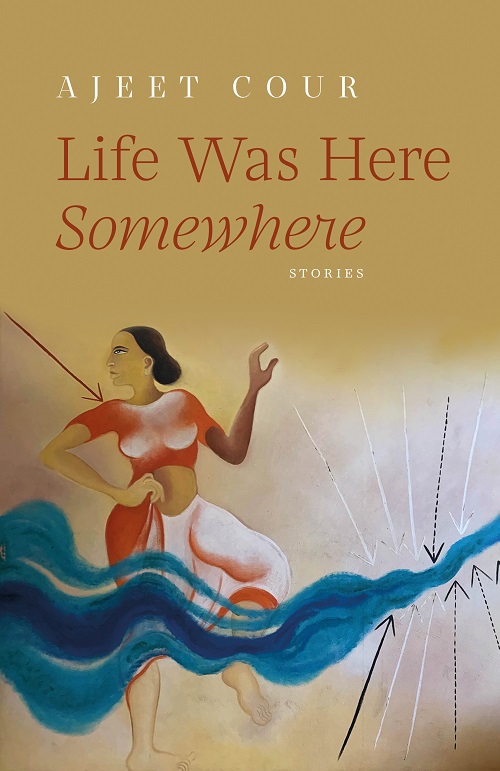
India’s independence in 1947 came with its own set of political as well as social uncertainties and challenges. For the people displaced from their native places, it was a struggle to find a home in unknown places amidst strangers, a firm footing to hold. The stories in this collection by Ajeet Cour, a profound and powerful voice in Punjabi Literature, offer observation of everyday lives of common people in the wake of Partition and during the early years of settling of migrants in Delhi and Punjab. But more than accounts of struggle for their livelihoods, these are stories of interpersonal relationships, of pain, anguish, betrayal and heartbreaks.
Ajeet Cour was born in 1934 in Lahore and migrated to Delhi in 1947 after the Partition. She began writing short stories as a teenager and today is the author of twenty-two books which include novels, novellas, short stories, biographical sketches and translations. In 1986, she was awarded the Sahitya Akademi Award for her autobiography. In 2006, she was awarded the Padma Shri for her writing and her contributions in the field of social upliftment. She is the Founder President of the Indian Council for Poverty Alleviation, and has been President, Foundation of SAARC Writers and Literature. In 1977, Ajeet Cour also founded the Academy of Fine Arts and Literature, a non-commercial institution in New Delhi for the promotion of the arts, literature, theatre, music and dance.
This book is a collection of fourteen short stories translated from Punjabi to English by Ajeet Cour and Minoo Minocha. In her note at the beginning of this collection, the author says:
“I write because I am a witness to the horrors of daily life, day-to-day existence of people living next door, or in Punjab or Kashmir or Assam, or in Bosnia or Chechnya or Rawanda, or anywhere else in the world, feeling my destiny entwined with theirs, living in fear, dying like flies. And I can’t look the other way. I write because I believe that those who remain silent become a part of the dark conspiracy.”
The stories comprising this collection are accounts of everyday horrors faced by common people, of the brunt of estranged and conflicted relationships bore by people even as they grappled to find and hold onto a ground in life after the suffering endured during partition. Most of these stories are women centered and carry a first person narrator. The story ‘Walking a Tightrope’ is that of a woman torn between her husband and an irresponsible son disowned by his father. The author offers a nuanced glimpse into before/after the partition in a big household. She employs the image of kitchen to demonstrate a married woman’s domain as well as her confines in a patriarchal household. ‘Death Among Strangers’ is a story of a grief stricken daughter who could not take care well for her father post Partition due to the apathy of her husband. Both stories use death as the pivot which jostles the main women characters out of their pre-determined roles of mother and wife respectively.
In some of the stories, characters navigate through the ‘babudom’ of Indian Bureaucracy. Trying to find ways to get their problems addressed, they often surrender to the system which becomes increasingly inaccessible to them. Often, the characters are irritated by the system which makes them invisible and works only at the behest of those in power. The title of such a story ‘Clerk Maharaja’, otherwise an oxymoron, denotes the high esteem accorded to a regular class government employee who carries enormous power when it comes to the movement of files from one desk to the other.
In the titular story ‘Life Was Here Somewhere’, a helpless and disgruntled narrator declares the whole country as a heap of garbage no one is interested in cleaning, and those running the country as visceral creatures feasting on the stinking pile.
The story ‘The Kettle is Whispering’ explores kinship between a single and a widowed woman whereas the story ‘Unsought Passion’ explores the ugliness of unwarranted attention. Both stories take us to the corridors of working women hostels in the early years of Delhi post independence, presenting a window to the dynamics of interactions and disagreements.
In a couple of stories the horror of terrorism is explored where the loved ones are either targeted by extremists or by the forces fighting extremism. These stories focus upon the suffering families, their anxieties and pain as they try to make sense of their loss. In ‘Dead-End’ a young woman tries to save a young wounded extremist even though she is apprehensive that he might have killed her brother.
Ajeet Cour poignantly portrays the internal and interpersonal conflicts as faced by ordinary people in the course of their everyday lives in the stories of this collection. Her writing resonates with their pain, her words capture their mindscapes bearing witness to horrifying bestiality humans are capable of and continue to exhibit in their dealings with their fellow human beings.
Rakhi Dalal is an educator by profession. When not working, she can usually be found reading books or writing about reading them. She writes at https://rakhidalal.blogspot.com/ .
.
PLEASE NOTE: ARTICLES CAN ONLY BE REPRODUCED IN OTHER SITES WITH DUE ACKNOWLEDGEMENT TO BORDERLESS JOURNAL









 Borderless