Categories
In Memoriam

Posthumous Poetry by David Skelly Langen

David Skelly Langen (1986-2023)
METRO WEST 

the tall walls make me uncomfortable as I’m shot from every angle
it’s a kodak moment
an interpersonal feel without a signed consent
my privacy is strangled
I’m just another man sitting guilty until proven innocent
the cage is claustrophobic and my mind has no choice but to ride
along shotgun
he looks for smuggled tobacco to roll a cigarette and asks me “Yo, you got one?”
A simple reply will do as an elongated conversation
seems to always lead to confrontation between me and this man
or the officer manning his station
as I walk the green mile my oversized blue flaps stick to the floor, what
a sorry excuse for a shoe passed down from man to man
god only knows the stories that go with them, the sad stories
originating from prison to prison
I live in a prism, confused as I follow the lines, how did I get to this point,
locked away, throw away the key to my
lips, I don’t think I’ll talk today as I sit in this hole, this empty abyss
the punishment given because I spoke with my fists
born into the wild I once again need to fend for myself
as I did as a child, I’ve walked miles but ended up at the wrong place
angry men in blue feel the need to compensate for their stolen
lunch money, don’t laugh, they have the upper hand
you don’t even have soap for a bath, so you ask yourself
am I still a man?
has this west end place stolen my lunch money, I’m placed in front
of a mirror, faced off with
my masculinity, and fascinated with the man I’m facing
I try to reach through or at least lose my mind
I want to be changing places

(“Metro West” refers to the Metro West Detention Centre in Toronto)


PHYSICAL INTRUSION


my mind is stronger than your muscle
you flex to make your point clear
because your go system is pristine
but the frontal lobe screams stop, in front of the cracked mirror
where you find an empty glass, covered in residue. Things seem illusive
This intrusion knows no barrier, adjacent to muscle
so let’s not try to spread a subliminal message
I am a hypocrite, as I know nothing else but
the compelling thought of advancing my position in this broken mirror
life as I see it
you should expect the same from me, as I lack character
but the difference is, I am equipped, with the sword in the stone
because I am strong with characteristics that shine without tone
what need have we to speak, when a gesture
is often remanded for its curtain call, when the water’s too dark
and you think until your mind sinks too deep
your muscle makes you weak
mine makes me acknowledge your weaknesses –
words are seen by millions
muscle is for minions


THE ONE WHO LEFT HIS MIND AT THE STATION

20 packs of beer, get ‘em in I’m a crook
spicy cinnamon with an adrenaline strut
a minion in cuffs, shackled hack, I’m corrupt
back to bat with a black kinda rap, okay enough
it stink like the stuff that come up from yer bowels
I spit shit, drop exlax with the vowels
I’m foul, I speak faeces, I need a towel and shout
I rip through with weapons that repent from my mouth
philosophise preaching as knees weaken weekly
dream big, speak Nietzsche
proposing a toast and civil war with myself
ouch!
the mind’s amiss on arrival, it’s ritual
running circles, I’m tribal, habitual
aboriginal, simple-minded, cynical
freddy krueger slasher but I keep it at a minimal
i‘m Trivial, i‘m jeopardy, I got questions
but hold on, criminal record, oops! forgot to mention
I used to kick it old school, it’s david beckham
a little bit of English with a foot in yer rectum


OVERDOSE


Where are you?

Are you where I see you standing, or somewhere else?

Am I here standing next to you, or somewhere else with you?

Am I alone?

Where did you go? I don’t see you there.

Why is my prescription empty?


(The following poem was added to the poet’s obituary in order to allow him to speak “in his own words” at his funeral)

MY MIND BENDS

the license plate on the back of my head spells trouble
my mind bends
spells spoken to the caves
abducting word skills
from something the world kills
I believe in my own lies, a psychopath in paralysis
diseased with addiction
cavities dance to the pulsing sound of a root canal

Up is nothing more
than an animated feature presentation
Homer as a d-day rather than a replay rarity
hurricanes steep through my kettled mind
I exist in a reign of horror
I’ll make a place on the map just to attract the UN
scissors cut through the vein of ambition
thinking has lost the war
bite the nail I say
using my head to bang nail into coffin

Aerial-David Skelly Langen (1986-2023) was a poet, pugilist, and ongoing survivor of street-level, drug-and-violence mayhem in Toronto, Moncton, and Liverpool, England. He described himself as an “outgoing, self-admitted work in progress.” His poetry is published in a collection of “poems of resistance” in Resistance Poetry 2 (2012) and in the family-based anthology, They Have to Take You In (2014). A posthumous debut collection from his considerable output of rap-based poetry will appear in 2025 under the title, The Red Cardinal, in honour of his crimsoned life in spirit and song. The poems shared here were first published in Resistance Poetry 2 in 2012.

.

PLEASE NOTE: ARTICLES CAN ONLY BE REPRODUCED IN OTHER SITES WITH DUE ACKNOWLEDGEMENT TO BORDERLESS JOURNAL

Click here to access the Borderless anthology, Monalisa No Longer Smiles

Click here to access Monalisa No Longer Smiles on Kindle Amazon International

Categories
Stories

Phôs and Ombra

By Paul Mirabile

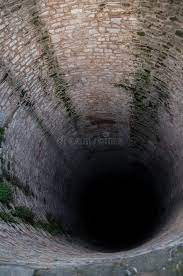
My name is Phôs, and for the love of life I have no idea where I am, or how I came to be in this nowhere. I lie on my back, the earth a spongy bed of unusual odours; above me, a narrow, circular vault, where behind a veil of sailing cumuli shine a moon of alabaster and a steady caravels of stars. So narrow is this vision that I feel terribly compressed, as if trapped within some sort of cistern or pit … perhaps a well …

My body suffers no pain. No one has hurt me. I simply lie here surrounded by narrowness, daring not move lest someone or something be alerted to my presence and attack me; or worse still, that I touch something or someone alien to my daily wont. No, better to count the stars. Which I did … until daylight.

It was the azure that woke me, so bright, so cerulean. And the sun, filling my … my prison ? Perhaps I am in a prison and a well to boot ! A very deep well, perhaps twenty or twenty-five metres deep. Around me are scattered broken stones and bones of animals and humans; little leather pouches, too, here and there, which, when I opened a few held the remains of bread, cheese and dry fruit. Several jugs lay broken or chipped near the bleached bones. They must have been thrown or lowered down here: But by who and why ? In one pouch I discovered two apples and several slices of cheese that smelt edible. About to devour them a sudden rustling from behind interrupted my ‘breakfast’. I swung around. A girl! There lay a tiny young girl. Sleeping or dead? No. She was sleeping, her chest rhythmically heaved to some disturbing dream or nightmare. Her little mouth emitted bird-like sounds, and her face — a doll’s face — was streaked with mud, a clown-like contrast to the whiteness of her almond-shaped face.

I dropped an apple in the pouch, crawled over to the girl and shook her gently out of sleep. Her eyes  opened in wild astonishment, green eyes staring up at me as if I were a monster. I recoiled a few paces and from that tiny, O-shaped mouth. “Who are you ?” flew out like the twitter of a bird from her.

I stood: “My name is Phôs and we are in some sort of well,” I stammered. “I have no idea why we are here.”

The young girl sat up, a look of incredulity cast a shadow over her face : “A well ? Why do you say a well?”

“Just look up at the blue sky. Just look around you: cold, polished stone, a pungent smell of clayish soil. A soil that seems to have marked your face.” I grinned. She immediately rubbed it off with the sleeve of her thread-bare vest. Her face did indeed resemble that of a living doll.

“My name is Ombra,” the girl said, getting to her feet with some difficulty. She screwed up her eyes, looking hard at me. “Odd really, when I see your face I have a strange feeling that I see mine. Like a tainted mirror.”

I stepped back: “But I don’t know what or who I look like. My face has no fixed image in my mind.”

She laughed feebly.

“Of course it has: almond-shaped green eyes, high cheek bones and forehead, a small, pug-nose and oval mouth. So, if you want an image, I’ve just given you one … mine, more or less! Who knows, you may be my brother!” Ombra smiled, but it soon faded as she glanced at the dark walls. “I’m so hungry, so hungry!”

I hurried to the pouch and took out an apple, a slice of bread and cheese. She devoured it all like a wild animal. I followed suit, helping myself to another pouch of bread and stale scones. Ombra moved closer to me: “The exiled. The criminals. The premature dead have been lowered or thrown into this place,” she whispered gravely, examining the skulls. “These scraps of food ; all these whitened and brittle bones belong to the Forgotten Sinbads, Josephs and Orhans … all those Devoid of Light.”

“But why us Ombra ? I am not a Sinbad or a Joseph or an Orhan ! Have I been exiled ? Am I devoid of light ? And you ?”

“Me,” she giggled dollishly. “A mysterious force has illumined our plight, Phôs. Our circumscribed confinement has drawn us together for some reason … For some unknown mission. And this well, if it very well be a well … Well, it has become our meeting place, perhaps even our final resting place.” Ombra pouted in a very coquettish way.

“No! There is no mission! No mysterious force!” I lashed out furiously, shuddering at my own violence. I regained my composure: “Look, at the top, a halo of greenish glow has formed the coping of the well. That is a good omen, believe me. All we have to do is reach the glowing green.”

“The green ? However can a colour become a sign of salvation ? And even if it were a good omen as you say, how are we ever to reach it ?”

It was a pertinent question. Ombra appeared to be very down-to-earth, perhaps a bit too straight forward for my taste, but nevertheless, a wonderfully sensible person. I myself have always been a bit too optimistic, too whimsical! Perhaps she is my sister after all! Notwithstanding…

I jumped to my feet and carefully began inspecting the texture of the circular walls: smooth, nickel-like silver smooth, like a cylinder. Not one rough stone. Odd really for a well, no rough or broken stones, no  chinks or fissures. Every stone as smooth as porcelain. It were as if the whole wall had been glazed or polished. I turned to Ombra, she was crying silently.

Was there no way out then? I stared at my companion with deep sympathy. 

“If only we were winged birds. Birds of lyrical tunes twittering out and far above the shadows of the under-world into the celestial rays of the universe above,” Ombra mused dreamily in a whispery voice, wiping dry her rosy-red cheeks.

A sudden deep vibrating sound, perhaps that of a gong, whose rolling undulations filled the well with reverberating tremors, caused us both to tumble to the bony soil where we cupped our ears and grimaced, so loud was the infernal vibrations: once … twice … thrice. The rolling trailed off into the distant twilight sky whose canvas-like backdrop painted a cartoon moon and isles of stars.

“What was that?” Ombra asked, trembling from the tremors of the unearthly sound.

“A gong of some sorts. A sign of night, I suppose. How strange that night should fall so quickly.” I  searched out an answer on my companion’s face. There was none. “And who struck that gong?”

“The warden of our keep,” Ombra mourned.

“Warden? Keep? Then you really think we are prisoners?”

She nodded. “I’m sure without being sure. You know, I recall nothing of my being here, nor of my childhood. The past becomes hazy whenever I try to recollect it.” She lay on her back using an empty leather pouch as a pillow.

“Yes, neither do I. My childhood has become nebulous since I found myself lying on my back in this awful boneyard. Only the passing of day and night has any signification for me. Look, Ombra, has night not come upon us so unexpectedly?” The young girl groaned without answering.

So in awe we observed the swimming moon in a dark sea of resplendent, floating stars that gradually lost their splendour, descending into a void that our weary eyes could neither follow nor fathom.

Ombra turned to me: “Water? How are we to drink in this dungeon? Food there is, but water?”

I peered at her in the shifting shadows: “Well, it is a well, I think. Yes, but on the other hand it appears to be a cylinder … “

She sat up, her face now bathed in shadows, although her green eyes shone like embers of a once singing flame: “Do you remember how Joseph[1] survived when his jealous brothers threw him into the well like a sack of rocks ?” Ombra suddenly asked me out of the shadows.

“A passing caravan going to Egypt retrieved him.”

“Yes, like those passing stars above us!” Her voice gathered strength. “And how about Orhan’s Red[2], tossed into a well and thought to be dead?”

“Red was stone dead, but somehow his memory or subconscious outlived his corporeal existence and he was able to narrate his tragic tale,” I narrated.

“Exactly!” Ombra’s voice doubled in tone and volume: “Let us not forget Sinbad the mighty sailor [3]; he would have perished in that bone-filled pit if he hadn’t beaten the other widowers or widows to death, taken their jugs of water and loaves of bread and finally escaped…”

“Sinbad wasn’t imprisoned in a pit or well but in a cave … The Cave of Death,” I added.

She sized me up: “Tell me, Phôs, is there any difference between a well and a cave?” She stood, arms akimbo. “Just set the cave vertically and the well horizontally and there you have it!” Ombra pronounced this platitude with considerable aplomb, and rather pedantically, too. I smiled meekly. “Ah, that was truly a miraculous escape.” she intoned. “But tell me, what about the exiled, those poor creatures dumped into the shadowy folds of death by kings, queens and princes. How did they manage their freedom?”

“They hearkened to the chanting of the hoopoe and espied the dense green rays that streamed into their sorrow from the benevolent sky.”

She laughed and concluded gayly: “Well, we are certainly well-versed on the subject of wells ! Now I really understand our mission.”

“Our mission?” I raised an exasperated eyebrow.

“Because we are so well-versed in wells, so well-informed about those fabulous figures of well adventures and misadventures, it seems that it is now our turn to fill the pages of fabled lore. Don’t you see?” I didn’t. All those stories and figures were literary or fictitious. Ombra and I were certainly not a storied couple. Then again, her vibrant voice did indeed seek to enlist my sympathy.

“Perhaps. But I’m no fabulous figure, believe me.” Ombra giggled so loud that her echo raced up the wall of the well, fading into the reddening dawn. 

I sighed, exhausted by all these enigmatic impasses. I wished to lie back and day-dream of green pastures or rye-filled fields. My energetic companion interrupted my drowsiness, but in more subdued tones: “And the dolls, Phôs. We forgot the dolls.”

“The dolls? I know nothing about dolls.”

“Well then let me refresh your memory. Five or six circus-like people found themselves trapped in a cylinder. They had no idea how they had come to be there. One of them, a tiny ballerina, because she was strong and nimble, managed to climb to the top, but once there she toppled into a snowy street like a tiny ballerina doll; a doll with tears running down its plastic-red cheeks.” I frowned at this foolish doll narrative, remarkable though it be. I lay back and ruminated our predicament.

I strained to conjure up one clear image of my past life, hoping to glimpse a scene or two. Nothing. Only bits of knowledge that I must have learnt at school, promptly awakened by Ombra’s unusual questioning. And now, here I am, an unfortunate soul without a history at all. I turned my head to my companion: Was she meditating upon her own amnesia?

Dawn … midday … night sheathed in moonlight were bright. No gong to usher in the twilight! Soon, however, blackness cloaked us as sleep overcame our troubled spirits and souls.

Daylight burst into our confinement like a shower of phosphorescence. I jumped up, mouth parched, eyes puffy from a restless, dream-filled night. I pricked up my ears: to my left, high up on the wall, a dripping, slipping, slithering sound filled my imagination with confused hope. I placed my hands on the smooth stone and through my fingers small runnels of water slipped. Yes, two or three runnels trickled down ever so slowly from between the stones midway up the well wall. I licked the smooth stone, lapping it up as best I could. Then I ran to Ombra, shook her awake and led her to the trickling runnels. She too licked the wall, sating her thirst savagely, heaving and panting with each lap licked.  We were saved … For the moment …

I scoured about the bones and pouches and found some more bread, cheese and dried fruit. Had they been lowered during the night ? Our circumstances had become terribly enigmatic …

As we munched on our meagre breakfast, the violet of dawn grew bluer and bluer, the rays of the sun, hotter and hotter. They warmed our chilly bones. Glancing up at the coping, I again espied that green glow encircling it. A halo of throbbing green. Odd that light, I mused to myself as Ombra washed her face with the clear dripping water. That must be a sign … I’m sure of it ! All of a sudden that hellish roll of the gong buffeted us from left to right: once … twice … thrice … Then it stopped as suddenly as it began. Why had it rolled at dawn? There must be some logic to that vibrating roll! Was the gong-beater confusing us purposely by confounding the signs?

“Are we not in hell?” queried Ombra, refreshed after her ‘morning wash’. “That gong may be the Devil’s instrument to enlighten us on our former faults or delinquencies.”

“Nonsense! What faults or delinquencies? And why Hell, what have we been punished for? Are we a pair of abject criminals? Do we deserve such inhuman treatment?” I responded with more questions.

Ombra shrugged her shoulders, searching about the well for more titbits.

“How can you be sure since your past remains in some sort of veiled unknowingness?” she said. I clenched my fists in contained anger. Ombra responded in an eerie, hollow voice: “The exiled. The forgotten. The unfortunates.” She keened in a soothing liturgical rhythm. I suppressed a desire to jolt her out of that sullen, dull, monotonous dirge. But I ignored that and sat down to brood over our unfair dilemma.

That day was spent poking about pouches and bones, wordless, soundless, helpless, both of us wrapped up in his and her inner world of phantasy and fugitive illusions.

The inky obscurity of night succeeded the bluish light of day. Rosy stars waned. The silver moon waxed. So night after night, day after day we endured our imprisoned existence, two desperate souls forgotten by the outside world. Neither of us had family or friends to rescue us. Neither of us could recollect our past lives, good or bad, no matter how hard we plumbed our memories. It were as if the present alone existed; the past submerged in Lethe’s watery vapours; the future, a glimmer of green light swallowed up daily by the darkling evening tide.

Then it happened! My hands under my head, observing the rotating vault of night, I immediately sat up, for something had caught my eye. Yes, the rays of the moon, now white, now yellowish, now green fell upon several uneven and jutting stones on one side of the well wall; stones fissured, too, whose cleaved spaces allowed fingers to grasp, feet to prod and cling. Exalted, I mentally marked each and every stone of deliverance as the green slipped away into darkness.

At dawn, all agog, I shook Ombra awake and excitedly related my fabulous discovery. And although the uneven, chinked stones could no longer be seen with the naked eye, I had memorised their placements on the wall.

“But how are we to reach them so high up?” Ombra lamented.

“Not we, but you! You alone, Ombra, will make the climb. You, Ombra, will deliver us from this infamy. Your tiny, nimble fingers and feet will slip into those cleaved stones and fissured spaces. Mine are much too big. You will shimmy up that wall and once at the top find rope and get me out. Or you can run for help. Where there is a well there is a village, no?” I was in a state of great excitement, contagious indeed, because Ombra’s face showed signs of warming up to my plan; a face that now beamed with renewed hope, the white of her cheeks crimsoning.

“The plot of our mission is thickening,” Ombra chuckled in a playful tone. “But how are we to reach those first stones?” She looked up and sighed. Suddenly that devilish gong sounded, sending us to the walls where we cupped our ears until once … twice … thrice… the undulating vibrations gradually trailed off, leaving behind a strange humming that quivered within the circumferential stones of the well.

In a flash I had the solution : ‘Ombra, get up on my shoulders, be quick. I’ll lift you up to the first stones and there you can manage on your own, I’m sure of it!”

No sooner was it said than done …

Upon my shoulders, then holding her feet with the palms of my hands Ombra reached the first jutting stones. From there, the agile Ombra climbed, stretching her unusually long arms towards the height of the other fissured stones. She grasped them like a professional alpinist, and with a nimbleness that amazed me, my companion slowly but surely zig-zagged her way from left to right, right to left, clambering ever higher. I cried out encouragement after encouragement as she crept up that wall like a bat, crawling and slithering and creeping. Hours and hours, too, crept by, or so I thought. As Ombra struggled ever upwards, stretching herself towards those liberating stones, seeking them with a strained, panting excitement, I had a weird vision of her body joints stretching like a series of elastic-bands, elongating in some doll-like dislocation. Was I hallucinating ? Her forearms and biceps appeared to draw out then draw in at the elbow with each thrust upwards. Her calves and thighs, too, protracted and contracted at the knee-caps with each salvaging step. I rubbed my eyes to rid myself of these burlesque images. 

“Ombra! Ombra! Have you reached the top? What do you see?” I yelled out far, far below, my voice, hollow like a death rattle.

At this point, the omnisceint narrator intervenes for the faraway Phôs had no idea what his companion had seen or felt as she clung to the green glowing coping of the well. There the exhausted young girl, mouth agape, set her tear-welling eyes on a gigantic void! Yes, their well lay in the middle of nothing! It was a tower some hundreds of metres above … above what she could neither discern nor imagine. No mountain of mirth. No plain of pleasure. No forest of festivity barred the tears from rolling down her crimson-coloured cheeks. Speechless she clung, peering into nothing, only an infinite, horizonless void. The poor girl, overcome by such a tragic spectacle, involuntarily swung a leg over the now greenless coping, and like a broken doll let herself drop, falling … falling into the clamorous silence of the black, bottomless void.

As to Phôs, his arms finally drooped in exhaustion. The green of the coping had long since vanished into night and his companion with it. There was no sign of Ombra …

He stood crestfallen, utterly alone, the expectancy of escape waxing as a dense darkness stole upon him like a shroud of death … 

[1]          Genesis 37-50 (The Torah or First Testament).

[2]          From Orhan Pamuk’s novel My Name is Red, 1998.

[3]          In Arabian Nights, The Viking Press, 1952.  pp. 428-429.

.

Paul Mirabile is a retired professor of philology now living in France. He has published mostly academic works centred on philology, history, pedagogy and religion. He has also published stories of his travels throughout Asia, where he spent thirty years.

.

PLEASE NOTE: ARTICLES CAN ONLY BE REPRODUCED IN OTHER SITES WITH DUE ACKNOWLEDGEMENT TO BORDERLESS JOURNAL

Click here to access the Borderless anthology, Monalisa No Longer Smiles

Click here to access Monalisa No Longer Smiles on Kindle Amazon International
Categories
Poetry

The L-o-s-t Bengal Project 

By Isha Sharma

The year is 1905

The tunes of Tagore’s Amar Sonar Bangla* flower in the streets of Bengal

Curzon calls the Partition to create a divide

However, ‘culture’ thrives

As Muslims and Hindus, unite


The year is 1947

Bloodshed and madness pick up as

Radcliffe creates new lines

People leave ‘homes’

To find new ones

Violence slices humanity

How could Bengal survive?


The year is 1965

Bengal has two sons, one -- West Bengal

The second, ‘East Pakistan’

As conflicts flare again, the memory of the lost home revives

Women adorning sarees sing the lyrics of that Rabindra Sangeet


The year is 1971

Liberation calls are made

As women get raped

A new nation is born but the legacy of the past still prospers


A woman in Bangladesh teaches her daughter tunes of Tagore’s song written in 1905 --

Amar Sonar Bangla may have been lost but is it fully forgotten?

It still hums ...somewhere


* The national anthem adopted by Bangladesh in 1971. It was written by Tagore to unite Bengalis together to oppose the 1905 Partition.

Isha Sharma is passionate about the process of translating emotions into verses. Her works, including articles and poems, have been published in Borderless Journal, Kitaab International, The Indian Literary Review, The Indian Periodical, The Indian Express, Indus Women Writing Newsletter, The Feminist Times, and The Tribune (Student Edition).

.

PLEASE NOTE: ARTICLES CAN ONLY BE REPRODUCED IN OTHER SITES WITH DUE ACKNOWLEDGEMENT TO BORDERLESS JOURNAL. 

Click here to access the Borderless anthology, Monalisa No Longer Smiles

Click here to access Monalisa No Longer Smiles on Kindle Amazon International

Categories
Essay

Peeking at Beijing: Fringe-dwellers and Getting Centred

How can anybody comprehend Beijing, one of the largest and most ancient cities on Earth? Its origins date back three millennia, but Keith Lyons tries to get a sense of the real Beijing in just full three days.

Day Three*

After a series of false starts on the previous day, when I’d thought I would be ticking off Beijing’s main iconic sights, for my third and final day in the city I took a different approach. Instead of heading into the heart of the capital, I sought out enclaves that were more on the periphery of the megacity, both literally and figuratively. 

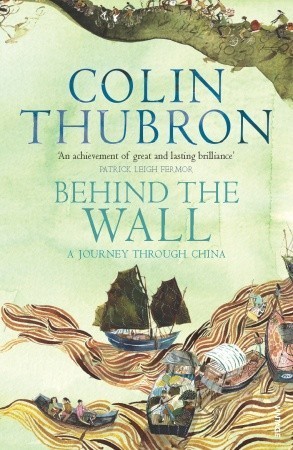
I’d been reading the accounts of Colin Thubron’s visits to China, including his 1987 book Behind the Wall which started in Beijing. Feeling displaced in the impersonal capital, his impression of Beijing was more of a building site than a city. “I tramped its streets in disorientation, looking for a core which was not there.” He found Tiananmen Square arid and couldn’t wait to get out of the city. “The fission of solitary travel — travel in a boyish euphoria of self-sufficiency — tingles in my stomach as I march across Beijing’s railway station,” he writes as he sets off on his travels around the Middle Kingdom as it emerged from decades of Mao and Cultural Revolution oppression.

Looking back on the previous day’s ‘failures’, I tried to reframe the disappointing experiences as learning, rather than ruminating on the rejection I felt after not getting inside the Forbidden City. 

One turning point in my journey was coming across a quote from Robin Sharma while thumbing through a bilingual personal growth book that sat among the artsy and anime library at my new accommodation, the hipster co-working space and ‘serviced apartment boutique hotel, ’ Stey 798. Initially when I saw the pull quote in English and Mandarin, I thought to myself, “What a douchebag; it’s fine for the business guru to say, having made millions spouting his stuff to the likes of Microsoft, IBM, General Motors and FedEx.” But then I reflected on the words and realised the truth in them: “There are no mistakes in life, only lessons. There is no such thing as a negative experience, only opportunities to grow, learn and advance along the road of self-mastery.”

I wasn’t exactly on the road to self-mastery when I found myself lost, tired, bothered and despondent on an unnamed minor road on the outskirts of Beijing. However, I realised that some of my preconceptions had been limiting. 

For example, the fixed idea that because Beijing was big and busy that it would be dangerous to hire a bike and cycle around. There were rows and rows of identical-looking bicycles for hire at every street corner, wide separate cycle lanes, and lots of visitors navigating successfully around Beijing by bike. If I’d been on a bike the previous day, I could have cycled right through Tiananmen Square rather than circle wide around the massive open space (though security personnel will still make sure you don’t stop to take photos at the best spots). 

So, note to self (and to others), try exploring Beijing on bike rather than just using the subway, taxis, or buses. To make bike hire possible, get a Chinese SIM card, install Mobike, and set up payments via WeChat and Alipay, so you can use the lockless sharing bikes provided by Meituan (yellow bikes), Didi Bike (green) and Hello Bike (blue) simply by scanning QR codes, or unlocking bikes with Bluetooth. 

I’ve since learnt some bike hire operators can loan high-quality bikes, with English-speaking staff who deliver bikes to your hotel. So even without a smartphone connected with a local SIM and data, you could arrange to discover the city formerly known as Peking by bike.

Beijing was once capital of the ‘kingdom of bicycles’, with the uptake of bikes trebling in the 1980s across China, as the rationing was cut for locally made bikes such as the prestigious Flying Pigeon brand. Cycle lanes were first incorporated into main roads throughout much of Beijing when car ownership was limited to government officials, with more than 3/4 of Beijing’s road space taken by cyclists in 1988. According to one study, some busy intersections saw 20,000 bicycles an hour, and 8 out of 10 Beijing’s used a bike as their primary transport. 

While China is the leading exporter of bicycles, bikes dropped from 62% of vehicles on the road in the late 1980s Beijing to just 16% by 2010. However, in the last decade, there has been a boom in bike use, not so much by the proletariat but by middle-class Chinese with an environmental and health consciousness embracing a post-materialist sharing society. Bike schemes featuring special locks, non-deflating tyres, rust-resistant bodies and GPS tracking have proliferated across Beijing and in most cities and towns, though following the boom there was also a bust for some players unable to cope with aggressive competition practices copied from the Uber monopoly playbook. 

In tandem with the return of the bike have been some other initiatives to address the problem Beijing was once synonymous with: air pollution. Much has been made of just how bad air pollution is in China, with 16 of the 20 worst air quality cities up to recently located in China. For the nation’s capital, vehicle emissions and burning coal to produce electricity have been the main causes of smog, but a wide range of measures have seen air pollution in Beijing decline by 50%. The air pollution in Beijing is still three times as bad as that in the US’s most polluted city Los Angeles, and some daily measures still exceed the World Health Organisation’s guidelines, but the initiatives which include better urban planning, switching away from coal, extensive public transport, and Low Emission Zones where only e-vehicles are allowed seem to be working. 

As an aside, a recent comparison of air pollution readings found Delhi was five times as polluted as Beijing, though the sources, composition and frequency of air pollutants are different for the two cities, with Delhi’s woes from biomass burning, road dust and the burning of agricultural waste. Delhi has been judged the world’s most polluted capital for four years in a row, according to IQAir. 

There’s another thing too. Much has been made about how polluted the air is in Beijing, but on the three full days I visited, only one day seemed to be overly hazy with smoggy, dirty air. Admittedly, particles in the air don’t have to be visible to be harmful, as the world is learning with more research into fine particles, but from a check of several air monitoring sites, including the US Embassy’s real-time monitoring which started in 2008, the readings were not too high. Probably no worse than smoking half a packet of cigarettes. Maybe that’s why many people in China wear face masks, not just because of illness or to stop the spread of germs. 

So next time — if there is one — I will definitely brave it on a bike. But that’s for next time. 

If Colin Thubron’s stomach was tingling with excitement in anticipation of travel, my stomach that morning was rumbling with anticipation of food to enable me to experience different parts of Beijing. Eating local is one of the best ways to experience a new place. 

I retraced my steps to the window-in-the-wall vendor I’d got a snack from the previous night, who made one of the specialties of Beijing, a thin savoury crisp-friend crepe stuffed with a selection of fillings. The man recognised me from the previous day, and we went through the process of assembling the ingredients to my liking to go on and in the pancake, which is eventually folded and wrapped like an American breakfast burrito. Unlike other jianbing I’d seen being made by small eateries, roaming food carts, or on the back of tricycles, my man’s crepes were made with buckwheat rather than wheat or mung bean flour, giving them a speckled purple appearance which I said to myself was like choosing a healthy option at McDonalds. 

To keep things fresh, jianbing are always made-to-order and cooked under the watchful attention of the mouth-drawling customer. Once the batter has formed small bubbles on the large round hotplate, a series of interventions are enacted, from cracking eggs over the pancake, to flipping it with long chopsticks. With brushes, the chef would smear on spicy and sweet fermented bean pastes (like miso), hoisin and chilli sauces, sprinkle on chopped coriander leaf, scallions and tangy pickled vegetables, and then add crunchy crispy-friend wonton dough strips and lettuce before cutting it in half and folding it into a rectangle. 

The pancake is Beijing’s favourite breakfast, but the staple food is little known outside China compared to steamed buns, dumplings and Yum cha dim sum

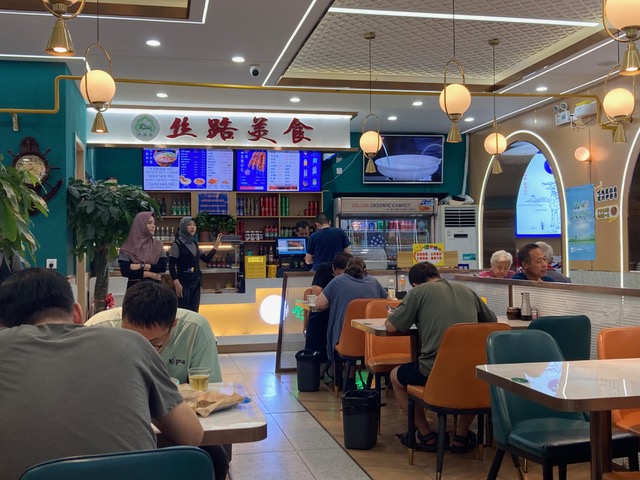
Also not well known outside China is the fact that Beijing has a sizeable Muslim population. At least a quarter of a million people who identify as Muslim reside in the capital, with a Muslim presence in the city dating back to the 8th century. As you may know from following the news, China has some issues in its north-western province of Xinjiang where Turkic-speaking Uyghur Muslims account for 12 million of its inhabitants, along with some ethnic Kazakhs. Less well-known and visible are the Hui Muslims, classified as an ethnic group and religious affiliation, who are found all across China. The Huis have adapted to the dominant Han Chinese culture, while maintaining their beliefs and customs.  

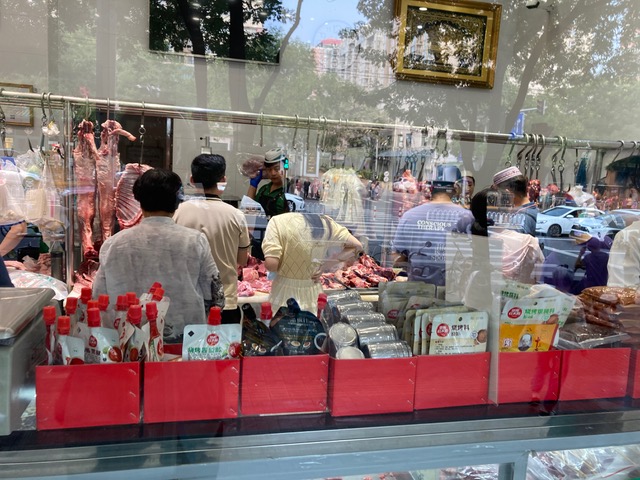
There’s one feature of Muslim life that is at odds with Chinese living, and that’s the eating of pork. Pork is China’s favourite and default meat, accounting for up to 70% of all meat eaten. With Muslims not eating pork, deemed unclean, impure and forbidden, instead the preferred Islamic meat is beef, with lamb/goat also featuring. This food divide meant that Muslims often lived together in neighbourhoods with not only a mosque, but also Muslim food processing and services. Across China, Muslim beef noodle restaurants are ubiquitous, and considered cheap and cheerful as well as clean, a godsend in a land of food hygiene concerns and stomach upsets.

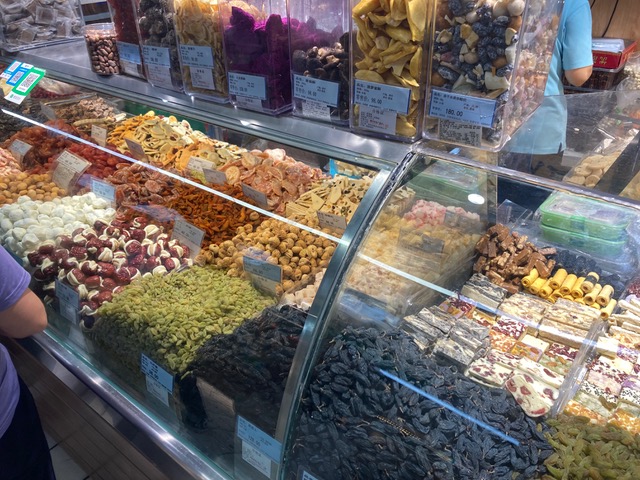
In Beijing Niujie and Madian are the two main Muslim enclaves, though the latter in the north has declined. Niujie, south of the centre, even has its nearby subway station, and while there is still a mosque (with Chinese-style architectural characteristics) the main attraction for most visitors is the distinctly Muslim food available, with snacks and delicacies on offer. 

Of the quarter of a million Muslims who officially reside in Beijing, perhaps half live in the neighbourhood of Niujie. There are halal supermarkets, butchers selling mutton and beef, a Hui hospital and a kindergarten. 

For a block, on both sides of the wide street, are stalls and restaurants, and queues. The smoke from sizzling charcoal grills serving fatty lamb skewer kebabs and the aromatic cumin-scented air probably push Niujie’s air pollution readings beyond acceptable World Health Organisation levels, but no one is complaining. Uyghur vendors, wearing round white hats, call out over the grill to whip up even more business, or shout out to younger men to fetch more of the freshly-baked sesame-studded flatbreads that are stacked high beside tandoor ovens, like round naan, but with a thick edge, like a deep dish Pizza Hut crust.

Steam rises from the large bowls of beef noodle soups slurped by families sitting on low stools around a square table, and visitors line up to order from a selection of fruit pastries. The largest amount of tripe you may ever see is cooked in a huge pot, while a rich cake made with dried fruit, nuts, seeds and sugar is sold by weight. 

One of the quests for the self-labelled traveller, as opposed to the unaware tourist, is to be less an outsider and a consumer of tourism products. But underlying all this is the enigma of travel. That we go to experience things that are different from back home. And occasionally we wish to be less visible as an outsider, and more like an insider. 

I think you can do this to a certain degree, depending on where you are and the acceptance of diversity of that place. But for me, as a visitor of European heritage, to the reasonably homogeneous and definitely differentness of China, I stand out. Not just because of my height at 6 feet. Or that my hair isn’t the standard black. 

So what I seek is more of an authentic experience. Which for me often involves shopping local, eating local, random exploration of neighbourhoods rather than ticking off sights, preferring places without tickets or queues. 

It is travel with some risks, not mentioned in the insurance fine print. It is travel which is self-deprecating, acutely aware of my ‘otherness’ and awkwardness, and of how I might connect with others. Some of that is transactional. I buy fruit from an old lady at a local market. I hop on a bus. I go to a place, but it is not the place recommended by the receptionist or concierge.

In Niujie, I am both an outsider and the ‘other’. Yet I have more empathy for and connection with the Muslim street vendors than I do with the Han Chinese who have come that afternoon to eat delicious food that is different to their normal diet. 

After rubbing shoulders with fellow diners at a cramped eatery in Niujie, having finally located the area that doesn’t feature in most Beijing guidebooks, I still had one mission to complete. 

Photo provided by Keith Lyons

So, as you are probably aware, Beijing hosted the Olympics back in 2008, with much fanfare and pomp. It was China showing off to the world just how modern and developed it was. It awed us not just with its impressive pageantry but also its buildings and facilities, many created just for the International sporting event. The Olympics provided the impetus for numerous infrastructure projects, particularly transport networks which were state-of-the-art. 

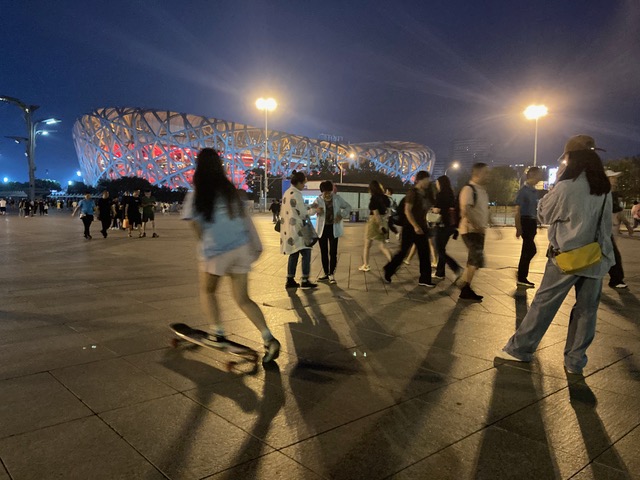
Some facilities remain, and the Bird’s Nest is still an attraction in itself, despite its lack of use following the 16 years. You probably remember the Water Cube, the swimming pool. 

Bird’s Nest: Photo provided by Keith Lyons

Often when I travel, I check to see if there are swimming pools near my accommodation, or even inside my hotel (if someone else is picking up the tab). So when I found out that Water Cube is open for casual swimming, I set my sights on swimming a lap or two in the famous pool. 

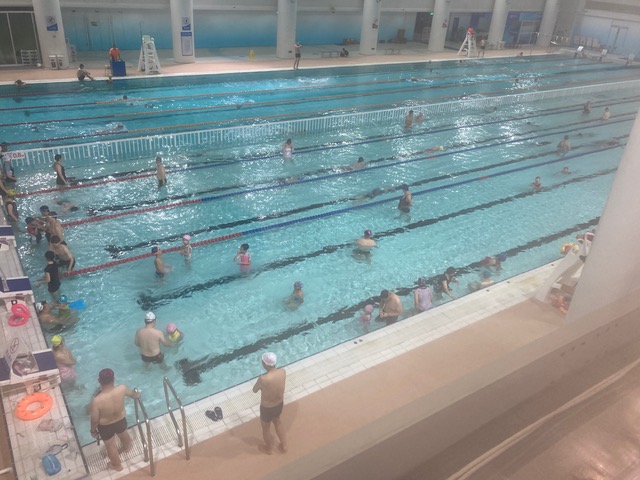
It turns out the pool for public use isn’t the actual one for Olympic races — that’s reserved for competition — but the training pool where swimmers warmed up and down has been open to anyone for more than a decade. But there’s a catch. 

First, you have to know that you can swim there. And there’s another level of safeguard. Because the pool is several metres deep, and there’s the danger of non-swimmers drowning, the pool is partitioned into two halves. The accessible half has a raised floor so it is only around a metre deep. You can stand up in it. Kids can stand up. 

But the other half, where the depth darkens the water to deep blue, is strictly controlled entry. You need a swipe card to access it. And to get that, as an American working in Beijing described to me, involved a medical test as well as completing various swimming feats, which included swimming two lengths without pausing. 

Without the time in the city to complete the rigorous entry requirements, I had to contend myself with the learner’s side, where parents walked alongside their children like chaperons, adults swam on both sides of the lanes, and there were frequent close calls or collisions. 

Inside the Water Cube: Photo provided by Keith Lyons

I’m a reasonably tolerant person, and having lived in China for more than a dozen years had got used to behaviours I initially found, to my mind and upbringing, a little disgusting. But when I swam my first length, only having to stop a couple of times to negotiate around erratic swimmers, the first sound I heard was from a fellow swimmer rising up from his lane to loudly clear his throat and spit onto the floor edge. I made a mental note not to rest my goggles up there.

While I had the passive-aggressive stance towards those spitters, during rests at the end of the lane other swimmers struck up conversations. A middle-aged women confided how she had lessons to swim in her 40s, and now tried to swim at the Water Cube a few days each week, even if she could not go a few metres without gasping for air. “Can you give me any tips to improve my swimming,” she asked as she returned to my end. I replied in Chinese the word my blind masseur used to give me when he hit a sore point on my feet. “Fang song” — relax. It was probably the worst word to say, like shouting ‘keep calm’ out repeatedly when something has gone disastrously wrong. 

I probably should have taken on board my own words, as I swam into a father shepherding his daughter along. He was blocking my way. I saw him do the same to others. Deliberately blocking the way of oncoming swimmers. You are the symbol of modern China, I thought. Selfish, entitled, arrogant. Because I am a man of peace and goodwill to all, when he next blocked my way, I just carried on swimming, exaggerating my kicking to churn up the water and splash his rotund belly and smug grin. 

I switched to another lane, and after a few more lengths, as I waited for a slow swimmer to get a head start, a boy of 12 years decided to strike up a conversation with me. “My mother says I should practice my English, so that’s why I like to come here,” he said, pointing up to the viewing window where a dragon mom waved and then proceeded to turn her phone camera towards us. After exchanging the usual questions about himself and me, he then abruptly turned the conversation around to China and the world. “China is the biggest country in the world. We are the leader.” 

Unable to find the right words to express himself, he asked another swimmer, a man who had just moved to Beijing from the north, to articulate. 

I wanted to ask him if China was such a great country, why did so many of its people want to escape to a better life in the US, Canada, Australia and New Zealand. But conscious that swimming at the Water Cube gives just two hours in the facility I escaped myself and tried to complete a length unimpeded or uninterrupted. 

When I got back, the boy, who was rather overweight, was still there, waiting with another claim about China’s might. 

Maybe I’m being nostalgic, about the good old days, but in the 1990s and 2000s, being a foreigner in China meant automatic adulation and attention from Chinese. Foreigners were feted and admired regardless of their behaviour and personality. 

Now, in the mid-2020s, things have changed. They started changing a decade ago, when China realised that foreigners were not so great after all. When stories from the government claimed that most of the foreigners were economic spies. When Chinese TV had footage of young Americans drunk and predatory on the Shanghai subway. When my friends said how they’d heard that many foreigners teaching in China were losers in their own country. The tide had turned. The golden days were over. China has regained its swagger. The sleeping giant was waking up. The dragon was turning. And I was getting tired. 

Before my number got called and I got requested to leave the pool, I got out, and used my token in the shower, wishing I’d brought my flip-flops to protect my feet from contact with the floor. 

Not just being in the water, but being underground, it always takes a little to adjust to being back above ground and at maximum gravity, weightless. One of the things I like about swimming is that afterwards, some of that fluidity, ease of movement, body perception and gentle feeling remains, like a reminder of how you could be in the world. My senses feel renewed, my mind a little lighter, my awareness more centred. 

Near the Bird’s Nest, they were having a skateboard class, with over 50 participants, many of them young women. And as I strode along the wide boulevard, groups of newly initiated skaters wove in and out of the family groups and sightseers, a sign to the world of new ways of being, new freedoms, and new leisure. Was this a victory for American culture? Or was China taking this recreation and adding Chinese characteristics to it? 

My last swim was both a relaxation exercise at the end of the day, and a future — proofing myself for a long-haul flight home. 

The faint linger of chlorine on the webbing of my hands and fingers. The sensation of lying face down and being held by the water. The realisation that the more I know the less I understand about China. These are the things I took with me as I sat in the aisle seat, stretched out my legs, and reminded myself, that I was 30,000 feet above the earth, going from the ancient capital to one of the youngest nations on earth (New Zealand). Much is lost, falling away, lost in time, the memories not so much fade as slip away imperceptibly. I scroll through the photos on my iPhone. So long Beijing.

*Read the Day two of Keith Lyon’s China trip by clicking here

Read the Day One of Keith Lyon’s China trip by clicking here

Keith Lyons (keithlyons.net) is an award-winning writer and creative writing mentor originally from New Zealand who has spent a quarter of his existence living and working in Asia including southwest China, Myanmar and Bali. His Venn diagram of happiness features the aroma of freshly-roasted coffee, the negative ions of the natural world including moving water, and connecting with others in meaningful ways. A Contributing Editor on Borderless journal’sEditorial Board, his work has appeared in Borderless since its early days, and his writing featured in the anthology Monalisa No Longer Smiles.

.

PLEASE NOTE: ARTICLES CAN ONLY BE REPRODUCED IN OTHER SITES WITH DUE ACKNOWLEDGEMENT TO BORDERLESS JOURNAL. 

Click here to access the Borderless anthology, Monalisa No Longer Smiles

Click here to access Monalisa No Longer Smiles on Kindle Amazon International
Categories
Poetry

Short poems by Mulla Fazul

Translated from Balochi by Fazal Baloch

Mulla Fazul (died around 1858) is considered one of the greatest poets of classical period. He is credited to have assigned new dimensions to classical Balochi poetry in terms of themes and diction. He also wielded equal command in Arabic and Persian languages which is evident in his poetry. The following poems have been taken from the anthology called, Drapshokin Sohail1, compiled and edited by Faqeer Shad.

MY BELOVED


Like the moon of the fourteenth night,
My beloved’s face glows bright.
She is the lightning on rainclouds,
Above the mountains that does strike,
Or a pomegranate
That ripens in weeks
Its blooming buds.
How desperately my ailing heart seeks!


WORLD

She seduces and ensnares a stranger
And her husband she cheats on and betrays.
The world is an unfaithful woman,
Each day she flirts in a new way.


HATRED TOWARDS BRETHREN


If a man harbours
Hatred towards his brother,
Off his sanity and wisdom will go.
The comforts of his abode
Away the scorching wind will blow
And soon the foemen
Subdue him with the sword.


DISUNITY

In disunity, what will you gain, after all?
The sun has gone past the horizons.
Night has descended on the world.
It’s dark wherever I cast a glance.

.

  1. Translation from Balochi: A Shining Star in Ursa Minor ↩︎

Fazal Baloch is a Balochi writer and translator. He has translated many Balochi poems and short stories into English. His translations have been featured in Pakistani Literature published by Pakistan Academy of Letters and in the form of books and anthologies.

PLEASE NOTE: ARTICLES CAN ONLY BE REPRODUCED IN OTHER SITES WITH DUE ACKNOWLEDGEMENT TO BORDERLESS JOURNAL

Click here to access the Borderless anthology, Monalisa No Longer Smiles

Click here to access Monalisa No Longer Smiles on Kindle Amazon International
Categories
Slices from Life

The Old Man

By Munaj Gul Baloch

I enjoy traveling; it’s a passion that still burns within me. The thrill of exploring mountains, rivers, forests, and historical places gives me immense pleasure. One particular memory stands out—the cloudy morning of 2017, when Hasnain and I embarked on a journey to our friend’s place in Dasht Kunchti, located in the district of Kech in Balochistan.

Our companionship was unique; we often found ourselves lost in thoughts, discussing social issues, the beauty of rain, clouds, and mountains. Nature mingled with our essence, and we couldn’t breathe without adventures. Traveling two or three places in a month became a part of our life, and our Sundays were always filled with stories, both blue and happy.

Our journeys left us with recollections, more potent than lessons, that lingered in our minds. What we saw, we will never forget; it’s ingrained in the subconscious.

Let me share the story of our journey to Dasht Kunchti, a trip that etched its beauty and meaning in our lives forever. Traveling a distance of two to three hours on a bumpy road was no easy feat, especially when the path was desolate with no shops and few fellow travelers, as was the case on the Jalbar road from Kolaho to Dasht.

When we started, the sky was cloudy, and a gentle breeze accompanied our ride. The beauty of the journey lay in the gratifying weather and the captivating mountain scenery. While crossing Jalbar, by a river between Dasht and Kolaho, we encountered a seventy-year-old man on the way to a waterfall. He seemed confused about the routs. Sensing his need for help, we offered him a ride on our bike.

Silence prevailed initially, as we were strangers. Names were exchanged, and the old man soon started talking, relishing our company. The conversation was both challenging and heartwarming. At some point, he thanked us and reiterated the need for kindness: ” Thank you for your help. I know you are students. Always be kind to other human beings, now and even after your graduation as you have been to me.” His message still resonates.

As we approached the waterfall, he urged us to stop, warning us of the impending rain. “Pass this river quickly; there is no alternative. When it rains, this river flows with much water for hours,” he said. And he disappeared into the mists of time.

In the six years that have passed, I’ve come to understand the need for kindness, especially given the current times. As they say, the hands that help others are holier than the lips that pray. The old man sought to convey that kindness is a universal language. It enriches the behaviour of souls, bringing joy to the giver and solace to the receiver.

.

Munaj Gul Muhammad writes for different national newspapers and has won Agahi Award (Pakistan’s biggest Journalism Awards) in the category of Human Rights in 2018. He can be reached at munaj1baloch@gmail.com

.

PLEASE NOTE: ARTICLES CAN ONLY BE REPRODUCED IN OTHER SITES WITH DUE ACKNOWLEDGEMENT TO BORDERLESS JOURNAL

Click here to access the Borderless anthology, Monalisa No Longer Smiles

Click here to access Monalisa No Longer Smiles on Amazon International

Categories
Poetry

Disaster Alert

Poetry and translation from Korean by Ihlwha Choi


A cat traffic accident occurred at the intersection.

With a pair of tongs, I managed to pick up the flattened head and body.

Collecting the entrails stuck to the hot asphalt,

I climbed up to a nearby forest while picking up the shattered skull.

I wanted to pray for the cat.

Should I wish for a heavenly rebirth,

or should I wish to be born as a beloved pet in the next life?

I couldn't think of a proper prayer.

Created by the Creator, a stray cat that has never harmed humans

while living in an apartment complex.

Wandering between apartment gardens and walls, roaming between wheels,

I wondered why it met its end, flattened on the hot asphalt in broad daylight.

Until I dug the ground and created a burial mound,

I couldn't come up with a prayer for the cat.

Unable to pray, I silently told it to go to a better place in my heart

as I descended the forest path, and at that moment a disaster alert came in.

It felt like a condolence message mourning the cat's death.

11:00 AM - Heatwave Warning Issued

Citizens, please refrain from outdoor activities during the day.

Drink water frequently and avoid prolonged exposure to the sun.

Ihlwha Choi is a South Korean poet. He has published multiple poetry collections, such as Until the Time When Our Love will Flourish, The Color of Time, His Song and The Last Rehearsal.

.

PLEASE NOTE: ARTICLES CAN ONLY BE REPRODUCED IN OTHER SITES WITH DUE ACKNOWLEDGEMENT TO BORDERLESS JOURNAL. 

Click here to access the Borderless anthology, Monalisa No Longer Smiles

Click here to access Monalisa No Longer Smiles on Kindle Amazon International
Categories
Excerpt

A House of Rain and Snow

 Title: A House of Rain and Snow

Author: Srijato

Translator: Maharghya Chakraborty

Publisher: Penguin, Vintage Imprint

It rains outside one of the windows, snows outside the other. This happens in Pushkar’s house. Well, not their house exactly, they are tenants, but this does happen there. Not every day, only from time to time. No one other than Pushkar knows about this, neither does he wish to tell anyone. There are two windows in his room, side by side, one almost touching the other. Outside one of them it rains the entire day and snows throughout outside the other. On the days this happens, Pushkar finds himself unable to leave the house.

The light in rented houses has a pallor of its own, a unique dimness, as if it never wishes to fully brighten. As if it knows it has been confined within the walls of a leased property. So every evening it flickers into life in a blurry, understated manner. Like it lacks self-confidence, lacks the courage to be loud. Thus the walls of the rented property, the calendar hanging on it, the door that refuses to shut properly and the ancient curtain sticking to it—they all look a bit pale in that low, dim light.

This is not a lie, Pushkar is well aware of that. It is hardly possible to know how one’s house looks from within. Like one has to be in space to truly understand how the earth looks, one has to step out of one’s house to see it, from afar. Pushkar has never really managed to do it that much. There’s a narrow lane just outside their house and rows and rows of walls and houses of the tiny neighbourhood beyond it. He has never managed to examine his house from a distance. So one must wonder how he figured out the matter of the paleness of the lights. It was quite easy. Whenever he had to take the local train back from a friend’s distant house in the evening, he witnessed the lights of the houses coming on one after the other. Various kinds of lights coming on behind big and small windows—a scene he watched many a time from the moving train. Such scenes immediately made him aware of the houses where families were living on rent, the ones where the lights were yellowish, slightly oil-stained and diffident. He used to count them on his way back and arrive at the conclusion that there were more tenants than landlords in this world. Or else the world at night would have been far more luminous every day.

Such was their house too. The only consolation being theirs was visible from aeroplanes. He has never seen it himself, but many a time he has seen the planes up close from the roof during their descent en route to Dum Dum Airport. If any passenger were to look down from the plane window that very instant, they would be able to spot Pushkar’s house and tell it was a rented one. That was nothing to be ashamed of, at least not for Pushkar. Many people don’t even have a roof over their heads, those who are barely discernible as human beings from planes and trains.

Although, in his own sliver of a room, he hardly switches on the lights most evenings even after it’s dark. Not because he is embarrassed or anything. Rather, he is fond of watching the light die out slowly and darkness descend all of a sudden. To wrap that feeling around himself—as if the only reason the day had dawned was to bring him this cover. Thus, many an evening he spends in the darkness of his small, square room. Just above the study table is a light on the oil-stained walls, one that he does not switch on every day. Like he will not today, he thinks.

It’s still early afternoon though, he just finished lunch a while back. Baba is on a day shift today, he will be late. Ma is getting some shut-eye, for soon she will have her singing classes in the adjacent room. This is what he is used to since childhood—his father’s job as a journalist in the newspaper office and his mother singing at local concerts and teaching music at home. This is how things have been for them, how they still remain. So, the days don’t really change for them, they mostly remain the same and Pushkar, too, can predict what will come to pass and when. Like today, like how he was not going to switch on the lights this evening.

Most days, he gets held back in his room, does not get to go out. His first-year classes have just begun. Geography. An excellent subject and it’s taught very well at their college. Yet, he is absent more than half the days. It’s not that he does not want to go, it’s just that he cannot bring himself to do so, always getting stuck. Mornings roll into afternoons and afternoons into evenings; he shuts the shaky doors of his room and sits alone on the far end of his bed, unable to leave. Perhaps because of the windows divided by the rain and snow. He cannot seem to fathom what he needs to do to go out, how he must prepare so he can walk down the narrow lane of their locality towards the main road, where the evening gathers together streams of light that split and disperse all around again.

About the Book:

Pushkar, an offspring of the most incredible of times, has next to nothing to call his own. Except for a seasoned but out-of-work and disheartened father, and a defiant, uncompromising mother with a truly astounding gift for music. It is only in the gradually widening chasm between his parents that he discovers his world of poems, which he desperately tries to hide from everyone.

Everyone else except Saheli, that is, only she gets to read his poems. Saheli, his school friend who he is in love with. Abhijit, another friend from school, is unwilling to leave it all up to fate and insists on dragging Pushkar to meet Nirban and their independent publishing house—at least to ensure that Pushkar’s poems manage to see the light of day.

In this entirely strange, magical and leisurely course of life swirling all around Pushkar, there is but one entity with whom he shares all his secrets. A milkwood tree, a chatim is privy to everything in his life. And so time moves on, leading him to eventually confront a truly secret equation of life—the change made possible by the transformative power of love.

A House of Rain and Snow is a testament to an era, a witness to an astounding journey of a young poet.

About the Author                           

Srijato, one of the most celebrated Bengali poet-lyricists of our times, is the recipient of Ananda Puroskar in 2004 for his book Udanta Sawb Joker (All Those Flying Jokers).

About the Translator

Maharghya Chakraborty is a well-known translator. He teaches at St Xavier’s College in Kolkata.

.

PLEASE NOTE: ARTICLES CAN ONLY BE REPRODUCED IN OTHER SITES WITH DUE ACKNOWLEDGEMENT TO BORDERLESS JOURNAL

Categories
Poetry

Fire Engine

Masud Khan’s poem, Dhamkal (Fire Engine), translated from Bengali by Fakrul Alam

Having fled the madhouse, the lunatic darted up the tree.
Nothing would make him come down, he said,
Except for the pleas of that midget-sized nurse!

The nurse came running, quick as a fire engine,
Waving wildly at him. Her gestures were coded messages,
Inducing the lunatic to climb down from the tree top
Just as a koi fish descends on the dining plate.
Entranced by the smell of steaming curry,
He descended easily and freely
As consecutive numbers do when one counts down.

The lunatic’s thoughts flickered across the nurse’s consciousness.

This day that mad man will return once more to his asylum.
Placing his head on the confessional,
He will soundlessly suffer thirteen electric shocks
Designed to induce thirteen confessions from him
At the directive of the calm and composed health priest!

Masud Khan (b. 1959) is a Bengali poet and writer. He has, authored nine volumes of poetry and three volumes of prose and fiction. His poems and fictions (in translation) have appeared in journals including Asiatic, Contemporary Literary Horizon, Six Seasons Review, Kaurab, 3c World Fiction, Ragazine.cc, Nebo: A literary Journal, Last Bench, Urhalpul, Tower Journal, Muse Poetry, Word Machine, and anthologies including Language for a New Century: Contemporary Poetry from the Middle East, Asia, and Beyond (W.W. Norton & Co., NY/London); Contemporary Literary Horizon Anthology,Bucharest; Intercontinental Anthology of Poetry on Universal Peace (Global Fraternity of Poets); and Padma Meghna Jamuna: Modern Poetry from Bangladesh(Foundation of SAARC Writers and Literature, New Delhi). Two volumes of his poems have been published as translations, Poems of Masud Khan(English), Antivirus Publications, UK, and Carnival Time and Other Poems (English and Spanish), Bibliotheca Universalis, Romania.  Born and brought up in Bangladesh, Masud Khan lives in Canada and teaches at a college in Toronto.

Fakrul Alam is an academic, translator and writer from Bangladesh. He has translated works of Jibonananda Das and Rabindranath Tagore into English and is the recipient of Bangla Academy Literary Award (2012) for translation and SAARC Literary Award (2012).

PLEASE NOTE: ARTICLES CAN ONLY BE REPRODUCED IN OTHER SITES WITH DUE ACKNOWLEDGEMENT TO BORDERLESS JOURNAL

Click here to access the Borderless anthology, Monalisa No Longer Smiles

Click here to access Monalisa No Longer Smiles on Amazon International

Categories
Review

Common Yet Uncommon: Stories from Sudha Murty

Book review by Somdatta Mandal

Title: Common Yet Uncommon: 14 Memorable Stories from Daily Life

Author: Sudha Murty

Publisher: Penguin Books

For those who have not listened to her humorous and motivational talks and seen her bright and smiling face on social media platforms and talk shows, Sudha Murty is an educator, author and philanthropist who is the chairperson of Infosys Foundation. She is married to the co-founder of Infosys, N. R. Narayana Murthy. Writing both in Kannada and English, she has authored collections of short stories, travelogues, technical books, non-fiction stories, novels, and children’s books. The present volume under review, as the sub-title rightly claims, are simple yet memorable stories from daily life.

In the ‘Preface’, the author tells us that she has written her stories based upon her personal experiences of a particular region in northern Karnataka where she was born and raised in a middle-class family and has chosen this area as the setting for this book since it is her homeland.  She says: “The river Tungabhadra divides Karnataka into two parts – North and South. The northern part of Karnataka has its peculiar history…. There was an amalgamation of cultures, languages and food habits…. By and large, the people here are open-minded and outspoken, much like the flat and open land that Mother Nature has bestowed on them.”

Growing up in a small town with a distinct culture, she is well-versed with the customs of its community, though she herself has immensely changed with time.

Written in Sudha Murty’s inimitable style, Common Yet Uncommon is an invigorating picture of everyday life where the foibles and strange behaviour of ordinary people are charmingly depicted. In the fourteen tales that make up the collection, Murty delves into her memories of childhood, life in her hometown, and the people she’s crossed paths with. These and the other “unembellished” characters who populate the pages of this book do not possess wealth or fame. According to her, they are outspoken, transparent, and magnanimous and are not polished in their speech or appearance. The crude veneer is no testimony to their unparalleled love and affection.  Yet, each one is unique. Their stories are tales of unvarnished humans, with faults and big hearts. But she has learnt something from each of them and they have left an indelible impression on her mind.

The title of each story is simple and tells us about fourteen unique characters who have nothing in common. They are “mutually exclusive but collectively exhaustive”. But in all of them, Sudha Murty herself appears as Nalini –- fondly called Nali by several –- who keeps on peeping in and out of every chapter, sometimes as a young girl, sometimes as a young adult and sometimes as a married woman.

In ‘Bundle Bindu’, she portrays the character of a man called Bindu who “had a knack for exaggerating”, but whatever knowledge of history and love for Kannada that she inculcated was not from the history teachers at her school but because of Bindu’s lessons. So, she considers him one of the most influential people from her childhood. ‘Jayant the Shopkeeper’ describes the failed business acumen of the protagonist and how many people would gather at his shop in the morning to drink tea, read the newspaper, and leave without buying anything. Later, after investing his entire savings, Jayant’s new shop called Modern Gift Centre also closed permanently within three months of its inauguration. Thus, he had no other option but to go and look after his son’s house and his child in Bangalore.

The next story, called ‘Jealous Janaki’, talks about an extremely assertive woman who was like a military commander and who “loved gossip, rumourmongering, misunderstandings, looking down on people and passing sharp remarks”. ‘Ganga the Unadaptable’ tells us how the beautiful Ganga would reject marriageable boys for different things and ultimately continued a spinster. In ‘Hema the Woman Friday’, Murty finds Hema to be one of the best philanthropists she had ever met as philanthropy doesn’t always mean giving money but helping others without expecting anything in return. A strange sort of husband-and-wife relationship comes out in a story called ‘Not Made for Each Other’, where one need not express his or her love only through words, but emotions prevail even in quietude.  ‘Selfish Suman’ describes the activities of a woman who always remained “within the circumference of me, myself and mine” and one who only looked out for her advantage in any situation.

‘Adventurous Bhagirathi’ chronicles the worldly-wise acumen of a woman brought up in a joint family whose prime asset was the balance of her mind and ‘Miser Jeevraj’, relates the story of a man who had always thought that money gave him an edge, and his wife and children would listen to him because of it. As time passed, Jeevraj became lonely and in the end, he realized that money is required in life, but it is not everything.  ‘Amba the Super Chef’ tells the story of a man who realised his wife’s worth only after she became ill with typhoid and could no longer make different dishes in different seasons and take care of his health. In ‘Sharada the Fortunate’, we read the story of a widow who chanced to meet an earlier rejected suitor, marry him in strange circumstances during a pilgrimage, and lead a new life once again with a new identity. ‘Chami the Charmer’ describes another woman protagonist who believed in making a strategy for everything in life and follow it. The final interesting story entitled ‘Lunch Box Nalini’ is narrated in the first person by the author herself and begins like this:

“I am Nalini Kulkarni. Elders have always called me Nali – a typical shortening of the name in North Karnataka. Here, Anand becomes Andya and Mandakini becomes Mandi. No wonder, the transition from Nalini to Nali was effortless.

Until now, I have peeped into everyone’s life and written about their characters. Now let me talk about myself – the best way to joke is not at someone else’s expense but at your own.

But how did lunch box get affixed to my name, you may wonder.”

The rest of the story is told in an extremely humorous manner of how her lost lunch box ultimately managed to find a groom for herself.

Testament to the unique parlance of a small town, Common Yet Uncommon speaks a universal language of what it means to be human. Reading these simple stories, one is instantly reminded of R.K. Narayan’s inimitable style and glorification of the common man. “Each character in these stories is a pearl. I am just the thread that weaves into this necklace, which I owe to my people and my land,” admits the author. A must read for everyone who loves to indulge in light-hearted reading and the spontaneous narrative style of Sudha Murty.

.

Somdatta Mandal, author, critic, and translator, is a former professor of English at Visva-Bharati University, Santiniketan, India.

PLEASE NOTE: ARTICLES CAN ONLY BE REPRODUCED IN OTHER SITES WITH DUE ACKNOWLEDGEMENT TO BORDERLESS JOURNAL

Click here to access the Borderless anthology, Monalisa No Longer Smiles

Click here to access Monalisa No Longer Smiles on Kindle Amazon International