With an openly-declared call for nuclear alert blaring in the headlines of newspapers, we bring to you reminders from the past of what hatred and war, nuclear holocausts can do to humanity. Recalling the need for peace and for solidarity with all of the human race, we have here a selection of writing from different parts of the world — people who have been writing for peace even without the war that now darkens our own Earth and further impacts humans, living conditions and the climate.
Here is what climate experts said way back in 2017: “The climatic consequences would be catastrophic: global average temperatures would drop as much as 12 degrees Fahrenheit (7 degrees Celsius) for up to several years — temperatures last seen during the great ice ages. Meanwhile, smoke and dust circulating in the stratosphere would darken the atmosphere enough to inhibit photosynthesis, causing disastrous crop failures, widespread famine and massive ecological disruption.
“The effect would be similar to that of the giant meteor believed to be responsible for the extinction of the dinosaurs. This time, we would be the dinosaurs.” How much worse will it be now, five years later while we are already impacted by rising water levels and climate change?
We start our presentation with the past impact of a nuclear blast on humans and nature.
Nuclear Holocaust
Surviving Hiroshima : Kathleen Burkinshaw is the daughter of a woman who survived the Hiroshima blast. Burkinshaw suffers neural damage herself from the impact of the bomb that her parent faced. She has written a book called The Last Cherry Blossomrecounting her mother’s first hand experiences. Her novel has been taken up by the United Nations as a part of its peacekeeping effort. She has been actively participating in efforts to ban nuclear weapons, including presenting with Nobel Laureates. Click here to read the interview.
Oh Orimen! A poem in Nepalese about a victim of the blast written by a sculptor, Manjul Miteri, who while working on the largest Asian statue of the Buddha in Japan visited the museum dedicated to the impact of the blast. The poem has been translated to English by Hem Bishwakarma. Click hereto read.
Sybil Pretious offers art and poetry commemorating theRemembrance Day that mark the end of the first world war.
Sybil Pretious writes mainly memoir pieces, paints and composes an occasional poem to reflect her varied life in many countries. Lessons in life are woven into her writing encouraging risk-taking and an appreciation of different cultures.
.
PLEASE NOTE: ARTICLES CAN ONLY BE REPRODUCED IN OTHER SITES WITH DUE ACKNOWLEDGEMENT TO BORDERLESS JOURNAL
Ratnottama Sengupta writes of a time when a language freed itself and a palace called Bardhaman House became the centre of a unique tryst against cultural hegemony. The Language Movement of 1952 that started in Dhaka led to the birth of Bangladesh in 1971. In 1999, UNESCO recognised February 21 as the Mother Language Day.
The window at Bardhaman House. Courtesy: Kamrul Mithon
All through the day Kamrul Mithon was standing in front of this window, waiting. He was waiting to be allotted a stall in Ekushey Book Fair 2022. This year the annual book fair in Dhaka is being hosted by the Bangla Academy from February 15 to 28.
This window is a part of the Bardhaman House. The first boimela or book fair had started under the banyan tree facing this very window. Kamrul Mithon, who earns his bread and butter by the click of his camera, is a book publisher by passion. The freelancer for National Crafts Council of Bangladesh is the Associate Visual Editor at Nymphea Publication who have just published titles like Cannes Diary and When the Mango Tree Blossomed, in the ongoing book fair. The day he spent facing the window was the day the lottery was held – so the best way to while his time was by clicking away, capturing all that captivated his fancy.
Later it occurred to him that he could post the pictures on Facebook to announce the forthcoming boimela. And when he did so, he captured my attention. “Is this a painting? A poster? A book cover?” My curiosity was piqued. “Neither,” Kamrul replied. He went on to give me a brief history of ‘Burdwan House’ – the architecture from the British Raj when Dhaka, the second biggest city of Bengal Presidency, housed estates of many erstwhile royalties including the Raja of Burdwan.
Maharajadhiraj Bahadur Sir Bijay Chand Mahtab (1881-1941) was the first in the Burdwan family to obtain formal education qualification, tour England and Europe, write his memoirs. Adopted at the age of six, he was bestowed the title of Rajadhiraj at the coronation in the Delhi Durbar. Though only eighteen then, he had the savvy to build a Gothic style gate to welcome Lord Curzon when the Governor General visited Bardhaman. That gate continues to be a historical landmark in the Indian state of West Bengal.
In 1908, when Bijoy Chand Mahtab risked his life to save that of Sir Andrew Fraser from a Nationalist bullet, Lord Minto elevated him to the title of Maharajadhiraj. He represented the Bengal zamindars in the Bengal Legislative Council and in the Imperial legislative Council for years. President of the British Indian Association, this philanthropist in education and health welfare was part of the committee that recommended replacement of Zamindari by the Ryotdari or tenancy system. After all this, though, he extended hospitality to Gandhi in 1925 and to Subhash Chandra Bose in 1928. Did he sense that the sun was soon to set on the British Empire?
The mansion in Dhaka was one of the many palaces of His Highness of Burdwan: the one in Darjeeling was his Summer Palace. Through the year he resided in the Burdwan House in Kolkata’s Alipore area. That stately home is now rented out for weddings and other occasions. So, I was especially happy to learn that Dhaka has transformed the classical architecture into a centre for research and preservation of Bangla. “Indeed this was where the Bangla Bhasha Andolan spread out from,” Mithon cues me in, “since this was where the instruction went out on the evening of February 21, to fire on the students of Dhaka University.”
Mithon further leads me through the various chapters of the Movement. “In 1952, being the residence of Nurul Amin, the Chief Minister of East Pakistan, Bardhaman House witnessed the escalation in our demand that Bengali be accorded equal status with Urdu as State Language of Pakistan.”
I remember hearing the backstory of the movement from my father, writer Nabendu Ghosh: he was forced to leave Kolkata, the home ground of Bengali literature, theatre, cinema, art – indeed, of Bengali culture – and live in Bombay after the Partition of the Indian subcontinent. Because? The readership of Bangla literature had been halved as had the viewership of Bengali films. Keen to build upon its Islamic genes, the government of the newly formed Pakistan decided that Urdu would be the state language. And to impose that decision even in East Pakistan, its eastern wing separated by 2000 miles of land and rivers, language and culture, it decreed that even Bengali, its lingua franca, must be written in the Arabic script!
Mithon encapsulates the story of rebellion against the firman – the decree — that took the masses unaware.
“1947, December 5. The working Committee of the Muslim League was meeting in Bardhaman House. The students and teachers of Dhaka University were stunned by the unfair decision that would impact the lives of the 44 million Bangla-speaking citizens who formed roughly 2/3rd of the 69 million population. They took out a procession to demand that Bengali be made the language of education and administration in the state — and at the Centre, it should be accorded the same dignity as Urdu, adopted by the Western wing of the divided India that encompassed large part of Punjab and Sindh, where the lingua franca was Pubjabi and Sindhi.
“1948, January 8. Evening at Bardhaman House. Leaders of the Language Movement met Prime Minister Najimuddin. The purpose? To protest the arrest and torture of the Bhasha Andolan (language revolution) activists — under section 144 — for demanding that they be allowed to freely read write and speak Bangla.
“1948, March 15. On the eve of signing the State Language Agreement, the then Governor Khwaja Najimuddin met the students involved in the Andolan. The next day a procession set out for Bardhaman House to demand the cancelation of the draft agreement. The police were let loose on them, for disobeying the orders under section 144, and the students and teachers were severely wounded.
“February 21, 1952, was Phalgun 8, 1358 on the Bengali calendar. Governor General Nurul Amin sent out the order that took the lives of Rafiq, Salam, Barkat, Abdul Jabbar, Shafiur Rahman, teenaged Aliullah, 17 other students, teachers, progressive intelligentsia and non-communal individuals, rickshawallahs and labourers… The tower that came up overnight in the University campus was not the only direct fallout of the inhuman firing: The symbol of Power, Bardhaman House became the target of people’s anger.
“After the heinous bloodbath, the demand to turn it into a Centre for Language Studies gathered momentum. And four years later, in 1954 it gained formal sanction prior to the elections. The 21-point Charter of Demands put forth by the Jukta (United) Front spelled out that the Prime Minister move into a less luxurious residence, leaving the mansion to be used as a Student’s Hostel and, subsequently, to be turned into a Research Centre for the language.
“Eventually the Pakistan government had to bow to the unrest: On May 7, 1954, Bengali was adopted as one of the state languages in the Constituent Assembly of Pakistan. And on December 3, 1954, the Chief Minister of East Pakistan, Abu Hosain, inaugurated the Bangla Academy in the Burdwan House.”
Quite naturally, along with research and nurturing of the language, Bangla Academy has taken care to perpetuate the memory of the Amar Ekush (eternal 21st) martyrs. The first floor of the Bardhaman House is home to the Bhasha Andolan Museum. Inaugurated on February 1, 2010, it preserves historical photographs, newspapers, memorial documents, cartoon, letters, publicity leaflets, manuscripts, book covers and memorabilia of the language martyrs. And in the ongoing Boimela, Nymphea has brought to the reading public volumes like Ekush: A Photographic History of the Language Movement (1947-1956) and Kaaler Kheya (The Boat of Time) about passing on Bangla from generation to generation.
The events of February 21, 1952, shed a long shadow that culminated in the emergence of the sovereign nation of Bangladesh which sings, Moder garab moder asha – Aa mori Bangla bhasha (Our pride, our inspiration, O sonorous Bangla!)… The love for its language has seen the nation adopt Tagore’s creation as its national anthem, Aamar Sonar Bangla. And even before that, Renaissance personality Satyajit Ray saluted the language by penning Moder nijer bhasha bhinna aar bhasha jaana nai … O maharaja, we speak no language other than our own, and we celebrate through that very language, Mora sei bhashatei kori gaan…
Indeed, the world salutes the struggle and sacrifices of the people of Bangladesh to be able to sing their songs. In November 1999, UNESCO paid tribute to Amar Ekush, the movement for safeguarding Bangla – with all its proverbs and poetry, myths and songs — by declaring February 21 as the International Mother Language Day.
.
Ratnottama Sengupta, formerly Arts Editor of The Times of India, teaches mass communication and film appreciation, curates film festivals and art exhibitions, and translates and write books. She has been a member of CBFC, served on the National Film Awards jury and has herself won a National Award.
.
PLEASE NOTE: ARTICLES CAN ONLY BE REPRODUCED IN OTHER SITES WITH DUE ACKNOWLEDGEMENT TO BORDERLESS JOURNAL
Jibananada Das (1899-1954) was born on 16th of February in a united Bengal under the colonial regime. During his life, Das wrote beautiful poetry, novels, essays and more. He believed: “Poetry and life are two different outpouring of the same thing; life as we usually conceive it contains what we normally accept as reality, but the spectacle of this incoherent and disorderly life can satisfy neither the poet’s talent nor the reader’s imagination … poetry does not contain a complete reconstruction of what we call reality; we have entered a new world.” To try to position any poet or writer in a pantheon as the best or second or third best is unfair to his art. And therefore, on his birth anniversary let us revel in his poetry and share some of the best translations of his poetry to English, along with an essay by an academic who shows how his poetry was influenced by the political ambience of the times. There is so much more to his poetry in Bengali that it can only be savoured as excellent translations in an Anglophone world. The flow and the images are beautiful, often like a painting of the Bengal he lived in…
Rakibul Hasan Khan explores death and darkness in Fakrul Alam’s translation of Jibanananda Das’s poetry. Click hereto read.
Ruposhi Bangla manuscript, the most popular of Jibananda Das’s poetry collections. Ruposhi Bangla was published posthumously in 1957. The cover of the book was designed by no less than Satyajit Ray, the renowned film director. Courtesy: Creative Commons
Sriniketan: Tagore’s “Life Work”: In Conversation with Professor Uma Das Gupta, Tagore scholar, author of A History of Sriniketan, where can be glimpsed what Tagore considered his ‘life’s work’ as an NGO smoothening divides between villagers and the educated. Click here to read.
Akbar: The Man who was King: In conversation with eminent journalist and author, Shazi Zaman, author of Akbar, A Novel of History. Click here to read.
Translations
One Day in the Fog, written by Jibananda Das and translated from Bengali by Professor Fakrul Alam. Click here to read.
Mahnu, a poem by Atta Shad, translated from Balochi by Fazal Baloch. Click hereto read.
Eyes of the Python, a short story by S.Ramakrishnan, translated from Tamil by Dr.B.Chandramouli. Click here to read.
Raatri Eshe Jethay Meshe by Tagore has been translated from Bengali as Where the Night comes to Mingleby Mitali Chakravarty. Click hereto read.
Pandies’ Corner
These stories are written by youngsters from the Nithari village who transcended childhood trauma and deprivation. The column starts with a story, Stranger than Fiction from Sharad Kumar in Hindustani, translated to English by Grace M Sukanya. Click here to read.
Ratnottama Sengupta sings her own paean in which a chorus of voices across the world join her to pay a tribute to a legend called LataMangeshkar. Click here to read.
P Ravi Shankar takes us through a breakfast feast around the world. Click here to read.
Musings of a Copywriter
In Life without a Pet, Devraj Singh Kalsi gives a humorous take on why he does not keep a pet. Clickhere to read.
Notes from Japan
In Bridging Cultures through Music, author Suzanne Kamata introduces us to Masaki Nakagawa, a YouTuber who loves Lativia and has made it big, playing for the President of Lativia at the Japanese coronation. Click here to read.
A tribute by Keith Lyons to the first New Zealand Booker Prize winner, Keri Hulme, recalling his non-literary encounters with the sequestered author. Click here to read.
Ratnottama Sengupta writes of a time a palace called Bardhaman House became the centre of a unique tryst against cultural hegemony. The Language Movement of 1952 that started in Dhaka led to the birth of Bangladesh in 1971. In 1999, UNESCO recognised February 21 as the Mother Language Day. Click here to read.
The Observant Immigrant
In To Be or Not to Be, Candice Louisa Daquin takes a close look at death and suicide. Click here to read.
‘Why does education in love not feature in today’s curriculum?’
— Mahasweta Devi, Our Santiniketan(Translated by Radha Chakravarty, 2022, Seagull Books)
As the world celebrates Valentine’s Day, one pauses to think how far commercialisation has seeped in over time that the very concept of a tender emotion was questioned by Tina Turner in a song called, “What’s love got to do with it” nearly four decades ago.
This was written even before Mahasweta Devi (1926-2016) published a nostalgic memoir of 1930’s Santiniketan in Bengali in 2001. She raised her pen to ask the very pertinent question that is quoted above. Why is education in love not a part of our curriculum anymore? She was reminiscing about her days in Santiniketan where children were brought up with rigorous academics while discipline was coloured with love and affection. They nurtured a love for nature in students too. This has become a rarity for many and perhaps needs to be revived as the Earth struggles to continue habitable for humankind. In the process of educating students to love and give, Santiniketan threw up many greats like the writer herself. We are delighted to host an excerpt from the start of Our Santiniketan translated beautifully by Radha Chakravarty.
Santiniketan was only the very visible part of a huge project taken on by Tagore (1861-1941). The other part now united with Santiniketan under the banner of Visva Bharati University is Sriniketan, a group of villages where Tagore experimented with raising consciousness and standards of villagers to integrate them into a larger world. He brought in new techniques in agriculture and crafts into the villages under this programme involving many prominent scientists, artists and humanists. And the project has blossomed. Did you know Tagore thought of himself as an NGO and his ‘life work’ he felt was developing villages (Sriniketan) and educating young minds to build a world where borders of knowledge, poverty and ignorance could be smoothened?
He wrote: “I alone cannot take responsibility for the whole of India. But even if two or three villages can be freed from the shackles of helplessness and ignorance, an ideal for the whole of India would be established.
“Fulfill this ideal in a few villages only, and I will say that these few villages are my India. And only if that is done, will India be truly ours.”
All this can be found in a book called A History of Sriniketan (Niyogi Books), written by Uma Das Gupta, a major authority on Tagore who moved from Oxford to Santiniketan and made Tagore’s work in these two institutions her own life’s work. We have featured her and her book in our interview/review section.
Raised out of such ashes of poverty that Tagore sought to dispel, are youngsters from the village of Nithari, where ceaseless efforts by volunteers of organisations like Saksham and pandies’ has given a new lease for life to those who have been exposed to violations, violence, divides, poverty and deprivation. One of them, Sharad Kumar, now studying to be an engineer, kicks off our new section called Pandies’ Corner with his story in Hindustani translated by a volunteer, Grace M Sukanya. His story learns from history and shows rather than tells.
A similar approach to view the present through lenses focussed on the past at a much grander scale has been taken by Shazi Zaman, an author and journalist, who has stepped into the Anglophone world with the transcreation of his own novel from Hindi to English, Akbar, A Novel of History (Speaking Tiger Books). He has brought to the fore how in days when sectarian violence based on religions killed, Akbar (1542-1605) tried to create a new path that would lead to peace so that he could rule over an empire united by administration and not broken by contentious religious animosities which often led to wars. In his interview, he tells us of the relevance of the Great Mughal in a period of history that was torn by divides, divisions so deep that they continue to smoulder to this day and date. That history repeats itself is evident though our living standards seem to improve over time. Bhaskar Parichha’s review of Growing up Jewish in India: Synagogues, Customs, and Communities from the Bene Israel to the Art of Siona Benjamin, edited by Ori Z. Soltes, also reinforces these divides and amalgamations in the modern context. The other books that have been reviewed include The Best of Travel Writing of Dom Moraes: Under Something of a Cloudby Indrashish Banerjee, and Gracy Samjetsabam has introduced us to an intriguing murder mystery in Masala and Murder by Patrick Lyons.
Translations have thrown up interesting colours this time with a Tamil story by a Sahitya Akademi winning writer, S Ramakrishnan, translated on our pages by B Chandramouli, one from Korean by Ihlwha Choi and of course a transcreation of Tagore’s songs where he sings of the meeting of horizons. A beautiful poem by eminent Balochi poet Atta Shad (1939-1997) has been translated by Fazal Baloch. We are again privileged to host an original translation of Jibananda Das(1899-1954) by Professor Fakrul Alam. We also managed to get permission to share some of Professor Alam’s fabulous translations of Jibananada Das from UPL (United Press Limited) and are starting it out by excerpting two of his poems on Banalata Sen, which were till now restricted to readership who only had access to the hardcopy. Rakibul Hasan Khan has given us an essay on these translations. An interesting essay on Satyajit Ray (1921-1992) by Rebanata Gupta and personalised tribute to the first Booker Prize winner from New Zealand, Keri Hulme (1947-2021), by Keith Lyons, who had many non-literary encounters with the sequestered author, add to the richness of our oeuvre.
Ratnottama Sengupta has also paid a moving tribute to the music legend, Lata Mangeshkar, who died at the age of 92 on 6th February, 2022. The choral symphony of multiple voices that hums through the paean recreating the larger than life presence of Lata reinforces that her lilting voice will stay embedded in many hearts and lives forever. Her perfect honing of musical skills delivered with the right emotions make her an epitome of human excellence. She gave the best of herself to the world.
Wrapped in more dry humour is Devraj Singh Kalsinarrative on why he does not want pets. Meredith Stephens, on the contrary loves pets and sails the seas of West Australia with her camera, words, seals and dolphins. Luke PG Draper also speaks for animals — for the intrusion of pollutants that harm creatures like whales in his short story. Hop all over the world with Ravi Shankar breaking nightly fasts with food from different cultures. More colour is brought in by Suzanne Kamata who starts a new column, Notes from Japan — introducing us to Japanese sensation, Masaki Nakagawa, who has sung his way to hearts with Lativian songs that he loves, so much so that he got to perform at the Japanese coronation and has pictures with the Latvian President.
The time has come to let you discover the mysterious pieces that have not been mentioned here in the February edition — and there are many.
Before I wind up till the next month, I would like to thank our fabulous team who make this journal possible. Keith Lyons has now become part of that team and has graciously joined our editorial board. Sohana Manzoor and Sybil Pretious deserve a special kudos for their fabulous artwork. Our grateful, heartfelt thanks to all our wonderful contributors and readers who keep the journal alive.
In Conversation with Professor Uma Das Gupta, Tagore scholar, author of A History of Sriniketan: Rabindranath Tagore’s Pioneering work in Rural Reconstruction published by Niyogi Books, 2022
Tagore (1861-1941) has been celebrated as one of the greatest poets of the world, a great philosopher, a writer, an artist, a polyglot but what did the maestro himself perceive as his greatest ‘life work’?
He wrote: “My path, as you know, lies in the domain of quiet integral action and thought, my units must be few and small, and I can but face human problems in relation to some basic village or cultural area. So, in the midst of worldwide anguish, and with the problems of over three hundred millions staring us in the face, I stick to my work in Santiniketan and Sriniketan hoping that my efforts will touch the heart of our village neighbours and help them in reasserting themselves in a new social order. If we can give a start to a few villages, they would perhaps be an inspiration to some others—and my life work will have been done.” This was in a letter in 1939 to an agricultural scientist, Leonard Elmhirst (1893-1974), who helped him set up Sriniketan, a craft and agricultural development project for the villages which fell under the purview of the Tagore family zamindari.
To Tagore, his ‘life work’ lay in the welfare of humankind and poetry was just one of the things he did, like breathing. He told a group of writers, musicians, and artists, who were visiting Sriniketan in 1936: “The picture of the helpless village which I saw each day as I sailed past on the river has remained with me and so I have come to make the great initiation here. It is not the work for one, it must involve all. I have invited you today not to discuss my literature nor listen to my poetry. I want you to see for yourself where our society’s real work lies. That is the reason why I am pointing to it over and over again. My reward will be if you can feel for yourself the value of this work.”
Uma Das Gupta
These are all incidents woven into a book called A History of Sriniketan by historian and Tagore biographer, Uma Das Gupta, who did her post-doctoral research on the maestro and the history of the educational institutions he founded at Santiniketan and Sriniketan. She moved out of Oxford and pursued her studies in Calcutta. She has highlighted Tagore uniquely as an NGO (Non-governmental organisation) operator and also an educator. Mahasweta Devi (1926-2016) in her book Our Santiniketan, recently translated by Radha Chakravarty, focussed on his role mainly as an educator who sought to revive values, a love for nature along with rigorous academics to create thinkers and change makers like the author herself.
A History ofSriniketan is about his work among villagers to bridge gaps. Often, his poetry and writing expresses the empathy he felt for pain and suffering, his need to instil beauty and well-being into humankind so that they could evolve towards a better world — an ideal which he described to an extent in poems like ‘Where the Mind is Without Fear’ and India’s national anthem.
Dasgupta did this by not only delving into Tagore’s own writings but by devoting her life to unearth the depth of the maestro’s commitment and the hard work and money he invested in the project he described as his ‘Life’s work’. She even visited the villages and talked to the beneficiaries and workers. Her book is peppered with photographs of Tagore in Sriniketan. It is amazing to see pictures of the poet with people from Sriniketan sitting on the ground or celebrating festivities.
Tagore, Das Gupta tells us, poured all his Nobel prize money, into the Sriniketan Bank project which was led by his son, Rathindranath. The project hoped to free the peasant from debt. How well were these experiments received by Tagore’s contemporaries? Das Gupta writes in her book: “It would not be an exaggeration to say that Rabindranath had to encounter all of those things, that is, to ‘overcome opposition’ and to ‘conquer space and time’, in no uncertain measure. In short, he had to drive hard to do anything good for a better village life. As a first step, he insisted that Indians should unite to provide nation-building services to the village and not look to the State for doing what was our own duty towards our people. For him, this had to be the more important function of the Swaraj being sought from alien rule.
“In Rabindranath’s view, what had misled society in our transition to modernity was the introduction of the Western concepts of private property and material progress. What this led to was that mankind, though never free from greed, now crossed the limits, within which it was useful rather than harmful. What came about as a result was that property became individualistic and led to the abandoning of hospitality to our people and loss of communication with them. As a consequence, there was an increasing divide between city and village. He found all that to be the reality, when trying to bring about changes, both in his family’s agricultural estates and in the villages surrounding Santiniketan-Sriniketan.”
Tagore, Nandalal Bose & Leonard Elmhirst are together in this picture taken in 1924. Lord Elmhirst, then Tagore’s secretary/assistant stands at the back with Nandalal Bose between him and Gurudev. Courtesy: Creative Commons
To bridge this divide, Sriniketan was created with the involvement of more of the Tagore family, agriculturists, scientists from all over the world, like Leonard Elmhirst whom Tagore had invited in 1921 to lead the Sriniketan work, and artists, like Nandalal Bose. It was a path breaking experiment which found fruition in the long run. They adapted from multiple cultures without any nationalistic biases. Rathindranath brought batik from Indonesia into the leather craft of Sriniketan. We are told, “One of the early influences was from Santiniketan’s association with a group of creative thinkers from Asia, who were spearheading a Pan-Asian Movement that questioned Western hegemony in art and artistic expression. A pioneer of the Pan-Asian Movement was Kakuzo Okakura (1863–1913, Japanese scholar and author of The Book of Tea). He came to Calcutta in 1904, when he met Rabindranath, and they became friends. Okakura admired and supported Rabindranath’s Santiniketan school. Nandalal’s Kala-Bhavana syllabus included Okakura’s artistic principles of giving importance to nature, tradition, and creativity, which were the same as Rabindranath’s artistic principles.”
That Tagore’s effort was unique and overlooked by the mainstream is well brought out through the narrative which does not critique but only evidences. For instance, Das Gupta contends: “He (Tagore) wrote the same to Lord Irwin, the Viceroy, in a letter dated 28 February 1930, when appealing for a government grant towards agricultural research. ‘I hope I shall have the opportunity on my return for another talk with Your Excellency in regard to what has been my life’s work and in which I feel you take genuine personal interest.’ Lord Irwin had come for a visit to Sriniketan at the time and Rabindranath was told of his favourable impression of what he saw during his visit to Sriniketan. In his letter, Rabindranath wrote how he was doing the work ‘almost in isolation’, without any understanding from his people or from the government.” Does that often not continue to be the story of many NGOs?
Sriniketan by Dasgupta is a timely and very readable non-fiction which brings to light not just the humanitarian aspect of Tagore but the need for the world to wake up to the call of nature to unite as a species beyond borders created by humans and live in harmony with the Earth. It all adds up in the post-pandemic, climate-disaster threatened world. To survive, we could learn much from what is shared with us in this book. I would love to call it a survival manual towards a better future for mankind. Scholarship has found a way to connect with the needs of the real world. The book is reader friendly as Das Gupta writes fluently from the bottom of her heart of a felt need that is being voiced by modern thinkers and gurus like Harari — we need to bridge borders and unite to move forward.
Das Gupta retired as Professor, Social Sciences Division, Indian Statistical Institute. She was Head of the United States Educational Foundation in India for the Eastern Region. Recently, she has become a National Fellow of the Indian Institute of Advanced Study (IAAS), Shimla, and a Delegate of Oxford University Press. Her publications include Rabindranath Tagore: A Biography; The Oxford India Tagore: Selected Essays on Education and Nationalism; A Difficult Friendship: Letters of Rabindranath Tagore and Edward Thompson, 1913–1940; Friendships of ‘largeness and freedom’: Andrews, Tagore, and Gandhi, An Epistolary Account, 1912–1940. In this interview, she focusses mainly on her new book, A History of Sriniketan, while touching on how Tagore differed from others like Gandhi in his approach, his vision and enlightens us about a man who created a revolution in ideological and practical world, and yet remained unacknowledged for that as in posterity he continues to be perceived mainly as an intellectual, a poet and a writer.
Uma Das Gupta in the corridors of the Indian Institute of Advanced Studies (IIAS), Shimla, where she was visiting as a National Fellow (2012 – 2014) to advise on a permanent exhibit on Tagore’s life and work. The project was sponsored by the Ministry of Culture in celebration of Tagore’s 150th anniversary. This Institute is housed in the erstwhile Viceregal Lodge of imperial times. Photo provided by Uma Das Gupta
You are a well-known biographer of Tagore and have done extensive research on him. What made you put together A History of Sriniketan?
Grateful for your kind appreciation.
Writing a history of Sriniketan has been a priority for me. As a Tagore biographer, my dominant theme is about a poet who was an indefatigable man of action. His work at Sriniketan is of prime importance in that perspective. The secondary theme is of him as a poet and writer of many a genre, lyric, poetry, narratives, short stories, novels and plays. I had to make a choice of emphasis between the two themes since I did not intend to write a full-scale biography covering all aspects of Tagore’s life, equally. My choice was to explore his educational ideas and to examine how he implemented them at his Santiniketan and Sriniketan institutions. His work as an educator and rural reformer is even today hardly known because his genius as a poet and a song writer overshadowed his work as an educator, rural reformer, and institutional builder. That area of research was quite virgin when I started it as a post-doctoral project in the mid-1970s. For perceptions about his poetry and his large oeuvre I have drawn on the work of the scholars who know the subject better than I do.
My focus is on the concerns that featured persistently in Tagore’s writings and his actions. These were about the alienation in our own society between the elite and the masses, about race conflict and the absence of unity in our society, India’s history, nationalism, national self-respect, internationalism, an alternative education, religion, and humanism as elaborated by him in his collection of essays titled The Religion of Man (1931).
A History of Sriniketan is a detailed presentation about his ideas and his work on rural reconstruction. The idea of doing something to redeem neglected villages came to him when he first went to live in his family’s agricultural estates in East Bengal. His father sent him as manager in 1889. The decade that he spent there was his first exposure to the impoverished countryside. He was then thirty, already a poet of fame, and had lived only in the city till then. The experience played a seminal part in turning him into a humanist and a man of action. The closer he felt to the masses of his society the further he moved from his own class who were indifferent to the masses. His independent thinking gave him the courage of conviction to work alone with his ideas of ‘constructive swadeshi’.
As a pragmatist he knew there was not a lot he could do given his meagre resources as an individual in relation to the enormity of the needs. But he was determined at least to make a beginning with the work. His goals were a revitalized peasantry, village self-reliance through small scale enterprises, cottage industries and cooperative values. He wrote, “If we could free even one village from the shackles of helplessness and ignorance, an ideal for the whole of India would be established…Let a few villages be rebuilt in this way, and I shall say they are my India. That is the way to discover the true India.”
Disillusioned with nationalist politics he turned to his own responses to the many troubled questions of his times. Tagore was convinced there could be no real political progress until social injustices were removed. He pointed repeatedly to the sectarian elements of Indian nationalism which kept our people divided. He hoped that the Santiniketan-Sriniketan education would create a new Indian personality to show the way out of the conflict of communities. He thus brought a different dimension to nationalism by arguing for universal humanity. It led to doubts about his ‘Indianness’ among his contemporaries. He had the courage to defy the idea of rejecting the world as a condition for being ‘Indian’. In fact, he tried continuously to break out of the isolation imposed on his country by colonial rule. He had the foresight to sense that the awakening of India was bound to be a part of the awakening of the world.
What is the kind of research that went in into the making of this book? What got you interested in Tagore in the first place?
I am a historian by training. Historians have to back up every statement they make in their analysis by written documents. That is why the historian’s main source is the archives. Likewise, my research for this book has been mainly archival. I searched for written documentation from 1922 when the Sriniketan scheme of rural reconstruction work was officially launched. The documentation included the minutes of meetings, memoranda exchanged among the workers of the Institute of Rural Reconstruction, official notes, and annual reports written and filed.
In addition, I used to visit the villages in which the scheme was implemented to get an understanding of the ground reality. The work was started with six villages in 1922, extended to twenty-two more villages in the first ten years, and to many more villages afterwards. When the work was being run on a small scale, the Institute tried to post a village worker to stay in the village itself and work along with the villagers to implement the Sriniketan scheme. Some of these villages actually kept notes and records of their work which I could use as part of my local level research. I also interviewed some of the workers who had retired but who were still living around Sriniketan in their old age though their number was small. I have used those oral interviews in my documentation. Some of the Village Workers had their own private correspondence to which they gave me access.
There is also extensive personal correspondence in the Rabindra-Bhavana Archives between the leaders of the Sriniketan work. Among them first and foremost are Rathindranath Tagore and the British agricultural scientist, Leonard Elmhirst, whom Tagore had invited in 1921 to lead the Sriniketan work. Elmhirst had been to India earlier as a Wartime Volunteer during World War 1. When Tagore came to know of him through another British agriculturist working in Allahabad, Sam Higginbottom by name, he contacted Elmhirst with a request to come to Santiniketan and to lead the Sriniketan work. One of Tagore’s prime targets was to implement Scientific Agriculture in the villages. In fact, many years earlier, in 1906, he had sent his son Rathindranath and another student of the Santiniketan school, Santoshchandra Majumdar, who was Rathindranath’s classmate, to the University of Illinois at Urbana-Champagne to study Agriculture with the view that they would bring back the expertise for the Sriniketan work at the completion of their studies.
Elmhirst was in Sriniketan from 1922 to 1924 after which he returned to his work in England. He worked closely with the Sriniketan team even from far through the letters they exchanged. Rathindranath consulted Elmhirst regularly over Sriniketan’s work in progress and this correspondence is in the archives.
There is also a very charming body of personal letters between Tagore and Elmhirst. Tagore’s originals are among the Elmhirst Papers in the Dartinghall Hall Trust archives in Devonshire, UK, and Elmhirst’s original letters are in the Rabindra-Bhavana archives, Santiniketan. This correspondence has been published.
Another very important source of documentation is available in the Diaries of Leonard Elmhirst which he wrote from the start of the Sriniketan work in 1922. Elmhirst’s Diaries were published by Visva-Bharati titled Poet and Plowman. There are some day-to-day accounts of how the work was being done on the ground by a group of senior students from Santiniketan who had chosen this field for training and of course by the Village Workers who had been appointed by the Institute. There were other leaders who helped with the work throughout like Kalimohan Ghose who later carried out the pioneering Surveys of the Villages. I have included some of these path breaking Surveys in the Appendices of A History of Sriniketan.
Last but not the least important for my research were Tagore’s ideas of education and rural reconstruction about which he wrote several essays in two important collections, namelyPalli-Prakriti(Countryside and Nature) and Sikshya (Education). Some of the essays were autobiographical as to how he started the rural work in his family’s agricultural estates in East Bengal where his father sent him in 1889. He stayed at Selidaha, the Estates’ headquarters, with his family till 1900 when he moved to Santiniketan in South Bengal’s Birbhum district where his father had founded an ashram and called it Santiniketan, the ‘Abode of Peace’. It was not a monastic ashram but one for householders to spend some days in prayer and meditation away from their household responsibilities. This is where Tagore and his young family moved in 1900-01 with his plans to start a school for children in the heart of nature. It was to be a school where the children could learn to creatively assimilate the knowledge imparted to them instead of in the classroom that characterised colonial education. This was how his Santiniketan school was founded in 1901.
Santiniketan was located within two miles of the Bolpur Railway Station on the East Indian Railway Line. It was situated on high ground, in the middle of a wide plain, open to the horizon on all sides. There, father and son had planted noble groves of mainly mango and sal trees. There, in the heart of nature not far from a big city, Tagore had the advantage of being able to draw upon both raw materials and cultural products in equal measure as it were. There was the influence of trees, open fields, and the seasons changing so starkly on the one hand; on the other hand, there was the inspiration of artists, science teachers, libraries, and hand-made, machine-made, equipment.
You ask why I got interested in working on Tagore. There is a very personal story to share. When our son was born in Oxford where my husband and I were working with University Fellowships during 1972-73, we decided to move to Visva-Bharati on an invitation from the then Vice-Chancellor, the eminent historian Pratul Chandra Gupta. We were of course attracted to the possibility of being at Tagore’s institution and also to the prospect of raising our child in its pastoral environment. We did thus move to Visva-Bharati in 1973 leaving our Calcutta jobs at Presidency College, where my husband was Professor of History, and Jadavpur University, where I was teaching. Once we went Visva-Bharati, I began to explore the possibility of doing post-doctoral research on Tagore rather than on colonial history as was the area of my doctoral dissertation at the University of Oxford.
What would be the purpose of such a book? Do you think Tagore’s model would work if multiple NGOs adopted his ideas?
As I have already mentioned I am a biographer of Tagore’s educational ideas and the history of his institutions at Santiniketan and Sriniketan. To me writing this book on a history of Sriniketan was an integral part of my research. But at a personal level, I was concerned that the history of that practical and experimental work that Tagore did under the most difficult of circumstances might get completely forgotten if it were not documented. That was a genuine concern because of two reasons. Firstly, while Santiniketan has retained its charm as a popular tourist spot, and as Santiniketan’s oldest buildings of exceptional architecture had become heritage buildings, Sriniketan did not have anything to show or display for outsiders to connect with its one-time strident presence in bringing life and action to the villages. Secondly, Sriniketan never reinvented the wheel but just carried on from the 1950s as a unit of Visva-Bharati University to fill in for routine bureaucratic and funding purposes. Even its beautiful and thriving craft work that brought acclaim to Sriniketan from well beyond its precincts, would slowly but surely erode.
Therefore, the primary purpose of this book is to document a pioneering humanistic enterprise for posterity, and also for the next generations who were expected to be engaged in the field of rural development even though the original model was not necessarily practically and theoretically viable in today’s socio-economic scenario. The book is also for the scholar and for the generally interested person. When I was starting my work in the mid 1970s, there was no doubt in my mind that Sriniketan was becoming less visible.
As for whether multiple NGOs could use the Tagore model is for the NGOs to tell us, but I do know that in its neighbourhood, Sriniketan remains an important inspiration for mobilizing villages non-politically. There have been one or two such movements in the vicinity of Santiniketan-Sriniketan which are continuing to work actively at grassroots. One is Pannalal Das Gupta’s ‘Tagore Society for Rural Development’. Founded in 1969-70 as a registered society, the Tagore Society specialises in motivating villagers to take on environmental self-help projects. There is also the ‘Amar Kutir Society for Rural Develoment’ located very close to Sriniketan which was once a shelter for runaway political prisoners. Founded in 1923 by Susen Mukhopadhyaya, a young revolutionary freedom fighter then, who was attracted to Tagore’s work in rural reconstruction. We learn from his writing that he kept observing the work while coming in and out of jail himself. ‘Amar Kutir’ developed the work of organising local crafts persons, upgrading their skills, training them in design, and in marketing their products for economic rehabilitation. The Birbhum district had several families of traditional weavers. Some of them had been engaged in trade by the East India Company.
Another such non-governmental private initiative for rural development has come up more recently in 1984 in the outskirts of Sriniketan called the ‘Elmhirst Institute of Community Studies’, (EICS), whose members are working mainly in the areas of women and child development including family counselling, family adoption, de-addiction and rehabilitation, HIV/AIDS education and intervention. They were started with substantial moral and financial support from Elmhirst who was interested in spreading Sriniketan’s pioneering enterprise and taking the ideas further to meet the needs of the later day.
In other parts of India individual leaders were drawn to the work of building village self-reliance and a few had dedicated themselves to the cause in post-independence India. For his Ashrams at Sabarmati and Wardha, Gandhi himself kept closely in touch with Sriniketan which he visited several times even after Tagore’s passing and knew it well. Gandhi’s follower, Baba Amte, in Madhya Pradesh was a key worker in the field. More contemporarily one reads of the utopian commune ‘Timbaktu Collective’ in rural Andhra Pradesh where a husband-and-wife team, Bablu and Mary Ganguly, have organised the hapless farm labourers of Anantapur district to work for the regeneration of wasteland and start projects on organic farming, soil conservation, propagation of traditional food crops and have also taken steps for women’s and Dalit empowerment and rural health. Most of these ideas were at one time born and nurtured in the holistic laboratory for socio-economic development that Sriniketan was. Bablu Ganguly acknowledges Fukuoka as his mentor. Being Bengali by birth, it would not be surprising if he was aware of Tagore but perhaps only as a poet and songwriter.
Tagore withdrew from the national movement to develop villages, which is where, he felt lived a large part of India. Gandhi had a similar outlook. So, where was the divide?
With his deepening sympathy for the suffering millions of his country, Tagore became increasingly critical of the changes that Britain had brought to India. But he also felt strongly for the West’s ideas of humanism and believed they were of benefit to Indian society. Revolutionary changes were inescapably entering into our thoughts and actions. This was evident in the proposition that those whom our society decreed to be ‘untouchables’ should be given the right to enter temples. The orthodox continued to justify their non-entry into temples on scriptural pretexts, but such advocacy was being challenged and resisted. The people’s ‘voice’ had put out the message that neither the scriptures nor tradition nor the force of personality could set a wrong right. Ethics alone could do so.
There were important factors that led gradually to this new way of thinking. The impact of English literature was one such. Tagore pointed out that acquaintance with English Literature gave us not only a new wealth of emotion but also the will to break man’s tyranny over man. This was a novel point of view. The lowly in our society had taken it for granted that their birth and the fruits of their past actions could never be disowned; that their sufferings and the indignities of an inferior status had to be meekly accepted; that their lot could change only after a possible rebirth. Society’s patriarchs also held out no hope for the downtrodden. But contact with Europe became a wake-up call. It was no surprise that in his landmark essay Kalantar (Epoch’s End) Tagore recalled and endorsed the British poet Robert Burns’s unforgettable line, “A man’s a man for a’ that”.
It was in that longing to bring hope to the deprived people that Tagore and Gandhi felt really close. They were both carrying out rural reconstruction work because they knew that the majority of Indians lived in villages and wanted to bring awakening and national consciousness to the villages as the prime goal to freedom. Both men focused their attention on the peasantry as the largest class within Indian society who were paralysed by anachronistic traditions and weighed down by poverty and the absence of education.
The major issues on which Tagore and Gandhi differed were debated nationally. Before discussing the specific issues in the controversy, it would be useful to examine their general positions on freedom and nationalism. In The Religion of Man (1931), Tagore developed the position that the history of the growth of freedom is the history of the “perfection of human relationship”. Gandhi applied the same principle to resolving India’s racial conflict. Tagore took the idea further and challenged the credo of nationalism. Tagore argued that the basis of the nation-state was a menace to the ideal of universal harmony or to the “perfection of human relationship”. But to the nationalist leadership all over the country, including Gandhi, political self-rule or swaraj came to be understood as a necessary phase of spiritual self-rule, or swarajya, and nationalism as the first step towards attaining free human fellowship.
Tagore alone spoke out against that trend. He argued that the crucial stumbling block in India’s future lay in the social problems of the country such as the absence of human rights for the masses and the alienation between the educated classes and the masses. He emphasised what the country needed most of all was constructive work coming from within herself and the building of an ethical society as the best way for rousing national consciousness. The rest would inevitably follow, even political freedom.
In his novel, Ghare Baire (The Home and the World, 1916), Tagore seemed critical of Gandhi’s call for Khadi and burning of mill cloth imported from England. Yet, Sriniketan was a handicraft forum for villagers to find a way to earn a living through agriculture and craft. So, why the dichotomy of perspectives as both were promoting local ware? Where was the clash between Gandhi’s interpretation of Khadi and Tagore’s interpretation of selling indigenous craft?
There was never any conflict in their perceptions or feelings for the poor, Gandhi’s and Tagore’s. Other issues were stirred in relation to the Khadi campaign and the burning of foreign cloth. For instance, the Congress in 1924 moved a resolution under Gandhi’s recommendation enlisting its members to spin a certain quantity of cloth on the charka (spinning wheel) as a monthly contribution. The idea was to give the movement country-wide publicity, and also, to make spinning a means of bonding between the masses and the politicians.
Tagore was wholly opposed to the idea of using the charka as a political strategy for swaraj and explained his position in his 1925 essay titled ‘The Cult of the Charka’. He argued that there was no short-cut to reason and hard work if anything was to succeed; that nothing worthwhile was possible by mass conversion to an idea; that our poverty was a complex phenomenon which could not be solved by one particular application such as spinning and weaving Khadi. Tagore raised the question if our poverty was due to the “lack of sufficient thread”, or due to “our lack of vitality, our lack of unity”?
On burning clothes Tagore’s position was that such a method hurt the poor by forcing them to sacrifice even what little they obtained from selling those clothes. He concluded that buying and selling foreign cloth should be delegated to the realm of economics. In his reply Gandhi wrote, that he did not draw “a sharp or any distinction between economics and ethics”. He added that the economics that hurt the moral well-being of an individual or a nation “are immoral and therefore sinful”.
Is Sriniketan unique? Can it be seen as Tagore’s model for rural development?
To the best of my knowledge there is no parallel institution in India.
I am not aware if Tagore was ever talking of a ‘model’ that he expected others to follow. He was certainly hoping, as he wrote, that his work will help to establish an “ideal” [his word] for the rest of the country.
My own sense is that an “ideal” has been established given that empowerment of the villages through the Panchayats has become a nationwide project. Of course, the government’s approach is not fully in character with Tagore’s holistic vision for the individual’s humanistic development. Today the individual hardly counts, politics and economics are what matter. All the same it has to be said that the villages are getting some attention and are not left to rot as had been the case in the earlier century.
You have said that Tagore faced criticism for the way he used Nobel Prize money. Can you enlighten us on this issue? Tell us a bit about the controversy and Tagore’s responses.
As anyone would surmise the Nobel Prize money was very precious also to the Santiniketan community because the teachers and workers there had to struggle over the resources for the institution. But contrary to the community’s expectation, Tagore decided that the Prize money would be given to the cause of rural credit. He had started the Patisar Krishi (farmers’) Bank in 1906 followed by the Kaligram Krishi Bank. According to Tagore’s biographer, Prasanta Pal, the total investment in the rural banks in 1914 amounted to Rs 75,000 of which Rs 48,000 was invested in the Patisar Krishi Bank at 7% interest per annum and Rs 27,000 at the same rate of interest in the Kaligram Krishi Bank. Tagore decided that only the interest from those investments could be used to pay for the maintenance of the Santiniketan school. The actual purpose of the fund was to give loans to the poor peasants so as to relieve them from exploitation by moneylenders and some unethical landlords too. In order to repay their loans, the peasants had to sell their produce at a rate lower than the market price immediately after drawing the harvest. This phenomenon was causing them perpetual indebtedness. The Krishi Banks were to loan money to the peasantry at a lower rate than the money lenders and relieve them from the age-old exploitation.
Tagore was firm that the primary beneficiary of his Nobel Prize money would be the poor peasantry of his family’s estates, and the Santiniketan school would be only the secondary beneficiary. He tried thus to balance his two main concerns when settling the future of his Nobel Prize money.
It cannot be said there was a ‘controversy’ over this as Gurudev (which was how the community addressed Tagore) was too revered for a controversy to be raised about a decision that he had taken. But there was disappointment. It seemed strangely that even his inner circle had not realised his deep emotional attachment and ideological commitment to the cause of the impoverished peasantry. Perhaps, my response to your earlier question may explain why.
Tagore had noticed the gaps between the different strata of Indian society. Sriniketan was an attempt to bridge the gap. How far did his ideals succeed?
There was tremendous societal gap between the different strata of Indian society. With all of Tagore’s will and effort, it cannot be said that the Sriniketan ideals could bridge the gap. Even today, a perceptive visitor, who visits Santiniketan and Sriniketan, located only within two miles of each other, can tell the difference between the two. Santiniketan looks bright and thriving, but Sriniketan looks neglected.
Community life in the Indian villages was seen to break for the first time with the emergence of professional classes among the English-educated Indians. The city began to attract them away from the villages. Those Indians were happy to let the government take over guardianship of the people and relinquish to it their own traditional duties to society. The result was a widening gap between town and country, city and village. Tagore knew from his life’s direct experience that none of those who dominated the political scene in his time felt that the villagers ‘belonged’. The political leadership apprehended that recognising this vast multitude as their own people would force them to begin the real work of ‘constructive swadeshi’. They were not even interested to try. That was where the Sriniketan effort was invaluable to Tagore. He saw that the endeavour built at least a relationship with the village, if nothing else.
The Sriniketan scheme sought to bridge the gap by bringing to the village a combination of tradition and experiment. Tagore knew that a civilisation that comprises of only village life could not be sustained. “Rustic” was a synonym for the “mind’s narrowness”, he wrote. In modern times, the city had become the repository of knowledge. It was essential therefore for the village to cooperate with the city in accessing the new knowledge. One such vital area of expertise was in agriculture. His study of “other agricultural countries” had shown that land in those countries was made to yield twice or thrice by the use of science. A motor tractor was bought for Sriniketan in 1927 because he believed that the machine must find its way to the Indian village. He wrote, “If we can possess the science that gives power to this age, we may yet win, we may yet live.”
Your book tells us that Sugata Dasgupta’s publication, A Poet & A Plan(1962) showed that Sriniketan had benefitted the villages it adopted decades after Tagore’s death. Has there been further development of these communities or is it status quo?
No, it cannot be said that it is status quo from the 1960s. There have been changes for sure. There have been benefits to the villages from the Government’s projects. Indeed, the government had adopted some of their early projects from Sriniketan’s original work.
More interventions are needed of course but it has to be said something is being done. Of course, the changes I can mention that have benefitted the condition of the villages and therefore the villagers’ lives came well after Sugata Dasgupta’s publication. The three that I can mention are communications, roads, and electricity. Today there are more long-distance buses than ever before transporting people to and from the villages. Totos and cycle rickshaw-vans take passengers from the bus stands to the interior villages. Roads are another major development. Besides the highways, the mud paths in the villages are now being converted to metalled roads. There is electricity in the villages.
I should mention one other significant change which is that secondary education is now fairly common to the present-day rural populace. College education has also come within their reach.
What is the current state of the present day Sriniketan? What do you see as the future of Sriniketan?
Presently, Sriniketan runs as a department or unit of Visva-Bharati University and works according to the University’s requirements. I am not acquainted with the requirements. I continue to be a regular user of the University’s Rabindra-Bhavana archives even now. But I have not been connected with the University in any official capacity after the 1980s which is a long time ago.
Thank you for your time.
(This is an online interview conducted by Mitali Chakravarty.)
PLEASE NOTE: ARTICLES CAN ONLY BE REPRODUCED IN OTHER SITES WITH DUE ACKNOWLEDGEMENT TO BORDERLESS JOURNAL
I first visited Santiniketan at the age of four, I’m told.
If we calculate the date, that would be 1930, or December 1929. Whether it was that December, or the January of 1929, I don’t know. Ma said it was an awfully cold winter. Shivering all the way on our journey there, shivering all the way back.
How amazing! I used to remember my very, very young days very, very well.
Yet now I can no longer recall that first visit.
I can’t be expected to remember, either. For now, I’m in my seventy-fifth year.
For a long, long time, I lived with Ma, Baba, my mamas, mashis, kakas, pishis, Dadu, Didima, Thakurda (only I called him ‘Dada’), Thakuma— all of them.
Not just them. Also Ma’s kaka, jyatha, mama, mashi, and their children and grandchildren. In other words, I lived with relatives of a hundred kinds, our lives closely entangled. For as long as they were with us, there was constant talk. In that buzz of conversation, one heard people say things like:
‘You were four years old then!’
‘When you fell off the tree . . . ’
‘The time you boarded an aeroplane . . . ’
That was how one got to know about one’s own childhood. So many years since Ma left us—to whom can I narrate my tales of childhood now! What I want to say here is that, although my first visit to Santiniketan was something that really happened, it’s an event I know of only by hearsay.
What we learn of by hearsay can also be true, after all. Way back in 1936, I went to Jhargram. Those days, Jhargram was a sea of sal forests.
Like an island within that sea was a house where we stayed. When Baba was transferred to Medinipur, I got to see a great deal of the Gopa, Jhargram, Salbani, Belpahari of those times.
‘Khuku! In Medinipur we spent our happiest days,’ Ma used to say.
I say the same.
Look, I’ll tell you about my childhood. But there’s no one alive now who can understand what I’m talking about.
Never mind. I must talk about the first time I saw Santiniketan.
Baba had probably joined Visva-Bharati as a member. What was his reason?
Visva-Bharati was Rabindranath’s creation, after all!
Well, Baba had seen Rabindranath several times, gone to meet him as well. This time, he had decided to take Ma with him, and us two sisters too.
If I was four at the time, my sister Mitul would have been no more than six months old!
Trains those days had First Class, Second Class, Inter Class and Third Class compartments. We boarded a Second Class compartment. A pair of wide, leather-upholstered berths below, another pair above.
In addition, the First Class compartment had a wall-mounted mirror, and hooks to hang clothes, raincoats and umbrellas. Fixed to the wall between the two bathrooms was a table with no legs. As far as I can remember, these items were absent from the Second Class compartment. The cushioning of the First Class berths was heavier, and the other fittings much superior. White sahebs and brown sahebs, did they all travel First Class? I don’t know.
That they didn’t travel in the same compartment, was something I heard of all the time. The British were in power then. They were the ruling class.
Gandhiji always travelled Third Class, in compartments meant for common people. Incredible, as it seems today, once I saw Gandhiji too; but let that be.
Anyway, it was high winter then. On the train, Ma and I took the lower berth. A gentleman on the berth above us, another on the lower berth opposite. Baba on the upper berth, with Mitul. Ma and Baba had a massive war of words, I’m told.
‘You take the upper berth with Khuku. Mitul is so tiny, let her remain with me.’
‘Aha! You can recline comfortably.’
‘Mitul is so small, she’ll fall off!’
‘How can she, when I’m with her?’
And so, the verbal battle went on and on. The gentleman on the lower berth interrupted from time to time, saying things like:
‘Aha! Please stop this! The children are asleep after all, so why must you . . . ?’ and so on.
Ultimately, at some point, everyone fell asleep. Look, among all the trains of those days—BNR, INR, this Mail, that Mail, some other Mail—which one we were travelling in, I can’t say. I’m told that the moment we arrived at Bhedia station, it was either our co-passengers who declared: ‘This is Bolpur’, or my Baba who decided, ‘This is Bolpur’. How exactly it happened, there’s no way of figuring out now, after a gap of seventy years. From what I knew of my Baba, I suspect he tumbled out of the train, announcing:
‘This is Bolpur!’
Ma recounted how, as soon as he alighted at the station, Baba cried, ‘We’ve got off at Bolpur, so why is this station named Bhedia?’
‘Bhedia’ was the name displayed at the station, on a square glass chimney atop a heavy wooden stand.
Anyway. The station master emerged. He understood the situation and organized a bullock cart for us. It was lined with a thick layer of straw, covered by a shataranchi. You wouldn’t know this, but if you sleep on a thick layer of straw with that chequered rug spread over it, it really keeps the cold at bay. Dumka in 1944, Ghatsila in 1945, I remember them very well. In December, we had travelled to those places from Santiniketan.
In that bitter cold, my parents had climbed on to the bullock cart and eventually arrived at Santiniketan. The house behind the Mandir, which I thought of as the Guest House since 1936, is where I think they had stayed.
In the morning, they set out for an audience with the poet. Seated beside Rabindranath was Ramananda Chattopadhyay. I was terribly precocious, and even more artless. Apparently, I asked Ramananda Chattopadhyay:
‘Are you Robi Thakur?’
Tell me, how was I to blame! Dadu-Didima, my grandparents back home, used the name ‘Robi Thakur’. Thakurda, my paternal grandfather, would say ‘Robi-babu’. I mean, he referred to the Poet as ‘Robi-babu’. Baba, Boromama, Ma, my mashis and pishis — they used the name ‘Rabindranath’. No wonder I had blurted out such a foolish question.
Even that anecdote is a matter of hearsay, after all.
What happened after this episode, I can’t recall.
So those were my first glimpses of Rabindranath, and of Santiniketan.
The Santiniketan I saw six years later, when I went there at the age of ten — that is what remains etched in my memory as ‘our Santiniketan’. Like a dazzling feather that has fluttered down from some unknown place. In my mind it remains, enclosed within a box made of glass. I can turn it this way and that, look at it from any angle, whenever I desire.
I can. It’s something I can do, even now. Still, I have travelled a long distance away from my childhood, so the glass box now seems far, far away. I gaze at it and realize that the colours are fading. I realize that, one day, all the colours will vanish.
Of course, they will vanish. Someday, someone will ask me to write about it, and with my dimming vision I will sit down to write. Sixty-four years now. How long will the feather keep its colours, waiting?
The ‘feather’ stands for memories of childhood.
Memories don’t wait either. Memories grow tired. They want to go to sleep.
About the Book: In Our Santinikentan, the late Mahasweta Devi, one of India’s most celebrated writers, vividly narrates her days as a schoolgirl in the 1930s. As the aging author struggles to recapture vignettes of her childhood, these reminiscences bring to the written page not only her individual sensibility but an entire ethos.
Santiniketan is home to the school and university founded by the foremost literary and cultural icon of India, Rabindranath Tagore. In these pages, a forgotten Santiniketan, seen through the innocent eyes of a young girl, comes to life — the place, its people, flora and fauna, along with its educational environment, culture of free creative expression, vision of harmonious coexistence between natural and human worlds, and the towering presence of Tagore himself. Alongside, we get a glimpse of the private Mahasweta — her inner life, family and associates, and the early experiences that shaped her personality.
A nostalgic journey to a bygone era, harking back to its simple yet profound values — so distant today and so urgent yet again — Our Santiniketan is an invaluable addition to Devi’s rich oeuvre available in English translation.
Mahasweta Devi (1926–2016) was one of India’s foremost literary figures from the late twentieth and early twenty-first centuries—a writer and social activist in equal right. Author of numerous novels, plays, essays and short stories, she received the Jnanpith Award, India’s highest literary honour, in 1996. She was awarded the Ramon Magsaysay Award in 1997 for her ‘compassionate crusade through art and activism to claim for tribal peoples a just and honourable place in India’s national life’.
Radha Chakravarty is a writer, critic, and translator. In 2004, she was nominated for the Crossword Translation Award for In the Name of the Mother by Mahasweta Devi.
.
PLEASE NOTE: ARTICLES CAN ONLY BE REPRODUCED IN OTHER SITES WITH DUE ACKNOWLEDGEMENT TO BORDERLESS JOURNAL
Written in 1910 (15 Ashwin 1317) in Santiniketan, Raatri Eshe Jethay Mesheor where the night comes to mingle was a part of his collection calledGitimalya( A garland of Songs) first published in 1914.
Gitimalya
WHERE THE NIGHT COMES TO MINGLE

You and I met at the confluence when
Night came to mingle with the ocean of day.
There, the shades of black and white formed dark and light —
There, the waves rushed from bank to bank.
A baritone rang amidst the silence of the skies,
The gold line rose out of the deepest of darkness.
My dreams mingled with tears as I awoke
Searching for contentment in vain.
Here is a rendition of the song in Bengali by Dwijen Mukherjee (1927-2018) a renowned singer from the past. His voice seems to capture the cadence of the song and colours it with the freshness of dawn.
.
.
(Trans-created for Borderless Journal by Mitali Chakravarty with editorial support from Sohana Manzoor and Anasuya Bhar.)
.
PLEASE NOTE: ARTICLES CAN ONLY BE REPRODUCED IN OTHER SITES WITH DUE ACKNOWLEDGEMENT TO BORDERLESS JOURNAL
In Conversation with Shazi Zaman, author of Akbar: A Novel of History, published by Speaking Tiger Books
“I profess the religion of love, and whatever direction
Its steed may take, Love is my religion and my faith.”
— Ibn-i-Arabi (1165-1240), Akbar: A Novel of History by Shazi Zaman
These lines were written by a mystic from Spain who influenced Emperor Akbar (1542-1605), a ruler who impacted the world with his broad outlook. Based on such ideology as preached by Ibn-i-Arabi more than three hundred years before him, with an urge to transcend differences and unite a world torn by strife, the great Mughal founded his own system of beliefs. He had few followers. But Akbar chose to be secular and not to impose his beliefs on courtiers, many of whom continued to follow the pre-existing religions. He tried to find tolerance in the hearts of practitioners of different faiths so that they would respect each other’s beliefs and live in harmony, allowing him to rule impartially.
Akbar is reported to have said: “We perceive that there are varying customs and beliefs of varying religious paths. For the teachings of the Hindus, the Muslims, the Parsis, the Jews and the Christians are all different. But the followers of each religion regard the institutions of their own religion as better than those of any other. Not only so, but they strive to convert the rest to their own way of belief. If these refuse to be converted, they not only despise them, but also regard them for this very reason as their enemies. And this causes me to feel many serious doubts. Wherefore I desire that on appointed days the books of all the religious laws be brought forward, and that the doctors meet together and hold discussions, so that I may hear them, and that each one may determine which is the truest and the mightiest religion.” Of such discussions and ideals was born Akbar’s new faith, Din-i-ilahi.
Was it exactly like this? Were these Akbar’s exact words?
They have been put in perspective by an author and a journalist who has written a novel based on his research on the grand Mughal, Shazi Zaman. He tells us in the interview why he opted to create a man out of Akbar rather than a historical emperor based only on facts. He has even mentioned that Akbar might have been dyslexic in the introduction. But Zaman’s admiration for the character he has recreated for us overflows and floods the reader with enthusiasm for this legendary Mughal. Akbar is depicted as a man who was far ahead of his times. He talked of syncretism and secularism in a world where even factions within the same religion were killing each other.
Akbar by Shazi Zaman in Hindi
The novel was first written and published in Hindi in 2017 by the bilingual Zaman, who started his three-decade-long career in broadcast journalism at Doordarshan and has since, worked with several media organisations. Zaman trans created his Hindi novel on Akbar to English to reach out to a broader audience. The whole experience has been a heady one for Zaman as the interview shows but for the reader what is it like? To start with one felt like the Connecticut Yankee in King Arthur’s court, except one was flitting around in the Indian subcontinent of the sixteenth century, with a few incursions to the Middle-East, but mostly within India. Transported to a different age, it takes a while to get one’s bearings. Once that is established, the novel is a compelling read.
The first part deals with Akbar’s developmental years and the second part with his spiritual outlook which helped him create an empire with many colours of people and religions. This is a novel that has been written differently from other historical novels, like Aruna Chakravarti’sJorasanko (2013), for the simple reason that it belongs to a different time and ethos which was farther from our own or Tagore’s times. Akbar has a larger tapestry of people across a broader canvas than Jorasanko and it takes time to grasp the complexities of relationships and interactions. The other recent non-fiction which springs to the mind while reading Akbar is Avik Chanda’sDara Shukoh: The Man Who would be King (2019) about the great grandson of the emperor who lived from 1615-1659. Again, this was a narrative closer to our times and was not a novel, but a creative non-fiction based strongly on history. While Dara’s character painted by Chanda showed weaknesses like an inability to respect the nobility or plan wars, Akbar painted by Zaman is kind but a man of action who ruled and intended to rule well. A leader — one has to remember — is not always the most popular man. Nor was Akbar with his eccentricities and erudition despite his inability to read — the book does tell us why he did not learn to read and how he educated himself. Most of the novel is a work of passion based on extensive research over two decades. As Henry Kissinger had said at a much later date, “The task of the leader is to get their people from where they are to where they have not been.” And the Akbar recreated by Zaman does just that.
Shazi Zaman
Zaman who had been with the ABP (Anand Bazar Patrika) News Network as their Group Editor, was on the governing bodies of the Film and Television Institute of India, Pune, and the Indian Institute of Mass Communication, Delhi. He has worked with Aaj Tak, Zee News, Star News and also with the BBC World Service, London. He has served as the Director, Video Services of the Press Trust of India. Akbar is his third novel. He has authored two novels in Hindi earlier. In Akbar: A Novel of History (2021), Zaman with his journalistic background and his love for literature inherited from his novelist father, Khwaja Badiuzzaman, has done the mammoth task of astutely bringing to life a character who might have been a perfect solution to the leadership crisis that many are facing in the current day.
If you are still wondering how close this novel comes to the Bollywood movie called Jodha Akbar (2008), the major things in common were the grand Mughal’s sense of justice and his ability to tame wild elephants! For a deeper understanding of both the emperor and the book, in this exclusive, Zaman tells us what went into the making of this novel and his journey.
Why did you choose to write of Akbar?
One has to have a bit of Akbar inside oneself to write on him—and to read about him as well. Writing on Akbar was not a conscious decision. By the time I realised that I was going to write a novel of history on Akbar, my sub-conscious was miles ahead. Of course his personality had attributes that appealed to me consciously and sub-consciously, especially his belief in primacy of ‘aql’ (reason) over ‘naql’ (blind imitation of tradition) and his ability to question all orthodoxies.
Do you think Akbar is relevant in the current context?
I believe that his message is so ennobling that it transcends the boundaries of space and time. Across ages and across geographies, and within a geography by various groups and communities, his memory has been kept alive.
There was a book a few years ago called Dara Shukoh: The Man who would be King. Would you say he would be more relevant for our times than Akbar or is Akbar a better choice?
It is difficult to give them a comparative score. Dara could have been a very worthy successor to Akbar. And his initiatives and writings are really inspiring. Robustness of ideas and your resolve to push them are tested when faced with exigencies of statecraft. Sadly, Dara did not get that chance and Akbar did. I find that Akbar could navigate but sometimes be audacious to the extent that his courtier poet-musician Tansen had to caution, ‘dheere dheere dheere man, dheere hi sab kachhu hoye (Slowly, slowly, slowly, all happens at a slow pace)’.How would Dara have navigated while on throne is an unanswered question in Indian history. Having said this, his defeat in the battle of succession should not undermine the originality of his initiatives.
Why did you choose to write this in a novel form? Dara Shukoh was a non-fiction. Have you introduced fiction into this?
History largely tells us what happened. Most often it does not tell us of the state of mind that brought people to the point where we find them take momentous decisions. I think momentous events or actions are rooted in mental journeys. And these journeys are seldom documented. When Akbar faced a mental crisis—‘haalat-i-ajeeb’ (a strange state) as a contemporary called it— in the summer of 1578 on the banks of the river Jhelum, one wants to map what was happening in his mind and what had brought him to that point.
What lay behind the agitation of this man who was one of the mightiest emperors of the world, who had never lost a battle and was at the peak of his power ? Were there some forces testing his patience ? Or as he stood at a place linked to the history of his forefathers, did he wonder about the trauma they had faced ? Or when he dealt a physical blow to a top cleric of yester years, there must have been a mental journey preceding this act. One can try and go into a person’s mind by closely studying his actions and utterances as also that of people and texts that influence him. We all know that people often mean much more than what they choose to say and sometimes, they say one thing and mean the other.
A close examination of this maze can give a glimpse of what was happening inside the great mind. As you try to create a period piece around his state of mind you mine information from all available sources—textual, aural, visual, architectural. For me fidelity to known facts is essential even in historical fiction. But there does come a point when the trail goes cold. Even the best documentary evidence might be insufficient in finding all the pieces of the period piece. For example, we do not know what Akbar was wearing the night he experienced the ‘haalat-i-ajeeb‘ but we have a Mughal miniature in all likelihood of the next morning when Akbar takes an unexpected decision about the great game. Now, it has come down to us that he appeared wearing last night’s clothes. So we know what he was probably wearing at the time he was in ‘haalat-i-ajeeb’ of the previous day. Or we do not know the details of the carpet of the room where he lay dying. Nobody recorded that. Thankfully, some details have come down to us of carpets of those times. I have chosen to use them. After exhausting all means of finding the right pieces of this period piece, I have exercised my imagination. So this is fiction very much rooted in history. If I have been able to do what I had intended, you would feel you have read his mind as also feel that you are actually standing backstage in the Akbarian arena.
In the debate I often encounter about the element of history in historical fiction, perhaps we miss a basic point. Most fiction has history in it. Some have history that is known. Some have history that is personal or unique to the author. It is only when known history figures in your work that the issue of reality versus fiction surfaces. Otherwise, this mingling is not questioned.
What was the kind of research you did? How long did it take you to research and write this book? Tell us about its evolution.
The idea had been simmering under the surface since early years. As I have mentioned in my preface, a childhood incident imprinted Akbar on my mind. During my school days, a member of the education department of the government made a surprise inspection and gave a short introduction to Akbar’s life and his relevance to our times. It left a mark. I was especially blessed to have teachers who stoked my interest. I shall be eternally grateful to my teacher Muhammad Amin–Amin Saheb as he was called at St.Stephen’s College (Delhi University) — to have brought history to life in classroom and sessions outside classroom. Amin Saheb taught us Akbar’s ‘sulh-i-kul’ , which he said stands not for tolerance or co-existence because even these terms denote some separation. He said, Akbar’s ‘sulh-i-kul’ meant harmony. Amin Saheb taught us about Akbar’s desire to build bridges and his respect for diversity. Many like me graduated from the university but never left his class. I feel privileged that for quarter of a century after leaving College I continued to sit at his feet and learn about Akbar. A good teacher teaches and also shows the path to further learning.
My interest in Mughal miniatures took me to various museums within the country and abroad and of course to places like Fatehpur Sikri–a city that Akbar created with a purpose– very often. Over decades I have gathered in my personal collection most of what has been written about Akbar and almost all books published on his art and architecture. I can say that all published Mughal miniatures reside in my study now. So Akbar was a character I had been breathing much before it became the idea of a novel. However, for a period spread over two decades I did consciously try to piece together a story.
How did you create the character of Akbar ?
Akbar was not merely a historical figure. He was also acutely conscious that he was making history. And as a person conscious of this, he left ample footprints.
When you try to get into a person’s mind you piece together all he saw and read (or in case of Akbar, was read to) and experienced; all he interacted with; all he surrounded himself with; all he spoke and wanted to be spoken, read and spread; and all that he created. Foremost, of course, is Akbarnama which was a monumental image building exercise entrusted to a close and trusted courtier, Abul Fazl. Abul Fazl knew what went on in Akbar’s mind. This work is rich in details and is a comprehensive history of Akbar and his forefathers. Akbar also commissioned others who knew his forefathers to write histories that would help Abul Fazl in his work. Akbarnama is an official account. It was vetted by Akbar and tells us how Akbar wanted to be seen by his contemporaries and by future generations. It is extremely useful in giving us the image the emperor aimed to project.
Then there were many others who wrote their histories during his reign. But it is the history called Muntakhab-ut-Tawarikh by a disgruntled cleric, Mulla Abdul Qadir Badayuni, which was written secretly that gives us an unofficial perspective. I am grateful to the anonymous author of the historic Rajasthani work, Dalpat Vilas, for giving an informal and unique access into the emperor’s mind. Anybody studying Akbar feels especially grateful for the elaborate atelier —tasveer khana — as it was called — that the emperor established. Paintings made under his direction and patronage give us a vivid picture of what he thought was worth projecting. If you look closely, Mughal miniatures of his time often have a story and even a back story that gives you an indication of the emperor’s mind.
Akbar built at a huge scale and many of his buildings still stand tall and the stones speak even now of why he gave them the shape that he did. Then of course are works related to his ancestors like Baburnama which Akbar was fond of and later, of his son’s Tuzuk-i-Jahangiri. Akbar’s public contact and communication was prolific. We might well have seen him if we were living in that age. He travelled and interacted widely.
Almost every morning of his half a century long reign he appeared at the balcony so that the subjects could see him. Even those who did not see him felt his presence. Banarsidas, a trader of his time, who also wrote a chronicle, notes the widespread alarm amongst common people when the emperor fell ill. Letters Jalaluddin Muhammad Akbar wrote to Uzbek and Persian kings, the emperor of Spain and Portugal, to nobles and others have been handed down to us. His interactions with religious persons find mention in Vaishnavite, Jain and Mahdawi literature. The letters that Jesuits at his court were writing to their superiors are useful for their perspective as also for the ‘unofficial’ details. Then there were personalities Akbar drew to his court who were poets, warriors, administrators and diplomats who were themselves eminent enough to be written about, or were writers themselves. I closely studied them.
Abdur Rahim Khan-i-khanan was like a son to Akbar and wrote poetry that is timeless in its appeal. Tansen, an eminent poet and musician at his court wrote ‘takhat baitho Mahabali ishvar hoye avtar (the mighty Emperor sits on the throne as incarnation of God)’, which is how Akbar would have wanted to be described. Works written on Raja Mansingh like Mancharit and Mancharitra Raso helped me understand a mighty noble, who again was like a son—‘farzand’—to Akbar. Akbar himself is believed to have been a poet and pieces of poetry deemed to be his have come down to us. His memory resonates even now in folk songs.
In terms of material evidence of personal effects, we have an armour of Akbar which was helpful in ascertaining his approximate height. Of course, this was achieved with the help of experts. Not all that one gathered necessarily went into this work but I tried to gather as much as I could so as to know how Akbar lived, ate, slept, worked, played, deliberated, relaxed, fought and thought and what was the world he inhabited, and also what was the kind of world he wanted to inhabit.
I must say that I tried to access original sources in Persian, Sanskrit and other languages with the help of experts, in addition to what I could read myself in English, Hindi and Urdu.
In your introduction you have said Akbar might have been dyslexic or bipolar. Why? What made you think he might have been dyslexic or bipolar? Could it not be that as a child he was not just into books and therefore did not learn to read?
There has been some academic work on some of the issues Akbar faced. I think his behaviour on the full moon night of the year 1578 on the banks of the river Jhelum and on occasions before that definitely call for more investigations in that direction, though one is conscious that the emperor himself is not available for close examination. As for dyslexia specifically, one can say that the man loved books. He commissioned and collected them at a huge scale but he did not read them. They were read out to him. Historical sources indicate that he could not read or write. Though I have seen copies of his handwriting, they seem laboured. It would be a fair assumption that he was dyslexic. I think he was a great visual learner. That is why no Mughal emperor before or after had as big a tasveer khana as him.
You have repeated this phrase thrice in the book. ‘Hindus should eat beef, Muslims should eat pork, and if not this, fry a sheep in the pan. If it turns into pork, Hindus and Muslims should have it together. If it turns into beef, Hindus and Muslims should have it together. If it becomes pork, Muslims should have it. If it becomes beef, Hindus should have it. A divine miracle would thus happen.’ Why?
More than one account reveal puzzling behaviour and utterances of the emperor. This forced one person to say that this was ‘haalat-i-ajeeb’. Nobody at that time could fully understand his state or his words. I feel that it was reflective of his anguish over religious disputes and religious orthodoxy. An emperor who had never lost a contest was getting impatient. In moments of mental crisis it is possible for a person to say things which have layers of meaning. One has to peep underneath the words to fathom the anguish of a sensitive mind. This was one such utterance.
What is the most endearing quality you found in Akbar? And why?
It is difficult to pinpoint one in a person who embodied numerous qualities. His belief in giving precedence to ‘aql’ (reason) over ‘naql’ (blind adherence to tradition). His spirit of enquiry and his desire to provide space for differing thoughts. He believed—“It is my duty to have good understanding with all men. If they walk in the way of God’s will, interference with them would be in itself reprehensible; and if otherwise, they are under the malady of ignorance and deserve my compassion.”
There is an incident mentioned in the book. The Jesuits who came with the intention of converting Akbar finally despaired because he would give them ample space and ample attention but stop short of conversion. So one evening, they came and sought leave since their embassy had failed in its purpose. Jalaluddin Muhammad Akbar replied, “…how can you say that the time you have spent with us has been profitless, seeing that formerly the Muslims had so much credit in my land that if any had dared to say that Jesus Christ was the true God, he would straightway have been put to death; whereas you are now able to say this, and to preach the same in all security ?”
You wrote the novel first in Hindi and then trans created it to English. Why? What is the difference between the Hindi and the English versions?
The novel Akbar naturally came to my mind in Hindi, a language the emperor would have been comfortable with had he been alive. Having said this, I am grateful to my publishers, Rajkamal and Speaking Tiger, for initiating the idea of an English version. And I did immediately see the need to take Akbar to a wider audience because the novel has an idiom and language rooted in Hindustan but Akbarian thought and vision have an appeal that is wider than the regions he ruled. So the challenge was to take the text, sub-text and the idiom to an English audience. The challenge was also to make Akbar’s 16th century intelligible to 21st century English-speaking world. I have tried my best with help of editors at Speaking Tiger to make it a work English speakers would be at home with. I am sure they would be able to savour the milieu, the plot and the sensibility of 16th century Hindustan in their preferred language. A good translation should in fact be a trans creation and should read like it has been written in the same language.
You have two novels in Hindi. Do you plan to translate those too to English? Why? Why not write directly in English?
I believe that no thought is completely translatable into words and no words are completely translatable into another set of words. Thus the word transcreation. The first two novels Premgali Ati Sankri (The Narrow Alley of Love) and Jism Jism Ke Log (Various Bodies) have intense conversation between characters which is rooted in their shared understanding of an idiom. Translation is desirable and relatable because stories strike a chord across space but works have texts, sub-text and idiom. The problem and the challenge lies in taking the sub-text and the idiom into another language. That is why trans creation requires a deep understanding of the text, the sub-text and the idiom of the original work as also of the sensibilities of the audience for whom you are trans creating. Having said this, I would be happy to translate the first two novels for an English readership. The theme would strike a chord, the idiom would need some fine work.
Will you shuttle between English and Hindi in the future? Are you planning more books?
Shuttling between Hindi and English is an interesting thought. I am already seized by an idea that came to my mind as an English text. It is germinating. As for more books, I have already sent a Hindi novelet for publication which could be thematically seen as third in series after Premgali Ati Sankri and Jism Jism Ke Log. While telling stories to my children, and making them up as I went along, I created a short novel for children which awaits publication. I am also in the process of writing another novel in the genre of historical fiction.
Thank you for your time.
This is an online interview conducted on behalf of Borderless Journal by Mitali Chakravarty.


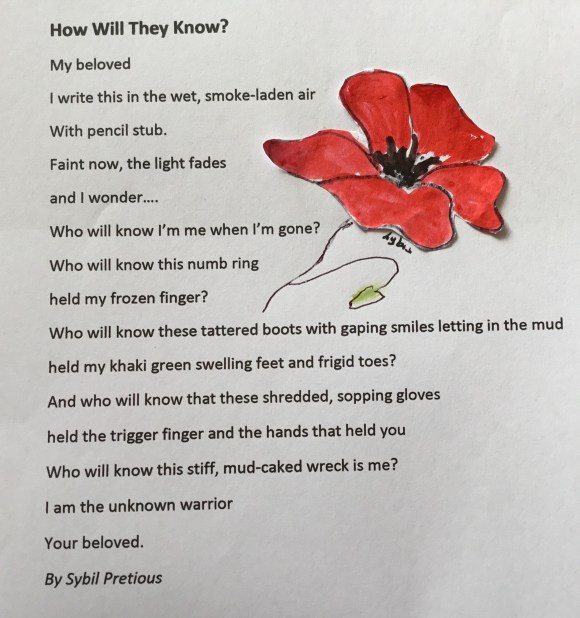


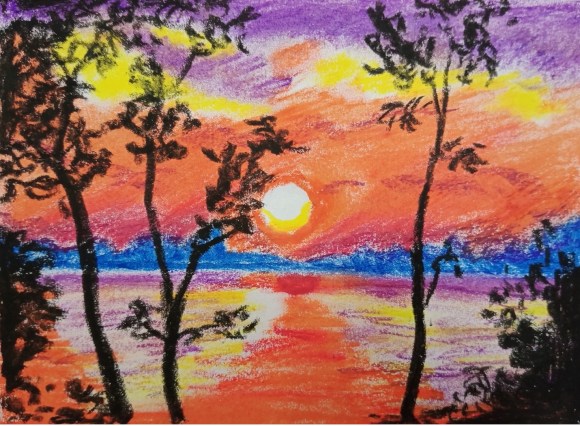

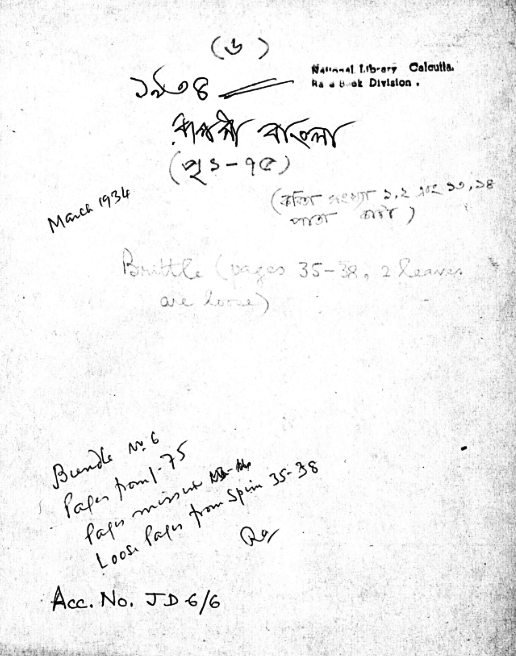

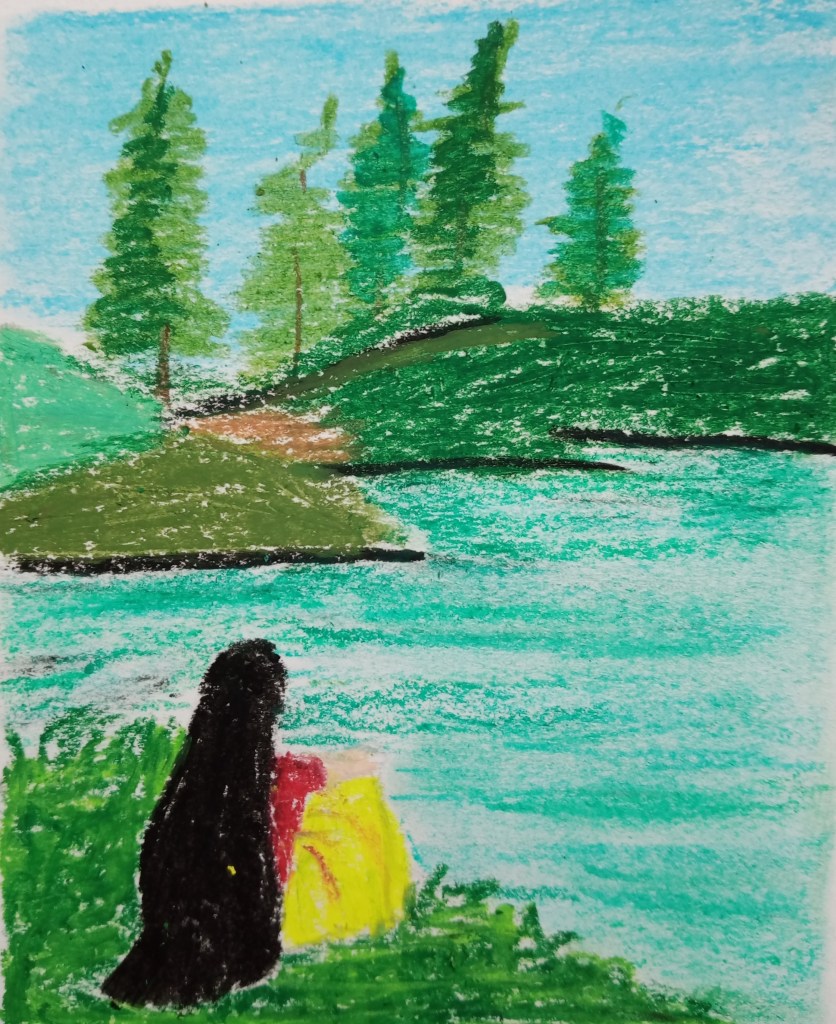
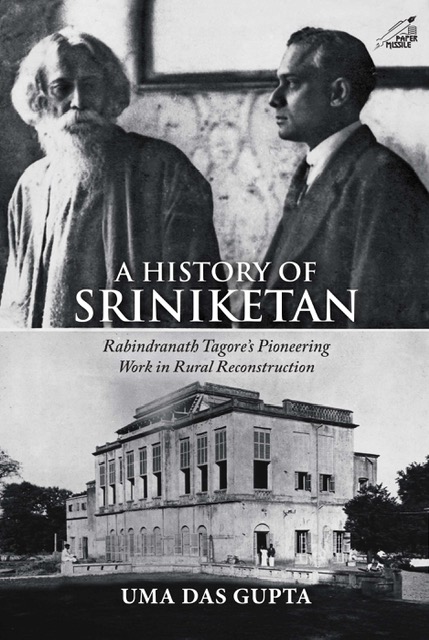
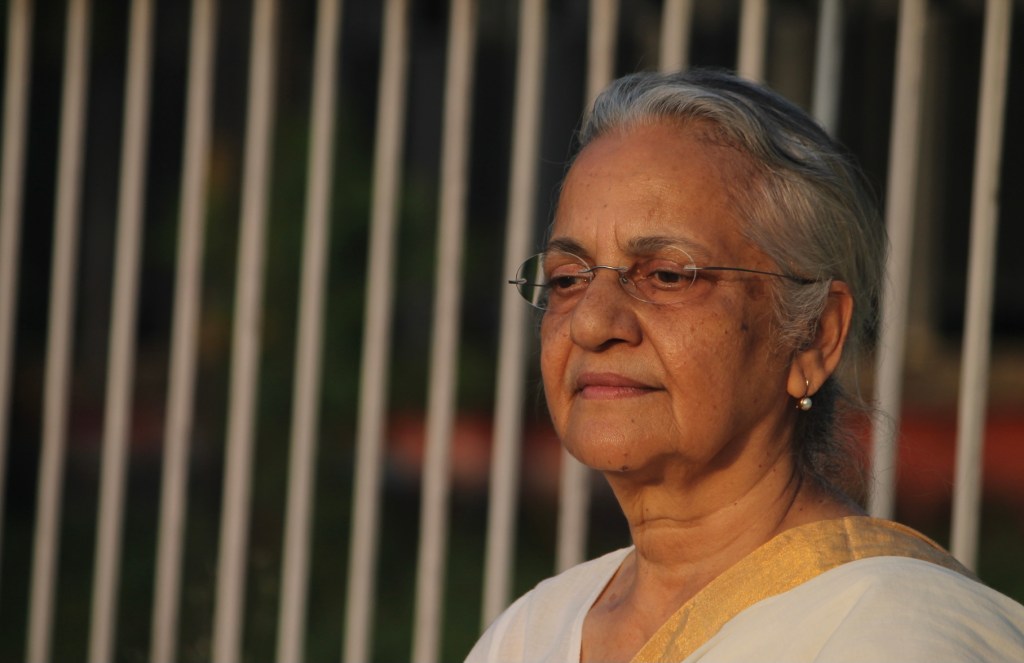


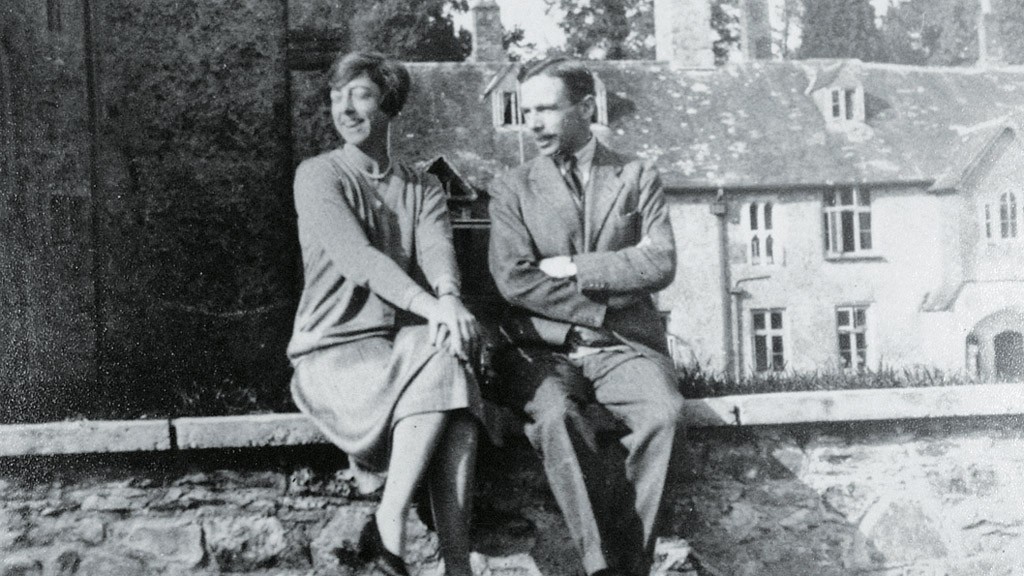
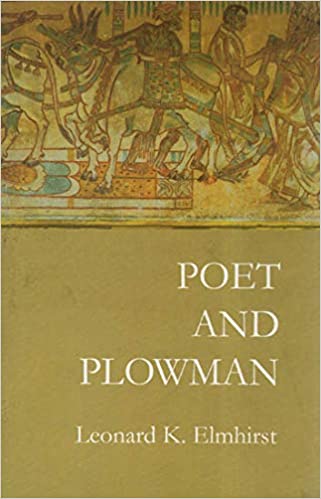

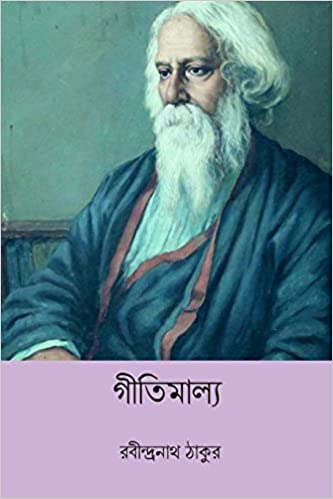
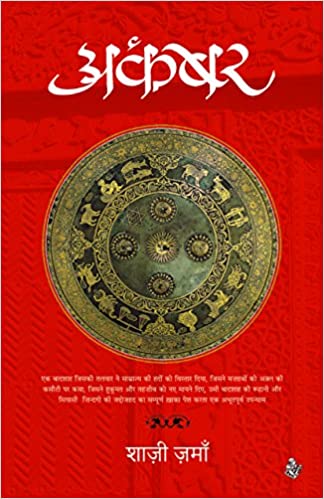
 Borderless