Perhaps when Dylan Thomas wrote these lines, he did not know how relevant they would sound in context of the world as it is with so many young dying in wars, more than seven decades after he passed on. No poet does. Neither did he. As the world observes Dylan Thomas Day today — the day his play, Under the Milkwood, was read on stage in New York a few months before he died in 1953 — we have a part humorous poem as tribute to the poet and his play by Stuart McFarlane and a tribute from our own Welsh poet, Rhys Hughes, describing a fey incident around Thomas in prose leading up to a poem.
May seems to be a month when we celebrate birthdays of many writers, Tagore, Nazrul and Ruskin Bond. Tagore’s birthday was in the early part of May in 1861 and we celebrated with a special edition on him. Bond, who turns a grand ninety this year, continues to dazzle his readers with fantastic writings from the hills, narratives which reflect the joie de vivre of existence, of compassion and of love for humanity and most importantly his own world view. His books have the rare quality of being infused with an incredible sense of humour and his unique ability to make fun of himself and laugh with all of us.
Nazrul, on the other hand, dreamt, hoped and wrote for an ideal world in the last century. The commonality among all these writers, seemingly so diverse in their outlooks and styles, is the affection they express for humanity. Celebrating the writings of Nazrul, we have one of his fiery speeches translated from Bengali by Radha Chakravarty and a review of her Selected Essays: Kazi Nazrul Islam by Somdatta Mandal. An essay from Niaz Zaman dwells on the feminist side of Nazrul while bringing in Begum Roquiah. Zaman has also shared translations of his poetry. Professor Fakrul Alam, who had earlier translated Nazrul’s iconic ‘Bidrohi or Rebel‘, has given us a beautiful rendition of his song ‘Projapoti or Butterfly’ in English. Also in translation, is a poem by Tagore on the process of writing poetry. Balochi poetry by Manzur Bismil on human nature has been rendered into English by Fazal Baloch and yet another poem from Korean to English by Ilwha Choi.
Ratnottama Sengupta this month converses with a dancer who tries to build bridges with the tinkling of her bells, Sohini Roychowdhury. Gita Viswanthan travels to Khiva in Uzbekistan, historically located on the Silk Route, with words and camera. An essay on Akbar Barakzai by Hazran Rahim Dad and another looking into literature around maladies by Satyarth Pandita add zest to our non-fiction section. Though these seem to be a heterogeneous collection of themes, they are all tied together with the underlying idea of creating links to build towards a better future.
In focus this time is a writer whose prose is almost akin to poetry, Rajat Chaudhuri. A proponent of solarpunk, his novel, Spellcasters, takes us to fictitious cities modelled on Delhi and Kolkata. In his interview, Chaudhuri tells us: “The path to utopia is not necessarily through dystopia. We can start hoping and acting today before things get really bad. Which is the locus of the whole solarpunk movement with which I am closely associated as an editor and creator…”
On that note, I would like to end with a couple of lines from Nazrul, who reiterates how the old gives way to new in Proloyullash (The Frenzy of Destruction, translated by Alam): “Why fear destruction? / It’s the gateway to creation!” Will destruction be the turning point for creation of a new world? And should the destruction be of human constructs that hurt humanity (like wars and weapons) or of humanity and the planet Earth? As the solarpunk movement emphasises, we need to act to move towards a better world. And how would one act? Perhaps, by getting in touch with the best in themselves and using it to act for the betterment of humankind? These are all points to ponder… if you have any ideas that need a forum on such themes, do share with us.
We have more content which has not been woven into this piece for the sheer variety of themes they encompass. Do pause by our content’s page and browse on all our pieces.
With warm thanks to our wonderful team at Borderless — especially Sohana Manzoor for her fabulous art — I would like to express gratitude to all our contributors, without who we could not create this journal. We would also like to thank our readers for making it worth our while to write — for all of our words look to be read, savoured and mulled, and maybe, some will evolve into treasured wines.
If you thought time travel was only a captivating concept in science fiction or theoretical physics, try experiencing it in Khiva! Located in the heart of the Kyzylkum Desert in Uzbekistan is the ancient city of Khiva, declared a UNESCO World Heritage Site in 1990. With its immaculately preserved city walls and stunning monuments, Khiva transports visitors back in time to the days of the Silk Route and the prosperous empires of Central Asia. When five of us planned a trip to Uzbekistan, we knew we would encounter history in every nook and corner of this utterly enchanting country. However, to see it all preserved with so much care and thought was another experience all together. The credit for this goes to Uzbekistan’s first President, Islam Karimov, who took up the task of restoring monuments and returning to the Uzbeki people, their rich and layered history and multiculturalism after years of Soviet rule.
Our guide, Murat led us through this treasure trove of history and architectural marvels with a quiet, thoroughly knowledgeable air. We set out after a hearty breakfast at Zarafshon Boutique Hotel, conveniently located within the walls of the Itchan Kala (Inner City), to walk for the next four hours through its mesmerizing, labyrinthine streets that reverberate with the sounds of a folklore ensemble’s traditional music, tourists’ chatter, guides’ narrations, and shopkeepers’ entreaties to buy their wares.
A city that goes back over two millennia, Khiva was one of the oases along the Silk Route. The Silk Route, an ancient network of trade routes connecting the East and West, spanning thousands of miles across Asia, resulted in the exchange of goods, ideas, faiths and convictions that ultimately transformed and defined history in a way that has an impact to this day. Ever since, Khiva thrived as a centre of trade, commerce, and cultural exchange. It became an important city in the region, famous for its wealth, power, and architectural splendor.
The skyline of Khiva is defined by its walls, reminiscent of Jaisalmer in Rajasthan. Itchan Kala, enclosed inside magnificent mud-brick walls, packed with straw, dates back to the 10th century. Within these walls lie architectural marvels, including the Kalta Minor Minaret, Toshhovli Palace, the Muhammad Amin Khan Madrassah, and the Juma Mosque.
Kalta Minor minaret
The incomplete Kalta Minor, with its arresting turquoise minaret towers over us at 45 meters. Soon, the colour turquoise became so omnipresent in our photo gallery that we needed to use Google Lens to distinguish one from another! Muhammad Amin Bahadur Khan, the Khan of the Khiva Khanate intended the minaret to be the largest and tallest in the Muslim world at 80 meters, exceeding the height of the 73-meter Qutb Minar in Delhi. According to the historian, Mulla Olim Maxdum Hoji, the Khan could not have his way due to his untimely death in a battle near Sarakhs in 1855. Twelve of the sixteen verses inscribed on the minaret are those of Muhammad Riza Ogahi, a poet from Khiva, who was witness to its construction. The writings were pulled down during the Soviet regime, only to be restored after Uzbekistan’s independence. There is a belief that criminals were dragged up to the top of the minaret and thrown down, although there is no historical evidence to support this. It remains a tale told by the guides to tourists who go, “Oh nooooo!”
Tosholvi Palace
Moving on to the Toshhovli Palace, which means ‘Stone House’, we were captivated by the decoration comprising ceramic tiles, carved stone and wood. Built by Alla Khuli Bahadur Khan between 1832 and 1841, it has more than 150 rooms with nine courtyards. The high ceilings of the rooms are designed to keep the place cool in the summer months of this desert region.
Known for his impatience, Allah Khuli insisted that the royal architect, Usto Nur Mohammed Tajikhan, build the palace in three years. When the architect nervously said that it would not be possible, he was impaled and Kalender Khivaki took over along with the famous tile decorator, Abdullah Jin. It took eight years and the labour of nearly a thousand slaves to complete this structure that we, today as tourists, gape at in complete awe. The unfading colours of the glazed tiles owe their lasting quality to a technique called “ishkor,” mastered by the craftsmen of another era.
Embedded within the intricate tile work of the Toshhovli Palace is the hilarious story of how Allah Khuli picked a woman from his harem for each night. The region is known for its large pomegranates, with juicy seeds as red as rubies and Khuli is supposed to have flung one fruit into the quarters of the woman he desired. The fall of a pomegranate through the window, then, alerted the woman! Murat and the five of us had a hearty laugh and one of us even wondered aloud, ‘what if he didn’t have good aim,’ or ‘what if the window was closed!’ Murat shrugged his shoulders, a tad embarrassed.
Juma Mosque
The austere and monastic, yet splendid wood carved pillars and roof of the Juma Mosque stands as a contrast to the rich colour palettes of the other monuments. According to the Arabian geographer Al-Mukaddasy, the Juma Mosque was constructed in the tenth century. This one-storey brick building with a flat roof was rebuilt over the ruins in 1788 with 25 of its 212 pillars, made of black elm wood, recovered from the original structure. The roof has small openings to let in the light.
Beyond its architectural majesty, Khiva resounds as a living testament to the cultural heritage and traditions of Uzbekistan. In its stark brown desert landscape, the colours of Khiva’s monuments, ceramics and hats stand out in a sharp and endearing contrast. To this day, the bazaars of Khiva are filled with artisans who continue to practice traditional crafts such as carpet weaving, pottery, and silk embroidery, preserving age-old techniques and skills passed down through generations. The great artistic legacy lives on in the silent monuments staring down at you as well as in the bustling bazaars with warm, hospitable people who are especially partial to Indian tourists given their adoration of Bollywood films. In fact, fans of Hindi films, of which there are aplenty in Uzbekistan, rattle off names of stars ranging from Raj Kapoor to Shah Rukh Khan! Parts of the Hindi action film, Yeh Mohabbat Hai (This is love, 2002), directed by Umesh Mehra were shot in Khiva!
The rumble in the belly with all the walking we did brought us back rudely into the moment and we headed straight to a restaurant recommended by Murat. Food is such an integral part of travel and we did full justice to the spread that consisted of fresh salads, bread called non, straight out of the wood-fired ovens, and the ubiquitous lamb. As Khiva continues to enthrall travellers, it remains a guiding light of history, culture, and heritage in the heart of the Uzbekistan desert. It remains a mute witness to a borderless world of yore.
Gita Viswanath is the author of two novels – Twice it Happened (2019) and A Journey GoneWrong (2022), , a non-fiction book, The‘Nation’ in War: A Study of Military Literature and Hindi War Cinema (2014), and a children’s book, Chidiya (Bird, 2018). Her short films: “Family Across the Atlantic” and “Safezonerz” are available on YouTube.
PLEASE NOTE: ARTICLES CAN ONLY BE REPRODUCED IN OTHER SITES WITH DUE ACKNOWLEDGEMENT TO BORDERLESS JOURNAL
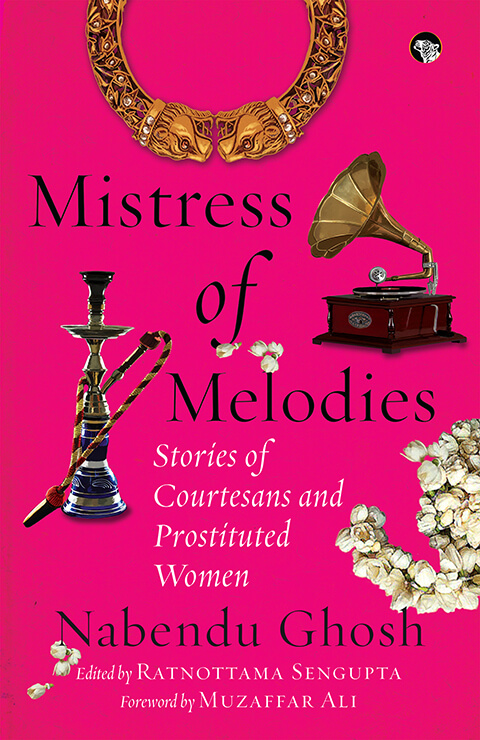
Ratnottama Sengupta, formerly Arts Editor of The Times of India, teaches mass communication and film appreciation, curates film festivals and art exhibitions, and translates and write books. She has been a member of CBFC (Certified Board of Film Certification), served on the National Film Awards jury and has herself won a National Award.
A conversation about an eminent screenwriter and author, Nabendu Ghosh. His daughter, senior journalist Ratnottama Sengupta, unfolds stories about her father. Clickhereto read.
Eminent film journalist, Ratnottama Sengupta, converses with legendary actress, Deepti Naval, on her literary aspirations at the Simla Literary festival, Unmesh, in June 2022. Click hereto read.
Ratnottama Sengupta introduces Bulbul Sharma to converse with her on Mrinal Sen, the legendary filmmaker, reflecting on Bulbul Sharma’s experience as an actress in his film, Interview.Click here to read.
Ratnottama Sengupta presents the first hand account of the war in Bosnia-Herzegovina (1992-1995) from a letter from her brother, who was posted there as part of the peace-keeping troops. Click here to read.
Ratnottama Sengupta shows the impact of Gandhi and his call for non-violence on Nabendu Ghosh as she continues to emote over his message of Ahimsa and call for peace amidst rioting. Click here to read.
Ratnottama Sengupta explores the poetry in lyrics of Bollywood songs, discussing the Sahityotsav (Literary Festival) hosted by the Sahitya Akademi. Clickhere to read.
Ratnottama Senguptagives a glimpse of the life of Zohra Sehgal, based on the book Zohra: A Biography in Four ActsbyRitu Menon, and her own personal interactions with the aging Zohra Sehgal. Click here to read.
Ratnottama Sengupta,comments on the current situation in Ukraine while dwelling on her memorable meeting with folk legend Pete Seeger, a pacifist, who wrote ‘Where have all the Flowers gone’, based on a folk song from Ukraine. Click here to read.
Ratnottama Sengupta writes of a time a palace called Bardhaman House became the centre of a unique tryst against cultural hegemony. The Language Movement of 1952 that started in Dhaka led to the birth of Bangladesh in 1971. In 1999, UNESCO recognised February 21 as the Mother Language Day. Click here to read.
Ratnottama Sengupta sings her own paean in which a chorus of voices across the world join her to pay a tribute to a legend called LataMangeshkar. Click here to read.
Ratnottama Sengupta muses on an NGO who has won a Magsaysay Award for his work with cloth distribution in India contextualising it against the issues raised in Give Me a Rag, Please by Nabendu Ghosh. Click here to read.
In a tribute to Bollywood legend Dileep Kumar, Ratnottama Sengupta recollects the days the great actor sprinted about on the sets of Bombay’s studios …spiced up with fragments from the autobiography of Sengupta’s father, Nabendu Ghosh. Click here to read.
Ratnottama Sengupta recalls her experiences of the Egyptian unrest while covering the 35th Cairo International Film Festival in 2012. Click here to read.
Ratnottama Sengupta journeys to show how past and present are interlinked in art and pays tribute to a polyglot, Maniklal Chatterjee. Click hereto read.
Ratnottama Sengupta discusses how translations impact the world of literature. Click hereto read.
Translations
Gandhiji, a short story by Nabendu Ghosh, has been translated from Bengali by Ratnottama Sengupta. Click here to read.
A translation from Nabendu Ghosh’s autobiography, Eka Naukar Jatri(Journey of a Lonesome Boat), translated by Dipankar Ghosh, from Bengali post scripted by Ratnottama Sengupta. Clickhereto read.
Down the stairs by Nabendu Ghosh, a gripping story exploring the greyer areas of ethical dilemmas, has been translated by Sarmishta Mukhopadhyay with editorial input from Ratnottama Sengupta. Click here to read.
Give Me A Rag, Please:A short story by Nabendu Ghosh, translated by Ratnottama Sengupta, set in the 1943 Bengal Famine, which reflects on man’s basic needs. Click here to read.
Ratnottama Sengupta translates Bengali poet Michael Madhusudan Dutt’sBijoya Doushami. Click here to read.
Colour the World: Rangiye Diye Jao, a song by Tagore, transcreated by Ratnottama Sengupta. Click hereto read.
Yet, Forget Me Not…: Short story by actress film-maker Aparajita Ghosh translated from Bengali by Ratnottama Sengupta. Click here to read.
Across Time: Ratnottama Senguptatranscreates three poems from Bengali. Clickhereto read.
An August Account of ‘Quit India’ Movement: Ratnottama Sengupta translates from Bengali the excerpts recorded by Sandhya Sinha (1928-2016), who witnessed an upsurge in the wake of the Quit India Movement, part of India’s struggle against colonial rule. Click here to read.
The Magic Spell of Scheherazade’s Nights: Translated by Ratnottama Sengupta, these are reflections by Sandhya Sinha (1928-2016) on the magic of storytelling in Arabian Nights. Clickhere to read.
The Awaited Mother’s Day: Translated by Ratnottama Sengupta, a short story by Sandhya Sinha (1928-2016). Click here to read.
December is often a time when we look forward to a vacation and travel. Through the pandemic ravaged years, moving out of the house itself had become a challenge. Now as the world opens up slowly (hopefully the Omicron variant of the virus will be more benign), travel stretches its limbs to awaken to a new day with new trends and rules. Borderless invites you to savour of writing that takes you around the world with backpackers, travellers, hikers, sailors and pirates — fantastical, imaginary or real planned ones in a post-pandemic world. Enjoy!
Rhys Hughes time travels back to the first century voyaging vicariously with his imagination and a Welsh king who resisted Roman invasion. Click here to read.
Do you enjoy babysitting nieces, nephews on trips and have you ever traveled with ‘hundreds of pieces of luggage, a few coolies, five women and only one man’? Tagore did. Somdatta Mandal translates hilarious writings from young Tagore on travel. Click here to read.
Travel through Bengal with Shorodhoni, a woman dubbed a ‘Daini’ or witch, in her quest to find a home in Aruna Chakravarti’s translation of Tarasankar Bandhopadhyay’s poignant story. Click here to read.
“Stories that tell us about human lives and human emotions highlight one simple thing: Humans are the same everywhere.” That is what Ratnottama Sengupta concludes as she vicariously travels through the famed route from the past. Click here to read.
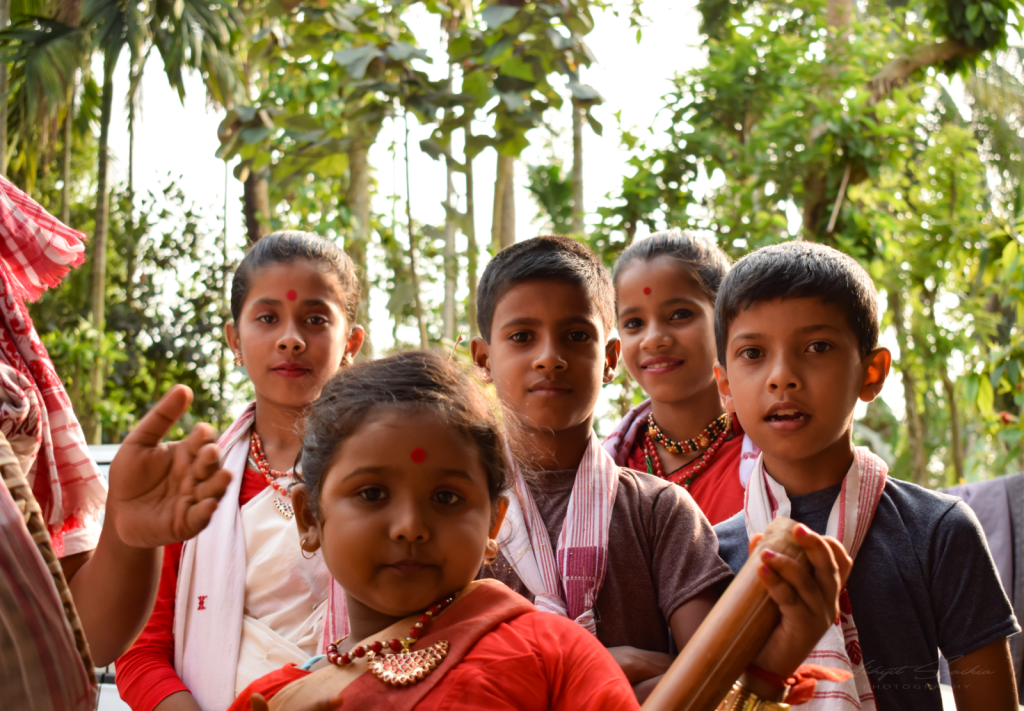
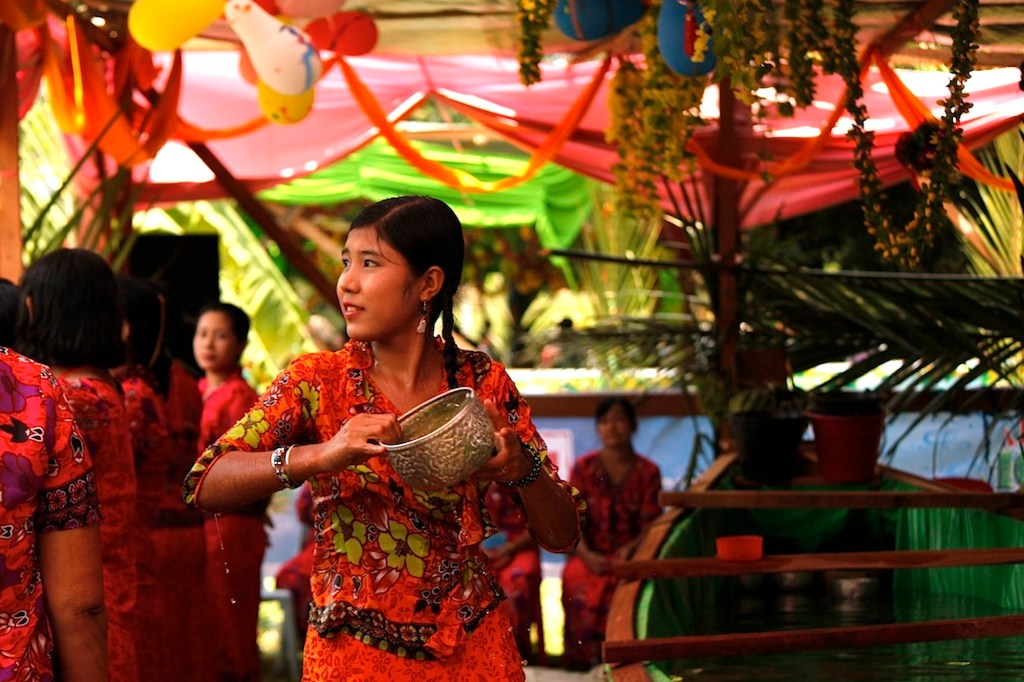
We wish all our readers and writers fabulous varieties of new year celebrations across Asia! We also complete one year and waft towards a new beginning. We have had some alterations as you know over the last few months — new faces on our board and writers in residence. Now, in addition to hosting writers from across all borders and ages, we have decided to also become an online forum for translated Tagore songs and writings. This will be launched on Tagore’s Birth Anniversary — 7th May. We hope that the transcreations in this section will take the treasures of the great writer and philosopher closer to the non-Bengali speaking populations from all over the world. We will try to retain the spirit of his poetry and attempt to recreate the impact of the Bengali verses for everyone who can read in English. We have already started with transcreations of about half-a-dozen of his songs. Do take a look and tell us what you think.
To celebrate our diverse new years, we have a musing by Sohana Manzoor. Did you know that Pohela Baishakh or the Bengali New Year is a national holiday in Bangladesh and is observed on the 14th of April each year?
A new year bodes a new beginning, a new sunrise and a new day — a new bunch of experiences. That is why our theme this time was new beginnings. What did we have in the beginning? Dylan Thomas tells us —
In the beginning was the word, the word
That from the solid bases of the light
Abstracted all the letters of the void;
And from the cloudy bases of the breath
The word flowed up, translating to the heart
First characters of birth and death.
On that theme of words, we have a fabulous poem by Balochi writer, Akbar Barakzai, who created a furore by turning down an award from the Pakistan Academy of Letters last year. His poem has been translated by Fazal Baloch. That is just one of the treasures. This time to celebrate this bouquet of new years across Asia, we have a bumper issue which includes, interviews with the 2020 Sahitya Akademi winner, Arundhathi Subramaniam, and academic-cum-writer Sumana Roy. Both poets have been kind enough to share a poem each with us. Arundhathi’s poem is inspiring and Sumana’s is a moving one about a tree, a tree that made history. We have powerful poetry from a number of other writers, Pushcart winner Jared Carter, Michael Burch, Sekhar Banerjee, Vatsala Radhakeesoon, Ihlwa Choi and of course our inimitable Rhys Hughes. Rhys has also started a column for us in which he will talk of poets, poetry and whatever else he chooses (within the confines of our magazine’s needs, of course). Our focus this year will shift even more towards quality of content.
In translations, other than Tagore songs and Baloch’s translations, we have Aditya Shankar’s translation of Malayalam writer, Shylan. A short story by Tagore from his famous collection Golpo Guchcho has been translated by Nishat Atya. To celebrate Tagore’s anniversary, we have essays by Meenakshi Malhotra and Sohana Manzoor too. Interestingly Sohana Manzoor’s essay has Tagore’s vision of Buddha — and Sumana Roy gave us a poem on the Bodhi tree, a tree under which the Buddha meditated his way to salvation! Looking at the sad situation in Myanmar, we definitely have a need for reviving Buddhism, a theme that has been touched on by well-known film critic, journalist and translator Ratnottama Sengupta, in her ponderings on the Silk Route. Branching off from the journey across Asia towards Europe and moving up north to Siberia is a narrative from our spunky back packing granny, Sybil Pretious. She writes of her travels all the way to Lake Baikal!
Devraj Singh Kalsi suffered personal loss and has given us a poignant in memoriam on his mother. Mike Smith takes us on a memorable nostalgic journey with postcards from the past with stories that want to make you weep. There is more on memorabilia with a photo-essay by Nishi Pulugurtha and a photo-poem by Penny Wilkes (have you ever adventured with one of these?). Sunil Sharma tried out a playlet! The other exciting and new thing is Bhaskar Parichha has started a witty column with us. We are calling it Bhaskar’s Corner! I won’t tell you what about but do take a peek!
Books reviewed are Paro Anand’s Nomad’s Land by Nivedita Sen — a book on migrants, a theme which is there in the piece on silk route too; Rudolf C Heredia’s Reconciling Differenceby Bhaskar Parichha and Candice Louisa Daquin has reviewed a book on cancer, The First Cellby Azra Raza. Our book excerpt is from a book on parenting,Raising a Humanist: Conscious Parenting in an Increasingly Fragmented World by Manisha Pathak-Shelat and Kiran Vinod Bhatia. An interesting read in a world of changing values. Our young person’s section run by Bookosmia owe a huge thanks to the untiring efforts of Nidhi Mishra and Archana Mohan. Thank you both. Thanks to the whole team for your immense support.
I have as usual not covered all the content in my note. I leave you to unfold the surprises! Much thanks to all our writers and readers for continuing to be with us!
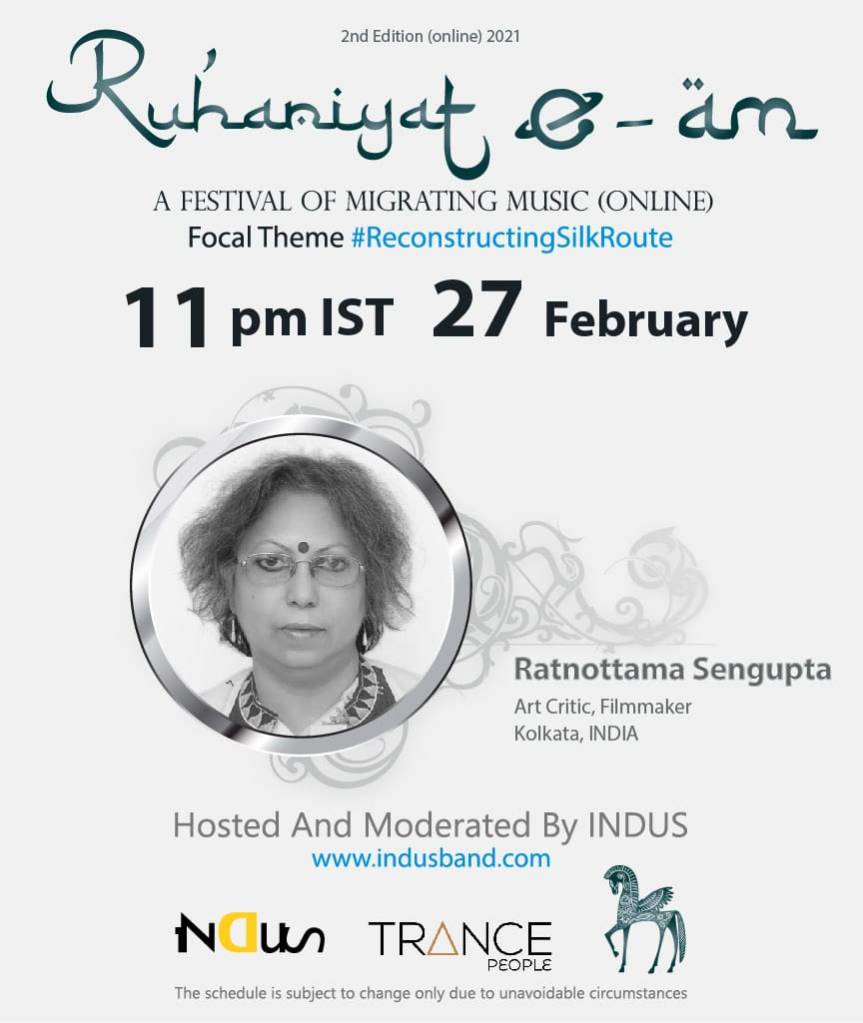
These contemplations have come out of Ruhaniyat-e-Aam, an online festival of migrating music. Hosted by Indus Band, its focal theme was ‘Reconstructing the Silk Route’. A webinar was the finale of the concept that was put into practice long before ‘COVID’ entered the Oxford dictionary – in 2018 when Somali Panda, founding head of the Kolkata-based Band came up with the novel concept of connecting online with performers in Greece. They played their music, we joined them with my reading, Tamal Goswami’s painting, and Somali’s songs.
Subsequently, during the pandemic, “when the world was compelled to stay indoors, the importance of connecting with the rest of humanity forcefully struck us,” says Somali. She then went on to host this series of interactions with musicians, artists, filmmakers and academicians from Greece, Czech Republic, Egypt, Iran, Kazakhstan and India — all participating in a celebration of the Human Migration that established bonding amongst nations, cultures, civilizations, and created a global community long before the term had come into existence.
The prime purpose of reconstructing the Silk Route — philosophically, ideologically, conceptually – was to forge a measure of friendship. Friends they became – Labros Kantos, singer from Greece; Saimir Bajo from the Czech Republic; Mesbah Kamal, academician from Dhaka; Sharofat Ara Bova, filmmaker from Tajikistan; Arqavaneh Folklore Ensemble from Isfahan, Iran; Mohamed Abu Zid from Cairo, Egypt; Sarower Reza Jimi, playwright from Lisbon, Portugal… Because music connects people most readily since it overrides the barrier of language, “and it gives inner peace and solace,” Somali adds.
By the time it ended, Ruhaniyat-e-Aam had traced the cultural exchange from the time of Alexander and helped to understand how Hellenic Culture became Hellenistic through synthesis. Most of us know that after Alexander conquered the Persians, he established the city of Alexandria (339 BC). A little more detail: this was in the Fergana Valley of Neb – around modern-day Tajikistan. Leaving the wounded warriors behind Alexander moved on, and in time the Macedonians intermarried with the indigenous populace creating the Greco Bactrian culture that flourished in the Seleucid Empire after his death.
*
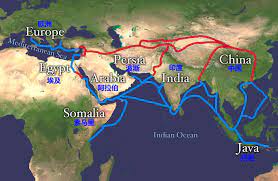
This festival of Migrant Music set me on a virtual journey down the Silk Road, the 6,400 km caravan tract that was actually an ancient network of trade routes. Formally established during the Han Dynasty of China, it linked in commerce the regions from China to Mesopotamia – should I say modern day Iran? – through India, Asia Minor, Egypt, the African continent, Greece, Rome and Britain too — between 130 BC and 1453 AD. Originating in Xian – now famed for its Terracotta Army – it followed the Great Wall of China to its northwest, bypassed the Takla Makan Desert, climbed the Pamirs, crossed Afghanistan, went on to the Levant region from where merchandise was shipped across the Mediterranean Sea.
What many of us don’t realize is that the Silk Route was not one single road. There were some that were longer and safer; some were shorter and more difficult. Some had been journeyed on much longer and thereby had witnessed more exchange than some of the shorter, more precarious roads and pockets like, say, Bhutan. And few travelled the entire length of the road: goods were handled in a staggered progression by middlemen.
The greatest value of the road lies in the exchange of culture it effected. Art, religion, technology, language, science, architecture — indeed, every other element of civilization was exchanged on these roads, along with the commercial goods that merchants traded from country to country
With the loss of Roman superiority and rise of Arabian power, the Silk Road became more and more unsafe. However, during the rule of the Mongols/ Mughals, Venetian explorer Marco Polo (1254-1324) travelled right up to China along the road that is now supposed to have been the main artery along which travelled the bubonic plague bacteria responsible for the pandemic of Black Death that decimated the Byzantine capital of Constantinople.
The network was used regularly till about 1453 when the Ottoman Empire boycotted trade with the west and closed the routes. By this time Europeans had become used to goods from the east, and so merchants set out to find new trade routes – over the oceans. That, as we know, led to the discovery of the New World and of new civilizations and forging of new cultures. In sum, we may say that laid the groundwork for the modern world.
*
What many of us don’t know: Part of the Silk Road still exists as a paved highway connecting Pakistan and the Uygur, an autonomous region of Xinjiang in China. It had given UN the impetus to plan a trans-Asian highway, and a railway counterpart of the road too had been proposed. The road had inspired cellist Yo-Yo Ma to found the Silk Road Project in 1999 in order to explore cultural traditions along its route and beyond, as a means for connecting arts worldwide, across cultures.
But why look back on the Road that has little to do with how it existed 2000 years ago? Forget the zeros – it is probably not like it was even two and half years ago! So what is its importance?
To my mind, the importance lies in the layers of history lining it. Glancing backward we realize that we stand on the shoulder of giants. Every visit into the past unearths stories of human civilization. And whenever I have done that – as I did in Kazakhstan as part of an ICCR effort in 2009 – I have got answers to questions like:
A) Where was the Road going and why?
B) Why was it such a life transforming journey?
C) The road traversed through remote parts of the world, especially a huge part was ice covered desert. Then, why did the horse become such an important part of the journey on this road?
D) Horse was only one of the animals that were traded on the route. So, who named it Silk Road and why?
Arabian Nights
It was so named by Ferdinand von Richthofen in 1877 CE because silk was a treasured part of the trade – indeed it was the primary attraction that started off the trade but few travellers walked the entire length of the road. They came to different posts on the route, exchanged goods, food, plants, and ideas along with spices and tea. Stories of The Arabian Nights give us an idea about the exchanges that were taking place in city like Baghdad. And we realise that the flying carpet was not a mere figment of imagination, it became a metaphor for journeying from one world to another.
*
Enough of history? Well then, let’s take note of the cultural exchanges closer to our life and times. Since Ruhaniyat-e-Aam was about Migrating Music, what we naturally traced was the commonality of instruments like sarod, santoor and violin… How come the last named string instrument most associated with Western Classical music gained such acceptance and became inseparable part of music in Iran and in South India’s Carnatic music? Was rabab, the folk accompaniment most widely associated with Afghanistan, the precursor of India’s sarod, internationalized by Ustads such as Ali Akbar Khan and Amjad Ali Khan? Indeed, it was from them that I learnt there have been several versions of the rustic musical instrument that was honed, refined, perfected and sophisticated until it became the sonorous voice of Indian classical music.
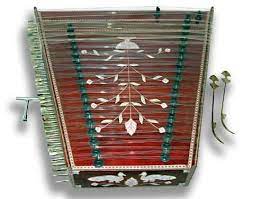
Again, our santoor has a close affinity with instruments in China, Persia, Greece, and so many other places. I remember my visit to China for the Festival of India under the aegis of the Ministry of Human Resources, then headed by Arjun Singh. As part of that government-to-government initiative, I visited some music schools and was amazed to see how much our santoor — once called shatatantri or hundred stringed veena — had in common with the Chinese hammered dulcimer, yangqin. There have been many versions of it – in Iran, Iraq, Greece, Armenia. I noticed that the music played on the Chinese instruments were a bit more staccato; in India I learnt from maestros closely identified with santoor — primarily Shiv Kumar Sharma and Bhajan Sopori – that strings have been added to get the murchhana or greater resonance so that the notes linger on…
If we go on to visual arts, the first name that comes to my mind is of Nicholas Roerich (1874-1947). The Russian lawyer-painter-archaeologist-philosopher born in St Petersberg had developed an abiding interest in Eastern religions, in Theosophy and Buddhism as much as Ramakrishna and Vivekananda, Tagore, Vedanta and Bhagavad Gita. His spiritual leanings took him across the Himalayas and make his home in the Himachal town of Naggar where he breathed his last.
Of greater consequence to Ruhaniyat-e-Aam was the fact that in mid-1920s the Roerichs together with their son and six friends went on a five-year-long Asian Expedition that started – in Roerich’s words – “from Sikkim and went through Punjab, Kashmir, Ladah, the Karakoram Mountains, Khotan, Kashgar, Qarashar, Urumchi, Irtysh, the Altai Mountains, Oyrot regions of Mongolia, the Central Gobi, Kansu, Tsaidam and Tibet…” A decade later he was to return to Mongolia and Manchuria to collect seeds of plants that prevent soil erosion.
In plainer words, because of these travels Roerich intimately knew not only the Himalayan range but a lot more of the Silk Road. This armed him with a scintillating palette of colours that painted mesmerizing mountains that are bold yet lyrical, rather mystical, even spiritual. I was absorbed by the tranquility that imbues the hypnotic series of 36 immersive images of the Himalayas preserved in the Roerich Gallery at the Chitrakala Parishath in Bangalore.
Roerich’s journeys along the Road had also prompted him to talk of preventing the destruction of art and architecture and work toward preserving the cultural wealth of the world. This had led to his nomination for the Nobel Peace Prize in 1929.
Deb Mukharji, a retired member of India’s Foreign Services, has also travelled through its hardy folds – and extensively photographed the Abode of Snow. The keen photographer who has authored Kailash and Mansarovar and exhibited Tall Tales of the Himalayas — among many others — is concerned about the ecosystem of the rugged and culturally rich Himalayas. “It is threatened by the highways that are being built through the mountains, either to promote religious tourism or for other purposes, he says after treks that took him from Garhwal to Nepal and Kailash to Manas.”
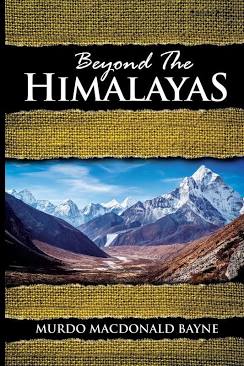
Cinematographer-director Goutam Ghose has journeyed through the Silk Route to make the ten-part documentary, Beyond the Himalayas. His project had started in 1994 and initially he had travelled with only 5-6 members who drove in a jeep and through the countries. “Our purpose was to look back from here and now in order to connect all the yesterdays that have transformed life and made us what we are today,” the celebrated filmmaker had said to me then.
So many stories of the exchanges enrich our literature too. Saradindu Bandopadhyay, author of many Bengali classics, had penned a story titled Maru O Sangha – The Monastery in the Desert. This was turned into a film, Trishagni/ Sandstorm (1989) by Nabendu Ghosh, another celebrated Bengali writer who became a legend as screenwriter of Hindi films. His film revolved around a monastery in Central Asia, somewhere on the Silk Route. It showed traders who came to the monastery with a ration of food, clothes and other essentials. Those were days when people could not fly in in a helicopter and drop supplies… it took months for these traders travelling in groups to reach from one stupa to another. There was a focus on the lifestyle of the times. Buddhism was the first organized religion, and monastery being the centre of Buddhism was thus the centre of such exchanges 2000 and more years ago. These monasteries subsequently became the prototype for Islamic Madrasas and before that, of Christian universities: they were built along the lines of the monasteries which dotted Central Asia. And it is believed that the Stupa also gave the concept of the gumbad, the round top of so many masjids and forts too.
Another important exchange that was happening came to light when Trishagni was screened in many international film festivals outside India – in Tehran, Cairo, Thailand… One of the questions that cropped up was this: “You are talking about Buddhism but why are the men (and women) dressed like they dress in Islamic countries? Islam wasn’t there then!” It had to be pointed out that philosophy – and religion is a part of that – and ideas travel but Geography moulds what we wear. Because of the weather, when there was no air conditioner or even fans around, people in some parts of Africa wore no garments and in some parts of the Asian desert men wore long robes to cover the body from head to toe from the hot flying sand particles. They started covering their heads and ears and part of the face, and that wisdom became a convention and then a tradition.
Thus, geographical reality moulded why people in certain parts of the world dress in certain ways. And with the journey of religion, these dress codes also journeyed. The Romans did not wear silk because they admired the style in which the Chinese wore it but because of the inherent quality of silk. Cotton was also much in demand on this route since it was hot in the desert. So was indigo – native to India, primarily, and sought in Mediterranean countries as pigment for dyeing, medicinal and cosmetic use.
These exchanges which are now history happened largely because of geography. Why? I got the answer in the course of a seminar where artistes and academics had come from Azerbaijan and Uzbekistan, Tajikistan and Turkey. I started realizing that people were travelling from China down to Northern tip of Africa or the Mediterranean country, certain lifestyle changes were taking place. These landlocked pockets that had no access to the sea, had little green and only animals to live off. Naturally, many turned their attention to what was going on the Silk Road. Two very interesting things happened:
1) Many became bandits who would rob these caravans.
2) Many did the opposite: they offered themselves as guards to protect the goods in the caravans from bandits.
So, the same problem generated two different approaches to life, two different lifestyles. Those who became guards would travel with the caravans and they became warriors. They became warriors because they were living in very tough terrains, and they became skilled warriors because they were fighting off bandits to protect the caravans. Before long these men turned aggressive. Wars between tribes became endemic – and many of the lands strived to find stability and prosperity for their people by going into the lands of other people. (Once again, geography and history came together to define lifestyle and culture.)
We find versions of this later when people set out from Europe and landed up in America, and a new culture and civilizational evolved. Another such change took place when people were forced to travel from the Queen’s England to Australia. All these migrations and journeys have influenced the arts, ideas, religion, food habit… Why is it that in India’s Northwest – Afghanistan, to be specific — people cook meat and roti in tandoor ovens while in Bengal well-being is synonymous with ‘maachh-bhaat’ – fish curry and rice? Once again the answer lies in the history of geography – that is, geography moulding tradition and shaping history.
*
In 1892 Rabindranath Tagore wrote Kabuliwala, a story that touches the heart of humans everywhere in the world even today. It pivots on a peddler from Kabul who comes to Calcutta each year to sell dry fruits, and befriends a child, Mini. Circumstances force him to go to prison on charges of stabbing a debtor. On his release he goes to meet Mini and finds she is getting married. Rahman realizes that his daughter, now grown up, will also not have any recollection of her father – and he starts on his return journey, towards home.
This story has been filmed in India in Bengali by Tapan Sinha (1957), in Hindi by Hemen Gupta (1961), by Kazi Hayat of Bangladesh (2006), by Anurag Basu for a television channel (2015), by Deb Medhekar in 2018. It has been reimagined in totally different contexts. Bioscopewala, set in 1990s, had Minnie going to Afghanistan where her father has died in a plane crash. In another script French Afghan writer Atiq Rahimi sets the story after the destruction of the Balmiyan Buddhas. This man from Kabul spells another exchange of ideas: he comes because this part of the world believes in reincarnation — and he is seeking his little girl who died during the destruction of the Buddhas!
Taking her cue from this same story, Sharofat Imam Arabova of Tajikistan made a lilting film where an Indian vendor selling things in that land strikes a friendship with a little girl. Desirous of paying a tribute to the author, the FTII-trained director approached Somali Panda to incorporate Tagore’s music in the script. “And when we did that using a santoor, it was so strikingly in sync!” says the music-maker from Kolkata who extensively used Raag Bhairavi. “That is the power of music – and also the bonding of migrant music,” she adds. And even as she spoke, I was reminded of Mrinal Sen’s Neel Akasher Neechey/ Under the Blue Sky (1959) wherein a Chinese hawker, Wang Lu, sold silk on the streets of Calcutta of 1930s, when India was under British rule. His life changed forever when he met Basanti, a housewife who gets arrested for her involvement in politics.
So what’s common between these stories? What connects the diverse players? Human situation where a man has travelled for work and struck friendship, an equation with a child – the most basic, most innocent form of humanity.
*
This is the importance of revisiting the Silk Route and renewing acquaintance with migrant music: that human beings everywhere in the world have been migrating. Individually too we have migrated. My grandfather migrated from East Bengal – Dhaka – to Patna, then a part of Bengal Presidency. Now Dhaka is a different country, and Patna is part of Bihar, a different state from West Bengal. My father ‘migrated’ from Patna to Calcutta to Bombay Presidency which became two states – Maharashtra and Gujarat. I was born in Bombay, which has become Mumbai, lived in Delhi which was earlier a Union Territory and now has become a state. At present, I live in West Bengal. My brother who was born in Patna studied in Pune, graduated in Medicine from Calcutta, lived in UK and worked in Germany, Brunei, Cyprus, Bosnia… So many migrations!
Today technology has opened new highways, new vistas of connecting with the world. And even as we speak (or read, as in this case) we are crossing boundaries almost every minute of our day. Within families to, a child goes out to study in London or New York, makes Singapore or Sidney his workplace, his family perhaps lives in Delhi, and he travels to Johannesburg to Rio, Texas to Tokyo, Moscow to Hong Kong, Sweden to Israel. So many outposts of civilization – just as people on the Silk Road once did, for their trade.
The crux of it? Stories that tell us about human lives and human emotions highlight one simple thing: Humans are the same everywhere. They are all born of their soil – geography. And geography moulds our history. Because we are creatures of these two forces, periodically we need to look back and trace our commonalities in order to transcend the schisms in society.
.
Ratnottama Sengupta, formerly Arts Editor of The Times of India, teaches mass communication and film appreciation, curates film festivals and art exhibitions, and translates and write books. She has been a member of CBFC, served on the National Film Awards jury and has herself won a National Award.
.
PLEASE NOTE: ARTICLES CAN ONLY BE REPRODUCED IN OTHER SITES WITH DUE ACKNOWLEDGEMENT TO BORDERLESS JOURNAL











 Borderless
