Categories
Contents

Borderless July 2023

Painting by Sohana Manzoor

Editorial

As Imagination Bodies Forth Click here to read.

Translations

Bankim Chandra Chattopadhyay’s Bangalar Nobbyo Lekhokdiger Proti Nibedon (a request to new writers of Bengali), has been translated from Bengali and introduced by Abdullah-Al-Musayeb. Click here to read.

Poetry on Rain by Masud Khan has been translated from Bengali by Professor Fakrul Alam. Click here to read.

Dancer by Bashir Baidar, has been translated from Balochi by Fazal Baloch. Click here to read.

Motherhood: A Tiny Life inside Me, a poem by Sangita Swechcha, has been translated from Nepali by Hem Bishwakarma. Click here to read.

The Wind and the Door, has been written and translated from Korean by Ihlwha Choi. Click here to read.

Megh or Cloud by Tagore has been translated from Bengali by Mitali Chakravarty. Click here to read.

Conversation

In conversation with Afsar Mohammad, a poet, a Sufi and an academic teaching in University of Pennsylvania. Click here to read.

Poetry

Click on the names to read the poems

Afsar Mohammad, Rhys Hughes, Kirpal Singh, Don Webb, Masha Hassan, Vernon Daim, George Freek, Arya KS, Robert Nisbet, Dr Kanwalpreet, John Grey, Nivedita N, Samantha Underhill, Vikas Sehra, Ryan Quinn Falangan, Saranyan BV, Heath Brougher, Carol D’Souza, Michael Burch

Poets, Poetry & Rhys Hughes

In Productivity, Rhys Hughes muses tongue-in-cheek on laziness and its contribution in making a nation more productive. Click here to read.

Musings/ Slices from Life

Should I stay or should I go?

Keith Lyons muses on our attitude towards changes. Click here to read.

Bangal-Ghoti-Bati-Paati or What Anglophilia did to My Palate

Ramona Sen journeys in a lighter vein through her taste buds to uncover part of her identity. Click here to read.

Awesome Arches and Acrophobia

Meredith Stephens takes us for a fabulous treat of Sierra Nevada mountains with her camera and narrative. Click here to read.

Musings of a Copywriter

In The Lost Garden, Devraj Singh Kalsi writes of how his sense of wellbeing mingles with plants. Click here to read.

Notes from Japan

In Better Relations Through Weed-pulling, Suzanne Kamata introduces us to an annual custom in Japan. Click here to read.

Essays

The Story of a Land at War with Itself

Ratnottama Sengupta presents the first hand account of the war in Bosnia-Herzegovina (1992-1995) from a letter from her brother, who was posted there as part of the peace-keeping troops. Click here to read.

‘Wormholes to other Worlds’

Ravi Shankar explores museums in Kuala Lumpur. Click here to read.

Stories

A Troubled Soul

Mahim Hussain explores mental illness. Click here to read.

The Llama Story

Shourjo shares a short fun piece written from a llama’s perspective. Click here to read.

Mister Wilkens

Paul Mirabile gives a strange tale set in Europe of the 1970s. Click here to read.

Book Excerpts

An excerpt from Red Sky Over Kabul: A Memoir of a Father and Son in Afghanistan by Baryalai Popalzai and Kevin McLean. Click here to read.

An excerpt from The Blue Dragonfly – healing through poetry by Veronica Eley. Click here to read.

Book Reviews

Somdatta Mandal reviews The Past is Never Dead: A Novel by Ujjal Dosanjh. Click here to read.

KPP Nambiar reviews The Stolen Necklace: A Small Crime in a Small Town by Shevlin Sebastian and VK Thajudheen. Click here to read.

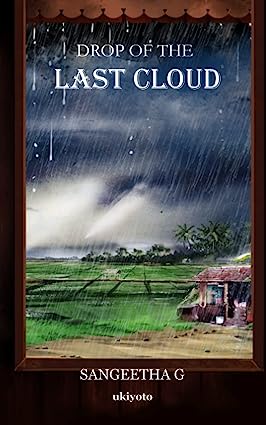
Rakhi Dalal reviews Drop of the Last Cloud by Sangeetha G. Click here to read.

Bhaskar Parichha reviews Burning Pyres, Mass Graves and A State That Failed Its People : India’s Covid Tragedy by Harsh Mander. Click here to read.

.

Click here to access the Borderless anthology, Monalisa No Longer Smiles

Click here to access Monalisa No Longer Smiles on Kindle Amazon International

Categories
Editorial

As Imagination Bodies Forth…

Painting by Sybil Pretious
And as imagination bodies forth
The forms of things unknown, the poet's pen
Turns them to shapes and gives to airy nothing
A local habitation and a name

 A Midsummer Night's Dream (1595) by William Shakespeare

Famous lines by Shakespeare that reflect on one of the most unique qualities in not only poets — as he states — but also in all humans, imagination, which helps us create our own constructs, build walls, draw boundaries as well as create wonderful paintings, invent planes, fly to the moon and write beautiful poetry. I wonder if animals or plants have the same ability? Then, there are some who, react to the impact of imagined constructs that hurt humanity. They write fabulous poetry or lyrics protesting war as well as dream of a world without war. Could we in times such as these imagine a world at peace, and — even more unusually — filled with consideration, kindness, love and brotherhood as suggested by Lennon’s lyrics in ‘Imagine’ – “Imagine all the people/ Livin’ life in peace…”. These are ideas that have been wafting in the world since times immemorial. And yet, they seem to be drifting in a breeze that caresses but continues to elude our grasp.

Under such circumstances, what can be more alluring than reflective Sufi poetry by an empathetic soul. Featuring an interview and poetry by such a poet, Afsar Mohammad, we bring to you his journey from a “small rural setting” in Telangana to University of Pennsylvania, where he teaches South Asian Studies. He is bilingual and has brought out many books, including one with his translated poetry. Translations this time start with Bankim Chandra Chattopadhyay’s advice to new writers in Bengali, introduced and brought to us by Abdullah-Al-Musayeb. Tagore’s seasonal poem, ‘Megh or Cloud’, has been transcreated to harmonise with the onset of monsoons. However, this year with the El Nino and as the impact of climate change sets in, the monsoons have turned awry and are flooding the world. At a spiritual plane, the maestro’s lines in this poem do reflect on the transience of nature (and life). Professor Fakrul Alam’s translation of Masud Khan’s heartfelt poetry on rain brings to the fore the discontent of the age while conveying the migrant’s dilemma of being divided between two lands. Fazal Baloch has brought us a powerful Balochi poet from the 1960s in translation, Bashir Baidar. His poetry cries out with compassion yet overpowers with its brutality. Sangita Swechcha’s Nepali poem celebrating a girl child has been translated by Hem Bishwakarma while Ihlwha Choi has brought his own Korean poem to readers in English.

An imagined but divided world has been explored by Michael Burch with his powerful poetry. Heath Brougher has shared with us lines that discomfit, convey with vehemence and is deeply reflective of the world we live in. Masha Hassan is a voice that dwells on such an imagined divide that ripped many parts of the world — division that history dubs as the Partition. Don Webb upends Heraclitus’s wisdom: “War is the Father of All, / War is the King of All.” War, as we all know, is entirely a human-made construct and destroys humanity and one cannot but agree with Webb’s conclusion.  We have more from Kirpal Singh, Ryan Quinn Flanagan, Nivedita N, John Grey, Carol D’Souza, Vernon Daim, George Freek, Saranyan BV, Samantha Underhill and among the many others, of course Rhys Hughes, who has given us poetry with a unique alphabetical rhyme scheme invented by him and it’s funny too… much like his perceptions on ‘Productivity’, where laziness accounts for an increase in output!

Keith Lyons has mused on attitudes too, though with a more candid outlook as has Devraj Singh Kalsi with a touch of nostalgia. Ramona Sen has brought in humour to the non-fiction section with her tasteful palate. Meredith Stephens takes us on a picturesque adventure to Sierra Nevada Mountains with her camera and narrative while Ravi Shankar journeys through museums in Kuala Lumpur. We travel to Japan with Suzanne Kamata and, through fiction, to different parts of the Earth as the narratives hail from Bangladesh, France and Singapore.

Ratnottama Sengupta takes us back to how imagined differences can rip humanity by sharing a letter from her brother stationed in Bosnia during the war that broke Yugoslavia (1992-1995). He writes: “It is hard to be surrounded by so much tragedy and not be repulsed by war and the people who lead nations into them.” This tone flows into our book excerpts section with Red Sky Over Kabul: A Memoir of a Father and Son in Afghanistan by Baryalai Popalzai and Kevin McLean. Popalzai was affected by the Russian invasion of Afghanistan in 1980 and had to flee. A different kind of battle can be found in the other excerpt from The Blue Dragonfly – healing through poetry by Veronica Eley – a spiritual battle to heal from experiences that break.

In our reviews section, KPP Nambiar reviews The Stolen Necklace: A Small Crime in a Small Town by Shevlin Sebastian and VK Thajudheen, a book that retells a true story. Sangeetha G’s novel, Drop of the Last Cloud, we are told by Rakhi Dalal, explores the matrilineal heritage of Kerala, that changed to patriarchal over time. Bhaskar Parichha reviews Burning Pyres, Mass Graves and A State That Failed Its People: India’s Covid Tragedy by Harsh Mander. Parichha emphasises the need never to forget the past: “It is a powerful book and sometimes it is even shattering. The narrative is a live remembrance of a national tragedy that too many of us wish to forget when we should, instead, etch it in our minds so that we can prevent another national tragedy like this one from recurring in the future.”  While we need to learn from the past as Parichha suggests, Somdatta Mandal has given a review that makes us want to read Ujjal Dosanjh’s book, The Past is Never Dead: A Novel. She concludes that it “pays tribute to the courage and tenacity of the human spirit and its capacity for hope despite all odds.”

We have more content than mentioned here… all of it enhances the texture of our journal. Do pause by our July issue to savour all the writings. Huge thanks to all our contributors, artists, all our readers and our wonderful team. Without each one of you, this edition would not have been what it is.

Thank you all.

Have a wonderful month!

Mitali Chakravarty

borderlessjournal.com

.

Visit the July edition’s content page by clicking here

READ THE LATEST UPDATES ON THE FIRST BORDERLESS ANTHOLOGY, MONALISA NO LONGER SMILES, BY CLICKING ON THIS LINK.

Categories
Review

The Demise of a Matrilineal Society

Book Review by Rakhi Dalal

Title: Drop of the Last Cloud

Author: Sangeetha G

Publisher: Ukiyoto Publishing

Sangeetha G’s debut novel, Drop of the Last Cloud, portrays through the life of its protagonist, the decline of matrilineal system and its influence on the prominent Nair community in Travancore from the period 1920s onwards. This system started collapsing with the arrival of colonial morality and was later abolished to make way for the patriarchal system.

The description of this transition is compelling at the hands of its author who has been a senior business journalist and part of the mainstream media in India for more than 20 years. She has worked with various visual media, news agencies and newspapers. Her flash fiction and short stories have been published by various magazines and journals and her work ‘Burning flesh’ won the first prize in Himalayan Writing Retreat flash fiction contest 2022.

The story examines complexities arising in the turbulent period of the said transition which traumatises and affects behavioural changes in a girl at the cusp of adulthood. It lays bare the generational attributes, seeping down and permanently altering the character of the woman the young girl grows into. At the centre however, it is the story of unrequited love which haunts the mind of its protagonist, Gomathy, influencing her life and her relationship with her own children.

Gomathy, born to one of the three sisters of a feudal Nair family, is labelled unlucky at birth by the family astrologer and is sent to her father’s house for her upbringing. Bereft of mother’s affection and brought up by an imposing paternal grandmother, the child Gomathy is set on a course diverse from her siblings and cousins. As she grows into a beautiful and demure young woman, her life is dictated by the choices she makes in order to please her elders and to prove herself morally dignified in the society which has begun to be influenced by the ideas of patriarchy. It is Gomathy’s irresoluteness which makes her accept Govindan as her husband, despite her awareness of his deception and of his manipulative ways which he used to persuade her grandmother to let him marry her. Her decision to not marry Madhavan, the person she loves, and his subsequent death becomes a nightmare from which she never recovers.

The conscious and subconscious self of Gomathy is laid bare through her everyday life with her family, including her children whom she despises, as well as through her dreams of the man she loved but did not marry. Dissimilar in demeanour to the women of her family in her initial growing years, Gomathy as she ages, becomes like her paternal grandmother – daunting and inadequate to love those closer to her.

Through the description of the lifestyles of two households at Kakasherry and Madathil, the author presents a commentary on the societal ways prevailing in the era. In the three sisters of Kakasherry Nair household — Narayani (Gomathy’s mother), Karthiyayani and Parvathy — we find independent women making their own decisions on one hand, while on the other hand we also have the same household absorbed in practicing deep-seated ideas of caste superiority and untouchability. The men, trying to find a strong foothold in changing times, are either manipulative, like Govindan, or vulnerable, like Madhavan. It also hints at the ritual of polyandry as an accepted norm in the matriarchal society.

The book is a critique on the collapse of matrilineal system in Kerala, on the ramifications of succeeding partitions in affluent Nair families, on the hardships of running nuclear families and on the adopting of patriarchal systems. However, intertwined within the narrative are also the themes of blatant caste discrimination, curbing of women’s rights, freedom and the hollowness of wars that not only deaden human sensitivity and empathy but essentially devalue human life and humanity.

Sangeetha’s laidback writing style achieves what the novel misses out in narration. It evolves into a moving account of a woman’s trials and tribulations resulting from her inescapable circumstances, of her helplessness and disquiet which not only turns her into her worst self but also makes her unperceptive of love and compassion. This is an account, whose closure manages to provoke thoughts on the worthlessness of deliberately wasting away a precious life.

Rakhi Dalal is an educator by profession. When not working, she can usually be found reading books or writing about reading them. She writes at https://rakhidalal.blogspot.com/ .

.

PLEASE NOTE: ARTICLES CAN ONLY BE REPRODUCED IN OTHER SITES WITH DUE ACKNOWLEDGEMENT TO BORDERLESS JOURNAL

Click here to access the Borderless anthology, Monalisa No Longer Smiles

Click here to access Monalisa No Longer Smiles on Kindle Amazon International
Categories
Editorial

Imagine…

Art by Pragya Bajpai

Imagine a world without wars, without divisions, where art forms flow into each other and we live by the African concept of Ubuntu — I am because you are’ — sounds idyllic. But this is the month of March, of poetry, of getting in touch with the Dionysian elements in ourselves. And as we have said earlier in the introduction of Monalisa No Longer Smiles: An Anthology of Writings from across the World, what could be a better spot to let loose this insanity of utopian dreams than Borderless Journal!

Having completed three years of our Earthly existence on the 14th of March, we celebrate this month with poetry and writing that crosses boundaries — about films, literature and more. This month in the Festival of Letters or Sahityaotsav 2023, organised by the Sahitya Akademi, films were discussed in conjunction with literature. Ratnottama Sengupta, who attended and participated in a number of these sessions, has given us an essay to show how deep run the lyrics of Bollywood films, where her father, Nabendu Ghosh, scripted legends. It is Ghosh’s birth month too and we carry a translation from his Bengali autobiography which reflects how businessmen drew borders on what sells… After reading the excerpt from Nabendu’s narrative translated by Dipankar Ghosh and post-scripted by Sengupta, one wonders if such lines should ever have been drawn?

Questioning borders of a different kind, we have another piece of a real-life narrative on a Japanese Soldier, Uehara. Written by an Assamese writer called Kamaleswar Barua, it has been translated and introduced by Bikash K. Bhattacharya. The story focusses on a soldier’s narrative at his death bed in an alien land. We are left wondering how his need for love and a home is any different from that of any one of ours? Who are the enemies — the soldiers who die away from their homes? What are wars about? Can people live in peace? They seemed to do so in Kurigram, a land that has faded as suggests the poem by Masud Khan, brought to us in translation from Bangla by Professor Fakrul Alam, though in reality, the area exists. Perhaps, it has changed… as does wood exposed to a bonfire, which has been the subject of a self-translated Korean poem by Ihlwha Choi. Tagore’s poem, Borondala translated as ‘Basket of Offerings’, has the last say: “Just as the stars glimmer / With light in the dark night, / A spark awakens within/ My body. / This luminosity illuminates / All my work.” And perhaps, it is this luminosity that will also help us find our ideal world and move towards it, at least with words.

This is the poetry month, and we celebrate poetry in different ways. We have an interview with poet Heidi North by Keith Lyons.  She has shared a poem that as Bijan Najdi said makes one “feel a burning sensation in …[the]… fingertips without touching the fire”. It flows with some home truths put forward with poignancy. We have poetry by Michael R Burch, Kirpal Singh, Luis Cuauhtémoc Berriozábal, Amit Parmessur, Ryan Quinn Flanagan, George Freek, Sanket Mhatre, Asad Latif and Rhys Hughes. While Burch celebrates spring in his poetry, Parmessur explores history and Hughes evokes laughter as usual which spills into his column on Indian Pale Ale. Devraj Singh Kalsi has written of simian surprises he has had — and, sadly for him, our reaction is to laugh at his woes. Meredith Stephens takes us on a sailing adventure to Nouméa and Ravi Shankar explores Aruba with photographs and words. Suzanne Kamata shows how Japanese curry can actually be a multicultural binder. Prithvijeet Sinha links the legends of artist MF Hussain and Mother Teresa while Paul Mirabile explores the stylistic marvels of James Joyce in his A Portrait of the Artist as a Young Man, a very literary piece.

We have a book review by Aruna Chakravarti of Bornali Datta’s In A Better Place: A Doctor’s Journey, a book that is set amidst immigrants and takes up certain social issues. Baba Padmanji’s Yamuna’s Journey, translated from Marathi by Deepra Dandekar, one of the oldest Indian novels has been discussed by Somdatta Mandal.  Bhaskar Parichha has told us about S.Irfan Habib’s Maulana Azad – A Life. Basudhara Roy has brought out the simplicity and elegance of Robin Ngangom’s My Invented Land: New and Selected Poems. He writes in the title poem that his home “has no boundaries. / At cockcrow one day it found itself/ inside a country to its west,/ (on rainy days it dreams looking east/ when its seditionists fight to liberate it from truth.)”. We also carry an excerpt from his book. Stories by Jessie Michael, Brindley Hallam Dennis, Sangeetha G and Shubhangi bring flavours of diversity in this issue.

Our journey has been a short one — three years is a short span. But, with goodwill from all our readers and contributors, we are starting to crawl towards adulthood. I thank you all as caregivers of Borderless Journal as I do my fabulous team and the artists who leave me astounded at their ability to paint and write — Sohana Manzoor, Gita Vishwanath and Pragya Bajpai.

Thank you all.

Looking forward to the next year, I invite you to savour Borderless Journal, March 2023, where more than the treasures mentioned here lie concealed.

Mitali Chakravarty

borderlessjournal.com

Click here to access the Borderless anthology, Monalisa No Longer Smiles

Click here to access Monalisa No Longer Smiles on Kindle Amazon International

Categories
Stories

        The Infallible Business


By Sangeetha G

 Courtesy: Creative Commons

“Did you apply for the job?” Somnath asked casually when they met in the evening that day. The playground adjacent to the village school had become their hangout place for the past two years. 

“I have lost hope in these applications, interviews, and jobs,” Rajesh sounded quite detached. That was a state mind he had acquired gradually over the past two years of joblessness and pandemic. It had changed his perspective about jobs, careers, city life, and life in general. Waking up early, catching the metro train during rush hours for office, slogging till late evenings, and catching the train again to get back home just for a few hours of sleep seemed a routine of a past life. In the village, they had nothing to do. The nothingness got into their heads. They found it difficult to return to their past life.

“We need to do something. But I don’t want to go back to the city,” said Somnath.

“I have a business idea. Capital-light, easily executable, infallible, and recession-proof and to top it all it has an unbelievable Return on Investment,” said Rajesh. 

“That sounds ideal, blurt it out,” Somnath looked excited.

“We can get into the business of religion and build a temple,” Rajesh said. 

Somnath was baffled. “Is that a business to do?”

“Religion is the best business and until humans continue to believe in unseen and unknown powers working upon them, the business will flourish. You can start with a very small capital and earn loyal customers, who would never question whether you deliver or not. They will keep on putting in money without applying logic. In a crisis, the business will not slacken. Instead, the loyal customers will keep on investing, hoping for a better tomorrow. What other business has these amazing deliverables?” he asked. 

“You have a point,” Somnath was on the same page. 

“What is the plan,” he asked. 

“It is simple. I have a ten-acre land that has been lying unused for years. We will set up the temple there,” Rajesh was confident.

“Just because we go ahead and build a temple, are people going to believe in the deity?”

“We will not build a temple just like that. First, a miracle should happen and then the temple will follow,” Rajesh detailed the plan. 

“As per my plan, you will fall sick…seriously sick and the doctors will not be able to diagnose your condition. As your condition starts worsening, you will announce that you had a dream. In the dream, a goddess appeared before you and asked you to dig out her idol from the nearest banyan tree. The nearest banyan tree falls in my land. As per your dream, your family and my family will dig out the idol from the soil near the banyan tree. The idol will be consecrated and you will be cured. This will be our base miracle,” Rajesh said. 

“First our families will start worshipping and slowly, by word of mouth, others will join us. As people will see that their wishes are getting fulfilled, worshippers will start flowing to our temple,” Rajesh added. 

“But, this is a farce. How will people’s real wishes come true by praying to the false idol?” Somnath was sceptical.

“Imagine, 100 people come and pray in the temple. They all will have their wishes, but at least 50 will be working towards their dreams. Simple statistics say that 30 percent are likely to achieve their dreams. Those who get their dreams fulfilled, will anyway become staunch believers. Of the remaining 70 percent, 20 percent might leave forever. But they would never complain or bad-mouth about the temple. After all, talking against God is sacrilegious,” Rajesh went on. 

“Now we have to focus on the 50 percent who are confused between belief and disbelief. We come up with propaganda that whoever did not get their wishes fulfilled in a month has some serious negative karma. They will have to do penance for nine consecutive weeks to mitigate the effect of their karma. At least 30 percent will fall for it. We will design some tough rituals as penance,” he said. 

“Why tough rituals?” Somnath was curious.

“Tougher the ritual, greater the belief,” Rajesh reasoned. 

“By then, more than 50 percent of the worshippers would have turned our believers. They will keep on pouring money into the temple and continue to do whatever we ask them to do. Further, new sets of worshippers will keep on coming to the temple. We will ask the worshippers to leave a note in a box if their wishes have been fulfilled. I am sure we will get ample notes for our marketing campaign through social media and elsewhere. Once we achieve a certain number of daily worshippers, we will touch the inflection point. Then we can relax and the system will take care of itself,” he sounded confident.

“What is the guarantee that all these worshippers will deposit money in our boxes?” Somnath asked.

“We will propagate that people who had put money saw their wealth growing multi-fold. We will get some notes substantiating this claim as well. Who does not love money? They will pour in money for the sake of more money,” Rajesh replied. 

“I liked the idea. But will people behave as we expect them to?” Somnath was critical. 

“Don’t worry. As long as humans have low levels of confidence in themselves and their efforts, they will continue to seek help from ‘above’,” Rajesh smiled. 

By then, the sun had started setting and the sky was at its crimson best. The nearest temple had started playing devotional songs and worshippers were on the way to attend the twilight veneration. They stood up and started walking back home. 

“I will get one idol from the antique dealer in the city. I will hide it in the soil near the banyan tree and you will have to come out with some convincing disease plan. We will meet tomorrow,” Rajesh said as he took the private road leading to his house.

.

Sangeetha G is a journalist in India. Her flash fiction and short stories have appeared in Down in the Dirt, Academy of the Heart and Mind, Kitaab International, Indian Review, Storizen, The Story Cabinet and Borderless Journal. Her story won Himalayan Writing Retreat Flash Fiction contest 2022. Her debut novel is in the works.

.

PLEASE NOTE: ARTICLES CAN ONLY BE REPRODUCED IN OTHER SITES WITH DUE ACKNOWLEDGEMENT TO BORDERLESS JOURNAL

Click here to access the Borderless anthology, Monalisa No Longer Smiles