Categories
Editorial

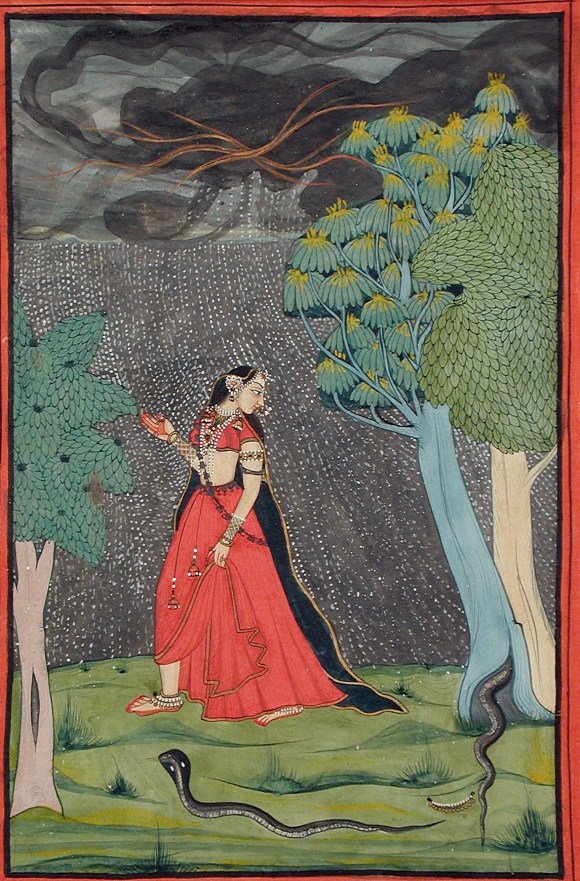
‘…I write from my heart of the raging tempest…’

I can see the heartbreak, 
Hear the wailing, the awakening,
I write from my heart
Of the raging tempest.

— Translation of Probhatey or ‘In the Morning’ by Rabindranath Tagore (1906)

All around us, we hear of disasters. Often, we try to write of these as Tagore seems to do in the above lines. However, these lines follow after he says he draws solace and inspiration from a ‘serene lotus’, pristine and shining with vibrancy. He gazes at it while looking for that still point which helps him create an impact with words. That is perhaps what we can hope to do too — wait for a morning where clarity will show us the path to express not just what we see, but to find a way to heal and help. Finding parallels in great writings of yore to our own attempts at recreating the present makes us realise that perhaps history is cyclical. In Rome, new structures rear up against thousand-year walls, reflecting how the past congeals into the present.

Congealing the past into our present in this July’s issue are stories of American migrants — like Tom Alter’s family who made India their home — by Anuradha Kumar in her new non-fiction Wanderers, Adventurers, Missionaries: Early Americans in India. We feature this book with a review and an interview with the author where she tells us how and why she chose to write on these people. We have more people writing of their own wanderings. Mohul Bhowmick wanders into Cambodia and makes friends over a local sport while Prithvijeet Sinha strolls by the banks of the River Gomti in Lucknow. Meredith Stephens not only takes us to the Prime Meridien in Greenwich but also to Carnarvon which houses a science and technology centre in Australia. Devraj Singh Kalsi wanders with humour to discover gastronomical inspiration and hopes for sweeter recompense.

The dialogue started by Professor Fakrul Alam on libraries earlier with his essay and by Kalsi (with a pinch of humour) has been continued by Odbayar Dorj. She talks of the fading culture of libraries in Mongolia, her home country, and the vibrant culture that has blossomed in Japan. Suzanne Kamata writes of the rituals of summer holidays in Japan… including looking after a pet dung beetles.

Farouk Gulsara muses on ‘greatness’ as a concept with irony. Aparajita De muses on the word serendipity, applying it to her own situation while Ratnottama Sengupta muses on her encounter with the writings of eminent cover artist and writer who is not only a recipient of the Bangla Academy literary award but also immensely popular with children, Dhruba Esh, and translates one his many stories from Bengali.

In translations, Professor Alam has brought to us a beautiful poem by Jibanananda Das. Karim Drashti’s Balochi short poems have been rendered in English by Fazal Baloch and Snehaprava Das has found for us Odia poems of Sangram Jena in translation. Ihlwha Choi has rendered his own Korean poem to English while Tagore’s poem, ‘Probhatey (In the Morning)’ winds up the poetry in this section. We have more in prose — Surya Dhananjay’s story, Mastan Anna, translated from Telugu by Rahimanuddin Shaik.

In fiction, we have stories from around the world. Paul Mirabile sets his story in Burgaz. Spandan Upadhyay gives a mysterious narrative set in a world outside our waking consciousness and Vidya Hariharan gives us a glimpse of life in modern day India. From Bangladesh, Md Mujib Ullah writes a short cli-fi based on real life events.

Taking up the theme of cli-fi, Rajat Chaudhuri’s Wonder Tales for a Warming Planet seems to bring hope by suggesting adapting to changing climes. Rakhi Dalal tells us in her review: “It dares to approach the climate crisis through the lens of empathy and imagination rather than panic or guilt. In doing so, Rajat Chaudhuri gives us what many adult climate narratives fail to deliver—a reason to believe that another world is not only possible but already being imagined by the young. All we need to do is listen.” Bhaskar Parichha has discussed the autobiography of a meteorologist and Distinguished University Professor at George Mason University, Jagadish Shukla. In A Billion Butterflies: A Life in Climate and Chaos Theory, he claims Shukla has “revolutionised monsoon forecasting.” Somdatta Mandal has written about Dilip K Das’s Epidemic Narratives: The Cultural Construction of Infectious Disease Outbreaks in India. And Gower Bhat reviews Neha Bansal’s best-selling poetry collection, Six of Cups.

Poetry awakens myriad of hues in Borderless with verses from across the world. We have poems from Luis Cuauhtémoc Berriozábal, Ryan Quinn Flangan, Snehprava Das, George Freek, Laila Brahmbhatt, Tracy Lee Duffy, Amarthya Chandar, Jason Ryberg, Momina Raza, Shahriyer Hossain Shetu and more. Snigdha Agrawal gives a fun-filled poem about a duck and Rhys Hughes has given us a collection of verses like puzzles where we need to guess the animals! We also have an excerpt from Hughes’ The Eleventh Commandment And Other Very Short Fictions and Das’s short stories, Keep It Secret.

With that, we wind up the contents of this month’s issue. Do pause by our content’s page to check it out in more details.

This month’s edition would not have been possible without all our contributors, our fabulous team and especially Sohana Manzoor’s artwork. Huge thanks to all of them and to our wonderful readers who make it worthwhile for us to write and publish. Do write in to us if you have any feedback. Five years ago, we chose to become a monthly from a daily… We have come a long way from then and grown to host writers from more than forty countries and readers from almost all over the world. For this, we owe you all – for being with us and encouraging us to find fresh pastures.

Enjoy the reads!

Wishing you peace and happiness,

Mitali Chakravarty,

borderlessjournal.com

Click here to access the contents for the July 2025 Issue

READ THE LATEST UPDATES ON THE FIRST BORDERLESS ANTHOLOGY, MONALISA NO LONGER SMILES, BY CLICKING ON THIS LINK.
Categories
Poetry

Poetry by Rhys Hughes

From Public Domain
ANIMAL TANKAS
(Can You Guess Them?)


A grey mountain moves
Trunk packed, no passport needed
Ears cooling tall trees
Flapping theatre curtains
On the fruit flecked wordly stage


A dart in shadows
Whiskers twitching cello strings
Cake crumbs are quavers
On the stave of his visage
A sunbeam the resined bow


Long nose elegance
Termite dance futility
Twilight adventures
Strong claws a gratuity
On the equator's tightrope


Nut nibbler furtive
Turning his breakfast slowly
Watchful sequined eyes
Centres of spiral galaxies
Bushy tail a semaphore


Cooling the burning
Depths of a green muddy pool
Drowning memories
Leopard bested hours ago
Bear digested yesterday


Down the forest path
Someone dropped a walking stick
A green stick that lives
And moves without needing legs
Faster than a hobbling man


Broad sail on his back
Scaly schooner majestic
Like an arrow shot
From the horizon's bowstring
Over the curve of the world


Drumming on the ground
Building a many arched bridge
Across the sand sea
As it hurries to escape
all possible pickpockets


Emerging from bushes
Ears longer than crescent moons
Feasting on soft grass
Dressed with sweetish evening dews
And dozing on small flowers


Perched on sloping roofs
Of buildings that mimic cliffs
Cuboid cave studded
And shrieking at each other
While the troglodytes study
From Public Domain

Rhys Hughes has lived in many countries. He graduated as an engineer but currently works as a tutor of mathematics. Since his first book was published in 1995 he has had fifty other books published and his work has been translated into ten languages.

.

PLEASE NOTE: ARTICLES CAN ONLY BE REPRODUCED IN OTHER SITES WITH DUE ACKNOWLEDGEMENT TO BORDERLESS JOURNAL

Click here to access the Borderless anthology, Monalisa No Longer Smiles

Click here to access Monalisa No Longer Smiles on Kindle Amazon International

Categories
Excerpt

The Eleventh Commandment

Title: The Eleventh Commandment And Other Very Short Fictions  

Author: Rhys Hughes

 Publisher: Recital Publishing

Taurus

“What sign do you think the minotaur is?”

This was an unexpected question from above. I turned my head and saw him three floors above, leaning out of his window. I was watering the flowers in their boxes on the balcony and I stood up slowly and stretched. Then I paid serious attention to the question and finally said, “Taurus.”

He nodded. It was the obvious answer, but his nod was ironic and it was clear he was disagreeing with me. It occurred to me that maybe the body of the minotaur and his head would have different birthdays and be born under two different signs, but I was in no mood for riddles and shrugged.

“Do you suppose he was attracted to women or cows?”

“I beg your pardon?”

“The minotaur! Were his amorous desires determined by his human mind or his bovine physicality? I can’t work it out.”

“You seem very interested in the details of his life.”

“Don’t be absurd, he never lived.”

“Yes, he was a myth only.”

“Nonetheless, he was born under the sign of Taurus.”

“But that’s what I said earlier.”

“Oh, did you? I misheard. I thought you said ‘torus’, which as we both know is a geometrical shape and not a zodiac sign.”

My neighbour was a joker, of this I was certain now. I wondered why we hadn’t interacted until this moment. I spend a lot of time on my balcony and he must have seen me there. I leaned on the railings and looked down on the city. The old alleys and narrow streets were like a maze. The thread that would lead a lost traveller out again was made from air, only the wind.

It was perfectly possible for the minotaur to have escaped the labyrinth by chance, from wandering at random, and in this case Theseus would have found it empty when he ventured inside, but for the sake of saving face his story wouldn’t change. Nobody could dispute that he slew the creature. Yet the monster was free, making his way in a world where he must always be alone.

No woman could want him, nor any cow. Never settling down, he would voyage to the edge of the known world and who can say what he would do when he reached it? Sit on his haunches and wait, I guess.

My neighbour had a man’s head, not that of a bull, so he couldn’t be the minotaur, as I briefly suspected when he asked me a third question, “Who does he support in a bullfight, the beast or the matador?” and I said, “The answer depends less on the fact he’s a hybrid than on his sense of justice.”

“Meaning what exactly?”

“Anyone with a sense of justice supports the bull.”

“I am his descendant, you see.”

“How is that feasible?”

“Somewhere on this remarkable planet of ours he must have met a woman with a cow’s head. Over many generations the bovine aspects weakened. All that remains is my unusual stomach. I don’t complain.”

Before I could raise an objection, he added wistfully:

“A shame I don’t exist.”

In the Den with Daniel

Daniel Day-Lewis is the best actor in the world. You know this. Everyone else knows this. Your wife knows it when you kiss her on the cheek before you set off for work. Your fellow commuters know it on the underground train that is always crowded at this time of the morning. Your colleagues in the office know it when you arrive. When you sit at your desk and switch on your computer you can’t imagine how the simple truth could be different. He is the best actor in the world. There can be no argument.

He is more than an actor and this is why he is so magnificent. He inhabits his roles, he refuses to regard the characters he plays as separate from himself. He becomes those characters, absolutely without doubt or hesitation. He puts aside his own identity for the duration of the making of a film. He lives his role, no matter how uncomfortable, even when cameras aren’t rolling. This is the supreme commitment to an art form and you admire him immensely. We all admire him. He is a marvel, a genius.

Whether he is playing a dramatic villain in remarkable circumstances or an ordinary man in an everyday situation, he is utterly convincing, not only to his fellow actors and the audiences of cinemas, but even to himself. When he plays a role, the role vanishes. The character is suddenly real, no less solid than I am. I am strolling the office floor today, chatting with the employees. I do this from time to time, to make them feel at ease. I approach your own desk. You swivel your chair and wait for me to speak.

“You have a wife, a child, a mortgage on a house. I have been asked by my superiors to make cuts to the workforce. I don’t wish to do this. I know it will be difficult for any employee who is forced into redundancy. But I have my quota to fulfil. Jobs will be lost. You need to prove that you are invaluable. That is the only way you can secure your future here. Do you understand? Prove you are irreplaceable. Do this for me. Be irreplaceable, I am begging you. Please don’t make it easy for me to dismiss you.”

And you nod, but I see in your eyes that you have given up. At the end of the day, you rise from your desk to begin the journey home. You are descending the stairs and hear the words, “Finished,” from above. Suddenly you remember that you are Daniel Day-Lewis, that your office job is fictional, the woman you call your wife is a fellow actor, your child doesn’t exist. It was an act all along, brilliant, inspired, relentlessly perfect.

But you wonder. How can you be certain that Daniel Day-Lewis himself isn’t just a character in another film?

Beyond the Edge

A man was crouching on the path that runs along the side of the river, and as I approached him I saw he was moving a chess piece in the dust. It was a white knight. I was almost on top of him before he paused and turned to look up at me. Then I asked him what he was doing and he replied that he was playing a game of boardless chess. It had started in a distant city on a regular board, like most chess games, but frustrated with the limited area on which the entire struggle was expected to progress, he had agreed with his opponent to allow pieces to move beyond the boundary squares when necessary. And that is what had occurred.

“My knight kept going,” he added, “off the edge and along the streets and out of the city, and I didn’t have a desire to turn him around and head back to the board. So here we are, and the game continues, or at least I’m assuming it does, many years later. My opponent might have resigned by now and gone home; or he may have captured my king in my absence and defeated me without me knowing; or he too could be wandering the world with a piece in his hand, moving it across the invisible squares of the land until a stranger stops to ask him about it.”

I laughed and bade him have a good day, then I rode around him with due care and cantered towards the small town I saw looming ahead, milky smoke issuing from the chimneys of its houses. As I entered the town and reached the main square, I saw two men playing chess outside a café, and I wondered what might happen if the white knight also came this way and became involved in their game, an unexpected and accidental ally to one side, capturing black pieces as it wandered across the board. The incident could incite a real fight between these players and the newcomer, a three-way battle that would mean broken teeth.

If only that migrating knight was half black and half white, like many actual horses in the world, bloodshed could be avoided. A piebald chess piece is surely neutral. I was tempted to return to the river path and warn the fellow of the hazard ahead, but I had vowed never to retrace my steps. I was fleeing a battle and I too was a knight that had ventured beyond the edge of his board and kept going. Unlike the man crouched in the dust, I had taken precautions, for I had stopped at an abbey and bought a flagon of the darkest ink from the brothers in the scriptorium and had painted on my white stallion the stripes of salvation.

About the Book

Rhys Hughes’ unique observational, aphoristic humour abounds in this collection of artfully crafted, extremely short stories. A perennial master of invention, Hughes explores our perceptions of humanity, mining truths beneath the clutter of culture with incisive wordplay and trademark wit.

Hughes has arrayed eighty-eight narrative gems into three groups, The Zodiacal Light, Beyond Necessity, and The Ostraca of Inclusion-clever new takes on mythology, history, and science. A thirteenth star sign, minotaurs and gorgons, a dog ventriloquist, gears and cogs, a clock-wrestling octopus — all are semantic Möbius strips where fantasy and philosophy are seamlessly melded as only Hughes can do; both thought provoking and entertaining.

About the Author

Rhys Hughes was born in Wales but has lived in many different countries. He began writing at an early age and his first book, Worming the Harpy, was published in 1995. Since that time he has published more than fifty other books and his work has been translated into twelve languages. He recently completed an ambitious project that involved writing exactly 1000 linked short fictions. He is currently working on a novel and several new collections of prose and verse.

.

PLEASE NOTE: ARTICLES CAN ONLY BE REPRODUCED IN OTHER SITES WITH DUE ACKNOWLEDGEMENT TO BORDERLESS JOURNAL

Click here to access the Borderless anthology, Monalisa No Longer Smiles

Click here to access Monalisa No Longer Smiles on Kindle Amazon International

Categories
Contents

Borderless, June 2025

Art by Sohana Manzoor

Editorial

‘How do you rebuild a life when all that remains is dust?’… Click here to read.

Translations

The Great War is Over and A Nobody by Jibanananda Das have been translated from Bengali by Professor Fakrul Alam. Click here to read.

Sukanta Bhattacharya’s poem, Therefore, has been translated from Bengali by Kiriti Sengupta. Click here to read.

 Five poems by Soubhagyabanta Maharana  have been translated from Odia by Snehaprava Das. Click here to read.

Animate Debris, a poem by Sangita Swechcha has been translated from Nepali by Saudamini Chalise. Click here to read.

Lost Poem, a poem by Ihlwha Choi  has been translated from Korean by the poet himself. Click here to read.

Sonar Tori (Golden Boat), a poem by Tagore, has been translated from Bengali by Mitali Chakravarty. Click here to read.

Poetry

Click on the names to read the poems

Allan Lake, Shobha Tharoor Srinivasan, Ron Pickett, Ananya Sarkar, George Freek, Bibhuti Narayan Biswal, Jim Bellamy, Pramod Rastogi, Vern Fein, Saranyan BV, Ryan Quinn Flanagan, Juairia Hossain, Gautham Pradeep, Jenny Middleton, Mandavi Choudhary, Rhys Hughes

Musings/Slices from Life

Where Should We Go After the Last Frontiers?

Ahamad Rayees writes from a village in Kashmir which homed refugees and still faced bombing. Click here to read.

The Jetty Chihuahuas

Vela Noble takes us for a stroll to the seaside at Adelaide. Click here to read.

Hope Lies Buried in Eternity

Farouk Gulsara muses on hope. Click here to read.

Undertourism in the Outback

Merdith Stephens writes from the Australian Outback with photographs from Alan Nobel. Click here to read.

Musings of a Copywriter

In Driving with Devraj, Devraj Singh Kalsi writes of his driving lessons. Click here to read.

Notes from Japan

In The Tent, Suzanne Kamata visits crimes and safety. Click here to read.

Essays

Public Intellectuals Walked, So Influencers Could Run

Lopamudra Nayak explores changing trends. Click here to read.

Where No One Wins or Loses a War…From Lucknow with Love

Prithvijeet Sinha takes us to a palace of a European begum in Lucknow. Click here to read.

Bhaskar’s Corner

In Can Odia Literature Connect Traditional Narratives with Contemporary Ones, Bhaskar Parichha discusses the said issue. Click here to read.

Feature

The story of Hawakal Publishers, based on a face-to-face tête-à-tête, and an online conversation with founder Bitan Chakraborty with his responses in Bengali translated by Kiriti Sengupta. Click here to read.

Stories

The Year the Fireflies Didn’t Come Back

Leishilembi Terem gives a poignant story set in conflict-ridden Manipur. Click here to read.

The Stranger

Jeena R. Papaadi writes of the vagaries of human relationships. Click here to read.

The Opening

Naramsetti Umamaheswararao relates a value based story in a small hamlet of southern India. Click here to read.

Book Excerpts

An excerpt from Wendy Doniger’s The Cave of Echoes: Stories about Gods, Animals and Other Strangers. Click here to read.

An excerpt from Mohua Chinappa’s Thorns in My Quilt: Letters from a Daughter to Her Father. Click here to read.

Book Reviews

Somdatta Mandal reviews Madhurima Vidyarthi’s Job Charnock and the Potter’s Boy. Click here to read.

Rakhi Dalal reviews Dhruba Hazarika’s The Shoot: Stories. Click here to read.

Satya Narayan Misra reviews Bakhtiyar K Dadabhoy’s Honest John – A Life of John Matthai. Click here to read.

Bhaskar Parichha reviews David C Engerman’s Apostles of Development: Six Economists and the World They Made. Click here to read.

.


Click here to access the Borderless anthology, Monalisa No Longer Smiles

Click here to access Monalisa No Longer Smiles on Amazon International

Categories
Editorial

‘How do you rebuild a life when all that remains is dust?’

The Great War is over
And yet there is left its vast gloom.
Our skies, light and society’s soul have been overcast…

'The Great War is Over' by Jibanananda Das (1899-1954), translated from Bengali by Professor Fakrul Alam.

Jibanananda Das wrote the above lines in the last century and yet great wars rage even now. As the world struggles to breathe looking for a beam of hope to drag itself out of the darkness induced by natural calamities, accidents, terror attacks and wars that seem to rage endlessly, are we moving towards the dystopian scenario created by George Orwell in 1984, which would be around the same time as Jibanananda Das’s ‘The Great War is Over’?

Describing such a scenario, Ahmed Rayees writes a moving piece from the Kashmiri village of Sheeri, the last refuge of the displaced refugees who were bombarded after peace was declared in their refuge during the clash across Indo-Pak borders. He contends: “People walked back not to homes, but to ruins. Entire communities had been reduced to ash and rubble. Crops were destroyed, livestock gone, schools turned into shelters or craters. How do you rebuild a life when all that remains is dust?”

People could be asking the same questions without finding answers in Gaza or Ukraine, where the cities are reduced to rubble. While we look for a ray of sunshine, amidst the rubble, Farouk Gulsara muses on hope that has its roots in eternity. Vela Noble wanders on nostalgic beaches in Adelaide. And Meredith Stephens travels to the Australian outback. Devraj Singh Kalsi brings in lighter notes writing of driving lessons while Suzanne Kamata creeps back to darker recesses musing on likely ‘criminals’ and crimes in her neighbourhood.

Lopamudra Nayak writes on social media and its impact while Bhaskar Parichha writes of trends that could be brought into Odia literature.  What he writes could apply well to all regional literature, where they lose their individual colouring to paint dystopian realities of the present world. Does modernising make us lose our ethnic identity and how important is that? These are questions that sprung to the mind reading his essay. As if in an attempt to hold on to the past ethos, Prithvijeet Sinha wafts around old ruins in Lucknow and sees a cemetery for colonial soldiers and concludes: “Everybody has formidable stakes, and the dead don’t preach the gospel of victory or sombre defeat.”

Taking up a similar theme of death and war is a poem from Saranyan BV. In poetry, we have colours from around the world with poems from Allan Lake, Ron Pickett, Ananya Sarkar, George Freek, Jim Bellamy, Ryan Quinn Flanagan, Juairia Hossain, Gautham Pradeep, Jenny Middleton, Mandavi Choudhary and many more. Multiple themes are woven into a variety of perspectives, including nature and environment, with June hosting the World Environment Day. Rhys Hughes gives a funny poem on the Welsh outlaw, Twm Siôn Cati.

We have mainly poetry in translation this time. Snehaprava Das has brought to us Soubhagyabanta Maharana’s poems from Odia and Ihlwha Choi has translated his own poem from Korean. Sangita Swechcha’s poem in Nepali has been rendered to English by Saudamini Chalise. From Bengali, other that Jibanananda Das’s poems translated by Professor Fakrul Alam, we have Tagore’s pensive and beautiful poem, Sonar Tori (the golden boat). Yet another Bengali poet, one who died young and yet left his mark, Sukanta Bhattacharya (1926-1947), has been translated by Kiriti Sengupta. Sengupta has also translated the responses of Bitan Chakravarty in a candid conversation about his dream child — the Hawakal Publishers. We also have a feature on this based on a face-to-face conversation, giving the story of how this publishing house grew out of an idea. Now, they publish poetry traditionally, without costs to the poet. Their range of authors are spread across continents.

Our fiction again returns to the darkness of war. Young Leishilembi Terem has given a story set in conflict-ridden Manipur from where she has emerged safely — a story that reiterates the senselessness of violence and politics. While Jeena R. Papaadi writes of modern human relationships that end without commitment, Naramsetti Umamaheswararao relates a value-based story in a small hamlet of southern India. 

From stories, our book excerpts return to the real world, where a daughter grieves her father in Mohua Chinappa’s Thorns in My Quilt: Letters from a Daughter to Her Father while Wendy Doniger’s The Cave of Echoes: Stories about Gods, Animals and Other Strangers, dwells on demystifying structures that create borders. We have two non-fiction reviews. Parichha writes about David C Engerman’s Apostles of Development: Six Economists and the World They Made. And Satya Narayan Misra discusses Bakhtiyar K Dadabhoy’s Honest John – A Life of John Matthai. Somdatta Mandal this time explores a historical fiction based around the founding of Calcutta, Madhurima Vidyarthi’s Job Charnock and the Potter’s Boy while Rakhi Dalal looks at fiction born of environmental awareness, Dhruba Hazarika’s The Shoot: Stories.

We have more content. Do pause by our contents page and take a look.

Huge thanks to all our contributors without who this issue would not have materialised. Heartfelt thanks to the team at Borderless for their support, especially Sohana Manzoor for her iconic artwork that has almost become a signature statement for Borderless.

Let’s hope that next month brings better news for the whole world.

Best wishes,

Mitali Chakravarty

borderlessjournal.com

Click here to access the contents for thJune 2025 Issue

READ THE LATEST UPDATES ON THE FIRST BORDERLESS ANTHOLOGY, MONALISA NO LONGER SMILES, BY CLICKING ON THIS LINK.
Categories
Poetry

Twm Siôn Cati Cave by Rhys Hughes

Photo Courtesy: Rhys Hughes
Ogof
Twm Siôn Cati
Cave
is the place
the outlaw graced
with his face
and the remainder of
his ruffianly presence when
he was hiding
from the drab forces of Law
and Order.

Ogof is the Welsh word for Cave,
a word never heard
over the border in England,
and Twm Siôn Cati
is hardly known outside his native
land. I understand
why: he is obscure and there’s no
use being in great
haste to fashion poems about him.

He was a Robin Hood character, I
guess you can say.
If you trudge the wrong way on the
road between
Rhandirmwyn and Soar y Mynydd
you might even
end up as his involuntary guest and
be forced to relax on his stone sofa
while staring down
the barrel of his old flintlock pistol.

He might whistle
through his teeth a merry tune,
but no melodies later
than the 17th Century.
Twm Siôn Cati
never listened to the music
of Erik Satie
or Debussy or Shostakovich.
How could he?
and how can you expect him to
be familiar with their melodies
if it’s true he lived
so long ago in a damp cave?

You have slipped
back through time
and that’s the reason
if not the rhyme
for the mess you find yourself in
now: wave farewell
to modern comforts,
be resigned to a tougher life and
I think you’ll find
solace in the challenge.

Unlike Robin Hood,
Twm Siôn Cati never did
and never would
rob the rich to give to the poor.
He robbed the rich
and the poor as well to give
to himself,
but needless to say,
on any given day he preferred
wealthy victims.

Enjoy
your stay in
Ogof
Twm Siôn Cati
Cave.
Be brave: the scenery is
wonderful,
there are blackberries in
early autumn,
the colourful rocks,
odd as socks
glisten in the rain.

You ought to remain sane
if you accept
your fate: no pain, no gain:
no coin to toss,
no loss.
Twm Siôn Cati has adopted
you as his heir,
you must prepare to follow
in his footsteps
and become a troglodyte,
a night bandit plaguing
the heights of
the region: he planned it this
way all along.

Rhys Hughes has lived in many countries. He graduated as an engineer but currently works as a tutor of mathematics. Since his first book was published in 1995 he has had fifty other books published and his work has been translated into ten languages.

.

PLEASE NOTE: ARTICLES CAN ONLY BE REPRODUCED IN OTHER SITES WITH DUE ACKNOWLEDGEMENT TO BORDERLESS JOURNAL

Click here to access the Borderless anthology, Monalisa No Longer Smiles

Click here to access Monalisa No Longer Smiles on Kindle Amazon International

Categories
Contents

Borderless, May 2025

Art by Sohana Manzoor

Editorial

“Imagine all the people/ Living life in peace”… Click here to read.

Translations

The Day of Annihilation, an essay on climate change by Kazi Nazrul Islam, has been translated from Bengali by Radha Chakravarty. Click here to read.

Arise O Woman and Two Flowers on One Leafstalk, lyrics by Nazrul, have been translated from Bengali by Professor Fakrul Alam. Click here to read.

Five poems by Bipin Nayak have been translated from Odia by Snehaprava Das. Click here to read.

Identity by Munir Momin has been translated from Balochi by Fazal Baloch. Click here to read.

Among Strangers, a poem by Ihlwha Choi  has been translated from Korean by the poet himself. Click here to read.

Asha or Hope by Tagore has been translated from Bengali by Mitali Chakravarty. Click here to read.

Poetry

Click on the names to read the poems

Ryan Quinn Flangan, Jim Bellamy, Snehprava Das, George Freek, Niranjan Aditya, Christine Belandres, Ajeeti S, Ron Pickett, Kajoli Krishnan, Stuart McFarlane, Snigdha Agrawal, Arthur Neong, Elizabeth Anne Pereira, Rhys Hughes

Poets, Poetry & Rhys Hughes

In Did He Ever?, Rhys Hughes gives fun-filled verses on Lafcadio Hearn, a bridge between the East and West from more than a hundred years ago. Click here to read.

Musings/ Slices from Life

Will Dire Wolves Stalk Streets?

Farouk Gulsara writes of genetic engineering. Click here to read.

The Boy at the Albany Bus Stop

Meredith Stephens dwells on the commonality of human emotions. Click here to read.

The Word I Could Never Say

Odbayar Dorj muses on her own life in Mongolia and Japan. Click here to read.

Social Media Repetition

Jun A. Alindogan discusses the relevance of social media. Click here to read.

Shanghai in Jakarta

Eshana Sarah Singh takes us to Chinese New Year celebrations in Djakarta. Click here to read.

Musings of a Copywriter

In My Writing Desk, Devraj Singh Kalsi writes of the source of his inspiration. Click here to read.

Notes from Japan

In Feeling Anxious in Happy Village, Suzanne Kamata relates a heartwarming story. Click here to read.

Essays

Reminiscences from a Gallery: The Other Ray

Dolly Narang muses on Satyajit Ray’s world beyond films and shares a note by the maestro and an essay on his art by the eminent artist, Paritosh Sen. Click here to read.

This Garden Calls Out to Me: A Flaneur in Lucknow’s Sikandar Bagh

Prithvijeet Sinha takes us back to a historical landmark, made for love but bloodied by war. Click here to read.

Stories

Going to Meet the Hoppers

Fiona Sinclair writes a layered story on human perspectives. Click here to read.

The Ritual of Change

Parnika Shirwaikar explores the acceptance of change. Click here to read.

The Last Metro

Spandan Upadhyay explores the spirit of the city of Kolkata. Click here to read.

Nico Finds His Dream

Paul Mirabile narrates how young Nico uncovers his own yearnings. Click here to read.

The Bequest

Naramsetti Umamaheswararao gives a story reflecting a child’s lessons from Nature. Click here to read.

Conversation

Ratnottama Sengupta introduces and converses with photographer, Vijay S Jodha. Click here to read.

Book Excerpts

An excerpt from Devabrata Das’s One More Story About Climbing a Hill: Stories from Assam, translated by multiple translators from Assamese. Click here to read.

An excerpt from Ryan Quinn Flangan’s Ghosting My Way into the Afterlife. Click here to read.

Book Reviews

Somdatta Mandal reviews Arundhathi Nath‘s translation, The Phantom’s Howl: Classic Tales of Ghosts and Hauntings from Bengal. Click here to read.

Andreas Giesbert reviews Rhys Hughes’ The Devil’s Halo. Click here to read.

Bhaskar Parichha reviews Aubrey Menen’s A Stranger in Three Worlds: The Memoirs of Aubrey Menen. Click here to read.

.

Click here to access the Borderless anthology, Monalisa No Longer Smiles

Click here to access Monalisa No Longer Smiles on Amazon International

Categories
Editorial

“Imagine all the people/Living life in peace”

God of War by Paul Klee (1879-1940)
The sky weeps blood, the earth cannot contain
The sorrow of the young ones we've slain.
How now do dead kids laugh while stricken by red rain?

— from Stricken by Red Rain: Poems by Jim Bellamy

When there is war
And peace is gone
Where is their home?
Where do they belong?

— from Poems on Migrants by Kajoli Krishnan

Poetry, prose — all art forms — gather our emotions into concentrates that distil perhaps the finest in human emotions. They touch hearts across borders and gather us all with the commonality of feelings. We no longer care for borders drawn by divisive human constructs but find ourselves connecting despite distances. Strangers or enemies can feel the same emotions. Enemies are mostly created to guard walls made by those who want to keep us in boxes, making it easier to manage the masses. It is from these mass of civilians that soldiers are drawn, and from the same crowds, we can find the victims who die in bomb blasts. And yet, we — the masses — fight. For whom, for what and why? A hundred or more years ago, we had poets writing against wars and violence…they still do. Have we learnt nothing from the past, nothing from history — except to repeat ourselves in cycles? By now, war should have become redundant and deadly weapons out of date artefacts instead of threats that are still used to annihilate cities, humans, homes and ravage the Earth. Our major concerns should have evolved to working on social equity, peace, human welfare and climate change.

One of the people who had expressed deep concern for social equity and peace through his films and writings was Satyajit Ray. This issue has an essay that reflects how he used art to concretise his ideas by Dolly Narang, a gallery owner who brought Ray’s handiworks to limelight. The essay includes the maestro’s note in which he admits he considered himself a filmmaker and a writer but never an artist. But Ray had even invented typefaces! Artist Paritosh Sen’s introduction to Ray’s art has been included to add to the impact of Narang’s essay. Another person who consolidates photography and films to do pathbreaking work and tell stories on compelling issues like climate change and helping the differently-abled is Vijay S Jodha. Ratnottama Sengupta has interviewed this upcoming artiste.

Reflecting the themes of welfare and conflict, Prithvijeet Sinha’s essay takes us to a monument in Lucknow that had been built for love but fell victim to war. Some conflicts are personal like the ones of Odbayar Dorj who finds acceptance not in her hometown in Mongolia but in the city, she calls home now. Jun A. Alindogan from Manila explores social media in action whereas Eshana Sarah Singh takes us to her home in Jakarta to celebrate the Chinese New Year! Farouk Gulsara looks into the likely impact of genetic engineering in a world already ripped by violence and Devraj Singh Kalsi muses on his source of inspiration, his writing desk. Meredith Stephens tells the touching story of a mother’s concern for her child in Australia and Suzanne Kamata exhibits the same concern as she travels to Happy Village in Japan to meet her differently-abled daughter and her friends.

As these real-life narratives weave commonalities of human emotions, so do fictive stories. Some reflect the need for change. Fiona Sinclair writes a layered story set in London on how lived experiences define differences in human perspectives while Parnika Shirwaikar explores the need to learn to accept changes set in her part of the universe. Spandan Upadhyay explores the spirit of the city of Kolkata as a migrant with a focus on social equity. Both Paul Mirabile and Naramsetti Umamaheswararao write stories around childhood, one set in Europe and the other in Asia.

As prose weaves humanity together, so does poetry. We have poems from Jim Bellamy and Kajoli Krishnan both reflecting the impact of war and senseless violence on common humanity. Ryan Quinn Flanagan introduces us to Canadian bears in his poetry while Snigdha Agrawal makes us laugh with her lines about dogs and hatching Easter eggs! We have a wide range of poems from Snehprava Das, George Freek, Niranjan Aditya, Christine Belandres, Ajeeti S, Ron Pickett, Stuart McFarlane, Arthur Neong and Elizabeth Anne Pereira. Rhys Hughes concludes his series of photo poems with the one in this issue — especially showcasing how far a vivid imagination can twist reality with a British postman ‘carrying’ sweets from India! His column, laced with humour too, showcases in verse Lafcadio Hearn, a bridge between the East and West from more than a hundred years ago, a man who was born in Greece, worked in America and moved to Japan to even adopt a Japanese name.

Just as Hearn bridged cultures, translations help us discover how similarly all of us think despite distances in time and space. Radha Chakravarty’s translation of Kazi Nazrul Islam’s concerns about climate change and melting icecaps does just that! Professor Fakrul Alam’s translation of Nazrul’s lyrics from Bengali on women and on the commonality of human faith also make us wonder if ideas froze despite time moving on. Tagore’s poem titled Asha (hope) tends to make us introspect on the very idea of hope – just as we do now. At a more personal level, a contemporary poem reflecting on the concept of identity by Munir Momin has been translated from Balochi by Fazal Baloch. From Korean, Ihlwah Choi translates his own poem about losing the self in a crowd. We start a new column on translated Odia poetry from this month. The first one features the exquisite poetry of Bipin Nayak translated by Snehprava Das. Huge thanks to Bhaskar Parichha for bringing this whole project to fruition.

Parichha has also drawn bridges in reviews by bringing to us the memoirs of a man of mixed heritage, A Stranger in Three Worlds: The Memoirs of Aubrey Menen. Andreas Giesbert from Germany has reviewed Rhys Hughes’ The Devil’s Halo and Somdatta Mandal has discussed Arundhathi Nath’s translation, The Phantom’s Howl: Classic Tales of Ghosts and Hauntings from Bengal. Our book excerpts this time feature Devabrata Das’s One More Story About Climbing a Hill: Stories from Assam, translated by multiple translators from Assamese and Ryan Quinn Flangan’s new book, Ghosting My Way into the Afterlife, definitely poems worth mulling over with a toss of humour.

Do pause by our contents page for this issue and enjoy the reads. We are ever grateful to our ever-growing evergreen readership some of whom have started sharing their fabulous narratives with us. Thanks to all our readers and contributors. Huge thanks to our wonderful team without whose efforts we could not have curated such valuable content and thanks specially to Sohana Manzoor for her art. Thank you all for making a whiff of an idea a reality!

Let’s hope for peace, love and sanity!

Best wishes,

Mitali Chakravarty

borderlessjournal.com

Click here to access the contents page for the May 2025 Issue

READ THE LATEST UPDATES ON THE FIRST BORDERLESS ANTHOLOGY, MONALISA NO LONGER SMILES, BY CLICKING ON THIS LINK.
Categories
Poetry

West Exit Barrier

Photograph and Poem by Rhys Hughes

West Exit Barrier Operational,
declares the sign,
but I ask you: is this really the
best way to ease
my considerable stress?

I am a carrier for a postal outfit.
Dressed in a vest
and shorts and little else,
I confess to feeling
vexed by the implications.
The package I carry contains
something sensational.

Dare I risk passing under such
a rickety barrier?
Don’t look now but my precious
cargo has come all the way from
Lucknow in India,
and I am supposed to deliver it
safely to Ludlow,
a town on the border of Wales.

But the West Exit Barrier doesn’t
look to me as operational
as it claims to be
and I find this fact worrying.

What’s the point of hurrying if I
run into a trap?
My package is full of sweets
from the streets
of the City of Nawabs, wrapped
carefully and warily.

Shahi Tukda, Sheermal, Nawabi
Zafrani Kheer, Makhan Malai,
Kali Gajar ka Halwa…

All as pleasing to the famished
eye as they are
to the drooling mouth.

I suspect an ambush ahead.
Some villain with a craving for
sweets intends to
knock me over the head
and render me unconscious.

Then he will loot my package
and gorge himself
and in my unplanned sleep I
will dream that I am
forging ahead on my mission.

But when I awake with a skull
as heavy as lead,
throbbing and wobbling on my
aching neck,
it will become apparent that I
failed to fulfil
my vow to my regular clients.

I promised to defend
their sweets with all my might!
What a sight it will be
if I am found asprawl,
able only to crawl, victim of an
outrageous robbery!

What should I do
to assure the safety of delights
that can be chewed?
I might as well open the parcel
and eat them myself
just to keep them out of the hands
of the scoundrels
who plan to steal and scoff them.

Then the sweets
will be safe for eternity
in my stomach and the West Exit
Barrier will hold no
terrors for me, operational or not.

Yes, that’s the best
solution to the difficulty I face.
Waste not, want not.

With maximum grace
I devour the lot
and now my vest no longer fits
me: I slump in
satisfied torpor, a justified hero,
chomping jaw
swollen slightly, adjacent to the
West Exit Barrier,
and I no longer care about how
operational it is.

Rhys Hughes has lived in many countries. He graduated as an engineer but currently works as a tutor of mathematics. Since his first book was published in 1995 he has had fifty other books published and his work has been translated into ten languages.

.

PLEASE NOTE: ARTICLES CAN ONLY BE REPRODUCED IN OTHER SITES WITH DUE ACKNOWLEDGEMENT TO BORDERLESS JOURNAL

Click here to access the Borderless anthology, Monalisa No Longer Smiles

Click here to access Monalisa No Longer Smiles on Kindle Amazon International

Categories
Poets, Poetry & Rhys Hughes

Did He Ever?

Lafcadio Hearn (1850-1904) was a British-Japanese national of Irish-Greek descent. Also known as Koizumi Yakumo, he was a writer, translator, and teacher who introduced Japanese culture to the West. From Public Domain.
Did Lafcadio Hearn
ever write about a worm
that went to
university in Tokyo?
I don’t think so.

Did he write about a fright
that coughed all night
in the loft of
a barn in Uzbekistan?
No, he didn’t.

Did he ever tell a tale
about a purple whale
who drank tea
with Yukio Mishima?
Of course not.

Did he dance
in France with a pig
named Nancy
in a fancy club in Nantes
while wearing a wig?
Even if he did,
I care not a fig.

Did he fancy Albert Camus
and take him
to a fair where he gambled
his underpants
for the chance to win a pear?
How should I know!

Did he surf with a flea
or row with a gnat
on tempestuous seas
while thunders boomed
and blunders
loomed in a volatile sky
that resembled a curtain?
Impossible
to be absolutely certain.

Did he acutely applaud
a cute fruit bat
that loved to sing songs
and bash gongs with twigs
in twilight hours
while the sleepy flowers
shut their petals
like silky eyelids? Beats me!

So what did he do?
What about him isn’t untrue
but genuinely odd?
Did he cavort with a frog or
plot with a toad
to overthrow the lords
of chaos and dismay?

Did he rummage his way
through the remains
of the day,
barking like a dog
balanced on a log
that is floating down a river?
I suspect not.

That’s the most curious thing
to learn about
Lafcadio Hearn: no one ever
finds anything
definite to say
about his strange experiences.

I don’t even know
if he ever kissed a ghost
on the lips
or played billiards
with a host who turned out
to be a vampire
or ate toast burned to a crisp
by dragon breath
and thereby ruined the health
of his breakfast.

Confirmation is hard to find.
Sometimes I think
that all these events are just
in my mind.

Rhys Hughes has lived in many countries. He graduated as an engineer but currently works as a tutor of mathematics. Since his first book was published in 1995 he has had fifty other books published and his work has been translated into ten languages.

.

PLEASE NOTE: ARTICLES CAN ONLY BE REPRODUCED IN OTHER SITES WITH DUE ACKNOWLEDGEMENT TO BORDERLESS JOURNAL

Click here to access the Borderless anthology, Monalisa No Longer Smiles

Click here to access Monalisa No Longer Smiles on Kindle Amazon International