Categories
Stories

The Anger of a Good Man

By Naramsetti Umamaheswararao

A wealthy man named Dharmayya hired a carpenter to do the woodwork for his newly constructed house. He handed over the timber required for doors and windows and asked him to begin the work.

The carpenter brought his tools and started working. By the end of the week, the doors and windows were nearly ready. He used nails extensively to join and shape the wooden pieces.

One day, when the carpenter said he ran out of nails, Dharmayya immediately went to the market and bought some more. Showing them to the carpenter, he said, “The price of iron has gone up, so nails are expensive now. Still, I didn’t compromise on quality. Strong nails ensure durability. One shouldn’t hesitate to spend for lasting quality.”

One of the nails overheard these words — a particularly arrogant one — and it swelled with pride. It already had a haughty nature, and now hearing the owner’s praise, it became even more boastful.

Using every opportunity, it began to taunt the wood: “You’re nothing without us! Your strength and durability come only because of us. If you’ve earned any reputation, it’s because of the nails like me!”

But the wood didn’t mind. It calmly replied, “No one can survive alone. If I stand strong today because of you, I’m grateful.”

The nail didn’t like this response. The other nails and tools added, “Don’t say that. In a way, it’s because of you that we have any purpose.”

The arrogant nail was not pleased to hear even the other nails side with the wood. It glared at the wood and muttered, “Just wait. The moment I get a chance to tear through you, I’ll make you cry!”

Two days later, the carpenter happened to pick up that same nail. He placed it on the wood and struck it with a hammer. But the nail refused to go in. Seeing this, the carpenter struck it harder on the head with the hammer. The nail bent sideways. Trying to straighten it, he placed it on a stone and hit it again. This time, the blow landed badly and broke the nail’s head off.

Now useless, the carpenter tossed it into a corner and continued his work with a new nail.

The arrogant nail was shaken by the incident. It had never imagined such an end. Not knowing what to do, it sat there, broken, and wept.

As dusk fell, the carpenter packed up and left, leaving behind the wood, tools, and materials.

Seeing the nail lying sadly in a corner, the saw said, “So, miss high-and-mighty, look what happened to you! You thought the wood’s strength came from you? You mocked the very material that patiently endures our harsh cuts, believing that we are helping it become stronger. You couldn’t recognize its silent strength and goodness.

“When the carpenter hurts the wood while crafting a beautiful home, the wood endures it in silence. We are only tools used temporarily. But the wood is not weak. After being used once, who thinks about nails like you again? You wanted to hurt the wood but ended up ruining yourself. By morning, you’ll be swept away and tossed in the trash. Your life now has no purpose.”

The nail was finally enlightened. “I misunderstood the wood’s kindness as weakness and spoke arrogantly. It’s true — when good people get angry, they leave no trace of those who cross them.”

The truth is, the wood refused to let that nail in — not because it was weak, but to teach a lesson to that arrogant nail. Its resistance came from strength. It proved that the truly strong remain silent and fulfill their purpose without pride.

From Public Domain

.

Naramsetti Umamaheswararao has written more than a thousand stories, songs, and novels for children over 42 years. he has published 32 books. His novel, Anandalokam, received the Central Sahitya Akademi Award for children’s literature. He has received numerous awards and honours, including the Andhra Pradesh Government’s Distinguished Telugu Language Award and the Pratibha Award from Potti Sreeramulu Telugu University. He established the Naramshetty Children’s Literature Foundation and has been actively promoting children’s literature as its president.

.

PLEASE NOTE: ARTICLES CAN ONLY BE REPRODUCED IN OTHER SITES WITH DUE ACKNOWLEDGEMENT TO BORDERLESS JOURNAL

Click here to access the Borderless anthology, Monalisa No Longer Smiles

Click here to access Monalisa No Longer Smiles on Amazon International

Categories
Stories

The Gift

 By Naramsetti Umamaheswararao

It was a science class for the 9th grade. All the students were listening attentively as the teacher was explaining the lesson. Just as there were 15 minutes left for the bell to ring, the attendent walked in with the notice register.

After sending him away, the teacher looked at the class. He noticed Ramu and Gopi sitting at the back and talking to each other.

“Children! Are you all listening?” the teacher asked aloud.

All the students except Ramu and Gopi raised their hands to show they were paying attention.

The teacher felt that Ramu and Gopi were talking about something more important than the class. Curious, he quietly walked over to them.

At that moment, Ramu was saying, “Mohan’s gift wasn’t liked by anyone at our home.”

“I thought it would be something valuable because he told me he would give a special gift,” replied Gopi.

“You didn’t come to our new housewarming ceremony, so you don’t know. Honestly, I feel a bit embarrassed to talk about it,” Ramu said sadly.

Hearing Mohan’s name in their conversation, the teacher felt it was something worth discussing. He gently tapped their desk with a stick and asked them to explain what they were talking about.

Mohan was a smart and well-behaved student, so the teacher was surprised to hear any complaints about him.

“Ramu had invited his friends for the housewarming a few days ago. I couldn’t go,” said Gopi. “But we were just talking about how the gift Mohan gave wasn’t good when you came, sir.”

“I see… what kind of gifts did the other students give?” asked the teacher.

“They gave useful household items,” replied Ramu.

“And what did Mohan give you?” asked the teacher.

“A mango plant,” said Ramu with a laugh.

The whole class burst out laughing. The teacher looked at Mohan, who bowed his head in embarrassment.

The teacher scolded the students and asked, “How can you say that a plant is not a good gift?”

Ramu replied, “To grow a plant, you need space. You have to water it every day. If it grows into a tree, its leaves will fall everywhere. Cleaning up is hard. It would have been better if he gave something else.”

“So, is that all you know about plants?” asked the teacher.

“Growing and maintaining a plant is difficult,” said Ramu again.

The teacher turned to the class and asked, “Is Ramu right?” The students nodded.

Then the teacher told Mohan to stand up and asked, “You said you would give a valuable gift, but you gave a plant. Why?”

Mohan answered, “The other gifts may break or become useless after a while. But a plant won’t. That’s why I chose it.”

“Tell us more about why you think it’s valuable,” the teacher encouraged him.

Mohan began to explain: “When a plant grows into a tree, it gives us many benefits. It absorbs the carbon dioxide we breathe out and gives us oxygen in return. Trees give us clean air to live. Their branches and leaves spread out to give us shade. People rest under trees to cool down. That’s why trees are important.

“If this mango plant becomes a tree, it can give us mangoes. Raw mangoes can be used for pickles and other dishes. Ripe mangoes are tasty fruits. A tree can give fruits worth thousands of rupees in its lifetime. We can eat the fruits or share them with relatives. The branches can be used as firewood. Even the dried leaves can be used to cook food. There are so many benefits. That’s why I gave a plant. I hoped Ramu would understand.”

“Is that all? Most people know these things. Tell us what science says about plants,” said the teacher, encouraging him further.

Mohan continued: “Cutting trees reduces forests. Because of that, rainfall is not coming on time. Pollution is increasing. Holes are forming in the ozone layer, and the Earth is becoming hotter. If we give plants as gifts and grow more trees, it helps society. If every citizen does this, we can enjoy green nature. It also reduces air pollution caused by too many vehicles. People will become healthier.”

“Well said! You explained it beautifully. I’m proud to say you’re my student,” said the teacher, clapping.

The class clapped too, just as the bell rang.

Looking at Ramu, the teacher asked, “Now tell me, was Mohan’s gift a good one?”

Ramu replied, “I couldn’t understand the value of the gift before. I behaved wrongly. Mohan’s gift is truly valuable.”

The teacher concluded, “Children, be wise. If you want to give a gift to someone, give them a book… or a plant!”

“Yes, sir!” the whole class replied loudly.

At that moment, the next class bell rang.

From Public Domain

.

Naramsetti Umamaheswararao has written more than a thousand stories, songs, and novels for children over 42 years. he has published 32 books. His novel, Anandalokam, received the Central Sahitya Akademi Award for children’s literature. He has received numerous awards and honours, including the Andhra Pradesh Government’s Distinguished Telugu Language Award and the Pratibha Award from Potti Sreeramulu Telugu University. He established the Naramshetty Children’s Literature Foundation and has been actively promoting children’s literature as its president.

.

PLEASE NOTE: ARTICLES CAN ONLY BE REPRODUCED IN OTHER SITES WITH DUE ACKNOWLEDGEMENT TO BORDERLESS JOURNAL

Click here to access the Borderless anthology, Monalisa No Longer Smiles

Click here to access Monalisa No Longer Smiles on Amazon International
Categories
Contents

Borderless, June 2025

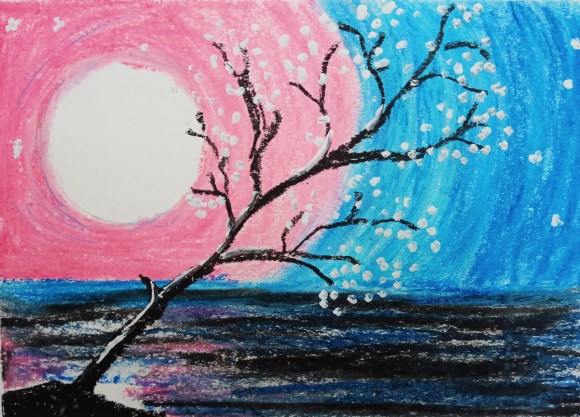
Art by Sohana Manzoor

Editorial

‘How do you rebuild a life when all that remains is dust?’… Click here to read.

Translations

The Great War is Over and A Nobody by Jibanananda Das have been translated from Bengali by Professor Fakrul Alam. Click here to read.

Sukanta Bhattacharya’s poem, Therefore, has been translated from Bengali by Kiriti Sengupta. Click here to read.

 Five poems by Soubhagyabanta Maharana  have been translated from Odia by Snehaprava Das. Click here to read.

Animate Debris, a poem by Sangita Swechcha has been translated from Nepali by Saudamini Chalise. Click here to read.

Lost Poem, a poem by Ihlwha Choi  has been translated from Korean by the poet himself. Click here to read.

Sonar Tori (Golden Boat), a poem by Tagore, has been translated from Bengali by Mitali Chakravarty. Click here to read.

Poetry

Click on the names to read the poems

Allan Lake, Shobha Tharoor Srinivasan, Ron Pickett, Ananya Sarkar, George Freek, Bibhuti Narayan Biswal, Jim Bellamy, Pramod Rastogi, Vern Fein, Saranyan BV, Ryan Quinn Flanagan, Juairia Hossain, Gautham Pradeep, Jenny Middleton, Mandavi Choudhary, Rhys Hughes

Musings/Slices from Life

Where Should We Go After the Last Frontiers?

Ahamad Rayees writes from a village in Kashmir which homed refugees and still faced bombing. Click here to read.

The Jetty Chihuahuas

Vela Noble takes us for a stroll to the seaside at Adelaide. Click here to read.

Hope Lies Buried in Eternity

Farouk Gulsara muses on hope. Click here to read.

Undertourism in the Outback

Merdith Stephens writes from the Australian Outback with photographs from Alan Nobel. Click here to read.

Musings of a Copywriter

In Driving with Devraj, Devraj Singh Kalsi writes of his driving lessons. Click here to read.

Notes from Japan

In The Tent, Suzanne Kamata visits crimes and safety. Click here to read.

Essays

Public Intellectuals Walked, So Influencers Could Run

Lopamudra Nayak explores changing trends. Click here to read.

Where No One Wins or Loses a War…From Lucknow with Love

Prithvijeet Sinha takes us to a palace of a European begum in Lucknow. Click here to read.

Bhaskar’s Corner

In Can Odia Literature Connect Traditional Narratives with Contemporary Ones, Bhaskar Parichha discusses the said issue. Click here to read.

Feature

The story of Hawakal Publishers, based on a face-to-face tête-à-tête, and an online conversation with founder Bitan Chakraborty with his responses in Bengali translated by Kiriti Sengupta. Click here to read.

Stories

The Year the Fireflies Didn’t Come Back

Leishilembi Terem gives a poignant story set in conflict-ridden Manipur. Click here to read.

The Stranger

Jeena R. Papaadi writes of the vagaries of human relationships. Click here to read.

The Opening

Naramsetti Umamaheswararao relates a value based story in a small hamlet of southern India. Click here to read.

Book Excerpts

An excerpt from Wendy Doniger’s The Cave of Echoes: Stories about Gods, Animals and Other Strangers. Click here to read.

An excerpt from Mohua Chinappa’s Thorns in My Quilt: Letters from a Daughter to Her Father. Click here to read.

Book Reviews

Somdatta Mandal reviews Madhurima Vidyarthi’s Job Charnock and the Potter’s Boy. Click here to read.

Rakhi Dalal reviews Dhruba Hazarika’s The Shoot: Stories. Click here to read.

Satya Narayan Misra reviews Bakhtiyar K Dadabhoy’s Honest John – A Life of John Matthai. Click here to read.

Bhaskar Parichha reviews David C Engerman’s Apostles of Development: Six Economists and the World They Made. Click here to read.

.


Click here to access the Borderless anthology, Monalisa No Longer Smiles

Click here to access Monalisa No Longer Smiles on Amazon International
Categories
Editorial

‘How do you rebuild a life when all that remains is dust?’

The Great War is over
And yet there is left its vast gloom.
Our skies, light and society’s soul have been overcast…

'The Great War is Over' by Jibanananda Das (1899-1954), translated from Bengali by Professor Fakrul Alam.

Jibanananda Das wrote the above lines in the last century and yet great wars rage even now. As the world struggles to breathe looking for a beam of hope to drag itself out of the darkness induced by natural calamities, accidents, terror attacks and wars that seem to rage endlessly, are we moving towards the dystopian scenario created by George Orwell in 1984, which would be around the same time as Jibanananda Das’s ‘The Great War is Over’?

Describing such a scenario, Ahmed Rayees writes a moving piece from the Kashmiri village of Sheeri, the last refuge of the displaced refugees who were bombarded after peace was declared in their refuge during the clash across Indo-Pak borders. He contends: “People walked back not to homes, but to ruins. Entire communities had been reduced to ash and rubble. Crops were destroyed, livestock gone, schools turned into shelters or craters. How do you rebuild a life when all that remains is dust?”

People could be asking the same questions without finding answers in Gaza or Ukraine, where the cities are reduced to rubble. While we look for a ray of sunshine, amidst the rubble, Farouk Gulsara muses on hope that has its roots in eternity. Vela Noble wanders on nostalgic beaches in Adelaide. And Meredith Stephens travels to the Australian outback. Devraj Singh Kalsi brings in lighter notes writing of driving lessons while Suzanne Kamata creeps back to darker recesses musing on likely ‘criminals’ and crimes in her neighbourhood.

Lopamudra Nayak writes on social media and its impact while Bhaskar Parichha writes of trends that could be brought into Odia literature.  What he writes could apply well to all regional literature, where they lose their individual colouring to paint dystopian realities of the present world. Does modernising make us lose our ethnic identity and how important is that? These are questions that sprung to the mind reading his essay. As if in an attempt to hold on to the past ethos, Prithvijeet Sinha wafts around old ruins in Lucknow and sees a cemetery for colonial soldiers and concludes: “Everybody has formidable stakes, and the dead don’t preach the gospel of victory or sombre defeat.”

Taking up a similar theme of death and war is a poem from Saranyan BV. In poetry, we have colours from around the world with poems from Allan Lake, Ron Pickett, Ananya Sarkar, George Freek, Jim Bellamy, Ryan Quinn Flanagan, Juairia Hossain, Gautham Pradeep, Jenny Middleton, Mandavi Choudhary and many more. Multiple themes are woven into a variety of perspectives, including nature and environment, with June hosting the World Environment Day. Rhys Hughes gives a funny poem on the Welsh outlaw, Twm Siôn Cati.

We have mainly poetry in translation this time. Snehaprava Das has brought to us Soubhagyabanta Maharana’s poems from Odia and Ihlwha Choi has translated his own poem from Korean. Sangita Swechcha’s poem in Nepali has been rendered to English by Saudamini Chalise. From Bengali, other that Jibanananda Das’s poems translated by Professor Fakrul Alam, we have Tagore’s pensive and beautiful poem, Sonar Tori (the golden boat). Yet another Bengali poet, one who died young and yet left his mark, Sukanta Bhattacharya (1926-1947), has been translated by Kiriti Sengupta. Sengupta has also translated the responses of Bitan Chakravarty in a candid conversation about his dream child — the Hawakal Publishers. We also have a feature on this based on a face-to-face conversation, giving the story of how this publishing house grew out of an idea. Now, they publish poetry traditionally, without costs to the poet. Their range of authors are spread across continents.

Our fiction again returns to the darkness of war. Young Leishilembi Terem has given a story set in conflict-ridden Manipur from where she has emerged safely — a story that reiterates the senselessness of violence and politics. While Jeena R. Papaadi writes of modern human relationships that end without commitment, Naramsetti Umamaheswararao relates a value-based story in a small hamlet of southern India. 

From stories, our book excerpts return to the real world, where a daughter grieves her father in Mohua Chinappa’s Thorns in My Quilt: Letters from a Daughter to Her Father while Wendy Doniger’s The Cave of Echoes: Stories about Gods, Animals and Other Strangers, dwells on demystifying structures that create borders. We have two non-fiction reviews. Parichha writes about David C Engerman’s Apostles of Development: Six Economists and the World They Made. And Satya Narayan Misra discusses Bakhtiyar K Dadabhoy’s Honest John – A Life of John Matthai. Somdatta Mandal this time explores a historical fiction based around the founding of Calcutta, Madhurima Vidyarthi’s Job Charnock and the Potter’s Boy while Rakhi Dalal looks at fiction born of environmental awareness, Dhruba Hazarika’s The Shoot: Stories.

We have more content. Do pause by our contents page and take a look.

Huge thanks to all our contributors without who this issue would not have materialised. Heartfelt thanks to the team at Borderless for their support, especially Sohana Manzoor for her iconic artwork that has almost become a signature statement for Borderless.

Let’s hope that next month brings better news for the whole world.

Best wishes,

Mitali Chakravarty

borderlessjournal.com

Click here to access the contents for thJune 2025 Issue

READ THE LATEST UPDATES ON THE FIRST BORDERLESS ANTHOLOGY, MONALISA NO LONGER SMILES, BY CLICKING ON THIS LINK.

Categories
Stories

The Opening

By Naramsetti Umamaheswararao

From Public Domain

In Parvatipuram, there lived a merchant named Sunanda. He used to run his business by fulfilling the needs of the people. He had two sons – the elder one, Anand, and the younger one, Vinay. Anand completed his education at the gurukul and returned home, while Vinay was still studying.

Anand told his father that he didn’t want to work under anyone, and instead, he wanted to start a profitable business of his own—one that would also provide employment to others. Hearing this, Sunanda was very happy and made arrangements to help Anand start a business in a nearby town.

He chose an auspicious time for the opening and invited Anand’s guru, Medho Nath, to bless the occasion. The guru, moved by his affection for Anand, came for the inauguration. In the presence of his guru, Anand performed the rituals and made his first sale.

To show his respect, Anand offered silk clothes and thamboolam (a traditional token of respect) to his guru and bowed to him. Accepting them, Guru Medho Nath blessed him saying, “May your business grow like the saying—three types of goods, six kinds of deals. But for that, you must follow three conditions. First, you must come and go without being seen. Second, receive with one hand and give with the other. Third, always eat five-course feasts. Follow these, and you will reach great heights in business, my son!”

“Yes, Guruji! With your blessings, my business will flourish just as I dreamed,” Anand replied happily.

Standing beside them, Sunanda could not understand the meaning behind the guru’s blessing. The conditions seemed strange to him. “What kind of blessing is this, filled with such odd conditions?” he thought to himself.

Guru Medho Nath sensed this and turned to Anand, asking, “My son, did you understand the deeper meaning of my blessing?”

Anand replied, “Yes, Guruji, I understood it clearly.”

“Then explain the meaning of these conditions to your father,” the guru instructed.

Anand nodded in agreement and turned to his father. “Guruji’s first condition was to go and return without being seen,” he began.

Sunanda interrupted, “How is that possible? When going out for business, you meet many people. Business means interacting with customers. How can one go unseen?”

Anand smiled and said, “Listen to the deeper meaning. He meant that I should leave for work at dawn and return only after sunset. If I go late in the morning, I’ll see many others along the way, and by then, other merchants would already have done a lot of business. But if I start early, I’ll have more time and more opportunities.”

“I see! That makes sense. What about the second condition—receiving with one hand and giving with the other?” asked Sunanda.

Anand explained, “Customers often try to buy on credit. If we keep giving goods on credit, the business won’t survive. Later, when asked to repay, some customers avoid us. That’s why Guruji advised me to take cash with one hand and deliver the goods with the other—no credit.”

“That’s very sensible. And what about the third condition? He told you to always eat five-course meals. Is that practical? If you eat like that daily, you’ll lose money—and it could even cause indigestion!” said Sunanda.

Anand laughed and replied, “Guruji didn’t mean literal feasts. He meant that I should work so hard that I feel truly hungry before eating. When someone is really hungry, even a simple meal feels like a royal feast. So, work hard, earn your hunger, and only then eat. That was his advice.”

Satisfied with his son’s explanation, Sunanda’s face lit up with happiness.

Guru Medho Nath then praised Anand, saying, “Well done! You have truly proven yourself my disciple. You’ve understood the essence of my message.”

Sunanda expressed heartfelt gratitude to the guru who had shaped his son into such a wise man.

In time, Anand not only earned great profits through his clever business sense, but also gained respect and fame.

.

Naramsetti Umamaheswararao has written more than a thousand stories, songs, and novels for children over 42 years. he has published 32 books. His novel, Anandalokam, received the Central Sahitya Akademi Award for children’s literature. He has received numerous awards and honours, including the Andhra Pradesh Government’s Distinguished Telugu Language Award and the Pratibha Award from Potti Sreeramulu Telugu University. He established the Naramshetty Children’s Literature Foundation and has been actively promoting children’s literature as its president.

.

PLEASE NOTE: ARTICLES CAN ONLY BE REPRODUCED IN OTHER SITES WITH DUE ACKNOWLEDGEMENT TO BORDERLESS JOURNAL

Click here to access the Borderless anthology, Monalisa No Longer Smiles

Click here to access Monalisa No Longer Smiles on Amazon International

Categories
Contents

Borderless, May 2025

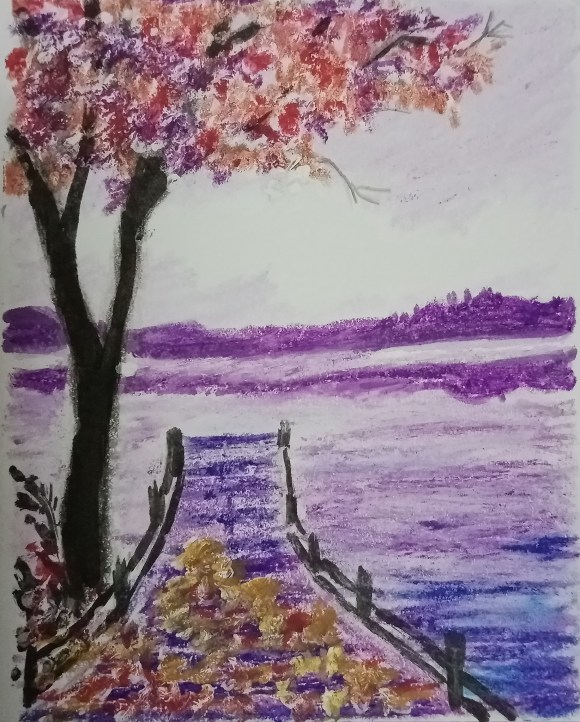
Art by Sohana Manzoor

Editorial

“Imagine all the people/ Living life in peace”… Click here to read.

Translations

The Day of Annihilation, an essay on climate change by Kazi Nazrul Islam, has been translated from Bengali by Radha Chakravarty. Click here to read.

Arise O Woman and Two Flowers on One Leafstalk, lyrics by Nazrul, have been translated from Bengali by Professor Fakrul Alam. Click here to read.

Five poems by Bipin Nayak have been translated from Odia by Snehaprava Das. Click here to read.

Identity by Munir Momin has been translated from Balochi by Fazal Baloch. Click here to read.

Among Strangers, a poem by Ihlwha Choi  has been translated from Korean by the poet himself. Click here to read.

Asha or Hope by Tagore has been translated from Bengali by Mitali Chakravarty. Click here to read.

Poetry

Click on the names to read the poems

Ryan Quinn Flangan, Jim Bellamy, Snehprava Das, George Freek, Niranjan Aditya, Christine Belandres, Ajeeti S, Ron Pickett, Kajoli Krishnan, Stuart McFarlane, Snigdha Agrawal, Arthur Neong, Elizabeth Anne Pereira, Rhys Hughes

Poets, Poetry & Rhys Hughes

In Did He Ever?, Rhys Hughes gives fun-filled verses on Lafcadio Hearn, a bridge between the East and West from more than a hundred years ago. Click here to read.

Musings/ Slices from Life

Will Dire Wolves Stalk Streets?

Farouk Gulsara writes of genetic engineering. Click here to read.

The Boy at the Albany Bus Stop

Meredith Stephens dwells on the commonality of human emotions. Click here to read.

The Word I Could Never Say

Odbayar Dorj muses on her own life in Mongolia and Japan. Click here to read.

Social Media Repetition

Jun A. Alindogan discusses the relevance of social media. Click here to read.

Shanghai in Jakarta

Eshana Sarah Singh takes us to Chinese New Year celebrations in Djakarta. Click here to read.

Musings of a Copywriter

In My Writing Desk, Devraj Singh Kalsi writes of the source of his inspiration. Click here to read.

Notes from Japan

In Feeling Anxious in Happy Village, Suzanne Kamata relates a heartwarming story. Click here to read.

Essays

Reminiscences from a Gallery: The Other Ray

Dolly Narang muses on Satyajit Ray’s world beyond films and shares a note by the maestro and an essay on his art by the eminent artist, Paritosh Sen. Click here to read.

This Garden Calls Out to Me: A Flaneur in Lucknow’s Sikandar Bagh

Prithvijeet Sinha takes us back to a historical landmark, made for love but bloodied by war. Click here to read.

Stories

Going to Meet the Hoppers

Fiona Sinclair writes a layered story on human perspectives. Click here to read.

The Ritual of Change

Parnika Shirwaikar explores the acceptance of change. Click here to read.

The Last Metro

Spandan Upadhyay explores the spirit of the city of Kolkata. Click here to read.

Nico Finds His Dream

Paul Mirabile narrates how young Nico uncovers his own yearnings. Click here to read.

The Bequest

Naramsetti Umamaheswararao gives a story reflecting a child’s lessons from Nature. Click here to read.

Conversation

Ratnottama Sengupta introduces and converses with photographer, Vijay S Jodha. Click here to read.

Book Excerpts

An excerpt from Devabrata Das’s One More Story About Climbing a Hill: Stories from Assam, translated by multiple translators from Assamese. Click here to read.

An excerpt from Ryan Quinn Flangan’s Ghosting My Way into the Afterlife. Click here to read.

Book Reviews

Somdatta Mandal reviews Arundhathi Nath‘s translation, The Phantom’s Howl: Classic Tales of Ghosts and Hauntings from Bengal. Click here to read.

Andreas Giesbert reviews Rhys Hughes’ The Devil’s Halo. Click here to read.

Bhaskar Parichha reviews Aubrey Menen’s A Stranger in Three Worlds: The Memoirs of Aubrey Menen. Click here to read.

.

Click here to access the Borderless anthology, Monalisa No Longer Smiles

Click here to access Monalisa No Longer Smiles on Amazon International
Categories
Editorial

“Imagine all the people/Living life in peace”

God of War by Paul Klee (1879-1940)
The sky weeps blood, the earth cannot contain
The sorrow of the young ones we've slain.
How now do dead kids laugh while stricken by red rain?

— from Stricken by Red Rain: Poems by Jim Bellamy

When there is war
And peace is gone
Where is their home?
Where do they belong?

— from Poems on Migrants by Kajoli Krishnan

Poetry, prose — all art forms — gather our emotions into concentrates that distil perhaps the finest in human emotions. They touch hearts across borders and gather us all with the commonality of feelings. We no longer care for borders drawn by divisive human constructs but find ourselves connecting despite distances. Strangers or enemies can feel the same emotions. Enemies are mostly created to guard walls made by those who want to keep us in boxes, making it easier to manage the masses. It is from these mass of civilians that soldiers are drawn, and from the same crowds, we can find the victims who die in bomb blasts. And yet, we — the masses — fight. For whom, for what and why? A hundred or more years ago, we had poets writing against wars and violence…they still do. Have we learnt nothing from the past, nothing from history — except to repeat ourselves in cycles? By now, war should have become redundant and deadly weapons out of date artefacts instead of threats that are still used to annihilate cities, humans, homes and ravage the Earth. Our major concerns should have evolved to working on social equity, peace, human welfare and climate change.

One of the people who had expressed deep concern for social equity and peace through his films and writings was Satyajit Ray. This issue has an essay that reflects how he used art to concretise his ideas by Dolly Narang, a gallery owner who brought Ray’s handiworks to limelight. The essay includes the maestro’s note in which he admits he considered himself a filmmaker and a writer but never an artist. But Ray had even invented typefaces! Artist Paritosh Sen’s introduction to Ray’s art has been included to add to the impact of Narang’s essay. Another person who consolidates photography and films to do pathbreaking work and tell stories on compelling issues like climate change and helping the differently-abled is Vijay S Jodha. Ratnottama Sengupta has interviewed this upcoming artiste.

Reflecting the themes of welfare and conflict, Prithvijeet Sinha’s essay takes us to a monument in Lucknow that had been built for love but fell victim to war. Some conflicts are personal like the ones of Odbayar Dorj who finds acceptance not in her hometown in Mongolia but in the city, she calls home now. Jun A. Alindogan from Manila explores social media in action whereas Eshana Sarah Singh takes us to her home in Jakarta to celebrate the Chinese New Year! Farouk Gulsara looks into the likely impact of genetic engineering in a world already ripped by violence and Devraj Singh Kalsi muses on his source of inspiration, his writing desk. Meredith Stephens tells the touching story of a mother’s concern for her child in Australia and Suzanne Kamata exhibits the same concern as she travels to Happy Village in Japan to meet her differently-abled daughter and her friends.

As these real-life narratives weave commonalities of human emotions, so do fictive stories. Some reflect the need for change. Fiona Sinclair writes a layered story set in London on how lived experiences define differences in human perspectives while Parnika Shirwaikar explores the need to learn to accept changes set in her part of the universe. Spandan Upadhyay explores the spirit of the city of Kolkata as a migrant with a focus on social equity. Both Paul Mirabile and Naramsetti Umamaheswararao write stories around childhood, one set in Europe and the other in Asia.

As prose weaves humanity together, so does poetry. We have poems from Jim Bellamy and Kajoli Krishnan both reflecting the impact of war and senseless violence on common humanity. Ryan Quinn Flanagan introduces us to Canadian bears in his poetry while Snigdha Agrawal makes us laugh with her lines about dogs and hatching Easter eggs! We have a wide range of poems from Snehprava Das, George Freek, Niranjan Aditya, Christine Belandres, Ajeeti S, Ron Pickett, Stuart McFarlane, Arthur Neong and Elizabeth Anne Pereira. Rhys Hughes concludes his series of photo poems with the one in this issue — especially showcasing how far a vivid imagination can twist reality with a British postman ‘carrying’ sweets from India! His column, laced with humour too, showcases in verse Lafcadio Hearn, a bridge between the East and West from more than a hundred years ago, a man who was born in Greece, worked in America and moved to Japan to even adopt a Japanese name.

Just as Hearn bridged cultures, translations help us discover how similarly all of us think despite distances in time and space. Radha Chakravarty’s translation of Kazi Nazrul Islam’s concerns about climate change and melting icecaps does just that! Professor Fakrul Alam’s translation of Nazrul’s lyrics from Bengali on women and on the commonality of human faith also make us wonder if ideas froze despite time moving on. Tagore’s poem titled Asha (hope) tends to make us introspect on the very idea of hope – just as we do now. At a more personal level, a contemporary poem reflecting on the concept of identity by Munir Momin has been translated from Balochi by Fazal Baloch. From Korean, Ihlwah Choi translates his own poem about losing the self in a crowd. We start a new column on translated Odia poetry from this month. The first one features the exquisite poetry of Bipin Nayak translated by Snehprava Das. Huge thanks to Bhaskar Parichha for bringing this whole project to fruition.

Parichha has also drawn bridges in reviews by bringing to us the memoirs of a man of mixed heritage, A Stranger in Three Worlds: The Memoirs of Aubrey Menen. Andreas Giesbert from Germany has reviewed Rhys Hughes’ The Devil’s Halo and Somdatta Mandal has discussed Arundhathi Nath’s translation, The Phantom’s Howl: Classic Tales of Ghosts and Hauntings from Bengal. Our book excerpts this time feature Devabrata Das’s One More Story About Climbing a Hill: Stories from Assam, translated by multiple translators from Assamese and Ryan Quinn Flangan’s new book, Ghosting My Way into the Afterlife, definitely poems worth mulling over with a toss of humour.

Do pause by our contents page for this issue and enjoy the reads. We are ever grateful to our ever-growing evergreen readership some of whom have started sharing their fabulous narratives with us. Thanks to all our readers and contributors. Huge thanks to our wonderful team without whose efforts we could not have curated such valuable content and thanks specially to Sohana Manzoor for her art. Thank you all for making a whiff of an idea a reality!

Let’s hope for peace, love and sanity!

Best wishes,

Mitali Chakravarty

borderlessjournal.com

Click here to access the contents page for the May 2025 Issue

READ THE LATEST UPDATES ON THE FIRST BORDERLESS ANTHOLOGY, MONALISA NO LONGER SMILES, BY CLICKING ON THIS LINK.

Categories
Stories

The Bequest

By Naramsetti Umamaheswararao

From Public Domain

Sundaram and Sumathi lived in Nagur. They had only one son named Shiva. They raised him with love and care. At that time, Shiva was studying in sixth grade. Every day, he went to school obediently and studied attentively. In his free time, he would play with other kids on the school ground.

When Shiva came home from school each day, his mother Sumathi would prepare some snacks for him. He liked to take the plate and sit on the stone bench outside their house, enjoying his snacks.

As he ate, he liked watching the puppies running around the courtyard, the birds perched on the tree in front of the neighbour’s house, the chickens pecking at grains, and the cows chewing fresh grass in the shed next door.

One day, when Shiva came home from school, Sumathi gave him sesame seed balls made with jaggery. As usual, he sat outside on the stone bench and began eating them.

Just then, Shankar, a boy from the same street, came by.

Standing in front of Shiva, he asked, “Hey! Will you give me one?”

Shankar’s father worked as a laborer in an onion shop, and his mother worked in the fields.

“Nope… I won’t give you one,” replied Shiva.

“Come on… just one! Next time I get some, I’ll share with you,” pleaded Shankar.

“I won’t give. Go ask your mom,” Shiva said.

Sumathi, who was inside, overheard their conversation.

She immediately came to the doorstep and said, “Shiva, give one to Shankar.”

“Why should I give? Tell him to ask his mom!” replied Shiva.

“You shouldn’t eat without sharing with others. Give one to Shankar,” insisted Sumathi.

“Instead of telling me, you could just take one from the jar and give it to him,” grumbled Shiva.

“I told you to give it to him so that you learn the joy of sharing. If you give one to Shankar, I’ll give you two more,” she promised.

Hearing that, Shiva cheerfully said, “Here, take this,” and handed one sesame ball to Shankar.

Sumathi smiled with satisfaction, seeing the sparkle on Shankar’s face when he received the treat.

After Shankar left, Sumathi brought two more sesame balls and gave them to Shiva.

Sitting beside him and gently patting his head, she said, “We’re human beings, so we should help others. Shankar’s family doesn’t have much money. His parents can’t always afford treats like we can. That’s why you should share what you have with children like Shankar. If your friends ask for help, you should always be willing to help.”

Just by looking at his face, Sumathi understood that Shiva wasn’t entirely convinced by her words.

“Why should I do what you say? Their parents will buy for them, won’t they?” he asked.

Sumathi believed that good habits and values must be taught from a young age. She paused for a moment, wondering how best to make her son understand.

Just then, she noticed a crow sitting on the wall of the house across the street.

She went inside, brought a chapati, and, while watching the crow, tore it into pieces and threw them into the courtyard.

“Shiva, watch what happens now,” she said.

The crow flew down, picked up one piece of chapati, then flew back to the wall and loudly cawed. Hearing its call, other crows from around the area came and picked up the remaining pieces and flew away.

“Did you see how united the crows are? The first crow took only one piece. It didn’t try to hide or hoard more just because there were leftovers. It called its fellow crows and shared the food so that their hunger could be satisfied too. When even birds can think in such a noble way, we, as humans, should do even better. That’s why you must also share with the kids around you and help in whatever way you can,” explained Sumathi.

Shiva nodded, showing he had understood.

“I’ll do what you said,” he replied happily.

Sumathi’s words made a deep impression on Shiva’s mind. From that day on, whatever food his mother gave him, he made it a habit to share some with his friends. Sumathi was overjoyed to see this change in her son.

Naramsetti Umamaheswararao has written more than a thousand stories, songs, and novels for children over 42 years. he has published 32 books. His novel, Anandalokam, received the Central Sahitya Akademi Award for children’s literature. He has received numerous awards and honours, including the Andhra Pradesh Government’s Distinguished Telugu Language Award and the Pratibha Award from Potti Sreeramulu Telugu University. He established the Naramshetty Children’s Literature Foundation and has been actively promoting children’s literature as its president.

.

PLEASE NOTE: ARTICLES CAN ONLY BE REPRODUCED IN OTHER SITES WITH DUE ACKNOWLEDGEMENT TO BORDERLESS JOURNAL

Click here to access the Borderless anthology, Monalisa No Longer Smiles

Click here to access Monalisa No Longer Smiles on Amazon International
Categories
Editorial

Seasons in the Sun?

April is a month full of celebrations around the world. Asia hosts a spray of New Year festivities. Then there are festivals like Qing Ming Jie, Good Friday and Easter. All these are in a way reminders of our past. And yet, we critique things as old fashioned! So, where does tradition end and ‘outdated’ or ‘outmoded’ start? Meanwhile we continue to celebrate these festivals with joy but what happens to those who have lost their home, family and their living due to war or climate disasters? Can they too join in with the joie de vivre? Can we take our celebrations to them to give solace in some way?

In our April issue, we have stories from climate and conflict-ridden parts of the world. From Bangkok, Amy Sawitta Lefevre gives an eyewitness account of the March 28th Earthquake that originated in Myanmar. While in her city, the disaster was managed, she writes: “I’m also thinking of all the children in Myanmar who are sleeping in the open, who lost loved ones, who are feeling scared and alone, with no one to reassure them.” As news reels tell us, in Myanmar there have been thousands of casualties from the earthquake as well as shootings by the army.

From another troubled region, Pakistan, Zeeshan Nasir gives a heartrending narrative about climate change, which also dwells on the human suffering, including increase in underage marriages.

Human suffering can be generated by rituals and customs too. For instance, if festivals dwell on exclusivity, they can hurt those who are left out of the celebrations. Odbayar Dorje muses along those lines on Mongolian traditions and calls for inclusivity and the need to change norms. On the other hand, Devraj Singh Kalsi hums with humour as he reflects on social norms and niceties and hints at the need for change in a light-hearted manner. Farouk Gulsara makes us laugh with the antics of his spoilt pet cat. And Suzanne Kamata dwells on her animal sightings in Kruger National Park with her words and camera while Meredith Stephens takes us sailing on stormy seas… that too at night.

Art is brought into focus by Ratnottama Sengupta who introduces artist Haren Thakur with his adaptation of tribal styles that has been compared to that of Paul Klee (1879-1940). She also converses with filmmaker Leslie Carvalho, known for his film The Outhouse, and his new novel, Smoke on the Backwaters. Both of these have a focus on the Anglo-Indian community in India. Also writing on Indian film trends of the 1970s is Tamara Raza. Bhaskar Parichha pays tribute to the late Ramakanta Rath (1934-2025), whose powerful and touching poetry, translated from Odia by the poet himself, can be found in our translations section.

We have an excerpt from Professor Fakrul Alam’s unpublished translation of Tagore’s Red Oleanders. It’s a long play and truly relevant for our times. Somdatta Mandal shares with us her translation of Tagore’s essay called ‘The Classification in Society’, an essay where the writer dwells on the need for change in mindsets of individuals that make up a community to move forward. A transcreation of a poem by Tagore for his birthday in 1935 reflects the darkness he overcame in his own life. Two poems expressive of longings by Jibananada Das have been translated from Bengali by Professor Alam aswell. From Balochistan, we have an excerpt from the first Balochi novel, Nazuk, written by the late Syad Zahoor Shah Hashmi and rendered into English by Fazal Baloch. Among contemporaries, we have a short story by Bitan Chakraborty translated from Bengali by Kiriti Sengupta, a poignant story that reflects on gaps in our society. And a Korean poem by Ihlwha Choi rendered to English by the poet himself.

Our poetry section celebrates nature with poetry by Lizzie Packer. Many of the poems draw from nature like that of George Freek and Luis Cuauhtémoc Berriozábal. Some talk of the relationship between man and nature as does Stuart McFarlane. We have a variety of themes addressed in poems by Thompson Emate, Meetu Mishra, Saranyan BV, Paul Mirabile, Pramod Rastogi, Ryan Quinn Flanagan and many more. Rhys Hughes brings in both humour and social commentary of sorts with his poem. And in his column, Hughes has shared three gothic poems which he claims are horrible but there is that twinge of fable and lightness similar to the ghosts of Ebenezer Scrooge’s world[1]— colourful and symbolic.

Stories sprinkle humour of different shades with Snigdha Agrawal’s narrative about mendicants and AI and Mitra Samal’s strange tale about childhood pranks. Naramsetti Umamaheswararao takes us back to schooldays with his narrative. We have a fun book excerpt from Agrawal’s Fragments of Time (Memoirs), almost in tone with some of her stories and musings.

An extract from Anuradha Kumar’s latest non-fiction making bridges across time and geographies. Called Wanderers, Adventurers, Missionaries: Early Americans in India, the book is an intriguing read. We have a review by Professor Mandal of Sheela Rohekar’s Miss Samuel: A Jewish Indian Saga, translated by Madhu Singh. Highlighting syncretic folk traditions, Gracy Samjetsabam has discussed the late Tony K Stewart’s translation of oral folklore in Needle at the Bottom of the Sea: Classic Bengali Tales from the Sundarbans. Parichha has written about a high-profile book that also hopes to draw bridges across the world, Raisina Chronicles: India’s Global Public Square, by S. Jaishankar and Samir Saran.

This issue has been made possible because of support from all of you. Huge thanks to the team, all our contributors and readers. Thanks to Sohana Manzoor for her fabulous artwork. Do pause by our contents page as all the content could not be covered here.

Perhaps, world events leave a sense of pensiveness in all of us and an aura of insecurity. But, as Scarlett O’ Hara of Gone with the Wind[2] fame says, “After all, tomorrow is another day.” 

Looking forward to a new day with hope, let’s dream of happier times filled with sunshine and change.

Enjoy the reads!

Mitali Chakravarty

borderlessjournal.com

[1] A Christmas Carol by Charles Dickens, 1843

[2] Gone With the Wind, a novel by Margaret Mitchell, published in 1936

Click here to access the contents page for the April 2025 Issue

READ THE LATEST UPDATES ON THE FIRST BORDERLESS ANTHOLOGY, MONALISA NO LONGER SMILES, BY CLICKING ON THIS LINK.

Categories
Stories

Lending a hand

By Naramsetti Umamaheswararao

From Public Domain

All the students of Seethanagaram High School stood in the playground for the morning prayer. The headmaster, along with the other teachers, was also present.

After the prayer, the headmaster addressed the students: “A new academic year began yesterday. Many new students will be joining us today. We will start lessons from tomorrow. For today, let’s spend the day playing games. Are you all ready?”

The mention of games excited the children. They enthusiastically replied, “Yes, Sir!”

“Alright! From where you are standing, try to reach the other end of the playground by hopping on one leg,” the headmaster instructed.

The students replied, “We can’t do that, Sir.”

“Don’t say that. You shouldn’t give up without trying. All of you, give it a shot,” he encouraged.

Some students stepped forward and tried to hop on one leg. A few managed to go a little distance before falling, while others gave up after a short while. The headmaster praised their efforts and asked them to return.

Next, the headmaster said, “Now, close your eyes and walk to the end of the playground.”

Just like before, the students shook their heads and said, “We can’t do that, Sir.”

“Don’t worry. We will be right behind you. No one should open their eyes or cheat,” the headmaster assured them.

Trusting his words, the students attempted the task. They walked slowly, but it was very difficult to walk with their eyes closed. They didn’t know what lay ahead—there could be stones or pits. They took each step with great fear. About three-quarters of the students gave up halfway, saying it was impossible. A few, with great difficulty, made it to the end of the playground. The headmaster praised their efforts and asked all the students to gather in the assembly hall.

Once all the teachers arrived in the assembly hall, the headmaster selected twenty students and paired them up to face each other. He tore some chits and wrote on them. Placing the chits in some of the students’ hands, he instructed them to convey the words in the torn scrap of paper to their partners using gestures. The students tried as instructed.

When asked if they understood what their partners were trying to convey, everyone said they did not.

Ravi, who had just started the tenth grade and was known for his courage, watched these games and asked, “Why did you have us do these activities, Sir? Do these games have anything to do with our studies? Walking on one leg, walking with eyes closed, and conveying messages through gestures were all very difficult. We struggled a lot, and some even fell. Why did you make us do this?”

The headmaster responded, “Ravi mentioned that walking on one leg, walking with eyes closed, and communicating through gestures were difficult. Do the rest of you agree?”

All the students nodded in agreement.

The headmaster then said, “You’re right. I agree with you. These tasks were indeed difficult. But due to the disabilities given to them by God, some people with physical impairments, like blindness or deafness, have to live their entire lives like this. Can we agree that their lives are more challenging than ours?”

The students remained silent, unable to answer. When the headmaster repeated the question, Ravi replied, “How would we know, Sir?”

“Didn’t you just experience what it feels like to be lame, blind, or deaf while playing those games? That should have given you some understanding. That’s why I asked,” the headmaster explained to Ravi, who nodded in agreement.

“Another question for all of you. If someone is in trouble, what should we do as fellow human beings?” the headmaster asked.

“We should help them,” the students replied.

“Good job! That’s the right answer,” the headmaster praised them, and the students responded loudly, “That’s right, Sir!”

The headmaster then asked, “We shouldn’t make fun of people like that, right?”

“No, Sir,” the students replied in unison.

At that moment, the headmaster called an attendant and had three students brought before the assembly.One student walked with the help of a stick. Another was visually impaired, and the third student’s disability was not visible but had a hearing impairment.

The headmaster showed these three students to the others and said, “These students joined our school yesterday. Two of their disabilities are visible, and the third has a hearing problem. They are already suffering from these disabilities. We should show compassion and offer our help to them. I have seen with my own eyes some students mocking and making them cry. That’s why I made you experience how difficult life is for those with such impairments through these games. These three students need your support and assistance. Not just these three, but anyone with disabilities, wherever they may be, should be helped. We should give them the assurance that we are here for them and give them moral support.”

The students responded loudly, “Yes Sir!”

At that moment, three students stood up and walked to the front of the assembly.

They said, “Sir, we were the ones who mocked them yesterday. We behaved wrongly because we didn’t understand their difficulties. Please forgive us.”

The headmaster advised them to help those in need and behave well in the future, and then he dismissed all the students to their classrooms.

Naramsetti Umamaheswararao has written more than a thousand stories, songs, and novels for children over 42 years. he has published 32 books. His novel, Anandalokam, received the Central Sahitya Akademi Award for children’s literature. He has received numerous awards and honours, including the Andhra Pradesh Government’s Distinguished Telugu Language Award and the Pratibha Award from Potti Sreeramulu Telugu University. He established the Naramshetty Children’s Literature Foundation and has been actively promoting children’s literature as its president.

.

PLEASE NOTE: ARTICLES CAN ONLY BE REPRODUCED IN OTHER SITES WITH DUE ACKNOWLEDGEMENT TO BORDERLESS JOURNAL

Click here to access the Borderless anthology, Monalisa No Longer Smiles

Click here to access Monalisa No Longer Smiles on Amazon International