Title: Boats in a Storm: Law, Migration, and Decolonization in South and Southeast Asia, 1942–1962
Author: Kalyani Ramnath
Publisher: Westland/Context
The legal frameworks established during the period from 1942 to 1962 in South and Southeast Asia played a crucial role in shaping migration patterns and influencing decolonisation processes. This era witnessed significant changes as countries in these regions sought to redefine their legal systems in the wake of colonial rule, which in turn affected the movement of people across borders.
Migration patterns were influenced by various factors, including the aftermath of World War II, the struggle for independence, and the establishment of new national identities. Additionally, the decolonisation processes during this time were marked by the emergence of new legal frameworks that aimed to address the complexities of post-colonial governance and the rights of migrants. Understanding the interplay between these legal frameworks, migration trends, and decolonisation efforts provides valuable insights into the socio-political landscape of South and Southeast Asia during this transformative period.
Boats in a Storm: Law, Migration, and Decolonization in South and Southeast Asia, 1942–1962 authored by Kalyani Ramnath is a thoroughly researched work. This book is part of the series South Asia in Motion and was originally published by Stanford University. Ramnath serves as an Assistant Professor of History at the University of Georgia and has conducted extensive research on migration.
Says the blurb: “For more than a century before World War II, traders, merchants, financiers, and laborers steadily moved between places on the Indian Ocean, trading goods, supplying credit, and seeking work. This all changed with the war and as India, Burma, Ceylon, and Malaya wrested independence from the British empire.”
This captivating book is set against the backdrop of the tumultuous post-war period. It delves deeply into the legal struggles encountered by migrants who are determined to maintain their traditional ways of life and cultural practices. The narrative highlights their experiences with citizenship and the broader process of decolonisation. Even as new frameworks of citizenship emerged and the political landscapes of decolonisation created complexities that often obscured the migrations between South and Southeast Asia, these migrants consistently shared their cross-border histories during their engagements with the legal system.
These narratives, often obscured by both domestic and global political developments, contest the notion that stable national identities and loyalties emerged fully formed and free from the influences of migration histories after the fall of empires.
In her book, Kalyani Ramnath draws on archival materials from India, Sri Lanka, Myanmar, London, and Singapore to illustrate how former migrants faced legal challenges in their efforts to reinstate the prewar movement of credit, capital, and labour. The book is set against the backdrop of a climate marked by rising ethno-nationalism, which scapegoated migrants for taking away jobs from citizens and monopolising land.
Ramnath fundamentally illustrates in the book that the process of decolonisation was marked not just by the remnants of collapsed empires and the establishment of nation-states emerging from the debris of imperial breakdown. It also encompasses the often-ignored stories of wartime displacements, the unexpected consequences that arose from these events, and the lasting impacts they have had on societies.
This perspective highlights the complex and multifaceted process of decolonisation, demonstrating how it was shaped not only by significant political transformations but also by the personal narratives and experiences of individuals who faced the challenges of conflict and displacement.
An excellent book to read! .
.
Bhaskar Parichha is a journalist and author of Cyclones in Odisha: Landfall, Wreckage and Resilience, Unbiased, No Strings Attached: Writings on Odisha and Biju Patnaik – A Political Biography. He lives in Bhubaneswar and writes bilingually. Besides writing for newspapers, he also reviews books on various media platforms.
PLEASE NOTE: ARTICLES CAN ONLY BE REPRODUCED IN OTHER SITES WITH DUE ACKNOWLEDGEMENT TO BORDERLESS JOURNAL
There was a time when humans walked the Earth crossing unnamed landmasses to find homes in newer terrains. They migrated without restrictions. Over a period of time, kingdoms evolved, and travellers like Marco Polo talked of needing permissions to cross borders in certain parts of the world. The need for a permit to travel was first mentioned in the Bible, around 450BCE. A safe conduct permit appeared in England in 1414CE. Around the twentieth century, passports and visas came into full force. And yet, humanity had existed hundreds of thousand years ago… Some put the date at 300,000!
While climate contingencies, wars and violence are geared to add to migrants called ‘refugees’, there is always that bit of humanity which regards them as a burden. They forget that at some point, their ancestors too would have migrated from where they evolved. In South Africa, close to Johannesburg is Maropeng with its ‘Cradle of Humanity’, an intense network of caves where our ancestors paved the way to our evolution. The guide welcomes visitors by saying — “Welcome home!” It fills one’s heart to see the acceptance that drips through the whole experience. Does this mean our ancestors all stepped out of Africa many eons ago and that we all belonged originally to the same land?
And yet there are many restrictions that have come upon us creating boxes which do not allow intermingling easily, even if we travel. Overriding these barriers is a discussion with Jessica Mudditt about Once Around the Sun: From Cambodia to Tibet, her book about her backpacking through Asia. Documenting a migration more than a hundred years ago from Jullundur to Malaya, when borders were different and more mobile, we have a conversation with eminent scholar and writer from Singapore, Kirpal Singh. Telling the story of another eminent migrant, a Persian who became a queen in the Mughal Court is a lyric by Nazrul, Nur Jahan, translated by Professor Fakrul Alam from Bangla. Ihlwha Choi has self-translated his own poem from Korean, a poem bridging divides with love. Fazal Baloch has brought to us some exquisite Balochi poems by Munir Momin. Tagore’s poem, Okale or Out of Sync, has been translated from Bengali to reflect the strange uniqueness of each human action which despite departing from the norm, continue to be part of the flow.
We have a tongue in cheek piece from Devraj Singh Kalsi on traveling in a train with a politician. Uday Deshwal writes with a soupçon of humour as he talks of applying for jobs. Snigdha Agrawal brings to us flavours of Bengal from her past while Ratnottama Sengupta muses on the ongoing wars and violence as acts of terror in the same region and looks back at such an incident in the past which resulted in a powerful Bengali poem by Tarik Sujat. Kiriti Sengupta has written of a well-known artist, Jatin Das, a strange encounter where the artist asks them to empty fully even a glass of water! Ravi Shankar weaves in his love for books into our non-fiction section. Recounting her mother’s migration story which leads us to perceive the whole world as home is a narrative by Renee Melchert Thorpe. Urmi Chakravorty takes us to the last Indian village on the borders of Tibet. Taking us to a Dinosaur Museum in Japan is our migrant columnist, Suzanne Kamata. Her latest multicultural novel, Cinnamon Beach, has found its way to our book excerpts as has Flanagan’s poetry collection, These Many Cold Winters of the Heart.
In reviews, Somdatta Mandal has written about an anthology, Maya Nagari: Bombay-Mumbai A City in Storiesedited by Shanta Gokhale and Jerry Pinto. Rakhi Dalal has discussed a translation from Konkani by Jerry Pinto of award-winning writer Damodar Mauzo’sBoy, Unloved. Basudhara Roy has reviewed Trailokyanath Mukhopadhyay’s Tales of Early Magic Realism in Bengali, translated by Sucheta Dasgupta. Bhaskar Parichha has introduced us toThe Dilemma of an Indian Liberal by Gurcharan Das, a book that is truly relevant in the current times in context of the whole world for what he states is a truth: “In the current polarised climate, the liberal perspective is often marginalised or dismissed as being indecisive or weak.” And it is the truth for the whole world now.
Our short stories reflect the colours of the world. A fantasy set in America but crossing borders of time and place byRonald V. Micci, a story critiquing social norms that hurt by Swatee Miittal and Paul Mirabile’s ghost story shuttling from the Irish potato famine (1845-52) to the present day – all address different themes across borders, reflecting the vibrancy of thoughts and cultures. That we all exist in the same place and have the commonality of ideas and felt emotions is reflected in each of these narratives.
We have more which adds to the lustre of the content. So, do pause by our content’s page and enjoy the reads!
I would like to thank all our team without who this journal would be incomplete, especially, Sohana Manzoor, for her fabulous artwork. Huge thanks to all our contributors who bring vibrancy to our pages and our wonderful readers, without who the journal would remain just part of an electronic cloud… We welcome you all to enjoy our June issue.
“Singapore is intimately linked with home and, yet for me, home has always been a process of lifelong search. Partly because of the early months of my birth. The record says I was born in March 1949, but the time was not certain as I do not have a birth certificate. My father forgot to register my birth,” reminisces Dr Kirpal Singh, an internationally recognised scholar. Born in the Straits Settlement of Singapore, before the island emerged as an independent entity, he has lived through much of history. He tells a story of multi-racial, multi-cultural growth that the island afforded him.
His father, he tells us, was “well known throughout Malaya — Jeswant Singh nicknamed as ‘Just One’ — a boxer who would knock people down with his left hook. In 1954, he left boxing when he killed someone during a match.” His mother, a Jewish Scot who he cannot recollect, he tells us, “ might have been David Marshall’s sister according to my stepsister but no one else has said that.” Marshall[1] was the first Chief Minister of Singapore from 1955 to 1956 and then Singapore’s Ambassador to France, Portugal, Spain, and Switzerland 1978 to 1993. He is the founder of the Worker’s Party. His parents had emigrated from Baghdad to Singapore in 1908 according to current resources.
How did Singh’s parents come to be in Singapore? Were they immigrants or colonials?
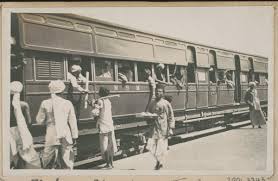
He responds with what he knows: “My grandfather and grandmother came to Singapore on board a ship in 1900. They left Jullunder, Punjab, in 1899. By the time they reached Singapore, it was the end of 1900. They left to seek their fortune. They were from the farming community. My grandfather was only sixteen and my grandmother was about twelve. They were in transit in Penang for six months. They came to Singapore in 1901. Actually, it was all Malaya — Singapore was part of the Straits Settlement. They came to Singapore by train. Trains were just starting out. It was around August 1901.
Trains in Malaya
“My uncle was conceived during this journey. They halted in Singapore for only two or three weeks. My grandfather’s cousin was in Perak[2], in Malaya. So, he wanted to be with his cousin. His cousin had cattle. Most of the Sikhs were cattle farmers. They settled in Pahang[3], an area which eventually became a nuclear dump[4] for Australia. It is closed to public now. There was a stone that proclaimed the land was a nuclear dump when I went with my son a few years ago.
“My father moved to Singapore as his prospects were better here as a boxer. This is where he met my mother. I was born here. He actually met mum because my mother’s two brothers had invited her to come from Glasgow. My mother is Scottish, from an industrial background. Her brothers came to the Far East to make money. She finished her school leaving exams and came to visit her brothers during her vacation. She would go with her bothers to watch boxing, where she saw my father, the champ. She was only fifteen or sixteen. The next thing the brothers knew was she was pregnant with me.”
Jeswant Singh was popular with colonials. Kirpal Singh tells us: “Some Europeans saw him box and offered him a job then in the Base Ordinance Depot. This was the British Military camps in the Far East. There were three bases in Singapore: the naval base, Kranji and one in the South. He worked there for thirty years and retired after that. In 1972[5], after the final British withdrawal from Singapore, dad’s formal employment status ended. After that he just did odd jobs, ending up as a security guard, looking after the factories in Jurong, earning about two to three hundred dollars a month.”
Kirpal Singh spent his childhood with his grandmother and uncle. Before he started schooling, his father left him with his grandmother and divorced his mother in favour of a new bride. Dr Singh tells us the story of how he returned to Singapore: “I was basically in Perak with my grandmother. My uncle, who was the first Sikh to become a Christian in Southeast Asia, left home because his father gave him a beating for changing his religion. My uncle was an Anglican. His conversion saved him from the Great Depression as the clergy was very well looked after. From 1929 to 1933, the church looked after him because he was the priest in Seramban. My father was still young. My uncle was born in 1911 and my dad in 1923. My grandmother bore eighteen children. Five of the infants passed away before they were one month old. But thirteen survived. She passed away at 95… I knew when I left for my doctorate programme in Adelaide that that was the last time I would see her. I had a hunch and was crying on the plane. Six weeks later, I got a letter with the news of her death.”
He adds: “Dad was in not in a position to look after me. The responsibility fell on his brother William. His full name was William Massa Singh s/o Deva Singh. He had studied at the Ipoh Chinese school, topped the school, eventually worked as an insurance agent. He was very good in English. The principal of his school, a New Zealander, arranged for my uncle to move to Singapore. Then my father moved there too. Singapore was the metropolis even then. It was the centre of English education. Penang was the other one. In 1956, I was sent to Singapore from Perak on a train — a one-and-a-half-day journey to my uncle.”
His grandmother joined them within a few months as his uncle was, he says, “more interested in aiding Lee Kuan Yew get rid of the colonials. Lee Kuan Yew was a self-made man. He met Goh Keng Swee[6] and Rajaratnam[7] as students in England. They became buddies and wanted to move out of colonial rule and be independent.”
Then, how did a young child survive? Dr Singh tells us: “I used to earn my pocket money from age five six by watering gardens. I have had very interesting experiences. When I was in primary two, I used to give tuition to primary one students. With enough gumption, you can survive in this world.”
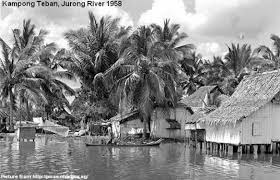
Kampongs in Singapore’s past
“I grew up with my uncle’s wards, who were brought home to be educated. There was even one who was a Chinese-Japanese mix. So, I grew up being familiar cross-cultural marriages and in a multicultural home. I grew up in the kampong with a Chinese boy and we became friends from the age of seven-and-a-half when we were in primary two. His name is Tan Jwee Song — I call him Jwee, ‘my good saint’. He told me after O-levels he would support me to study further and took to teaching. At that time, you could become a teacher after completing your O level. I joined Raffles late during my time in high school because it was too expensive for me. I taught in night classes started by Lee Kuan Yew and studied. I owed Jwee $80,000 dollars and I wanted to pay his widow back — but she would not accept it. When I graduated in 1973 with an honours’ degree, I was $44 thousand in debt. Then, I was given a scholarship.”
And slowly, Kirpal Singh came to his own. When television came into being, he tells us: “I was often on TV in 1970s — days of early television — debates and interviews as a guest.” Kirpal Singh grew into an intellectual of repute as he worked and studied with the support of the many races and many people who, often like him, were migrants to Singapore.
As time moves forward, these stories — that are almost as natural as the sand, the wind and the sea — ask to be caught in words and stored for posterity, stories from life that show how narrow borders drawn by human constructs cannot come in the way of those with ‘gumption’.
(Written by Mitali Chakravarty based on a face to face conversation with Kirpal Singh. Published with permission of Kirpal Singh)
A conversation with the author,Afsar Mohammed, and a brief introduction to his latest book, Remaking History: 1948 Police Action and the Muslims of Hyderabad. Click hereto read.
A conversation with Meenakshi Malhotra over The Gendered Body: Negotiation, Resistance, Struggle, edited by Meenakshi Malhotra, Krishna Menon and Rachana Johri and a brief introduction to the book. Click hereto read.
In His Unstable Shape, Rhys Hughes explores the narratives around a favourite nursery rhyme character with a pinch of pedantic(?) humour. Click here to read.
The big day will be here soon, tomorrow, to be exact. School life had been going on, dragging its feet. They say time flies when you are having fun. I do not remember having any fun, but it flew by anyway. Whenever I start thinking of the future, time seems to be ticking like a time bomb. There is so much uncertainty, and so much can happen. So, I tell myself to tread one day at a time. The best thing to do is not to think too far ahead. But then, that would make me no different from my father, would it not? Enjoy today of what is uncertain tomorrow.
Today is Sunday. The restaurant is closed after lunch. I have been helping out at an Indian restaurant near my house to earn some extra cash to pay for my school fees, the fees that my father refuses to pay. In his eyes, I am old enough to earn for the family, not draining from it. Money is always not enough.
I have some free time. As promised, I decide to meet up with Johnny to discuss some matters about the coming examination. I have not been feeling well for the past few days, with constant lethargy, malaise, body itch and muscle aches. I passed it off as the stress of facing one of my biggest challenges in life, the Middle Certificate Examinations.
As I walk towards Johnny’s house, I run my hand over the back of my neck to scratch. I thought I felt a small globule there.
“Oh no, is that something serious?” I ask myself. “Maybe Johnny can examine it for me.”
Johnny runs his hand over the area.
“Thamby, you have many spots like that over the neck and back. It could be smallpox that they are saying on the radio,” he says, “I think we better see our schoolmaster, Mr Peter. I know his house. He stays in the school compound. Let’s go.”
We race to our school master’s house. In no time, we are banging on Mr Peter Tan’s gate. Standing on his balcony, he acknowledges our presence. “Boys, what are you all doing here?” he says. “Johnny, your father isworried about your examinations. You better be at home, studying.”
“Sorry, sir,” I interject. “Mr Tan, I want to tell you something. I think I have smallpox.”
“What? Smallpox?” he implodes. “Thamby, you better go to the hospital and get yourself admitted. You cannot be walking around spreading the illness to every Tom, Dick and Harry that you see on the street!” he starts preaching. “You can sit for the exams next year, not this year, no way.”
“But, sir, I am all ready for the exams.” I object. “It’s not fair.”
The first thing that goes through my mind is working for another whole year all over again to pay another year’s school fees. I had to think of another way to sit for the public examinations I had been waiting for so long.
“I tell you what,” Mr Tan continues, “you check yourself into the General Hospital. I will talk to the Headmaster to get a refund for you. You go now.”
I am not going to throw in the towel so easily.
“Sir, can I sit for the test in the hospital?”
“No way, boy,” he exclaims. “In my ten years of experience, I have never heard of such a thing. If you are sick, especially with pox, nobody would dare come near you. Sorry, I can’t do anything!”
By now, I must be appearing like a nagging pain in the neck to my teacher, but like a rabid dog, I do not seem to let him go.
Upon my insistence, he tells me, “I tell you what. Try the good offices of the Director of Schools of Penang Island, Mr Ingram Bell.”
He, however, quickly adds, “He stays just around the corner, but don’t keep your hopes too high.”
With a heavy heart, I drag my feet to the living quarters of Mr Bell. Johnny and I stood at the gate after ringing the bell hanging in the corner. A thin and tall, moustachioed Indian man, who must be his servant, starts shooing us away from the premises. Our attires and appearances must have been out of character from the government quarters and its whitewashed walls.
In between the shenanigan of the coolie telling his employer that just some uninvited pests had shown up at the premises and his trying to get us just to buzz off, a muscular man with a build of a pugilist appears.
“What is happening here?” he asks as he looks toward us. “Who are you, and why are you here?”
Before the coolie could utter another sentence, I rushed in, “Sir, I am supposed to be sitting for my MCE tomorrow. They tell me I can’t sit for it tomorrow. They say I have to sit for it next year. I am from a poor family. I cannot afford to pay another year’s school fees…” I rattle on without catching a breath.
“Hold, hold on to your horses, young man,” he says. “Come in.”
“Mani, open the gate, let them in. And get some juices.”
He invites us to sit at the verandah. I tell him my whole life story in a single breath and end it with my dire straits of affairs. Mr Bell listens to the saga intently and looks up at the ceiling as I finish my story in a time that appears forever. Then, like looking for a flower to blossom, I waited with bated breath for his words of wisdom. Time stands still. I can hear my heart pounding. I think I heard a gecko chirping.
“Tambi, listen to what I have to say.” he finally vocalises. “You get admitted now. Take the treatment. Come tomorrow, I will make sure that you can sit for the examination. Trust me!”
With a heavy heart, I admit myself to the Penang General Hospital. Luckily, I have chickenpox, not smallpox, as I had dreaded. I have to be hospitalised anyway as per orders of the State Director of Schools. (gulp…!)
The night proves to be a very long one. The uncertainty of events of tomorrow and the febrility of the illness kept me wide awake. I did not want to be the one who slept through the examinations, though.
“Why me? Why now?” I keep asking myself. “Did I incur the wrath of Goddess Mariamman, the guardian of pox illnesses?”
Maybe the Gods are angry with me for not paying my respects to the Divine forces since Ma passed away. I have not gone to the temples for so long. But then, Ma used to be a loyal temple-going devotee who never missed her chance to perform penance, fasts and rituals. See how she turned out — stripped of her lifelong dreams of self-empowerment, entrapped in an awkward, unhappy marriage, afflicted with a deadly disease at a young age, suffering and dying in a gruesome manner, not seeing her offspring blossom to adulthood.
“Shouldn’t the divine powers at the level of a Creator, from the status of a Mother or Father, be protective, not vindictive, not demanding salutations and showing narcissistic tendencies to gloat in the joy of being feted by His parishioners?” I wonder sometimes.
Slowly, I conclude that I decide my fate, not the intergalactic planetary constellations of the stars. The philosophical labyrinth were so exhausting that I doze off eventually.
Dawn comes with the murmur of the hospital attendants and their paraphernalia. I wake up in a daze. I soon remember the events of the day before: the admission, the chicken pox and … Oh no! Today is examination day. My pulse raced. I run my hand over my neck, and I feel scores of fluid-filled blisters, many more than I had felt yesterday.
It had spread downward to my back and my limbs. I have an intense desire to scratch the lesions, but I know I am not supposed to do that. And the body aches and the fever have not subsided. I shower, pop in two Aspro fever tablets, eat the hospital breakfast and wait.
Is the Director of Secondary School going to live up to his words, or
were his words mere rhetorics to get rid of me and my poxed-self from his abode? I glance at the large Smith clock with the Roman numeral on the ward wall. It is 7 am. The first paper is due to start in two hours. What is it going to be? Am I going to sit for the test, or will it be another disappointment, just like the many uncertainties that had plagued my family? Every turn in my life seems to hit a dead end. Is there no future for me?
I decide to have a last-minute glance at my books before the reckoning, but it is only an attempt at futility. The butterflies in my tummy and the pulsatile gush of blood to my head are too disturbing. I keep glancing at the clock. Time ticks slowly. It is fifteen minutes before nine. The background murmur of the ward suddenly comes to a halt. Piercing the silence is the sound, rapid staccato of heels. I rush out of my quarantine.
The scene of neatly dressed shirt-and-tie-donning men walking across the medical ward is a sight for sore-eyes. They must be the education officers that Mr Bell had promised. I give out a sigh of relief. I feel like I have already done and passed the examinations. And guess who is moving in with them? It is none other than the pessimistic Mr Peter Tan who told me, in not so many words, to go back home and sleep off my chicken pox away and kiss my exams bye-bye. What is he doing here? He looks pretty pleased with himself, gleaming from ear to ear like Punch and walking in long strides to keep pace with a Caucasian man, probably an Education Department staff.
As if the wards are devoid of action-packed activities, everyone, the nurses, ancillary workers, and even patients, stop whatever they are doing to give full attention to the visitors who seem to walk in boldly even though it is not visiting hours. They must have been wondering what was about to happen. The Caucasian man stops in my room to ask, “Young man, are Nalla Thamby?”
I tried to vocalise, but my voice seems stuck. I clear my throat to give out a feeble whisper, “Yes, I am, sir.”
“We are from the State Education Department,” he rattled on. “We are here to supervise your MCE examinations in this hospital.”
A trail of busybodies flock around my room to quell their sense of curiosity. They must be wondering who in the devil’s name is this unassuming young boy who gets visits from Government officials! Pretty soon, they understand what is happening with all the desk arrangement, clocks, papers, ‘Exams in progress’ notices and the flashing of cameras by photographers. The tests progress without much fanfare.
The most amusing thing about this fiasco is what is reported in the next day’s newspaper. Mr Tan is pictured patting me on my shoulder, no more the persona of the day previously who shooed me like a bug from his compound. He is seen patting me in the part most visibly infected with pox vesicles, ironically. In his interview, he mentioned that he was instrumental in ensuring that I did not miss my papers, and it is unfortunate that I should be inflicted with this illness at such a wrong time. He boasted that he knew about my true potential and that I would turn out tops in the examinations. I also found out later that my seating of the Senior Cambridge examination in the hospitals was the first of its kind in the history of the state, and Mr Tan took all credit!
I smile to myself. It does not matter who takes the credit. The important thing is that I completed the examinations. Like what Mr Tan had predicted, the examination results proved to be in my favour. I was successful. The vesicles dried up fast enough but not the memory of this whole brouhaha and all. One thing that I learnt through this debacle is that you hold the reign to your future. Nobody owes you a living. What you want, you have to search for it. Perhaps the guardian angels are there to help me to think out the correct things at the fastest of times. Maybe all of Ma’s prayers played a role too.
.
Farouk Gulsara is a daytime healer and a writer by night. After developing his left side of his brain almost half his lifetime, this johnny-come-lately decided to stimulate the non-dominant part of his remaining half. An author of two non-fiction books, Inside the twisted mind of Rifle Range Boy and Real Lessons from Reel Life, he writes regularly in his blog Rifle Range Boy.
.
PLEASE NOTE: ARTICLES CAN ONLY BE REPRODUCED IN OTHER SITES WITH DUE ACKNOWLEDGEMENT TO BORDERLESS JOURNAL
Migrant stories of yore from Malaysia by Farouk Gulsara
“There she goes again,” thought Saraswati as she cut vegetables she had never seen in her native country. “Here goes Ah Soh cooking her stinky dish again.”
Ah Soh with Nand Lal, Sarawswati’s son.(Photo taken circa the early 2000s).Courtesy: Farouk Gulsara
Saraswati, Ah Soh and the rest of the pack are people commonly called fresh off the boat. They hail from various parts of China and India.
The loud beating of a metal ladle against a frying pan, accompanied by the shrilling Chinese opera over the radio and her shrieking at her children, need no guessing whose kitchen ‘aroma’ is coming from. Everyone knows Ah Soh is frying belacan, a fermented Malay shrimp paste.
A house in the New Village (Photo taken circa the early 2000s). Courtesy: Farouk Gulsara
Ah Soh is Saraswati’s immediate neighbour in a New Village in Ipoh. Ah Soh, by default, is the self-appointed leader of the pack. Since she is one of the oldest occupants of New Village, she leads the group of housewives, all living along the same row of single-story wooden houses. These houses were the brainchild of the British when they wanted to keep the communist at bay in the 1950s. More than ten years into its inception, the houses are still strong and are a catch for many newcomers to Malaya.
Ah Soh and her husband, Ah Leong, hail from Canton, China. Escaping poverty and famine, Ah Leong scrapped the bottom of the barrel to buy himself a one-way ticket to Singapore in the early 1950s, then an up-and-coming international port, to try his luck.
After trying a few odd jobs here and there, Ah Leong heard of an opening in newly opened tin mines in Ipoh. He made a dash for it and found Ipoh and the work he liked. Soon, he saved enough cash and paid an agent to bring over the newly married wife that he left behind in China. Ah Leong, Ah Soh and later, their two young daughters develop roots in the New Village.
Life was no bed of roses for Saraswati either. Losing most of her family members to famine, a 13-year-old Saraswati was bundled off to a distant relative’s house in Bihar. Saraswati is pretty sure she was sold off to work as a maid, as she scrubbed and cleaned from dawn to dusk.
Lady Luck manifested most peculiarly. Saraswati was labelled bad luck when many mishaps hit her new family soon after joining them. One of the kids died of diarrhoea, and a big branch of a peepal tree growing in the compound fell on the house, destroying the roof. So, when the family heard of an elderly widower looking for a suitable bride, Saraswati was bundled off yet again.
Hence, Saraswati’s next phase of life started with her boarding a ship, S Rajula, from Calcutta to Penang, Malaya. She spent an entire month suffering from motion sickness, not only from the ship’s motion but by the various smells of people and their cooking. Starting life as a complete vegetarian, by the time she arrived in Malaya, after overexposure to a plethora of aromas and sights, she had garnered enough courage to taste various types of meat.
So, Ah Soh’s pungent belacan was tolerable to Saraswati’s smell buds, even though she hails from the Hindi heartland where, by design, everybody in her community was vegetarian.
Saraswati’s husband, Lal, had his own tale of melancholy. After losing his family to famine, he became an orphan and a guardian to his 12-year-old sister. With much difficulty, he somehow, doing odd jobs, managed to sustain his little family to adulthood. He was in the marriage market after getting his little sister happily married off. Unfortunately, three months into his marriage, the young bride succumbed to tuberculosis, then a deadly death sentence to anyone. Even the President of Pakistan had died of TB.
Nursing a heartbreak, he heard the news that some people he knew were going to try their luck in Malaya. The talk around town was that Malaya, the land of milk and honey, was the darling was the Empire and had great job opportunities. So that is how he landed in Malaya.
Again, after doing whatever work that came by, he landed in a more secure job washing the British Army’s dirty laundry in a camp in Ipoh. Cleaning, starching and ironing kept him busy, but he was happy for the first time. With money in his pocket and regular meals to look for, he ventured out for humble accommodation. That is how this New Village house came about.
He returned to his hometown in Bihar, India and got a bride for himself. So, here he is, with his second wife, Saraswati, and two young boys.
The New Village is a melting potpourri of people escaping from famine and depravity. If in the 1950s, this place protected the country from communist threat, in the 1960s, it was a pillar of hope for displaced people to start life anew.
Ah Soh had her kind, who hailed from China, and Saraswati had hers hail from various parts of India. It is incredible that despite the skirmishes between the two countries, they were bosom buddies here. These economic immigrants soldiered on, straddled in unfamiliar circumstances, struggling towards an uncertain future with zest in their chests and youth in their limbs. They go on to build their camaraderie, work, mingle, and live in harmony. Graduating from convenient sign language, they have now mastered the art of communication. Like how a cat would communicate with a dog in an adverse situation, such as absconding from the animal catcher, they cling to each other desperately as they go on with life.
Saraswati’s new home gave them, the newcomers, a simple language that contained many Chinese and Indian words to use. Language or no language, they were still able to communicate and fulfil each other’s needs. If one person from one part of China or India could not connect with a fellow compatriot, here they had a motley crew of economic migrants from these countries speaking, eating and looking out for each other.
Lal’s contract workers took him to various towns and kept him away from the family for months. An illiterate Saraswati with only street smartness skills would go on to manage the children and household on her own. With the convoy of housewives from New Village, Saraswati would do her marketing and grocery. Pointing and making gesticulating would constitute making an order, and hawkers were honest enough to return correct change. Slowly, she began to develop a liking for Chinese food.
Monthly grocery was by credit, and things were obtained from Ah Meng’s sundry shop, packed to the brim with everything under the sun. Lal would pay the bills at the end of the month as he returned from numerous contract jobs.
Besides her Chinese neighbours, Saraswati had neighbours from Punjab, Tamil Nadu and Andhra Pradesh. Ajit Singh had a few dairy cows at the back compound of his house. From Ajit, Saraswati and her children had an uninterrupted supply of fresh milk.
R-L: Shobha(Saraswati‘s daughter) , Ah Soh(by then in her early 70s), Meela (Sarawati’s daughter), Saraswati and Kamala. (Photo taken circa the early 2000s). Courtesy: Farouk Gulsara
Two doors away from Saraswati’s house was Kamala’s. It was always a hive of activities from day to night. Kamala had so many children that Saraswati had lost count. People came and went as if it were the marketplace, and their main door was always open. There were always people singing, dancing or simply yakking there.
Ah Soh’s house was next to Devi’s house. Her household was loud, too, at the end of the month, but for a different reason. Devi has five children to show for her seven years of marriage. Her husband, a postman, also had something to offer, a mistress. Somewhere along the way, he picked up drinking, and his frequenting at the local liquor shop introduced him to a dancer. It was a routine that at the end of the month, as everyone received their pay, the neighbourhood would be filled with much noise; the clanging of kitchen utensils from Devi’s, music from Kamala’a and shuffling of mahjong tiles from Ah Soh’s front porch. Devi’s family quarrel noise over money got buried over the rest.
Saraswati has been feeling easily lethargic these days. She realises that her monthlies have been delayed. Her husband’s monthly visit has been productive. She now has to get used to the idea that there will be an addition to the family.
Maybe it is the pregnancy; she is getting a little pensive these days. She sometimes reminisces about the life that she had. Uprooted from her family by the forces of nature, she started a life as a child labour. Because of superstition, she was packed off again into marriage. Driven by economic hardship, she and her husband crossed the dreaded Black Waters to try their luck in a new land.
From an illiterate teenager, now she has morphed into a woman who could command leadership in her circle of friends and care for her family. From a meek non-adventurous vegetarian, she has savoured all meats and dishes, some of which her ancestors would have never dreamt of tasting.
She wonders what the future holds for her, her husband and the three kids she will raise to adulthood in this independent young country called Malaya as it crawls into the mid-1960s.
The foreground: Rohan, Saraswati’s grandson. In the background, Kamala’s son, Raja, in deep conversation with Nanda Lal and Shobha (Saraswati’ kids). The same house they all grew up in, albeit the extensions and refurbishments. (Picture taken circa the early 2000s) Courtesy: Farouk Gulsara
.
Farouk Gulsara is a daytime healer and a writer by night. After developing his left side of his brain almost half his lifetime, this johnny-come-lately decided to stimulate the non-dominant part of his remaining half. An author of two non-fiction books, ‘Inside the twisted mind of Rifle Range Boy’ and ‘Real Lessons from Reel Life’, he writes regularly in his blog ‘Rifle Range Boy’.
.
PLEASE NOTE: ARTICLES CAN ONLY BE REPRODUCED IN OTHER SITES WITH DUE ACKNOWLEDGEMENT TO BORDERLESS JOURNAL
A HABITATION OF ONE’S OWN

(i)

His journey began
with a seed of hope,
an unwavering resolute
to seek new opportunities.

                Tossed on a sea
caught between two land masses,
a small soul
lurching towards a dark land.

Greeted on land by few, familiar faces
his hungry belly needed feeding
and work to provide a roof,
shelter from sun and rain.

                     *
Daytime sweat saving dollars
to return home one day
to buy land
build a house, raise a family.

The journey home,
constantly deferred,
soon blurs
familiar family faces.

News from home
arrives with newcomers
few and far between.
Scant and sketchy.

Life takes a new turn
and begins to take root
in the once harsh
friendless, orphaned land.

               *
The years pass on,
the world encroaches
upon little lives with
deaths and disappearances.

A sudden change of masters
abandoned by the white man
terrorised by Japanese swords,
heads on stakes.

Survived to hear shouts of “Merdeka”!
gave little cause for rejoicing
received a red identity card,
labelling him a foreigner.

(ii)

His labour,
faith in his God,
hope for his children
remain resolute and unyielding.

The change of masters
has meant little for his lot,
still second-class citizens
meted out meagre morsels.

The land that had drawn
the father now pushes
his children away,
to seek new shores.

They now depart
to distant lands,
leaving father and mother
like their father once had.

(iii)

Tirunelveli
Madras
Penang
Kuala Lumpur
Malaya
Malaysia

All the places
my father passed through,
then resolutely remained
refusing to return.

Now he lies in Cheras,
at final rest, all labours done
in Malaysian soil
with a blue identity card.

(First published in  ‘Life Happens’, Petaling Jaya, Maya Press, 2018)

NEW ARRIVALS

You now arrive
on wings of hope
small bands of brothers
leaving behind kinfolk.
Budding youth
soon to be savaged
in this land.

Like you,
my father and uncles
once made that journey.
Different routes,
not similar conditions.
Same hopes, not of wealth
but to mete out
a life for themselves.

Decisions made to leave
home and village
on a single-way passage
unclear destinations.

Their long journey
many decades ago
tossed and turned
on unkindly seas.

The sight of land
through sea-sick eyes
gave little comfort,
knowing that another journey
was set to begin
with no preparation
on touching land -
the promised Malaya.

Now, you arrive
over land and by air,
fatigued and clueless.
A piece of paper
in your hand
holding hope and despair
Like so many before you.


(First published in  ‘Life Happens’, Petaling Jaya, Maya Press, 2018)

THE OTHER CHILD

As the candles on his thirteenth
birthday cake were blown out,
so ended a dear dream.

Unlike his freshly minted teenage friends
he is labelled different.
Losing the camaraderie of childhood friends,
set aside as a refugee.
A word he would hear more and more.

He too was born in this land.
Sang Negaraku* every school week,
the last six years.
Now those doors he yearned for
are closed to him.

His parents are silent.
They have no answers.
They say: Be patient.
God will answer our prayers.

I have not changed overnight.
But they see me different now.
My sun-filled school days now grey.
I now wait for my father
with news of a new school,
among others sharing a similar fate
born in this land
but still a refugee.


*Malaysian national anthem

(First published in Rambutan Kisses, 2022)
Malachi Edwin Vethamani is a poet, writer, editor, critic, bibliographer and Emeritus Professor at University of Nottingham. His publications include: Rambutan Kisses (2022), The Seven O’clock Tree (2022) and Love and Loss (2022), Coitus Interruptus and Other Stories (2018), Life Happens (2017) and Complicated Lives (2016). His individual poems have appeared in several literary journals and anthologies. His edited four volumes of Malaysian poetry in English. The Malaysian Publishers Association awarded Malchin Testament: Malaysian Poems the National Book Award 2020 for the English Language category. His collection of poems Complicated Lives and his edited volume of poems Malaysian Millennial Voices were finalists for the National Book Award 2022 for the English Language category.
PLEASE NOTE: ARTICLES CAN ONLY BE REPRODUCED IN OTHER SITES WITH DUE ACKNOWLEDGEMENT TO BORDERLESS JOURNAL.
Malaysia is said to have been inhabited 40,000 years ago by the same tribes who populated the Andamans. Situated on the trade route between China and India, they assimilated varied cultures into their lore, including that of the Arabs. Phases of colonial occupation by the Portuguese, Dutch and British wracked their history from 1511. They suffered from Japanese occupation during the Second World War. The Federation of Malaya achieved independence after a struggle on 31st August 1957. In 1963, the British colonies of Singapore, Sarawak and North Borneo were combined with Malaya and the country was rechristened Malaysia.
In 1965, Singapore was voted out due to ideological reasons, some of it being racial and political. This Partition was free of political bloodshed or violence between the two countries, unlike the earlier Partitions within Asia which led to much violence and bigotry — India, Pakistan and North Korea and South Korea (where the split along the 38th parallel was initiated by the West post-Second World War to settle matters between the ideological blocks of communism and capitalism).
Malaysia continues a federal constitutional monarchy with a Sultan and an elected Prime Minister at the helm and has a mixed population of Malays (Bumiputera), Chinese, Indians, Portuguese and other ethnicities. We present a selection of writing from this country, put together on the occasion of their 64th independence day, also known as Hari Merdeka or National day.
Poetry
Benderaku(My Flag) by Julian Matthews. Click here to read.
Singapore is a tiny country connected to the bigger land mass of Malaysia with two causeways. It started out as a small island inhabited by pirates and legends. Sir Stamford Raffles (1781-1826), a British East Indian administrator, thought it strategic and relocated some of the trade routes through the island. Migrants from many countries merged here — some looked for a better life and some served as coolies and prisoners of the colonials. When Malaya threw off the colonial yoke in 1963, Singapore continued part of the country till it gained sovereignty in 1965.
Lee Kuan Yew, the first Prime Minister envisioned a multicultural society where people of different cultures lived as one people. He said in one of his moving speeches in 1965: ” We will prosper, and a multi-racial society will take roots here. And it will do so because when you don’t allow people to play communalism, or racial bigotry, or religious bigotry, you breed an atmosphere of tolerance.”
Fifty-six years later, Prime Minister Brigadier Lee in his National Day speech clearly took the bull by the horns and said, while social media highlights the negative altercations of race and religion, it fails to highlight the positive ones. “Many more happy interactions happen every day but these seldom go viral.” He added these were values that needed to be reinforced with every passing generation. Read to find out what some Singapore residents feel about the outcome of Lee Kuan Yew’s vision, not just of race and religion but of living in a city state which hopes to continue as ” one united people“.
Fifty-six years down the line, eminent academic and litterateur, Dr Kirpal Singh, comments on the dream of the first Prime Minister of Singapore. Click here to read.
Marc Nair, a multifaceted artiste who moves from photography to writing to music with equal elan, reflects on life in Singapore. Click here to savour his work.
A recent immigrant, Aysha Baqir takes us through the flavours of life here on the tiny island during the lockdown. Click here to read.
The island state continues a home for many immigrants — some came early and some late. As a first generation immigrant, to me the little red dot is Asia’s gateway to the rest of the world. I enjoy its sand and seas very much. We conclude our ensemble with a little poem to the green islet that nestles between the Indian Ocean and South China Sea rippling with notes of harmony…
Anointing with Love
By Mitali Chakravarty

Listen to the swish of the waves.
Feel the breeze whisper caresses.
See the mangroves stretch

their roots above the ground,
in a siesta during lazy sunrises
and sunsets. Murmurs from the

ocean come wafting as
coconut fronds sing in the
fringes where the sand

welcomes the surf. It is a
party at the beach with
differences woven to

harmonise into a melody
sung in tune. A crescendo
that anoints with love.


First published in Daily Star, Bangladesh
we are known globally
as a nation of multi-cultures
but we are united as one people.

not an easy goal to realise
knowing how differences divide
and make unity problematic.

-- Reaching Out... Kirpal Singh, 2021
Kirpal Singh is a poet and a literary critic from Singapore. An internationally recognised scholar whose core research areas include post-colonial literature, Singapore and Southeast Asian, literature and technology, and creativity thinking, Singh has won research awards and grants from local and foreign universities. He was one of the founding members of the Centre for Research in New Literatures, Flinders University, Australia in 1977; the first Asian director for the Commonwealth Writers’ Prize in 1993 and 1994, and chairman of the Singapore Writers’ Festival in the 1990s. In 2004, he became the first Asian and non-American to be made a director on the American Creativity Association’s board. He retired dean of Singapore Management University.
Singh was born as a part of Malaya in 1949 to a father of Sikh descent and a Jewish-Scottish mother. He lived through three regimes in this part of the world: colonial, Malayan and Singaporean. His poetry is perhaps what best tells us about his faith in the little island state that came to its own in 1965. In this interview, he shares his life story with us, the last being a huge donation of books that he is making to the National Library of Singapore – a donation of 3,000 books collected over decades.
You are an academic, critic and writer who stretches out across SE Asia. When did your ancestors move to Singapore from India and why?
My paternal grandparents moved to Singapore from Punjab in 1901. They came to the then Federation of Malaya in search of a better life.
You have never lived in India but shuttled between Singapore and Malaysia. Probably at that time it was all part of Malaya. Can you recall Singapore/Malaya during your childhood?
Yes, though born in Singapore in March 1949, I was taken back to be with my dadiji (paternal grandma) in Malaya when I was two months old. However, I was brought back to Singapore when I was seven to begin school. My grandparents thought Singapore was a better place to receive an English education.
Your mother was Scottish and father, an Indian. What languages did you grow up speaking? What language is most comfortable for you to write in?
I grew up speaking bits of Punjabi, Malay and, of course, English. In my teenage years I also picked up some Chinese dialects. Though I did study Mandarin in school, I am not too good at it. I can only speak a smattering of it. I am most comfortable writing in English.
You have seen Singapore move from infancy to its current state. Can you tell us what this journey has been like?
It has been an astonishing journey. When I was young-preschool age — Singapore was a British colony. In 1963, Singapore joined Malaya to become part of a new entity then known as Malaysia. However due to basic differences, Singapore pulled out of Malaysia and became an independent, sovereign nation in August 1965.
You are an academic who retired dean of Singapore’s major management institute. And yet, you write poetry. Can you tell us a bit about your journey?
At the then newly established Singapore Management University which I was invited to join as Founding Faculty in 1999, I was told to introduce Creative Thinking as a new mandatory module for all undergraduates. I helmed this exciting and new programme for ten years. SMU was the first University in the world to make Creative Thinking a compulsory course for all undergraduates. Sadly in 2010 this was made optional.
You have a huge collection of books —25,000. How long has it taken you to collect these books?
It has taken me more than 50 years.
Tell us a bit about your book collection. What are your favourite books?
My collection is eclectic. Most of my books, however, belong to the humanities, and within this, most belong to the literary genre. I loved reading from a very young age (being alone at home, reading brought me solace and also knowledge). Among my favourite books, the tragedies of Shakespeare and Sophocles feature prominently. Some 20th century books (those of D H Lawrence and Aldous Huxley in particular), I value tremendously. I should also add that I have been very blessed to have met many of the more well-known/established writers of the 20th century and blessed to have been given signed copies by these wonderful authors: among them Doris Lessing, William Golding, Brian Aldiss, and numerous others.
Did your reading impact your writing?
Quite naturally, yes. I think it’s hard not to be affected by what one reads when it comes to one’s own writing. Even with writers who consciously try to ensure that no clear influences obtain, critics have frequently found far too many disguised references not to infer which authors influenced those writers.
Recently, you made an announcement that you will donate 3,000 books to promote love of reading in Singapore. Do you think donating these books will be enough to make book lovers of non-readers?
I doubt if the mere act of donating will create readers. However, I feel that having a few thousand additional books in a library will, hopefully, draw at least the attention of a few readers and maybe among these will be new readers.
Most people read bestsellers. What do you think will attract more to appreciate literature like EM Foster, DH Lawrence, and Coleridge?
Yes, in the age of commercialisation, classic writers may not obtain immediate readership– hence schools and colleges/universities play a vital (and necessary) role to ensure that our graduates are educated– at least minimally– in the works of writers who helped change and shape new sensibilities.







 Borderless