Meenakshi Malhotra writes of the diverse ways histories can be viewed, reflecting on the perspective from the point of view of water, climate, migrations or women. Click here to read.
Sometimes, we have an idea, a thought and then it takes form and becomes a reality. That is how the Borderless Journal came to be six years ago while the pandemic raged. The pandemic got over and takeovers and wars started. We continued to exist because all of you continue to pitch in, ignoring the differences created by certain human constructs. We meet with the commonality of felt emotions and aesthetics to create a space for all those who believe in looking beyond margins. We try to erase margins or borders that lead to hatred, anger, violence and war. Learning from the natural world, we believe we can be like the colours of the rainbow that seem to grow out of each other or the grass that is allowed to grow freely beyond manmade borders. If nature gives us lessons through its processes, is it not to our advantage to conserve what nurtures us, and in the process, we save our home planet, the Earth? We could all be together in peace, enjoying nature and nurture, living in harmony in the Universe if only we could overlook differences and revel in similarities.
A young poet Nma Dhahir says it all in her poem that is a part of our journal this month —
This is how we stay human together: by refusing the easy damage, by carrying each other without calling it sacrifice, by believing that what we protect in one another eventually protects the world.
Translations has more poetry with Professor Fakrul Alam bringing us Nazrul’s Bengali lyrics in English and Fazal Baloch familiarising us with beautiful Balochi poetry of the late Majeed Ajez, a young poet who left us too soon. Isa Kamari translates his own poems from Malay, capturing the colours of the community in Singapore to blend it with a larger whole. And of course, we have a Tagore poem rendered into English from Bengali. This time it’s a poem called ‘Jatra (Journey)’ which reflects not only on social gaps but also on politics through aeons.
Christine C Fair has translated a story from Punjabi by Lakhvinder Virk, a story that reflects resilience in women who face the dark end of social trends, a theme that reverberates in Flanagan’s poetry and Meenakshi Malhotra’s essay, which while reflecting on the need of different perspectives in histories – like water and nomads — peeks into the need to recall women’s history aswell. This is important not just because March hosts the International Women’s Day (IWD) but because one wonders if women in Afghanistan are better off now than the suffragettes who initiated the idea of such a day more than a century ago?
This time our non-fiction froths over with scrumptious writings from across continents. Tamara-Lee Brereton-Karabetsos muses on looking at numbers and beyond to enjoy the essence of nature. Farouk Gulsara ideates about living on in posterity through deeds and ideas. Gower Bhat shares how he learns story writing skills from watching movies. Meredith Stephens talks of her experience of a fire in the Australian summer. Bhaskar Parichha writes with passion about his region, Odisha. We have a heartfelt tribute to Mark Tully, who transcended borders, from Bhowmick. And an essay on Arundhati Roy’s memoir, Mother Mary Comes to Me, from Somdatta Mandal, which explores not just the book but also the covers which change with continents. Prithvijeet Sinha travels beyond Lucknow and Suzanne Kamata brings to us stories about her trip to Phnom Penh.
Keith Lyons draws from the current crises and writes about changing times, suggesting: “Changes aren’t endings, but thresholds.” Perhaps, if we see them as ‘thresholds of change’, the current events are emphasising the need to accept that human constructs can be redefined. I am sure a Neolithic or an Australopithecus would have been equally scared of evolving out of their system to one we would deem ‘superior’. Life in certain ways can only evolve towards the future, even if currently certain changes seem to be retrogressive. We can never correctly predict the future… but can only imagine it. And Devraj Singh Kalsi imagines it with a dollop of humour where tails become a trend among humans again!
Humour and absurdity are woven into a series of short fables by Hughes while Naramsetti Umamaheswarao weaves a fable around acceptanceof differences. In fiction, we have stories of resilience from Jonathon B Ferrini and Terry Sanville. Bhat gives us a story set in Kashmir and Sohana Manzoor gives us one set in Dhaka, a narrative that reminds one of Jane Austen… and perhaps even an abbreviated version of the 2001 film, Monsoon Wedding.
In reviews we have, Mohammad Asim Siddiqui discussing Anisur Rahman’s The Essential Ghalib. Rituparna Khan has written on Malashri Lal’s poetry collection reflecting on women, Signing in the Air. And Bhaskar Parichha has reviewed Deepta Roy Chakraverti’s Daktarin Jamini Sen: The Life of British India’s First Woman Doctor, a book that reflects on the resilience that makes great women. Thus, weaving in flavours of the IWD, which applauds women who are resilient while urging humans for equal rights for one half of the world population.
While we ponder on larger realities, Borderless Journal looks forward to a future with more writings centred around humanity, climate change, our planet and all creatures great and small. This year has not only seen a rise in readership and contributors — and the numbers rose further after our unsolicited Duotrope listing in October 2025 — but has also attracted writers from more challenged parts of the world, like Ukraine, Iran, Tunisia and Kurdistan. We are delighted to home writing from all those who attempt to transcend borders and be a part of the larger race of humanity. I would like to quote Margaret Atwood to explain what I mean. “I hope that people will finally come to realize that there is only one ‘race’—the human race—and that we are all members of it.” And I would like to extend her view to find solidarity with all living beings. I hope that there will be a point in time when we will realise there’s not much difference between, a lizard, a fly, a human or a tree… All these lifeforms are necessary for our existence.
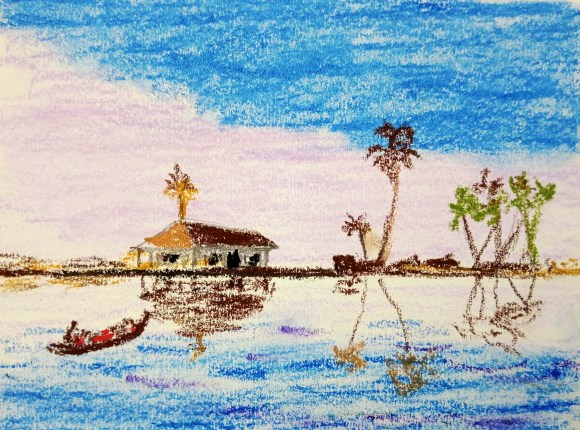
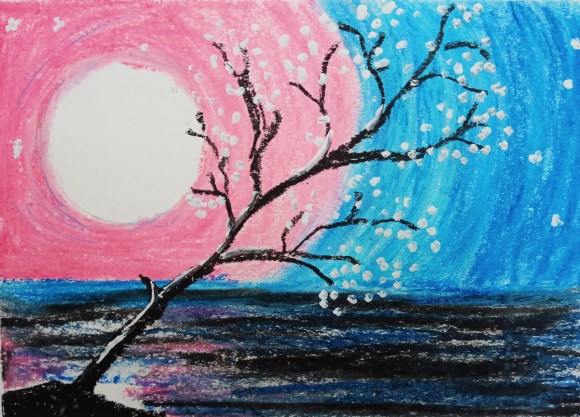
I would want to hugely thank all our team for stretching out and making this a special issue for our sixth anniversary and Manzoor for her fabulous artwork. Huge thanks to all our contributors and readers for being with us through our journey. Let’s change the world with peace, love and friendship!
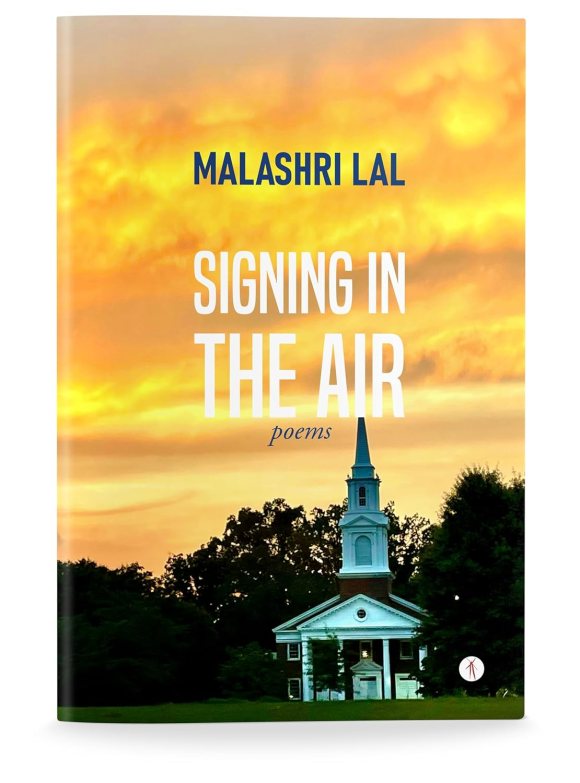
Signing in the Air, Malashri Lal’s second poetry collection, announces itself as a meditative, non-linear poetic journey from the very outset. A poet, academic and critic, Lal explains in her preface, there is “no linearity in such a theme,” and the poems move instead through cycles of time, memory, myth, and lived experience. The seventy-six poems converse with each other and portray her meticulous craftsmanship.
The collection draws deeply from the Indian concept ofritu — the six seasons — while simultaneously acknowledging the disruptions of climate change and modern dislocation. Nature in Lal’s poetry is neither sentimental nor static; it is capable of both “ravage and rejuvenation,” a duality that becomes central to the collection’s philosophical stance.
The poet’s voice resists fixity. The lyrical “I” is deliberately “timeless, generic author, reader, witness,” allowing the poems to transcend individual autobiography and become collective meditations on human and feminine destinies. This makes the book not merely confessional but contemplative, situating personal memory within wider cultural and ecological continuums.
The five sections of the book do not function as isolated compartments but intricately connected that speak to one another.
‘Whispers of the Earth’ foregrounds the elemental: trees, rain, seasons, and landscapes, yet avoids pastoral nostalgia. Lal speaks to nature rather than about it, creating an intimacy that acknowledges environmental fragility without moralising.
‘Installations’ shift attention to material culture and memory. Objects, such as, old books, domestic utensils, inherited artefacts become repositories of time. Lal’s reflection on ancestral possessions, such as the hamam or the dol[1] for washing clothes, raises radical questions: have women’s destinies changed as technology has advanced, or have only the tools evolved while labour and inequality persist?
‘Echo of Myths’ is one of the most resonant sections, reworking mythological figures like Lakshmi, Sita, and Radha not as static icons but as evolving subjects. Lal’s engagement with myth is neither reverential nor iconoclastic; it is dialogic. Myth becomes a living language through which contemporary women’s struggles, endurance, and resilience are articulated.
‘Meditative Missives’ carries a distinctly philosophical tone. Time dissolves into moments of stillness, and poetry itself becomes an act of contemplation. Lal explicitly frames the volume as possessing “a meditative streak weaving through it,” where mind and body interact to create “kaleidoscopic images” that search for form and vocabulary.
‘Women Who Wander’ brings the collection into the socio-political present. Drawing upon the idea of the flâneuse, Lal reimagines wandering as a gendered act—women moving through cities, histories, and emotional terrains. These poems reclaim mobility as agency and witness.
Lal’s language is marked by clarity rather than excess. Her metaphors are precise, often luminous, and grounded in lived experience. The imagery functions kaleidoscopically: fragments turning to reveal new patterns rather than fixed meanings. Light, shadow, seasons, and movement recur as motifs, reinforcing the book’s concern with impermanence and continuity.
A powerful example of Lal’s ethical and spiritual engagement appears in the opening poem, ‘Invocation: Devi Stuti – The Divine Feminine’. Here, the feminine divine is portrayed as both creator and destroyer, compassionate yet fearsome:
She, the feminine power creates as well as destroys…
Evil seems to flourish and goodness struggles
but She knows whom to vanquish
in the final reckoning.”
The poem moves beyond ritual praise to a contemporary plea, invoking divine protection against “violence, brutality, torture of the everyday woman”. This invocation sets the moral and emotional tone of the entire collection, anchoring the personal within the cosmic.
A recurring concern in Signing in the Air is hybridity of place, language, identity, and time. Lal reflects on her own transitions between Jaipur, Bengal, and Delhi, embracing what critics have described as her ability to be “at home in her multiple worlds, and an outsider looking in”. This tension enriches the poems, allowing them to speak across geographies and generations.
Memory functions not as nostalgia but as ethical inheritance. The poet’s recollection of her grandmother—an early graduate of the University of Calcutta—foregrounds women’s intellectual legacies often erased from public history.
The book cover is understated yet evocative. The image of a silhouetted tree against a luminous sky visually echoes the book’s thematic preoccupations: imprint and erasure, presence and absence, rootedness and transcendence. The title Signing in the Air is aptly suggestive, writing that leaves no permanent mark yet insists on meaning.
In terms of physical quality, the book is finely produced. The paper and layout are reader-friendly, lending dignity to the text without distraction. The careful structuring of sections and the inclusion of preface, acknowledgements, and critical blurbs enhance the book’s scholarly and aesthetic value.
Signing in the Air is a mature, reflective, and deeply humane collection. Malashri Lal writes with quiet authority, weaving together ecology, myth, memory, spirituality, and women’s lived realities. The poems resist closure, inviting readers into an ongoing conversation, one that unfolds across seasons, histories, and inner landscapes.
Ultimately, this is a book that does not shout but resonates. It affirms poetry as an act of witness, meditation, and ethical imagination: truly, as Lal suggests, a way of “scribbling in the empty air where intimations of spirituality and social truth coexist without definable boundaries.”
Odbayar Dorj writes of celebrating the start of the new school year in Mongolia and of their festivals around teaching and learning. Click here to read.
Naramsetti Umamaheswararao gives a story set in a village in Andhra Pradesh. Clickhere to read.
Feature
A conversation withAmina Rahman, owner of Bookworm Bookshop, Dhaka, about her journey from the corporate world to the making of her bookstore with a focus on community building. Clickhereto read.
The idea of spring heralds hope even when it’s deep winter. The colours of spring bring variety along with an assurance of contentment and peace. While wars and climate disasters rage around the world, peace can be found in places like the cloistered walls of Sistine Chapel where conflicts exist only in art. Sometimes, we get a glimpse of peace within ourselves as we gaze at the snowy splendour of Himalayas and sometimes, in smaller things… like a vernal flower or the smile of a young child. Inner peace can at times lead to great art forms as can conflicts where people react with the power of words or visual art. But perhaps, what is most important is the moment of quietness that helps us get in touch with that inner voice giving out words that can change lives. Can written words inspire change?
Our featured bookstore’s owner from Bangladesh, Amina Rahman, thinks it can. Rahman of Bookworm, has a unique perspective for she claims, “A lot of people mistake success with earning huge profits… I get fulfilment out of other things –- community health and happiness and… just interaction.” She provides books from across the world and more while trying to create an oasis of quietude in the busy city of Dhaka. It was wonderful listening to her views — they sounded almost utopian… and perhaps, therefore, so much more in synch with the ideas we host in these pages.
Our content this month are like the colours of the rainbow — varied and from many countries. They ring out in different colours and tones, capturing the multiplicity of human existence. The translations start with Professor Fakrul Alam’s transcreation of Nazrul’s Bengali lyrics in quest of the intangible. Isa Kamari translates four of his own Malay poems on spiritual quest, while from Balochi, Fazal Baloch bring us Munir Momin’s esoteric verses in English. Snehprava Das’s translation of Rohini K.Mukherjee poetry from Odia and S.Ramakrishnan’s story translated from Tamil by B.Chandramouli also have the same transcendental notes. Tagore’s playful poem on winter (Sheeth) mingles a bit for spring, the season welcomed by all creatures great and small.
We have good news to share —Borderless Journal has had the privilege of being listed on Duotrope – which means more readers and writers for us. We are hugely grateful to all our readers and contributors without who we would not have a journal. Thanks to our wonderful team, especially Sohana Manzoor for her fabulous artwork.
Hope you have a wonderful month as we move towards the end of this year.
Title: Silver Years: Senior Contemporary Indian Women’s Poetry
Editors: Sanjukta Dasgupta, Malashri Lal and Anita Nahal.
Publisher: Sahitya Akademi
Several centuries ago, women poets had to fight to be heard, their poems often dismissed as unworthy or mediocre. It is a testament to their determination, grace and sheer talent that today female poets are amongst the most celebrated and respected the world over. In India, pathbreaking women poets such as Toru Dutt, Sarojini Naidu and Kamala Das paved the way for more recent talents such as Eunice de Souza, Suniti Namjoshi and Sujata Bhatt. Of course, this list does not include the vast number of women poets writing in Indian languages ranging from Assamese, Bengali, Hindi, Malayalam, Punjabi, Tamil and Telugu to name but a few.
A recent anthology of poems by senior contemporary Indian women poets titled Silver Years, reflects the centrality of women in today’s Indian society. While elders have always been revered in this society, the overwhelming influence of western media has brought in a certain skepticism towards such traditions. In this context, it is refreshing to read these poems that showcase the maturity, resilience, humour and sagacity of these women. They offer their diverse perspectives on the experience of being an Indian woman, exploring changing societal attitudes to their place in the world, the dynamics of their social roles and the trauma and transcendence they encounter in their lives.
The poems in this collection are not just pretty words that pander to social expectations, they carry the weight of the experiences of fifty senior women poets who have lived rich and varied lives, working in their chosen fields and observing the radical transformation of the world around them. The common thread that runs through this anthology is the forthright tone and boldness of expression in the over 160 poems included. As women who have lived full lives, both in India and across the world, these poets never shy away from controversies, rather expressing with rare grace and tenderness what it means to be sixty plus and female in contemporary society.
The introduction to this volume is no less impressive than the poems. Jointly written by the editors of the collection, Sanjukta Dasgupta, Malashri Lal and Anita Nahal, the introduction traces the evolution of Indian women’s poetry in English, eloquently delineating the political and social challenges faced by women writing in English. Furthermore, the introduction also explores the impact of a deeply patriarchal culture on women in Indian society. The recasting of mythology to suit contemporary societal expectations also finds a mention as well as an emphasis on the voice, agency and power these poets claim for themselves through their poetry. Most significantly, the introduction underscores the resolve, resilience and charm of these sixty plus women, who erase with the power of their words the negativity and weakness associated with aging.
The poems in this anthology vary widely in style and theme, ranging from poems that reimagine gender and societal roles, to those that focus on the havoc wrought by humans on the environment. Perhaps understandably, in an anthology of poems by women poets over sixty, perspectives on aging are numerous.
Anita Nahal’s poem ‘We are the Kali Women’ is a searing condemnation of patriarchal oppression, casteism and discrimination based on skin colour. The poems refrain “Ma Kali. Ma Kali. Ma Kali. Don’t think she’s not watching” strikes a warning note to those hypocrites who are guilty of crimes against her followers while piously bowing before her image.
On a similar theme, but in an entirely different key, is the poetry of Lakshmi Kannan. This poet’s feminism is not overt, but the poems convey an effective message nonetheless. ‘Silver Streaks’ sets forth an idea that is common to many of the poems in the anthology, that senior women do not become less attractive as they age. Instead, this poem emphasizes the power of self-knowledge that maturity brings.
Malashri Lal’s poetry slides into the readers’ consciousness as smooth as silk. Replete with irony and layered with nostalgia, her minimalistic verse has a visceral appeal. ‘Book of Doubts’ evokes a sense of loss for the books one used to treasure. ‘Jaipur Bazar’ is almost like a haiku, conveying the beauty of an emerald and the heritage it encapsulates. ‘Kashmir One Morning’ contrasts the senselessness of sectarian violence with the Gandhian legacy of nonviolence. ‘Krishna’s Flute’, juxtaposes the mellifluous music of the flute and the dreaded coronavirus pandemic. One is associated with the certitude of faith that Krishna’s tunes represent while the other stalks the silent city leaving death and loss in its wake. This is elegant poetry, that does not shock for effect, instead gently evoking images that resonate in the reader’s mind.
Sanjukta Dasgupta’s poems focus on aging with honesty interwoven with humour. Her poems cut to the bone without any unnecessary sentimentality or understatement. Aging, for Sanjukta Dasgupta is an undeniable fact, she asserts that one has to accept the harsh reality of physical debility and the inevitability of death. The poet does not try to gloss over the signs of age, rather she sees them as a culmination of a life lived to the hilt.
The poem ‘When Winter Comes’, is a recasting of P. B. Shelley’s famous line ‘…when winter comes, can Spring be far behind’. The optimism of Shelley’s ‘Ode to the West Wind’ is contrasted with the reality of aging as Dasgupta notes:
In such an intimate Winter
No time
To spring back to Spring

Spreading its embrace….
Scripting a cryptic memoir
On every inch
From face to toe
The poem ‘Fall’ resonates with the repetition of the words ‘falling’ and ‘failing’, which sets the tone for the final descent “into everlasting rest”. The images used in these poems are at once concrete and fanciful, “the swan throat a tortoise neck now” with “countless rings of recorded time”. The poem “Crowning Worry” addresses the anxiety of aging:
Silver waved among blackened hair
Like flags of treachery
Flashing grin of metallic strands
This poem highlights the power of poetry to acknowledge the reader’s anxieties and ameliorate their lack of self-worth:
Black and blonde tresses howled
In low self-esteem, utter frustration
And massive bi-polar manic depression
As the Grey Gorgeous divas
Grinned and Glowed
Poems such as these emphasise the beauty of the older woman, whose youthful innocence may have gone, replaced by something finer, the beauty of self-assurance and poise.
Another significant theme among the poems is climate change and environmental degradation, the burning issue of our times. As mature adults who are aware that their legacy to future generations includes denuded forests, polluted rivers and oceans, arid landscapes and a rampantly consumerist mindset, these poets feel compelled to lament. The elegiac tone is prominent in many poems. Well-known poet from Northeast India, Mamang Dai celebrates the biocentric culture of the tribes of the region in her poem ‘Birthplace’. The poem ‘Floating Island’ also describes the harmony that exists between women and nature. ‘Earth Day’ by Smita Agarwal is another poem that focuses on the negative impact humanity has had on the environment.
The poems in this anthology reflect the changing status of women in present day society. The poets are successful women and their clear-sighted view of life reflects their wisdom and rich experience. Aging is not seen as degeneration, but an enlightened phase where the wealth of one’s experience makes for a perspective that is to be celebrated. The poets included herein write with skill, empathy and wisdom, showing readers the hidden nuances of life that are often overlooked in the heedlessness of youth. They are unafraid to boldly present their wrinkles and grey hair as signs of a new beauty, one that is bolstered by maturity and self-acceptance. Pathbreaking feminist Betty Freidan sees aging not as decline, but as a new stage of life filled with power and promise. Her famous quote “Aging is not lost youth but a new stage of opportunity and strength” emphasises her views on the fountain of age.
In these 143 poems, these poets have offered readers a fresh perspective on these new horizons, so that they can be viewed with compassion and a renewed appreciation for the felicities of life. Most significantly, these poems reiterate that the silver years are a time of hope and light that shines on the promise of fresh achievement.
.
Dr. Anita Balakrishnan is former Head, Department of English, Queen Mary’s College, Chennai, India. Author of Transforming Spirit of Indian Women Writers (2012) and contributor to the Routledge Encyclopaedia of Postcolonial Studies, ed by Sangeetha Ray and Henry Schwarz. Has published papers in national and international journals and reviewed books for The Book Review, Borderless Journal and others. Her interests include contemporary Indian Writing in English, Ecocriticism, Ecofeminism, Cultural Studies and Postcolonial studies.
.
PLEASE NOTE: ARTICLES CAN ONLY BE REPRODUCED IN OTHER SITES WITH DUE ACKNOWLEDGEMENT TO BORDERLESS JOURNAL
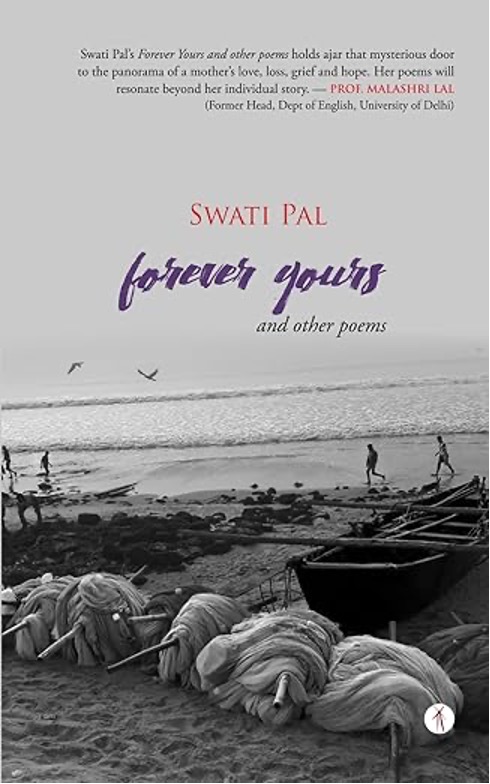
A discussion on writing to heal with Swati Pal, author of Forever Young and In Absentia, both brought out by Hawakal Publishers.
Swati Pal Swati Pal’s latest collection of poems
Strength is a badge
Worn by the bereaved.

(The badge of the bereaved)
Swati Pal is an accomplished academic, an able administrator, a much-loved teacher. But most of all she is a resilient mother. Her poetry glows with resilience. It’s honest and endearing… perhaps best described by these lines from John Keats’ ‘Ode to a Grecian Urn’: “Beauty is truth, truth beauty — that is all”. She writes poetry for her late son that makes one weep and feel with her.
If you hear a laugh
Wafting in the breeze
And floating around,
Know that it's me,
Your Diva, Mohan.

(Mohan whispered to me)
She finds him everywhere… he lives on for her.
I can still get
The scent
Of you,
Feel your tousled
Silky hair
And see it
Flying in the breeze.

(A Flower Called You)
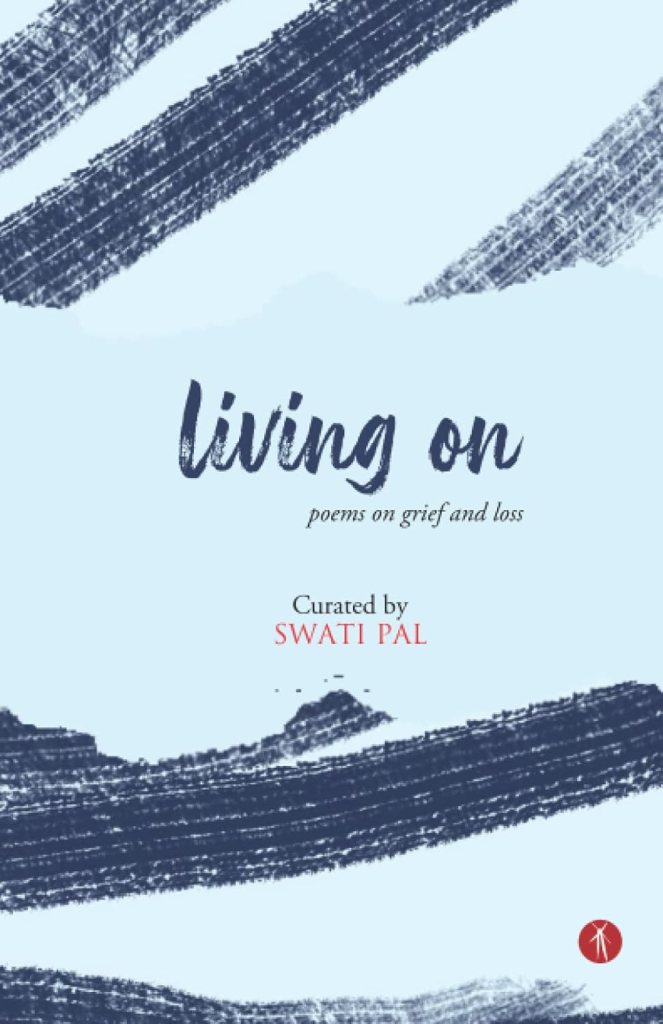
What is amazing is that she responded to her loss with a sisterhood, creating a group of poets from grieving women. She brought out with her sisters an anthology on loss, Living On (2022).
Anthology edited by Swati Pal and brought out by Hawakal Publishers
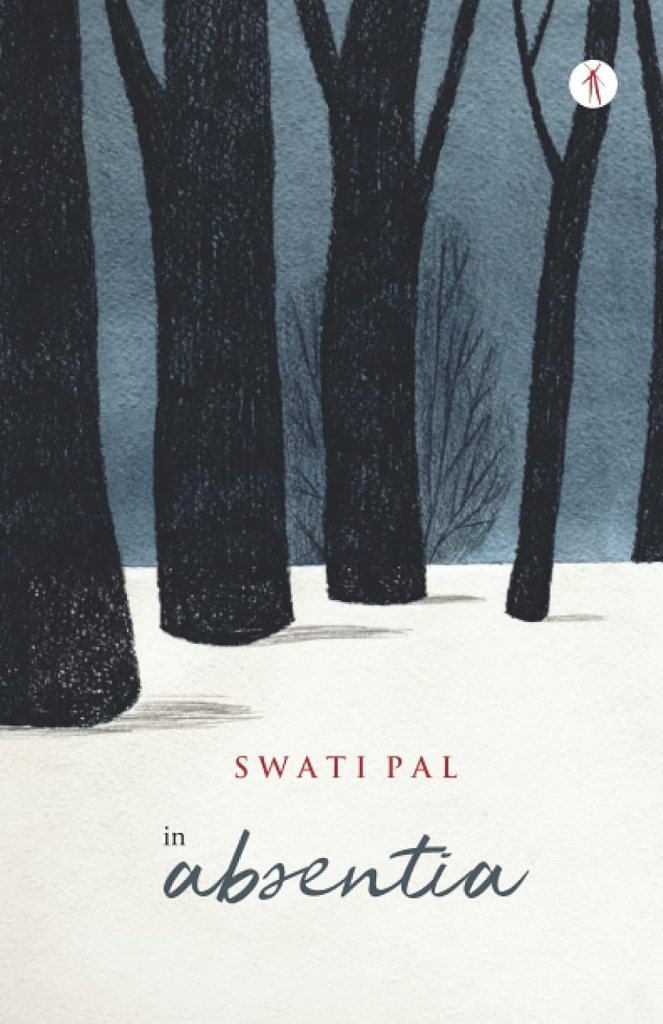
Overriding grief with love and action is tough. But that is something that seems to be woven into her earlier poems in In Absentia (2021) and in her most recent collection, which seems more stark, Forever Yours and Other Poems. As Professor Malashri Lal points out, they “resonate beyond her individual story”. Her poems capture the vastness of the universe with their love and longing. One doesn’t know whether to weep or wonder at the beauty that seems to emerge out of the poems — like a flower that blooms unfolding petal by petal. In this conversation, Swati Pal dwells on her journey of resilience and strength through writing.
When did you start writing poetry? What got/gets your muse going?
I was an oversensitive, expressive kid and teenager and went through the classic angst about life that such humans are prone to, I guess! I was complicated and tended to brood about everything with bouts of melancholia, most really genuine, but some a bit because at that age, it appeared to be most ‘romantic’! So writing was something that I turned to almost naturally and then to poetry by instinct. I used to read a lot of poetry actually and somehow was always captivated by the craft– the rhyme or the rhythm, the play with ideas and images, the words few yet saying so much; it was as if an entire universe existed in the poetic world. And I found the form beautiful, exacting and creative.
It helped too when Jayanta Mahapatra would select poems to be published in the Sunday magazine edition of The Telegraph, and he selected one that I dared to send! My vanity/pride was certainly boosted by what I considered a singular honour and the cheque for a small sum of perhaps 150 rupees (I forget the exact amount) was exciting to say the least– my first earning!
It was then the ideal way to deal with my own inner mess. If my morale was low(‘I am not beautiful’; ‘I can’t do this/ that/ or the other’; ‘So and so is better than me, I can never match up; ‘ Why can’t I have this/that or the other?’) and I was plagued by misery, I would write poetry; sometimes scathing stuff about people and life in scurrilous verse; sometimes light and hopeful like the dappled sunlight playing on the window sill to take my mind away from the negativity and escape into mostly the world of nature.
So poetry, even if it didn’t ever heal me or resolve my doubts and inner conflicts, calmed me. It kept me sane. It kept me rooted. So really, what has always got my Muse going is anything that moves me to tears – not necessarily about myself at all times but even a limping bleeding dog on the road, or a woman in rags and mentally unsound tearing her hair and crying; a leper sitting on the pavement completed dejected with life; pain, grief, loss — whether my own or anyone else’s, keeps my muse going.
Losing loved ones is tough. You dealt with poetry about your losses. How did you channelise your grief into writing?
As I said, I have always done so. Anything I found a hurdle, anything that caused me to be moved, anything that hurt my emotions or disturbed my peace, made me seek a companion — one I could pour my heart to. And seek I did! But misery, as they say has no bedfellows. Those I would vent to would get exhausted if the frequency of my exhortations became excessive (which they might have been). I think my emotional outbursts were fairly overpowering and sometimes the best of my friends and family would evade my searching them out, justifiably! But poetry. She never failed me. She was someone I could turn to in the dead of the night or the wee hours of the morning. She would let me rave and rant hysterically or in a fit of rage and tears and then equally quietly, let me rewrite when I was calmer, without remonstrations.
I lost my father when I was eighteen and it was terribly unfair as I had bided my time (the youngest of four siblings) to finally find my exclusive space in his dominion when poof! he was gone. And I was left feeling unanchored as suddenly everything became topsy turvy. That was the time I took to playing the clown at home, my mask ever in place, speaking ridiculous stuff and acting hilariously hoping that my behaviour could dispel the clouds of gloom that hung low over my home for a good many years after he died. And the more I played the clown, the more I longed to break free and scream out my rage and regret, my hurt at the void left by my father’s passing. In despair I turned to poetry and realised that working on making something beautiful, creating a pattern and a tempo with words, would somehow soothe my raging breast. It would stop me from being unhinged.
Since 2019, I when I lost my son, I lost sleep. And when I lie quietly on one side of the bed so that I don’t disturb my husband with my restlessness, I find myself turning to write poetry (on my mobile phone!) to keep me from holding my breath forever.
How did you form a sisterhood of women while dealing with your losses?
The sisterhood found me! I wanted to run away from everyone! To begin with, my sisters especially the eldest and the third, would come home every single evening those first few excruciating months when the loss made my life seem surreal and my physical self something I wanted to cast off. They would just sit with me; have a cup of tea and a snack they would bring along and chatter gently about the day. If I wept or screamed, they let me, clutching my hand tightly and saying things I shunned but which they spoke anyway. And in this way, through sundry humdrum things, they made the pain, the monumental grief, part of my every day. It is my three elder sisters who first helped me cross the bridge from being a mother with a living son to a mother of an angel with wings. There were others too, some friends since school days, a young sister-in-law, a niece, a young woman who is all but a biological daughter – whose companionship, whose concern in those early days, which soon timed with the Covid isolation, kept me afloat and were a balm to my soul.
And then one day a determined petite young lady was at my doorstep with food and her husband. She had heard about me from a relative, talked to me over the phone and tried to get me to agree to meet her and the support group of grieving mothers which I completely rejected as who on living earth ever wants to join such a group? But she was Radha– and my son is called lovingly, Mohan — and it had to be a Radha who would make me a part of In our hearts forever — a community of sisters and soulmates that are now an integral part of my life.
How can I forget my college students? The young girls with their starry eyes, sometimes brimming with tears when I mention Mohan, hugging me and making me smile with their crazy ways, their unbridled energy, their spontaneous affection — they were step sisters according to Mohan (he always complained that I loved his ‘stepsisters’ more as I spent more time with them!). This was and is a precious sisterhood. A special one.
This is only part of the reality. Lest it not be understood that the world is full of kind people and it is easy to form sisterhoods, I must hasten to add that I actually found, that some of those communities which I thought would form a sisterhood and be my support, turned out to be vicious, toxic and utterly cruel to me — they struck their blows of hatred and malice at a time when I was at my most vulnerable. I now know that I was such a naïve idealistic fool in my expectations! And finally, there were some men too who enabled me, two in particular and it would be so wrong to leave them out of my circle of hand holders.
What led to your anthology, Living On? Tell us a bit about the anthology.
It was Covid time and all my soulmates in the support group as well as myself were feeling desperate trapped withing the confines of our houses with our grief as our only companion. I could feel us all struggling. I suggested we do something to beat the blues and we would meet online with one person taking the lead to share something and make us do something together in a novel way.
I saw the blues being banished, at least for that time when were online. That made me feel I need to do more. That all my sister grief travellers needed to express their grief and shared the same wish as me: to make our child remembered. We were living on without our children, but our heart was nothing save a bleeding wound.
My first collection of poems had been In Absentia and obviously as the name suggests, it was about absence. It was about my Mohan. I knew now that I had to write about how I was living with that absence. I invited the support group members and others outside it who were also suffering from the grief of other losses such as parent/s to write if they wished. I wrote too. And thus, was created Living on — a chance for us to immortalise our loved one, as best as we could. I can only invite all to read it. It has photographs too of the lost ones. It is a truly moving book of recollection, a book of love. Those who wrote said that when they got the books in their hands, they were initially almost unnerved to see the words and pictures jumping out of the page. That they felt a great sense of achievement but also emotionally drained. All this was only to be expected. But it made us stronger, I think.
Has poetry drawn you closer to your sisters in grief?
Yes. They feel I speak for all of us. I know that I do.
How does writing help you cope with your loss?
It stops me from crossing that thin line between sanity and insanity, it gives meaning, at least for a while to my life which seems mostly irrelevant to me now.
You use lot of imagery from nature. It almost feels that you live with the loss all the time. And yet there is a sense of solace in your poems. Would you like to comment on that?
I breathe the pain and loss. It is not forgotten for a single second. Everything in nature reminds me of my son as we spent so much time together, including outdoors. The scent of the flowers in the breeze when we walked at night, the grass on the hockey field where I would time him as he prepped for the 100 meters race which he specialised in, the sound of the birds who Mohan was a bit wary of having been pecked a few times by the eagles and crows.
At first, Nature in fact hurt me as I could not renew myself the way nature does. I would be anguished and did not want to see the flowers blossoming or the squirrels running off the trees for food. But then I learnt that butterflies flitting around the house were a symbol of loved ones who had gone too soon and I began to look out for them. I learnt that feathers, especially pure white ones, were also a sign that our loved ones were hovering around. And that the rain falling on our faces is our loved ones communicating with us, crying with us. Nature does not provide me solace; nothing can and nothing will. But yes, I seek Mohan in nature.
You are a well-known academic and a principal of a college in Delhi University. Does that help in your writerly journey and to build your resilience? Please elaborate.
Well, it certainly makes me more resilient! The experiences I go through even when I battle so many things, do enable resilience, I guess. Writerly journey? I can’t say, I think everything that touches our life shapes the way we think and respond. Including the profession we have. And it is bound to enter into all our communications, including writing.
Would you have turned to poetry if you did not face losses in your life?
Yes, I love it as a form. It stirs me.
Do you plan to experiment with other genres?
Yes, I have already started with short story writing. And within poetry too, I have experimented with modes– trying my hand at Haiku and the tanka.
Do you have any advice for people dealing with loss and looking for resilience?
Clean a cupboard. Seek out people– the more they run away, chase them harder and insist that they cannot leave you alone, that you need them. In other words, do things that bring beauty even through simple acts (writing poetry is just one of the many alternatives; you could equally, scrub the floors!)
People your life. Don’t wait for it to be peopled. Be noisy, without any shame in demanding attention– sometimes people assume you might want to be left alone — let them know that you don’t want the aloneness, that you don’t want to further lose your identity (loss does that you know. When I lost my son, I felt, and still do, that I no longer have any identity). And I have asked myself this question regularly– do I want my son to recognise me for the woman he left on earth? If so, I must keep that woman as alive as possible, even if it kills me. For what would we not do for a great love? I advise young people to tell themselves this when they deal with loss– it will build resilience if nothing else will.
.
(This online interview has been conducted by Mitali Chakravarty)
About the Book: “The deafening silence of a loved one’s absence turns the poet into the eternal Ma enduring separation. Swati Pal’s poetry also straddles the particular to the universal theme of grief and loss and symbolically suggests compassionate ways of healing the pain … Swati Pal’s Forever Yours and Other Poems holds ajar that mysterious door to the panorama of a mother’s love, loss, grief and hope. Her poems will resonate beyond her individual story.” — Prof. Malashri Lal (Former Head, Dept of English, University of Delhi)
About the Author: Swati Pal, Professor and Principal, Janki Devi Memorial College, University of Delhi, is a Fulbright-Nehru fellowship scholar, a Charles Wallace scholar and the first Asian scholar to receive the John McGrath Theatre Studies Scholarship at Edinburgh University. Author of several books on theatre, creative and academic writing, her newspaper articles articulate her views on education. Her areas of research interest include performance studies and cultural history. She translates from Hindi to English and several of her translations have been published. She writes poetry and her poems appear in several anthologies; she also has two collections entitled In Absentia and Forever yours and a curated collection called Living On. She is the Vice Chair of the Indian Association for Commonwealth Literature and Language Studies and has been the recipient of several national and international awards, both as a teacher as well as an administrator.
Drops of water gather to make a wave. The waves make oceans that reshape land masses over time…
Five years ago, on March 14th, in the middle of the pandemic, five or six of us got together to start an online forum called Borderless Journal. The idea was to have a space that revelled with the commonality of felt emotions. Borderless was an attempt to override divisive human constructs and bring together writers and ideators from all over the Earth to have a forum open to all people — a forum which would be inclusive, tolerant, would see every individual as a part of the fauna of this beautiful planet. We would be up in the clouds — afloat in an unbordered stratosphere— to meet and greet with thoughts that are common to all humans, to dream of a world we can have if we choose to explore our home planet with imagination, kindness and love. It has grown to encompass contributors from more than forty countries, and readers from all over the world — people who have the same need to reach out to others with felt emotions and common concerns.
Borderless not only celebrates the human spirit but also hopes to create over time a vibrant section with writings on the environment and climate change. We launch the new section today on our fifth anniversary.
Devraj Singh Kalsi with a soupçon of ironic amusement muses on humans’ attitude to the fauna around him and Farouk Gulsara lays on a coating of sarcasm while addressing societal norms. Meredith Stephens brings us concerns for a green Earth when she beachcombs in a remote Australian island. Prithvijeet Sinha continues to familiarise us with his city, Lucknow. Suzanne Kamata, on the other hand travels to Rwanda to teach youngsters how to write a haiku!
Professor Fakrul Alam takes us to libraries in Dhaka with the hope that more will start writing about the waning of such paradises for book lovers. Other than being the month that hosts World Environment Day, March also homes, International Women’s Day. Commemorating the occasion, we have essays from Meenakshi Malhotra on the past poetry of women and from Ratnottama Sengupta on women in Bengali Cinema. Sengupta has also interviewed Poulami Bose Chatterjee, the daughter of the iconic actor Soumitra Chatterjee to share with us less-known vignettes from the actor’s life. Keith Lyons has interviewed Malaysian writer-editor Daphne Lee to bring to us writerly advice and local lores on ghosts and hauntings.
We also have a translation by Lourdes M Supriya from Hindustani of a student’s heartrending cry to heal from grief for a teacher who faced an untimely end — a small dirge from Tanvir, a youngster with his roots in Nithari violence who transcended his trauma to teach like his idol and tutor, the late Sanjay Kumar. With this, we hope to continue with the pandies corner, with support from Lourdes and Anuradha Marwah, Kumar’s partner.
Borderless has grown in readership by leaps and bounds. There have been requests for books with writings from our site. On our fifth anniversary, we plan to start bringing out the creative writing housed in Borderless Journal in different volumes. We had brought out an anthology in 2022. It was well received with many reviews. But we have many gems, and each writer is valued here. Therefore, Rhys Hughes, one of our editorial board members, has kindly consented to create a new imprint to bring out books from the Borderless Journal. We are very grateful to him.
We are grateful to the whole team, our contributors and readers for being with us through our journey. We would not have made it this far without each one of you. Special thanks to Sohana Manzoor for her artwork too, something that has almost become synonymous with the cover page of our journal. Thank you all from the bottom of my heart.
Wish you all happy reading! Do pause by our content’s page and take a look at all the wonderful writers.
“My story should remain simple, step by step, click by click.” -- Raghu Rai
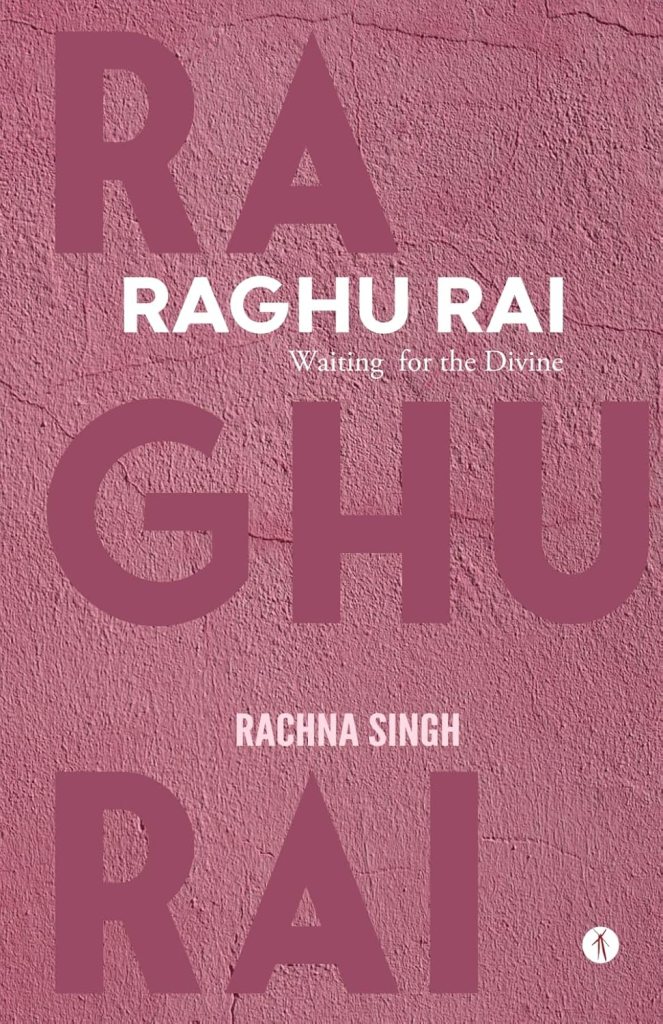
Rachna Singh, notebook and recorder tucked in her bag, pen in hand, first meets Raghu Rai in his picturesque home nestled in the Mehrauli forest of New Delhi, a landscape with occasional medieval structures peeping through the trees. Away from a concrete encrusted city, Rachna, a patient biographer, knows that the legendary photographer whose images shaped the visual progress of a nation, has his own deep stories. But will he reveal them? She pries the tales open by carving pathways through Raghu Rai’s photos— and a remarkable book about the person behind the camera is captured by a literary image-maker, in this sensitive, tender, and insightful biography. Rai permeates a series of chapters that play intricate games with memory because every frame in the camera is connected to myriad threads of experience.
Since the book is sub-titled “Waiting for the Divine”, I naturally look for references to Mother Teresa and the Dalai Lama to discover how the transcendent power of Raghu Rai’s photos of these two personages emerged. Entry into sacred precincts is never easy, and a camera in hand signals a definite obstacle. However, at the Sisters of Charity in Kolkata the photographer is permitted to follow the Mother unobtrusively. Yet, when a curtain flutters to reveal angel-like nuns and Rai dives to the floor to catch the best angle and the right light, even the Mother’s equanimity breaks and she is aghast! From such “shadowing” emerges the divine photograph titled “Mother Teresa in Prayer” with every crease in the luminous face catching the glow, an expression transporting her to realms beyond ordinary comprehension.
If Raghu Rai’s association with Mother Teresa is marked by reverence, his link with His Holiness the Dalai Lama is marked by friendship—one that extends to warm handshakes and brotherly embrace, informal conversations and a conviction about universal compassion. Says Rai, “His Holiness is an uninhibited, wonderfully loving man. How gracious of him to say he is my friend.” Again, it is the camera lens that reveals remarkable facets of the Dalai Lama– his childlike smile as also the sombre spiritual leader of a people in exile. Rachna Singh recounts an almost surreal story of a protective stone gifted to Rai by His Holiness that saw him survive a severe heart condition of ninety percent blockage while still chasing images of a crowded procession!
This takes me back to Rachna Singh’s intention, “My book is not a third-person memoir nor a chronological recounting of Raghu Rai’s life. Instead, it unfolds through candid conversations, inviting the readers into an intimate dialogue.” The reader’s response being part of her textual strategy, I too could add my account of the mystical energy felt in the presence of the Dalai Lama. The book’s attraction lies in this fluidity of the biographer, her subject and the reader being part of the evolving discussion of the deep philosophical pool from which photos are created. The trajectory of Raghu Rai’s life is well known—the photo journalist with The Statesman and India Today; his famous photo essays in the international magazines Time, Life, The New Yorker and numerous others, the award of a Padma Shri, his eminent friends and compeers, but Rachna Singh’s book probes Rai’s mind, his consciousness, his search and his beliefs. Therefore, it offers gems of information through anecdotes and the atmospherics of events, and some delectable quotations in Punjabi and English.
I turn here to Raghu Rai’s series on the Bhopal gas leak of 1984. “The black and white picture of a dead child, eyes open, staring sightlessly into space, lying in the rubble with a hand gently caressing the ravaged face in farewell,” describes Rachna, calling Rai a ‘Braveheart’ who painted a “searing picture of the tragedy.” The conversation is strangely matter of fact as though both the biographer and her subject are numbed by the enormity of that night of terror. Did Rai fear for his health or safety in the toxic air? The answer is “No” because the human pain around was greater than the instinct for self-preservation. All the journalists visited the mass cremations, the hospitals, the dead and the dying as though it was a “job”, Rai being practical enough to say, “You cannot let your spirit turn soggy with emotion.” Those of us who read of such tragedies and see photos in newspapers while sipping our morning tea should admire the intrepid people providing the raw material from ground zero.
Another memorable series was on Bangladesh refugees after the 1971 war—emaciated women and men often carrying sick children in baskets. Rai had been in the frontlines of the war and had once been surrounded by a hostile mob. Rachna is on tenterhooks as he narrates the details but he declared “I was more excited than scared … there was actually no time to feel scared.” At one time he even smiles and says, “It was a lot of fun.” Which brings me to probe the extraordinary grit and strength of photo journalists or reporters from war zones. Where does compassion and newsworthiness meet? Is image more important than the decimated human body? What lasting imprint does such witnessing leave?
Perhaps the answer lies in Raghu Rai’s quest for the Divine—beyond image, outside time. He was born in pre-partition India, in the village of Jhang that is now in Pakistan. He speaks haltingly of the childhood terrors—homes in flames, of escape in the pre-dawn—Rachna notes the tremor in his voice and the reluctance to recall those years. Yet she astutely links Rai’s portrayals of hurt and human sorrow, his sensitivity yet distancing from those early experiences. Finally, it’s been a holistic calm. Rai is quoted: “Photography has been my entire life—it has, in fact become my religion, a faith to which I have dedicated myself completely. My craft led me toward a meditative path that gave me insights to life and the divine.” And that quest bridges the beatific and the aesthetics in this most commendable book.
Malashri Lal, writer and academic, with twenty four books, retired as Professor, English Department, University of Delhi. Publications include Tagore and the Feminine, and The Law of the Threshold: Women Writers in Indian English. Co-edited with Namita Gokhale is the ‘goddess trilogy’, and also Betrayed by Hope: A Play on the Life of Michael Madhusudan Dutt which received the Kalinga Fiction Award. Lal’s poems Mandalas of Time has recently been translated into Hindi as Mandal Dhwani. She is currently Convener, English Advisory Board of the Sahitya Akademi. Honours include the prestigious ‘Maharani Gayatri Devi Award for Women’s Excellence’.
PLEASE NOTE: ARTICLES CAN ONLY BE REPRODUCED IN OTHER SITES WITH DUE ACKNOWLEDGEMENT TO BORDERLESS JOURNAL




 Borderless