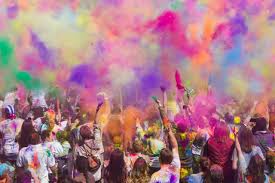
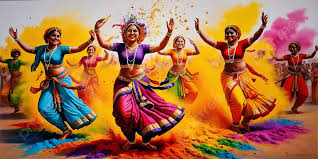
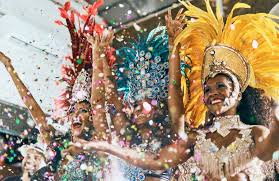
Festivals are affirmations of joy and love that bind humanity with their sense of hope even in a world torn by violence and climate change. As the end of the year approaches, we invite you to savour flavours of festivals past and, a few, yet to come, before the cycle starts again in the new year. The colours of celebrations are vibrant and varied as shades of nature or the skies.
We have new years spread out over the year, starting with January, moving on to the Chinese New Year around February, the Bengali new year in April to festivals of environment, light, darkness as in Wiccan beliefs, Tagore’s birth, more conventional ones like Deepavali, Eid, Durga Puja and Christmas. People celebrate in different ways and for different reasons. What we have also gathered is not only the joie de vivre but also the sadness people feel when celebrations are muted whether due to the pandemic, wars or for social reasons. In some cases, we indulge in excesses with funny results! And there are of course festivals of humanity … as celebrated by the bauls — the singing mendicants of Bengal — who only recognise the religion of love, compassion and kindness.
Ramakanta Rath’sSri Radha celebrating the love of Radha and Krishna have been translated from Odiya by the late poet himself, have been excerpted from his full length translation. Click here to read.
Bijoya Doushumi, a poem on the last day of Durga Puja, by the famous poet, Michael Madhusudan Dutt, has been translated from Bengali by Ratnottama Sengupta. Click here to read.
A Clean Start: Suzanne Kamata tells us how the Japanese usher in a new year. Click here to read.
Shanghai in Jakarta: Eshana Sarah Singh takes us to Chinese New Year celebrations in Djakarta. Click here to read.
Cherry Blossom Forecast: Suzanne Kamata brings the Japanese ritual of cherry blossom viewing to our pages with her camera and words. Clickhere to read.
Pohela Boisakh: A Cultural Fiesta: Sohana Manzoor shares the Bengali New Year celebrations in Bangladesh with interesting history and traditions that mingle beyond the borders. Clickhere to read.
The New Year’s Boon: Devraj Singh gives a glimpse into the projection of a new normal created by God. Click here to read.
A Musical Soiree: Snigdha Agrawal recalls how their family celebrated Tagore’s birth anniversary. Click here to read.
An Alien on the Altar! Snigdha Agrawal writes of how a dog and lizard add zest to Janmashtami (Krishna’s birthday) festivities with a dollop of humour. Click here to read
Memories of Durga Puja : Fakrul Alam recalls the festivities of Durga Puja in Dhaka during his childhood. Click hereto read.
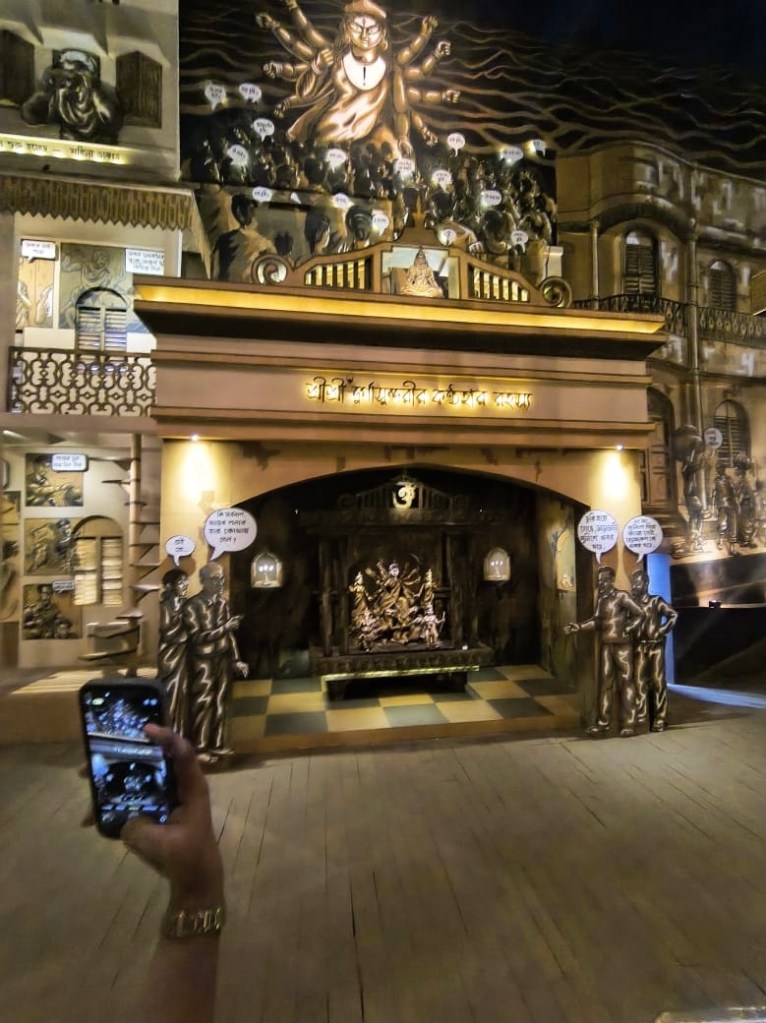
KL Twin Towers near Kolkata?: Devraj Singh Kalsi visits the colours of a marquee hosting the Durga Puja season with its spirit of inclusivity. Click here to read.
Hold the roast turkey please Santa: Celebrating the festive season off-season with Keith Lyons from New Zealand, where summer solstice and Christmas fall around the same time. Click here to read.
Ratnottama Sengupta travels through time and space to explore a UNESCO-declared ‘Intangible Cultural Heritageof Humanity‘, a festival called, Durga Puja
Dhaakis (Drummers) playing dhaaks (drums) at Durga Puja. From Public Domain
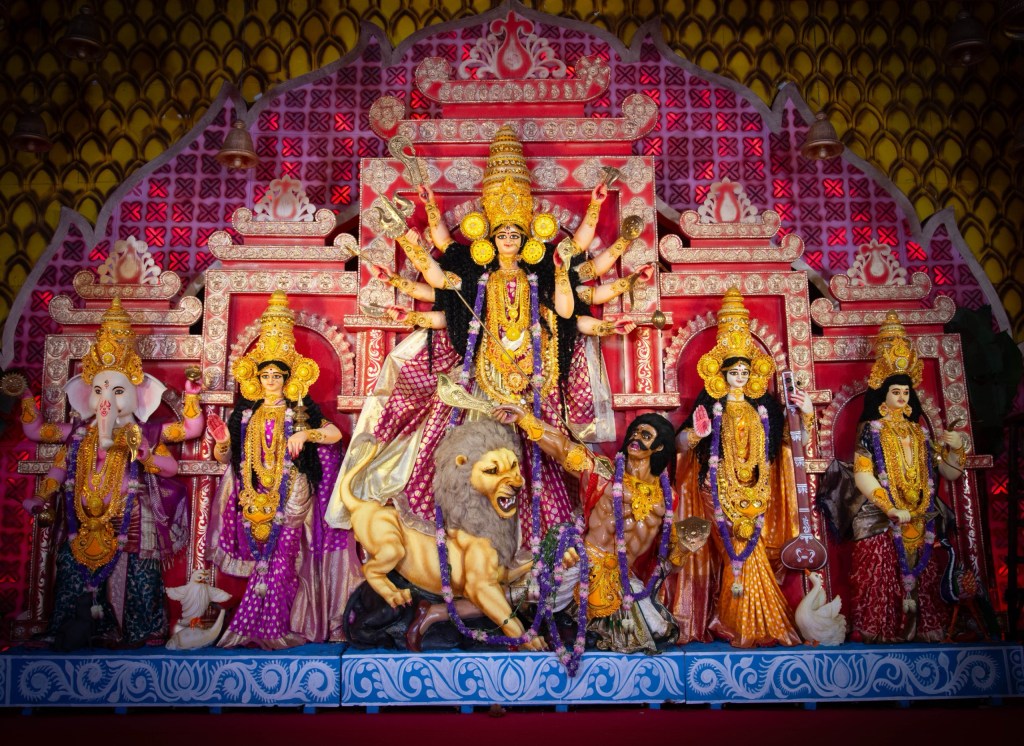
It was Saptami, the second day of the five-day Durga Puja that had been inaugurated the previous day. I had new dresses lined up for all five days. But the dawn of Saptami brought us news of disaster. A short circuit had razed the entire pavilion along with the clay icons of Durga, her brood comprising Ganesh, Kartik, Lakshmi, Saraswati and their vahanas — the lion, owl, swan peacock and mouse. Gone was the chaalchitra, the halo-like backdrop presided over by Lord Shiva and depicting the story of the goddess who fought the demons Chanda Munda, Shumbha, Nishumbha, Madhu Kaitav, Raktabeej Mahishasur…
We were mourning all through the Pujas that particular year. No new dresses worn, no new shoes on our feet, no ‘Dussehra Greetings’ nor any sweets on ‘Bijoya’. We felt sad not because of the effort my father, Nabendu Ghosh, had put in as the President of the Puja conducted by the Udayan Club, but because of the belief that “Durga comes home to her parents during this period.”
*
My father’s ancestral home was in East Bengal. My grandfather, Nabadwip Chandra Ghosh, was an Advocate who relocated to Patna in 1920. Every autumn after that the family would travel back to Dhaka for a month. Because the Durga Puja in their family home was the lone puja of Kalatiya, the village which is now a suburb of Dhaka. Everyone there would flock to ‘Ukil Babur Bari’[1]for the puja and prasad in the afternoon and the cultural programmes in the evening. Jatra, theatre, Pala Gaan, Naam Sankirtan — the itinerant groups of performers comprised of singers, actors, the narrator or the sutradhar, and the adhikari or the manager. It was at one such performance that Baba[2], then all of seven, fell in love with a ‘lady’ who had played Draupadi. Imagine his disappointment when the departing ‘lady’ turned out to be a clean shaven youth!
The next year at that very Puja Mukul[3]— the pet name of Nabendu Bhushan — first ‘acted’ as a Sakhi[4]! At eight his ‘manhood was offended at the thought of playing a handmaiden. But when he stood on the stage with three other boys, all dressed in finery and wigs, all praying ‘Madhav rakho charaney[5]!’ he was transported to Lord Krisha’s court in ancient Dwarka. That was his first experience of Rasa[6] — and unaware even to himself he had set on a lifetime’s journey with the arts.
When life took him to Bombay in 1951, there were few Pujas and no possibility of publishing anything in Bengali. Pragati Club of Andheri started a Puja in Mohan Studios that had Bimal Roy as the President and Nabendu Ghosh as the Secretary. That Puja continues to this day — and to this day these two names figure in the brochure the club publishes annually. Pragati[7] used to bring out a handwritten magazine back then. PraBas — meaning, migrant life, was an acronym for Prabasi Bangla Samaj.[8] Edited by Nabendu Ghosh, it boasted hand-painted covers by renowned artist Chitto Prasad.
Pragati, Kallol, Udayan, Natun Palli, Shivaji Park, Chembur — all the major Pujas of Mumbai continue to publish a brochure for the Pujas as a souvenir of the festival and also to raise funds through ads by the sponsors.
*
All through my school life, which I spent travelling to the Bengali Education Society’s English High School at Dadar, I would necessarily spend one evening rolling into late night at the Shivaji Park puja pandal. Long in advance I would plan which dress to wear. The latest Bengali movie would be screened. The Puja Specials would have already come home — in the pavilion we would pick up some new publication of Sunil Gangopadhyay or Shirshendu Mukherjee. The Puja songs would keep playing while we, a bunch of batch-mates from all over Mumbai, would endlessly snack on fancy food and chat.
My university years saw a shift of ‘allegiance’ to Notunpalli, the Puja started by Shakti Samanta at Bandra in 1972 as did all the major Bengali biggies of Bollywood, from Salil Chowdhury, Basu Chatterjee, RD Burman to Jaya Bhaduri and Amitabh Bachchan, who would earlier visit the Puja at Ramakrishna Mission at Khar. Now I would flock to the stalls of handloom saris, salwar suits, fashion dresses — some of which were set up by my cousins or friends. Rupa, Aloka-Tulika-Lipika, Mina Kakima and Latika Kakima — wives of actor Tarun Bose and playback artiste Talat Mehmood, sons and daughters of Dhruv Chatterjee and Asit Sen, seasoned CEOs and young bankers — the stimulating adda[9] here ranged from cinema to career choices, economics to politics.
*
Talking of Ramakrishna Mission, I am reminded of Manobina Roy, wife of Bimal Roy. Jethima[10] and my mother Kanaklata would set up a stall where they would sell papad and vadi, narkel and til naru, muri moa and kucho nimki[11]. These sesame, coconut or lentil balls were all made at home by Didimas[12], Kakimas and Mashimas[13]who lived in Rana Cottage near our house in Malad. If the Kumari Pujo[14]and Sandhi Puja[15]rituals were special for these seniors, Bijoya was super special for me and my friends. This post-immersion round of socialising to greet friends spelt many visits, to Bandra and Khar, Santa Cruz and Andheri, Goregaon and Borivali. And visiting the family of our parents’ friends meant not only naru-nimki, it could also mean chops, cutlets, cakes, sandwiches — goodies that were not so common in Bengali households 65 years ago, when sandesh and rosogolla, sweets made from cottage cheese, were also sold door-to-door, by men who brought them to our houses in aluminium trays tied in cloth!
*
That’s a faraway reality from what obtained in Kolkata where I spent some Puja holidays at my aunt’s (Ranjita Mashi’s) place on Motilal Nehru Road. It was opposite Deshpriya Park, where we children would report every morning of the five days, to help distribute the floral offering for pushpanjali and the prasad[16] in sal leaf bowls. Pandal hopping was a must, primarily on foot, as the pavilions designed with cloth themselves were works to admire. And on Dashami[17] evening, Haabu, Dipu, Reena, Minu and I would stand near the Rash Behari post office opposite Priya Cinema and watch the idols, sculpted with the signature of traditional idolmakers of Chitpore, being taken for immersion in the Ganga. What joy it was as we could watch all the Goddesses we’d heard of but not visited — even from Krishna Glass or Teish Palli! A much glamourised and glorified version is now held on Red Road, the main artery of the city, with the Chief Minister presiding over the Carnival of Immersion.
Twenty years ago when I returned to make my home in Kolkata, Deshpriya Park was still home to a Sarbojanin Durgotsav[18]. But it hit the headlines in October 2015 when mayhem broke loose crushing surging crowds who had assembled to view the 88-foot “Biggest Durga Ever.” Effectively the community celebration had become a cause for corporate branding and competition. Sponsors, in some cases, outnumbered the – neighbourhood — ‘parar‘ — volunteers. Reason? Perhaps because television was trying to grab eyeballs in every home. Even Kumari Pujo at Ramakrishna Mission was being watched on screens across the oceans. And as the Arts Editor of The Times of India, I was planning celebrity visits and artistic trophies for our Pujo Barir Shera Pujo[19]competition in high rise buildings and gated communities.
*
But what was the biggest change in observing Sarbojanin Durgotsav in Bengal? These public worship grounds had transformed into vast galleries where artists were staging the icons as installation art. These concept-driven pujas took leaves out of mythology but interpreted the goddess in the light of contemporary and universal concerns. Some were highlighting Her as a feminist force. Some as an embodiment of Nature. For some, She denotes the cosmic universe. Elsewhere crafts and looms got prominence. Family bonding was not forgotten. From the icons to the pavilions, from the chaalchitra to the fairy-light decoration — there was a unity of thought and execution. In the process, knowledge about practices in distant corners of our country, or of lifestyles several countries away from ours became accessible to the average person on the street.
A traditional Durga with a chaalchitra backdropDurga Puja, Kolkata, Themed after the famous Byomkesh Bakshi, a literary creation of Sharadendu BandopadhyayPhotos provided by Ratnottama Sengupta
There has been another interesting development. For years, the divas of Indian screen, from Bengal to Bombay, have inspired the Pals[20] of Chitpore. Sometimes she resembled Hema Malini, sometimes Madhuri Dixit. The demon too has been modelled after the politicians who are seen as foes.
At Arjunpur near Dumdum airport, the Third Eye of Durga is the nib of a fountain pen – as is the pointed middle of the three-pronged trident, trishul: “The pen represents wisdom and thought, and it is also the contemporary weapon to protest and fight,” explained Shampa Bhattacharjee. The artist from Delhi had designed the icon while her husband, physicist, created the atmosphere with rotating lights and floating balls – al in luminous steel.
*
Durga as a feminist force is perhaps the most natural interpretation of the goddess who was construed as a Goddess because evil demons had sought immunity against all other forms of power save a woman. Durga was conceived as Durgati Nashini — Destroyer of Misfortunes. The mace, the trident, the circular Sudarshan, the bow and arrow, the sword – every single weapon that empowered her was gifted by a God, be it Vishnu, Brahma, Shiva or Agni, Vayu, Varun, or even Yama. Read, the masculine forces. Perhaps that is why, the jagirdars and zamindars, under the nawabs and the British Raj worshipped Shakti, the icon of empowerment. The Raj families of the City of Palaces, the Debs of Shovabazar, the Chowdhurys of Behala, the Roys and Duttas of Kalutola and Nimtala, the Mullicks of Marble Palace or Rais of Andul – they still pay their obeisance to the Image of Shakti. And the celebration in the ancestral homes of these bonedi – once aristocratic – families are a tourist attraction.
Ironic that, during the struggle for Independence from the imperialists, She became the embodiment of motherland. Abanindranath Tagore’s iconic painting of her as the embodiment of sacrifice stays etched in our hearts and our souls to this day.
And when I stand before any invocation, in any form, in any corner of the subcontinent, these words of my father ring in my ears. “Imagine the map of India as you stand before Maa Durga. To her right are Lakshmi and Ganesha — the two realisations of Prosperity and Success — who are worshipped in Rajasthan, Gujarat, Maharashtra, Karnataka. On her left are Saraswati and Kartik — representing Learning and Wisdom and Craft — worshipped in Assam, Bengal, Orissa, and the Deccan. At her feet is the Mahishasur, also depicted in our epic as the Dusht Ravan who ruled Lanka. And above her, reigning from the chaalchitra is Mahadev Shiva, identified with the Himalayas. Asamudra Himachal, from the mountain to the ocean, it is our motherland — Bharat Tirtha[21].”
*
The crux of it? Durga Puja is not merely the worshipping of a Hindu god. What started as a religious phenomenon in the households of the rich or powerful is no longer merely ritualistic. In this millennium, it is a vibrant celebration involving, at every step, the Indian thought and creativity, mind and heart, economy and management. It knits the masses in more ways than one. The castes and classes, the highs and lows of society — no one is left out of the festivity. It is a sociocultural happening. Year after year after year it is, in the truest sense of the term, Sarbojanin.
Small wonder the largest public art festival of the subcontinent has been recognised by UNESCO as an Intangible Cultural Heritage!
Ratnottama Sengupta, formerly Arts Editor of The Times of India, teaches mass communication and film appreciation, curates film festivals and art exhibitions, and translates and writes books. She has been a member of CBFC, served on the National Film Awards jury and has herself won a National Award.
.
PLEASE NOTE: ARTICLES CAN ONLY BE REPRODUCED IN OTHER SITES WITH DUE ACKNOWLEDGEMENT TO BORDERLESS JOURNAL
A conversation with Nirmal Kanti Bhattacharya, the translator of Samaresh Bose’s In Search of the Pitcher of Nectar, brought out by Niyogi Books.
In 2017, the Kumbh Mela (the festival of the sacred pitcher) was declared an Intangible Cultural Heritage. A Times of India report read: “The committee noted that as the largest harmonious conclave in the world, Kumbha Mela stands for values like magnanimity and patience that are very beneficial for the modern humanity. Moreover, the concept of Kumbha Mela goes well with the current international human rights tools because the festival welcomes people from all corners of the world without any differentiation.”
Five years down the line, Niyogi Books brought out a translation of Samaresh Bose’s[1]In Search of a Pitcher of Nectar, an epic travelogue translated from Bengali by Nirmal Kanti Bhattacharjee on the festival at the confluence of the three rivers, Ganga, Saraswati and Jamuna — in Allahabad. An eminent acknowledged writer, whose stories won not just literary acclaim like the Sahitya Akademi award but were translated to prize winning films, Bose’s solo voice stands alone in the translated version — as that of Kalkut, one of the pseudonyms he assumed.
In the early part of the book, Bose gives the reason for his journey into this crowded event which even in the middle of the pandemic (2021) had 3.5 million visitors: “Observing this great variety of humankind on the move is a thirst that is not easily quenched.” Bose’s exploration came long before the pandemic as his book was published in 1954. Then a Bengali film was made on it in 1982.
The writer claimed to have set out to look into the heart of the nation: “I would dive deep into that heart of India. I would identify my own face in this strange mirror of India. That face is my mind. My religion.” And he discovers, “the poor India was there like a faded cloth by the side of a muslin chunni.” While peeling layers of poverty and ‘respectability’, he introduces us to a bevy of characters which include not just Godmen, but also women, who evolved from wifehood to prostitution to godwomen, to young girls forced to marry polygamous octogenarians, to people in quest of lost family members, to men in search of the intangible — and all united together for a dip in the holy ‘sangam[2]’ of three rivers, the ultimate panacea for all ailments and ills for believers. That the author is not part of the believing crowds, but a sympathetic, humane commentator is obvious from his conversations with various people and his actions, which defy boundaries drawn by the respectable god minding devotees thronging the festival. He uses the event to pinpoint the flaws of socially accepted norms and to find compassion for the less fortunate. He laces his narrative with love and compassion for humanity.
The title itself both in Bengali and English conveys the quest for nectar or the divine amrita of immortality which led to a festival that washes away sins with a dip at the confluence. Legend has it that the gods and the rakshasas worked together to draw out the ambrosial drink at this sangam and then, the gods cheated and consumed all of it, judging the other party as too evil to be handed eternal life in a cup. The unbreachable walls had started and perhaps continue even to this date.
The real origin of the festival as Bose contended remains disputed like that of many other cultural lores, though people do continue to quest for miracles in the waters that were supposed to have thrown up the ambrosia. The narrative implies the educated and schooled rarely participated in this event. There is a mention of the prime minister at the festival, but that would be as a dignitary, and not as part of the crowd.
The crowd in its urgency to take a dip at the holy hour, results in a stampede and many deaths. It is a sad and philosophical ending which clearly takes us back to the questions raised at the start of the narrative. “If lakhs of people are blinded by faith, then why not search for the reason? What is that celestial blinker which can blind lakhs of eyes?”
While questioning faith, the narrative exposes the gaps in society with compassion — even between the educated and uneducated that has become a severe point of contention as more fissures into society and creating more boundaries. At the end of the book, one wonders have things really changed from the 1950s when Bose wrote the book to the current experience where the UNESCO, a modern-day construct and belief, has dubbed this festival as a juncture where all humanity congregates? Do they? To enlighten us on this issue, we conversed with the eminent translator of this powerful book, Nirmal Kanti Bhattacharjee.
Nirmal Kanti Bhattacharjee
What led you to translate Samaresh Bose’s In Search of a Pitcher of Nectar?
Samaresh Bose was a celebrated novelist. Th social relevance of his novels can never be over-emphasised. But when he started writing travelogues under the pseudo-name Kalkut, he invented a new creative trajectory. Amrita Kumbher Sandhaney, Kothay Pabo Tarey[4]are all classics in Bengali literature. I have been reading and rereading Amrita Kumbher Sandhaney for decades and always felt it should be presented on a national and international platform. Hence, when time and opportunity arose, I took up the translation work and the result in In Search of the Pitcher of Nectar.
There was a Bengali film (Amrita Kumbher Sandhaney, 1982) made with the story of this book. Did you use this as a resource too for your translation? What do you think of the film? Did it capture the book well?
Yes, I have watched the film when it was released. I don’t remember the details now, but the impression remains that it was a reasonably well-made film. But I don’t think it has acted as a resource for my translation work. On the contrary whenever I tried to think of Shyama, the sophisticated face of Aparna Sen[5] would appear in my vision.
In 2017, UN declared the Kumbh-mela as an intangible cultural heritage. And yet, here Samaresh Bose mentioned a stampede within the Mela that killed many people. Do you think things have changed since he wrote this travelogue?
Definitely. Now, the Kumbh-mela is an extremely well-organised event. The way in which the administration handles the flow of lakhs of people is something to be seen to be believed. Even Harvard University researchers had undertaken a study to analyse how an ephemeral city comes up with all the civic, municipal and medical facilities for a temporary period of time. The stampede that Bose mentions are things of the past.
Have you ever been to a Kumbh-mela? Is it as he describes?
Yes, once; obviously inspired by the reading of the book. It was in early 70’s. I found it tallying with Bose’s description to a large extent. It was a lifetime experience for me, because I also went with an open mind, an agnostic as I am.
What in this book strikes you the most?
Two things struck me most in the book. One, unlike all other visitors, Bose’s was not a pilgrimage. He did not even take a dip at any of the auspicious dates and moments. He was in quest of understanding man’s urge for piety. It was as if an atheist’s search for the godhead. Secondly, the technique of writing was a unique blend of travelogue and fiction. His character sketches are something unparalleled in the history of travel writing anywhere in the world. I hope I am entitled to give this opinion, having a modest exposure to the world literature.
You are a felicitated translator. When you translate from Bengali to English, what strikes you as the biggest hurdle? And how do you get over it?
The biggest hurdle in translating from Bengali into English is the problem of culture specific transfer. Here one is not translating from an Indian language into another. Here translation is not just linguistic transfer, but culture transfer also. One has to be very careful where to valorise the source language and where to make some sacrifice for attaining compatibility to the idiom of the target language. I guess I have learnt to strike a balance between the two.
You have translated the Bengali portions fully in this book but not always the Sanskrit or Hindi? Why not?
The Sanskrit and Hindi portions in the text are very well-known quotes from Tulsidas and other celebrated poets. I thought they would communicate even without translation. More importantly, they are all in rhymed couplet or quartet. If the rhyming is done away with, their linguistic impact will drastically reduce. And maintaining a semblance of rhyming in English was beyond me. So, I left them as they were. The case of the Bengali quotes is totally different. There I could confidently take some liberty and attain the desired impact.
Do you think a translation is better if it is closer to the text or if it captures the spirit of the piece and conveys it to the readers, though it departs from the text as in Edward Fitzgerald’s translation of Omar Khayyam’s Rubaiyat?
It depends on the motive of the translator. Gayatri Chakravarty Spivak in her celebrated essay ‘Politics of Translation’ suggested that we should approach the text with love and empathy. If that is achieved, the translator remains as close to the text as possible; and yet he/she can take occasional liberty to capture the spirit of the original. But if the motive is to sanitise the text to cater to a particular reading community, as Tagore wrongly did or civilise the text from the point of view of master-slave attitude, as Fitzgerald did, then it is wrong. We now know how much of Tagore or Khayyam is lost in these English versions.
You have translated major writers from Bengal like Mahasweta Devi, Sunil Gangopadhyay, Sirshendu Mukhopadhyay and Samaresh Bose. Which has been your favourite author to translate and why?
Well, all the authors I translated so far are my favourite authors. I can not translate unless it is so. I greatly enjoy Sirshendu Mukhopadhyay’s young adult stories, Sunil Gangopadhyay’s romantic novels, Samaresh Bose’s dexterity in narration and characterisation, Mahasweta Devi’s socially conscious works. I have translated two novels of Tagore also for their universal appeal and extremely thought-provoking themes.
After translating this many novels, are you planning one of your own?
Oh no, I am not a creative person. I hopelessly lack imagination.
Do you have any advice for upcoming translators?
Well, I don’t feel entitled to give advice to anyone, I can only say that a wannabe translator should live with a book for some time before venturing into translation. You should not take up any translation work unless the book resonates with you or speaks to you, so to say.
Thank you for bringing the book to non-Bengali readers and also your time.
[3] Translates to ‘ On the Golden Peak’, part of Kalkut Rachna Samagra (Kalkut’s collected writings), published in 1957 and made into a Bengali film in 1970
[4] Translates to ‘Where will I find Him?’, published as a part of his collected writings in 1957
[5] Aparna Sen, the legendary actress from Bengal, acted as a character in this film
(The book has been reviewed and the interview conducted online by emails by Mitali Chakravarty)
PLEASE NOTE: ARTICLES CAN ONLY BE REPRODUCED IN OTHER SITES WITH DUE ACKNOWLEDGEMENT TO BORDERLESS JOURNAL
Singapore moved from being a little island to a trading port to an affluent glamorous city that bridges the East and the West. Spanning the spirit of the wide expanse of this movement within a century are some iconic writers. One of them is Suchen Christine Lim, an award-winning author who writes narratives embedded in history, lined with hope and love — two values that need to be nurtured in today’s war-torn world.
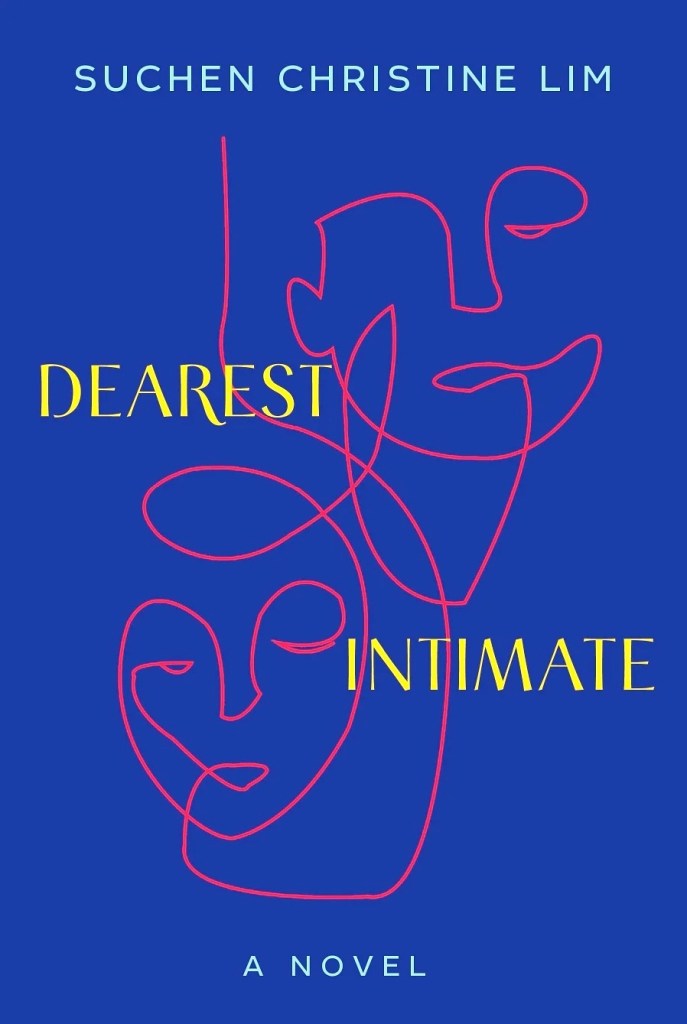
Dearest Intimate is her most recent novel that shuttles against the backdrop of Japanese invasion of not just China but of what was then Malaya and modern-day Singapore. The story revolves between the worlds of Chan Kam Foong and her granddaughter, Xiu Yin. A passion for Cantonese opera that spans across generations weaves all the threads together into a single multi-layered rich tapestry of life. That life is never about a single strand or a single facet is brought into play by her intricate craftsmanship.
Suchen has taken seven years to complete this novel creating a story that immerses the reader in different time periods. The time periods are congealed with a variety of techniques of narration. Both, the first-person narrative — the voice of Xiu Yin — and the third person — the diary which unravels her grandmother’s story — are seamlessly knit into a whole. Though to me, the diary is perhaps more compelling with its historic setting and its interludes of amazing passionate poetry, like these lines:
“Though hills and mountains, rivers and plains separate us,
nothing can separate our thoughts and dreams.
Though a thousand li separate our bodies, no mountains nor
rivers, not even the Four Mighty Oceans can separate our heart.”
As the book progresses, it unfolds Xiu Yin’s journey towards rediscovering her strength and love. She rises from the ashes of an abusive marriage which is in sharp contrast to the marriage of her grandmother, Kam Foong, arranged by the family in a traditional Chinese village in the early part of the twentieth century. That victimisation and abuse see no borders of education and can be born of a sense of frustration and an over-competitive outlook is skilfully reflected in the marriage of Xiu Yin, whose husband is from an educated Westernised Catholic background. She had been brought up on traditional lores among Chinese opera artists. Interesting observations on gender issues and local concerns — like the housing policies in Singapore — are wound into the narrative.
To me, one of the most enduring qualities of Suchen’s novels are that they deal with the common man against a historical backdrop. In an earlier interview, she had said: “I wanted to see the past from the perspective of coolies, the illiterate, who have largely been left out of history books. And yet without them, who would pick up the nightsoil?” In this novel too, she has dealt with the common man — farmers and opera singers only the historic setting and their responses have changes because of changed circumstances. We live, feel, emote with the common people before, during and after the second World War to the modern twenty first century Singapore. The author’s skilful characterisation enlivens her creations. The cruelty of Japanese invaders during 1940s is highlighted in the suffering of the people and their abuse. Published around the same time as Sumantra Bose’s Netaji Subhas Chandra Bose’s Life, Struggle and Politics, which shows how the Indian leader thrown out of Congress took support from the Axis powers (German and Japanese), it gives a contrasting perspective. Though this is fiction, Singapore history does corroborate that the Japanese invaders were extremely brutal in their outlook, even among the colonials. Suchen’s reiteration of their cruelty is heart rending.
She has through her characters reiterated on the need of art not just to express but to make people laugh, give them hope and cheer them in dark times. This is an interesting theme which in itself makes one wonder if it is a comment on the perspectives of writers depicting unmitigated darkness. We find this strand of hope in great fiction from the last century — like JRR Tolkien’s Lord of the Rings series or Margaret Mitchell’s Gone with the Wind. They all end with hope as do Suchen’s works.
Suchen’s oeuvre very often encompasses the story of migrants as it has done here. And the interesting progression in this novel is the migrants’ complete acceptance of their new homelands — Singapore and Malaysia. In an earlier interview, Suchen had said, “A man can rise and go beyond borders but the land that he leaves will always be in his bones and heart.” And some of her protagonists had headed back to China. But in this novel, one is left wondering if the characters from China have not transcended their national frontiers to embrace the Cantonese opera, declared an intangible cultural heritage, like Durga Puja, by UNESCO. Art and love have overridden all kinds of borders — and perhaps, that is why the name of the novel Dearest Intimate, which is used by Kam Foong for her love and for Xiu Yin by her beloved justifies the title. At the end, it is a heartfelt love story between humans and even between humanity and an art form that evolved to embrace the common man. Like all good books — it touches hearts across all borders with its message of love and acceptance as do Suchen’s other novels. To discuss, her world view and her novel, we had a brief conversation with Suchen —
What made you write this novel, Dearest Intimate? What led you to it?
I had a strange dream while I was on the Writers Immersion and Cultural Exchange (WrICE) residency in the ancient city of Hoi An in Vietnam. I dreamt of a pale orange pillow embroidered with two mandarin ducks and two rows of Chinese characters. When I woke up, I wrote down the two sentences in English, which eventually became the opening paragraph of this novel. So, you can say it was an unexpected gift from the universe that led me to write this novel.
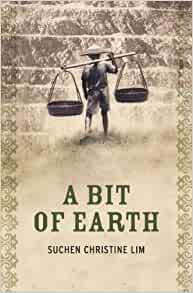
In your earlier novels like A Bit of Earth the protagonist always felt for part of their homelands. However, in Dearest Intimate, the protagonists dwelt on the theme of love and Cantonese opera, not so much on homeland. Has your world view changed since your first novel? How and why?
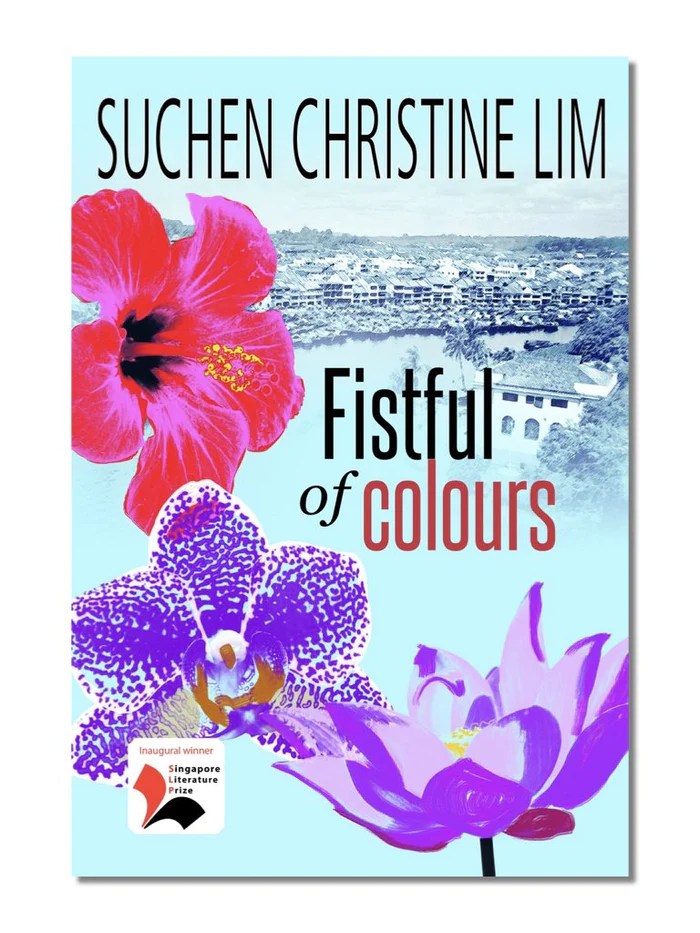
Published in 1984Published in 2001
Well, I don’t think there is a quick easy answer to the how and why of change in worldview. The time gap between the publication of my first novel, Rice Bowl, and the latest, Dearest Intimate, is more than 30 years. Over that span of time my novels had examined issues of political /historical import, race and identity, moving from the past to the contemporaneous. Over the course of 30 years, it is natural for an author’s ideas and obsessions to change. I would be very worried if I do not change, or my characters and themes do not change. For example, my sudden interest in the pipa led to the writing of The River’s Song, which in turn led me to Chinese music and Hong Kong Cantonese opera and the learning of Cantonese.
Tell us about why you took up the Cantonese opera in a major way in this novel?
It was the strange gift of a dream of two mandarin ducks embroidered on a pillowcase, which reminded me of the Cantonese operas I used to watch as a child with my grandmother and mother. Such pillowcases with embroidered mandarin ducks were symbols of love and fidelity and were sewn by young women in love in Chinese operas. Cantonese opera was a part of my childhood that was largely forgotten till this dream. Looking back, I think in writing Dearest Intimate I was reclaiming that forgotten part of my childhood.
Why did the novel take seven years to write? What kind of research went into the novel?
Partly because the research was such fun. I wasn’t concerned about deadlines. I had already flung away deadlines the moment I resigned from the Ministry of Education years ago. And I must admit I was fortunate that I didn’t have to write to fill my rice bowl. My research obsession began after I had watched a Hong Kong Cantonese opera troupe perform at the Kreta Ayer People’s Theatre, and later, other operas at the Esplanade during Moon Festival. Curious about the actors’ training, I went to the National Archives and listened to the many interviews with old opera actors and actresses of local Chinese opera troupes. Every year, I flew to Hong Kong to watch one or two Cantonese operas, and once I even met Chan Poh Chee and Bak Suet Xin, the icons of Hong Kong’s Cantonese opera. When I started writing the novel I would watch one Cantonese opera on YouTube every afternoon, even re-watching a few favourites. Unhappy that I could not understand the literary Cantonese used in the operas I joined a Cantonese class in Chinatown to deepen my understanding of Cantonese.
Why did the novel take seven years to write? Well, one of the reasons is my troublesome health. I had several health issues to deal with. Very boring chronic issues which, naturally, gobbled up my time and distracted my attention. The most serious of these troublesomes was a minor stroke that affected my movement and speech for some months.
You have written many children’s stories, a play, short stories, non-fictions and novels. What is your favourite form of storytelling and why?
The novel. It is humanity’s greatest literary invention. Within the novel, raw messy lived experience is transformed into coherent narrative.
All your novels have a sense of hope and seem to reach out with the message of love and acceptance. Why is it you feel reiterating this is important?
I am glad you think my novels have a sense of hope. Hope is often the reason we live another day. Hope is what helps us to endure, to wait. To write, to make art is an act of hope.
What in your opinion is the purpose of art? You have repeatedly mentioned in your novel that people will respond better to hope or laughter in opera in dark times. Would you say this also applies to writing? Do you think people in dark times prefer books that give hope? Please elaborate.
I will quote Master Wu in the novel: “Play our music! Tell our stories! Sing our songs! Write our histories! Preserve our humanity! That is what the arts are for. Never, never for one moment forget who we are …” in the age of robotics, story-generating AI and Twittering twitterati.
Do you have any advice or message for budding writers?
Suffering is good for the writer. It will deepen lived experience and expand the heart’s empathy.
Thank you for your wonderful answers and for giving us the time.
Published in 2014Published in 1992More books by Suchen Christine Lim
(The book has been reviewed and the interview conducted online by emails by Mitali Chakravarty)









 Borderless