Categories
Contents

Borderless, August 2025

Art by Sohana Manzoor

Editorial

Storms that Rage… Click here to read.

Translations

Nazrul’s Jonomo, Jonomo Gelo (Generations passed) has been translated from Bengali by Professor Fakrul Alam. Click here to read and listen to a rendition by the famed Feroza Begum.

Ajit Cour‘s short story, Nandu, has been translated from Punjabi by C Christine Fair. Click here to read.

The Scarecrow by Anwar Sahib Khan has been translated from Balochi by Fazal Baloch. Click here to read.

Five poems by Aparna Mohanty have been translated from Odia by Snehprava Das. Click here to read.

Angshuman Kar has translated some of his own Bengali poems to English. Click here to read.

Sunflower, a poem by Ihlwha Choi,  has been translated from Korean by the poet himself. Click here to read.

Tagore’s Shaishabshanda (Childhood’s Dusk) has been translated from Bengali by Mitali Chakravarty. Click here to read.

Poetry

Click on the names to read the poems

Ron Pickett, Fakrul Alam, William Miller, Meetu Mishra, Heath Brougher, Laila Brahmbhatt, Luis Cuauhtémoc Berriozábal, Snigdha Agrawal, George Freek, Ashok Suri, Scott Thomas Outlar, Dustin P Brown, Rajorshi Patranabis, Ryan Quinn Flanagan

Poets, Poetry & Rhys Hughes

From the Vale of Glamorgan are two poems on the place where Rhys Hughes grew up. Click here to read.

Musings/Slices from Life

Menaced by a Marine Heatwave

Meredith Stephens writes of how global warming is impacting marine life in South Australia. Click here to read.

The Man from Pulwama

Gowher Bhat introduces us to a common man who is just kind. Click here to read.

More than Words

Jun A. Alindogan writes on his penchant for hardcopy mail. Click here to read.

To Bid or Not to Bid… the Final Goodbye?

Ratnottama Sengupta ponders on Assisted Dying. Click here to read.

Musings of a Copywriter

In Syrupy Woes, Devraj Singh Kalsi looks at syrupy health antidotes with a pinch of humour. Click here to read.

Essays

‘Verify You Are Human’

Farouk Gulsara ponders over the ‘intelligence’ of AI and humans. Click here to read.

Does the First Woman-authored Novel in Bengali Seek Reforms?

Meenakshi Malhotra explores Somdatta Mandal’s translation of Manottama, the first woman-authored Bengali novel published in 1868. Click here to read.

Bhaskar’s Corner

In Bidyut Prabha Devi – The First Feminist Odia Poet, Bhaskar Parichha pays a tribute to the poet. Click here to read.

Stories

The Sixth Man

C. J. Anderson-Wu tells a story around disappearances during Taiwan’s White terror. Click here to read.

I Am Not My Mother

Gigi Baldovino Gosnell gives a story of child abuse set in Philippines where the victim towers with resilience. Click here to read.

The Archiver of Shadows

Hema R explores shadows in her story set in Chennai. Click here to read.

Ali the Dervish

Paul Mirabile weaves the strange adventures of a man who called himself Ali. Click here to read.

The Gift

Naramsetti Umamaheswararao moulds children’s perspectives. Click here to read.

Notes from Japan

In American Wife, Suzanne Kamata gives a short story set set in the Obon festival in Japan. Click here to read.

Conversation

Neeman Sobhan, author of Abiding City: Ruminations from Rome, discusses shuttling between multiple cultures and finding her identity in words. Click here to road.

Book Excerpts

An excerpt from M.A.Aldrich’s From Rasa to Lhasa: The Sacred Center of the Mandala. Click here to read.

An excerpt from Neeman Sobhan’s An Abiding City: Ruminations from Rome. Click here to read.

Book Reviews

Somdatta Mandal reviews Chhimi Tenduf-La’s A Hiding to Nothing. Click here to read it.

Madhuri Kankipati reviews O Jungio’s The Kite of Farewells: Stories from Nagaland. Click here to read.

Bhaskar Parichha reviews Snehaprava Das’s Keep it Secret: Stories. Click here to read.

.

Click here to access the Borderless anthology, Monalisa No Longer Smiles

Click here to access Monalisa No Longer Smiles on Amazon International

Categories
Editorial

Storms that Rage

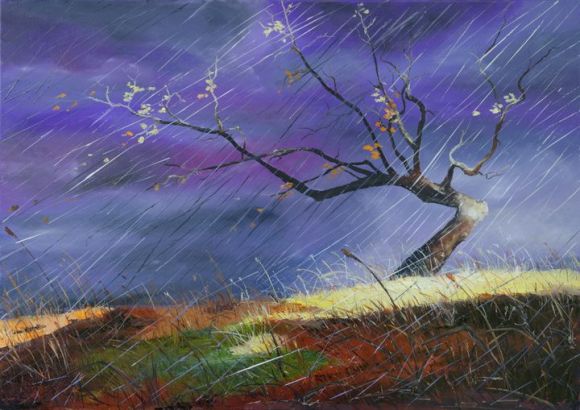
Storm in purple by Arina Tcherem. From Public Domain

If we take a look at our civilisation, there are multiple kinds of storms that threaten to annihilate our way of life and our own existence as we know it. The Earth and the human world face twin threats presented by climate change and wars. While on screen, we watch Gaza and Ukraine being sharded out of life by human-made conflicts over constructs made by our own ‘civilisations’, we also see many of the cities and humankind ravaged by floods, fires, rising sea levels and global warming. Along with that come divides created by economics and technology. Many of these themes reverberate in this month’s issue.

From South Australia, Meredith Stephens writes of marine life dying due to algal growth caused by rising water temperatures in the oceans — impact of global warming. She has even seen a dead dolphin and a variety of fishes swept up on the beach, victims of the toxins that make the ocean unfriendly for current marine life. One wonders how much we will be impacted by such changes! And then there is technology and the chatbot taking over normal human interactions as described by Farouk Gulsara. Is that good for us? If we perhaps stop letting technology take over lives as Gulsara and Jun A. Alindogan have contended, it might help us interact to find indigenous solutions, which could impact the larger framework of our planet. Alindogan has also pointed out the technological divide in Philippines, where some areas get intermittent or no electricity. And that is a truth worldwide — lack of basic resources and this technological divide.

On the affluent side of such divides are moving to a new planet, discussions on immortality — Amortals[1] by Harari’s definition, life and death by euthanasia. Ratnottama Sengupta brings to us a discussion on death by choice — a privilege of the wealthy who pay to die painlessly. The discussion on whether people can afford to live or die by choice lies on the side of the divide where basic needs are not an issue, where homes have not been destroyed by bombs and where starvation is a myth, where climate change is not wrecking villages with cloudbursts.  In Kashmir, we can find a world where many issues exist and violences are a way of life. In the midst of such darkness, a bit of kindness and more human interactions as described by Gower Bhat in ‘The Man from Pulwama’ goes some way in alleviating suffering. Perhaps, we can take a page of the life of such a man. In the middle of all the raging storms, Devraj Singh Kalsi brings in a bit of humour or rather irony with his strange piece on his penchant for syrups, a little island removed from conflicts which seem to rage through this edition though it does raise concerns that affect our well-being.

The focus of our essays pause on women writers too. Meenakshi Malhotra ponders on Manottama (1868), the first woman-authored novel in Bengali translated by Somdatta Mandal whereas Bhaskar Parichha writes on the first feminist Odia poet, Bidyut Prabha Devi.

Parichha has also reviewed a book by another contemporary Odia woman author, Snehaprava Das. The collection of short stories is called Keep it Secret. Madhuri Kankipati has discussed O Jungio’s The Kite of Farewells: Stories from Nagaland and Somdatta Mandal has written about Chhimi Tenduf-La’s A Hiding to Nothing, a novel by a global Tibetan living in Sri Lanka with the narrative between various countries. We have an interview with a global nomad too, Neeman Sobhan, who finds words help her override borders. In her musing on Ostia Antica, a historic seaside outside Rome, Sobhan mentions how the town was abandoned because of the onset of anopheles mosquitos. Will our cities also get impacted in similar ways because of the onset of global ravages induced by climate change? This musing can be found as a book excerpt from Abiding City: Ruminations from Rome, her book on her life as a global nomad. The other book excerpt is by a well-known writer who has also lived far from where he was born, MA Aldrich. His book, From Rasa to Lhasa: The Sacred Center of the Mandala is said to be “A sweeping, magnificent biography—which combines historical research, travel-writing and discussion of religion and everyday culture—Old Lhasa is the most comprehensive account of the fabled city ever written in English.”

With that, we come to our fiction section. This time we truly have stories from around the globe with Suzanne Kamata sending a story set in the Bon festival that’s being celebrated in Japan this week for her column. From there, we move to Taiwan with C. J. Anderson-Wu’s narrative reflecting disappearances during the White Terror (1947-1987), a frightening period for people stretched across almost four decades.  Gigi Gosnell writes of the horrific abuse faced by a young Filipino girl as the mother works as a domestic helper in Dubai. Paul Mirabile gives us a cross-cultural narrative about a British who opts to become a dervish. While Hema R touches on women’s issues from within India, Sahitya Akademi Award Winner, Naramsetti Umamaheshwararao, writes a story about children.

We have a powerful Punjabi story by Ajit Cour translated by C.Christine Fair. Our translations host two contemporary poets who have rendered their own poems to English: Angshuman Kar, from Bengali and Ihlwha Choi, from Korean. Snehaprava Das has brought to us poetry from Odia by Aparna Mohanty. Fazal Baloch has translated ‘The Scarecrow’, a powerful Balochi poem by Anwar Sahib Khan. While Tagore’s Shaishabshandha (Childhood’s Dusk) has been rendered to English, Nazrul’s song questing for hope across ages has been brought to us by Professor Fakrul Alam.

Professor Alam has surprised us with his own poem too this time. In August’s poetry selection, Ron Pickett again addresses issues around climate change as does Meetu Mishra about rising temperatures. We have variety and colour brought in by George Freek, Heath Brougher, Laila Brahmbhatt, Luis Cuauhtémoc Berriozábal, Snigdha Agrawal, William Miller, Ashok Suri, Scott Thomas Outlar, Dustin P Brown, and Ryan Quinn Flanagan. Rajorshi Patranabis weaves Wiccan lore of light and dark, death and life into his delicately poised poetry. Rhys Hughes has also dwelt on life and death in this issue. He has shared poems on Wales, where he grew up— beautiful gentle lines.

 In spring warm rain will crack
the seeds of life: tangled
roots will grow free again.

('Tinkinswood Burial Chamber' by Rhys Hughes)

With such hope growing out of a neolithic burial chamber, maybe there is hope for life to survive despite all the bleakness we see around us. Maybe, with a touch of magic and a sprinkle of realism – our sense of hope, faith and our ability to adapt to changes, we will survive for yet another millennia.

We wind up our content for the August issue with the eternal bait for our species — hope. Huge thanks to the fantastic team at Borderless and to all our wonderful writers. Truly grateful to Sohana Manzoor for her artwork and many thanks to all our wonderful readers for their time…

We wish you all a wonderful reading experience!

Gratefully,

Mitali Chakravarty.

borderlessjournal.com

[1] Homo Deus: A Brief History of Tomorrow (2015) by Yuval Noah Harari

.

Click  here to access the contents for the August 2025 Issue

.

READ THE LATEST UPDATES ON THE FIRST BORDERLESS ANTHOLOGY, MONALISA NO LONGER SMILES, BY CLICKING ON THIS LINK.

Categories
Poetry

Short Poems by Heath Brougher

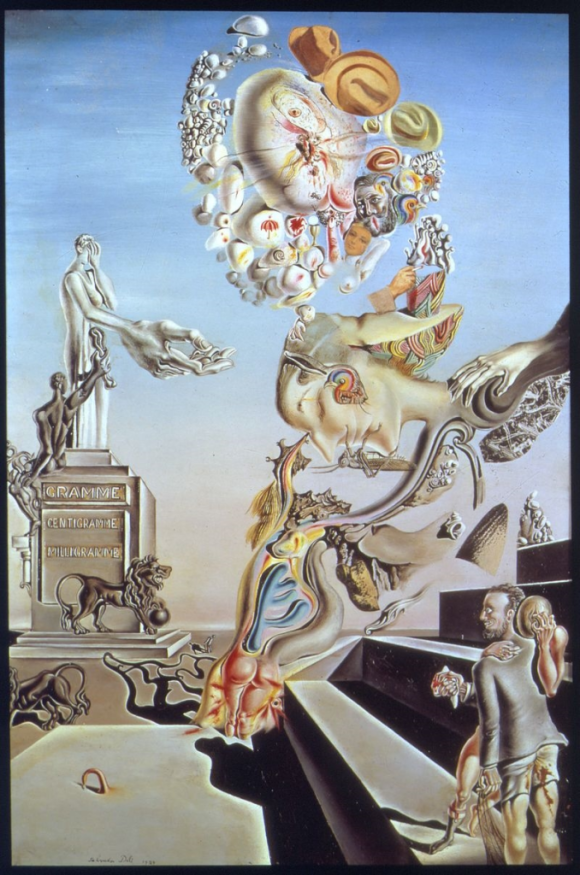
The Lugubrious Game by Salvador Dalí (1904-1989). From Public Domain
RIPPED NEUROLOGY 

Humanity has succumbed
to a state of severe brain damage
The scariest part is the people revel
in the bramble of their thorny shackles
and shambles—in celebration
of a negative freedom tolling
in a resonance of an oncoming Oligarchy.


ODE TO NON-EXISTENT SPRINKLER ROOM

Tonight, the movie theatre’s essence has overdosed on the poisonous Simulacra it spits like the sprinkler room that is not located here—it's located somewhere else. There is also a mentally ill duck-billed platypus that is not currently here. There's a lot of things not currently here—but mainly the what's not here is the sprinkler room, tolerance, mercy, or empathy.


EMPTY SPACES

Nothing is more
eternally togetherly alone
than a parking lot at midnight.


VOIDED MORNING

You open
your door
to hear the doldrumesque dirges
of the Gasmask Choir.

Time to put toxins upon toxins.
Time to be outsmarted
by soulless artificial idiocy.


PEARL

Hold onto the silk
and satin you emanate.
Stay up on your rise.
Don’t let the omnipresent
negativity pierce your soft
skin with its cancerous
vibrations. Look for, and find,
the bright-bright white void
of evil. You are the virgin in the cesspool
and always will be. Stay
robed in the gossamer gown you created
and keep an open ear
for the Universe has something
it needs to tell you.


Heath Brougher is the Editor-in-Chief of Concrete Mist Press. He has published twelve books and after spending the last five years editing the work of others is ready to get back into the creative driver seat. 

.

PLEASE NOTE: ARTICLES CAN ONLY BE REPRODUCED IN OTHER SITES WITH DUE ACKNOWLEDGEMENT TO BORDERLESS JOURNAL

Click here to access the Borderless anthology, Monalisa No Longer Smiles

Click here to access Monalisa No Longer Smiles on Kindle Amazon International

Categories
Contents

Borderless, November 2024

Art by Sohana Manzoor

Editorial

Clinging to Hope…Click here to read.

Translations

Nazrul’s Tumi Shundor Tai Cheye Thaki (Because you are so beautiful, I keep looking at you) has been translated from Bengali by Professor Fakrul Alam. Click here to read.

Hotel Acapulco, has been composed and translated from Italian by Ivan Pozzoni. Click here to read.

On the Reserved Seat of the Subway, a poem by Ihlwha Choi, has been translated from Korean by the poet himself. Click here to read.

Tagore’s Phul Photano (Making Flowers Bloom) has been translated from Bengali by Mitali Chakravarty. Click here to read.

Poetry

Click on the names to read the poems

Michael R Burch, Jahanara Tariq, Luis Cuauhtémoc Berriozábal, Shahalam Tariq, Stuart McFarlane, Saranyan BV, George Freek, G Javaid Rasool, Heath Brougher, Vidya Hariharan, Paul Mirabile, Ananya Sarkar, Ryan Quinn Flanagan, Pulkita Anand, Rhys Hughes

Musings/Slices from Life

Pinecones and Pinky Promises

Luke Rimmo Minkeng Lego writes of mists and cloudy remembrances in Shillong. Click here to read.

Elusive XLs

Shobha Sriram muses on weight management. Click here to read.

The Eternal Sleep of Kumbhakarna

Farouk Gulsara pays a tribute to a doctor and a friend. Click here to read.

Musings of a Copywriter

In Becoming a ‘Plain’ Writer, Devraj Singh Kalsi explores the world of writer’s retreats on hills with a touch of irony. Click here to read.

Notes from Japan

In Educating for Peace in Rwanda, Suzanne Kamata discusses the peace initiatives following the terrors of the 1994 Rwandan Genocide while traveling within the country with her university colleague and students. Click here to read.

Essays

The Year of Living Dangerously

Professor Fakrul Alam takes us back to the birth of Bangladesh. Click here to read.

Deconstructing Happiness

Abdullah Rayhan analyses the concept of happiness. Click here to read.

More Frequent Cyclones to Impact Odisha

Bijoy K Mishra writes of cyclones in Odisha, while discussing Bhaskar Parichha’s Cyclones in Odisha – Landfall, Wreckage and Resilience. Click here to read.

Stories

Hotel du Commerce

Paul Mirabile gives a vignette of life in Paris in the 1970s. Click here to read.

Chintu’s Big Heart

Naramsetti Umamaheswararao gives a value-based story about a child. Click here to read.

Headless Horses

Anna Moon relates a story set in rural Philippines. Click here to read.

A Penguin’s Story

Sreelekha Chatterjee writes a story from a penguin’s perspective. Click here to read.

Phantom Pain

Lakshmi Kannan writes of human nature. Click here to read.

Conversations

A conversation with Dutch author, Mineke Schipper, with focus of her recent book Widows: A Global History. Click here to read.

Ratnottama Sengupta converses with Veena Raman, wife of the late Vijay Raman, an IPS officer who authored, Did I Really Do All This: Memoirs of a Gentleman Cop Who Dared to be Different. Click here to read.

Book Excerpts

An excerpt from Vijay Raman’s Did I Really Do All This: Memoirs of a Gentleman Cop Who Dared to be Different. Click here to read.

An excerpt from Rhys Hughes’ Growl at the Moon, a Weird Western. Click here to read.

Book Reviews

Somdatta Mandal reviews The Collected Short Stories of Kazi Nazrul Islam, translated by multiple translators from Bengali and edited by Syed Manzoorul Islam and Kaustav Chakraborty. Click here to read.

Rakhi Dalal reviews The Long Strider in Jehangir’s Hindustan: In the Footsteps of the Englishman Who Walked From England to India in the Year 1613 by Dom Moraes and Sarayu Srivatsa. Click here to read.

Bhaskar Parichha reviews Mohammad Tarbush’s My Palestine: An Impossible Exile. Click here to read.

.

Click here to access the Borderless anthology, Monalisa No Longer Smiles

Click here to access Monalisa No Longer Smiles on Amazon International

Categories
Editorial

Clinging to Hope

I will cling fast to hope.

— Suzanne Kamata, ‘Educating for Peace in Rwanda

Landscape of Change by Jill Pelto, Smithsonian. From Public Domain

Hope is the mantra for all human existence. We hope for a better future, for love, for peace, for good weather, for abundance. When that abundance is an abundance of harsh weather or violence wrought by wars, we hope for calm and peace.

This is the season for cyclones — Dana, Trami, Yixing, Hurricanes Milton and Helene — to name a few that left their imprint with the destruction of both property and human lives as did the floods in Spain while wars continue to annihilate more lives and constructs. That we need peace to work out how to adapt to climate change is an issue that warmongers seem to have overlooked. We have to figure out how we can work around losing landmasses and lives to intermittent floods caused by tidal waves, landslides like the one in Wayanad and rising temperatures due to the loss of ice cover. The loss of the white cover of ice leads to more absorption of heat as the melting water is deeper in colour. Such phenomena could affect the availability of potable water and food, impacted by the changes in flora and fauna as a result of altered temperatures and weather patterns. An influx of climate refugees too is likely in places that continue habitable. Do we need to find ways of accommodating these people? Do we need to redefine our constructs to face the crises?

Echoing concerns for action to adapt to climate change and hoping for peace, our current issue shimmers with vibrancy of shades while weaving in personal narratives of life, living and the process of changing to adapt.

An essay on Bhaskar Parichha’s recent book on climate change highlights the action that is needed in the area where Dana made landfall recently. In terms of preparedness things have improved, as Bijoy K Mishra contends in his essay. But more action is needed. Denying climate change or thinking of going back to pre-climate change era is not an option for humanity anymore. While politics often ignores the need to acknowledge this crises and divides destroying with wars, riots and angst, a narrative for peace is woven by some countries like Japan and Rwanda.

Suzanne Kamata recently visited Rwanda. She writes about how she found by educating people about the genocide of 1994, the locals have found a way to live in peace with people who they addressed as their enemies before… as have the future generations of Japan by remembering the atomic holocausts of 1945.

Writing about an event which wrought danger into the lives of common people in South Asia is Professor Fakrul Alam’s essay on the 1971 conflict between the countries that were carved out of the 1947 Partition of the Indian subcontinent. As if an antithesis to this narrative of divides that destroyed lives, Luke Rimmo Minkeng Lego muses about peace and calm in Shillong which leaves a lingering fragrance of heartfelt friendships. Farouk Gulsara muses on nostalgic friendships and twists of fate that compel one to face mortality. Abdullah Rayhan ponders about happiness and Shobha Sriram, with a pinch of humour, adapts to changes. Devraj Singh Kalsi writes satirically of current norms aiming for a change in outlook.

Humour is brought into poetry by Rhys Hughes who writes about a photograph of a sign that can be interpreted in ways more than one. Michael Burch travels down the path of nostalgia as Ryan Quinn Flanagan shares a poem inspired by Pablo Neruda’s bird poems. Luis Cuauhtémoc Berriozábal writes heart wrenching verses about the harshness of winter for the homeless without shelter. We have more colours in poetry woven by Jahanara Tariq, Stuart MacFarlane, Saranyan BV, George Freek, G Javaid Rasool, Heath Brougher and more.

In translations, we have poetry from varied countries. Ihlwha Choi has self-translated his poem from Korean. Ivan Pozzoni has done the same from Italian. One of Tagore’s lesser-known verses, perhaps influenced by the findings of sensitivity in plants by his contemporary, Jagadish Chandra Bose (1858-1937) to who he dedicated the collection which homed this poem, Phool Photano (making flowers bloom), has been translated from Bengali. Professor Alam has translated Nazrul’s popular song, Tumi Shundor Tai Cheye Thaki (Because you are so beautiful, I keep gazing at you).

In reviews, Somdatta Mandal has discussed The Collected Short Stories of Kazi Nazrul Islam, translated by multiple translators from Bengali and edited by Syed Manzoorul Islam and Kaustav Chakraborty. Rakhi Dalal has written about The Long Strider in Jehangir’s Hindustan: In the Footsteps of the Englishman Who Walked From England to India in the Year 1613 by Dom Moraes and Sarayu Srivatsa, a book that looks and compares the past with the present. Bhaskar Parichha has written of a memoir which showcases not just the personal but gives a political and economic commentary on tumultuous events that shaped the history of Israel, Palestine, and the modern Middle East prior to the more than a year-old conflict. The book by the late Mohammad Tarbush (1948-2022) is called My Palestine: An Impossible Exile.

Stories travel around the world with Paul Mirabile’s narrative giving a flavour of bohemian Paris in 1974. Anna Moon’s fiction set in Philippines gives a darker perspective of life. Lakshmi Kannan’s narrative hovers around the 2008 bombing in Mumbai, an event that evoked much anger, violence and created hatred in hearts. In contrast, Naramsetti Umamaheswararao brings a sense of warmth into our lives with a story about a child and his love for a dog. Sreelekha Chatterjee weaves a tale of change, showcasing adapting to climate crisis from a penguin’s perspective.

Hoping to change mindsets with education, Mineke Schipper has a collection of essays called Widows: A Global History, which has been introduced along with a discussion with the author on how we can hope for a more equitable world. The other conversation by Ratnottama Sengupta with Veena Raman, wife of the late Vijay Raman, a police officer who authored, Did I Really Do All This: Memoirs of a Gentleman Cop Who Dared to be Different, showcases a life given to serving justice. Raman was an officer who caught dacoits like Paan Singh Tomar and the Indian legendary dacoit queen, Phoolan Devi. An excerpt from his memoir accompanies the conversation. The other book excerpt is from an extremely out of the box book, Rhys Hughes’ Growl at the Moon, a Weird Western.

Trying something new, being out of the box is what helped humans move out from caves, invent wheels and create civilisations. Hopefully, this is what will help us move into the next phase of human development where wars and weapons will become redundant, and we will be able to adapt to changing climes and move towards a kinder, more compassionate existence.

Thank you all for pitching in with your fabulous pieces. There are ones that have not been covered here. Do pause by our content’s page to see all our content. Huge thanks to the fantastic Borderless team and to Sohana Manzoor, for her art too.

Hope you enjoy our fare!

Mitali Chakravarty

borderlessjournal.com

Click here to access the  content’s page for the November 2024 Issue

.

READ THE LATEST UPDATES ON THE FIRST BORDERLESS ANTHOLOGY, MONALISA NO LONGER SMILES, BY CLICKING ON THIS LINK.

Categories
Poetry

Poetry by Heath Brougher

WRITE, RIGHT, LEFT, RIGHT?

Fearless shadows weave through
the transparent mirror’s
unlabyrinth of easy
glassless escape
mopping up every bit
of the neon epiphanies occurring


BUILT TO FEAR


A reverse luminescence. A flame
etched into the sky to remind
the crucified shoppers at the supermarket
that nothing is sacred. That hope
should be abandoned. That death
loves to live in negative paragraphs.

The blade might be dull
but it will get the job done.


IN MY HEAD


Dreams are made
twisting through
gray matter
and brain sand
of the spider’s cyst
next to the plentiful pineal
of my thinking machine unruffled by fluoride.
My intuition will rise
as my dreams will come True,
having escaped through lost hair
and continuous deep breathing.


FOR THE SAKE OF JOOST MEERLOO*

One insane source of "sanity" doused
with twelve years at the useful idiot factory,
poisoned by Pavlovian conditioning,
hammered into submission by authority,
rote teaching, society's poisonous mirrorism,
unliving their lives among the rusted shambles of shackles,
of the tainted orthodoxies existing in a realm outside
their ruinous rubbled and broken bubbled oblivion—

if one is not careful enough one just might end up a cop.


*Joost Abraham Maurits Meerloo (1903 – 1976), Dutch psychoanalyst

BULLET WITH A NAME

How many alarm clocks will it take
to wake up the entire “woke” world?
A drifter finds a home. It feels strange to him.
I used purple wood to frame a picture
of Gia herself smiling
big bloomy blossoms.

I pasted a red parasol to my lamp
to give it more heart.

In the land of the blind,
the one-eyed man is dead.

Leaves have begun to adorn and drown the ground.
Don’t stomp or impose boundaries on the molten coating of your skull.
I sit here, the world unfolds and unfurls,
as I call your bluff!
Heath Brougher

Heath Brougher is the Editor-in-Chief of Concrete Mist Press. He received Taj Mahal Review’s 2018 Poet of the Year Award and is a multiple Pushcart Prize and Best of the Net nominee. He has published 12 books and, the latest of which is “Beware the Bourgeois Doomsday Fantasy” (Sandy Press, 2024).

.

PLEASE NOTE: ARTICLES CAN ONLY BE REPRODUCED IN OTHER SITES WITH DUE ACKNOWLEDGEMENT TO BORDERLESS JOURNAL

Click here to access the Borderless anthology, Monalisa No Longer Smiles

Click here to access Monalisa No Longer Smiles on Amazon International

Categories
Contents

Borderless July 2023

Painting by Sohana Manzoor

Editorial

As Imagination Bodies Forth Click here to read.

Translations

Bankim Chandra Chattopadhyay’s Bangalar Nobbyo Lekhokdiger Proti Nibedon (a request to new writers of Bengali), has been translated from Bengali and introduced by Abdullah-Al-Musayeb. Click here to read.

Poetry on Rain by Masud Khan has been translated from Bengali by Professor Fakrul Alam. Click here to read.

Dancer by Bashir Baidar, has been translated from Balochi by Fazal Baloch. Click here to read.

Motherhood: A Tiny Life inside Me, a poem by Sangita Swechcha, has been translated from Nepali by Hem Bishwakarma. Click here to read.

The Wind and the Door, has been written and translated from Korean by Ihlwha Choi. Click here to read.

Megh or Cloud by Tagore has been translated from Bengali by Mitali Chakravarty. Click here to read.

Conversation

In conversation with Afsar Mohammad, a poet, a Sufi and an academic teaching in University of Pennsylvania. Click here to read.

Poetry

Click on the names to read the poems

Afsar Mohammad, Rhys Hughes, Kirpal Singh, Don Webb, Masha Hassan, Vernon Daim, George Freek, Arya KS, Robert Nisbet, Dr Kanwalpreet, John Grey, Nivedita N, Samantha Underhill, Vikas Sehra, Ryan Quinn Falangan, Saranyan BV, Heath Brougher, Carol D’Souza, Michael Burch

Poets, Poetry & Rhys Hughes

In Productivity, Rhys Hughes muses tongue-in-cheek on laziness and its contribution in making a nation more productive. Click here to read.

Musings/ Slices from Life

Should I stay or should I go?

Keith Lyons muses on our attitude towards changes. Click here to read.

Bangal-Ghoti-Bati-Paati or What Anglophilia did to My Palate

Ramona Sen journeys in a lighter vein through her taste buds to uncover part of her identity. Click here to read.

Awesome Arches and Acrophobia

Meredith Stephens takes us for a fabulous treat of Sierra Nevada mountains with her camera and narrative. Click here to read.

Musings of a Copywriter

In The Lost Garden, Devraj Singh Kalsi writes of how his sense of wellbeing mingles with plants. Click here to read.

Notes from Japan

In Better Relations Through Weed-pulling, Suzanne Kamata introduces us to an annual custom in Japan. Click here to read.

Essays

The Story of a Land at War with Itself

Ratnottama Sengupta presents the first hand account of the war in Bosnia-Herzegovina (1992-1995) from a letter from her brother, who was posted there as part of the peace-keeping troops. Click here to read.

‘Wormholes to other Worlds’

Ravi Shankar explores museums in Kuala Lumpur. Click here to read.

Stories

A Troubled Soul

Mahim Hussain explores mental illness. Click here to read.

The Llama Story

Shourjo shares a short fun piece written from a llama’s perspective. Click here to read.

Mister Wilkens

Paul Mirabile gives a strange tale set in Europe of the 1970s. Click here to read.

Book Excerpts

An excerpt from Red Sky Over Kabul: A Memoir of a Father and Son in Afghanistan by Baryalai Popalzai and Kevin McLean. Click here to read.

An excerpt from The Blue Dragonfly – healing through poetry by Veronica Eley. Click here to read.

Book Reviews

Somdatta Mandal reviews The Past is Never Dead: A Novel by Ujjal Dosanjh. Click here to read.

KPP Nambiar reviews The Stolen Necklace: A Small Crime in a Small Town by Shevlin Sebastian and VK Thajudheen. Click here to read.

Rakhi Dalal reviews Drop of the Last Cloud by Sangeetha G. Click here to read.

Bhaskar Parichha reviews Burning Pyres, Mass Graves and A State That Failed Its People : India’s Covid Tragedy by Harsh Mander. Click here to read.

.

Click here to access the Borderless anthology, Monalisa No Longer Smiles

Click here to access Monalisa No Longer Smiles on Kindle Amazon International

Categories
Editorial

As Imagination Bodies Forth…

Painting by Sybil Pretious
And as imagination bodies forth
The forms of things unknown, the poet's pen
Turns them to shapes and gives to airy nothing
A local habitation and a name

 A Midsummer Night's Dream (1595) by William Shakespeare

Famous lines by Shakespeare that reflect on one of the most unique qualities in not only poets — as he states — but also in all humans, imagination, which helps us create our own constructs, build walls, draw boundaries as well as create wonderful paintings, invent planes, fly to the moon and write beautiful poetry. I wonder if animals or plants have the same ability? Then, there are some who, react to the impact of imagined constructs that hurt humanity. They write fabulous poetry or lyrics protesting war as well as dream of a world without war. Could we in times such as these imagine a world at peace, and — even more unusually — filled with consideration, kindness, love and brotherhood as suggested by Lennon’s lyrics in ‘Imagine’ – “Imagine all the people/ Livin’ life in peace…”. These are ideas that have been wafting in the world since times immemorial. And yet, they seem to be drifting in a breeze that caresses but continues to elude our grasp.

Under such circumstances, what can be more alluring than reflective Sufi poetry by an empathetic soul. Featuring an interview and poetry by such a poet, Afsar Mohammad, we bring to you his journey from a “small rural setting” in Telangana to University of Pennsylvania, where he teaches South Asian Studies. He is bilingual and has brought out many books, including one with his translated poetry. Translations this time start with Bankim Chandra Chattopadhyay’s advice to new writers in Bengali, introduced and brought to us by Abdullah-Al-Musayeb. Tagore’s seasonal poem, ‘Megh or Cloud’, has been transcreated to harmonise with the onset of monsoons. However, this year with the El Nino and as the impact of climate change sets in, the monsoons have turned awry and are flooding the world. At a spiritual plane, the maestro’s lines in this poem do reflect on the transience of nature (and life). Professor Fakrul Alam’s translation of Masud Khan’s heartfelt poetry on rain brings to the fore the discontent of the age while conveying the migrant’s dilemma of being divided between two lands. Fazal Baloch has brought us a powerful Balochi poet from the 1960s in translation, Bashir Baidar. His poetry cries out with compassion yet overpowers with its brutality. Sangita Swechcha’s Nepali poem celebrating a girl child has been translated by Hem Bishwakarma while Ihlwha Choi has brought his own Korean poem to readers in English.

An imagined but divided world has been explored by Michael Burch with his powerful poetry. Heath Brougher has shared with us lines that discomfit, convey with vehemence and is deeply reflective of the world we live in. Masha Hassan is a voice that dwells on such an imagined divide that ripped many parts of the world — division that history dubs as the Partition. Don Webb upends Heraclitus’s wisdom: “War is the Father of All, / War is the King of All.” War, as we all know, is entirely a human-made construct and destroys humanity and one cannot but agree with Webb’s conclusion.  We have more from Kirpal Singh, Ryan Quinn Flanagan, Nivedita N, John Grey, Carol D’Souza, Vernon Daim, George Freek, Saranyan BV, Samantha Underhill and among the many others, of course Rhys Hughes, who has given us poetry with a unique alphabetical rhyme scheme invented by him and it’s funny too… much like his perceptions on ‘Productivity’, where laziness accounts for an increase in output!

Keith Lyons has mused on attitudes too, though with a more candid outlook as has Devraj Singh Kalsi with a touch of nostalgia. Ramona Sen has brought in humour to the non-fiction section with her tasteful palate. Meredith Stephens takes us on a picturesque adventure to Sierra Nevada Mountains with her camera and narrative while Ravi Shankar journeys through museums in Kuala Lumpur. We travel to Japan with Suzanne Kamata and, through fiction, to different parts of the Earth as the narratives hail from Bangladesh, France and Singapore.

Ratnottama Sengupta takes us back to how imagined differences can rip humanity by sharing a letter from her brother stationed in Bosnia during the war that broke Yugoslavia (1992-1995). He writes: “It is hard to be surrounded by so much tragedy and not be repulsed by war and the people who lead nations into them.” This tone flows into our book excerpts section with Red Sky Over Kabul: A Memoir of a Father and Son in Afghanistan by Baryalai Popalzai and Kevin McLean. Popalzai was affected by the Russian invasion of Afghanistan in 1980 and had to flee. A different kind of battle can be found in the other excerpt from The Blue Dragonfly – healing through poetry by Veronica Eley – a spiritual battle to heal from experiences that break.

In our reviews section, KPP Nambiar reviews The Stolen Necklace: A Small Crime in a Small Town by Shevlin Sebastian and VK Thajudheen, a book that retells a true story. Sangeetha G’s novel, Drop of the Last Cloud, we are told by Rakhi Dalal, explores the matrilineal heritage of Kerala, that changed to patriarchal over time. Bhaskar Parichha reviews Burning Pyres, Mass Graves and A State That Failed Its People: India’s Covid Tragedy by Harsh Mander. Parichha emphasises the need never to forget the past: “It is a powerful book and sometimes it is even shattering. The narrative is a live remembrance of a national tragedy that too many of us wish to forget when we should, instead, etch it in our minds so that we can prevent another national tragedy like this one from recurring in the future.”  While we need to learn from the past as Parichha suggests, Somdatta Mandal has given a review that makes us want to read Ujjal Dosanjh’s book, The Past is Never Dead: A Novel. She concludes that it “pays tribute to the courage and tenacity of the human spirit and its capacity for hope despite all odds.”

We have more content than mentioned here… all of it enhances the texture of our journal. Do pause by our July issue to savour all the writings. Huge thanks to all our contributors, artists, all our readers and our wonderful team. Without each one of you, this edition would not have been what it is.

Thank you all.

Have a wonderful month!

Mitali Chakravarty

borderlessjournal.com

.

Visit the July edition’s content page by clicking here

READ THE LATEST UPDATES ON THE FIRST BORDERLESS ANTHOLOGY, MONALISA NO LONGER SMILES, BY CLICKING ON THIS LINK.

Categories
Poetry

Strange New Home

Poetry by Heath Brougher

Outside the frame
                         is where we’re living now.
No big deal. Only a few will remember.

Outside the frame
                         is what we’re leaving in
on the outskirts and borders
of pastorals and self-portraits
of horses with broken legs.

The stallion paints as the bullet
rips through what will become
a headless space in a matter of milliseconds.

In the distance Beethoven’s “Ode to Joy”
can be heard resonating at a distorted frequency—
one that human ears can barely hear.

Hope is not lost though.

It’s still there — right
                          outside the frame.

Heath Brougher is the editor-in-chief of Concrete Mist Press as well as poetry editor for Into the Void Magazine. After spending the last four years editing the work of others, he is ready to get back into the creative driver seat. 

PLEASE NOTE: ARTICLES CAN ONLY BE REPRODUCED IN OTHER SITES WITH DUE ACKNOWLEDGEMENT TO BORDERLESS JOURNAL

Click here to access the Borderless anthology, Monalisa No Longer Smiles

Click here to access Monalisa No Longer Smiles on Kindle Amazon International