Storm in purple by Arina Tcherem. From Public Domain
If we take a look at our civilisation, there are multiple kinds of storms that threaten to annihilate our way of life and our own existence as we know it. The Earth and the human world face twin threats presented by climate change and wars. While on screen, we watch Gaza and Ukraine being sharded out of life by human-made conflicts over constructs made by our own ‘civilisations’, we also see many of the cities and humankind ravaged by floods, fires, rising sea levels and global warming. Along with that come divides created by economics and technology. Many of these themes reverberate in this month’s issue.
From South Australia, Meredith Stephens writes of marine life dying due to algal growth caused by rising water temperatures in the oceans — impact of global warming. She has even seen a dead dolphin and a variety of fishes swept up on the beach, victims of the toxins that make the ocean unfriendly for current marine life. One wonders how much we will be impacted by such changes! And then there is technology and the chatbot taking over normal human interactions as described by Farouk Gulsara. Is that good for us? If we perhaps stop letting technology take over lives as Gulsara and Jun A. Alindogan have contended, it might help us interact to find indigenous solutions, which could impact the larger framework of our planet. Alindogan has also pointed out the technological divide in Philippines, where some areas get intermittent or no electricity. And that is a truth worldwide — lack of basic resources and this technological divide.
On the affluent side of such divides are moving to a new planet, discussions on immortality — Amortals[1] by Harari’s definition, life and death by euthanasia. Ratnottama Sengupta brings to us a discussion on death by choice — a privilege of the wealthy who pay to die painlessly. The discussion on whether people can afford to live or die by choice lies on the side of the divide where basic needs are not an issue, where homes have not been destroyed by bombs and where starvation is a myth, where climate change is not wrecking villages with cloudbursts. In Kashmir, we can find a world where many issues exist and violences are a way of life. In the midst of such darkness, a bit of kindness and more human interactions as described by Gower Bhat in ‘The Man from Pulwama’ goes some way in alleviating suffering. Perhaps, we can take a page of the life of such a man. In the middle of all the raging storms, Devraj Singh Kalsi brings in a bit of humour or rather irony with his strange piece on his penchant for syrups, a little island removed from conflicts which seem to rage through this edition though it does raise concerns that affect our well-being.
Parichha has also reviewed a book by another contemporary Odia woman author, Snehaprava Das. The collection of short stories is called Keep it Secret. Madhuri Kankipati has discussed O Jungio’s The Kite of Farewells: Stories from Nagaland and Somdatta Mandal has written about Chhimi Tenduf-La’s A Hiding to Nothing, a novel by a global Tibetan living in Sri Lanka with the narrative between various countries. We have an interview with a global nomad too, Neeman Sobhan, who finds words help her override borders. In her musing on Ostia Antica, a historic seaside outside Rome, Sobhan mentions how the town was abandoned because of the onset of anopheles mosquitos. Will our cities also get impacted in similar ways because of the onset of global ravages induced by climate change? This musing can be found as a book excerpt from Abiding City: Ruminations from Rome, her book on her life as a global nomad. The other book excerpt is by a well-known writer who has also lived far from where he was born, MA Aldrich. His book,From Rasa to Lhasa: The Sacred Center of the Mandala is said to be “A sweeping, magnificent biography—which combines historical research, travel-writing and discussion of religion and everyday culture—Old Lhasa is the most comprehensive account of the fabled city ever written in English.”
With that, we come to our fiction section. This time we truly have stories from around the globe with Suzanne Kamata sending a story set in the Bon festival that’s being celebrated in Japan this week for her column. From there, we move to Taiwan with C. J. Anderson-Wu’s narrative reflecting disappearances during the White Terror (1947-1987), a frightening period for people stretched across almost four decades. Gigi Gosnell writes of the horrific abuse faced by a young Filipino girl as the mother works as a domestic helper in Dubai. Paul Mirabile gives us a cross-cultural narrative about a British who opts to become a dervish. While Hema R touches on women’s issues from within India, Sahitya Akademi Award Winner, Naramsetti Umamaheshwararao, writes a story about children.
With such hope growing out of a neolithic burial chamber, maybe there is hope for life to survive despite all the bleakness we see around us. Maybe, with a touch of magic and a sprinkle of realism – our sense of hope, faith and our ability to adapt to changes, we will survive for yet another millennia.
We wind up our content for the August issue with the eternal bait for our species — hope. Huge thanks to the fantastic team at Borderless and to all our wonderful writers. Truly grateful to Sohana Manzoor for her artwork and many thanks to all our wonderful readers for their time…
Neeman Sobhan, born in the West Pakistan of Pre-1971, continues a citizen of both her cultural home, Bangladesh, and her adopted home, Italy. Her journey took her to US for five years but the majority of times she has lived in Italy – from 1978. What does that make her?
She writes of her compatriots by culture – Bangladeshis — but living often in foreign locales. Her non-fiction, An Abiding City, gives us glimpses of Rome. These musings were written for Daily Star and then made into a book in 2002. Her short stories talk often of the conflicting cultures and the commonality of human emotions that stretch across borders. And yet after living in Rome for 47 years – the longest she has lived in any country – her dilemma as she tells us in this interview – is that she doesn’t know where she belongs, though her heart tugs her towards Bangladesh as she grows older. In this candid interview, Neeman Sobhan shares her life, her dreams and her aspirations.
Where were you born? And where did you grow up?
I was born in Pakistan, rather in the undivided Pakistan of pre-1971: the strange land we had inherited from our grandparents’ and parents’ generation when British colonial India was partitioned in 1947 down the Radcliffe line, creating an entity of two wings positioned a thousand miles apart on either side of India! The eastern wing, or East Pakistan was formerly East Bengal, and my cultural roots are in this part of the region because I come from a Bengali Muslim family. But I was born not there but in West Pakistan, which is culturally and linguistically distinct from Bengal, comprising the regions of Western Punjab, Sindh, Baluchistan and the NWFP (North-West Frontier Provinces, bordering Afghanistan), where the official language is Urdu.
So, my birthplace was the cantonment town of Bannu in the NWFP, (now KPK or Khyber Pakhtunkhwa).
Perhaps my life as the eternal migrant, living outside expected geographical boundaries started right there, at birth.
My father’s government job meant being posted in both wings of Pakistan. So, I grew up all over West Pakistan, and in Dhaka, whenever he was posted back to East Pakistan. Much of my childhood and girlhood were spent in Karachi (Sindh), Multan and Kharian (Punjab) and Quetta (Balochistan).
How many years did you spend in Pakistan?
The total number of years I spent in undivided Pakistan (West Pakistan, now Pakistan, and East Pakistan, now Bangladesh) is about two decades, or one year short of twenty years. From my birth in 1954, my growing years, till I left the newly independent Bangladesh in 1973 when I got married and came to the US at the age of nineteen.
What are your memories about your childhood in West Pakistan? I have read your piece where you mention your interactions with fruit pickers in Quetta. Tell us some more about your childhood back there.
I have wonderful memories of growing up in West Pakistan, in Karachi, Multan and Kharian of the late 50’s and early 60’s (despite the era of Martial Law under Field Marshall Ayub Khan, and later his military-controlled civilian government). However, the political environment is invisible and irrelevant to a child’s memories that center around family, school and playmates, till he reaches the teen years and becomes aware of the world of adults. Since, my father’ job entailed us going back and forth between West and East Pakistan, by the time we arrived in Quetta in late 1967, it ended up being my father’s last posting, because by then Ayub Khan’s regime was tottering under protests in both wings of Pakistan; and by the time (I should say in the nick of time) we left for Dhaka, it was already the turbulent year of 1970, which turned Pakistan upside down with General Yahya Khan becoming the new Marshall Law administrator. When we returned to Dhaka, it was the beginning of the end for Pakistan, with preparations for the first democratic general elections, and the blood soaked nine months war of independence for Bangladesh about to be staged.
But as a child, growing up in a Pakistan that was till then my own country, what remains in my treasure trove of memories are only the joys of everyday life, and the friendships (with those whom I never saw again, except one school friend from Quetta with whom I reunited in our middle age in Toronto, Canada!)
Also precious are the road trips with my five siblings and our adventurous mother, as we always accompanied our father on his official tours, across the length and breadth of West Pakistan.
But if I start to recount all my precious memories, I will need to write a thick memoir. And that is exactly what I have been doing over the years: jotting down my recollections of my past in Pakistan, for my book, a novel that is a cross between fact and fiction. The happy parts are all true, but the sad ones relating to the war that my generation underwent in 1971 as teenagers is best dealt with from the distance of fiction.
What I can offer is a kaleidoscopic view of some random memories: the red colonial brick residence of my family in the 60’s in Multan, one of the hottest cities of Punjab, known for its aandhi — dust storms — that would suddenly blow into the courtyard of the inner garden in the middle of the night as my sister and I slept on charpoys laid out in the cool lawn under a starlit sky, and being bundled up in our parents’ arms and rushed indoors; tasting the sweetest plums left to chill in bowls of ice; being cycled to school by the turbaned chowkidar weaving us through colourful bazars to the Parsi run ‘Madam Chahla’s Kindergarten School’ or on horse drawn tanga (carriages); learning to write Urdu calligraphic letters on the wooden takhta (board) with weed Qalam(pens) and a freshly mixed ink from dawaat (ink pots); and to balance this, my mother helping us to write letters in Bengali to grandparents back in East Pakistan on sky-blue letter pads, our tongues lolling as pencils tried to control the Brahmic alphabet-spiders from escaping the page.
In Karachi, returning home on foot from school with friends under a darkening sky that turned out to be swarms of locusts. Learning later that these grain eating insects were harmful only to crops not humans (and Sindhis actually eat them like fried chicken wings) does not take away the thrill of our adventure filled with exaggerated, bloodcurdling shrieks to vie with the screen victims of Hitchcock’s The Birds, viewed later as adults in some US campus. Picnics and camel rides on the seabeaches of Clifton, Sandspit, or Paradise Point. Near our home, standing along Drigh Road (the colonial name later changed to Shahrah-e-Faisal after King Faisal of Arabia, I later heard) waving at the motorcade of Queen Elizabeth II passing by with Ayub Khan beside her in a convertible with its roof down. That was in the 60’s. Later in 1970, embarking with my family on the elegant HMV Shams passenger ship at Karachi port for our memorable week long journey back to Dhaka across the Arabian Sea and the Indian Ocean, with a port of call at Colombo in what was still Ceylon, to disembark at Chittagong port, not knowing then that we were waving goodbye not just to the Karachi of our childhood but a part of our own country that would soon become the ‘enemy’ through its marauding army.
But I reset my memories and bring back the beauty and innocence of childhood with images of my family’s first sight of snowfall in Quetta, the garden silently filling with pristine layers of snowflakes piling into a cloudy kingdom under the freshly tufted pine trees, as we sipped hot sweet ‘kahwa’ tea, and cracked piles of the best chilgoza pine-nuts and dried fruits from Kabul. And since Quetta was our last home in Pakistan, I leave my reminiscences here.
In Front of their home With full family in the snow In Quetta: Photos provided by Neeman Sobhan
There are so many ways to enter the past. Photographs in albums discolor after a time, but words keep our lived lives protected and intact to be accessible to the next generation. I hope my novel-memoir will provide this.
How many countries have you lived in? Where do you feel you belong — Bangladesh, Pakistan, US or Italy — since you have lived in all four countries? Do you see yourself a migrant to one country or do you see yourself torn between many?
I have indeed lived in four countries, for varying lengths of time. In the sense of belonging, each country and stage of my life has left its unique impact. But I have still not figured out where I belong.
Although I lived in Pakistan and Bangladesh from birth till I was nineteen, these were the formative years of my life, and I feel they have coloured who I am fundamentally. The culture and languages of the subcontinent is fundamental to me as a human being. Also, having shared my parent’s experience of being almost foreigners and expats in their own country, trying to speak Urdu to create a Bengali lifestyle at home in a culturally diverse world of Punjabis, Sindhis, Baluchis or Pathans, I know it made them (and us as a family), different from our compatriots in East Pakistan who never left their region and had only superficial understanding of the West Pakistanis. My introduction to a migrant’s life and its homesickness started there, observing my parents’ life.
When I moved to the US after my marriage in 1973, it was to follow my husband Iqbal, to the Washington-Maryland area, where he had moved earlier as a PhD student after giving up, in 1971, his position in the Pakistani central government where he was an officer of the CSP (Civil Service of Pakistan) cadre. These were the days of being newly married and setting up our first home, albeit in a tiny student’s apartment, because more than as a home maker, I spent 5 years attending the University of Maryland as an undergraduate and then a graduate student. We thought our future might be here in the US, he working as an economist for a UN agency, and I teaching at a university. A classic version of the upwardly mobile American immigrant life.
But before we settled down, we decided to pursue a short adventure, and Iqbal and I came to Italy in 1978, from the US, on a short-term assignment with FAO, a Rome based agency of the UN. The mutual decision was to move here, temporarily! We would keep our options open for returning to the US if we did not like our life in Italy.
Well, that never happened! And given the fact that since then, we have spent the last 47 years in Italy, the Italian phase of my life is the longest period I have ever spent in any country in the last 71 years!
Meanwhile, we slowly disengaged ourselves from the US and it was clear that if we had to choose between two countries as our final homes, it would be between Bangladesh, our original home country, and Italy our adopted home.
Still, living away from ones’ original land, whether as an expatriate or an immigrant, is never easy. Immigrants from the subcontinent to anglophone countries like the US, UK, Canada, Australia etc, do not face the hurdles that migrants to Italy do in mastering the Italian language. I am still constantly trying to improve my language skills. Plus, there is the daily struggle to create a new identity of cultural fusion within the dominant and pervasive culture of a foreign land
So, in all these years, though I love Italy and my Roman home, I do not feel completely Italian even if my lifestyle incorporates much of the Italian way of life. For example, after a week of eating too much pasta and Mediterranean cuisine my husband and I yearn for and indulge in our Bengali comfort food. Although I enjoy the freedom and casual elegance of Italian clothes, I look forward to occasions to drape a sari, feeling my personality transform subtly, softly.
Yet, I cannot conceive of choosing one lifestyle over the other. The liberty to veer between different ways to live one’s life is the gift of living between two or more worlds.
The only incurable malaise, though, is the chronic nostalgia, especially during festivals and special occasions. For example, when Eid falls on a weekday, and one has to organise the celebration a few days later over a weekend, it takes away the spontaneous joy of connecting with one’s community, forcing one instead to spend the actual day as if it were an ordinary one. I miss breaking my fasts during the month of Ramadan with friends and family over the elaborate Iftar parties with special food back in Dhaka or celebrating Pohela Boishakh (Bengali new year) or Ekushey February (21st February, mother language day) in an Italian world that carries on with its everyday business, unaware of your homesickness for your Bengali world. Over the years, when my sons were in school, I made extra efforts for. But you know you cannot celebrate in authentic ways.
Of course, these are minor matters. And I am aware that by virtue of the fact that I have dual nationality (I’m both an Italian citizen, and a Bangladeshi), I cannot consider myself a true and brave immigrant — someone who leaves his familiar world and migrates to another land because he has no other options nor the means to return; rather, I feel lucky to be an ex-patriate and a circumstantial migrant — someone who chooses to make a foreign country her home, with the luxury of being able to revisit her original land, and, perhaps, move back one day.
Meanwhile, I feel equally at home in Italy and in Bangladesh because we are lucky to be able to make annual trips to Dhaka in winter.
Whether I am considered by others to be an Italo-Bangladeshi or a Bangladeshi-Italian, I consider myself to be a writer without borders, a global citizen. I feel, I belong everywhere. My home is wherever I am, wherever my husband and my family are. My roots are not in any soil, but in relationships.
I often quote a line by the Mexican poet Octavio Paz. “Words became my dwelling place.” It resonates with me because for me often, it is neither a tract of land, nor even people, but language, literature and my own writings that are my true sanctuary, my homeland. I feel blessed to have the gift of expressing myself in words and shaping my world through language. My home is etched on the written or printed page. My books are my country. It’s a safe world without borders and limits.
Maybe it’s the conceit of a writer and a migrant, nomadic soul, but I think our inner worlds are more substantial than our external ones.
When I read your writing, I find a world where differences do not seem to exist among people in terms of nationality, economic classes, race or religion. Is it not far removed from the realities of the world we see around us? How do you reconcile the different worlds?
I believe and trust in our common humanity, not the narrowness of nationality, race or religion. Nationality particularly is limiting, dependent on land, and boundaries that can shift due to physical or political exigencies. Nationality by conferring membership also necessarily excludes on the basis of manmade criteria, while humanity is boundless, all encompassing, and inclusive, based on shared natural, biological, and spiritual traits.
In my case, I consider the whole world my family. I say this not just as idealistic hyperbole and wishful thinking, but from the fact that I have a multi-cultural, multi-racial family. Only my husband and I are a homogenous unit being Bengali Muslims by origin, but both my sons are married outside our culture, race and religion. One of my daughters in law is Chinese, the other has an English-French father and a Thai mother. So, through my grandchildren, who are a veritable cocktail, yet my flesh and blood, I am related to so many races. How can I bear malice to any people on the globe? The whole world is my tribe, my backyard, where we share festivals and food and rituals and languages. We celebrate unity in diversity.
Kindness and caring for others are values I hold dear in myself and others. I believe in sharing my good fortune with others, and in peaceful co-existence with my neighbours, wherever I live. I believe in living with responsibility as a good citizen wherever I find myself. And so far, the world that I see around me, perhaps narrow, is peopled with those who invariably reflect my own sense of fraternity. Maybe I am foolish, but I believe in the essential goodness of humanity, and I have rarely been disappointed. Of course, there are exceptions and negative encounters, but then something else happens that restores ones faith.
Love is more powerful than hate and generates goodness and cooperation. Change can happen at the micro level if more people spread awareness where needed. Peace can snowball and conquer violence. The human will is a potent spiritual tool. As is the power of the word, of language.
Literature is about connections, communications, bridges. It can bring the experiences and worlds of others from the margins of silence and unspoken, unexpressed thoughts and emotions into the centre of our attention. It brings people who live in the periphery within our compassionate gaze. Language is one of the most effective tools for healing and building trust. Responsible writers can persuasively break down barriers and make the world a safe home and haven for everyone, every creature.
You have a book of essays on Rome, short stories and poems set in Rome. Yet you call yourself a Bangladeshi writer. You have in my perception written more of Rome than Bangladesh. So which place moves your muse?
Any place on God’s beautiful earth can move my muse. Still, the perception is not completely accurate that I have written more of Rome than Bangladesh. It is true that many of my columns, short fiction or poems are set in Rome, but they are not necessarily just about Italy and Italians. In fact, my columns and poems were written from the perspective of a global citizen, who celebrates whichever place she finds herself in.
Poetry, in any case, is never just about any place or thing, but a point of departure. It always goes beyond the visual and the immediate and transcends the particular to the philosophical. The sight of a Roman ruin may jumpstart the poem, but what lifts it into the stratosphere of meaningful poetry is the universal, the human. For example, even when my poem speaks of a certain balcony in Verona, the protagonist is not a girl called Juliet but the innocence of first love, in any city, in any era.
My book of short stories, even when located in Rome, actually concern characters that are mostly Bangladeshi. In fact, it is my fiction that makes me a Bangladeshi writer, because my stories are ways for me to preserve my memories of the Bengali world of my past and an ephemeral present. I write to root myself. I often feel that I should write more about the new Italians, the Bangladeshi immigrants generation, rather than the expats of my generation, but my writing stubbornly follows its own compass.
Regarding my book of essays, my original columns for the Daily Star were written about many other cities I travelled to, including Dhaka and places in Bangladesh, and encounters with people in various countries not just Italy. Constrained to select columns from two decades of weekly writing, for a slim volume to be published, I narrowed the field of topics to Italy and Rome. But I had many essays and travel pieces concerning China, Russia, Vietnam, Egypt, Brazil, Spain, Netherlands and many other European cities and Asian capitals. In the end, a handful of columns about Italy became my book An Abiding City: Ruminations from Rome.
However, in the preface I said: “I must remind that the scope of the book, as suggested in the title, is ‘Ruminations FROM Rome’ not ‘Ruminations ON Rome’ with a tacit emphasis on ‘from’ because the writing relates to matters not just concerning ROME but also encompasses reflections of a more general kind. This is a collection of writings from a columnist who, within her journey through the Eternal City, also attempts to share with her readers her passage through life. I wish my fellow travellers a smoothsojourn into my abiding city, the one WITHIN and WITHOUT.”
I know that had I not lived in Rome but, say, Timbuctoo, I would find something to inspire me to write about. Of course, I am privileged to have lived in Rome and Italy, but nature is beautiful everywhere, in its own way, and there are other civilisations with rich cultures, histories, arts, cuisines, poetry and philosophy that can inspire the sensitive observer and writer.
My elder son lives in Jakarta, my younger son in Bangkok and in all the years of visiting them, I am blown away by the culture and beauty of the Indonesian and Thai worlds, and I have a notebook full of unwritten essays. And there is still so much of the world I have not seen, yet every part of this wondrous earth including my backyard is a chapter in the book of human knowledge. So, had I never left Bangladesh I would still have written. Perhaps “Doodlings from Dhaka!”
What inspires you to write?
Many things. A face at a window, a whiff of a familiar perfume, an overheard conversation, a memory, a sublime view…. anything can set the creative machine running. Plus, if I’m angry or sad or joyous or confused, I write. It could become a poem, fiction, or a column.
The writer in me is my inner twin that defines my essential self. I am a contented wife of 52 years of marriage, a mother of two sons, and a grandmother of four grandsons (aged 8-7-6-5). These roles give me joy and help me grow as a human being. But my writer-self continues on its solitary journey of self-actualisation.
Yet, I write not just for myself, I write to communicate with others. I write to transmit the nuances of my Bengali culture and its complex history to my non-Bengali and foreign readers and students, but more importantly to my own sons, born and brought up in Italy, and my grandchildren, whose mothers (my daughters-in-law) are from multi-cultural backgrounds, one a Chinese, and the other a combination of English, French and Thai. I write also for the younger generation of Bengalis, born or raised abroad, who understand and even speak Bangla, but often cannot read the language, yet are curious about their parents’ world and their own cultural heritage.
What started you on your writerly journey? When did you start writing?
I have always written. As an adolescent, I wrote mostly poetry, and also kept a journal, which I enjoyed reading later. It created out of my own life a story, in which I was a character enacting my every day. It clarified my life for me. Interpreted my emotions, explained my fears and joys, reinforced my hopes and desires. Writing about myself helped me grow.
My columnist avatar is connected to this kind of self-referral writing, but in real life it emerged by accident when I was invited to write by the editor of the Daily Star. The act of producing a weekly column was a learning experience, teaching me creative discipline and the ability to marshal my life experiences for an audience. I learnt to sift the relevant from the irrelevant and to edit reality. What better training for fiction writing? For almost two decades my experience as a columnist was invaluable to my writer’s identity.
Soon I concentrated on fiction, especially short stories that were published in various anthologies edited by others in Bangladesh, Pakistan and India. I now realised that while column writing was about my life in the present tense and about the daily world around me, my fiction could finally involve the past. The result was my collection of short stories: Piazza Bangladesh.
Ironically, it was my book of poems, Calligraphy of Wet Leaves that was the last to be published.
Your short stories were recently translated to Italian. Have you found acceptance in Rome as a writer? Or do you have a stronger reader base in Bangladesh? Please elaborate.
Without a doubt, as an anglophone writer, my reader base is better not just in Bangladesh, but wherever there is an English readership. However, books today are sold not in bookshops but online, so these days readers live not in particular cities or countries but in cyberspace.
But living in Italy as a writer of English has not been easy. The problem in Italy is that English is still a foreign and not a global language, so very few people read books in the original English. Every important or best-selling writer is read in translation. This is unlike the Indian subcontinent where most educated people, apart from reading in their mother tongues, read books, magazines and newspapers in English as well.
This is why I was thrilled to finally have at least one of my books translated into Italian, and published by the well-known publishing house, Armando Curcio, who have made my book available at all the important Italian bookstore chains, like Mondadori or Feltrinelli. Also, through reviews and social media promotion by agents and friends, and exposure through book events and literary festivals in Rome, including a well-known book festival in Lucca, it has gained a fair readership.
That’s all I wish for all my books, for all my writing, that they be read. For me, writing or being published is not about earning money or fame but about reaching readers. In that sense, I am so happy that now finally, most of my Italian friends and colleagues understand this important aspect of my life.
You were teaching too in Rome? Tell us a bit about your experience. Have you taught elsewhere. Are the cultures similar or different in the academic circles of different countries?
I taught Bengali and English for almost a decade at the Institute of Oriental Studies of the University of Rome, La Sapienza., till I retired, and it was an enriching experience.
I studied for a year at the University of Dhaka before I got married and came to the US in 1973, where I continued my studies at the University of Maryland, earning my B.A in Comparative Literature and M.A in English Literature. I mention this because these experiences gave me the basis to compare the academic cultures in the Bangladeshi, American and Italian contexts.
I discovered more in common between the Bangladeshi and Italian academic worlds, especially regarding the deferential attitudes of students towards their teachers. In Italy, a teacher is always an object of reverence. In contrast, I recall my shock at the casual relationships in the American context, with students smoking in front of their teachers, or stretching their leg over the desk, shoes facing the professor. Of course, there was positivity in the informality and camaraderie too, between student and teacher. But with our eastern upbringing we cannot disregard our traditional veneration of the Guru and Master by the pupil.
In Italy it was rewarding for me to have received respect as a ‘Professoressa’ while teaching, and even now whenever I meet my old students. However, some of the negative aspects of the academic world in Italy linked to the political policies that affect the way old institutions are run, cause students to take longer to graduate than at universities in the UK or US for example.
Are you planning more books? What’s on the card next?
I have a novel in the pipeline, a fusion of fiction and memoir, that has been in gestation for more than a decade. Provisionally titled ‘The Hidden Names of Things’, it’s about Bangladesh, an interweaving of personal and national history. It’s almost done, and I hope to be looking for a publisher for it soon. Perhaps, it has taken so long to write it because over the years while the human story did not change much, the political history of the country, which is still evolving through political crises kept shifting its goal posts, impacting the plot.
Most of my writings illustrate, consciously or inadvertently, my belief that as against political history our shared humanity provides the most satisfying themes for literature.
To share my stories with a readership beyond the anglophone one, my collection of stories ‘Piazza Bangladesh’ was translated into Italian and published recently in Italy, as ‘Cuore a Metà’ (A Heart in Half) which underlines the dilemma of modern-day global citizens pulled between two worlds, or multiple homes.
Meanwhile, my short stories, poems and columns will be translated into Bengali to be published in Dhaka, hopefully, in time for the famous book fair in February, Ekushey Boimela. Then my journey as an itinerant Italian-Bangladeshi writer will come full circle and return home.
Let me be honest enough. When I received this book for review penned by a Sri Lankan author, I expected it to be a debut novel written by a person who is one of the many new voices that keep on emerging in sub-continental English fiction every other day. But the unusual name of the author made me enquire a little further to find out that he was half Tibetan and half English, educated at Eton and Durham in England, and has been managing an international school in Sri Lanka for thirty years. All these issues account for and contribute to the background of the novel’s setting. More surprise was in store when I found that Chhimi Tenduf-La has been writing fiction for the past ten years and his first novel, The Amazing Racist, was published way back in 2015. Since then, he has penned two more books and now his fourth book, A Hiding to Nothing, is what he himself defines as his “first domestic thriller.”
Such background information therefore definitely helps the reader to understand the nature of this present novel, which is set in Colombo’s manicured gardens owned by rich, elite and sometimes dicey people, and simultaneously moves to the activities set in England in Durham’s cobblestone streets.
The central issue of the story revolves around the miscarriage of Neja Pinto after she marries Ramesh in England and her subsequent inability to conceive which results in taking recourse to surrogacy. Believing in the stigma of South Asian sensibilities when a woman is looked down upon if she cannot give birth to her own off-spring, they want to keep the entire matter as secretive as possible so that they can come back from England to Sri Lanka and claim the child, Devin, as their own biologically born offspring till a point when the child is kidnapped by unknown people. From this point begins a lot of questions like who would dare take Devin – and why? As the incidents of the story march forward at electronic speed, creating the right atmosphere of a well-devised whodunit, the novel is crowded with innumerable characters, some unique, others quite stereotypical, but none out of suspicion. Is it the swimming coach Neja gets too close to? Could it be the ghosts of their past – the ruthless creditors Ramesh deceived in a Ponzi scheme, now back for blood? Or is it the enigmatic Dr Haksar who helped them have a child? And what of the mysterious woman from the British High Commission, whose probing questions hint at knowledge she shouldn’t possess? As the whispers grow louder, one name resurfaces with terrifying weight: Satya Basu, who actually bears the child in lieu of money. Is she back to settle an old score?
As mentioned earlier, at the centre of the story are the protagonists Neja and Ramesh Pinto, who are now husband and wife, but are also portrayed in their pre-marital days in England. Then there is Ramesh’s mother Loku Madam who is a stern and powerful woman with complete control over her son, which results in a sort of mother fixation. Loku Madam is planning a fourth marriage with a rich tea garden owner.
There is a swimming pool trainer called Johnny Dias with whom Neja has a fling resulting in several complications in the plot; the child Devin who disappears after he is kidnapped and from where many more eventful activities take place in the story; then there is Mercy Mbangwa who works at the British High Commission but also takes too much of an interest in the affairs of Neja and Ramesh Pinto. The Pintos take on names as Nita and Ravi Ponniah when they live in Durham because they want to remain incognito and take possession of a surrogate child in the making by another character called Satya Basu ( I am surprised because though ending with an ‘a’, in Bengali Satya is usually a male name and not a female one), Dr. Haksar and several other characters, all of whom are illegal immigrants in England. There are bartenders, hustlers and many other minor characters that crowd the scene too.
Chhimi Tenduf-La unravels a suspenseful tale where the truth is elusive – and the cost of uncovering it may be too high to bear. He brings in all possible locations and situations with very intense visual details which makes us feel it to be the right ambience for a Netflix movie. The novel is architecturally very carefully set through fifty-six chapters (some as short as one and a half pages) to others slightly longer, and the chapters are very carefully juxtaposed by alternating between Sri Lanka, 2024 and London/England 2015, 2016, 2017 and 2018. In fact, the last chapter brings us to the present Sri Lanka in 2025 where finally all the mysteries are unravelled and the author hints at a positive and optimistic note where all the sound and fury is resolved to a quiet ending.
The racy speed at which the author takes the readers through this 310 page-turner mystery at times makes one confused and it seems that since he is attempting a new sub-genre of what he calls a first attempt at a ‘domestic thriller’, he has attempted to put in as many things as possible. Some of that could probably have been avoided. But his innovative style and deft handling of the English language needs special mention, and this reviewer strongly recommends everyone to read and appreciate the novel.
.
Somdatta Mandal, critic and translator, is a former Professor of English at Visva Bharati, Santiniketan.
PLEASE NOTE: ARTICLES CAN ONLY BE REPRODUCED IN OTHER SITES WITH DUE ACKNOWLEDGEMENT TO BORDERLESS JOURNAL
His name was “Nandu”. He was a servant in our neighbour’s house, where he did all of the household chores. He was a smallish boy. Who knows what his actual name was. Everyone just called him Nandu.
Sometimes he would finish his work in the afternoon and would come sit with me. Although he was from Garhwal, he spoke Punjabi well, albeit haltingly. His face always made it appear as though he were laughing. We gave him the nickname “Laughing Man.”
“Nandu, how many brothers and sisters do you have?”
“Four sisters and three brothers. All of the sisters are older than I am, and the brothers are younger.”
Then Nandu fell silent. It was as if he were thinking that if his brothers were older, they would be working, and Nandu would not have cuts on his hands from washing vessels all day at such a young age. Nor would he have been forced to leave his small house nestled in the mountains.
“Nandu, how did you manage to leave your parents and everyone else to come here?”
Then he smiled, and his lips spread out. “Who knows why?” he smiled, but it seemed as if the smile was trying to convince me that it doesn’t matter whether you want to or don’t want to do all of this work, you still have to do it. Right?
“Madam, back there, we barely eat twice a day. We cooked once a day, and we ate the leftovers for a second meal. Moreover, I was not free there at all. I would take the cows outside for grazing. I also bathed them sometimes. I would also feed them fodder. When my mother would milk the cows, I wanted to drink the milk fresh from the bucket. But madam…if we don’t sell the milk, then maybe we won’t even be able to cook one meal.
“And there, people must have their own lands?”
“What kind of lands, Madam? Just small parcels. And then you have to pay land tax and interest on the loan.”
When Nandu spoke like this, it seemed to me that this child was a fifty-year-old man. Yet he was hardly thirteen years old. He was eight or nine when he ran away from his village to come here. Perhaps, he couldn’t tolerate hunger. There had been a time when he had been self-respecting. He would go on saying, “Where I used to work before, the old woman was angry with me one day. And I left.”
I was astonished that now he is verbally abused all day long, but he has gone nowhere. The reason may be that he had grown accustomed to it.
Nandu only spoke Punjabi. He would say that he had forgotten Garhwali. And he never posted letters to his family. He would say that he only knew his father’s name and the name of his village. Nothing else. And the villages in Garhwal had such long addresses. Sometimes he would become very sad thinking of his mother and father. Once, I saw him outside, wiping his eyes with his dirty Ludhiana shirt. But usually, he would try to hide his pain in a smile from which his broad lips would stretch wide. He said carelessly, “According to them, I died long ago.”
Our neighbors were Sikhs. And Nandu bought a gutka[1] with his salary, even though he was completely illiterate. (He only took that part of his salary that he needed for necessities.) He also bought a picture of Guru Gobind Singh Ji and wrapped it in his spare shirt to keep it safe. When the shirt he is wearing gets dirty, he washes it, wraps the picture of Guru Gobind Singh in it, and wears the other shirt.
Over time, he began imitating the children of his boss, a Sikh man, and began wearing a turban. He also got the worn-out turban of his boss’s youngest son. For two annas, he bought some grey dye and dyed the turban. He also acquired a small kirpan[2], which he did not remove while bathing or sleeping. He went from Nandu to Nand Singh.
One time, a man from his village came to find him.
“Does someone by the name of Nandu live here? “There’s no one here by that time. You’ve come here by mistake,” Nandu said with deliberation. He was already afraid that if some man from the village recognised him, he would have to send money home. And maybe he would have to return to that place, where, after caring for the cows all day, he got only one meal, and for the second meal, he was given dried pieces of roti. Here, he could satisfy his hunger at least twice a day. He didn’t need to worry a bit about work. And what about scolding and abuse? Ultimately, a person learns to tolerate these things.
Even though Nandu’s face had completely changed, seeing his wide laughing lips, the man from his village recognised him. He said something to Nandu in Garhwali. Nandu began to say somewhat angrily, “I don’t understand what you are saying. Don’t talk nonsense. Speak correctly.”
And the next day in the afternoon, when he told me that he no longer understood Garhwali, I suddenly let out a sigh. Maybe I sighed because Nandu had forgotten his mother tongue, which must have been the first words he heard when God threw him on this planet, thinking him to be disposable.
“What did he say to you, Nandu?”
“Nothing. He said only that ‘your mother is missing you a lot.’ But I know no one is crying for me. She must be thankful that there is one less hungry mouth to feed. She used to always say to me, ‘May you die.’”
But that man from Nandu’s village kept coming around. Over time, Nandu’s heart softened. Nandu remembered his mother, he remembered his elderly father, who must no longer be able to work the fields. And Nandu remembered his small, dirt shack, whose outside wall was plastered with rocks. The fragrance of fresh soil and paste made of cow dung and mud floated to his mind. And now Nandu was constantly sad. In the end, he was still a child, all of thirteen years old.
Then one day, who knows what happened, but cysts appeared near his ear. The boss, the Sikh, was charry of the illness, thinking no one would keep a sick man in his house. He tossed Nandu out. While leaving, Nandu cried copiously! He gave me the gutka and the picture of Guru Gobind Singh. He was going back to his village. He said he would take them back when he returned from his village.
So much time had passed without hearing from him. On several occasions, my eyes would well up looking at his things. Poor Nandu.
Then one day, there was a knock at my door. It was the afternoon. I opened the door. A smallish boy was standing there wearing a dirty hat and a filthy shirt, and in his hands was a smallish bundle. I thought someone must have come to meet our servant. But seeing those wide lips smiling in his laughter, I immediately recognised him. It was him. Nandu.
Nandu had cut his long hair. Now his name was Anand Ram. I asked him how he was doing and gave him some water. He spoke haltingly. While speaking, he said some words that I had difficulty understanding. In the end, embarrassed, he began to explain that due to living in his village, it was hard for him not to speak Garhwali. In the end, he was still Nandu, who had come to me in the afternoon and to tell me all of his sorrows.
“Your things are still with me, Nandu.”
“You keep them.” It seemed as if words were not coming to him. He didn’t know what to say, “I have another photo.” He began to open his bundle. There were a few pieces of clothing from which Nandu withdrew a picture. It was a picture of Lord Krishna.
I kept on thinking that hunger knows no religion. Wherever one gets food, one adopts that religion and that language. Then what is the essence of a person? A cog that has to fit into every machine because a cog outside of a machine doesn’t get oil, and it becomes rusty. And Nandu? What was Nandu? A thing without life? He was a ball rolling down the mountainside, which, moving very quickly down the hill, would get stuck on a rock momentarily, then again begin rolling. Maybe Nandu was like that same wind-up doll that my little brother has. The only difference is that the wind-up doll is fat, whereas every one of Nandu’s ribs could be counted.
After two years, Nandu came yesterday. There was barely any difference in his build. I recognised him immediately. But he could not recognise my little brother. In those two years, he had grown a lot. The wheels of time leave different marks on different people.
Now Nandu spoke Hindi. He spoke some words very quickly, which I had difficulty understanding.
“So Nandu, where are you these days?”
“I’m working for a woman from Madras. She’s terrible. She harasses me a lot. Otherwise, everything is fine. Initially, I couldn’t eat their food, but now I can.”
Then I thought he was doing this just to keep his belly full, just like sparrows and crows who eat to keep their bellies full. Just like wild dogs roaming the streets to fill their bellies. What is a meal? Whatever you get, you eat, whether it’s leftover food or something else. Something just to fill one’s stomach. But to feed himself, one has to sell himself.
I had thought that Nandu had sometimes become Nand Singh and sometimes Anand Ram. There was a time when he kept a picture of Guru Gobind and a gutka. Now he keeps a picture of Krishna. Sometimes he spoke Garhwali, sometimes Punjabi, and now Hindi. But Nandu kept on washing dishes. Nandu kept on sweeping. He kept on washing clothes. He went on cooking. And he continued to be scolded. Still, he’s a child. Poor Nandu!
“Sister, are you still writing stories?”
“Yes, Nandu. I’m writing now.”
“And you were saying that you were going to write my story?”
I smiled. Feeling demoralized, he began to ask, “But who will read it?”
Then it occurred to me that Nandu couldnot read his story himself, but many others would read it.
“Nandu, the people of future generations will read about Nandu and thousands of Nandus, just like the Bible. And these stories will be worshiped just like you worship these pictures. Because you all strengthen the foundations of the new world.”
Who knows whether he understood what I was saying, but he smiled.
[2] Small dagger, a ritualistic thing carried by Sikh men
Ajit Cour
Ajeet Cour (born 1934) is an Indian writer who writes in Punjabi. She is a recipient of the Sahitya Akademi Award and the Padma Shri, the fourth-highest civilian award by the Government of India. She is the author of twenty-two books, including novels, novellas, short stories, biographical sketches, and translations. Her novellas include Dhup Wala Shehar (The town with Sunshine) and Post Mortem. Her novel, Gauri, was made into a film, while her short story Na Maaro (Don’t Beat) was serialised for television. Her works have been translated into English, Hindi, and several other languages.
C. Christine Fair (born 1968) did her Ph.D. in South Asian Languages and Civilizations at the University of Chicago. She is currently a professor of Security Studies at Georgetown University. Her translations have appeared in Muse India, Orientalia Suecana, The Bangalore Review, Borderless, The Punch Magazine, The Bombay Literary Magazine, and The Bombay Review.
Whirling Dervishes, painting by Jean Baptiste Vanmour (1671-1737). From Public Domain
In 1976, I bought a small country cottage very pleasantly located near the town of Sheffield at Dronfield in South Yorkshire from an elderly woman who informed me she that had travelled quite extensively throughout Asia in the nineteen twenties and thirties before settling down here. She never married. The learned woman left no forwarding address.
Settling in took much time and energy because of my abundant belongings. At last, one rainy afternoon having nothing to do, I climbed the shaky stairway that led to the garret. The door had been left ajar. Inside the low-ceiling, ill-lite space, there was nothing but a large chest placed in the middle. The lid lay aslant. Its hinges were broken.
Curious about its contents, I began rummaging through the numerous newspaper and magazine clippings, booklets, letters and other documents. A particular envelop caught my eye because the red wax seal had been broken. Wax-sealed letters are very out-dated these days. When I opened the envelop I understood why it was sealed. A seven-page letter had been written in fine, elegant script, by Lady Sheil, dated 1869. Lady Sheil was quite a prominent woman in her time[1] . This indeed was a remarkable find. It baffled me why the former proprietor would leave in a chest of documents a letter of such archival interest. Since there was little light in the garret, I took the letter downstairs to read it. Unfortunately there was no addressee, so I assumed it was sent to the former proprietor. I must confess that a feeling of guilt touched me when I began my reading. Luckily I overcame this sensation because the contents of the letter proved extraordinary …
Lady Sheil details a very peculiar adventure of an Englishman who named himself Ali the Dervish -or as she spelt it, Deervish — who had undertaken a voyage to ‘Balochestan, Persia’[2]. As I read through her letter, I came to realise that the Englishman had abandoned his British ways entirely, adopting those of the semi-nomad Balochi. To such an extent was his assimilation that he even married a Balochi woman, something utterly unthinkable at that time — in the year 1856. Why Lady Sheil would write a long letter about this chap to an unknown reader or readers heightened my curiosity.
I began investigations at the Sheffield library and found Lady Sheil’s Glimpses of Persian[3] though I found nothing at all about Ali the Dervish. Lady Sheil mentioned something about his diary but nothing substantial came of this. Be that as it may, the letter fascinated me by its mysterious allusions and ellipses, especially concerning this unusual identity change. Not a simple task for a European in the nineteenth century, or even in our century for that matter. This Ali even outdid Sir Richard Burton’s bursts of outlandish impersonation …
Examining the letter carefully, I felt a strange, slight tremor goading me to do justice to this eccentric Ali. Something unsaid in the sentences urged me to read between them, to scrutinize the margins and the paragraph indents as if Lady Sheil had deliberately left out parts of her narrative for her reader to fill in those blank, yellowing spaces.
I picked up my pen, imagining myself to be both Lady Sheil and Ali the dervish, and began filling in the those blanks, writing in the gaps, the lacuna, the untold events and details so to speak. Indeed, I had convinced myself that the letter had been destined for me. And this resolution was enough for me to divulge the mystery of Ali …
Ali, whose English-born name was left unknown, had had the best of aristocratic educations in the fine arts, especially languages. He was fluent in Hindustani, Persian, Pashtun and Turkish, besides having mastered four or five European languages, including Hungarian. This was quite a linguistic feat, second only to Richard Burton whom, by the way, Ali had the occasion to meet in Lahore. A meeting which lasted two or three weeks according to a friend of Burton’s memoirs. Little, however, is reported about their relationship.
Prior to Ali’s arrival in India and that fortuitous encounter with Burton, he apparently had led a rather lukewarm existence in England, and this in spite of his family wealth, or perhaps because of it. His accumulation of capital was analogous to his successive accumulations of prolonged bouts of depression. They left him utterly exhausted. How and when he left England is not written in the letter, although he probably reached India by ship, then on horseback or foot into Northwestern India, accompanied often by erring minstrels and story-tellers. From whom Ali learned the art of dancing, chanting and story-telling. It was not a question of imitating these rituals and customs. Ali had integrated them as if they had been part of some distant, latent self that required jolts of recollection to surge up from the depths of the unconscious. In fact, Burton was quite taken aback by Ali’s very ‘unEnglish’ appearance. His manner of speaking English, too, possessed a curious twist of Persian and Hindustani syntax — a ring of their tonal stress.
To Ali’s pleasant surprise, he no longer suffered from bouts of violent depressions. The former Englishman on leaving Burton, perhaps in 1849, rid himself of paper money, donating it to missionaries, then rode off into the verdant valleys of North-western India towards Afghanistan carrying only the clothes on his back, two gourds of fresh water, several loaves of acorn-bread and a pouch of Arabic gum. Ali carried no weapon.
Ali’s sound knowledge of Hindustani, Pashtun and Persian offered him unparallel glimpses of these undomesticated lands. Lands of shifting desert sands whose rising heat conjured in the distance illusions of ravishing oases and sparkling cascades off tree-laden crags. Ali had been warned about these deceitful mirages (by Burton?) whose marvellous vision had been the death of many a brave adventurer.
He kept to the clayey track, accepting food and board from the hospitable villagers or sleeping under the silver stars on his woven kilim-saddle cloth. He rode days or nights penetrating landscapes of indescribable beauty, of terrifying singularity, of unbearable heat in the day and equally freezing nights. At one point in his wanderings, Ali, slumbering on his horse due to the rising heat and lack of food, looked up to discover a gigantic Buddha hewn into a tuft-like cliff. A small stream ran in front of the lithic niche along which flourished many date trees. There the Buddha stood, calm, reposed, sedentary, encased in his stone casket, home to a myriad birds who had made their nests on his rounded shoulders and shaven head. Ali jumped off his horse, filled his gourds with clean water, scouted about for fresh dates. With one last look at the towering Enlightened One he set off towards Persia, filled with equivocal sensations. He felt that his nomad days would soon be numbered …
A month or two passed. Now villagers tilling their fields or collecting wood no longer greeted or spoke Pashtun to him, but in Dehwari or Persian. He welcomed this language shift. Ali felt more at ease in Persian, albeit it be the Dehwari dialect, which he had learnt from one or two erring Zarathustrian talebearers in India. By then his uncombed beard touched his chest and his hair his shoulders. In one village he traded his khaki-coloured shorts for a shalwar[4] and his boots for goat-skin sandals. In another his Safari sun hat for a turban and his heavy flax shirt for a long, cotton tunic. Whenever he met tillers or merchants they would greet him with the customary ‘hoş amati’[5]. By their pronunciation and vocabulary Ali knew he was travelling southwards into Balochestan. Temperatures rose and rose — 37° C … 42° C. His horse trotted slower and slower. Her rider drooped soporifically over her mane. Ali no longer calculated his wanderings in farsakhs[6] but by the risings and settings of the sun …
Notwithstanding these discomfitures, the persevering Ali carried on. To his delight the track widened, hospitable shepherds driving before them their herds of sheep or goats offered the solitary traveller the warmth of their camp-fires, goat’s milk, cheese and acorn-bread. Caravans of transhumance nomads pressing towards the high plateaus nodded to him. The stony-faced herdsmen chanted in their own language which translated means —
 A breath of mountain breeze,
A breath of wind from the Sea,
In the middle,
We trudge
The pilgrims of the fountain…
Then they called after their huge, savage dogs. Ali seized upon that admirable chant and intoned it to himself or aloud …
One sparkling, azure day, Ali, road-weary, alighted from his horse in a large settlement of tents, called Sa’idi. There both Persian and Dehwari were spoken, judging from the scores of people who came to greet him. It was a charming settlement, surrounded by fields of red poppies, iris, bluer than the blue of the sky, crown imperials whose orange tints glowed like lit candles, and tulips. Horses, sheep and goats dotted the terraced rows of poppies on the hills and skirts of the low-laying piebald mountains, motionless. Ali, both dazzled and comforted by the undulating kaleidoscope colours decided to halt for the night in this welcoming settlement to rest his fatigued physical and mental state and his horse.
When he asked for the elder of the settlement, he was directed to a very large white tent. In fact, since his arrival the snowy-bearded elder had been eyeing the stranger askance. He threw open the flap of his tent and greeted him in Persian as custom would have it, inviting his visitor inside for tea. Sipping their respective glasses of sugared tea, the snowy-bearded elder’s deep-set black eyes peered into those hazel-brown of Ali’s. Though he was pleased to meet this curious traveller, he was confused about his identity. Finally he put the question point blank to his sipping visitor: “Are you Persian?”
Ali nodded neither yes nor no. His ambiguous nod set off the string of events that followed. events that transformed the already transforming Ali into a rather ambiguous Other …
The snowy-bearded elder had read that ambiguous nod as a sign of belonging. Ali’s sun-mat complexion, his extraordinary command of both Persian and Dehwari, his knowledge of social and religious habits and practices, mostly acquired during his years on the road, opened the elder’s heart and those of the Balochi people of Sa’idi, people who now had stepped into the tent, forming a large circle round Ali and the snowy-bearded elder. Out of this wide circle came the elder’s three sons and daughter to lead him to his own red tent at the outskirts of the settlement. His horse was led to pasture with the others.
On the thick carpets of his medium-sized tent, Ali sat and meditated upon that ambiguous nod. Had he really become the one of them? Deep within his heart, the former Englishman rejoiced … rejoiced at his ‘crossing over’. He had become what he really was …
Several years passed. Ali no longer felt guilty about leaving his past behind. His immersion seemed complete. He sang and danced round the ritual fire at night. He told stories night after night after a hard day’s work in the poppy fields, apple and peach orchards and the vineyards, the tribesmen chanted their chants of ancestral lore, joined him in his whirling dance, one palm to the Heavens and the other to the Earth, eyes staring into a void of quiescence …
It was in Sa’idi that he began to be called Ali the Dervish, whirling as he did before and behind the leaping flames. Ali taught his dance to the snowy-bearded elder’s three sons. In turn, the elder offered his daughter to him in marriage — a privilege since this signified entrance into the chieftain’s family.
Once the three-day marriage ceremonies were over, his lovely bride — for she was truly lovely — sat next to him in the nuptial red tent. His wife, whose name has never been recorded, demanded nothing of him. She accepted all his nightly hesitations … ‘failings’ … Her fruity laugh and obsidian back eyes spoke a language that communicated higher values … loftier treasures than uncertainty, physical gratification or hereditary obligations.
Ali slowly discovered that his young bride possessed the quality of a seer, perhaps even belonged to a long lineage of Central Asian mystics. Intense were her meditations and visions of the Other World, of events passed and those to come … His past … Their future … Ali, both bewildered and beguiled by this power of prophesy, would timidly question his bride about her unusual gifts. She would answer enigmatically: “One must remove the Husk before bringing in the Bride,” an adage he never fully understood, nor would she ever elucidate.
On other moonlit nights, alone within the sanctuary of their intimacy, Ali’s wife would envision scenes of his long aristocratic lineage, each member afflicted by physical or mental atrophies, plagued by wasting ennui. The Dervish listened in awe as she revealed events quite unknown to him. Yet, he remained speechless, peering into the almond-shaped eyes of this woman depicting scenes that could very well cost him his life. She said nothing. He yearned to avow everything to her but some fey voice prevented him each time. She read his mind and laughed her fruity laugh, delving ever deeper into his life … theirs !
Ali accompanied her with his eyes then turned them to the dying embers of the stove fire, the glowing logs sizzled lightly in the silence. Was he deluding himself? He knew that his wife had discovered his native idenity. But were all those past scenes his true identity? He indeed stemmed from that hoary lineage, the last scion. Was he the last to play a role on this world stage of masquerade and mummery? No ! He was Ali the Dervish … Here amongst these hearty tribesmen he played no role. He had overcome the hardships of childhood as a fatherless boy. That unknown gentleman had left for Africa never to return! Never a letter nor a message brought by acquaintances. Before dying of grief, his poor mother repeated to him everynight: “Look to the stars.” And the sullen boy looked, and believed that they would lead him to another life … another identity !
Once Ali began to cry softly listening to the sizzling embers and the light, rhythmical breathing of his strange wife.
Many years had passed and yet, they had no children. His hair and beard had greyed. Yet, no reprimand, no rebuke, no judgement ever came from the community, especially from her aging father. Was the power of her revelations known to him ? Would he be the last branch of that gnarled and rotten aristocratic tree ?
Ali rode often into the fields and mountains to gather wood to build tent-frames or glean fruit from the many apple and peach trees. During these solitary moments his past crept up on him, making him feel guilty. There seemed only one solution : speak openly, candidly to his wife about his British birth, his genuine desire to become the Other. She would surely understand since she had already read his former life by sounding his heart. That night he would go straight to his wife.
But, just then out of the blue sky his wife came galloping towards him, whipping up her stead. She jumped off, an odd expression wrinkling her forehead. Ali ran up to her, took her shoulders gently, admiring the sapphire blue that framed them so perfectly like a painting. There she stood, basking in the soft glow of the mellowing, evening sun. Before he could utter his rehearsed confession she put a hand to his lips.
“Father has just passed away,” she whispered softly, without emotion. “He has been freed from the trammels of worldly existence.” She smiled. “Now you too are free to divest yourself of a personage that has been conferred to you by the stars and the strength of your will.”
“But who am I really, my dear?” her husband wondered. She caressed his bearded, burning cheeks. She answered: “If you want the horse to neigh, you must slacken the reins.” Turning round, she rode back to the settlement to wash the body of her deceased father and prepare the three-day funeral rites with her brothers. Ali puzzled by that enigmatic counsel trudged to his horse.
He rode back far behind her, meditating his ‘freedom’. What other choice had he?
This sentence was the last in Lady Sheil’s long, detailed letter. On further investigation into this strange fellow at the London library, I discovered that Ali the Dervish had divorced and remarried his bride to one of her brother’s mates, then left Sa’idi. He was last seen in Tabriz, Persia. No document reports his whereabouts after his reaching that northwestern town in the lands of the Azeri people.
I have often wondered whether Lady Sheil ever knew who Ali the Dervish really was. I have my doubts. Only his Balochi wife knew, and of course, that mysterious person could have never been questioned. It’s also odd that Ali himself — whatever self that be– had never woven his thoughts and experiences into a book, never enlightened a Western public on integration and assimilation into a foreign culture.
As time went by I even considered that this letter might have been a hoax to hoodwink a naive fellow like myself into clothing Ali in legendary fashion. On second thought, though, who’s to arbitrate between fact and fiction ? Not I, in any case. For isn’t it a refreshing act of freedom to slip from one to the other without a pinch of guilt ?
[6] A Persian measurement equivalent to 5.35 kilometres
.
Paul Mirabile is a retired professor of philology now living in France. He has published mostly academic works centred on philology, history, pedagogy and religion. He has also published stories of his travels throughout Asia, where he spent thirty years.
.
PLEASE NOTE: ARTICLES CAN ONLY BE REPRODUCED IN OTHER SITES WITH DUE ACKNOWLEDGEMENT TO BORDERLESS JOURNAL
Anwar Sahib Khan (1944–2018) was a notable poet, drama artist and film actor. His poetry explores a wide range of themes, from love and romance to social and political issues. He published two anthologies, Chaotaar (A Riot of Colours) and Sareechk (The Scarecrow). The translated poem is taken from his second anthology, Sareechk.
Like a scarecrow,
I stand—
Rooted in fields of green,
Until time strips away
The truth of my being:
A breath of nothingness.

I am the emblem of eternal stillness,
My outside,
My inside —
Two different tales.

When the truth dawns,
The beasts — once fled
From the fear I’d fashioned —
Will return.
My walls will scatter
Like tufts of cotton
Cast to the wind.

Birds will nest in me,
Jubilant creatures will roam
Unafraid,
Dancing in my shadow.

And the tale of my stillness
Will drift through the air —
I’m a lifeless scarecrow standing here.
Fazal Baloch is a Balochi writer and translator. He has translated many Balochi poems and short stories into English. His translations have been featured in Pakistani Literature published by Pakistan Academy of Letters and in the form of books and anthologies.Fazal Baloch has the translation rights to Anwar Sahib Khan’s works.
.
PLEASE NOTE: ARTICLES CAN ONLY BE REPRODUCED IN OTHER SITES WITH DUE ACKNOWLEDGEMENT TO BORDERLESS JOURNAL
Snehaprava Das, a former Associate Professor of English, is a noted poet and translator. She has translated many Odia works into English and published five poetry collections. Her translations have received several awards, including the Prabashi Bhasha Sahitya Sammana, the Jibanananda Das Award, and the Fakir Mohan Anubad Sammana.
Keep It Secret is a collection of ten short stories. The relatively lengthy narratives are equally grounded in reality and fantasy. In the author’s view, these narratives strive to traverse the delicate, ephemeral boundary that exists between reality and illusion. They delve into the inner jungle to uncover the secrets that are meticulously hidden behind a facade of pretense and the artifice of a pleasing and socially acceptable exterior.
Engaging with her stories provides a rewarding experience. These tales encompass a diverse array of themes, including life and death, the supernatural, the real and the surreal, peculiar coincidences, and the intricacies of human relationships.
In the Preface, Das provides a rationale for her stories, which contributes to their uniqueness. Citing Regina Pally, a distinguished psychiatrist and therapist based in Los Angeles, Das states, “Most of what we perceive occurs non-consciously and effortlessly, and according to her, this process can be described as a ‘survival instinct’.” This may lead the guilt-ridden mind to interpret and shape a future aimed at compensating for past wrongs. This ‘survival instinct,’ which entices individuals to assume and perceive various things, can even distort the true impact of actual events, creating multiple and bizarre interpretations of a single incident that may approach the surreal.
She bases her stories on the presumption made by Freudian scholars: “From error to error, one discovers the entire truth, observes Freud. Some of the stories aim at exposing the errors man is forced to commit, lured by compulsive emotions, which leave life irrecoverably difficult, and could at times prove fatal in that self-destructive process of discovering the truth. Some stories attempt to study the complex and shifting patterns of human relationships that hang precariously balanced between trust and distrust, and to observe the reaction of the characters while confronting the secret of that relationship, which was kept closely guarded till the end. The experience of that confrontation could be subversive in that specific moment of anagnorisis.”[1]
Some stories may not always offer a seemingly logical, definable, or happy ending.
Das’s short stories possess a cerebral quality, posing a challenge for discerning readers to fully appreciate her offerings.
.
[1] ‘The other Freud: Rethinking the philosophical roots of psychoanalysis’ by Parker & Donald Lewis
Bhaskar Parichha is a journalist and author of Cyclones in Odisha: Landfall, Wreckage and Resilience, Unbiased, No Strings Attached: Writings on Odisha and Biju Patnaik – A Political Biography. He lives in Bhubaneswar and writes bilingually. Besides writing for newspapers, he also reviews books on various media platforms.
PLEASE NOTE: ARTICLES CAN ONLY BE REPRODUCED IN OTHER SITES WITH DUE ACKNOWLEDGEMENT TO BORDERLESS JOURNAL
Five Odia poems by Sangram Jena have been translated by Snehaprava Das
Sangram Jena
 RETURN

Is there ever a return?
Do the years left behind,
Or, water flown away in the river,
Return ever?
Do parents who had quit the world
years before come back?
Or, the erstwhile beloved
married now to another man?
What are the things that return
after having gone?
Doesn’t the sun that depart every evening
return on the next?
Perpetually, endlessly?
Is returning a reality
or, an illusion of one?
And, wrapped in it,
life moves on
from the crib to the crematorium.


                ROCK*

What did he stumble on?
The unobtrusive block of stone
that lay on his way,
the sacred scriptures, the hearsay
all carried the story that
the sinning Ahalya was redeemed
at the touch of his holy feet;
When Indra had touched her that day,
what was that touch?
Was it a pretence? A betrayal?

It matters little whose touch is it
if there is trust in love!
A pretense of love is sometimes
More intimate than a relationship
that has no life in it!
What promises of redemption the world
That labels love a sin, held out for her?
She was neither a wife nor a beloved
after she was transformed
from a rock to a woman;
Hadn’t it been better
to have remained a rock
and lived the rest of the life
holding on to the memory
of a handful of those ecstatic moments!

*Refers to the story of Ahalya in Ramayana

IT IS NOT THERE WHERE YOU LOOK

It is not there where I look!
May be, what appears to be where
is never there in reality,
Like the face that is not there in the mirror,
Or, the pain in the body,
Will the words that need to be said
Ever be there in written letters?
Does the meaning dwell in the words?
Does the sun sit behind the mountains,
Or the sea ends at the skyline?
Actually, what appears where
Is never there!

SEARCH

There is no point in searching.

A river flows while
You keep searching words.
As you look for the right colours,
the painting fades.
The sun drops into night
as you grope for the morning

and a moon comes up while
you chase the dark.

The petals wilt and drop
before the search for fragrance ends.
The poem is lost
before the right images are found.
While you seek the sea,
The horizon shifts further.
The feet are lost
Through the search for a ground underneath.
The thread of the kite snaps
In the quest for a sky.
The clouds dissipate
While craving the rain,
And the body dissolves
While you look for the shadow.

Ther is no point in a search.

Life fritters away quietly
As you keep browsing.

WHAT DO YOU THINK?

Life does not flow
the way you expect.

Do you think morning does not arrive
Till the crows’ caw?
Does the kaash not bloom
after the river recedes?

Do you think butterflies never circle
The flower after the petals drop?
Does no one look up at the sky
After the moon goes into hiding?

Do the frogs stop croaking
When the rain goes away?
Can the night be omnipresent
With its darkness?
Can everyone find the way
When there is light?

Doesn’t your shadow stay back
After you leave?
What do you think?
Sangram Jena (1952), is an eminent poet, translator, critic and editor. He writes both in English and Odia and has published more than 70 books. Translation of his poems have been published in several Indian languages including English, Bengali, Hindi, Tamil, Assamese and Marathi. His poetry in English have been published in many magazines in India and abroad. He has translated Classics of World Poetry into Odia and classical, medieval and contemporary Odia Poetry into English. He has received many awards including Sahitya Akademi Award (National Academy of Letters, New Delhi) for translation, a Senior Fellowship from the Department of Culture, Govt. of India and served as a jury member of National Selection Committee (New Delhi) for award of ‘Saraswati Samman’. He edits two literary journals, Nishant in Odia and Marg Asia in English. He has served as Vice-President, Odisha Sahitya Akademi. He lives in Odisha, India.
Dr.Snehaprava Das, is a noted writer and a translator from Bhubaneswar, Odisha. She has five books of poems, three of stories and thirteen collections of translated texts (from Odia to English), to her credit.
PLEASE NOTE: ARTICLES CAN ONLY BE REPRODUCED IN OTHER SITES WITH DUE ACKNOWLEDGEMENT TO BORDERLESS JOURNAL
It was for the first time Karisma had entered her father’s room after he was discharged from the Amrit Hospital. He had suffered that massive paralytic stroke a month and a half back, the night on which she had announced that she had transferred her shares in the company and debentures in the name of Sunil Arya, the company’s junior partner. Doctors had little hope of any significant improvement in his condition. Karisma had engaged a couple of nurses from the hospital who worked in shifts and took care of her father. A doctor visited the house twice a week to examine his vitals.
‘How are you, father?’ Karisma asked. Her voice had a formal, indifferent note. A brief sparkle came to the eyes of the man who lay helpless in the bed. He tried desperate to move his hands that lay dead and stiff.
‘This is the last time you are seeing me father,’ she said softly. ‘I will be leaving this place. I have no idea what I am going to do but I will not return here. I have made all financial arrangements for you. Aruna aunty will see to it that you are taken care of properly as long as you are alive. There will be no lapse in your treatment.’
The man’s eyes darted around revealing how desperate he was and his lips quivered as if he struggled to speak out something but the only sound he made was a muffled groan.
‘I know what you want to say, father,’ Karisma said, a deep agony in her eyes. ‘But I cannot continue to live here now. You have to be alone. Didn’t you want to live in a palace and own heaps of wealth? I have transferred all the amount to your account and authorized Aruna aunty to do all transactions on your behalf. You have avenged the injustice done to you years ago, though I would not call it a heinous sin as you have always believed and made my poor mother believe it to be one. But what did I do to deserve the punishment you meted out to me, father? Which father would subject his daughter to such devilish exploitation? But of course, you were determined to torture your poor wife for the slip she made by punishing me, by snatching away every damn thing I loved, by utilizing me to slake your hunger for money. What a fool have I been to fall for that dirty ‘princess’ trick you played with me! I have never wanted to be a princess father. I was happy in that small tenement house, with the love of my mother. That was genuine and not fake, motivated by greed and hostility like yours. And of course, there was Ronit! My Ronit! The only silver lining behind my gloomy clouds of despair. You destroyed that too. I do not believe in the existence of a world beyond this one, or that of a hell or a heaven. Each of us has to atone his sin through a penance, through self-afflicted torments, like mother did, like I have been doing all these years. My sin was just that I had a look that constantly reminded you of the slip my mother made.’ Karisma paused for a breath and looked at the eyes that had sunken into the pale, desiccated face. A few drops of tears trickled down from the corners of the dull eyes. Karisma wiped the tears with the end of her sari. ‘There is nothing I could do to help you father.. This is your nemesis and you cannot escape it. And I give you my word father, I will not let the truth come out to the open, ever! It will always remain a secret.’
She rose to her feet and cast a long pitiful look at the inert figure, then turned and walked towards the door. A frantic but low and muffled animal howl rippled across the room, bringing her to a halt. She repressed the urge to look back and strode out of the room, breaking into a tearless, dry sobbing.
About the Book
Keep It Secret, a collection of ten stories, has in its agenda an effort to cross over the flimsy and floating border between the substance and the shadow, to explore into the jungle within, to study the secrets carefully concealed behind the mask of pretence and shamming of an agreeable and acceptable facade.
In the words of Andre Malraux, ‘Man is not what he thinks, he is what he hides.’
The aim, thus in a way, is to unravel the truth man hides and strives to protect it under a falsehood, that, at times projects, reveals itself through a behaviour pattern which may appear absurd. It intends to push aside the deceptively glossy screen of fake complacence, and traverse into that murky, elusive terrain beyond the ordinary logical perceptibility.
This excerpt is the from the title story, a tale of personal vendetta.
About the Author
Dr.Snehaprava Das, Former Prof. of English, is a noted author, poet and translator. She has three collections of English stories, five collection of English poems, and thirteen collection of Translated texts (Odia to English) to her credit. She has received The Prabashi Bhasha Sahitya Samman, The Jivanananda Das award, The Fakirmohan Anuvad Sammana and Lakshmi Narayan Mohanty translation awards for her contribution to literature.
.
PLEASE NOTE: ARTICLES CAN ONLY BE REPRODUCED IN OTHER SITES WITH DUE ACKNOWLEDGEMENT TO BORDERLESS JOURNAL
Before I ever stepped into a classroom, I had already learned to read and write. Over twenty years ago in Mongolia, children typically started school at the age of eight. But I began a year earlier—at seven—already recognising the letters and words on the page.
I don’t remember exactly how I learned, but I do recall asking my mother, who worked at a school dormitory, to bring me a copy of the Tsagaan Tolgoi (Alphabet Book) from the school library. With the help of my grandparents, I memorized all 35 letters and began reading. Because my mother worked at a school, we often visited the homes of her coworkers. On one such visit, we stopped by the home of the school librarian, Mr. Bayaraa. I remember flipping through one of the literature books for older students and seeing a drawing of a giant with one eye standing before frightened people in a cave. Later, I realised it must have been The Odyssey. From that moment on, I was fascinated. I longed to read every book I could find—especially those with pictures and stories.
When I finally started school, I couldn’t wait to dive into books. But the first-grade routine quickly wore me down: we spent most of our time copying words neatly into our notebooks. Then our family moved from the countryside to the city, and I transferred to a new school. By fourth grade, I was enrolled in a class called Reading and Writing, which would later become Literature. It was my favorite subject. Our teacher encouraged us to borrow books from the school library and read outside of class. That was, without a doubt, the most exciting homework I’d ever been given.
Still, getting into the school library wasn’t easy. Our school operated in two shifts, and my classes were in the morning—from 8:00 to 11:00. I lived nearby and could be home in under five minutes. My grandmother always had lunch ready, usually a warm bowl of bantan. Those were some of my happiest moments.
In the afternoons, I would walk back to school and try to visit the library. But the teacher on duty at the entrance always interrogated me: “Where are you going? Who are you meeting?” I explained that I just wanted to visit the library. Even after getting permission, I often found a sign on the door that read: “Closed for internal work.” Many times, I left disappointed. The librarian never opened the door.
Everything changed when I entered junior high school and gained the independence to ride buses. I started visiting the National Public Library named after D. Natsagdorj. It took about thirty minutes by bus, and I could only afford to go once or twice a week. The library was mostly empty, except for a few elderly men reading newspapers. It used the old Soviet-era catalog system, which was difficult to navigate. Instead, I approached the librarian directly and told her the kinds of books I liked. She always picked something out for me, and even though I never knew what it would be, the anticipation became one of my favorite parts of the week. I spent many summer days in the tiny reading room, lost in stories. When the fall semester began and university students returned, seats became scarce. They, too, relied on public libraries for study space.
By the time I entered high school, our school librarian had changed. Finally, we were allowed to use the library after classes. It had a wide range of books—both Mongolian and international literature. It felt like a dream come true.
Years later, in 2020, my daughter started school. In Mongolia, we celebrate the moment children finish learning their 35 letters with a Tsagaan Tolgoi celebration—a joyful milestone that marks the beginning of reading and writing. Sadly, due to COVID, my daughter never got to experience that celebration. More than that, she never even had a chance to experience a library. Unlike my school, hers didn’t even have a library corner. Due to overcrowding, the library space had been converted into a classroom. After textbooks were distributed during the first few weeks of the school year, the “library” served no other purpose.
As a mother and a former student, I couldn’t help but feel heartbroken by this quiet loss.
Now, as I study in Japan, I’ve started volunteering as an English teacher for first- to fourth-grade students at a local elementary school. It was my first time being at a Japanese school not as a visitor, but as a teacher. Two retired female teachers welcomed me warmly and introduced me to the principal. I would start teaching on May 1st. Even though my Japanese was limited, I felt their kindness beyond words.
We visited the classroom—a spacious room, half of it open for movement and activities. I was shown the storage room where they kept teaching materials, including flashcards. I was given two weeks to prepare. I was thrilled—not just to be working, but to finally be using my professional skills.
I reviewed every flashcard, thinking carefully about how to incorporate them into my lessons. I created a 12-week lesson plan and excitedly prepared for my first class.
But the first class didn’t go as I imagined. Sixteen students joined the English club, and as soon as I started speaking in English, some children looked surprised. Because I am Mongolian and physically resemble Japanese people, many often assume I am Japanese. The students seemed confused—some even asked if I was pretending or acting, wondering why a “Japanese-looking” person was speaking to them in English. I had prepared fun activities like Simon Says and The Alphabet Song, hoping to create a lively atmosphere, but without help from the two retired teachers, it was hard to hold their attention. Somehow, I made it through the class, but I left feeling defeated.
Thankfully, the teachers encouraged me: “Don’t be discouraged,” they said. “Especially with first graders—it’s only been a month since they started school.”
I spent the following week stressed and unsure. How could I communicate with children from another culture? How could I teach kids of different ages and learning levels?
There’s a Mongolian saying: “If God doesn’t know, ask a book.” I realised books were my only hope.
Just like the times I hesitated to enter unfamiliar spaces in Japan, I found myself nervous about entering the university’s children’s library. But I gathered courage, walked in, and soon found myself surrounded by picture books in English.
There were so many beautiful titles—more than I had ever imagined. I felt I was more excited than the children. Since then, finding the right book for my students has become my favourite part of lesson planning. I spend hours reading reviews, flipping through pages, and selecting stories that are both accessible and engaging.
At the same time, I couldn’t help but reflect on how lucky Japanese children are. Back in Mongolia, many children grow up without ever experiencing a library. And here I am, surrounded by cozy furniture and shelves filled with books, just a few steps away from the classroom.
Every week, I arrive an hour early to prepare for class. Right next to my classroom is the school’s library—bright, welcoming, and full of choices. Sometimes I see the first graders visiting with their teacher, eagerly choosing books and settling into child-sized chairs to read. And I think of my daughter. I feel sad—not only because I miss her, but because I know she doesn’t have access to a space like this. At her school in Mongolia, there is no library—not even a reading corner. Watching these children enjoy books so freely makes me wish my daughter could experience the same joy and comfort that comes from being surrounded by stories.
I remember my childhood dream: to one day have a small children’s library of my own. A place where I could read aloud to children, draw with them, fold origami, and spend quality time. That dream has only grown stronger.
In Mongolia, there are very few children’s book authors. Most publishers produce simplified versions of Disney movies or classic tales, often filled with too much text to engage young readers. Finding the right book for my daughter has always been a challenge. That’s when I began to dream—not just of reading books, but of writing one myself. After all, books hold countless lives, stories, and dreams. They are entire worlds we can live in.
I miss my daughter very much. I often make a list of things we could do together—places I want to show her if she ever comes here, places I want to go with her. I especially dream of going to the library with her, choosing and reading books together. I want to read aloud to her the book I think is the most beautiful, and then watch what she imagines, what she draws, and what she creates after reading it.
Sitting here in my university’s children’s library, I felt like I became a child again, and I found myself wishing that children everywhere in the world could have access to a library like this—one that sparks their imagination. That’s when I began writing this essay.
Because libraries are not just buildings filled with books—they are spaces where children begin to dream. I hope that one day, more schools in Mongolia will make room for those dreams. And until then, I’ll keep turning pages, teaching stories, and imagining that little library I still dream of—for my daughter, and for so many others like her.
Odbayar Dorj is an international student from Mongolia currently studying in Japan. Her writing reflects on cultural identity, personal memory, and the power of connection across borders and generations.
.
PLEASE NOTE: ARTICLES CAN ONLY BE REPRODUCED IN OTHER SITES WITH DUE ACKNOWLEDGEMENT TO BORDERLESS JOURNAL
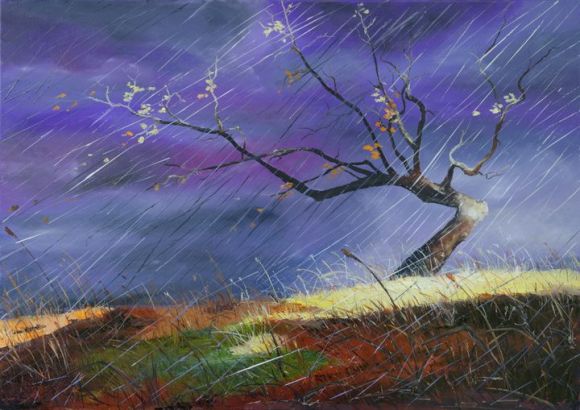
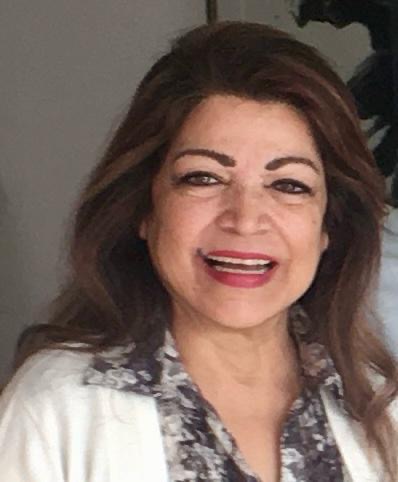
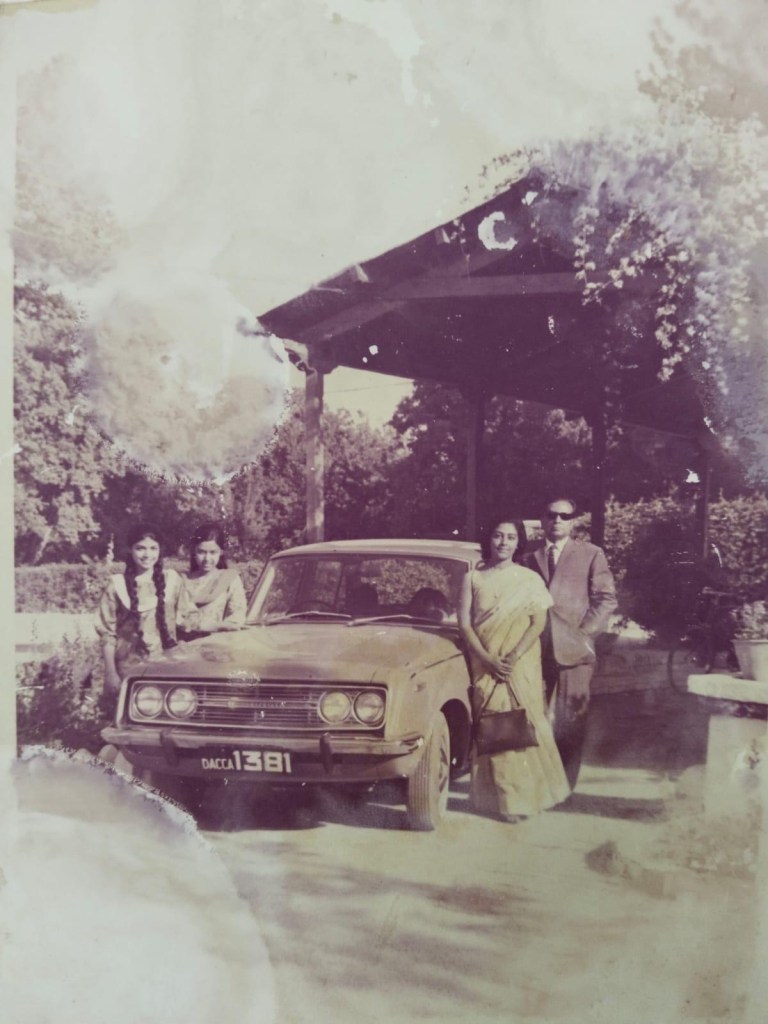
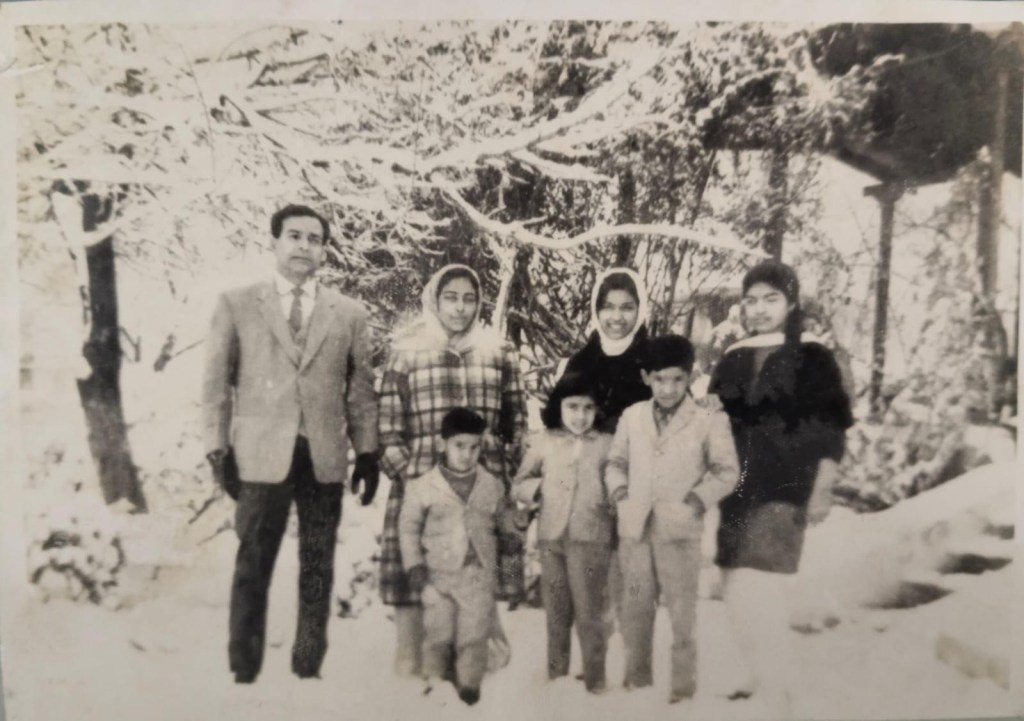
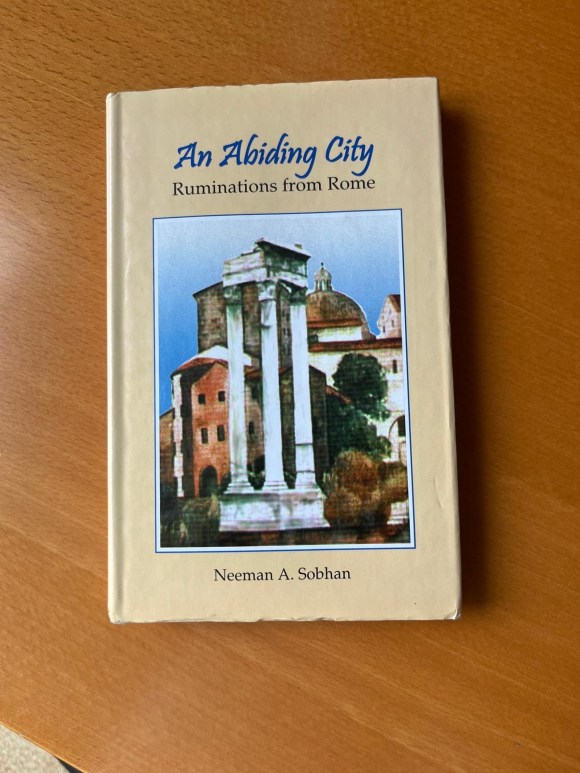

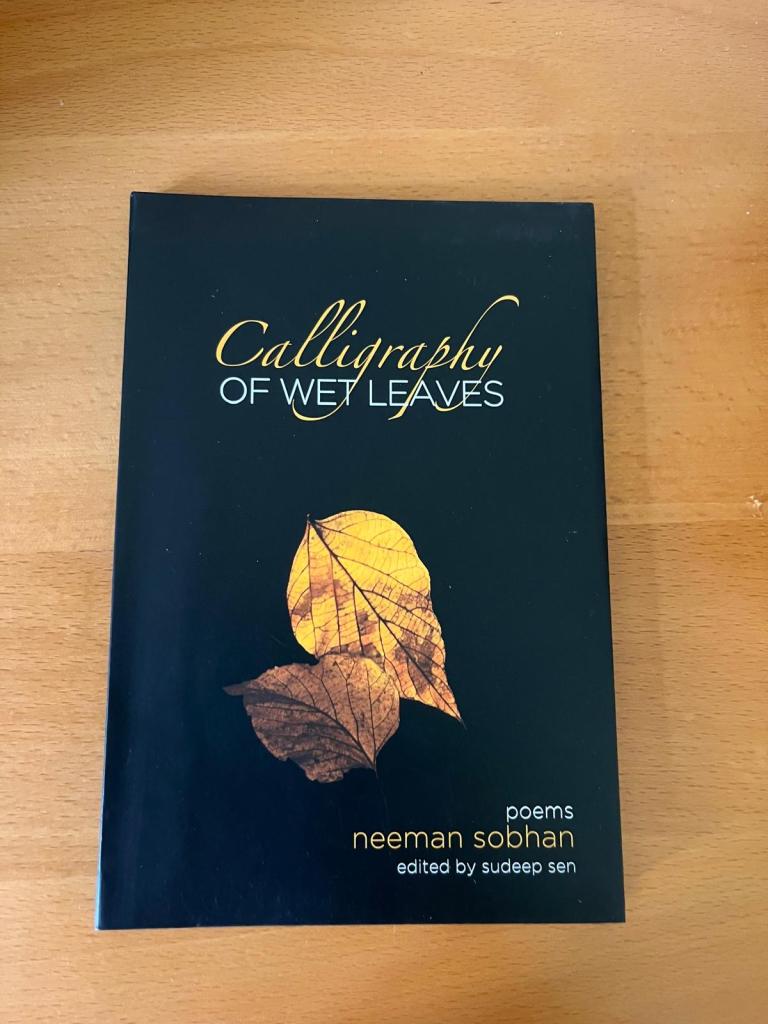


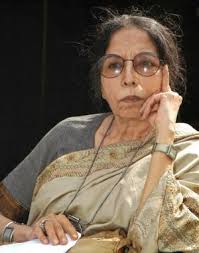

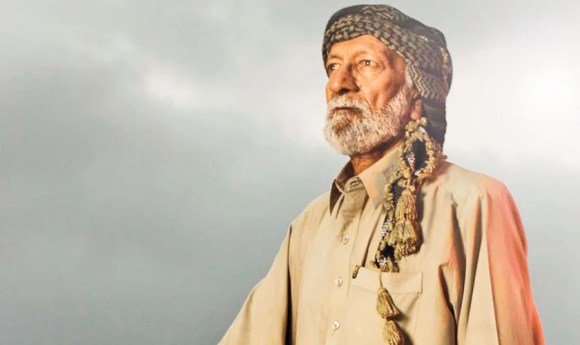
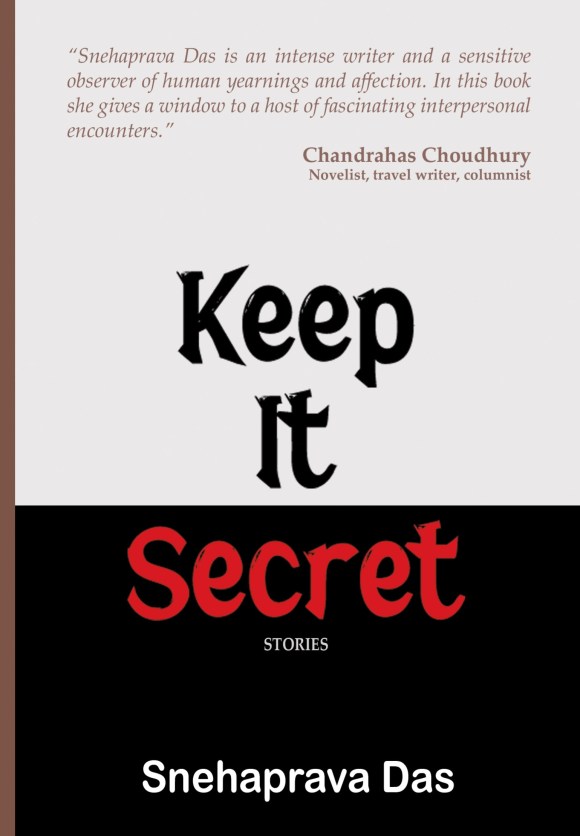
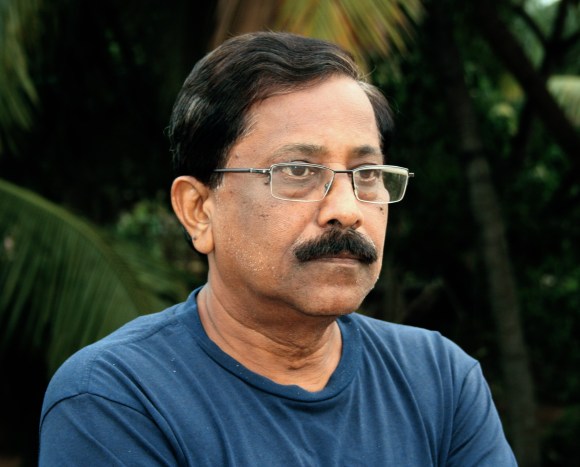
 Borderless