Hey, the morning breaks! Hey, the faithful sun! Hey, the disappearing dew! Hey, the layered air! The breath desires, the soul asks: Who do you greet? Have you pondered, sons of Adam? Death awaits, life prolongs. Have you realised, progenies of Eve? The earth is impregnated and layered by purpose. The one that you welcome is the morning, The one that you coax is the sun, The one that you touch gently is the dew, The one that you breathe is the air. The gift of death, life fulfilled, accompanies the inevitable: morning, sun, dew, and air. A breath dissipates, a soul obliterates. Nothingness. Gone. Hey!
THE FIELD
The green grass is a mother’s heart, the velvet of love for her children. Although stepped upon by mischief and transgression, she distils dews of hope that her children would grow with the sun. The earth is the preparation of a father: soil and compost for his children where character would be rooted. Barren or fertile, he digs into his responsibility and self-worth, as long as the rain nourishes his age. Grass flowers are the children who only know the joy of the wind for as long as their dreams have not landed on earth and kissed the grass.
MOLTEN EARTH
This moment, we’re walking in the rain, accompanied by a bluish rainbow and red birds with purple blood. If they’re heading towards the dais, we have yet to embrace the longing. When the moon is in tears, it’s just ill-suited for us to sail on the orange henna sea. In truth, we verily love the eagle that flies in the desolate morning. If not for ravens like you, our forest would be infested with rabbits. Give us white wings; we want to fly with blue birds that return to reciprocate love. We want to taste milk. Is it for us only urine, the manifestation of love by dogs? Sound your prayer call in our shacks so that our tears are not just to bear the pain and bitterness of a plate of rice. If your pensiveness is just to reminisce the sufferings of night longing for day, our tears have flowed from the earth’s molten belly, which are stepped upon by saints like you and them who have cast curses upon us wretched souls.
POTPOURRI
The screw pine thrives on damp soil, next to the swampy pond. It spreads its green in the wild; roots clench the earth we tread upon. The jasmine grows on the lawn, marks the boundaries of property. Sturdy branches, leaves flourish; petals open, greet the clouds. The sliced screw pine in a receptacle, the jasmine blossoms spread on the tray, perfume sprinkled to enhance the scent: the potpourri of bunga rampai welcomes guests. The ceremony officiated by the qadi, the couple duly married, customs and culture celebrated in fragrance, religious laws honoured on the dais. The shaving of the baby’s head, first steps on the soil, the coffin carried to the grave— the potpourri of bunga rampai adorns every domain, binding firmly entire life’s moments.
Bunga rampai — fresh flower potpourri used in Malay festivities and funerals. From Public Domain.
Isa Kamari has written 12 novels, 3 collections of poetry, a collection of short stories, a book of essays on Singapore Malay poetry, a collection of theatre scripts and lyrics of 3 music albums, all in Malay. His novels have been translated into English, Turkish, Urdu, Arabic, Indonesian, Jawi, Russian, French, Spanish, Korean, Azerbaijan and Mandarin. Several of his essays and selected poems have been translated into English. Isa was conferred the S.E.A Write Award from Thailand (2006), the Singapore Cultural Medallion (2007), the Anugerah Tun Seri Lanang (2009) from the Singapore Malay Language Council, and the Mastera Literary Award (2018) from Brunei Darussalam.
He obtained a BArch (Hons) from the National University of Singapore in 1989, an MPhil (Malay Letters) from Universiti Kebangsaan Malaysia in 2008 and is currently pursuing a PhD programme at the Academy of Islamic Studies, Univeristi Malaya. His area of research is on the problem of alienation and the practice of firasat (spiritual intuition) in selected Singapore Malay novels.
The Lost Mantras is a collection that blends spirituality, Malay cultural heritage, and universal human experience. First published as part of Menyap Cinta (Love Greetings, 2022, Nuha Books KL), these poems are like a bridge between mysticism and everyday life, where traditional images (betel, jasmine, kris[1], oil lamps, setanjak[2]) are woven with Qur’anic echoes, prayers, and existential questioning. The collection carries a Sufi resonance—always circling back to longing, humility, surrender, and beauty as signs of God. The poems are not only lyrical but also function as cultural memory: they preserve Malay traditions, communal practices, and village life, while situating them in a cosmic framework of faith, sin, and redemption. The use of Malay customs, rituals, and objects is powerful: it asserts that spirituality is not abstract but embedded in heritage. This makes the collection uniquely Southeast Asian despite its universal in appeal.
I bow to you, King. I bear the torment of your sadness in the embrace of my sleep. May it transform into glad tidings for the days of your people. This exploration is to find your throne, which has disappeared from our hearts. For my love to you, King.
JASMINES
Earth jasmines, sky jasmines, a string of jasmines encircles the heart, jasmines poured with water from the hills, jasmines sprinkled by a pinch of compost. Seven rivers, seven clouds— rain pelts onto forlorn petals. Beauty is in the form, beauty to the eyes, beauty is the hand that tends to the soil, beauty is the fingers that caress the leaves, beauty is the cut on the arms of the gardener. The scorching sun, the shade from the foliage, bountiful is the soul of the tree that delivers, witness to a life devoted to hard work, with the laws of nature as the axis. Strong roots clench the earth, shoots look up high to the sky. Stand firmly, the soul sings. Blossoms waft fragrant dreams. Earth jasmines, sky jasmines, bloom in the early morning. Say your prayers, introduce yourself.
BETEL LEAVES
To be at the top is to function at the bottom, upholding responsibilities and trust, strengthening shared roots. The fragile branches are free to stretch, the green leaves spread wide. Wild betel, untouched betel, covers the soil, climbs the trellis. To be at the peak in essence is to grow shoots, carrying fertile hopes and dreams, giving way and space to grow, to climb each posting energetically, to qualify for the position when seasons change. Lofty betels, heavenly betels, reach for the stars, greet the clouds. To be in the ceremonial receptacle in essence is to uphold tradition, surrendering to the preservation of culture. Typically chewed with lime, slicing problems, mature-red in speech, tracing the lives of roots and shoots. Wild betel, untouched betel, lofty betel, heavenly betel, courtship betel, customary betel, weaving values and the essence of leadership entrenched in tradition.
HOME
Free souls wouldn’t be easily bored by mentoring and demands, for it’s the stable self that gives rise to liberation. And that’s called freedom — it isn't about release without aims, just like city folks, released from home or work, wander aimlessly at shopping malls, seek excitement from novelty and transience. It isn't that Life doesn’t require variety, or it isn't that the soul doesn’t long for fun. It’s just that we who claim to be free are easily entrapped in useless pettiness that we spread in the city without ever realising that we haven’t returned to the doors of our hearts, although we’ve stepped afoot onto the compound of the house.
Isa Kamari : A foremost Malay writer from Singapore: Photo provided by the poet.
Isa Kamari has written 12 novels, 3 collections of poetry, a collection of short stories, a book of essays on Singapore Malay poetry, a collection of theatre scripts and lyrics of 3 music albums, all in Malay. His novels have been translated into English, Turkish, Urdu, Arabic, Indonesian, Jawi, Russian, French, Spanish, Korean, Azerbaijan and Mandarin. Several of his essays and selected poems have been translated into English. Isa was conferred the S.E.A Write Award from Thailand (2006), the Singapore Cultural Medallion (2007), the Anugerah Tun Seri Lanang (2009) from the Singapore Malay Language Council, and the Mastera Literary Award (2018) from Brunei Darussalam.
He obtained a BArch (Hons) from the National University of Singapore in 1989, an MPhil (Malay Letters) from Universiti Kebangsaan Malaysia in 2008 and is currently pursuing a PhD programme at the Academy of Islamic Studies, Univeristi Malaya. His area of research is on the problem of alienation and the practice of firasat (spiritual intuition) in selected Singapore Malay novels.
The Lost Mantras is a collection that blends spirituality, Malay cultural heritage, and universal human experience. First published as part of Menyap Cinta (Love Greetings, 2022, Nuha Books KL), these poems are like a bridge between mysticism and everyday life, where traditional images (betel, jasmine, kris[1], oil lamps, setanjak[2]) are woven with Qur’anic echoes, prayers, and existential questioning. The collection carries a Sufi resonance—always circling back to longing, humility, surrender, and beauty as signs of God. The poems are not only lyrical but also function as cultural memory: they preserve Malay traditions, communal practices, and village life, while situating them in a cosmic framework of faith, sin, and redemption. The use of Malay customs, rituals, and objects is powerful: it asserts that spirituality is not abstract but embedded in heritage. This makes the collection uniquely Southeast Asian while still universal in appeal
About the Book: “The deafening silence of a loved one’s absence turns the poet into the eternal Ma enduring separation. Swati Pal’s poetry also straddles the particular to the universal theme of grief and loss and symbolically suggests compassionate ways of healing the pain … Swati Pal’s Forever Yours and Other Poems holds ajar that mysterious door to the panorama of a mother’s love, loss, grief and hope. Her poems will resonate beyond her individual story.” — Prof. Malashri Lal (Former Head, Dept of English, University of Delhi)
About the Author: Swati Pal, Professor and Principal, Janki Devi Memorial College, University of Delhi, is a Fulbright-Nehru fellowship scholar, a Charles Wallace scholar and the first Asian scholar to receive the John McGrath Theatre Studies Scholarship at Edinburgh University. Author of several books on theatre, creative and academic writing, her newspaper articles articulate her views on education. Her areas of research interest include performance studies and cultural history. She translates from Hindi to English and several of her translations have been published. She writes poetry and her poems appear in several anthologies; she also has two collections entitled In Absentia and Forever yours and a curated collection called Living On. She is the Vice Chair of the Indian Association for Commonwealth Literature and Language Studies and has been the recipient of several national and international awards, both as a teacher as well as an administrator.
After Geetanjali Shree’s Tomb of Sand, the first novel to receive the International Man Booker Prize in 2022 for a work of fiction written in an Indian language and translated into English, history repeated itself once again when this year in 2025, Banu Mushtaq’s book of selected short stories Heart Lamp, written originally in Kannada and translated into English by Deepa Bhasthi, was recipient of the same coveted prize. It proved that translating from Indian bhasha languages to compete worldwide with other canonical literatures has gained maturity to impress the jury who finally evaluate the prize.
In the twelve stories of Heart Lamp, published originally in Kannada between 1990 and 2023, Banu Mushtaq exquisitely captures the everyday lives of women and girls in Muslim communities in southern India. As a journalist and lawyer, most of the stories are women-centric and in all of them she tirelessly champions women’s rights and protests all forms of caste and religious oppression. As a believer in the highly influential literary movement in Kannada during the 1970s and ‘80s – the Bandaya Sahitya tradition – that started as an act of protest against the hegemony of upper caste and mostly male-led writing that was then being published and celebrated, Banu Mushtaq’s literary career therefore gave importance to dissent, rebellion, protest, resistance to authority, revolution and its adjacent areas at par with the movement that urged women, Dalits and other social and religious minorities to tell stories from their own lived experiences.
The author goes on to highlight several harmful social practices that are still prevalent in the Muslim community and even supported by law, which impede girls including women of all ages, from having freedom to make positive choices, thus hampering them from realizing their full potential. In story after story, the deeply patriarchal structure of Muslim society is depicted in such a manner that it is not only applicable to the Muslims living in villages and town in south India but can be applicable elsewhere too. She shows how child marriage is still in practice and mentions the suffering and trauma women experience because of legally sanctioned polygamy which causes social and financial insecurity and hardship for women and their offspring. The curse of teen talaq[1]and the practice of issuing multiple fatwas[2] which are deliberately aimed at constricting women are urgently in need of being addressed legally.
In the very first story, ‘Stone Slabs for Shaista Mahal’, we find Iftikar’s too much effusive declarations of love for his wife Shaista vanish into thin air immediately after her death and he soon marries a young girl leaving all his children to be looked after by his eldest daughter. The ‘Fire Rain’ has mutawalli[3] Usman Saheb heading the community and making hundreds of decisions for others, but when her sister comes begging he refuses to give her the legitimate share of his ancestral house. Whereas the ‘Black Cobras’ has the mutawalli saheb refuse to help a woman whose husband has deserted her for giving birth to three daughters and provide any support for her youngest sick daughter who dies without any treatment. The story ends with a focus on female revolt when his own wife decides to go and have an operation to stop childbirth. In an interesting story ‘A Decision of the Heart’ the author narrates the plight of a man called Yusuf who is unable to balance the love between his wife and his mother and finally decides to arrange a nikah for his mother Mehaboob Bi.
One story that delves deep into Muslim customs that we generally are not aware of, is entitled ‘Red Lungi’. It tells us about a mass circumcision programme at the mosque for the poor where a young boy Arif undergoes the procedure and is cured in due course. His plight is then contrasted with Samad, the son of a rich man who remains weak and unfit despite the elaborate festivities for his circumcision and the gifts.
The titular story ‘Heart Lamp’ centres around Mehrun who is left to fend for herself as her husband falls for another woman. When she goes to her parents’ house for support, her brothers send her back. Leaving the responsibility of her children upon her eldest daughter Salma, she attempts to burn herself to death. The scene where her daughter begs her to stop and so finally, she aborts her suicide attempt, is extremely moving. The depiction of rural Karnataka comes out very clearly in ‘Soft Whispers’. The story narrates in detail the childhood antics of an eight-year-old girl visting her grandparent’s house in Mabenahalli village. Her young playmate, Abid, who would join her to play tricks, turns into the supervisor of a dargah[4]. When he comes to invite her to join the festival, he keeps his head lowered and does not even meet her eye.
Despite mentioning serious social issues pertaining to the average middle and lower-middle class Muslim families, Mushtaq’s stories are laced with a sense of wry humour and pathos. For instance, in ‘High-Heeled Shoes’, Niaz Khan envies his sister-in-law who comes from Saudi Arabia wearing gorgeous high-heeleded shoes and, in the end, manages to buy a pair for his pregnant wife Arifa which does not fit her at all. The difficulty in walking with those shoes on, and the interaction she has with her unborn child in her womb takes this story to a different level altogether. ‘A Taste of Heaven’ has Bi Dadi, who turns into stone after her ja-namaz[5]is soiled, gaining solace by drinking Pepsi and thinking it to be aab-e-kausar, the nectar from heaven, and starts living in a delusory world of her own in the company of her long-lost husband. In ‘The Arabic Teacher and Gobi Manchuri’, the young Maulvi Hazrat’s penchant for eating “gobi manchuri[6]” is the comic fulcrum on which the story turns. Again, Shazia’s desperate attempts in ‘The Shroud’ to locally procure a kafan[7] and sprinkle it with the holy zamzam water from Mecca after having callously forgotten to bring one for poor Yaseen Bua from her Hajj pilgrimage, makes her grief and being conscience-stricken rather ludicrous.
In the 2025 International Booker Acceptance Speech Mushtaq said: “This book is my love letter to the idea that no story is ‘local’ – that a tale born under a banyan tree in my village can cast shadows as this stage tonight…. [It] was born from the belief that no story is ever ‘small’ – that in the tapestry of human experience, every thread holds the weight of the whole.”
Her observation power is indeed very strong. Muslim women have been victims of deprivation and discrimination in various matters owing to a dearth in education and awareness. To bring a change in the family, a change in mentality is very crucial. The last story of this collection, ‘Be A Woman Once, Oh Lord!’ is a typical tale of male chauvinism, where deprived a dowry, a man throws out his sick wife and children to get married again.
A woman must construct her own identity besides being someone’s daughter, somebody’s wife or someone’s mother. Only education and self-dependence can establish a woman as a human being beyond her religious and family identities. But as her translator rightly points out, it would be a disservice to reduce Mushtaq’s work to her religious identity, for stories transcend the confines of a faith and its cultural traditions. So, she should not be seen as writing only about a certain kind of woman belonging to a certain community, that women everywhere face similar, if not the exact same problems, and those are the issues that she writes about.
Before concluding, a few words need to be written about the translator and the translation too. In the Translator’s Note, titled ‘Against Italics’, Deepa Bhashti reiterates that the “translation of a text is never merely an act of replacing words in one language with equivalent words in another: every language, with its idioms and speech conventions, brings with it a lot of cultural knowledge that often needs translating too.” She mentions that she was very deliberate in her choice to not use italics for the Kannada, Urdu and Arabic words that remain untranslated in English. She believes that italics serve to not only distract visually, but more importantly, they announce words as imported from another language, exoticizing them and keeping them alien to English. She also mentions that there are no footnotes used at all.
In her separate International Booker Prize Acceptance Speech, Bhasthi also tells us how through the work they could bring out what would otherwise be unread, uncelebrated texts to a new and very different sets of readers. She stated how the story of the world was really a history of erasures. It was “characterized by the effacement of women’s triumphs and the furtive rubbing away from collective memory of how women and those on the many margins of this world live and love.” Therefore, the stories in this collection are recommended for reading not by reducing Mushtaq’s work to her religious identity, but by transcending the confines of a faith and its cultural traditions.
[1] It’s an Islamic practice in which a Muslim man could divorce his wife by uttering the word “talaq” (divorce) three times.
Five poems by Hrushikesh Mallick have been translated from Odia by Snehaprava Das
AFTER THEY LEAVE

After they leave,
The tree in the midst of a bare field
Stands forlorn.
Not a single bird,
Nor the sound of chirping anywhere
Not a leaf flutters in the breeze,
No one speaks a word
After they leave.

The world is a meaningless void
When they are not there.
Flowers bloom and wither aimlessly.
Festive seasons come and depart.
The privileged and the poor come and go
Without making an impact.
Silence reigns everywhere and around
When they are not there.

Living in a pattern,
Like, in every moth-hour
‘Chhatu bhai’ riding back
From the village market, ringing the bicycle bell,
Or, farmers sitting on a platform in the evenings
And deciding which patch of the land
Would be plowed next morning,
Like, the moon coming up routinely
At measured intervals,
And discussions centering around
How ‘Gaya-bhai’
Escaped the wrath of the village-goddess
Last night by a sheer miracle.
Routine life continues
Like rice cooking tender in the kitchen-hearth
While cow-dung cakes are put
To smoulder in the cowsheds.
The regular pattern of living
Is dull and cheerless
In their absence.
Who are they, then? Who indeed?
They are the fragrance of the paddy-buds
In the farmlands by the hillside,
They are the Siju bushes that
Grow under the eaves in the backyard,
They are the sound of the clearing of throat
That inspires courage in a fearful heart
 On a dark pathway,
They are the drumbeats floating in
In gentle waves from the neighbouring village,
They are the pallbearers that twine ropes
 To make a pyre;
And, after they leave life loses its meaning!

WHEN THERE IS NO GOD

Once you join your palms
sitting on the bed
while going to sleep
or, as you wake up,
worries stop disturbing
your calm.
You are assured of the presence
of someone called God
who might break your fall.
But these are the bleak days
of God’s absence,
these days the headless bodies
saunter down the streets of the night
whispering to one another.
The dogs howl in a chorus.
The sounds of sermons or devotional songs
do not float in from the mandapa,
the air throbs instead with the siren
of ambulances.
As such belief is that
the God that holds
the trident and the mace
is omnipotent.
 Why does that God stand dull
 and lifeless in the temple now?
Does an idol in any temple
have the power now
even to chase away the stray dogs?
Is there a God in any shrine
who can hold open
its closed doors and by some miracle
turn auspicious
all that is ominous?
In these dark days when
God is not there,
if we take a fall,
we have to get up on our own.
We have to lean on our own mettle
and our own merit
in the moments of death or survival.
In the absence of God,
we have to commit ourselves
to the service of the distressed,
to feed the hungry
and nurse the sick,
give shelter to the homeless.
It’s time we repented our indulgences
without religious extravaganza.
It’s time we stopped
pinning blind faith in
the figures of stone.

THE LONE GIRL

The lone girl has nowhere to go,
She sits alone lamenting her loss;
Once upon a time she had
 a country like we all have,
it was called Syria.
Its lofty national flag
soared to the clouds.
It had a national anthem that
sparked the spirit of martyrdom
in its people!

In the evenings,
perched on the shoulders
of her babajaan,
she watched the moon
in the sky of her homeland;
heard stories from her mother
that set her eyes rolling in wonder;
that country, her homeland is now in ruins
a vast, barren expanse,
littered with severed limbs.
Its air is sick with the smell of
tons and tons of explosives
there lay piles of disfigured childhood
in pathetic abandon
to tell the tale of a country that was!

No one had ever warned the girl
that her tomorrows will be spent
in makeshift shelters under the tents,
nor did she know that
her palms would join to make begging bowl,
and there would be merchants
to trade on
the perfumed void in her.
No one predicted that she would grow up
believing in hatred instead of love!
And when she would learn to ask
the whereabouts of her parents
the whole civilized world will
keep mute.

EYES

Just as I believed that all poems
which could have been written on ‘eyes’
are already written
your ‘eyes’ flashed before me
and what an amazing lot of trees
laden with fruits and flowers
 and birds, they held!
I wondered where did you flick
your deep, boundless glance
from the corridors of the hospital
like a handful of floral offerings.
The anguish that glance held
was like the lost look in the eyes of a kid
who was rudely denied a father’s lap,
 like a fresh bloom shying away
from the eyes of a honeybee
or, a streak of lightning flashing
in the overcast noon-sky
like a poor man’s last hope.
Your eyes are like the lines of a poem
that unfold a new meaning
at every other reading.
Your eyes,
like a strange horizon captures
the crimson of the dawn
and the gleam of a red silk sari
in a perfect balance!
Your eyes could transform a waste land
to a paddy field in luxuriant green,
at times they are moist with muffled sobs,
or, like a spear smeared in blood, at others!
What is more beautiful --
the bright loquacity in your eyes
or the rain-washed sunshine,
the mysterious mutter in your eyes
or a village enveloped in a wispy darkness?

THE HONEYBEE DOES NOT KNOW

The son writes poems.
His mother does not know.
‘You are rotting yourself through writing,’
She complains,
‘Did you write them?’
A girl-friend, looks at him in wonder,
‘Can you swear to that?’ she asks.
The boy writes poems
The street where he lives does not know it,
Nor does the village!
His young face does not sport a beard,
Nor have the creases appeared on his forehead.
There was not that distant look
Like the faraway stars in the eyes,
How could then he be a poet?
Who would believe that?
A man who picks up a quarrel with the fisherwoman
Could recite the brajabuli,
Or, the fellow weaving clothes at the loom
Can sing lines from Tapaswini

A poet is not supposed to have a home.
He sits under the trees
Amidst the anthills.
A poet hacks off the branch he sits on.
He does not have that worldly intelligence.
A poet is not pragmatic.
He begins a line at the wrong point
And ends it at a wrong one too.
A good poet forgets the right way of chanting
The mantra that would protect him from dangers
While actually facing them.

The mother does not know that
Her son is a poet; nor does the father.
The owner of the hut where the poet takes shelter
Does not know his tenant to be a poet.
The poet’s voice does not know
It belongs to a poet.
The reflection has no idea it is the poet’s image.
The lizard exploring the shelves
Does not know the ‘Award of Padmashree’
Carefully preserved there,
Was won by the poet.
The honeybee that circles the graves
Does not know that
The lines engraved on the tomb
 Were the epitaph for the poet.
Glossary: Mandapa is a pavilion. Brajabuli is a dialect based on Maithali that was popularised for poetry by the medieval poet Vidyapati. Tapaswini: A famous long poem by the 19th century Odia poet Gangadhar Meher.
.
Dr Hrushikesh Mallick is a reputed Odia poet and writer. He has 13 Poetry collections. His first book in 1987 heralded a new era in Odia poetry. He has received Odisha Sahitya Akademi Award (1988), Sarala Award (2016) and Central Sahitya Akademi Award (2021).He is also an eminent literary critic and fiction writer. He served as President of Odisha Sahitya Akademi (2021-2024). He has been a professor of Odia language and literature from 2012.
Dr.Snehaprava Das, is a noted writer and a translator from Bhubaneswar, Odisha. She has five books of poems, three of stories and thirteen collections of translated texts (from Odia to English), to her credit.
PLEASE NOTE: ARTICLES CAN ONLY BE REPRODUCED IN OTHER SITES WITH DUE ACKNOWLEDGEMENT TO BORDERLESS JOURNAL
Title: That’s A Fire Ant Right There! Tales from Kavali
Author: Mohammed Khadeer Babu
Translator: D.V. Subhashri
Publisher: Speaking Tiger Books
True-blue Palavenkareddy!
It’s only now when he’s running a Palav Center in front of Kavali Court that he’s able to see twenty-six rupees in his hand for every plate he sells, but there was a time in our childhood when Palavenkareddy too was down on his luck!
Palavenkareddy (Palav + Venkareddy) was my father’s best friend. He was also the one who got him married.
When my grandfather Mastan Sayibu was considering giving my mother’s hand in marriage to my father, it seems he went straight to Palavenkareddy to enquire about my father’s ‘conduct’.
‘Don’t worry about that boy, saami! He’s 24-carat gold. You can get them hitched with your eyes shut!’ Palavenkareddy reassured my grandpa and lifted a load off his mind.
Although seven-eight years older than my father, Palavenkareddy, always dressed in white, appeared much younger, with his toned muscles (he was a wrestler once, I might add), shining skin and dyed hair.
At the time of nikah, as my mother was still a young fourteen-year-old, Palavenkareddy used to address her as ‘ammayi’ or ‘girl’, and continued to call her that even after marriage. Whatever his feelings for my father, he definitely favoured my mother and had more affection for her.
If Sankranti was here, Palavenkareddy wouldn’t be far behind. He’d show up with a large steel carrier full of ariselu, manuboolu, laddulu and hand it to my mother saying, ‘Here you go, girl.’ Then he would take my father, my brother and me to his house, fill our leaf-plates full of sweet payasam and treat us to a full festival meal. (This is also the time to reveal yet another truth. Until recently, whenever my mother had to go to a wedding or any other function, she would borrow Palavenkareddy’s wife’s or daughter-in-law’s jewellery as if she had every right to do so.)
I don’t really know if he was into farming or not, but as kids we always saw she-buffaloes tied up at their house. His wife would wake up early and toil hard, tending to the buffaloes all day. Seemingly in an effort to reduce her drudgery, he dabbled in various businesses, but being a man of truth, failed to make money in any of them. Finally, he hit the jackpot when he opened the Palav Centre. And since then, his surname changed from Remala to Palav and he came to be known as Palavenkareddy to everyone in our town.
During our childhood, he owned a cloth store near the Ongole bus stand. Barely a metre would sell each day at the shop, but Palavenkareddy and his elder son could always be seen dutifully minding the store.
Now why I’ve been telling you this long story about Palavenkareddy is because when the month of Ramzan arrived we were forced to draw on his services—thanks to my mother’s pestering.
‘All the ladies in the street are going to Gademsetty Subbarao’s shop and getting themselves whatever clothes they want. Why don’t you also toss me a hundred or two? I’ll go get the children some new clothes.’ My mother had been badgering my father ever since Ramzan had begun.
My father responded with neither ‘aan’ nor ‘oon’. Ultimately, she decided that this was not the medicine for my father’s attitude and cleverly started instigating my grandma.
‘Rey abbaya! How heartless can you get! Even if we adults don’t buy anything, how can you not get a few pieces of cloth for the children? When other children in the street roam around wearing new clothes, won’t ours feel bad?’ poked my grandma.
Who knows what came over him, but he replied, ‘Send the older one and the second one to the shop in the evening. If I happen to get money by then, I’ll buy them some, alright,’ and left for work.
When evening came, with high hopes my mother dressed us up—not just me and my brother but also our sister—and sent us to our electrical shop on Railway Road.
And my father? What did he do? When we reached there, he was sitting at the table with a deadpan face and hands over his head. The moment he saw us, he stood up and said, ‘Not today. Go home,’ then picked up my little sister and prepared to lock the shop.
We were crestfallen. My brother was on the verge of tears.
That is exactly when, like Gods appearing out of nowhere, Palavenkareddy appeared before us. On seeing us, he laughed, ‘Endayyo? What’s up here? All the little Nawabs have descended together.’
My father too laughed and told him the matter. ‘What, Karim Sayiba? The children have come for their festival clothes and you’re taking them back empty-handed? Didn’t you think of my shop? Come, come, let’s go,’ Palavenkareddy urged him.
‘Not now, Enkareddy. We’ll see when I have the money,’ said my father reluctantly.
‘Do you ask for money when you do electric work in my house? Then why would I demand money for the children’s clothes?’ he insisted, herding us along. And so, together we all went to Palavenkareddy’s cloth shop near Ongole bus stand.
‘Karim Sayiba! It’s not as if you’re going to buy clothes again anytime soon, so might as well pick a sturdy fabric that will last a few days,’ he said, opening a wooden almirah and pulling out a tough-looking piece of blue cloth from the swathes of fabric inside.
‘Guarantee cloth. No question of tearing at all,’ he said.
Whenever my father hears the word ‘guarantee’, he forgets everything else and says, ‘Yes, give that one’, and so, he said the same to Palavenkareddy as well.
That was that! Before we knew it, in five minutes Palavenkareddy had cut the cloth and all of us had given our measurements to the tailor Sayibu beside the shop, who promptly soaked the cloth in an iron bucket.
(Excerpted from That’s A Fire Ant Right There! Tales from Kavali by Mohammed Khadeer Babu, translated by D.V. Subhashri. Published by Speaking Tiger Books)
ABOUT THE BOOK: Captured in the innocent voice of a young boy, Mohammed Khadeer Babu’s Chaplinesque-style of portraying misery through humour shines a sweeping light on Muslim lives in coastal Andhra. Populated with strong women, cheeky scamps, virtuous dawdlers and scrupulous teachers, his witty storytelling in the Nellore dialect is a riveting portrayal of the daily struggles of adapting to a majoritarian world in small-town India. Belying the nostalgic memories of childhood are scathing observations of the education system, child labour, social barriers, and casteist attitudes. Yet, the stories also resound with a clear message of friendship, especially among Hindus and Muslims, making this book essential reading in today’s fraught times, to remind ourselves of our inherited legacy of communal harmony—which makes it possible for the young narrator to say, ‘I’ve never regretted even once that I didn’t learn Urdu or that I don’t know Arabic, or that I have never even touched the Quran in these languages, only in Telugu.’
D.V. Subhashri’s unique translation, which retains all the richness of the original, quaint expressions and sounds et al, brings a smile to our faces, while showing us why the book made Khadeer Babu a household name in the Telugu community. This first English translation of his work opens up a new world for us.
ABOUT THE AUTHOR: Mohammed Khadeer Babu is a senior journalist and award-winning writer in Telugu with short stories, anthologies, non-fiction books and movies to his credit. A two-time Katha awardee, his stories have won various prizes at the state and national level and earned him the Government of Andhra Pradesh Achievement Award in 2023.
ABOUT THE TRANSLATOR: D.V. Subhashri is a multilingual writer and translator based out of Bangalore. Her stories and translations have appeared in various online magazines and her children’s books have won awards in Telugu and English. She is currently translating two books from Telugu and Kannada.
PLEASE NOTE: ARTICLES CAN ONLY BE REPRODUCED IN OTHER SITES WITH DUE ACKNOWLEDGEMENT TO BORDERLESS JOURNAL
Translators are bridge builders across cultures, time and place. We have interviewed five of them from South Asia. While the translators we have interviewed are academics, they have all ventured further than the bounds of academia towards evolving a larger literary persona.
The doyen of translation and the queen of historical fiction, Aruna Chakravarti, and poet, critic and translator, Radha Chakravarty , feel their experience at bridging cultures has impacted their creative writing aswell. Somdatta Mandal, is prolific with a huge barrage of translations ranging from Tagore, to women to travellers, despite being an essayist and reviewer, claims she does not do creative writing and views translations as her passion. Whereas eminent professor and essayist from Bangladesh, Fakrul Alam tells us that translating helped him as a teacher too. Fazal Baloch, translator and columnist from Balochistan, tells us that translation is immersive, creative and an art into itself. We started the conversation with the most basic question – how do they choose the text they want to translate…
How do you choose which texts to translate?
Aruna Chakravarti
Aruna Chakravarti: A translation is an attempt at communication on behalf of a culture, a tradition and a literature. Choosing an author and, more importantly, the most significant areas of his or her work are the first steps towards this communication, because it is only through translation that masterpieces from a small provincial culture become universal ones. Since I come from Bengal, I have always chosen the best of its literature for translation. My first translation was of Rabindranath Tagore’s lyrics. Rabindranath once said that even if all his other work fades to oblivion, his songs would remain. Saratchandra Chattopadhyay, a leading writer of 19th and early 20th century Bengal, considered Srikanta the best of his novels and the most suited to be conveyed to a global readership. I translated Srikanta. Sunil Gangopadhyay is hailed as the most eminent writer of present-day Bengal. My translations of his novels and short stories are extraordinarily well received by non-Bengali readers, to this day.
Radha Chakravarty
Radha Chakravarty: Every occasion is different. Sometimes a text chooses itself because I feel compelled to translate it. Sometimes I select texts to translate, in response to suggestions or requests from editors, readers and friends who read. Several of my books in translation evolved alongside my research interests as a scholar and academic. For instance, VermillionClouds, my anthology of stories by Bengali women, developed from my general interest in feminist literature and my desire to bring texts from our own culture to the English-speaking world. My translations of Mahasweta Devi’s writings, especially the stories on motherhood in the collection titled In the Name of the Mother, happened when I was working on a chapter about Mahasweta for my PhD thesis. Our Santiniketan, my translation of her childhood memoir, emerged from my interest in her writings, as well as my admiration for Rabindranath Tagore. The translations of Chokher Bali1, Farewell Song (Shesher Kabita) and FourChapters reflect my special fascination with Tagore’s woman-centred novels, for this was also the subject of my post-doctoral work. Later, I developed this research into my book Novelist Tagore: Gender and Modernity in Selected Texts. For my edited anthology Shades ofDifference, a compilation of Tagore’s works on the theme of universality in heterogeneity, the selection involved a great deal of thinking and research. And translating Kazi Nazrul Islam’s essays turned out to be an incredible learning experience.
Somdatta Mandal
Somdatta Mandal: I have been translating different kinds of texts over the last couple of decades, and I have no fixed agenda of what I choose to translate. Usually, I am assigned some particular text by the author or a publisher, but sometimes I pick up texts which I like to do on my own. Since I have been working and researching on travel writing for a long time, I have chosen and translated several travel texts from Bengali to English written by women during the colonial times. I have also translated a lot of Rabindranath Tagore’s essays, letters and memoirs of different women related to him. Recently I translated a seminal Bengali travel text of a sadhu’s sojourn in the Himalayas in the late nineteenth century. I have a huge bucket list of texts that I would love to translate provided I find some publisher willing to undertake it. Since copyright permissions have become quite rigid and complicated nowadays, I have learnt from my own experience that it is always advisable to seek permission from the respective authorities before venturing into translating anything. Earlier I was naïve to translate stories which I liked without seeking necessary permission from the copyright holder and those projects ultimately did not see the light of day.
Fakrul Alam
Fakrul Alam: I have no fixed policy on this issue. Sometimes the texts choose me, so to speak. For instance, I began translating poems from Bengali when I first read Jibanananda Das’s “Banalata Sen”. The poem got hold of me and would not let go. I felt at one point an intense desire to translate it and read more of Jibanananda’s poems. Translating the poem elated me and having the end product in my hand in a printed page was joyous. The more poems I read by Jibanananda afterwards, the more I felt like rendering them into English, as if to share my delight and excitement at coming across such wonderful poems with readers who would not have read them in Bengali. That led to my first book of translations, Jibanananda Das: Selected Poems (Dhaka, UPL, 1999). As I ended my work on Jibanananda I thought: why not translate some poems by Rabindranath too? I had climbed one very high mountain satisfactorily and so why not venture forth and climb the topmost peak of Bengali literature? And so, I began translating Rabindranath’s poems as well as his songs. I had grown up with them, but till now had never imagined I could render them into English. Kumkum Bhattacharya, a dear friend who at that time was in charge of Viswa-Bharati’s publishing wing, Granthana Vibhaga, had seen samples of my work and told me to think of an anthology of his translated works to be published in Tagore’s sesquicentenary year for them. This led me to the poems, prose pieces and songs by him that I translated for The Essential Tagore (Cambridge, Mass, Harvard UP, 2011 and Kolkata: Viswa Bharati, 2011), a book that I had co-edited (with Radha Chakravarty). My last book of translations, Gitabitan: Selected Song-Lyrics of Rabindranath Tagore (Dhaka: Journeyman Books, 2023) alsocame out of this same compulsion of translating works in Bengali. This particular work is a book of translations of nearly 300 songs that I love to listen to again and again—songs that made me feel every now and then that I had to translate them, especially when I heard them sung by a favourite Tagore singer. My translations of a few Kazi Nazrul Islam’s poems and some of his songs are also the result of such compulsive feelings.
However, I also translated some works because I was requested to do so by people who knew about my Jibanananda Das and Tagore translations and who felt that I would be a competent translator of works they felt were worth presenting to readers in English versions of Bengali books very dear to them. My three translations of works by Sheikh Mujibur Rahman, The Unfinished Memoirs (Dhaka: UPL Books, 2012), The Prison Dairies (Dhaka: Bangla Academy, 2017), and New China 1952 (Dhaka: Bangla Academy, 2021) were all outcomes of requests made to me to translate them. Translating Ocean of Sorrow, the epic 1891 novel by Mir Mosharraf Hossain, has been the most challenging translating work I have had to undertake till now (Dhaka: Bangla Academy, 2016). I would not have dared take on the task of translating such a long and demanding prose work if Shamsuzzaman Khan, the Director of the Bangla Academy of that period, had not kept requesting me to translate this classic of Bengali Literature.
I will end my response to this question by saying that every now and then I translate poems and prose pieces by leading writers who are my contemporaries and who keep requesting me to translate them. Occasionally, I will also translate poems by major poets of our country of the last century—poets like Shamsur Rahman and Al Mahmud—because a poem or two by them had gripped me and made me feel like venturing forth into the realm of translation.
Fazal Baloch
Fazal Baloch: Translating poetry and prose are two very different endeavors. Poetry often makes an immediate impact. Sometimes just a few lines strike me powerfully on the first reading, creating an atmosphere that sets the translation process in motion. In other words, I tend to translate the verses that stir something in me or resonate deeply.
Prose translation, by contrast, works differently. It usually unfolds after a longer process and often requires multiple readings of the text. At times, it even calls for a more deliberate, conscious effort.
Does translating impact your own writing?
Aruna Chakravarti: Yes, it does. While translating the great masters of Bengali literature I have learned much that has impacted my own writing. From Rabindranath I learned that prose need not necessarily be dry and matter of fact. It could be imbued with lyricism without appearing sentimental and over emotional. Saratchandra taught me the importance of brevity and precision. Search all his novels and you will not find one superfluous word. I try to follow his example and shun over-writing. From Sunil Gangopadhyay, I learned the art of dialogue. His direct, no-nonsense style and use of colloquialisms work best in dialogue.
Radha Chakravarty: Yes indeed. As I have just indicated in my answer to your previous question, my translations often take a course parallel to my research, and the two strands of my work sometimes become inseparably interrelated. In my critical works on Indian literature, I remain conscious of bringing these writings to an audience beyond India. Hence an element of cultural translation infuses my analysis of texts by Indian writers. In my own English poetry, when I write about Bengali settings and themes, bilingual overtones often seep in.
Somdatta Mandal: No, not at all. I am not a creative writer per se, so there is no way that translation can influence my own writing.
Fakrul Alam: I will start answering the question by saying that apart from translating and writing nonfiction essays in the creative mode, I have not authored literary works. I am first and foremost an academic. Inevitably, translating Rabindranath’s works have impacted on me academically. By now I have at least one collection of essays on various aspects of Rabindranath’s life and enough essays on him that can lead to another such book. No doubt coming to know Rabindranath so intimately through the kind of close reading that is essential for translation work has made me more sensitive to him as a thinker, educator and visionary, as well as a poet and writer of prose and fictional works. Reading literary creations by him, his letters and lectures that I came across because of my involvement with his work has also lead me to editing; the work I did as co-editor of The Essential Tagore is surely proof of that.
Let me add that my translations have also impacted on my teaching. I am now able to draw on comparisons with Bangladeshi writers and Bengali literature for comparison and contrast in the classroom when I teach texts written in English to my students. Reading up on the authors I have translated has also equipped me to be more aware of Bangladesh’s roots and national identity formation. This has led me to essays on these subjects.
Fazal Baloch: Translation is not separate from the process of creativity. Through it, we enter a new world of meaning and explore the experiences of others through a creative lens. As a writer, I find translation essential for nurturing and enriching the mind. It is also worth noting that translation is not partial or fragmentary but a complete and holistic act. When I translate, I move with its current just as I do when I write. Both processes unfold in their own rhythm without obstructing one another. In fact, it is through translation that I have come to recognize and understand great works of creativity in a deeper way.
What is the most challenging part of translation? Do you need to research when you translate?
Aruna Chakravarti: Yes, since a major part of my translation work was set in 19th century Bengal, I needed to understand and imbibe the ethos and ambience of the times. Being a Probasi Bangali who has lived outside Bengal all her life, this was important. Consequently, a fair amount of research was involved. This has stood me in good stead in my own writing.
Speaking about challenges there are many. The more divergent the two literary traditions the greater the dilemma of the translator. But the test of a good translation is the absence of uncertainty, hesitation and strain. Since translation undertakes to build bridges across cultures it is important that it reads like a creative work. The language must be flowing and spontaneous; one that readers from other languages and cultures don’t feel alienated from. One that they are willing, even eager to read. One they can sail through with effortless ease.
On the other hand, readability or beauty of language cannot be the sole test of a good translation. If the translator becomes obsessed with sounding right in the target language, he/she could run the risk of diluting and distorting the original text which would be a disservice to the author. The reader should hear the author’s voice and be conscious of the source language and culture, down to the finest nuance, if the translation is a truly good one. A good translator is constantly trying to keep a balance between Beauty and Fidelity. No translation is perfect but the finer the balance…the better the translation.
Radha Chakravarty: When translating from Bengali into a culturally distant language like English, the greatest challenge is to bring the spirit of the original alive in the target language, for readers who may not be familiar with the local context. Literal translation does not work.
The need for research can vary, depending on the nature of the text being translated, the purpose of the translation, and the target readership. Some texts travel easily across cultural and linguistic borders, while others need to be interpreted in relation to the time, place and milieu to which they belong. The latter demand more research on the part of the translator, who must act as the cultural mediator or interpreter. When translating Tagore’s writings for my anthology The Land of Cards: Stories, Poems and Playsfor Children, I found that these works speak to all children without requiring too much explanation or contextualization; very often the context becomes clear from the writing itself. But Boyhood Days, my translation of Tagore’s childhood memories in Chhelebela, required greater contextualization, for present day readers to grasp unfamiliar details of life in old-world Kolkata.
Somdatta Mandal: The most challenging part of translation is to maintain the readability of the text which I consider to be of foremost importance for any text to communicate with its readers. However, this readability should not be achieved at the cost of omission or suppression of portions of the original. Instead of rigidly following one particular criterion, usually my focus has been to choose what best communicates the nuances of the Source Language [SL]. Sometimes of course when it is best to do a literal translation of cultural material rather than obfuscate it by transforming it into an alien idiom taken from the target language resulting thus in a significant loss of the culture reflected in the original text.
As for doing research when I translate, the answer depends on what kind of text I am working on. If it is a serious academic piece, then occasionally I must consult the dictionary or the thesaurus for the most suitable word. Sometimes contextual or historical references need special attention and background research but such instances are occasional. What really attracts me towards translation is the inherent joy of creativity – of being free to frame the writer’s thoughts in your own words.
Fakrul Alam: The most challenging part of translation is getting it right, that is to say, conveying the words and feel of the original as accurately as possible. But “getting it right” also means being able to convey the form and tone of the original as well as is possible. In every way the translator must carry on his translating shoulder the burden of accuracy whenever and whatever he or she is into translating. In this respect a translator like me is different from creative people who take on the task of translating ready to take liberties to render the original in distinctive ways that will bear their signatures. They do not feel constrained like translators of my kind who never dare to move away more than a little distance from the original in order to convey the tone and the meaning as imaginatively and creatively as is possible for them.
I have a simple method when it comes to translating. My first draft is the result of no aid other than printed and/or online dictionaries. If there are allusions I come across when readying the first draft, I Google. Lately, AI has been very helpful in this regard—it even gives me the English equivalence for quite a few Bengali words when, for instance, I type the title in English of a Bengali song-lyric by Rabindranath. Then I compare my translation with that of other translations available online to see if my version is deviating to much from the ones I see.
Occasionally, I will need to do research on the work I am translating. In translating Mir Mosharraf Hossein’s epic novel, for example, I kept searching on the net to know more about the characters and situations of history he had rendered into his narrative than I knew from his writing. I will also do a lot of research if and when I feel a poem or prose work needs to be contextualized and footnotes or end notes needed by readers to understand what is being depicted fully. Thus, for Jibanananda Das’s “Banalata Sen” alone I had to Google a number of times to understand fully the imaginative geography of the piece and get a feel of the real-life equivalents of the places and characters mentioned. In particular, for the first stanza of the poem I had to look for glossaries I intended to provide on words like Vimbisar, Vidarbha, Sravasti and Natore for overseas readers.
Fazal Baloch: Translation is not simply the process of transferring of text from one language to another; it is more like a conversation between cultures, a process through which they come closer and begin to understand one another.
For me, the most challenging part of translation is working with idiomatic and metaphorical expressions. Every language has its own unique idioms and linguistic frameworks, and these are often difficult to carry over into another language. To meet this challenge, I often need to conduct research and explore the etymological roots of words.
What is more important in a translation? Capturing the essence of the work or accuracy?
Aruna Chakravarti: Capturing the essence of the work is certainly more important than accuracy. Translators shouldn’t translate words. They should convey the spirit, the intent of the work. There are some authors so obsessed with their own use of language… they want translators to find the exact equivalent for each word they have written. This is a bad idea. Firstly, it is simply not possible to find exact equivalents. At least, not in languages as diverse as Bengali and English. Secondly, the job of the translator is not to satisfy the author’s ego. It is to transfer a literary gem from a small readership to a larger, more inclusive one. If one is unable to do so, the author revered in his own country will fail to speak meaningfully across the language barrier and the onus of the failure will fall on the translator.
Radha Chakravarty: A literary text is a living reality, not a corpus of printed words on the page. It is this living spirit that needs to animate the translated text, rather than precise verbal equivalence. The popular emphasis on fidelity in translation is misplaced. For literary translation cannot be a mechanical exercise. It is, in its own right, a creative process, which depends, not on rigid verbal ‘accuracy’, but on the translator’s ability to recreate, in another language, the very soul of the original. Perhaps ‘transcreation’ is a good word to describe this.
Somdatta Mandal: Regarding translation, it must be kept in mind that though something is always lost in translation, one must always attempt to strike the right balance between oversimplification and over-explanation. Translation is also creative and the challenges it poses are significant. The intricate navigation between the source language and the translated language shows that there are two major meanings of translation in South Asia – bhashantar, altering the language, and anuvad, retelling the story. Without going into major theoretical analyses that crowd translation studies per se, I feel one should have an equal grasp over the SL and the TL [Translated Language] to make a translated piece readable. I translate between two languages – Bengali and English. Sometimes of course, cultural fidelity must be prioritised over linguistic fidelity.
Translating has caught up in a big way over the past five or six years. Now big publishing houses are venturing into publishing from regional bhasha [Language] literatures into English and so the possibilities are endless. Now every other day we come across new titles which are translations of regional novels or short stories. Translating should have as its prime motive current readability and not always rigidly adhering to being very particular about remaining close to each individual line of the source text. The target readership should also be kept in mind and so the choice of words used, and glossary should be eliminated or kept to a minimum. The meaning of a foreign word should as far as possible be embedded within the text itself. All these issues would make translating an enjoyable experience. Way back in 1995, Lawrence Venuti popularised the term ‘foreignized’ so that readers can get access to the source culture as well. He used the term to explain the kind of translation that ‘signifies the difference of the foreign text by disrupting the cultural codes that prevail in the target language.’ Thus, the idea of translation is not to just communicate the plot but also to make readers familiar with the traditions, rituals, and world views of the other.
Fakrul Alam: To me the most important goal is to come as close to the original in every possible way. This means aiming for accuracy, but surely it also means coming as near as possible to the essence of the original. In other words, as far as I am concerned, accuracy will lead to essence. But as I indicate above, most creative writers doing translation will go for the essence and forego accuracy. But knowing something will be lost in translation I will try to minimize the loss by sticking close to the original in every possible way—word meaning, the rhythm of speech, sound elements and imagery. Of course, a man’s reach should exceed his grasp but what else is going to bring the translator close to cloud nine?
Fazal Baloch: Both essence and accuracy matter, but in poetry translation, the limited space to maneuver often makes essence the priority. As I mentioned earlier, the goal of translation is not only to carry over the meaning of the words but also the rhythm, tone, emotion, and cultural context that bring the original to life.
In practice, this means the translator has to balance several tasks at once: preserving cadence and rhythm, maintaining poetic flow, and ensuring semantic clarity. Yet above all, the translator must not lose the spirit of the original when choosing between essence and accuracy.
Prose, on the other hand, offers more freedom. Because it allows greater room to preserve meaning, accuracy tends to matter more, though essence still plays a role.
In short, poetry often gives more weight to essence, while prose allows essence and accuracy to work together more harmoniously.
Best friend from Childhood, literally Sand from the Eye ↩︎
Bios of Featured Translators:
Aruna Chakravarti has been the principal of a prestigious women’s college of Delhi University for ten years. She is also a well-known academic, creative writer and translator. Her novels, Jorasanko, Daughters of Jorasanko, The Inheritors, Suralakshmi Villa and The Mendicant Prince have sold widely and received rave reviews. She has two collections of short stories and many translations, the latest being Rising from the Dust. She has also received awards such as the Vaitalik Award, Sahitya Akademi Award and Sarat Puraskar for her translations.
Radha Chakravarty is a poet, critic and translator based in Delhi, India. She has published over 20 books, including translations of major Bengali writers such as Rabindranath Tagore, Bankimchandra Chatterjee and Kazi Nazrul Islam, anthologies of South Asian writing, and several critical monographs. She has co-edited The Essential Tagore (Harvard and Visva-Bharati), named Book of the Year 2011 by Martha Nussbaum. She was Professor of Comparative Literature and Translation Studies at Ambedkar University Delhi.
Somdatta Mandalis the Former Professor of English and Chairperson at the Department of English & Other Modern European Languages, Visva-Bharati, Santiniketan. Somdatta has a keen interest in translation and travel writing.
Fazal Baloch is a writer and translator. So far, he has published seven English anthologies and one Urdu collection of his translations. His. works include “God and the Blind Man: Selected short stories by Munir Ahmed Badini (Balochistan Academy of Science and Research, 2020), The Broken Verses: Aphorism and Epigrams by Sayad Hashumi (Balochi Academy Quetta 2021), Rising Stars: English Translations of Selected Balochi Literature by the Writers under the Age of Fifty (Pakistan Academy of Letters Islamabad 2022), Muntakhib Balochi Kahaniyan (Pakistan Academy of Letters Islamabad 2022), Adam’s Remorse and Other Poems by Akbar Barakzai (Balochi Academy Quetta 2023), “Why Does the Moon Look So Beautiful?: Selected short stories by Naguman” (Balochistan Academy Turbat, revised edition 2024) and “Every Verse for You”: Selected Poetry by Mubarak Qazi (Balochistan Academy Turbat, revised edition 2025). His translations have also been included in different anthologies such as ‘Silence between the Note’ (Dhauli Books India, 2019), Unheard Voices: Twenty-One Short Stories in Balochi with English translations (Uppsala University Sweden, 2022) and ‘Monalisa No Longer Smiles: An Anthology of Writings from across the World (Om Books International, 2022). He also contributes literary columns to various newspapers and magazines. He lives in Turbat Balochistan where he serves as an Assistant Professor at Atta Shad Degree College Turbat.
(The interviews were conducted via email by Mitali Chakravarty)
PLEASE NOTE: ARTICLES CAN ONLY BE REPRODUCED IN OTHER SITES WITH DUE ACKNOWLEDGEMENT TO BORDERLESS JOURNAL
Belated realisation that it played a key, though passive, role in the demolition of homes owned by minority communities generated a sense of remorse. So much so that it has now chosen to demolish what was an item of proud display inside its own home. Whether this fall-out is entirely an act of atonement or just a far-sighted move to avoid tons of rubble of its own reputation built over the years is a matter of speculation at this point. So long as the earth-moving juggernaut refuses to explain whether it has also embarked on a search for the meaning of life, quite like Lorenzo[1], the façade of credibility will continue to be bull-dozed by carping critics and authors.
The three alphabets of its brand name, sounding strikingly similar to ABC, facilitate quick, easy recall of its association with acts of destruction deemed legal though held morally incorrect and interpretative[2]. With images of the demolition drives flashing across various media channels, one name that stands readable is that of the behemoth monster employed and operated to execute controversial missions. While there are domestic brands for everything, this foreign giant emerges as the clear favourite in the construction business. Delivering targets with agility and precision is what has portrayed the entity in bad light. The crushing potential has built the negative brand image that cannot be demolished now. Usually, brands are switched when they do not meet the needs, but in this case, its preferred status due to super performance has wrecked its brand image. Ironical, isn’t it?
The intellectual voices remain shrill, signing letters to lampoon the role of the company in destroying homes and building literary careers. These contradictions cannot go together is the common refrain. Is there any sane voice to enlighten writers that the company does not sponsor the destruction of homes and it cannot insert any clause before product sale to prohibit its use in the razing of homes with it? Surely, they know a manufacturer has no control over how its product will be used or misused. On this count, the corporate shenanigan cannot be held responsible.
Literature gives space to all – including criminals and gangsters – to tell stories and many such memoirs gain legitimacy as works of art later. Misled folks, misfits, and all sorts of misleading characters enjoy the freedom to enter the world of books in some form or the other. If an underworld don decides to set up a chain of brick-and-mortar bookstores and launch a publishing house, the reaction of published authors is a predictable boycott. The literary world that boasts of freedom of speech for all is much likely to shrink and apply the moral compass to ensure its ouster even if the intent of the new entrant is reformist. The world of writing should be, ideally speaking, like a place of worship where the identity of a visitor or his background does not matter when he bows before the Lord.
When a large group of authors come together to use the collective power of the pen to dismantle the role of an award sponsor and question its right to distribute such awards, there is not much the corporate player can do to remain engaged in it. The prize tried to promote writers and writing, not just English but other regional languages, and the hefty prize money enabled many winners to earn a decent income from the job of writing. Now the critical authors seem to rejoice that their objections have been powerful enough to make the company do a rethink or at least for the time being stay out of the awards game. One hopes the protesting writers also launch a similar drive against respected awards that have ignoble connections — many of which they have also competed for or served as a jury member.
The winners and shortlisted authors of this prize will have nice memories of its brief existence, and they will credit it for bringing regional writers to global limelight. There is another side of this story that requires focus. With Indian regional writers also winning the much bigger and more prestigious International Booker prize (two winners in five years), the unique distinction for bringing regional literature to the global platform gets shared unequally between the two prizes. It cannot champion itself as the sole promoter of Indian languages and literature anymore. That the apparently defunct prize was the first one to give a major boost to Indian regional literature is its solid, solitary achievement that should not be brushed aside on account of the recent episodes of misuse of its quality products.
Whether the discontinuation is permanent or temporary will be clear within a year – in case the company makes a formal announcement regarding its fate. Till then, speculation gathers froth that the award will have a new avatar and broaden its range and reach to align with the expansive mindset of the flagship corporate brand. As a British major, it is already a force to reckon with in developing countries and it would probably not like to disassociate itself from the world of literature forever. But in case it has already decided to give the prize a silent burial, the voices of dissent will also go down the same path. With some more awards calling it the end of their journey, there is a lot of suspense in the story that will unfold over a period of time.
Many governments the world over have committed atrocities but they continue to be associated with prestigious awards. The sheen of respectability for decades seems to carry global acceptance. For new entrants in literature or cinema, a litmus test is always involved. When there is so much flak to face, to pass the test of time, to prove purity in earnings and non-involvement in fraudulent activities, one thing emerges quite clearly: the new awards cannot beat the veteran ones even if they are tainted.
In such a murky, unequal scenario, isn’t it better to demolish all awards? Awards were set up to recognise talent, to make the tough journey easy with encouragement and monetary compensation. But awards have failed in their objective and turned creative people into chronic fame-seekers. Once it goes out of the system forever, writers will realise they have to write well to be read more. If they do not earn handsome royalty, they will have to pursue some other jobs for a living. This hard truth should be crystal clear. There’s no ray of hope that a big award will come their way to take care of their pension needs.
Writing is addictive because those who want to write will write irrespective of whether there is money or agony. Many classics that are read today have never won any award – because there were no awards to contest and win. Many great authors have produced masterpieces but they never had trophies to display as a mantlepiece. A return to such a perfect world will demolish the false gods of literary stardom.
.
[1]Lorenzo Searches for the Meaning ofLife by Upamanyu Chatterjee was given the JCB award in 2024. Funded by a construction company, (Joseph Cyril Bamford from UK), the award was started in 2018 and closed down in 2025.
Devraj Singh Kalsiworks as a senior copywriter in Kolkata. His short stories and essays have been published in Deccan Herald, Tehelka, Kitaab, Earthen Lamp Journal, Assam Tribune, and The Statesman. Pal Motors is his first novel.
PLEASE NOTE: ARTICLES CAN ONLY BE REPRODUCED IN OTHER SITES WITH DUE ACKNOWLEDGEMENT TO BORDERLESS JOURNAL
By Jun A. Alindogan… also known as Manuel A, Alindogan
Lines from Romeo and Juliet by William Shakespeare(1564-1616) From Public Domain
When I was in kindergarten, the only name I knew was Jun. So when my teacher called me by my full name, I didn’t respond at all.
Obviously, I was named after my father and am the second child in a brood of four. Many acquaintances actually mistake my name for Emmanuel. I don’t know why my grandparents named my father Manuel, but it might be attributed to common influences in the community, not necessarily based on a desired dream or a definite meaning. My grandfather was from Fujian, China, as were many other Chinese migrants to the Philippines. It is presently common for Filipino Chinese to have Filipino surnames, which could be traced back to the Spanish regime in the Philippines when conversion to Catholicism entailed getting a godparent to sponsor one’s last name.
Although my surname has its Tagalog root, which means alluring or captivating, my facial features are predominantly Chinese despite being just a quarter Chinese. According to my mom, I got my habit of heavy toothbrushing from my father. My dentist told me that I inherited my yellowish and strong teeth from my dad. According to stories, my grandmother, Isadora, was from Tondo, Manila, who I presume, had some Chinese roots too as her maiden name was Gubangco.
While teaching at a special speech school in Manila, I met a student from Capiz province whom I got to know better through some conversations on a bus heading to a southern suburb. She asked me about my middle name, which is Arnaldo, and mentioned that my roots might have a tendril from her province. She also noted that in addition to Roxas City, there is an Arnaldo City in the province. Similarly, there is a highway named Arnaldo in General Trias, Cavite province. However, our Arnaldo clan is from Bulacan province, so I am not sure if we have relatives who migrated to Capiz or if it is the other way around.
It is interesting to note that my grandfather had only one sibling. They shared two last names, which were Arnaldo Cruz. These names were not to be mistaken for middle and last names, as is the legal order of our names. From some information I received from my cousins, I discovered that my grandfather decided to only have one last name, so he adopted Arnaldo, while his brother took on Cruz. In Spanish, arnaldo means powerful as an eagle.
Our Arnaldo clan is large, as my mother had twelve siblings, with one dying shortly after birth. All of my uncles’ first names ended with the letter O, while two of my aunts shared the same last letter, A, in their first names as my mom. I do not have information about my grandfather’s brother and whether he had a large family as well. However, I do know that my mom and her siblings were close to their first cousins, who mostly lived in a village in Tondo, Manila.
One of their cousins worked in theatre, sharing the last name Arnaldo, for many years until his passing. My second cousin, whose maiden name is also Arnaldo, is a seasoned actress for television and movies. Another nephew who shares the same last name, Arnaldo, owns a boutique in Makati and is a fashion designer. His father was a village captain (Barangay Chairman) in Tondo. I am a freelance writer with a creative non-fiction portfolio. I do not know if talent is innate, but I believe it is a gift that needs to be consistently nourished and shared. Each family has its own unique talent, origin, and destination.
A former movie actress, who used to be known by her maiden name Arnaldo, has now become a nun and has turned her back on films. However, we are not related. She was also an environmentalist. Perhaps we are all connected in some way, but as time and tradition fade away, we cannot definitively identify these physiological and social elements.
When I moved to a residence uphill a few decades ago, the municipal mayor’s last name was Cuerpo. Residents claimed he was originally from Nueva Ecija, the province next to Bulacan. Recently, I discovered that two last names were common during our grandparents’ time. I learned about this during annual visits to our family tomb in Obando, my hometown. My grandmother had a brother whom we fondly called Lolo (grandfather) and was a good painter. I remember a porch at their house with a concrete wall painted with fish, shells, and other marine life. His name was Eliseo, but we knew him by his nickname Sayong. On our family tomb, his death marker shows his full name as Eliseo Cuerpo Cruz Enriquez. Does this mean that we are remotely related to the previous town mayor of my current residence? Her daughter recently started a political career and won as the number one councilor in our just-concluded national and local government elections. It would be great to have a conversation with her about her family origins. Cuerpo means body in Spanish.
In my first teaching job at a high school in my province in the late 80s, I had the opportunity, along with my colleagues, to visit the ancestral house of the then-municipal mayor, former mayor Tito Enriquez of Bulakan, Bulacan, on his birthday. His house reminded me of the Alindogan ancestral house, also known as Bahay na Bato (stone house), where the ground floor was used for firewood storage, free-range chicken, and other household items. I suspect that we may be related, as my grandmother was also from Bulacan, but from a different municipality, Baliwag. I recall attending a large family reunion of the Arnaldo-Enriquez clan in the same town during my childhood, which rarely occurs now since all of my mom’s siblings have passed away. In my first year of teaching, I was too timid to inquire or discuss my ancestry with the mayor. “Enriquez” means “son of Enrique” in Spanish. According to history, the Enriquez family of Bulakan, Bulacan, were prominent heroes in the Battle of San Rafael[1].
Not everyone has the opportunity to observe, identify, and understand family connections from the past and present, but it is always a good idea to remember where we come from. This can perhaps help us navigate our present and future destinations more clearly.
[1] Fought between the Spanish and the Filipinos in 1896
.
Manuel A. Alindogan, Jr. or Jun A. Alindogan is the Academic Director of the Expanded Alternative Learning Program of Empowered East, a Rizal-province based NGO in the Philippines and is also the founder of Speechsmart Online that specializes in English test preparation courses. He is a freelance writer and a member of the Freelance Writers’ Guild of the Philippines (FWGP).
.
PLEASE NOTE: ARTICLES CAN ONLY BE REPRODUCED IN OTHER SITES WITH DUE ACKNOWLEDGEMENT TO BORDERLESS JOURNAL
Five poems by Ashwini Mishra have been translated from Odia by Snehaprava Das
Ashwini Mishra
RIDING THE EARTH: THE LAST DAY

Farewell!
A final goodbye!
The prologue to an epic of an endless rest
Has to be something
Extra special.

Gathering up all the strength
Of his senses
He strove to know the people
Around him.
He spoke fondly to them
‘Let you all be there in my heart
Forever,
May my world keep shimmering
With the glow of this endearing bond.’
He rode each passing day
That galloped on --
Like a well-fed, robust horse,
He rode on,
His feet securely stuck in the stirrups
His hands gripping the rein hard.
 In an instant he could
 Gallop around the earth
 Cradling time under his arm.
The river, the ponds
And the rainclouds brought water
For his parched throat,

Towards the end of the journey
He called one by one his folks
Whom he held dear to his heart.
 Some of them sounded assuring,
 Some promised to come.
 A few fulfilled their promises too
 And came --
Still, there was a disturbing emptiness
Somewhere within.

Where has disappeared
The knot of love that had held
So strong in the days of past?
It was as though that knot
Had loosened and shredded.
Worn out like a weary page
In the mindscape,
Like someone that had once
Played a major role,
And had moved away from the centerstage,
To stand by the stage-wings
Distanced and dispassionate!

SWORD

 I had never wanted
To wield a sword, a dagger or a goad.
I had always wanted to tuck plumes
into the hair,
To draw a lotus on the palm,
To play the notes of spring breeze
For the ears of the
Blazing summer noon.
I had wanted to be a dreamer,
To let my eyes close
At the touch of the delicate petals
Of exotic blooms!
But you did not let that happen.
My loved ones,
My folk I held close to my heart,
Fell at the merciless blows
Of harsh and hostile words
Your canons shot.
Your anger, your cruelty,
Weighed heavy on me
And a thunderstorm brew inside me.
Unnoticed by others.
In the end,
My compelled hands
Reached out to the scabbard
Lying abandoned under
The smuts of time
To draw the sword out.

THE CLAY LAMP

A clay lamp can always guess
How long the ghee and
The wick in it will last.
It is a living thing
How brief might its lifespan be.
It can, like all living beings,
Battle the wind and the darkness
In its struggle to survive
In an unenclosed space
That is vulnerable to
The assault of hooves of animals
Or the misty spray of the dew.
 It knows that
 The moment the curtain rises,
 Revealing the stage
All set for the entry of light,
The first act of the play will end
And Its role will be over
Even before the makeup is
Rubbed off the face or the artificial tint
On the hair fades.
The hand that had lit it
May turn impassive, too!

  A woman, her heart and hands
  Focused on the act,
  Keeps lighting up the clay lamps,
  Not knowing for sure
  How long their light would last
  Or when the flames would die.
 The idol of the goddess
  That glittered in the light of
  The lamps she lights
   Never steps down to help her
   When the flames char her body.
   There is not a soul in sight
   When her flame dies,
   Except a few burnt insects.

 GAZA
You neither have a chest
Nor arms now
To embrace those who once saw
You as their own
Like you did before.
The natives and the foreigners,
Who trod your soil,
Now take a turn either to your left
Or to your right and move on.
No longer the chirrups of birds
Come sprinkling down
Either from your sky, or your trees.
There are vultures everywhere
Scavenging on the tender human flesh
Getting fat and heavy.
The sun, the moon and the stars
In your sky are
Blown away into thousand pieces now.
You may dig up some of them
Graved under your ground.
The Death in your sea breeze
And in your explosive garb
Haunts living humans
To turn them to corpses.
Like a farmland ladened with crops,
Skeletons are heaped in your streets.
Houses and buildings where life dwelt
Are mounds of shattered concrete.
Wreckage of kitchenware,
 And of home appliances
 Lie on the desolate roads
 In pathetic scatters.
A book satchel slings from the
Severed hand of a dead child.
The thirst for war is not quelled yet,
New strategies are deliberated upon
To pursue newer missions of death.
New weapons must be hoarded
In the arsenal
To launch an attack on the netherworld
After this world is razed to ruins.

WHIP

The whip that once basked proud in
The love of the kings and the feudal lords
And danced in elation on
The defenseless back of the oppressed,
Now lies worn and weary
In a niche in the royal palace or
Behind the glass doors in the shelf
Of a museum,
Coated in dust and dirt.
The obsequious tanners,
Who were far below the
Aristocracy,
Polished this tool of tyranny
 Bright with oil,
 And it jumped crazy
On their haggard backs,
Drawing crooked lines
Of livid blue and red.

How wide is the chasm between
Sage Dadhichi who gave his bones
For forging a thunderbolt
To kill demon Brutrasura*,
And the stingray that gave its tail to
Shape a whip
That performs its brutal dance
On the back of innocent humans?
Even today,
The barges of history and legends
Voyage across the pages
Of text books taught in the classroom,
Their sails fluttering
On their proud masts.

*Brutrasura was killed by Indra with a weapon made with Sage Dadhichi’s bones as per mythology.
Aswini Kumar Mishra has 13 poetry collections to his credit. He has been translated widely into English, Hindi, Bengali, Tamil and other Indian languages. He has authored a fiction in English, Feet in the Valley (Rupa Publications, 2016), His poems and essays have appeared in several literary journals including Indian Literature, Kavya Bharati, Wasafiri, M.P.T, The Little Magazine, Samakaleen, Konark, Rock Pebbles and Vahi etc. A recipient of several awards, he currently lives in Bhubaneswar and can be reached at cell phone +919438615742, +918456953936. His email id is: mishra.aswini53@gmail.com
Dr.Snehaprava Das, is a noted writer and a translator from Bhubaneswar, Odisha. She has five books of poems, three of stories and thirteen collections of translated texts (from Odia to English), to her credit.
PLEASE NOTE: ARTICLES CAN ONLY BE REPRODUCED IN OTHER SITES WITH DUE ACKNOWLEDGEMENT TO BORDERLESS JOURNAL
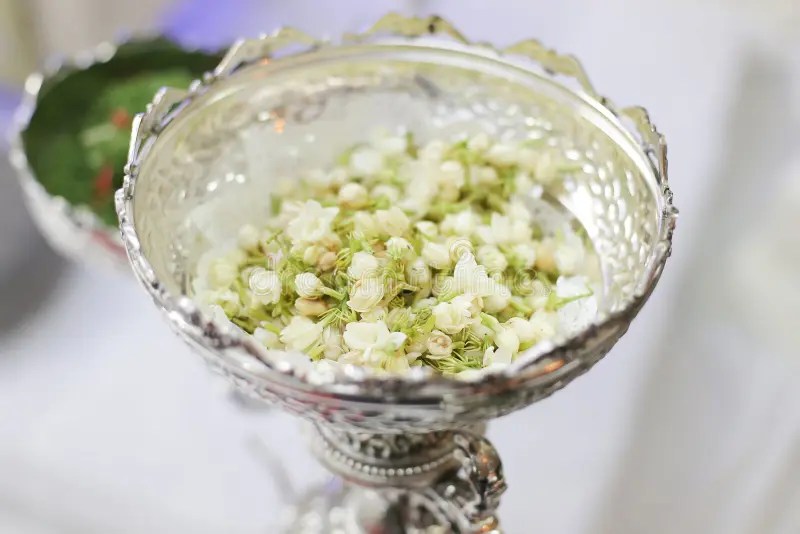

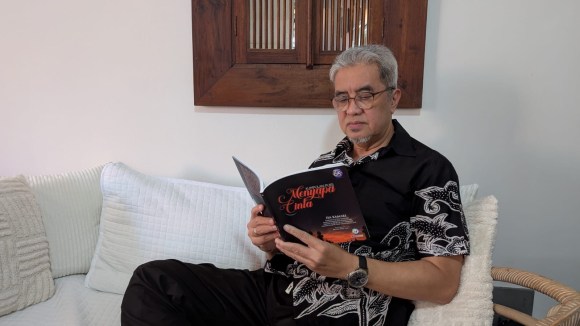
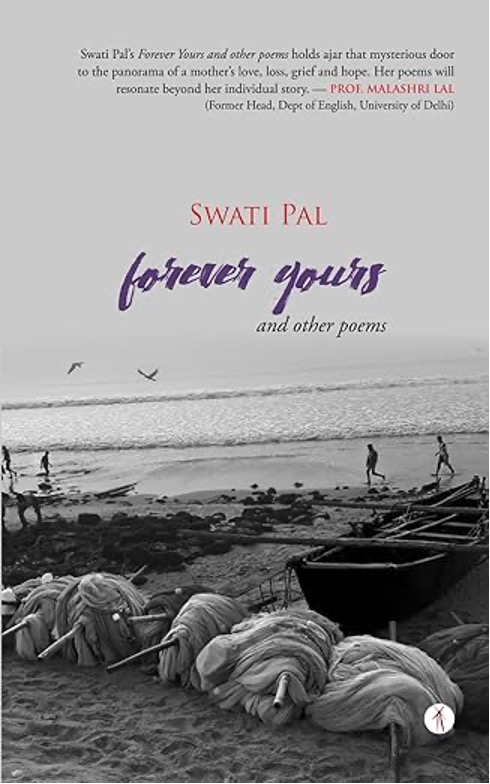

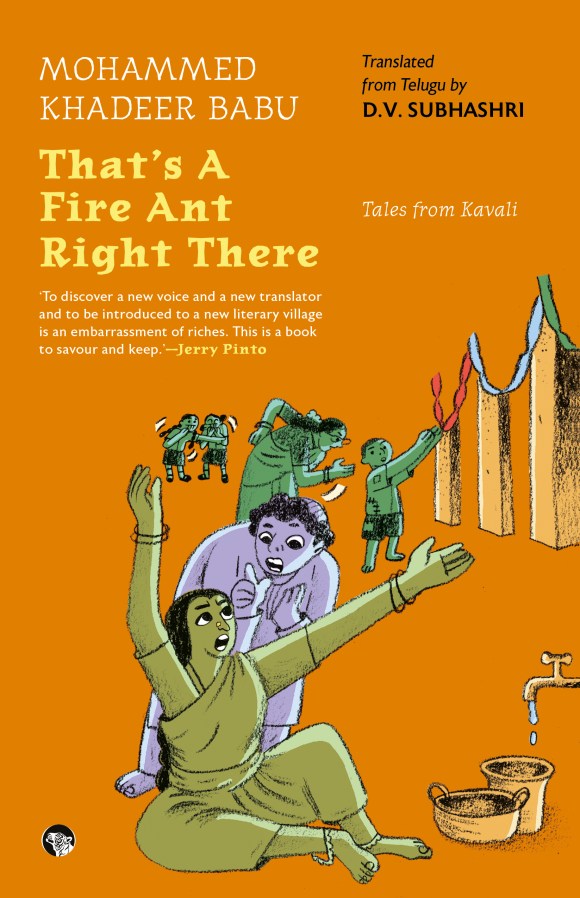
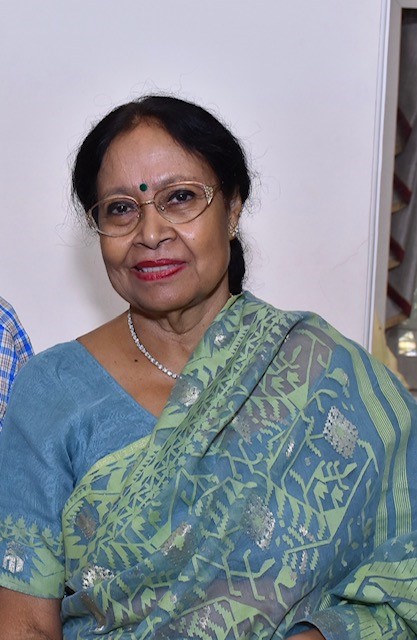

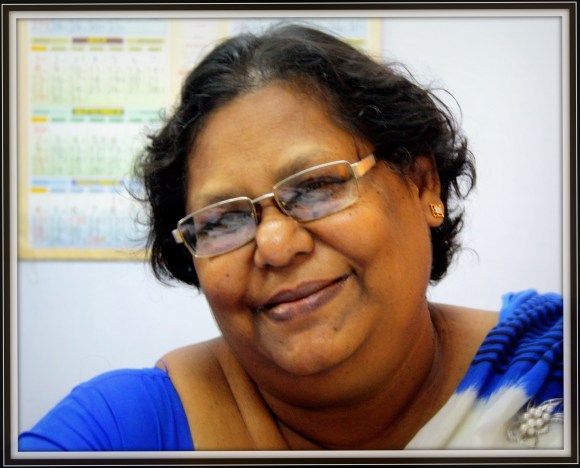


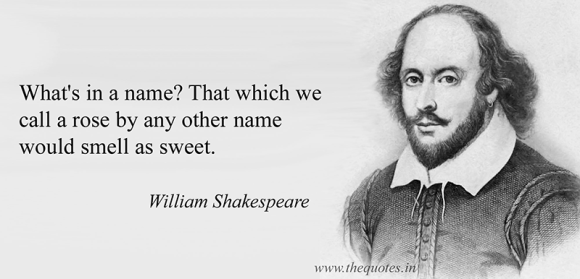
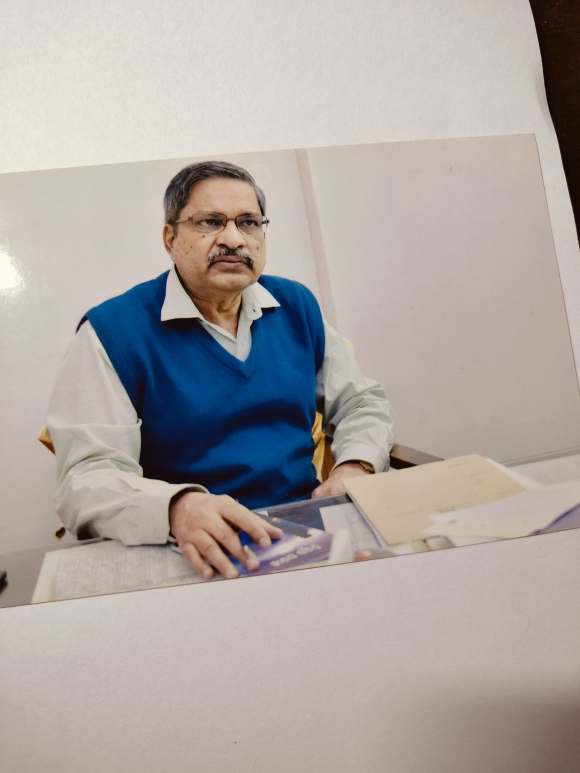
 Borderless