Categories
Contents

Borderless, November, 2021

Autumn: Painting in Acrylic by Sybil Pretious

Editorial

Colours of the Sky…Click here to read.

Interviews

In Conversation with Akbar Barakzai, a Balochi poet in exile who rejected an award from Pakistan Academy of Letters for his principles. Click here to read.

In Conversation with Somdatta Mandal, a translator, scholar and writer who has much to say on the state of Santiniketan, Tagore, women’s writing on travel and more. Click here to read.

Translations

Rebel or ‘Bidrohi’

Nazrul’s signature poem,Bidrohi, translated by Professor Fakrul Alam. Click here to read.

Motorcar

Jibonananda Das‘s poetry translated from Bengali by Rakibul Hasan Khan. Click here to read.

The Beloved City

Poetry of Munir Momin, translated from Balochi by Fazal Baloch. Click here to read.

Rebranding

A poem in Korean, written & translated by Ihlwha Choi. Click here to read.

Perhaps the Last Kiss

A short story by Bhupeen giving a vignette of life in Nepal, translated from Nepali by Ishwor Kandel. Click here to read.

Morichika or Mirage by Tagore

Tagore’s poetry translated by Mitali Chakravarty. Click here to read.

Poetry

Click on the names to read

Rhys Hughes, Sutputra Radheye, Luis Cuauhtémoc Berriozábal, Sheshu Babu, Michael Lee Johnson, Prithvijeet Sinha, George Freek, Sujash Purna,  Ashok Manikoth, Jay Nicholls, Pramod Rastogi, Ryan Quinn Flanagan, Vijayalakshmi Harish, Mike Smith, Neetu Ralhan, Michael R Burch

Poets, Poetry & Rhys Hughes

A story poem about The Clock Tower of Sir Ticktock Bongg. Click here to read.

Nature’s Musings

Penny Wilkes takes us for a stroll into the avian lives with photographs and poetry in Of Moonshine & Birds. Click here to read.

Stories

Waking Up

Christina Yin takes us on a strange journey in Sarawak, Malaysia. Click here to read.

Rains

A pensive journey mingling rain and childhood memories by Garima Mishra. Click here to read.

Khatme Yunus

Jackie Kabir brings us a strange story from Bangladesh. Click here to read.

First International Conference on Conflict Continuation

Steve Davidson explores an imaginary conference. Click here to read.

The Literary Fictionist

In Fragments of a Strange Journey, Sunil Sharma sets out with Odysseus on a tour of the modern day world. Click here to read.

Musings/Slices from Life

Yesterday Once More?

Ratnottama Sengupta recalls her experiences of the Egyptian unrest while covering the 35th Cairo International Film Festival in 2012. Click here to read.

Embroidering Hunger

An account of life of dochgirs (embroiderers) in Balochistan by Tilyan Aslam. Click here to read.

To Daddy — with Love

Gita Viswanath takes us into her father’s world of art and wonder. Click here to read.

Simon Says

Ishita Shukla, a young girl, explores patriarchal mindset. Click here to read.

Welcoming in the dark half of the year

Candice Louisa Daquin takes a relook at the evolution of Halloween historically. Click here to read.

Musings of the Copywriter

In Crematoriums for the Rich, Devraj Singh Kalsi regales his readers with a dark twist of the macabre. Click here to read.

Essays

Renewal

Jayat Joshi, a student of development studies, takes a dig at unplanned urban development. Click here to read.

Once Upon A Time in Burma: Leaving on a Jet Plane

John Herlihy’s last episode in his travels through Burma. Click here to read.

A Legacy of Prejudice, Persecution and Plight

Suvrat Arora muses on the impact of a classic that has been coloured with biases. Click here to read.

The Observant Migrant

In Is Sensitivity a Strength or a Weakness?, Candice Louisa Daquin explores our value systems. Click here to read.

Book Excerpts

Arundhathi Subramaniam’s Women Who Wear Only Themselves. Click here to read.

CJ Fentiman’s award winning book, The Cat with Three Passports. Click here to read.

Book Reviews

Himadri Lahiri reviews Somdatta Mandal’s ‘Kobi’ and ‘Rani’: Memoirs and Correspondences of Nirmalkumari Mahalanobis and Rabindranath Tagore. Click here to read.

Suzanne Kamata reviews Iain Maloney’s Life is Elsewhere/ Burn Your Flags. Click here to read.

Bhaskar Parichha reviews Anita Agnihotri’s Mahanadi –The Tale of a River, translated from Bengali by Nivedita Sen. Click here to read.

Meenakshi Malhotra reviews Turmeric Nation: A Passage Through India’s Tastes, authored by Shylashri Shankar. Click here to read.

Categories
Editorial

Colours of the Sky

A riot of colours starts the day
with happiness, vibrancy and hope,
dispelling the winter of discontent
with whispers of new lores…
Courtesy: Sohana Manzoor

Devi (The Goddess) is a 1960 Satyajit Ray film, based on a story by a writer called Prabhat Kumar Mukhopadhyay, that showcases nineteenth century India, where the silence of a young girl who is deified, wreaks havoc in her home, village and life. In an interview, Satyajit Ray contended that the film was to make people rethink ‘messiahdom’. The exact words he used to state this was that the film was against ‘religious dogmatism’ as the film and story literally dealt with the deification of a young bride. Tagore had similarly questioned blind deification in a number of his poems and plays. These (as Ray spelt out in his interview) did not address religion per se but malpractices, among them, the tendency to worship an idol to a point where flaws are justified, accepted and emulated. Satyajit Ray and Tagore were both Brahmos — which can be seen as a reform movement. These two were not criticising religion but talking of rising above gawky hero worship to think logically and arrive at logical conclusions. When we talk of characters from the Ramayana, the Mahabharata, other mythologies or substitute the adulated with stars, writers, politicians and businessmen who run huge concerns, we tend to idolise them. But these were and are all characters with flaws, whether fictitious or real. We can well learn from their mistakes, rather than deify and worship them to justify bad behaviour by quoting instances from lives of past legends or prominent persons in the current world.

Akbar Barakzai, a poet exiled from Balochistan, talks in a similar vein in his interview. You can see it in his poetry too — some of which can be found translated by Fazal Baloch in our pages. Barakzai talks of transcending barriers we draw for ourselves in the real world, of writing with honesty and sincerity. He has shared vignettes of his life as he changed countries to continue his work. Baloch has also brought to us another excellent poet in translation, Munir Momin. A major poem by Nazrul (the ‘bidrohi kobi’), ‘Bidrohi or Rebel’ has wound its way to our pages translated by Professor Fakrul Alam. We are honoured and grateful that Prof Alam chose to share this excellent translation with us. We have more translations: Jibonananda’s ‘Motorcar’(1934) by Rakibul Hasan Khan, a Korean translation by Ihlwha Choi, another short story from Nepal and Tagore’s powerful poem,Morichika or Mirage’, which is a wake-up call for the inert affluent who hold themselves aloof from common masses. We have also interviewed a major prose translator of Tagore, Professor Somdatta Mandal. With much to share on Santiniketan, Nabanita Deb Sen and many interesting anecdotes, Mandal talks of her extensive work with her translations spanning many more writers from the past.

We have a colourful ensemble this time almost as vibrant as the autumnal colours that have invaded nature in some parts of the Northern Hemisphere. Michael R Burch has given us beautiful poems on autumn, including the autumn of life. We have a poem in a similar vein by George Freek whose work continues influenced by Liu Yong (1719-1805), an influential minister and calligrapher in the Qing Dynasty. Ryan Quinn Flanagan touches on Leonardo Da Vinci’s Mona Lisa in his poetry. Rhys Hughes has given us humour in both his poetry and his column. Our other humorist, Devraj Singh Kalsi has given us darker, more caustic black humour in his narrative. We have lovely photographs from Penny Wilkes with her verses in Nature’s Musings. It is amazing the way she photographs birds in flight. Stories from Malaysia, Bangladesh, India and America add to the richness of our oeuvre. Sunil Sharma has given us an avant-garde telling of Odysseus’s voyage in the modern world, transcending the borders of time and ethnicity.

A well-known senior journalist, Ratnottama Sengupta, has also travelled through time to give us a recall of her experience at the 35th Cairo Film Festival one November, nine years ago. Her narrative about the time that the Shariat law was adopted by Egypt reminds me of the way things moved in Afghanistan few months ago and what is even more stunning is the way in which organisations dubbed extremists earlier are allowed to run countries now. Is it really not yet time to get rid of messiahs and look for one world?

We conclude our travels in Burma with John Herlihy and his friend, Peter, this month. And start a column with Candice Louisa Daquin, The Observant Immigrant. Her essays always draw much discussion. An experienced psychotherapist, she has looked into our value systems. We have books excerpts from Arundhathi Subramaniam’s Women Who Wear Only Themselves and CJ Fentiman’s award winning book, The Cat with Three Passports. Himadri Lahiri has done an in-depth review of Somdatta Mandal’s ‘Kobi’ and ‘Rani’: Memoirs and Correspondences of Nirmalkumari Mahalanobis and Rabindranath Tagore. It is amazing how much we can learn about a person from their letters. Suzanne Kamata has shared her review of Iain Maloney’s Life is Elsewhere/ Burn Your Flags. Reviewed by Meenakshi Malhotra, Shylashri Shankar’s Turmeric Nation: A Passage Through India’s Tastes, sounds like an erudite read that spans thousands of years of history. Anita Agnihotri’s Mahanadi –The Tale of a River, translated from Bengali by Nivedita Sen, has been reviewed by Bhaskar Parichha. The narrative sounds like a powerful voice weaving together the lores around the river.

Do pause by and find many more authors who dot our November edition. As usual, naming each one will keep you away from our delectable reads for longer. We thank all our readers for their continued patronage, and I would like to thank my fabulous team who are now even providing visuals to brighten our pages. A huge thanks to Sohana Manzoor and Sybil Pretious, who write as well as they paint. Thanks to all our wonderful contributors for making Borderless a reality.

Wish you all sunshine and laughter!

Best,

Mitali Chakravarty

Borderless Journal

Categories
Review

The Tale of a River

Book review by Bhaskar Parichha
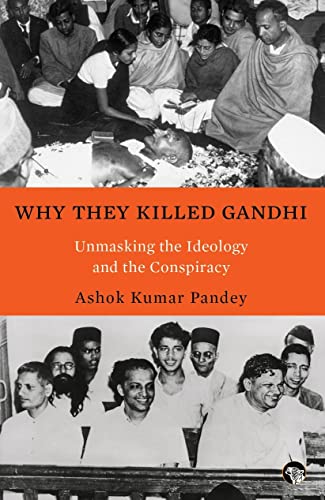
Title: Mahanadi — The Tale of a River

Writer: Anita Agnihotri

Translator: Nivedita Sen

Publisher: Niyogi Books

 ‘I have seen the Mahanadi in so many ways: in the early morning light, in the reclining afternoon glow, in the blaze of the midday and in the shadow of the orange tinge of the sunset. I have seen this river in the form of its narrow current in winter, amidst profuse rain, in the forested region where it originates, and in the turbulent boundlessness of the estuary. And each time the river, serene, terrifying and quiet, has filled my mind with tremendous joy and nostalgia. Many people, both at the origin and basin of this river, are known to me. Their lives, inextricably linked with the river, have made me think, and have both fascinated and enriched me. The chronicle of this river, therefore, is also an extract of my life.’

One of the largest rivers of India, the Mahanadi has flown more than a thousand kilometers through Chhattisgarh and Orissa from the foothills of the Sihawa hills in Dhamtari district of Chhattisgarh and has fallen into the Bay of Bengal. Leaving behind the huge diamond reservoir at Sambalpur in Orissa, the archeological background of Subarnapur and Buddhist districts, the plains of Nayagarh, Cuttack and Jagatsinghpur flow through the middle of the deep forested gorge of Satakoshia, finally crossing the border near the port of Paradip.

But its journey is endless, as it flows day-after-day from the plateau to the forest to the ravine and finally to the plains. It unites with the sea every day. At every new turn, it leaves behind scores of villages, towns and cities. The din and bustle of a mofussil town, the solitary life in a standalone village, people’s struggle for survival, the episodes of their joys and sorrows, the sighs of the displaced people of Sambalpur during the building of the Hirakud dam mingles with the cries of the endangered people on the banks when the river overflows.

In the long journey of the river, it encounters mountainous plateaus, dense forests, villages and uninhabited emptiness. There are traces of the Paleolithic era at its source. There are ancient lyrical stories around it. Farmers, weavers and artisans have come and settled on the banks of the river to draw in the water. Mahanadi is to Odisha what Huang Ho is to China.

And so, Anita Agnihotri’s novel Mahanadi –The Tale of a River (translated from Bengali by Nivedita Sen) captures all these essential elements in a never written story of a stream which is a sorrow rather than a joy for crores of people in Odisha.

A civil servant, Anita Agnihotri, writes in Bengali in a wide variety of genres — poetry, novels, short stories and children’s literature. Recipient of prestigious awards like Bangiya Sahitya Parishad Award and the Bhuban Mohini Dasi Gold Medal conferred by Calcutta University, her writing explores the vast and complex Indian reality, many facets of human relations, and brings out the unheard voices of the marginalised and the underprivileged and has been translated into several Indian and foreign languages.

Translator Nivedita Sen taught English Literature at Hansraj College, University of Delhi. She worked on other popular genres, apart from Indian writing in English, post-colonial fiction and translation studies. She has translated Tagore’s Ghare Baire, and stories by Syed Mustafa Siraj, Leela Majumdar and others.

In the fiction, the narrative is through stories of the people living on the banks of the Mahanadi. Characters like Tularam Dhuru, Malati Gond, Neelakantha, Bhanu Shitulia, Parvati and others might never meet each other, but the story of their lives will remain strung together by the common thread of the ever– the streaming Mahanadi. The chronicle of Mahanadi is a journey through travails and misfortunes into life’s joys and mysterious beauty. 

Writes Sen in the ‘Translator’s Note’: “A socially conscious writer with a relentlessly dissident voice, Anita Agnihotri’s writing explores struggles in the lives of marginalised communities that are oppressed by underhand politics, social privilege and economic disparity. Though she was a member of the Indian Civil Service, she has maintained an anti-establishment stance throughout her writing career spanning four decades.

“In this novel, her non-noncompliance exposes the irony of Nehru’s urging those dispossessed by the building of the Hirakud dam to accept their suffering in the larger interest of the nation. She critiques the police turned into mercenaries by the state when they passively stand by during a violent attack on a social activist because they are paid to do just that. But she also elicits commensurate outrage at two policemen having to confront and succumb to senseless Maoist violence. The novel depicts how a cotton mill falls apart due to squandering of money and corruption in higher places and also how an upcoming steel factory with international collaboration threatens the livelihood of betel-leaf farmers. Her characters with enhanced sensibilities are haunted by the blatant social and economic inequality they witness all around. Yet Tanmay’s research on the abysmal living conditions in the slum clusters of Cuttack cannot resolve their problems.”

What is of significance is that there are a lot of facts in the novel that substantiates the geography, history and economics of the river and the state it mostly passes through. She sensitively kindles – rather in great detail — the realism, the deprivation and the travails of the people living on the riverbanks. The river forms the crux of the narrative, both as the central character and the primary subject.

As a novel, Mahanadi is poignant and is a fitting tribute to the place and people. Anita Agnihotri has been a percipient writer.

.

Bhaskar Parichha is a journalist and author of No Strings Attached: Writings on Odisha and Biju Patnaik – A Political Biography. He lives in Bhubaneswar and writes bilingually. Besides writing for newspapers, he also reviews books on various media platforms.

.

PLEASE NOTE: ARTICLES CAN ONLY BE REPRODUCED IN OTHER SITES WITH DUE ACKNOWLEDGEMENT TO BORDERLESS JOURNAL

Categories
Contents

Borderless, October 2021

An Ode to Autumn: Painting by Sohana Manzoor.

Editorial

Making a Grecian Urn… Click here to read.

Interviews

Unveiling Afghanistan: In Conversation with Nazes Afroz, former editor of BBC and translator of a book on Afghanistan which reflects on the present day crisis. Click here to read.

The Traveller in Time: An interview with Sybil Pretious who has lived through history in six countries and travelled to forty — she has participated in the first democratic elections in an apartheid-worn South Africa and is from a time when Rhodesia was the name for Zimbabwe. Click here to read.

Translations

Travels & Holidays: Humour from Rabindranath

Translated from the original Bengali by Somdatta Mandal, these are Tagore’s essays and letters laced with humour. Click here to read.

The Quest for Home

Nazrul’s Kon Kule Aaj Bhirlo Tori translated from Bengali by Professor Fakrul Alam. Click here to read.

Mysteries of the Universe

Akbar Barakzai’s poetry in Balochi, translated by Fazal Baloch. Click here to read.

Gandhi & Robot

A poem reflecting the state of Gandhi’s ideology written in Manipuri by Thangjam Ibopishak and translated from the Manipuri by Robin S Ngangom. Click here to read.

Sorrows Left Alone

A poem in Korean, written & translated by Ihlwha Choi. Click here to read.

The Song of Advent by Tagore

Written by Tagore in 1908, Amaar Nayano Bhulano Ele describes early autumn when the festival of Durga Puja is celebrated. It has been translated from Bengali by Mitali Chakravarty. Click here to read.

Poetry

Click on the names to read

Michael R Burch, A Jessie Michael, John Grey, Rupali Gupta Mukherjee, Mike Smith, Saranyan BV, Tony Brewer, Baisali Chatterjee Dutt, Jay Nicholls, Beni S Yanthan, Luis Cuauhtémoc Berriozábal, Pramod Rastogi, Jason Ryberg, Michael Lee Johnson, Oormila Vijayakrishnan Prahlad, Rhys Hughes

Animal Limericks by Michael R Burch. Click here to read.

Nature’s Musings

In The Lords of Lights, with photographs and a story, Penny Wilkes makes an interesting new legend. Click here to read.

Poets, Poetry & Rhys Hughes

In Pessoa and Cavafy: What’s in a Name?, Rhys Hughes comically plays with the identity of these two poets. Click here to read.

Musings/ Slices From Life

At the Doctor’s

In this lighthearted narration, Farouk Gulsara uses humour to comment on darker themes. Click here to read.

Taking an unexpected turn

Nitya Pandey talks of a virtual friendship that bloomed across borders of countries during the pandemic. Click here to read.

Travel in the Time of Pandemics: Select Diary Entries of an Urban Nomad

Sunil Sharma gives us a slice from his travels with vibrant photographs, changing continents and homes during the pandemic. Click here to read.

Musings of a Copywriter

In Surviving to Tell a Pony-taleDevraj Singh Kalsi journeys up a hill on a pony and gives a sedately hilarious account. Click here to read.

Essays

A Season of Magical Mellow Wistfulness

Meenakshi Malhotra through folk songs that are associated with Durga Puja explores the theme of homecoming. Click here to read.

What Gandhi Teaches Me

Candice Louisa Daquin applies Gandhiism to her own lived experiences. Click here to read.

How Women’s Education Flourished in Aligarh Muslim University

Sameer Arshad Khatlani dwells on the tradition of education among Muslim women from early twentieth century, naming notables like Ismat Chughtai and Rashid Jahan. Click here to read.

Once Upon a Time in Burma: Of Friendships & Farewells

John Herlihy takes us through more of Myanmar with his companion, Peter, in the third part of his travelogue through this land of mystic pagodas. Click here to read.

When Needles Became Canons…

Ratnottama Sengupta, who has edited an encyclopaedia on culture and is a renowned arts journalist, gives us the role ‘kanthas’ (hand-embroidered mats, made of old rags) played in India’s freedom struggle. Click here to read.

Stories

Lunch with Baba Rinpoche in Kathmandu

Steve Davidson takes us for a fictitious interview with a Tibetan guru in Nepal. Click here to read.

The Tree of Life

An unusual flash fiction by Parnil Yodha about a Tibetan monk. Click here to read.

Odysseus & Me: A Quest for Home

A short fiction from Bangladesh by Marzia Rahman on immigrants. Click here to read.

Dawn in Calicut

Krishna Sruthi Srivalsan writes of a past that created the present. Click here to read.

I am a Coward with Priorities

Tejaswinee Roychowdhury tells a story from a soldier’s perspective. Click here to read.

The Literary Fictionist

In Bapu, Denied, Sunil Sharma explores the fate of Gandhiism in a world where his values have been forgotten. Click here to read.

Book Excerpts

An excerpt of In a Land Far From Home: A Bengali in Afghanistan by Syed Mujtaba Ali, translated by Nazes Afroz. Click here to read.

An excerpt from letters written by Tagore from Kobi & Rani, translated by Somdatta Mandal. Click here to read.

Book Reviews

Aruna Chakravarti reviews Golden Bangladesh at 50: Contemporary Stories & Poems edited by Shazia Omar. Click here to read.

Somdatta Mandal reviews Wooden Cow by T. Janakiraman, translated from Tamil by Lakshmi Kannan. Click here to read.

Gracy Samjetsabam reviews Suzanne Kamata’s The Baseball Widow. Click here to read.

Bhaskar Parichha reviews Mohona Kanjilal’s A Taste of Time: A Food History of Calcutta. Click here to read.


Categories
celebrations

Homecoming Festivals

As the year stretches towards the next one, festivals welcome the delights of autumn. Though our celebrations have been restricted by the ongoing pandemic, human spirit continues to revel with music, words and more. Festivals are a part of this jubilation — a refulgent celebration of our existence across the globe. Some of these occasions jubilate the commencement of our journey home and some of the arrival of Gods and Goddesses, who other than killing demons, are shown to like being with their families too. For those who abstain from worshipping forms, a festival could be just visiting and meeting with families to express their thanks. Autumn is a time when tradition had many headed home to celebrate these events with their near and dear ones.

During Durga Puja, a festival which celebrates the home coming of the Goddess along with that of her devotees, we had a cultural splurge — music, dancing, theatre and special magazines featuring writing that moves to unite people in the spirit of love and harmony. Concerts of songs by bauls or traveling minstrels, Kazi Nazrul Islam and Tagore — both of who believed differently from Hindus — are a part of the celebrations. Writings by many, irrespective of their religious preferences, featured in the special editions of journals around literary and non-literary issues. Often these issues were coveted for being exquisite melanges, showcasing the most flavourful writers.

The cultural mingling despite being attached to a religious observance transcended narrow barriers imposed on faith. It continued inclusive in its celebrations, with food and embracing all cultures. Anyone could attend the festivities, even the British in colonial India. Taking a page off that, Borderless celebrates with writings across all boundaries.

Poetry

The Quest for Home

Nazrul’s Kon Kule Aaj Bhirlo Tori translated from Bengali by Professor Fakrul Alam explores the theme of spiritual homecoming . Click here to read.

The Song of Advent by Tagore

Tagore’s Amaar Nayano Bhulano Ele describes early autumn when the advent of the Goddess, translated from Bengali by Mitali Chakravarty. Click here to read.

Prose

An excerpt from Shakti Ghoshal’s The Chronicler of the Hooghly & Other Stories describes the historic evolution of the Durga Puja around the eighteenth century as a social occasion where the colonials and the nabobs mingled. Click here to read.

Meenakshi Malhotra through autumnal folk songs around Durga Puja explores homecoming in Season of Magical Mellow Wistfulness. Click here to read.

Somdatta Mandal translates from Bengali Travels & Holidays: Humour from Rabindranath. Both the essay and letters are around travel, a favourite past time among Bengalis, especially during this festival. Click here to read.

An excerpt of In a Land Far From Home: A Bengali in Afghanistan by Syed Mujtaba Ali, translated from Bengali by Nazes Afroz. Syed Mujtaba Ali was a popular writer who often featured in such journals. Click here to read.

Bhaskar Parichha reviews Mohona Kanjilal’s A Taste of Time: A Food History of Calcutta. Exploring food has always been a part of festivities. Hope you find some good hints here. Click here to read.

Aruna Chakravarti reviews Golden Bangladesh at 50: Contemporary Stories & Poems edited by Shazia Omar. Click here to read.


A depiction of celebrations inside a house during Durga Puja in  Calcutta (around 1830-40), West Bengal, India, where Europeans are being entertained, water colour by William Prinsep(1794–1874), a merchant with the Calcutta firm of Palmer & Company. Courtesy: Creative Commons
Categories
Review

A Taste of Time

Book Review by Bhaskar Parichha

 Title: A Taste of Time: A Food History of Calcutta
Author: Mohona Kanjilal
Publisher: Speaking Tiger, 2021

To say that this is a rattling book on the food culture of Kolkata will be an understatement. Indeed, there couldn’t have been a better book than this on the food history of the City of Joy. In the thriving universe of Indian food books, this clearly stands out.

A Taste of Time–A Food History of Calcutta by Mohona Kanjilal goes the whole hog in digging out the culinary history of Kolkata with every minute detail. The book is massive and gorgeous.

An alumnus of Loreto College, Kanjilal spent most of her childhood in Bengaluru. From a freelance journalist to a full-time writer, newspapers have been her invariable guidance. She dabbles in short stories, too.

Says the blurb: “Calcutta, once the nucleus of the Raj, was at the heart of a thriving economy and unparalleled administration. Over the centuries, this teeming, cosmopolitan metropolis has become home to people from various communities who have lent its food and culture their distinctive tastes and culinary rituals. The heady romance of palates and flavours in the ‘Royal Capital’ has fostered diversity in food and culture all the while adhering to the city’s Bengali roots.”

Divided into four sections and about a dozen chapters, Kanjilal brings to the platter a full account of the food culture of Kolkata and it, surely, is an intellectual nourishment.

The book is a perceptive journey through the ever-changing landscape of Calcutta’s food and cultural environment, from its decades-old cutlet, jhal muri,and puchka stalls to its iconic continental restaurants like Firpo’s and Flurys. Whether it is the oldest tea shop, Favourite Cabin, set up in 1924, to the 21st-century fine-dining restaurant “threesixtythree”, Mohona dexterously captures the stories behind the city’s adorable culture of ‘bikel chaar-ter cha’ (tea at 4 p.m.).

What makes the volume fascinating is her authentic research. From Calcutta’s renowned bakeries like Nahoum’s to the invention of rasgullas and samosas (or shingara), Kanjilal does a 360-degree exploration. Diving into Calcutta’s blazing history, she shows how the food habits of early European settlers, Jewish, Armenian, Chinese, Parsi and other communities, and the city’s next-door neighbours like Odisha, have made the culinary fabric of Calcutta immensely flush and stratified.

Food, Kanjilal says, “has always been an integral part of the lifestyle of the residents of Calcutta… whether it is… the phuchka wallah… the jhal muri wallah, selling the spicy puffed rice preparation… or the ghugni wallah, serving… the semi-dry and spicy preparation of whole yellow peas…”

In close to 500 pages, she weaves scholarly accounts of historians and food writers with the everyday fables one hears from a famous paanwallah or an old-timer of a club. In the introductory part; she deals with the founding of Calcutta — from the Mughal empire to the coming of the British and latter part of the twentieth century when Calcutta became a bursting metropolis.

Writes Kanjilal: “As the capital of British India (1858-1911), Calcutta became a culinary melting pot of Armenians and Parsis from Iran, Jews from Syria and Baghdad, the Chinese fleeing their revolution, and local migrants such as Gujaratis, Punjabis, Marwaris, Sindhis, Oriyas, Biharis and South Indians. Her book explores this culinary evolution across a variety of cuisines and time periods. She structures the book according to when these migrants figured into the city’s consciousness. It is divided into four sections, with each section taking up the culinary influence of a particular set of migrants and the dishes they influenced in a Bengali household’s repertoire.

“The British were responsible for introducing certain food habits that have, over the years, become pillars of Calcutta’s culinary culture. One of their major contributions was the introduction of beverages to the Bengali table. Tea, coffee and fresh fruit juices are a fixed part of the average Bengali’s breakfast spread today because of the British influence. This nation strongly influenced the foods Bengalis ate for breakfast as well, introducing typical preparations of egg, sausage, bacon and bread to the local palate. Chops and cutlets, which are today as essential to a Bengali as rice and fish curry, also owe their popularity to the role played by the British in Bengali culinary history. Today, kiosks in every nook and corner of the city make and sell these fried foods, usually as accompaniments to what many perceive as a quintessentially British meal: afternoon tea. Finally, egg-based puddings, now a fixture on Calcutta’s dessert menus, were introduced to the city by the British.”

Her investigation is truly fascinating. From the British influence to the Portuguese influence; from the Anglo-Indian to the Armenian; from the Jews to the Nawabi influence; from Chinese to Parsi cuisine, she digs out hundreds of recipes. Then, there is a whole chapter on Bengali cuisine itself. She also deals with Pan-Indian cuisine and the influence of nearby Darjeeling district.

If one ever wants to read a book about Calcutta that takes to the vignettes and the history surrounding the favourite dishes and eateries, this is the book. If you want to hear stories about which famous personality (e.g. Subhas Chandra Bose) ate what and where, and if you want to repeat those experiences for yourself, then this is the suitable guide.

This delicious and all-embracing history of food in Calcutta, peppered with mouth-watering nuggets, recipes and incendiary accounts is a boon for the bon vivant.

Glossary:

* Puchka, jhaal muri and ghughni are savoury snacks.

Paanwallah is the seller of paan or betel leaf.

Bhaskar Parichha is a journalist and author of No Strings Attached: Writings on Odisha and Biju Patnaik – A Political Biography. He lives in Bhubaneswar and writes bilingually. Besides writing for newspapers, he also reviews books on various media platforms.

.

PLEASE NOTE: ARTICLES CAN ONLY BE REPRODUCED IN OTHER SITES WITH DUE ACKNOWLEDGEMENT TO BORDERLESS JOURNAL
Categories
Contents

Borderless, September 2021

Editorial

The Caged Birds Sing…Click here to read.

Interviews

Professor Anvita Abbi, a Padma Shri, discusses her experience among the indigenous Andamanese and her new book on them, Voices from the Lost Horizon. Click here to read.

Keith Lyons talks to Jessica Mudditt about her memoir, Our Home in Myanmar, and the current events. Click here to read.

Translations

Be and It All Came into Being

Balochi poetry by Akbar Barakzai, translated by Fazal Baloch. Click here to read.

Adivasi Poetry

A poem by Jitendra Vasava translated from the Dehwali Bhili via Gujarati by Gopika Jadeja. Click here to read.

A Poem for The Ol Chiki

 Poetry by Sokhen Tudu, translated from the Santhali by Hansda Sowvendra Shekhar. Click here to read.

About Time

Korean poetry on time written and translated by Ilwha Choi. Click here to read.

Of Days and Seasons

A parable by the eminent Dutch writer, Louis Couperus (1863-1923), translated by Chaitali Sengupta. Click here to read.

Road to Nowhere

An unusual story about a man who heads for suicide, translated from Odiya by the author, Satya Misra. Click here to read.

Abhisar by Tagore

A story poem about a Buddhist monk by Rabindranath Tagore in Bengali has been translated by Mitali Chakravarty. Click here to read.

Poetry

Click on the names to read the poems

Arundhathi Subramaniam, Michael R Burch, Sekhar Banerjee, Jeff Shakes, Ashok Suri, Tim Heerdink, Srinivas S, Rhys Hughes, A Jessie Michael, George Freek, Saranayan BV, Gigi Baldovino Gosnell, Pramod Rastogi, Tohm Bakelas, Nikita Desai, Jay Nicholls, Smitha Vishwanathan, Jared Carter

Nature’s Musings

In Sun, Seas and Flowers, Penny Wilkes takes us for a tour of brilliant photographs of autumnal landscapes with verses. Click here to read.

Poets, Poetry & Rhys Hughes

In Memory Gongs, Rhys Hughes creates a profound myth tinged with a tongue in cheek outlook … Click here to read.

Essays

Crime and the Colonial Capital: Detective Reid in Calcutta

Abhishek Sarkar explores the colonial setting up of the Calcutta detective department in 1887. Click here to read.

The Myth of Happiness

Candice Louisa Daquin ponders over the impositions on people to declare themselves happy. Click here to read.

Once Upon a Time in Burma: Of Babies and Buddhas

John Herlihy takes us through more of Myanmar with his companion, Peter, in the second part of his travelogue. Click here to read.

Bhaskar’s Corner

Bhaskar Parichha explores links between Politics & the Media. Click here to read.

Musings/Slices from Life

Cyclists

Mike Smith muses about a black and white photograph from his childhood. Click here to read.

Leo Messi’s Magic Realism

Sports fan Saurabh Nagpal explores the magic realism in famous footballer Messi’s play with a soupçon of humour. Click here to read.

Infinite Possibilities & Mysterious Riddles

Keith Lyons gives a lively account of traveling across borders despite the pandemic. Click here to read.

Word Play

Geetha Ravichnadran explores additions to our vocabulary in a tongue-in-cheek article. Click here to read.

Musings of a Copywriter

In When I Almost Became a Professor, Devraj Singh Kalsi gives humour tinged reasons on why he detached himself from being an academician. Click here to read.

Stories

Flash Fiction: Turret

Niles M Reddick relates a haunting tale of ghosts and more. Click here to read.

Silver Lining

Dipayn Chakrabarti travels through moods of the day and night. Click here to read.

Captain Andi is in love

Dr. P Ravi Shankar explores a future beyond climate change in Malaysia. Click here to read.

The Cockatoo

Revathi Ganeshsundaram captures the stardust in ripening years. Click here to read.

The Missing Tile

Saeed Ibrahim’s story reflects on the ties between an old teacher and a student. Click here to read.

The Literary Fictionist

In Return of the Ghost, Sunil Sharma explores the borders between life, ideas and death. Click here to read.

Book Excerpt

An excerpt from Kobi’ and ‘Rani’: Memoirs and Correspondences of Nirmalkumari Mahalanobis and Rabindranath Tagore, translated by Somdatta Mandal, showcasing Tagore’s introduction and letters. Click here to read.

Book Reviews

Rakhi Dalal reviews Anvita Abbi’s Voices from the Lost Horizon. Click here to read.

Basudhara Roy reviews Bina Sarkar Ellias’ Song of a Rebel and Other Selected Poems. Click here to read.

Bhaskar Parichha reviews Wendy Doniger’s Winged Stallion and Wicked Mares. Click here to read.

Categories
Editorial

The Caged Birds Sing

...Don't you know
They're talkin''bout a revolution
It sounds like a whisper...
-- Tracy Chapman,'Talkin 'Bout a Revolution
Thou shalt love thy neighbour as thyself. 
— Bible 

We are living in strange times that seem to be filled with events to challenge the innovativeness of man. As if the pandemic were not enough, concepts that had come out of the best in our civilisation to unite mankind have been convoluted by a minority to manipulate and hurt the majority into submission. Life is not about surviving with faint-hearted compliance but about having the courage to live it as you want, facing it full up front, to voice out in unison against injustices, wrongs, and most of all to loan strength to help and care for each other. Often to understand this, we need to hinge on to our past, to learn from our heritage. But do we do that? In the hectic drive to be successful, we tend to ignore important lessons that could have been imbibed from the past. Like, did you know that the tribes in the Andaman can save themselves from a tsunami?

Padma Shri Anvita Abbi tells us all about the Andamanese and her attempts to revive their moribund language in her interview and book, Voices from the Lost Horizon, reviewed by Rakhi Dalal. While the review focusses on the uniqueness of Abbi’s work and the publication with its embedded recordings of the tribe fast dissolving into the morass of mainstream civilisation, her interview highlights the need to revive their lores that evolved out of a 70,000-year-old culture. On the other hand, Jessica Mudditt, interviewed by Keith Lyons, dwells on the ongoing crisis in Myanmar, which has been clearly the focus of her book, Our Home in Yangon. This interview focusses on the here and now of the crisis. But most crises have their roots deep and perhaps an exploration of these could help. There are 135 ethnicities in Myanmar but how many are actually integrated into the mainstream? Are they in the process of getting ‘lost’ like the voices of the speakers of Greater Andamanese?

That is why we tried to showcase a few such strains that are going unheard in the loudness of the ‘civilised’ mainstream. We have translations in poetry from Santhali and Adivasi, touching on the concerns of those who are often considered underdeveloped. And, perhaps, as Abbi said in her interview about the Andamanese, we can say much the same for these tribes too.

“These tribes are neither poor, nor uneducated (their knowledge of environment comprising birds, fishes, medicinal plants and their … weather predictions, and the Earth they walk on is amazing) …”

Distinctions have been created by a ‘civilisation’ entrenched in mono-cognitive enforcements leading to the loss of trust, confidence, languages, cultures and valuable knowledge about basic survival. Perhaps we can attempt to heal such wounds by imbibing the openness, love, devotion and compassion shown by the Buddhist monk, Upagupta (who is still revered in Myanmar as Shin Upagutta), in the translation of Tagore’s story poem, ‘Abhisar’ or ‘The Tryst’.  Somdatta Mandal’s translation of Tagore’s letters introduce similar humanitarian concerns when the maestro mentions a German anthropologist and his wife who for the betterment of mankind were journeying to study tribals in India. Tagore remarks, “The people for whom they are willingly prepared to undergo hardship and to overlook all sorts of danger are not their relatives, nor are they civilised.” And yet even a century ago to fathom more about mankind, attempts were being made to integrate with our ancient lore. The concept of being ‘civilised’ is of course now much under the microscope. What is being ‘civilised’?

 Is it about having power? We have Akbar Barakzai’s poem translated by Fazal Baloch on creation looking at the divide between a ‘civilised’ God and man. The theme stresses the two sides of the divide. More translations from Odiya, Dutch and Korean further mingle different flavours of the world into our journal — each questioning the accepted norm in different ways.

In an edition focussed on myths and stories from which we evolved, Rhys Hughes has created an unusual legend around elephants. His poetry also deals with animals — cats. One wonders if the T S Eliot’s famed ‘Macavity, the Mystery Cat’ could have to do something with his choices?  We were fortunate to have Arundhathi Subramaniam share her poetry on myths around Indian figures like Shakuntala and Avvaiyar and the titular poem from When God is a Traveller that won her the 2020 Sahitya Akademi Award. Michael R Burch continues on the theme dwelling on Circe, Mary Magdalene and Helen. Sekhar Banerjee has a more iconoclastic approach to myths in his poetry. Jared Carter talks of modern myths perpetuated through art and cultural studies as does Mike Smith in his musings with his glance back at the last century through a photograph.

We have poetry by a Filipino writer Gigi Baldovino Gosnell from South Africa, looking for a new world, a new legend, perhaps a world without borders. Tohm Bakelas has given us a few lines of powerful poetry. Could these poems be a reaction to world events? Smitha Vishwanath has responded to the situation in Afghanistan with a poem. In this edition, photographs and verses in Penny Wilkes’ ‘Nature’s Musings‘ draw from the universe. She writes, “The sun never asks for applause” — a powerful thought and perhaps one mankind can learn from.

Ghost stories by Niles Reddick and Sunil Sharma perpetuate the theme, especially the latter has a ghost that questions myths of ‘isms’ created in the modern-day world. We also have a writer from Malaysia, P Ravi Shankar, with a futuristic legend set in a far-off time where man has embraced the reality of climate change and artificial intelligence. An interesting and fun read as is Devraj Singh Kalsi’s professions about why he did not become a professor, Geetha Ravichandran’s light musing on word play and a young writer Saurabh Nagpal’s musing, ‘Leo Messi’s Magic Realism‘ — a footballer viewed from a literary perspective!

While our musings make us laugh, our essays this time take us around the world with the myth of happiness deconstructed by Candice Louisa Daquin, to Burma and deep into Kolkata’s iconic history of the detective department started in the nineteenth century. There is an essay by Bhaskar Parichha that explores politics and media and mentions ‘gatekeepers’ of the media who need to be responsible for influencing public opinion. Guess who would be the gatekeepers?

Bhaskar Parichha’s review of Wendy Donniger’s non-fiction exploring myths around horses, Winged Stallion and Wicked Mares, and Basudhara Roy’s review of Bina Sarkar Ellias’ Song of a Rebel and Other Selected Poems perpetuate the theme of the importance of the past on the one hand and question it on the other. But that is what Borderless is about — exploring the dialectics of opposing streams to re-invent myths towards a better future.

We have a bumper issue again this time with nearly fifty posts. I invite our wonderful readers on a magical journey to unfold the hidden, unmentioned gems scattered on the pages of the September Issue of Borderless. Thank you again to an outstanding team, all our global contributors who make every edition an adventure and a reality and our wonderful readers. Thank you all.

Have a beautiful month!

Mitali Chakravarty

Borderless Journal

Categories
Bhaskar's Corner

Politics & the Media

In recent years, the increasing influence of the media has changed the shape of politics all over the globe. Consequently it has raised provocative questions about journalism’s role in the political process. There are questions about the media’s effect on the political system and the subsystems — including the legislature, the executive and the lobbies.

Is media power in politics a myth or an exaggeration? Who influences whom? When does the media power peak and when does it touch the bottom — these and similar other questions, however, defy any clear-cut answer.

Research over the decades suggests that the media effect on politics cannot be answered in broad generalities. There are various types of effects, on different types of political dispositions, at various levels of political activity, under various conditions. Further, the mass media are highly diverse in content and include a very wide range of activities of which politics is only a miniscule part.

In politics, the mass media influences not only individual opinion but also the way politics is conducted. Today, if political roles are changing, so are the expectations of politicians. Changes take place even between the relationship of followers to leaders, and, perhaps, also some values of political life itself.

Walter Lippmann, a renowned American journalist and political analyst, once said that journalists point a flashlight rather than a mirror at the world. Accordingly, the audience does not receive a complete image of the political scene. Instead, it gets a highly selective series of glimpses. Reality is also tainted. It was his view that the media cannot possibly perform the functions of public enlightenment that democratic theory requires. He reasoned that the mass media cannot tell the truth objectively because the truth is subjective and entails more probing and explanation than the hectic pace of news production allows.

Images of reality the mass media portray differ from country to country. Judging by their respective media, audiences are apt to form quite varied images about events and their international ramifications. Different media produce different opinions when journalists disagree about which political actors and actions deserve the spotlight and which should be regarded positively, negatively or as neutral.

Influence also depends on the credibility of the media and on the esteem with which their audiences regard them. Usually, the media have negative ratings in European countries, but a positive score in the United States. Despite credibility problems, most audiences in Europe believe that the media have much less influence on the three branches of government, while Americans credit the media with a great deal of influence over governmental institutions.

 Alexander Solzhenitsyn, a Russian writer, remarked in 1947 while delivering a talk at Harvard University, that the press had become the most powerful force in Western countries. It had surpassed in power the executive, legislature and the judiciary.

Nearly everyone acknowledges that the media plays a powerful role in our public and private lives. Also, opinions about the media and estimates of their influence on society’s other institutions are important barometers of democracy’s functioning.

On the other hand, attitudes about the media have been highly critical. Critiques of the press have spanned a century and several continents. Balzac (1799-1850), the French novelist and dramatist, wrote in 1840 : “In France, the press is a fourth power of state; it attacks all, yet no one attacks it. It reprimands recklessly. It asserts domination over politicians and men of letters that is not reciprocated, claiming that its protagonists are sacred. They say and do horribly foolish things; that is their right! It is high time we took a look at these unknown, second-rate men who hold such importance in their time and who are the moving force behind a press with a production equal to that of books.”

A Louis Harris survey in 1987 revealed that as compared to America, Germany, Great Britain and Spain had little or no confidence in the media. The pluralities in these three countries said the media had too much power. This survey assessed the media’s influence on three central institutions of government-the legislature, the executive and the judiciary. Some respondents accused the media of undermining the separation of powers that is the foundation of democracy.

Whether the media actually impedes the operations of the other three organs of democracy is difficult to say, but as the Indian experience shows, the media has a more abiding influence on government and its institutions rather than the other way round.

The American humourist, Will Rogers, contended, “All I know is just what I read in the papers.” For many Indian politicians, there is a good bit of truth in this aphorism — what they learn about ongoing political events comes primarily from the news media. Therefore, the media as a supplier of information moulds public opinion and influences political decisions. If the media guides citizens’ attention to certain issues and influences their thinking process, the media also influences the choice of issues that will be matters of political concern and action. That is the reasoning behind the agenda-setting hypothesis of scholars like Maxwell E. McCombs and Donald L. Shaw.

Agenda-setting or the ability of the media to influence the course of events in the public mind has been part of the political culture of the United States of America for nearly a century. The assumption of media power has been asserted by political journalist and historian, Theodore White, during the presidential elections of 1972. According to him, the power of the press in America is primordial. It sets the agenda for public discussions; and this sweeping political power is unrestrained by any law. It determines what people will talk and think about — an authority that in other nations is reserved for tyrants, priests, parties and bureaucrats.

The idea of agenda-setting asserts that the priorities of the press become the priorities of the public. What the press emphasises is emphasised privately and publicly by the audiences, asserts White. The press largely structures voters’ perceptions of political reality. It can also influence which issues make up the agenda for any particular elections.

In 1952, the Republicans led by Dwight Eisenhower successfully exploited the three Ks — Korea, Corruption and Communism — in order to regain the White House after a hiatus of twenty years. The prominence of those three issues, cultivated by press reports extending over many months and accented by partisan campaign advertising, worked against the incumbent Democratic party.

There are numerous instances of how popular American presidents’ actions and statements reported in the media affected public opinion. These include President Nixon’s persistent opposition to speeding up troop withdrawals from Vietnam during 1969,1970 and 1971; Reagan’s 1981 argument of AWACS airplane sales to Saudi Arabia; Carter’s 1977-78 increased attention to Arab countries, his 1982 bellicose posturing towards the Soviet Union; Ford’s 1974-75 defence of military spending and Carter’s advocacy of cuts in domestic spending, et al.

In contrast, unpopular presidents had little success at opinion leadership. In several cases, unpopular presidents made serious efforts to advocate policies but failed to persuade the public.

In no area of public life have practicing politicians taken media effects more seriously than during elections. Political campaign organisers spend much time, effort and money to attract favourable media attention to candidates for major electoral offices. When their candidates lose, they frequently blame the tone of media coverage, or rather the lack of it.

There is an old saying that there are many slips  between the cup and the lip. It is one thing for politicians to create a particular image and another for that image to be conveyed to news people and, through them, to the voting public.

Systematically establishing the impact of election communication on the public’s opinions and behaviour is a real challenge. The nature of campaign coverage has also a profound impact on the way people vote. This is confirmed by how people tended to view the candidate — as the winner or the loser. As for the media ,that old line of legendary coach Vince Lombardi – “Winning Isn’t Everything, It’s The Only Thing” — is taken to heart and the public response usually follows suit.

Ever since the television age of politics was born in the 1952, American presidential stakes between Dwight Eisenhower and Adlai Stevenson, the ability to use the medium has been increasingly essential to electoral success. In 1960, John F Kennedy’s video persona in his televised debate with Richard Nixon proved his margin of victory.

Similarly, in 1976, Jimmy Carter co-opted television in the Democratic primaries to help him create a candidature  that was larger than life. Ronald Reagan throughout his presidency proved that the visual medium had become the political message. Reagan’s White House advisors understood early that in areas of government policy and global complexity the nature of the medium is tedium. And so, by controlling the pictures, they could control the pacing of the news shows.

The media effects politics in a variety of ways. They also affect public policies. By mobilizing hostile public or interest group opinions, the media may force a halt to political choices. But, as a general rule, journalists should disclaim any motivation to influence public policies through their news stories. Except for the editorial pages, their credo calls for objective, neutral reporting. Only investigative stories may be the major exceptions to this rule.

Contemporary political folklore pictures the media as adversaries of officialdom who alert the citizens to governmental misdeeds or failures. In reality, there are, or may occur, many situations when officials and journalists work together to bring about needed action.

The power of news people rests largely in their ability to select news for publication and feature it as they choose. Many people in and out of government try to influence these media choices. But in the ultimate analysis, it is the editor and news directors — the gatekeepers in news media- who, in an ideal situation, decide which item to clear  and which one  to reject.

(First Published in The Frontier Post)

.

Bhaskar Parichha is a journalist and author of No Strings Attached: Writings on Odisha and Biju Patnaik – A Political Biography. He lives in Bhubaneswar and writes bilingually. Besides writing for newspapers, he also reviews books on various media platforms.

.

PLEASE NOTE: ARTICLES CAN ONLY BE REPRODUCED IN OTHER SITES WITH DUE ACKNOWLEDGEMENT TO BORDERLESS JOURNAL

Categories
Review

Winged Stallions and Wicked Mares

Book Review by Bhaskar Parichha

Title: Winged Stallions and Wicked Mares; Horses in Indian Myth and History

Author: Wendy Doniger

Publisher: Speaking Tiger Books, 2021

Horses have a captivating and curious existence in India. Stallions have been graciously carved into the Indian landscape in a variety of ways. To view the subcontinent’s past through the prism of the horse is to be swept back in its power and propriety. Horses have a galactic connection to Indian history, mythology, art, literature, folklore and also popular belief.

The political symbolism of the horse, its vital function in social life, religion, sport and war, its role in shaping economies and forging crucial human bonds is too obvious to point out.

Emergence of local breeds such as the Kathiawari and the Marwari, the Zanskari and the Manipuri is an interesting tale of gallantry. In India’s modern history, there were fabulous horsewomen too, Chand Bibi, Maratha princesses and women polo players among them. Horses have an intimate connection to grooms, blacksmiths, breeders, traders and bandits.

Rana Pratap’s legendary Chetak, Ranjit Singh’s much-contested Laili, Pabuji’s cherished black mare and those horses captured in paintings and equestrian portraits are riveting. This glorious age of the horse met its painful decline with the onset of colonial rule and automation.

Winged Stallions and Wicked Mares; Horses in Indian Myth and History by Wendy Doniger is an engrossing book not only for the subject but also the research. In this inspiring and scholarly book, Doniger — who has been called the greatest living mythologist — examines the horse’s significance throughout Indian history, from the arrival of the Indo-Europeans, followed by the Greeks, the Turks and Mongols (who imported Arabian horses) and the British (who imported Thoroughbreds and Walers). 

Along the way, she delves deep into the rituals of horse sacrifice in the Vedic age. She rummages through the stories of warring horses and snakes in the Mahabharata. She digs into   tensions between Hindu stallion and Arab mare traditions; imposing European standards on Indian breeds; the reasons many Indian men ride mares to weddings; the motivations for murdering Dalits who ride horses; and the enduring myth of foreign horses who emerge from the ocean to fertilise native mares.

Doniger combines erudition with storytelling and gives the reader a persuasive account on the horse in Indian culture just as she does it in her other books on Indian mythology. 

Quoting from the book: “The horse is not indigenous to India, except in a few small pockets. Even after it was brought to the subcontinent sometime between 2000 BCE and 1500 BCE by the Indo-Europeans. It played almost no part in the lives of ordinary Indian villagers, being too expensive for all but the most privileged people to own. In India’s folklore, epics and popular culture horse stories abound and there are some brilliant images of the animal.”

Doniger’s ride through four millennia of Indian legend and folklore is full of sacrificial horses, horse-headed gods, transformations and couplings. Like Doniger’s other works on Indian mythology and history, this book  is astonishingly accomplished with the threads of mythical narratives woven into a meaningful depiction of the Indian imagination.

Author of classic works like The Hindus: An Alternative History and Hindu Myths, Wendy Doniger has two doctorates, in Sanskrit and Indian studies, from the universities of Harvard and Oxford. She has taught at the School of Oriental and African Studies, University of London and the University of California, Berkeley, and is currently the Mircea Eliade Distinguished Service Professor of the History of Religions at the University of Chicago. Her other books include Siva: The Erotic Ascetic; Dreams, Illusion and Other Realities; The Mare’s Trap: Nature and Culture in the Kamasutra.  

The Vedic ritual of the sacrifice of a stallion is balanced by the myth of a goddess who takes the form of a mare named Saranyu (Fleet). Doniger retells the story thus:

“The blacksmith of the gods gave his daughter, Saranyu, in marriage to the Sun, and she gave birth to twins, Yama and Yami. Then the gods concealed the immortal woman from mortals; they put in her place a female of-the-same-kind (Savarna) and gave that look-alike to the Sun. Saranyu took the form of a mare; the Sun took the form of a stallion, followed her, and coupled with her. From that were born the twin equine gods called the Ashvins. She abandoned them, too.”

Doniger takes us on the trail of the horse into and within India. What follows is a surprising and exhilarating journey, covering caravan-trade routes originating in Central Asia and Tibet, sea routes from the Middle East, and the dominions of different sultans and Mughal emperors, the south Indian kingdoms as well as the Rajput horse-warrior states. 

Doniger professes her earliest exposure to India and the horses was in 1963 when she was twenty-two years old. Her meeting with Penelope Betjeman — daughter of Field Marshal Sir Philip Walhouse Chetwode who was the head commander of the British forces in India from 1928 to 1935 — gave her an introduction to these creatures. Doniger has dedicated the book to Penelope who died accidentally in 1986 in the Kulu Hills.

Winged Stallions and Wicked Mares has about a dozen chapters — most of which have a throwback to the Vedic and Puranic times. It is only in the last two chapters where she writes the horse saga of modern India. With a slew of illustrations and profound research, the book makes for a gripping read. 

.

Bhaskar Parichha is a journalist and author of No Strings Attached: Writings on Odisha and Biju Patnaik – A Political Biography. He lives in Bhubaneswar and writes bilingually. Besides writing for newspapers, he also reviews books on various media platforms.

.

PLEASE NOTE: ARTICLES CAN ONLY BE REPRODUCED IN OTHER SITES WITH DUE ACKNOWLEDGEMENT TO BORDERLESS JOURNAL