It’s again that time of the year when we have fun spooking each other with stories of ghosts and haunting. While festivals of light1 and darkness vie with each other for a spot on the same date, observances to pay our respects to our forefathers follow at their heels, some before and some after.
In this selection, we bring to you narratives that could be dark, strange or funny or all of these … a selection of poetry, fiction and non-fiction from around the world. Enjoy the reads!
The Ghosts of Hogshead: Paul Mirabile wanders into the realm of the supernatural dating back to the Potato Famine of Ireland in the 1800s. Clickhere to read.
Nagmati: Prafulla Roy’s long story based on strange folk beliefs has been translated from Bengali as Snake Maiden by Aruna Chakravarti. Click here to read.
From Public Domain
.
Deepavali or festival of lights is on October 31st this year along with Kali Puja and Halloween. October 30th is Bhooth Chaturdashi, or Indian Festival of Ghosts while All Saints’ Day and all Souls’ Day are observed at the start of November. Early October hosted Pitri Paksha, observances for apeasing forefathers in India. ↩︎
They bring hope, solace and love to those who believe in them. But, when the structures holding the fiestas in place start to crumble, what do we do then?
Our lives have moved out of wilderness to cities over centuries. Now, we have covered our world with the gloss of technology which our ancestors living in caves would have probably viewed as magic. And yet we violate the dignity of our own kind, war and kill, destroy what we built in the past. The ideological structures seem ineffective in instilling love, peace, compassion or hope in the hearts of the majority. Suddenly, we seem to be caving in to violence that destroys humanity, our own kind, and not meting out justice to those who mutilate, violate or kill. Will there be an end to this bleak phase? Perhaps, as Tagore says in his lyrics[1], “From the fount of darkness emerges light”. Nazrul has gone a step further and stated clearly[2], “Hair dishevelled and dressed carelessly/ Destruction makes its way gleefully. / Confident it can destroy and then build again …Why fear since destruction and creation are part of the same game?”
And yet, destruction hurts humans. It kills. Maims. Reduces to rubble. Can we get back the people whose lives are lost while destruction holds sway? We have lost lives this year in various wars and conflicts. As a tribute to all the young lives lost in Bangladesh this July, we have a poem by Shahin Hossain. Afsar Mohammad has brought in the theme of festivals into poetry tying it to the current events around the world. In keeping with the times, Michael Burch has a sense of mirthlessness in his poems. Colours of emotions and life have been woven into this section by Malashri Lal, Luis Cuauhtémoc Berriozábal, Fhen M, Shamik Banerjee, George Freek, Matthew James Friday, Jenny Middleton and many more. This section in our journal always homes a variety of flavours. Stuart MacFarlane has poems for Wordsworth… and some of it is funny, like Rhys Hughes’ poem based on photographs of amusing signposts. But then life has both sorrows and laughter, and poetry is but a slice of that as are other genres. We do have non-fiction in a lighter vein with Hughes’ story and poem about pizzas. Devraj Singh Kalsi has given a tongue in cheek narrative about his library experiences.
Festivals have also been taken up in fiction by Tanika Rajeswari V with a ghostly presence hovering over the arrangements. Paul Mirabile has taken us around the world with his story while Saeed Ibrahim writes from his armchair by the Arabian sea. Sahitya Akademi winner for his children’s stories, Naramsetti Umamaheswara Rao, has showcased peer pressure among youngsters in his narrative.
Our book excerpts usher good cheer with a narrative by Ruskin Bond from Let’s Be Best Friends Forever: Beautiful Stories of Friendship. And also hope with a refugee’s story from Ukraine, which travels through deserts, Italy and beyond to US and has a seemingly happier outcome than most, Lara Gelya’s Camel from Kyzylkum. This issue’s conversations take us around the world with Keith Lyons interviewing Lya Badgley, who has crossed continents to live and write. Malashri Lal, the other interviewee, is an academic and writer with sixteen books under her belt. She travels through the world with her poetry inMandalas of Time.
Huge thanks to the Borderless team for putting this issue together – the last-minute ties – and the art from Sohana Manzoor. Without all this, the edition would look different. Heartfelt thanks to our contributors without whose timely submissions, we would not have a journal. And most of all we thank our readers – we are because you are – thank you for reading our journal. As all our content, despite being indispensable, could not be mentioned here, do pause by our content’s page for this issue.
Story by Sharaf Shad, translated from Balochi by Fazal Baloch
The moment he stepped into his home, he sensed that something was wrong. A strange desolation and silence crept down the walls and doors. His wife, upon seeing him, stood up. Her voice trembled overwhelmed with anxiety. She whispered: “The snow is melting.”
“What?” At the mention of snow, his eyes flared with alarm. He rushed to the room where the snow statue was kept. As usual, it stood there like an impregnable mountain. But now, a tiny teardrop was trickling down its right cheek. The line of the rolling tear seemed to slice the statue into two, like the slash of a sword. He knew that if the melting continued, the statue wouldn’t last much longer. The mere thought of this brought tears to his eyes.
A few years ago, the sea had gifted him that very statue. In those days, he used to visit the sea every evening. He adored the sea and its rising tides, drawn to the depths and the vastness that made him feel immortal. It was that very sense of immortality that pulled him to the shore night after night. Despite the violence of the waves rising and crashing, he continued captivated by them.
One day, as he was lost in watching the rise and fall of tides, he noticed the statue gleaming amidst the water, like a giant pearl. He picked it up, marveling at nature’s artistry. He wondered how such a beautiful statue could exist in the midst of such chaos. Then, a voice echoed from the tides, addressing him: “It’s a gift for you, from me. Every evening you came here and shared my grief. Take this statue home. It will bring you peace, health, and prosperity.”
The wind, tracing lines upon the surface of the ocean, was impressed by the sea’s generosity. It told him that, to help preserve the statue, it would maintain constant climate. When everything becomes kind to someone, time will surely follow suit. Thus, time assured him that it would never bring decay or harm to the statue.
He took the statue and placed it in the finest spot in his home. As the sea and the wind had promised, the statue became a symbol of prosperity and success. Under its shade, his life flourished. But that day, the snow had started to melt!
He knew that this was a sign that his life would soon be stormed with worries and torments. He quickly stepped out of the room. The wind was swirling dust in the courtyard. Like a man who finds comfort in a familiar face during a calamity, he tearfully told the wind that his snow statue was melting.
“Everything perishes in its due time,” the wind replied indifferently.
“But you promised to protect the statue and keep the climate unchanged.”
“I still stand by what I said. It is man who claims the climate is changing. Everything—the sky, the earth, the sea, the wind, the stars, and the moon—remains as it always has. It is only man who changes.”
“I don’t understand what you mean,” he blurted out in frustration. “Just tell me how to escape this curse!”
“Everyone must find their own way forward,” the wind replied.
“All roads seem closed to me,” he lamented.
“When all roads appear closed, that’s where a new one opens,” the wind whispered as it blew away, filling the lanes with dust.
To remind time of its promise, he turned to it for answers. The time listened patiently, as if it already knew the situation. After a brief silence, it gently spoke, “In this world, everything changes its shape sooner or later. Even things that seem unchanged eventually undergo some transformation. Your statue has fulfilled its purpose, and this is the law of nature. Everything new will turn old, and when it does, it changes. Your statue may have taken on a new form—one that may not be as appealing to you as it once was—but it will never truly decay.”
“My life now depends on this statue,” he said desperately. “By its virtue, my family has lived in prosperity. Since it arrived in our home, worries and sorrows of life have forgotten our door. Who knows what curse might fall upon us once it’s gone? Its new shape could bring harm and loss to me.”
“Who knows?” the time replied indifferently.
“If this statue continues to melt, my entire house will be ruined. That’s why I don’t want it to change its form.”
“It cannot be stopped from changing now,” the time said firmly.
Feeling disheartened by the time’s response, he wandered, lost in thought, searching for a way out of his dilemma. While he wandered absent mindedly, he felt a hand on his shoulder. Startled, he turned to find a tall man dressed in white, standing beside him.
“Hey man, I’ve seen you wandering these lanes for a while now. Is everything okay?”
Like a drowning man catching at a straw, he poured out the entire story. After listening, the tall man said, “You’ve pleaded with the wind and the time, and now you’ve told me, a mere wayfarer, your troubles. But you never approached the one who gifted you the snow statue.”
Startled by the realisation, he sprang to his feet, as if pulled up by ten men, and hurried away without thanking the tall man.
He rushed to the sea and bowed before it, pleading, “My snow statue is melting— please, do something to help me.”
“I cannot do anything,” the sea replied indifferently. “Your statue has run its course. Everything has its lifespan and eventually decays. It is an illness without a cure.”
“The fate of my house depends on this statue. There must be a way to escape this curse!” he cried, his voice filled with frustration and despair.
“The sea doesn’t find a way out for anyone,” the sea responded, its voice now filled with arrogance.
“Then no one should find a way for the sea either,” a voice echoed behind him. He turned and saw the same tall man standing there. The sea seemed embarrassed, lowering its head in shame. After a brief silence, its lips trembled as it muttered: “Go home. The blessing of snow will shower upon everything in your house.”
Overjoyed by these words, he grasped the tall man’s hand gratefully, thanking him. The fire that had been consuming his soul was suddenly soothed by the sea’s promise. He hurried home and rushed straight to the room where the statue stood. The teardrop that had once fallen from the statue had dried. Relieved, he smiled, content that the statue had been spared from decay.
Eager to share the joyful news, he went to find his wife and children. But as he stepped into each room, a strange, eerie air of grief and sorrow greeted him. Everything in his house had turned to snow—the windows, the doors, the curtains, and even his wife and children had transformed into frozen statues of snow. The sea’s words echoed hauntingly in his mind: “Go home. The blessing of snow will shower upon everything in your house.”
His heart shattered. Madness and despair took hold of him as he raced back to the sea. But when he arrived, his worst fears were realised. The sea was gone. In its place stretched a vast, dark desert.
He turned back and wandered through the streets, searching every lane and alley for the man in white. He needed to tell him how the sea had deceived and betrayed him. But after scouring every corner of the city, he found no trace of the man. Overcome with disappointment, he returned to the road leading to the sea, holding on to a faint hope that it might have returned.
When he arrived, there was no sea—only the endless desert stretched out in its place. His body, weak and exhausted, could go no further. He stood there, frozen, like a lifeless piece of wood.
He remained in that spot for years, unmoving. The changing seasons, the winds, and the harsh climates left their marks on him. Over time, his form withered into a blackened log, lying forgotten by the roadside. His body had turned dark — black as a stone, disconnected from the people, the sea, and the snow.
Sharaf Shad
Sharaf Shad is simultaneously a short story writer, poet, translator, and critic. The richness of narrative is one of the defining features of his short stories. Death and identity crises are recurring themes in his works. A collection of his short stories, titled “Safara Dambortagen Rahan” (Journeying Down the Weary Roads), was published by the Institute of Balochistan, Gwadar, in 2020. The story presented here is taken from that collection and is being published with the author’s permission.
Fazal Baloch is a Balochi writer and translator. He has translated many Balochi poems and short stories into English. His translations have been featured in Pakistani Literature published by Pakistan Academy of Letters and in the form of books and anthologies.
PLEASE NOTE: ARTICLES CAN ONLY BE REPRODUCED IN OTHER SITES WITH DUE ACKNOWLEDGEMENT TO BORDERLESS JOURNAL
Fakrul Alam writes nostalgically of his visits to Feni in Noakhali, a small town which now suffers from severe flooding due to climate change. Click here to read.
Rakhi Dalal reviews Swadesh Deepak’s A Bouquet of Dead Flowers translated from Hindi by Jerry Pinto, Pratik Kanjilal, Nirupama Dutt, Sukant Deepak. Click here to read.
Imagine the world envisioned by John Lennon. Imagine the world envisioned and partly materialised by Tagore in his pet twin projects of Santiniketan and Sriniketan, training institutes made with the intent of moving towards creating a work force that would dedicate their lives to human weal, to closing social gaps borne of human constructs and to uplifting the less privileged by educating them and giving them the means to earn a livelihood. You might well call these people visionaries and utopian dreamers, but were they? Tagore had hoped to inspire with his model institutions. In 1939, he wrote in a letter: “My path, as you know, lies in the domain of quiet integral action and thought, my units must be few and small, and I can but face human problems in relation to some basic village or cultural area. So, in the midst of worldwide anguish, and with the problems of over three hundred millions staring us in the face, I stick to my work in Santiniketan and Sriniketan hoping that my efforts will touch the heart of our village neighbours and help them in reasserting themselves in a new social order. If we can give a start to a few villages, they would perhaps be an inspiration to some others—and my life work will have been done.” But did we really have a new social order or try to emulate him?
If we had acted out of compassion and kindness towards redefining with a new social order, as Miriam Bassuk points out in her poem based on Lennon’s lyrics of Imagine, there would be no strangers. We’d all be friends living in harmony and creating a world with compassion, kindness, love and tolerance. We would not have wars or regional geopolitical tensions which act against human weal. Perhaps, we would not have had the issues of war of climate change take on the proportions that are wrecking our own constructs.
Natural disasters, floods, fires, landslides have affected many of our lives. Bringing us close to such a disaster is an essay by Salma A Shafi at ground level in Noakhali. More than 4.5 million were affected and 71 died in this disaster. Another 23 died in the same spate of floods in Tripura with 65,000 affected. We are looking at a single region here, but such disasters seem to be becoming more frequent. And yet. there had been a time when Noakhali was an idyllic vacation spot as reflected in Professor Fakrul Alam’s nostalgic essay, filled with memories of love, green outdoors and kindnesses. Such emotions reverberate in Ravi Shankar’s account of his medical adventures in the highlands of Kerala, a state that suffered a stupendous landslide last month. While Shafi shows how extreme rainfall can cause disasters, Keith Lyons writes of water, whose waves in oceanic form lap landmasses like bridges. He finds a microcosm of the whole world in a swimming pool as migrants find their way to New Zealand too. Farouk Gulsara muses on kindness and caregiving while Priyanka Panwar ponders about ordinary days. Saeed Ibrahim gives a literary twist to our musings. Tongue in cheek humour is woven into our nonfiction section by Suzanne Kamata’s notes from Japan, Devraj Singh Kalsi’s piece on premature greying and Uday Deshwal’s paean to his sunglasses!
In translations, we have Nazrul lyrics transcreated from Bengali by Professor Alam and poetry from Korean by Ihlwha Choi. We pay our respects to an eminent Balochi poet who passed on exactly a year ago, Mubarak Qazi, by carrying a translation by Fazal Baloch. Tagore’s Suprobhat (Good morning) has been rendered in English from Bengali. His descriptions of the morning are layered and amazing — with a hint of the need to reconstruct our world, very relevant even today. A powerful essay by Tagore called Raja O Praja(The King and His Subjects), has been translated by Himadri Lahiri.
Our fiction hosts two narratives that centre around childhood, one by Naramsetti Umamaheswararao and another by G Venkatesh, though with very different approaches. Mahila Iqbal relates a poignant tale about aging, mental health and neglect, the very antithesis of Gulsara’s musing. Paul Mirabile has given a strange story about a ‘useless idler’.
A short story collection has been reviewed by Rakhi Dalal, Swadesh Deepak’s A Bouquet of Dead Flowers, translated from Hindi by Jerry Pinto, Pratik Kanjilal, Nirupama Dutt, Sukant Deepak. Somdatta Mandal has written about a book by a Kashmiri immigrant which is part based on lived experiences and part fictive, Karan Mujoo’s This Our Paradise: A Novel. Bhaskar Parichha has reviewed Ayurveda, Nation and Society: United Provinces, c. 1890–1950by Saurav Kumar Rai, a book which shows how healthcare was even a hundred years ago, politicised. Meenakshi Malhotra has reviewed Anuradha Marwah’s novel, Aunties of Vasant Kunj, of which we also have an excerpt. The other excerpt is from Mineke Schipper’s Widows: A Global History. Ratnottama Sengupta converses with Reba Som, author of Hop, Skip and Jump; Peregrinations of a Diplomat’s Wife.
We have more content that adds to the vibrancy of the issue. Do pause by this issue and take a look. This issue would not have been possible without all your writings. Thank you for that. Huge thanks to our readers and our team, without whose support we could not have come this far. I would especially like to thank Sohana Manzoor for her continued supply of her fabulous and distinctive artwork and Gulsara for his fabulous photographs.
Let us look forward to a festive season which awakens each autumn and stretches to winter. May we in this season find love, compassion and kindness in our hearts towards our whole human family.
The world has changed, so the people claim. Knowledge and wisdom have reached great heights. Yet my unyielding heart remains ever the same.
Dawns and dusks often ask of me, When will the sun glide upon the sea? When will, like the moon, the rainbow Cast upon the earth its colourful glow? When will stars adorn the earth's lap, Descending from heavenly height?
When will the wind chant like a cooing dove? When will elegies transform into songs of love? When will lizards and moths soar like birds? And mountains soften to cotton flakes?
Your smiles and giggles, unfurl in my songs, When will fire rise from beneath the water? Lightning leap from eyes, the scorching winds Blow across as gentle as gentle breeze? When will fig blooms scatter, a feast for all to see, When will Man regress from the heights of grace? When will he grasp his true essence? When will this world birth a new dawn's light?
When will life witness such glories? With fervent urge, I plead.
The world has changed, or so the people claim. Yet my unyielding heart remains ever the same. I ponder, will change ever find its way?
Mubarak Qazi(1955-2023), is one of the most prolific and popular of modern Balochi poets. He is credited with making poetry a vocation for the masses in a lucid vocabulary. In other words, Qazi is like the conscience of the people — one who addresses them in a language they can easily comprehend and decipher. Instead of maintaining a subtle or vague approach, he conveyed his sentiments in simple and unembellished language. He has published ten anthologies of poetry.
Fazal Baloch is a Balochi writer and translator. He has translated many Balochi poems and short stories into English. His translations have been featured in Pakistani Literature published by Pakistan Academy of Letters and in the form of books and anthologies.
.
PLEASE NOTE: ARTICLES CAN ONLY BE REPRODUCED IN OTHER SITES WITH DUE ACKNOWLEDGEMENT TO BORDERLESS JOURNAL
Ranu Bhattacharyya takes us back to Dhaka of the 1930s… and a world where the two Bengals interacted as one with her migration story. Click here to read.
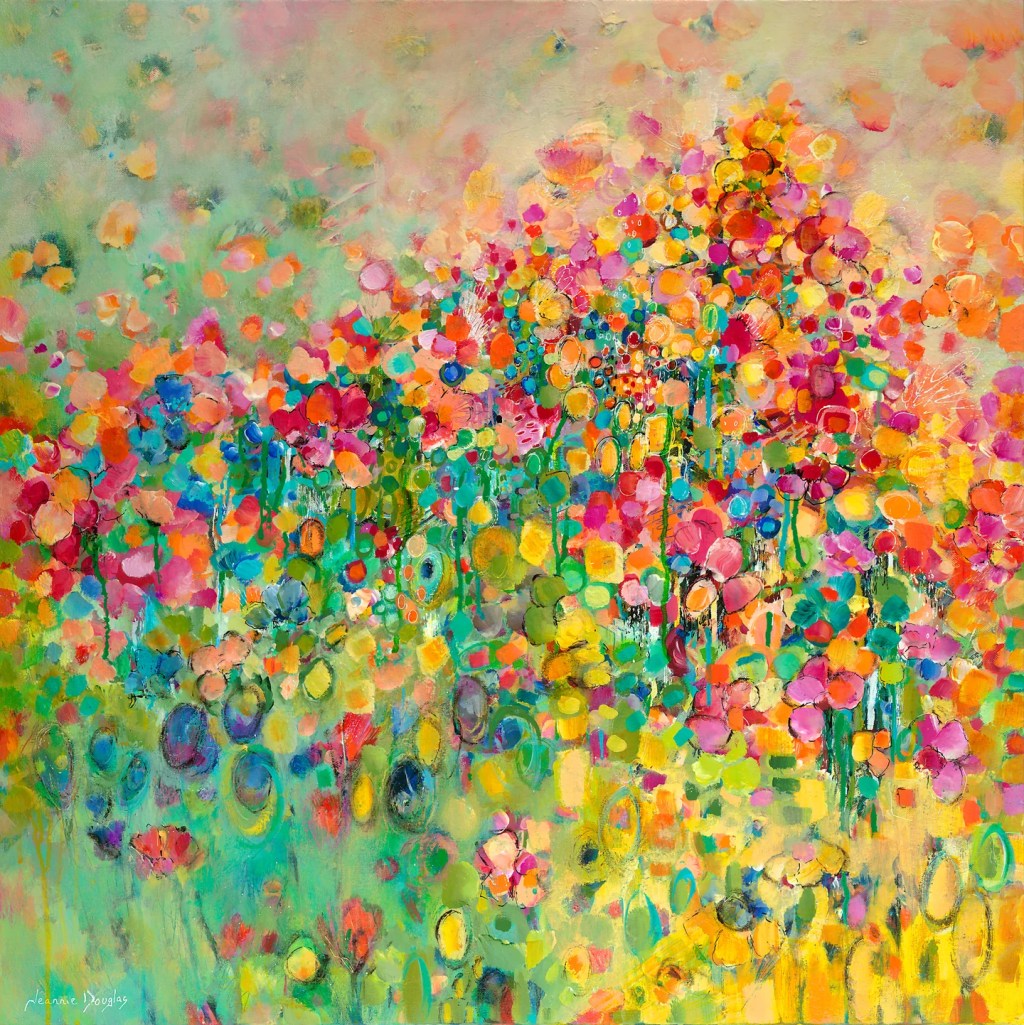
A Pop of Happiness by Jeanie Douglas. From Public Domain
Happiness is a many splendored word. For some it is the first ray of sunshine; for another, it could be a clean bill of health; and yet for another, it would be being with one’s loved ones… there is no clear-cut answer to what makes everyone happy. In Harry Potter and the Half Blood Prince (JK Rowling, 2005), a sunshine yellow elixir induces euphoria with the side effects of excessive singing and nose tweaking. This is of course fantasy but translate it to the real world and you will find that happiness does induce a lightness of being, a luminosity within us that makes it easier to tackle harder situations. Playing around with Rowling’s belief systems, even without the potion, an anticipation of happiness or just plain optimism does generate a sense of hope for better times. Harry tackles his fears and dangers with goodwill, friends and innate optimism. When times are dark with raging wars or climate events that wreck our existence, can one look for a torch to light a sense of hope with the flame of inborn resilience borne of an inner calm, peace or happiness — call it what you will…?
It is hard to gauge the extreme circumstances with which many of us are faced in our current realities, especially when the events spin out of control. In this issue, along with the darker hues that ravage our lives, we have sprinklings of laughter to try to lighten our spirits. In the same vein, externalising our emotions to the point of absurdity that brings a smile to our lips is Rhys Hughes’ The Sunset Suite, a book that survives on tall tales generated by mugs of coffee. In one of the narratives, there is a man who is thrown into a bubbling hot spring, but he survives singing happily because his attacker has also thrown in packs of tea leaves. This man loves tea so much that he does not scald, drown or die but keeps swimming merrily singing a song. While Hughes’ stories are dark, like our times, there is an innate cheer that rings through the whole book… Dare we call it happiness or resilience? Hughes reveals much as he converses about this book, squonks and stranger facts that stretch beyond realism to a fantastical world that has full bearing on our very existence.
A powerful essay by Binu Mathew on the climate disaster at Wayanad, a place that earlier had been written of as an idyllic getaway, tells us how the land in that region has become more prone to landslides. The one on July 30th this year washed away a whole village! Farouk Gulsara has given a narrative about his cycling adventure through the state of Kashmir with his Malaysian friends and finding support in the hearts of locals, people who would be the first to be hit by any disaster even if they have had no hand in creating the catastrophes that could wreck their lives, the flora and the fauna around them. In the wake of such destructions or in anticipation of such calamities, many migrate to other areas — like Ranu Bhattacharya’s ancestors did a bit before the 1947 Partition violence set in. A younger migrant, Chinmayi Goyal, muses under peaceful circumstances as she explores her own need to adapt to her surroundings. G Venkatesh from Sweden writes of his happy encounter with local children in the playground. And Snigdha Agrawal has written of partaking lunch with a bovine companion – it can be intimidating having a cow munching at the next table, I guess! Devraj Singh Kalsi has given a tongue-in-cheek musing on how he might find footing as a godman. Suzanne Kamata has given a lovely summery piece on parasols, which never went out of fashion in Japan!
Radha Chakravarty, known for her fabulous translations, has written about the writer she translated recently, Nazrul. Her essay includes a poem by Tagore for Nazrul. Professor Fakrul Alam has translated two of Nazrul’s songs of parting and Sohana Manzoor has rendered his stunning story Shapuray (Snake Charmer) into English. Fazal Baloch has brought to us poetry in English from the Sulaimani dialect of Balochi by Allah Bashk Buzdar, and a Korean poem has been self-translated by the poet, Ihlwha Choi. The translations wind up with a poem by Tagore, Olosh Shomoy Dhara Beye (Time Flows at an Indolent Pace), showcasing how the common man’s daily life is more rooted in permanence than evanescent regimes and empires.
Fiction brings us into the realm of the common man and uncommon situations, or funny ones. A tongue-in-cheek story set in the Midwest by Joseph Pfister makes us laugh. Farhanaz Rabbani has given us a beautiful narrative about a girl’s awakening. Paul Mirabile delves into the past using the epistolary technique highlighting darker vignettes from Christopher Columbus’s life. We have book excerpts from Maaria Sayed’s From Pashas to Pokemonand Nazes Afroz’s translation of Syed Mujtaba Ali’sShabnamwith both the extracts and Rabbani’s narratives reflecting the spunk of women, albeit in different timescapes…
When migrations are out of choice, with multiple options to explore, they take on happier hues. But when it is out of a compulsion created by manmade disasters — both wars and climate change are that — will the affected people remain unscarred, or like Potter, bear the scar only on their forehead and, with Adlerian calm, find happiness and carpe diem?
Do pause by our current issue which has more content than mentioned here as some of it falls outside the ambit of our discussion. This issue would not have been possible without an all-out effort by each of you… even readers. I would like to thank each and every contributor and our loyal readers. The wonderful team at Borderless deserve much appreciation and gratitude, especially Manzoor for her wonderful artwork. I invite you all to savour this August issue with a drizzle of not monsoon or April showers but laughter.
May we all find our paths towards building a resilient world with a bright future.
Poetry by Allah Bashk Buzdar: translated from Balochi by Fazal Baloch
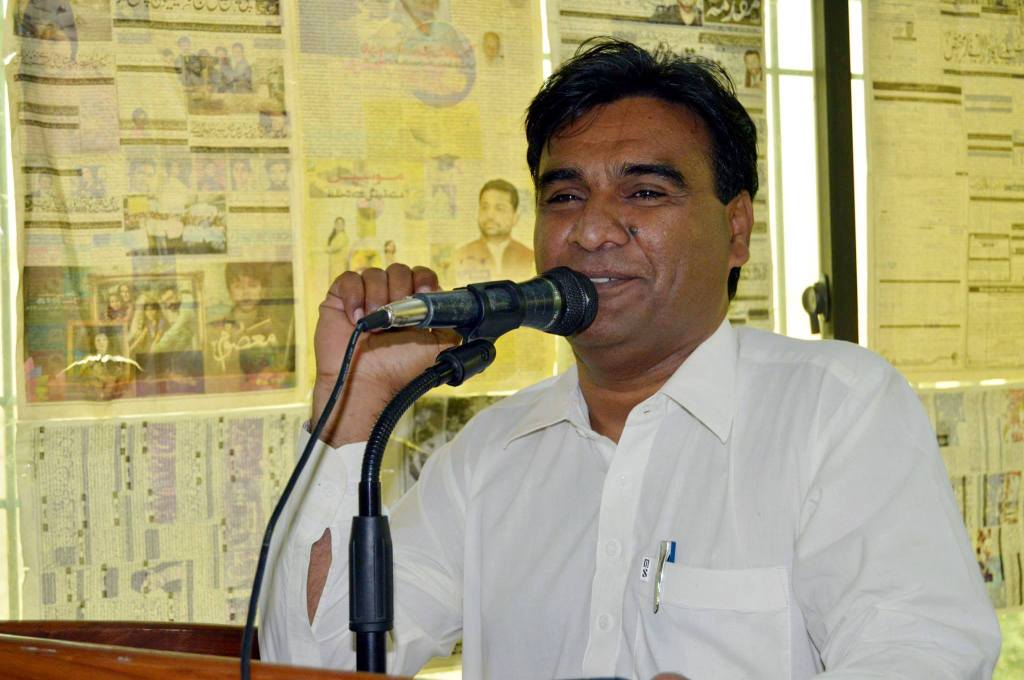
Allah Bashk Buzdar. Courtsey: Fazal Baloch
The world of my dreams longs for you,
My love, come and fill my thoughts with radiant hues and shades.
Let my eyes feast on your glowing face,
And grace my lips with the warmth of your breath.
Let my hands feel your soft caress,
And let the fragrance of blooming flowers
Permeate the air around me,
Filling my heart with boundless joy.
Let the breeze rising from your comely gait
Enchant my existence.

My destination lies far from here,
I’ve to journey beyond borders of tyranny and oppression.
Every stone and thorn along the way
I must gather,
The tangled strands of life
I must unravel.

A new harvest of love
I must sow.
Bid me farewell with
Blessings and infinite hope.
Hold me in your gaze
And beneath your sable tresses,
Lest the sapling and bloom of love
You planted should wither away.

I must leave for barren, distant lands,
I’m aware
The quest of life may lead me astray.
And who knows then,
On whose shoulders
Your tresses will fall in soft disarray?
Translator’s Note:Allah Bashk Buzdar is a remarkable modern Balochi poet known for his distinct diction, unique poetic language, and peculiar mode of expression. He writes in the Sulaimani dialect—one of the three major dialects of Balochi, predominantly spoken in the eastern regions of Balochistan and adjoining areas. Buzdar’s poetry reflects his unwavering love and commitment to humanity. Even when writing verses of love and romance, he connects them to the plight of people who live around him. He has published two anthologies of poetry so far. The translated poem is taken from his first anthology, Hoshken Rakk Saoz Bant (The Parched Lips Will Bloom Anew), published by the Balochi Academy Quetta in 2004.
Fazal Baloch is a Balochi writer and translator. He has translated many Balochi poems and short stories into English. His translations have been featured in Pakistani Literature published by Pakistan Academy of Letters and in the form of books and anthologies. Fazal Baloch has the translation rights to this poem.
PLEASE NOTE: ARTICLES CAN ONLY BE REPRODUCED IN OTHER SITES WITH DUE ACKNOWLEDGEMENT TO BORDERLESS JOURNAL





 Borderless