Categories
Interview Review

The Making of Historical Fiction: A Conversation with Aruna Chakravarti

Aruna Chakravarti reveals how she wove a historic novel, The Mendicant Prince(Published by Picador India, 2022),  from a controversial court case that took place in the early twentieth century and created ripples through not just Bengal but the whole country and even England.

Aruna Chakravarti. Photo courtesy: Swati Bhattacharya

Perhaps we can call her the queen of historical fiction or an author inspired by history, but Aruna Chakravarti, an eminent award-winning Anglophone writer, evokes the past of a united Bengal – long before the Partition along religious lines in 1947 — repeatedly giving us a glimpse of an age where culture superseded beliefs. She recreates a period where we can see the seeds of the present sowed. In her last novel, Suralakshmi Villa (2020), she gave a purely fictitious account of a woman who pioneered changes in a timeframe that dates back to more than a century. Before that in the Jorasanko novels (2013, 2016), she brought to life the Tagore family history. By then, she had written her own family history set in the same period called The Inheritors (2004), which was shortlisted for the Commonwealth Award. Perhaps, her grounding comes from having translated Sunil Gangopadhyay’s First Light and Those Days, both novels set around the nineteenth and early twentieth centuries. She also won the Sahitya Akademi Award for translating Sarat Chandra’s Srikanta, a novel again set in a similar timeframe. She started her journey as a writer translating Tagore songs for which she won the Vaitalik award. Perhaps, this grounding has made her what she is today – a powerful re-creator of history where the characters come to life. You emote and react to their statements and on their actions. Her narrative carries you with it.

Her novel based on the real story of the Bhawal Prince which was launched last month,  gives a clear glimpse of the event with historical accuracy. The Bhawal prince turned mendicant after losing his memory in 1909 in Darjeeling. He was recovering from a bout of syphilis. He fell prey to intrigue and might have been poisoned. The prince was abandoned as a corpse during his cremation and yet he survived …and then, twelve years later, he returned — having travelled through much of the country with a band of Naga sadhus — to claim his rightful place. Swapan Dasgupta, a journalist turned politician, wrote when he thought of the Bhawal case, the “Dreyfus affair in late 19th century France, the John F. Kennedy assassination in the US and the James Hanratty case in Britain are ones that come readily to mind.” He was reviewing an earlier historical narrative written by Partha Chatterjee(2002) called A Princely Imposter?, which Chakravarti tells us she has used as a resource.

Set against the independence movement and colonial era, she has painted a man, who though flawed, gains the sympathy and wins the heart of the reader. The writing is fluid and evocative. Given that the trial lasted for more than sixteen years, and his first wife and her family refused to acknowledge the prodigal prince, the story has been made into films multiple times, once Sanyasi Raja (Bengali, Mendicant Prince, 1975), the second time, a remake in Telugu Raja Ramesh (1977) and more recently somewhat anachronistic, a movie called,   Ek je Chhilo Raja (There was a King, 2018). The Mendicant Prince departs from the films in being a stickler for the period, the historicity and brings to fore events and nuances the author researched by interviewing surviving Bhawal family relatives. What is amazing is the way in which Chakravarti has fleshed out each character to make the persona real, to the point where, as in her earlier Jorasanko novels, the reader can visualise them. Aruna Chakravarti’s strength is definitely her mastery over the language and her ability to breathe life into the past.

In this interview, Aruna Chakravarti tells us how she has woven the novel into the timeframe and created a novel based on history – an excellent lesson for aspiring writers of historical fiction from the empress of the genre herself.

What moved you to write a novel on the Prince of Bhawal?

The controversial prince of Bhawal, Ramendra Narayan Roy. The top is a picture of the claimant and the bottom has the picture of the prince as a Naga sannyasi or mendicant.

I first heard of the Bhawal case in 1950 when I was about ten years old. The time was the aftermath of Indian Independence and Partition when many Hindus from Pakistan were relocating in India. A family from East Bengal came to live in the government quarter next to ours and became very friendly with us. One of its members, we called him Uncle, was an excellent story teller and regaled us with many tales.

One was about a legal case concerning a prince turned sannyasi [mendicant] then prince again. It had taken place in Bhawal, a principality in present day Bangladesh. The case was still fresh in his memory. The Privy Council verdict had been announced as recently as July 1946 and it was natural for him, still nostalgic for the land he had left behind, to wish to talk about it. I was so mesmerised by the tale that it stayed with me for decades afterwards.

I never thought of writing about it till recently, when some friends distantly related to the royal family urged me to. ‘You have already done two novels on the Tagores so why not the Bhawals?’ I didn’t take to the idea easily. It seemed too big and complex a project. Then, during the Covid years, in the state of incarceration we all found ourselves, I started thinking seriously about it. But I was constantly beset with anxiety. ‘Would I be able to pull off such a delicate operation?’ A meticulous adherence to the facts together with dates was called for since these were already out in the public domain. There was no way I could take liberties with them. A reconstruction of the life and times of the concerned people, within these limits, called for tremendous imaginative power and an equal amount of discipline and concentration. Covid worked in my favour. In the complete silence and absence of activity; in the total encapsulation of self by the mind; I found myself getting slowly entrenched in the world I was creating. A world of queens and mistresses, liaisons and stratagems, faith and betrayal and a desperate British imperialism slowly eroding under the pressure of an awakening nationalism.

It seems amazing to me now. But it worked.

What kind of research went into it? Did you travel to Jaidevpur?

No. That was one of the hurdles Covid put in my way. For all my other novels I have made it a point to do an extensive amount of field work. This time, travel being rendered impossible, I had to depend entirely on secondary sources. My chief source was Dr Partha Chatterjee’s book A Princely Imposter? It contained a treasure trove of information. Articles in Bangladeshi journals of which there was quite a significant number and other books, both English and Bengali, fiction and non-fiction, helped me to understand and visualise the context in which the drama had unfolded. The two films Sanyasi Raja and Ek je Chhilo Raja also offered a few glimmerings. These, however, were negligible. What came in truly useful was the first-hand research I had done for my earlier work such as my translations and other novels. As also the conversations I had with some distant relatives and family friends of the Bhawals.

How much of your story is fact and how much is fiction?

This question, invariably put to me in the context of my creative writing, is difficult to answer since it is impossible to put a quantum to either. All I can say is that the events the reader is taken through in The Mendicant Prince are historically accurate and documented. But the book is not history. It is a novel; an imaginative reconstruction of a prominent legal case fought in the dwindling twilight of British India. The fictional element travels beyond the case to the lives of the people it affected, particularly the women of the family. Nothing much is known about these women so I have had to give them backgrounds and contexts; personalities and distinguishing characteristics that are wholly imagined.

It is true that you have woven history and fiction meticulously and seamlessly in the book. In creating the ambience of the period, you have touched on prevalent myths such as the education of a woman results in her widowhood. You have also mentioned bedes and kheersapati mangoes. Were these actually part of what you found in the Bhawal story? Or is it something you introduced? If so, what was the intention?

No. They had nothing to do with the Bhawal case. These details were provided to intensify the ambience; to make the world of early twentieth century Bengal come dynamically alive. Reformers like Ishwar Chandra Vidyasagar, Raja Ram Mohan Roy and Debendranath Tagore had advocated education for women. But the idea was fiercely resisted by the conservative section of Bengali society. Many clung to an age-old belief that educated women were liable to become widows. It was natural for Rani Bilasmoni [the prince’s mother], with her disdain for education even for her sons, to hold such a belief. In terms of the novel, this is a distinguishing trait of her character and brings into focus Bibhavati’s difficulties with her mother-in-law and her alienation in her husband’s home.

Pannalal Basu’s preference for kheersapati mangoes, along with other fictional details about his nature and tastes, takes him out of the realm of history and gives him a personality and voice. The presence of bedes at the river bank, just before the monsoon sets in, is a regular feature of the riverine culture of East Bengal, now Bangladesh. The addition of this detail enhances authenticity. In this case it provides a bit of dramatic irony as well. The band is travelling to Bhawal. Bhawal which has been the central focus of Pannalal Basu’s life for over six years…

You discussed the story with a relative of the royal family. What kind of interview did you have with him? Please share with us.

Actually I spoke to several members of the family. None of them are directly connected to the royal line. The person with whom I interacted most closely is the grand-nephew of the bara rani [the eldest queen], Sarajubala Debi. It was not a structured interview. Some family gossip and reminiscences, were shared, from time to time. That, too, mainly in connection with the bara rani. Among the bits of information I gathered, was the bricked over Bhawal vaults, filled with gold vessels, which ran across one entire wall of a room in the palace. Another was the conversation in which Bibhavati tells Sarajubala about the aridity of her sex life. I also came to know that the mejo kumar’s [second prince’s] second marriage was arranged by Sarajubala and that she had initial doubts about its suitability since Dhara Debi was small and slight and the mejo kumar very tall and hefty.

Your characters, each one are very well drawn, and the narrative makes readers travel back in time. How do you manage this? How do you gauge the reactions of the characters?

It is difficult to answer this. It has, I suppose, to do with instinct and the ability to internalise. In a historical novel, characters are conceived within a factual framework to begin with, then internalised and allowed to evolve through the course of the novel. The process is not planned. There is no strategy involved. It flows naturally and spontaneously. Not only the characters… the world that the author is recreating expands and grows in depth and richness as one goes along. Gradually it pervades one’s whole consciousness. So much so that sometimes one is not even aware of where fact ended and the imagination took over. I find myself in this state of confusion quite often. Did I read or hear about this somewhere, I’m often caught wondering, or did I imagine it?

Some women in your Jorasanko and Suralakshmi Villa are path breakers. But in The Mendicant Prince, they are more within the stream of history. Was this a conscious call or was it the circumstances? Please elaborate.

Suralakshmi Villa was pure fiction and I wanted to project a certain kind of woman as the central character. A woman who is far ahead of the times in which she lives; who breaks stereotypes and lives on her own terms; who dismisses societal expectations without giving it a second thought. A complex, enigmatic character whom people find difficult to understand, even a century later.

In Jorasanko, some of the characters were indeed path breakers. Digambari forbade her husband entry into his own home because, in her opinion he had strayed from the moral path. Jogmaya refused to obey her brother-in-law’s diktat that his entire family embrace the Brahmo faith, resulting in the rift that divided the Tagores into the Hindu branch and the Brahmo branch. Tripurasundari refused to give up her husband’s property. Jnanadanandini introduced many changes in the way the women of the household lived. These were real people and their actions are documented facts. There were no such progressive women in the Bhawal family. So how could I present them as path breakers?

The Bhawal case had been a mystery for a long time and no one knew why the prince’s first wife, Bibhavati, refused to recognise him. Have you figured that one out? Do you have an opinion on it?

No one knows the truth. Bibhavati’s insistence that the sanyasi was not her husband has left people baffled to this day. The case was fought many years after the alleged death and cremation of the prince and the verdicts given were based mostly on circumstantial evidence. I have tried to rationalise her stance and find a cause for it.  This is where the fictional element comes in. It lies in the kind of person Bibhavati is and her relationship with her brother. In terms of the novel, I mean. Nothing has been made very explicit. But there are hints. I’m hoping readers will be able to figure it out for themselves.

You have written historical novels before this one. You have dealt with the Tagore family ancestry and your own. How different was working on this novel?

The difference was that this one dealt with a court case the details of which were already out in the public domain. There was very little known about the Tagore women and my own family of course. For the latter, I had to depend on what I had heard from family members, which was very little. For the Tagore women project I gleaned titbits of information from their own writing, biographies of Rabindranath, and Rabindranath’s autobiographical writing. The facts being few and far between the imagination was allowed full play.  

Writing The Mendicant Prince was a different proposition altogether. The facts were well known. What could I add to them to justify a new work? And then an idea came to me. How would it be if I were to bring to the fore the women of the family who were strongly affected by what was happening but about whom nothing is known? They were only names in the drama that was unfolding around them. I could flesh out these women, give them thoughts, emotions, aspirations and distinguishing characteristics. This component would be pure fiction. As a result, the book came to be structured on two levels. It is an authentic record of the Bhawal case supported by  documents like letters, diary entries, newspaper cuttings, legal papers and case histories. But the account is interspersed with the personal revelations of the women of the family. Gradually the musings of a few other characters were added. The District Judge and some of the subjects were also given a voice.

Do you have another book on the cards? What should we look forward from you next?

 A collection of stories titled Through a looking glass: Stories is scheduled for publication by Om International. It should be in the market in a few months. There are nine stories showcasing women from across the spectrum of Indian society. Though coming from diverse religions and provincial cultures, they are all trapped in the tradition of silence which is the woman’s lot. Each has a secret space within her with a hidden story.

Thank you for giving us your time.

The Prince of Bhawal before he became a mendicant, early 1900s.

Click here to read the book excerpt

(This online interview has been conducted by Mitali Chakravarty)

.

PLEASE NOTE: ARTICLES CAN ONLY BE REPRODUCED IN OTHER SITES WITH DUE ACKNOWLEDGEMENT TO BORDERLESS JOURNAL
Categories
Essay

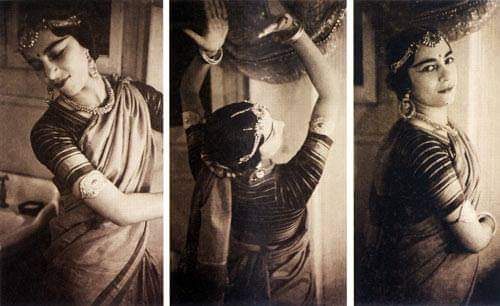
Freedom is another word for… Zohra Sehgal

Ratnottama Sengupta gives a glimpse of the life of a woman impacted by the Partition, spirited enough to be a celebrated performer and to have a compelling saga written on her life posthumously, Zohra: A Biography in Four Acts by Ritu Menon, published by Speaking Tiger Books. This feature is based on the book and Sengupta’s own personal interactions with the aging Zohra Sehgal.

Zohra Sehgal. Photo provided by Ratnottama Sengupta

Zohra Sehgal[1] mirrors, in a strange kind of way, the story of the Indian subcontinent.

Born a Khan in 1912, raised in purdah by the Nawabs of Rampur in palaces and mansions in Lucknow and Dehradun, educated in Queen Mary’s College of Lahore; trained in Western  dance in pre-Hitler Germany; whirling through the globe and basking in limelight as the dancing partner of the phenomenal Uday Shankar; setting up her own dance school with husband Kameshwar Segal in pre-Partition Lahore; rising to carve a niche for herself as a member of Prithvi Theatres; dominating the screen as a nonagenarian cast against the legendary Amitabh Bachchan… Sahibzadi bestowed with an impulse to find her way in the world, made of her life what she would.

So, was it all sunshine and moonlight in the life of the lady who, when she turned 100, had the wit to say, “You are looking at me now, when I am old and ugly… You should have seen me when I was young and ugly…”? No. She had seen the failure of Uday Shankar Cultural Centre in Almora; the closure of her own dance school in Lahore. She’d relocated to Bombay and be a less appreciated ‘side-kick’ to her ‘prettier’ younger sister in Prithvi Theatres. She performed in makeshift stages more often than in the Opera House; traveled in third class compartments with the troupe, slept on trunks, washed her own clothes. She had to worry about providing for her children and their father. She had to cope with the whimsicality, alcoholism, depression and finally, the suicide of her husband… But the caravan of misfortunes never dampened her spirit. “If I were to be reborn, I’ll be back as a blue-eyed, five feet five, 36-24-36,” she could repartee with humorist Khushwant Singh.

But then, much of the tragedy unfolded around the Independence cum Partition at Midnight. And I thank Ritu Menon’s ‘A Biography in Four Acts’ for lifting the curtain on this side of Zohra Segal – the phenomenon I had the good fortune to know through the years we spent in Delhi’s Alaknanda area.

Zohra’s father, Mohammed Mumtazullah Khan had descended from Maulvi Ghulam Jilani Khan, the warrior chieftain of a clan of the Yusufzai tribe[2] and a religious scholar of repute who came to the Mughal court in Delhi possibly in 1754. Along with infantry and cavalry and the title of Khan Saheb he was given Chitargaon Pargana in Bihar, but since the British rulers were taking over Bengal and Bihar, he fled to Rohilkhand and joined the Rohilla chieftains who survived the battle against the Nawab of Awadh and rose to become Nawab of Rampur.

Zohra’s mother, on the other hand, descended from Najibuddaulah, another Rohilla Pathan[3]  in the service of Ahmad Shah Abdali and the Mughals, who founded Najibabad in 1740 and received the hereditary title of Nawab. By 1760, the tract of land he ruled included Dehradun, Najibabad, Meerut, Muzaffarnagar, Badayun, Bijnor and Bulandshahar. After 1887 his descendents, being incharge of the Regency Council that looked after the affairs of the Nawabs, set up schools to teach English, impart western education, encourage education of girls…

So, like many of India’s Muslim royalty and landed gentry, the Mumtazullahs were largely liberal, often westernised, and mostly secular. Their daughters, educated in English medium schools, went on to become hightly qualified professionals, including as ophthalmologist or Montessori teacher. Their sons went abroad for further studies, as did Zohra’s betrothed Mahmud — her maternal uncle’s son who went to school in England, graduated from Oxford, became a Communist, married a comrade and distributed all his inherited land in Moradabad to the peasants. Her elder sister Hajra married Z A Ahmed, an alumni of the London School of Economics who, as a committed communist, organised railway coolies, press workers, farmers and underground members of the then CPI[4].

Yet, even for such a family it was unusual to send the daughter to a boarding school — Queen Mary College, founded in 1908 — in a distant city like the cosmopolitan Lahore. It was a purdah school for girls from aristocratic families from where Zohra matriculated in 1929. By then she had imbibed the secular, broadminded values of her mostly-British teachers, and of an education that placed equal emphasis on physical activities – sports, to be precise. Here Zohra was initiated into both, art and acting – two passions of Uday Shankar who proved providential in her life.

It wasn’t so surprising then, that after matriculating, she set out on an arduous, even hazardous, overland trip across Afghanistan, Iraq, Turkey and Middle East, with a kindred spirit: her strong willed maternal uncle Memphis who, being a maverick much like Zohra herself, endorsed all her unconventional choices. He enrolled her in Mary Wigman Tanz Schule in Dresden; he financed her stay as too her owning a teeny-weeny car so she wouldn’t have to travel by train! None of this, however, ruled out her performing Namaz five times a day or reading the Koran. Years later, it was he who unreservedly stood by her decision to marry Kameshwar Sehgal when her own family was wary of the choice. And they spent their honeymoon in his house ‘Nasreen’ – now well-known as Welham Girls’ School. Built by an Irishman on five acres of land, it had pointed roofs, gables and half-timbering with extensive lawns, gravel pathways and exotic trees…

Young Zohra. Photo provided by Ratnottama Sengupta

‘Can you dance?’ Mary Wigman had asked Zohra. It wasn’t to her disadvantage that her sheltered childhood did not have the scope for that. A radical artiste herself, Wigman had rejected formal technique in favour of improvisation although Zohra had to master theories, alongside choreography and dramatic pieces that entailed limbering up exercises for the whole body, from fingertips and wrists to arms and shoulder, neck, head, back, chest, hips, knees, legs, toes… There were no mirrors: the training did not allow them to look at themselves while composing since, Wigman held, “consciousness and awareness should proceed from within rather than from an external image.”

All this was different from the grammar of classical Indian dancing – and by the end of her third year, when Hitler was hovering on the horizon, she was nimble on her toes dancing foxtrot, waltz, polka and tango. When she returned to Dehradun, she enjoyed a newfound freedom that expressed itself in cutting all her silk burqas to make petticoats and blouses!

Zohra delighted in the adventure of travel, in discovering new places and people. She sought out travel agents, pored over brochures, spotted packages to travel with groups, by trains or buses, walked with friends, rucksacks on their back and sandwiches in their pocket, to Norway, Austria, Hungary, Switzerland, France. This was the time when Uday Shankar and Simkie – Simone Barbier[5] – were crisscrossing Europe. These stars of the Uday Shankar Dance Company were rapturously received by audiences who were mesmerised by the oriental exotica that had little to do with classical or folk dances of India. Instead, it offered romance and sensuousness wrapped in myth and mysticism. The blithe Adonis and his graceful energy cast a spell with his ‘physical beauty,’ ‘transcendental expression,’ ‘grandness’ and ‘command of muscles’. The ‘deep charm of the indescribable nobility’ of his dance became the face of ‘the rare yet mysterious personality of Modern India.”

When she joined Shankar in Calcutta as he prepared to tour Rangoon, Singapore, Moulmein and Kuala Lumpur, Zohra not only learnt to apply western make-up on an Indian face. She had to adapt if not unlearn her training at Wigman’s, to discipline her body and rehearse, rehearse and rehearse. For, at Shankar’s, there was no rule or theory. Instead, there were parties and dinners, meetings with the Viceroy and the Governor of Bengal, driving fast cars and boating, ballroom dances and cabarets too! If Zohra reveled in this, she also soon imbibed the almost religious atmosphere of Shankar’s performances that required them to travel regardless of the time of day or night and be in the theatre well before the hour in order to shed every thought other than the dance — one in which movements radiated from a concept and merged back into it.  

Most of all, Shankar’s physical beauty and creative iconoclasm proved irresistible, and Zohra happily succumbed to the dancer and his stage lights. She saw how his unorthodox dance imagination reveled in sensuality and she marveled at its potential. None in India then was experimenting with form and movement nor choreographing for an ensemble. And then, Shankar was using a unique orchestra of violin, sitar, piano, sarod, gongs, drums and cymbals. The musicians composed for the dance, the dancers in glittering costumes moved on dazzling sets to their music. This transported audiences to unexplored aesthetic heights and conquered the world.

With Shankar, Zohra performed in Palestine, Syria, Iraq, Egypt, Greece, the Balkans, Czechoslovakia, Italy, Switzerland. Belgium, Holland, Poland, Italy, France. By now, the company included Allauddin Khan[6], Ravi Shankar, Kathakali artiste Madhavan Nair, and Zohra’s younger sister Uzra. Names, all, that would go on to shine long after Shankar set up the Almora Dance Centre – modeled after Dartington Hall, a country estate in Devon, UK that promoted forestry, agriculture and education too, besides the arts. Before that, however, Zohra toured America performing love duets with Shankar, in New York, Chicago, Boston, Philadelphia. Wherever they went, they were greeted by applause and bouquets, photographs, reviews and receptions. Besotted audiences treated them like rockstars and on one occasion Pearl S Buck presented ‘the princess’ an autographed copy of The Good Earth.

On a subsequent visit to Bali with Shankar, she had the heady experience of romance and passionate discovery – of the splendours of dance and music on the island as much as her very being. The magnetic field that was Shankar aroused her senses thrilling awareness of her body. And on her return to India, she met Rabindranath in Santiniketan…

*

When the Uday Shankar Cultural Centre opened in 1940 at Almora, there were only ten students. As its repertoire kept growing, so did its popularity. Soon they were joined by Nehru’s nieces, Nayantara[7] and Chandralekha[8]; Guru Dutt who would one day become a celluloid maestro; Shanta Kirnan — later Gandhi — who’d shine on stage; Sundari Bhavnani who’d become Shridharani, the founder of Delhi’s Triveni Kala Sangam; and Shiela Bharat Ram, of the industrial family, who gained stardom as Baba Allauddin Khan’s disciple. Classes in technique combined with training under gurus of Kathakali, Bharatanatyam and Manipuri — Sankaran Namboodiri, Kandappa Pillai, Amoebi Singh — and to music by Shankar’s brother Ravi, and Baba’s son, Ali Akbar.

Zohra, besides assisting Shankar just like Simkie, also prepared a five-year course for the learners to improvise intricate movements. If theories of Shankar’s art gave form to his dreams, Zohra also learnt the importance of walking elegantly, suppleness of facial expression, and relaxation of mood, prior to dancing. The training evoked in his dancers the consciousness of the body as a whole. A body that moved in space to form patterns of intrinsic beauty.

Kameshwar Segal, a Rossetti-like boy, slim and fair with curly locks, slender hands and feet, fitted right into the scenario. The great grandson of one of the dewans – prime ministers – of the then princely state of Indore, he was well versed in Urdu and Hindustani besides his mother tongue, Punjabi. Soon he was a painter, set designer, light designer, mask-maker, handyman. Though Zohra, being involved with Shankar, had decided never to marry, she admired Kameshwar’s ingenuity, loved his humour and responded to his banter. Soon he proposed to his teacher. Zohra, senior to him by eight years, was aware of the odds against them. Yet she responded, perhaps because by now, the air in Almora was thick with romance and its byproduct, jealousy. Besides Simkie, so far recognised as his prime dance partner, there was Amala Nandi, whom Shankar would garland as his life partner. Simkie herself settled down with Prabhat Ganguly; Rajendra Shankar married Lakshmi Shankar, and Ravi Shankar married Baba’s daughter, Annapurna.

Uzra, who had met Hameed Butt in Calcutta, also married the same year – 1942 – as Zohra. But, unlike Uzra she had to reconcile with a vegetarian, orthodox Hindu family of Radha Soami sect. Surprisingly, her uneducated mother-in-law welcomed the alliance more readily than Zohra’s own father who was used to the interfaith marriages of his own communist sons but didn’t wish for either Zohra or Kameshwar to convert. Jawaharlal Nehru was to attend the civil wedding which took place on 14 August 1942, in Feroze Gandhi[9]’s mother’s house in Allahabad, Zohra had learnt from his secretary. Her brother-in-law being Nehru’s secretary, the future prime minister of India had even shared that he would gift them Persian rugs. But two days before that the Quit India Movement[10] started, and Jawaharlal Nehru was jailed.  Zohra, ever her sprightly self, had revealed her own story to me: “My brother received him on his release, and the first thing he asked was ‘Where is the young couple?’ I asked my brother, ‘Why didn’t you ask him where are the Persian rugs?’”

*

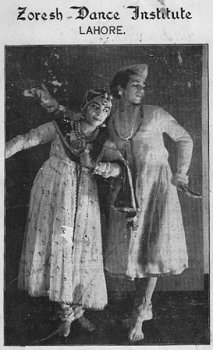
However, the dream wedding may have been the peak moment of happiness in the life of Kameshwar and Zohra. There on the WW2 gained in intensity, transportation became difficult, food and money too got scarce. In a couple of years, Shankar downed the shutters at Almora and went on to film his dream project, Kalpana. Simkie soon left India never to return. Sachin Shankar set up his ballet unit in Bombay. But before that, when Zohra put her all into starting Zoresh Dance School in Lahore of 1943, Kameshwar staked his claim as director.

Photo provided by Ratnottama Sengupta

When the school was inundated with students, she was forced into motherhood. When she returned to the stage, they went on a national tour with boxes and curtains from Lahore to Amritsar, Bareilly, Dehradun, Meerut, Lucknow, Allahabad, Patna, Asansol and Calcutta. Artistically a huge success, the school, however, left the coffers dry. More importantly, at the end of the Big War in 1945, Britain didn’t rule the waves and India was restive. The Muslim League was at loggerheads with the Congress, equations between the Hindus and Muslims had soured, their Muslim friends were looking at them with misgivings. Lahore clearly was not an ideal place for a couple like them. Kameshwar and Zohra relocated to Bombay, where Uzra and Hameed had set up home.

But in the city of celluloid dreams Zohra did not stand a chance in cinema. Not only was she short, somewhat plump, not quite a beauty; in cinema, a nachnewali was merely a nautch girl. In fact, she did not ever dance on stage again. She re-invented her fluidity of movement and expression to make her mark as a choreographer in Prithvi Theatres where her sister was already a leading lady. Eventually, in mid-1950s she choreographed for a few films such as Navketan’s Nau Do Gyarah and Guru Dutt’s CID.

Their bungalow on Pali Hill – a neighbourhood that was home to British, Catholic and Parsi families — was surrounded with Uma and Chetan Anand, his brothers Dev and Goldie, Balraj and Damayanti Sahni, Meena Kumari, Dilip Kumar, the Kapoors… Frequent visitors included Guru Dutt, Raj Khosla, Mohan Segal, Geeta Dutt, Nasir Khan[11], writers Sahir Ludhianvi, Sardar Jafri, Vishwamitra Adil, Amita Malik, composers S D Burman, and Ravi Shankar … Names that would in the next decade become Bollywood royalty.

Cinema was of course the big thing in Bombay of 1940s. Bombay Talkies had already heralded glory days with titles like Achhut Kanya (1936, untouchable maiden), Kangan(1939, Bangles), Bandhan (Ties, 1940), Jhoola(Swing, 1941), Sikandar(Alexander the Great, 1941). Devika Rani, Ashok Kumar, Leela Chitnis, Sohrab Modi, Prithviraj Kapoor were stars who would soon be joined by Punjabis from Lahore such as K L Saigal, Jagdish Sethi, B R Chopra, F C Mehra. Partition wasn’t a certainty yet, in the city of the political beliefs of Right and Left, mixed with industrialists and progressive writers and struggling artistes, the cry for freedom had created a ferment of ideas and the house resounded with scripts, arguments, reading, dancing, painting. K A Abbas, Sajjad Zaheer, Sadat Hasan Manto, Ismat Chughtai, Shahid Lateef[12] – they would associate with Utpal Dutt, Ritwik Ghatak, Salil Chowdhury, Hamid Sayani, Ebrahim Alkazi, Balraj Sahni and Prithviraj Kapoor[13], to pledge that they would present the crisis of the times through the medium of theatre.

*

Prithviraj[14], although a superstar on screen, believed that theatre should proliferate every city, not temples and mosques. Instead, he urged, “spend on theatres that would become centres for cultural education.” After the first election, when he was nominated to the Rajya Sabha in 1952, he’d said, “In that temple called theatre, a Hindu, Muslim, Christian, Jew, Parsi and Sikh all come together. No one cares whether it’s a pandit or a mulla [15]sitting next to them. Communists sit with communalists, to laugh together and cry together. It would be the biggest temple for the benefit of the nation.”

Such a person could not reconcile to the Partition of the subcontinent. It meant, in his own words, that “You will turn me out of Peshawar, and leave my unfortunate Muslim brethren here in the lurch, with their roots uprooted from the soil!” His protest took the shape of four plays that started in 1945 by underscoring the folly of dividing lives on religious basis.

The quartet began with Deewar (Wall), an original play thoroughly contemporary in its politics and communicating its message in a language everyman could follow. The Partition was symbolised by two brothers who, egged on by the foreign wife of one brother – played by Zohra – insist on dividing their ancestral home into two halves by erecting a wall. At a time when Jinnah was raising his pitch for a Muslim nation, the play interpolated the dialogue with speeches by him, Gandhi and Macaulay. So prescient was the message that the British government refused to allow the performance without a green signal from the Muslim League, despite the go-ahead by its CID and the IG Police.

Eventually, despite objection by certain Urdu papers, the play continued to play till 1947 with the peasants pulling down the wall in the climax. In reality, though, the Radcliffe Line concretised the division on the midnight of 14/ 15 August, unleashing bloodshed and misery for millions. On that fateful day, the play was exempted from Entertainment Tax for one full year. Deewar was performed 712 times between 1945 and 1959, until Prithvi Theatres folded up.

The secular credentials of the company is summed up in one practise: The actors began their days with voice production handled by Prithviraj himself, and singing rehearsed by the music director Ram Gangoli. And what did they sing? The base tones were practised by singing Allah Hu! While the high pitches intoned Ram! Ram!

In another expression of his secularism, after the Direct Action Day[16] riots unleashed on August 16th by Jinnah’s demand for Pakistan, leaving 5000 dead and 15000 homeless in Calcutta alone, Prithviraj drove through the city in an open truck with Uzra and Zohra on either side. However, this Hindu-Muslim amity resulted in death threats for them.

And on the eve of Independence, the entire company gathered in the compound of Prithvi Theatres, unfurled the Indian Tricolour, sang Vande Mataram, then took out a procession. Zohra danced with abandon on the streets of Bombay, while Prithviraj’s son Raj Kapoor played the drum. The euphoria did not last: at a personal level Kameshwar was annoyed; on a larger level, death and destruction stalked the streets and the country was engulfed in the horror of untold violence.

Prithviraj’s immediate response was to stage Pathan, the story of two friends – a Muslim Pathan and a Hindu Dewan. When Tarachand dies, Sher Khan promises to look after his son as his own. Local feuds result in a revenge killing where Vazir is implicated. When tribal custom demands an eye for an eye, Khan sacrifices his own son, Bahadur. And when this scene was enacted, there would be no dry eye in the auditorium. Uzra and, in particular, Zohra immersed herself in the play along with Raj and Shammi, the two sons of Prithviraj, who played the two boys. Raj, then only 23, also travelled to Peshawar to design and redesign to perfection the single set of the play. The play was staged 558 times between 1947 and 1960, when curtain fell on Prithvi Theatres.

When rehearsals for the play were on, so was rioting in the cities and towns across India. Prithviraj would, without fail, visit the affected mohallas[17]and hold peace processions. The one dialogue that resonated long after the play ceased to be staged is still pertinent: “Do you want that Hindus should sacrifice their lives for Muslims and the Muslims should not sacrifice their lives for Hindus? Why should they not when they know they belong to one country, eat the same food, drink the same water, and breathe in the same air? Knowing this, you still raise this hateful question of Hindu-Muslim?”

Prithviraj truly believed that religion does not make for conflict, only the abuse of religion, turning it into the handmaiden of vandals, created conflict. “And it is the responsibility of art to present the true aspect of reality.” So, his next production, Ghaddar (Traitor) covered the period from Khilafat Movement to 1947 to deal with the question of the four million Muslims who had remained in India. If they were traitors, who had they betrayed – Islam or Pakistan? Prithviraj as Ashraf and Uzra as his wife join Muslim League but remain staunch nationalists. Shattered by the violence unleashed in Punjab after August 15, he vows to stay back and serve his motherland. He is therefore shot dead by a ‘friend’ Muslim Leaguer.

Zohra loved the cameo she played of a maidservant who refuses to go to Pakistan. Fully identifying with the sentiments of the character — whom she crafted after the family retainers in her mother’s home — she would add extempore dialogue, and these endeared her to the audiences. She was deeply pained that the Partition created personal loss in her family as many of her own people moved across while she, married to a Hindu, never even considered it. But, in covering the thirty-year span of the play she had to enact an old woman – and “feeling old from within” was against the grain of the ever-exuberant lady who, even at 102, would go to bed with a smile on her lips as she whispered to her long dead husband, “Wait just a little longer Kameshwar, I’m on my way to be with you…”

As with Deewar, Ghaddar too faced problems with censor board clearance. The chief minister of Bombay asked Prithviraj to approach the Central government. Sardar Patel introduced him to Nehru, who sent him to Maulana Azad. The Education and Culture minister not only gave him a letter of clearance but also a 50 percent reduction in train fare for all cultural troupes. But the Muslims boycotted the play; Muslim Leaguers in Cochin threatened to burn down the theatre; and some crazy elements wanted to shoot Prithviraj. When he invited people from Bhendi Bazar to watch the play, they concluded that, “People who have been shown as Ghaddar deserve to be shown as traitors.”

Meanwhile the entire population of villages — where their neighbours were their community, their family — were being uprooted in Punjab and Bengal. They were going crazy trying to decide, “To go or to stay?”  People who didn’t know any borders were figuring out if, by crisscrossing the imaginary line, they would remain Indians or become Pakistanis. Would they forego their lifestyle by going or ditch their religion by staying? The questions assumed frightening proportion as two of Zohra’s brother, one of her sisters, and even her dearest Uzra relocated themselves in Lahore and Karachi.

However, the real tragedy in all this for Zohra was that Kameshwar had distanced himself from her. Never having found a foothold for himself in Bombay, he had taken to alcoholism, substance support, and perhaps occult activities. Her touring with the Theatre did not make matters easy. But the need to put food on the table combined with the draw of footlights, and acting became Zohra’s calling and, yes, her second nature.

Ahooti (Sacrifice), Prithvi’s final play in the Partition Quartet, was the story of Janki, who is abducted and raped on the eve of her wedding. She’s rescued by Mohammed Shafi and reconciled with her father in a relief camp. But when the family moves to Bombay, she is subjected to slander, and although her fiancee is willing to marry her, his father forbids that, compelling her to commit suicide. The story mirrored the life of countless ‘Partition widows’ – on either side of the border — who have found place in literature and, much later, in films like Shahid-e-Mohabbat Buta Singh(The Sacrificing Lover, Buta Singh, 1991) and Gadar:Ek Prem katha (Rebellion: A Love Story, 2001)too. The published estimates of the number of women abducted by the governments of both the fledgling countries put the figure at 50,000 Muslim women in India and 33,000 non-Muslim women in Pakistan. The enormity of the problem led the two governments to enter into an agreement to locate, recover and restore all such women to their respective families. But what of the women who had, in the meantime, acquired a new family?

In the original script it was to be the story of a mother and daughter but since Uzra had left the country, Prithviraj rewrote it as the story of a father and his daughter. Zohra did not have her heart in the play: first, becaue Uzra was not there; then, because her original role had been altered. Here too, she discerned Prithviraj’s self-indulgence. The play opened in 1949 to tepid reception and dull reviews that dubbed it ‘boring’. But the Deputy Genral of Bombay Police was moved by the girl’s plight and offered his services to help all such women. Prithviraj introduced him to one refugee whose daughter had been separated in the chaos of fleeing – and within days the daughter was found and restored to him. That is not all: at the end of the play the larger-than-life personality would stand with shawl spread out to collect any donation dropped into it, to help the relief work. Such was the emotional response that women even dropped their jewellery in the shawl – which Prithviraj soon requested them to desist from doing.

The Partition Quartet was to first perhaps to see where the rhetoric of religious difference can lead, the contest over territory can entail, the violence and violations that can result. Whatever the quantum of success or criticism they earned, they certainly provoked debate and affected political discourse that still hasn’t lost its sting. Zohra’s heart would swell with pride when Prithviraj rose to address conventions; call on people to turn his moves into a movement for peace. Through him she found herself performing in Punjab’s Firozpur jail, for prisoners who sat with hands and feet in chain… and she also got to witness the hanging of a man scheduled for the next dawn.

All this changed Zohra in a fundamental way: she shed her arrogance; she learnt to respect the dignity of everyone she worked with; she understood the transformative power of theatre. And perhaps she came to love her country, her people, her roots a little more.


[1] Born Sahibzadi Zohra Mumtaz Khan Begum (1912-2014)

[2] From the Afghanistan-Pakistan region.

[3] Pathans of Afghan origin who migrated to Uttar Pradesh in the 1700-1800CE

[4] Communist Party of India

[5] A famous French dancer in Uday Shankar’s troupe

[6] Allaudin Khan(1862-1972)

[7] Nayantara Sahgal

[8] Chandralekha Mehta

[9] Feroze Gandhi (1912-1960), Prime Minister Indira Gandhi’s husband and son-in-law of Nehru

[10] The Quit India Movement started on 8th August 1942

[11] All film stars

[12] Writers

[13] Film stars, directors, composers

[14] Prithviraj Kapoor(1906-1972)

[15] Hindu or a Muslim priest

[16] 16th August, 1946

[17] Colonies

Ratnottama Sengupta, formerly Arts Editor of The Times of India, teaches mass communication and film appreciation, curates film festivals and art exhibitions, and translates and write books. She has been a member of CBFC, served on the National Film Awards jury and has herself won a National Award. Ratnottama Sengupta has the rights to translate her father, Nabendu Ghosh.

.

PLEASE NOTE: ARTICLES CAN ONLY BE REPRODUCED IN OTHER SITES WITH DUE ACKNOWLEDGEMENT TO BORDERLESS JOURNAL

Categories
National Day Special

Singapore Celebrates…

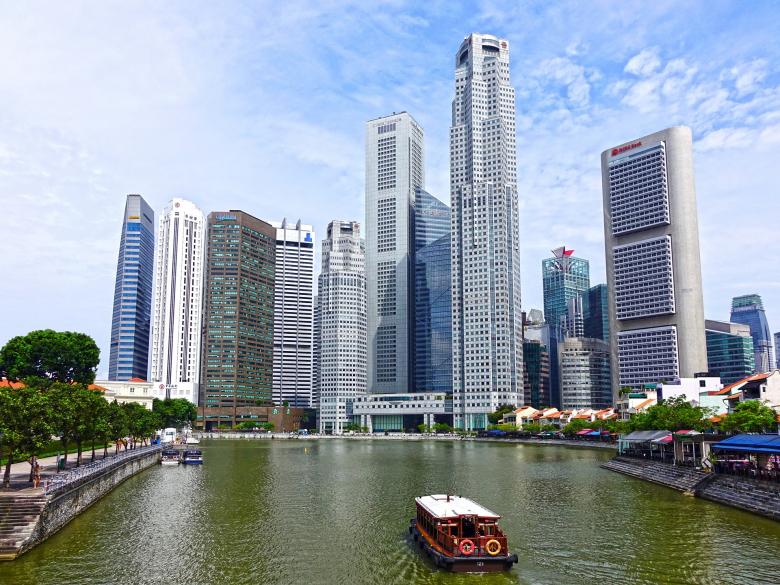
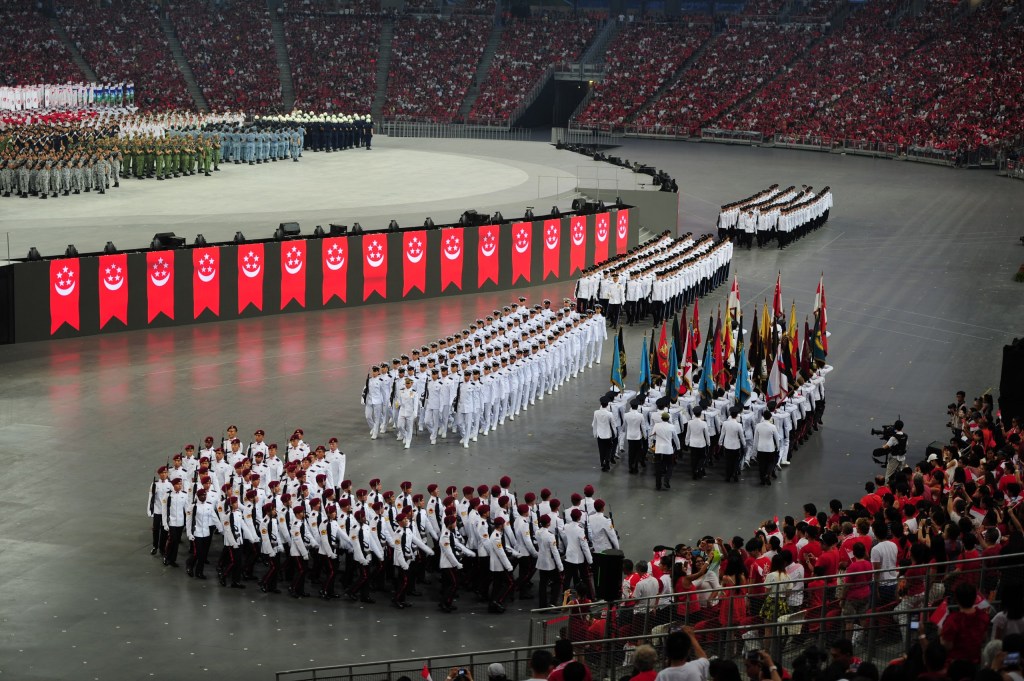
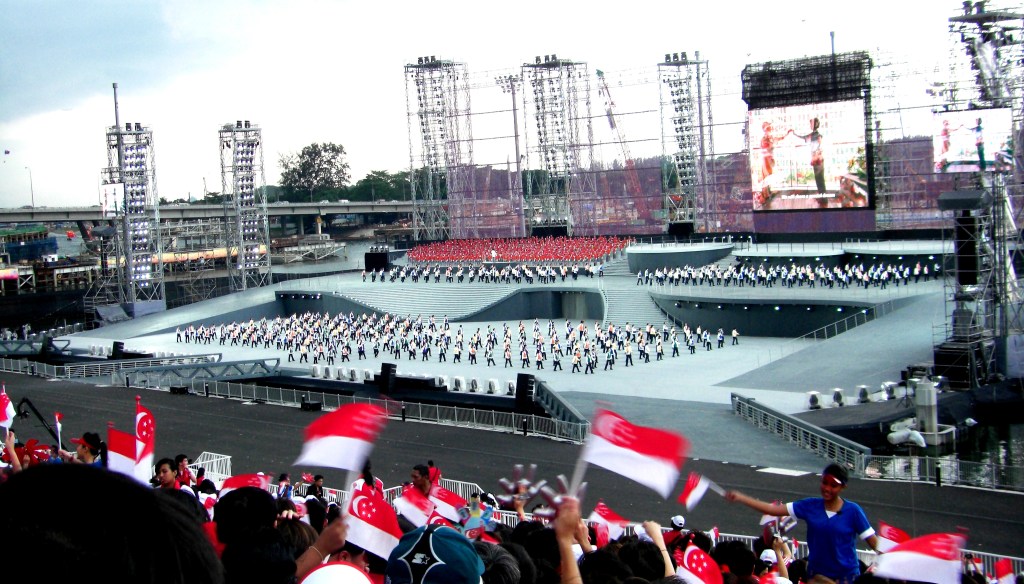
After a pause of the pandemic years, this island with its otters, idyllic beaches, palm trees, angsanas, parakeets and golden orioles mixed with modern technology and tall skyscrapers gears up to celebrate its National Day — a day when it came to its own fifty seven years ago. Veteran writer and academic, Kirpal Singh, who was a young boy at that time (1965), shares with us his memories of what had been the past in the years Singapore was born as a country. On the other hand, Tan Kaiyi, a young writer, celebrates the feeling of holiday in the air with a dark story — a typical local favourite — focussing on the parade. We also share from our treasury some pieces by expat writer Ayesha Baqir and poetry by iconic names from Singapore like Desmond Kon Zhicheng–Mingdé and Marc Nair — all these giving us a glimpse of Singapore of a post-independence era.

Prose

The ‘New Kid on the Block’ Celebrates…Dr Kirpal Singh ruminates over what led to the making of an island state, Singapore. Click here to read.

No Rain on the ParadeTan Kaiyi goes on a hunt for the National Day Killer. Click here to read.

Singapore’s Secret Recipe by Aysha Baqir … Click here to read.

Poetry

The Contingency of Saying and Eternal Motion by Desmond Kon… Click here to read.

Rasam & Sunil the Brahmin by Marc Nair. Click here to read.

Categories
Musings

The ‘New Kid on the Block’ Celebrates…

Dr Kirpal Singh, an eminent academic and writer, takes a nostalgic journey back in time to recall the start of Singapore as an individual entity.

The years 1964-66 were very interesting– not only because on 9 August 1965 we became the Republic of Singapore but also because of the events (some may even term these as “shenanigans”) surrounding to the lead-up to our final independence. I was a little more than fifteen years old and though not fully in the know or swing of things, it was pretty obvious real changes were afoot. The racial riots of 1964 left a deep impression– some may call it a “scar”—and many of us were truly worried and even frightened at what prospects lay in wait.

Nerves were running high and tension was palpable. Much as our teachers tried to hide hard truths, it was abundantly obvious that major changes were bound to usher a new and different ethos. My late Uncle was in the thick of things and though he did his best not to display anxiety, the various insinuations in the media– coming as they did from a variety of differing personalities with radically different perspectives — did not assure much comfort in what was to come. The hubbub left many wondering and many others questioning what had gone wrong. They demanded the “truth” be revealed.

And so it was. Mr Lee Kuan Yew addressed the nation and in-between wiping his clearly moist eyes told us that we had been kicked out of Malaysia! The shock took minutes even hours to sink home. Neighbours chatted across fences just to confirm what they had heard. But it was too late to do much by way of not accepting our fate: Singapore was now out of Malaysia and had to embrace the future alone, without the larger community that had formed in the two preceding years. It was the start of a new chapter in our short history– and a new beginning.

The new chapter in our history began with a clear glimpse of Lee Kuan Yew wiping his eyes. After all his long-cherished dream of a “Malaysian Malaysia” was now, in a sense, shattered. Whatever the details of that critical meeting that is said to have taken place in Cameron Highlands between the Tengku Abdur Rahman and Lee Kuan Yew one fact emerged: Singapore was on its own — no longer a part or partner of Malaysia.

Thus began the slow and arduous journey of our independent Republic of Singapore. In 1965, I was fifteen and though still a teen it was abundantly evident that a truly historic transition had taken place.

Whether it was Lee Kuan Yew’s oratory or his emotional self that made the impact, it was clear that most Singaporeans rallied behind him and resolved to ensure that we survived. Survival was our prime and major consideration, and all endeavours were directed to realising this goal. Crucial to this was the daily recitation of our National Pledge- “We the citizens of Singapore pledge ourselves as one united people…”. Whatever people may say our National Pledge remains sacred and sacrosanct.

As I look back at the tumultuous tensions and uncertainties we faced in those early years of our Republic’s nationhood, I can never state that we were despondent or unable to push forward. Yes, it will be folly to try and claim that everything was hunky-dory. No, far from it. But one thing was totally clear and universally accepted, as Mr Lee Kuan Yew said, we were now on our own and we had to shape our own destiny. All the doubts and unpredictable consequences notwithstanding Singapore was now the youngest new nation on planet Earth and her citizens were committed to ensure the nation survived.

And she did. Indeed, Singapore gloriously more than survived! She soared and within less than a decade of Independence– by 1975– we were showing ample signs of “earned success”, a reward that even opponents of Lee Kuan Yew had to acknowledge as “ real”.

There’s not much need for me to go into all the many new legislations and policies and rules and regulations that were mooted and passed in Parliament and embraced by all branches of our young Republic. The Legislature, the Executive and the Judiciary had to be built on strong and impartial foundations without regard to race or language or religion. It was for the young an exciting and sometimes bewildering phase of history. But Mr Lee kept sharing his vision of a thriving young nation bent upon making a mark in history. Slowly but surely, said Mr Lee, Singapore would build her muscles and demonstrate what is achievable when citizen and together in order not so much to “show off” but essentially to survive. Survival was the foremost goal– all else could come afterwards.

And so we worked hard– very hard — and despite all the trauma and pain, we pushed and pushed and soon began to experience for ourselves the fruits of our determination. More and more nations began to realise that there was indeed a new kid on the block in Southeast Asia and that this kid was unrelenting in its efforts to succeed and succeed with distinction.

And so, today, as we celebrate our 57th year of Independence we can proudly claim to have surpassed all expectations and put to paid any misgivings anyone might have harboured.

Before Mr Lee Kuan Yew passed on, he said, movingly, while strolling through our Gardens By the Bay, that looking around he was glad we did what we did. He felt all his sacrifices were more than worth.

And so here we are celebrating our National Day in joy and even glee.

But we cannot ever forget or ignore the harsh lessons we learned along our journey to full and complete Independence. We live in a world crippled by numerous setbacks — the pandemic just being one.

It remains for others to evaluate the progress and strides our young and tiny island nation has taken. For my generation our Singapore is a miracle — a miracle realised through hard sacrifice and unwavering faith.

Kirpal Singh is a poet and a literary critic from Singapore. An internationally recognised scholar,  Singh has won research awards and grants from local and foreign universities. He was one of the founding members of the Centre for Research in New Literatures, Flinders University, Australia in 1977; the first Asian director for the Commonwealth Writers’ Prize in 1993 and 1994, and chairman of the Singapore Writers’ Festival in the 1990s. He retired the Director of the Wee Kim Wee Centre.

PLEASE NOTE: ARTICLES CAN ONLY BE REPRODUCED IN OTHER SITES WITH DUE ACKNOWLEDGEMENT TO BORDERLESS JOURNAL
Categories
Stories

No Rain on the Parade

By Tan Kaiyi

“No, I did not commit those murders.”

“But the evidence was overwhelming.”

“Overwhelmingly false. The judge dismissed the case and I was not convicted.”

“Everything, from the knives to the bags to the photos were found in your HDB flat[1]. How can you deny that?”

His eyes shifted. “I…I am not denying anything. If the public is unhappy, they are free to disagree with the ruling of the Supreme Court.”

The faces froze on the projector screen. Mahesh placed the remote on the table.

“There,” he indicated to Leong. “When you said you were not denying anything, there was a slip. If you did not do it, you should be confident. Viewers might notice these things.

Leong took a sip of water. For a thin sixty-five-year-old man, he looked radiant and alert. His appearance was such that it seemed to acquit him already from the murders he was accused of. But Mahesh believed that Leong could pull them off if he was half his age. Though his client worked as a simple administrative assistant for most of his life, Leong was one of the sharpest people he had media trained.

“Isn’t it natural to stutter? Even when I speak sometimes, I might not utter the exact words in mind,” Leong said.

“People are more forgiving in a casual conversation. Here, you will be in front of the nation talking about killings you did not commit.”

“It sounds like I’m on trial again.”

“Unfortunately, Mr. Leong, you’ll always be on trial.”

When they first met, Mahesh didn’t think much of Leong. In fact, he was surprised that a man of Leong’s age knew about public relations and had the money for his services. The client had come through a fellow freelancer, Marcus. They had worked in BCW for many years until they decided they had enough of working for people. “Who commissioned the media training?” Mahesh asked. Marcus was sheepish and vague. All he responded was that it was someone from linked to the government.

“Wouldn’t it have come from GeBIZ?” Mahesh asked. Government contracts usually came strictly from the online tender portal.

“Would we be talking if it was on GeBIZ?” Marcus replied.

The circumstances didn’t matter. As long as he was paid, Mahesh was happy to oblige.

Mahesh and Leong ran through a few more practice interviews. Each time, Mahesh sharpened his questions, trying to steel up Leong for the upcoming onslaught on CNA(Channel News Asia). About an hour later, Mahesh called for a break. They sat down and had their refreshments.

“You were very hard in the last round of questions,” Leong said.

“Rather hard now than suffer later on TV,” Mahesh said, taking a gulp from his Coke Zero bottle.

Leong sipped on his green tea. During the break, Mahesh studied him. He looked exactly like how the witnesses described the National Day Killer in the report. Lanky and not very tall, the perpetrator looked as if he was a homeless cardboard collector. However, he had the fitness of an NS[2] commando. A police report stated that a pursuing officer was unable to catch up with a masked figure leaving the scene of a murder. The policeman was in his twenties and won numerous fitness awards in his cohort. Despite that, he couldn’t keep up. Mahesh examined Leong. The old man was certainly lean and walked in steady strides.

The media trainer shook off those thoughts once he was aware of them. He reminded himself that the Supreme Court’s decision was final. Leong was innocent and he was here to help him reinforce that to the public.

“Shall we go again?” Mahesh asked Leong. The old man nodded wordlessly.

“Let’s do one last round,” the younger man said.

Leong indicated that he was ready to go with a thumbs up.

Mahesh introduced himself as a fictional TV presenter and began the questioning. Leong learned fast. He now was able to deal with the unpleasant topics around the time before he was acquitted as the National Day Killer: the comments from the public, the stares and flashes he received from cameras when he was shuttled between the prison complex and the courthouse and the crushing sense of injustice that the real murderer was out enjoying the serenity and freedom that rightly belonged to him. He flinched before but now, it was as if he was truly innocent. As if, Mahesh caught himself thinking. There’s no as if. Leong was not the murderer.

“The killer left messages about how it never rains on National Day. What do you make of that?”

“I don’t know. Why not you ask him?”

“Him? What makes you think it’s him?”

“I don’t think I’m fit to answer these questions. It should be left to the police.”

Leong was getting more confident.

“In the notes he left behind, the killer said that his killings were a tribute. It appeases what he calls the great spirits of the earth and calls on their blessings for whoever rules the land. The fact that it never rains on the parade was proof of his success. What do you think of that?”

“I have no insights into the mind of a madman. I’m sure you’re curious but this is a question, again, for the police,” Leong said it assertively while maintaining a steady gaze at Mahesh. Good, the younger man thought.

“So, are you the National Day Killer?” Mahesh asked abruptly. He noticed that Leong tended to get tired around eight minutes into the interview. A direct question was meant to throw him off and test him.

Leong responded brilliantly and firmly, “No, I am not.”

Mahesh switched off the camera. “Fantastic, I think we’re done.”

Leong smiled, patted his hands against his legs as if congratulating himself on a good day’s work done and stood up. The old man thanked his trainer for the session and offered his help to pack up.

“You did very well today. If you need to revise before the broadcast in three days, just give me a call,” Mahesh said as he kept his cameras, laptop and other equipment.

“I’m afraid that’s all the money I have for this,” Leong said, chuckling.

“I hope it’s worth the investment. Not a lot of people would think to prepare themselves before going on camera. CEOs have frozen on screen for answers that were not as pointed as what you’ll be receiving.”

“Well, it wasn’t entirely my idea,” Leong said.

“Meaning?”

Leong had walked off to the far corner of the room to dump the empty cans of beverages they had consumed during the session. He returned and said, “That’s the last of it. Shall we?”

The two men left the room and Mahesh locked up the office he had rented based on a favour from a friend. The younger man offered the older man a ride to the nearest MRT[3]. “Thank you, it’s quite a walk,” Leong said. “This old man needs to protect his legs,” he said while walking untroubled to the car.

An MRT against HDB flats. Courtesy: Creative Commons

During the journey, Mahesh went through what would happen on the day itself again. He assured Leong that he’d be there on the 12th of August and reminded Leong of what he should wear and when he should show up at the studio. When he discussed the schedule with Leong in the car, Mahesh was worried that he might be overbearing. He had run through these details multiple times with the older man, but he knew that people could be forgetful under stress, and it was better to be sure. The media trainer wondered why they would want to air such as controversial story three days after National Day, but he guessed that the producer must have been desperate for exciting content. He or she must have fought the government censors ferociously to get the green light.

Once he was satisfied that the Leong remembered all the details, he switched to other topics of conversation for the rest of the drive.

“Mr. Leong, do you ever feel that it’s unfair to you?”

“Unfair?”

“That you’re put on trial by the public like this and the real killer is out there still.”

“There’s no fair or unfair. You just accept what the world gives you.”

“That’s quite a grim outlook.”

“Not really. We just have to live with history, with what is given to us and what we should do next.”

Mahesh drove on quietly, taking in the Leong that was slowly unveiling beside him. During their time together, they were so focused on the media training that the younger man had no time to strike up a personal conversation with his client.

“What do you mean by live with history?”

“It was that outlook that made us. Our country went through a tough time before it got to where it is today. We forget that our streets were riddled with crime and blood. Just about sixty years back, we were killing each over the colour of our skin. And then, for some reason, we made it.”

“We had good leaders.”

“Yes, but facing the uncertainty of this world, even great leaders cannot succeed if they haven’t been elected.”

“But our people elect them.”

“I’m not just talking about people. History must elect them. That is the ultimate reason for success.”

“What do you mean by history?”

Leong went on, “The flow of events, the spirit of the ages, the soul of the people. All of these must be aligned for our success. And is it too much to thank these forces that have allowed us to flourish?”

Mahesh couldn’t really piece together these momentary revelations immediately. It was only after a few weeks after the broadcast of the interview, which went seamlessly, that he thought of whether he should contact the police.

The judge dismissed the case and I was not convicted. That line of Leong from the video replayed in his head.  

The judge dismissed the case and I was not convicted.

The car approached the pickup and drop off point of the nearest MRT station. Mahesh, not fully knowing what to say, told Leong as the older man exited the car, “It was very nice meeting you, Mr. Leong. What you said was interesting. Perhaps, there are some truths to be learned from the pioneer generation.”

“There’s nothing. All we need is to be thankful,” Leong said as he smiled and shut the passenger door.


[1] Housing Development Board flats. Nearly 80% of the population stays in HDB flats.

[2] National Service or a two year compulsory uniformed service for all male Singaporeans and Permanent residents, normally served from age 18-20. Subsequently, the have to return and serve for a short period (few weeks) for a given tenure.

[3] Metro rail. Mass rapid transit

.

Tan Kaiyi is on a literary odyssey to unearth the wonders and weirdness within the mundane. His poems have appeared in the Quarterly Literary Review Singapore (QLRS). His play, On Love, was selected for performance at Short & Sweet Festival Singapore. He has also been published in Best Asian Speculative Fiction (2018), an anthology of science fiction, fantasy and horror stories from the region.

.

PLEASE NOTE: ARTICLES CAN ONLY BE REPRODUCED IN OTHER SITES WITH DUE ACKNOWLEDGEMENT TO BORDERLESS JOURNAL. 

Categories
A Special Tribute Review

Rabindranath’s Protest Against Violence

Book review of Tagore’s last novel by Meenakshi Malhotra on his death anniversary

Title: Four Chapters                                           

Author: Rabindranath Tagore

Translator: Radha Chakravarty

Publisher: Penguin

With Char Adhyay (1934, Four Chapters), Tagore’s last novel, he returns to his critique of violence, an almost ubiquitous preoccupation in this last phase of his writing which had earlier  witnessed the production of Ghare Baire (1916, The Home and the World) and his essays on nationalism. Both, The Home and the World and Four Chapters, share an underlying preoccupation about the limits of patriotism and the legitimacy of violence: does love for one’s own country justify violence and revolutionary terrorism? To put it in a philosophical vein: do the ends justify the means?

Like in The Home and the World , Tagore uses a triangulated relationship, if not a tripartite narrative structure. The plot could be summed up thus: Ela, a modern woman, looks for engagement, to give structure and meaning to her existence. At odds initially with her traditional but authoritarian mother, she grows up developing a strong sense of justice and a mistrust of blind superstitions and meaningless rituals, which hardly equip her to fit into a traditional marriage. After losing both her parents, she is under the care of her uncle and aunt, when she meets the charismatic Indranath, a disappointed scientist who has now turned to militancy and revolutionary terrorism. On  the other side is Atindranath or Atin (also called Antu), with whom Ela forms a romantic attachment. In the last segment of the novel, we realise that Ela’s politicisation had also pushed Atin into militancy since Ela’s dedication to the cause had co-opted him into it.

Stylistically this novel is striking. It consists of little narrative but is dialogic for the most part. As such, as the editor-translator mentions, the work acquires a dramatic quality. Also, Four Chapters comes across as a vehicle for ideas and at times, the novel seems to be weighed down by the predominance of ideas. Thus ideas of national regeneration, selfless action circulate in the text  without being directly co-related with the plot and story structure. The characters often are eloquent in their own praise. They seem to be mouthpieces produced as a result of clashing ideologies.

Four Chapters depicts the new, modern woman in all her complexity and confusion, poised on the brink of something new, yet unable to let go completely of the old. Torn between political zeal and romantic passion, Ela represents a model of womanhood which is recognisable and perhaps relatable. Displaying agency, she says she wants to “publicize the increase in women’s rights in the modern age.” Women , she feels, “don’t hesitate to speak the truth now”. In the “new literature, Bengali women’s characters are eloquent in their own praise. They have usurped the clay sculptor’s role of fashioning the images of goddesses.”

Both a scientist as well as a political leader, Indranath surveys human history as a continuing saga of oppression, death and destruction. His cold impersonality is contrasted with the romantic zeal and passion of Atin, who is devoted to Ela beyond doubt. Though Ela reciprocates his passion, she is committed to bow to the overarching cause of the nation and its freedom from subjugation. Yet Ela shows herself capable of great devotion as is evident  in her impassioned exchanges with Atin. She tells him, “You are great. I can see your brilliance, dazzling as a flash of lightning.” Fully aware of his devotion and of his romantic idealisation of her, she contrasts the small details which preoccupy women to the dazzling brilliance of Atin’s mind. In all these exchanges, we see her intelligence shine through. Moreover, she realises the entrapment of women’s biology. Nature, she feels, “has humiliated women from the time of our birth.” “We enter this world bearing destiny’s purpose in our biology, our bodies.”

In contrast to the passionate and emotional Atin is the  character of Indranath, who, seems cold, calculating and two-dimensional and driven by a single ideological narrative.  Indranath, the political zealot is charismatic but professes to be impersonal, commands and considers herself pledged to the nation’s cause. It is he who wins Ela over to the nationalist cause.

Nationalism here serves as a veneer for his revolutionary terrorism. As Radha Chakravarty writes in the ‘Introduction’ to the translated edition, “The novel charts the volatile scenario that arises from the conflict between Ela’s forbidden love and her dangerous involvement with political violence. Through the relationships between Ela, Atin and Indranath, the narrative explores the interface between love and revolutionary politics”. She also adds that the first draft of the novel focused on the romantic plot and did not have the character of Indranath. The character of Indranath is supposedly based upon a scholar-activist who was criticised by Tagore. In a letter written in August 1934, Tagore wrote to Prafulla Nath  Tagore, saying  that the latter must be aware of his eschewal of violence: “You are aware that I  am completely against the oppressive tactics of those who follow the path of terrorism…I have written a work of fiction that is cast as a protest against the terrorists.”

Tagore’s political views and novelistic stance elicited the wrath of many compatriots, political activists, extremists and nationalists who felt that this stance was expressive of his collusion with colonialism. Further, as Chakravarty phrases it, his “challenge to authoritarianism and insistence on freedom of thought” also aroused the suspicion of the British administration in India. Anticipating controversy, Tagore himself took steps to have it translated into English, though it took some time for the translation to see the light of day.

Radha Chakravarty’s recent translation captures the nuances of a complex text. It is one of the rare instances where the translation has rescued the occasional stiltedness of the original and thus fares better in some instances. The novel, which runs the occasional danger of collapsing under the weight of its own ideas in the original Bengali version, is modernised and through this particular translation, the narrative is made more empathetic to the needs of the contemporary reader. This is a translation of a difficult novel which serves to give a fresh lease of life to an important but not a very popular book, and restores it for the modern reader.     

.  


Dr Meenakshi Malhotra is Associate Professor of English Literature at Hansraj College, University of Delhi, and has been involved in teaching and curriculum development in several universities. She has edited two books on Women and Lifewriting, Representing the Self and Claiming the I, in addition  to numerous published articles on gender, literature and feminist theory.       

.

PLEASE NOTE: ARTICLES CAN ONLY BE REPRODUCED IN OTHER SITES WITH DUE ACKNOWLEDGEMENT TO BORDERLESS JOURNAL
Categories
Paean To Peace

Recalling Hiroshima & Nagasaki

“I was three years old at the time of the bombing. I don’t remember much, but I do recall that my surroundings turned blindingly white, like a million camera flashes going off at once.

Then, pitch darkness.

I was buried alive under the house, I’ve been told. When my uncle finally found me and pulled my tiny three year old body out from under the debris, I was unconscious. My face was misshapen. He was certain that I was dead..."

-- YASUJIRO TANAKA/ LOCATION: NAGASAKI/DISTANCE FROM HYPOCENTER: 3.4 KM, AFTER THE BOMB, https://time.com/after-the-bomb/
The two atom bombs that ended the Second World War. (1939-1945) Courtesy: Creative Commons

Recalling the incidents of 1945 — when two bombs were dropped in the name of peace destroying towns, populations and a way of life of innocents who had nothing to do with the aggressive invasion of the power-hungry, instilling suffering for generations to come, and justifying the whole incident in the name of peace — should have taught humankind lessons that we would never forget. When I read about the incidents, the horror of these make me shudder. Even the sky changed colours. The Earth grew barren as life on it writhed to an untimely halt, some wounded towards a painful end and some dead. Some of our species suffered  in the most horrific ways. For some death lingered with pain. For others, life lingered with pain —  both emotional and physical. Has that all been forgotten or erased from our minds? 

Given the current global atmosphere, we perhaps most need to pray for peace: peace, to alleviate hunger; peace to be with loved ones; peace to have access to resources at a reasonable price so that all of us can afford to live in comfort. And yet the wars rage…

As we move ahead this year, poetry around war has proliferated in our pages, showing why we need peace. Today, in this issue we bring to you writing that looks for peace as well as our older pieces describing the horrors of the atom bomb in Hiroshima. 

Poetry 

Poetry for Peace by Michael R Burch… Click here to read. 

Oh, Orimen by Manjul Miteri, translated from Nepali by Hem Bishwakarma…Click here to read. 

Commemorating Hiroshima: Poetry by Suzanne Kamata …Click here to read. 

Prose

An interview with nuclear war survivor’s daughter, author Kathleen Burkinshaw, who continues to suffer the aftermath of the Hiroshima blast that only her mother had faced and has written a book, The Last Cherry Blossom, describing the horrors of the war, life before it and after. Click here to read. 

Can Peace come Dropping by... An essay by Candice Louisa Daquin, contextualising the current global issues and exploring peace. Click here to read.

No Nuclear War (1987) by Peter Tosh (1944-87)
Categories
Poetry

Poetry for Peace

By Michael R. Burch

MILESTONES TOWARD OBLIVION

 
“A nuclear war cannot be won and must never be fought.”
—Ronald Reagan
 
A milestone here leans heavily
against a gaunt, golemic tree.
These words are chiseled thereupon:
"One mile and then Oblivion."
 
Swift larks that once swooped down to feed
on groping slugs, such insects breed
within their radiant flesh and bones ...
they did not heed the milestones.
 
Another marker lies ahead,
the only tombstone to the dead
whose eyeless sockets read thereon:
"Alas, behold Oblivion."
 
Once here the sun shone fierce and fair;
now night eternal shrouds the air
while winter, never-ending, moans
and drifts among the milestones.
 
This road is neither long nor wide ...
men gleam in death on either side.
Not long ago, they pondered on
milestones toward Oblivion.
 
 
LAY DOWN YOUR ARMS
 
Lay down your arms; come, sleep in the sand.
The battle is over and night is at hand.
Our voyage has ended; there's nowhere to go ...
the earth is a cinder still faintly aglow.
 
Lay down your pamphlets; let's bicker no more.
Instead, let us sleep here on this ravaged shore.
The sea is still boiling; the air is wan, thin ...
Lay down your pamphlets; now no one will “win.”
 
Lay down your hymnals; abandon all song.
If God was to save us, He waited too long.
A new world emerges, but this world is through . . .
so lay down your hymnals, or write something new.

Michael R. Burch’s poems have been published by hundreds of literary journals, taught in high schools and colleges, translated into fourteen languages, incorporated into three plays and two operas, and set to music by seventeen composers.

.

PLEASE NOTE: ARTICLES CAN ONLY BE REPRODUCED IN OTHER SITES WITH DUE ACKNOWLEDGEMENT TO BORDERLESS JOURNAL
Categories
Seasonal Outpourings

Dancing in the Rain…

Sometimes, after a downpour, there is a rainbow. Though finding a real leprechaun with a pot of gold at the end of the shimmering diaphanous arch seems unlikely, rains  inspire another type  of treasure — a trove of poetry written around clouds, showers, thunder from across continents. We would like to share with you some of our gatherings from the Borderless treasury, starting with translations of Tagore to modern day poetry — all conversing around seasonal outpourings from the sky in their own way…

Tagore Translations

Monomor Megher Songi (My Friends, The Clouds), a song translated by Professor Fakrul Alam.

My mind keeps company with clouds
And soars with them in all directions.
To the pitter patter pitter patter of sravan showers,
My mind swerves towards infinite space....

Click here to read the full poem.

Noboborsha or New Rains. Poetry,, translated by Mitali Chakravarty. Click here to read the full poem.

Who has covered her bosom
In blue, who has come
Back to play with slivers of lightning?
Oh, who has untied her hair in abandon on the palace's roof?

Click here to read the full poem.

Contemporary Poetry

Cicadas in the Rain by Jared Carter.

Only when it began to rain could I hear it,
in late summer, after they had all risen high
in the saucer magnolia tree – a soft, slow rain
at first, while the light still held in the west.

Click here to read the full poem.

Passing Clouds by Devangshu Dutta

Cloud after cloud
     day after day, burdened with feelings.
                    regrets
                            and hope...

Click here to read the full poem.

Black Clouds Drifted by Sybil Pretious

Black clouds claimed the light
Drifting, secretly drifting.
Wind grasped my hair,
tugged it across my eyes..

Click here to read the full poem.

The Rain-meditation by Sunil Sharma

 The clouds grey and pregnant
 With condensed water,
 Bend down and
 Kiss the parched earth...

Click here to read the full poem.

Rainfall by Luis Cuauhtémoc Berriozábal 

I take refuge in the falling rain.
It falls only for me.
The raindrops fall on my head.
I find comfort in rainfall.

Click here to read the full poem.

Art by Sohana Manzoor
Categories
Contents

Borderless, July 2022

Art by Sohana Manzoor

Editorial

Whispers of Stones… Click here to read.

Translations

Tagore’s Mono Mor Megher Shongi (‘The Clouds, My Friends‘)has been translated by Professor Fakrul Alam. Click here to read.

The Welcome, a skit by Tagore, has been translated by Somdatta Mandal. Click here to read.

The Bus Conductor, a short story by Dalip Kaur Tiwana has been translated from Punjabi by C. Christine Fair. Click here to read.

Hasan Sol: A Balochi Folktale from Geedi Kessah-4(Folktales Vol: 4) compiled and retold by Gulzar Khan Mari, has been translated by Fazal Baloch from Balochi. Click here to read.

Cry of the Sunflower written in Korean and translated to English by Ihlwha Choi, a poem for Ukraine. Click here to read.

Tagore’s Nobobarsha (or ‘New Rains’) has been translated by Mitali Chakravarty. Click here to read.

Pandies’ Corner

This narrative is written by a youngster from the Nithari village who transcended childhood trauma and deprivation. Lockdown had been written in Hindustani by Jishan and translated to English by Grace M Sukanya. Click here to read.

Poetry

Click on the names to read

Michael R Burch, Supatra Sen, Jenny Middleton, Pramod Rastogi, Ron Pickett, George Freek, Devangshu Dutta, Candice Louisa Daquin, David Francis, Raja Chakraborty, Michael Lee Johnson, Ashok Suri, Ryan Quinn Flanagan, Sutputra Radheye, Maid Corbic, Rhys Hughes

Poets, Poetry & Rhys Hughes

In The Anthology in my Mind, Rhys Hughes talks of a make believe anthology. Click here to read and find out what he imagines.

Conversations

Eminent film journalist, Ratnottama Sengupta, converses with legendary actress, Deepti Naval, on her literary aspirations at the Simla Literary festival, Unmesh, in June 2022. Click here to read.

Keith Lyons interviews Steve Carr, a writer who has written 500 short stories and has founded the Sweetycat Press. Click here to read.

Stories

A Cat Story

Sohana Manzoor leaves one wondering if the story is about felines or… Click here to read.

My Christmas Eve “Alone”

Erwin Coomb has a strange encounter at night. Is it real? Click here to read.

Bus Stop

The story by Rinu Antony focusses on chance encounter at a bus stop. Click here to read.

Murder at the ‘Pozzo di San Patriza’

Paul Mirabile travels to 1970s Italy to experience a crime inside a sixteenth century well. Click here to read.

Musings/ Slices from Life

Grune Point and an Inkling of Eternity

A poetic account by Mike Smith as he explores the area that hovers between England and Scotland. Click here to read.

Olympic Game Farm: Meeting and Greeting Animals from Disney Movies

Hema Ravi visits a farm that houses animals that had a past in Disney. Click here to read.

Notes from Japan

In A Visit to the Isamu Noguchi Garden Museum, Suzanne Kamata visits a Museum dedicated to an American Japanese artist. Click here to read.

Musings of a Copywriter

In Shopping for my Funeral, Devraj Singh Kalsi goes on a bizarre spree. Click here to read.

Mission Earth

In On a Bamboo Bicycle from Thailand to Indonesia, Kenny Peavy revisits his trip across Asia exploring the biodiversity and conservation efforts. Click here to read.

Essays

Discovering Books and Places: The Voyage from Eden

Meredith Stephens sails the Australian coastline, recording her experiences with words and her camera. Click here to read.

Trekking to Tilicho Lake

Ravi Shankar treks up to Tilicho Tal at 4940 m. Click here to read his trekking adventures.

A Modern-day Animal Fable with Twists

Dan Meloche visits a contemporary Canadian novel written as an animal fable to draw an unexpected inference. Click here to read.

The Observant Immigrant

Is it okay to be ordinary? by Candice Louisa Daquin explores the responses of people to being accepted as ordinary. Click here to read.

Book Excerpts

An excerpt from The Mendicant Prince (based on the Bhawal sannyasi case) by Aruna Chakravarty. Click here to read.

An excerpt from Nabendu Ghosh’s Dadamoni: The Life and Times of Ashok Kumar. Click here to read.

Book Reviews

Meenakshi Malhotra reviews Tagore’s Gleanings of the Road translated by Somdatta Mandal. Click here to read.

Rakhi Dalal reviews Geetanjali Shree’s Mai, Silently Mother, a Sahitya Akademi winning translation of the Hindi novel by Nita Kumar. Click here to read.

Indrashish Banerjee reviews Nabendu Ghosh’s Dadamoni: The Life and Times of Ashok Kumar. Click here to read.

Bhaskar Parichha reviews Prosanta Chakrabarty’s Explaining Life Through Evolution. Click here to read.