God, I am the cracked mirror who tries to capture Your Light.
Every moment, as I gather to piece Your Face, I see my maimed life, wounded by wild dreams, scarred by foul experiences.
Would You even look at Your shadow scathed by my protesting soul and slashes of transgression, the rebellious worship of a servant?
SNAIL
I look at the snail and ask myself, would I be able to stop the river of time with my heart?
For failure is the raging currents that erode the banks of faith.
I look at the snail that struggles in the rain; I’m ashamed of my neglect of God’s grace.
I look at the snail that slips and is washed away; I become tearful in the drizzle that slices my heart.
I remember the snail and learn to be generous.
THE OCEAN
To know a human being is akin to loving the ocean. It’s inadequate to just have fun at the beach, to welcome its waves of thoughts. It’s not enough to scavenge at the beach, assessing the debris it leaves behind.
To know a human being is akin to revering the ocean. It isn’t fair to envision at the beach, to measure its expanse and depth.
Its lonesome rumble invites us to be divers, ready to face its currents of struggles, so that we could penetrate its castle of corals that has long separated the bedrock of goodness from the surface— the true character of a human being— so that we would discover the beautiful pearls of friendship.
To know a human being is akin to embracing the ocean. It’s impolite to just stand by the beach.
THE SEAL
The seal is a sign, a note to validate the self, the carved imprints of representation. The wax is the official voice, the mark of law.
The seal is a signifier— there is no double-talk, no bargains or compromise, no forked tongue. It stands firm in position.
The seal is of significance— words cannot be retracted, the decision delivered to the recipient, reward or judgment passed, the door of destiny.
Opening the pages of an ancient book— the bridge of hair split into seven strands. Is the wax fragrant or vile? A river of milk flows at one end, an abyss of raging fire at the other. What seal is stamped on the chest: Dwellers of heaven or hell?
Everything has been ordained, written on the leaves of the Lote Tree*.
*Lote Tree is a cedar that marks the entrance to heaven
From Public Domain
Isa Kamari has written 12 novels, 3 collections of poetry, a collection of short stories, a book of essays on Singapore Malay poetry, a collection of theatre scripts and lyrics of 3 music albums, all in Malay. His novels have been translated into English, Turkish, Urdu, Arabic, Indonesian, Jawi, Russian, French, Spanish, Korean, Azerbaijan and Mandarin. Several of his essays and selected poems have been translated into English. Isa was conferred the S.E.A Write Award from Thailand (2006), the Singapore Cultural Medallion (2007), the Anugerah Tun Seri Lanang (2009) from the Singapore Malay Language Council, and the Mastera Literary Award (2018) from Brunei Darussalam.
He obtained a BArch (Hons) from the National University of Singapore in 1989, an MPhil (Malay Letters) from Universiti Kebangsaan Malaysia in 2008 and is currently pursuing a PhD programme at the Academy of Islamic Studies, Univeristi Malaya. His area of research is on the problem of alienation and the practice of firasat (spiritual intuition) in selected Singapore Malay novels.
The Lost Mantras is a collection that blends spirituality, Malay cultural heritage, and universal human experience. First published as part of Menyap Cinta (Love Greetings, 2022, Nuha Books KL), these poems are like a bridge between mysticism and everyday life, where traditional images (betel, jasmine, kris[1], oil lamps, setanjak[2]) are woven with Qur’anic echoes, prayers, and existential questioning. The collection carries a Sufi resonance—always circling back to longing, humility, surrender, and beauty as signs of God. The poems are not only lyrical but also function as cultural memory: they preserve Malay traditions, communal practices, and village life, while situating them in a cosmic framework of faith, sin, and redemption. The use of Malay customs, rituals, and objects is powerful: it asserts that spirituality is not abstract but embedded in heritage. This makes the collection uniquely Southeast Asian despite its universal in appeal.
Charan was three years old. His mother and father both had jobs. Every morning they woke up early, hurried through all the household work, and rushed to their offices. Because of this, they hardly had any time to spend with Charan.
They would make him sit in front of the television. A maid was hired to take care of him. After finishing the household chores, she too would sit in front of the TV. Charan spent the whole day watching the programs on television along with her.
The colours on the TV kept changing. Scenes changed. Cartoon characters jumped around. Strange sounds filled the room. But not a single character on the screen ever asked Charan, “How are you?” The maid was happy just watching the TV and hardly paid attention to him.
Because of this, Charan could not open his mouth and speak. Even though he was three years old, his world stopped at gestures. It had not reached the stage of words.
One day Charan’s grandmother and grandfather came from their village. They were surprised to see that the house was filled only with the sound of the television. Charan smiled when he saw them, but he did not greet them.
With the help of the maid, they managed their work. It was already dark when their daughter and son-in-law returned home from work. As soon as they arrived, the grandparents asked about their grandson.
“He still hasn’t started speaking. That’s why he just smiles,” their daughter said.
Grandfather felt a sharp pain in his heart. How could a three-year-old child still not speak? he wondered. Right then he made a decision in his mind: “The television in this house must stop. Instead, we must spend time with our grandson.”
Grandfather began to think about how to help Charan start speaking. Soon he came up with a few ideas, and from the very next day he started putting them into action.
Every morning he took Charan to the garden. There he showed him the birds, squirrels, ants, flowers, leaves, and branches, and told him their names.
When a tiny ant was walking by, Grandfather said, “Look, Charan! This little ant is carrying a piece of laddu for her baby. Another ant is carrying a piece of jaggery. Call them and ask them to stop. Say, ‘Ant, please stop!’”
When a squirrel climbed a tree, he said slowly and clearly, moving his lips so Charan could see, “Look at the squirrel… see how fast it climbs the tree! Call it. Say ‘Squ-ir-rel… squirrel… stop!’”
Then he pointed to a parrot sitting on another tree branch and said,
“Look, Charan. Its colour is green. It blends with the leaves of the tree. And see its beak—it’s bright red!”
Charan watched the ants, the squirrel, and the parrot with great interest. For the first time, he tried to stop an ant and made a sound, “Aa… aa…”
Another time a crow was cawing. Grandfather explained, “Look, that’s a crow. See how black it is. Listen… it says ‘Caw… caw…’”
Sometimes he made Charan stand in front of a mirror. “Look, how handsome you are in the mirror! Where is Charan’s nose? Here is Grandfather’s nose. Where is your nose?”
Charan would touch his nose and laugh.
“Say it… no-se…” Grandfather would say slowly, moving his lips clearly.
Watching these movements, Charan slowly began to imitate them.
Grandmother also thought of a clever idea. She would purposely stay in the kitchen and give Charan a small task.
“Oh dear! I forgot to give Grandfather his medicine box. Can you take this to him and say, ‘Take it’ with your mouth?”
Charan carried the box to Grandfather. As he handed it over, and with Grandfather encouraging him, he said his first word: “Ta…k…” (Take it).
Days passed like this.
One evening it began to rain. Charan stood near the window watching the drops fall outside. Until then he had only seen rain on television. Now the cool breeze and the smell of wet earth felt new and exciting.
Then she began to sing a playful rain song, acting it out with her hands.
Holding Grandmother’s hand, Charan pointed to the falling raindrops outside and tried to sing along, saying softly and unclearly, “Rain… rain… come…!”
A few more days passed. One day, Charan clearly called out, “Grandma!”
The moment they heard that word, everyone’s eyes in the house filled with joy. Charan’s parents finally understood something important: compared to the artificial sounds from the television, the first word from a child’s mouth is far sweeter.
Grandfather said thoughtfully, “Children who grow up in a joint family don’t need to be taught how to speak. Words come to them naturally. That’s because everyone around them becomes like a teacher, talking and chatting with them. Mobile phones and televisions may give information, but they cannot teach conversation. That is why Charan started speaking late. Now do you understand where the real problem was? From now on, we must raise Charan without such mistakes and make sure he grows well.”
Charan’s mother realised that Grandfather’s words were true.
From then on, Charan’s parents never left him alone at home. Either his paternal grandparents or maternal grandparents would stay with him while they went to work.
And slowly, Charan forgot about the television.
With his new words, he began to talk, laugh, and fill the house with happiness.
From Public Domain
Naramsetti Umamaheswararao has written more than a thousand stories, songs, and novels for children over 42 years. he has published 32 books. His novel, Anandalokam, received the Central Sahitya Akademi Award for children’s literature. He has received numerous awards and honours, including the Andhra Pradesh Government’s Distinguished Telugu Language Award and the Pratibha Award from Potti Sreeramulu Telugu University. He established the Naramshetty Children’s Literature Foundation and has been actively promoting children’s literature as its president.
.
PLEASE NOTE: ARTICLES CAN ONLY BE REPRODUCED IN OTHER SITES WITH DUE ACKNOWLEDGEMENT TO BORDERLESS JOURNAL
War erupted… Oh, not the kind waged between nations This one, far more ferocious, far more, algorithmically blessed A verbal duel, a digital fuel, a full-blown culinary followers’ fight
From Bengal came Ranu. Calm, yet cunning, Queen of aloo posto, marching strong, with four thousand firmly on her side. Bhanu, from down South, popularised her sambar with vegetables sliced and at thirty-nine hundred, felt deeply troubled. “This simply will not do,” she muttered, “I must outscore her score.”
So up went Bhanu’s spicy rasam on her YouTube channel with drama, spice, and just enough sass. But tucked between the tamarind tang, she made a rather pointed pass: “Ranu’s dish? AI-made, I’d say! I followed it step by step… and yawned my taste away.”
The comment section crackled. Pickle jars nearly popped. Was this a recipe review? Or a subtle character swap?
Ranu read. Her face turned red. No time for grace or pause she posted posto chingri, bold and unapologetic, a dish that would invite no reply from Bhanu, a hard-core herbivorous.
Then, fingers flying, she struck back: “Hmm… that ‘original’ rasam? A sure lift from a Hawkins cookbook, with a pinch of extra seasoning.”
And just like that, every foodie knew Culinary lines had split into two. Between mustard zing and poppy seeds, flavours blurred and egos bruised
YouTubers paused. Then shrugged, half-bored: Is this about food, or nitpicking of some kind One laughed, adding a comment, new “Why trust your tongue? Let AI review.” And there it simmered, seasoned with despair flavour eclipsed by follower flair.
Glossary:
posto – poppy seeds aloo posto – Bengali dish made with potatoes and poppy seed paste posto chingri – Bengali dish made with prawns and poppy seed paste sambar – South Indian lentil-based vegetable curry rasam – South Indian spiced, tangy soup
Snigdha Agrawal (née Banerjee) is the author of five books and a lifelong lover of words, writing across genres. Based in Bangalore, writing and travelling continue to remain her lifelong passions.
PLEASE NOTE: ARTICLES CAN ONLY BE REPRODUCED IN OTHER SITES WITH DUE ACKNOWLEDGEMENT TO BORDERLESS JOURNAL
Dagh’s presence in Calcutta was magnetic. The city, resplendent and cosmopolitan, embraced him. This was Dagh’s second visit to the city. He had come with Nawab Kalb e Ali Khan in 1866; he found the city even more grand than on his earlier visit. Dagh’s arrival had been announced in poetic circles and the nobility. Invitations to mushairas started pouring in. His baithak became the hub for poets, nobles and admirers as people flocked to meet him and spend time with him. He found the people of Calcutta cultured and affable and made hundreds of friends. Among his visitors was Abdul Ghafur ‘Nassakh’, the deputy collector of Midnapur, who had questioned Dagh’s lineage in his tazkira, somewhat insultingly referring to him as the ‘son of Chhoti Begum’, implying that Dagh, who proudly wrote his name as ‘Nawab Dagh Dehlvi’, was the offspring of a junior begum of Nawab Shams of Jhirka and not entitled to use the grand suffix. Nassakh was your tutor and a regular at your kotha. You had expected Dagh to snub him, but he surprised you by extending a warm hand of friendship. Nassakh, charmed by Dagh’s magnanimity, became a regular at all of Dagh’s mushairas, and his son became Dagh’s shagird. Dagh continued to write to Nassakh for years and often asked him to intervene in your frequent quarrels with Dagh. Nassakh was a typical British official, officious and correct. You privately accused him of being servile to the British. Dagh said Nassakh was redeemed by his love for Urdu poetry and his sensitive kalaam. He found Nassakh a man of old values, a wazeydaar—a reading that proved to be true. Dagh gave a lot of importance to lineage and family as a determiner of behaviour and attitude. He formed enduring bonds and kept in touch with friends and acquaintances all his life by writing numerous letters every day.
Dagh, you realized, was an open-hearted person. He harboured no grudges, even befriending known enemies and critics, and used to say mulaqat ko to safai se—cleanse your heart when you meet someone. You, on the other hand, were more guarded and suspicious of people, often judging them for their actions or reported words. Your outward geniality towards your clients was perfected over the years, but your unforgiving heart would never open to anyone you had once rejected. There were no two sides to Dagh’s personality—he projected what he felt inside and was nearly always affable and generous to a fault. You were astounded at Dagh’s innocent trust in people even after suffering reverses, mistreatment and insults throughout his life. Strangers who got to know him would feel loved, accepted and find comfort. Unlike his cousin, the great poet Ghalib, Dagh was never arrogant. You had heard that Ghalib’s sojourn to Calcutta in 1828 for reinstatement of his pension was marked by tussles and conflicts with old friends and he made new enemies. Dagh only brought harmony and affection wherever he went.
He would often ask you, ‘Why do you love me so? Dark and old as I am.’
You would laugh and reply, ‘Yes, no one would like your face; it’s you I love. I have never met a person like you.’
Monsoon rains swept through Calcutta, and Dagh enjoyed the salubrious winds, often going for moonlit drives along the Hooghly with you. He loved to watch the moon chasing the clouds on the bridge. The windows to his upstairs room were thrown open to the moisture-laden winds and the light spray of rain. Your life would forever turn back to look upon those days and nights as a time of contented happiness. You often sat receiving guests in Dagh’s salon, introducing him to the grandees, very much the mistress by his side. Every poet and connoisseur clamoured for his appearance at their mushairas. Dagh was kind and didn’t refuse even the humblest invitations.
You loved his quick humour, which matched your impetuous repartee. He could lighten everything with a witty remark; only you had the power to crumple his heart with a serrated sharp word. Ah, give me your prolificity you sighed; just that, and I can give you my life, my words, my soul. I shall be forever your slave and write at your command, you promised.
Dagh was at his most prolific at that time, reciting and penning ghazals every day from the wellspring of his lived happiness. He made you sit in the room as he wrote. You were his inspiration, and you felt words emanating from your pen almost as effortlessly as his. A touch, a look, a shared thought would pull you towards each other in the middle of a sher. You would float into his ghazal and he into yours. His nights after the mushairas were yours, and you had stopped hosting soirées at the kotha during his stay. This time was for the flowering of your love, unfettered by fear from Nawab Haider and mean-minded remarks by Dagh’s friends. The anxiety of the clandestine dissipated, and you relaxed in his arms, opening your heart to him. You observed his habits closely—his love for Indian attar, which he so generously sprayed on himself, and his abhorrence of drinks—you were his only vice, he said. Yes, I and all the other tawaifs you have loved—you couldn’t resist the barb, even when it found its mark in the hurt of his eyes.
On one such pleasant evening, on the insistence of Nassakh, you organized a mushaira at your kotha. It was to be a grand event, with the members of Nawab Wajid Ali Shah’s family arriving from Metiaburj along with his noblemen. You had helped to make all the arrangements, hoping that the mushaira would finally win you an invitation to one of the Metiaburj soirées, where you would sing under the benign eye of the corpulent Nawab Wajid Ali Shah. Metiaburj was the epitome of culture in all of Hindustan, and if Nawab Wajid Ali Shah invited you for a recital, it meant you had made your mark in the world of poetry, you told Dagh. He laughed, saying, ‘Your heart is the only mark my poetry seeks.’
The mushaira was a great success, a convergence of all the renowned poets and grandees of Calcutta. Phaetons and carriages choked the road as guests were ushered in by liveried guards. Dagh was not well off, and Nassakh and you had financed the expensive soirée. Your presence there underlined your association with Dagh as his muse and lady love. When finally the lamp was kept before Dagh, signalling that he would be reciting his new ghazal, his words were for you and Calcutta.
Roknā dil ko ke shauq zulf e dilbar le chalā
Thāmnā mujh ko ke saudā merā sar le chalā
Ye ḥasīñ ye mehjabīñ ye shahar aisī lehar ba lehar
Dāgh kalkattey se lākhoñ Dāg̣h dil pe le chalā
My heart is swept away with the tresses of my beloved
This transaction of passion has numbed my reason
This town with its waves of luminescent beauties
Dagh leaves Kalkatta with his heart bearing numerous marks (dagh)
Nawab Kalb e Ali Khan’s letter summoning Dagh back to Rampur came like a death sentence. It had been a little more than two weeks since he arrived—how could there be such little time for you? Dagh requested for a two-month extension of leave, which was refused. You tried to persuade him to stay back. Whatever I have, is yours, stay with me here, you reiterated. He was so popular in Calcutta that there were many who would happily sponsor him; together, you could make a good living. But Dagh was a faithful servant of the Nawab, indebted by the latter’s many favours—Rampur riyasat had supported Dagh when he lost his father and again when his mother was expelled from the Mughal court. Besides, Dagh was a married man, and that was also an article of faith. Once again, he invited you to accompany him back to Rampur, but you couldn’t leave your obligations towards your family and sever all relations. These were familiar arguments, fuelled by the pain of impending separation and the inevitable stalemate between you. Within a few days, Dagh left, feeling, he said, like a corpse leaving the city. He had to reach Rampur before Ramzan.
Is this how it will end, you asked yourself. For how long can this continue? As Ramzan fasts and sehri sounds buzzed around you and him in different parts of Hindustan, you heard of him writing a masnavi, Faryād e Dāgh, a plea from his grieving heart. Would it be an obituary to your love?
About the Book
In the royal courts of nineteenth-century Rampur, courtesan–poet Munni Bai Hijab captivates the legendary Urdu poet Dagh Dehlvi, who immortalizes her in his verses while inadvertently eclipsing her voice. More than a century later, Rukmini, an aspiring writer, stumbles upon Dagh’s letters in the archives of the Rampur Raza Library and finds herself drawn to the fierce, flickering presence of Munni Bai Hijab.
Torn between worlds—a Hindu woman in a Muslim household, a cosmopolitan spirit in a conservative town—Rukmini begins to trace the forgotten threads of Hijab’s story, even as her own life starts to unravel. Her husband chases yet another doomed business idea. Her daughter walks away from medical school. And when her friendship with Daniyal, the stoic guardian of Rampur’s past, deepens into desire, Rukmini must confront her greatest fear: becoming her mother, the woman who once walked away from their family. The Courtesan, Her Lover and I is a haunting novel of longing, ambition and women who dare to write themselves into history.
About the Author
Dr Tarana Husain Khan is a writer and food historian based in Rampur. She is the author of a bestselling historical fiction, The Begum and the Dastan (Hachette India), and Degh to Dastarkhwan: Qissas and Recipes from Rampur (Penguin Random House India). She has co-edited and contributed to the anthology of food writings, Forgotten Foods: Memories and Recipes from Muslim South Asia (Pan Macmillan India). Her writings on food, culture and gender have been published in Global Food History Journal, Gastronomica Journal and prominent media outlets. She was granted a Research Fellowship at the University of Sheffield for an AHRC-funded project. This is her fourth book. She lives between Rampur and Nainital with her husband.
PLEASE NOTE: ARTICLES CAN ONLY BE REPRODUCED IN OTHER SITES WITH DUE ACKNOWLEDGEMENT TO BORDERLESS JOURNAL
Silence is not silent. Silence speaks. It speaks most eloquently — Sri Chinmoy
Some seek to fill silences which is strange because silence is surprisingly full.
(I suppose they mix up its absences with emptiness. Kindred spirits and all that.)
From 1840 to 1980 interest in silence waned but now, now the tide has turned.
Maybe the Earth's constant humming is finally getting to us.
FADE TO GREY
Sit by my side, and let the world slip – William Shakespeare
I used to turn my love up to eleven: grand gestures, poems, diamonds, the whole shebang.
These days, though, I pretty much just have it on in the background. Y'know, for company.
Jim Murdoch has been writing poetry for fifty years for which he blames Larkin. Who probably blamed Hardy. He has published two books of poetry, a short story collection and four novels.
PLEASE NOTE: ARTICLES CAN ONLY BE REPRODUCED IN OTHER SITES WITH DUE ACKNOWLEDGEMENT TO BORDERLESS JOURNAL
Keith Westwater. Photo Courtesy: Lainey Myers-Davies
There is something quietly paradoxical about Keith Westwater, a writer shaped as much by military discipline as by imagination. His journey begins in the structured world of the army and unfolds decades later into a distinctive poetic voice grounded in place, memory, and observation. He’s in dialogue about a life shaped by experience and reflection.
Joining the army at the age of 15 years must have been a key point in your life. How do you think that experience shaped you both as a person and later as a writer?
I will partly answer that with a poem. First though, some context: In 1964, I joined the NZ Army’s boy entrants’ scheme with 140 classmates. We marched-in to Waiouru military camp and as I had just turned 15, I was the third youngest in our cohort. This meant, because we couldn’t graduate until we turned 18, I had to spend three full years as a Regular Force Cadet. All of us were moulded by the military in ways we would never forget. We still get together in class reunions and ‘swing the light shades’ with stories from those days. In 2004, for our 40th anniversary get-together, I published a booklet which recorded a lot of our more memorable recollections. One piece was a poem which I crafted from answers by my classmates to the question ‘What were the best and worst parts of being a Regular Force Cadet?’ It captures how we were all shaped as people by that experience:
The best and the worst of it

Learning how to march and swear
Church parades and mess fatigues

Isolation and feelings of loneliness
The long-term friendships made

Having to shave every day
Standards by which I have lived the rest of my life

Rigid enforcement of petty rules
The effect discipline has had on our lives

My best friend cutting his wrists
The unsurpassed esprit-de-corps

Wearing BDs without underpants
Foundations for coping with life’s challenges

A lack of female company
Being part of a family of brothers

Time spent in the bush
The lack of time for one’s self

Doing change parades on CB
Getting into trouble and not getting caught

Barrellings from senior class pricks
Trust and faith in your mates

Fish and chips on Sunday afternoons –
It wasn’t such a bad place

Note:
BDs were a serge blouse and trouser uniform worn in winter months (short for ‘Battle Dress’).

CB is ‘confined to barracks’ which was a form of military punishment involving lots of physical and menial tasks, given for everything from dress or drill faults, and a 'dirty' rifle to disobeying an order or if your hair was too long.
The army also helped tremendously in shaping me as a writer. It is probably not generally known, but the NZ Army (and probably all armies spawned by the British military) place great store on education for their officers and soldiers. In fact, there is an army corps, the Royal New Zealand Army Education Corps, into which I was to graduate from Cadets, that is tasked with some of this work. When I was a Regular Force Cadet, I was able to continue my secondary school journey and so was introduced in my School Certificate and University Entrance English classes to poets of current interest in the New Zealand curriculum. These included the New Zealanders Baxter, Glover, and Fairburn and also the British (anti) war poets. Re-reading Naming of Parts (Henry Reed) still brings a wry smile.
After graduating from RF Cadets and as a young officer, I was taught how to write logically and in an arcane military style, which abounds (as you might imagine) with rules and regulations, but it was a great foundation for learning how to craft compositions that develop arguments.
Discipline and structure are central to military life. Do you see any parallels between military training and the discipline required for writing poetry?
Other than getting up early and ordering the day, making sure you gather as much information as possible before making decisions, and planning things out before starting, not really (though, when I come to think of it, sometimes good poems happen without planning). Also, there are parallels between the amount of polishing we had to do in the Army and the constant polishing that some poems seem to need.
What was it about Writing the Landscape” course at Victoria University of Wellington, or that moment in your life, that sparked something lasting for you?
I wrote briefly about this recently in my latest book, Sing to me of home Selected Poems (The Cuba Press) due for release in October, 2026:
I came late to the writing of poetry [I was in my mid-fifties]. Like many others, my interest in poems began in school. In 1969, in my last year of undergraduate studies at Canterbury University, I was fortunate to have Mervyn Thompson as a poetry lecturer. I got a bad case of the tingles when, from the stage of the old town site’s Great Hall, he orated old ballads like The Twa Corbies and Sir Patrick Spens, to hundreds of English I students. I still have the foolscap-sized book of Narrative Poems (which includes these ballads) that the English department gave us as a resource.
I attempted in those days to write poems in the angsty, poor imitation of T.S. Eliot style that young would-be poets did. (Some of these works – their genesis now unrecognisable through countless and more informed revisions – have ended up in this volume!) It wasn’t until decades later, when I was in my mid-fifties, that I picked up my pen again. I have my wife to blame for this. At the time, she was about to engage on some major post-graduate study, and I think she wanted me out from under her feet. As you do in this country, she phoned one of New Zealand’s best-known authors, Dame Fiona Kidman (whom she didn’t know), and asked her for advice on how a husband could be taught to write poems.
The answer was that I should enrol in one of the courses at Victoria University’s International Institute of Modern Letters (IIML). My interest piqued, I did as I was told and in 2003 found myself in a class of 15 or so students undertaking a course entitled Writing the Landscape. As I had majored in Geography back in the day, I thought it might hold my attention and provide an easier bridge to learning the craft. The paper was tutored by Dinah Hawken, an IIML graduate and established poet with a growing reputation. Dinah’s expertise soon had us scratching out fair to middling pieces and learning about the forms and devices that a writer should have available in their toolkit. She also taught us how to read poetry out loud and provide critiques of our efforts to one another in ways that were ‘safe’ and didn’t bruise our fledgling-writer personas.
Before the 2000s, had writing been quietly present in your life?
Writing had always been a part of the requirements of my work life so writing poetry and creative non-fiction gave me a more enjoyable set of challenges. In a way, it took me back to the best part of being at school — ‘doing’ a subject I really enjoyed.
When you look back at your earliest published pieces, what do you notice about the writer you were then?
I think I was probably a bit cautious to start with and employed a limited set of tools in the range available to a poet. As I learnt more, I grew more confident, experimented more and worked out what appealed and seemed to work for me.
How would you describe your poetic voice today, and how did you come to recognise it as your own?
It’s hard for me to describe, but the following words are in the mix — eclecticism (in both content and form), accessibility, past and place, memories, social comment, satire and parody, imaginative writing. The more I wrote, the more my pool of poetry seemed to fill with these flavours.
Was there a particular poem, publication, feedback or award that gave you confidence you were on the right path?
In 2011, Interactive Publications (IP), the publisher of Tongues of Ash, which was my first full-length collection of poems, awarded it the ‘best first book prize’ for that year, which both surprised and delighted me. The judges had this to say about the work, which certainly gave me the impetus to continue scribbling:
‘[It is] poetry that reflects beautifully on time and place and its effect on the human spirit. The joy of reading Westwater’s poetry is his obvious skill as a manipulator of language, delving into the reverent, the morose, the gleeful and the humorous without falter. He is fearless in his subject matter and confident in his use of words. The poetry is a true escape from the reader’s present world, a tour in the realms of the imagination.’
As someone whose writing journey began later than many, did you feel a different kind of urgency or clarity about your voice?
Not consciously. There may have been more to draw from in my well as a consequence, so maybe poems were queuing up to be written rather than me trying to write as much as I could.
How does landscape shape your writing — not just as scenery, but as identity?
I remember when we were in Dinah Hawken’s class, there was one session when Bill Manhire stood in for her. He started off by making what could have been taken as derogatory comments about ‘nature’ poetry, which I’m sure were designed to provoke us into questioning our choice of subject matter. I think that poems that are purely descriptive of scenery, or elements of nature (and early on I was guilty of writing a few of these), are weaker than those that include a person’s voice or memories in the scene. The former are more likely to be awe and beauty verses worthy of tourist brochures; the latter are tied to identity and provide the reader with the opportunity to bring their own memories and imagination to bear. If Wordsworth’s field of daffodils hadn’t had him wandering about the poem lonely as a cloud, it probably wouldn’t be remembered today.
How have the different places you have lived shaped you?
Enormously. Tongues of Ash gives testament to that. It includes a map I drew of New Zealand that shows the places that are referenced in the book’s poems (see below) — there are many and I have lived in or near most and visited the others. While in the army, I was posted to Singapore for two years, but funnily enough, that period of time, while hugely broadening my experience and knowledge of different Asian cultures and place, has yet to spawn any poetry.
Map provided by the interviewer
How has your academic background and work experience influenced how you observe and describe landscape?
My academic studies in geography have had a significant influence on my landscape writing. I have previously described the discipline as an enigmatic amalgam of subjects. Some unkindly question geography’s parentage, likening it to a jackdaw that picks the twigs out of other disciplines to build its own nest. I am happy that it borrows topic areas from which it fashions its own lens. For that reason, my poems often address or include references to elements of geographic studies — rocks, weather, beaches, to name a few. I once wrote a poem based on the geomorphological cycle of mountain-building (The love of rocks and water). It included lines that referred to ice as being the ‘hard, cold sister of water’. A critic (whom I’m certain was ignorant of how mountains are made, then over millennia are eroded into the sea only to be uplifted by earth’s forces and fashioned again as mountains) wrote a rather scathing review of it. I think he was using a personification yardstick on the poem, without questioning whether that form of critique (now over 100 years old) was appropriate today.
In what way has completing university writing courses helped, in ways that self-directed writing might not have?
Like with most university study, it provided the meat and bones, the breadth and width, the self-reflection and questioning, the positioning on continuums of knowledge, the variety of approaches that can be selected from and applied, the shades of colour, and the tools, techniques and methodologies available to the writer. Without the courses, I would have been a naïf poet, confined and defined by what I didn’t know I didn’t know.
What does your writing process look like now? Are you disciplined and scheduled, or intuitive and responsive to inspiration?
I think all of these, depending on what is needed for where the writing is at.
Do poems begin with an image, a line, a memory, or something else entirely?
Again, all of the above. Sometimes, with revision and polishing, the first line or stanza becomes the last, or is culled altogether. It’s also being open to a poem that you didn’t know was coming when it knocks on the door. The advice to have something on hand (electronic, or a prehistoric writing tool) to record such moments is worth its weight in words. There is nothing worse than waking up in the morning having written something momentous in your sleep only to find it has vaporised when you wake up.
How much revision is involved in your work? At what point do you know a poem is finished?
For me, revision is very poem-dependent. Some poems are perfectly formed little objects at birth. Others sit and look at you with mournful dog-eyes demanding yet another walk in the field of revision. I think some poems are never ‘finished’.
Your professional life has centred on teaching, learning and development, and structured communication. How different is writing non-fiction or professional material compared to crafting poetry?
There really isn’t much difference. If you have a template for your writing and/or can make decisions regarding form, length, style, etc., it is then a matter of settling on a way into the writing and applying the craft tools appropriate to its type.
Do the two forms feed each other — or do you keep them completely separate? Does poetry offer something that professional writing cannot?
The forms can feed into each other, but it really depends on the writing’s aim and who the audience is. Sometimes a mix of poetry and prose works, at other times it can be off-putting. All forms of writing offer something that probably have a singularity of aptness for each form, but writers often experiment with that aptness and come up with hybrids. For example, My two boyhood memoirs, No one home (Makaro Press) and Home Base (The Cuba Press) are not written as traditional text-based works for this genre, but are structured more like scrapbooks of memories and include a variety of text and image-based objects — poems, short prose, photos, maps, drawings, diary entries, letters, quotations, etc.
What has the journey to publication been like for you — particularly as someone balancing writing with a full career and family life?
I think I have been relatively lucky there. Firstly, my publication journey was relatively quick in terms of submissions made followed by acceptances. The work-life balance was not overly taxing either — our kids had left the nest (relatively speaking) and I was working from home with my own business by the time I set off on the ‘getting published’ yellow brick road. I was able to juggle work and down-time, chew gum and write at the same time.
Were there moments of rejection or doubt that tested your commitment? How did you respond?
Like all writers, I had a few submissions rejected along the way. I quickly learnt not to take it personally and quite often, poems that had been rejected by one journal would be picked up by another. My book-length collections have all been accepted on first submission, so I didn’t suffer angst there.
Do your interests feed your creative life in unexpected ways?
My other interests are pretty Kiwi-pedestrian — watching sport (mainly rugby and cricket), gardening, and trying to find the perfect white and red wines. I have written a couple of poems to do with sport, one of which I’ve included here. It was published by Mark Pirie in his blog, and a friend of mine, who had a career as an international cricket umpire, used it on occasion when speaking at sports dinners. Other than that, gardening and wine poetry lie largely untilled and uncorked:
Road cricket

Driving through town
listening to the cricket
I saw a man
in the road’s grassy middle
about to thread a three-lane needle
with his body

glass, metal, flesh, blood

He danced ahead
like a batsman at the bowler’s end
just before the leather leaves
the bowler’s hand
then scuttled back
to bide another chance

walk, run, dive, swallow

You fool, I thought
you bloody bunny
as my own life’s risky runs
replayed for me right then
though I knew on his far crease
there was no-one looking out to call

YES! NO! WAIT! … sorry
How does visual art intersect with your writing?
I have always been interested in ekphrastic poetry (Auden’s Musée des Beaux Arts being a particular favourite). Some of my poems have been inspired by or accompanied by relevant images. About 5 years ago, I started to experiment with composing digital art that used the imagery in a poem (a ‘painted poem’, if you like). The image below is my attempt at representing some of the imagery in WB Yeats’ The Second Coming (‘the widening gyre’, ‘blood-dimmed tide’, ‘a shape with lion body’, ‘rough beast’, ‘desert birds’). This composition was not created by AI and relevant licences and permissions were obtained for images used.
The Second Coming digital artwork, Keith Westwater, 2021
In turn, I used the Second Coming art piece as a springboard to writing a new poem commenting on the current American president and his shenanigans in the Middleeast. It is titled What rough beast? and it is the last poem in my upcoming collection, Sing to me of home.
If you could speak to your 15-year-old self, what advice would you give him?
I’m a little bit clueless here. I was press-ganged into the Army at 15 by a wicked stepmother and it was a reluctant move on my part; it was the only way I could see of continuing my schooling as I was going to be booted out of home regardless. I set a course as a boy soldier that would three years later lead me to university, with the Army sponsoring my study. In terms of advice — over sixty years on, and with hindsight, there is not much I can say to the boy to do things differently.
Is there something you wish you had known earlier about the writing life? What advice would you give aspiring writers in today, especially those who may begin their writing journey later in life?
I worked out early in my writing life that penning poetry as a full-time occupation in New Zealand was more likely to lead to penury than accumulation of even small mounds of money. Unless you aspire to being an academic in a university’s English faculty and thereby could pursue your poetry-penning as part of your job, or have other ‘means’, make sure you don’t stop your paid employment. On the other hand, there are New Zealand writers who have become successful writing in other genres.
Finally, what continues to call you back to the page?
I need to scratch the itch.
Keith Lyons (keithlyons.net) is an award-winning writer and creative writing mentor originally from New Zealand who has spent a quarter of his existence living and working in Asia including southwest China, Myanmar and Bali. His Venn diagram of happiness features the aroma of freshly-roasted coffee, the negative ions of the natural world including moving water, and connecting with others in meaningful ways. A Contributing Editor on Borderless Journal’s Editorial Board, his work has appeared in Borderless since its early days, and his writing featured in the anthology Monalisa No Longer Smiles.
.
PLEASE NOTE: ARTICLES CAN ONLY BE REPRODUCED IN OTHER SITES WITH DUE ACKNOWLEDGEMENT TO BORDERLESS JOURNAL.
My winters are steeped in grey, My streets are silent, with nothing to say. My arms, as they wander and restlessly twine, Wait constantly for yours to be tangled with mine.
Every branch in my neighbourhood asks of you. You’re my Sun in the morning, my evening star. My blossoms, my roses, they thirst for your grace, Seeking the light of your Spring face.
Even in wings that are severed and shorn, The echo of your name is the cry that is born. This city I walk in, this life I call mine, Is nothing but a shroud wrapped around me, a funeral sign.
If you ever return, I would have you know: Our cities aren't distant, the maps do not show. The tragedy is, in the lives we have spun, People share the same house, but meet with no one.
Malaika Rai is a poet and Clinical Psychologist from Lahore, Pakistan. Her visceral work explores themes of anatomy and resistance, and has been featured in multiple magazines.
.
PLEASE NOTE: ARTICLES CAN ONLY BE REPRODUCED IN OTHER SITES WITH DUE ACKNOWLEDGEMENT TO BORDERLESS JOURNAL
Rabindranath Tagore’s Roktokorobi or Red Oleanders (1924) was first published in Prabasimagazine. This play rebels against totalitarianism.The full length play has been translated from Bengali by Professor Fakrul Alam.
RoktoKorobi or Red Oleanders by Tagore
Introduction
This play is based on truth. However, any reader who turns only to historians to ascertain the authenticity of events is bound to be left unfulfilled by it. Let this suffice then as an explanation: as far as this poet is concerned, they are based fully on truth.
It is possible also that geographers will differ on the play’s actual setting. But everyone knows that the setting is informally known as Lucre Land. Scholars say that the mythical Lucre Land was the site of the gilded throne of Mammon, the God of Wealth. But it will not be right to see this play as one set entirely in a mythical period; it should not be classified as a fable either. The land that it deals with it has in its mines the most precious of minerals. Its discovery led to tunnel being dug. This is why people fondly calls it Lucre Land. We will get acquainted with some of the diggers involved in due course.
No one can expect historians to agree on the real name of the monarch of Lucre Land either. The one thing that I know is that the moniker used for him is “The Dreaded”. In due course it will be clear why he is addressed by this name.
Outside the king’s palace walls are latticed windows. It is from a room with such windows that The Dreaded One chooses to meet any number of people he wants to talk to. Why he acts so bizarrely is something that we know nothing more about than what becomes apparent from the exchanges taking place between the main characters of this play.
The chieftains who run the kingdom on the king’s behalf are well-suited to carry out their work. They are also supposed to be far-seeing—all of them are members of the King’s inner council. Their carefully taken measures ensure that there are no lapses in the work being done by the diggers. And so, this is how Lucre Land has developed steadily. The supervisors, once diggers themselves, have earned on their own merit the titles they now have. Indeed, in efficiency they often surpass the chieftains they once worked for. If the laws governing Lucre Land can be called euphemistically “The Full Moon’s Beams”, the responsibility of enforcing them are entrusted to the supervisors manning what can be called its Department of Disgrace.
In addition, there is the “Holy One”. He always swears by God but lives off what is allotted to him by the chieftains. He is believed to be responsible for a lot of the “good things” that are benefitting Lucre Land.
From time to time, inedible marine animals get stuck in the net of the fishermen casting their nets here. They are of no value though—either as edible creatures or as ones that can be traded for cash. On the contrary, every now and then they leave behind holes in the nets they get entangled in. In a net flung in the course of the plot of the play, however, a girl called Nandini shows up—a girl seemingly destined to tear apart the intricate net that separates the King of Lucre Land from the rest of the world.
As far as we can see at the start of the play, the events it dramatises take place outside the room with the latticed windows where the king lives. We get to know very little of what is happening inside the palace though.
This play is set in the country called Lucre Land. The workers here are employed to dig gold. Its king remains hidden behind a thick screen. Only one scene of the play, however, is set behind the screen. The remaining scenes all take place outside.
Red Oleanders
Enter Nandini and Kishore—a young man employed in digging mines
Kishore: Nandini! Nandini! Nandini!
Nandini: Why keep calling my name again and again young man? Do you think I can’t hear?
Kishore: I know you have no hearing problem. I keep calling you by your name because I like doing so. Do you need more flowers? If you do, let me go and get some.
Nandini: Go, go back to work. Don’t waste any more time here.
Kishore: What I do all day long is dig for gold. Whenever I can, I steal some time away from such digging to search for flowers for you. That makes me feel alive.
Nandini: Young man—don’t you know they’ll punish you if they find you not at work?
Kishore: But didn’t you say you really, really want the red oleanders? What delights me is that you can’t find them easily anywhere nearby. I found only one red oleander tree behind the rubbish dumped all over the place and that too after searching hard for it.
Nandini: Show me the place and I’ll go pluck the flowers myself.
Kishore: Please don’t say such a thing again. Don’t be so cruel Nandini! Let the tree remain as my one secret. Bishu sings for you songs he composed himself. From now on, I’ll get you the flowers you want and flowers that I can call my own.
Nandini: But the beastly people of this place keep punishing you. My heart breaks whenever they do so.
Kishore: The pain I endure makes the flowers that blossom even more dearly mine. They are the harvests of my sorrow!
Nandini: But how will I endure the pain and the suffering you have to endure on my account?
Kishore: What pain? That there will come a day when I’ll sacrifice myself fully for you is the thought that comes to my mind again and again.
Nandini: You keep giving me so much. Tell me, what can I give you in return?
Kishore: Make this pledge to me—every morning you’ll take the flowers from me.
Nandini: Fine, I’ll do that. But careful….
Kishore: No way I’m going to restrain myself! No way! I’ll bring you flowers even if I have to face their lashes every day!
Exit Kishore
The Professor Enters
Professor: Nandini! Don’t go; look at me!
Nandini: What for Professor?
Professor: Why do you keep surprising me again and again only to disappear afterwards? Since you succeed in stirring my mind, why don’t you then stir it up fully? Just stay for a minute and let me say a few things to you.
Nandini: Why do you need to talk to me?
Professor: If I’m to talk about what is of importance, just take a look! Our diggers climb up to the top from the tunnel with what they have mined from the heart of the earth and then carry burdens on their head like termites do. All the wealth of Lucre Land comes from that dust-mixed source—gold is the outcome! But beautiful one, you are golden not because of such dust but because of the light you emit. How can only the need for wealth detain you?
Nandini: You keep saying the same thing again and again. What amazes you so whenever you look at me Professor?
Professor: There is nothing surprising about the light that brightens the flower gardens in the morning. The light that comes through cracks in the wall are something else though. In Lucre Land you are that kind of unexpected light! Tell me—what could you for be possibly thinking about as far as this place is concerned?
Nandini: I am amazed to see the whole city’s focus to explore what is underground and all the groping in the dark that goes on. They keep digging in these underground tunnels for treasures that have been fossilising there for ages. These are treasures earth buried there.
Professor: What we do is exhume the corpses of such resources devotedly. We want to tame the ghosts within them. If we can tie the golden lumps up and retain them so that they don’t seem strange, we’ll have the world in our grasp.
Nandini: What is more shocking is that you have your king covered up in a wall made up of weird nets. It is as if you wouldn’t like people to find out that he is human. I feel like either opening the cover of that dark tunnel or flooding it with light. I feel like tearing up such a weird net and rescuing the man trapped inside.
Professor: Just as the ghost of fossilised wealth can be scary, the king we have can terrify us because of the power he has to scare his subjects.
Nandini: Everything you keep saying is so concocted.
Professor: Yes, I’ve made them up for sure. A nude need not be identified; only his tailored clothes will mark him as a king or a beggar! Come to my house—I’ll be delighted to make you wise with words of wisdom.
Nandini: Just as your diggers bury themselves when digging the soil, you seem to be digging deeper and deeper into your books. Why would you waste time on someone like me?
Professor: We are dense, thick-headed creatures, submerged in opaque scholarly work. You are the evening star we see when we have nothing else to do; seeing you makes our wings restless. Come home with me; let me spoil myself for a change.
Nandini: No, not now—I’ve come to see your king seated in his chamber.
Professor: He stays within his latticed wall; he won’t let you in for sure.
Nandini: No wall can block me; I’m here to spend time with your king in his chamber.
Professor: You know what Nandini—I too live inside a wall. I’ve sacrificed a lot of my human side; only my scholarship stirs in me. Just as our king is awesome, I’m an awe-inspiring scholar.
Nandini: You must be joking! You don’t seem frightening at all. Let me ask you this question: If they could bring me here, why didn’t they bring Ranjan to this place as well?
Professor: Their strategy is to tear up everything. In any case, let me say this: why bring your precious soul to a place so full of lifeless treasures?
Nandini: If Ranjan is brought here, their dead hearts will stir again.
Professor: Nandini alone has been enough to strike the chiefs of Lucre Land dumb. Imagine what will happen if Ranjan is brought here as well!
Nandini: They have no idea how strange they can be. If God could make them smile, the spell they are in would be broken. Ranjan’s smile is God’s smile!
Professor: The smile of God is like sunlight—it melts ice but doesn’t move boulders. If you want to stir our chieftains, you need to be forceful.
Nandini: Ranjan’s strength is like your Shankhini River. Just like that river, he’ll be all smiles at one moment and a destructive force in another. Professor, let me tell you what has been a secret till now. I’ll be meeting Ranjan later today!
Professor: How do you know this?
Nandini: We’ll meet, for sure we will. The news has come that we’ll be united soon.
Professor: How can such news travel without attracting the attention of the chiefs?
Nandini: They’ll come through the same route that ushers news about spring. It’s touched with the colour of the sky and the lilt of the wind.
Professor: In other words, the colours of the sky lilt the breeze that ushers in spring.
Nandini: When Ranjan comes, I’ll be able to show you how news that has been flying can land on earth.
Professor: Once the subject of conversation turns to Ranjan, there is no stopping Nandini from talking. Never mind! Since I’ve mastered real knowledge, let me enter its depths; I myself don’t dare do anything now.
He comes back after advancing a little.
Nandini, aren’t you frightened at the thought of being in Lucre Land?
Nandini: Why should I be?
Professor: Animals fear solar eclipses but not the round sun. Lucre Land is a place where an eclipse of sorts has taken place. The sun was bitten when it got into a gilded crater during an eclipse. Since it itself wasn’t full, it didn’t want anything else to be fully developed. Let me advise you—don’t hang around this place. When you leave these craters, they will be yawning before us—but I’ll keep insisting—flee! Be happy with Ranjan anywhere else where people don’t shred the borders of Mother Earth’s sari into bits!
He goes some distance and then returns
Professor: Nandini, won’t you give me one of the red oleander flowers you are carrying in your right hand?
Nandini: Why? What do you want to do with it?
Professor: On many occasions it occurred to me that the red oleanders you wear have some significance for you.
Nandini: I have no idea what they could possibly mean.
Professor: Perhaps the Divine Dispenser of your fate does. The red colour emits mysterious negative vibes and not only ones that delight.
Nandini: Things that can frighten me?
Professor: God has in this case painted beauty with a brush dipped in blood! I have no clue to what you were scribbling in red as you came. There are malati, mallika, chameli — flowers aplenty that you overlooked. What made you pluck flowers only from this particular flowering tree? Know that people only do unthinkingly what they are fated to do.
Nandini: Every now and then Ranjan will fondly call me “Red Oleander”. I don’t know why the thought occurs to me that my Ranjan’s love is of that colour. It’s the colour I wear on my neck, my bosom and my hand.
Professor: So why not offer me a flower only for a while so that I can figure out the essence of that flower?
Nandini: Here, take this one. Ranjan will be here today. I’m so happy that I’ve decided to gift you this red oleander.
The Professor departs.
Gokul, a Tunnel Digger, Enters
Gokul: Turn your face this way for once. I can’t seem to figure you out! Who could you be?
Nandini: I’m exactly what you see. Nothing else! Why do you need to know anything more?
Gokul: Not a good idea to not know. Has the King of this realm summoned you here for any reason?
Nandini: For no good reason!
Gokul: What a thing to say! He is trapping us all. You are the cause of the danger we all are in.
Anyone bewitched by your beautiful face is doomed. Let’s take a look—what is that swinging there where you hair is parting?
Nandini: Red Oleander flowers!
Gokul: What do they signify?
Nandini: Nothing!
Gokul: I don’t believe you at all. You must be up to something. There is bound to be trouble before the day is over. That is why you decked yourself so. What a dreadful trick!
Nandini: What makes you think I’m so terrifying just by looking at me?
Gokul: You remind me of a torch lit up with many colours. Go and fool innocent ones by telling them— “Take care! Beware!”
Gokul Exits.
Nandini (Striking the latticed window): Can you hear me?
Voice: I hear you Nanda! But don’t keep calling me again and again; I have no time left, not a bit.
Nandini: I feel very happy today! So happy that I’d like to enter your room.
Voice: No need to come in. If you have anything to say, do so from outside the room.
Nandini: I’ve brought you a garland made of jasmine flowers. It’s covered with lotus leaves.
Voice: Wear it yourself!
Nandini: It doesn’t suit me. I wear red oleander garlands
Voice: I am like a mountain peak. I look best unadorned.
Nandini: From such peaks waterfall stream. A garland will sway in your neck as well. Open the net—I’d like to go in.
Voice: I won’t let you in. Say what you want to now. I don’t have any time to lose.
Nandini: Can you hear any song from where you are?
Voice: What song?
Nandini: A song about the winter month of Poush[1]! A song calling all to harvest!
Nandini sings…
Poush calls us all
Come, come away
Its tray is full this day
With harvested crops galore
Come, come away
Don’t you see how the harvested rice’s loveliness mingles with the wintry sky?
In the heady wind
Goddesses work
Across rice fields
All over the land
A golden hue spreads
So good to see. Ah me!
Come outside King! Let me take you to the field.
Voice: I — go to work? What work am I good for?
Nandini: Harvesting is much easier than the kind of work you do for Lucre Land.
Voice: The work which seems easy to you is actually hard for me to do. Can a lake dance like the foams of a waterfall?
Nandini: Your strength is truly amazing. The day you let me enter your treasury, I wasn’t a bit startled by your gold piles. What truly fascinated me then is the way you managed to put things into an orderly heap effortlessly despite your immense strength. Nevertheless, I’ll have to say this: can lumped up golden balls respond to the amazing rhythms of your hands as well as a rice field? Tell me O King, aren’t you at all afraid to handle the fossilised resources of the world day after day?
Voice: Why, what is there to fear?
Nandini: The earth bestows on us joyfully things it holds dear. But when even dead bones are snatched away by those who value them merely as precious things what they really do is dig up from the dark depths objects a blind giant had cursed. Don’t you see that everyone here is edgy? Either that or they are scared.
Voice: Scared of what?
Nandini: The fear that things will be snatched away and of the killings that might follow.
Voice: I don’t know of any curse involved. What I know is about the power we can evoke. Does my immense strength make you happy Nandini?
Nandini: Very happy indeed. That is why I’ll insist: come out into the light; put your feet on the soil; let earth rejoice.
The light joy brings
Daubs ears of corn with dew
Why not feel the joy of touch?
Nature’s joy knows no bounds
A sight so good to see
—Ah me!
Voice: Nandini, do you know something? God made sure that you remain exceptionally beautiful regardless of the spell cast by it on others. What I would like to do is snatch you from all that holds you back, keep you above ground and confine you, but I can’t seem to do such things at all. I’d like to view you from all angles. But if I fail to do so, what I’ll do is break you into pieces!
Nandini: What kind of talk is that?
Voice: Why haven’t you been able to filter the red oleander’s beauty and make the kind of dot on your forehead that so attracts my eyes? The few petals you wear on your dress’s border stand in the way of my doing so. You pose such a problem for me—one so difficult because so tender….
Tell me frankly dear Nandini, what do you really think of me?
Nandini: Let me save that for another day. You don’t have the time to listen to me now, so let me leave.
Voice: No, no! Please don’t go. Tell me whatever you have to say today. Tell me—what do you really think of me?
Nandini: How many times did I tell you already that I find you amazing? You might have grown at a tremendous pace initially, but you still seem to be growing remarkably. It all reminds me of clouds gathering before a storm, a scene which always makes my mind dance.
Voice: Does your mind dance the same way when you see Ranjan?
Nandini: Let’s not talk about such things. You don’t have the time to listen to such things.
Voice: I have the time—time certainly to hear you speak on this issue.
Nandini: The beat to which I dance then is something that you won’t be able figure out.
Voice: I’ll figure out that beat. I want to do so!
Nandini: I guess I can’t explain everything I need to… Let me go.
Voice: Don’t! Please tell me—do you like me or don’t you?
Nandini: Yes, I do!
Voice: Just the way you like Ranjan?
Nandini: You seem to be saying the same thing over and over. You won’t understand such things.
Voice: Some things I do understand. I know the difference between Ranjan and me in this regard. All I have is power. What Ranjan has is magic!
Nandini: What do you mean by “magic”?
Voice: Do you really want to know? Underneath the earth are layer after layer of rock formations—and there you’ll find the spitting image of power. Over the earth, on the thin topsoil grass grows and flowers bloom— as if magically. From the impassable parts of earth I fetch diamonds and gems of all kinds. What I can’t extract though is that which makes life so magical.
Nandini: You have so much already! Why talk so greedily?
Voice: What I have are now burdens that I have to bear. Dug up gold won’t make touchstones. No matter how much I add to the strength I have, I won’t gain youth that way. That is why I want to tie you up and keep you under watch. If I had the kind of youthfulness Ranjan has now, I’d be able to tie you down even if you were fully free. But it will take me too much time to make the kind of knots I need to bind you. Alas—everything can be bound except bliss!
Nandini: You yourself cast the net binding you. Why be so upset about such a thing then?
Voice: You won’t understand. I am a huge desert—I’m extending a hand to someone like you who is so like a little blade of grass to say to you—I’m all heated up; I feel starved; I’m so exhausted! Lack of water has parched many parts of this once fertile land, increasing the extent of the desert. So much so that it can’t make the life in the little bit of grass grow on its own!
Nandini: You don’t look as spent as you claim to be. What I can only see is immense power!
Voice: Once upon a time and in a faraway land I had seen a weary mountain. From outside, I couldn’t figure out how inside its stones were in pain. Once late at night I heard a rumbling sound. It was as if a giant was fuming so angrily that it had to burst. I woke up at dawn to see that an earthquake had forced the mountain to descend underground. It seemed that its immense strength had become a weight that made it self-destruct unwittingly. But what I see in you is something else entirely.
Nandini: What do you see in me?
Voice: The universal flute playing the dance score that lilts the universe.
Nandini: I don’t understand.
Voice: It’s the kind of score that makes something immensely heavy very light. And it’s the kind of score that makes planets dance across the heavens rhythmically. Nandini, it’s that dance score that makes you move easily and beautifully. You seem really tiny when next to me and yet I envy you so!
Nandini: You’ve been depriving yourself by keeping yourself away from everyone; why don’t you give yourself a break and be easily accessible? Why don’t you relax!
Voice: By hiding myself I’ve put myself in a position from where I’m about to steal weighty things from the earth’s storehouse. But the giveaways hidden in God’s grip keep eluding me even when I apply all my might to reach them. I’ll have to open His hands and take away whatever He has in his grips.
Nandini: I can’t make too much sense of whatever you are trying to tell me—let me go.
Voice: Ok, leave. But before you do so, please place your hand at least once on the hand that I’ve stretched outside the window.
Nandini: No way! I am afraid to touch only a part of you that is stretched out when the rest of you is hidden from my sight.
Voice: Everyone runs away from me just because I want to extend only one of my hands to touch them! But if I put all of myself within your touch will you give yourself up to me then Nandini?
Nandini: Why say all of this when you won’t even allow me to go inside your house?
Voice: I don’t want to bring you inside the house when I feel stuck as if in a low tide. When a favourable wind blows my way again you’ll surely be able to come to me on your own. That’ll be the day when a song of welcome will be sung. If that wind is a prelude to a tempest, it too will be welcome. But this isn’t the time to welcome you.
Nandini: I’ll insist, O King — Ranjan will be the one to usher in that kind of a wind. Wherever he goes, he brings with him the holiday spirit.
Voice: The kind of holiday your Ranjan brings with him is not full of the honey found in the flowers of red oleander. Don’t I know Nandini that you’ve been telling me about a holiday that won’t mean anything to me? Where will I get that kind of honey?
Nandini: Let me leave for now.
Voice: No! Before leaving, you must answer my question.
Nandini: When you see Ranjan with your own eyes you’ll be able to figure out how such honey can sweeten your holiday. He’s so handsome!
Voice: Only someone attractive can evoke an attractive response. When someone ugly wants to snatch away an answer, the strings of the veena won’t strum. In fact, it’ll break. Enough for now. Go away —leave! If you don’t, you’ll be in trouble.
Nandini: I’m going, but let me say before I leave, today is when dear Ranjan will come — he’ll come for sure. You can do nothing to stop him from coming.
Exit all
Enter Phagulal the digger and his wife Chandra
Phagulal: Where have you hidden my drinks, Chandra? Bring them to me!
Chandra: What? Liquor at this time of the morning?
Phagulal: Today is a holiday. Yesterday was a day when they were observing a religious vow. But today they are following some other rituals.
Chandra: Really? Do they actually believe in the gods and priests?
Phagulal: Didn’t you see them? They have liquor stores, arms depots and temples side by side!
Chandra: But do you have to drink just because you got a day off? When we were in the village this holiday was….
Phagulal: When a bird is in the forest it takes wings easily. But if inside a cage, no matter how much you want it to fly, it will end up hitting its head in frustration. Compared to a working day in Lucre Land, a holiday here can be extremely depressing.
Chandra: So quit your job. Let’s go back to our own village, to our home.
Phagulal: Don’t you know that all roads leading to our homes have been blocked?
Chandra: Whatever for?
Phagulal: They make no money from where we live!
Chandra: Are we tied to their needs like its whiff to a corn? Isn’t there anything else we have on us?
Phagulal: Our crazy Bishu says, only a goat thinks of itself as a whole being for it needs its whole body to survive. However, those who make a meal out of it may ignore its bones, entrails and other parts when they eat it. Even its bleating may strike them as something disgusting.
There comes crazy Bishu singing a song!
Chandra: For some time now, he seems to have taken to singing.
Phagulal: That is what we can hear him doing now.
Chandra: Nandini has got hold of him. She attracted his heart and stirred him into singing.
Phagulal: What’s so surprising about that?
Chandra: Nothing at all! But be careful; someday she’ll make you sing too. Imagine how the people of the neighbourhood will take to you singing! The bewitching one knows how to cast a spell on us all. We are going to end up in a mess then.
Phagulal: Bishu didn’t get into a mess on this day. He has known Nandini for a long time and before he came here.
Chandra: Kinsman Bishu, listen to us. Where are you off to? You’ll find a fit audience right here. You won’t waste your time when in our company and may get one or two listeners right here.
Bishu enters singing
Who is the sailor of my dream boat?
My sails seem drunk with the wind
And my heart keeps drifting away.
Make me lose track of everything
In your boat that keeps swaying.
Row, row me to your far away port
Chandra: In that case, there’s no hope, for we’re almost there.
Bishu continues to sing
Everything I thought misled me,
Let all I have remain behind.
Open the veil covering you so,
Look at me with wide open eyes
And let your smile touch my heart!
Chandra: I know very well who the sailor of your dream boat is.
Bishu: How will you know that from where you are? I didn’t spot her from the middle of my boat!
Chandra: Let me tell you this: one of these days your dear Nandini will drown your boat.
Digger Gokul enters
Gokul: Let me say this too Bishu—Nandini doesn’t strike me as dependable.
Bishu: Why, what has she done wrong?
Gokul: Nothing at all. And that’s worrying. Why did the King of this land bring her along needlessly? I can’t figure out what she is up to.
Chandra: My kinsman, what saddens me is how she spends all her time trying to charm everyone with her beauty. That is something we just can’t stand.
Gokul: What we trust is a fair and big person—one who’s appearance is really impressive..
Bishu: Since she is from Lucre Land, she seems to slight the beauty hereabouts. That is so dangerous! There are things worth liking even in hell but no one there appreciates them. That is the greatest punishment people in hell have to bear.
Chandra: Alright. Could be we are all stupid! But do you know that even the chief here can’t stand her?
Bishu: Beware Chandra—make sure that the Chief’s eyes don’t fall on you. For in that case just looking at us will make your eyes red. What do you think Phagulal?
Phagulal: To tell you the truth, my brother, every glance at Nandini ends with my being sorry for what I am. I am at a loss for words whenever I meet her.
Gokul: That girl has made you lose your mind. That is why you can’t see clearly. She brings you bad luck. I predict that you’ll be disenchanted soon.
Phagulal: Your mother-in-law would like to know why we have taken to drinking.
Bishu: It’s truly God’s bounty. It is He who makes liquor available everywhere—it’s something reflected even in one’s looks! We may make use of our forearms for work but we also use them to carry drinks. One has to work for sure but one must forget about working sometimes. If there is no liquor supply, what can make one forget such a thing?
Chandra: Certainly! For people who are lifelong drunks, God’s bounty won’t ever cease. He made his wine cellar overflow for people like you.
Bishu: On the one hand, hunger keeps bothering us; on the other, thirst lashes us. Stars shine their message as well: “work on”. On the other hand, the green expanses lure one; the golden sunshine entices. They get intoxicated and clamour—“A holiday! A holiday!”
Chandra: Is this all the outcome of what they call liquor?
Bishu: Liquor for the soul! Intoxication overpowers us night and day. Here is proof! I came to this kingdom and started digging holes underground for work but the supply of drinks ceased. That is when the spirit within me became obsessed with drinks. It’s only when a man can’t breathe easily that he begins to breathe heavily!
Bishu sings…
Dear ones, when the heart’s sap parches,
Know that death’s sap will have to fill cups.
The funeral pyre’s fire will lead to fluids
That’ll bring to an end all that burn us.
Each dot it’ll colour with loud laughter!
Chandra: Come kinsman, let’s now escape from here.
Bishu: Under the blue canopy is where drinks can be got openly. That’s why we are so lured by the smuggled drinks we get there. We neither have an open sky above us nor get a break most of the time. And so to make up for the kind of sunshine and laughter, and singing and dancing possible under open skies, we’ve been taking a sip or two of this liquid fire. Forced labour first, and now the most cherished of holidays!
Your sun was in the midst of dense clouds.
Your days were spent doing useless things.
So why not let the dark nights come?
They are ultimate companions of our desire.
Let fatigued eyes then cover things up
In fits of forgetfulness.
Chandra: Say what you will kinsman Bishu, you have cause to be happy by coming to Lucre Land. Nothing has changed for us women here.
Bishu: So what? Your flowers may have dried up but you’re now clamouring for gold.
Chandra: Certainly not!
Bishu: I’ll insist that you are doing just that. Look at poor Phagu. He works an extra four hours after his required twelve hours—he has no idea why he does so; nor do you. Only God knows why! Your dream of gold keeps lashing you; it’s more punishing a whip than the one the chief uses on you all.
Chandra: Alright. In that case why don’t we all go away from here to our villages?
Bishu: Not only has the chief shut down the path that will take us home, but he has also clogged our desires for such things. Even if you go back to your own village today, tomorrow your lust for gold will bring you back here in no time at all. Just like the way a caged bird addicted to its feed will return to its nest to have its fill even after it’s freed.
Phagulal: My dear kinsman Bishu, wasn’t there a time when you strained your eyes reading manuscripts? Why did you join an ignorant bunch of diggers like us?
Chandra: That we have been here so long is something those in charge of us will never ever acknowledge.
Phagulal: And yet that’s what everyone everywhere knows!
Bishu: Imagine that!
Phagulal: They must have hired you to spy on us.
Bishu: If you knew that, why didn’t you get rid of me for good?
Phagulal: I know too you wouldn’t be able to do such a thing.
Chandra: Our kinsman couldn’t even stick to such a cushy job.
Bishu: Cushy? To hound such a lively person! I said, “I’ll leave for my village home since I’m feeling awful.” The Chief said, “How will you be able to go back to your village home when you are this sick? Nevertheless, give it a try.” I did. But I found out once you enter Lucre Land’s maws, they shut tight. Now there’s no way of exiting the forsaken place. That’s why I’ve got stuck in that labyrinth. The net result of all this is that the Chief slights me even more than he does you. People take to broken vessels more than to tattered banana leaves!
Phagulal: What is there to be sorry for Bishu? We hold you in very high esteem indeed.
Bishu: I’ll have to die the moment things come out. The object of your affections has drawn the attention of the Chief. It doesn’t matter if the golden frog keeps croaking “Mokmok Mokmok” seemingly incoherently to welcome the kola baang[2], for the toad can figure out what it’s trying to say easily. And that is sure to reach the snake’s ear!
Chandra: How long will it take for the work you are doing to end?
Bishu: The piles we’ve accumulated post no final dates. The first day leads to the second and the second to the third. We keep digging tunnels—feet by feet, yard by yard, and carrying gold lumps—one lump after another. In Lucre Land, figures keep accumulating but they mean nothing. To them we are not humans—only numbers! Brother Phagu, what is your number?
Phagulal: You’ll see it printed on the back of my shirt—47F!
Bishu: And mine is 69G! In the village I was a human being; now I’m a check or a square in a big board. My body has become a gambling site now.
Chandra: Kinsman, they have gold heaped up already; how much more will they be heaping?
Bishu: Because they are in demand, such stuff runs out eventually. Food is a necessity, but once the stomach is full its need ends. Though there is no need to get drunk, there is no end to drinking! Those golden lumps are liquor—the hard liquor of Lucre Land. Don’t you see?
Chandra: No!
Bishu: When we take up a wine glass, we forget that fate traps us all. We think we have boundless freedom. The chief takes up a gold ore in his hands and gets bewitched. He thinks that such an ore has no connection to an ordinary person’s desire to be rooted in earth; they are on cloud nine then!
Chandra: Since its festival time now, village after village is getting ready for it. Let me beg you—let’s go to our village home!
Bishu: Hasn’t your feminine logic led you to understand the Chief’s intentions?
Chandra: Looking at him, one thinks he is quite—
Bishu: Yes, he’s eye-catching, isn’t he? He has a giant’s teeth! It will bite you hard if it gets hold of you. The King of Monsterville himself won’t be able to keep him away.
Chandra: The Chief is here!
Bishu: Good grief! He must have heard us talk.
Chandra: Why, we haven’t said anything offensive, have we…said…anything that could…?
Bishu: We’ll say what we want to; it’s up to them to interpret it the way they want to. That’s why you will never know what words can make which roof burn.
The Chief with entourage enters
Chandra: Grandpa Chief!
Chief: My dear grandchild! Hope you are fine.
Chandra: Give us leave so that we can go to our village home.
Chief: What for? The home we’ve given you is good enough—a lot better than your village one. You even have a guard the government is paying for. What’s up 695? Looking at you, it would appear that there is a king stork amidst you storks come to teach you to dance!
Bishu: Chief—stop trying to be funny—you aren’t! If my feet could dance, I’d run away from this place. I’ve seen proof of how dangerous the dancing business of your locality can be. So much so that my feet tremble even when I’m walking straight.
Chief: My grandchild, I’ve some good news for you. To impart some wise words to you all I’ve brought along Sage Kenaram. His wages will be met from the money contributed by devotees of his prayer offerings. Every evening they’ll learn from our sage….
Phagulal: No way Chief! Up to now, the most we’ve done is to drink and get drunk. If we find out that he is coming to make us wise, there’ll be a genocide here.
Bishu: Shhhh Phagulal!
Enter Kenaram
Sardar: Here he is! Holy One, our respectful greetings. Our workers are feeble-minded and every now and then become restless. Teach them mantras that’ll keep them quiet—that’s what they most need.
Kenaram: Do you mean these people? They are living images of the god of labour. It’s only because they do so much hard work that they are able to raise their families. The thought alone delights me. Just imagine dear 47F, your labour provide alms to the deity in whose homage I sing hymns. The coverings I wear when I seek his blessings, and the sweat of my brows moistening my feet when I strive to pay my respects to him, are due to you all. Isn’t that something? I pray for you to remain calm and composed. Only then, will the Lord take pity on you. Dear fellows, clear your throats and say loudly, “Praise be to Lord Hari!” That’ll lighten your loads.” Say, “All praise to Lord Hari!”
Chandra: So enchanting a prayer! Reverend one, I haven’t heard anything so wonderful for a long time now. Sprinkle on me freely the dust under your feet.
Phagulal: I was keeping my cool till now but enough is enough. Tell me Chief, why such colossal waste? I’m willing to give you something for your prayer offerings, but don’t you try to con us.
Bishu: There is no keeping Phagulal calm once something upsets him. Shhhhh!
Chandra: You are doing exactly what is needed to lose both this world and the next one. What do you think will be your fate? You weren’t like this before. It’s obvious to me that Nandini has been influencing you.
Kenaram: But you have to agree—such innocence! These people say whatever they feel. What will they learn? They’ll end up teaching us! Isn’t that obvious?
Sardar: I understand perfectly. I can see as well the source of all the problems. I’ll have to take charge of these people. Chief, why don’t you make your presence felt in that neighbourhood? I believe that the carpenters have been showing their irritation openly.
Kenaram: Which neighbourhood do you have in mind?
Chief: The FP district. 71 is the overseer in charge there. That district is located next to 65’s house.
Kenaram: If RS district is a bit unstable, FP district is relatively calm at this time. Let me know if people there are ready to hear me pray. But it’ll be a good idea to keep armed men in that neighbourhood for a few more months. As they say, there is a calm before a storm. Let armed people take care of the pig-headed ones there and then we’ll be able to do our thing. Let me leave now.
Chandra: Revered one, bless us. Let these people reform themselves. Please don’t be offended by them.
Kenaram: Don’t worry dear one—they’ll be made to calm down completely.
Chief: Hey 693, I have my doubts about the state of mind of the people of your neighbourhood.
Bishu: I can see why you are worried. You talked about their avatars; the scriptures tell us that this can change. All of a sudden a pumpkin becomes a hog; instead of a shell a teeth may stick out—all these supposedly rewards for being patient!
Chief: I certainly won’t! I heard what you said and will keep it in mind.
The Chief exits with his entourage
Chandra: Did you notice how pally the man is? He has a smile for everyone he talks to
Bishu: A monster may appear to be all smiles at first though it’s all set to bite you at the end.
Chandra: What makes you think of a bite here?
Bishu: Don’t you know that they’ve decided that from now on workers won’t be allowed to have their wives accompany them?
Chandra: Why not?
Bishu: In their accounts book they don’t have enough place for all of us. In some calculations women aren’t taken into account at all.
Chandra: Good grief, why not? Don’t they have wives themselves? What do their wives have to say about this?
Bishu: They too lose their senses after having the liquor made from the golden fruit. Their addiction exceeds even that of their spouses. They don’t care about us at all.
Chandra: Kinsman Bishu, don’t you have a wife? What happened to her? Haven’t heard anything about her for a long time now.
Bishu: As long as I was admitted into the upper ranks as a spy, she would even be called to play cards with the Chief’s women in their houses. But once I joined the ranks of people like Phagulal, her invitation to be part of their quarters ceased. Their contempt made her leave me.
Chandra: Goodness, how wrong they can be!
Bishu: As punishment for their sins, she’ll become a female chief in another birth.
Chandra: Look, look kinsman Bishu how flashily they walk! Rows of peacocks and elephants with their litters full of frills all set to move. And such dazzling horse-riding guards! It’s as if sunlight is sticking on their spear tips.
As well, you can see the wives of chiefs travelling to the feast that follows the prayer rituals centering on the phallus.
Wow! What dresses! The way they look! Tell me kinsman, if you hadn’t quit your job, wouldn’t you too join them in such a display? And, that wife of yours….
Bishu: Yes, we too would be in that state.
Chandra: There is no way you can go back now, is there?
Bishu: There is a path, but it would be through a drain!
Voice Outside: Oh crazy brother of mine!
Bishu: What is it crazy woman?
Phagulal: That must be your Nandini calling out to you. I think we can’t keep Bishu in our company any longer today.
Chandra: Don’t have any high hopes about being with Bishu anymore. Tell me kinsman, how did she manage to tempt you to forget everything?
Bishu: Through grief!
Chandra: Kinsman, how is it that you always twist our words?
Bishu: It won’t make any sense to you. There is pain you only forget at the cost of more pain!
Phagulal: Brother Bishu, be frank; otherwise, I’ll get mad.
Bishu: All right, let me explain. The sorrow dear ones may cause is something felt only by animals; humans hold dear only treasures existing at a distance from them. I’ve found that the distant cause of my everlasting sorrow personified in Nandini.
Chandra: I don’t understand that kind of talk kinsman. What I understand is that the more mysterious a girl is, the more men covet her. We are simple beings; we are held in low esteem; but we’ll take you along a straight path. But let me make this clear this day—that girl will get you into big trouble through the trap she has set with her red oleander garland.
Exit Chandra and Phagulal
Enter Nandini
Nandini: Crazy brother of mine, did you hear them sing their song about Poush this morning on that road that takes you far away?
Bishu: Are my mornings like yours and do they let me listen to such things? They are scraps left over after a tiring night that had been swept away.
Nandini: This morning I thought happily that I’ll sit on top of a wall and join them when they depart singing their song. But I couldn’t figure out the path they take while singing. And that is why I’ve come to you.
Bishu: But I’m nothing like a wall!
Nandini: You are to me. When I’m near you, it’s as if I can climb up and see the world outside!
Bishu: Listening to you say such things amazes me!
Nandini: Why?
Bishu: From the time I came to Lucre Land it occurred to me I’d lost sight of the sky for good. I felt that I had been ground to dust. Just like the people of this place had been crushed with their grinding pedal. There’s no escaping that kind of pedal. It was when I was feeling smashed up that you came, looking at me in a manner that made me feel I still have some life still left in me.
Nandini: My crazy brother, only a little bit of the sky is still left for us to view in the narrow space we are confined to. The rest of the world seems to have filled up.
Bishu: And because there is still that little bit of sky above us, I can sing this song for you.
Bishu sings
Singing for you keeps me awake
			O sleep breaker
Your call still will startle my soul
		O source of my sorrow
Birds come to their nest
As evening casts its shades
			Boats come to shores
Only my soul finds no solace at all
		O source of my sorrow
Nandini: Did you just call me the “source” of your sorrow?
Bishu: You are the emissary bringing advance news to my seashore. The day you came to Lucre Land, my heart seemed to have felt something like a briny wind stirring me.
Bishu sings
Even when immersed in work
You won’t stop my tears from flowing
Touching me and filling my heart
You go your way
In the shades of my pain
You chose to stand
O source of my sorrows!
Nandini: Let me tell you this, O Crazy One. I never heard anyone sing this song of sorrow previously.
Bishu: Why—didn’t Ranjan sing this song for you?
Nandini: No! Using both his hands, he’ll row me ashore even in a storm; holding on to a wild stallion’s mane, he’ll gallop with me across forests; flinging an arrow between the eyebrows of a prancing tiger. Bursting into laughter, he’ll make fun of my fears. Just as the current of our Nagai River keep tossing things up, he’ll toss me up. He gambles with his life, as if he is going to stake even his life in a game where the stakes are everything or nothing. He won me in one such gambling round. Once you too were involved in such play, but then one day something came to your mind and made you abandon such gambling? As you left that day, you looked at me with a look that puzzled me. And then you disappeared for a long time without leaving a trace. Tell me, where did you disappear?
Bishu sings
O moon, a tidal wave of tears
Led to an ocean of sorrow
The shores of which flooded
Once my craft looked so secure
Anchored in a familiar shore
But the rope tying it came loose
Letting it drift in swirling winds
To shores unknown
Nandini: Who lured you away from that unknown shore to where the tunnel is now being dug in Lucre Land?
Bishu: A girl. Just as a high-flying bird has to land on earth when pierced by an arrow, she made me land in this dusty part of the world. I’d lost sight of myself.
Nandini: How could she affect you so?
Bishu: Just the way one is affected when the water one craves for pours down all of a sudden. In such cases, mirages confuse you about the way things were once upon a time. You can become so muddled then that you might even lose your bearings. One day, as I looked out of a western window, I thought I saw a golden world amidst the clouds. But to her then, it must have appeared to be the chief’s golden peak. Slightingly, she seemed to say to me: “Take me there, let me see what you are capable of doing.” I dared to tell her then, “I’ll take you there.” I took her to that golden peak afterwards. And that is when I woke out of the trance I was in.
Nandini: I’ve come to take you out for good from this place. I’ll break the golden chains binding you.
Bishu: Who can stop someone like you who managed to shake up no one less than the ruler of this kingdom? Tell me, aren’t you afraid of him?
Nandini: I’d be scared if I was outside this net. But my impressions were formed when I was inside it.
Bishu: What kind of things did you see?
Nandini: I saw a giant. His forehead alone seemed like the gate of a seven-storied palace. His arms appeared to be iron bars of some impassable fort. It seemed that a mythical being had stopped right out of the Ramayana or the Mahabharata!
Bishu: What did you find inside the house?
Nandini: A falcon was perched on his left hand. Placing the bird on a shelf, he kept looking at me. Then, just the way he was rubbing its wings with his hands, he kept patting my hands with his fingers. After a while, he suddenly said to me: “Aren’t you scared of me?” I said, “Not a bit!” Then he stroked my spread out hair gently with his hands for some time, shutting his eyes as he did so.
Bishu: How did you feel?
Nandini: Great! How will I put it? It was as if he was a hundred-year old oak tree, and I a little bird. If I could swing even a bit on one of his branches, surely, I thought, he’d be thrilled. I wanted to give that lonely person at least something to be happy about.
Bishu: What did he say next?
Nandini: At one point he shook himself up, looked at me intently with piercing eyes and said abruptly, “I’d like to know you well.” My whole body shivered. I said: “What is it you would like to know? Am I a script you wrote?” He said, “I’ve read the scripts that are to be read, but I haven’t read you!” Anxiously, he added: “Tell me about Ranjan—do you love him?” I said, “Just like the hull of a boat loves a sail in the sky dancing to the tune of the breeze, even as its hull is lilted by the waves of the sea.” Like a greedy boy, he looked at me keenly for a while. Then, all of a sudden, he burst out saying: “Will you sacrifice your life for him?” I said, “I can do so right now.” Furiously he roared, “Never!” I said, “I certainly will.” He said: “What will you gain by doing so?” I answered, “No idea!” As if shaken, he said: “Go, go from my house. Don’t spoil your work.” But I couldn’t figure out what that meant.
Bishu: He wants to know everything fully. And what he can’t figure out, will unsettle him and make him mad.
Nandini: My crazy brother—don’t you feel sorry for him?
Bishu: The day that God takes mercy on him is the day he’ll die.
Nandini: No, no! You have no idea how desperate he is to live.
Bishu: You’ll get to see this very day what he means by living. But I don’t know whether you’ll be able to stand the sight.
Nandini: Look at that shadow my crazy brother. Must be the chief’s; he must be listening to us secretly.
Bishu: The chief casts his shadow all over the place—how can one evade him? What do you think of him?
Nandini: I’ve never seen someone so lifeless! It’s as if he is a cane shoot cut from some cane forest—sans leaves, roots, or sap—all shriveled up!
Bishu: He must have sacrificed his soul to punish himself!
Nandini: Keep quiet! He can hear you.
Bishu: He can even hear me silencing you! That makes things worse. Whenever I am with the diggers, I make sure that whatever I say doesn’t offend the Chief. That is why they dismiss me as someone stupid and lets me live! Don’t let their sentence affect me. Crazy woman that you are, my mind is emboldened whenever when I’m with you; restraining myself seems a shameful thing to do then.
Nandini: No, no! Please don’t invite trouble. Shhhhh! The Chief is here!
The Chief enters
Chief: Hey 69G! How come you are so pally with everyone here; why can’t you be a little more careful about who you talk to?
Bishu: I was beginning to be intimate with you too, but trying to be careful about what I say must have created a distance between us.
Chief: What were you talking about just now?
Bishu: I was counselling them about how best to escape from your fort.
Chief: What? How dare you? Aren’t you afraid of admitting such a thing?
Bishu: In my mind, I’m always sharing such information. The caged bird will peck even at the straw and does so not because it is fond of it. What does it matter if one admits to such knowledge or not?
Chief: I know you aren’t fond of us. But that you aren’t afraid to acknowledge this is something you’ve been transmitting the last few days.
Nandini: Chief, you said you’d be bringing Ranjan here today. Tell me, why haven’t you lived up to your promise?
Chief: You’ll get to see him this very day.
Nandini: I knew that. But since you’ve made me hopeful, let me wish you victory. Here—take this garland made out of jasmine flowers.
Bishu: Goodness, you’ve wasted your garland. Why didn’t you save it for Ranjan?
Nandini: I’ve set aside a garland for him.
Chief: I bet you have; is that what he has swaying on his neck? Glory be to the garland, for it has been gifted by hand. And the welcoming garland is the red oleander one. It’s straight from the heart. Great! Let what has been offered by the hand be dealt with the hand. Otherwise, such a heartfelt gift will wilt. The more you wait for it the more its value will increase!
The Chief Exits
Nandini (standing close to the widow): Can you hear me?
Voice: What would you like to tell me?
Nandini: For once stand close to the window.
Voice: Here I am.
Nandini: Let me in; I have a lot to tell you.
Voice: Why waste time making the same request again and again? I’m not yet ready. Who is that with you? Ranjan’s twin?
Bishu: No dear King; I’m the other side of Ranjan—the side on which the moon doesn’t shine—I’m like the new moon.
Voice: Why do you need Nandini? Nandini—who is this man to you?
Nandini: My companion. He’s teaching me to sing. He’s the one who taught me this song—
Nandini sings
“I love, love you so!”
The flute plays the tune heard near and far,
On land and the ocean
Voice: He your companion? What if I deprive you of his company this very moment?
Nandini: How your voice sounded when you said that! Quiet! Don’t you have a companion?
Voice: A companion? Does the sun at noon have any?
Nandini: Never mind! Goodness, what is that you have in your hands?
Voice: A dead frog.
Nandini: What will you do with it?
Voice: One day this frog entered a crack inside a boulder. It survived there somehow for three thousand years. I learnt from it how one can survive for that long. It didn’t seem to know how it was staying alive though. I had enough of this and so thought I would crack a side of the boulder today, freeing it from a life of mere survival. Isn’t that good news?
Nandini: On this day we’ll open the door of your stone fort on all sides. I know that I’ll meet Ranjan today.
Voice: I’d like to see the two of you together then.
Nandini: You won’t be able to see us through your glasses from where you are behind the screen.
Voice: I’ll sit you inside the house to make you see.
Nandini: And what will that accomplish?
Voice: I’d like to know….
Nandini: When you say, “I’d like to know,” I feel a little trembling within me.
Voice: Whatever for?
Nandini: It seems you have no sympathy for anything that you can’t grasp through your mind or your feelings.
Voice: I don’t dare believe in such things then, for what if I’m duped? Go! Don’t waste time. No, no—sit, sit for a while. Let me have some flowers from the bunch of red oleanders that has dropped from your tresses to your cheek.
Nandini: Why, what will you do with it?
Voice: I look at that bunch of flowers and think that the red light of my own comet has dropped down as flowers. At times I feel like snatching them from you and shredding them. But I also think: what if one day Nandini wants to put a bunch of red oleanders on my head with her own hands?
Nandini: What will happen then?
Voice: In that case I’ll die peacefully.
Nandini: Thinking of the one who loves me, I’ve tied the red oleander flower to my earrings.
Voice: In that case, they are nothing less than Satanic for me, as it must also be the case for him.
Nandini: Fie! Fie! What kind of talk is that? I must leave.
Voice: Where will you go?
Nandini: I’ll sit close to your fort’s doors.
Voice: Whatever for?
Nandini: When Ranjan takes that path, he’ll see me waiting there just for him.
Voice: What if I cover him up with dust so that you won’t be able to recognise him at all?
Nandini: What’s the matter with you today? Why try to scare me needlessly?
Voice: Needlessly? Don’t you know that I’m scary?
Nandini: What kind of talk is this? Do you really like the idea of people being scared by you? There is a man called Srikanto in our village who plays the role of an ogre in our theatre performances. Whenever children get scared during the show he feels he is on top of the world. You seem to be just like him in this regard. Do you really want to know what I feel about what you just said? I hope you won’t mind.
Voice: Tell me.
Nandini: There are people nowadays who bank on terrifying others. That must be why they put you inside a net and made you dress so. Aren’t you ashamed of wearing such an awful dress to act the part of an evil spirit?
Voice: What kind of a talk is that Nandini?
Nandini: The people you have been scaring all this time will be ashamed of being scared. If my dear Ranjan were here with me now, he would snap his fingers at you and die without being scared of you.
Voice: How dare you say such things? I feel like making you stand on top of a peak made out of the debris of everything I’ve smashed till now. And then….
Nandini: And then what?
Voice: And then I’ll do the final round of smashing up of things still left intact. Just as a pomegranate wets all ten fingers of anyone cutting it for its juice, I’ll use my fingers to—but just go! Scram! Go away from here right now!
Nandini: I’ll keep standing right where I am. Let’s see what you can do about it. Why roar so hideously?
Voice: I feel like proving to you how awfully cruel I am right here and now. Didn’t you hear me cry out from where I live inside this place?
Nandini: I did! What makes you scream so?
Voice: I try to smash whatever the Creator cooked up so ingeniously. I want to snatch away everything from earth’s core, including the pent up cries of those souls who have been isolated. One must burn whatever is flammable in a tree to burn it. Nandini—what you have inside is flammable—incendiary. One day I’ll expel it by scorching it. There’ll be no sparing you before that happens.
Nandini: Why are you so unkind?
Voice: I’m the type who’ll get hold of what he wants or destroy what he can’t get. I have no mercy on those people I can’t get hold of. Smashing such a person is a way of getting even with him.
Nandini: What are you up to? Why have you rolled up your fist so?
Voice: All right —I’m removing them right now. Run away, just like a pigeon will run away when it sees a hawk’s shadow.
Nandini: Fine, I’ll leave. I don’t want to make you madder.
Voice: Listen, hear me Nandini—come back—Nandini!
Nandini: What do you have to say?
Voice: From up front one sees your lively features, but the back side of your body reveals flowing dark hair—it’s as if death is streaming down silently. The other day while fingering your tresses, my hands felt something of the relief that death can bring. That death can be so comforting is something I’d never understood before. I really feel like going to sleep with my face covered by such lovely black tresses. You’ve no idea how exhausted I am.
Nandini: Don’t you ever sleep?
Voice: I’m afraid of sleeping.
Nandini: Let me sing for you the whole song—
Nandini sings…
I love, love you so!
The flute plays the tune heard near and far
On land and the ocean
In someone’s heart up in the sky
Pain sounds
In the horizon someone’s dark eyes floats in tears
Voice: Stop! Stop! Stop singing! Please don’t go on.
Nandini continues to sing:
Because of that tune on seashores
	Ties loosen
Waves of lamentation sway
That tune keeps ringing in my mind
	Needlessly
They are forgotten lines of a lyric
And memories of days gone by—
	Of days of tears and laughter
Oh crazy brother of mine—he left who knows when, leaving that dead frog behind! Singing frightens him.
Bishu: The old frog inside him survives somehow because of the caress of all kinds of tunes. Listening to a song being sung makes him feel like dying. And that is what frightens him so!
O crazy woman—there is something lighting up your face today—tell me—what, could have lighted you up so?
Nandini: Let me explain. Everyday a blue-necked bird perches on the pomegranate tree next to my window. Every evening, I greet the evening star respectfully and tell it that if a feather from its wing flies into my room, I’ll know my Ranjan is on his way. This morning, I found a feather on my bed—just look at the border of my dress!
Bishu: Exactly what I’m seeing! I can also see a floral dot on your forehead.
Nandini: If I meet him, I’ll put this feather on his forehead.
Bishu: People say that the feather of the blue-necked bird is a good omen foretelling the journey to victory.
Nandini: The route of Ranjan’s victory march will be across my heart.
Bishu: The thought dawning in him must be Ranjan will surely show up this day.
Bishu: From where did he come to know this for sure?
Nandini: Hear me out then. Every day a peacock comes to perch on the pomegranate tree branches close to my window. When its dusk I bow to the polestar saying, “If only one feather from its wing drifts into my room I’ll know it’s time for my dear Ranjan to show up.” When I woke up this morning, a feather was on my bed. It must have drifted in with the North Star. Look, here it is on the scarf I’m wearing.
Bishu: That is what I’ve been looking at! I can see as well you’ve worn a turmeric dot on your forehead.
Nandini: When I meet him, I’ll place the feather on his head.
Bishu: People say that peacock wings are auspicious and signs of victory.
Nandini: Ranjan’s victory procession will take place in my heart.
Bishu: Oh crazy one, I must be off to work now.
Nandini: No way! I won’t let you work today.
Bishu: What would you want me to do?
Nandini: Sing!
Bishu: What would like me to sing?
Nandini: A song of the road.
Bishu sings
For ages, he must have been wanting me.
I imagine him sitting by the path I tread now.
Why do I think now of the day
When in a corner of his eye I saw
Twilight approaching?
He seems to be waiting by the path
I’ll be treading this day.
The moon will be greeted with music.
Night’s dark face will be steadily unveiled
And in the moon’s light we’ll meet.
In an instant all coverings will be unfurled,
And I’ll view him sitting by the path I tread!
Nandini: Oh crazy one, whenever you sing, I think of how though I owe you so much I’ve never been able to give you anything!
Bishu: Your failure is something I’ll find a way of flashing on my forehead as I go my way. I’m not going to sell my song cheaply. Where will you go now?
Nandini: To the roadside Ranjan will be treading. I’ll sit down somewhere there to listen to your song once more.
Both exit
The Chief and the Village Headman enter
Chief: No way Ranjan should be allowed to enter this neighborhood anymore!
Headman: It was to keep him away from me that I took him to work on the tunnel at Bajragarh.
Chief: And so, what was the outcome?
Headman: We could do nothing. He said, “I’m not used to following orders.”
Chief: What’s wrong with making following orders into a habit?
Headman: He did try. The Chief of the Guards came along with him. The man seems to be scared of nothing. If I try to be firm he bursts out laughing. If I ask him why he is acting that way, he’ll say, “Only an ignoramus puts on a mask to look stern. That’s why I’m here to tear that off.”
Chief: Why didn’t you put him into the tunnel to join the tunnel digger gang?
Headman: I did, thinking that he would straighten up under pressure. The opposite happened—it was as if their load had lightened all of a sudden. He would cheer them up, saying—“Let’s do the Digging Dance today.”
Chief: The Digging Dance? What is that?
Headman: Ranjan started to sing. One of the workmen said, “Where will we get the kind of drum to accompany you?” He said, “If you can’t find that kind of drum, use your spades.” And so we our spades would beat in sync; there was so much excitement about gold pieces being dug up. The Chief Inspector himself said, “What kind of work is going on?” Ranjan said, “I’ve got rid of a load of work for good. You all won’t have to let it drag you down anymore. You can now dance away at work!”
Chief: Such a crazy guy!
Headman: Absolutely mad! I said to him, “Pick up your spade!” What will work better is a sarangi if you can get hold of one.
Chief: You took him to Bajragarh. How did he manage to come away from there to Lucre Land?
Headman: No idea my Lord! They had him bound fast in chains there. But after a while, he was free again! He manages to slip away somehow. Looks like nothing can stop him. It’s amazing how easily he manages to change his looks. He has amazing powers. If he decides to stays here for a while, even the gravediggers of this place will not be willing to accept anything tying him down.
Chief: Goodness! Isn’t that Ranjan singing on the road as he walks? He seems to have got hold of a broken sarangi! Imagine his audacity—he isn’t even bothering to hide it.
Headman: Right. Who knows when he managed to make a hole in the prison wall and run away? He knows magic!
Chief: Go and get hold of him right now. Make sure that he doesn’t get to meet this area’s darling, Nandini, here.
Headman: His team seems to be growing in strength right before our eyes. Before long, he will have us all dance to his tune as well!
The Assistant Chief Enters
Chief: Where are you off to?
Assistant Chief: To tie up Ranjan.
Chief: But why you? Where is the Deputy Chief?
Assistant Chief: He was so charmed that he doesn’t even want to touch him. He says: “That we chiefs have become so strange is something one can figure out by looking at his smile.”
Chief: Listen: don’t tie him up. Just send him to the King’s chamber.
Assistant Chief: But he doesn’t want to obey the King’s commands.
Chief: Tell him the King has made Nandini his maid servant.
Assistant Chief: But what if the King…?
Chief: You needn’t worry. Come, I myself will go there.
Everyone exits
Enter the Professor and Puranbagish
Puranbagish:Goodness! Tell me—why such commotion inside? Such awful sounds!
Professor: The King must be upset with himself. That must be why he is smashing something he himself had built.
Puranabagish: Sounds like huge pillars crashing down.
Professor: We used to have a lake in our hillside where the Sankini River water would flow and be stored. One day, the boulders on its left side leaned to one side and then rolled down. All the stored water began making gurgling sounds then. It seemed like a madman was laughing uproariously and rushing away. For some time now, the king appears to have had his lake side stones shunted away; the underside of the lake seems to be eroding.
Puranabagish: Where have you brought me? And what am I supposed to be doing here?
Professor: They want to possess all the knowledge of this world that they can get hold of. They have emptied me of almost all that I know. From time to time he will say angrily, “Your learning has made a hole in this wall and then erected another wall behind it. But where is the inner quarter of someone lodged in the heart?” I thought I would shush him by bringing up our past discussions, but all that I had in my sack of knowledge was taken away. Let’s now cut all threads tying up such antique wisdom.
I see someone; who is it?
Puranabagish: A woman wearing green clothes.
Professor: As if she has draped herself with all the joy of the world—that’s our Nandini! This Lucre Land of ours has chiefs, headmen, diggers and even a scholar like me. And there are people to uphold the law as well—a police chief, an executioner and even a plaintiff. Yet everything is topsy turvy now. She is totally out of place here. Everywhere people keep screaming at each other, but she sounds like a well-tuned tanpura! There are days when the wind that follows the paths she takes sweeps away our sense of reality. Our ability to concentrate blows away through that hole.
Puranabagish: Really! Do your old bones begin to rattle then?
Professor: When your lust for life exceeds your thirst for knowledge there is no way you can get rid of the impulse to run away from whatever binds you.
Puranabagish: Tell me now—when will I get to meet your King?
Professor: No way of doing so; all you can do is talk to him from the other side of the net covering him. Puranabagish: Really? From behind the net?
Professor: Why not? Not the kind of talk going on behind the veil covering a woman but the talk that has been filtered. Looks like the cows in his barn have no experience of being milked; what they are ready to do is offer you butter at one go!
Puranabagish: Stop saying such stupid things. A scholar certainly shouldn’t. Come to the point!
Professor: But that isn’t the Creator’s prerogative. He has created what is genuine so that it can survive all the rubbish around it. He honors a bundle of corn but what he loves most is fleshy fruit.
Puranabagish: It looks like nowadays your sense of reality is inclined towards whatever is green. But tell me Professor, how can you stand such a king?
Professor: Should I tell you the truth? I adore him!
Puranabagish: You really mean that?
Professor: You’ve no idea! He’s so big that even his flaws can’t debase him!
The Chief enters
Chief: Hey, you Bostubagish[3], you must have gone out of your way to choose this man. Our King got upset as soon as he came to know the extent of his knowledge.
Professor: Why so?
Chief: The King says there is no past at all. It’s only the present that keeps extending itself
Puranabagish: If there’s no past how can anything exist? If there’s nothing at the back, how can there be anything up front?
Chief: The King says though eternity keeps heralding the new, the scholar suppresses this fact and declares that eternity carries the past on its back.
Professor: The King keeps seeing the shadow of Nandini’s womanhood bashfully. It’s as if he is seeing a mirage—something flashing in front of him but something he can’t get hold of. And that is why my notion of reality upsets him so.
Nandini Enters
Nandini: Chief! Chief! What’s happening? Who are these people?
Chief: Nandini, it’ll be late night by the time you are ready to wear your jasmine flower garland. Perhaps by the time the three quarters of me is made indistinct by darkness, I will begin to look good wearing this garland of flowers.
Nandini: Look! How scary a scene! Have the doors of the city of the dead opened? Who are those people walking with the guards? Who could these people coming out through the backdoor be?
Chief: These are the people we call “The King’s leftovers”.
Nandini: What is that supposed to mean?
Chief: There will come a day when you’ll have it all figured out. But let’s not bother about it today.
Nandini: But the way these people look! Are they humans? Made out of flesh and blood? And do they really have minds of their own and souls inside them?
Chief: Perhaps they don’t.
Nandini: Did they ever have such things?
Chief: Perhaps they did.
Nandini: Where could it all go at this time?
Chief: Enlighten her if you can Bastobagish[4]; I must be on my way.
The Chief Leaves
Nandini: What? Do I see familiar faces amidst these shadows? Surely they are faces of people I know—our dear Anup and Upamanyu! Professor, they live in the neighbouring village. Both brothers are tall and sturdy; people call them Tal and Tamal[5]—Tall Tree Fellows. On the 14th day of the monsoonal month of Asharh[6], they would come to the river for boat races. Goodness! How did they end up in such a state? I can see Shoklu there too; he who would always be garlanded for coming out first in sword fights. Anup! Shoklu! Look this way! See, I’m your Nandini—the Nandini of Ishani village. Aren’t you going to raise your head to look at me? Will your heads stoop forever? Is that Konku over there? Alas, seems that even a young man like him has been chewed into shreds like sugar cane and then thrown away! He was a really shy person. He used to sit where the bank slopes and where I would go to fill my pitcher with water. He would pretend that he had gone to get the sort of reed used to make arrows. Naughtily, I would hurt him. Dear Konku, look at me! Alas, a person whose blood would dance at any gesture I made, can’t even respond to my call now! Goodness! All the light of our village seems to have dimmed
Professor, the iron is gone; only the rust is on view. How could this happen?
Professor: Nandini, you’ve cast your eyes on the side full of ashes. Look at what’s flaming and you’ll see a blazing tongue.
Nandini: I don’t get your point.
Professor: Have you seen the King? I believe that you were once charmed just by looking at his statue.
Nandini: I was indeed. He had a face that was amazingly powerful.
Professor: The bulk of his strength is stowed away; what is on display here are only the used parts. These hands hold on to the ashes, wherever lights blaze. That is the idea underlining greatness.
Nandini: Such is an ogre’s belief!
Professor: It’s a mistake to let ideas upset you. In itself, an idea is neither good nor bad. What will happen will happen; to go against it is like going against the wind.
Nandini: If this is the road to greatness, I don’t want to have anything to do with it. I’d rather go with the shadows—show me the path to take.
Professor: I’ll show you that path when it’s time to do so. Till then there are no road blocks on your way. Just see how Puranabagish has stolen away! He thinks he’ll survive by fleeing. If you take a few steps forward you’ll get to see that the fences start from here and are tied to stake after stake for leagues. Nandini—you seem to be angry. The red oleanders on your forehead seem to be like clouds before a violent storm.
Nandini: (rattling the window) Do you hear me?
Professor: Who are you calling?
Nandini: Your King—so wrapped up now in the net the fog has created.
Professor: The shutters are shut; none will hear your call.
Nandini: Crazy Bishu! Oh my crazy brother!
Professor: Why call him?
Nandini: He hasn’t come back! I’m so worried.
Professor: I saw him with you only a while back.
Nandini: The Chief let it be known that he was being summoned to identify Ranjan. I wanted to accompany him, but he wouldn’t let me. Who’s screaming?
Professor: Must be the wrestler!
Nandini: Who could he be?
Professor: He’s that world famous man, Gojju, whose brother, Bhojan, dared to wrestle with the King. Not even a thread of the loin cloth he had on at that time could be spotted anywhere later! That made Gojju so mad that he showed up beating his drum. I had said to him right away: “Do come here if you want to dig a tunnel in this kingdom; you may barely survive then, but will keep wasting away in the process. But if you try to display your manliness, you won’t be able to survive at all. This is a very trying place.”
Nandini: How can they stay well after flexing their muscles so much and bullying people day and night?
Professor: There is nothing here about being good; what is mentioned is about surviving somehow. In trying to stay well at any cost they have been imposing themselves on millions. How else would they have held on to their positions? That is why the net they have flung keeps spreading. They have to hold on any which way they can.
Nandini: Do they really have to impose themselves so much? What harm is there in sacrificing one’s life in trying to be truly humane?
Professor: Are you losing your temper again? Is that your red oleanders sounding? The sounds are beautiful for sure, but the truth must be told. If it makes you happy to say that one has to die if needed to ensure that one lives meaningfully, go ahead and say so. But those who say such things are the ones to survive. You people will point out that doing anything else can compromise one’s human impulses, but the instinct to survive at any cost is also human. Tigers don’t thrive by devouring tigers; only human beings swell by devouring each other.
The Wrestler Enters
Nandini: Oh dear! Look how he totters as he comes this way! Champ that you are, lie down right here. Professor, why don’t you find out where he has been bruised?
Professor: You won’t see any bruises from outside.
Wrestler: Merciful God, give me the strength to do what I need to do for at least one more day.
Professor: Whatever for?
Wrestler: Only to wrench the Chief’s neck.
Professor: What has the Chief done to you?
Wrestler: They’ll be at peace only when they make the rest of the world powerless. Merciful God, let me gouge out his eyes one of these days so that I can pull out his tongue.
Nandini: Wrestler, how do you feel now?
Wrestler: Empty! Where are these monsters with their magic from? They not only take your strength but also suck your confidence away. If there is a way I could for once…O Merciful God…If I could…what can’t happen if you are merciful…if I could get my teeth into the Chief for once!
Nandini: Professor, hold him. We can take him to our house.
Professor: I wouldn’t dare Nandini. According to the laws of this place that would be a crime. It may be a sin to punish him for that reason but it certainly won’t be a crime to do so. Nandini—get out of all these things for good. A tree spreads out its roots underneath the ground to extract sap and domineer the place; no flowers bloom there then. They bloom only on the branches above ground and look skywards. O our red oleanders, don’t try to make news out of our underground lives; we keep looking upwards to see you being swayed by the wind up above—
There comes the Chief! Let me leave. He won’t be able to bear the idea of me talking to you.
Nandini: How did I make him so angry?
I can only guess. You managed to string his mind tunefully; the more a tune you play doesn’t suit him, the more he keeps screaming jarringly.
The Professor Departs
The Chief Enters
Nandini: Chief!
Chief: Merely seeing the garland made out of jasmines was enough to entice the Holy One—but here is He himself. This is enough to make me think the power of goodness and hope for the sinner.
The Holy Man Enters
Holy Man: Wow! The gift of the Pure One. God’s own white jasmine flowers. Its pure whiteness didn’t fade even when a worldly-wise person handled it. This is enough to make me hope for the triumph of goodness and salvation for the sinner!
Nandini: O Holy One! Do something for this man. How much time can he have left for himself in this world?
Holy Man: Our Chief surely will ensure that he lives as long as he needs to. But my disciple, you strike a discordant note when you talk about such things. We don’t approve of such talk.
Nandini: Do you have limits set as to how long someone can live in this kingdom?
Holy Man: Of course we do! Earthly life has its limits. That’s why you have to divide it after calculating everything. To people of our class God has given a huge responsibility. To bear such a load on our shoulders we should have been given a much longer life. They can do with a much smaller life since we exist to relieve them of that load they bear. Surely, what has been allotted to them is sufficient!
Nandini: Holy One, what has the Almighty endowed you with so that you can relieve them?
Holy Man: There is no need for them to fight with each other about the portions set aside for them all. We holy ones have come here to show them the road they have to take to survive as long as they need to. I’m willing to be their friend if they are content to listen to my counsel in this regard.
Nandini: But does that mean this man will have to be lying down with his heart tied down in this half-dead state just because he has to lead the kind of life prescribed by them?
Holy Man: Why do they need to lie down that way? What do you say Chief?
Chief: Correct. Why do they have to survive anyhow as if only half-alive? They no longer need to move about on their own. From now on we’ll be the ones to get them going. Hey Gojju!
Wrestler: What, My Lord?
Holy Man: Oh Lord! He has such a soft tone already. Looks like they’ll be able to sing the sacred songs we have chosen for them together.
Chief: Go to Ha-Kha neighborhood.
Nandini: What a thing to say! How will they move around?
Chief: Look Nandini—it’s our responsibility to manage people. We know what to do when a man has lost all strength and can’t go on. We know how far we can make them go by shoving them hard then. Go Gojju!
Wrestler: Chief—your wish is our command!
Nandini: Wrestler, I’m off to our headman’s house. There’ll be no one to look after you there.
Wrestler: No, please don’t bother. The Chief will get mad.
Nandini: His tantrums won’t scare me.
Wrestler: But I fear them! Please don’t make things any more difficult for me.
The Wrestler Exits
Nandini: Chief—please don’t leave. Before you go anywhere tell me where you’ve taken our crazy one—our dear Bishu.
Chief: Who am I take him anywhere? The wind drives away the clouds. If you think it to be a fault find out who gave the wind a shove.
Nandini: What an ill-fated country is this? You all aren’t human; nor are the creatures you control. You are the wind and they clouds. O Holy One—surely you know where crazy Bishu is.
Chief: I certainly do. And I’m sure that we all are where it’s good for us to be.
Nandini: Good for whom?
Holy Man: You won’t understand. Please let things go on as they are—please! That is my rose bead chain. It’s coming apart!
Chief: — This girl you’ve brought with you— Who knows how she managed to get a place allotted in her name using a loophole in the housing rules? Our very King—
Holy Man: Oh dear! Now my reputation is at stake. You’ve got me into trouble. I must leave.
The Holy Man Exits
Nandini: Chief, you must—you have to tell me—where have they taken Crazy Bishu?
Chief: He’s been summoned to the court. No need to say anything else. Let me go—I’ve work to do.
Nandini: Don’t let me scare you just because I’m a woman. Even Indra will send thunder along with lightning. I’ve fetched that kind of lightning with me; it will destroy your chief’s gilded headgear.
Chief: But I must tell you what the truth is. You’re the one who got Bishu into trouble.
Nandini: Me!
Chief: Yes, you! Till now he was sinking silently into the hole he had made in the ground like a termite will. You’re the one who taught him to spread his wings and now that will lead to his death. You are, after all, God Indra’s fire. Many will try to get hold of him but you’ll be the one to settle accounts with him in the end. Not much time to do so now.
Nandini: Let that be. But tell me one thing before going—will you let Ranjan see me?
Chief: Not for anything!
Nandini: Really? I’ll see how you can stop me. He and I’ll unite—we certainly will! And that’ll happen today. Let me tell you that right now.
The Chief Exits
Nandini(Knocking at the window): Listen, listen O King! Where is your court of justice? I’ll tear apart the screen hiding you.
Who is that? Who goes? A young man? Do you know where our Bishu is right now?
Youth: Yes Nandini—we’ll meet him right away. Just be mentally ready. I know why the Chief of the Guards decided to pity me after seeing my face. He agreed to take Bishu along this path at my request.
Nandini: The Chief of the Guards? Does that mean?—
Youth: Yes! There he is!
Nandini: What’s happening? You have handcuffs on! Crazy brother of mine—where are they taking you in such a state?
Bishu enters handcuffed along with a guard
Bishu: Don’t worry! Don’t let anything scare you. O crazy woman—I’ve got my freedom back after all this time.
Nandini: I can’t figure out anything from what you’re saying.
Bishu: Once I used to move fearfully and take every step, carefully tackling danger. I was supposed to be free spirit then. But that isn’t real freedom—for you’re really in a bind then.
Nandini: What wrong am I guilty of to deserve such bondage?
Bishu: After all this time, I spoke the truth!
Nandini: What’s wrong with that?
Bishu: Nothing!
Nandini: Why did they tie you up so then?
Bishu: What if they did? Why is that a problem? I became truly free when the truth was out. This is what this bind shows.
Nandini: They’ve been dragging you all tied up like they do animals on the road. Aren’t they ashamed of what they are doing? Goodness, aren’t they human? They’re disgusting!
Bishu: They have monsters inside them. They aren’t ashamed at humans being brutalised. The animals in them have their tail wagging and swelling then.
Nandini: My crazy brother, did they beat you up as well? What is that scar on your body?
Bishu: They whipped me with the whip they use on dogs. The string they use for their whip is the same string they use to make a rosary bead for their holy man. When they chant the name of their Lord they forget that this is what they did. But the Lord keeps track of the truth.
Nandini: Please let them tie me up in the same way and take us two away, my dear brother. If I don’t share the pain they inflict with you, I won’t savour the food I take anymore.
Youth: I’m sure if I try I’ll be able to convince them to substitute myself for you. Permit me to do so.
Bishu: You seem to have lost your senses!
Youth: No punishment they inflict on me will bother me. I’m young and will be able to bear the pain happily.
Nandini: Young man, please don’t say such things.
Youth: Nandini—they are aware that I’ve been slacking at work. They’ve sent their greyhounds on my trail. At least such a sentence will prevent me from the greater humiliation I may face otherwise.
Bishu: No, young man—it won’t do to give yourself up to them at this time. There is work to be done in this difficult situation. Ranjan is coming here. Any which way you can, bring him out. It won’t be an easy thing to do.
Youth: In that case Nandini, let me take my leave. Should I mention you when I see Ranjan?
Nandini: You don’t have to say anything. Just give him this red oleander bunch. That’ll tell him all he needs to know about me.
The Youth Exits
Bishu: Let the union between you and Ranjan take place now.
Nandini: I won’t find any joy in union anymore. I’ll never be able to forget that I bid you farewell with empty hands. And that young man too—what was I able to give him?
Bishu: The fire you lighted up in his minds has revealed fully the riches in him. What else is needed? Do you remember that you have to place an aparajita flower on Ranjan’s forehead?
Nandini: Here it is wrapping my bosom.
Bishu: O crazy woman, do you hear the harvesting song?
Nandini: I can and it’s making my heart cry!
Bishu: The land has been bountiful. The owners of the fields are ready to return home with their harvests. Let’s go watchman; let’s not waste any more time—
Reap the final harvests of the fields
 	Tie them into bundles
Let whatever left not worth taking
	Meld with the soil again
All exit
The doctor and the chief enter.
Doctor: I saw everything. The King is mad with himself. However, he’s so upset not due to any external cause. It’s purely mental!
Chief: What’s the cure?
Doctor: He needs to be pushed hard — either to battle a neighbouring king, or to unsettle your own subjects. Make them fight each other!
Chief: You mean if he doesn’t harm others, he’ll be harming himself?
Doctor: They are all big babies—big children! It’s all play for him. If he tires of one toy and has no other toys to divert himself he’ll start smashing it. Be ready Chief—there isn’t much time left.
Chief: I saw the symptoms and came ready. But alas, such a mess! Our golden land had become wealthy as never before. Just then—but never mind—go for now—let me mull over things.
The Doctor exits
Enter Village Headman
Headman: Did you summon me oh Chief of Chiefs? I’m the headman of this village.
Chief: Aren’t you #321?
Headman: What an amazing memory our Lordship has! He doesn’t forget even someone as undeserving as I am.
Chief: My wife is coming here from our country home. The cart carrying her will drop her off at their station close to your neighbourhood. Be ready to bring her here as quickly as possible.
Headman: A cow disease in our region has made it difficult to find the kind of bullocks that can pull carts. But we’ll make sure that the diggers are put to work.
Chief: Do you know where you should be going? To the Chief’s garden house feast.
Headman: I’ll go there right away but must tell you something before I go. Please listen carefully. It’s time to do something about 696, that weirdo called Crazy Bishu.
Chief: Why? Does he bother you with his crazy antics?
Headman: Not with what he says but with his gestures and actions.
Chief: Worry no more. OK?
Headman: Really? That’s great! One other thing. # 47F and #696 are too, too pally!
Chief: I know!
Headman: Our Lord is fully focused. But I think he has to keep track of too many things! And he just might miss seeing a thing or two. Look at #95 for instance—we are kinsmen because of intermarriages in our village. If need be, he is ready to take off some of his rib-bones to make sandals for our Chief. His own wife is sickened by the extent of the devotion he displays for his Lordship. And yet till now—
Chief: Yes, now his name too is in the list!
Headman: Good! All the devotion he’s displayed is paying off. But make sure you break the news to him gently. I believe he suffers from rigors. Who knows when—?
Chief: No worries. Go as quickly as you can.
Headman: I wanted to tell you about someone else as well—though he is my own brother-in-law. When his mother died, my wife brought him up with her own hands. And yet when he tries to bite the hands—
Chief: Tell me about him tomorrow. For now just go!
Headman: There is Chief #2. Do put in a word about me when you two talk. He isn’t favourably disposed towards me. I believe that when # 696 had open access to the Chief’s quarters at one time, he had things to say about me—
Chief: Not at all! I’ve never ever heard your names on his lips.
Headman: He can be so devious. The man who has a reputation to live up to will try to smear others all the time. Insinuations and gestures about others aren’t nice things all. Our # 33 suffers from the same syndrome as well. He seems to have nothing else to do. He moves in and out of our Lordships’ mansions whenever he wants to. I’m worried about what he might make up about any one of us. But does he really bother about what is going on in his own home?
Chief: No time to waste any more now. Scram!
Headman: In that case, I beg leave respectfully!
The Headman starts to leave and then returns
One more thing! I must tell you something about # 88 of that neighbourhood. It was only the other day that he started working but in no more than a year and half his earnings is something like a thousand and half rupees. Our Lordships have pure hearts. Like the Gods they soften up even with empty praise. Just looking at the way they greet you—
Chief: Enough for now! We’ll talk about that tomorrow.
Headman: I am still capable of empathising with others. I’m not talking about anything that’ll deprive him of his earnings. But do consider: does he really deserve to stay in the treasury office? Our own Bishnu Dutt knows full well what he’s capable of doing. Do summon him—
Chief: I’ll call him this very day. Please leave!
Headman: My Lord, my third son is now fully grown up and ready to work. He came to pay his respects to you thrice but on every occasion, he had to walk all the way from our home and back without seeing you. It’s something bothering me. My own daughter-in-law cooked a vegetable dish with her own hand for you to have—
Chief: All right… tell him to come day-after-tomorrow. He’ll get to meet me then.
The Headman departs. Chief #2 enters
Chief # 2: I’ve dropped off the dancer and the musicians in the garden.
Chief: What about Ranjan? How far away is he?
Chief# 2: I’m not good in such work. The Junior Chief took that responsibility on his own. By this time, he—
Chief: Has the King?
Chief #2: Surely the King couldn’t figure out what was happening. Mixing him up with the others—but I don’t think he should be deceived in this manner.
Chief: In doing the things he wants us to do deceiving the king is inevitable. I’ll accept the responsibility for doing so. We have to take that path. This time that girl must be immediately—
Chief #2: No, no! Don’t talk about such things with me. The headman who has been given that responsibility is a reliable person; he isn’t afraid of getting involved in murky things.
Chief: Does Guru Kenaram know about Ranjan’s situation?
Chief #2: I’m sure he has a sense of what is going on but he isn’t bothered about finding out the truth.
Chief: Why not?
Chief#2: He doesn’t want to be deprived of the excuse of saying “I don’t know”!
Chief: Whatever for?
Chief #2: Don’t you see? We have only one face to present before the world—we are “chiefs”! He, on the other hand, is both Chief and Guru. If the name slips out he’ll be exposed. That’s why he has to perform the Chief’s role shrewdly. He’d rather appear as a holy man chanting mantras; that enables him to perform this role without any hesitation.
Chief: Shouldn’t he have stopped chanting?
Chief#2: But he is spiritually inclined, regardless of his breeding. This is why he feels good as long as he can chant his mantras out loud and act as the chief. That for him our gods are at ease is the excuse he has to make to cover up all his wrongdoings; otherwise he would have looked awful.
Chief: Chief # 2—looks like your blood hasn’t mingled with the blood supposed to be flowing in a chief’s veins.
Chief #2: When it’s time for the blood to stop coursing through the veins it’ll cease to matter. For now there’s still hope! But even on this day I couldn’t stand the sight of your dear #321. Embracing someone publicly one wouldn’t want to pinch even from a distance leaves one with a feeling of uncleanliness; it’s a feeling you can’t avoid if there was holy water that you could use to rinse yourself afterwards.
There comes Nandini!
Chief: Come away Chief #2.
Chief #2: Why? What are you afraid of?
Chief: I don’t trust you—I know your eyes have been bewitched by Nandini!
Chief #2: But I guess you aren’t aware that even in the way you see things professionally a red oleander’s colours can affect you— in your case the red has been frightening
Chief: That could be the case. Even the mind sometime doesn’t know what is in it. Come, come away with me.
Both Depart
Nandini enters. The Holy Man follows
Nandini: Before our own eyes the whole sky seems to have taken on the vermillion hue married women use as dots on their foreheads. Does this signify our union? My vermilion red dot must have spread all over the sky!
(Knocking on the door) Listen, listen—do you hear? I’ll be lying here all day until you hear me.
Holy Man: Who are you shoving?
Nandini: The python which keeps swallowing men slyly.
Holy Man: Lord! Even a little creature God has decided he’ll kill will utter something that seems to be profound while dying. Look Nandini—you surely know I want the best for you.
Nandini: But that won’t be good for me!
Holy Man: Come to my prayer room. I’ll make you listen to the name being uttered.
Nandini: What will I do with mere names?
Holy Man: It’ll give you peace of mind.
Nandini: Shame on me if such a thing gives me bliss. I’ll sit by the door and wait.
Holy Man: Do you really trust a human being more than you do a god?
Nandini: Your god who is supposedly your champion will never soften. But will the man behind the door be tied in a net forever? Go away! Scam! You people are in the business of tearing apart the souls of people using god’s name!
The Holy Man exits
Phagulal and Chandra enter
Phagulal: Bishu was here with you when you showed up. Where is he now? Be truthful.
Nandini: They’ve made him a prisoner and taken him away.
Chandra: Demon! You’ve betrayed him to them. You must be their agent.
Nandini: How could you say such a thing?
Chandra: Why, what else could be the reason for your being here? All you do is fool people everywhere you go.
Phagulal: Although everyone here is suspicious of each other, I’ve always believed you. In my mind I… but never mind! But the way things look this day….
Nandini: Perhaps you are right. He is in trouble because he accompanied me. He himself said he’d have been safer in your custody.
Chandra: In that case, why did you trick him into coming? Witch!
Nandini: But he said he wanted to be free!
Chandra: The kind of freedom you’ve bestowed on him!
Nandini: I didn’t understand everything he said to me Chandra. Why did he keep saying that it’s only when you go to the root of danger, you’ll find liberty? How can I save someone who wants to remain away from all safeguards?
Chandra: I can’t make sense of such talk. If you can’t bring him back, you’ll be in trouble. Real trouble! I haven’t been at all seduced by your beautiful face!
Phagulal: Chandra—why waste your words and say such harsh things? Let me bring a whole group of people from the working men’s quarters. We’ll demolish the prison walls then.
Nandini: I’ll go with you all.
Phagulal: Whatever for?
Nandini: To demolish things!
Chandra: Witch, you’ve done enough damage already. No need for you to do anything more!
Gokul enters
Gokul: That witch is the first person we’ll have to burn on the stake.
Chandra: Will that get rid of her? That won’t be punishment enough for her. Why not get rid of the beauty she uses to do harm to others? Just as you would use a spade to remove grass, make sure to dig up whatever is at the root of her beauty.
Gokul: I sure can do that. Once the hammer is dancing—
Phagulal: Be warned! If you even touch her—
Nandini: Phagulal—stop! That coward is scared of me and that’s why he wants to murder me. But his threats don’t scare me. Let that coward try to do what he can.
Gokul: Phagulal—You still haven’t woken up to the truth. You keep thinking of the Chief as your enemy. Do so if you want to! One who becomes an enemy easily is someone to respect, but your sweet-tongued beauty—
Nandini: Your respect your Chief just like the bottom of one’s feet respect the wet clay. Can a slave truly respect its lord?
Phagulal: Gokul—time for you to act like a man. But not with the lass. Come away with me.
Phagulal, Chandra and Gokul leave
A group of men enter
Nandini: Hello! Where are you all off to?
First Man: We are going with this prayer offerings in our hand.
Nandini: Have you seen Ranjan?
Second Man: I saw him once but that was five days ago! Ask those men—perhaps they’ll be able to tell you about him.
Nandini: Who are these people?
Third Man: They are carrying liquor for the Chief’s feast.
This group of men exit. Another group enters.
Nandini: Hey, you red-caps—have you seen Ranjan?
First Man: I saw him the other night at Headman Shombhu’s house.
Nandini: But where’s he now?
Second Man: Ask those people carrying the dresses for the Chief’s wife to wear at the dinner feast. Their ears pick up things we never get to hear.
The members of this group exit. Another group enters.
Nandini: Hello! Do you have any idea about where they’ve kept Ranjan?
First Man: Shhh—quiet!
Nandini: I’m sure you know; you must tell me the truth.
Second Man: Our lips are mum and won’t reveal what we’ve heard. This is how we survive! Go and ask the people in the group entering here now—those men you see weighed down with weapons.
This group leaves the stage. Another group of people enter.
Nandini: Hello! Please stop for a moment and tell me—where is Ranjan?
Chief: Please listen—let me explain—the auspicious hour is almost here. We must get hold of the King when he is out to perform his prayers. Ask the man himself then. We know about the beginning but not about the end!
Nandini(rapping the window): It’s time—open the door!
Voice offstage: The time is out of joint once more. Go away now—go!
Nandini: Enough of waiting. You’ll have to listen to me now.
Voice offstage: Tell me what you have to from where you are.
Nandini: From where I am my tune just won’t reach your ears.
Voice offstage: Today is flag prayer day. Please don’t upset me. That will distract me from praying. Go—leave—go now!
Nandini: My fears have left me. You won’t be able to shoo me away by saying such things. I’d rather die. I won’t budge from here till you open the door.
Voice offstage: I guess you want Ranjan. I’ve already informed the Chief. They’ll bring him here right away. Don’t keep standing here when we are leaving for our prayers. That will get you into trouble.
Nandini: The gods always have time enough; they can wait for ages for prayer-offerings. But humans want to deal with their sorrows right away. They feel their time is limited!
Voice offstage: I’m so, so tired. I’ll come as soon as the prayer services have worn me out. Please don’t wear out me now. If you block my way, the chariot wheels will crush you into pieces.
Nandini: Let the wheels go over my body. I won’t budge from here even then.
Voice offstage: Nandini—I’ve spoiled you totally. That’s why you aren’t at all afraid of me. But you’ll have to fear me today.
Nandini: I want you to scare me the way you scare everyone else. I hate your attempts to indulge me.
Voice offstage: Hate me all you want to. I’ll grind your insolence to smithereens. It’s time for me to let you know who I really am.
Nandini: I’m waiting to know who you really are—open the door.
The door opens. The King enters with his entourage.
Hey! Who is that on the floor? I seem to be looking at someone like Ranjan.
King: What? Ranjan? He can’t be Ranjan.
Nandini: For sure he is my very own Ranjan.
King: Why didn’t he tell me who he was? How dare he come here?
Nandini: Ranjan—wake up—I—your mate—is here. Your Highness, why doesn’t he get up?
King: Cheats! They’ve cheated me. Good grief! My own creation won’t obey me?—call—call the Chief—let him be tied up and brought here.
Nandini: King, wake up Ranjan. Everyone says you know magic—do wake him up!
King: I’ve learned magic from the devil himself, but don’t know how to wake someone up. All I can do is tire someone out.
Nandini: In that case, put me to sleep that way. I can’t bear the strain anymore. Why did you cause us such harm?
King: I’ve killed youthfulness. Till this time I’ve deployed all my strength only to curb the spirit of youth. And now that spirit has come to curse me.
Nandini: Didn’t he utter my name?
King: He did, but in a manner I found unbearable. It was as if all of a sudden all of me was on flames!
Nandini(to Ranjan): My hero—I’m decking your head with the feathers of the blue-throated bird. It’s time for you to begin your march to victory. I’ll be the vehicle to transport you to victory.
Ahh! Those hands are holding on to my red oleander buds. Did the young lad get hold of him? Where could he be now? King—where is that boy?
King: Which boy are you talking about?
Nandini: The lad who brought these flower buds for Ranjan.
King: He’s an amazing boy. He may have a girl-like face, but can be very rude. He dared to attack me!
Nandini: And what happened to him afterwards? Tell me, what did you do to him? You’ll have to tell me. You just can’t stay mum about this!
King: Like bubbles, everything disappeared.
Nandini: King—the time has come!
King: Time for what?
Nandini: With all my might I’m going to fight you!
King: You fight against me? I can kill you this very instant.
Nandini: From the time you get rid of me, my death will keep killing you. I’ve no real weapons except death!
King: In that case, come close to me. Do you have the guts to trust me? Come along with me. Nandni—dearest—make me your companion today.
Nandini: Where will you go?
King: To fight me, but you’ll do that by holding my hand. Don’t you understand? That battle has begun! This is my flag—let me smash the sentence he issued while you smash his banner. Let your hand come close to my hand and strike me—strike me hard—strike me with all its might—only that will set me free.
The King’s Followers: Your Highness, what’s happening? What madness? You destroyed the banner—our god’s banner—whose invincible arrow on the one hand pierces earth and on the other reaches heavenwards—that god’s very revered banner! What a way to sin on the day set for prayers! Come—let’s inform the Chiefs.
They exit
King: A lot of destruction still remains. Won’t you go with me Nandini—you who is my light on the path leading to apocalypse?
Nandini: I’ll go.
Phagulal enters
Phagulal: They just won’t free Bishu. Who’s this? The King? Conspiring with a witch? A traitor?
King: What has happened to you? Why have you come out?
Phagulal: To break the walls of the prison—we’ll die if we have to, but there’ll be no turning back for us.
King: For sure! I too am walking along the path of destruction. That is the first proof of my intention. My broken banner, my very last deed.
Phagulal: Nandini—I can’t seem to see things straight. We’re simple people—please have mercy on us—don’t fool us. You are one of our very own women.
Nandini: Dear Phagu, you’ve vowed to sacrifice your life if needed, and so what is there left to be taken away by conning you?
Phagulal: Nandini—come away with us.
Nandini: I live only for that reason. Phagulal—what I wanted to do is bring Ranjan amidst you all. Look! There he is—my hero—scanting death itself to be here.
Phagulal: Good grief! Is this Ranjan? Lying down so silently!
Nandini: He isn’t silent at all. I can hear his unvanquished voice even in the lifeless body. Surely, Ranjan will recover—he can never die!
Phagulal: —Alas Nandini, my beautiful one! Was this why you waited for so long in this dark hell?
Nandini: I was waiting for him to return and here he is now. He’ll be ready to come back again—and again. Chandra?
Phagulal: She’s gone to the Chief with Gokul to moan and weep. He has complete faith in the Chief. But hope the King doesn’t misunderstand the situation. We’ve come to destroy your prison.
King: My own prison. You and I must work together. These things are not for you to do all by yourself.
Phagulal: As soon as the Chief knows about these things, they’ll be here to obstruct us.
King: I’ll fight them myself.
Phagulal: But the soldiers won’t obey you.
King: I’ll fight on my own. And you all are on my side in this case.
Phagulal: Do you think you’ll win?
King: At least I’ll die trying. After all, I’ve come to see the point of dying—thank God.
Phagulal: King—can you hear the roar?
King: There—I see the Chief coming with his band of warriors. How could this be possible in such a short time? They must have been ready for a while, but we were the only ones unaware of this. He’s fooled me. He has used my own strength to bind me.
Phagulal: Our group of people still haven’t shown up.
King: The Chief must be holding them up. They won’t be able to reach us anymore.
Nandini: I thought they would bring Crazy Bishu to me. Won’t that happen?
King: No way they can do so now. No one can match the Chiefs in blocking all pathways.
Phagulal: In that case Nandini let me take you to a secure place. Afterwards, let what will happen happen. There’ll be no guaranteeing your safety once the Chief sees you.
Nandini: Will I be the only one isolated to be safe? Phagulal—the Chief is a better option than you all—for he has opened the door to the path that will lead me to victory.
Chief! See how his spear has at its head my garland of jasmine flowers! That garland will colour the blood in my bosom with the hues of red oleanders. Chief! He’s seen me! Long live Ranjan!
King: Nandini!
The King exits with Nandini
The Professor enters
Phagulal: Where are you rushing off to Professor?
Professor: As someone or the other said, the King has found the ultimate source of life and so I’ve thrown away all my books and come to spend time with you.
Phagulal: The King went off to die when he heard Nandini’s call.
Professor: His net has been torn apart. But where is Nandini?
Phagulal: She went before everyone else. She won’t be able to elude us anymore; we’ll soon get hold of her.
Bishu enters.
Bishu: Phagulal—where is Nandini?
Phagulal: How did you manage to be here?
Bishu: Our workmen have managed to break the prison walls. There they are—all off to battle. I’m here trying to find Nandini. Where could she be?
Phagulal: She’s in the lead, having gone ahead of everyone else.
Bishu: Where to?
Phagulal: To be free forever! Bishu—can you find out who is lying down there?
Bishu: That’s Ranjan!
Phagulal: Can you see the trail of blood amidst the dust?
Bishu: I can see that it’s the thread worn to ward off all evils preventing their union. Now it’s time for me to set out on my grand tour. Perhaps she’ll want to listen to me singing. My crazy one! Come my brother, let’s set off for the battle.
Phagulal: Nandini wins!
Bishu: To Nandini’s victory!
Phagulal: Look—in the dust—Nandini’s bangle. It slid off her right hand who knows when? Having emptied her hand, she left today.
Bishu: I had told her I’d never take anything from her hands. But now I’ll have to take this—her last offering.
Everyone exits
A song can be heard from a distance
Winter calls us all—come, come away
Come, come away
Ripe harvests fill earth this day—
Come, come away!
(An earlier draft of this translation was published in Chaos in 2025.)
.
[1] Ninth month of the Bengali calendar coincides with December-January of the Gregorian calendar.
The Wave (1917), vintage illustration by C. R. W. Nevinson. From Public Domain
On world poetry day, we gather the colours of humanity to bring to you flavours of peace, compassion and love. With these poems, we seek solace and a future laced with the vibrant shades of humanity living in harmony with nature, the Earth and the Universe. These poems bring together not just writers from across the world but also some writings that are cross-cultural. Some of the poems express the condition of people living across the world. In this one page, we meet poets and translators from more than 25 countries fand translations from a dozen languages… Enjoy!
The Dragonfly, a poem by Ihlwha Choi, has been translated from Korean by the poet himself. Click here to read.
Four of his ownMalay poemshave been translated by Isa Kamari. Clickhere to read.
Hotel Acapulco, has been composed and translated from Italian by Ivan Pozzoni. Click hereto read.
Poetry in Bosnianfrom Bosnia & Herzegovina, written and translated by Maid Corbic. Click here to read.
Amalkantiby Nirendranath Chakraborty has been translated from Bengali by Debali Mookerjea-Leonard. Click hereto read
Poems of Longing by Jibananada Das homes two of his poems translated from Bengali by Professor Fakrul Alam. Clickhereto read.
Masud Khan’s poem,In Another Galaxy, has been translated from Bengali by Professor Fakrul Alam. Click hereto read.
Quazi Johirul Islam’s The White-Coloured Book has been translated from Bengali by Professor Fakrul Alam. Click here to read.
Four cantos from Ramakanta Rath’sSri Radha, translated from Odiya by the late poet himself, have been excerpted from his full length translation. Click here to read.
For Sanjay Kumar: To Sir — with Love has been written for the founder of pandies’ theatre by Tanvir, a youngster from the Nithari village where pandies’ worked with traumatised victims.
Miathili Poetryby Vidyanand Jha has been translated from Maithil by the poet himself. Click hereto read.
Meenakshi Malhotra writes of the diverse ways histories can be viewed, reflecting on the perspective from the point of view of water, climate, migrations or women. Click here to read.

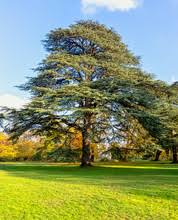






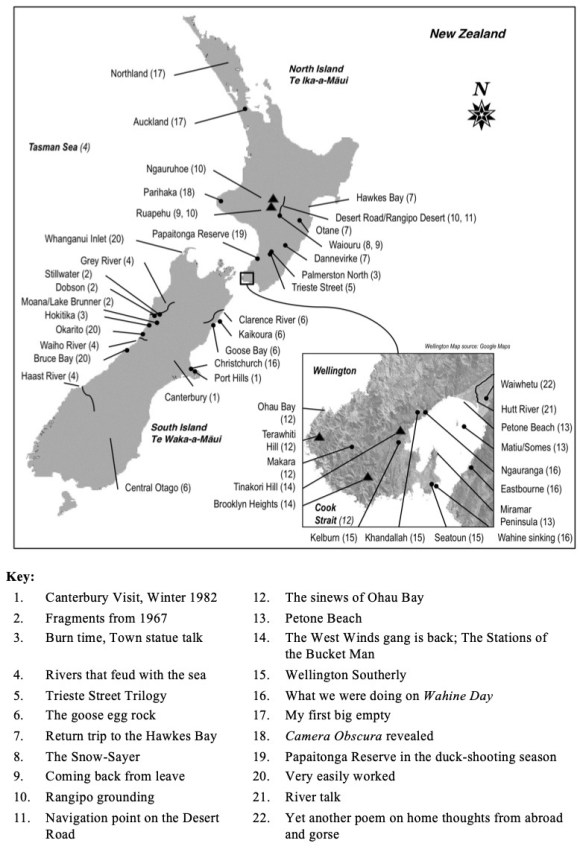



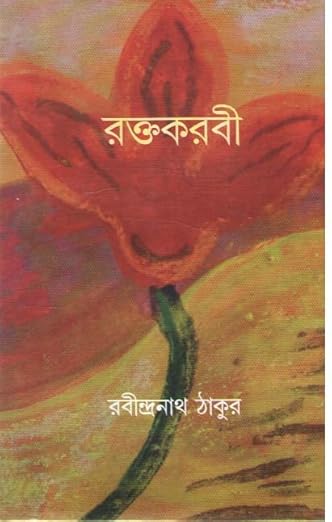
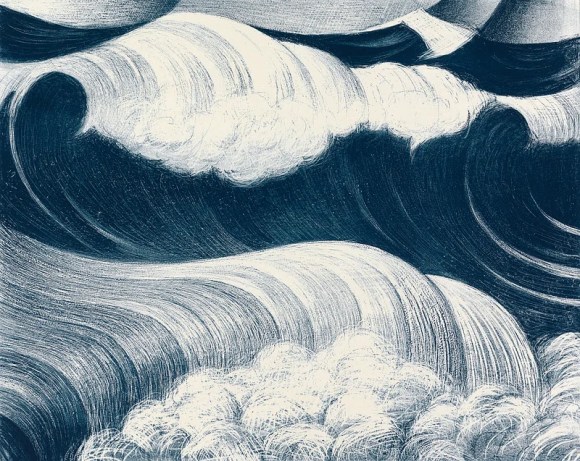

 Borderless