Categories
Discussion

Bridging Cultures across Time and Space

In Conversation with Translators

Translators are bridge builders across cultures, time and place. We have interviewed five of them from South Asia. While the translators we have interviewed are academics, they have all ventured further than the bounds of academia towards evolving a larger literary persona.

The doyen of translation and the queen of historical fiction, Aruna Chakravarti,  and poet, critic and translator, Radha Chakravarty , feel their experience at bridging cultures has impacted their creative writing aswell. Somdatta Mandal, is prolific with a huge barrage of translations ranging from Tagore, to women to travellers, despite being an essayist and reviewer, claims she does not do creative writing and views translations as her passion. Whereas eminent professor and essayist from Bangladesh, Fakrul Alam tells us that translating helped him as a teacher too. Fazal Baloch, translator and columnist from Balochistan, tells us that translation is immersive, creative and an art into itself. We started the conversation with the most basic question – how do they choose the text they want to translate…

How do you choose which texts to translate?
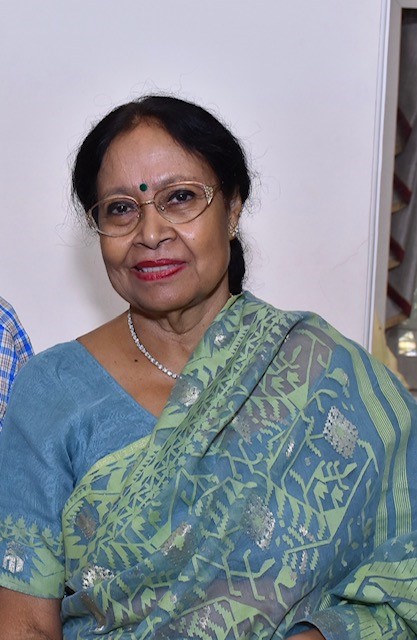
Aruna Chakravarti

Aruna Chakravarti: A translation is an attempt at communication on behalf of a culture, a tradition and a literature. Choosing an author and, more importantly, the most significant areas of his or her work are the first steps towards this communication, because it is only through translation that masterpieces from a small provincial culture become universal ones. Since I come from Bengal, I have always chosen the best of its literature for translation. My first translation was of Rabindranath Tagore’s lyrics. Rabindranath once said that even if all his other work fades to oblivion, his songs would remain. Saratchandra Chattopadhyay, a leading writer of 19th and early 20th century Bengal, considered Srikanta the best of his novels and the most suited to be conveyed to a global readership. I translated Srikanta. Sunil Gangopadhyay is hailed as the most eminent writer of present-day Bengal.  My translations of his novels and short stories are extraordinarily well received by non-Bengali readers, to this day.

Radha Chakravarty

Radha Chakravarty: Every occasion is different. Sometimes a text chooses itself because I feel compelled to translate it. Sometimes I select texts to translate, in response to suggestions or requests from editors, readers and friends who read. Several of my books in translation evolved alongside my research interests as a scholar and academic. For instance, Vermillion Clouds, my anthology of stories by Bengali women, developed from my general interest in feminist literature and my desire to bring texts from our own culture to the English-speaking world. My translations of Mahasweta Devi’s writings, especially the stories on motherhood in the collection titled In the Name of the Mother, happened when I was working on a chapter about Mahasweta for my PhD thesis. Our Santiniketan, my translation of her childhood memoir, emerged from my interest in her writings, as well as my admiration for Rabindranath Tagore. The translations of Chokher Bali1, Farewell Song (Shesher Kabita) and Four Chapters reflect my special fascination with Tagore’s woman-centred novels, for this was also the subject of my post-doctoral work. Later, I developed this research into my book Novelist Tagore: Gender and Modernity in Selected Texts. For my edited anthology Shades of Difference, a compilation of Tagore’s works on the theme of universality in heterogeneity, the selection involved a great deal of thinking and research. And translating Kazi Nazrul Islam’s essays turned out to be an incredible learning experience.
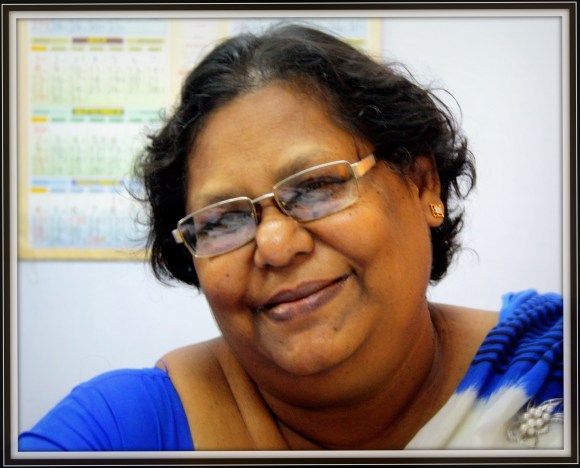
Somdatta Mandal

Somdatta Mandal: I have been translating different kinds of texts over the last couple of decades, and I have no fixed agenda of what I choose to translate. Usually, I am assigned some particular text by the author or a publisher, but sometimes I pick up texts which I like to do on my own. Since I have been working and researching on travel writing for a long time, I have chosen and translated several travel texts from Bengali to English written by women during the colonial times. I have also translated a lot of Rabindranath Tagore’s essays, letters and memoirs of different women related to him. Recently I translated a seminal Bengali travel text of a sadhu’s sojourn in the Himalayas in the late nineteenth century. I have a huge bucket list of texts that I would love to translate provided I find some publisher willing to undertake it. Since copyright permissions have become quite rigid and complicated nowadays, I have learnt from my own experience that it is always advisable to seek permission from the respective authorities before venturing into translating anything. Earlier I was naïve to translate stories which I liked without seeking necessary permission from the copyright holder and those projects ultimately did not see the light of day.
Fakrul Alam

Fakrul Alam: I have no fixed policy on this issue. Sometimes the texts choose me, so to speak. For instance, I began translating poems from Bengali when I first read Jibanananda Das’s “Banalata Sen”. The poem got hold of me and would not let go. I felt at one point an intense desire to translate it and read more of Jibanananda’s poems. Translating the poem elated me and having the end product in my hand in a printed page was joyous. The more poems I read by Jibanananda afterwards, the more I felt like rendering them into English, as if to share my delight and excitement at coming across such wonderful poems with readers who would not have read them in Bengali. That led to my first book of translations, Jibanananda Das: Selected Poems (Dhaka, UPL, 1999). As I ended my work on Jibanananda I thought: why not translate some poems by Rabindranath too? I had climbed one very high mountain satisfactorily and so why not venture forth and climb the topmost peak of Bengali literature?  And so, I began translating Rabindranath’s poems as well as his songs. I had grown up with them, but till now had never imagined I could render them into English. Kumkum Bhattacharya, a dear friend who at that time was in charge of Viswa-Bharati’s publishing wing, Granthana Vibhaga, had seen samples of my work and told me to think of an anthology of his translated works to be published in Tagore’s sesquicentenary year for them. This led me to the poems, prose pieces and songs by him that I translated for The Essential Tagore (Cambridge, Mass, Harvard UP, 2011 and Kolkata: Viswa Bharati, 2011), a book that I had co-edited (with Radha Chakravarty). My last book of translations, Gitabitan: Selected Song-Lyrics of Rabindranath Tagore (Dhaka: Journeyman Books, 2023) alsocame out of this same compulsion of translating works in Bengali. This particular work is a book of translations of nearly 300 songs that I love to listen to again and again—songs that made me feel every now and then that I had to translate them, especially when I heard them sung by a favourite Tagore singer. My translations of a few Kazi Nazrul Islam’s poems and some of his songs are also the result of such compulsive feelings. 

However, I also translated some works because I was requested to do so by people who knew about my Jibanananda Das and Tagore translations and who felt that I would be a competent translator of works they felt were worth presenting to readers in English versions of Bengali books very dear to them. My three translations of works by Sheikh Mujibur Rahman, The Unfinished Memoirs (Dhaka: UPL Books, 2012), The Prison Dairies (Dhaka: Bangla Academy, 2017), and New China 1952 (Dhaka: Bangla Academy, 2021) were all outcomes of requests made to me to translate them. Translating Ocean of Sorrow, the epic 1891 novel by Mir Mosharraf Hossain, has been the most challenging translating work I have had to undertake till now (Dhaka: Bangla Academy, 2016). I would not have dared take on the task of translating such a long and demanding prose work if Shamsuzzaman Khan, the Director of the Bangla Academy of that period, had not kept requesting me to translate this classic of Bengali Literature.

I will end my response to this question by saying that every now and then I translate poems and prose pieces by leading writers who are my contemporaries and who keep requesting me to translate them. Occasionally, I will also translate poems by major poets of our country of the last century—poets like Shamsur Rahman and Al Mahmud—because a poem or two by them had gripped me and made me feel like venturing forth into the realm of translation.  
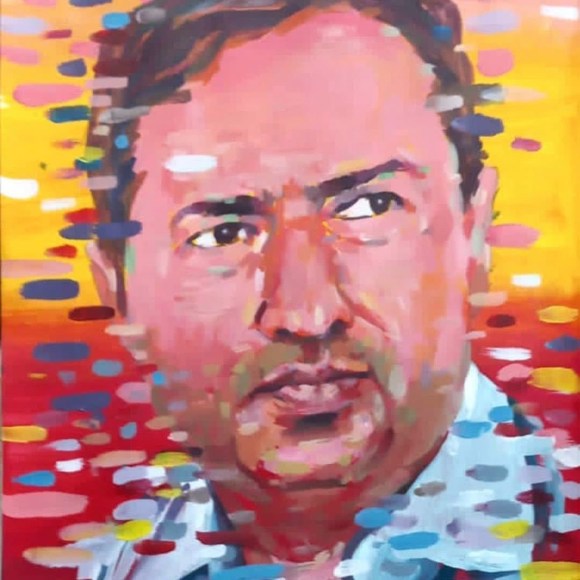
Fazal Baloch

Fazal Baloch: Translating poetry and prose are two very different endeavors. Poetry often makes an immediate impact. Sometimes just a few lines strike me powerfully on the first reading, creating an atmosphere that sets the translation process in motion. In other words, I tend to translate the verses that stir something in me or resonate deeply.

Prose translation, by contrast, works differently. It usually unfolds after a longer process and often requires multiple readings of the text. At times, it even calls for a more deliberate, conscious effort.

Does translating impact your own writing?

Aruna Chakravarti: Yes, it does.  While translating the great masters of Bengali literature I have learned much that has impacted my own writing. From Rabindranath I learned that prose need not necessarily be dry and matter of fact. It could be imbued with lyricism without appearing sentimental and over emotional.  Saratchandra taught me the importance of brevity and precision. Search all his novels and you will not find one superfluous word. I try to follow his example and shun over-writing. From Sunil Gangopadhyay, I learned the art of dialogue. His direct, no-nonsense style and use of colloquialisms work best in dialogue.  

Radha Chakravarty: Yes indeed. As I have just indicated in my answer to your previous question, my translations often take a course parallel to my research, and the two strands of my work sometimes become inseparably interrelated. In my critical works on Indian literature, I remain conscious of bringing these writings to an audience beyond India. Hence an element of cultural translation infuses my analysis of texts by Indian writers. In my own English poetry, when I write about Bengali settings and themes, bilingual overtones often seep in.

Somdatta Mandal: No, not at all. I am not a creative writer per se, so there is no way that translation can influence my own writing.

Fakrul Alam: I will start answering the question by saying that apart from translating and writing nonfiction essays in the creative mode, I have not authored literary works. I am first and foremost an academic. Inevitably, translating Rabindranath’s works have impacted on me academically. By now I have at least one collection of essays on various aspects of Rabindranath’s life and enough essays on him that can lead to another such book. No doubt coming to know Rabindranath so intimately through the kind of close reading that is essential for translation work has made me more sensitive to him as a thinker, educator and visionary, as well as a poet and writer of prose and fictional works. Reading literary creations by him, his letters and lectures that I came across because of my involvement with his work has also lead me to editing; the work I did as co-editor of The Essential Tagore is surely proof of that.

Let me add that my translations have also impacted on my teaching. I am now able to draw on comparisons with Bangladeshi writers and Bengali literature for comparison and contrast in the classroom when I teach texts written in English to my students.  Reading up on the authors I have translated has also equipped me to be more aware of Bangladesh’s roots and national identity formation. This has led me to essays on these subjects.   

Fazal Baloch: Translation is not separate from the process of creativity. Through it, we enter a new world of meaning and explore the experiences of others through a creative lens. As a writer, I find translation essential for nurturing and enriching the mind. It is also worth noting that translation is not partial or fragmentary but a complete and holistic act. When I translate, I move with its current just as I do when I write. Both processes unfold in their own rhythm without obstructing one another. In fact, it is through translation that I have come to recognize and understand great works of creativity in a deeper way.

What is the most challenging part of translation? Do you need to research when you translate?

Aruna Chakravarti:  Yes, since a major part of my translation work was set in 19th century Bengal, I needed to understand and imbibe the ethos and ambience of the times. Being a Probasi Bangali who has lived outside Bengal all her life, this was important. Consequently, a fair amount of research was involved. This has stood me in good stead in my own writing.

Speaking about challenges there are many. The more divergent the two literary traditions the greater the dilemma of the translator. But the test of a good translation is the absence of uncertainty, hesitation and strain. Since translation undertakes to build bridges across cultures it is important that it reads like a creative work. The language must be flowing and spontaneous; one that readers from other languages and cultures don’t feel alienated from. One that they are willing, even eager to read. One they can sail through with effortless ease.

On the other hand, readability or beauty of language cannot be the sole test of a good translation. If the translator becomes obsessed with sounding right in the target language, he/she could run the risk of diluting and distorting the original text which would be a disservice to the author. The reader should hear the author’s voice and be conscious of the source language and culture, down to the finest nuance, if the translation is a truly good one. A good translator is constantly trying to keep a balance between Beauty and Fidelity. No translation is perfect but the finer the balance…the better the translation.

Radha Chakravarty: When translating from Bengali into a culturally distant language like English, the greatest challenge is to bring the spirit of the original alive in the target language, for readers who may not be familiar with the local context. Literal translation does not work.

The need for research can vary, depending on the nature of the text being translated, the purpose of the translation, and the target readership. Some texts travel easily across cultural and linguistic borders, while others need to be interpreted in relation to the time, place and milieu to which they belong. The latter demand more research on the part of the translator, who must act as the cultural mediator or interpreter. When translating Tagore’s writings for my anthology The Land of Cards: Stories, Poems and Plays for Children, I found that these works speak to all children without requiring too much explanation or contextualization; very often the context becomes clear from the writing itself. But Boyhood Days, my translation of Tagore’s childhood memories in Chhelebela, required greater contextualization, for present day readers to grasp unfamiliar details of life in old-world Kolkata.

Somdatta Mandal: The most challenging part of translation is to maintain the readability of the text which I consider to be of foremost importance for any text to communicate with its readers. However, this readability should not be achieved at the cost of omission or suppression of portions of the original. Instead of rigidly following one particular criterion, usually my focus has been to choose what best communicates the nuances of the Source Language [SL]. Sometimes of course when it is best to do a literal translation of cultural material rather than obfuscate it by transforming it into an alien idiom taken from the target language resulting thus in a significant loss of the culture reflected in the original text.

As for doing research when I translate, the answer depends on what kind of text I am working on. If it is a serious academic piece, then occasionally I must consult the dictionary or the thesaurus for the most suitable word. Sometimes contextual or historical references need special attention and background research but such instances are occasional. What really attracts me towards translation is the inherent joy of creativity – of being free to frame the writer’s thoughts in your own words.

Fakrul Alam: The most challenging part of translation is getting it right, that is to say, conveying the words and feel of the original as accurately as possible.  But “getting it right” also means being able to convey the form and tone of the original as well as is possible.  In every way the translator must carry on his translating shoulder the burden of accuracy whenever and whatever he or she is into translating. In this respect a translator like me is different from creative people who take on the task of translating ready to take liberties to render the original in distinctive ways that will bear their signatures. They do not feel constrained like translators of my kind who never dare to move away more than a little distance from the original in order to convey the tone and the meaning as imaginatively and creatively as is possible for them.

I have a simple method when it comes to translating. My first draft is the result of no aid other than printed and/or online dictionaries. If there are allusions I come across when readying the first draft, I Google. Lately, AI has been very helpful in this regard—it even gives me the English equivalence for quite a few Bengali words when, for instance, I type the title in English of a Bengali song-lyric by Rabindranath. Then I compare my translation with that of other translations available online to see if my version is deviating to much from the ones I see.

Occasionally, I will need to do research on the work I am translating. In translating Mir Mosharraf Hossein’s epic novel, for example, I kept searching on the net to know more about the characters and situations of history he had rendered into his narrative than I knew from his writing. I will also do a lot of research if and when I feel a poem or prose work needs to be contextualized and footnotes or end notes needed by readers to understand what is being depicted fully. Thus, for Jibanananda Das’s “Banalata Sen” alone I had to Google a number of times to understand fully the imaginative geography of the piece and get a feel of the real-life equivalents of the places and characters mentioned. In particular, for the first stanza of the poem I had to look for glossaries I intended to provide on words like Vimbisar, Vidarbha, Sravasti and Natore for overseas readers.

Fazal Baloch: Translation is not simply the process of transferring of text from one language to another; it is more like a conversation between cultures, a process through which they come closer and begin to understand one another.

For me, the most challenging part of translation is working with idiomatic and metaphorical expressions. Every language has its own unique idioms and linguistic frameworks, and these are often difficult to carry over into another language. To meet this challenge, I often need to conduct research and explore the etymological roots of words.

What is more important in a translation? Capturing the essence of the work or accuracy?

Aruna Chakravarti:  Capturing the essence of the work is certainly more important than accuracy.  Translators shouldn’t translate words. They should convey the spirit, the intent of the work. There are some authors so obsessed with their own use of language… they want translators to find the exact equivalent for each word they have written. This is a bad idea. Firstly, it is simply not possible to find exact equivalents. At least, not in languages as diverse as Bengali and English. Secondly, the job of the translator is not to satisfy the author’s ego. It is to transfer a literary gem from a small readership to a larger, more inclusive one. If one is unable to do so, the author revered in his own country will fail to speak meaningfully across the language barrier and the onus of the failure will fall on the translator.

Radha Chakravarty: A literary text is a living reality, not a corpus of printed words on the page. It is this living spirit that needs to animate the translated text, rather than precise verbal equivalence. The popular emphasis on fidelity in translation is misplaced. For literary translation cannot be a mechanical exercise. It is, in its own right, a creative process, which depends, not on rigid verbal ‘accuracy’, but on the translator’s ability to recreate, in another language, the very soul of the original. Perhaps ‘transcreation’ is a good word to describe this.

Somdatta Mandal: Regarding translation, it must be kept in mind that though something is always lost in translation, one must always attempt to strike the right balance between oversimplification and over-explanation. Translation is also creative and the challenges it poses are significant. The intricate navigation between the source language and the translated language shows that there are two major meanings of translation in South Asia – bhashantar, altering the language, and anuvad, retelling the story. Without going into major theoretical analyses that crowd translation studies per se, I feel one should have an equal grasp over the SL and the TL [Translated Language] to make a translated piece readable. I translate between two languages – Bengali and English. Sometimes of course, cultural fidelity must be prioritised over linguistic fidelity.

Translating has caught up in a big way over the past five or six years. Now big publishing houses are venturing into publishing from regional bhasha [Language] literatures into English and so the possibilities are endless. Now every other day we come across new titles which are translations of regional novels or short stories. Translating should have as its prime motive current readability and not always rigidly adhering to being very particular about remaining close to each individual line of the source text. The target readership should also be kept in mind and so the choice of words used, and glossary should be eliminated or kept to a minimum. The meaning of a foreign word should as far as possible be embedded within the text itself. All these issues would make translating an enjoyable experience. Way back in 1995, Lawrence Venuti popularised the term ‘foreignized’ so that readers can get access to the source culture as well. He used the term to explain the kind of translation that ‘signifies the difference of the foreign text by disrupting the cultural codes that prevail in the target language.’ Thus, the idea of translation is not to just communicate the plot but also to make readers familiar with the traditions, rituals, and world views of the other.

Fakrul Alam: To me the most important goal is to come as close to the original in every possible way. This means aiming for accuracy, but surely it also means coming as near as possible to the essence of the original. In other words, as far as I am concerned, accuracy will lead to essence. But as I indicate above, most creative writers doing translation will go for the essence and forego accuracy. But knowing something will be lost in translation I will try to minimize the loss by sticking close to the original in every possible way—word meaning, the rhythm of speech, sound elements and imagery. Of course, a man’s reach should exceed his grasp but what else is going to bring the translator close to cloud nine? 

Fazal Baloch: Both essence and accuracy matter, but in poetry translation, the limited space to maneuver often makes essence the priority. As I mentioned earlier, the goal of translation is not only to carry over the meaning of the words but also the rhythm, tone, emotion, and cultural context that bring the original to life.

In practice, this means the translator has to balance several tasks at once: preserving cadence and rhythm, maintaining poetic flow, and ensuring semantic clarity. Yet above all, the translator must not lose the spirit of the original when choosing between essence and accuracy.

Prose, on the other hand, offers more freedom. Because it allows greater room to preserve meaning, accuracy tends to matter more, though essence still plays a role.

In short, poetry often gives more weight to essence, while prose allows essence and accuracy to work together more harmoniously.

  1. Best friend from Childhood, literally Sand from the Eye ↩︎

Bios of Featured Translators:

Aruna Chakravarti has been the principal of a prestigious women’s college of Delhi University for ten years. She is also a well-known academic, creative writer and translator. Her novels, JorasankoDaughters of JorasankoThe InheritorsSuralakshmi Villa and The Mendicant Prince have sold widely and received rave reviews. She has two collections of short stories and many translations, the latest being Rising from the Dust. She has also received awards such as the Vaitalik Award, Sahitya Akademi Award and Sarat Puraskar for her translations.

Radha Chakravarty is a poet, critic and translator based in Delhi, India. She has published over 20 books, including translations of major Bengali writers such as Rabindranath Tagore, Bankimchandra Chatterjee and Kazi Nazrul Islam, anthologies of South Asian writing, and several critical monographs. She has co-edited The Essential Tagore (Harvard and Visva-Bharati), named Book of the Year 2011 by Martha Nussbaum. She was Professor of Comparative Literature and Translation Studies at Ambedkar University Delhi.

Somdatta Mandal is the Former Professor of English and Chairperson at the Department of English & Other Modern European Languages, Visva-Bharati, Santiniketan. Somdatta has a keen interest in translation and travel writing.

Fakrul Alam is an academic, translator and writer from Bangladesh. He has translated works of Jibonananda Das and Rabindranath Tagore into English and is the recipient of Bangla Academy Literary Award (2012) for translation and SAARC Literary Award (2012).

Fazal Baloch is a writer and translator. So far, he has published seven English anthologies and one Urdu collection of his translations. His. works include “God and the Blind Man: Selected short stories by Munir Ahmed Badini (Balochistan Academy of Science and Research, 2020), The Broken Verses: Aphorism and Epigrams by Sayad Hashumi (Balochi Academy Quetta 2021), Rising Stars: English Translations of Selected Balochi Literature by the Writers under the Age of Fifty (Pakistan Academy of Letters Islamabad 2022), Muntakhib Balochi Kahaniyan (Pakistan Academy of Letters Islamabad 2022), Adam’s Remorse and Other Poems by Akbar Barakzai (Balochi Academy Quetta 2023), “Why Does the Moon Look So Beautiful?: Selected short stories by Naguman” (Balochistan Academy Turbat, revised edition 2024) and “Every Verse for You”: Selected Poetry by Mubarak Qazi (Balochistan Academy Turbat, revised edition 2025). His translations have also been included in different anthologies such as ‘Silence between the Note’ (Dhauli Books India, 2019), Unheard Voices: Twenty-One Short Stories in Balochi with English translations (Uppsala University Sweden, 2022) and ‘Monalisa No Longer Smiles: An Anthology of Writings from across the World (Om Books International, 2022). He also contributes literary columns to various newspapers and magazines. He lives in Turbat Balochistan where he serves as an Assistant Professor at Atta Shad Degree College Turbat.     

(The interviews were conducted via email by Mitali Chakravarty)

PLEASE NOTE: ARTICLES CAN ONLY BE REPRODUCED IN OTHER SITES WITH DUE ACKNOWLEDGEMENT TO BORDERLESS JOURNAL

Click here to access the Borderless anthology, Monalisa No Longer Smiles

Click here to access Monalisa No Longer Smiles on Kindle Amazon International
Categories
Contents

Borderless, September 2025

Art by Sohana Manzoor

Editorial

Seasons Out of Time Click here to read

Translations

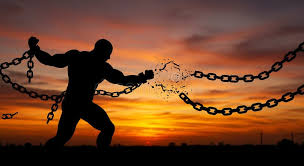
Nazrul’s Karar Oi Louho Kopat (Those Iron Shackles of Prison) has been translated from Bengali by Professor Fakrul Alam. Click here to read.

Five poems by Ashwini Mishra have been translated from Odia by Snehprava Das. Click here to read.

The Dragonfly, a poem by Ihlwha Choi,  has been translated from Korean by the poet himself. Click here to read.

Tagore’s Aaj Shororter Aloy (Today, in the Autumnal Light) has been translated from Bengali by Mitali Chakravarty. Click here to read.

Poetry

Click on the names to read the poems

Ryan Quinn Flanagan, Onkar Sharma, Ron Pickett, Arshi, Joseph K Wells, Shamim Akhtar, Stephen House, Mian Ali, John Grey, Juliet F Lalzarzoliani, Joseph C.Obgonna, Jim Bellamy, Soumyadwip Chakraborty, Richard Stimac, Sanzida Alam, Jim Murdoch, Rhys Hughes

Poets, Poetry & Rhys Hughes

In Soaring with Icarus, Rhys Hughes shares a serious poems. Click here to read.

Musings/ Slices from Life

Parenting Tips from a Quintessential Nerd

Farouk Gulsara relooks at our golden years and stretches it to parenting tips. Click here to read.

Instrumental in Solving the Crime

Meredith Stephens takes us to a crime scene with a light touch. Click here to read.

What’s in a Name?

Jun A Alindogan writes about the complex evolution of names in Phillippines. Click here to read.

Bibapur Mansion: A Vintage Charmer

Prithvijeet Sinha takes us for a tour of Lucknow’s famed vintage buildings. Click here to read.

Musings of a Copywriter

In Demolition Drives… for Awards?, Devraj Singh Kalsi muses on literary awards. Click here to read.

Notes from Japan

In Contending with a Complicated History, Suzanne Kamata writes of her trip to US from Japan. Click here to read.

Essays

The Bauls of Bengal

Aruna Chakravarti writes of wandering minstrels called bauls and the impact they had on Tagore. Click here to read.

The Literary Club of 18th Century London

Professor Fakrul Alam writes on literary club traditions of Dhaka, Kolkata and an old one from London. Click here to read.

Stories

Looking for Evans

Rashida Murphy writes a light-hearted story about a faux pas. Click here to read.

Exorcising Mother

Fiona Sinclair narrates a story bordering on spooky. Click here to read.

The Storm

Anandita Dey wanders down strange alleys of the mind. Click here to read.

The Fog of Forgotten Gardens

Erin Jamieson writes from a caregivers perspective. Click here to read

The Anger of a Good Man

Naramsetti Umamaheswararao makes up a new fable. Click here to read.

Feature

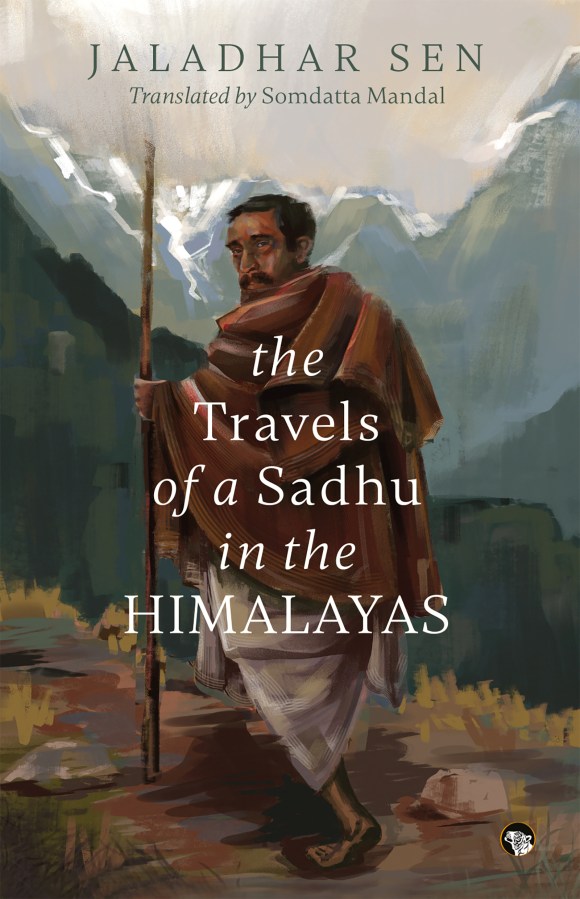
A review of Jaladhar Sen’s The Travels of a Sadhu in the Himalayas, translated from Bengali by Somdatta Mandal, and an online interview with the translator. Click here to read.

Book Excerpts

An excerpt from Jaladhar Sen’s The Travels of a Sadhu in the Himalayas, translated from Bengali by Somdatta Mandal. Click here to read.

An excerpt from Prithvijeet Sinha’s debut collection of poems, A Verdant Heart. Click here to read.

Book Reviews

Somdatta Mandal reviews Aruna Chakravarti’s selected and translated, Rising From the Dust: Dalit Stories from Bengal. Click here to read.

Rakhi Dalal reviews Mohua Chinappa’s Thorns in My Quilt: Letters from a Daughter to her Father. Click here to read.

Pradip Mondal reviews Kiriti Sengupta’s Selected Poems. Click here to read.

Bhaskar Parichha reviews Kalyani Ramnath’s Boats in a Storm: Law, Migration, and Decolonization in South and Southeast Asia, 1942–1962. Click here to read.

.

Click here to access the Borderless anthology, Monalisa No Longer Smiles

Click here to access Monalisa No Longer Smiles on Amazon International

Categories
Editorial

Seasons Out of Time

Today, as I gaze in this autumnal light,
I feel I am viewing life anew.

— Tagore's Aaj Shororter Aloy (Today, in the Autumnal Light)
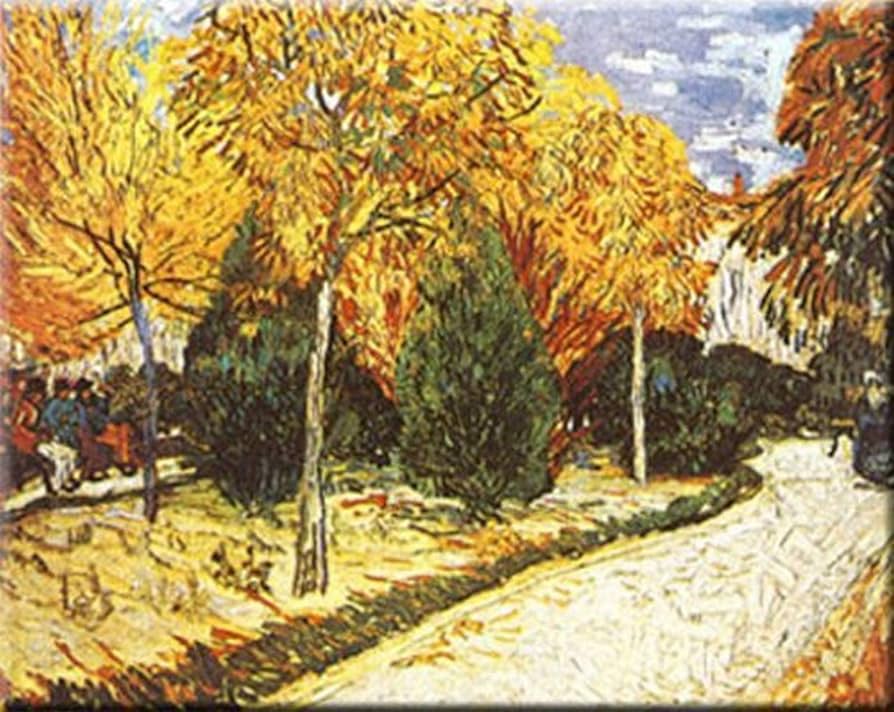
Autumn Garden by Vincent Van Gogh (1853-1890). From Public Domain

September heralds the start of year-end festivities around the world. It’s autumn in one part and spring in another – both seasons that herald change. While our planet celebrates changes, dichotomies, opposites and inclusively gazes with wonder at the endless universe in all its splendour, do we? Festivals are times of good cheer and fun with our loved ones. And yet, a large part of the world seems to be in disarray with manmade disasters wrought by our own species on its own home planet. Despite the sufferings experienced by victims of climate and war-related calamities, the majority will continue to observe rituals out of habit while subscribing to exclusivity and shun change in any form. Occasionally, there are those who break all rules to create a new norm.

One such group of people are the bauls or mendicants from Bengal. Aruna Chakravarti has shared an essay about these people who have created a syncretic lore with music and nature, defying the borders that divide humanity into exclusive groups. As if to complement this syncretic flow, we have Professor Fakrul Alam’s piece on a human construct, literary clubs spanning different cultures spread over centuries – no less an area in which we find norms redefined for, the literary, often, are the harbingers of change.

Weaving in stories from around the world, our non-fiction section offers parenting tips ( or are these really nerdy meanderings?) from Farouk Gulsara who looks inclusively at all life forms — big and small, including humans. Meredith Stephens brings us a sobering narrative with a light touch from the Southern Hemisphere. Prithvijeet Sinha takes us to explore an ancient monument of Lucknow and Jun A. Alindogan tells us “what’s in a name” in Philippines — it’s quite complex really  — it reads almost as complicated as a Japanese addresses explained in her column by Suzanne Kamata. In this issue, she takes us through the complexities of history in South Carolina, while Devraj Singh Kalsi analyses literary awards with a dollop of irony!

Humour is brought into poetry by Rhys Hughes, though his column houses more serious poems. Joseph C.Obgonna has an interesting take on his hat — if you please. We have poetry on climate by Onkar Sharma. Verses as usual mean variety on our pages. In this issue, we have a poem (an ekphrastic, if we were given to labelling) by Ryan Quinn Flanagan on a painting, by Ron Pickett on aging and on a variety of issues by Arshi, Joseph K Wells, Shamim Akhtar, Stephen House, Mian Ali, John Grey, Jim Murdoch, Juliet F Lalzarzoliani, Jim Bellamy, Soumyadwip Chakraborty, Richard Stimac and Sanzida Alam. We have translations of poetry. Ihlwha Choi has self-translated his poem on a dragonfly from Korean. Snehprava Das has brought to us another Odia poet, Ashwini Mishra. Tagore’s Aaj Shororter Aloy (Today, in the Autumnal Light) has been translated from Bengali. Though the poem starts lightly with the poet bathed in autumnal light, it dwells on ‘eternal truths’ while Nazrul’s Karar Oi Louho Kopat (Those Iron Shackles of Prison), transcreated by Professor Alam, reiterates breaking gates that exclude and highlight differences. In the same spirit as that of the bauls, Nazrul’s works ask for inclusivity as do those of Tagore.

We have more poetry in book excerpts with Sinha’s debut collection of poems, A Verdant Heart, and in reviews with veteran poet Kiriti Sengupta’s Selected Poems, reviewed by academic Pradip Mondal. Rakhi Dalal has written on Mohua Chinappa’s Thorns in my Quilt: Letters from a father to a Daughter. while Bhaskar Parichha has discussed Kalyani Ramnath’s Boats in a Storm: Law, Migration, and Decolonization in South and Southeast Asia, 1942–1962, a book that explores beyond the boundaries that politicians draw for humanity. The pièce de résistance in this section is Somdatta Mandal’s exploration of Aruna Chakravarti’s selected and translated, Rising from the Dust: Dalit Stories from Bengal. The book stands out not just for the translation but also with the selection which showcases an attempt to create bridges that transcend linguistic and cultural barriers.

Mandal, herself, has a brilliant translation featured in this issue. We have a review of her book, an interview with her, and an excerpt from the translation of Jaladhar Sen’s The Travels of a Sadhu in the Himalayas. Written and first published in the Tagore family journal, Bharati, the narrative is an outstanding cultural bridge which even translates Bengali humour for an Anglophone readership. That Sen had a strictly secular perspective in the nineteenth century when blind devotion was often a norm is showcased in Mandal’s translation as well as the stupendous descriptions of the Himalayas that haunt with elegant simplicity. 

Our fiction this month seems largely focussed on women’s stories from around the world. While Fiona Sinclair and Erin Jamieson reflect on mother-daughter relationships, Anandita Dey looks into a woman’s dilemma as she tries to adjust to the accepted norm of an ‘arranged’ marriage. Rashida Murphy explores deep rooted social biases that create issues faced by a woman with a light touch. Naramsetti Umamaheswararao brings in variety with a fable – a story that reflects human traits transcending gender disparity.

The September issue would not have been possible without contributions of words and photographs by many of you. Huge thanks to all of you, to the fabulous team and to Sohana Manzoor, whose art has become synonymous with our journal. And our heartfelt thanks to our wonderful readers, without who the effort of putting together this journal would be pointless. Thank you all.

Looking forward to happier times.

Mitali Chakravarty

borderlessjournal.com

.

CLICK HERE TO ACCESS THE CONTENTS FOR THE SEPTEMBER 2025 ISSUE

.

READ THE LATEST UPDATES ON THE FIRST BORDERLESS ANTHOLOGY, MONALISA NO LONGER SMILES, BY CLICKING ON THIS LINK.

Categories
Tagore Translations

Autumnal Light & Rabindranath

Aaj Shoroter Aloy (Today in this Autumnal Light) was first published in Tagore’s collection called Shesh Saptak (The Last Octave, 1935).

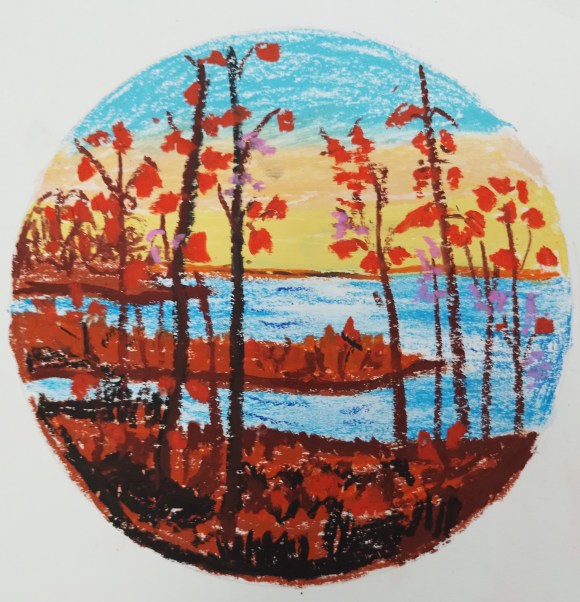
Painting by Sohana Manzoor
Today, as I gaze in this autumnal light, 
I feel I am viewing life anew.
I see a youth.
His eyes, weary from daily strife,
Have lost their sight.

I imagine —
As a pilgrim from the past,
I have drifted here
On the strength of chants.
Traveling upstream in my dreams,
I have arrived at this moment,
In the present century’s shore.
I gaze with eager eyes.
I detach myself from the self.
I am a stranger from another age
Awaiting introductions as of yore.
Deep curiosity enthrals.
I am drawn
To whoever I find,
Like a bee to a flower.
Today, my mind is centred
Amidst the chaos.
Today, those stained
By weak popular opinions,
Have been stripped off
Their garb of mediocrity.
The truth of our existence
Emerges in full splendour.
The mute who never found voice,
The large population of neglected,
Have broken their silence —
The first words seemed to emerge
Like dawn after the deepest of dark.

As a distant wayfarer,
I travel to my own world
To glimpse eternal truths from between
The rips torn in the present,
Like a bride wed for life
Gazes from within
The fine curtain
With new eyes on
Eternity’s unfading truths.

This poem has been translated from Bengali by Mitali Chakravarty with editorial input from Sohana Manzoor.

.

PLEASE NOTE: ARTICLES CAN ONLY BE REPRODUCED IN OTHER SITES WITH DUE ACKNOWLEDGEMENT TO BORDERLESS JOURNAL

Click here to access the Borderless anthology, Monalisa No Longer Smiles

Click here to access Monalisa No Longer Smiles on Kindle Amazon International
Categories
Interview Review

How Jaladhar Sen Travelled to the Himalayas More Than a Hundred Years Ago…

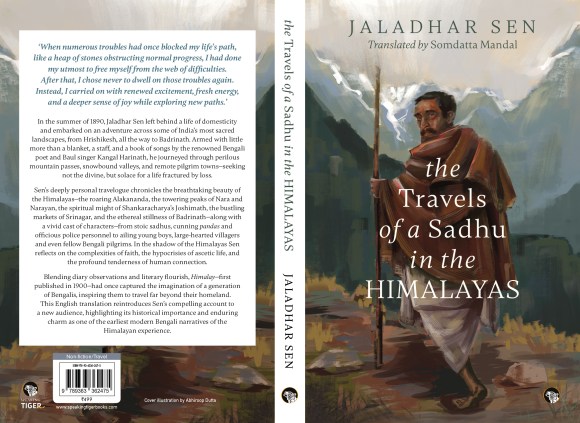
A review of Jaladhar Sen’s The Travels of a Sadhu in the Himalayas, translated from Bengali by Somdatta Mandal, published by Speaking Tiger Books, and a conversation with the translator.

Jaladhar Sen (1860–1939) travelled to the Himalayas on foot with two sadhus[1] in quest of something intangible. His memoir makes us wonder if it was resilience, for after all he lost his daughter, wife and mother — all within a few months. He moved to Dehradun from Bengal for a change of scene after his tragic losses before journeying into the hills.

Written in Bengali and first published as a serial in the Tagore family journal, Bharati, in 1893, the book was brought out in 1900 as Himalay. It has been brought to Anglophone readers by Somdatta Mandal, an eminent translator who has extensively translated much of Tagore’s essays and journals. She is a critic and scholar, a former professor of Santiniketan, an excellent translator to bring Jaladhar Sen’s diary to light. Mandal has given a lucid and informative introduction to Sen, his book and her translation — very readable and without the use of scholastic language or words which would confuse readers. Her commentary adds value to the text by contextualising the people, the times and the circumstances.

Her translation is evocative of the journey, creating vivid visual impact with the play of words. Sen is a Bengali who has picked up Hindi during his brief stay in Dehradun. That he uses multiple vernaculars to move around with two more Bengali migrants who have turned to a religious life and meets locals and pilgrims from a variety of places is well-expressed with a smattering of expressions from various languages and dialects. Mandal has integrated the meanings of these words into the text, making it easy for readers unfamiliar with these phrases to read and enjoy the narrative without breaking the continuity.

Sen is secular and educated — not ritualistic but pragmatic. You can see his attitudes illustrated in an incident at the start of the book: “We quickened our pace, but when we caught up to the two sanyasis, I felt a mix of amusement and irritation. One of them turned out to be my former servant, whom I had dismissed twenty or twenty-five days earlier for theft. His transformation was remarkable—dressed in the elaborate robes of a sanyasi, with tangled hair and constant chants of ‘Har Har Bom Bom’, he was barely recognisable as the thief he once was. It was sheer bad luck on his part that our paths crossed that day.”

At the end of the journey too, Sen concludes from his various amusing and a few alarming experiences: “Many imposters masquerading as holy sanyasis brought disgrace to the very essence of renunciation. Most of these so-called sanyasis were addicted to ganja[2], begged for sustenance, and carried the weight of their sins from one pilgrimage site to another.”

Yet, there is compassion in his heart as the trio, of which Sen was a part, help a sick young youth and others in need. He makes observations which touch ones heart as he journeys on the difficult hilly terrain, often victimised by merciless thunderstorms, heavy downpours and slippery ice. He writes very simply on devotion of another: “I felt happy observing how deep faith and belief illuminated his face.” And also observes with regret: “We have lost that simple faith, and with it, we have also lost peace of mind.” He uses tongue-in-cheek humour to make observations on beliefs that seem illogical. “In such matters, credit must be given to the authors of the Puranas. For instance, Hanuman had to be portrayed as colossal, so the sun was described as being subservient to him. However, with the advancement of science, the estimated size of the sun grew larger, and instead of diminishing Hanuman’s glory, his stature had to be exaggerated even further. Similarly, Kumbhakarna’s nostrils had to be depicted as enormous, so that with each breath, twenty to twenty-five demon monkeys could enter his stomach and exit again.”

Mandal has translated beautiful descriptions of the Himalayas from his narrative with lucid simplicity and elegance. When Sen chances to see the first snow peaks, the wonder of it, is captured with skill: “We were amazed to see a huge mountain of snow, its four large peaks encircling us. The sun was already quite high in the sky, and its bright rays fell upon those mountain peaks, radiating hues that cannot simply be described in words. Even the best painter in the world could not replicate the scene with his brush.” And: “Yet the scenery that unfolded before my eyes was simply magical. Standing in front of this pristine beauty, man’s power and pride were humbled. He could recognise his own triviality and weakness very clearly and, to a certain extent, grasp the greatness of the creator within his heart.”

And of course, there is the typical Bengali witty, sardonic banter creeping in to the narrative: “On certain days, when I felt inclined to indulge in minor luxuries, I would purchase a few pedas. However, such bravado was rarely worth the effort, as one might have needed the assistance of archaeological experts to determine the sweets’ actual date of origin—no one could tell how many generations of worms had made their home inside them!”

The translation has retained the simplicity of the narrative which Sen tells us was essentially his style. He had no intention of publishing what he wrote. He had started out in company of a sadhu with a staff, a blanket and a stock of Baul Kangal Harinath’s songs. He writes at the end: “I didn’t intend to write a diary. I had a songbook with me, and when that book was being bound, I had added a few blank pages with the idea of writing down new songs if I came across them.” He scribbled his notes in those blank pages.

The journey makes a wonderful read with its humorous descriptions of errant sadhus, frightening storms, descriptions of geographies and travel arrangements more than a hundred years ago, where the pilgrims live in shop houses and eat meagre meals, the perseverance, the wonder, the love and friendship one meets along the way. Though there is greed, theft and embarrassment too! Some of his narrative brings to my mind Nazes Afroz’s translation of Syed Mujtaba Ali’s In a Land Far from Home: A Bengali in Afghanistan.

Mandal tells us: “A prolific writer, Sen authored about forty-two books, including novels, travelogues, works with social messages, children’s literature, and biographies.” In real life, she describes Sen as “a writer, poet, editor, philanthropist, traveller, social worker, educationist and littérateur.” That’s a long list to wear. There’s more from Mandal about what the book offers and why she translated this unique travelogue in this exclusive interview.

How did you chance upon this book and why did you decide to translate it? How long did the whole process take?

I have been writing and researching on Indian Travel Writing for almost over two decades now and so was familiar with the sub-genre of travel writing about the Himalayas. In Bangla, there exists a great number of books on travel to holy places as part of a pilgrimage from the mid-19th century onwards. But this book was unique because it was written by a secular person who did not go to the Himalayas as part of a pilgrimage but nevertheless got influenced by the other pilgrims with whom he went along. It was in the summer of 1890 when he actually travelled, and later in 1893, his perilous experience was published serially in the Bengali periodical Bharati which was then edited by Rabindranath Tagore’s niece, Sarala Devi Choudhurani.

During that period, with the proliferation of travel narratives being regularly published in several contemporary Bengali periodicals, Jadadhar Sen’s narration became very popular and after 1900 when it was published in book form, it took the Bengali readers of the time by storm. Its popularity led to it being included as part of the syllabus at Calcutta University. Feeling that pan-Indian readers who could not read the original text in Bangla should get to read this interesting text in English, I was inspired to translate this travelogue for a long time and Speaking Tiger Books readily accepted my proposal a couple of years ago.

The places visited by Sen might not seem unique in the present context, but the period during which he undertook the travel and the culture-specificity of it needed special attention. I was busy editing two volumes of travel narratives to Britain then, and after I finished my project, I took up translating this text in full earnest. It took me about three months to complete the translation, and I send the manuscript to the publishers in January this year. After several editorial interventions, it ultimately saw the light of day in July 2025.

Did you need to input much research while doing the translation? How tough was it to translate the text, especially given that it has multiple language and cultural nuances?

I did have to do some biographical research on Jaladhar Sen as his narrative is absolutely silent about why he moved from Bengal to Dehradun and the actual reason for his setting out on this particular journey. Interestingly, I was also researching about Swami Ramananda Bharati, who was the first Bengali traveller to Tibet and Manas Sarovar, and who wrote the famous book Himaranya (The Forest of Snow) whom Sen knew earlier and with whom he actually undertook the journey. With several cross references I could fill in a lot of biographical gaps in the narrative.

Regarding translation, it must be kept in mind that though something is always lost in translation, one must always attempt to strike the right balance between oversimplification and over-explanation. Translation is also a sort of creativity and the challenges it poses are significant. The intricate navigation between the source language and the translated language shows that there are two major meanings of translation in South Asia – bhashantar, altering the language, and anuvad, retelling the story. Without going into major theoretical analyses that crowd translation studies per se, I feel one should have an equal grasp over both translated and source languages to make a translated piece readable.

What are the tools you have used to retain the flavour of the original narrative? Please elaborate.

Readability of this old text Himalay in the present context is of paramount importance and though it is very difficult to replicate the grandiose writing style of late nineteenth-century Bangla, I have attempted to retain as much of the original flavour of the text as possible. Without using glossary or footnotes, the meaning of certain words becomes evident through paraphrasing the text. Thus, in keeping with Jaladhar Sen’s original work, the names of some words have been retained as they are. For example, the words dharamshala and chati—resting places on the pilgrim’s path—are so culture-specific that they are retained in their original forms. Sen also uses other culture-specific words such as panda (the Brahmin middleman who acts as the intermediary for worshipping the deity), the kamandalu (the water jug carried by sanyasis), lota-kambal (the jug and blanket that emphasise one’s identity as a sadhu), the jhola (the typical cloth bag that hangs from the shoulders), and the mahanta, or the head priest of the temple. Again, different terms such as sadhu, sanyasi, and yogi are used at different points to define ascetics and are often employed interchangeably. The term math, denoting seats of authority and doctrinal learning, has also been retained in its original form. As a Bengali gentleman settled in western India— Dehradun—the author often refers to Bengal as his desh, which literally means ‘country’, but in his parlance refers to the region of Bengal, which is as much a part of India as Dehradun. This definition should not create any confusion in the reader’s mind.

You, like the author, never clearly tell us why Sen starts out on such a perilous journey. Why do you think he went to this journey?

From evidential sources we get to know that like any other domestic person Jaladhar Sen began his career as a teacher in a High School in 1883 in Faridpur in Bengal. He got married in 1885 but however, a few years later he endured a great personal tragedy, losing his family members in quick succession. In 1887, his newborn daughter died on the twelfth day after her birth, and his wife passed away another twelve days later. Within three months, his mother also died. Overwhelmed by grief and seeking solace, he moved to Dehradun at the foothills of the Himalayas, where he worked as a teacher.  

It is known that Sen did not venture into the Himalayas out of wanderlust. Dejected with domestic life, he apparently went to Kumbh Mela in Haridwar, where he chanced upon Swami Ramananda Bharati, an elderly Bengali sadhu whom he had known previously. He decided to accompany him on a trek all the way to Badrinath on foot. This was the background to his Himalayan travels and how he became a paribrajak sadhu or a traveller saint. The year was 1890.

Even though the memoir spans only a month, the author underwent many changes. Would you regard this book as a bildungsroman of sorts, especially as there is a self-realisation that comes to Sen at the end? Please elaborate. 

In his travel account Sen documents his experiences of journeying to various places of religious significance, namely Devaprayag, Rudraprayag, Karnaprayag, Vishnuprayag and Joshimath before reaching the temple town of Badrinath in the upper Himalayas. He undertook this journey as a secular sojourner. But the travel impacted his soul in such a way that at the end of his narrative he admits that he had ventured in the Himalayas with a funeral pyre burning within his heart; and he merely embraced the cool breeze of the mountains with his hands and pressed the hard snow against his chest. He is doubtful whether he had the time or the state of mind to witness the eternal glory of the Lord revealed in the heavenly scenes around him. Could he lift his head and look towards heaven? That sense of wonder was absent within him. But some sort of change had already appeared within him. In this context, I feel the last two sentences of his narrative to be very significant when he states: “If anyone feels inspired to visit the Himalayas after reading this simple travel narrative of mine, then all my writing will have been worthwhile. And if anyone journeys towards the feet of the god of the Himalayas, my life would have been fulfilled.”

What was your favourite part of the book. Did you enjoy translating some things over others? Please elaborate.

There are several sections in the book which I really enjoyed translating. Most of them relate to specific incidents that Sen encountered during his travels and how human nature was the same everywhere. The first one was when they were on their way to Devaprayag and in his diary entry on 11th May, he tells us about the incident when his money pouch along with the Swamiji’s tiger skin was stolen on the way and how with the help of a panda he managed to retrieve it after a lot of effort. Though they were not very much spiritually inclined, they realized that there were crooks on the way to the pilgrimage sites who also dressed up as sadhus and everyone could not be trusted in good faith.

 The second memorable incident is when trekking during extremely inclement weather — rain and thunderstorm– and when stones rushed down from the mountain slopes nearly killed them, how Achyutananda or Vaidantik who was accompanying them managed to protect him by shielding from the natural calamities with his own body as a mother hen does to protect her chicks.

 The third interesting incident that Sen narrates is dated 3rd June when they got stranded at a chati in Pipul Kuthi. The head constable or jamadar sahib arrived there to enquire about a theft and Sen tells us how even in that remote mountainous region, the police had the reputation for rudeness and stern behaviour as the Bengal police had. He writes, “These officers, tasked with restraining wrongdoers and protecting civil society, displayed the same demeanour no matter where they were stationed. It seemed that the police were the same everywhere.”

Another memorable section is when they chance upon a young boy who probably ran away from his house and was trekking with them for some part of the way. The way in which the sick lad was ultimately deposited under the care of a doctor in the local hospital is extremely moving. Several other sections can also be mentioned here but it will turn my reply excessively long.

Why did you feel the need to bring this book to a wider readership? Are you translating more of his books?

I have already mentioned the importance of Sen’s travelogue in charting the long tradition and rich repertoire of Bengali travel narratives on the Himalayas that focus on travel as pilgrimage. As early as 1853, Jadunath Sarbadhikari embarked on a journey from a small village in Bengal to visit the sacred shrines of Kedarnath and Badrinath. Returning in 1857, he chronicled his travels in Tirtha Bhraman (1865). Two lesser-known pilgrimages to the Himalayas were undertaken by monks of the Ramkrishna Mission order – Swami Akhandananda and Swami Apurvananda—in 1887 and 1939, respectively. Their travelogues were published many years later by Udbodhan Karyalaya, the official mouthpiece of the Mission. In both narratives, we find vivid details of the hardships of travelling during that period, marked by limited financial resources and minimal material comforts.

Jaladhar Sen’s narrative also holds a significant position in this chronological trend of writing about travelling in the Himalayas. From the 1960s onwards we find a proliferation of Himalayan travel writing in Bangla by writers such as Prabodh Kumar Sanyal, Shonku Maharaj, Umaprasad Mukhopadhyay and others, and many of these texts need to be translated provided one finds a responsive publisher for them. I am not translating Jaladhar Sen anymore, though as a prolific writer Sen authored about forty-two books, including novels, travelogues, works with social messages, children’s literature, and biographies.

How do you choose which text to translate? You always seem focussed on writers who lived a couple of centuries ago. Why do you not translate modern writers? 

There is no hard and fast rule for selecting which text I want to translate. I have already translated several travel texts by Bengali women beginning from Krishnabhabini Das’s A Bengali Lady in England, 1876, to later ones. But I have not translated any travelogue about the Himalayas before. Here I must be candid about two issues. I pick upon writers usually whose texts are free of copyright as that does not entail a lot of extra work securing permissions etc. The second more practical reason is that I still have a long bucket list of translations I would like to do provided I find an agreeing publisher. But that is very difficult because several of my proposals have been rejected by publishing houses because they feel it will not be marketable in the current scenario.

As for the query about translating modern writers let me narrate a particular incident. As a woman writer and as someone interested in translating travel narratives of all kinds, I had approached Nabanita Dev Sen through a willing publisher to translate her visit to the Kumbh Mela that she wrote about in her book titled Koruna Tomar Kone Poth Diye[3].  After seeking necessary permission and meeting her personally on several occasions to discuss several chapters, I gradually got frustrated because even after three sets of corrections, the translation did not satisfy her.

She consulted several other people, including her own daughter, and ultimately told me that she couldn’t accept my translation because she ‘didn’t find herself in it.’ The colloquial Bangla humour in some places were not sufficiently translated. As far as I got to know from the publisher, she changed editors thrice, and in the end the translated book was published with one of the editors named as the ‘translator’. When I chanced to meet her at my university on a different occasion, Nabaneetadi told me that she had mentioned my name in the acknowledgement section of the book, which of course I didn’t bother to buy or check. From such a bitter experience, I feel staying with writers dead long ago is a safer bet for me.

You are working on a new translation. Will you tell us a bit about your forthcoming book?

As I have already mentioned, I found Swami Ramananda Bharati’s Himaranya (The Forest of Snow) to be a companion piece for translation. Not only is this significant because it was the same Swamiji with whom Jaladhar Sen travelled to the Himalayas, and though his name is not mentioned anywhere by Sen, we get to know a lot about him already through his narrative. As a monk, Bharati travelled to Mount Kailash and Manas Sarovar in Tibet during 1898, the first Bengali to do so. These travels form the basis of Himaranya. It was not entirely ‘spiritual’ or ‘theological’ but rather depended on the traveller’s own temperament. There are presentations of secular interests and considerations, and modern readers can relate to them easily, especially because the route to Kailash and Manas Sarovar has now been opened for Indian pilgrims once again and several groups are going there every other day. The manuscript is already with the publisher and hopefully the book should see the light of day by the end of this year if everything goes well.

 You have translated so many voyages by Tagore, by Sen, do you now want to bring out your own travelogues or memoirs?

I have been translating travel narratives of different kinds for a long time now. I still plan to do a few more if I get a proper publisher for the same. I am an avid traveller myself and have actually trekked to Kedarnath, Badrinath, Gangotri and Yamunotri twice. I have also trekked for fourteen days to visit Muktinath in Nepal way back in the early 1980s, and during the pandemic days when I was confined at home, I managed to key in that experience in Bangla from the diary I kept at that time. That narrative was published in the online journal Parabaas which is published from the United States. But I have never taken writing about my own travelogues or memoirs seriously. Of course, last year and also forthcoming this year, a special Puja Festive number of a Bengali magazine has been publishing my travel articles. But there is nothing serious or academic about it.

Do you have any advice for fledging writers or translators?

 Translating has caught up in a big way over the past five or six years. Now big publishing houses are venturing into publishing from regional bhasha literatures into English and so the possibilities are endless. Now every other day we come across new titles which are translations of regional novels or short stories. My only advice for young writers or translators is that since copyright permissions have become quite rigid and complicated nowadays, it is always advisable to seek permission from the respective authorities before venturing into translating anything. I was quite young and naïve earlier and just translated things I liked without seeking prior approval and as usual those works never saw the light of day. Also, as time went by, I learnt that translating should have as its prime motive current readability and not always rigidly adhering to being very particular about remaining close to each individual line of the source text. The target readership should also be kept in mind and so the choice of words used and glossary should be eliminated or kept to a minimum. The meaning of a foreign word should as far as possible be embedded within the text itself. All these issues would definitely make translating an enjoyable experience.

Thanks for the wonderful translation and your time.

[1] Mendicants. Sadhu and swami also have the same meaning

[2] Marijuana

[3] Translates from Bengali to The Path to Compassion, published in 1978. The translation was published by Supernova Publishers in 2012 as The Holy Trail: A Pilgrims Plight. Soma Das is mentioned as the translator.

(This review and online interview is by Mitali Chakravarty)

Click here to read an excerpt from Somdatta Mandal’s translation of Jaladhar Sen’s Travels

PLEASE NOTE: ARTICLES CAN ONLY BE REPRODUCED IN OTHER SITES WITH DUE ACKNOWLEDGEMENT TO BORDERLESS JOURNAL

Click here to access the Borderless anthology, Monalisa No Longer Smiles

Click here to access Monalisa No Longer Smiles on Kindle Amazon International

Categories
Excerpt

Travels of Jaladhar Sen

Title: The Travels of a Sadhu in the Himalayas

Author: Jaladhar Sen

Translated from Bengali by Somdatta Mandal

Publisher: Speaking Tiger Books

.

6th May, Wednesday

I had arranged to leave at half past four in the morning; my friends arrived even earlier to bid me farewell. It was a moonlit night, and the entire world lay silent and still. Could this small change in my life affect the grand workings of the earth? I was leaving everyone behind; friends and relatives accompanied me for quite some distance. It was evidently difficult for them to sever the affectionate ties they had nurtured with me for so long. I requested that they not proceed further; in the end, they reluctantly turned back. I, too, glanced back several times to take one last look at them. I couldn’t help but wonder—if this separation from friends was so painful, how much more difficult would it be to part from one’s own family?

A few days ago, I had read Pilgrim’s Progress*, and one scene from the book kept recurring in my mind. As we walked, my thoughts wandered to such reflections. Soon, the sun rose. We began moving towards Hrishikesh. This was an unfamiliar route—rarely travelled by others. After crossing several mountains and forests, we arrived at a small village called ‘Khanu’† around 11 a.m. This peaceful village with only five to seven houses nestled beneath a canopy of trees, resembled a tiny bird’s nest. A small stream meandered near the village. We went and took shelter under a tree by the stream, and, parched and famished, we gratefully drank its water to our hearts’ content. After eating our meal there, we resumed our journey around 5 p.m.

After leaving the village, we noticed two monks walking ahead of us. Since it was just the two of us travelling, I thought, why not join these holy men? At least the four of us could travel together for a while. We quickened our pace, but when we caught up to the two sanyasis, I felt a mix of amusement and irritation. One of them turned out to be my former servant, whom I had dismissed twenty or twenty-five days earlier for theft. His transformation was remarkable—dressed in the elaborate robes of a sanyasi, with tangled hair and constant chants of ‘Har Har Bom Bom’, he was barely recognisable as the thief he once was. It was sheer bad luck on his part that our paths crossed that day.

I recounted the whole story to Swamiji, who commented, ‘Perhaps his companion has some money in his jhola, and he has disguised himself in this manner to swindle it.’

Indeed, there seemed to be no limit to the number of people who cloaked themselves in saffron robes, with matted hair and a kamandalu, only to engage in theft, deceive innocent people, or even commit heinous crimes when the opportunity arose. Readers will encounter many such so-called sadhus in my travel narrative.

At first, my servant seemed confident I wouldn’t recognise him in his new guise. He appeared smug, believing that his ‘western intelligence’ would outwit my ‘Bengali intellect’. Seeing us, he began chanting ‘Bom Bom’ even louder, as if to reinforce his act. Unable to tolerate his pretence any longer, I burst out laughing and said, ‘Aare lounde, kabse chori chhod ke sadhu ban giya?——Oh, you scoundrel, since when did you give up thievery to become a monk?’

He was utterly stunned and rendered speechless by my words. I then explained everything to his companion, a naïve and well-meaning man. This stout young fellow had accepted my servant as his disciple, feeding him well in exchange for a few religious sermons. I said, ‘Sadhu, you may keep him and feed him—I have no objection. But if you have any money in your jhola, guard it carefully. If a man can become a sadhu in ten or twelve days, there’s nothing stopping him from becoming a murderous dacoit in a few hours.’

Later, I heard that the sadhu heeded my unsolicited advice.

By evening, we reached Bhogpur. This village was home to many people, and the presence of small brick houses suggested that some wealthy residents lived there. Close to the homes of these affluent villagers stood a dharamshala, built and maintained by the villagers themselves. Travellers and sadhus from afar could find shelter here, with food and amenities provided by the locals. However, if a traveller carried money or the village had a shop, they need not rely on these dharamshalas.

There is a great deficiency of dharamshalas in Bengal. In many respects, we are far more developed and civilised than people from other parts of India; however, we are so preoccupied that we do not have the leisure to spare time for travellers or sick people who might perish on their journeys. Of course, it must be acknowledged that there are still a few among us who are exceptions to this. Nevertheless, I feel that the uneducated Garhwali farmers, who help others, offer shelter to the distressed, and wholeheartedly care for guests, are far more sincere than the educated people of Bengal.

We spent the night at the dharamshala in Bhogpur. Exhausted from the rigours of travelling, we had no need for food and instead went straight to sleep.

7th May, Thursday

We resumed our journey early in the morning and entered the forest of Hrishikesh, which we had traversed before. Although the forest was familiar, the path was entirely unknown; we could not determine whether we were following the same route we had previously taken. We reached Hrishikesh at 1 p.m. and rested beneath a tree, still without any food. Once the afternoon sun’s glare had lessened, we resumed our journey and reached Lakshman Jhula by evening.

The few shops overlooking the Ganga at Lakshman Jhula were bustling with travellers. A group of Udasi sanyasis had arrived that very day. They were Sikhs.

(Excerpted from The Travels of a Sadhu in the Himalayas by Jaladhar Sen, translated by Somdatta Mandal. Published by Speaking Tiger Books, 2025.)

THE BOOK

In the summer of 1890, Jaladhar Sen left behind a life of domesticity and embarked on an adventure across some of India’s most sacred landscapes, from Hrishikesh, all the way to Badrinath. Armed with little more than a blanket, a staff, and a book of songs by the renowned Bengali poet and Baul singer Kangal Harinath, he journeyed through perilous mountain passes, snowbound valleys, and remote pilgrim towns—seeking not the divine, but solace for a life fractured by loss.

Sen’s deeply personal travelogue chronicles the breathtaking beauty of the Himalayas—the roaring Alakananda, the towering peaks of Nara and Narayan, the spiritual might of Shankaracharya’s Joshimath, the bustling markets of Srinagar, and the ethereal stillness of Badrinath—along with a vivid cast of characters—from stoic sadhus, cunning pandas and officious police personnel to ailing young boys, large-hearted villagers and even fellow Bengali pilgrims. In the shadow of the Himalayas, Sen reflects on the complexities of faith, the hypocrisies of ascetic life, and the profound tenderness of human connection.

Blending diary observations and literary flourish, Himalay—first published in 1900—had once captured the imagination of a generation of Bengalis, inspiring them to travel far beyond their homeland. This English translation reintroduces Sen’s compelling account to a new audience, highlighting its historical importance and enduring charm as one of the earliest modern Bengali narratives of the Himalayan experience.

 THE AUTHOR

Jaladhar Sen (1860–1939) was a Bengali writer, poet, editor and a philanthropist, traveller, social worker, educationist, and littérateur. He was awarded the title of ‘Ray Bahadur’ by the British Government. In 1887 he suffered the greatest loss in his life when his mother, wife and daughter died in quick succession. Overwhelmed by grief and seeking solace, Jaladhar moved to Dehradun at the foothills of the Himalayas, where he worked as a teacher. It was during this time, in 1890, that he travelled to the Garhwal Himalaya. This journey inspired his travelogue Himalay.

THE TRANSLATOR

Somdatta Mandal is the Former Professor of English and Chairperson at the Department of English & Other Modern European Languages, Visva-Bharati, Santiniketan. Somdatta has a keen interest in translation and travel writing.

Read an interview with a the translator and a review by clicking here

PLEASE NOTE: ARTICLES CAN ONLY BE REPRODUCED IN OTHER SITES WITH DUE ACKNOWLEDGEMENT TO BORDERLESS JOURNAL

Categories
Poetry

Green Poetry by Onkar Sharma

The Chipko (to cling) was a green movement that took off in 1973 in India. Started by Sunderlal Bahuguna, the activists hugged trees to save them from being cut. Photo: From Public Domain
INTO THE DIN 

The slumber must shatter, for we stand
at the point of no return. Extinction
will be our last, sterile destination,
leaving behind only a memory of green,
and a legacy of sulphuric air.

The errands of urgency often fade into the din,
silencing voices like Sunderlal Bahuguna's
and brushing aside satyagrahas like Chipko.
How did a man with frail looks but fierce will
weigh heavy on the shrewd nexus
of politics and timber sharks?

In the glory of his bold endeavours,
can we not stop laying the red carpet
for deceptive proposals,
misleading hill dwellers into monetising
the jungle views with hotels and homestays
built along the sensitive zones…?

*Satyagrahas, literally ‘holding firmly to truth’, is a form of passive resistance

A PACT

On my morning walks,
right across the society gate
a pair of street cows always turn to me
their eyes meeting mine
not with hope but certainty –
as if this, too, is a pact
inscribed in a language of hunger.

Abruptly they lurch towards me,
hoofbeats heavy on the concrete,
a sudden clamour for what little I have—
the swift scramble for leftovers;
the dignity of hunger laid bare.
Their rough tongues will soon scour
every crease of the crumpled polythene,
turning yesterday’s waste
into today’s survival,
without caring about
the microplastics mixing
in their bloodstreams.
Onkar Sharma

Onkar Sharma, a writer and poet, is the author of the poetry collection Songs of Suicide and the novel Revenge Theory. He founded Literary Yard, a platform to support emerging writers and celebrate diverse voices. Sharma is also an editor, book reviewer, and columnist, actively contributing to literary discussions and fostering creativity within the community.

.

PLEASE NOTE: ARTICLES CAN ONLY BE REPRODUCED IN OTHER SITES WITH DUE ACKNOWLEDGEMENT TO BORDERLESS JOURNAL

Click here to access the Borderless anthology, Monalisa No Longer Smiles

Click here to access Monalisa No Longer Smiles on Kindle Amazon International
Categories
Poetry

I Had Too Much

By Rhys Hughes

From Public Domain
I HAD TOO MUCH 

I had too much to drink:
I was drunk.
Too much to think:
I was thunk.

My pet mink went missing,
he’s no longer present,
so he must be a monk
and the idea is unpleasant.

If I search the monasteries
I may be reunited with him.
Let’s give it a try!
When I peer through a hole
in the abbey wall
in order to spy
on the mink all alone,
the hole is a chink in a stone,
but in the past tense
it turns into a chunk
of rock that falls on my head.

I blink, did I blunk?
I clink, did I clunk?
I feel like a fink in a funk,
lips to lick and out of luck,
in the pink with a punk.

Skating on a rink with a shrink
I feel that I have shrunk.
Washing my face in a sink
I think that my nose has sunk.
From Public Domain

Rhys Hughes has lived in many countries. He graduated as an engineer but currently works as a tutor of mathematics. Since his first book was published in 1995 he has had fifty other books published and his work has been translated into ten languages.

.

PLEASE NOTE: ARTICLES CAN ONLY BE REPRODUCED IN OTHER SITES WITH DUE ACKNOWLEDGEMENT TO BORDERLESS JOURNAL

Click here to access the Borderless anthology, Monalisa No Longer Smiles

Click here to access Monalisa No Longer Smiles on Kindle Amazon International
Categories
Musings of a Copywriter

Demolition Drives… for Awards?

By Devraj Singh Kalsi

Belated realisation that it played a key, though passive, role in the demolition of homes owned by minority communities generated a sense of remorse. So much so that it has now chosen to demolish what was an item of proud display inside its own home. Whether this fall-out is entirely an act of atonement or just a far-sighted move to avoid tons of rubble of its own reputation built over the years is a matter of speculation at this point. So long as the earth-moving juggernaut refuses to explain whether it has also embarked on a search for the meaning of life, quite like Lorenzo[1], the façade of credibility will continue to be bull-dozed by carping critics and authors.

The three alphabets of its brand name, sounding strikingly similar to ABC, facilitate quick, easy recall of its association with acts of destruction deemed legal though held morally incorrect and interpretative[2]. With images of the demolition drives flashing across various media channels, one name that stands readable is that of the behemoth monster employed and operated to execute controversial missions. While there are domestic brands for everything, this foreign giant emerges as the clear favourite in the construction business. Delivering targets with agility and precision is what has portrayed the entity in bad light. The crushing potential has built the negative brand image that cannot be demolished now. Usually, brands are switched when they do not meet the needs, but in this case, its preferred status due to super performance has wrecked its brand image. Ironical, isn’t it?

The intellectual voices remain shrill, signing letters to lampoon the role of the company in destroying homes and building literary careers. These contradictions cannot go together is the common refrain. Is there any sane voice to enlighten writers that the company does not sponsor the destruction of homes and it cannot insert any clause before product sale to prohibit its use in the razing of homes with it? Surely, they know a manufacturer has no control over how its product will be used or misused. On this count, the corporate shenanigan cannot be held responsible.

Literature gives space to all – including criminals and gangsters – to tell stories and many such memoirs gain legitimacy as works of art later. Misled folks, misfits, and all sorts of misleading characters enjoy the freedom to enter the world of books in some form or the other. If an underworld don decides to set up a chain of brick-and-mortar bookstores and launch a publishing house, the reaction of published authors is a predictable boycott. The literary world that boasts of freedom of speech for all is much likely to shrink and apply the moral compass to ensure its ouster even if the intent of the new entrant is reformist. The world of writing should be, ideally speaking, like a place of worship where the identity of a visitor or his background does not matter when he bows before the Lord.

When a large group of authors come together to use the collective power of the pen to dismantle the role of an award sponsor and question its right to distribute such awards, there is not much the corporate player can do to remain engaged in it. The prize tried to promote writers and writing, not just English but other regional languages, and the hefty prize money enabled many winners to earn a decent income from the job of writing. Now the critical authors seem to rejoice that their objections have been powerful enough to make the company do a rethink or at least for the time being stay out of the awards game. One hopes the protesting writers also launch a similar drive against respected awards that have ignoble connections — many of which they have also competed for or served as a jury member. 

The winners and shortlisted authors of this prize will have nice memories of its brief existence, and they will credit it for bringing regional writers to global limelight. There is another side of this story that requires focus. With Indian regional writers also winning the much bigger and more prestigious International Booker prize (two winners in five years), the unique distinction for bringing regional literature to the global platform gets shared unequally between the two prizes. It cannot champion itself as the sole promoter of Indian languages and literature anymore. That the apparently defunct prize was the first one to give a major boost to Indian regional literature is its solid, solitary achievement that should not be brushed aside on account of the recent episodes of misuse of its quality products. 

Whether the discontinuation is permanent or temporary will be clear within a year – in case the company makes a formal announcement regarding its fate. Till then, speculation gathers froth that the award will have a new avatar and broaden its range and reach to align with the expansive mindset of the flagship corporate brand. As a British major, it is already a force to reckon with in developing countries and it would probably not like to disassociate itself from the world of literature forever. But in case it has already decided to give the prize a silent burial, the voices of dissent will also go down the same path. With some more awards calling it the end of their journey, there is a lot of suspense in the story that will unfold over a period of time.

Many governments the world over have committed atrocities but they continue to be associated with prestigious awards. The sheen of respectability for decades seems to carry global acceptance. For new entrants in literature or cinema, a litmus test is always involved. When there is so much flak to face, to pass the test of time, to prove purity in earnings and non-involvement in fraudulent activities, one thing emerges quite clearly: the new awards cannot beat the veteran ones even if they are tainted.

In such a murky, unequal scenario, isn’t it better to demolish all awards? Awards were set up to recognise talent, to make the tough journey easy with encouragement and monetary compensation. But awards have failed in their objective and turned creative people into chronic fame-seekers. Once it goes out of the system forever, writers will realise they have to write well to be read more. If they do not earn handsome royalty, they will have to pursue some other jobs for a living. This hard truth should be crystal clear. There’s no ray of hope that a big award will come their way to take care of their pension needs.

Writing is addictive because those who want to write will write irrespective of whether there is money or agony. Many classics that are read today have never won any award – because there were no awards to contest and win. Many great authors have produced masterpieces but they never had trophies to display as a mantlepiece.  A return to such a perfect world will demolish the false gods of literary stardom.

.

[1] Lorenzo Searches for the Meaning of Life by Upamanyu Chatterjee was given the JCB award in 2024. Funded by a construction company, (Joseph Cyril Bamford from UK),  the award was started in 2018 and closed down in 2025.

[2] News reports from Guardian, in Business and Human Rights Resource Centre

Devraj Singh Kalsi works as a senior copywriter in Kolkata. His short stories and essays have been published in Deccan Herald, Tehelka, Kitaab, Earthen Lamp Journal, Assam Tribune, and The Statesman. Pal Motors is his first novel.  

PLEASE NOTE: ARTICLES CAN ONLY BE REPRODUCED IN OTHER SITES WITH DUE ACKNOWLEDGEMENT TO BORDERLESS JOURNAL

Click here to access the Borderless anthology, Monalisa No Longer Smiles

Click here to access Monalisa No Longer Smiles on Kindle Amazon International
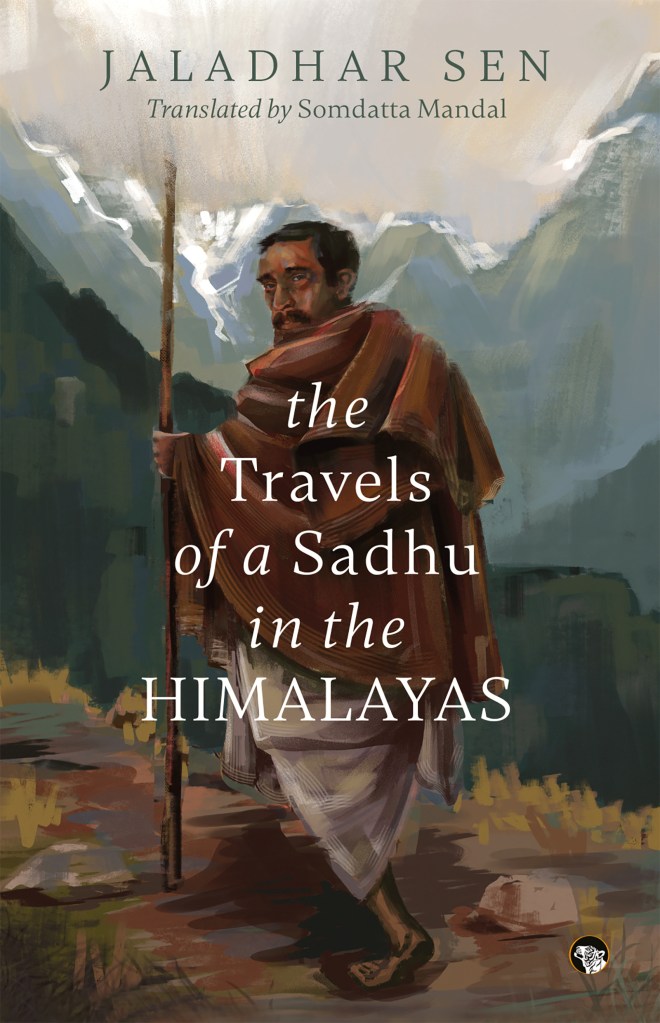
Categories
Nazrul Translations

Break All Shackles: Nazrul

Professor Fakrul Alam transcreates powerful lyrics by Kazi Nazrul Islam

From Public Domain

Smash the iron shackles of prisons.
Make them all disappear.
Free yourself from the shackle of worship.
Young ones—do what befits you best
Sounding horns signifying demolition,
Break through all Eastern ramparts.
Play music for the Supreme One.
Who’ll Lord over you? Dare to act kingly
Or threaten to punish you?
Who is truly free and really sovereign?
Ha, ha, ha! I feel like laughing.
Will God Himself wear a noose? Destroyer!
Who tipped the flame with such awful news?
Oh crazy, forgetful one, storm and rock prison bars.
Yank them with sudden force.
Pull, pull them with gale force.
Bear on your shoulder a kettle drum,
Beating it rhythmically, summon Death.
Let drumbeats bring it back to life!
Let’s see you shake the base of all forbidding prisons.
Kick them hard; break, break their locks.
Burn, burn all prisons and do away with them!
A rendition of the song in Bengali from Coke Studio, Bangladesh

Born in united Bengal, long before the Partition, Kazi Nazrul Islam (1899-1976) was known as the  Bidrohi Kobi, or “rebel poet”. Nazrul is now regarded as the national poet of Bangladesh though he continues a revered name in the Indian subcontinent. In addition to his prose and poetry, Nazrul wrote about 4000 songs

Fakrul Alam is an academic, translator and writer from Bangladesh. He has translated works of Jibonananda Das and Rabindranath Tagore into English and is the recipient of Bangla Academy Literary Award (2012) for translation and SAARC Literary Award (2012).

PLEASE NOTE: ARTICLES CAN ONLY BE REPRODUCED IN OTHER SITES WITH DUE ACKNOWLEDGEMENT TO BORDERLESS JOURNAL

Click here to access the Borderless anthology, Monalisa No Longer Smiles

Click here to access Monalisa No Longer Smiles on Amazon International