And so, I entered a household trembling with various emotional currents. Shivaji, incredulous that acquiescent Mini had actually contravened his order and brought a stranger’s child home, infuriated that there was nothing he could do about it short of leaving Mini or depositing me back from where I’d come (but where had this kid really come from?). Ratna, ecstatic over the drama, dancing on her toes in anticipation of phoning her masters in Calcutta to report that the child was indeed here and that they could hop into the Howrah Mail for Bombay as they had been waiting to do ever since the news of my adoption was broken to them. But also in Ratna, an incipient feeling of something when she saw my swaddled frame. Was it maternal instinct radiating from her dormant womb? Mini, awash with love for the child of a man she had been passionate about, thrilled at her own audacity and at finally having something in this relationship that she could control.
“You had two things in your favour,” Mini said. “As the offspring of a Parsi couple, there was no question of caste. Secondly, you’re fair. If you were dark-skinned, your dadu-thamma would’ve had an issue.”
In the two days it took the senior Debs to arrive from Calcutta, I had won Ratna over fully. She was prepared to mutiny against her masters if they tried to banish me, aligning with Mini for the first and only time. At last, Ratna could practice her vast knowledge of natal care lying untapped, and Mini let her, out of (a brief period of) gratitude. When I was constipated, which was often as an infant, Ratna would oil a betel leaf and lightly brush my disobedient sphincter with the suppository. When I had the runs, she would feed me a buttery mash of boiled potato and rice, the most effective jammer for a mischievous colon, rolled into spheres with fingers and palm and lined up like soldiers on my plate. She massaged my little body with mustard oil to get my circulation going and for a couple of years every day planted a black dot of kohl on my temple to ward off lurking evil eyes.
The Debs tried to persuade Mini to return me. How could she thrust a stranger’s child on their son, especially since she was the one with a bad uterus? At this point, Ratna, who had overheard the fights between Mini and Shivaji, privately told Shivaji’s mother that the problem was not with Mini but with Shivaji’s plumbing. The doctor had suggested the issue could have something to do with his weight. But Shivaji had accepted defeat immediately, refusing to exercise or diet. Her tactic had the desired effect. The Debs, feeling responsible for their son’s deleterious eating habits, backed off, going as far as to gently suggest to Shivaji that the child might repair his strained marriage. Back in Calcutta, when they told the rest of the family and friends about their adopted grandchild, they made themselves out to be progressive folk.
“Everyone there thinks you were their idea,” Mini said.
They stayed for three months. Initially, they viewed me with suspicion, the way you look at a bag that has been abandoned in the train, worried it might detonate. This was partly because I was obviously not a Deb. I was too good looking, with the milky skin, fleshy features and golden-brown ringlets of a cherub gambolling in the skies of an Italian fresco. But it didn’t take very long for them to warm to me and pitch in with their own ideas of child-rearing. They insisted my head be shaved at the age of two months as was customary. Mini was opposed but gave in since the Debs had accepted me. In place of my Botticellian curls, there grew limp, black hair.
“I cried when your head was shaved,” Mini said. “But those two were relieved to see your new hair because it made you look less foreign.”
What Mini hid from everyone, even prying Ratna, was a box of objects that came along with me. Burjor had wanted Mini to pass it on to me at an appropriate age. She gave it to me when I was eighteen, the day after my naïve confession about Danish Khan. Mini insisted I open the carton in her presence.
“I’d like some privacy,” I said.
“You’re such a coward you’ll put it away at the back
of your cupboard without looking if I leave you alone,”
she said.
“I might not be ready.”
“You’re eighteen, you’re ready.”
Excerpted from Half-Blood by Pronoti Datta. Published by Speaking Tiger Books, 2022.
ABOUT THE BOOK
‘You see, Moonie, I did a terrible thing for which I had to leave Bombay. I don’t want to burden you, in this letter, with the details of my deed—or my life. It’s a long story and I’m not a man of words.’
It is 2009, more than a decade after Maya read this intriguing letter addressed to her. The awkward, adopted child of an odd Bengali couple, she’s now a 34-year-old journalist in an existential mess that she alleviates by smoking pot and going on long walks with her latest boyfriend. But in order to find the meaning she craves, Maya must confront her past, and open a box of objects she inherited. When she finally does, she’s led on a startling, sparkling journey of discovery.
At the centre of this journey is Burjor Elavia, a ‘fifty-fifty’, an ‘Adhkachru’— the illegitimate child of a Parsi man and a tribal woman—born in a nondescript village in Gujarat. In 1952, not yet eighteen, he made his way to Bombay, where he lived a colourful life—promiscuous, reckless, involved in a string of shady businesses, but also compassionate and a charmer. His greatest achievement was an audacious venture for fifty-fifty Parsis like himself, many of them strugglers, some of them on the make and all of them eccentric. In their tangled, mixed-up, funny life stories, Maya tries to find her beginnings—and maybe her future.
Set in the teeming, varied universe that is Bombay, Half-Blood is an entertaining, full-blooded novel about dysfunctional families, plucky survivors, chancers, mavericks and good-hearted rogues. A celebration of vitality, impurity and other true virtues of life, it is a marvellous debut.
ABOUT THE AUTHOR
Pronoti Datta was a journalist for over thirteen years, covering culture and society in Bombay. This is her first novel and she draws much inspiration from the city. She lives in Bombay (minus cats or children) and works as an editor of digital content.
.
PLEASE NOTE: ARTICLES CAN ONLY BE REPRODUCED IN OTHER SITES WITH DUE ACKNOWLEDGEMENT TO BORDERLESS JOURNAL
Title: The Tombstone in My Garden: Stories From Nagaland
Author: Temsula Ao
Publisher: Speaking TigerBooks
The problem with any place that’s politically disturbed is that the rest of the aspects of the place – its culture, society, myths, beliefs – are obscured to outsiders. The place comes to be seen only through the prism of the disturbances and not savoured for its characteristics, its turmoils casting an impregnable shadow on its people, myths, its flora and fauna. Slowly even literature gets so obsessed with its ‘issues’ that it becomes difficult to find anything to read on the place which doesn’t talk about them or delves deeper.
Temsula Ao’s The Tombstone in My Garden cuts through that roughage and takes its readers to the soul of Nagaland – to its villages, tribal myths, social practices that have been woven into five short stories that light a torch into every aspect of society in Nagaland. Without the pretence of being a social observer or commentator, the narratives unfold with the unobtrusiveness of a storyteller who doesn’t highlight social practices judgementally but as ordinary things — unworthy of special attention. The perniciousness can be felt only after they arrive at their narrative outcomes.
A very significant voice from Nagaland and contemporary Indian literature, Temsula Ao, has won several prestigious awards including the Padma Shri in 2007 and the Nagaland Governors’ Award for Distinction in Literature in 2009. Her Laburnum for My Head, a collection of short stories, won her the Sahitya Academy Award in 2013.
The opening story, ‘The Platform’, takes us into the world of Nandu, a Bihari migrant to Nagaland who earns his living working as a coolie in Dimapur railway station. Promoted to become a senior among other porters for his hard work and his knowledge of various languages, including Nagamese, one day Nandu picks up an abandoned Muslim boy from the platform. He, slowly, develops paternal feelings for the waif despite a constant tension between the two due to their religious differences.
But life in a railway station is hardly far from the lives who make a living from vices. As the boy grows up, he falls into the company of Shankar, a pimp. One day a fight breaks out between the boy and Shankar over a prostitute – and it ends in the boy’s carefully guarded religious identity getting exposed. The next day Nandu sees a crowd in the platform. He goes to find out what it’s about – and finds the boy dead.
‘Snow-Green’, the third story in the collection, is thematically an open-ended story – where enthusiasts of many stripes will find something for them. The fate of the self-centred mistress will warm the cockles of the environmentalist’s heart. When Snow-Green’s trauma starts, the climate enthusiast will feel vindicated about his convictions about human treatment of nature being responsible for our current climate-induced miseries. The turn of the events at the end is impressive.
In the ‘Saga of a Cloth’, when a brawl becomes the last straw, leading the village Council to expel Imlijongshi from the village, you will feel a bit vindicated: Imlijongshi, the self-destructive fool has finally got what he deserved. However, when the story makes a complete U-turn after that, you will feel you should have held back your judgement.
“In a small voice almost breaking with grief and perhaps regrets too, Otsu addressed the departing figure, ‘Jongshi, wait, I have something important to tell you which you must know; do not leave me to die alone with this secret’.”
This passage brimming with suspense is almost a start to another story retreating three generations, to a different time and space, when Otsu was a young girl dating Imdong and being stalked by Lolen unaware of what the future held in store. By the time the narrative descends three generations and returns to Imlijongshi, your feelings about the boy, his fate, his grandmother and the whole business of life — will be much more introspective, much more nuanced, much less stereotypical.
‘The Tombstone in my Garden’, the title story of the collection, has some similarities with ‘The Saga of Cloth’. Both are long stories spanning generations; both have a woman at the centre suffering because of marriages to men they hadn’t intended to marry. But there the similarities end. Whereas ‘The Saga of Cloth’ has a rural, rustic setting, ‘The Tombstone in my Garden’ has an urban setting. Whereas Otsu is rooted in Naga traditions, Lily Anne is just the opposite, an Anglo Indian who deals with jibes about her dual cultural identity her whole life. But that is just one aspect of ‘The Tombstone in my Garden’.
A first-person narrative, the story starts on a suspenseful note, an old lady explaining her relationship with a tombstone, the graveyard of her husband, in her garden. Using the tombstone as a starting point, she slowly meanders into her story. The reader is kept guessing till her narrative is complete. The story has a feminist touch.
The stories in The Tombstone in My Garden may be short but they are very unlike short stories. They don’t rely on snappy twists in the tale to keep them going. Instead the plots move at an unhurried speed, one subplot making way for another seamlessly and gracefully. For instance, the impact of Lolen’s contempt for Otsu’s life riles not so much while reading of the deeds, their immediacy and narrative pace preoccupying the reader, but impacts when Otsu’s entire later life seems mangled by Lolen’s intemperate actions. Similarly, the reader is miffed not so much by the supercilious indifference of the mistress to the Snow-Green, a flowering plant of rare beauty but how a shallow human need of the mistress — her desire to win the first prize in the annual flower show — towers over the most existential concerns of the flowering plant.
You may argue this is the nature of all narratives – to take you to extraordinary outcomes through seemingly ordinary occurrences – but where Tombstone In My Garden differs is that it acquaints with the ‘ordinary’ things about a place where we have come to believe the ordinary is always in short supply.
At the end, almost all the stories have clearly demarcated epilogues narrating the later fates of the characters. This helps remove the conclusions from the immediacy of the preceding story leaving the reader ruminating with the advantage of hindsight and a melancholic feeling, like an aftertaste of a novel.
As time goes short stories are moving away from their parental identity – the novel. They are getting shorter all the time and are being seen as tools for instant gratification. The current song and dance over flash fiction is an example. Temsula Ao’s collection of short stories makes the reverse journey, taking the short story back to its parental origin – the novel.
.
Indrasish Banerjee has been writing and publishing his works for quite some time. He has published in Indian dailies like Hindustan Times and Pioneer, and Café Dissensus, a literary magazine. Indrasish is also a book reviewer with Readsy Discovery. Indrasish stays and works in Bangalore, India.
.
PLEASE NOTE: ARTICLES CAN ONLY BE REPRODUCED IN OTHER SITES WITH DUE ACKNOWLEDGEMENT TO BORDERLESS JOURNAL
‘Why does education in love not feature in today’s curriculum?’
— Mahasweta Devi, Our Santiniketan(Translated by Radha Chakravarty, 2022, Seagull Books)
As the world celebrates Valentine’s Day, one pauses to think how far commercialisation has seeped in over time that the very concept of a tender emotion was questioned by Tina Turner in a song called, “What’s love got to do with it” nearly four decades ago.
This was written even before Mahasweta Devi (1926-2016) published a nostalgic memoir of 1930’s Santiniketan in Bengali in 2001. She raised her pen to ask the very pertinent question that is quoted above. Why is education in love not a part of our curriculum anymore? She was reminiscing about her days in Santiniketan where children were brought up with rigorous academics while discipline was coloured with love and affection. They nurtured a love for nature in students too. This has become a rarity for many and perhaps needs to be revived as the Earth struggles to continue habitable for humankind. In the process of educating students to love and give, Santiniketan threw up many greats like the writer herself. We are delighted to host an excerpt from the start of Our Santiniketan translated beautifully by Radha Chakravarty.
Santiniketan was only the very visible part of a huge project taken on by Tagore (1861-1941). The other part now united with Santiniketan under the banner of Visva Bharati University is Sriniketan, a group of villages where Tagore experimented with raising consciousness and standards of villagers to integrate them into a larger world. He brought in new techniques in agriculture and crafts into the villages under this programme involving many prominent scientists, artists and humanists. And the project has blossomed. Did you know Tagore thought of himself as an NGO and his ‘life work’ he felt was developing villages (Sriniketan) and educating young minds to build a world where borders of knowledge, poverty and ignorance could be smoothened?
He wrote: “I alone cannot take responsibility for the whole of India. But even if two or three villages can be freed from the shackles of helplessness and ignorance, an ideal for the whole of India would be established.
“Fulfill this ideal in a few villages only, and I will say that these few villages are my India. And only if that is done, will India be truly ours.”
All this can be found in a book called A History of Sriniketan (Niyogi Books), written by Uma Das Gupta, a major authority on Tagore who moved from Oxford to Santiniketan and made Tagore’s work in these two institutions her own life’s work. We have featured her and her book in our interview/review section.
Raised out of such ashes of poverty that Tagore sought to dispel, are youngsters from the village of Nithari, where ceaseless efforts by volunteers of organisations like Saksham and pandies’ has given a new lease for life to those who have been exposed to violations, violence, divides, poverty and deprivation. One of them, Sharad Kumar, now studying to be an engineer, kicks off our new section called Pandies’ Corner with his story in Hindustani translated by a volunteer, Grace M Sukanya. His story learns from history and shows rather than tells.
A similar approach to view the present through lenses focussed on the past at a much grander scale has been taken by Shazi Zaman, an author and journalist, who has stepped into the Anglophone world with the transcreation of his own novel from Hindi to English, Akbar, A Novel of History (Speaking Tiger Books). He has brought to the fore how in days when sectarian violence based on religions killed, Akbar (1542-1605) tried to create a new path that would lead to peace so that he could rule over an empire united by administration and not broken by contentious religious animosities which often led to wars. In his interview, he tells us of the relevance of the Great Mughal in a period of history that was torn by divides, divisions so deep that they continue to smoulder to this day and date. That history repeats itself is evident though our living standards seem to improve over time. Bhaskar Parichha’s review of Growing up Jewish in India: Synagogues, Customs, and Communities from the Bene Israel to the Art of Siona Benjamin, edited by Ori Z. Soltes, also reinforces these divides and amalgamations in the modern context. The other books that have been reviewed include The Best of Travel Writing of Dom Moraes: Under Something of a Cloudby Indrashish Banerjee, and Gracy Samjetsabam has introduced us to an intriguing murder mystery in Masala and Murder by Patrick Lyons.
Translations have thrown up interesting colours this time with a Tamil story by a Sahitya Akademi winning writer, S Ramakrishnan, translated on our pages by B Chandramouli, one from Korean by Ihlwha Choi and of course a transcreation of Tagore’s songs where he sings of the meeting of horizons. A beautiful poem by eminent Balochi poet Atta Shad (1939-1997) has been translated by Fazal Baloch. We are again privileged to host an original translation of Jibananda Das(1899-1954) by Professor Fakrul Alam. We also managed to get permission to share some of Professor Alam’s fabulous translations of Jibananada Das from UPL (United Press Limited) and are starting it out by excerpting two of his poems on Banalata Sen, which were till now restricted to readership who only had access to the hardcopy. Rakibul Hasan Khan has given us an essay on these translations. An interesting essay on Satyajit Ray (1921-1992) by Rebanata Gupta and personalised tribute to the first Booker Prize winner from New Zealand, Keri Hulme (1947-2021), by Keith Lyons, who had many non-literary encounters with the sequestered author, add to the richness of our oeuvre.
Ratnottama Sengupta has also paid a moving tribute to the music legend, Lata Mangeshkar, who died at the age of 92 on 6th February, 2022. The choral symphony of multiple voices that hums through the paean recreating the larger than life presence of Lata reinforces that her lilting voice will stay embedded in many hearts and lives forever. Her perfect honing of musical skills delivered with the right emotions make her an epitome of human excellence. She gave the best of herself to the world.
Wrapped in more dry humour is Devraj Singh Kalsinarrative on why he does not want pets. Meredith Stephens, on the contrary loves pets and sails the seas of West Australia with her camera, words, seals and dolphins. Luke PG Draper also speaks for animals — for the intrusion of pollutants that harm creatures like whales in his short story. Hop all over the world with Ravi Shankar breaking nightly fasts with food from different cultures. More colour is brought in by Suzanne Kamata who starts a new column, Notes from Japan — introducing us to Japanese sensation, Masaki Nakagawa, who has sung his way to hearts with Lativian songs that he loves, so much so that he got to perform at the Japanese coronation and has pictures with the Latvian President.
The time has come to let you discover the mysterious pieces that have not been mentioned here in the February edition — and there are many.
Before I wind up till the next month, I would like to thank our fabulous team who make this journal possible. Keith Lyons has now become part of that team and has graciously joined our editorial board. Sohana Manzoor and Sybil Pretious deserve a special kudos for their fabulous artwork. Our grateful, heartfelt thanks to all our wonderful contributors and readers who keep the journal alive.
In Conversation with Shazi Zaman, author of Akbar: A Novel of History, published by Speaking Tiger Books
“I profess the religion of love, and whatever direction
Its steed may take, Love is my religion and my faith.”
— Ibn-i-Arabi (1165-1240), Akbar: A Novel of History by Shazi Zaman
These lines were written by a mystic from Spain who influenced Emperor Akbar (1542-1605), a ruler who impacted the world with his broad outlook. Based on such ideology as preached by Ibn-i-Arabi more than three hundred years before him, with an urge to transcend differences and unite a world torn by strife, the great Mughal founded his own system of beliefs. He had few followers. But Akbar chose to be secular and not to impose his beliefs on courtiers, many of whom continued to follow the pre-existing religions. He tried to find tolerance in the hearts of practitioners of different faiths so that they would respect each other’s beliefs and live in harmony, allowing him to rule impartially.
Akbar is reported to have said: “We perceive that there are varying customs and beliefs of varying religious paths. For the teachings of the Hindus, the Muslims, the Parsis, the Jews and the Christians are all different. But the followers of each religion regard the institutions of their own religion as better than those of any other. Not only so, but they strive to convert the rest to their own way of belief. If these refuse to be converted, they not only despise them, but also regard them for this very reason as their enemies. And this causes me to feel many serious doubts. Wherefore I desire that on appointed days the books of all the religious laws be brought forward, and that the doctors meet together and hold discussions, so that I may hear them, and that each one may determine which is the truest and the mightiest religion.” Of such discussions and ideals was born Akbar’s new faith, Din-i-ilahi.
Was it exactly like this? Were these Akbar’s exact words?
They have been put in perspective by an author and a journalist who has written a novel based on his research on the grand Mughal, Shazi Zaman. He tells us in the interview why he opted to create a man out of Akbar rather than a historical emperor based only on facts. He has even mentioned that Akbar might have been dyslexic in the introduction. But Zaman’s admiration for the character he has recreated for us overflows and floods the reader with enthusiasm for this legendary Mughal. Akbar is depicted as a man who was far ahead of his times. He talked of syncretism and secularism in a world where even factions within the same religion were killing each other.
Akbar by Shazi Zaman in Hindi
The novel was first written and published in Hindi in 2017 by the bilingual Zaman, who started his three-decade-long career in broadcast journalism at Doordarshan and has since, worked with several media organisations. Zaman trans created his Hindi novel on Akbar to English to reach out to a broader audience. The whole experience has been a heady one for Zaman as the interview shows but for the reader what is it like? To start with one felt like the Connecticut Yankee in King Arthur’s court, except one was flitting around in the Indian subcontinent of the sixteenth century, with a few incursions to the Middle-East, but mostly within India. Transported to a different age, it takes a while to get one’s bearings. Once that is established, the novel is a compelling read.
The first part deals with Akbar’s developmental years and the second part with his spiritual outlook which helped him create an empire with many colours of people and religions. This is a novel that has been written differently from other historical novels, like Aruna Chakravarti’sJorasanko (2013), for the simple reason that it belongs to a different time and ethos which was farther from our own or Tagore’s times. Akbar has a larger tapestry of people across a broader canvas than Jorasanko and it takes time to grasp the complexities of relationships and interactions. The other recent non-fiction which springs to the mind while reading Akbar is Avik Chanda’sDara Shukoh: The Man Who would be King (2019) about the great grandson of the emperor who lived from 1615-1659. Again, this was a narrative closer to our times and was not a novel, but a creative non-fiction based strongly on history. While Dara’s character painted by Chanda showed weaknesses like an inability to respect the nobility or plan wars, Akbar painted by Zaman is kind but a man of action who ruled and intended to rule well. A leader — one has to remember — is not always the most popular man. Nor was Akbar with his eccentricities and erudition despite his inability to read — the book does tell us why he did not learn to read and how he educated himself. Most of the novel is a work of passion based on extensive research over two decades. As Henry Kissinger had said at a much later date, “The task of the leader is to get their people from where they are to where they have not been.” And the Akbar recreated by Zaman does just that.
Shazi Zaman
Zaman who had been with the ABP (Anand Bazar Patrika) News Network as their Group Editor, was on the governing bodies of the Film and Television Institute of India, Pune, and the Indian Institute of Mass Communication, Delhi. He has worked with Aaj Tak, Zee News, Star News and also with the BBC World Service, London. He has served as the Director, Video Services of the Press Trust of India. Akbar is his third novel. He has authored two novels in Hindi earlier. In Akbar: A Novel of History (2021), Zaman with his journalistic background and his love for literature inherited from his novelist father, Khwaja Badiuzzaman, has done the mammoth task of astutely bringing to life a character who might have been a perfect solution to the leadership crisis that many are facing in the current day.
If you are still wondering how close this novel comes to the Bollywood movie called Jodha Akbar (2008), the major things in common were the grand Mughal’s sense of justice and his ability to tame wild elephants! For a deeper understanding of both the emperor and the book, in this exclusive, Zaman tells us what went into the making of this novel and his journey.
Why did you choose to write of Akbar?
One has to have a bit of Akbar inside oneself to write on him—and to read about him as well. Writing on Akbar was not a conscious decision. By the time I realised that I was going to write a novel of history on Akbar, my sub-conscious was miles ahead. Of course his personality had attributes that appealed to me consciously and sub-consciously, especially his belief in primacy of ‘aql’ (reason) over ‘naql’ (blind imitation of tradition) and his ability to question all orthodoxies.
Do you think Akbar is relevant in the current context?
I believe that his message is so ennobling that it transcends the boundaries of space and time. Across ages and across geographies, and within a geography by various groups and communities, his memory has been kept alive.
There was a book a few years ago called Dara Shukoh: The Man who would be King. Would you say he would be more relevant for our times than Akbar or is Akbar a better choice?
It is difficult to give them a comparative score. Dara could have been a very worthy successor to Akbar. And his initiatives and writings are really inspiring. Robustness of ideas and your resolve to push them are tested when faced with exigencies of statecraft. Sadly, Dara did not get that chance and Akbar did. I find that Akbar could navigate but sometimes be audacious to the extent that his courtier poet-musician Tansen had to caution, ‘dheere dheere dheere man, dheere hi sab kachhu hoye (Slowly, slowly, slowly, all happens at a slow pace)’.How would Dara have navigated while on throne is an unanswered question in Indian history. Having said this, his defeat in the battle of succession should not undermine the originality of his initiatives.
Why did you choose to write this in a novel form? Dara Shukoh was a non-fiction. Have you introduced fiction into this?
History largely tells us what happened. Most often it does not tell us of the state of mind that brought people to the point where we find them take momentous decisions. I think momentous events or actions are rooted in mental journeys. And these journeys are seldom documented. When Akbar faced a mental crisis—‘haalat-i-ajeeb’ (a strange state) as a contemporary called it— in the summer of 1578 on the banks of the river Jhelum, one wants to map what was happening in his mind and what had brought him to that point.
What lay behind the agitation of this man who was one of the mightiest emperors of the world, who had never lost a battle and was at the peak of his power ? Were there some forces testing his patience ? Or as he stood at a place linked to the history of his forefathers, did he wonder about the trauma they had faced ? Or when he dealt a physical blow to a top cleric of yester years, there must have been a mental journey preceding this act. One can try and go into a person’s mind by closely studying his actions and utterances as also that of people and texts that influence him. We all know that people often mean much more than what they choose to say and sometimes, they say one thing and mean the other.
A close examination of this maze can give a glimpse of what was happening inside the great mind. As you try to create a period piece around his state of mind you mine information from all available sources—textual, aural, visual, architectural. For me fidelity to known facts is essential even in historical fiction. But there does come a point when the trail goes cold. Even the best documentary evidence might be insufficient in finding all the pieces of the period piece. For example, we do not know what Akbar was wearing the night he experienced the ‘haalat-i-ajeeb‘ but we have a Mughal miniature in all likelihood of the next morning when Akbar takes an unexpected decision about the great game. Now, it has come down to us that he appeared wearing last night’s clothes. So we know what he was probably wearing at the time he was in ‘haalat-i-ajeeb’ of the previous day. Or we do not know the details of the carpet of the room where he lay dying. Nobody recorded that. Thankfully, some details have come down to us of carpets of those times. I have chosen to use them. After exhausting all means of finding the right pieces of this period piece, I have exercised my imagination. So this is fiction very much rooted in history. If I have been able to do what I had intended, you would feel you have read his mind as also feel that you are actually standing backstage in the Akbarian arena.
In the debate I often encounter about the element of history in historical fiction, perhaps we miss a basic point. Most fiction has history in it. Some have history that is known. Some have history that is personal or unique to the author. It is only when known history figures in your work that the issue of reality versus fiction surfaces. Otherwise, this mingling is not questioned.
What was the kind of research you did? How long did it take you to research and write this book? Tell us about its evolution.
The idea had been simmering under the surface since early years. As I have mentioned in my preface, a childhood incident imprinted Akbar on my mind. During my school days, a member of the education department of the government made a surprise inspection and gave a short introduction to Akbar’s life and his relevance to our times. It left a mark. I was especially blessed to have teachers who stoked my interest. I shall be eternally grateful to my teacher Muhammad Amin–Amin Saheb as he was called at St.Stephen’s College (Delhi University) — to have brought history to life in classroom and sessions outside classroom. Amin Saheb taught us Akbar’s ‘sulh-i-kul’ , which he said stands not for tolerance or co-existence because even these terms denote some separation. He said, Akbar’s ‘sulh-i-kul’ meant harmony. Amin Saheb taught us about Akbar’s desire to build bridges and his respect for diversity. Many like me graduated from the university but never left his class. I feel privileged that for quarter of a century after leaving College I continued to sit at his feet and learn about Akbar. A good teacher teaches and also shows the path to further learning.
My interest in Mughal miniatures took me to various museums within the country and abroad and of course to places like Fatehpur Sikri–a city that Akbar created with a purpose– very often. Over decades I have gathered in my personal collection most of what has been written about Akbar and almost all books published on his art and architecture. I can say that all published Mughal miniatures reside in my study now. So Akbar was a character I had been breathing much before it became the idea of a novel. However, for a period spread over two decades I did consciously try to piece together a story.
How did you create the character of Akbar ?
Akbar was not merely a historical figure. He was also acutely conscious that he was making history. And as a person conscious of this, he left ample footprints.
When you try to get into a person’s mind you piece together all he saw and read (or in case of Akbar, was read to) and experienced; all he interacted with; all he surrounded himself with; all he spoke and wanted to be spoken, read and spread; and all that he created. Foremost, of course, is Akbarnama which was a monumental image building exercise entrusted to a close and trusted courtier, Abul Fazl. Abul Fazl knew what went on in Akbar’s mind. This work is rich in details and is a comprehensive history of Akbar and his forefathers. Akbar also commissioned others who knew his forefathers to write histories that would help Abul Fazl in his work. Akbarnama is an official account. It was vetted by Akbar and tells us how Akbar wanted to be seen by his contemporaries and by future generations. It is extremely useful in giving us the image the emperor aimed to project.
Then there were many others who wrote their histories during his reign. But it is the history called Muntakhab-ut-Tawarikh by a disgruntled cleric, Mulla Abdul Qadir Badayuni, which was written secretly that gives us an unofficial perspective. I am grateful to the anonymous author of the historic Rajasthani work, Dalpat Vilas, for giving an informal and unique access into the emperor’s mind. Anybody studying Akbar feels especially grateful for the elaborate atelier —tasveer khana — as it was called — that the emperor established. Paintings made under his direction and patronage give us a vivid picture of what he thought was worth projecting. If you look closely, Mughal miniatures of his time often have a story and even a back story that gives you an indication of the emperor’s mind.
Akbar built at a huge scale and many of his buildings still stand tall and the stones speak even now of why he gave them the shape that he did. Then of course are works related to his ancestors like Baburnama which Akbar was fond of and later, of his son’s Tuzuk-i-Jahangiri. Akbar’s public contact and communication was prolific. We might well have seen him if we were living in that age. He travelled and interacted widely.
Almost every morning of his half a century long reign he appeared at the balcony so that the subjects could see him. Even those who did not see him felt his presence. Banarsidas, a trader of his time, who also wrote a chronicle, notes the widespread alarm amongst common people when the emperor fell ill. Letters Jalaluddin Muhammad Akbar wrote to Uzbek and Persian kings, the emperor of Spain and Portugal, to nobles and others have been handed down to us. His interactions with religious persons find mention in Vaishnavite, Jain and Mahdawi literature. The letters that Jesuits at his court were writing to their superiors are useful for their perspective as also for the ‘unofficial’ details. Then there were personalities Akbar drew to his court who were poets, warriors, administrators and diplomats who were themselves eminent enough to be written about, or were writers themselves. I closely studied them.
Abdur Rahim Khan-i-khanan was like a son to Akbar and wrote poetry that is timeless in its appeal. Tansen, an eminent poet and musician at his court wrote ‘takhat baitho Mahabali ishvar hoye avtar (the mighty Emperor sits on the throne as incarnation of God)’, which is how Akbar would have wanted to be described. Works written on Raja Mansingh like Mancharit and Mancharitra Raso helped me understand a mighty noble, who again was like a son—‘farzand’—to Akbar. Akbar himself is believed to have been a poet and pieces of poetry deemed to be his have come down to us. His memory resonates even now in folk songs.
In terms of material evidence of personal effects, we have an armour of Akbar which was helpful in ascertaining his approximate height. Of course, this was achieved with the help of experts. Not all that one gathered necessarily went into this work but I tried to gather as much as I could so as to know how Akbar lived, ate, slept, worked, played, deliberated, relaxed, fought and thought and what was the world he inhabited, and also what was the kind of world he wanted to inhabit.
I must say that I tried to access original sources in Persian, Sanskrit and other languages with the help of experts, in addition to what I could read myself in English, Hindi and Urdu.
In your introduction you have said Akbar might have been dyslexic or bipolar. Why? What made you think he might have been dyslexic or bipolar? Could it not be that as a child he was not just into books and therefore did not learn to read?
There has been some academic work on some of the issues Akbar faced. I think his behaviour on the full moon night of the year 1578 on the banks of the river Jhelum and on occasions before that definitely call for more investigations in that direction, though one is conscious that the emperor himself is not available for close examination. As for dyslexia specifically, one can say that the man loved books. He commissioned and collected them at a huge scale but he did not read them. They were read out to him. Historical sources indicate that he could not read or write. Though I have seen copies of his handwriting, they seem laboured. It would be a fair assumption that he was dyslexic. I think he was a great visual learner. That is why no Mughal emperor before or after had as big a tasveer khana as him.
You have repeated this phrase thrice in the book. ‘Hindus should eat beef, Muslims should eat pork, and if not this, fry a sheep in the pan. If it turns into pork, Hindus and Muslims should have it together. If it turns into beef, Hindus and Muslims should have it together. If it becomes pork, Muslims should have it. If it becomes beef, Hindus should have it. A divine miracle would thus happen.’ Why?
More than one account reveal puzzling behaviour and utterances of the emperor. This forced one person to say that this was ‘haalat-i-ajeeb’. Nobody at that time could fully understand his state or his words. I feel that it was reflective of his anguish over religious disputes and religious orthodoxy. An emperor who had never lost a contest was getting impatient. In moments of mental crisis it is possible for a person to say things which have layers of meaning. One has to peep underneath the words to fathom the anguish of a sensitive mind. This was one such utterance.
What is the most endearing quality you found in Akbar? And why?
It is difficult to pinpoint one in a person who embodied numerous qualities. His belief in giving precedence to ‘aql’ (reason) over ‘naql’ (blind adherence to tradition). His spirit of enquiry and his desire to provide space for differing thoughts. He believed—“It is my duty to have good understanding with all men. If they walk in the way of God’s will, interference with them would be in itself reprehensible; and if otherwise, they are under the malady of ignorance and deserve my compassion.”
There is an incident mentioned in the book. The Jesuits who came with the intention of converting Akbar finally despaired because he would give them ample space and ample attention but stop short of conversion. So one evening, they came and sought leave since their embassy had failed in its purpose. Jalaluddin Muhammad Akbar replied, “…how can you say that the time you have spent with us has been profitless, seeing that formerly the Muslims had so much credit in my land that if any had dared to say that Jesus Christ was the true God, he would straightway have been put to death; whereas you are now able to say this, and to preach the same in all security ?”
You wrote the novel first in Hindi and then trans created it to English. Why? What is the difference between the Hindi and the English versions?
The novel Akbar naturally came to my mind in Hindi, a language the emperor would have been comfortable with had he been alive. Having said this, I am grateful to my publishers, Rajkamal and Speaking Tiger, for initiating the idea of an English version. And I did immediately see the need to take Akbar to a wider audience because the novel has an idiom and language rooted in Hindustan but Akbarian thought and vision have an appeal that is wider than the regions he ruled. So the challenge was to take the text, sub-text and the idiom to an English audience. The challenge was also to make Akbar’s 16th century intelligible to 21st century English-speaking world. I have tried my best with help of editors at Speaking Tiger to make it a work English speakers would be at home with. I am sure they would be able to savour the milieu, the plot and the sensibility of 16th century Hindustan in their preferred language. A good translation should in fact be a trans creation and should read like it has been written in the same language.
You have two novels in Hindi. Do you plan to translate those too to English? Why? Why not write directly in English?
I believe that no thought is completely translatable into words and no words are completely translatable into another set of words. Thus the word transcreation. The first two novels Premgali Ati Sankri (The Narrow Alley of Love) and Jism Jism Ke Log (Various Bodies) have intense conversation between characters which is rooted in their shared understanding of an idiom. Translation is desirable and relatable because stories strike a chord across space but works have texts, sub-text and idiom. The problem and the challenge lies in taking the sub-text and the idiom into another language. That is why trans creation requires a deep understanding of the text, the sub-text and the idiom of the original work as also of the sensibilities of the audience for whom you are trans creating. Having said this, I would be happy to translate the first two novels for an English readership. The theme would strike a chord, the idiom would need some fine work.
Will you shuttle between English and Hindi in the future? Are you planning more books?
Shuttling between Hindi and English is an interesting thought. I am already seized by an idea that came to my mind as an English text. It is germinating. As for more books, I have already sent a Hindi novelet for publication which could be thematically seen as third in series after Premgali Ati Sankri and Jism Jism Ke Log. While telling stories to my children, and making them up as I went along, I created a short novel for children which awaits publication. I am also in the process of writing another novel in the genre of historical fiction.
Thank you for your time.
This is an online interview conducted on behalf of Borderless Journal by Mitali Chakravarty.
Title: The Best of Travel Writing of Dom Moraes: Under Something of a Cloud
Author: Dom Moraes
Publisher: Speaking Tiger Books
Travel books that I have read so far, broadly fall into two categories. One is investigative and the other is a spontaneous account of the author’s experience. If one is analytical, the other is immediate. It’s not necessary that the two styles can’t be combined. V.S Naipaul’s A Million Mutinies Now(1990) is a good example of that: a mix of investigation of a place’s past and present through ordinary people’s lives combined with day-to-day travel details. Bill Bryson’s Travels in Small-Town America (1989) is about Bryson’s experience of visiting the towns of America with occasional dosage of nostalgia.
The Best of Travel Writingof Dom Moraes: Under Something of a Cloud falls into the second category – a spontaneous account of events as seen by the author. However, where it’s different from travel books in general (and the ones mentioned above) is that it doesn’t stick to a singular theme. A collection of essays, some autobiographical, some reports, the book takes the reader through a kaleidoscopic journey spanning continents, lives and topics ranging from when the author takes his first steps into the world of writing as a child to the time he is a mature travelling journalist covering topics as diverse as Suharto’s rule in Indonesia to dacoits in India.
If you are familiar with Dom Moraes ((1938-2004) as a poet, novelist and columnist, you will not be surprised by the sheer finesse of writing you encounter as you move from one essay to another, although you may have your own favourites. Regarded as one of the giants of Indian English literature, Moraes won the prestigious Hawthornden Prize when he was just 20 followed by Sahitya Academy Award and a series of other literary awards in England, America and India.
The book starts with an introduction by Sarayu Srivastava recounting the last days of Moreas with detours to his past. The introduction has a morbid element to it, as did Moraes’s life. But, surprisingly, the morbid mood the introduction sets, vaporises in the pieces that follow.
The first two travel pieces are purely autobiographical. ‘His Father’s Son’ (1945) recollects the carefree childhood days of Dom Moraes in Ceylon (now Sri Lanka) where is father, a reporter with Times of India, was posted. There is a strong visual element to how the natural world of these places has been described. Anecdotes about a child – Moraes – discovering this natural world slowly almost reads like the formative pages of a novel. In ‘Figures in the Landscape’ (1955) Moraes is equally carefree, if a little awkward, going through a range of experiences, some writerly, others potentially amorous, in that global capital of arts, artists and sensuality, Paris.
But there is a tragic and frightening aspect to the pieces, too, which appears and retreats only to reappear as if to remind you that life is not just about gambolling. That aspect is the gradual mental deterioration of Dom Moreas’s mother who was given to violence. Her fits of violence form a recurrent theme until she leaves Ceylon and returns to Bombay to stay with her relatives. But even after she departs, her presence constantly lurks in the background. And when she does reappear, either actually or via recollection, the atmosphere of the essay instantly changes.
She, although absent from many other pieces in the collection, casts a shadow on her son such that some of the actions of the son, particularly his introverted and melancholic personality, seem to be coloured by his mother’s tragedy. One can sense in later essays where the author has grown up, how the derangement of the mother would have affected the son. That almost becomes a subterranean subtheme.
The following opening passage of ‘The Chinese at the Doorstep’ is a case in point.
“One recalled the oddest things: I remember a toy-shop in a Knightsbridge arcade where I used to go when very unhappy, during my first days in London, in order to buy small delicate glass toys which I later smashed, one by one, in the fireplace of my flat, with a malediction against anything beautiful.”
Moraes had a complex relationship with his mother. And in the essays that are a throwback to his childhood days, you meet a helpless child unable to make up his mind whether he loves his mother for who she is, or is indifferent to her — seeing her from a distance with a sense of fright and awe.
As the book progresses, the world of Moraes opens up further. ‘The Chinese at the Doorstep’ (1959) is about a sudden journey to Sikkim and surrounding places. There is a tension in the place that it’s abuzz with Chinese spies, and that China is engaged in incursions and military build-up in the Indian border states. The year is 1959 and developments are admittedly a precursor to the things to come in 1962. Written more than half a century ago, the essay reads disturbingly current. The essay’s narrative is much tauter, almost like a spy thriller, than the other essays.
Since the global brouhaha about climate change is not older than roughly a decade and half, we tend to locate all climate disasters to recent times, having settled into the belief that the past generations were coexisting with nature in peace and harmony. However, the subcontinent has always been home to extreme climate events going back to the 18th century.
“Geography as well as history has always been linked to East Pakistan.” When I read this sentence, the first sentence in ‘Death by Water’ (1970), I thought I was in for an account of the atrocities on the Hindu population of East Pakistan during that period but was surprised to find an extremely well-informed report on a cyclone which had hit the region in 1970. The sea level had risen to a great height creating a ‘water wall’, according to eyewitnesses, which had then crashed on the land raging inland with a monster force and then stopping and moving back into the sea. The next day when helicopters were sent to survey the damage, bodies of humans and cattle were found floating in the sea, river and crevices.
In ‘Dispatches from Indonesia’ (1972), Moraes visits a country under the tyrannical rule of General Suharto. The dictator had come to power seven years before his visit through a military coup, and immediately after, there was a crackdown on the intelligentsia. Some were executed and some sent to prison camps. Moraes travels to one such prison camp outside the city and meets two famous prisoners, Suprapto (Soeprapto), the former Attorney General, and Pramudja (Pramudya Ananta Tur), a famous writer. Their lives are a reflection of the losses and tragedies the critics of the regime suffered.
In ‘The Company of Dacoits’ (1981), Moraes withdraws from the world of dictators and devastating floods and enters the rugged terrain of dacoits. We meet Lajjaram, who is dead and whose body is being constantly mishandled by the police, and Lakshman Singh Rathore, alias Lachhi, an eighteen-year-old boy who was thrust into dacoity by his circumstances, first to seek help to avenge his father being deceived, and then to pay for the help received by becoming a fulltime bandit. The rest of the essay is about Lachhi trying to get himself acquitted of the crimes committed by other dacoits in his group.
Likewise, the other pieces also deal with human conditions in varied settings.
The essays are undoubtedly dated, but the subjects they deal with brim with recency: human disaster, tyrannical govt, national expansionism, inaccessibility of justice. Over a period of time, these subjects, of course, have acquired a new lexicon: territorial conflict, climate change, human right excesses and so on.
The collective time span of the pieces is almost 60 years. Dom Moraes’s gaze is that of a writer, rather than of a journalist, always looking out for human tragedies, helplessness and intricacies within bigger narratives of climate disaster, military coups and national conflicts.
.
Indrasish Banerjee has been writing and publishing his works for quite some time. He has published in Indian dailies like Hindustan Times and Pioneer, and Café Dissensus, a literary magazine. Indrasish is also a book reviewer with Readsy Discovery. Indrasish stays and works in Bangalore, India.
.
PLEASE NOTE: ARTICLES CAN ONLY BE REPRODUCED IN OTHER SITES WITH DUE ACKNOWLEDGEMENT TO BORDERLESS JOURNAL
Now people began to hear of Badshah Salamat’s close links with the region of Braj. His visit was described in a dhrupad —
Shah Chhatrapati Akbar visits the Braj region,
Kings of the seven islands, nine regions and ten directions tremble.
Cavalry, infantry, elephants, and brave warriors,
With bows, arrows, swords and spears.
Not one blot on the clothes of Humayun’s son,
How formidable was the army of Jalaluddin Muhammad.
The region of Braj was not far from Fatehpur Sikri. It is said that Badshah Salamat, having listened to the poetry of Surdas, asked when he met him, ‘Surdas ji, God has made me powerful and all the talented people sing my praise. Why don’t you sing my praise too?’
Surdas sang the following words in reply: ‘No space in my heart.’
Badshah Salamat thought, ‘Why would he sing my praise? He would sing if he had the greed to seek something from me. He is a man of God.’
Finally, Surdas sang: ‘Seeing God is like nectar for the thirst that the eyes have.’
Badshah Salamat asked him, ‘Surdas ji, you can’t see. How do you know what this thirst is that the eyes have? How come this metaphor?’
When Surdas kept quiet, Badshah Salamat said, ‘His eyes are with God. He sees there and describes what they see.’
Badshah Salamat then thought, ‘He should be given something but he has been initiated into Vaishnavism. He has no desire.’
People say that when Badshah Salamat heard that the Vaishnav poet Govindswami sang very well, he went out to listen to him in disguise.
Badshah Salamat was fond of travelling incognito among people. In the sixth regnal year, corresponding to about 1560–61 ce, a large group from Agra had camped outside the city on the way to the shrine of Salar Masud Ghazi in Bahraich. Badshah Salamat went to their gathering incognito but some petty criminal recognized him and the word began to spread. To convince people otherwise,
Badshah Salamat rolled his eyes upwards. When people saw this they said, ‘Such eyes and expressions can’t be that of an emperor.’
As Govindswami sang the Raga Bhairav, Badshah Salamat was sure he would not be recognized. But suddenly, as he sat listening, these words escaped his lips, ‘Wah, wah!’
Recognizing him, Govindswami said, ‘This raga has lost its value.’
At this Jalaluddin Muhammad Akbar said, ‘I am the Emperor.’
Govindswami replied, ‘If you are the Emperor, keep to it. But this raga has lost its value because you listened to it.’
Badshah Salamat then thought, ‘I am the ruler of one country. For him, the grandeur of three worlds is meaningless. Why would he obey my command?’
It is said that Badshah Salamat heard an artiste sing the poetry of the Vaishnav poet Kumbhandas and said, ‘Would there be anyone like him who sees God in this manner?’
The artiste replied, ‘Saheb, he lives even now!’
An excited Badshah Salamat asked for Kumbhandas’s whereabouts. The artiste replied, ‘There is a village near Shrigovardhan called Jamunawat. He lives there.’
When Badshah Salamat’s men reached the residence of Kumbhandas he was in Parasoli. Reaching Parasoli, these men said, ‘Badshah Salamat has asked for you.’
Kumbhandas said to them, ‘I am no servant to the Emperor. What do I have to do with him?’
Badshah Salamat’s men said, ‘How do we know what you have been called for? We are under orders from the Emperor to get Kumbhandas ji. Here is a palanquin and a horse. Please mount and come with us. We have to take you.’
Kumbhandas had no option. Wearing his shoes, he said, ‘Brother! I have never mounted a conveyance. I will go on my own.’ When Kumbhandas reached Sikri on foot, Badshah Salamat
said, ‘Kumbhandas ji, come. Please be seated.’
Badshah Salamat’s elegant tent had precious stones and frills. Even so Kumbhandas felt his home Braj was far better because Shrigovardhannath ji played there.
Badshah Salamat said, ‘Kumbhandas ji, you have written much poetry in praise of Vishnu. That is why we have called you here. Sing for me some poetry in praise of Vishnu.’
Kumbhandas thought, ‘The real patron of my voice is Shrigovardhandhar. But now that I cannot avoid it, I better sing something to ensure he does not ever ask for me. Let me say harsh words. If he minds, so be it.’
Kumbhandas remembered, ‘One who has been adopted by Lord Krishna is always safe. He would come to no harm even if the whole world turns against him.’
Then he recited —
Devotees have no need of Sikri.
One walks one’s shoes threadbare, God’s name forgotten,
And salutes those whose face brings no joy.
O Kumbhandas, without Lord Krishna, these are false destinations.
They say Badshah Salamat felt unhappy when he heard this but said to himself, ‘If he had any greed he would sing my praise. He is a true devotee of his Lord.’
Irritated with Badshah Salamat, Mullah Abdul Qadir Badayuni said, ‘… Hindu infidels, who are indispensable, and of whom half the army, and country, will soon consist and as whom there is not among the Mughals or Hindustani Muslims a tribe so powerful, he could not have enough. But to other people, whatever they might ask for, he gives nothing but kicks and blows…’
When it began to be murmured in Fatehpur Sikri that Badshah Salamat had turned Hindu, Sheikh Abul Fazl was forced to respond,
‘This rumour is spread because His Majesty, being of an open mind, would meet Hindu holy men, raise the rank of Hindus and be kind to them in the interests of the welfare of the country… There were three reasons these rumours spread by evil men gained currency. First, people following different religions gathered in the darbar, and because there was something good in every faith, everybody got some bit of praise. Secondly, because of sulh-i-kul, people of various kinds got spiritual and worldy success. Third, the crooked ways of evil people of the age.’
(Excerpted from Akbar: A Novel of History by Shazi Zaman. Published by Speaking Tiger Books, 2021)
About the book
Conventional historical accounts tend to paper over seemingly minor events related to Akbar’s life, to the detriment of a comprehensive appreciation of one of the most important figures of Indian history. Shazi Zaman fills the gap with this remarkable novel rooted in history.
Akbar’s writ ran from the Hindukush in the west to the Bay of Bengal in the east, an empire his father Humayun and grandfather Babur had only dreamed of. And his religious policy, boldly unorthodox, was as fierce a contest with the clergy, particularly Islamic, as were his military campaigns with his political opponents. Most histories give us Akbar the commander who never lost on the battlefield, and the fearlessly iconoclastic ruler. But we rarely come across the restless, questing soul who wished to reconcile a sensitive and compassionate heart to the sometimes ruthless obligations of statecraft; and the man who, in his struggle for sulh-i-kul, peace with all, could dare to treat as equal not only all faiths—Hinduism, Islam, Christianity, Jainism, Zoroastrianism and others—but all life as well—human or animal.
With a scholar’s rigour and a storyteller’s insight, Shazi Zaman, in this transcreation of his acclaimed Hindi novel, sifts through fact and many an anecdote to paint a complex yet enchanting portrait of one of the world’s great monarchs. There isn’t another book, as vast in scope and as layered, to help us fully understand the phenomenon that was Akbar: the unsparing pragmatist and benevolent ruler; the austere leader and indulgent friend; the unlettered prince and philosopher-mystic.
About the Author
Shazi Zaman started his three-decade-long career in broadcast journalism at Doordarshan and has since then worked with several media organizations. He has had a long association with the ABP News Network as a senior executive producer and as their Group Editor. He has been on the governing bodies of the Film and Television Institute of India, Pune, and the Indian Institute of Mass Communication, Delhi. Akbar is his third novel. His earlier Hindi novels are Prem Gali Ati Sankri and Jism Jism ke Log.
.
PLEASE NOTE: ARTICLES CAN ONLY BE REPRODUCED IN OTHER SITES WITH DUE ACKNOWLEDGEMENT TO BORDERLESS JOURNAL
To feel a kind of belongingness, to find acceptance in a society is an inherent human desire. Perhaps this desire stems from the need to strengthen alliance with something larger than individual identities. It is not only family, but also the place we live in, the community we come from, as well as the prevalent societal and cultural norms which fall into this ambit for most of us. Sometimes the scales in life do not balance till this desire remains elusive. More so when one makes home a place not native to the community one belongs to.
Selma Carvalho is a British-Asian writer whose work explores the themes of migration, memory and belonging. She is the author of three non-fiction books documenting the Goan presence in colonial East Africa. She led the Oral Histories of British – Goans Project (2011-2014) funded by UK Heritage Lottery Fund. Her stories have been published in various journals and anthologies. She is the editor of two volumes of The Brave New World of Goan Writing & Art (2018 and 2020). Her work has been shortlisted for various literary prizes including London Short Story Prize and the New Asian Writing Prize. She is the winner of the Leicester Writes Prize 2018 and a finalist for prestigious SI Leeds Literary Prize 2018. Sisterhood of Swans, her debut novel, was shortlisted for Mslexia Novella Prize 2018 in the UK.
Carvalho’s book explores the complexities around this desire to belong and yet the inability to fully embrace the possibilities a place offers because of conceived notions a propos the idea of identity. Her writing, traversing the world of immigrant Indian community in London, is focused upon anxieties and their repercussions, as experienced by a second generation immigrant. Anna-Marie Souza is plagued by a yearning to belong and to hold onto the familiar. Her restlessness stems not only from the inescapability of ethnic alienation, being a Goan-Indian in Horton, but also from the inevitable suffering caused by her parents’ separation.
Consequently, she longs to find a soul mate, a bond for life. In her relationships, first with Nathu and then with Sanjay, she seeks a father figure, a man in whom she may find a resemblance of her father. The choices Anna-Marie makes are flawed and she carries on with them even while understanding that they might be doomed for failure.
The men in Anna-Marie’s world are all adulterers, diving into new relationships and then abandoning their families to move onto other women. It appears almost like a cycle. Every woman she comes across goes through the ordeal. Left in misery by their husbands/partners, they desperately try to put the pieces of their shattered selves together. Their kids endure fractured lives. But it is never the men who suffer, they keep moving on like a river flowing into another and renewing itself, unbroken and unburdened.
It is to this sisterhood of pain of women that Anna-Marie belongs. Like swans, these women look to pair for life but it is disappointment they are fated for. Whether it be her mother, Ines, Sanjay’s wife, Kaya, or her schoolmate, Jassie.
In drawing out the characters of Anna-Marie and her best friend, Sujata, Carvalho also puts the focus on what is inherited from parents subconsciously. In case of Sujata, her father’s illness comes a full circle to haunt her person as she grows up and try to make sense of her existence in a place she recognizes as her home but do not completely fit in. Anna-Marie on the other hand, start relating more to her mother once she steps into motherhood herself, recalling that it was never her father but mother who had always stood by her.
Carvalho’s pen proficiently renders the intricacies brought about by intersection of different cultures and their consequent uncertainties. She handles the notions of belongingness delicately and with much sensitivity. Her characters are not without flaws and yet they are memorable for their openness and ability to perceive things genuinely. As pointed by Sujata, Anna-Marie comes to accept life as a constantly evolving construct in which to grow also means to allow oneself to evolve irrespective of the contradictions confronted with. To come to a juncture where the permanence of a place or constancy of people does not matter and lives are aglow with the radiance of all the love received.
.
Rakhi Dalal is an educator by profession. When not working, she can usually be found reading books or writing about reading them. She writes at https://rakhidalal.blogspot.com/ .
.
PLEASE NOTE: ARTICLES CAN ONLY BE REPRODUCED IN OTHER SITES WITH DUE ACKNOWLEDGEMENT TO BORDERLESS JOURNAL.
Memoirs of civil servants offer a ringside view of the events that shape up a country. Of late, there have been several memoirs by civil servants of India. But this one is unique.
In the Service of Free India–Memoirs of a Civil servant by BD Pande has some of the best chronicles as India was in the formative years after she got freedom. In reverence to his wishes, the memoir has been published posthumously. It is a fascinating record of Pande’s own life and that of India in the half century after Independence.
Edited by his daughter Ratna M Sudarshan, the autobiography comes more than a decade after Pande’s death in 2009 at 92. The memoirs were penned between 1986 and 1999 and the family was instructed to publish these at least five years after his death.
B.D. Pande was the first person from Kumaon and Garhwal division to pass the Indian Civil Service (ICS) examination in London in 1938. In his thirty-nine years as a civil servant, Pande held many important offices in the state and central governments. He served as finance secretary, development commissioner and food commissioner in Bihar; chairman of LIC at then Bombay; and finally cabinet secretary to the Government of India from 1972 to 1977. The first person from Uttarakhand to be appointed the governor of West Bengal and later Punjab, President K.R. Narayanan conferred on him the Padma Vibhushan for his meritorious service to the nation.
Says the blurb : “In the decades following 1947, as the tallest national leaders were building a new India, they were supported by a band of idealistic civil servants fiercely committed to the country’s Constitution and its people. Among these remarkable officers was Bhairab Dutt Pande, a young man from the Himalayan district of Kumaon, who joined the Indian Civil Service in 1939. Over almost forty years as a civil servant, and later as governor, he played an important role in the country’s administration, and interacted with leaders like Indira Gandhi (as cabinet secretary during the Emergency), Morarji Desai and Jyoti Basu.”
Writes Pande in the preface: “Ever since I retired in 1977, people have been asking me to write my memoirs, even more so after I resigned as governor of Punjab in July 1984. I have also been approached by some publishers. But I always refused on the grounds that I have no talent for writing. I was a student of science and writing was never my forte. During my service, I did not write notes exceeding a page or page-and-a-half, no matter how intricate the subject. And more importantly, I kept no notes during my service or lifetime, kept no copies of important papers, letters or memos and therefore my recollections will tend to be biased. With the passage of years, one’s memory tends to play tricks and might even get facts wrong. Furthermore, I did not possess any means of rechecking what I have written from contemporary accounts or official records. For these reasons I never took up the pen to write.” Honesty at its best!
Pande chronicles several landmark events and initiatives that he either participated in or witnessed. He helped increase food-grain allotment to the state as food commissioner of Bihar in the early 1950s and drew up a new famine code as land reforms commissioner. His work in the Community Development programme some years later still has important lessons for today’s Panchayati Raj institutions. After retirement, he was governor of West Bengal during the resurgence of Naxalism in the early 1980s, and of Punjab in 1983-84—a tragic and turbulent year in the history of the state and the nation. Pande chose to resign as governor rather than carry out unconstitutional orders.
A trumped-up narrative about Punjab’s situation was built in the months leading up to Operation Bluestar in June 1984, leading to disastrous consequences. The five chapters in this memoir on Punjab offers an absorbing narrative of the behind-the-scenes events and negotiations leading up to the Anandpur Sahib Resolution and Operation Blue Star is of great value.
Pande, who had a front-row seat of the events, lauds the Sikhs as a community and is highly critical of the central leadership, especially PM Indira Gandhi, and some “Hindu hardliners and vernacular press for contributing to the false narrative”. He also blames the tussle between President Zail Singh and former Punjab CM Darbara Singh for the unfolding of the events. It is his view that many Sikhs had been the victims of attacks by terrorists, he writes, and whenever an incident occurred, the Punjab Police Intelligence was blamed even though they had supplied advance information.
Mark these dauntless words: “I have known people who, living in Delhi, were even afraid of coming to Chandigarh. Then from Chandigarh, if one went to the real Punjab — Amritsar, Jalandhar, or Ludhiana — one would find similar normalcy. Driving through the countryside, all was peaceful, with farming going on normally. The cities were bustling with activity. Factories were working normally, even schools and colleges. Hindus and Sikhs were walking together, visiting each other’s shops, riding together. The contrast between what one anticipated and what one actually experienced was vivid… I could not help but emphasize on this otherwise peaceful atmosphere.”
On the controversial ‘White Paper’ tabled by the Centre before the Army operation, Pande says he was not even consulted. He notes that Akali leaders of the time were divided. They came to meet him separately while other political parties came to one group. He has also questioned the official figures of casualties in Operation Blue Star. “The number of casualties among the terrorists and civilians was 1,200 (and not 700). Some 200 terrorists still got away. Blue Star did not achieve the desired result.”
For everyone who wants to know the truth behind the Operation Bluestar in Punjab, this is a de-facto account. The machinations by the central government of the time are revealing. The other chapters in this 300-paged memoir make for a fascinating read and give a privileged perspective on issues and their outcome.
Stimulating and exalting in coequal measure, this memoir, with photographs from the author’s personal album, is both a riveting record of an extraordinary life and an important and an informative document. There is also a detailed timeline to refresh one’s memory.
This book is a must-read for anyone who has been, is, or aims to be a civil servant in India and equally, for anyone who is interested in the history of the times. It is a candid memoir of past times, and the events leading up to them. The informal style of the memoir makes it effortless to read and transports the reader to that time period.
.
Bhaskar Parichha is a journalist and author of Unbiased, No Strings Attached: Writings on Odisha and Biju Patnaik – A Political Biography. He lives in Bhubaneswar and writes bilingually. Besides writing for newspapers, he also reviews books on various media platforms.
.
PLEASE NOTE: ARTICLES CAN ONLY BE REPRODUCED IN OTHER SITES WITH DUE ACKNOWLEDGEMENT TO BORDERLESS JOURNAL
Title: Turmeric Nation: A Passage Through India’s Tastes
Author: Shylashri Shankar
Publisher: Speaking Tiger Books
Shyalashri Shankar is an academic whose third non-fiction, Turmeric Nation: A Passage through India’s Taste, won a woman author’s award in India called the AutHer Award (2021). This book is a detailed and rich journey through India’s multiple cuisines and culinary cultures divulging interesting facts like Aurangzeb was a vegetarian.
In the literature of food writing, we have both advocates of diversity, food fusionists as well as food fashionistas. Shankar’s approach is fairly eclectic and informed, drawing on the anthropology and sociology of both food and the cultures they originate from. Professing to write a “food biography” of India, she also realises that such a task is both “challenging and daunting”, given the magnitude and diversity of the task involved. She describes Indian cuisine as layered and pluralistic, where there is no one cuisine which can be described as ‘Indian’. Her book proceeds to map these regional diversities not only in food and food cultures, but also cooking styles.
Giving veritable gastronomic glimpses into the fascinating world of the great Indian kitchen, Shankar explores food histories of ancient India dating back to Harappans, while keeping a keen eye for networks of customs, habits and styles of living. From time to time, the cuisine has absorbed new methods of food processing and cooking and been hospitable to new and foreign influences. At the same time, it has at times exerted injustices since the sociology of food is shown to be intricately linked to the that of the caste as shown in the section on Dalit foods. Shankar rightly refuses to mythify or romanticise food, instead she refers to social anthropologist James Laidlaw’s notion that nowhere in the world are food transactions socially or morally neutral, and that the politics of and around food are probably the sharpest in South Asia.
She draws from the theories of ethnologist Claude Levi-Strauss, who, she argues, analysed different cooking techniques to put forward an influential structuralist idea of the raw and the cooked. Food, according to this theory, is a medium between nature and culture. The activity of cooking performs a process of civilising nature.
Shankar asks more fundamental questions: Did our ancestors determine the way we eat? What is the DNA of food preferences? Which is a better diet — vegetarian, non-vegetarian or paleo (what Is paleo)? Does food have a religion? What food creates ardour and desire? What are the transgressions and taboos on certain kinds of foods? What is the purpose and function of certain rituals around food — for instance, the logic of feasting and fasting? As Shankar takes us on this fascinating journey of culinary exploration, we see the emergence of a rich map of cultural anthropology.
Turmeric Nation is an ambitious and insightful project which answers these questions, and then quite a few more. Through a series of fascinating essays—delving into geography, history, myth, sociology, film, literature and personal experience—Shylashri Shankar traces the myriad patterns that have formed Indian food cultures, taste preferences and cooking traditions. From Dalit ‘haldiya dal’ to the last meal of the Buddha; from aphrodisiacs listed in the Kamasutra to sacred foods offered to gods and prophets; from the use of food as a means of state control in contemporary India to the role of lemonade in stoking rebellion in 19th-century Bengal; from the connection between death and feasting and between fasting and pleasure, this book offers a layered and revealing portrait of India, as a society and a nation, through food. It takes us on a fascinating culinary journey through the length and breadth of the subcontinent.
The proof of the pudding, many might feel, is in the eating. Why such a learned dissertation on food, gastronomy and culinary traditions? Is it ultimately to map unity, diversity, and work towards an idea of syncretism? Either ways, the book is worth keeping on our shelves and stocking in libraries, swelling the corpus on food studies which is now studied as an important part of Cultural Studies in many universities. The book ultimately gives us much food for thought as it theorises the practices of cooking and eating across Indian cultures.
.
Dr Meenakshi Malhotra is Associate Professor of English Literature at Hansraj College, University of Delhi, and has been involved in teaching and curriculum development in several universities. She has edited two books on Women and Lifewriting, Representing the Self and Claiming the I, in addition to numerous published articles on gender, literature and feminist theory.
.
PLEASE NOTE: ARTICLES CAN ONLY BE REPRODUCED IN OTHER SITES WITH DUE ACKNOWLEDGEMENT TO BORDERLESS JOURNAL
Title: Women Who Wear Only Themselves: Conversations with Four Travellers on Sacred Journeys
Author: Arundhathi Subramaniam
Publisher: Speaking Tiger Books, 2021
What It Takes to Be a Redwood Tree
Lata Mani
When Lata Mani was driving to her office at the University of California, Davis, one morning in 1993, her life turned turtle. Quite literally. A stolen Pepsi Cola truck collided headlong with her on the freeway. As her car flew up into the air and spun several times before landing, much else plunged into a dizzying spin-cycle from which it would take years to emerge. Her career, her health, her worldview, her life as she knew it.
It had to be one of the rudest and most catastrophic spiritual initiations in the book. A rebirth that turned things upside down, inside out. The most radical lesson in de-hierarchizing the world. The ground beneath her feet vanished, the mind was stunned into silence, the body shocked out of its illusion of solidity into a state of uncongealed pain and seismic uncertainty. And with that brain injury, everything changed. It has never quite been the same again.
And so, sceptic turned spiritual apprentice. Marxist turned meditator. Scholar turned bhakta.
I knew the old Lata Mani somewhat. She happens to be a second cousin. She also happened to live in Mumbai in her growing years. She was a remote figure, older by some years, inspiring as an articulate feminist of her generation, glamorous in the life of self-determination that she represented. She left for California to study, proceeding to author a major work of feminist scholarship on the debate around sati in colonial India. I lost touch with her after she left my city.
But it is the new Lata Mani that I have got to know better. I had my first real conversation with her in 2010. Our connect was immediate, spontaneous, cutting through social natter and nicety with a directness and definitiveness that surprised me. I had known the ‘outer’ Lata somewhat sketchily. I now encountered what one might call the ‘inner’ Lata: contemplative writer, unabashed Devi devotee, a woman of clarity and unselfconscious poise. It was like meeting her for the very first time.
And yet, there were connections with the Lata of old. The lucidity and incisiveness of mind was very much in evidence. The commitment to social justice remained, even if its textures were altered. And she was still blazing her own trail—interior, perhaps, but with no loss of self-reliance or intensity.
‘“Falling upward” into the world of spirit is usually a metaphor. But in your case, it was absurdly literal!’ I tell her.
‘I think some of us are hard nuts to crack, so it had to happen this way!’ Lata grins.
My conversations with Lata have been largely telephonic, punctuated by fleeting meetings when I happen to be passing through her city. But I have a vivid recollection of a long evening I spent with her in her Bengaluru flat in 2011—an oasis of luminous quiet amidst the mayhem of metropolitan India. We talked a great deal that day, late into the evening, and again the next morning. We talked of family, books, the Goddess, love, as well as the spiritual ‘crash course’ that redefined her life. She had moved back to India in 2004—a major transition, but perhaps not as disruptive as the inner shift that had already occurred.
I remember her saying her injury had dropped her into ‘a new neighbourhood’—a quietly laconic phrase with which she summed up this descent into horrifying and unrelenting pain. In her writing, she describes it even more vividly as a state of being ‘in pre-op for cosmic surgery’. The description reminded me of some calamitous rite of shamanic initiation. The experience compelled her to inhabit the body in a way she never had before. Was this a direct insight that happened as a consequence of the trauma, I ask her.
‘Yes, it all changed when that desperate young man driving at hundred miles per hour sought to end his life by ploughing into my car. We both survived! But while I survived the collision, my brain was no longer intact. Gradually, I began to experience states of consciousness for which I had no language. I first began to sense the connectedness of everything. I had encountered the notion of a unifying substratum before, but only as an idea. Experiencing it was an altogether different matter.’
The injury catapulted Lata into a land for which she had no name. When I think of the ways in which some saint poets have invoked it (Ravidas’ ‘Begumpura’, the utopian land without sorrows, taxes, travails and hierarchies, for instance, or Kabir’s ‘wondrous city’, the land where ‘fruit shines without a tree’), the descriptions are lyrical. They do not suggest the ordeal, the baptism by fire that can precede it. Lata’s term for the land in which she crash-landed is, by contrast, unsentimental. She describes it simply as abiding ‘isness’. She did not discover it as a lofty philosophical idea. There was no flight into the empyrean. No ‘top of the world looking down on creation’ brand of ecstatic high. No out-of-body experience. Instead, Lata Mani discovered isness in and through her body.
‘As you know many spiritual experiences or insights are first experienced as spontaneous gifts for which we have no prior frame of reference,’ she says. ‘Isness was gradually revealed to me in the depths of a brain injury which had made thought and communication difficult. Everything was stripped to its bare essentials. And yet there was a certain vibrancy and richness that I was experiencing alongside the very real trauma of the injury. It was not a state in which I “transcended” my circumstances, but one in which I was breathed more deeply into it.’
And this is the most fascinating part about Lata’s journey: the upside-downness of it at every level. Her training thus far had prepared her to look at social structures ‘ground up’, but this was about a ‘ground up’ darshan of existence itself—orchestrated by a cellular intelligence rather than a cerebral one. The intellect was no longer in charge. As the reins were handed over to a more grassroots wisdom of marrow and viscera, the mind emerged, redefined—a democratic collaborator on the life journey, rather than dictator of it.
I imagine this as the state of gob-smacked awe in which Yudhishtira might have found himself at the top of Mount Meru: a terrifying confrontation with reversal of every kind. But then other questions begin to surface. It is wonderful to think of some reversals, but not others. The Biblical image of lions eating with lambs, for instance, gives me consolation. But what of all our divisions of the world into good guys and bad, the forces of light and darkness, or even our political allegiances to left wing or right? What about our longing for poetic justice? How ready am I for a vision of utter and absolute equality, I ask myself?
(Excerpted from Women Who Wear Only Themselves: Conversations with Four Travellers on Sacred Journeys by Arundhathi Subramaniam. Published by Speaking Tiger Books, 2021.)
ABOUT THE BOOK
Sri Annapurani Amma left the safety of home and family to follow the summons of a long-dead saint. Like Akka Mahadevi and Lal Ded before her, she chooses to live naked, and sometimes delivers prophecies, but what shines through is her humour and crazily one-pointed devotion to her path.
Soon after her tenth birthday, Balarishi Vishwashirasini was predicting futures—in no time she was transformed into a guru. Now in her thirties, this gifted teacher of nada yoga admits to sometimes feeling she’s missed out on a real childhood.
Lata Mani, a respected academician in the US, was plunged into the path of tantra after a major accident left her with a brain injury. Today, she talks of how the spiritual life is deeply anchored in the wisdom of the body—not unlike the soaring yet rooted redwood trees of her adopted home.
Maa Karpoori, a feisty young woman, found her calling when she joined a local yoga class. Through a rollercoaster ride that catapulted her from marriage to monkhood, she retains her fierce independence and contagious joy of living.
In this extraordinary book, poet and seeker Arundhathi Subramaniam gives us a glimpse into the lives of four self-contained, unapologetic female spiritual travellers. Sensitive, insightful and spare, Women Who Wear Only Themselves is a revelation and a celebration.
ABOUT THE AUTHOR
Arundhathi Subramaniam is the award-winning author of twelve books of poetry and prose. As poet, her most recent book is Love Without a Story. As anthologist, her books include an anthology of bhakti poetry, Eating God, and a book of essays, Pilgrim’s India. As prose writer, her work includes The Book of Buddha and the bestselling biography of a contemporary mystic, Sadhguru: More Than a Life. She has worked over the years as poetry editor, curator and critic.
Her book, When God Is a Traveller, won the Sahitya Akademi Award 2020; was the Season Choice of the Poetry Book Society, UK; and was shortlisted for the TS Eliot Prize in 2015. Her awards include the inaugural Khushwant Singh Poetry Prize, the Raza Award for Poetry, the Il Ceppo Prize in Italy, the Zee Indian Women’s Award for Literature, the Mystic Kalinga Award, among others.
Publisher: Speaking Tiger Books
.
PLEASE NOTE: ARTICLES CAN ONLY BE REPRODUCED IN OTHER SITES WITH DUE ACKNOWLEDGEMENT TO BORDERLESS JOURNAL.

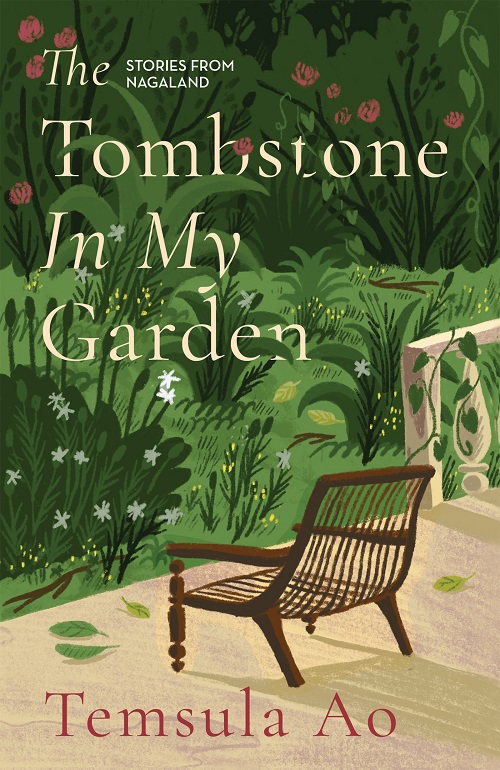
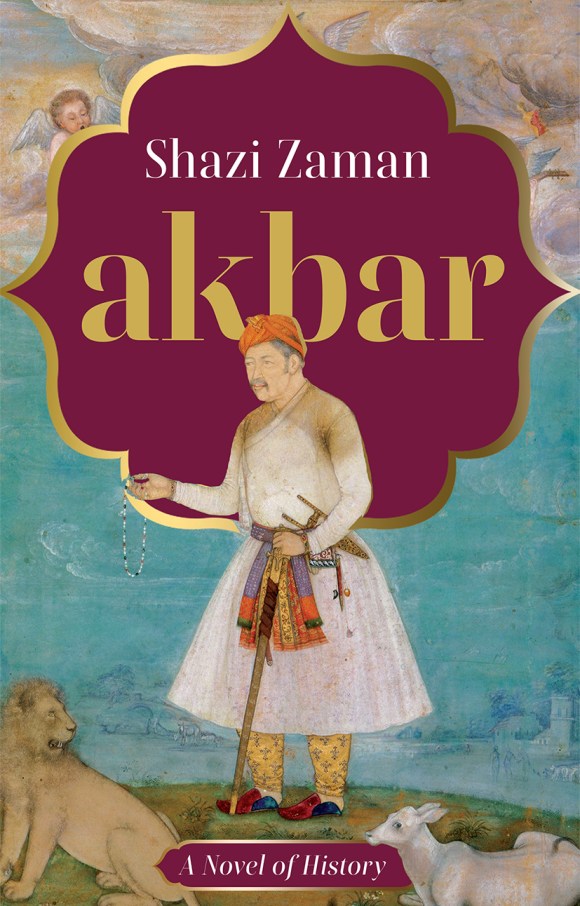
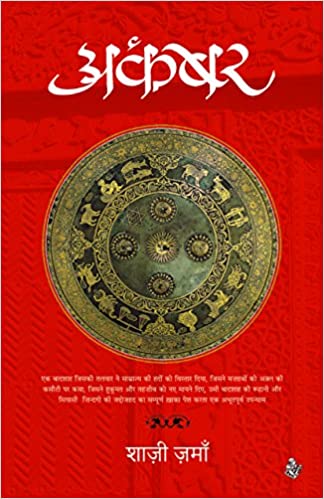

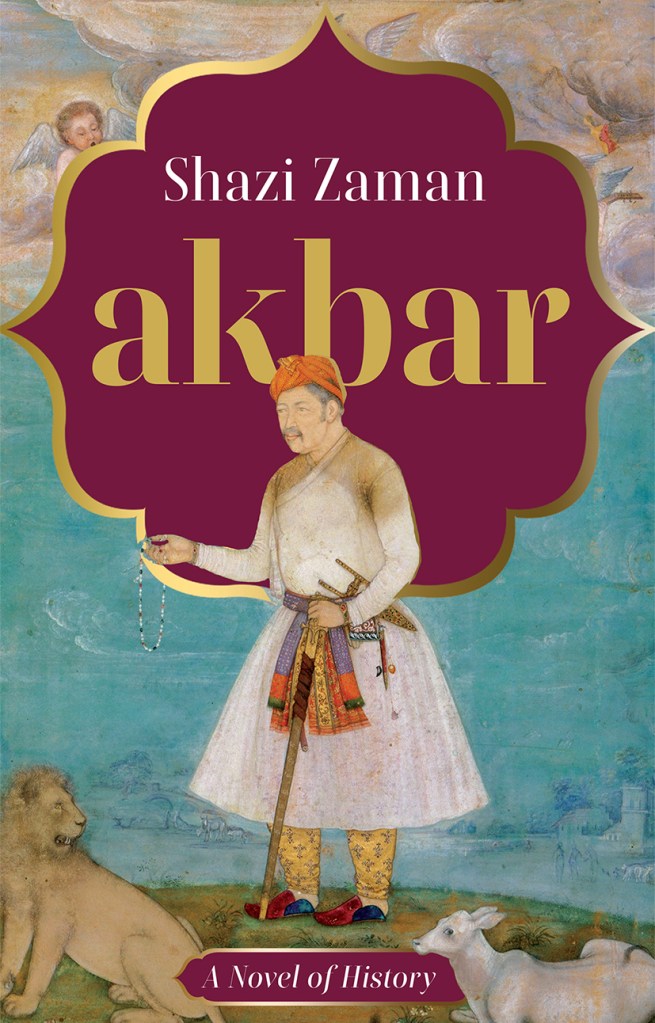


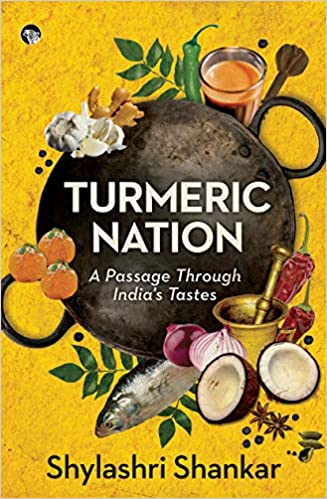
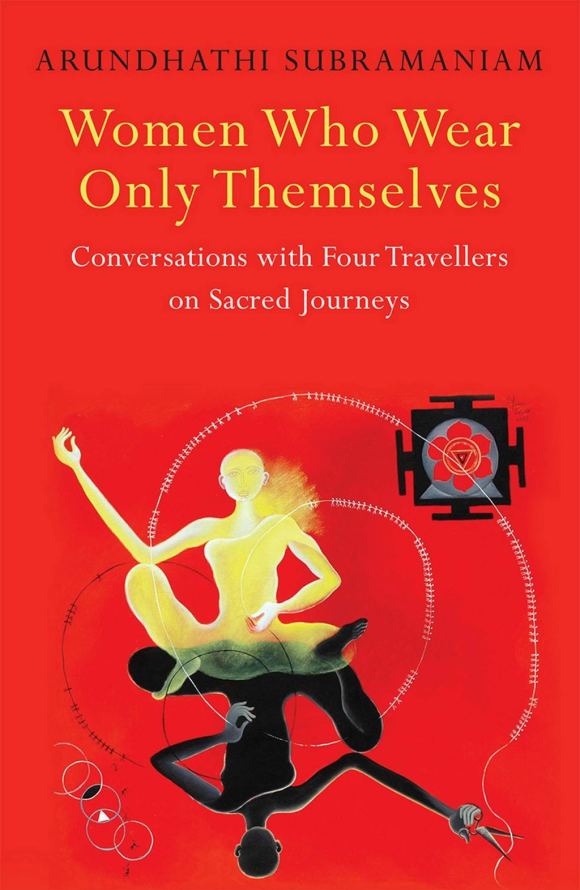
 Borderless