Categories
Contents

Borderless, December 2025

Art by Sohana Manzoor

Editorial

‘I wondered should I go or should I stay…’ …Click here to read.

Translations

Nazrul’s Shoore O Baneer Mala Diye (With a Garland of Tunes and Lyrics) has been translated from Bengali by Professor Fakrul Alam. Click here to read.

Four of his own Malay poems have been translated by Isa Kamari. Click here to read.

Five poems by Satrughna Pandab have been translated to English from Odia by Snehaprava Das. Click here to read.

A Lump Stuck in the Throat, a short story by Nasir Rahim Sohrabi translated from Balochi by Fazal Baloch. Click here to read.

Tagore’s Jatri (Passenger) has been translated from Bengali by Mitali Chakravarty. Click here to read.

Conversation

Keith Lyons in conversation with Harry Ricketts, mentor, poet, essayist and more. Click here to read.

Poetry

Click on the names to read the poems

Harry Ricketts, Luis Cuauhtémoc Berriozábal, Laila Brahmbhatt, John Grey, Saba Zahoor, Diane Webster, Gautham Pradeep, Daniel Gene Barlekamp, Annwesa Abhipsa Pani, Cal Freeman, Smitha Vishwanath,John Swain, Nziku Ann, Anne Whitehouse, Tulip Chowdhury, Ryan Quinn Flangan, Ramzi Albert Rihani, Rhys Hughes

Poets, Poetry & Rhys Hughes

In Said the Spook, Rhys Hughes gives a strange tale around Christmas. Click here to read.

Musings/ Slices from Life

Your call is important to us?

Farouk Gulsara writes of how AI has replaced human interactions in customer service. Click here to read.

Honeymoon Homecoming

Meredith Stephens visits her old haunts in Japan. Click here to read.

Cracking Exams

Gower Bhat discusses the advent of coaching schools in Kashmir for competitive exams for University exams, which seem to be replacing real schools. Click here to read.

The Rule of Maximum Tolerance?

Jun A. Alindogan writes of Filipino norms. Click here to read.

How Two Worlds Intersect

Mohul Bhowmick muses on the diversity and syncretism in Bombay or Mumbai. Click here to read.

Musings of a Copywriter

In The Monitoring Spirit, Devraj Singh Kalsi writes of spooky encounters. Click here to read.

Notes from Japan

In One Thousand Year Story in the Middle of Shikoku, Suzanne Kamata takes us on a train ride through Japan. Click here to read.

Essays

250 Years of Jane Austen: A Tribute

Meenakshi Malhotra pays a tribute to the writer. Click here to read.

Anadi: A Continuum in Art

Ratnottama Sengupta writes of an exhibition curated by her. Click here to read.

Sangam Literature: Timeless Chronicles of an Ancient Civilisation

Ravi Varmman K Kanniappan explores the rich literary heritage of Tamil Nadu. Click here to read.

A Brickfields Christmas Tale

Malachi Edwin Vethamani recounts the flavours of past Christmases in a Malaysian Kampung. Click here to read.

Bhaskar’s Corner

In The Riverine Journey of Bibhuti Patnaik, Bhaskar Parichha pays a tribute to the octegenarian writer. Click here to read.

Stories

Evergreen

Sayan Sarkar gives a climate friendly and fun narrative. Click here to read.

The Crying Man

Marc Rosenberg weaves a narrative around childhood. Click here to read.

How Madhu was Cured of Laziness

Naramsetti Umamaheswararao gives a fable set in Southern India. Click here to read.

Book Excerpts

Excerpt from Ghosted: Delhi’s Haunted Monuments by Eric Chopra. Click here to read.

Excerpt from Leonie’e Leap by Marzia Pasini. Click here to read.

Book Reviews

Rakhi Dalal reviews Anuradha Kumar’s Love and Crime in the Time of Plague. Click here to read.

Andreas Giesbert reviews Ariel Slick’s The Devil Take the Blues: A Southern Gothic Novel. Click here to read.

Gazala Khan reviews Ranu Uniyal’s This Could Be a Love Poem for You. Click here to read.

Bhaskar Parichha reviews Indira Das’s Last Song before Home, translated from Bengali by Bina Biswas. Click here to read.

.

Click here to access the Borderless anthology, Monalisa No Longer Smiles

Click here to access Monalisa No Longer Smiles on Amazon International

Categories
Editorial

‘I wondered should I go or should I stay…’

I flow and fly
with the wind further
still; through time
and newborn worlds…

--‘Limits’ by Luis Cuauhtémoc Berriozábal

In winters, birds migrate. They face no barriers. The sun also shines across fences without any hindrance. Long ago, the late Nirendranath Chakraborty (1924-2018) wrote about a boy, Amalkanti, who wanted to be sunshine. The real world held him back and he became a worker in a dark printing press. Dreams sometimes can come to nought for humanity has enough walls to keep out those who they feel do not ‘belong’ to their way of life or thought. Some even war, kill and violate to secure an exclusive existence. Despite the perpetuation of these fences, people are now forced to emigrate not only to find shelter from the violences of wars but also to find a refuge from climate disasters. These people — the refuge seekers— are referred to as refugees[1]. And yet, there are a few who find it in themselves to waft to new worlds, create with their ideas and redefine norms… for no reason except that they feel a sense of belonging to a culture to which they were not born. These people are often referred to as migrants.

At the close of this year, Keith Lyons brings us one such persona who has found a firm footing in New Zealand. Setting new trends and inspiring others is a writer called Harry Ricketts[2]. He has even shared a poem from his latest collection, Bonfires on the Ice. Ricketts’ poem moves from the personal to the universal as does the poetry of another migrant, Luis Cuauhtémoc Berriozábal, aspiring to a new, more accepting world. While Tulip Chowdhury — who also moved across oceans — prays for peace in a war torn, weather-worn world:

I plant new seeds of dreams
for a peaceful world of tomorrow.

--‘Hopes and Dreams’ by Tulip Chowdhury

We have more poems this month that while showcasing the vibrancy of thoughts bind with the commonality of felt emotions on a variety of issues from Laila Brahmbhatt, John Grey, Saba Zahoor, Diane Webster, Gautham Pradeep, Daniel Gene Barlekamp, Annwesa Abhipsa Pani, Cal Freeman, Smitha Vishwanath, John Swain, Nziku Ann and Anne Whitehouse. Ramzi Albert Rihani makes us sit up by inverting norms while Ryan Quinn Flangan with his distinctive style raises larger questions on the need for attitudinal changes while talking of car parks. Rhys Hughes sprinkles ‘Hughesque’ humour into poetry with traffic jams as he does with his funny spooky narrative around Christmas.

Fiction in this issue reverberates across the world with Marc Rosenberg bringing us a poignant telling centred around childhood, innocence and abuse. Sayan Sarkar gives a witty, captivating, climate-friendly narrative centred around trees. Naramsetti Umamaheswararao weaves a fable set in Southern India.

A story by Nasir Rahim Sohrabi from the dusty landscapes of Balochistan has found its way into our translations too with Fazal Baloch rendering it into English from Balochi. Isa Kamari translates his own Malay poems which echo themes of his powerful novels, A Song of the Wind (2007) and Tweet(2017), both centred around the making of Singapore. Snehaprava Das introduces Odia poems by Satrughna Pandab in English. While Professor Fakrul Alam renders one of Nazrul’s best-loved songs from Bengali to English, Tagore’s translated poem Jatri (Passenger) welcomes prospectives onboard a boat —almost an anti-thesis of his earlier poem ‘Sonar Tori’ (The Golden Boat) where the ferry woman rows off robbing her client.

In reviews, we also have a poetry collection, This Could Be a Love Poem for You by Ranu Uniyal discussed by Gazala Khan. Bhaskar Parichha introduces a book that dwells on aging and mental health issues, Indira Das’s Last Song before Home, translated from Bengali by Bina Biswas. Rakhi Dalal has reviewed Anuradha Kumar’s Love and Crime in the Time of Plague:A Bombay Mystery, a historical mystery novel set in the Bombay of yore, a sequel to her earlier The Kidnapping of Mark Twain. Andreas Giesbert has woven in supernatural lore into this section by introducing Ariel Slick’s The Devil Take the Blues: A Southern Gothic Novel. In our excerpts too, we have ghostly lore with an extract from Ghosted: Delhi’s Haunted Monuments by Eric Chopra. The other excerpt is from Marzia Pasini’s Leonie’s Leap, a YA novel showcasing resilience.

We have plenty of non-fiction this time starting with a tribute to Jane Austen (1775-1817) by Meenakshi Malhotra. Austen turns 250 this year and continues relevant with remakes in not only films but also reimagined with books around her novels — especially Pride and Prejudice (which has even a zombie version). Bhaskar Parichha pays a tribute to writer Bibhuti Patnaik. Ravi Varmman K Kanniappan explores ancient Sangam Literature from Tamil Nadu and Ratnottama Sengupta revisits an art exhibition that draws bridges across time… an exploration she herself curated.

Suzanne Kamata takes us on a train journey through historical Japan and Meredith Stephens finds joy in visiting friends and living in a two-hundred-year-old house from the Edo period[3]. Mohul Bhowmick introduces a syncretic and cosmopolitan Bombay (now Mumbai). Gower Bhat gives his opinion on examination systems in Kashmir, which echoes issues faced across the world while Jun A. Alindogan raises concerns over Filipino norms.

Farouk Gulsara — with his dry humour — critiques the growing dependence on artificial intelligence (or the lack of it). Devraj Singh Kalsi again shares a spooky adventure in a funny vein while Malachi Edwin Vethamani woos us with syncretic colours of Christmas during his childhood in Brickfields, Malaysia — a narrative woven with his own poems and nostalgia.

We have a spray of colours from across almost all the continents in our pages this time. A bumper issue again — for which all of the contributors have our heartfelt thanks. Huge thanks to our fabulous team who pitch in to make a vibrant issue for all of us. A special thanks to Sohana Manzoor for the fabulous artwork. And as our readers continue to grow in numbers by leap and bounds, I would want to thank you all for visiting our content! Introduce your friends too if you like what you find and do remember to pause by this issue’s contents page.

Wish all of you happy reading through the holiday season!

Best wishes,

Mitali Chakravarty

borderlessjournal.com

CLICK HERE TO ACCESS THE CONTENTS FOR THE DECEMBER 2025 ISSUE.

[1] UNHCR Refugees

[2] Harry Ricketts born and educated in  England moved to New Zealand.

[3] Edo period in Japan (1603-1868)

.

READ THE LATEST UPDATES ON THE FIRST BORDERLESS ANTHOLOGY, MONALISA NO LONGER SMILES, BY CLICKING ON THIS LINK.

Categories
Poetry

The Inheritance

By Smitha Vishwanath

THE INHERITANCE

Solitude, a warm fuzzy baby blanket
gifted to me at birth, that I never outgrew,
but forgot about during the noisy years of childhood,
adolescence and youth; it gathered dust,
faded like a distant memory, waited patiently
for me to reclaim it as my own.

An inheritance from my father,
it came to me on his passing --
a source of comfort, a companion
that had helped him when my mother left.
At forty-five, I drag it along with me like a child,
on my walks in the park. Together,
we watch the wagtails in the mornings

dipping their heads in the green grass searching for food,
the yellow-throated warblers flitting from branch
to branch surveying the world, the wild geese
that fly home when the sun bids farewell,
and the gardeners busy at work, trimming hedges.
We breathe in the fragrance of honeysuckles
and admire the hardiness of geraniums.

It sticks to me like skin, protecting me
from the glare of a crowd; together, we listen,
laugh, make conversation, and when alone,
string it all into poetry; so much like dad, I think.
Only his were stories of monkeys and foxes,
chickens and bees, flies travelling to Sicily, Azerbaijan and Lyon,

carrying a wealth of information
on their gossamer wings. The sparkle in his eyes
when he shared the world with us
and how it glazed when in a crowd --
I had blamed it as a quirk, felt sorry for him,
not quite understanding that he wasn’t lonely
or anti-social, but enjoyed the company of Solitude.

I understand now when on my own I sit,
and it rests its head on my lap,
I run my fingers through it,
its familiar touch
making me feel closer to dad
and grateful that I inherited
its quiet contentment from him.

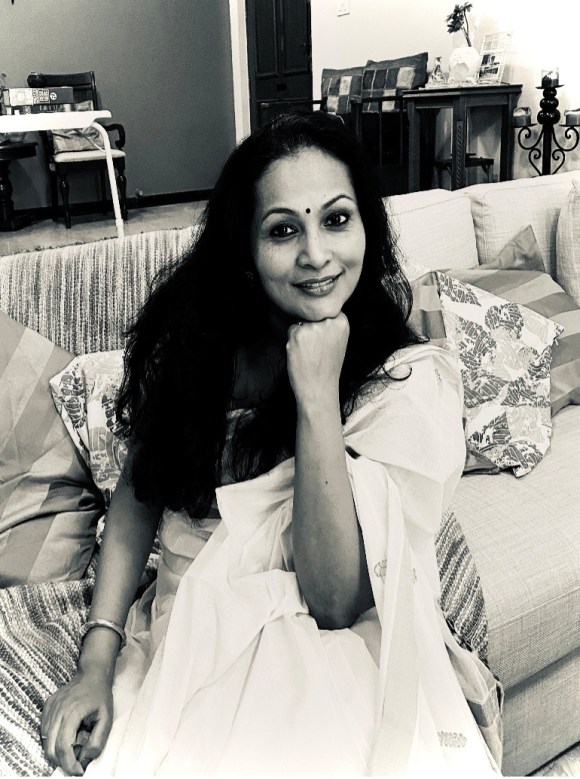
Smitha Vishwanath is a writer based in Kenya. An ex-banker, she enjoys painting, writing poetry, reading, sharing book reviews, nature and travelling. Smitha has co-authored a poetry book, Roads- A Journey with Verses and a novel, Coming Home.

.

PLEASE NOTE: ARTICLES CAN ONLY BE REPRODUCED IN OTHER SITES WITH DUE ACKNOWLEDGEMENT TO BORDERLESS JOURNAL

Click here to access the Borderless anthology, Monalisa No Longer Smiles

Click here to access Monalisa No Longer Smiles on Kindle Amazon International

Categories
Contents

Borderless, September 2021

Editorial

The Caged Birds Sing…Click here to read.

Interviews

Professor Anvita Abbi, a Padma Shri, discusses her experience among the indigenous Andamanese and her new book on them, Voices from the Lost Horizon. Click here to read.

Keith Lyons talks to Jessica Mudditt about her memoir, Our Home in Myanmar, and the current events. Click here to read.

Translations

Be and It All Came into Being

Balochi poetry by Akbar Barakzai, translated by Fazal Baloch. Click here to read.

Adivasi Poetry

A poem by Jitendra Vasava translated from the Dehwali Bhili via Gujarati by Gopika Jadeja. Click here to read.

A Poem for The Ol Chiki

 Poetry by Sokhen Tudu, translated from the Santhali by Hansda Sowvendra Shekhar. Click here to read.

About Time

Korean poetry on time written and translated by Ilwha Choi. Click here to read.

Of Days and Seasons

A parable by the eminent Dutch writer, Louis Couperus (1863-1923), translated by Chaitali Sengupta. Click here to read.

Road to Nowhere

An unusual story about a man who heads for suicide, translated from Odiya by the author, Satya Misra. Click here to read.

Abhisar by Tagore

A story poem about a Buddhist monk by Rabindranath Tagore in Bengali has been translated by Mitali Chakravarty. Click here to read.

Poetry

Click on the names to read the poems

Arundhathi Subramaniam, Michael R Burch, Sekhar Banerjee, Jeff Shakes, Ashok Suri, Tim Heerdink, Srinivas S, Rhys Hughes, A Jessie Michael, George Freek, Saranayan BV, Gigi Baldovino Gosnell, Pramod Rastogi, Tohm Bakelas, Nikita Desai, Jay Nicholls, Smitha Vishwanathan, Jared Carter

Nature’s Musings

In Sun, Seas and Flowers, Penny Wilkes takes us for a tour of brilliant photographs of autumnal landscapes with verses. Click here to read.

Poets, Poetry & Rhys Hughes

In Memory Gongs, Rhys Hughes creates a profound myth tinged with a tongue in cheek outlook … Click here to read.

Essays

Crime and the Colonial Capital: Detective Reid in Calcutta

Abhishek Sarkar explores the colonial setting up of the Calcutta detective department in 1887. Click here to read.

The Myth of Happiness

Candice Louisa Daquin ponders over the impositions on people to declare themselves happy. Click here to read.

Once Upon a Time in Burma: Of Babies and Buddhas

John Herlihy takes us through more of Myanmar with his companion, Peter, in the second part of his travelogue. Click here to read.

Bhaskar’s Corner

Bhaskar Parichha explores links between Politics & the Media. Click here to read.

Musings/Slices from Life

Cyclists

Mike Smith muses about a black and white photograph from his childhood. Click here to read.

Leo Messi’s Magic Realism

Sports fan Saurabh Nagpal explores the magic realism in famous footballer Messi’s play with a soupçon of humour. Click here to read.

Infinite Possibilities & Mysterious Riddles

Keith Lyons gives a lively account of traveling across borders despite the pandemic. Click here to read.

Word Play

Geetha Ravichnadran explores additions to our vocabulary in a tongue-in-cheek article. Click here to read.

Musings of a Copywriter

In When I Almost Became a Professor, Devraj Singh Kalsi gives humour tinged reasons on why he detached himself from being an academician. Click here to read.

Stories

Flash Fiction: Turret

Niles M Reddick relates a haunting tale of ghosts and more. Click here to read.

Silver Lining

Dipayn Chakrabarti travels through moods of the day and night. Click here to read.

Captain Andi is in love

Dr. P Ravi Shankar explores a future beyond climate change in Malaysia. Click here to read.

The Cockatoo

Revathi Ganeshsundaram captures the stardust in ripening years. Click here to read.

The Missing Tile

Saeed Ibrahim’s story reflects on the ties between an old teacher and a student. Click here to read.

The Literary Fictionist

In Return of the Ghost, Sunil Sharma explores the borders between life, ideas and death. Click here to read.

Book Excerpt

An excerpt from Kobi’ and ‘Rani’: Memoirs and Correspondences of Nirmalkumari Mahalanobis and Rabindranath Tagore, translated by Somdatta Mandal, showcasing Tagore’s introduction and letters. Click here to read.

Book Reviews

Rakhi Dalal reviews Anvita Abbi’s Voices from the Lost Horizon. Click here to read.

Basudhara Roy reviews Bina Sarkar Ellias’ Song of a Rebel and Other Selected Poems. Click here to read.

Bhaskar Parichha reviews Wendy Doniger’s Winged Stallion and Wicked Mares. Click here to read.

Categories
Editorial

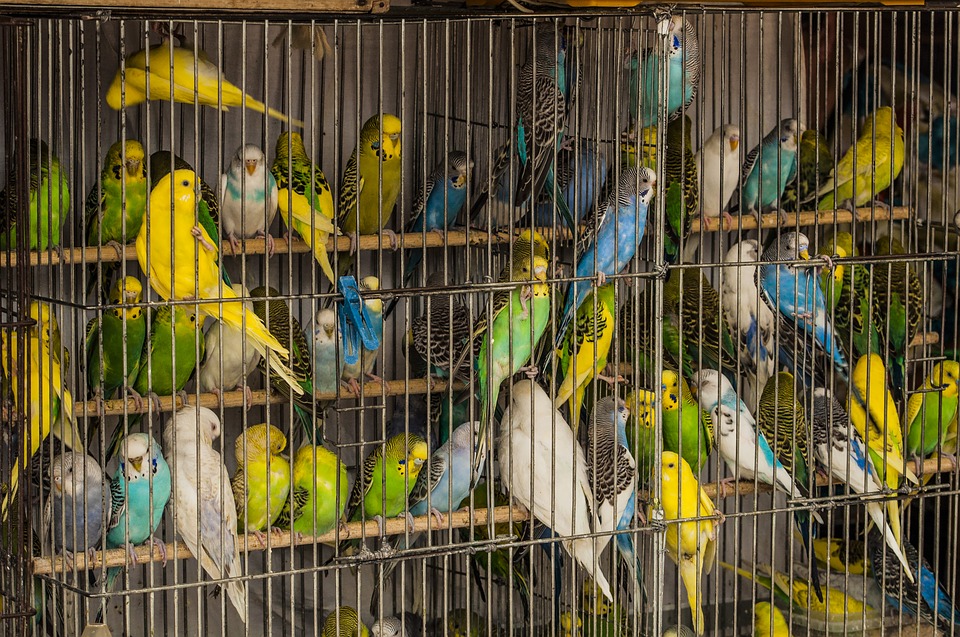
The Caged Birds Sing

...Don't you know
They're talkin''bout a revolution
It sounds like a whisper...
-- Tracy Chapman,'Talkin 'Bout a Revolution
Thou shalt love thy neighbour as thyself. 
— Bible 

We are living in strange times that seem to be filled with events to challenge the innovativeness of man. As if the pandemic were not enough, concepts that had come out of the best in our civilisation to unite mankind have been convoluted by a minority to manipulate and hurt the majority into submission. Life is not about surviving with faint-hearted compliance but about having the courage to live it as you want, facing it full up front, to voice out in unison against injustices, wrongs, and most of all to loan strength to help and care for each other. Often to understand this, we need to hinge on to our past, to learn from our heritage. But do we do that? In the hectic drive to be successful, we tend to ignore important lessons that could have been imbibed from the past. Like, did you know that the tribes in the Andaman can save themselves from a tsunami?

Padma Shri Anvita Abbi tells us all about the Andamanese and her attempts to revive their moribund language in her interview and book, Voices from the Lost Horizon, reviewed by Rakhi Dalal. While the review focusses on the uniqueness of Abbi’s work and the publication with its embedded recordings of the tribe fast dissolving into the morass of mainstream civilisation, her interview highlights the need to revive their lores that evolved out of a 70,000-year-old culture. On the other hand, Jessica Mudditt, interviewed by Keith Lyons, dwells on the ongoing crisis in Myanmar, which has been clearly the focus of her book, Our Home in Yangon. This interview focusses on the here and now of the crisis. But most crises have their roots deep and perhaps an exploration of these could help. There are 135 ethnicities in Myanmar but how many are actually integrated into the mainstream? Are they in the process of getting ‘lost’ like the voices of the speakers of Greater Andamanese?

That is why we tried to showcase a few such strains that are going unheard in the loudness of the ‘civilised’ mainstream. We have translations in poetry from Santhali and Adivasi, touching on the concerns of those who are often considered underdeveloped. And, perhaps, as Abbi said in her interview about the Andamanese, we can say much the same for these tribes too.

“These tribes are neither poor, nor uneducated (their knowledge of environment comprising birds, fishes, medicinal plants and their … weather predictions, and the Earth they walk on is amazing) …”

Distinctions have been created by a ‘civilisation’ entrenched in mono-cognitive enforcements leading to the loss of trust, confidence, languages, cultures and valuable knowledge about basic survival. Perhaps we can attempt to heal such wounds by imbibing the openness, love, devotion and compassion shown by the Buddhist monk, Upagupta (who is still revered in Myanmar as Shin Upagutta), in the translation of Tagore’s story poem, ‘Abhisar’ or ‘The Tryst’.  Somdatta Mandal’s translation of Tagore’s letters introduce similar humanitarian concerns when the maestro mentions a German anthropologist and his wife who for the betterment of mankind were journeying to study tribals in India. Tagore remarks, “The people for whom they are willingly prepared to undergo hardship and to overlook all sorts of danger are not their relatives, nor are they civilised.” And yet even a century ago to fathom more about mankind, attempts were being made to integrate with our ancient lore. The concept of being ‘civilised’ is of course now much under the microscope. What is being ‘civilised’?

 Is it about having power? We have Akbar Barakzai’s poem translated by Fazal Baloch on creation looking at the divide between a ‘civilised’ God and man. The theme stresses the two sides of the divide. More translations from Odiya, Dutch and Korean further mingle different flavours of the world into our journal — each questioning the accepted norm in different ways.

In an edition focussed on myths and stories from which we evolved, Rhys Hughes has created an unusual legend around elephants. His poetry also deals with animals — cats. One wonders if the T S Eliot’s famed ‘Macavity, the Mystery Cat’ could have to do something with his choices?  We were fortunate to have Arundhathi Subramaniam share her poetry on myths around Indian figures like Shakuntala and Avvaiyar and the titular poem from When God is a Traveller that won her the 2020 Sahitya Akademi Award. Michael R Burch continues on the theme dwelling on Circe, Mary Magdalene and Helen. Sekhar Banerjee has a more iconoclastic approach to myths in his poetry. Jared Carter talks of modern myths perpetuated through art and cultural studies as does Mike Smith in his musings with his glance back at the last century through a photograph.

We have poetry by a Filipino writer Gigi Baldovino Gosnell from South Africa, looking for a new world, a new legend, perhaps a world without borders. Tohm Bakelas has given us a few lines of powerful poetry. Could these poems be a reaction to world events? Smitha Vishwanath has responded to the situation in Afghanistan with a poem. In this edition, photographs and verses in Penny Wilkes’ ‘Nature’s Musings‘ draw from the universe. She writes, “The sun never asks for applause” — a powerful thought and perhaps one mankind can learn from.

Ghost stories by Niles Reddick and Sunil Sharma perpetuate the theme, especially the latter has a ghost that questions myths of ‘isms’ created in the modern-day world. We also have a writer from Malaysia, P Ravi Shankar, with a futuristic legend set in a far-off time where man has embraced the reality of climate change and artificial intelligence. An interesting and fun read as is Devraj Singh Kalsi’s professions about why he did not become a professor, Geetha Ravichandran’s light musing on word play and a young writer Saurabh Nagpal’s musing, ‘Leo Messi’s Magic Realism‘ — a footballer viewed from a literary perspective!

While our musings make us laugh, our essays this time take us around the world with the myth of happiness deconstructed by Candice Louisa Daquin, to Burma and deep into Kolkata’s iconic history of the detective department started in the nineteenth century. There is an essay by Bhaskar Parichha that explores politics and media and mentions ‘gatekeepers’ of the media who need to be responsible for influencing public opinion. Guess who would be the gatekeepers?

Bhaskar Parichha’s review of Wendy Donniger’s non-fiction exploring myths around horses, Winged Stallion and Wicked Mares, and Basudhara Roy’s review of Bina Sarkar Ellias’ Song of a Rebel and Other Selected Poems perpetuate the theme of the importance of the past on the one hand and question it on the other. But that is what Borderless is about — exploring the dialectics of opposing streams to re-invent myths towards a better future.

We have a bumper issue again this time with nearly fifty posts. I invite our wonderful readers on a magical journey to unfold the hidden, unmentioned gems scattered on the pages of the September Issue of Borderless. Thank you again to an outstanding team, all our global contributors who make every edition an adventure and a reality and our wonderful readers. Thank you all.

Have a beautiful month!

Mitali Chakravarty

Borderless Journal

Categories
Poetry

Kabul is Falling

By Smitha Vishwanath

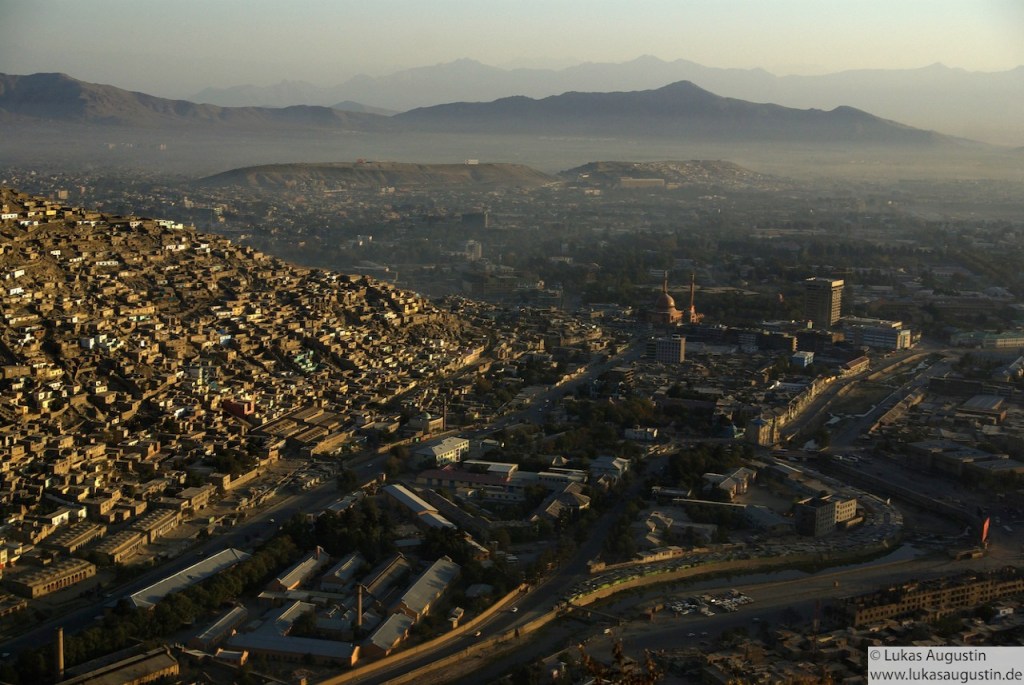
Kabul. Courtesy: Creative Commons
Kabul is falling

Kabul is falling,
while the rest of us are watching
with knitted brows and furrowed foreheads
as many as hundreds 

of thousands lie dead 
and the Kabul River runs red  
with slaughtered dreams of the Afghans 
and trampled actions of the Americans. 

Rock by rock, the hilly country crumbles
at the hands of the bearded rebels. 
Into a heap of stones collapse the long-fatigued walls
and streets turn blue as district-by-district falls.
  
Gunshots sound like warning bells--
Death knells
for the men in pakol hats, who confounded stare 
unaware 

of what is to become of them
amidst the bloody mayhem. 
Wide-eyed their rosy-cheeked children
build castles in the dirt; and their women

in chadarees --
can no longer mask their worries
as the turbaned vultures --
circle the city, waiting, to tear open uncured sutures 

 'Kabul must fend for itself,' the men in uniform say,
 and turn their backs and walk away.
 Promises made by the top brass bite the dust
 on the rugged tarmac of hopes; ‘Ah! The Pashtuns are cursed.’
 
 Onlookers say, ‘Those men-- tall, broad shouldered and strong, 
 And women-- creamy white, chiselled; what did they do wrong?’
 Their children’s faces
 in coveted places--

 on magazine covers, win the best photograph of the year
 for their glassy-grey eyes that glare with fear
 which we call, ‘grit’
 as on the couch we sit

 flipping the glossy pages,
 ignoring their pain and rage.
 Let’s not bother.
 Let’s all look hither

 and nod our heads
 and look on with furrowed foreheads
 and express regret for the misfortune
 Of those born in a land where mulberries and apricots are grown.

 Let’s thank our stars
 for our nation free of wars 
 while the children of Hades turn the ‘graveyard of empires’ red --
 A deep red like the juice of the ‘fruit of the dead’

 planted around the sands
 on which the Shrine of Hazrat Ali stands
 and let’s watch it happen--
 Kabul falling-- Falling, fallen.


Pakol: Soft, round-topped hat made of wool
Chadarees: A shawl

Smitha Vishwanath is a banker turned writer. A management professional, she embarked on the writing journey in 2016, with her blog, https://lifeateacher.wordpress.com.Her poems and articles have been published in various anthologies. In July 2018, she co-authored a book of poetry: Roads – A Journey with Verses. 

.

PLEASE NOTE: ARTICLES CAN ONLY BE REPRODUCED IN OTHER SITES WITH DUE ACKNOWLEDGEMENT TO BORDERLESS JOURNAL.

Categories
Contents

Borderless, April, 2021

Greetings from Borderless Journal for all Asian New Years! Click here to read our message along with the video and a translation of a Tagore song written to greet the new year, with lyrics that not only inspire but ask the fledgling to heal mankind from deadly diseases.

Editorial

New Beginnings

A walk through our content and our plans for the future. Click here to read.

Interviews

In Conversation with Arundhathi Subramaniam: An online interview with this year’s Sahitya Akademi winner, Arundhathi Subramaniam. Click here to read.

Sumana Roy & Trees: An online interview with Sumana Roy, a writer and academic. Click here to read.

Poetry

(Click on the names to read)

Arundhathi Subramaniam, Jared Carter, Matthew James Friday, Michael R Burch, Aparna Ajith, Jenny Middleton, Rhys Hughes, Jay Nicholls, Achingliu Kamei, Vatsala Radhakeesoon, Ihlwha Choi, Smitha Vishwanath, Sekhar Banerjee, Sumana Roy

Photo-poetry by Penny Wilkes

Poets, Poetry & Rhys Hughes

With an introduction to Blood and Water by Rebecca Lowe, Rhys Hughes debuts with his column on poets and poetry. Click here to read.

Translations

The Word by Akbar Barakzai

Fazal Baloch translates the eminent Balochi poet, Akbar Barakzai. Click here to read.

Malayalam poetry in Translation

Aditya Shankar translates a poem by Shylan from Malayalam to English. Click here to read.

Tagore Songs in Translation

To commemorate Tagore’s birth anniversary, we translated five of his songs from Bengali to English. Click here to read, listen and savour.

Tagore Translations: One Small Ancient Tale

Rabindranath Tagore’s Ekti Khudro Puraton Golpo (One Small Ancient Tale) from his collection Golpo Guchcho ( literally, a bunch of stories) has been translated by Nishat Atiya. Click here to read.

Musings/Slice of Life

Pohela Boisakh: A Cultural Fiesta

Sohana Manzoor shares the Bengali New Year celebrations in Bangladesh with colourful photographs and interesting history and traditions that mingle beyond the borders. Click here to read.

Gliding along the Silk Route

Ratnottama Sengupta, a well-known senior journalist and film critic lives through her past to make an interesting discovery at the end of recapping about the silk route. Click here to read and find out more.

The Source

Mike Smith drifts into nostalgia about mid-twentieth century while exploring a box of old postcards. What are the stories they tell? Click here to read.

Lost in the Forest

John Drew, a retired professor, cogitates over a tapestry of the Ras lila. Click here to read.

Tied to Technology

Naomi Nair reflects on life infiltrated by technology, by Siri and Alexa with a tinge of humour. Click here to read.

Adventures of a Backpacking Granny

In Inspiriting SiberiaSybil Pretious takes us with her to Lake Baikal and further. Click here to read.

Musings of a Copywriter

In Tributes & AttributesDevraj Singh Kalsi pays tribute to his late mother. Click here to read.

Essays

Reflecting the Madness and Chaos Within

Over 150 Authors and Artists from five continents have written on mental illness in an anthology called Through the Looking Glass. Candice Louisa Daquin, a psychotherapist and writer and editor, tells us why this is important for healing. Click here to read.

At Home in the World: Tagore, Gandhi and the Quest for Alternative Masculinities

Meenakshi Malhotra explores the role of masculinity in Nationalism prescribed by Tagore, his niece Sarala Debi, Gandhi and Colonials. Click here to read.

A Tale of Devotion and Sacrifice as Opposed to Jealousy and Tyranny

Sohana Manzoor explores the social relevance of a dance drama by Tagore, Natir puja. We carry this to commemorate Tagore’s birth anniversary. Click here to read

Photo Essay: In the Midst of Colours

Nishi Pulugurtha explores the campus of a famed university with her camera and words and shares with us her experiences. Click here to read.

Bhaskar’s Corner

Oh, That lovely Title: Politics

A short piece by Bhaskar Parichha that makes for a witty comment on the forthcoming Indian elections. Click here to read.

Stories

Pothos

Rakhi Pande gives us a story about a woman and her inner journey embroiled in the vines of money plant. Click here to read.

Elusive

A sensitive short story by Sohana Manzoor that makes one wonder if neglect and lack of love can be termed as an abuse? Click here to read

Ghumi Stories: Grandfather & the Rickshaw

Nabanita Sengupta takes us on an adventure on the rickshaw with Raya’s grandfather. Click here to read

Flash Fiction: The Husband on the Roof

Carl Scharwath gives us a story with a strange twist. Click here to read

Flash Fiction: Flight of the Falcon

Livneet Shergill gives us a story in empathy with man and nature. Click here to read

The Literary Fictionist

A playlet by Sunil Sharma set in Badaun, The Dryad and I: A Confession and a Forecast, is a short fiction about trees and humans. Click here to read.

Book reviews

Bhaskar Parichha reviews Reconciling Differences by Rudolf C Heredia, a book that explores hate and violence. Click here to read.

Nivedita Sen reviews Nomad’s Land by Paro Anand, a fiction set among migrant children of a culture borne of displaced Rohingyas, Syrian refugees, Tibetans and more. Click here to read

Candice Louisa Daquin reviews The First Cell and the Human Costs of Pursuing Cancer to the last by Azra Raza. Click here to read.

Book Excerpt

Excerpted from Raising a Humanist: Conscious Parenting in an Increasingly Fragmented World by Manisha Pathak-Shelat and Kiran Vinod Bhatia, the focus is on media and its impact. Click here to read.

Sara’s Selection, April 2021

A selection of young person’s writings from Bookosmia. Click here to read.

Categories
Poetry

The Shadow of Disappointment

By Smitha Vishwanath

The shadow of disappointment

is long and grey

it lengthens

when expectation rises -- like the sun

and shortens

when it meets the horizon


The shadow of disappointment is darkest when it's closer

And lightens as it goes farther

lingering ominously, over everything in the path of light

Casting a veil of darkness on all in sight

dulling the brightness, reducing the sheen

of every living and non-living being


The shadow of  disappointment allures  

Turn, turn away, towards the light

And let it follow you -- silently into the quiet of the night

For that is where the shadow -- Erebus, 

child of Chaos resides, 

enveloped in the love of Nyx*”

Lay it at rest there so it no longer disappoints.


*Erebus – As per Greek mythology, was conceived as a primordial deity and represented darkness

*Chaos – was believed to be the father of Erebus. A state of void preceding the creation of the Universe

*Nyx- is the night as per Greek myth

Smitha Vishwanath is a banker turned writer. A management professional, she embarked on the writing journey in 2016, with her blog, https://lifeateacher.wordpress.com.Her poems and articles have been published in various anthologies. In July 2018, she co-authored a book of poetry: Roads – A Journey with Verses.

.

PLEASE NOTE: ARTICLES CAN ONLY BE REPRODUCED IN OTHER SITES WITH DUE ACKNOWLEDGEMENT TO BORDERLESS JOURNAL.

Categories
Poetry

The Last Dance

By Smitha Vishwanath

I see it steal the lead

break away

and pirouette-

a dancing ballerina

swirling on the open stage,

a Turkish dervish

whirling to a melody I cannot hear,

I strain my ear

.

I watch still

as it pauses

for a beat

It seems forever

and then a final ghoomar*

before it gracefully sways

and lands

nimbly, on the terra-firma.

.

My heart applauds

the performance-

‘The last dance’

Before it bites the dust

joining the rest

who fell before it

after doing their bit

Of living,

.

breathing

giving to the world

now lying dried and curled

on the earth’s bed-

yellow, brown, orange, green and red

united, irrespective.

.

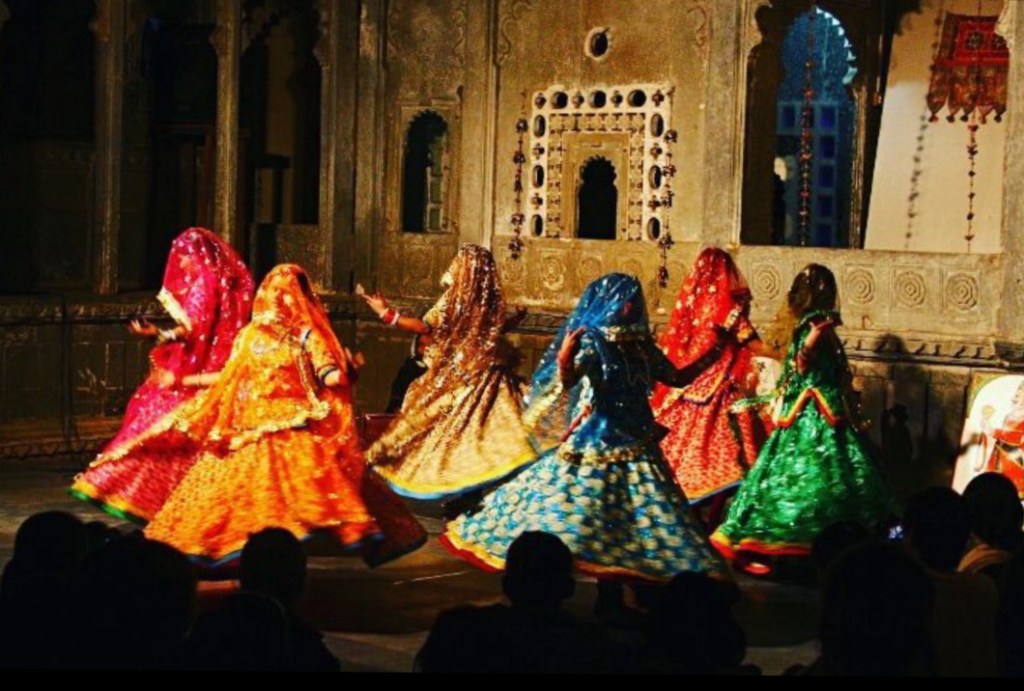
*ghoomar – Rajasthani dance involves twirling of dancers

Folk dance from Rajashthan, Ghoomar

.

Smitha Vishwanath is a banker turned writer. A management professional, she embarked on the writing journey in 2016, with her blog, https://lifeateacher.wordpress.com, while still heading the regional Cards Operations of a bank. After having worked for almost two decades in senior roles in the banking industry, in the Middle East, she quit and returned to India in July 2018 when her husband was transferred on an assignment. Her poems and articles have been published in various anthologies. In July 2018, she co-authored a book of poetry: Roads – A Journey with Verses. Other than writing, she enjoys reading, travelling, and painting.

.

PLEASE NOTE: ARTICLES CAN ONLY BE REPRODUCED IN OTHER SITES WITH DUE ACKNOWLEDGEMENT TO BORDERLESS JOURNAL.

Categories
Poetry

Omid

by Smitha Vishwanath

Seven years she’d waited for him

She’d prayed five times each day

At fajr, zuhr, asr, maghrib and isha

On the nineteenth day of Ramadan

twelve thousand seven hundred and seventy five prayers

Had been answered

She thought, as his tiny fingers wrapped

Around hers,  his eyes still closed

‘Ya Allah!’ she thanked God

for Omid

‘Omid’ – it means hope

His body still warm

From being nursed

At her breast

Now he lay still

His pure, fresh blood splattered on the white floor

I want to understand why Omid died

Was it her punishment?

For giving birth to hope –

an unforgivable mistake in the eyes of non-believers.

 .

I thought like them that thrust the bullet

Into his tender chest. It shattered his ribs

and punctured his heart. 

I cannot understand

I think, maybe, because I am not as bad.

I thought like the merciful God who gave him life

Seventeen seconds of motherhood He had granted

In exchange for her every prayer

I cannot understand

I think, maybe, because I am not as good

 .

For God is always good

and merciful

my mother says

I cannot understand

So, I pray –

For Omid and

 his mother

And others like Omid-

crushed

before they knew what, it means ‘to be alive.’

 .

Smitha Vishwanath is a banker turned writer. A management professional, she embarked on the writing journey in 2016, with her blog, https://lifeateacher.wordpress.com, while still heading the regional Cards Operations of a bank. After having worked for almost two decades in senior roles in the banking industry, in the Middle East, she quit and returned to India in July 2018 when her husband was transferred on an assignment. Her poems and articles have been published in various anthologies. In July 2018, she co-authored a book of poetry: Roads – A Journey with Verses. Other than writing, she enjoys reading, travelling, and painting.

.

PLEASE NOTE: ARTICLES CAN ONLY BE REPRODUCED IN OTHER SITES WITH DUE ACKNOWLEDGEMENT TO BORDERLESS JOURNAL.