In a mobile home, where the commute to and from jobs idles at any curb, the resident resides in a bucket seat addressing a dashboard between shifts.
Lucky to have somewhere to go, lucky to have shelter, the citizen without a mailbox steers away from parking meters until nightfall.
The drive-thru diner stretches out adjustables and then legs to perform safety checks around the rusted and plastic vehicle after supper.
Each tire gets kicked again because sidewalls bounce back.
Bathroom breaks behind bushes, clean ups for face, pits, and crotch alternate among public libraries, grocery stores, and fast-food joints.
The sacred space with a windshield and wipers that rarely work, lets in the light each morning on the room housing every belonging owned.
GAMP CAMP
Under a social umbrella, the momentary refugees shelter from a heavy reign where connections take advantage for a team effort.
Daytime tenting under stars and stipes while canvassing and with evening prayers that soldiers join forces at the center post powder dry, tender-foot-citizens reach out into a continental climate.
A thunderhead seams the sky and plains in the Southwest.
Sharing insights and vision with a runner and trusting the resources stretching, the cooperation canopy counts on ribs, heads, and feet to go the distance for democracy in a country.
Rich Murphy’s latest collections, Elephant by Bass Clef Books, Storage Shed and Inside Stories by Resource Publications and Mind of Europe: A Genealogy to The Fat Man and Susan Constant by Cyberwit were published 2024-2025, following First Aid and Footholds (2023). His poetry won The Poetry Prize at Press Americana twice for Americana (2013), The Left Behind (2021), and Gival Press Poetry Prize for Voyeur (2008).
PLEASE NOTE: ARTICLES CAN ONLY BE REPRODUCED IN OTHER SITES WITH DUE ACKNOWLEDGEMENT TO BORDERLESS JOURNAL
In winters, birds migrate. They face no barriers. The sun also shines across fences without any hindrance. Long ago, the late Nirendranath Chakraborty (1924-2018) wrote about a boy, Amalkanti, who wanted to be sunshine. The real world held him back and he became a worker in a dark printing press. Dreams sometimes can come to nought for humanity has enough walls to keep out those who they feel do not ‘belong’ to their way of life or thought. Some even war, kill and violate to secure an exclusive existence. Despite the perpetuation of these fences, people are now forced to emigrate not only to find shelter from the violences of wars but also to find a refuge from climate disasters. These people — the refuge seekers— are referred to as refugees[1]. And yet, there are a few who find it in themselves to waft to new worlds, create with their ideas and redefine norms… for no reason except that they feel a sense of belonging to a culture to which they were not born. These people are often referred to as migrants.
At the close of this year, Keith Lyons brings us one such persona who has found a firm footing in New Zealand. Setting new trends and inspiring others is a writer called Harry Ricketts[2]. He has even shared a poem from his latest collection, Bonfires on the Ice. Ricketts’ poem moves from the personal to the universal as does the poetry of another migrant, Luis Cuauhtémoc Berriozábal, aspiring to a new, more accepting world. While Tulip Chowdhury — who also moved across oceans — prays for peace in a war torn, weather-worn world:
I plant new seeds of dreams for a peaceful world of tomorrow.
Fiction in this issue reverberates across the world with Marc Rosenberg bringing us a poignant telling centred around childhood, innocence and abuse. Sayan Sarkar gives a witty, captivating, climate-friendly narrative centred around trees. Naramsetti Umamaheswararao weaves a fable set in Southern India.
A story by Nasir Rahim Sohrabi from the dusty landscapes of Balochistan has found its way into our translations too with Fazal Baloch rendering it into English from Balochi. Isa Kamari translates his own Malay poems which echo themes of his powerful novels, A Song of the Wind (2007) and Tweet(2017), both centred around the making of Singapore. Snehaprava Das introduces Odia poems by Satrughna Pandab in English. While Professor Fakrul Alam renders one of Nazrul’s best-loved songs from Bengali to English, Tagore’s translated poem Jatri (Passenger) welcomes prospectives onboard a boat —almost an anti-thesis of his earlier poem ‘Sonar Tori’ (The Golden Boat) where the ferry woman rows off robbing her client.
We have plenty of non-fiction this time starting with a tribute to Jane Austen (1775-1817) by Meenakshi Malhotra. Austen turns 250 this year and continues relevant with remakes in not only films but also reimagined with books around her novels — especially Pride and Prejudice (which has even a zombie version). Bhaskar Parichha pays a tribute to writer Bibhuti Patnaik. Ravi Varmman K Kanniappan explores ancient Sangam Literature from Tamil Nadu and Ratnottama Sengupta revisits an art exhibition that draws bridges across time… an exploration she herself curated.
Farouk Gulsara — with his dry humour — critiques the growing dependence on artificial intelligence (or the lack of it). Devraj Singh Kalsi again shares a spooky adventure in a funny vein.
We have a spray of colours from across almost all the continents in our pages this time. A bumper issue again — for which all of the contributors have our heartfelt thanks. Huge thanks to our fabulous team who pitch in to make a vibrant issue for all of us. A special thanks to Sohana Manzoor for the fabulous artwork. And as our readers continue to grow in numbers by leap and bounds, I would want to thank you all for visiting our content! Introduce your friends too if you like what you find and do remember to pause by this issue’s contents page.
Wish all of you happy reading through the holiday season!
“One night, the mortar launcher awakened superstition from its sleep and dragged it away with an F-16 saying, ‘I cannot exist . . . unless there is a refugee.’”
We celebrate the human spirit in those who surviving war-torn zones or climate disasters reach out for new homes or refuges in safer places. They are referred to as refugees. Yet, many people who are living without the fear of having their homes ransacked, burnt, bombed or annihilated because of reasons we don’t quite understand — for who could fully explain the logic of war, floods or fires — find it hard to allow the dispossessed shelter within the bounds of their safe haven. They get blamed for creating scarcities of resources.
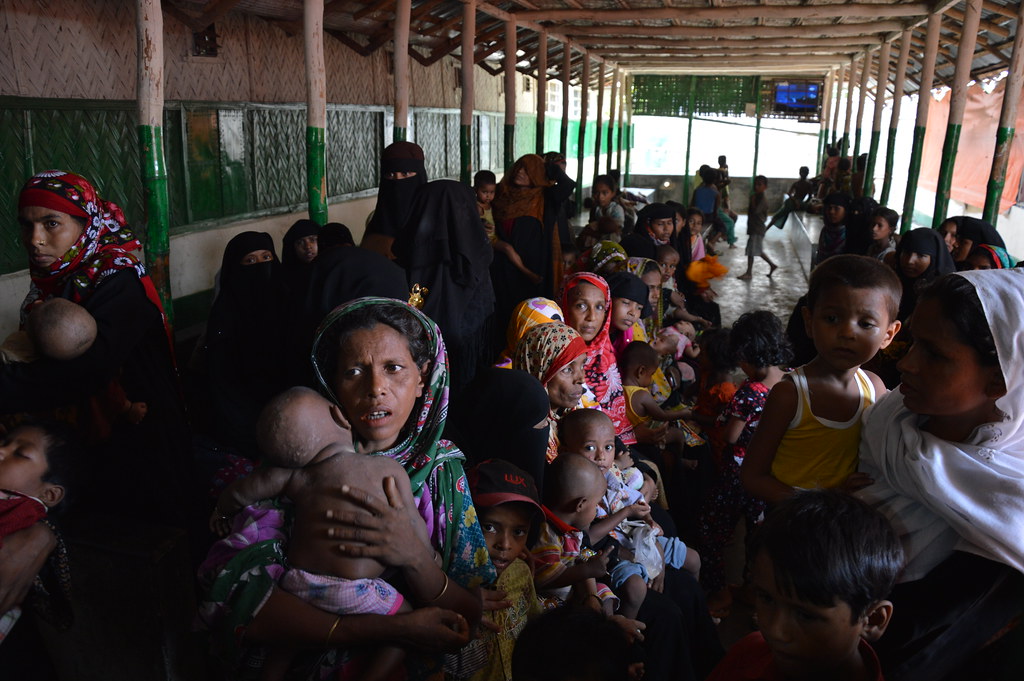
“Is it our instinct to always blame the victim?” asks Ramy Al-Asheq in Ever Since I Did Not Die. We share more such questions from him and others in this special issue. He was born and bred in a refugee camp, eventually incarcerated and suffered till he found a safe haven. An account from Timothy Jay Smith on the plight of refugees who escaped to Lesbos from as far as Afghanistan and Iraq brings to the fore the crises faced by host countries too. Shaheen Akhtar’s short story takes us to a refugee camp for Rohingyas, people who have lived in the region of the Rakhine state from the seventh century but in the last few years have been facing violent displacement. A UN report gives out they are being beheaded, shot and burnt out of their homes.
We have poetry from a refugee from Ukraine who is trying to rebuild her life in Scandinavia, Lesya Bakun, and from Ahmad Al-Khatat of Iraq. Michael Burch brings in the story of Christ while talking of modern day refugees, given that he describes the Child as a ‘Palestinian’. Though did these borders drawn by political needs exist at that time? LaVern Spencer McCarthy questions laws and attitudes that nurture such fences while Ihlwha Choi of Korea talks of love and acceptance being the best balm for refugees — whether North or South Korean or Ukrainian.
The flowers are already in full bloom, In the hearts of the Northern and Southern Koreans, Also in the hearts of the people of Ukraine and Russia.
When will we find a way to get in touch with the same ‘flowers of love’ and acceptance for all humanity living on this beautiful green planet? Do we need to redefine our norms to let our species survive and thrive? Let’s ponder with these writers…
An excerpt from Ramy Al-Asheq’sEver Since I Did Not Die, translated from Arabic by Isis Nusair, edited by Levi Thompson. The author was born in a refugee camp. Click here to read.
Mister, They’re Coming Anyway: Timothy Jay Smith writes on the refugee crisis in Lesbos Island, Greece with photographs by Michael Honegger. Click here to read.
The Magic Staff , a poignant short story about a Rohingya child by Shaheen Akhtar, translated from Bengali by Arifa Ghani Rahman. Click here to read.
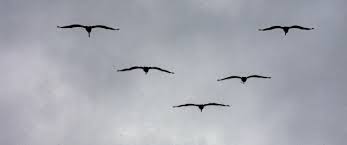
BIRDS IN FLIGHT

Birds in flight
Wings spread wide and tight
Lift off
In perfect formation
Inbuilt navigation
Flying to food and shelter
Unperturbed by storming weather

Men in flight
Crammed in rickety open boats
Set off
Flotsam of a nation
Escaping damnation
No leader, no navigator
No telling their fate in water

They look up to the sky
See birds in flight
Gliding high
In perfect formation
Inbuilt navigation
Out in front a leader
Heading to food and shelter

HAVE WE?  HAVE WE?

Have we learnt another language
to challenge our little brains?
Have we walked in others’ shoes
and learnt of their pain?
Have we shared with them a cup of joy
and freely drunk of theirs too?
Have we sat at their table and
broken bread with them?
Have we stood beside the others
and thought them just the same?
Have we risen above ancient anger,
forgiven our fellow men,
thought them worthy of our compassion
and stretched out our hands?
Have we emptied the bitter cup
that diminishes all men?

Our colours are but geography,
our religions but pathways
to the same universal One.
So who is to say who is better?
It is always our own buried fear,
that we pray at the alter,
then curse the man on the street
just because he looks different
and is from another land;
just because we will not say
he is really homo deus.
A. Jessie Michael is a retired Associate Professor of English from Malaysia. She has written short stories for online journals, local magazines and newspapers. She has published an anthology of short stories Snapshots, with two other writers and most recently her own anthology The Madman and Other Stories (2016).
PLEASE NOTE: ARTICLES CAN ONLY BE REPRODUCED IN OTHER SITES WITH DUE ACKNOWLEDGEMENT TO BORDERLESS JOURNAL
When the mountains and grass
had life, stones whispered
how the world came to be…

'Stonehenge', Daily Star
And as the world came to be, there was war — war that seems to rage in some part of the world or other. The British Museum has an exhibit which states the first battle was staged 13,000 years ago… in what is now Sudan, long before the advent of written history. This was even before the advent of people who built the ancient Stonehenge which was constructed around 3000-2000 BCE. And battles still continue to rage. The Jebel Sahaba casualties in Sudan 13000 years ago were less than 100. But the current conflicts claim in terms of tens of thousands which prolonged could stretch to millions. The last world war (1939-1945) which lasted for six years had a total of 75-80 million persons who perished. Ukraine-Russia conflict has within five months had a casualty count of more than 14000. And yet weapons and nuclear arms continue to proliferate decimating humanity, nature and towns, destroying homes, erasing ruthlessly and creating more refugees. The only need for such battles seem to be to satiate the hunger of the warlords secure in their impenetrable fortresses while tens of thousands are annihilated and natural or nurtured landscapes lie emaciated, mutilated and polluted.
What would be a good way of ending such wars?
Tagore sought the development of better instincts in humankind as an antidote. He wrote in the last century: “Any teaching concerning man must have human nature for its chief element. How far it will harmonise with human nature is a matter of time.”
With wars getting deadlier and more horrific, we can only try to awaken, as Tagore suggests, the better nature in man to move towards a peaceful world. What would be a more effective way of doing it than writing with the hope of a kinder and accepting future?
For that let us start with translations of the maestro Tagore himself. We have a song about the season — monsoon, ‘Monomor Megher Songi (My Friends, the Clouds)’, translated by Professor Fakrul Alam, a painting by Sohana Manzoor interpreting the lyrics and a transcreation of ‘Nababarsha or New Rains’ was shrunken into a popular Rabindra Sangeet and reduced to twenty lines in English by Tagore himself. The connect with nature is an important aspect that enables humans to transcend petty concerns leading to dissensions of different kinds as evidenced in the maestro’s humorous feline skit, translated by Somdatta Mandal. A translation of Dalip Kaur Tiwana’s ‘The Bus Conductor’ from Punjabi by C. Christine Fair adds zest to this section. Fazal Baloch has translated a folktale from Balochistan involving the supernatural and Ihlwha Choi has taken on the cry for peace on behalf of Ukraine while translating his own poem in Korean. The Nithari column has a story by Jishan in Hindustani, translated to English by Grace M Sukanya, showcasing the struggle of a youngster during the pandemic – rather a sad narrative, which though fictitious has its roots in reality.
Our short story section has echoes of humour around felines by Manzoor, somewhat in tune with the mind frame seen in Tagore’s skit on this issue. Humour rings tinged with an apparition in Erwin Coombs’s narrative – should one call it dark humour or is it just his style? Paul Mirabile goes for gothic darkness in his meanderings around Italy.
Strangely, we seem to have a focus on short stories this time. Keith Lyons has interviewed Steve Carr, a journalist, a publisher and writer of 500 short stories who is questing to create a ‘perfect short story’. Reading out excerpts from her short story at a literary festival in Simla, Bollywood celebrity, Deepti Naval, was in conversation with eminent film journalist, Ratnottama Sengupta. She spoke of her literary aspirations while unveiling her autobiography in verse, A Country Called Childhood. This conversation has been shared by Sengupta with Borderless. It is interesting to see how Naval’s reactions to social malaise contrasts with that of the film director, cinematographer and actor, Goutam Ghose, who was present during the unveiling of her book. He had responded to communal violence by making a film on Lalan Fakir extolling virtues of love and kindness, called Moner Manush (2010) and then made a book on the film called, The Quest (2013) which has beautiful translations of Lalan Fakir’s lyrics by Sankar Sen.
Our non-fiction sections seem to be hosting multiple travel stories across UK by Mike Smith, along the Australian coastline by Meredith Stephens, on the Himalayas with Ravi Shankar and an unusual visit by Hema Ravi to a farm in US where animals that had been used in Disney films in the past are homed. Our environmental columnist, Kenny Peavy, actually wrote about his cycling trip from Thailand to Indonesia on a bamboo cycle made by a Singaporean! And from Japan, Suzanne Kamata explored a museum in the neighbouring town of Mure. The museum on a hill hosts the art of American Japanese Artists, Isamu Noguchi.
We do have non-fiction that moves away from travel: noir humour by Devraj Singh Kalsi and an essay by Candice Louisa Daquin on a very interesting subject – ‘Is it Okay to be Ordinary?’ Is it? Dan Meloche has written a literary essay on Canadian novelist Andre Alexis’s award-winning novel, Fifteen Dogs: An Apologue(2015). While Meloche spoke of how the novel departed from Orwell’s Animal Farm, his narrative brought to my mind a novel closer to our times set in England by Jasper Fforde called Constant Rabbit (2020) – this a science fiction while Alexis’s was an apologue or an animal fable. Fforde did use the rabbits rather well to highlight the current times.
We have book excerpts of two recent books that I would call really outstanding. One of them is Aruna Chakravarti’s The Mendicant Prince, which is being released this week, and is based on the evergreen contentious case of the prince of Bhawal that has even been explored even in cinema. The other, Dadamoni: The Life and Times of Ashok Kumarby Nabendu Ghosh, has been published posthumously and is not a translation from Bengali but written in English originally by this trilingual writer.
Called ‘Dadamoni’ affectionately, iconic actor Ashok Kumar is regarded as “the one personality who symbolises Indian cinema’s journey from Bombay Talkies to Bollywood”. This book has been reviewed by Indrashish Banerjee, who calls it ‘a reflection on the Hindi film industry’ as well as a biography. Rakhi Dalal has reviewed Booker winner Geetanjali Shree’s Mai, Silently Mother, a Sahitya Akademi winning translation of her Hindi novel by Nita Kumar, reiterating the dialogue that had been kindled on motherhood last month by Rinki Roy Bhattacharya and Maithili Rao’s The Oldest Love Story (2022). Bhaskar Parichha has reviewed Prosanta Chakrabarty’s Explaining Life Through Evolutionplotting how life evolved on earth. Parichha tells us: “Meaningful, wide-ranging and argumentative, this is a must-read book. It will propel us to imagine and reimagine life around us.” Another book that sounds like a must-read has been reviewed by Meenakshi Malhotra, Tagore’s Gleanings of the Road, translated by Mandal. She tells us: “ ‘Gleanings’ represents the quintessential Tagore…Ably introduced and translated by Somdatta Mandal, a renowned Tagore scholar, the translation captures the iridescent and luminous quality of Tagore’s prose and its chiaroscuro effects.”
There is more to tempt. Please stop by on our contents page and take a look.
We would like to hugely thank all our contributors and readers for being with us and helping us grow. I would like to thank my team, who despite hurdles they face, always lend a helping hand and wonderful words from their pens or computers to get Borderless on its feet. I apologise for the delay and thank you all for your patience. Special thanks to Sohana Manzoor for her fabulous artwork.
I wish you all a wonderful July and peace in a war-torn world. We are all affected by the ongoing conflicts. Let us hope for peaceful and just resolutions.
Migration is tough, littered with blank memories and a bleak future. It’s not something you ever hope to do.
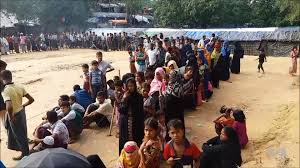
Yet, you find yourself standing in a long queue, with a tiny bundle in hand, despairing to do or not to do? Fleeing a country that you naively thought yours. Stepping on a country that you know nothing about. That would never accept you as her own. Non-belonging is not a breezy concept, a topical topic in a critical theory. It’s an unnerving parable of human condition that no human ever yearns for.
You shudder, clasping the tiny bundle, containing your entire household, your sixteen years of life. Behind you, in a burnt house of a burnt village, your parents, your old grandmother and your two young siblings buried under the ideological beliefs of the state. Too complicated to grasp. Too easy to elude. “They don’t want you”— a clear and loud message the government sent to your people through army, arson, and atrocity.
Where is God? Your silly query swirls in the smoky air of a plundered village where dead people shrouded beneath dead humanity.
Tears fall on the tiny bundle, too small to carry so much misery. How can you leave your home where every dusty road is filled with memories, stories and songs? Where once a young man presented you a handwritten poem and a lotus flower. Where is he now? Dead or alive? Will he search for you?
The long queue gets smaller, some move forward, a few cries looking back at the village while boarding the boat.
Your turn.
They ask for money.
A gold chain, a few coins, a nose pin?
You have none.
Yet, the duo, one boatman and a middleman let you in. They have other means to usurp the debt.
You are crammed between a family with five children, an old woman with acne and a little boy with a broken toy. There are others, men, women, children—your people—hunched and twisted in a small, shabby boat in silence.
Hours after hours, you travel in an opaque night under a livid moon. The endless sea stretches endlessly. What is the name of the sea? No one knows. Your people are poor farmers, illiterate housewives. None of you have ever read history, geography or geology. Ever stood in front of the Taj Mahal or saw any of the seven wonders. You have no idea of its existence. How would you know the glow of the sea is called sea sparkle? How would you grasp that it’s not magic but the phosphorescent waves lighting up the night?
Soon, you and your people would reach a new place. A new country with fresh troubles. Maybe, a new hell. Yet, each of you pray earnestly to reach there safely and soundly. You have no desire to be part of the global headlines. To be found lying face-down on some unknown beach.
All you want is a new home. To build new dreams.
.
Marzia Rahman is a Bangladeshi writer. Her writings have appeared in several print and online journals. She is currently working on a novella. She is also a painter.This story was first featured in the Writing Places Anthology.
.
PLEASE NOTE: ARTICLES CAN ONLY BE REPRODUCED IN OTHER SITES WITH DUE ACKNOWLEDGEMENT TO BORDERLESS JOURNAL
In the uncertain and unsettling time of the COVID-19 crisis, we may be wise to consider our good fortune and family. We are fortunate, in fact, that our family bonds exist and we have loved ones at all. This testifies to God’s ever shining mercy. However, in the current crisis we should also consider those who are distant from us and less fortunate. A variety of faiths teach mercy to the needy.
The word family originally referred to domestic servants under one roof. It only emerged in its current meaning in the 1600’s. Strangely, the word familiar also has a unique history:
mid-14c., “intimate, very friendly, on a family footing,” from Old French famelier “related; friendly,” from Latin familiaris “domestic, private, belonging to a family, of a household;” also “familiar, intimate, friendly,” a dissimilation of *familialis, from familia (see family).
From late 14c. as “of or pertaining to one’s family.” Of things, “known from long association,” from late 15c. Meaning “ordinary, usual” is from 1590s.
The noun meaning “demon, evil spirit that answers one’s call” is from 1580s (familiar spirit is attested from 1560s); earlier as a noun it meant “a familiar friend” (late 14c.). The Latin plural, used as a noun, meant “the slaves,” also “a friend, intimate acquaintance, companion.”
— Online Etymology Dictionary
Family and familiar share a common background apparently. Suspected witches, burned in numerous witch trials, had their familiar spirits. Some speculate that the European psyche was traumatised by the Black Death that depopulated the land, and such widespread trauma led to the historic witch hunts. Fear has a way of unraveling the human psyche and creating an atmosphere of unrest. We are facing similar conditions now.
When our social ties loosen, we turn on one another. Strangers are seen in every human face. Yet what is a stranger? What makes a person a stranger? Are strangers only those who cross borders? Is it the distance separating him or her? Is it a transformation of self that makes another person strange?
Recent foreign policy blunders have shaken the world and created a refugee crisis that only time or God could sort through. From Arab Spring and Mubarak, to Assad and Syrian protests, horrific deaths and destabilizing events shook the Middle East as well as Europe. Refugees fled and were welcomed by Germany, Canada, and the United States, but to the dismay of much of those countries’ populace. Quite possibly, these events brought by the Obama administration are a cause for Brexit as well as tightened immigration policies. France, as recently as 2018, imposed tougher immigration policies and included assimilation and learning French in their priorities for accepted refugees.
The question of nationalism is a heated one. However, even the founder of The Huffington Post, Arianna Huffington, once opposed lax immigration policy though she is an immigrant herself. The debate concerning immigration policy revolves around culture, law, human trafficking, employment, and human rights. Why do nations safeguard a certain identity for themselves? Why is “the Other” to be feared, misunderstood, deported?
Is there something integral to nation states that they desire to protect themselves from those outside them?
All across the world we are asked to practice “social distancing”, to quarantine ourselves to protect against the spread of COVID-19. To “flatten the curve”, experts say, we must work at home and venture out only for essential tasks, and then we must keep our distance from others. As can be expected, people are lonely and restless. The virus has generated conspiracy theories, shut down events and outdoor activities, and emptied stores of wares, especially toilet paper.
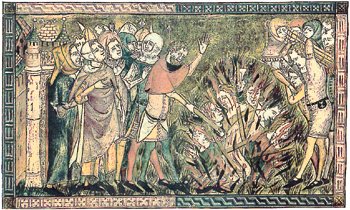
According to Rene Girard, an anthropological philosopher, the plague was often blamed on those of the Jewish faith. Many Jews practiced medicine, and their ability to heal also made them suspect. They were believed to cause the illness they could treat. They were accused of poisoning community wells. It turns out the plague was actually carried by fleas on rats. Hysteria distorts our perceptions of one another. Where there is no perceived explanation, we invent one from our fears and suspicions.
Does a quality of strangeness arouse suspicion? If so, what defines the quality? Is strangeness something within us, not so much outside? When facing inner transformations, do our surroundings alienate us? In what sense are we even masters of our environment, so heated by political strife?
One thing is certain: President Trump told Mexican President Enrique Peña Nieto that his border wall was at the bottom of the priority list. However, couldn’t he tone down the divisive rhetoric? Or is this the way he befuddles a hostile press?
American Historian Howard Zinn wrote, “Nations are not communities and never have been. The history of any country, presented as the history of a family, conceals the fierce conflicts of interest (sometimes exploding, often repressed) between conquerors and conquered, masters and slaves, capitalists and workers, dominators and dominated in race and sex. And in such a world of conflict, a world of victims and executioners, it is the job of thinking people, as Albert Camus suggested, not to be on the side of the executioners.”
Recall the etymology of family and familiar. The strangeness of the Other is the strangeness of our haunted psyche. We project our fears and naked ambitions onto the Other, or the outsider, who we construe secretly to harbour those same things within. Does the Other become our double? Considering our eusocial nature, Othering may be the psychological stumbling block we put our heads on before the executioner arrives.
President Trump insisted on calling COVID-19 “the Chinese virus” during this crucial period of trade negotiations with the Chinese government. In his briefing, he informs the press and public that his negotiations are going well. In what sense is he, as President, Othering China? Do we Other him in our recoil against his rhetoric? Perhaps he is the doppelgänger of our country’s hideous history coming to bite us back. Perhaps he is the voice of the forgotten, as his adviser Stephen Miller told CNN. In being the voice of the forgotten working class, has he saved the working class at all or only confused things more?
One thing is certain: we are strangers to ourselves if we cannot answer these questions.
Dustin Pickering is the founder of Transcendent Zero Press and editor-in-chief of Harbinger Asylum. He has authored several poetry collections, a short story collection, and a novella. He is a Pushcart nominee and was a finalist in Adelaide Literary Journal’s short story contest in 2018. He is a former contributor to Huffington Post.
Disclaimer: The opinions expressed are solely that of the author and not of Borderless Journal.





 Borderless