The sun never asks for applause
while the moon gets all the credit
for her glow and romantic stimulation.

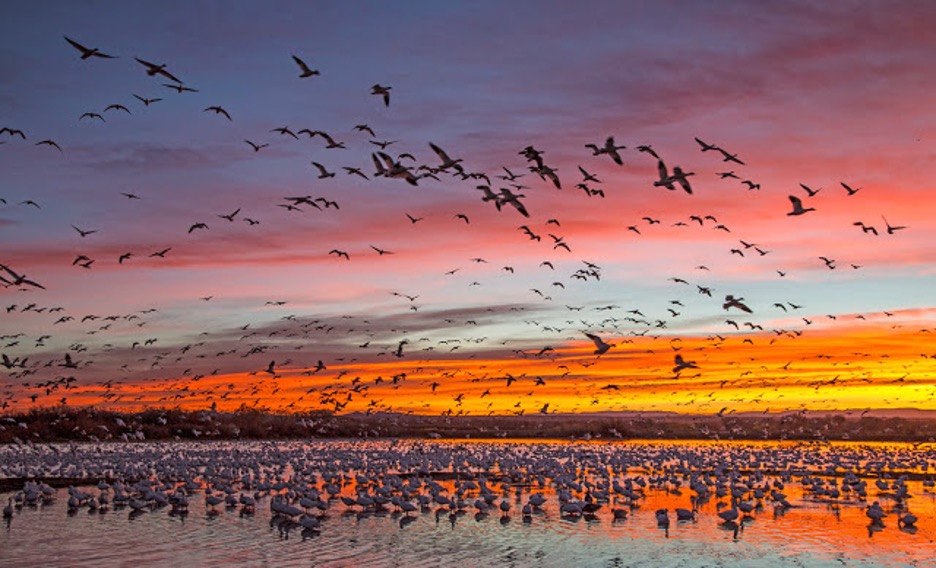
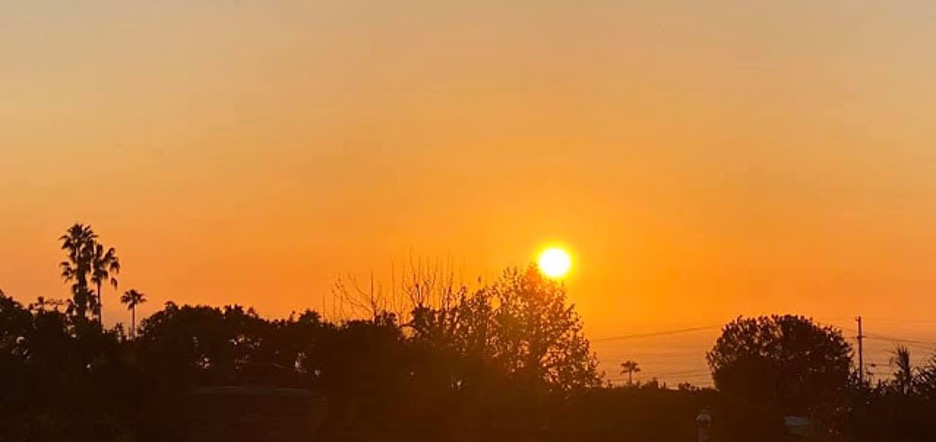
The sun sends energy into the morning sky.
Clouds collect and play on his palette.
The sun waits to outshine all droplets.
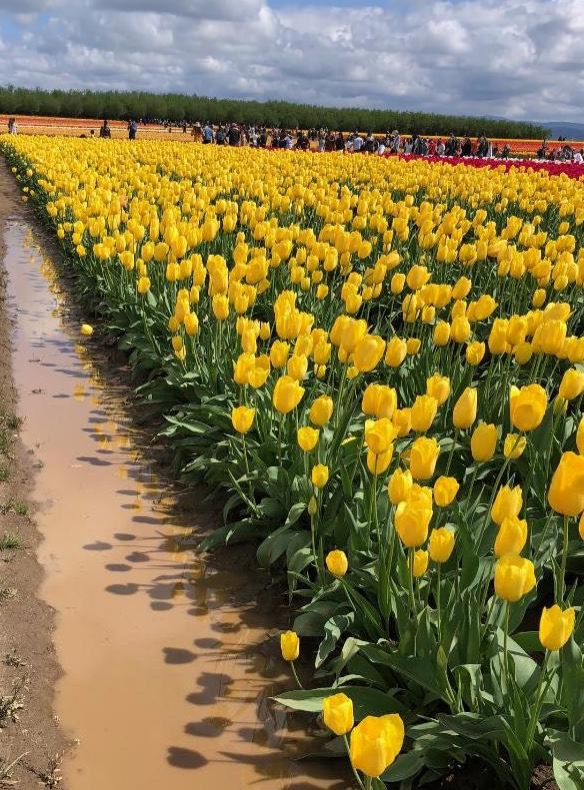
How many forget his nurture of tulips?
Yet, the audience blames him for sunburns,
the need for blinds, or those stormy days.

The sun shines on beyond crankiness,
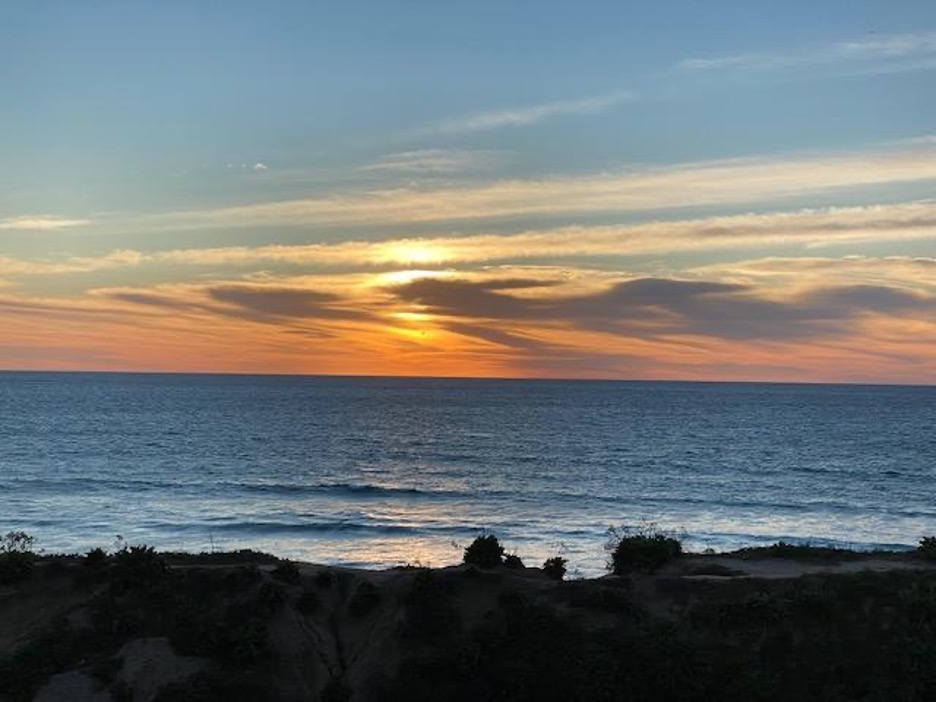
swirls and provides a master show each evening.
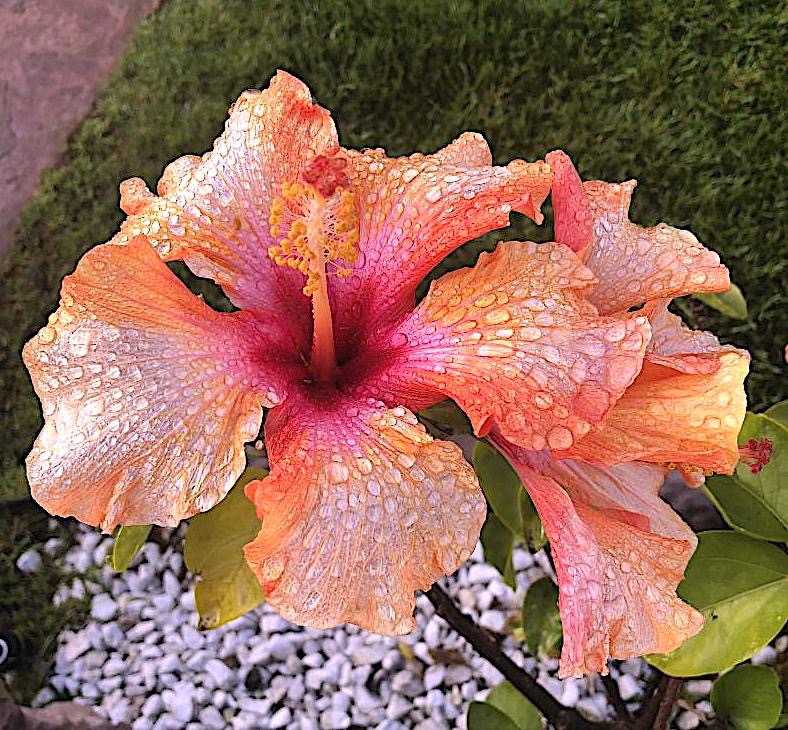
The morning’s dew on hibiscus
reflects the tangerine sunrise
diverts focus beyond teardrops.
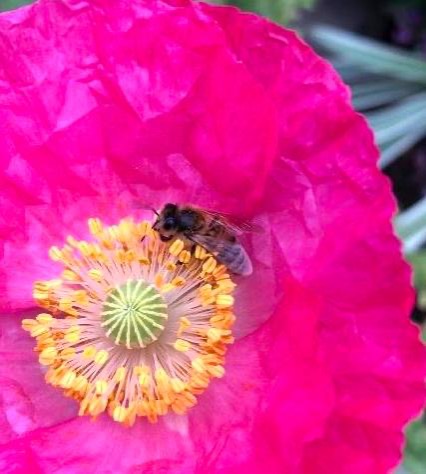
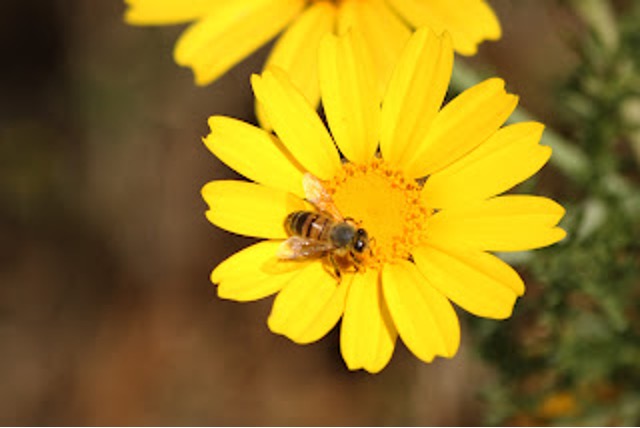
Imagine a bee’s view
as a creative exploration
to evaporate all fears.

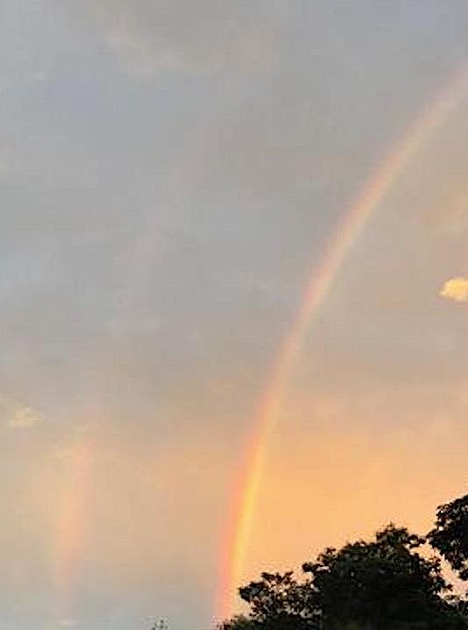
Collect a collage of rainbows
to rise and shine above
the storms of frustration.
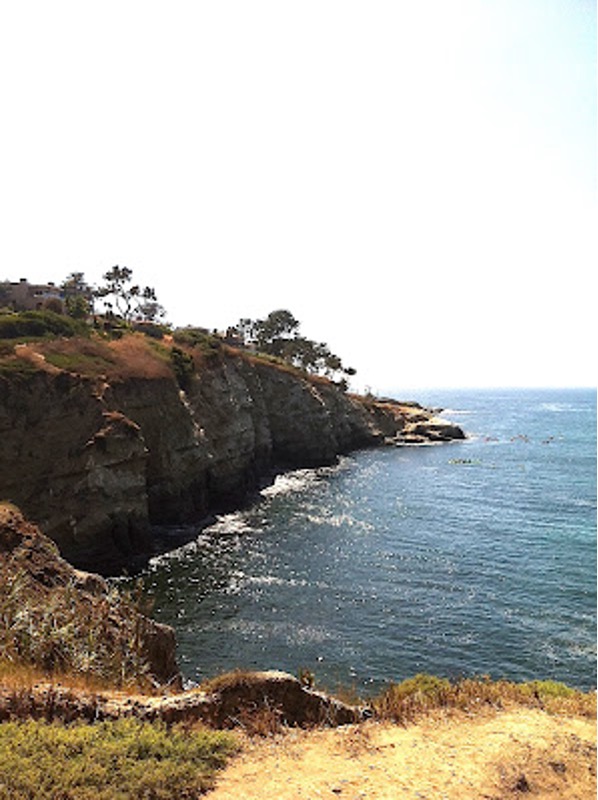
Autumn by the Sea
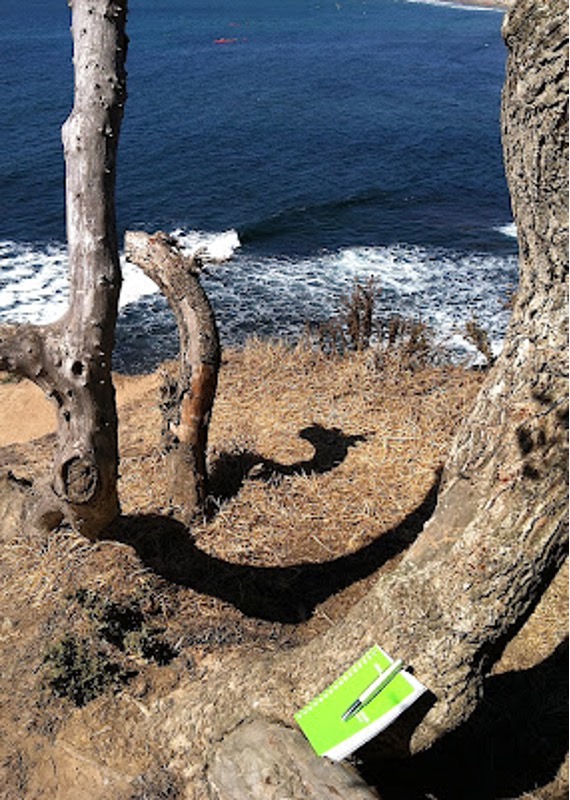
The shadow dragon watches for words.

Waves whoosh
  to shore,
   crackle
     into caves.
Blue satin rocks
       the sea's performance.
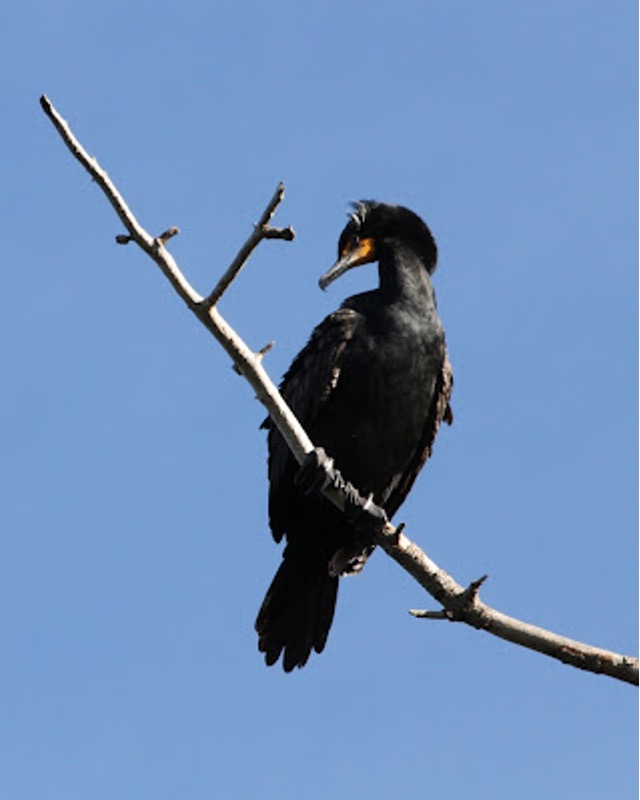
On Torrey pine branches, cormorants pose like banners.
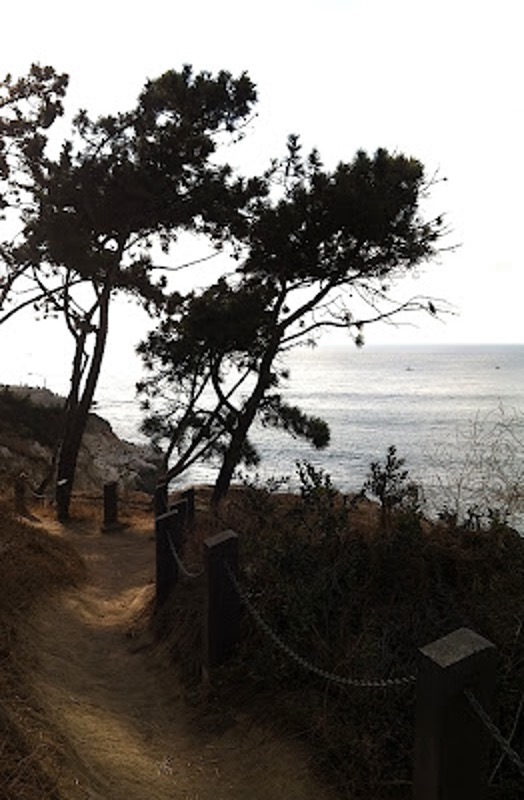
Crisped by summer sun, grass mingles with the muse of daisies on trails of sandstone dust.
Ask to borrow wings for one day.
Penny Wilkes, served as a science editor, travel and nature writer and columnist. An award-winning writer and poet, she has published a collection of short stories, Seven Smooth Stones. Her published poetry collections include: Whispers from the Land, In Spite of War, and Flying Lessons. Her Blog on The Write Life features life skills, creativity, and writing: http://penjaminswriteway.blogspot.com/ . Her photoblog is @: http://feathersandfigments.blogspot.com/
.
PLEASE NOTE: ARTICLES CAN ONLY BE REPRODUCED IN OTHER SITES WITH DUE ACKNOWLEDGEMENT TO BORDERLESS JOURNAL
On August 8th 2021, the chief of the International Olympic Committee, Thomas Bach, pointed out during the closing ceremony that these games were “unprecedented” and brought messages of “hope, solidarity and peace” into a world torn with the desolation generated by the pandemic. It was a victory of the human spirit again, a precursor of what is to come. That the Japanese could get over their pandemic wrought hurdles, just as they did post the nuclear disasters wrought by the Second World War and by the 2011 earthquake-tsunami at Fukushimaya, to host something as spectacular and inspiring as these international games reflects, as the commentators contended, a spirit of ‘harmony and humility’. The last song performed by many youngsters seemed to dwell on stars in the sky — not only were the athletes and organisers the stars but this also reminded of unexplored frontiers that beckon mankind, the space.What a wonderful thing it was to see people give their best and unite under the banner of sports to bring messages of survival and glimpses of a future we can all share as human beings! Our way of doing things might have to evolve but we will always move forward as a species to thrive and expand beyond the known frontiers.
One such explorer of yet unknown frontiers who mingles the historic with the contemporary, Goutam Ghose, an award-winning filmmaker and writer, has honoured our pages with an extensive interview showing us how art and harmony can weave lores that can help mankind survive. This is reinforced by the other interview with Singaporean academic, Dr Kirpal Singh, whose poetry reflects his convictions of a better world. With our intelligence, we can redefine processes that hold us back and grind our spirits to dust — be it the conventional ‘isms’ or norms that restrict our movement forward – just as Tagore says in the poem, we have translated this time, ‘Deliverance’.
…On this auspicious dawn,
Let us hold our heads high in the infinite sky
Amidst the light of bounteousness and the heady breeze of freedom.
As the Kobiguru mentioned earlier in the poem, the factors that oppress could be societal, political, or economic. Could they perhaps even be the fetters put on us by the prescribed preconceived definition of manmade concepts like ‘freedom’ itself? Freedom can be interpreted differently by multiple voices.
This month, on our pages, ‘freedom’ has found multiple interpretations in myriad of ways — each voice visualising a different dream; each dream adding value to the idea of human progress. We have discussions and stories on freedom from Nigeria, Argentina, India, Pakistan, Myanmar, Malaysia and more. Strangely enough, August holds multiple independence/ national days that are always for some reason seen as days of being ‘freed’ by many — at least from oppression. But is that true?
From Malaysia, Julian Matthews and Malachi Edwin Vethamani cry out against societal, religious and political bindings – quite a powerful outcry at that with a story and poems. Akbar Barakzai continues his quest with three poems around ideas of freedom translated from Balochi by Fazal Baloch. Jaydeep Sarangi and Joan Mcnerny pick up these reverberations of freedom, each defining it in different ways through poetry.
Jared Carter takes us back to his childhood with nostalgic verses. Ryan Quinn Flanagan, Michael Lee Johnson, Vandana Sharma and many more sing to us with their lines. Rhys Hughes has of course humour in verse that makes us smile as does Jay Nicholls who continues with her story-poems on Pirate Blacktarn – fabulous pieces all of them. The sport of hummingbirds and cats among jacaranda trees is caught in words and photographs by Penny Wilkes in her Nature’s Musings. A poetic tribute to Danish Siddiqui by young Sutputra Radheye rings with admiration for the Pulitzer prize-winning photographer who met his untimely end last month on 16th while at work in Afghanistan, covering a skirmish between Taliban and Afghanistan security forces. John Linwood Grant takes up interesting issues in his poetry which brings me back to ‘freedom’ from colonial regimes, perhaps one of the most popular themes for writers.
Indo-Pak independence, celebrated now on 14th (Pakistan) and 15th August (India), reflects not only the violence of the Partition which dislocated and killed millions historically but also the trauma caused by the event. Capturing this trauma is a short story based on memories of Partition by Nadir Ali, translated from Punjabi by his daughter, Amna Ali. Ratnottama Sengupta translates from the diary of Sandhya Sinha (1928-2016), a woman’s voice from the past that empathises with the subjugated who were subdued yet again after an upsurge of violence during the Quit India Movement (1942) against the colonials. Sinha contends that though the movement frittered away, the colonials were left with an after-taste of people hankering for self-rule. A thought-provoking short story by Sunil Sharma explores the results of self-rule in independent India.
Alluding to Jinnah’s vision for women, Aysha Baqir muses emotionally about the goals that remain yet to be fulfilled 74 years after independence. Moazzam Sheikh’s story of immigrants explores dementia, giving us a glimpse of the lives of Asian immigrants in America, immigrants who had to find a new home despite independence. Was this the freedom they dreamt of — all those who fought against various oppressive regimes or colonialism?
Tagore’s lyrics might procure a few ideas on freedom, especially in the song that India calls its National Anthem. Anasuya Bhar assays around the history that surrounds the National Anthem of India, composed by Tagore in Bengali and translated to English by the poet himself and more recently, only by Aruna Chakravarti. We also carry Dr Chakravarti’s translation of the National Anthem in the essay. Reflecting on the politics of Partition and romance is a lighter piece by Devraj Singh Kalsi which says much. ‘Dinos in France’ by Rhys Hughes and Neil Reddick’s ‘The Coupon’ have tongue-in-cheek humour from two sides of the Atlantic.
A coming-of-age story has been translated from Nepali by Mahesh Paudyal – a story by a popular author, Dev Kumari Thapa – our first Nepali prose piece. We start a four-part travelogue by John Herlihy, a travel writer, on Myanmar, a country which has recently been much in the news with its fight for surviving with democracy taking ascendency over the pandemic and leaving the people bereft of what we take for granted.
Candice Louisa Daquin discusses a life well-lived in a thought provoking essay, in which she draws lessons from her mother as do Korean poet, Ihlwha Choi, and Argentinian writer, Marcelo Medone. Maybe, mothers and freedom draw similar emotions, of blind love and adulation. They seem to be connected in some strange way with terms like motherland and mother tongue used in common parlance.
We have two book excerpts this time: one from Beyond the Himalayas by the multi-faceted, feted and awarded filmmaker we have interviewed, Goutam Ghose, reflecting on how much effort went in to make a trip beyond boundaries drawn by what Tagore called “narrow domestic walls”. We carry a second book excerpt this time, from Jessica Muddit’s Our Home in Myanmar – Four years in Yangon. Keith Lyons has reviewed this book too. If you are interested in freedom and democracy, this sounds like a must read.
Maithreyi Karnoor’sSylvia: Distant Avuncular Ends,is a fiction that seems to redefine norms by what Rakhi Dalal suggests in her review. Bhaskar Parichha has picked a book that many of us have been curious about, Arundhathi Subramaniam’s Women Who Wear Only Themselves. Parichha is of the opinion, “Elevated or chastised, exonerated or condemned, the perturbation unworldly women in India face is that they have never been treated as equal to men as spiritual leaders. This lack of equality finds its roots not only in sociological and cultural systems, but more particularly at the levels of consciousness upon which spirituality and attitudes are finally based.”One wonders if this is conclusive for all ‘unworldly women’ in India only or is it a worldwide phenomenon or is it true only for those who are tied to a particular ethos within the geographical concept of India? The book reviewed by Meenakshi Malhotra, Somdatta Mandal’s The Last Days of Rabindranath Tagore in Memoirs, dwells on the fierce independence of the early twentieth century women caregivers of the maestro from Bengal. These women did not look for approval or acceptance but made their own rules as did Jnadanandini, Tagore’s sister-in-law. Bhaskar Parichha has also added to our Tagore lore with his essay on Tagore in Odisha.
As usual, we have given you a peek into some of our content. There is more, which we leave for our wonderful readers to uncover. We thank all the readers, our fantastic contributors and the outstanding Borderless team that helps the journal thrive drawing in the best of writers.
I wish you all a happy August as many of the countries try to move towards a new normal.
Becoming Marco Polo


Outside her childhood bedroom,
a Jacaranda tree rubbed the porch railing
in squeals that lead curiosity like a piper.
She sneaked out the window to climb it.

Thighs squeezed the bark; arms in hug.
She needed to touch the V formed by branches
near the ground. If only she could reach it,
then swing to the grass where adventures waited.

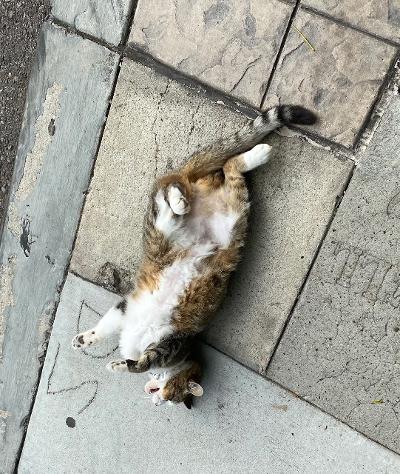
Night warbling continued from the tree. Muggins,
the cat, dug claws in the wood and scampered
the highway at will. Her tail spiralled in the breeze.
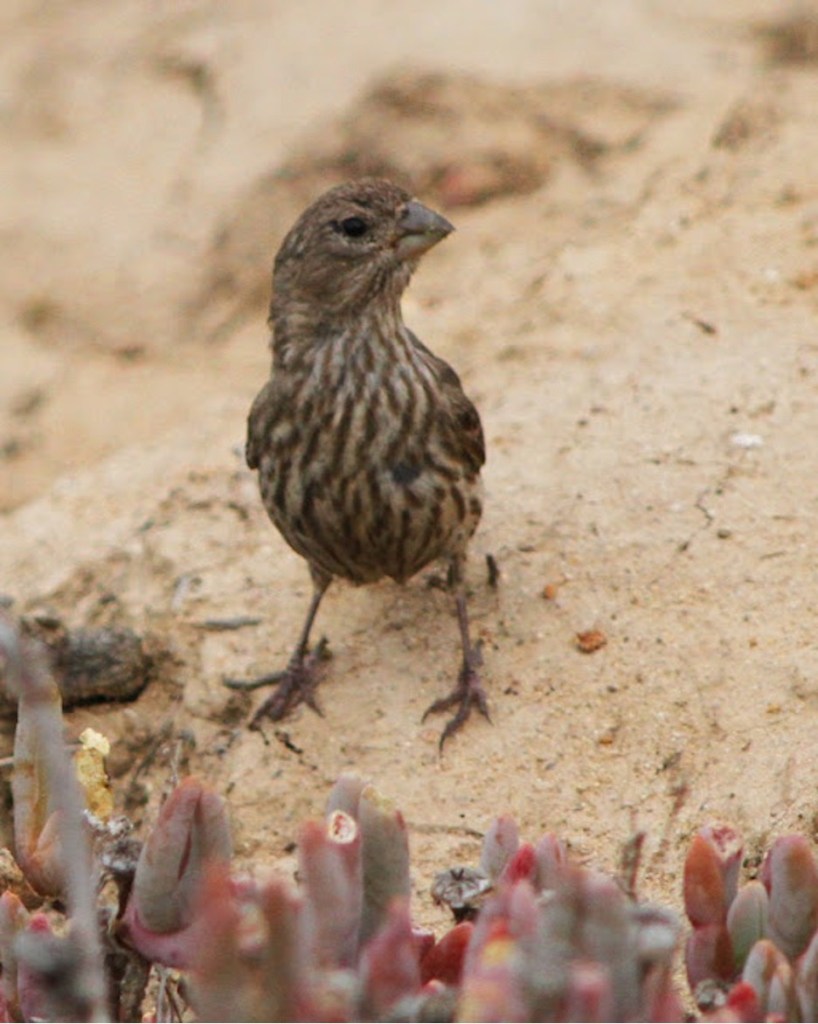
Finch chitters arose from limbs. Even they
flew in and out of branches or captured ants
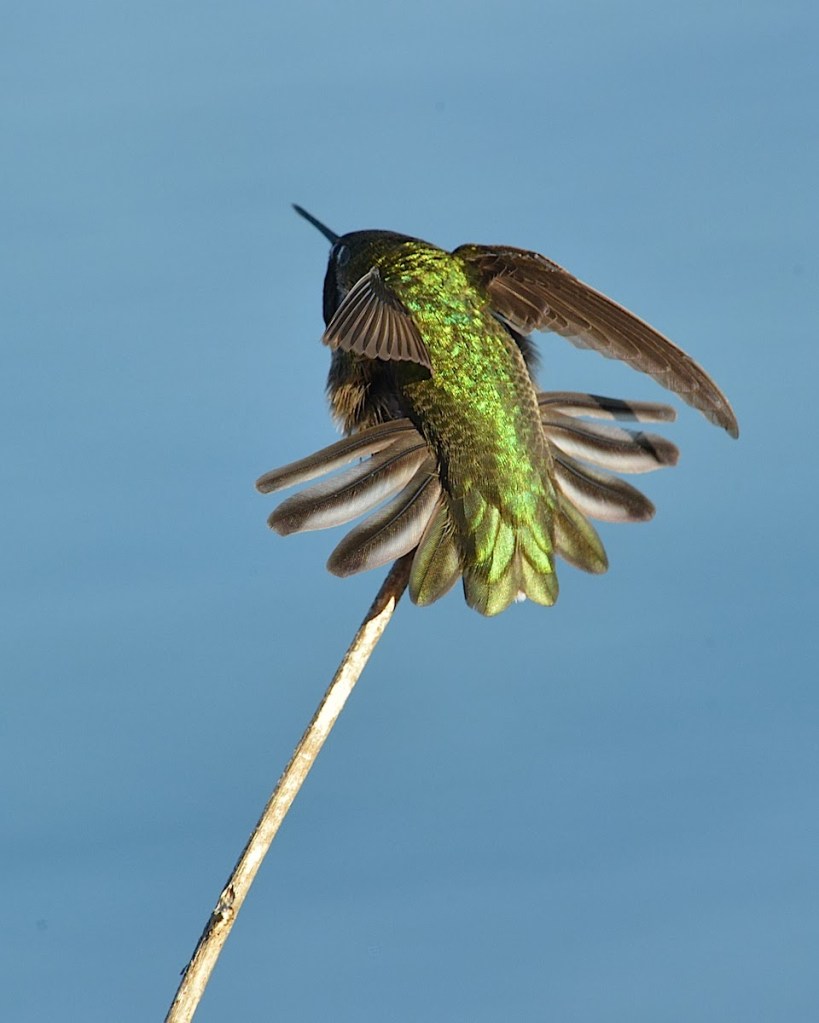
on this Silk Road. A hummingbird made its nest
higher than her reach. When her father called,
she looked out the window, stuck in the middle.

Again, she tried, clutched with her fingers
to find security in the roughness. Blood mingled
with grey bark in failed attempts to settle into the V.
Courage grew in welts on arms and legs.

In spring, an explosion of lavender blossoms
flew a fragrance of musk into the air. She took a breath
and tried once more. One shoe felt the wedge.
Another stretch and both feet arrived.

She balanced and looked upward into an applause
of leaves. She jumped from the V
to explore the world and back before dinner.
Penny Wilkes, served as a science editor, travel and nature writer and columnist. An award-winning writer and poet, she has published a collection of short stories, Seven Smooth Stones. Her published poetry collections include: Whispers from the Land, In Spite of War, and Flying Lessons. Her Blog on The Write Life features life skills, creativity, and writing: http://penjaminswriteway.blogspot.com/ . Her photoblog is @: http://feathersandfigments.blogspot.com/
.
PLEASE NOTE: ARTICLES CAN ONLY BE REPRODUCED IN OTHER SITES WITH DUE ACKNOWLEDGEMENT TO BORDERLESS JOURNAL
In conversation with an American poet,Jared Carter, who has received multiple encomiums like the Walt Whitman Award, the Poets’ Prize, a Guggenheim fellowship and much more. He tells us of his life and how he writes a poem. Click here to read.
In conversation with eminent academic and translator, RadhaChakravarty. Click here to read.
Translations
Two songs by Tagore written originally in Brajabuli, a literary language developed essentially for poetry, has been translated by Radha Chakravarty. Click here to read.
Korean Poetry written and translated to English by Ihlwha Choi. Click here to read.
Poetry in Bosnian from Bosnia & Herzegovina, written and translated by Maid Corbic. Click here to read.
Translation of ‘Dushomoy’ by Tagore, from Bengali to English by Mitali Chakravarty on behalf of Borderless Journal. Click here to read and listen to Tagore’s voice recite his poem in Bengali.
Penny Wilkes takes us Down the Path of Nostalgia with a mix of old and new photography and prose and poetry on how a decade after the end of the Second World War, she started her love affair with photography and nature. Clickhere to read
Marjuque-ul-Haque explores Mughal Lalbagh fort left unfinished in Dhaka, a fort where armies were said to disappear during the Sepoy Mutiny of 1857. Clickhere to read.
Nishi Pulugurtha journeys with her camera on the famed grounds near Fort William, a major historic site in Kolkata. Click hereto read.
Musings of a Copywriter
In Managing Bookshelves, Devraj Singh Kalsi cogitates with wry humour while arranging his book shelves. Click here to read.
Adventures of the Backpacking Granny
Sybil Pretious concludes her adventures this round with a fabulous trip to Generous Indonesia, a country with kind people, islands and ancient volcanoes. Click here to read.
A poignant real life story by Jeanie Kortum on adopting a child. Click here to read
The Literary Fictionist
In Scarecrow, Sunil Sharma explores urban paranoia. Click here to read.
Book Excerpt
The Parrot’s Tale, excerpted from Rabindranth Tagore. The Land of Cards: Stories, Poems and Plays for Children, translated by Radha Chakravarty, with a foreword from Mahasweta Devi. Clickhere to read.
In a tribute to Bollywood legend Dileep Kumar, Ratnottama Sengupta, one of India’s most iconic arts journalists, recollects the days the great actor sprinted about on the sets of Bombay’s studios …spiced up with fragments from the autobiography of Sengupta’s father, Nabendu Ghosh. Click here to read.
“Nothing can be unconditional: consequently, nothing can be free.”


“Liberty means responsibility. That is why most men dread it.”

-- George Bernard Shaw,  Maxims for Revolutionists, Man & Superman (1903)
George Bernard Shaw (1856-1950), a great writer and playwright, used these epigrammatic lines to bring focus on what people thought was liberty or freedom from oppression, from regimes that were dictatorial. While discussing concepts of freedom, one does wonder if political freedom solves all humane issues, occasions we celebrate with great aplomb, like the birth of a nation.
This month started with the observance of July 4th, the date of the American Revolution in 1776 and the publication date of Whitman’s Leaves of Grass in 1855. In between these two years, in 1789, ten days down the line, on July 14th, another significant occurrence has been handed down by history to be celebrated as the Bastille Day— the day prisoners were freed from Bastille, a major event that led to the overthrow of the insensitive monarchy in France, a symbolic resurgence of the common, exploited man that has often been seen as an inspiration for later uprisings to reinforce the concept of democracy or liberté, égalité, fraternité.
As we move forward in time, towards August, one wonders if liberty attained by these means was good for all fellow humans? France was part of the Allied Forces that with America taking the lead dropped not one but two atom bombs on Hiroshima and Nagasaki on August 6th and 9th, 1945, to end the Second World War. Did the ends justify the means? Reflecting the cry and suffering of these victims, we have poetry from Suzanne Kamata, a well-known writer from Japan. Michael Burch on the other hand has shared poetry with us which shows how the nuclear programme continued unrepentant despite the devastation it caused. One must give kudos to the descendants of the victims of the nuclear blast that they have forgiven the perpetrators, admitted their own hand in the Second World War and moved ahead. In that spirit, we have an essay on peace by Candice Louisa Daquin, who joins the Borderless team as a writer-in-residence.
We have much happening in poetry this time with an interview of American poet Jared Carter, a recipient of number of awards and fellowships, including the Walt Whitman Award and the Guggenheim fellowship. He walks us through how he created the poem ‘Yeti’ (first published in the May edition of Borderless) and talks of the impact of artifacts from China and India on his own thought processes, the impact of Du Fu (712-770) and much more. We have a poem in Du Fu’s style this time by George Freek and an interesting poem with a Chinese title by Carter, a title that can have multiple connotations and yet each seems to fit the poem perfectly.
Rhys Hughes has brought humour into our pages with both his poetry and essay on William Mcgonagall, who bore the sobriquet of the worst writer in the world through his life and had things thrown at him when he read his poetry in Dundee. Yet, his work survived the beatings, and he lives on known as the ‘Scottish Homer’.
More poetry by Singaporean poet Marc Nair gives us a glimpse of the little island as viewed by someone who has grown up on it. Poetry is always multi-hued, and we have Lorraine Caputo transport us to a Garífuna village in Honduras. Penny Wilkes takes us ‘Down the Path of Nostalgia’ with a mix of old and new photography, prose and poetry on how almost a decade after the end of the Second World War, she started her love affair with photography and nature. It hovers between poetry and musings, and this time we have a rare musing by Jared Carter too. Devraj Singh Kalsi continues cogitating with wry humour while arranging bookshelves. We also have the backpacking granny visitingIndonesia. Post sharing this trip, our granny — Sybil Pretious — plans a little break from publishing to complete her memoirs.
A riveting flash fiction by Kaiyi Tan celebrates the spirit of conquest in these dark times, weaving into the pandemic lore the quest for personal freedom. Stories this time carry a real life one by Jean Kortum on adoption — her own struggle. But then, stories can be real or unreal – draw a bit from both to reflect bigger truths or create alternates that sink into the human mind as a perceived reality and leave an imprint deep inside the heart, like that of Niles Reddick. My conviction is that some lived experiences of writers seep into each story, whether it is from Bangladesh or India or by our literary fictionist, Sunil Sharma. His narrative continues infused by suspense.
We have a complete translated story of Tagore by Radha Chakravarty as our book excerpt this time. ‘The Parrot’s Tale’, ostensibly part of a children’s collection, reflects Tagore’s response to conventional schooling — a reason for him to start Shanti Niketan perhaps. She has also shared two of her translations of Rabindranath’s songs from Bhanusingher Padabali (1884, Bhanusingh’s verses). Chakravarty generously consented to an interview and has given us a glimpse of her journey as a translator and critic. We also have translated a long poem by Tagore on our pages, a poem that inspires hope, though it was named Dushomoy (1897, Bad Times) finally. The original name had been Swarga Patthe (On the Path to Heaven) as can be seen from a page in his diary. We have been fortunate in finding a recording of his voice reciting the poem in Bengali and the print of a sample page of the manuscript bearing his signature.
We continue with Akbar Barakzai’s poetry translated by Fazal Baloch from Balochi – this time addressed to his daughter reminding for some reason of Nehru’s Letters from a Father to his Daughter — a book I read as a child. In addition, we have translations from Korea and Bosnia & Herzegovina, from where the young poet, Maid Corbic, has taken up the concept of freedom of the self and of the nation, both together.
Keith Lyons from New Zealand in his very brief essay has quoted American novelist William Faulkner, “We must be free not because we claim freedom, but because we practice it.” And perhaps we need to remember this if for no other reason, then, just to maintain our own sanity in these strange, almost unreal times as we attempt to unite as humankind to free ourselves from an unknown and unfathomable virus.
In a more sombre note, last week, untroubled by the virus, a victim of cancer, Bollywood legend Dileep Kumar, aged 98, breathed his last. Ratnottama Sengupta adds an unusual colour to the Borderless Journal with her tribute to this hugely acclaimed actor. In the process, she unfolds for us a brief history of the Indian cinema, and a glimpse of a world that transcends all man made constructs in quest of perfection.
We have an interesting set of reviews this July. Rakhi Dalal has reviewed Anuradha Kumar’s riveting short story collection, A Sense of Time. A murder mystery for young readers, Murder at Daisy Apartments by Shabnam Minwalla, has been reviewed by Gracy Samjetsabam. The Third Eye of Governance–Rise of Populism, Decline in Social Research by Dr N Bhaskara Rao, reviewed by Bhaskar Parichha, seems to be a non-fiction that looks forward to bridging gaps between academia and the real world, a truly felt need. Parichha has also given us an essay on a man who inspired Ian Fleming, the creator of James Bond, to make him a part of his lore, a journalist who moved around all of Asia with equal aplomb and a sense of humour – a truly global citizen called Richard Hughes.
I want to thank all our wonderful contributors for making this edition a reality. And readers, we leave you to explore the unknown… like that place we call outer space. A huge thank you again to not only all our wonderful contributors, our faithful readers but also to the fabulous Borderless team scattered across the world.
Before I wind up, a little bird trills a song of hope in my ear. Business tycoons have started stepping into the mysterious void of space to eventually – let us hope — create affordable travel for common man, though it has started off as an expensive proposition. Will this be an industry that will generate more jobs on and off Earth and find new places for man to inhabit? After all, when George Bernard Shaw wrote his plays and essays, we had yet to cross the frontiers beyond Earth, had never even thought of flying across the world in budget airlines or mining moons!
Will we have a new world, a new outlook and a new set of hopes and aspirations as we stretch the frontiers of our home planet?
Wish you all a wonderful month of reading and thinking.
Penny Wilkes gives us a glimpse of how she was started on her romance with nature & photography by her father, almost a decade after the end of World WarII
My father left earth 44 years ago on November 22. I shared his love, creativity, and friendship for 31 years. He continues to inspire each day. I hear his laugh, his lyrical call, “Oooh Hoo,” when he wanted my attention or entered a room to find me. When I turn a corner, often a phantom whiff of Old Spice brings me joy.
When I search in a mirror, his features beam.
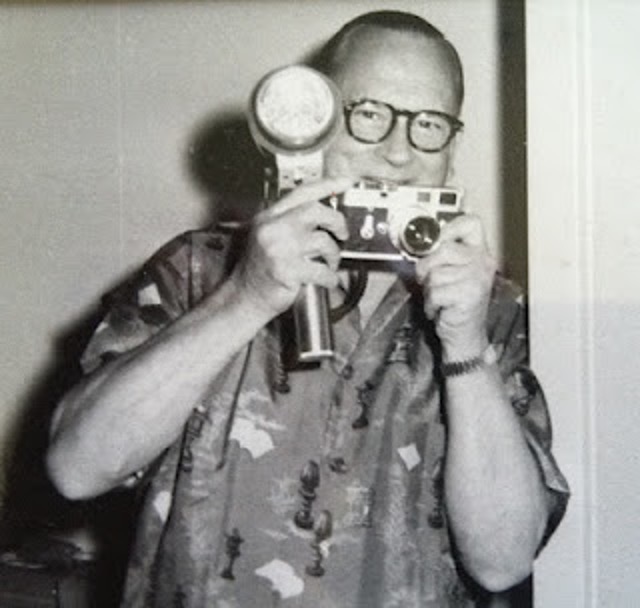
My father loved to take photographs. I watched, eager to learn how to capture moments as we traveled around the world.
Before my eighth birthday, I asked for a Brownie camera. I had seen the square, brown one that would fit in my hand. Also, it could hang around my neck on a braided string. I showed my father photos from American Girl magazine.
The S.S. President Monroe* became our home on my birthday that year. My father gave me a square package. When I opened my gift, I discovered a Leica camera.
A pout revealed my disappointment as I set it aside.
“Come on Petsy, get your camera and let’s go on deck,” my father sighed and grabbed his camera and mine.
Once we reached the top deck, he positioned the camera in my hands. He moved it to my eyes so the viewfinder would reveal a capture of the sea rough with white caps and animated clouds above. Then he left it to me.
I clicked on and on. Flying fish presented their show to my delight. Then it seemed the photo roll had ended.
“What happened?” I asked.
As my father examined the camera, he discovered the cap still on the lens.
“Really?” His anger flared as he removed the cap.
I cried as we descended to our room. He showed stern frustration I’d not experienced from him before.
Later, as the sky dimmed, he suggested we return to the top deck. He installed more film, storing the cap in his pocket.
Click. Click. Click our cameras sung. He spoke of the sun as the “great ball of fire.” As the clouds danced in red and orange hues, he pointed out sky dragons at play.
We moved around to take in the clouds and colors and our bonding moments began.
He shared more stories of creatures in the sky and encouraged me to find shapes to turn into stories.
Once I worried when he needed to stay in bed with the flu. He encouraged me, “No worries. I can’t leave till my work on earth is done.”
I believe he had much more work left to do. Today, the world would benefit from his exuberance.
We continue to share sunsets and I create stories.
Tie the Memories
I let go of a yellow balloon
my father puffed to life
He tied it to my wrist
.
I untied it
and my fingers clutched
slippery air
.
It floated
beyond limbs of sycamores
to circus animal clouds
.
He smiled when I asked, “Why?”
We’d talked about that before.
.
We found merry-go-rounds
in Paris and Kyoto.
Laughed atop a Ferris wheel
stuck in Brighton beach
.
I burned the lamb chops
in adolescent heart break
He put on more mint jelly
.
No answers in corridors
gray as shrouds
when his twilight spread
on raven wings
.
I let go the string
this tug more desperate
than his breath.
* The author travelled on the ship President Monroe after it was decommissioned in 1954.
.
Penny Wilkes, served as a science editor, travel and nature writer and columnist. An award-winning writer and poet, she has published a collection of short stories, Seven Smooth Stones. Her published poetry collections include: Whispers from the Land, In Spite of War, and Flying Lessons. Her Blog on The Write Life features life skills, creativity, and writing: http://penjaminswriteway.blogspot.com/ . Her photoblog is @: http://feathersandfigments.blogspot.com/
.
PLEASE NOTE: ARTICLES CAN ONLY BE REPRODUCED IN OTHER SITES WITH DUE ACKNOWLEDGEMENT TO BORDERLESS JOURNAL
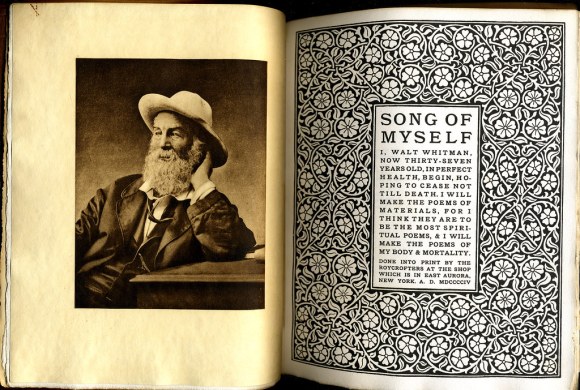
I CELEBRATE myself, and sing myself,
And what I assume you shall assume,
For every atom belonging to me as good belongs to you...

(Excerpted from Song of Myself, Walt Whitman, 1881)
Fourth of July, was the date that Walt Whitman’s anthology, Leaves of Grass, was published for the first time. The year was 1855. This was a book with poetry that embraced all humanity. The writing did not look for philosophical labels but reached out to all mankind touching the hearts of millions beyond the poet’s own lifetime, rising above races, rituals, politics, economics and hatred.
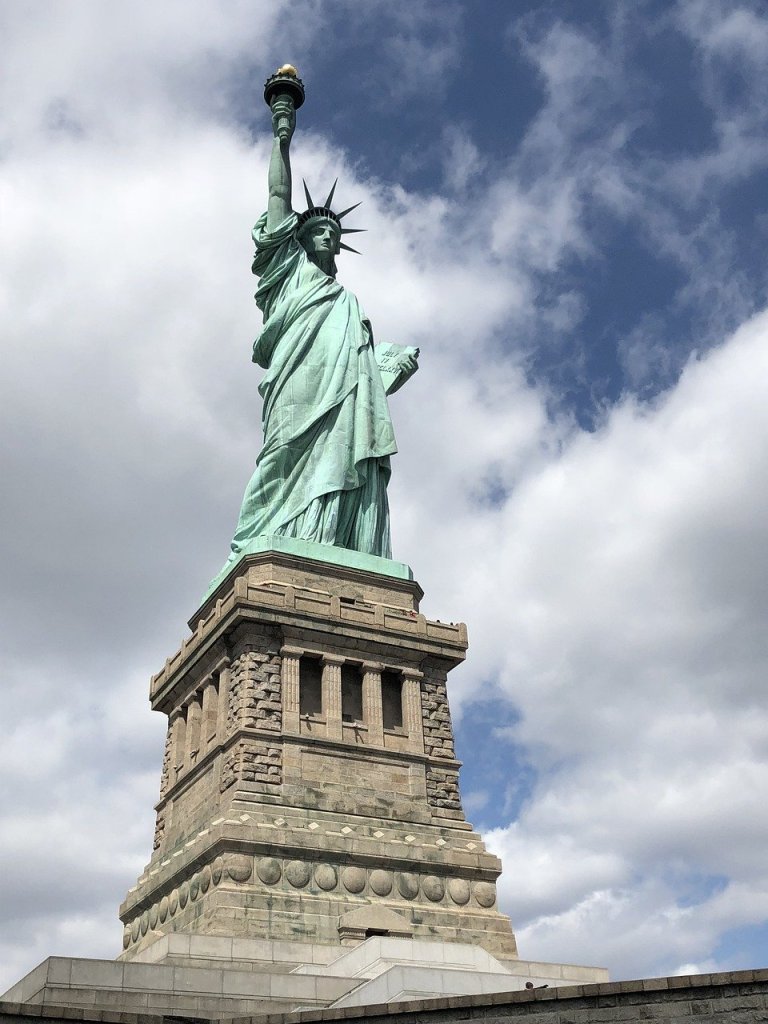
On that same date, in the century preceding the publication of this book — on 4th July, 1776 — thirteen colonies that had been established by immigrants in the continent of North America signed Thomas Jefferson’s Declaration of Independence, freeing themselves from the British yoke after they populated the landmass that had been occupied by American Indians for many thousands of years. The date continues to be celebrated as the American Independence Day with much fanfare. Borderless Journal presents to you writing that celebrates the occasion. Perhaps when at leisure, some of us will pause to wonder if independence and democracy bring freedom to all concerned.
Michael R Burch with his powerful poetry not just reaffirms the history of the country but also brings in the legendary Mohammed Ali to seek the voice of sanity and humanism. Click here to read.
Candice Louisa Daquin’s ruminations tells us what it means to be an American immigrant in today’s world and in the land that prospered under immigrants. Clickhere to read.
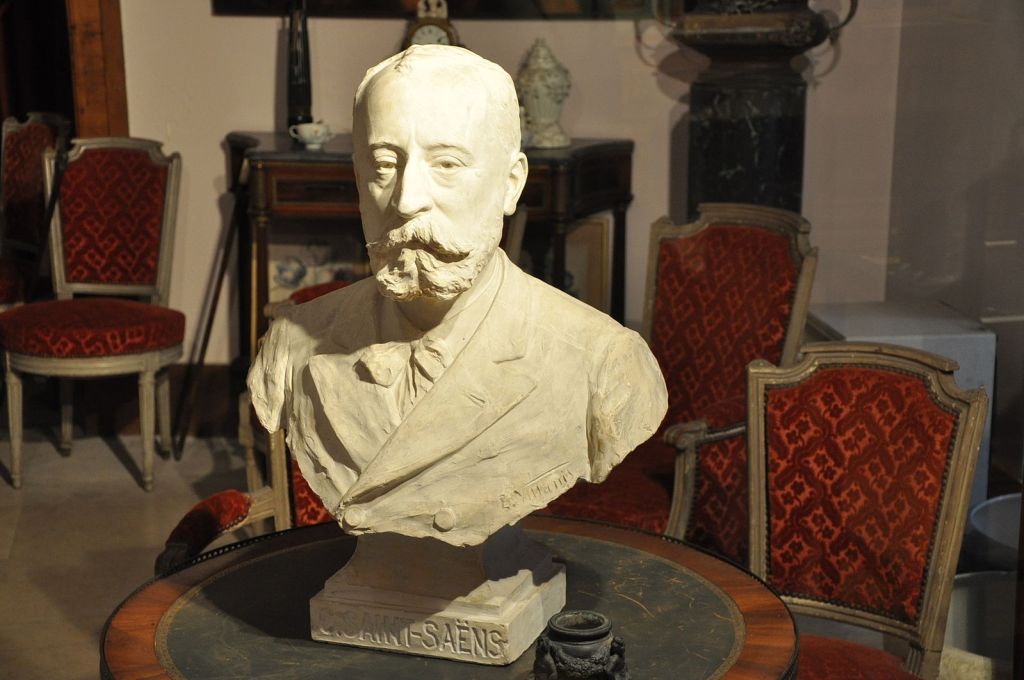
Carnival of animals other than being reminiscent of a circus, brings to the mind a humorous piece of music composed in 1886 by Camille Saint-Saëns. In the short composition of less than half-an-hour, the range of animals start with lions and capers on to kangaroos, elephants, donkeys, fishes, swans and even fossils! Peeking into our treasure trove, we found gems frolicking with animal-based humour from creatures addressed in the composition of Saint Saëns to frogs, pandas and even cockroaches. So, we decided to do a special dedicated to Carnival of Animals on the Animal’s Rights Awareness Week, June 20-25. May we live in harmony with all animals and see ourselves as part of the same kingdom!
We conclude our poetry ensemble by dedicating a few lines to the most learned and privileged of animals — the human — and his other friends.
PhD thesisBy Mitali Chakravarty
The elephant with its pink nose,
Flung up his trunk and with outstretched toes,
Danced a little stutitu
In a violet pink tutu.
The lion stood on its tail
And did a jig on the rail.
The giraffe twirled its forked tongue
And sang a song with a guitar strummed
By an Orangutan in purple pyjamas
With a gold tooth from Bahamas.
The music pranced.
The animals danced.
The future PhD stood entranced
And did a thesis on the hippo's glance.
The lissome 'potamus batted its lid
And solved problems by Euclid.
The future PhD stood entranced
And did a thesis on the hippo's glance.
Prose
Our next movement is prose. We have much starting with humorous retellings of cats — I wonder why these felines were left out of the musical composition of Saint Saëns! Our stories make up for it with multiple humorous telling of cats.
A Day at Katabon Pet Shop , a short story set amidst the crowded streets of Dhaka, by Sohana Manzoor. Click here to read.
Peregrine, a flash fiction about a cat who is named after a bird by Brindley Hallam Dennis. Click here to read.
Bugs of Life, a slice of life by Sohana Manzoor, highlighting her ‘affection’ or the lack of it for bugs. Click here to read.
As we come to the end of our ensemble, listen to the grand finale of the Carnival of Animals and tell us if you could trace resonances of the frolicsome spirit of the composition of Saint Saëns in this selection.
As we stand on the threshold of a new normal that will eternally rewrite the history of social interactions, of movements across the globe, of new world orders that will have to be more inclusive and more transparent to world view, we will, perhaps, feel the need to redefine business laws so that even countries with lesser wealth are able to access vaccinations and peace. We are now looking up to leaderships which seem to be in crises themselves. Sitting securely on a tiny island that is well governed, an island where affluence and well-being set it adrift from the turmoils of countries around it, I wonder thirty years from now, what will mankind be like… Will we be forever marred by the current events of the world? Globalisation has ensured that none of us can be secure on any secret island. There can be no land of lotus eaters hidden from the rest of mankind and accessed by only a few anymore. Even if one region is affected by the virus in any corner of the world, can the rest of the world be pandemic free? Perhaps, a question that those who peddle in vaccines and human well-being can address.
These issues have not only been highlighted by the news media but have also found echoes in some of our content this time. Keith Lyons’s essay talks of his last stay in India, when a tourist carried the the pandemic unwittingly into Kerala in February 2020 and subsequent repercussions. More stories and poems that dwell on the spread of the virus this year cry out for compassion. One hopes young poet Ruchi Acharya’s verses are born true.
One day the roses of hope will grow
Meeting the horizon,
Roses that, even plucked, will not die
But will bloom and bloom
Every single day that passes by.
We have young writers on the virulence of the virus and mature pens like that of globe-trotting academic Wendy Jones Nakanishi, who maps the pandemic from UK. Perhaps, we will find a new direction eventually.
There have been calls for uniting above divides as a single unit called mankind earlier too, from greats like Tagore and Nazrul. This time we carry translations of both — Nazrul’s translated poem calls for uniting against artificial divides drawn by man-made constructs and Tagore’s translation talks of redefining through self-reflection. An essay on Tagore by academic Parineet Jaggi talks of the impact of the teachings of Guru Nanak, the founder of Sikhism, on Tagore.
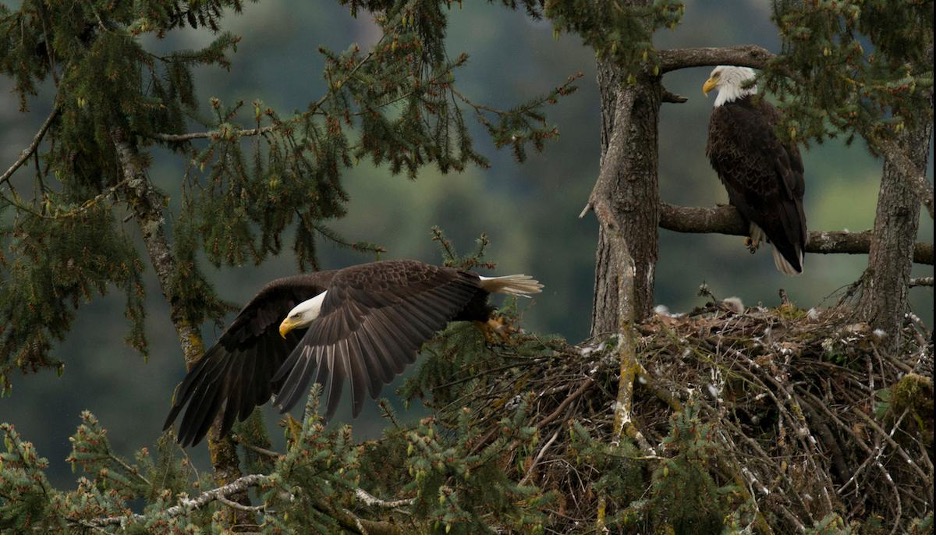
We have essays on writers and icons from around the globe. A photo-essay on the bald eagle, heralding the American Independence Day on the 4th of July, gives a humorous anecdote on how the eagle was chosen above the turkey. We have more variety by Candice Louisa Daquin, an immigrant in US, who shows how important human movement across man-made borders is to the development of a country. Michael Burch has given us beautiful poetry reflecting the history of America and American dreams, one of them with the voice of the legendary Mohammed Ali. These verses add substance to the concerns raised by Daquin. Jared Carter brings to us the colours of life with his poetry.
We have humour in verses from Rhys Hughes and even from a young poet, Sutputra Radheye. Limericks from Michael Burch and Penny Wilkes photo-poetry on ‘Changing Seasons’ puts us in a more cheerful mood. More poetry from multiple writers across the world, including Nepal, Macedonia and Korea, have found their way into our journal.
Hughes has also given us a comprehensive and interesting essay on a twentieth century poet called Ivor Cutler, who said much as he sang his poetry and was encouraged by Paul McCartney of the Beatles. The brilliant poetry of Akbar Barakzai continues translated on our pages by Fazal Baloch and one must give many thanks to the translator for his indefatigable energy and for bringing us wonderful fare from Balochistan. An excerpt translated by eminent journalist Ratnottama Sengupta from Nabendu Ghosh’s autobiography ends with Satyajit Ray’s starting his famed career with Apu’s triology (based on Pather Panchali, a novel by Bibhuti Bhushan Bandopadhyay). These three films have become iconic in cinema history.
We were fortunate to have Professor Fakrul Alam agree to an interview. An eminent translator, critic and academic who has lived through the inception of Bangladesh from East Bengal, Alam has translated not just the three greats of Bengal (Tagore, Nazrul, Jibanananda) but also multiple political leaders like Mujibur Rahman. In this exclusive, he has taken us through the annals of history, reflecting on less-known perspectives of the Partition. Also, in conversation with Borderless, is Arindam Roy, a journalist with forty years’ experience and the founder of Different Truths who started his writing career, much in the tradition of Cyrano de Bergerac on a humorous note.
This time our backpacking granny, Sybil Pretious, gives us a glimpse of her wisdom, wit and compassion while visiting Philippines and talks of an ancient death ritual, volcanoes and strange mud baths. Devraj Singh Kalsi explores young romance in his tongue-in-cheek fashion. We also have more semi-humorous musings from young writers across borders. While Sunil Sharma has explored facets of the impact of terrorism, the other stories are told in a lighter vein.
Our book excerpt from Feisal Alkazi’s Enter Stage Right has a picture of the young artiste in a discotheque dancing in abandon — check it out. It made me smile. Rakhi Dalal has reviewed Jnanpith Award winner Shrilal Shukla’s Fragments of Happiness translated by Niyati Bafna. The book review by Meenakshi Malhotra of Neelima Dalmia Adhar’sThe Secret Diary of Kasturba brings out an interesting facet on Gandhi and women in the Independence movement. It makes one notice the contrasts in the perspectives of Gandhi and Tagore, who created women like he saw around him in fiction. Kasturba’s life also contrasts with the independence found in the life of the avant-garde artist, Amrita Sher-Gil, who lived around the same time. In an essay, Bhaskar Parichha has shown how Sher-Gil lived out her dreams, blending the best of the East and West, while Malhotra writes, that though “Gandhi called women to join the national movement … he was not seeking to emancipate, but more to call forth their capacity for self-abnegation and self-sacrifice.”
Parichha has also introduced us to the need for changes in the banking sector in India while reviewing Transformational Leadership in Banking edited by Anil K. Khandelwal. Perhaps these will be part of the changes that will ultimately lead to a revision of old systems and the start of new ones. Changes, though not always welcomed or convenient, hopefully will lead to progress that can mould our future into a happier one. Restless stirrings transformed mankind from cave dwellers to an intelligent race that can assimilate nature and technology to survive and dream of a future, living among stars.
As Borderless reaches out to unite mankind transcending artificial constructs, its attempts can bear fruit only with support from each and every one of you. I would like to thank all our editorial team for their wonderful support, contributors for being the backbone of our content, and all our readers for continuing to patronise us.
Do take a look at our current issue for the writers who remain unmentioned here but create phenomenal bridges towards a borderless world.
Independence Day, celebrated on July 4, commemorates the Declaration of Independence of the United States of America. In 1774, on June 11, the first Continental Congress (John Adams, Thomas Jefferson, Benjamin Franklin, Robert R. Livingston, and Roger Sherman) worked on the draft of the Declaration of Independence.
The group designated Thomas Jefferson to write the text because of his superior writing skills and what they called his, “felicity of expression.”
The document declared that the thirteen American colonies would unite as free and independent states. They signed it into action on July 2 in 1776 and broke away from the British government under King George.
Now we celebrate Independence Day on July 4.
Photography by Michael B. Wilkes, FAIA
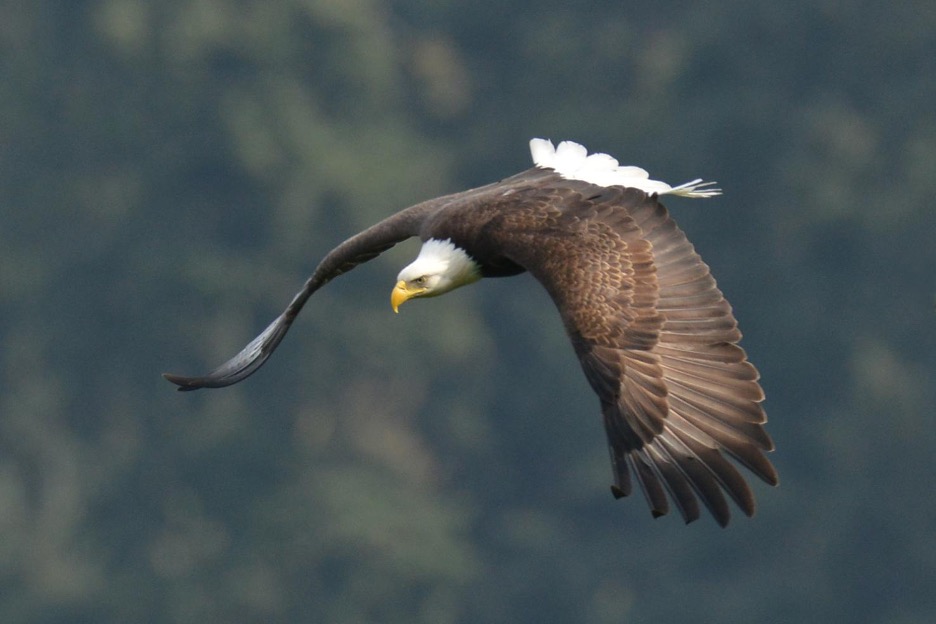
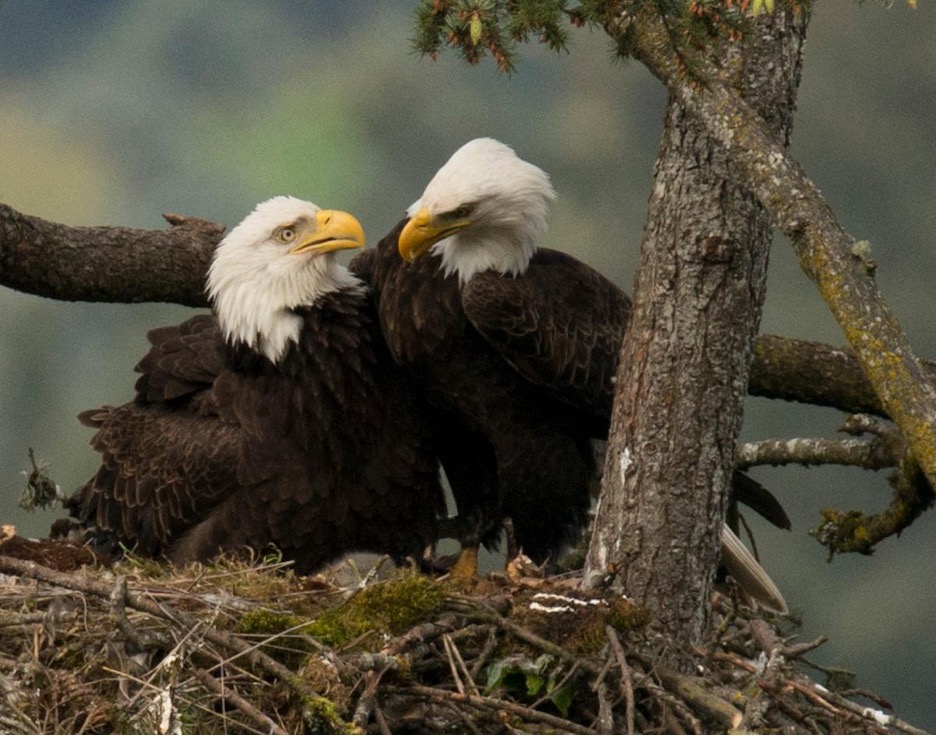
The Continental Congress gave Benjamin Franklin, John Adams and Thomas Jefferson the job of designing an official seal for America. The idea for the bald eagle proposed in 1782, received acceptance. It included an olive branch with arrows in the talons to symbolize war and peace.
Photography by Michael B. Wilkes, FAIA
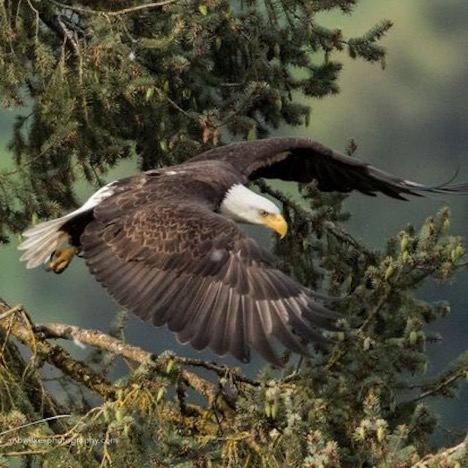
When Benjamin Franklin saw the eagle on the Cincinnati medals, he felt it looked like a turkey. He said, “The turk’y is in comparison a much more respectable bird. Though a little vain and silly. The turkey remains a bird of courage who would attack any British grenadier who should presume to invade the farm yard with a red coat on.” Franklin wanted the turkey as the national bird.
Photography by Michael B. Wilkes, FAIA
Congress adopted the eagle design on June 20, 1782. The bald eagle appeared on official documents, currency, flags, public buildings, and other government-related items. Instead of a turkey, the bald eagle became an American icon.
Photography by Michael B. Wilkes, FAIA
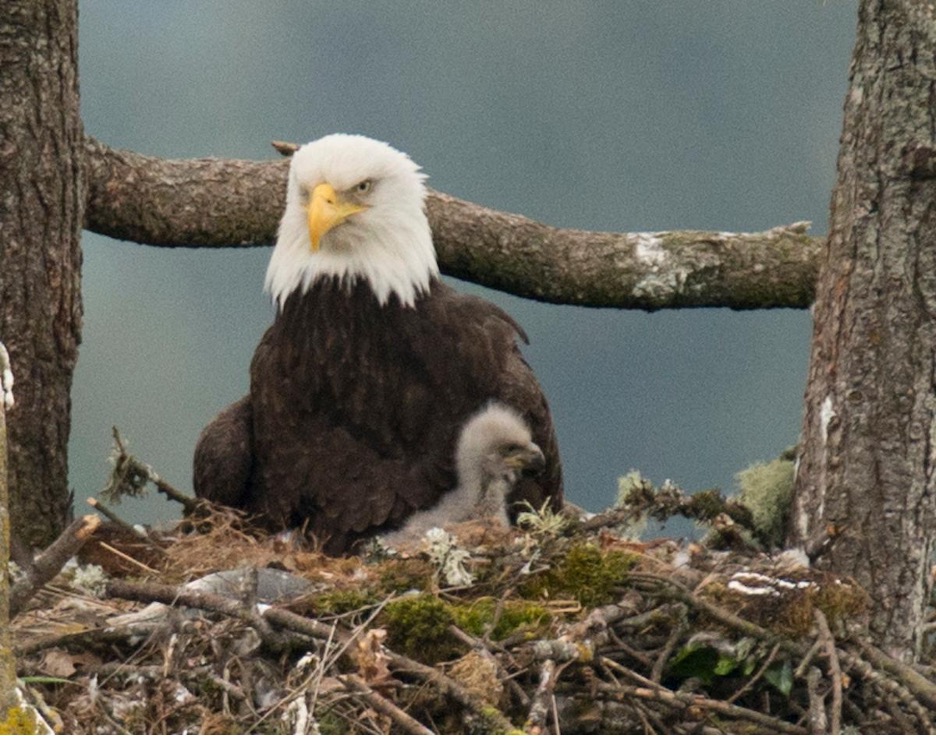
In the late 1800’s, America was home to 100,000 nesting bald eagles, but the number of birds shrank because of habitat destruction and excessive hunting. In 1978 the bald eagle arrived on the endangered species list. Bills passed protecting the elegant bird. In 1995, the bald eagle population had recovered enough for the status of the bald eagle to be changed from, ‘endangered’ to ‘threatened’.
In 2007 the “threatened species” list no longer included the bald eagle.
Photography by Michael B. Wilkes, FAIA
The Bald Eagle soars as America’s national symbol with its fierce beauty and proud independence. It symbolizes the strength and freedom of The United States of America.
.
Penny Wilkes, served as a science editor, travel and nature writer and columnist. An award-winning writer and poet, she has published a collection of short stories, Seven Smooth Stones. Her published poetry collections include: Whispers from the Land, In Spite of War, and Flying Lessons. Her Blog on The Write Life features life skills, creativity, and writing: http://penjaminswriteway.blogspot.com/ . My photoblog is @: http://feathersandfigments.blogspot.com/
Michael B Wilkes is an award winning architect and photographer who has collaborated on three books of poems with his wife Penny Wilkes. On two occasions he has received recognition among the 100 Most Influential peoples in San Diego by the San Diego Daily Transcript. Michael B Wilkes site: http://mbwilkesphotography.com
.
PLEASE NOTE: ARTICLES CAN ONLY BE REPRODUCED IN OTHER SITES WITH DUE ACKNOWLEDGEMENT TO BORDERLESS JOURNAL












 Borderless