Categories
Editorial

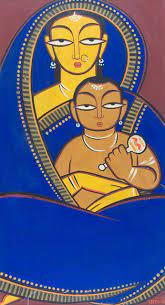
Celebrating the Child & Childhood…

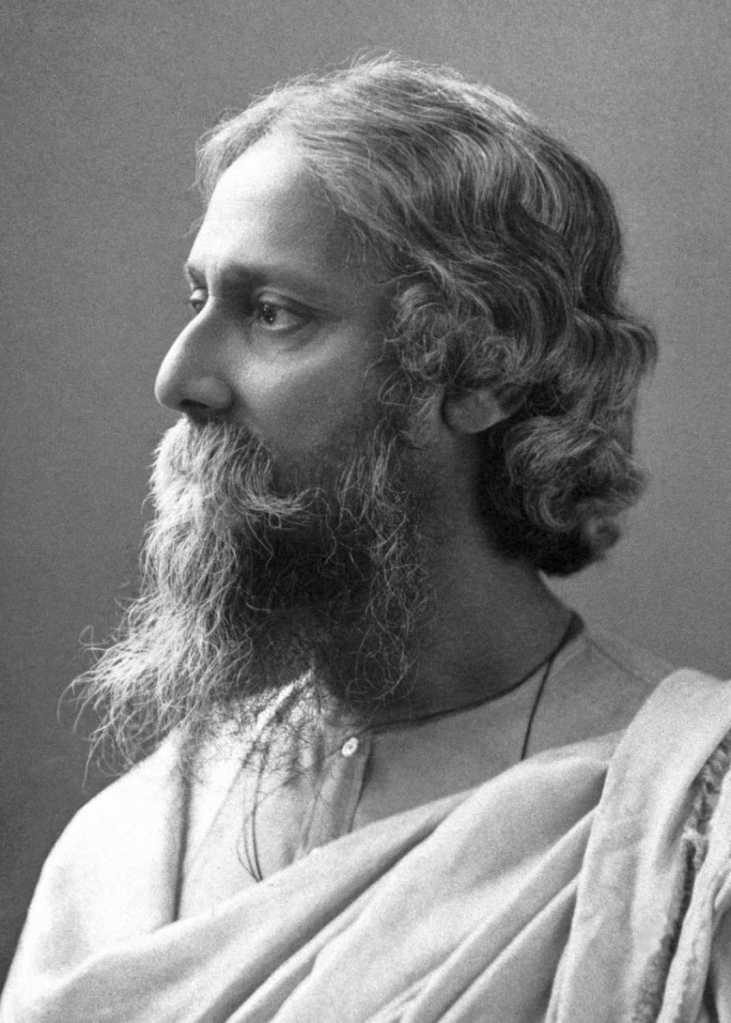
‘Victory to Man, the newborn, the ever-living.’
They kneel down, the king and the beggar, the saint and
the sinner,
the wise and the fool, and cry:
‘Victory to Man, the newborn, the ever-living.’

The Child’ by Rabindranath Tagore1, written in English in 1930

This is the month— the last of a conflict-ridden year— when we celebrate the birth of a messiah who spoke of divine love, kindness, forgiveness and values that make for a better world. The child, Jesus, has even been celebrated by Tagore in one of his rarer poems in English. While we all gather amidst our loved ones to celebrate the joy generated by the divine birth, perhaps, we will pause to shed a tear over the children who lost their lives in wars this year. Reportedly, it’s a larger number than ever before. And the wars don’t end. Nor the killing. Children who survive in war-torn zones lose their homes or families or both. For all the countries at war, refugees escape to look for refuge in lands that are often hostile to foreigners. And yet, this is the season of loving and giving, of helping one’s neighbours, of sharing goodwill, love and peace. On Christmas this year, will the wars cease? Will there be a respite from bombardments and annihilation?

We dedicate this bumper year-end issue to children around the world. We start with special tributes to love and peace with an excerpt from Tagore’s long poem, ‘The Child‘, written originally in English in 1930 and a rendition of the life of the philosopher and change-maker, Vivekananda, by none other than well-known historical fiction writer, Aruna Chakravarti. The poem has been excerpted from Indian Christmas: Essays, MemoirsHymns, an anthology edited by Jerry Pinto and Madhulika Liddle, a book that has been reviewed by Somdatta Mandal and praised for its portrayal of the myriad colours and flavours of Christmas in India. Christ suffered for the sins of humankind and then was resurrected, goes the legend. Healing is a part of our humanness. Suffering and healing from trauma has been brought to the fore by Christopher Marks’ perspective on Veronica Eley’s The Blue Dragonfly: healing through poetry. Basudhara Roy has also written about healing in her take of Kuhu Joshi’s My Body Didn’t Come Before Me. Bhaskar Parichha has reviewed a book that talks of healing a larger issue — the crises that humanity is facing now, Permacrisis: A Plan to Fix a Fractured World, by ex-British Prime Minister Gordon Brown, Nobel Laureate Michael Spence, Mohamed El-Erian and Reid Lidow. Parichha tells us that it suggests solutions to resolve the chaos the world is facing — perhaps a book that the world leadership would do well to read. After all, the authors are of their ilk! Our book excerpts from Dr Ratna Magotra’s Whispers of the Heart – Not Just A Surgeon: An Autobiography and Manjima Misra’s The Ocean is Her Title are tinged with healing and growth too, though in a different sense.

The theme of the need for acceptance, love and synchronicity flows into our conversations with Afsar Mohammad, who has recently authored Remaking History: 1948 Police Action and the Muslims of Hyderabad. He shows us that Hyderabadi tehzeeb or culture ascends the narrow bounds set by caged concepts of faith and nationalism, reaffirming his premise with voices of common people through extensive interviews. In search of a better world, Meenakshi Malhotra talks to us about how feminism in its recent manifestation includes masculinities and gender studies while discussing The Gendered Body: Negotiation, Resistance, Struggle, edited by her, Krishna Menon and Rachana Johri. Here too, one sees a trend to blend academia with non-academic writers to bring focus on the commonalities of suffering and healing while transcending national boundaries to cover more of South Asia.

That like Hyderabadi tehzeeb, Bengali culture in the times of Tagore and Nazrul dwelled in commonality of lore is brought to the fore when in response to the Nobel laureate’s futuristic ‘1400 Saal’ (‘The year 1993’), his younger friend responds with a poem that bears not only the same title but acknowledges the older man as an “emperor” among versifiers. Professor Fakrul Alam has not only translated Nazrul’s response, named ‘1400 Saal’ aswell, but also brought to us the voice of another modern poet, Quazi Johirul Islam. We have a self-translation of a poem by Ihlwha Choi from Korean and a short story by S Ramakrishnan in Tamil translated by T Santhanam.

Our short stories travel with migrant lore by Farouk Gulsara to Malaysia, from UK to Thailand with Paul Mirabile while chasing an errant son into the mysterious reaches of wilderness, with Neeman Sobhan to Rome, UK and Bangladesh, reflecting on the Birangonas (rape victims) of the 1971 Bangladesh Liberation war, an issue that has been taken up in Malhotra’s book too. Sobhan’s story is set against the backdrop of a war which was fought against linguistic hegemony and from which we see victims heal. Sohana Manzoor this time has not only given us fabulous artwork but also a fantasy hovering between light and dark, life and death — an imaginative fiction that makes a compelling read and questions the concept of paradise, a construct that perhaps needs to be found on Earth, rather than after death.

The unusual paradigms of life and choices made by all of us is brought into play in an interesting non-fiction by Nitya Amlean, a young Sri Lankan who lives in UK. We travel to Kyoto with Suzanne Kamata, to Beijing with Keith Lyons, to Wayanad with Mohul Bhowmick and to Langkawi with Ravi Shankar. Wendy Jones Nakanishi argues in favour of borders with benevolent leadership. Tongue-in-cheek humour is exuded by Devraj Singh Kalsi as he writes of his attempts at using visiting cards as it is by Rhys Hughes in his exploration of the truth about the origins of the creature called Humpty Dumpty of nursery rhyme fame.

Poetry again has humour from Hughes. A migrant himself, Jee Leong Koh, brings in migrant stories from Singaporeans in US. We have poems of myriad colours from Ryan Quinn Flanagan, Patricia Walsh, John Grey, Kumar Bhatt, Ron Pickett, Prithvijeet Sinha, Sutputra Radheye, George Freek and many more. Papia Sengupta ends her poem with lines that look for laughter among children and a ‘life without borders’ drawn by human constructs in contrast to Jones Nakanishi’s need for walls with sound leadership. The conversation and dialogues continue as we look for a way forward, perhaps with Gordon Brown’s visionary book or with Tagore’s world view of lighting the inner flame in each human. We can hope that a way will be found. Is it that tough to influence the world using words? We can wish — may there be no need for any more Greta Thunbergs to rise in protest for a world fragmented and destroyed by greed and lack of vision. We hope for peace and love that will create a better world for our children.

As usual, we have more content than mentioned here. All our pieces can be accessed on the contents’ page. Do pause by and take a look. This bumper issue would not have been possible without the contribution of all the writers and our fabulous team from Borderless. Huge thanks to them all and to our wonderful readers who continue to encourage us with their comments and input.

Here’s wishing you all wonderful new adventures in the New Year that will be born as this month ends!

Mitali Chakravarty

borderlessjournal.com

  1. Indian Christmas: Essays, MemoirsHymns edited by Jerry Pinto & Madhulika Liddle ↩︎

Click here to access the content’s page for the December 2023 issue

.

READ THE LATEST UPDATES ON THE FIRST BORDERLESS ANTHOLOGY, MONALISA NO LONGER SMILES, BY CLICKING ON THIS LINK.
Categories
Editorial

We had Joy, We had Fun…

There was a time when there were no boundaries drawn by humans. Our ancestors roamed the Earth like any other fauna — part of nature and the landscape. They tried to explain and appease the changing seasons, the altering landscapes and the elements that affected life and living with rituals that seemed coherent to them. There were probably no major organised structures that laid out rules. From such observances, our festivals evolved to what we celebrate today. These celebrations are not just full of joie de vivre, but also a reminder of our syncretic start that diverged into what currently seems to be irreparable breaches and a lifestyle that is in conflict with the needs of our home planet.

Reflecting on this tradition of syncretism in our folklore and music, while acknowledging the boundaries that wreak havoc, is an essay by Aruna Chakravarti. She expounds on rituals that were developed to appease natural forces spreading diseases and devastation, celebrations that bring joy with harvests and override the narrowness of institutionalised human construct. She concludes with Lalan Fakir’s life as emblematic of the syncretic lore. Lalan, an uneducated man brought to limelight by the Tagore family, swept across religious divides with his immortal lyrics full of wisdom and simplicity. Dyed in similar syncretic lore are the writings of a student and disciple of Tagore from Santiniketan, Syed Mujtaba Ali (1904-1974). His works overriding these artificial constructs have been brought to light, by his translator, former BBC editor, Nazes Afroz. Having translated his earlier book, In a Land Far from Home: A Bengali in Afghanistan, Afroz has now brought to us Syed Mujtaba Ali’s Tales of a Voyager (Jolay Dangay), in which we read of his travels to Egypt almost ninety years ago. In his interview, the translator highlights the current relevance of this remarkable polyglot.

Humming the tunes of Mujtaba Ali’s tutor, Tagore, a translation of Tagore’s song, Amra Beddhechhi Kasher Guchho (We have Tied Bunches of Kash[1]) captures the spirit of autumnal opulence which heralds the advent of Durga Puja. A translation by Fazal Baloch has brought a message of non-violence very aptly in these times from recently deceased eminent Balochi poet, Mubarak Qazi. Professor Fakrul Alam has translated a very contemporary poem by Quazi Johirul Islam on Barnes and Nobles while from Korea, we have a translation of a poem by Ihlwha Choi on the fruit, jujube, which is eaten fresh of the tree in autumn.

A poem which starts with a translation of a Tang dynasty’s poet, Yuan Zhen, inaugurates the first translation we have had from Mandarin — though it’s just two paras by the poet, Rex Tan, who continues writing his response to the Chinese poem in English. Mingling nature and drawing life lessons from it are poems by George Freek, Ryan Quinn Flanagan and Gopal Lahiri. We have poetry which enriches our treasury by its sheer variety from Hawla Riza, Pramod Rastogi, John Zedolik, Avantika Vijay Singh, Tohm Bakelas and more. Michael Burch has brought in a note of festivities with his Halloween poems. And Rhys Hughes has rolled out humour with his observations on the city of Mysore. His column too this time has given us a table and a formula for writing humorous poetry — a tongue-in-cheek piece, just like the book excerpt from The Coffee Rubaiyat. In the original Rubaiyat, Omar Khayyam (1048–1131) had given us wonderful quatrains which Edward Fitzgerald immortalised with his nineteenth century translation from Persian to English and now, Hughes gives us a spoof which would well have you rollicking on the floor, and that too, only because as he tells us he prefers coffee over wine!

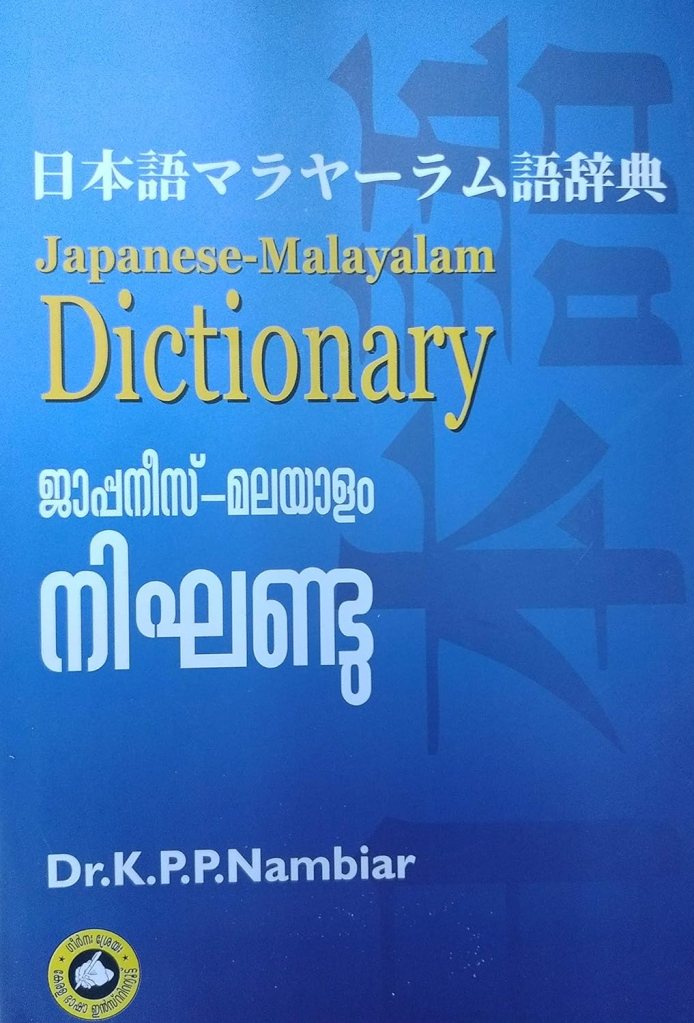
Humour tinged with irony is woven into Devraj Singh Kalsi’s narrative on red carpet welcomes in Indian weddings. We have a number of travel stories from Peru to all over the world. Ravi Shankar takes us to Lima and Meredith Stephens to Californian hot springs with photographs and narratives while Sayani De does the same for a Tibetan monastery in Lahaul. Keith Lyons converses with globe trotter Tomaž Serafi, who lives in Ljubljana. And Suzanne Kamata adds colour with a light-veined narrative on robots and baseball in Japan. Syncretic elements are woven by Dr. KPP Nambiar who made the first Japanese-Malyalam Dictionary. He started nearly fifty years ago after finding commonalities between the two cultures dating back to the sixteenth century. Tulip Chowdhury brings in colours of Halloween while discussing ghosts in Bangladesh and America, where she migrated.

The theme of immigration is taken up by Gemini Wahaaj as she reviews South to South: Writing South Asia in the American South edited by Khem K. Aryal. Japan again comes into focus with Aditi Yadav’s Makoto Shinkai’s and Naruki Nagakawa’s She and Her Cat, translated from Japanese by Ginny Tapley Takemori. Somdatta Mandal has also reviewed a translation by no less than Booker winning Daisy Rockwell, who has translated Usha Priyamvada’s Won’t You Stay, Radhika? from Hindi. Our reviews seem full of translations this time as Bhaskar Parichha comments on One Among You: The Autobiography of M.K. Stalin, the current Chief Minister of Tamil Nadu, translated from Tamil by A S Panneerselvan. In fiction, we have stories that add different flavours from Paul Mirabile, Neera Kashyap, Nirmala Pillai and more.

Our book excerpt from Nobel laureate Kailash Satyarthi’s Why didn’t You Come Sooner? Compassion in Action—Stories of Children Rescued from Slavery deserves a special mention. It showcases a world far removed from the one we know. While he was rescuing some disadvantaged children, Satyarthi relates his experience in the rescue van:

“One of the children gave it [the bunch of bananas] to the child sitting in front. An emaciated girl and a little boy were seated next to me. I told them to pass on the fruit to everyone in the back and keep one each for themselves. The girl looked curiously at the bunch as she turned it around in her hands. Then she looked at the other children.

“‘I’ve never seen an onion like this one,’ she said.

“Her little companion also touched the fruit gingerly and innocently added, ‘Yes, this is not even a potato.’

“I was speechless to say the least. These children had never seen anything apart from onions and potatoes. They had definitely never chanced upon bananas…”

Heart-wrenching but true! Maybe, we can all do our bit by reaching out to some outside our comfort or social zone to close such alarming gaps… Uma Dasgupta’s book tells us that Tagore had hoped many would start institutions like Sriniketan all over the country to bridge gaps between the underprivileged and the privileged. People like Satyarthi are doing amazing work in today’s context, but more like him are needed in our world.

We have more writings than I could mention here, and each is chosen with much care. Please do pause by our contents page and take a look. Much effort has gone into creating a space for you to relish different perspectives that congeal in our journal, a space for all of you. For this, we have the team at Borderless to thank– without their participation, the journal would not be as it is. Sohana Manzoor with her vibrant artwork gives the finishing touch to each of our monthly issues. And lastly, I cannot but express my gratefulness to our contributors and readers for continuing to be with us through our journey. Heartfelt thanks to all of you.

Have a wonderful festive season!

Best wishes,

Mitali Chakravarty

borderlessjournal.com

[1] Wild long grass

.

.

Visit the October edition’s content page by clicking here

READ THE LATEST UPDATES ON THE FIRST BORDERLESS ANTHOLOGY, MONALISA NO LONGER SMILES, BY CLICKING ON THIS LINK.

Categories
Essay

The Saga of a Dictionary: Japanese-Malayalam Affinities

By Dr. KPP Nambiar

Can anyone say for sure, when Japan and Kerala or, for that matter, Japanese and Malayalam languages, came into contact for the first time? No, it is all buried in the chronicles of yore! This is so, in spite of the legendary Bodhidharma travelling from somewhere in the South-West part of India (Kerala?) to China on its way to Japan in AD 520, albeit still disputed!

With the arrival of the Portuguese in Southern Japan from Cochin(?) during AD 1543, there was obviously a possibility of Malayalee priests or laymen including ‘horse trainers’ and cooks, reaching Japan along with Portuguese navigators. But records of such visits are yet to be made public, being either in Portuguese, Chinese or Japanese archives.

However, according to Takako Mulloor, a daughter-in-law from Japan living in Kerala for the past half a century, such obscurities need not always be the case.  She remembers the story of four Japanese youths who happened to visit Quilon and from there to North Kerala, sometime during the reign of Ōtomo Sōrin (1530-1587).

Sorin was one of the few feudal lords of Japan (Daimyo), to embrace Catholicism under the influence of Portuguese missionaries. Originally known as ‘Fujiwara-no-Yoshishige’, he was very powerful at the time, ruling most of Japan. Apparently, he thought it apt to ascertain the ‘truth’ behind the new religion that was spreading fast in his domain. Thus, he is said to have deputed four Japanese youths to Rome and Europe – a new world — to meet the Holy Pope and report back to him.

These youths, after completing their mission successfully, landed in Quilon, on their return voyage. Quilon was a flourishing port of that period. Due to some unknown reasons, they proceeded further north towards Cochin by local crafts, called ‘Kettuvalloms’. Unfortunately, one of them caught malaria and died somewhere on the way and was buried.

According to personal communication from Takako, such records are available with the NHK ( Nippon Hōsō Kyōkai) Brodcasting Corporation of Japan. She remembered that a TV team from NHK had visited Kerala sometime in 1979-80, to make a documentary on these youths and to locate the grave of the one who had lost his life. Takako was their interpreter on this mission, being fluent in Malayalam, Japanese and English.

While I was in Japan from 1965 to 1969, very little information was available in Kerala about Japan. Prior to leaving India, except for some writings by the renowned author MT Vasudevan Nair, the knowledge of Japanese language or culture was scanty.

On joining Osaka University of Foreign Languages (Ōsaka Gaidai), I was fascinated by the general manners of people in and out of the university. They were always kind, polite and willing to help especially students and others from abroad. 

Despite having an advanced ‘Language Laboratory’ and excellent faculty, my language proficiency was mostly strengthened by the people on the street or in the villages of the Osaka suburbs. From the very beginning, I was also struck with an inexplicable quality in their language, with its unaccented delivery and melodious intonations that always reminded me nostalgically, of Malayalam!

Amazingly, both these languages were similar in several respects such as the order of alphabets, vowels and structure of sentences that usually didn’t end in a consonant.

We foreign students had to learn some special topics namely ‘Things Japanese’ that included Flower arrangement (Ikebana); Japanese theatre traditions Kabuki, Bunraku and the oral Rakugo and so on. In general, most of them including folk arts, proverbs, and day to day practices, reminded me of the village life in Kerala.

For instance, ‘banishing’ evil spirits from home was just the same as practiced in villages here. Above all, I could also recognise a few Japanese words more or less similar in meaning and pronunciation, synonymous with Malayalam!

That was when the idea of a Japanese-Malayalam Dictionary germinated in me. But, back in Tokyo University after completing six months’ language course, my attention was mainly focused on research, to earn a doctorate. Still, I was able to hone my Japanese speaking skills by constant interaction with the local people who were always enthusiastic about teaching foreigners, their language.

During the second year in Tokyo, unexpectedly one day, the Indian Embassy in Tokyo called me to enquire if I could teach a few senior Japanese government officials, Malayalam.

Didactic skill being not my forte with Malayalam, my first response was a polite ‘no’, despite the attractive remuneration offered. But the potential pupils would not be dissuaded. Thus started my part-time job as ‘Malayalam Teacher’, in Tokyo. Nearly three years of teaching came to an end on my completing my doctoral research, so as to return home.

Contacts with my erstwhile students were soon reduced to almost nil. One exception was an exchange of communication with a Shyoichi Itoh, who retained his interest in Malayalam as also Kerala. Occasionally, he used to write to me in Malayalam to my great delight, for comments and correction. He had also written some articles on Kerala in Japanese journals, on topics of interest to Japanese readers, based on his experience.

The unique Writers’ Co-operative of Kerala (SPCS) was one of such topics covered. Similarly, at my request and as suggested by the editor M T Vasudevan Nair, he wrote an article for the Malayalam weekly, Mathrubhoomi, focusing on the ritual suicide of the famous Japanese writer Yukio Mishima, in 1970. He had also written a guide book for Japanese students interested in learning Malayalam entitled ‘Malayalam for Beginners’.

Subsequently in 1974, Itoh made a surprise visit to me in Poona where I was working at the time. In fact, he came with the happy news of joining The Tokyo University of Foreign Studies (TUFS) as Professor and Head of the Department of Malayalam. That was a deserving recognition of his dedication to the study of Malayalam. His Malayalam for Beginners is still in use in the University and elsewhere.

My last meeting with Prof. Itoh was during early 1982, when he visited my official residence in Tokyo, with his dear daughter. At that time, I was on a government of India assignment (1981-’85), renewing old contacts as well.

Sadly, Prof. Itoh passed away rather prematurely, in 1998.

After taking superannuation from my employer — an international organisation at that time – at the beginning of the current millennium, I settled down in Cochin, India. Still, the dictionary dream was alive and efforts for bringing Japanese and Malayalam closer, was always a passion!

During the early nineties, despite being immersed in professional activities, I had undertaken the translation of Nobel Laureate Yasunari Kawabata’s [1]novel, Yama no Oto or ‘Sound of the Mountain’ (1971) directly from Japanese to Malayalam as Malayute Shabdam.

Published by Current Books (Trissur) in 1994, the translation was well received by Malayalee readers, resulting in more editions. Considering the fact that such translations are usually based on the English version due to language constrains, my work, directly from the original Japanese, is thought to be the first of its kind, in Malayalam.

However, the dictionary project could not be taken up immediately even after retirement, due to personal preoccupations. Ultimately, work on this long-awaited project was started in 2002, two years after retirement, in right earnest.

An old dictionary of Japanese-English-Japanese format, brought along from my ‘student’ days in Osaka was used as the first reference source. Published in 1950 by the Obunsha Company of Tokyo, it was the only one available for me at that juncture.

Following untiring work, the first draft was ready in two years. It was prepared in the Japanese-English-Malayalam format covering some 2000 foolscap pages and nearly a hundred thousand head-words. The meaning of each word and phrase was given in English and Malayalam with Japanese pronunciation in Malayalam fonts. The entire manuscript was compiled in long hand, without using a typewriter or computer!

Thereafter, attempts to get a competent publisher in Kerala was futile mainly due to the non-availability of Japanese fonts for printing. As a final solution, it was felt necessary to obtain fonts from Japan. However, the impasse was broken finally when my old friend and great historian Prof (Dr.) M.G.S. Narayanan introduced Toshie Awaya, a faculty member of the TUFS, as a conduit for assistance from that university.

While discussing various possibilities with Awaya, it was a pleasant surprise to know that late Prof. Itoh, my ‘old student’, used to be her Malayalam Professor!

Subsequently, on visiting Japan with my wife, a meeting was arranged with the late Indologist and renowned historian, Prof. Noboru Karashima, whom I knew during Tokyo University days. He was living in Kamakura, and Awaye took us to his very impressive residence for discussion.

On that occasion, as he suggested, it was decided we meet Prof. Jun Takashima and Prof. Makoto Minegishi engaged in dictionary-related research, in TUFS. They were attached to the Institute of Languages and Cultures of Asia and Africa (ILCAA). Established in 1964 within TUFS, this institute was engaged in promoting academic exchanges between Japan and other Asian-African nations, having been recognised as competent to carry out that task.

The two Professors during a meeting that ensued in the Institute, were amazed to see the sample manuscript of the dictionary that was shown to them. Firstly, use of ‘long hand’ instead of typing or computer printing, seemed out of this world to them.

Another fact, of more importance, was that the dictionary used as reference source material was outdated. It was pointed out that in view of the fast-evolving nature of languages with the addition of new words incessantly, the earlier work had become redundant.

While agreeing to discard the manuscript, we decided to start afresh using a latest dictionary as source to digitalise the new version with the help of a software developed by Prof. Takashima! It was also agreed that the manuscript thus produced with my data would be arranged in a ‘camera-ready’ copy at the ILCAA, that could be suitably published in Kerala.

After several exchanges of visits from India to Japan and Japan to India followed by umpteen number of corrections and revisions, the promised ‘final’ product was ready by the end of 2018.

Then, it was a matter of finding a qualified publisher. The Kerala State Institute of Languages, Thiruvananthapuram, that readily agreed, was found to be the most appropriate one to accomplish that task, in an excellent manner.

The formal release of the beautifully printed and bound Japanese-Malayalam Dictionary of some 1500 pages was formally carried out in the presence of the ILCAA Professors, by Kerala State Cultural Minister A.K. Balan.  Hideki Asari, Minister and Dy. Chief of Mission, Japanese Embassy, New Delhi and several other dignitaries were present on the occasion in Thiruvananthapuram on March 8, 2019.

With such a happy finale of a hard work put in during some sixteen years of my post-retirement years, the dictionary may represent a milestone in the annals of Japanese-Malayalam affinities.

During the half a century that elapsed from the time of my first landing in Japan and the release of the dictionary, major changes are manifested in the ethos of Japan-Kerala interactions. Exchange of visits by artists, academics, writers and common people, resulted in the publication of several travelogues, translations, studies, and so forth enabling people of these two parts of the world to come closer, as I dreamt in the 1960s.

Several literary works from Japanese were translated into Malayalam by eminent writers from Kerala including M.K. Menon (Vilasini), K. Kunhikrishnan and others!  General studies were also published about Japan, in Malayalam. An in-depth study of Kerala-Japan cultural relations is available in the remarkable book, ‘The Throne of Chrysanthemums’ by the gifted writer and artist, K. Asok Kumar.

In addition to such developments, many professionals from Kerala are now finding gainful employment in Japan, something unheard of a few years back.

In conclusion, it has to be emphasised that the age-old affinity between Japanese and Malayalam needs to be studied afresh by our linguists and historians, in the light of significant evidence emerging from various new studies.

When Rev.(Dr.) Robert Caldwell (1814-1891) postulated the theory of possible origin of Japanese and Tamil languages from the same root, there was no mention of Malayalam, in particular. So also Japanese professors – Akira Fujiwara (1981) and Susumu Ohno (2007) — who revived that hypothesis recently, were also not referring to the Malayalam connection.

Meanwhile, some of our erudite linguists such as Prof. Naduvattom Gopala Krishnan, were able to prove the ancient origin of Malayalam, from the same root as modern Tamil, proving eligibility of both these languages to be included in the ‘Classical Languages’ category, already accepted officially.

According to Prof Gopala Krishnan, the very fact that some ‘Malayalam only’ words were identified in ‘Sangam Literature’ of 300 BCE- 300 ACE, reaffirms its classical position. Even epigraphical evidence from the Edakkal Caves of Wayanad (Malabar), that go back to 6000 BCE, are said to be supportive of ancient origin of Malayalam, together with Tamil.

As such, there is an urgent need for a relook into our perspective of the gamut of Japanese-Malayalam affinities!

[1]  Yasunari Kawabata (1899-1972) was the first Japanese to win a Nobel prize in 1968

Dr. KPP Nambiar, formerly a Consultant/Technocrat at the UN Food and Agriculture Organisation, is the author of many scientific papers and books, including a 1500-page Japanese-Malayalam dictionary.

PLEASE NOTE: ARTICLES CAN ONLY BE REPRODUCED IN OTHER SITES WITH DUE ACKNOWLEDGEMENT TO BORDERLESS JOURNAL. 

Click here to access the Borderless anthology, Monalisa No Longer Smiles

Click here to access Monalisa No Longer Smiles on Kindle Amazon International


Categories
Review

Of the Raj, Maharajas and Me

Book Review by Bhaskar Parichha


Title: Of the Raj, Maharajas and Me

Author: MA Sreenivasan

Publisher: Speaking Tiger Books

This is a delightful book for two reasons: One, it is a reminiscence of a civil service official with the princely state of Mysore and Gwalior, and later with the government of British India. Secondly, the stream of language and the lucidness with which the author has penned his recollections is remarkable. What is more, it reflects on the administrative practices of the former princely states of India.

M.A. Sreenivasan (1897-1998) lived through almost the entire 20th century and was among the very few people who witnessed at close quarters the enormous changes that took place in India during this period. Born in Madras, he belonged to a family that traced his subsequent generations of Pradhans (ministers) of successive kings of Mysore for 150 years. Sreenivasan joined the Mysore Civil Service in 1918 and, after a varied career both with the Mysore Government and the Government of British India. He became a Pradhan of the Maharaja of Mysore in 1943. In 1947, he was invited by the Maharaja of Gwalior to become the Dewan of that State. During that momentous year, he was a member of the Constituent Assembly of India and in regular touch with many of the leading figures (including Mountbatten) involved in the transfer of power from British to Indian hands.

Much more than an autobiography, the book is a rare portrait of India during and immediately after the British Raj. The princely States of India have been neglected by scholars, many of whom have tended to be unfairly critical. There is much in this book on the effectiveness of administration in two major princely States. It redresses the balance and makes the book a valuable document on the subject. Further, Sreenivasan provides sharp insights into the negotiations that led to the end of the Raj, and into the new polity that emerged after Independence. 

Writes Sreenivasan about Louis Mountbatten: “I had seen and talked to Mountbatten at lunch parties in Viceroy’s House and meetings of the Chamber of Princes. Tall of stature, with an enviable reputation as Supreme Commander of the Allied Forces during the War, he impressed everyone with his fine personality and pleasing manner. Standing on the dais that day, wearing his bright, white naval uniform, festooned with medals and decorations, he addressed the gathering as Crown Representative of His Majesty, the King of Great Britain, his cousin, and spoke of the King’s concern for the Princes of India with whom the Crown’s long-standing associations and obligations were soon to come to an end.”

Elsewhere in the book he writes about Sir CP Ramaswamy Iyer: “He was a remarkable man. Endowed with a fine personality and a keen intellect, he was learned and brilliant, an eloquent speaker, and a brave and dynamic administrator. In his early years, he was a much sought-after lawyer and one of the first, most ardent, champions of Home Rule for India. CP, as he was called by friends, was among the leaders and statesmen whose views were sought by successive British missions. He did not, however, take part in the Constituent Assembly or its committees. I knew he had plans of making Travancore an independent maritime State. I had always held him in esteem as a distinguished elder statesman and called on him at Travancore House in New Delhi, asking him why he had not agreed to the accession of Travancore.”

Write Shashi Tharoor in the foreword: “This book is simultaneously an exploration of the region’s glorious past and present and a memorable personal history, tracing Sreenivasan’s life and career, which was as challenging as it was deeply interesting. From the ups and downs of local politics to navigating the bureaucracy of nascent independent India, not to mention moving forays into Sreenivasan’s home life particularly relating to his beloved and constantly supportive wife, Chingu, there is little that is not covered. The reader follows the author through his myriad journeys, from Mysore to New York and London, to the Chambal Valley and beyond.”

The last few chapters of the book are notable. Whether it is the merger of the princely states or Prime Minister Nehru, Sardar Patel and the two Nobel laurates- CV Raman and Dalai Lama – Sreenivasan’s chronicles make for an absorbing read.

In the epilogue, he writes: “The years have witnessed revolutionary changes in India. There has been impressive progress in many directions and many remarkable achievements. The scourge of smallpox and plague has been eradicated. The shame of human beings carrying night soil has ended in many cities and towns. Infant mortality has been reduced, and life expectancy enhanced.

“The production of food grains and other needed crops has vastly increased. Thanks to generous foreign aid and increased revenues, huge dams and reservoirs have been built. Hydro-and thermal power generating stations installed. An industrial revolution has taken place. Thousands of mills and factories turn out myriads of products, from cotton cloth and silk to telephones, television sets, computers, locomotives, motorcars, and aeroplanes. Transport and communication have also been revolutionized. Scores of universities, hundreds of engineering and medical colleges and research institutions have been started and equipped. India can boast of having perhaps the largest surplus of scientists and technologists in the world for export. But progress has not come with both hands full. With great gains have come great losses. An irreparable loss is the grievous vivisection of India.”

This captivating life story will be of particular interest to students and scholars of modern Indian history as well as the general reader.

Bhaskar Parichha is a journalist and author of UnbiasedNo Strings Attached: Writings on Odisha and Biju Patnaik – A Political Biography. He lives in Bhubaneswar and writes bilingually. Besides writing for newspapers, he also reviews books on various media platforms.

.

PLEASE NOTE: ARTICLES CAN ONLY BE REPRODUCED IN OTHER SITES WITH DUE ACKNOWLEDGEMENT TO BORDERLESS JOURNAL

Click here to access the Borderless anthology, Monalisa No Longer Smiles

Categories
Musings of a Copywriter

Nations Without the Nobel

Devraj Singh Kalsi takes a fresh look at national pride with a soupçon of sarcasm and humour

Many nations have not produced a single Nobel Laureate. Many have not produced a Nobel Winner in all the categories. Many have a solitary winner in over a century. Many keep winning the prize year after year in some category or the other. Such countries appear blessed with prodigious people who are rare to find like platinum and gold.  

The sorrow of not winning a single medal goes deep for a country as it cannot do anything about it – only a citizen can make the nation proud with his powerhouse talent. A nation can only encourage talented citizens to keep their intellectual pursuits alive. Two categories – literature and peace – hold promise and raise big hopes as these are related to creativity and noble deeds to make the world a better place.  

Imagine what happens to a country or a community if there is no Nobel Winner in literature from its soil. The sentiments of a nation that won a Nobel once in a century deserve to be felt. Such nations and communities end up deifying the solitary winners. This poses a formidable challenge to other people who feel threatened under their aura and remain insecure about the potential to repeat such a feat.  

Where winning becomes a habit, the nations feel proud to have the best minds. The common people surge with collective pride in their genetic superiority and celebrate the presence of the Nobel winners as a divine gift. When great talent is ignored, there is a groundswell of suspicion that these global honours are discriminatory. It opens debates and people start scrutinising their work in great detail. Perhaps there is merit in the contention that the winner did not deserve it, but the choice is a reality to be accepted with a heavy heart. The intellectual fraternity finds the time to run a complete scan and critical write-ups appear in the newspapers for some days after the big announcement is made. 

Just one Nobel Laureate for Literature in more than a century is not an impressive score for a nation that boasts of a rich cultural heritage much before the Nobel came into existence. Once there is a winner, there should be a crop of successive winners to keep alive the tradition of winning. Otherwise, the collective respect for the single winner becomes so overwhelming that the community and the nation edify the achiever and criticism becomes unacceptable. If the stream of Nobel winners keeps flowing, with at least half a dozen winners in a century, there are more claimants for veneration. The respect accumulated for the winners gets divided and the process of deification of a solitary winner gets derailed. 

You become aware that with so many Nobel laureates, you have to respect them all, read them all, and assess them all. The judgment of the Nobel panel has placed them at par, but the judgment of readers is supreme. The people from the North join in to celebrate the winner from their region while the people from the South start worshipping the winner from their region. Since the winner hails from the same region, they feel closer to his identity than his work. There is a sense of appropriation as they want to have a winner from their community to be lauded more.  

With multiple winners, there are more claimants to excellence and devoted readers with their strong biases critique them or compare them the way they like. If there is a single winner, the status of the sole winner gets further uplifted. If there are no repeat winners with time, it makes the people of the country feel what they are currently producing is not worth any award. They revisit the past and try to emulate the winner. If a nature poet who won, they try to become clones and find success in the same category to prove they are not bad nature poets. 

Nations erupt in joy to feel elated. But the intellectual talent is global. Art created in a country is a global asset. Perhaps we are still immature as we are less enthusiastic about the work and more focused on the Nobel winner and his race, nationality, and identity.  

Devraj Singh Kalsi works as a senior copywriter in Kolkata. His short stories and essays have been published in Deccan Herald, Tehelka, Kitaab, Earthen Lamp Journal, Assam Tribune, and The Statesman. Pal Motors is his first novel.  


PLEASE NOTE: ARTICLES CAN ONLY BE REPRODUCED IN OTHER SITES WITH DUE ACKNOWLEDGEMENT TO BORDERLESS JOURNAL. 

Categories
Essay

Reflections on Nobel Laureate Bunin’s ‘Un Petit Accident’

Mike Smith reflects on a short fiction by Russia’s first Nobel Laureate, Ivan Bunin. Could it be a precursor to flash fiction?


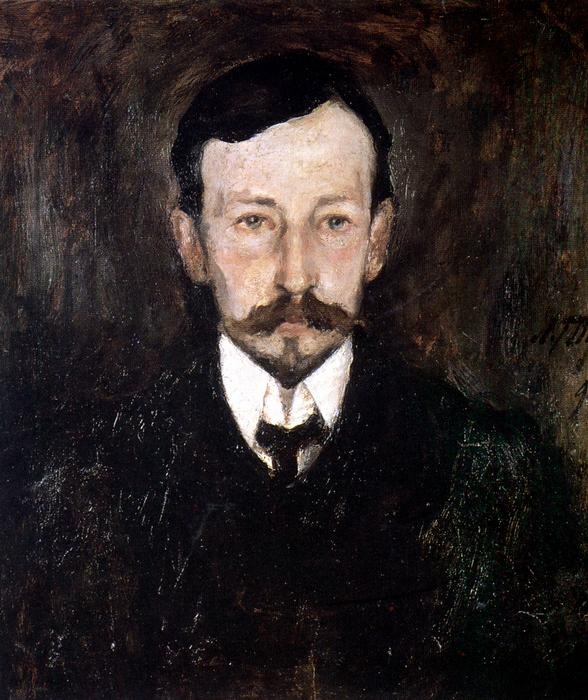
Portrait of Ivan Bunin by Leonard Turzhansky, 1905. Courtesy: Wiki

Un Petit Accident‘ (A small Accident) is one of those tales which will need more words to discuss than will be found in it.

First published in the late 1940s as part of a trio of short pieces this little tale might be seen as a forerunner of our present-day flash fictions and micro fiction. Yet it is in a tradition that stretches back through the prose poem or Illumination to the anecdotes and exemplars of much earlier times. Only recently cast into English, this translation is attributed to Maria Bloshteyn and dated 2017.

Ivan Bunin (1870-1953) fled to France in 1920 in the aftermath of the Russian Revolution but unlike many émigrés he was already an established writer and his work is not solely related to the experience of exile.

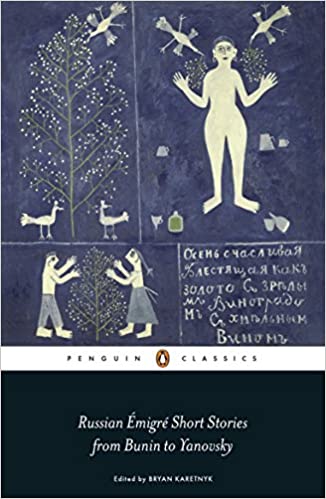
‘Un Petit Accident’ in my paperback copy of Russian Émigré Stories from Bunin to Yanovsky (ed. Bryan Karetnyk, Penguin Classics), runs to a mere 29 lines, yet it packs a punch you might think would need a much wordier arm behind it. For me it’s both a master work and a master class in the short story, illustrating perfectly Hemingway’s ‘iceberg’, and his advice to ‘take everything out that isn’t the story’.

Like a slow camera pan, it traverses the cityscape of Paris. It takes in the sunset, the Palais Bourbon, the Seine, the Place de la Concorde and the Eiffel Tower, before zooming in, near The Madelaine, on the rushing, choking traffic of a Parisian evening. The final shot, in what, to twist the metaphor slightly, might be thought of as a slideshow rather than a moving picture, focuses on a single detail, the significance of which we are left to consider.

There are no named characters, seemingly no protagonist and antagonist, no obvious cycles of increasing jeopardy. The ‘Inciting Incident’, if it is not that sunset, might be in our imaginations and for later. Or perhaps the ‘Obligatory Scene’, if it is that final image, must serve the function of both. It seems that everything that happens in this story has already happened by the time we see it. Yet there is no sequence of actions as such, only the sequence of images that we might mistake for mere setting.

As with much longer short stories, there is the vestige of that common structural oddity of placing the most striking event or revelation slightly ahead of the actual ending, making it part of the preparation and contextualisation of the true ending. And following that shock there is a little addition which poses the question, raises the issue, on which I believe the author wishes us to ponder; the view to which he has brought us.

The collection is furnished with a section of notes about both the writers and individual stories. What they say about this story reveals a lesson in the form. Bunin is quoted; “ ...even with the greatest writers, there are only isolated good passages, and between them – water…”

Karetnyk’s notes go on to say: “these miniatures are an attempt to distil prose into its purest form.” Presumably, that is by getting rid of all that water.

Earlier in the piece he has described Bunin’s tales as ‘terse’, but in this case I did not find it so. Rather the opposite. I’d want to use the word lush. That opening sunset, painted in a three and half line, verbless sentence – which a professor of English in the nineteen seventies categorized because of that lack as being a ‘label’ rather than a ‘message’– is rich with colour: “…the enormous panel of sky covered in strokes of murky colours, mellow and many hued…” The city too is awash with description: ‘Slim spikes of greenish gas flames are strewn throughout the pistachio haze of the city,’

It’s one of the most description packed little tales I’ve read. It brought to mind the startling contrast with an earlier and longer tale by Mary Mann, in which a bare half dozen words sprinkled throughout describe the rural Norfolk in which her story is set. It is sometimes averred that description kills story, disrupts the narrative, brings action to a halt, but here Bunin’s tale is almost all description, a colourful, noisy kaleidoscope of sights and sounds. “Now darkness falls, and the candelabra of the Place de la Concorde cast their reflective silvery glow, while up in the black summits the lugubriously flowing lights of the Eiffel Tower flicker like lightning.

The sequence is constructed of easily imaginable images, and when we have reached the ending and come to re-read the piece, we might pay more attention to the ambience of those sounds and sights. They are what make the context for our arrival at the final image. They are what prejudice our frame of mind for understanding and speculating about the deeper meaning of what we are being brought to encounter. The purpose of the story, and you might argue, the storyness of it, is in our reaction to what we ‘see’. Conrad is quoted as saying he wanted to “make us see” in his writing and Bunin here does just that. But it is up to us alone to grapple with the significance of what we have been told.

On closer inspection we might see that Bunin has given us more than just intense colour, form, and movement. That it is a single paragraph story is notable. In a story of thirty lines there is room for a handful of paragraphs, but the fact that Bunin uses one alone need be no ‘petit accident‘. It gives the story a structural unity, such as you might expect to find in a painting or photograph.

The painting has it for me, with those ‘murky’ and ‘many-hued’ colours, but a painting of what? Despite the lack of protagonist or antagonist, at first glance, there is the anonymous man on whom our gaze comes to rest at what might be called the ‘crisis’ of the action, and there is one other ‘character’, referred to rather than present, and whose ‘unseen hand is smoothly conducting’. At this change point in the story, as the traffic locks and our focus is narrowed down onto and into a single vehicle, it ‘seems as if the hand has flinched’.

Seems’ is one of those words that, in a short story especially, should set our radars tingling, because it usually denotes, or at least raises the possibility, that what seems is not what is. And whose hand might that be which might be doing something other than flinching? It certainly isn’t a human hand. Is it a hand that has acted decisively? And the ‘fiery Babylon’ that Bunin describes with its ‘spikes of greenish gas’, its ‘darkness’ blazing, might seem more Hellish than Heavenly. I was reminded of apocalyptic visions in John Martin’s paintings.

My last paragraph contains a ‘spoiler’, and those who read to find out what happens next might prefer to stop here!

When we reach the story’s end, we are told of a “fast little auto, vividly yet softly lit inside” where a man in evening dress is “slumped over his steering wheel“. The narrative thread is almost imperceptible. The movement, lights and sounds, have seemed random rather than directional. Bunin’s tale has been told in the present tense, yet here, at the sticking point of the end, we are seeing events not so much unfold as having already unfolded. The focus neatly closes in, with mention of ‘matte top hat’, then closer still: “His eyes are closed…” The final words pull back a little, as we have recoiled from what we have recognised: “his young, tritely classical face is already looking like a mask.”

It is a mask, we understand, from behind which the spirit of life has already withdrawn.

Russian commemorative coin issued on Bunin’s 125th birth anniversary. Courtesy: Wiki

Mike Smith lives on the edge of England where he writes occasional plays, poetry, and essays, usually on the short story form in which he writes as Brindley Hallam Dennis. His writing has been published and performed. He blogs at www.Bhdandme.wordpress.com 

.

PLEASE NOTE: ARTICLES CAN ONLY BE REPRODUCED IN OTHER SITES WITH DUE ACKNOWLEDGEMENT TO BORDERLESS JOURNAL

Categories
Interview

In conversation with Devaki Jain

Devaki Jain: With Permission from Devaki Jain and Speaking Tiger Books

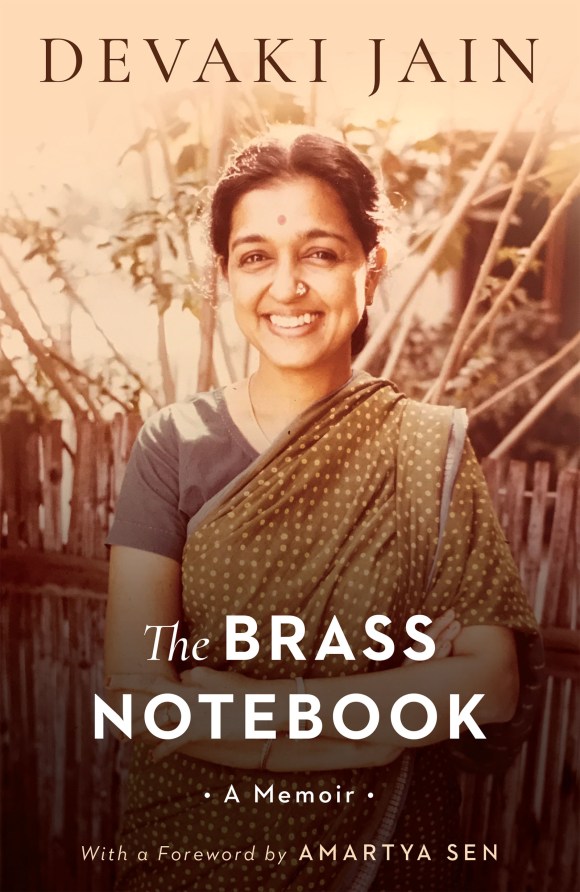
A woman who at eighty-eight brought out her autobiography based on the urgings of among others, Alice Walker, author of  the Pulitzer Prize winning novel, The Colour Purple , and  Doris Lessing, the Nobel Laureate — only much later. Like Lessing’s The Golden Notebook, her biography is called The Brass Notebook. Does it talk anti-war or feminism or womanism? I am not sure. What it does show is a woman who despite being surrounded by patriarchal norms managed to live her life as she wanted without resorting to schools of ‘isms’ or feeling injured. In the process, she met many great people and tried to bring in changes or reforms.

Devaki Jain, born in 1933,  graduated in economics and philosophy from St Anne’s College, Oxford and is an Honorary Fellow of the college. She is a recipient of the Padma Bhushan (2006) and an honorary doctorate from the University of Westville, Durban, South Africa.

Needless to say the best introduction to her work and her person comes from well-known feminist journalist,  Gloria Steinem: “Your heart and world will be opened by reading The Brass Notebook the intimate and political life of Devaki Jain, a young woman who dares to become independent even as a country of India does. Because she’s also my oldest friend I can tell you there is no one like her, yet only here in her writings have I learned the depth, breadth and universality of adventures.”

The interview probably reinforces her non-conformist outlook. In an age when intellectuals bicker over terminology and social media becomes the fulcrum of our lives, she lives by her convictions. Despite writing an absolutely gripping autobiography, she has revealed only a bit of herself. Through the interview, I tried to entice more but I got only a very brief glimmer. Her autobiography painted a liberal, liberated and open thinker who fearlessly fought her way against patriarchal and colonial mindsets. In this exclusive, I invite you to savour her spirit at a stage in life when most talk mainly of geriatric issues. Devaki Jain for you —

You were a very independent lady for your times. Could you find parallels of women like yourself in diverse cultures?

Women have been revolutionaries, radical thinkers, resistance leaders, dissenters for centuries. There are not many records of this but one of my colleagues found that there were groups of women, for example, in China even as far as the 12th century who were dissenters. Therefore, the knowledge may not have been recorded but striking for independence and striking for justice has been a part of women’s lives for centuries. 

What drove you to be as you were? What made you feel that marriage was not the ultimate aim of all existence in the 1950s and 1960s?

(a)What drives people to do things differently? This is not an easy question to answer, people are born differently with different aspirations and different nervous systems. It is like asking an artist what helped you to be such a brilliant artist. Such questions are not appropriate. 

(b) I think this question is badly framed that I felt that marriage was not the ultimate aim, it was not like that. It was just that I felt there were other things that I wanted to do.

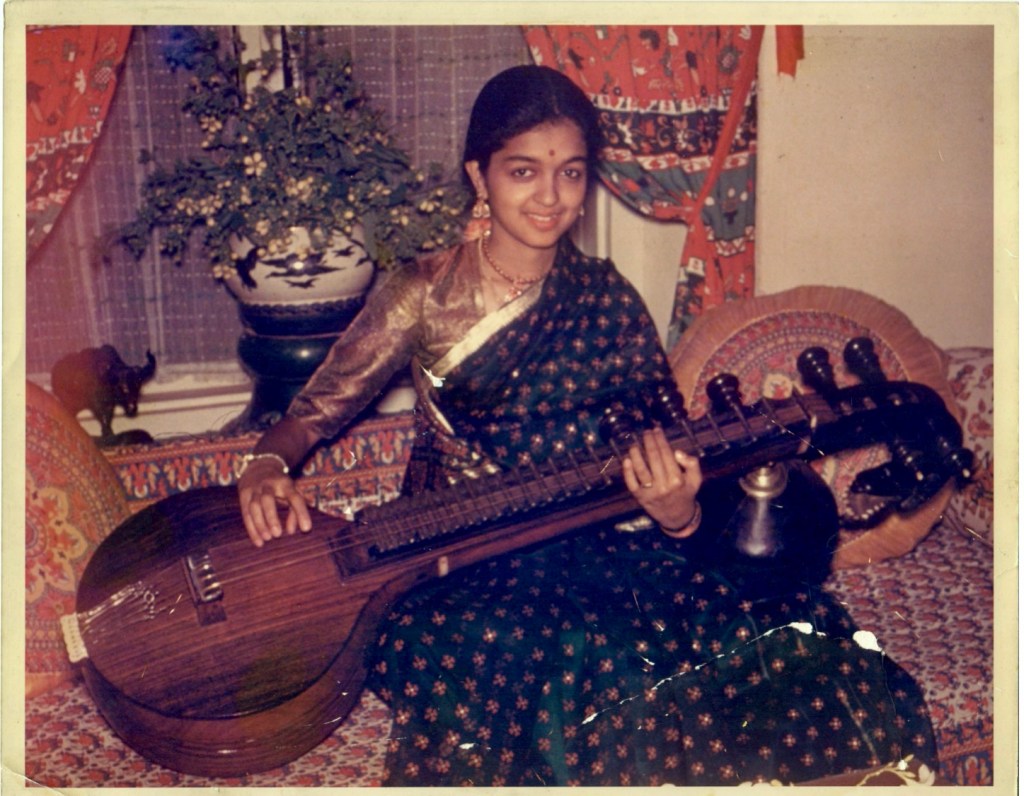
A young Devaki Jain. With permission from Devaki Jain & Speaking Tiger Books

How supportive was your family, especially your father, of your sense of independence?

My father was an enigma, while he wanted to submit to orthodoxy, he was also very respectful of those who wanted to do things differently. So, in a sense, I think he was supportive of my desire for independence. 

You did face some amount of familial sexual harassment. Did it scar you for life? How did you get over the trauma?

My uncle’s sexual assault on me did not scar me for life, there was no particular need to get over the trauma. In a situation of living in cloisters with family bounds there is no space for lifelong traumas.

You spoke of how funding went inadvertently hand in hand with a different kind of colonial outlook. Would you say that is still true?

No, currently I think both the donors and the receivers have understood the difference and respect the difference.

Womanism is a term you have spoken of in your book. How is this different from feminism in your perspective?

I was basically supporting Alice Walker’s definition and I support her perspective. Please refer to my quotation from Alice Walker*.

[*Alice Walker quote from Pg 173-174, The Brass Notebook, Speaking Tiger, 2020: “As long as the world is dominated by racial ideology that places whites above people of colour, the angle of vision of the womanist, coming from a culture of colour, will be of a deeper, more radical penetration. This is only logical. Generally speaking, for instance, white feminists are dealing with the oppression they receive from white men, while women of colour are oppressed by men of colour as well as white men, as well as by many white women. But on the joyful side, which we must insist on honouring, the womanist is, like the creator of the word, intent on connecting with the earth and cosmos, with dance and song. With roundness, thankfulness and joy. Given a fighting chance at living her own life, under oppression that she resists, the womanist has no or few complaints. Her history has been so rough—captured from her home, centuries of enslavement, apartheid, etc—she honours Harriet Tubman by daily choosing freedom over the fetters of any internalized slavery she might find still lurking within herself. Whatever women’s liberation is called, it is about freedom. This she knows. Having said this, I have no problem being called “feminist” or “womanist.” In coining the term, I was simply trying myself to see more clearly what sets women of colour apart in the rainbow that is a world movement of women who have had enough of being second–and third–class citizens of the earth. One day, if earth and our species survive, we will again be called sacred and free. Our proper names.”]

Do you think women’s issues across the world are similar? How should they be dealt with?

It is believed that women’s oppression comes from patriarchy which of course is worldwide. I do not think I can answer the second part of the question – “how should it be dealt with?” — except writing three other books.

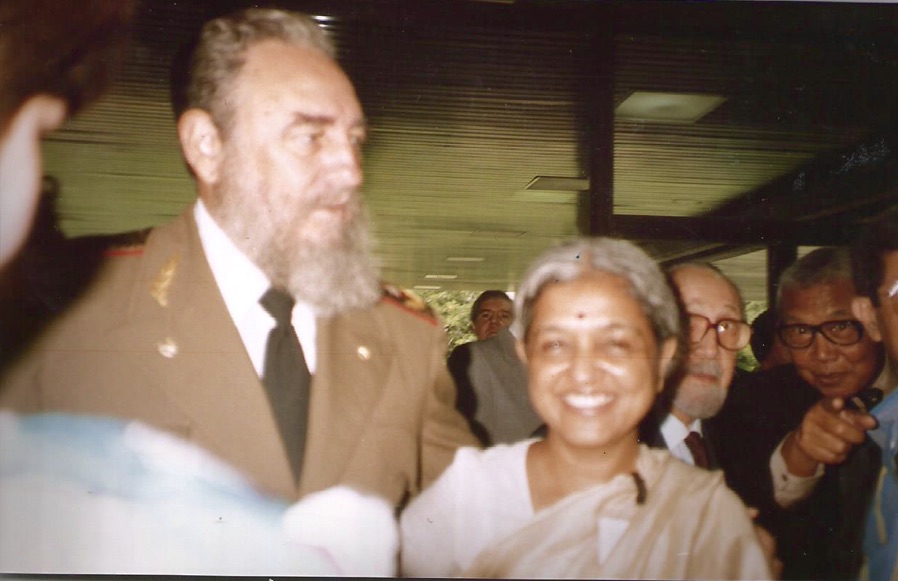
With Fidel Castro in Cuba as a member of the South Commission. With permission from Devaki Jain & Speaking Tiger Books

You have spoken of how the South Commission fell through. Can you tell us why? Is this what happens very often?

The South Commission fell apart because of a failure of solidarity between the south countries. It was a political statement to join the South together as an economic platform. When it failed, it failed all that. 

You tried to bring many changes for the welfare of women across India and beyond. Will you tell us a bit about the perceived problems and solutions that we could find?

I do not think I attempted to bring changes for the welfare of women. I think I was basically pointing out the contribution that women made to the economy and how they were being discriminated against. 

What are your future plans, presuming you are going to be a grand dame of 150 years?

I would like to write, write and write.

What would be the advice you would like to give young women living in today’s world?

Follow your dreams and don’t be frightened of orthodoxy. 

Thank you for giving us some of your time.

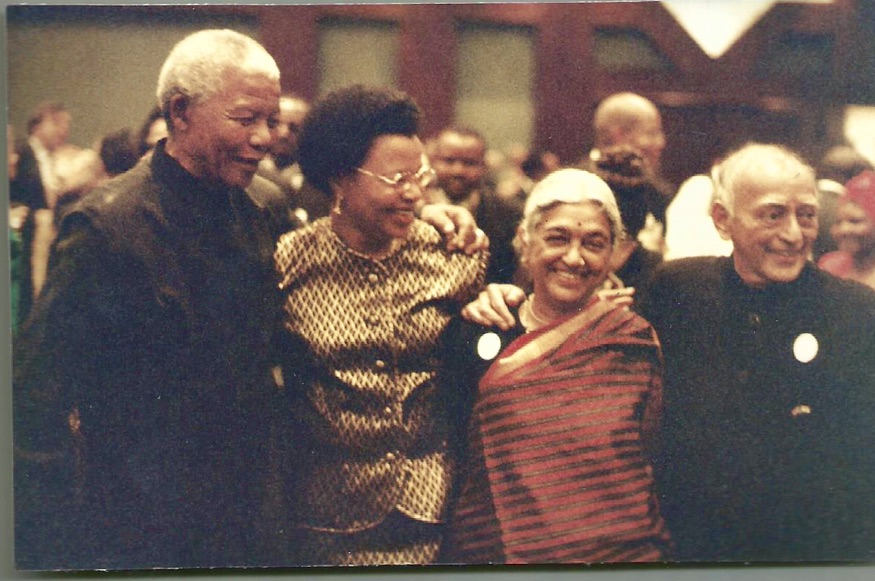
Nelson Mandela, Graca Machel, Devaki Jain, Lakshmi Jain at a reception. With permission of Devaki Jain & Speaking Tiger
With Dr Julius Nyere (centre) in Cuba, 1989. With permission from Devaki Jain & Speaking Tiger Books
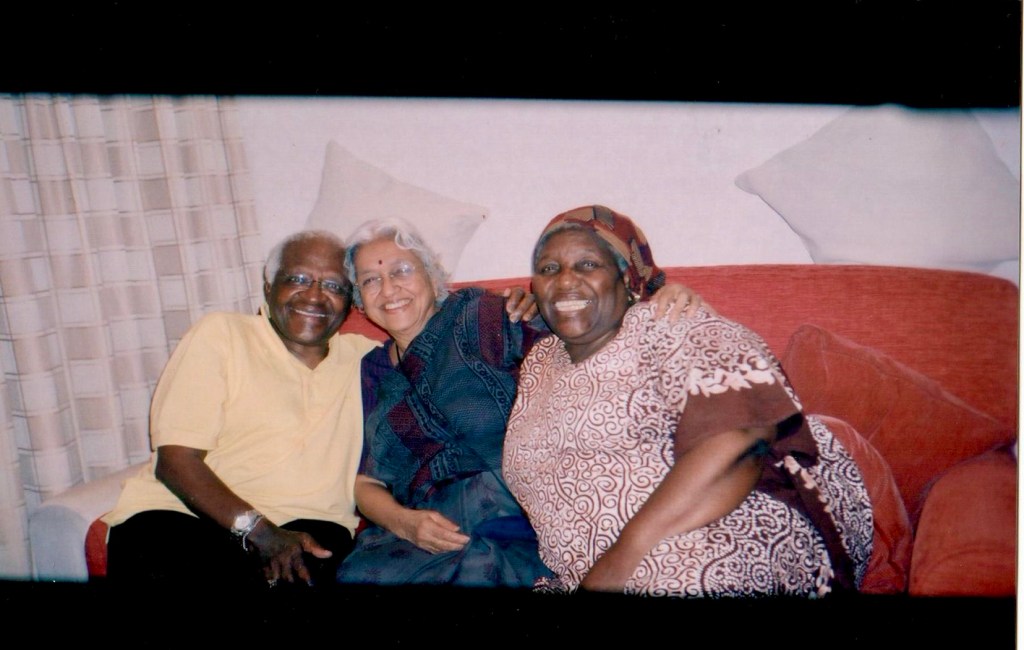
With Desmond & Leah Tutu, Pretoria, 1998. with permission from Devaki Jain & Speaking Tiger Books

All the photographs are published with thanks to the author, Devaki Jain, and the publisher, Speaking Tiger Books.

.

This has been an online interview conducted by Mitali Chakravarty.

PLEASE NOTE: ARTICLES CAN ONLY BE REPRODUCED IN OTHER SITES WITH DUE ACKNOWLEDGEMENT TO BORDERLESS JOURNAL

Categories
Discussion

Rabindranath Tagore: A Universal Bard

Aruna Chakravarti in discussion with Sunil Gangopadhyay

Rabindranath Tagore (1861 to 1941) was born on May 7th. He was a brilliant poet, writer, musician, artist, educator – a polymath — and of course, we all know of him as the first Nobel Laureate from Asia. His writing spanned across genres, across global issues and across the world.

Today to jubilate this great writer on his one hundred and fifty ninth birth anniversary, we have a conversation by two greats of our era. They, like Tagore, are from Bengal — both Sahitya Akademi award winners; Aruna Chakravarti , a writer who has translated his famed Gitabitaan, and she talks about the great poet with Sunil Gangopadhayay (1934-2012), a renowned Bengali author who authored a novel on Tagore in Bengali, Prothom Alo or First Light.  Aruna Chakravarti has translated Gangopadhyay’s novel too and she also has her own novel on the Tagore family women, Jorasanko, which has been a best seller in India.

The conversation brings out the relevance of Tagore in the current day world and more interesting details focussing on responses of modern day writers to his poetry and philosophy. A part of the celebrations organised by Sahitya Akademi to jubilate the 150th birth anniversary of Tagore in Kochi in 2011, it spans the passing of an era in literature. Borderless is very privileged to host the transcript of the discussion that took place between the two giants of Indian literature, on one of the greatest and most impactful writers of this Earth, a thinker and creator who ascends the boundaries of time – our Kobiguru Rabindranath Tagore.

Aruna Chakravarti:  Sunil da. You have maintained in a number of your public statements that, as a young writer, you had no great admiration for Rabindranath. Neither did your contemporaries of the Kallol group. You considered his work sentimental and archaic and wanted to get out of his shadow. Which you did by writing in a very original and dynamic way. Yet, now that you are in your seventies, we see in you a great admirer of Tagore. You have read his works conscientiously. And I’m told you can sing at least two lines of each of the two thousand songs composed by him. Not only that. You have made him the central character of your novel First Light and used the awakening of his poetic inspiration as a metaphor for the awakening of an entire nation. When and how did this change take place?

Sunil Gangopadhyay :   Yes. We were rebels who wanted to write in a stronger, more down to earth and powerful language. We rejected Rabindranath as a model and had mixed feelings about his work. Some of his poems we thought were dated and some others were too long. But that does not mean we did not admire him. We did admire him particularly his lyrics which we knew, even then, would be immortal.

In one of my poems I have said that even if everything else Rabindranath has written dies out with time — his songs will live. My friends and I used to compete with each other as to who knew the greatest number of his songs. We would spend our evenings singing Rabindra Sangeet and reciting his poems. Some of us could recite reams of pages. But it is true that we admired him in private and rejected him in public. We made our dislike of the Rabindra scholars, who lionised  him shamelessly, quite apparent. They declared that he was the last word. That the pulse of poetry had stopped with him. They turned him into a god.

We couldn’t accept that. We were young and hot headed and reacted strongly. And sometimes we used abusive language. One of my friends declared publicly that he had kicked out a collection of Rabindranath’s poetry. But, in reality, nothing like that had happened. And we hated the term Gurudev. Why Gurudev? Why such blind adulation?

Aruna Chakravarti:  Has any of your work been influenced by Rabindranath’s?

Sunil Gangopadhyay:  No. We tried, very cautiously, not to imitate Rabindranath and if we found the faintest traces of imitation in the work any of our friends, we ridiculed him.

Aruna Chakravarti:  I don’t mean consciously. And I’m not referring to your early writing. Later, when you realised the value of his work, did it not rub off in any way? Subconsciously perhaps?

Sunil Gangopadhyay :  Can any Bengali writer escape Rabindranath? I’ve learned the basics from him. Poetic structures, the use of rhymes and metres—from where else did I learn all this?

Aruna Chakravarti :  Sunil da.  Though you started writing while still in your teens it was exclusively in Bangla till 1987, when your novel Arjun was translated into English. Which makes it a little over a couple of decades that you started reaching out to a Western readership. Something similar happened to Rabindranath. He wrote from childhood upwards in Bangla then, suddenly, chose to turn bilingual at the age of fifty when he translated the lyrics of Gitanjali. Why do you think this happened? As I see it neither of you had any particular compulsions to make your work a part of the literature of the West. Please share your thoughts on this in the light of your own experience.

Sunil Gangopadhyay:  Rabindranath had travelled widely by that time. He, as we all know, was the most widely travelled man of his times — a kind of roving ambassador for India.  He had met many eminent men and women from other countries who were impressed with his personality and curious to know what and how he wrote. They urged him to translate his work. And he did so. That was the primary reason. His family didn’t think much of this endeavour.  Dwijendranath Tagore, his eldest brother, writes in his Memoirs that one day he saw Rabindranath lying on his bed with books and papers spread out before him. On asking him what he was writing Rabindranath told him that he was translating some of his work because the sahebs wanted to read it. Dwijendranath was quite annoyed and told his younger brother, ‘If the sahebs want to read your work they should learn Bengali.’ People did not care for translations then. Bankim translated his own work but did not like them at all.

Aruna Chakravarti: And what about you? You have said, often enough, that you are perfectly content with your Bengali readership and with using Bangla as the sole language of your literary expression. Yet you did commission translations of your work. Why was this?

Sunil Gangopadhyay: Aruna, I must tell you that I’ve never, in my whole life, requested anyone to translate my work. People have done it. I have not stopped them. There is a reason for it. I consider myself a poor writer and believe that my books do not merit translation. I do my best but genuinely believe that a really good and perfect book still remains to be written by me. Besides my English is not so good. I can’t tell if the translation is worthwhile or not. You have done an excellent job. People who know English tell me that your translations are better than the originals.

Aruna Chakravarti:  Really Sunil da! Please don’t embarrass me. But let’s move on from this to another point.From the advent of English education in India writers have sensed a tension within themselves regarding choice of language. Michael Madhusudan and Bankimchandra began their literary careers in English then switched over to Bangla. With Rabindranath the opposite happened.  But not quite. He continued to write prolifically in both languages. But it seems as though he chose English for certain genres and Bangla for others. English—to express his ideas on politics, religion, education and philosophy. In short, he chose to use it as a language of communication with a wider world. But Bangla was the language of his heart. It was his language of communion—the language of his music and poetry. Here I’m reminded of the song Gaaner bhitor diye jakhan dekhi bhuvan khani (I see the universe through my songs) in which he concedes that it is only through his music that he can commune with God and all created things. And, though he doesn’t say so, the fact that he can do this only in Bangla is implicit.  It is interesting to note that he did not write a single song in English. He could have done so. He was sufficiently knowledgeable about Western music and his English, too, was impeccable. We see traces of Western influence in some Bangla songs. But he never, ever, wrote an English song.

Sunil Gangopadhyay:  Quite true. He loved Bengal and the Bengali language. He travelled to so many countries and wrote so much during those times. But the places he visited are conspicuous by their absence in his poetry. Even during his travels, the focus of his songs and lyrics were fixed, unwaveringly, on his own land. Wherever he went — be it Iran, Italy, England or Argentina — he never recorded his experiences there in song. Rather, whatever he composed during those times, reflected the melancholy of parting and a bitter sweet nostalgia for what he had left behind.

Another thing.  Rabindranath always maintained that the English renderings were not good. And I agree. Leave alone the works of others even his own translations are a feeble shadow of the original. Sometimes I wonder why Yeats and Rothenstein liked his English Gitanjali so much. It is nothing compared to the Bangla. And I don’t think his best work has been translated. There are no good translations of the poems of Balaka and Purabi. His work in English are remarkably slender.  It runs into 56 volumes in Bangla and in English we have only four.

Rabindranath may have been a world writer in his views, but he had the heart and soul of a Bengali. He loved Bengal and loved her language. During the Partition of Bengal in 1905, when the language was threatened, Rabindranath came out on the streets, for the first time in his life. He was not that type at all. He hated publicity. But he led his people in protesting against what he considered was an infringement on the lives of Bengalis and a move to crush them by diluting the power of their language. Fortunately, the Partition of Bengal did not happen in his lifetime. It happened six years after his death along with the Partition of India.

Aruna Chakravarti:  Coming back to your comment that, during his travels, he never composed a song on the land in which he was staying, I am put in mind of the song he wrote in Germany once just before Durga Puja. He wrote Chhutir banshi bajlo…ami keno ekla boshe ei bijane (the holiday flute played… why am I sitting alone in this foreign land). Pure déjà vu! To move on to another aspect of Rabindranath’s engagement with the West — we know that Rabindranath fell back on the notion of Gurukul when he started his school in Shantiniketan. He conceived it as a brahmacharyashram with himself as Gurudev or Preceptor. 

This was an expression of his lifelong discomfort level with the western system of education. He had fared badly in all the English schools to which he was sent including the ones in England. Yet Rabindranath responded enthusiastically to European literature, art and music and even studied the new scientific theories with interest from his early youth. The poetry he wrote in his teens was largely inspired by that of Dante and Petrarch. Another interesting fact is that he had not only read the major poets he was also aware of the obscurer ones. For instance, he had read the boy poet Chatterton and saw a close resemblance between himself and him…

Sunil Gangopadhyay:  Bhanu Singher Padavali (Bhanu Singh’s verses)?

Aruna Chakravarti:  Yes. This was particularly apparent when Rabindranath was writing the lyrics which were published as Bhanu Singher Padavali.  Both young men were incurable romantics and obsessive dreamers who lived in a visionary world they half believed in. Like Chatterton, who concealed his identity behind that of the non-existent medieval poet Rowley, Rabindranath used the pseudonym BhanuSingh — a non-existent Vaishnav poet. Do you see a contradiction between his absorbing interest in everything European and his rejection of it in terms of an educational process?

Sunil Gangopadhyay:  Rabindranath couldn’t stand the rigid discipline of the British public school system. He hated confinement of any sort and the notion of being dosed with quantities of knowledge within the four walls of a school room was obnoxious to him. That is why he fared badly in all the English schools to which he was sent—both in India and in England.

Aruna Chakravarti:  Yes. His brother Somendranath, who wasn’t quite normal as a boy and became distinctly unhinged in later life, fared better.  But Rabindranath’s inability to benefit from a structured system of education wasn’t restricted to English schools. His brother Hemendranath, who had taken charge of the primary education of the children of Jorasanko, told his father often — Robi mon dei na (Robi doesn’t pay attention). His music tutors complained that he didn’t attend his classes regularly and even when he did, was inattentive and careless.

Yet Rabindranath rose to be one of the world’s greatest composers and could be numbered among a dozen of its most learned men. What, in your opinion, lay behind the strange amalgam of qualities that made up Rabindranath? The meticulous self-education he put himself through with no aids other than simple lexicons and dictionaries indicate rigorous self discipline.  A wondrous ability to imbibe knowledge and an instinctive rejection of a formal, structured process of education! How does one explain it?

Sunil Gangopadhyay:   Well. He was a genius Aruna. And who can gauge the psyche of a genius? Or even try to analyse it?  And what is more he developed his art slowly and carefully. He did not rest on his extraordinary abilities. He worked hard at them. He was one of the most disciplined and hardworking men born in this world. He made some mistakes in his life, but doesn’t everyone make mistakes? When he established the brahmacharyashram he did it on the advice of his friend Brahma Vidya Upadhyay. The idea appealed to him, but he did not realise that it was a highly impractical one. Impossible to implement. 

He began by enrolling students without charging fees. But he could not keep it up. He had to sell his wife’s jewellery, even his own favourite watch, to pay his teachers. But how long could these funds last? He couldn’t make ends meet. Finally, he had to start charging fees.

Another defective system he introduced was the observance of caste. Brahmin boys would not touch the feet of Kayastha teachers. But Kayastha teachers would touch the feet of their Brahmin colleagues. Even that had to be given up.

But the great thing about him was that he never failed to admit his mistakes and rectify them. He realised that even a guru has to grow and evolve. And he learned steadily and continuously from the journey of his life. He was truly successful with his experiment of Viswa Bharati, the meeting of Bharat with Viswa—India with the world. He realized that India’s greatness lay not in her ancient system of education but in her ability to assimilate and bring together all the nations and cultures of the world.  Ei bharater mahamanaber sagar teere (In this land of Bharat, rests the ocean of all races of mankind).

Aruna Chakravarti: Very true. But some of the systems he introduced in Shantiniketan have remained to this day.  For example, his belief that a child can learn only if he’s in the midst of nature, which must have been behind the concept of the “open air schoolhe started, is still respected. No class rooms. Learning only on bedis (platforms) under the trees.

Sunil Gangopadhyay:  That was a foolish idea! And it didn’t work. It rains three months in the year in Birbhum and the rest of the year, it is either burning hot or bitterly cold. There are only short spells of pleasant weather in spring and autumn. The open-air school was impractical. It was at best a gesture. And it has remained a gesture. And to tell you the truth—I’ve never understood why Rabindranath had to open a school. He was a poet and should have remained content with writing poetry. Why did he have to pose as an educationist? Where was the need?

Aruna Chakravarti:  The time is running out, Sunil da, and I can see the Chair gesturing to me to start winding up.  I had many more questions and was looking forward to hearing your views on the conflicting Western responses to Gitanjali prior to the Nobel Prize and after. But it looks as though I’ll have to keep it aside for a private discussion. I’d like to end with one observation. Though it is not a question I would be happy to have your response. Many of your admirers, among whom I count myself, are of the opinion that no other Indian writer has come closer to Rabindranath’s prolificity, his vast range of genres and the depth and expanse of his vision than yourself. Many of us see you as Rabindranath’s legitimate successor and feel sure that you will be recognized as such and invested with his literary mantle in the not so distant future. Would you like to respond to this prophesy?

Sunil Gangopadhyay:  Thank you Aruna. But no. I have nothing to say.

Aruna Chakravarti:  Thank you, Sunil da, for your inputs. They have been most interesting and have certainly pushed the borders of our understanding of Rabindranath substantially. Thank you once again. 

 This conversation took place at a Tagore Conference organised by the Sahitya Akademi in Kochy in 2011.