Categories
Editorial

Where Are Those Happy Days?

Festivals are like friends.

They bring hope, solace and love to those who believe in them. But, when the structures holding the fiestas in place start to crumble, what do we do then?

Our lives have moved out of wilderness to cities over centuries. Now, we have covered our world with the gloss of technology which our ancestors living in caves would have probably viewed as magic. And yet we violate the dignity of our own kind, war and kill, destroy what we built in the past. The ideological structures seem ineffective in instilling love, peace, compassion or hope in the hearts of the majority. Suddenly, we seem to be caving in to violence that destroys humanity, our own kind, and not meting out justice to those who mutilate, violate or kill. Will there be an end to this bleak phase? Perhaps, as Tagore says in his lyrics[1], “From the fount of darkness emerges light”. Nazrul has gone a step further and stated clearly[2], “Hair dishevelled and dressed carelessly/ Destruction makes its way gleefully. / Confident it can destroy and then build again …Why fear since destruction and creation are part of the same game?”

And yet, destruction hurts humans. It kills. Maims. Reduces to rubble. Can we get back the people whose lives are lost while destruction holds sway? We have lost lives this year in various wars and conflicts. As a tribute to all the young lives lost in Bangladesh this July, we have a poem by Shahin Hossain. Afsar Mohammad has brought in the theme of festivals into poetry tying it to the current events around the world. In keeping with the times, Michael Burch has a sense of mirthlessness in his poems. Colours of emotions and life have been woven into this section by Malashri Lal, Luis Cuauhtémoc Berriozábal, Fhen M, Shamik Banerjee, George Freek, Matthew James Friday, Jenny Middleton and many more. This section in our journal always homes a variety of flavours. Stuart MacFarlane has poems for Wordsworth… and some of it is funny, like Rhys Hughes’ poem based on photographs of amusing signposts. But then life has both sorrows and laughter, and poetry is but a slice of that as are other genres. We do have non-fiction in a lighter vein with Hughes’ story and poem about pizzas. Devraj Singh Kalsi has given a tongue in cheek narrative about his library experiences.

Suzanne Kamata has written for us about her visit to Rwanda. Farouk Gulsara has pondered over humanity’s natural proclivitiesWiccan lore has been discussed by Rajorshi Patranabis. And Snigdha Agrawal has tuned into humour with her rendition of animal antics that overran festivities. Ravi Shankar, on the other hand, has written about the syncretic nature of festivals in Kerala. Professor Fakrul Alam has given a nostalgic recap of Durga Puja during his childhood, a festival recognised as an “Intangible Cultural Heritage of Humanity” by UNESCO, and known for its syncretic traditions where people from all backgrounds, religions and cultures celebrate together.

Festivals have also been taken up in fiction by Tanika Rajeswari V with a ghostly presence hovering over the arrangements. Paul Mirabile has taken us around the world with his story while Saeed Ibrahim writes from his armchair by the Arabian sea. Sahitya Akademi winner for his children’s stories, Naramsetti Umamaheswara Rao, has showcased peer pressure among youngsters in his narrative.  

Two stories have also featured in our translations. Christine C Fair has rendered Veena Verma’s Punjabi story about an illegal immigrant into English. Hinting at climate concerns, Sharaf Shad’s fiction, has been translated from Balochi by Fazal Baloch. Tagore’s powerful poem on Africa has been brought to Anglophone readers by Debali Mookerjea-Leonard as well as his inspiring lyrics, Andhokaarer Utso Hote (From the Fount of Darkness), by our team. Nazrul’s vibrant lyrics, Shukno Patar Nupur Paye (With Ankle Bells of Dried Leaves), has been rendered into English from Bengali by Professor Alam.

Our reviews explore immigrant stories in fiction with Somdatta Mandal reviewing Ammar Kalia’s A Person Is a Prayer. Bhaskar Pariccha has written about Selected Works of Vyasa Kavi Fakir Mohan Senapati, edited by Monica Das. Fakir Mohan is a legendary writer from Odisha. Meenakshi Malhotra has discussed a book on another legend, Safdar Hashmi, one of the greatest names in street theatre in India. The book is by Anjum Katyal and called, Safdar Hashmi: Towards Theatre for a Democracy.

Our book excerpts usher good cheer with a narrative by Ruskin Bond from Let’s Be Best Friends Forever: Beautiful Stories of Friendship. And also hope with a refugee’s story from Ukraine, which travels through deserts, Italy and beyond to US and has a seemingly happier outcome than most, Lara Gelya’s Camel from Kyzylkum. This issue’s conversations take us around the world with Keith Lyons interviewing Lya Badgley, who has crossed continents to live and write. Malashri Lal, the other interviewee, is an academic and writer with sixteen books under her belt. She travels through the world with her poetry in Mandalas of Time.

Huge thanks to the Borderless team for putting this issue together – the last-minute ties – and the art from Sohana Manzoor. Without all this, the edition would look different. Heartfelt thanks to our contributors without whose timely submissions, we would not have a journal. And most of all we thank our readers – we are because you are – thank you for reading our journal.  As all our content, despite being indispensable, could not be mentioned here, do pause by our content’s page for this issue.

We wish you a wonderful month!

Cheers,

Mitali Chakravarty

borderlessjournal.com

[1] Tagore’s Andhokaarer Utso Hote (From the Fount of Darkness)

[2] Nazrul’s Proloyullash translated by Professor Alam as The Frenzy of Destruction

Click here to access the content’s page for the October 2024 Issue.

.

READ THE LATEST UPDATES ON THE FIRST BORDERLESS ANTHOLOGY, MONALISA NO LONGER SMILES, BY CLICKING ON THIS LINK.

Categories
Stories

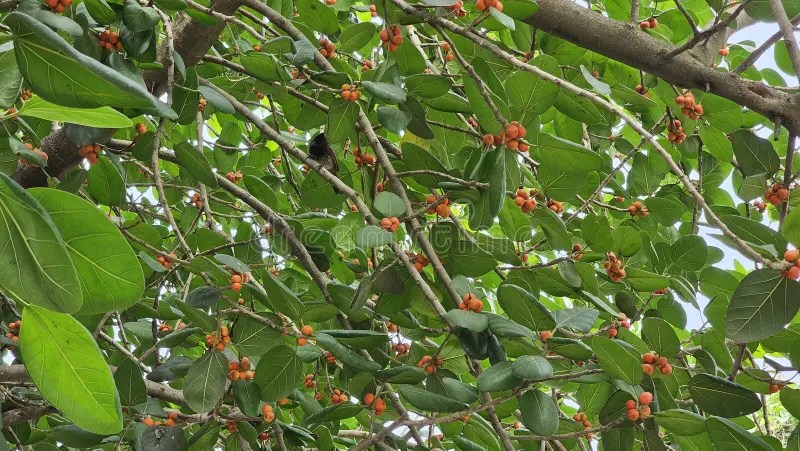
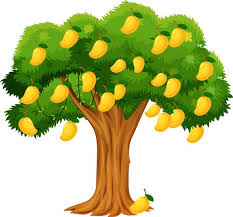
The Mango Thief

By Naramsetti Umamaheswara Rao

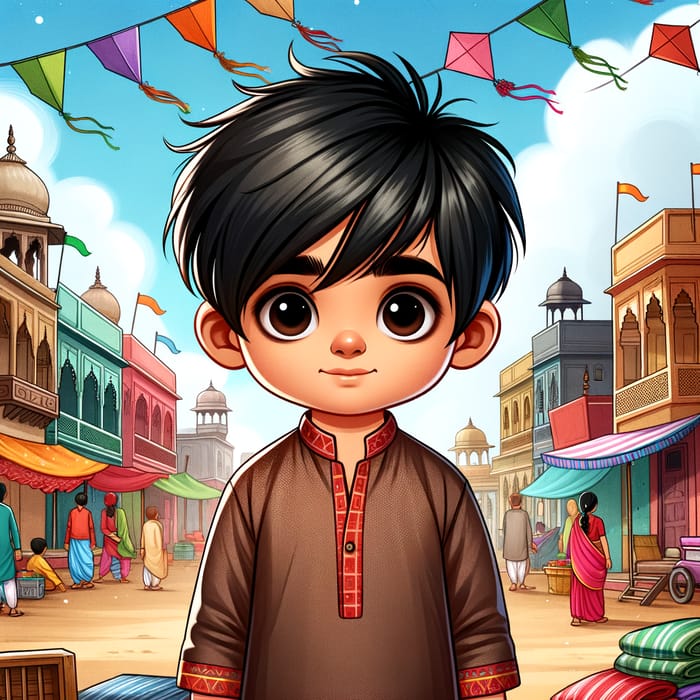
Ricky was a boy known for his mischievous nature. Though he was in the eighth grade, he had the sharpness and boldness of someone older. Ricky rarely attended school, preferring instead to roam around the fields beside the road, cutting sugarcane and plucking groundnuts, causing damage to the crops.

In his class, there was a bright and studious boy named Anand. Ricky thought it would be advantageous to befriend Anand to get his notes. The next day, Ricky brought some guavas he had stolen and offered them to Anand, saying, “These are from our orchard. They’re very sweet; take them.” Although Anand initially refused, Ricky insisted and placed the fruits in his hands, and Anand, not wanting to seem rude, reluctantly accepted them.

Over the following days, Ricky brought sugarcane and groundnuts, further solidifying their friendship. Ricky began inviting Anand to accompany him when he went out, and Anand, hesitant to refuse, would often join him. Their classmates noticed this and warned Anand, saying, “Don’t hang out with him. Being with him could get you into trouble.”

But Anand dismissed their concerns, thinking, “I’m a good person, so nothing bad will happen to me. Maybe Ricky will change for the better.”

One day after school, as they were walking home, Ricky suggested they enter a mango orchard along the way. Anand hesitated, knowing it was wrong, but Ricky was persistent. Ignoring Anand’s reluctance, Ricky said, “If you’re so scared, stay here. I’ll go in alone.” Ricky then climbed over the fence, entered the orchard and began plucking ripe mangoes, stuffing them into his school bag.

What Ricky didn’t know was that the orchard’s caretaker had been keeping a close watch. He was already angry about frequent thefts and was determined to catch the thief red-handed. Seeing Ricky pluck the mangoes, the caretaker approached the tree with a stick in hand and shouted, “Hey, you little thief! Come down! I’ll teach you a lesson!”

Ricky, momentarily startled, quickly regained his composure. He was used to such situations. “What can you do?” Ricky challenged, “You’re all alone, and there are two of us. We could easily overpower you, and no one would know.”

The caretaker, growing more furious, demanded, “Where’s the other one?”

Ricky pointed towards Anand, who was outside the fence, and said, “He’s waiting over there, keeping an eye out for me.” The caretaker, not seeing clearly, took a couple of steps to get a better view and thought he spotted someone. But when he turned back to the tree, Ricky had already jumped down and escaped.

The caretaker, enraged, thought, “Not only does this kid steal, but he also dares to threaten me?” He chased after Ricky but couldn’t catch him. Frustrated, he decided to catch the other boy instead, thinking it would lead him to Ricky later.

Ricky saw the caretaker running towards Anand but chose not to warn him.

Anand, seeing the caretaker approaching, remained calm, thinking, “Why should I be afraid? I haven’t done anything wrong.”

But as soon as the caretaker reached him, he grabbed Anand’s hair and began hitting him on the back. “Why are you hitting me? What have I done? I didn’t even enter your orchard,” Anand cried.

The caretaker slapped him twice and said, “You dare ask what you did? No shame? You came here to steal, sent your friend inside, and stayed outside to keep watch? Come with me, I’ll tie you to the tree. You two have been stealing my mangoes every day. I won’t release you until my boss arrives,” he said, dragging Anand inside the orchard.

Despite Anand’s protests and pleas of innocence, the caretaker refused to listen and tied him to a tree.

Passersby noticed Anand tied to the tree and, shocked by the sight, informed his parents. They came and freed him, explaining the situation to the villagers. Anand insisted that he hadn’t done anything wrong.

The villagers scolded him, saying, “Your mistake was befriending a bad boy. What else did you expect?”

Regretful, Anand lamented, “Despite my friends’ warnings, I knowingly continued my friendship with Ricky. I’ve learned my lesson. I won’t make this mistake again.”

Naramsetti Umamaheswararao has written more than a thousand stories, songs, and novels for children over 42 years. he has published 32 books. His novel, Anandalokam, received the Central Sahitya Akademi Award for children’s literature. He has received numerous awards and honours, including the Andhra Pradesh Government’s Distinguished Telugu Language Award and the Pratibha Award from Potti Sreeramulu Telugu University. He established the Naramshetty Children’s Literature Foundation and has been actively promoting children’s literature as its president.

.

PLEASE NOTE: ARTICLES CAN ONLY BE REPRODUCED IN OTHER SITES WITH DUE ACKNOWLEDGEMENT TO BORDERLESS JOURNAL

Click here to access the Borderless anthology, Monalisa No Longer Smiles

Click here to access Monalisa No Longer Smiles on Amazon International

Categories
Editorial

And Wilderness is Paradise Enow…

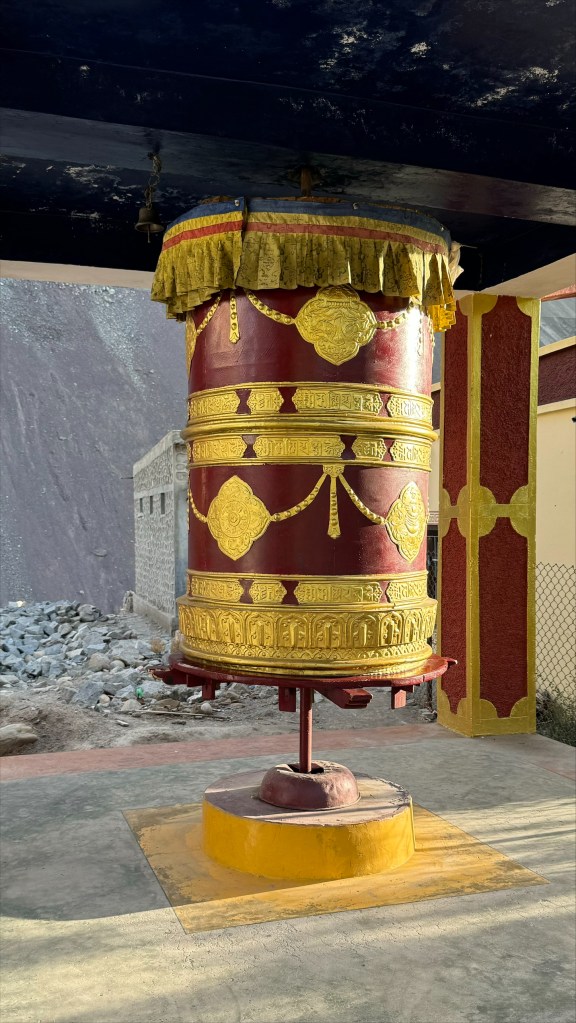
Prayer Wheel at Nurulia, Ladakh. Photo Courtesy: Farouk Gulsara
We lock eyes, find glimmers
of smiles, trust our leaders.
We break bread with strangers
because there aren’t any.

--Imagine by Miriam Bassuk

Imagine the world envisioned by John Lennon. Imagine the world envisioned and partly materialised by Tagore in his pet twin projects of Santiniketan and Sriniketan, training institutes made with the intent of moving towards creating a work force that would dedicate their lives to human weal, to closing social gaps borne of human constructs and to uplifting the less privileged by educating them and giving them the means to earn a livelihood. You might well call these people visionaries and utopian dreamers, but were they? Tagore had hoped to inspire with his model institutions.  In 1939, he wrote in a letter: “My path, as you know, lies in the domain of quiet integral action and thought, my units must be few and small, and I can but face human problems in relation to some basic village or cultural area. So, in the midst of worldwide anguish, and with the problems of over three hundred millions staring us in the face, I stick to my work in Santiniketan and Sriniketan hoping that my efforts will touch the heart of our village neighbours and help them in reasserting themselves in a new social order. If we can give a start to a few villages, they would perhaps be an inspiration to some others—and my life work will have been done.”  But did we really have a new social order or try to emulate him?

If we had acted out of compassion and kindness towards redefining with a new social order, as Miriam Bassuk points out in her poem based on Lennon’s lyrics of Imagine, there would be no strangers. We’d all be friends living in harmony and creating a world with compassion, kindness, love and tolerance. We would not have wars or regional geopolitical tensions which act against human weal. Perhaps, we would not have had the issues of war of climate change take on the proportions that are wrecking our own constructs.

Natural disasters, floods, fires, landslides have affected many of our lives. Bringing us close to such a disaster is an essay by Salma A Shafi at ground level in Noakhali. More than 4.5 million were affected and 71 died in this disaster. Another 23 died in the same spate of floods in Tripura with 65,000 affected. We are looking at a single region here, but such disasters seem to be becoming more frequent. And yet. there had been a time when Noakhali was an idyllic vacation spot as reflected in Professor Fakrul Alam’s nostalgic essay, filled with memories of love, green outdoors and kindnesses. Such emotions reverberate in Ravi Shankar’s account of his medical adventures in the highlands of Kerala, a state that suffered a stupendous landslide last month. While Shafi shows how extreme rainfall can cause disasters, Keith Lyons writes of water, whose waves in oceanic form lap landmasses like bridges. He finds a microcosm of the whole world in a swimming pool as migrants find their way to New Zealand too. Farouk Gulsara muses on kindness and caregiving while Priyanka Panwar ponders about ordinary days. Saeed Ibrahim gives a literary twist to our musings.   Tongue in cheek humour is woven into our nonfiction section by Suzanne Kamata’s notes from Japan, Devraj Singh Kalsi’s piece on premature greying and Uday Deshwal’s paean to his sunglasses!

Humour is wrought into poetry by Rhys Hughes. Supriya Javelkar and Shamik Banerjee have cheeky poems that make you smile. We have poetry on love by Michael Burch and poetry for Dylan Thomas by Ryan Quinn Flanagan. Miriam Bassuk has described a Utopian world… but very much in the spirit of our journal. Variety is brought into our journal with poetry from Jackie Kabir, Jennifer McCormack, Craig Kirchner, Stuart MacFarlane, George Freek, Luis Cuauhtémoc Berriozábal and many more.

In translations, we have Nazrul lyrics transcreated from Bengali by Professor Alam and poetry from Korean by Ihlwha Choi. We pay our respects to an eminent Balochi poet who passed on exactly a year ago, Mubarak Qazi, by carrying a translation by Fazal Baloch. Tagore’s Suprobhat (Good morning) has been rendered in English from Bengali. His descriptions of the morning are layered and amazing — with a hint of the need to reconstruct our world, very relevant even today.  A powerful essay by Tagore called Raja O Praja (The King and His Subjects), has been translated by Himadri Lahiri.

Our fiction hosts two narratives that centre around childhood, one by Naramsetti Umamaheswararao and another by G Venkatesh, though with very different approaches. Mahila Iqbal relates a poignant tale about aging, mental health and neglect, the very antithesis of Gulsara’s musing. Paul Mirabile has given a strange story about a ‘useless idler’.

A short story collection has been reviewed by Rakhi Dalal, Swadesh Deepak’s A Bouquet of Dead Flowers, translated from Hindi by Jerry Pinto, Pratik Kanjilal, Nirupama Dutt, Sukant Deepak. Somdatta Mandal has written about a book by a Kashmiri immigrant which is part based on lived experiences and part fictive, Karan Mujoo’s This Our Paradise: A Novel. Bhaskar Parichha has reviewed Ayurveda, Nation and Society: United Provinces, c. 1890–1950 by Saurav Kumar Rai, a book which shows how healthcare was even a hundred years ago, politicised. Meenakshi Malhotra has reviewed Anuradha Marwah’s novel, Aunties of Vasant Kunj, of which we also have an excerpt. The other excerpt is from Mineke Schipper’s Widows: A Global History. Ratnottama Sengupta converses with Reba Som, author of Hop, Skip and Jump; Peregrinations of a Diplomat’s Wife.

We have more content that adds to the vibrancy of the issue. Do pause by this issue and take a look. This issue would not have been possible without all your writings. Thank you for that. Huge thanks to our readers and our team, without whose support we could not have come this far. I would especially like to thank Sohana Manzoor for her continued supply of her fabulous and distinctive artwork and Gulsara for his fabulous photographs.

Let us look forward to a festive season which awakens each autumn and stretches to winter. May we in this season find love, compassion and kindness in our hearts towards our whole human family.

Have a wonderful month!

Mitali Chakravarty

borderlessjournal.com

Click here to access the content’s page for the September 2024 Issue.

.

READ THE LATEST UPDATES ON THE FIRST BORDERLESS ANTHOLOGY, MONALISA NO LONGER SMILES, BY CLICKING ON THIS LINK.

Categories
Stories

Imitation

By Naramsetti Uma Maheswara Rao

Public Domain

“Mom, if you stick this on your head, your splitting head will heal. Here, take it and stick it on,” said four-year-old Ravi, handing over a roll of round plaster.

“Who told you to stick this for a headache?” Rajani asked in surprise, not quite understanding what he meant.

“Earlier, you told the neighbour aunty that your head was splitting. That’s why I brought it. Whenever something in the house tears, Dad sticks it with this. You should stick it on your head so it doesn’t split,” Ravi replied innocently.

Rajani laughed at her son’s sweet words. As a festival was on in the village, Rajani had invited her parents, siblings, and their families to her home. With everyone staying at her house, her daily chores had increased. Even though she woke up at dawn to start working, she couldn’t finish everything. Just then, the neighbour had come asking for a loan of some sesame oil.

“No matter how much I do, the work never ends. My hands are hurting, and my head is splitting,” Rajani had told the neighbour.

Ravi heard these words, and to help his mom, he brought the plaster his dad used to stick his brother’s torn books. He told his mother to stick it on her head to ease her headache. Now, Rajani understood the situation and laughed at her son’s cleverness.

“Why are you laughing? Won’t the headache go away if you stick this?” Ravi asked innocently again.

“You don’t stick plaster for a splitting head. A splitting head means I have a headache. If I apply Amrutanjan[1], it will go away,” Rajani explained in a way he could understand.

Rajani shared the incident with the rest of the family, and they all had a good laugh. 

.

That afternoon, the family sat down for lunch. Rajani served a curry made with chicken eggs to everyone.

“What is this?” Ravi asked. Rajani replied that it was a chicken egg.

“I want a donkey egg,” he said.

At first, Rajani didn’t understand what he meant. Everyone else also looked at Ravi with interest.

“There’s no such thing as a donkey egg. There are chicken eggs and duck eggs,” his grandmother tried to explain to Ravi.

“No, there is. I want that one,” Ravi insisted, starting to cry. No matter how much they tried to explain, he didn’t stop crying.

Ravi’s father suspected that someone must have mentioned it, as kids don’t come up with these things on their own. He took Ravi close and gently asked, “Who told you about a donkey egg? Tell me, and I’ll ask them to bring it for you.”

Hearing this, Ravi’s face lit up, and he pointed to his grandfather.

Everyone’s attention turned to the grandfather. “Did you tell him about it? Is there such a thing as a donkey egg?” everyone questioned him.

“Hold on! Why would I tell him that? Give me a moment to think,” the grandfather replied, trying to recall the incident. After some thinking, he remembered something.

That morning, one of the workers had done a job incorrectly, and in anger, the grandfather had said, “Is this how you do it? This is not a donkey egg!” Ravi, who was sitting on his grandfather’s lap at that time, heard these words. He had asked what a donkey egg was, but his grandfather, in his irritation, didn’t respond.

After learning the real story from the grandfather, the rest of the family laughed. Ravi’s father lovingly explained to Ravi that there’s no such thing as a donkey egg and that it was just an expression his grandfather used. It took some convincing, but eventually, Ravi understood.

.

Ravi also had an elder brother named Ramu, who was eight years old. Whenever Ramu came home from school, he and Ravi would fight over something or the other.

One day, as soon as they returned from school, they fought over the TV remote, leaving Rajani, already exhausted from housework, feeling more frustrated.

“I told you to change out of your school uniforms and wash your hands and feet when you come home. I’ve kept snacks on the table. Instead of eating, why are you fighting? Behave, or I’ll smack you with a hot spatula,” Rajani said.

“Mom, I want that. Don’t give it to my brother. Spank me now,” Ravi cried, running to his mom.

“What did you understand? Do you know what a spank is?” Rajani asked, calming down.

“Oh, I know. It’s a hot pancake. I’m hungry. Please spank me quickly,” Ravi said innocently. Hearing his sweet words, Rajani’s frustration disappeared, and she laughed wholeheartedly.

She kissed Ravi on his cheek and said, “Wait. I’ll get you the snacks,” and ran to the kitchen.

Rajani realised, “We shouldn’t use such words in front of children. They can misunderstand and repeat them in front of others, causing embarrassment.” From that day on, she learned to be cautious with her words around Ravi.

[1] Balm for healing headache

Naramsetti Umamaheswararao has written more than a thousand stories, songs, and novels for children over 42 years. he has published 32 books. His novel, Anandalokam, received the Central Sahitya Akademi Award for children’s literature. He has received numerous awards and honours, including the Andhra Pradesh Government’s Distinguished Telugu Language Award and the Pratibha Award from Potti Sreeramulu Telugu University. He established the Naramshetty Children’s Literature Foundation and has been actively promoting children’s literature as its president.

.

PLEASE NOTE: ARTICLES CAN ONLY BE REPRODUCED IN OTHER SITES WITH DUE ACKNOWLEDGEMENT TO BORDERLESS JOURNAL

Click here to access the Borderless anthology, Monalisa No Longer Smiles

Click here to access Monalisa No Longer Smiles on Amazon International

Categories
Editorial

Seasons Out of Time

...the horror of dark red sky – the gates of hell opened wide so they say that even atheists prayed to save the souls of the dead...

— Lizzie Packer, 'Hot Dry Summers'

The description in ‘Hot Dry Summers’ is not of hell but what is perceived as happening on certain parts of Earth due to global warming or climate change. Forest fires. Nearer the equator, the storms have become harsher with lightning strikes that seem to connect the Earth to the sky. Trees get uprooted as the soil is softened from excessive rain. Sometimes, they fall on passers-by killing or injuring them. There is no rain in some places, forest fires or flooding in others… The highest temperatures touched 55 degrees Celsius this year. Instead of worrying about losing our homes lodged on land masses to the oceans that continue to rise, becoming dark heat absorbers due to loss of white ice cover, we persistently fight wars, egged on by differences highlighting divisive constructs. It feels strange that we are witness to these changes which seem to be apocalyptic to doomsday sayers. Are they right? Our flora, fauna and food will also be impacted by global climate change. How will we survive these? Will we outlive these as a species?

Keeping the myriad nuances of living on this planet in mind, we have writings from more than a dozen countries showcased in this issue, with a few highlighting climate change and wars — especially in poetry. Michael Burch has given us poetry on weather. John Grey has celebrated nature. Other than Lizzie Packer, Mitra Samal has a subtle poem on climate change. Stuart McFarlane and David Mellor bring the disaster of war to our doorstep. Jared Carter, Kirpal Singh, Ryan Quinn Flanagan, Averi Saha, Shamik Banerjee, David Francis, George Freek, Rakhi Dalal and more have reflected on the varied nuances of life. Rhys Hughes has brought in humour and a comment on our perspectives, with his poem ‘Devil’s Bridge to Istanbul’… Can a shortcut be found across continents with the magic of a signboard?

Poetry in our translations’ section travels to Balochistan, from where a Hafeez Rauf translated from Balochi by Fazal Baloch, talks of burning tyres, again conflicts. It takes on a deeper hue as Ihlwha Choi translates his poignant poem from Korean, reflecting on the death of his mother. We have a translation of Tagore’s less popular poem, Mrityu[1], reflecting on the same theme. His reflections on his wife’s death too have been translated by Professor Fakrul Alam who has also shared a song of Nazrul, written and composed on the death of Tagore. Another lesser-known poet but brilliant nonetheless, Nirendranath Chakraborty, has been translated for us by Debali Mookerjea-Leonard. And what a tremendous poem it is when the person called Amalkanti wanted to be sunshine! We have a story too — ‘Speech Matters’ by Naramsetti Umamaheswararao translated by Johny Takkedasila.

Our stories as usual travel around the world — from Holland (by Paul Mirabile) to Hyderabad (by Mohul Bhowmick) and with a quick pause at Bangalore (by Anagha Narasimha). Travels in the real world are part of our non-fiction. Sai Abhinay Penna takes to a the second largest mangrove forest in the world and Ravi Shankar to Colombo. Madhuri Bhattachrya gives us a glimpse of an Indian summer and Snigdha Aggrawal explores the impact of climate change in her part of the world. Farouk Gulsara actually writes his reflections at a traffic junction. And it reads droll…

We have an in memoriam by Keith Lyons on Morgan Spurlock, the documentary maker who ate McDonald fare for a month and then made a film on it. We have two tributes to two legends across time. Wayne F Burke has given a brief piece on the iconic illustrator, Norman Rockwell. And Aruna Chakravarti, the queen of historic fiction who brought the Tagore family alive for us in her two very well researched novels, Jorasanko and Daughters of Jorasanko, has given us a fabulous tribute to Tagore on the not-so common aspects of him.

We have excerpts from another historical novel set in Bengal of Tagore’s time, Dan Morrison’s The Prince and the Poisoner: The Murder that Rocked the British Raj and Hughes’ The Sunset Suite, a set of absurd tall tales that make you smile, squirm or wonder…  Reviews of Salman Rushdie’s Knife: Meditations After an Attempted Murder by Somdatta Mandal and of Arundhathi Subramaniam’s Wild Women: Seekers, Protagonists and Goddesses in Sacred Indian Poetry by Basudhara Roy bring two latest books to our readers. Navleen Multani reflects on Mapping the Mind, Minding the Map, edited by Basudhara Roy and Jaydeep Sarangi. And Bhaskar Parichha tells us about a group of men called Pundits during British Raj, “In the closed files of the government of British India, however, they were given their true designation as spies…” in his review of Derek Waller’s The Pundits: British Exploration of Tibet and Central Asia.

Suzanne Kamata, the novelist who does a column from Japan for us normally, has spoken to us about her new novel, Cinnamon Beach, which overrides multiple manmade constructs. It’s an interesting read from someone who lives her life across multiple cultures and transcends many boundaries.

This is a bumper issue, and it is difficult to convey the vibrant hues of words that colour this edition. Please do pause by our contents page for a more comprehensive look.

This issue would not have been possible without all our fabulous contributors and a wonderful, dedicated team. We are delighted that Rakhi Dalal — who has done many reviews and shares her poetry with us in this issue — has agreed to be a writer-in-residence with us. A huge thanks to all of you, and especially Sohana Manzoor for her artwork. I am truly grateful to our readers for popularising our efforts to put together an online space with free and vibrant reads.

I would like to end with a few lines that gives me hope despite climate change, wars and doomsday predictions.

There’s more to life,
he says to me,
than what you choose to see.

— George Freek, 'The Imponderables'

Enjoy the reads.

Mitali Chakravarty

borderlessjournal.com

[1] Death

Click here to access the content’s page for the July 2024 Issue.

.

READ THE LATEST UPDATES ON THE FIRST BORDERLESS ANTHOLOGY, MONALISA NO LONGER SMILES, BY CLICKING ON THIS LINK.

Categories
Stories

Speech Matters

Story by Naramsetti Umamaheswararao: Translated from Telugu by Johnny Takkedasila

Naramsetti Umamaheswararao

Naramsetti Umamaheswararao has written more than a thousand stories, poems, and novels in children’s literature over the past 42 years. He has 32 books to his credit. He was honoured by the Central Sahitya Akademi Award in Children’s Literature for his novel Anandalokam[1]. Naramshetty founded the Bal Sahitya[2] Organisation and is working for the promotion of children’s literature.

Photo from Public Domain

Parvathipuram’s Siddaiah roams the streets, selling vegetables and green leaves from a cart. He has two sons, Murali and Saradhi. Both are educated but idle, having picked up more bad habits from the street than good ones. Siddaiah also noticed an increase in their arrogance.

He called his sons and said, “We are poor people who need to be satisfied with what we have. I am afraid to see you behaving like this. You must be humble. We should learn to respect our elders.”

“Yours is an old way of thinking. Nowadays, we should be like this only. You should see us and change yourself,” replied the sons.

Siddaiah tried to convince his sons, but they did not listen. So Siddaiah asked Gangadharam, a teacher in their neighbourhood, for suggestions. Gangadharam gave him an idea to convince his sons.

The next morning, Siddaiah said to his sons, “I have brought vegetables, green leaves, and fruits for sale, but I am not feeling well and cannot go to sell them. If kept at home, they will lose their freshness by tomorrow. Can you both sell them?”

“We don’t know business. How can we sell these?” asked the sons.

“The saying goes that, ‘If you speak well, the village will thrive.’ Impress people with your speech and sell them at the prices I tell you,” Siddaiah retorted.

They took the cart and entered the streets, shouting, “Vegetables, green leaves, fruits.” Some women came out and asked their prices. Siddaiah’s sons told them the prices their father had set.

“How can you charge such a high price? If you reduce it by twenty per kg, we will buy one kg each,” said a woman.

“We do not lose if you buy or not, but we will not reduce the price,” Murali said.

“They are not harvested in the backyard. We also bought them. The prices can’t be reduced,” Saradhi said angrily.

She didn’t buy anything. Hearing their words, the other women also went away without buying. They said things like, “In business, there should be give and take,” but Murali and Saradhi went ahead without listening.

A woman stopped the cart on a side street and checked the freshness of the vegetables. “Your price is high… at least, will you weigh it properly?”

“How can we believe that you are giving real money?” Murali said angrily.

Even after asking the price, she did not buy it. She also told others not to buy from them. As the business did not work, they moved to another street.

The women started bargaining there too. This time Saradhi got angry and said, “People will post a WhatsApp status saying ‘Don’t haggle and buy from the small traders who come to the streets’. The true nature comes out only when you buy it.”

Everyone got angry. There was no business. They returned home without selling a single item.

Siddaiah, who saw his sons return in a hurry, said, “You are spoiling the business with your bad attitudes. I have been saying it from the beginning. You did not listen.”

“It’s okay, Dad. Even if you went, you couldn’t have sold it. None of them were ready to buy,” said both the brothers.

“Will you listen to me if I sell all the goods?” asked Siddaiah. Both sons agreed they would. Siddaiah told them to follow him to observe how he sold his goods.

First, Siddaiah went to a street and shouted that he had brought vegetables, green leaves, and fruits. Some women came to buy and asked the price. Siddaiah told them the prices. A woman among them said, “Some guys came earlier, their price is lower than yours. If you also give that price, we will buy it.”

“Buy it with your golden hands, mother. I just came into the street. If you buy first today, my business will be great,” said Siddaiah. She gave the money and bought the vegetables without saying a word.

To the second woman, he said, “Do you see the money, mother? Do you count ten or twenty for someone like me?” She also bought the vegetables without saying a single word.

“I will happily tell all others that Rangamma also buys vegetables from me only. So please don’t bargain and buy, mother,” he said. She bought vegetables with a happy smile.

“If you buy from me, other women in the street will also buy from me only. So please don’t ask me to lower the price. If I lower the price for you, I have to lower it for all,” Siddaiah pleaded. She also bought it.

After talking to each one of them, the sons saw Siddaiah had sold all the goods. “Didn’t you see what happened! Do you still think arrogance is necessary?” Siddaiah asked. Both nodded reluctantly.

“A friendly word we speak makes friends, and a hateful word makes enemies. Harsh words drive people away. Remember this,” said Siddaiah.

Later, Siddaiah noticed a change in his sons’ speech. Siddaiah didn’t forget to thank the teacher who gave him such a good idea.

.

[1] Abode of Happiness

[2] Children’s Literature

Johny Takkedasila is an Telugu poet, writer, novelist, critic, translator and editor from Andhra Pradesh, India. His literary journey, which began as a Telugu poet, has seen the publication of 27 books. He has received numerous awards for his contributions. The Central Sahitya Akademi Yuva Puraskar for 2023 (National Award) was awarded to Vivechani, a critical study book in the Telugu language.

PLEASE NOTE: ARTICLES CAN ONLY BE REPRODUCED IN OTHER SITES WITH DUE ACKNOWLEDGEMENT TO BORDERLESS JOURNAL

Click here to access the Borderless anthology, Monalisa No Longer Smiles

Click here to access Monalisa No Longer Smiles on Amazon International