Art by Sophia P, CypressArt by Hugo A, Quezon CityFrom Public Domain
In 1985, famous artistes, many of whom are no longer with us, collaborated on the song, We are the World, to raise funds to feed children during the Ethiopian famine (1983-85). The song was performed together by Michael Jackson, Willie Nelson, Bob Dylan, Ray Charles, Diana Ross, Stevie Wonder, Smokey Robinson, Paul Simon, Tina Turner, Dionne Warwick, Lionel Richie, Billy Joel and Bruce Springsteen. The producer, Julia Nottingham, said: “It’s a celebration of the power of creativity and the power of collective humanity.” The famine was attributed to ‘war and drought’.
Over the last few years, we have multiple wars creating hunger and drought caused by disruptions. Yet, the world watches and the atrocities continue to hurt common people, the majority who just want to live and let live, accept and act believing in the stories created by centuries of civilisation. As Yuval Noah Harari points out in a book written long before the current maladies set in, Homo Deus (2015), “…the stories are just tools. They should not become our goals or our yardsticks. When we forget that they are mere fiction, we lose touch with reality. Then we begin entire wars ‘to make a lot of money for the corporation’ or ‘to protect the national interest’. Corporations, money and nations exist only in our imagination. We invented them to serve us; why do we find ourselves sacrificing our lives in their service?”
What Harari says had been said almost ninety years ago by a voice from another region, by a man who suffered but wrote beautiful poetry, Jibanananda Das… and here are his verses —
“The stories stored in my soul will eventually fade. New ones— New festivals—will replace the old — in life’s honey-tinged slight.”
We carry the poem in this issue translated by Professor Fakrul Alam, lines that makes one dream of a better future. These ideas resonate in modern Balochi poet Ali Jan Dad’s ‘Roll Up Not the Mat’ brought to us in English by Fazal Baloch. Korean poet Ihlwha Choi’s translation takes us to longing filled with nostalgic hope while Tagore’s ‘Probhat’ (Dawn) gives a glimpse of a younger multi-faceted visionary dwell on the wonders of a perfect morning imbibing a sense of harmony with nature.
“I feel blessed for this sky, so luminous. I feel blessed to be in love with the world.”
Starting a new year on notes of hope, of finding new dreams seems to be a way forward for humanity does need to evolve out of self-imposed boundaries and darknesses and move towards a new future with narratives and stories that should outlive the present, outlive the devastating impact of climate change and wars by swapping our old narratives for ones that will help us harmonise with the wonders we see around us… wonders created by non-human hands or nature.
We start this year with questions raised on the current world by many of our contributors. Professor Alam in his essay makes us wonder about the present as he cogitates during his morning walks. Niaz Zaman writes to us about a change maker who questioned and altered her part of the world almost a century ago, Begum Roquiah. Can we still make such changes in mindsets as did Roquiah? And yet again, Ratnottama Sengupta pays homage to a great artiste, filmmaker Shyam Benegal, who left us in December 2024 just after he touched 90. Other non-fictions include musings by Nusrat Jan Esa on human nature contextualising it with Milton’s Paradise Lost (1667); Farouk Gulsara’s account of a fire in Sri Lanka where he was visiting and Suzanne Kamata’s column from Japan on the latest Japanese Literary Festival in the Fukushimaya prefecture, the place where there was a nuclear blast in 2011. What is amazing is the way they have restored the prefecture in such a short time. Their capacity to bounce back is exemplary! Devraj Singh Kalsi shares a tongue-in-cheek musing about the compatibility of banks and writers.
Exploring more of life around us are stories by Sohana Manzoor set in an expat gathering; by Priyatham Swamy about a migrant woman from Nepal and by Naramsetti Umamaheswararao set against rural Andhra Pradesh. While Ahmad Rayees gives a poignant, touching story set in a Kashmiri orphanage, Paul Mirabile reflects on the resilience of a child in a distant Greek island. Mirabile’s stories are often a throwback to earlier times.
In this issue, our book excerpts explore a writer of yore too, one that lived almost a hundred years ago, S. Eardley-Wilmot (1852-1929), a conservationist and one who captures the majesty of nature, the awe and the wonder like Tagore or Jibanananda with his book, The Life of an Elephant. The other book takes us to contemporary Urdu writers but in Kolkata —Contemporary Urdu Stories from Kolkata, translated by Shams Afif Siddiqi and edited by Shams Afif Siddiqi and Fuzail Asar Siddiqi. A set of translated stories of the well-known Bengali writer, Bibhutibhushan Bandopadhyay by Hiranmoy Lahiri, brought out in a book called Kaleidoscope of Life: Select Short Stories has been reviewed by Somdatta Mandal. Malashri Lal has discussed Basudhara Roy’s A Blur of a Woman. Roy herself has explored Afsar Mohammad’s Fasting Hymns. Bhaskar Parichha has taken us to Sri Lanka with a discussion on a book on Sri Lanka, Return to Sri Lanka: Travels in a Paradoxical Islandby an academic located in Singapore, Razeen Sally.
Bringing together varied voices from across the world and ages, one notices recurring themes raising concerns for human welfare and for the need to conserve our planet. To gain agency, it is necessary to have many voices rise in a paean to humanity and the natural world as they have in this start of the year issue.
I would like to thank all those who made this issue possible, our team and the contributors. Thank you all from the bottom of my heart. I cannot stop feeling grateful to Sohana Manzoor for her fabulous artwork too, art that blends in hope into the pages of Borderless Journal. As all our content has not been mentioned here, I invite you to pause by our content’s page to explore more of our exciting fare. Huge thanks to all readers for you make our journey worthwhile.
I would hope we can look forward to this year as being one that will have changes for the better for all humanity and the Earth… so that we still have our home a hundred years from now, even if it looks different.
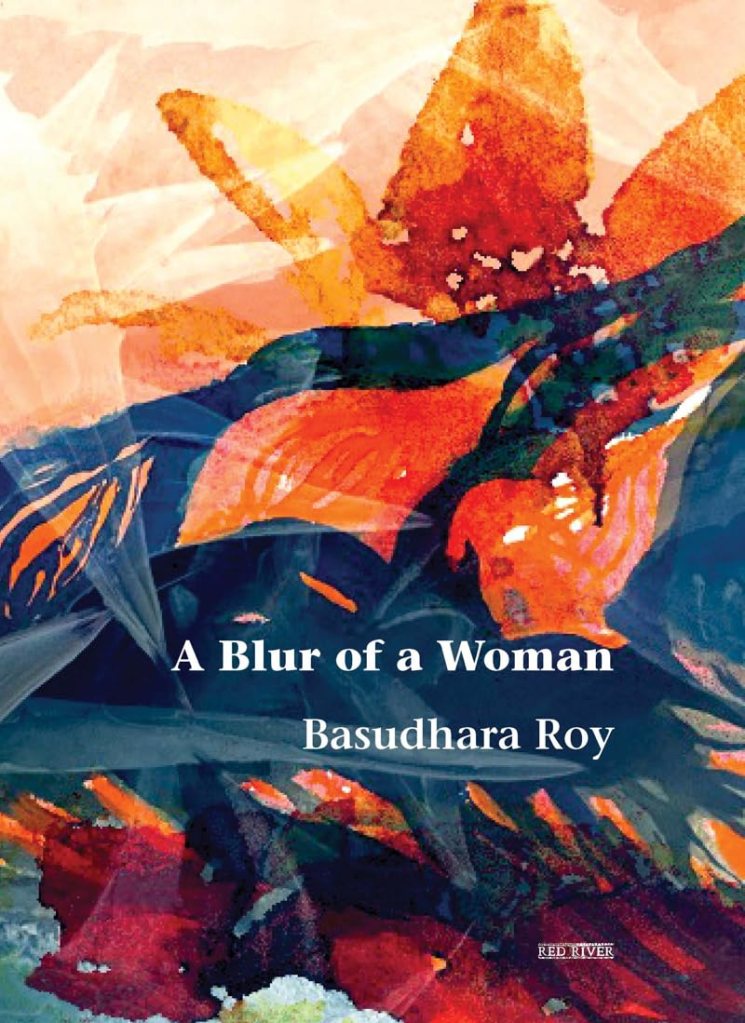
The feminine mystique has defied every attempt to capture its attributes. If clusters of stories surround a goddess, dilemmas are embedded in them. If the pavement-dwelling mother with children clinging to her skirt images economic deprivation, there are stories hidden in her grey-flecked eyes. Basudhara Roy recognises this amorphous, protean aspect of the feminine and titles her collection A Blur of a Woman, poetically declaring; “she owns the place/and the little magic she has earned…she will use it someday to unbuild herself/disappear dissolve/ become a blur”.
This collection is a subtle attack on patriarchy as it encompasses the history and socio-cultural conditions that have moulded women into being mercurial yet tangible, pliant as well as resistive, buoyant but also vulnerable. As the poems flow in a drumroll of many contexts, vignettes of the journey are captured, symbolically strong and offering a plethora of layered meanings. The lines encourage a dialogic exchange whether with the poet, or with one’s own half-acknowledged self that is suddenly confronted by Medusa’s mirror.
The first two sections begin with poems titled ‘Duhkha’ and ‘Soka’[1], directing us towards the Buddhist principle of inevitable mutability and the need for acceptance.
I have seen hearts shut and bolt doors
from within, their windows walled while
on love the mold of ingratitude thrives
With such adaptations, the contemporary takes precedence over the philosophical teachings, and the identification with thwarted expectations, social discord, betrayal and helpless sorrow is almost immediate. If solace is to be found it is now individual—and, in this instance, by turning to the gnarled trunks of trees where tears have watered the serrated bark. Speaking of the imagistic density of Roy’s phrases, this kind of interlinking through poetic shorthand is perceived in much of her narrativisation. The ‘betrayal’ that causes sorrow and also the maturity of recovery is a process resonant through the history of women’s writing. ‘Soka: A Triptych’ strings this further through contemplating the elegiac notes of death and mourning—yet birth and death are twins: “If life alone can be seen/all this emptiness must surely be death.”
A sizeable section of the book charts a trajectory of feminist fables, gleaning references from Rabindranath Tagore, Jayadev’s Geet Govinda, Philomela’s story, Virgo’s distress, and others. In Roy’s hands, irony becomes a viable and effective tool of social critique as in the poem
‘In Which Bimala Agrees to an Interview for a Special Issue of Post-Text Feminism’. Tagore’s popular novel Ghare Baire/ The Home and the World presents Bimala as the conventional woman who is persuaded to discover the turmoil of the world outside the threshold. Basudhara devises an imaginary conversation, some of which is quoted:
Where, then, would you locate yourself?
Here. Now.
Come on! I am hardly lost
and need no GPS of theory to find myself!
Such a startling reinvention of a canonical text subverts many assumptions with sharp, clear strokes: the jargon of literary theory, the leap into digital alignments, the confidence of the liberated woman, and the time travel that feminism has enabled.
My other favourite piece is about ‘Lalita’, a sakhi or friend of the beauteous Radha who is always the heroine in the traditional tale. In Lalita’s version of the mysterious raas leela where Krishna is perceived by each woman as her partner, she is jubilant about her societal escape and physical abandon;
limbs supple like vines we danced,
thrilled to be
where love was recklessly returned.
This may be the right time to refer to the Author’s Note which is titled ‘I Write from the Body’ and seems to carry forward the feminist discourse of theorists such as Hélène Cixous who invented the term écriture feminine, or Julia Kristevawho perceived the chora as a specially maternal zone. According to Roy, “In the earth-bed of this woman’s life that I live, poetry runs as a river, its plenitude being both a lesson and an antidote to the prosaic borders of my world.” In which case, “Blur” is the right metaphor for attempting to break the boundaries through word-play and subversive themes expanded in poems such ‘Aid to Forgetting’, ‘Praise for the Subaltern’, ‘Dis/enfranchised’—and several other poems are expressions of resistance to the bastions of control. Philomela’s severed tongue has again learned to speak– but it’s a new language of assertion and intertextuality.
The semiotic breakthrough in Roy’s poems is accompanied by stylist experiments too, the Ghazal section being one such. The transcreated use of the Urdu structure allows for couplets on a variety of subjects—for example, the seasons in the manner of the Baramasa (songs of the twelve months) with a twist that the woman is no longer the bereft, perpetually waiting figure uttering her woes to the firmament. She says confidently now:
You etch every constellation on your  palm
Yet secrets line the arcane of the body
In all, A Blur of a Woman, offers poems for the intellect and the heart which are indivisible aspects of a woman’s existence. That she is mercurial and evasive is once again a reminder of a fascinating mystery that has prevailed over time — and perhaps its more exciting to keep it that way.
Malashri Lal, writer and academic, with twenty one books, retired as Professor, English Department, University of Delhi. Publications include Tagore and the Feminine, and the ‘goddess trilogy’ (co-edited with Namita Gokhale) In Search of Sita, Finding Radha, and Treasures of Lakshmi. Betrayed by Hope: A Play on the Life of Michael Madhusudan Dutt received the Kalinga Fiction Award. Lal’s poems Mandalas of Time has recently been translated into Hindi as Mandal Dhwani. She is currently Convener, English Advisory Board of the Sahitya Akademi.
.
PLEASE NOTE: ARTICLES CAN ONLY BE REPRODUCED IN OTHER SITES WITH DUE ACKNOWLEDGEMENT TO BORDERLESS JOURNAL
They bring hope, solace and love to those who believe in them. But, when the structures holding the fiestas in place start to crumble, what do we do then?
Our lives have moved out of wilderness to cities over centuries. Now, we have covered our world with the gloss of technology which our ancestors living in caves would have probably viewed as magic. And yet we violate the dignity of our own kind, war and kill, destroy what we built in the past. The ideological structures seem ineffective in instilling love, peace, compassion or hope in the hearts of the majority. Suddenly, we seem to be caving in to violence that destroys humanity, our own kind, and not meting out justice to those who mutilate, violate or kill. Will there be an end to this bleak phase? Perhaps, as Tagore says in his lyrics[1], “From the fount of darkness emerges light”. Nazrul has gone a step further and stated clearly[2], “Hair dishevelled and dressed carelessly/ Destruction makes its way gleefully. / Confident it can destroy and then build again …Why fear since destruction and creation are part of the same game?”
And yet, destruction hurts humans. It kills. Maims. Reduces to rubble. Can we get back the people whose lives are lost while destruction holds sway? We have lost lives this year in various wars and conflicts. As a tribute to all the young lives lost in Bangladesh this July, we have a poem by Shahin Hossain. Afsar Mohammad has brought in the theme of festivals into poetry tying it to the current events around the world. In keeping with the times, Michael Burch has a sense of mirthlessness in his poems. Colours of emotions and life have been woven into this section by Malashri Lal, Luis Cuauhtémoc Berriozábal, Fhen M, Shamik Banerjee, George Freek, Matthew James Friday, Jenny Middleton and many more. This section in our journal always homes a variety of flavours. Stuart MacFarlane has poems for Wordsworth… and some of it is funny, like Rhys Hughes’ poem based on photographs of amusing signposts. But then life has both sorrows and laughter, and poetry is but a slice of that as are other genres. We do have non-fiction in a lighter vein with Hughes’ story and poem about pizzas. Devraj Singh Kalsi has given a tongue in cheek narrative about his library experiences.
Festivals have also been taken up in fiction by Tanika Rajeswari V with a ghostly presence hovering over the arrangements. Paul Mirabile has taken us around the world with his story while Saeed Ibrahim writes from his armchair by the Arabian sea. Sahitya Akademi winner for his children’s stories, Naramsetti Umamaheswara Rao, has showcased peer pressure among youngsters in his narrative.
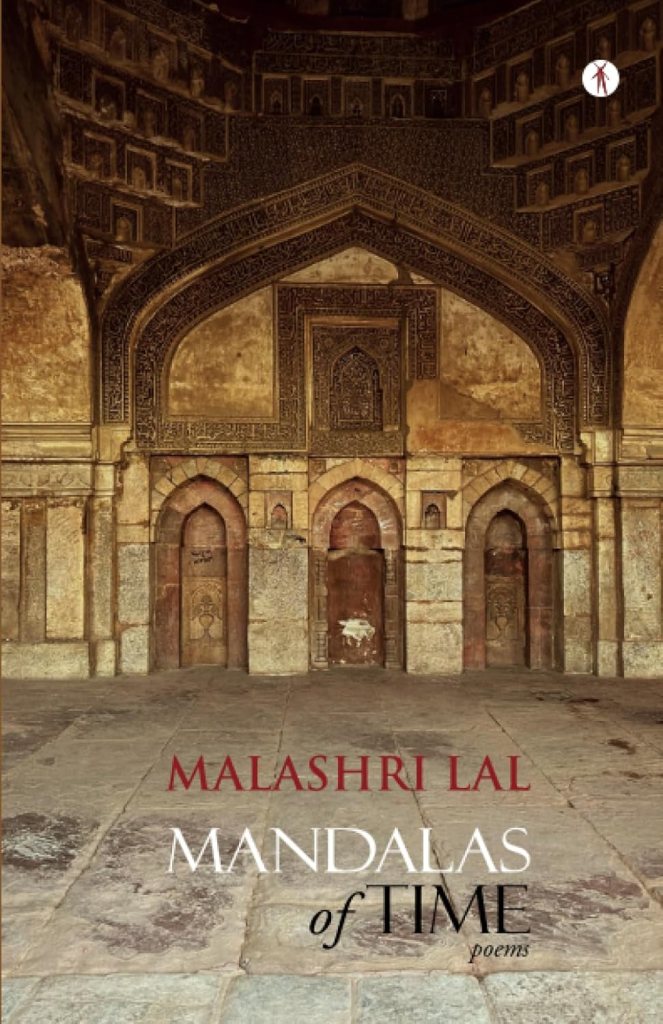
Our book excerpts usher good cheer with a narrative by Ruskin Bond from Let’s Be Best Friends Forever: Beautiful Stories of Friendship. And also hope with a refugee’s story from Ukraine, which travels through deserts, Italy and beyond to US and has a seemingly happier outcome than most, Lara Gelya’s Camel from Kyzylkum. This issue’s conversations take us around the world with Keith Lyons interviewing Lya Badgley, who has crossed continents to live and write. Malashri Lal, the other interviewee, is an academic and writer with sixteen books under her belt. She travels through the world with her poetry inMandalas of Time.
Huge thanks to the Borderless team for putting this issue together – the last-minute ties – and the art from Sohana Manzoor. Without all this, the edition would look different. Heartfelt thanks to our contributors without whose timely submissions, we would not have a journal. And most of all we thank our readers – we are because you are – thank you for reading our journal. As all our content, despite being indispensable, could not be mentioned here, do pause by our content’s page for this issue.
In Conversation with Malashri Lal, about her debut poetry collection, Mandalas of Time, Hawakal Publishers
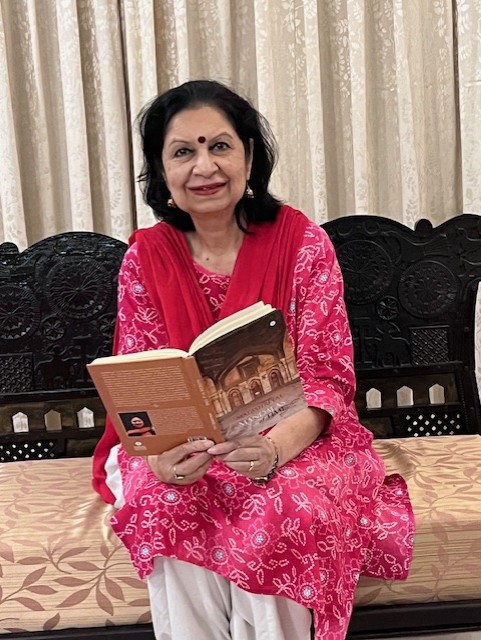
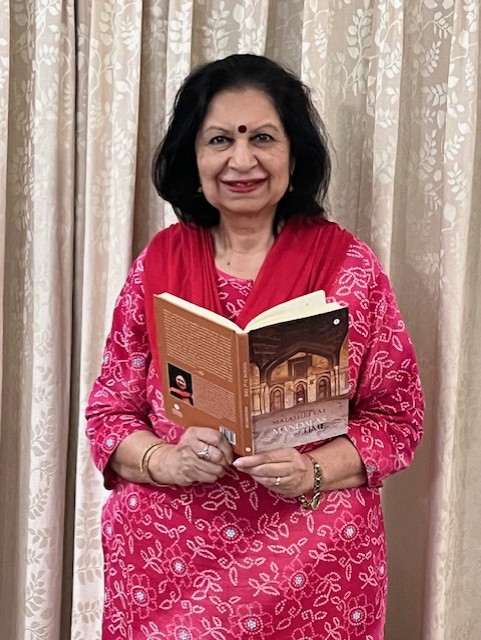
Professor Malashree Lal
Time present and time past Are both perhaps present in time future, And time future contained in time past. If all time is eternally present All time is unredeemable.
‘Mandalas’ means circle in Sanskrit, the root, or at last the influencer, of most of the Indian languages in the subcontinent. Sanskrit belongs to the Indo-Germanic family, which homes Latin and Greek among other languages. Malashri Lal, a former professor in Delhi University, has called her poetry collection Mandalas of Time.
Her poetry reiterates the cyclical nature of the title, loaning from the past to blend the ideas with the present and stretching to assimilate the varied colours of cultures around the world.
Embracing an array of subjects from her heritage to her family — with beautiful touching poems for her grandchild — to migrants and subtle ones on climate change too, the words journey through a plethora of ideas. Nature plays an important role in concretising and conveying her thoughts. In one of the poems there is a fleeting reference to wars — entwined with the Pilkhan (fig) tree:
The Pilkhan tree thinks of its many years
Of shedding leaves, bearing inedible fruit, of losing limbs
But smiles at his troubles being far less
Than of unfortunate humans
Who kill each other in word and deed
But gather around the tree each Christmas
With fulsome gifts and vacant smiles
To bring in another New Year.

--Another New Year
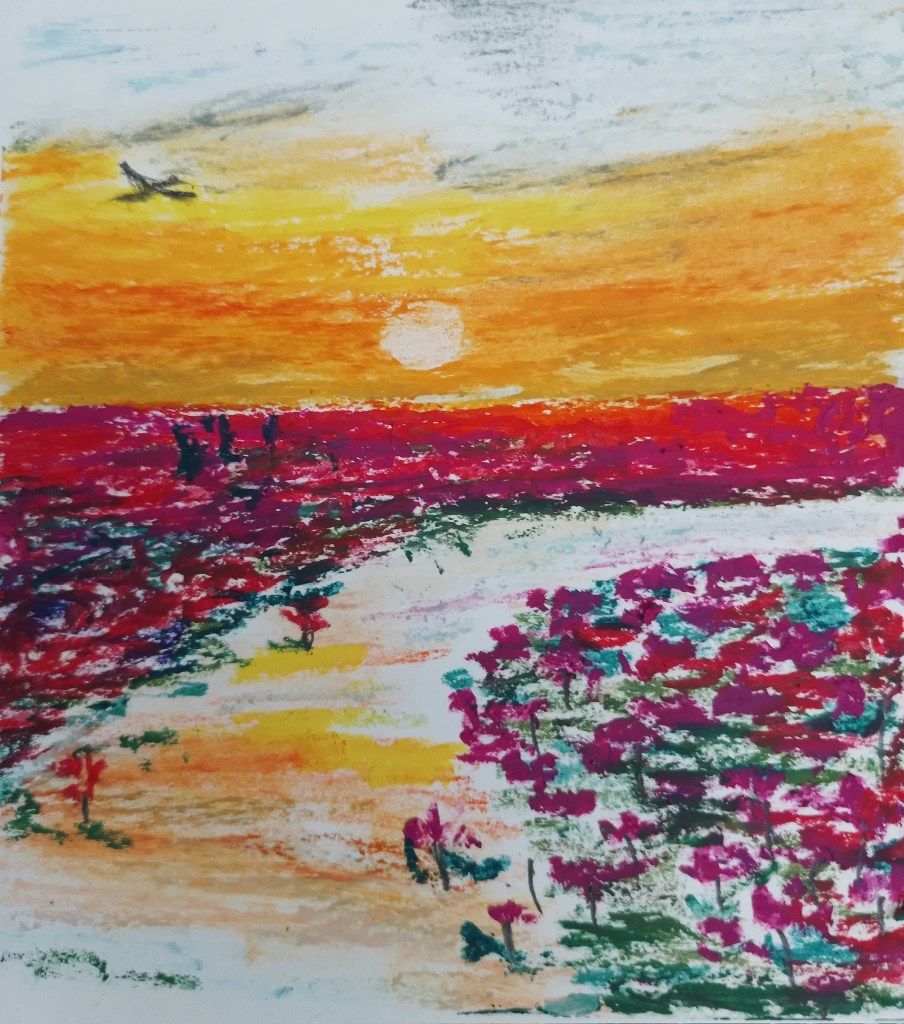
Amaltas (Indian Laburnum) or Bougainvillea bind her love for nature to real world issues:
Only the Amaltas roots, meshed underground
Thrust their tendrils into the earth’s sinews below.
Sucking moisture from the granular sand, desperately.
The golden flowers pendent in the sun, mock the traveller
Plump, succulent, beacon-like, they tease with
The promise of water
Where there is none.

--Amaltas in Summer
And…
The Bougainvillea is a migrant tree, blossom and thorn
That took root in our land
And spread its deception
Of beauty.

--Bougainvillea
Her most impactful poems are women centric.
Words crushed into silence
Lips sealed against utterance
Eyes hooded guardedly
Body cringing into wrinkled tightness
Is this what elders called
‘Maidenly virtue?’

--Crushed
There is one about a homeless woman giving birth at Ratlam station during the pandemic chaos, based on a real-life incident:
Leave the slum or pay the rent
Who cares if she is pregnant,
Get out — go anywhere.
…
Ratlam station; steady hands lead her to the platform.
Screened by women surrounding her
A kind lady doctor takes control.
Pooja sees a puckered face squinting into the first light.
"This is home," she mutters wanly,
"Among strangers who cut the cord and feed my newborn,”

-- Ladies Special
In another, she writes of Shakuntala — a real-world migrant who gave birth during the covid exodus. She birthed a child and within the hour was on her way to her home again — walking. It reminds one of Pearl S Buck’s description of the peasant woman in Good Earth (1931) who pauses to give birth and then continues to labour in the field.
Most interesting is her use of mythology — especially Radha and Sita — two iconic characters out of Indian lore. In one poem, she finds a parallel to “Sita’s exile” in Italy, at Belisama’s shrine. In another, she finds the divine beloved Radha, who was older to Krishna and married to another, pining after the divinity when he leaves to pursue his life as an adult. And yet, she questions modern stances through poems on more historical women who self-immolated themselves when their husbands lost in battle!
Malashri Lal has turned her faculties post-retirement to literary pursuits. One of her co- authored books around the life of the poet Michael Madhusudan Dutt, received the Kalinga award for fiction. She currently serves on the English advisory board of Sahitya Akademi. In this conversation, Lal discusses her poetry, her journey and unique perceptions of two iconic mythological women who figure in her poetry.
When did you start writing poetry?
Possibly my earliest poetry was written when I was about twelve, struggling with the confusing emotions of an adolescent. I would send off my writing to The Illustrated Weekly which used to have pages for young people, and occasionally I got published. After that, I didn’t write poetry till I was almost in my middle age when the personal crisis of losing my parents together in a road accident brought me to the outpourings and healing that poetry allows.
What gets your muse going?
Emotional turmoil, either my own or what I observe within the paradigms of social change. With my interest in women’s issues, my attention is arrested immediately when I hear or read about injustice, violence, exploitation or negligence of women or girl children. It doesn’t have to be a dramatic or extreme event but even the simple occurrences of decision making by a husband without consulting his wife has me concerned about the dignity and agency of a woman. Some poems like “Escape”, hint at such inequality that society takes for granted. On the other hand, my poems about migrant women giving birth on the long march to a hypothetical village “home” during the pandemic, are vivid transferences from newspaper stories. “Ladies Special” is about Pooja Devi giving birth at Ratlam station; “The Woman Migrant Worker” is based on a report about Shakuntala who stopped by the roadside to give birth to a baby and a few hours later, joined the walking crowd again.
Why did you name your poetry book Mandalas of Time?
To me ‘Mandalas’ denote centres of energy. Each node, though distinct in itself, coheres with the others that are contiguous, thus resulting in a corporeal body of interrelatedness. My poems are short bursts of such energy, concentrated on a subject. They are indicative of a situation but not prescriptive in offering solutions. Hence the spiritual energy of ‘Mandalas’, a term used in many traditions, seemed best suited to my offering of poems written during periods of heightened consciousness and introspection. The poems are also multilayered, hence in constant flux, to be interpreted through the reader’s response. Many of them end in questions, as I do not have answers. The reader is implicitly invited to peruse the subject some more . It’s not about closure but openness. See for instance: “Crushed”, or “Shyamoli”.
Today, I rebel and tug at a
Divided loyalty —
The feudal heritage of my childhood
Fights off the reformist Bengali lineage,
My troubled feminism struggling
Between Poshak  and Purdah
White Thaan  and patriotism
Can one push these ghosts aside?

--Shyamoli
*Poshak: Rajasthani dress
*Thaan: White saree worn by the Bengali widow
You have written briefly of your mixed heritage, also reflected in your poem dedicated to Tagore, in whose verses it seems you find resolution. Can you tell us of this internal clash of cultures? What exactly evolved out of it?
My bloodline is purely Bengali but my parents nor I ever lived in Bengal. My father was in the IAS in the Rajasthan cadre and my mother, raised in Dehradun, did a lot of social work. In the 1950s and 1960s, Rajasthan was economically and socially confined to a feudal heritage and a strictly hierarchical structure. Rama Mehta’s novel Inside the Haveli (1979), describes this social construction with great sensitivity. Elite homes had separate areas for men and women, and, within that, a layout of rooms and courtyards that were defined for specific use by specified individuals according to their seniority or significance. Such hierarchies existed in Bengal too — the ‘antarmahal[1]’ references bear this out — but the multiple layers in Rajasthan seemed more restrictive.
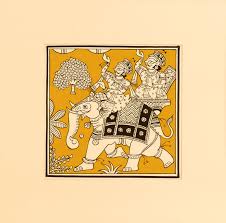
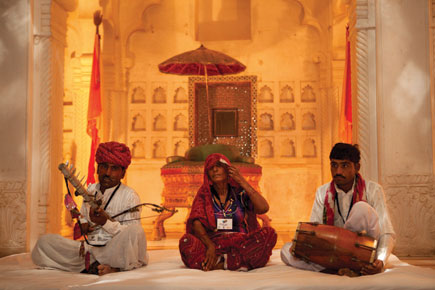
In my “mixed heritage” of being born of Bengali parents but raised in Rajasthan, I started noting the contrasts as well as the similarities. I recall that when my father went on tours by jeep into the interior villages along rutted roads, I would simply clamber on. At one time I lived in a tent, with my parents, during the entire camel fair at Pushkar. I would listen to the Bhopa singers of the Phad painting tradition late into the evening. So my understanding and experience of Rajasthan is deep into its roots.
Phad paintingBhopa singersFrom Public Domain
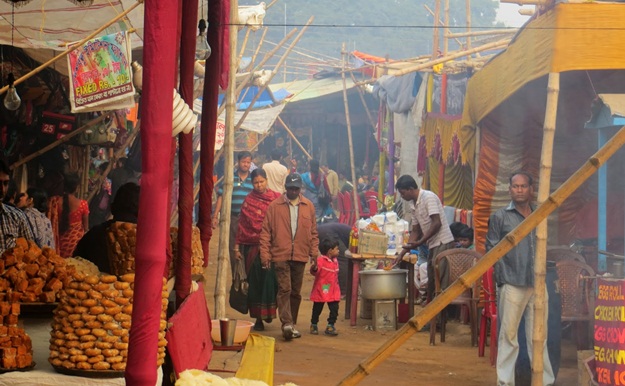
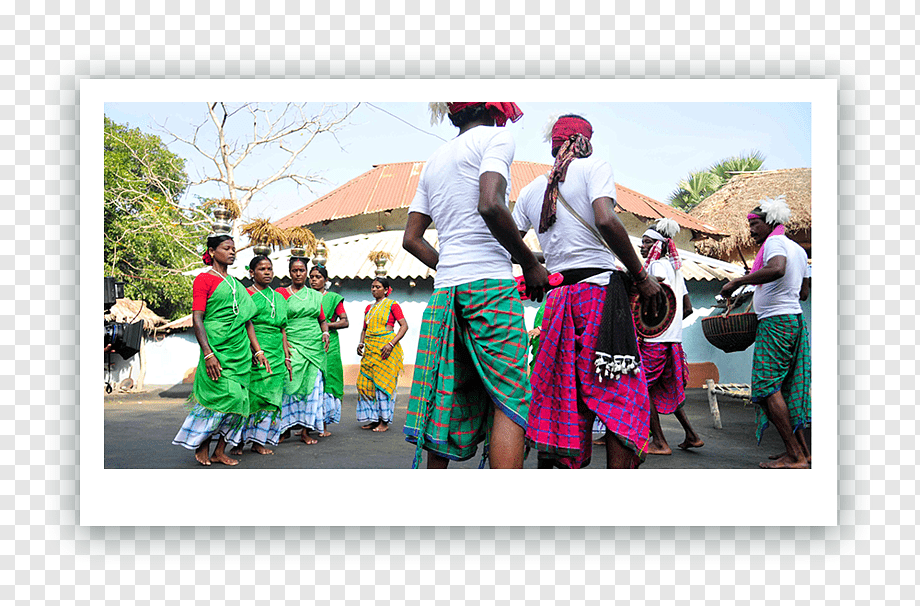
Bengal– that is only Calcutta and Santiniketan–I know through my visits to grandparents, aunts and uncles. My cousins and I continue to be very close. I saw a fairly elite side of Calcutta—the Clubs, the Race Course, the restaurants on Park Street, the shopping at New Market, and sarees displays at Rashbehari Avenue. Santiniketan though was different. I was drawn to the stories of the Santhal communities, visited their villages, attended the Poush Mela[2] regularly and knew several people in the university. After Delhi, the wide-open spaces, the ranga maati (red soil), the Mayurakhi River, and the tribal stories were fascinating. I am fluent in Bengali and because of my relatives in Calcutta as well as Santiniketan, I never felt an outsider. My father’s side of the family has been at Viswa Bharati since the time of Rabindranath Tagore. So, I felt comfortable in that environment. And through an NGO called Women’s Interlink Foundation, established by Mrs Aloka Mitra, I had easy access to Santhal villages such as Bonerpukur Danga.
Poush Mela, started by the Tagore Family in 1894Santhali Performance at Poush Mela
However, in summary, though I lived with both the strains of Bengal and Rajasthan, the daily interaction in Jaipur where I received all my education till PhD, was more deeply my world. The fragmented identity that some poems convey is a genuine expression of figuring out a cultural belonging. Poems such as “To Rabindranath Tagore” helped me to understand that one can have multiple exposures and affiliations and be enriched by it.
Do you feel — as I felt in your poetry — that there is a difference in the cultural heritage of Bengal and Rajasthan that leads you to be more perceptive of the treatment of women in the latter state? Please elaborate.
Indeed, you are right. Bengal has a reformist history, and my family are Brahmo Samaj followers. Education for women, choice in marriage partner, ability to take up a career were thought to be possible. My paternal grandmother, Jyotirmoyi Mukerji, was one of the early graduates from Calcutta University; she worked as an Inspectress of Schools, often travelling by bullock carts, and she married a school teacher who was a little younger than her. They together chose to live in Rangoon in undivided India, heading a school there. These were radical steps for women in the late 19th century. My father grew up in Rangoon and came to Rajasthan as a refugee during the Second World War. My grandmother, who lived with us, was a tremendous influence denoting women’s empowerment. But what we saw around us in Jaipur was the feudal system and purdah for women in Rajasthan.
Fortunately, Maharani Gayatri Devi had set up a school in 1943 in Jaipur to bring modern thinking in the women, and I was fortunate to study there till I went to university. Let’s recall that Maharani Gayatri Devi was from Coochbehar (Bengal) and had studied at Santiniketan. She brought Bengal’s progressive ideas to the privileged classes of Rajasthan. My classmates were mostly princesses. I visited their homes and families and delved deeply into their history of feudalism. Without being judgmental, I must say that Rajasthan’s heritage is very complex and one must understand the reasons behind many practices and not condemn them.
You have brought in very popular mythological characters in your poems — Sita and Radha — both seen from a perspective that is unusual. Can you explain the similarity between Sita’s exile and Belisama’s shrine (in Italy)? Also why did you choose to deal with Radha in a post-Krishna world?
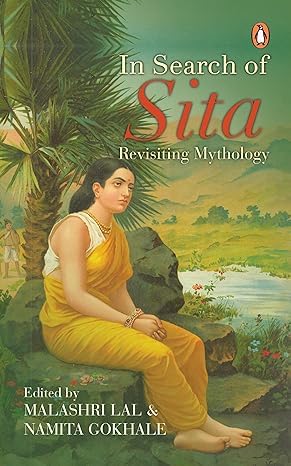
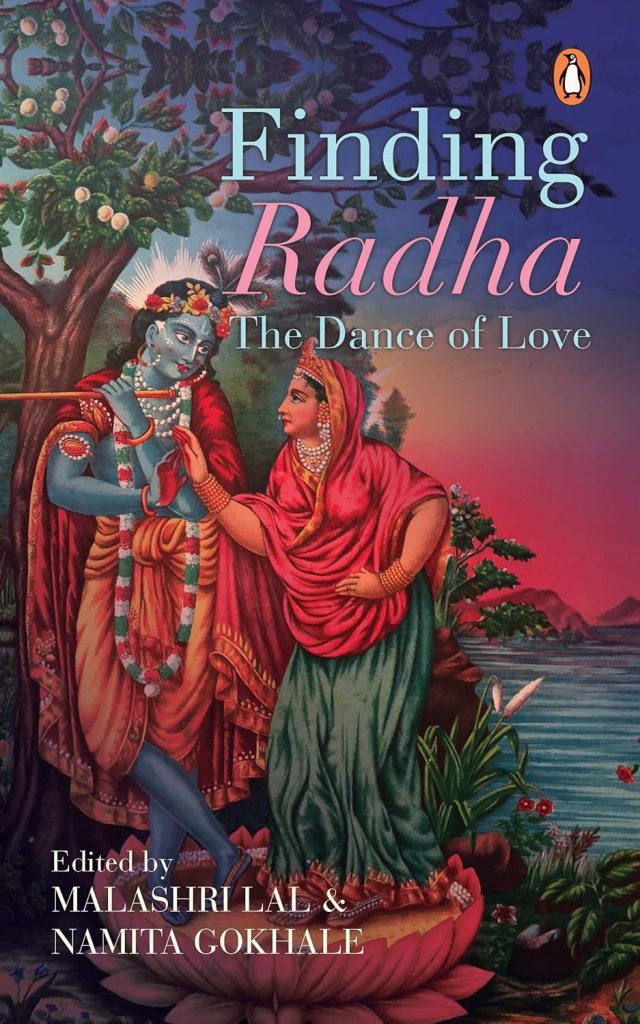
Namita Gokhale and I have completed what is popularly known as the “Goddess Trilogy”. After In Search of Sita and Finding Radha, the latest book, Treasures of Lakshmi: The Goddess Who Gives, was launched in February 2024 at the Jaipur Literature Festival, and the Delhi launch was on 8th October 2024 to invoke the festive season.
Version 1.0.0
In answering your question let me say that myth is storytelling, an indirect way of contending with issues that are beyond ordinary logic or understanding. Sita and Belisama coming together is an illustration of what I mean. The backstory is that Namita Gokhale and I had a joint residency at Villa Serbelloni in Bellagio (Italy) and we were revising the final manuscript of our book In Search of Sita. The thrust of that book is to recall the strength of Sita in decision making, in being supportive of other women, in emerging as an independent minded person. Our research had unearthed a lot of new material including oral history and folklore. In Bellagio, we started enquiring about local mythical stories and chanced upon Belisama,[3] a Celtic goddess known for her radiant fire and light, and in the village we chanced upon an old grotto like structure. Unlike in India, where we have a living mythology of commonly told and retold tales, in Italy the ancient legends were not remembered. The poem “Bellagio, Italy” took shape in my imagination bringing Sita and Belisama, two extraordinary women, together.
As to my poems on Radha, I cannot think of a “post-Krishna” world since Vrindavan and Mathura keep alive the practices that are ancient and continuous. Radha is the symbol of a seeker and Krishna is the elusive but ever watchful divine. They are body and soul, inseparable. The stories about “Radha’s Flute” or “Radha’s Dilemma” in poems by those names have an oral quality about them. The craft of writing is important, and for me, the theme decides the form.
Interesting, as both the poems you mention made me think of Radha after Krishna left her for Rukmini, for his role in an adult world. You have a poem on Padmini. Again, your stance is unusual. Can you explain what exactly you mean — can self-immolation be justified in any way?
This is a poem embedded in the larger query about comparative cultural studies. Rani Padmini’s story was written by Jayasi[4] in 1540, and it described a ‘heroic’ decision by Padmini that she and her handmaidens should commit Jauhar (mass self-immolation) rather than be taken prisoners and face humiliation and violent abuse by the men captors. You will note that my poem ends on a question mark: “I ask you if you can rewrite /values the past held strong?” Self-immolation has to be seen in the context of social practices at the time of Padmini (13-14th queen in Mewar, Rajasthan). The jauhar performed by Rani Padmini of Chittor is narrated even now through ballads and tales extolling the act if one goes into oral culture. But there is counter thinking too, as was evident in the controversy over Sanjay Leela Bhansali’s film Padmavat (2018) which stirred discussions on historicity, customary practice and oral traditions. Sati and Jauhar are now punishable offences under Indian law, but in recording oral history can one change the storyline? It’s not just self-immolation that comes under such a category of questioning the past — polygamy, polyandry, child marriage, prohibitions on widows and many other practices are to be critiqued in modern discourse, but one cannot rewrite what has already been inscribed in an old literary text.
This is a question that draws from what I felt your poems led to, especially, the one on Padmini. Do you think by changing text in books, history can be changed?
“History” is a matter of perspective combined with the factual record of events and episodes. Who writes the “history” and in what circumstances is necessary to ask. The narration or interpretation of history can be changed, and sometimes ought to be. To take an obvious case why is the “Sepoy Mutiny” of 1857 now referred to as the “First War of Independence”? In current discussions on Rana Pratap[5] in Rajasthan’s history, there are documents in local languages that reinterpret the Haldighati battle of 1576 not as the Rana’s defeat but his retreat into the forests and setting up his new kingdom in Chavand where he died in 1597. The colonial writers of history—at least in Rajasthan– were dependent on local informers and had little understanding of the vast oral repertoire of the state. Even Col. James Tod’s Annals and Antiquities of Rajasthan (1829) about the history, culture, and geography of some areas in Rajasthan, is often reproducing what he has heard from the bards and balladeers which are colourful and hyperbolic renderings as was the custom then. In Bengal, the impact of Tod is seen in Abanindranath Tagore’s[6]Rajkahini (1946), which is storytelling rather than verified facts. I feel history cannot be objective, it is author dependent.
Nature, especially certain trees and plants seem to evoke poetry in you. It was interesting to see you pick a fig tree for commenting on conflicts. Why a Pilkhan tree?
The Pilkhan is an enormous, bearded old fig tree that lives in our garden and is a witness to our periodic poetic gatherings. Mandalas of Time is dedicated to “The Poets under the Pilkhan Tree” because my book emerged from the camaraderie and the encouragement of this group. I see the tree as an observer and thinker about social change—it notes intergenerational conflict in “Another New Year”, it offers consolation against the terrors of the pandemic in the poem “Krishna’s Flute”. It’s my green oasis in an urban, concrete-dominated Delhi. In the evening the birds chirp so loudly that we cannot hear ourselves speak. Squirrels have built nests into the Pilkhan’s wide girth. It’s not a glamorous tree but ordinary and ample—just as life is. By now, my poet friends recognise the joy of sharing their work sitting in the shadow of this ancient giant. There are no hierarchies of age or reputation here. We are the chirping birds—equal and loquacious!
You have successfully dabbled in both poetry and fiction, what genre do you prefer and why?
Mandalas of Time is my first book of poems and it comprises of material written unselfconsciously over decades. During the pandemic years, I decided to put the manuscript together, urged by friends. Meanwhile my poems started appearing in several journals.
As to fiction, I’ve published a few short stories and I tend to write ghostly tales set in the mountains of Shimla. Its possibly the old and the new that collides there that holds my attention. I’ve been urged to write a few more and publish a book—but that may take a while.
Should we be expecting something new from your pen?
Mandalas of Time has met with an amazing response in terms of reviews, interviews, speaking assignments, and online presentations. The translation in Hindi by 13 well known poets is going into print very soon. Permission has been sought for a Punjabi translation. I’m overwhelmed by this wide empathy and it is making me consider putting together another book of poems.
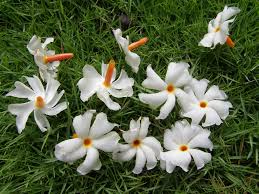
“Come” they call out, “It’s the season of forgiveness” A hundred lilies stand tall Renewed by the magic of seasons The pink stripes may be scars from yesteryear The white streaks are healing balm To be washed by the dew. The supple leaves Flat and curved Cradle the flowers that have no other family Some do, maybe three lilies on a stem But they squabble like siblings Pushing for space.
They calmly grace the garden of a silent home The owners alive only in obituaries The lilies don’t worry on that count Buried bulbs know they will creep upwards in season Life’s renewal is a beautiful certainty.
DREAMING OF MA BY THE SEA
You live somewhere between the black night and the bright star, Free of body and its temporal limits. In green leaves turning to red in a mellow autumn I catch a glimpse of the saree pallav on that day You knew life was short and might become shorter. In the shimmer of an unsteady wave on the lake I recall your tremulous smile When you whispered trying a hopeless cure. In the rough-hewn rocks that line the harbour, I remember your will to fight an uneven battle with the rouge cells. Here, on shores unknown to you and me, We meet again. When the dark sky rests on the sparkle of stars, Living and dying are no longer apart.
Malashri Lal is a writer and academic with sixteen books to her credit. These poems are from her debut collection of poems, Mandalas of Time. You can read an interview with her at this link.
Namita Gokhale is a writer and a festival director. Her work spans various genres, including novels, short stories, Himalayan studies, mythology and books for young readers. She is the author of twenty-three works of fiction and non-fiction, including the novels Paro: Dreams of Passion, Shakuntala, Jaipur Journals, Things to Leave Behind and The Blind Matriarch; and the edited anthologies Mystics and Sceptics: In Search of Himalayan Masters, Himalaya: Adventures, Meditations, Life (with Ruskin Bond), and (with Malashri Lal) In Search of Sita, Finding Radha and Treasures of Lakshmi. Gokhale is the recipient of several awards, including the Sahitya Akademi Award (2021). She is the co-founder and co-director (with William Dalrymple) of the famed Jaipur Literature Festival.
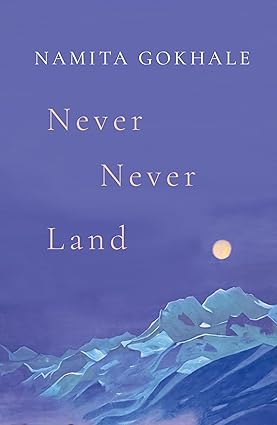
At the outset, Namita Gokhle’s Never Never Land seems conventional, centering on the protagonist’s quest for meaning amidst loneliness in a bustling city life, where relationships and even “monsoon is a betrayal”. What sets this book apart is the imperative nostalgia of both lived and unlived experiences that permeate through the narrative. The author captures the nostalgia well with her style which skilfully moves between a first and third person narrative, navigating between the past and the present, with the principal character embarking upon a journey back to her roots.
The protagonist, Iti Arya, is a single, middle-aged freelance editor/ writer struggling to find a footing in her life. Undetermined about her writing which doesn’t seem to take off, she decides to return to The Dacha, a place of her childhood, in the hilly Kumaon region, where life for her had been beautiful if not downright perfect. It was a place she had longed for while living in dusty Gurgaon surrounded by a concrete forest, a place she hoped to return to find herself, a place where she could find meaning in relationships, a place where validation for who she was and what she strove for ceased to exist. ‘Never Never Land’ seems to be for her, both a literal and symbolic place of return.
Iti returns to her grandmother with whom she has spent the happiest days of her school life, her Badi Amma who used to tell her that when mountains speak, one must listen carefully. She returns to find out the stories that she can only find in the mountains. At Dacha, the cottage owned by a hundred and two years old Rosinka (her amma’s erstwhile employer), she also comes across Nina, around whom an aura of secrecy hovers. The course of the novel then ripples with their interactions providing contexts for Iti’s quest forth. At times, she is awash by the unspoken love of her Badi Amma and Rosinka, feeling secure in their presence and in the knowledge of their affection for her and for each other, an unlikely friendship that is stronger than any relationship she has known. Her stay there makes her re-examine her life to find the missing pieces that lead her to feel lonely and uncomfortable.
An inheritance, a theft, a strange recovery in a deluge, and an unfolding of a truth later, make Iti come face to face with her reality. She makes peace with memories of her now departed mother whom she did not love but wished to be seen by. She holds onto her Badi Amma and Rosinka whom she dreads to lose. She holds onto the place that makes her feel protected. A place she belongs.
The essence of the book lies in the warm relationship shared by the women whose stories are uncovered layer by layer. Women, who lonely in their own ways in life, find comfort with each other and stand guard of each other’s happiness. Reading the book reminds one of the likes of Little Women by Louisa May Alcott, only that here women are not bound by blood but by an understanding that has come with years of living together for one reason or another.
The cover page of the book, inspired by Nicholas Roerich’s painting ‘Himalayas — the Abode of Light’, resonates with Iti’s journey towards clarity and finding a meaning that illuminates her life. At the end of the monsoon, as the sun comes out, she feels revived and willing to carry on, with herself, her grandmothers and the mountains.
Rakhi Dalal is an educator by profession. When not working, she can usually be found reading books or writing about reading them. She writes at https://rakhidalal.blogspot.com/ .
.
PLEASE NOTE: ARTICLES CAN ONLY BE REPRODUCED IN OTHER SITES WITH DUE ACKNOWLEDGEMENT TO BORDERLESS JOURNAL
In Dylan on Worm’s Head, Rhys Hughes describes a misadventure that the Welsh poet had while hiking as a tribute to him on Dylan Thomas Day. Clickhereto read.
Munaj Gul gives an in memoriam for a photographer from Balochistan. Clickhere to read.
Musings of a Copywriter
In ‘Is this a Dagger I See…?‘, Devraj Singh Kalsi gives a tongue-in-cheek account of a writer’s dilemma. Click here to read.
Notes from Japan
In A Golden Memory of Green Day in Japan, Suzanne Kamata tells us of a festival where she planted a tree in the presence of the Japanese royalty. Click here to read.
Perhaps when Dylan Thomas wrote these lines, he did not know how relevant they would sound in context of the world as it is with so many young dying in wars, more than seven decades after he passed on. No poet does. Neither did he. As the world observes Dylan Thomas Day today — the day his play, Under the Milkwood, was read on stage in New York a few months before he died in 1953 — we have a part humorous poem as tribute to the poet and his play by Stuart McFarlane and a tribute from our own Welsh poet, Rhys Hughes, describing a fey incident around Thomas in prose leading up to a poem.
May seems to be a month when we celebrate birthdays of many writers, Tagore, Nazrul and Ruskin Bond. Tagore’s birthday was in the early part of May in 1861 and we celebrated with a special edition on him. Bond, who turns a grand ninety this year, continues to dazzle his readers with fantastic writings from the hills, narratives which reflect the joie de vivre of existence, of compassion and of love for humanity and most importantly his own world view. His books have the rare quality of being infused with an incredible sense of humour and his unique ability to make fun of himself and laugh with all of us.
Nazrul, on the other hand, dreamt, hoped and wrote for an ideal world in the last century. The commonality among all these writers, seemingly so diverse in their outlooks and styles, is the affection they express for humanity. Celebrating the writings of Nazrul, we have one of his fiery speeches translated from Bengali by Radha Chakravarty and a review of her Selected Essays: Kazi Nazrul Islam by Somdatta Mandal. An essay from Niaz Zaman dwells on the feminist side of Nazrul while bringing in Begum Roquiah. Zaman has also shared translations of his poetry. Professor Fakrul Alam, who had earlier translated Nazrul’s iconic ‘Bidrohi or Rebel‘, has given us a beautiful rendition of his song ‘Projapoti or Butterfly’ in English. Also in translation, is a poem by Tagore on the process of writing poetry. Balochi poetry by Manzur Bismil on human nature has been rendered into English by Fazal Baloch and yet another poem from Korean to English by Ilwha Choi.
Ratnottama Sengupta this month converses with a dancer who tries to build bridges with the tinkling of her bells, Sohini Roychowdhury. Gita Viswanthan travels to Khiva in Uzbekistan, historically located on the Silk Route, with words and camera. An essay on Akbar Barakzai by Hazran Rahim Dad and another looking into literature around maladies by Satyarth Pandita add zest to our non-fiction section. Though these seem to be a heterogeneous collection of themes, they are all tied together with the underlying idea of creating links to build towards a better future.
In focus this time is a writer whose prose is almost akin to poetry, Rajat Chaudhuri. A proponent of solarpunk, his novel, Spellcasters, takes us to fictitious cities modelled on Delhi and Kolkata. In his interview, Chaudhuri tells us: “The path to utopia is not necessarily through dystopia. We can start hoping and acting today before things get really bad. Which is the locus of the whole solarpunk movement with which I am closely associated as an editor and creator…”
On that note, I would like to end with a couple of lines from Nazrul, who reiterates how the old gives way to new in Proloyullash (The Frenzy of Destruction, translated by Alam): “Why fear destruction? / It’s the gateway to creation!” Will destruction be the turning point for creation of a new world? And should the destruction be of human constructs that hurt humanity (like wars and weapons) or of humanity and the planet Earth? As the solarpunk movement emphasises, we need to act to move towards a better world. And how would one act? Perhaps, by getting in touch with the best in themselves and using it to act for the betterment of humankind? These are all points to ponder… if you have any ideas that need a forum on such themes, do share with us.
We have more content which has not been woven into this piece for the sheer variety of themes they encompass. Do pause by our content’s page and browse on all our pieces.
With warm thanks to our wonderful team at Borderless — especially Sohana Manzoor for her fabulous art — I would like to express gratitude to all our contributors, without who we could not create this journal. We would also like to thank our readers for making it worth our while to write — for all of our words look to be read, savoured and mulled, and maybe, some will evolve into treasured wines.






 Borderless