Categories
Stories

Among Our People 

By Devraj Singh Kalsi

Sardar Dayal Singh had lived all his life in a predominantly Punjabi neighbourhood. The cluster of Sikh families provided a feeling of warmth, making him feel safe even when the threat to life and property assumed horrific proportions. In 1984, the entire colony was converted into an impenetrable fortress, with the men and boys ready with a stockpile of soda bottles and swords, prepared to put up a brave fight against the pillaging mob. Fortunately, the area remained safe from any such orchestrated communal attack. Despite the presence of over a hundred Sikh families, it was a mystery why Kishanganj was not looted when the entire city witnessed sporadic incidents of violence against the minority community in those three days. The most plausible reason that surfaced was its distant location on the outskirts of the city. 

The Sikhs of Kishanganj gave asylum to persecuted Sardars who fled from other localities and stayed with them for several weeks before returning to their burnt homes to salvage what remained, to collect the debris, and make a fresh beginning. For Sardar Dayal Singh, it was mentally less agonising as he realised how being together with people of the same community ensured safety when the entire city was up in communal flames. 

Three decades later, after retirement from his job, Sardar Dayal Singh was not the same man who basked in the warmth of his community. A series of incidents had shaken him. All he wanted was to sell the ancestral house in Kishanganj and move into a gated community, a mixed society where he would feel safe. With the young generation relocating to foreign countries in search of a better future, those left behind in Kishanganj were small traders and pensioners.  

With rising intolerance against the minorities, the high-rise complex was the safest place for Sardar Dayal Singh who did not want to flaunt his nameplate on the door. The flat number was a safe identity on the letterbox or the initials of his name on the main door of his apartment. The upper floor apartment in a high-rise building would keep him closer to God all the time and also provide him with safety from an irate mob. He did not expect any frenzied outsider, armed with a weapon, to climb the fifteenth floor to reach his flat and hack him into pieces. 

Sardar Dayal Singh and his spouse, Charan Kaur moved into a spacious luxury apartment, equipped with Jacuzzi and Spa, with an extra-wide balcony to enjoy the sunset and a glass of whiskey. His Canada-based son was glad to hear that he had sold his ancestral house and bought a three-bedroom flat where the old couple would now get trained to accept a cosmopolitan daughter-in-law.  

Charan Kaur, fondly called Charno by her friends and relatives, did not find the new life exciting. She missed her Punjabi friends in Kishanganj. Within a few months of moving to the apartment, Charno started feeling lonely — as if she was living in a foreign country. She had to mingle with neighbours who spoke other languages she was not fluent in. While Sardar Dayal Singh was happy to adapt, Charno often complained that the gurudwara was located far away from the residential complex. She had not found a single Sardar family in the entire building with who she could interact. This was the place where she felt she was living in a minority environment but in Kishanganj, with scores of Punjabi families around, she never felt she belonged to a minority community.   

To stay connected to her roots, Charan Kaur began to listen to Punjabi music and watched Punjabi channels. Even if others spoke in Hindi or English, she replied in Punjabi, as if it was her duty to keep the language alive and in circulation inside the residential complex. When she spoke to the housemaid, the liftman, or the security guard, she used Punjabi all the time without bothering to know if they understood it or not. 

Sardar Dayal Singh noted the emergence of a communal streak in his wife. He hoped the people would not take the old lady seriously. His advice to become liberal and speak in other languages was ignored by her. She started organising a small together every weekend and invited her Punjabi friends from Kishanganj, to make her new neighbours understand that she had a robust social network of Punjabi women who would rally behind her if the situation demanded. Charan Kaur was happy to spend time with them and sometimes she went to Kishanganj to revive old memories. 

During her last visit, Charan Kaur stood in front of their ancestral house that was demolished. A new building was yet to come up, but the old mango tree stood tall in the vacant land. She told her close friends she was not happy with the decision to sell such a big house and live in a flat. She blamed Sardar Dayal Singh for the reckless decision and wiped her tears. 

On the eve of their fiftieth marriage anniversary, she invited the entire Sardar community from Kishanganj to her flat. Sardar Dayal Singh used this opportunity to influence some other retirees to move into this residential complex by selling their properties in Kishanganj, but Charan Kaur fiercely opposed his suggestion, “Never sell your house. Guru would protect all in Kishanganj even if the younger generation is away.” Turning to Sardar Dayal Singh, she asked, “Is there a place or an address where death does not come, Sardarji?” He could not reply to her in front of the guests who supported Charan Kaur on this issue.   

Gathering the courage to explain his point of view in the hope that he would not be misunderstood by his people, Sardar Dayal Singh said, “Cluster living was dangerous for a small community these days. We did not have the option of apartments then, but now with so many complexes coming up we should mix and spread everywhere, to avoid detection based on religion. Mobs do not come looking for one or two heads – they need hundreds to loot and plunder and a Sikh locality is a prime target.”

His views were diametrically opposite now and there were no supporters. His old-time friend, Sardar Jasbir Singh finally spoke his mind, “Dayal, only the fear of death does not keep us together. We are together in Kishanganj because we love to be together, for culture and bonding. It is good for mental wellbeing and mutual help. You live in a flat now, but I am sure you miss the manji (charpoy) sessions in the courtyard where we sat together and drank and discussed everything under the sun.”

 The core point Sardar Dayal Singh was making was that the safety of Sikhs was high in residential complexes. He defended his stance: “Nobody knows a Sardar family is living here. I am safe from mad mobs, but you are still facing the same threat we survived in 1984. When you have a chance now, why not spread here and there? We can still keep meeting wherever we want and keep our social connections strong.” 

Sardar Jasbir Singh responded with greater conviction, “One crazy man is enough to kill a dozen. Such mad people are there in these residential complexes as well. If something untoward happens, if Sikhs hog the headlines for the wrong reasons anywhere in the world, imagine the possibility of the liftman stabbing you in the elevator to seek revenge. Have you given this a thought?”

Sardar Dayal Singh was hit hard, and he could deny this possibility. There were many such incidents of men going berserk and opening fire, those racial attacks of stabbing and firing at point black range. 

The next morning, Sardar Dayal Singh was wary of the liftman who glared at him. There was a case of sacrilege in Punjab and a youth had been lynched. The liftman charged him while he was coming out of the lift. “Sardarji, do you think what happened in Amritsar yesterday was right? All Sikhs come together and beat a young man to death. Is this Sikh justice?”

When the security guard also joined the liftman, Sardar Dayal Singh tendered an apology and condemned the incident. The tobacco-chewing security guard sought updates from the liftman who checked his smartphone for the latest feed on this issue.  

Sardar Dayal Singh came home from the market and sought a candid opinion from his wife, “How likely is that the liftman goes mad and stabs me in the lift?”

Charan Kaur gauged something was not right but maintained her calm demeanour. Handing him a glass of water, she replied, “It is very much possible. You are wrong to think the people inside this complex will not turn into a crazy mob and attack us if the situation worsens. If a riot breaks out in the city, maybe a big mob does not get in here but two crazy people like the liftman or the gardener can open fire at us. Even if they do not kill us, they can threaten us, abuse us, make barbed comments, or torture us. Such repeated attacks will hurt sentiments and disturb our mental peace.”

Sardar Dayal Singh kept observing their behaviour in the coming days. He found nothing worth complaining to the committee. But there were undercurrents he could feel. Such behaviour or reaction based on stray incidents in a far-off place was really strange and he was not supposed to answer anything. He thought if he complained and the liftman lost his job, he could become violent and seek revenge.   

Sardar Dayal Singh reduced his daily trips downstairs. He tried to placate the liftman with smiles whenever he met him. He followed the same strategy with the security guard who made a weird statement one evening: “We thought Sardarjis are good.” Sardar Dayal singh avoided answering it but his reticence seemed to annoy the guard who waited for a reply while he stepped out of the main gate. 

Sardar Dayal Singh spoke about the simmering discontent with his son on the telephone and he advised him to keep some emergency helpline numbers ready. 

When the farmer protests started, Sardar Dayal Singh sensed a fresh series of verbal attacks. He desperately wanted Sikhs to remain out of the headlines. Just keep the culture beat alive with Bhangra and Balle-Balle and keep making sacrifices at the border to keep the nation convinced of patriotic fervour. 

Whenever the Khalistan issue was raised abroad, the domestic atmosphere got vitiated. What happened on Republic Day was indeed shameful and he felt the Sikhs were inviting trouble for no reason. Those extremist-minded groups wanted to destabilise the state by demanding a separate homeland. He felt ashamed and wrote fiery letters to the editors. He felt it was important to assert his national identity to stay safe.   

Charan Kaur wanted to visit Kartarpur in Pakistan, but Sardar Dayal could not decide. On the one side, he also wanted to visit the place where Guru Nanak lived for so many years and on the other side, he was fearful of the consequences of visiting that country.   

“If you don’t dare to go, I will go there with my friends from Kishanganj,” Charan Kaur clarified. Finding her determined, Sardar Dayal Singh agreed to join her and Kishanganj friends on this pilgrimage trip. 

After returning from Kartarpur, Sardar Dayal Singh warned his wife to keep it a secret. He urged her not to reveal where they had been to, not to any neighbour or even the housemaid. But within a couple of days, he was surprised to hear the liftman say with a grin, “Pakistan settle ka plan, Sardarji?”  

Sardar Dayal Singh was numbed to hear that. He found almost the entire complex had come to know of their visit to Pakistan. So, there was no point denying and creating further discord. To be called a spy at this age would be really humiliating for the elderly couple. 

Sardar Dayal Singh remembered that the small reaction he gave to a national TV channel reporter at the border was a blunder. Neighbours started to isolate themselves and their gnawing silence was felt by Sardar Dayal Singh and his wife. There was nothing to explain but they thought he was a Pakistan sympathiser at heart. He had just gone to pay respects to Guru Nanak. Was this modern nation not going to allow him that?

His car parked in the covered parking zone was likely to be attacked. IK Onkar sticker on the windshield was immediately removed to avoid identification. But the security guard knew it was Sardarji’s car. Sardar Dayal Singh was reminded to be careful by the liftman whenever he met him. He felt the old couple could get killed in the flat by crazy people any day.  

Charan Kaur decided to move to Kishanganj, and Sardarji supported her decision. He rented his flat to a company instead of an individual and went to stay in a rented house in Kishanganj. Although Sardar Dayal Singh faced no direct threat, he lived under the gaze of threat all the time. A lot had changed in one year. The farm laws were repealed, and the farmers returned home after several incidents of violence.  

In Kishanganj, some TV reporters came to report the reaction of the Sikhs. They were bursting crackers to celebrate victory when the reporters arrived with guns in a black SUV emblazoned with a press sticker. “You Sardars still depend on Kirpan, have some AK-47, and stay secure.” 

Sardar Dayal Singh stood in front and urged them to go back with their guns. The local Sikhs chased them away and gathered their swords and soda bottles. They did not want to launch an attack but were prepared to defend themselves. The video of Sardars with swords on the rooftops went viral and they were projected as bloodthirsty goons. While no offensive was launched, it was a clever move to lure them with guns and get their reaction. The identity of those reporters who came with guns remained unknown. It was certainly an act of mischief, and the Sikhs were trapped.  

As Republic Day was approaching, Sardar Dayal Singh wanted the community to hoist the national flag, shoot a video and post it online. They wanted Kishanganj Sikhs to be seen as patriotic and nation lovers. 

While addressing the mixed crowd of Sikhs spanning three generations, Sardar Dayal Singh thundered: “Sikhs have to stop talking of past sacrifices. They have to make new sacrifices and avoid taking credit for what their earlier generations did. With new sacrifices, we become known as real patriots and assert our love for the country…We should be the first to hoist the flag early in the morning and conduct celebratory events the whole day. The blood donation camp is the best event planned for Republic Day tomorrow. Sikhs must give their blood to save the nation and save human lives. If health permits, all Sikhs must donate blood. Instead of spilling it on the roads due to mob attack, we should donate blood.”

Sardar Jasbir Singh raised a query at this point: “Should we call it Sikh Blood Donation Camp? Or Blood Donation Camp?”  
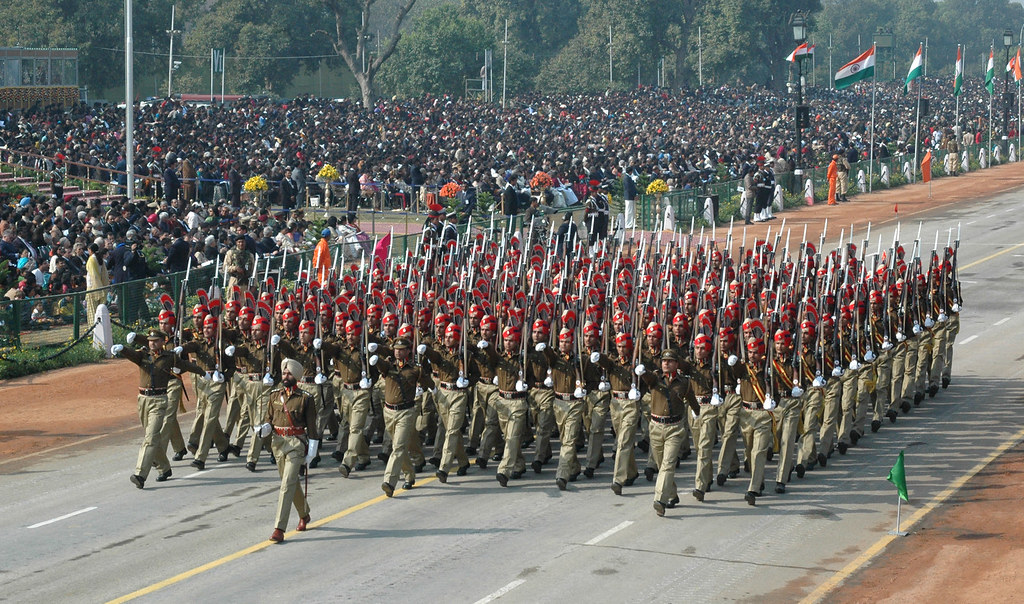
India Republic Day parade. Courtesy: Creative Commons

Notes:

1984: Riots between Hindus & Sikhs after the assassination of PM Indira Gandhi.

‘Pakistan settle ka plan’ — You plan to settle in Pakistan, Sardarji?

.

Devraj Singh Kalsi works as a senior copywriter in Kolkata. His short stories and essays have been published in Deccan Herald, Tehelka, Kitaab, Earthen Lamp Journal, Assam Tribune, and The Statesman. Pal Motors is his first novel.  


PLEASE NOTE: ARTICLES CAN ONLY BE REPRODUCED IN OTHER SITES WITH DUE ACKNOWLEDGEMENT TO BORDERLESS JOURNAL. 

Categories
Bhaskar's Corner

Fakir Mohan: A Tribute

By Bhaskar Parichha

Fakir Mohan Senapati. Courtesy: Creative Commons

The 19th century Oriya novelist Fakir Mohan Senapati was a most oblique writer — he hardly said or meant anything in a straightforward manner. Much of his work is ironical and satirical, and of course irony and satire work through indirection, by way of the meaningful glance rather than the plainspoken word. Yet irony, while aiming to surprise, can sometimes be applied too predictably, and then it becomes as unsubtle as the more homespun narrative mode it disdains. Thankfully, this is not the case with Senapati: he worked with a very light and delicate hand.

-Chandrahas Choudhury (Author of ‘My Country is Literature–Adventures in the Reading Life’)

Father of modern Odia literature, Fakir Mohan Senapati’s birth anniversary is around the festival of Makar Sankranti (mid-January) every year. There are a bevy of festivals by various names celebrated across India during this period.

As a novelist, short story writer, poet, philosopher, social reformer and forerunner of Odia nationalism, Senapati (1843-1918) played a foremost role in establishing the distinct Odia identity. But for his sweat over a lifetime, Odia — which is today India’s sixth Classical language — wouldn’t have survived the onslaught by adjoining vernaculars. The life of Fakir Mohan is undeniably the story of the “resurgence” in Odia literature. He protected the Odia language from near extinction.  

Mallikashpur village of Balasore district neighbouring West Bengal is where Senapati began his formal education — when he was nine years old. Since he could not pay for his tutoring, he is said to have even worked at his teacher’s house to pay the fee. Balasore’s Mission School was his Alma Mater, and he went to become a teacher where he served until 1871. Still later, he rose to become the headteacher. Around this time, he started teaching Odia to the Balasore Collector John Beames. 

Fakir Mohan learnt English all by himself with the help of a dictionary. He readto read several famous classics — Arabian Nights, Robinson Crusoe, the English Bible, and Bengal Peasant Life by Lal Behari De — he started learning English at twenty-three. Fakir Mohan’s instinctive wisdom was recognised even by foreigners. 

The early life of Fakir Mohan was one of courage and dexterity.  His accomplishments were amazing. A multi-tasker, Fakir Mohan, even worked as a labourer in a port. He ventured into the wood and paper business having worked in a press only to become an editor. Besides being a teacher, Fakir Mohan became a dewan of Athagarh and later of Tekkali in Srikakulam district of Andhra Pradesh.

In the second phase of his life, Fakir Mohan worked as administrator in the princely states of Nilgiri, Dampada, Dhenkanal, Daspalla, Pallahara and Keonjhar. As a manager, Fakir Mohan was very efficient and successful. During Keonjhar Praja Meli (people’s agitation against the feudal lord), he escaped cleverly writing a symbolic letter to the king. 

Mayadhar Mansingh, another celebrated, Odia called Fakir Mohan the ‘Thomas Hardy of Odisha’. He had the ability and expertise in whatever arena he laid his hand on. These prodigious abilities were reflected in his later-day writings as well. Although Senapati translated from Sanskrit, wrote poetry, and tried numerous forms of literature, he is known primarily as the father of modern Odia fiction. His four novels, written between 1897 and 1915, mirror the socio-cultural conditions of Odisha during the eighteenth and the nineteenth centuries.

The time in which Fakir Mohan lived was the darkest period in the history of modern Odisha. The infamous ‘Naanka’ Famine of 1866 — which one third of the region’s population — hurt the economic and social condition of Odisha beyond recovery. The deprivation during this period has been documented in many of his stories and novels. In course of time, he emerged as a novelist of rare caliber not only in Odia but also in a pan-Indian setting.

Senapati’s Rebati (1898) – recently translated into thirty-six Indian and foreign languages — is widely recognised as the first Odia short story. It is the tale of a young innocent girl ‘Rebati’ whose desire for education in the context of a backward conservative society went beyond the ordinary. The village where the protagonist lived was hit by the killer epidemic, cholera. Rebati’s grandmother – the last survivor — believed that it was the craving for education that brought misfortune to the family. In fact, ‘Rebati’ was one of the earliest stories in the realm of world pandemic literature.

‘Randipua Ananta’ is a story of a very notorious, errant youth who in the end transforms himself. While the flood water entered the village through a hole of the river-embankment, Ananta pulled the wooden door of his house and covered the hole standing as the supporting pillar and asked villagers to pile soil onto it. Gradually, his body heaped-up up and at last he was buried. Ananta dedicated his life to the welfare of the village and was a rare character in the Odia short story genre. 

Dak Munshi (The PostMaster), ‘Sabhya Zamindar‘ (The Educated Feudal Lord), ‘Patent Medicine’, ‘Adharma Bitta‘ (The Ill-gotten Money) are the other famous stories for which Senapati is known far and wide. But, it is the   three novels — Chha Mana Atha Guntha  (Six and a third Acres,1902), Mamu (Maternal Uncle, 1913)and Prayaschita (Penance, 1915) — which have made  Senapati immortal because they explored the realities of community life in its manifold dimensions.

Chha Mana Atha Guntha is the first Indian novel to deal with the exploitation of landless peasantry by the feudal system. The importance of this novel is that it was written much before the October revolution and even before the emergence of Marxist ideas in India. Set in Orissa in the 1830s, it is about village politics, caste oppression, social malpractices, and land-grabbing under the zamindari system in colonial Odisha. Both a literary work and a historical document this novel provided a unique ‘view from below’ of Indian village life under colonial rule. Ten years after this novel came Mamu.

Prayaschita was the last of Fakir Mohan Senapati’s  ‘trilogy of crime and justice’ novels — to use the epithet coined by the eminent Senapati scholar John Boulton. It was published just three years before the death of Fakir Mohan. The novel is unique because it sheds light on Senapati’s increasingly dark and tragic perception of colonialism. The novel was a defender of the traditional values and the Hindu way of life which the writer saw was gravely threatened by an alien value system of the British which had made huge inroads into Indian society.

Lachhama is another novel by Senapati dealing with the anarchic conditions of Odisha in the wake of Maratha invasions during the eighteenth century. It narrates the historical romance of Rajput lady Lachhama and her husband Badal Singh, in the backdrop of the political disturbances between the Mughals and Marathas to gain supremacy in Odisha. The story is set in a period of early advent of the British in India during which Nawab Alivardi Khan was Governor of Bengal. The depiction of love, honor, courage and revenge of the woman protagonist Lachamma is significant.

Fakir Mohan also wrote the first-ever autobiography in Odia – Atma Jeevan Charita. It gives a socio-cultural account of Odisha along with the novelist’s own life spanning over half a century and makes for prodigious reading.

Senapati wrote a long poem, Utkal Bhramanam, in 1892. Literally meaning Tour of Odisha, this poem is not a travelogue but a commentary on the state of affairs of that time, written satirically. He has also translated the Mahabharata, the Gita, the Ramayana and Boudhavatar Kavya into simple Odia verse.

Fakir Mohan’s innovative technique, ineradicable characters, humour, imaginativeness, and the insights into the rural milieu had few parallels. His contribution to Odia language and its revival was immense.  

Senapati was a great genius, a versatile personality and an ardent literary artist who breathed his last on June 14, 1918, when Odisha hadn’t become a separate province for which Senapati fought relentlessly. He is unsurpassed and commands great respect among the authors. In the words of Dr. J.V. Boulton, Fakir Mohan is the Gorky of Odisha. The  Dhammapada estate conferred on him the enviable title Saraswati. He was also endowed with the title of Katha Samrat (Emperor of Fiction) and is rightly called Vyasakavi

His fiction and short stories reflected the theme of social realism, societal reform, and preservation of cultural values. Fakir Mohan dedicated his whole life to the development of the native language in the late 19th and changed the course of Odia literature.

Fakir Mohan is to Odia what Prem Chand is to Hindi and Rabindranath Tagore is to Bengali literature.

.

Bhaskar Parichha is a journalist and author of UnbiasedNo Strings Attached: Writings on Odisha and Biju Patnaik – A Political Biography. He lives in Bhubaneswar and writes bilingually. Besides writing for newspapers, he also reviews books on various media platforms.

.

PLEASE NOTE: ARTICLES CAN ONLY BE REPRODUCED IN OTHER SITES WITH DUE ACKNOWLEDGEMENT TO BORDERLESS JOURNAL

Categories
Interview

Bridge over Troubled Waters

In Conversation with Sanjay Kumar, the founder of Pandies, a socially responsible theatre group

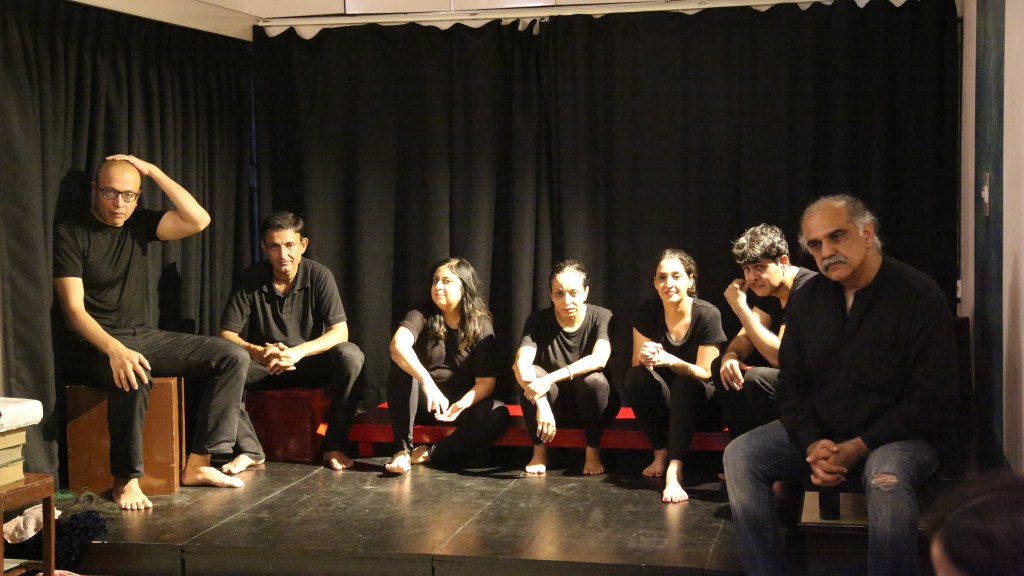
Some members of Pandies, with Sanjay Kumar sitting in the right hand corner.

Festivals often involve pageantry where people connect, reach out and have fun through performances. These can range from high class shows in halls to entertaining performances in street corners, individual buskers or theatricals at home. Brecht (1898-1956), often taught in universities,  popularised socially responsible epic theatre.  Epic theatre connects the players, imbued with welfarism and a sense of social responsibility, to educate the audience, subsequently encouraged to question and move towards altering their present reality to a more egalitarian one. Add to this students who look for more than just academic growth in universities and a young dynamic professor in the 1980s, and the end result is a volunteered ‘institution’ that has blossomed over three decades into a strangely named group – Pandies.

Sanjay Kumar

Founded in 1987 by Sanjay Kumar, an academic from Delhi University with residencies in Italy and the United States for the welfare of exploited children, the group evolved into a major voice trying to reach out to all strata of society. Kumar evolved a form of theatre to channelise the energy of students towards creating an awareness for the need to grow by helping the less fortunate. He tells us by the way of introduction: “We have been working with twenty slums or bastis in Delhi, have had interactions with a hundred schools and about twenty-five colleges. A minimum of hundred presentations are held each year. The major issue till 2000 was gender-sensitisation. Each year, pandies’ latches on to a different theme. After performing in the proscenium theatre, it takes adaptations of the same to diverse places. The group also works on issues related to environment. The adaptable, flexible, bilingual (at times multi-lingual) scripts are totally ours. The group is constantly exploring, searching for better modes to get its meaning across. Songs, dances, choreographed sequences are all a part of its repertoire. One of the most successful modes is an extremely interactive discussion at the end where the activist even narrates relevant anecdotes to get its audience to talk. The group has evolved a mega network in and around Delhi consisting of women, HIV activists, environmentalists, school and college teachers and students, progressive women from various communities including slums, victims of rape, attempted murder.” His work has reached across to multiple countries, universities (including Harvard) and has found credence among number of hearts across the East and the West.

The most impressive performance I saw was online with young refugees from Afghanistan and migrant workers in slums. They have worked with Non-Governmental Organisations (NGOs)  that work with children, sex workers and women, thus educating and learning from them and exposing them to our, more secure world where the maximum need a young student has, is to score well to get into the right university and for their family and friends to travel, to have freedom of speech and better lives. Perhaps, the best way to comprehend this kind of drama is to let Sanjay Kumar take over and introduce the work they are doing, bridging gaps at multiple levels.

Tell us about the inception of pandies’. How old is the group?

The incipience of the group goes back to college really to the year 1987 when we did the first play from Hansraj (a college under Delhi University), though we registered later in 1993, as we broke away. As I got free from MPhil, I decided to start theatre in the college in a way that steers it clear of the festival circuit of doing 25-30 minutes plays and winning small cash awards at various college fests. The College Drama Society was revived in 1987 and under that banner we did six plays, one each a year on the trot: Lorca’s Blood Wedding (1933), Ngugi’s The Trial of Dedan Kimathi (1974), Strindberg’s The Dream Play (1901), Vicente Lenero’s The Bricklayers (1976), Genet’s The Balcony (1957)and Brecht’s The Caucasian Chalk Circle (1944).  Each was a full-length play of at least 100 minutes.

We were doing plays at a semiprofessional level, all having a run of five to seven days in Delhi’s leading theatre halls. The bookings were being done in the name of the college but from the beginning no money was put forth by the college. The funding was collected by the students from small donations. The group was getting too big for the college. There was a constant targeting from many in the administration and the faculty, accusations of the openly sexual content of the plays, of the insubordinate behaviour of the students, of classes being bunked. And then as the group evolved, there were many students who had graduated but still wanted to be there and as the reputation grew with the choice of plays and quality of production (contemporary reviews read us at par with professional groups), many students from other colleges wanted to join us. Things came to a head with the college administration in 1993. We had already booked at the auditorium in the name of the college and were rehearsing for Macbeth. We decided to launch our own group (the work normally took about six months) and in two months we registered and collected money enough to go under the new banner — Pandies’ theatre.   The relationship with structures of the university remains tricky, there are those among the younger teachers and of course students who love us but the old and orthodox are still a bit wary.

Was this theatre started for the needs of the students/ teachers or to create an interest in academic curriculum?

Yes, at that time the syllabus had a totally first world bias (the bias is still there but less), to get in plays that speak to us. They may be first world, but they critique our oppressor — Brecht,  Rame, Genet.

 What was the gel that bound the group together ? Was it used to satisfy the needs of  the students, teachers or society. Can you elaborate? 

The first thing was the love of theatre. It’s like a bug, and the heady thing about a collectivism trying its own thing, charting paths not done in college before. And then the activism took over and went way beyond the love. We started pandies’ with a view that our world is not the way we want it. We wanted to make it better for more people. Even the plays from 1987 to 1993 were exploring non-canonical theatre. 

The first point of attack was the huge gender bias. We felt we were living in a misogynist, rape friendly society. Series of proscenium plays attacked that. We tied up with the feminist NGO, Shakti Shalini. Our ties go back to 1996, with LGBT movements and women’s movements. Veils had more than hundred shows, theatres, colleges, schools and markets and slums and villages. We were asking for  change in rape laws in the country. She’s MAD took stories from women’s organisations about laws of mental illness being consistently used against women to label them mad to take away their property rights, custody of children and provide a veneer over patriarchal violence. Again a play that sought legislative reform was Danger Zones. It explores what happens when you are lesbian and do not have a big wallet or parents to save you — forced marriages, sale into prostitution. 

Equally important, in fact more so in later years has been the attack on religious bigotry. Gujarat was a breaking point. We had years of series workshops with impoverished youth in slums exposing the rhetoric of  bigotry. We start with the Sikh pogrom of ’85 and go on to dissent against what our society has evolved to under a right wing dispensation, the religious supremacism of our world.

When you work with young boys, drug peddlers and sex workers, aged eight to fourteen, you return home a wreck and in need of therapy. But if you keep that fire alive inside you, you know how to take on the oppressors.

It is about a naked politics. We seek to rouse people from slumber, awaken a critical understanding of the world we live, of the forces that govern us — patriarchy, capitalism and, the tying factor of all oppression — religion.

The need was and remains the need of our times and our ethos.

How did the name evolve? And your group evolve?

It goes back to 1993 and is fully in keeping the with ‘play’ aspect of the group which likes to play with politics with its audience. It emerged from collective decisioning that has been the hallmark of pandies’ functioning. The name is a take ‘off’, ‘away’ from Mangal Pandey and the revolt of 1857. Actually, from the inability of the British to get Indian pronunciations correct. Pandey became Pandy, a hated expletive for the British commanders and continued in their letters even 50 years after the suppression of the revolt. ‘Pandy’ was one who was a part of the British structure, in their employ (Jhansi’s soldiers were not Pandies for instance), earned from them and rose against them. The hatred conveyed by the word was many times higher than in the simple expletives of  traitor or the Hindustani ‘gaddaar.’ While it has a historical solidity, it also has a playful aspect just beneath, for many of the young in the group it was also deliciously close to panties and pondies (slang for pornographic literature), the sexual aspects for which the group was falsely castigated while in college, and what we loved to grin and laugh at.

We broke away in 1993, four teachers and about thirty students. Starting as a proscenium English group with an activist leaning in 1993, by 1996 we had turned totally activist. Starting with about thirty-five members (still the core for each project), the group soon acquired more than hundred members (today it has more than that, people go away and many return, even after a decade or fifteen years, to do that “better thing”).  A strong presence of young, motivated women gave the group a feminist essence. And seeking overtly to make our ethos better, the group stressed a Left Feminist Atheist core as the law of its work from the very beginning. Activism, simply the overt statement that we are not okay with our world the way it is and seek a systemic change and are willing to do our bit as theatre enthusiasts for it.

Our three primary areas of work are : a. Proscenium: The plays are always activist and many of our own scripts and many adapted, some activist plays (Brecht, Rame and other activist scripts including agit prop) in the original; b. Theatre outside proscenium: What is usually called street theatre, nukkad natak, guerrilla theatre, the group has done actually thousands of performances and c. Workshop theatre: Where activist facilitators create plays with communities, staying with them or visiting them regularly — razor’s edge work has been done with young boy sex workers picked from platforms and housed in shelters, in the cannibalised village of Nithari, in women’s shelters, with refugees and in Kashmir.  The process consists of getting ‘stories’ from the margins and creating theatre from them, performed usually by the community members, and at times along with Pandies.

Were you influenced by any theatre/art forms/writers or any external events to evolve your own form?

From the international activist tradition Brecht has been the most solid influence, his mode of showing what is obvious but we refuse to see it. Boal, Franca Rame, Dario Fo. The entire traditions of left swinging realism and alienation. In our own traditions the influence is more subtle, Indian People’s Theatre Association (IPTA) itself and Janam (a  more contemporary people’s theatre group). We also borrow from the political and popular traditions of the subcontinent — Dastaan Goi, Jatra, Tamasha and Nautanki to name a few.

What impacts us most is the politics. Theatre is about critique, it’s about my ability to say ‘no’ and my desire to ask ‘why.’ We look back through history, history that tells us nothing can be permanent, that is record of those who stood and fought tyranny and authoritarianism. Gujarat 2002 was difficult and so was Babri Masjid but so was the emergency of 70s and never forget the anti-Sikh pogrom of the mid 80s at the heart of the country where I live.

Yes, and what is happening today, here and all over the globe cries for activist intervention.

What were the kind of content you started with? I heard you even adopted out of Aruna Chakravarti’s novel (Alo’s World?) to make a play. So, what was the content of your plays? Were you scripting your own lines?

We started with adaptations of plays with explicitly activist content which could be made more activist and imposed on our reality. Ibsen’s Ghosts, inspirations from Simon de Beauvoir, Doris Lessing. And post-1996, we were creating more and more from our own scripts, often containing multiple plays tied with thematic thrusts. And again, in times of repression one reverts to adaptations, of those who stood up to the challenge of their times, specially at the doors of gender, religion and class (the three themes of Pandies).

What we did for Aruna was akin to what we have done for other friends of Pandies, fiction writers, create small dramatic enactments based on parts their novels/short stories to go along with the launch and publicity of their works.

Have you moved away from your earlier models? What is your new model?

From proscenium to (while retaining proscenium) community theatre to (while retaining proscenium and community) workshop theatre that was the trajectory of Pandies before the pandemic struck our world. 

The pandemic thrust us into a new model of cyber theatre. The group meets every Sunday but with Covid and the lockdown, we all went hibernating for a few months, awestruck by what struck us.

And then we started meeting online. It was amazing, we were able to connect with members in US, in Philippines, in UK and in different parts of India. There was the frigidity of the online mode but the ability to converse with so many people in their respective bubbles was just great. We met every Sunday. And started with storytelling for each other. With around thirty people that process took some Sundays. And then we started thinking of doing online plays using zoom. These were live online, no recording and each ending with a question-and-answer session with our audiences.

What was happening around us, the pandemic, and the equally deadly forays of our right-wing rulers made us look for avante garde activist plays from the past. We turned deliberately to the American tradition (important to let it be known that even the most decadent capitalist center has a solid activist theatre tradition) and did one agit prop and one proto-feminist play. Subterfuge was important and it was also important to say that even in the darkest of hours people have stood up to tyranny and fascism. Clifford Odets’ Till the Day I Die (1935), an anti-Nazi play of the agit prop tradition is aimed as much at Hitler as at McCarthy and relevant against all fascist governments. Broadcast simultaneously on Zoom and Facebook, the play got over 7000 hits. Sophie Treadwell’s Machinal (1928) was the second, a proto feminist play it raised issues of mainstream violence and suppression of ‘other’ voices. We were making quite an impact. Our audience was not confined to people from one city but spread internationally as friends all over the world who had wanted to see our plays (we have travelled and performed abroad twice, once in Manchester with an anti-fascist play — Cleansing in 2002 and in New York in 2012 with Offtrack, based on the lives of young boys ‘rescued’ from platforms in India).

We decided to connect with communities that we work with at least in and around Delhi through zoom. And we discovered the horrors for ourselves. While the rich had actually been ‘worried’ over the lockdown, the poor had taken an unfathomable hit. The incidence of domestic violence was at a peak (lockdown, problems getting ‘booze’, little help from cops and NGOs). Our young friends — now in late 20s, with whom we had been performing since 2006 since the Nithari (slum outside Delhi) pogrom had been thrown out of their meagre jobs, belonging to families of migrant labour — had seen it all and refugees from Afghanistan — in a bad state anyways — were really hit. And they were all artists, performers and storytellers par excellence. So, we decided on a storytelling festival where people from these sectors would narrate their stories in the same cyber format. And we asked our audience to put in some money and that was entirely distributed among the participants. The stories that emerged, personal and fiction derived from personal, were simple exhilarating.

What and how many languages do you use and how do you bridge linguistic gaps?

Language is highly political. We set out as an English group but with Macbeth itself some crucial scenes were being rendered in Hindustani (the opening scene and the porter scene). By 1996, as the group was going totally activist, a multi-language form had evolved. We were still keeping a section of English in the proscenium (had to be translated or made easier in the slums and villages shows) but sections of Hindustani and diverse languages of North India are being introduced. A recent example is an adaptation of Manto’s(1912-1955) stories and writings (Saadat Hasan Manto: Pagaleyan da Sardar), about 60 percent in Punjabi and 40 in English with no other language used (Punglish). We do a lot of translation work, including at times on the spot.

Who does your scripting? How do your scripts evolve?

The original scripts are a collective, collated exercise and emerge after months of workshopping on an issue within the group. Most of the Scripts are written by me or my colleagues from Delhi University, Anuradha Marwah and Anand Prakash.

Who are your crew members and how many team members do you have? How many did you start with?

The total number is above 100. Many leave for a while and return from careers and families. It is strictly volunteer group. The group has tried variously models and the one that works and keeps it activist intent intact is the one where we do not pay ourselves for our time. A project involves a total of about thirty people.

What was the reaction of your colleagues when you started Pandies? Did it find acceptance/ support did you receive from among your colleagues, the academics, and the media?

I would like to add that the reactions from colleagues and academia have been interesting and mixed. Pandies is the first and possibly the only story, of a group tracing its origins in college society theatre and move on without a break to establish not just a national but an international reputation. Even as the model evolved from proscenium alone to in-your-face activism, from seeking and getting funding to putting in your own money and/or collecting it from the audience but never compromising on the political content of what you do. It makes people uncomfortable, especially in the early years, say the first decade — “is this theatre at all?” Today it is seen a story, as an experiment that worked  — the sheer survival of the group from 1987 to 2021 and beyond creates a space for admiration. Students spread across this university, over other universities in India and abroad have been the most ardent support system.

The media has been supportive, quite a bit actually. Over the years, the Pandies’ fan club has extended there too. We got some adverse reviews to begin with but more from those from the academia, who were writing in papers and journals, who had problems of simply — I cannot see activist success stories from the university itself.

What has been the impact on the people who are part of the Pandies? What has been the impact on the audience?

When you do political theatre the impact is on all sides of the spectrum. And the best place to measure the success is your own side. The empathy, the killing guilt and the desire to do more manifest in the group members, especially after series of tough workshop theatre evidences the impact.  

I saw your play in an on online forum. What exactly made you move towards what you called cyber theatre?

Basically, the pandemic. But it has been a good experience, sheerly in terms of reach and numbers (the first play had 7000+ hits though we never got near that again, also we were ticketing plays after the first). We always crib about the reach of market theatre and how activist theatre falls by the side. The cyber medium actually gives an international access to live theatre. Think the potential is huge.

How would others access these plays?

Amazingly the reach of the smart phone is huge. When we worked with communities, we did send out signals to make available smart phones for our performers and their local audience but discovered that not much was required. The internet does at times pose problems, even for us, there are technical glitches at times but then we have glitches everywhere. And technology, as young techie at Pandies told me, is to be used and not feared. If the audience can suspend disbelief in theatre, what’s a glitch or two on screen.

The potential far outweighs the hurdles.

You had interesting pieces (or rather pieces) evolving out of slums and migrant workers. You had an interesting take on why slums develop. Can you tell us?

The ignored margins of our world. Metropolitan cities, and I speak of Delhi — my abode specifically, attract people from all over. The prospects are great, and it is not untrue, as we have seen in our experiences of performing in so many slums and more importantly creating theatre with those who live there, that life is actually better for most. They earn more, eat better and find better school and health facilities. The trajectory is both simple and awful, many villages around Delhi become abodes for migrants, first on rent and then ownership. These margins are also the blot for the rich and famous who live around there in big bungalows and condominiums. They berate the residents for being thieves and drug peddlers and use them for a supply of menial help, maids, drivers, and the same kind of drugs. Working with them and creating theatre one realises that the grievances from the other side are worse — of exploitations, profiling and being treated worse than animals.

What was the impact of this piece on migrant workers and the theatre you had with Afghan refugees among your audience? Who are the people that constitute your audience? How do they respond to these plays? Do you have collaborations with more universities or theatre groups?

In the preceding decades Pandies has performed in practical every college in Delhi University besides performing in universities all over including IITs (Indian Institute of Technology), TISS (Tata Institute of  Social Sciences), Jammu, Bangalore and colleges of Rajasthan and Jharkhand. The tie-ups and collaborations are specific project related. Pandies has over the years been very zealous of guarding its artistic and political independence and anything that seeks to compromise that even slightly is not welcome. We have long lasting collaborations with organisations that work in areas we are in — Shakti Shalini (NGO Women’s group), or Saksham in Nithari (NGO running schools for children).

Can you tell us its reach — universities, theatre halls, small screen? How far have you been able to stretch out in thirty years? Tell us about the growth.

Bourgeois theatre rules the world. It’s connected  and money generates more money. pandies’ endeavour has been to connect not just at the university levels, not just at national levels but at international levels, evolve collectives that deal with exploitation and oppression at diverse levels.

We perform and do workshops. The group’s reach has been wide. Going on a narrower, sharper course over the last decade to be able to work with the severely marginalised, those who don’t even come on the space of development of the downtrodden.

The nature of our theatre enables us to connect with the underserved and more than 80 percent of the work does not come on the page of the dominant middle class. Performances and presentations all over the country and many abroad use the pandies’ template, Syrian refugees in Greece (2018), Gypsy communities of Ireland (2013), communities in NYC (2012) and nooks and corners of our own country including the Muslim valley of Kashmir where angels fear to tread.

What are your future plans?

As the world opens up, all varieties of work have started again. Workshops with our underserved margins and a full-length proscenium production are both long overdue.

At the same time the cyber experience has taught us the importance of reach, that those who go physically away don’t have to opt out of working for the group.

So yes, we seek a malleable form, a hybrid that combines stage theatre with all its power and is available online live, and the online form too will merge together to the performance which will be more far reaching and accessible. Given the group’s depth we will get there and soon.

Thank you.

(This is an online interview conducted by Mitali Chakravarty.)

PLEASE NOTE: ARTICLES CAN ONLY BE REPRODUCED IN OTHER SITES WITH DUE ACKNOWLEDGEMENT TO BORDERLESS JOURNAL

Categories
Tribute

The Voice that Sings Hope through Suffering…

By Rakibul Hasan Khan

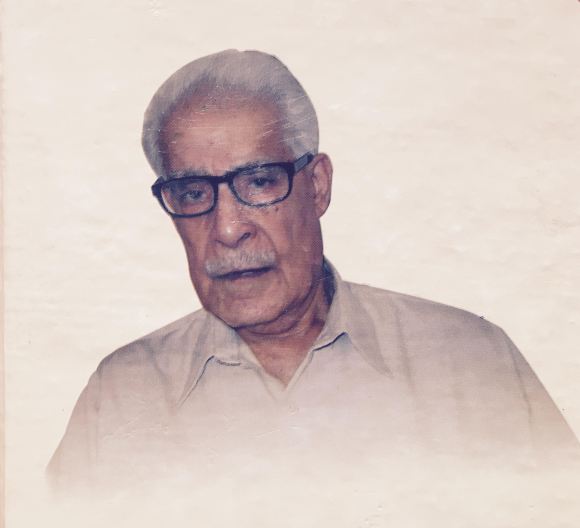
Hasan Azizul Huq. Photo Courtesy: Rakibul Hasan Khan

Hasan Azizul Huq (1939-2021), one of the leading Bangladeshi writers, passed away on 15 November 2021, leaving behind him an exceptional body of works. He was mainly a short story writer, but he also wrote three novels and many essays. His first book, Samudrer Swapna (Dream of the Ocean), Shiter Aranya (Winter Garden) a collection of short stories, was published in 1964. Each volume he published since then contributed to cementing his position as one of the most powerful writers of Bangla literature. Therefore, he is supposed to be remembered for long, at least as long as there will be those who care about the lives of the people whose stories he wrote. I wish I could say that he will be always remembered. I sincerely wish that, but the grim reality is that the number of those who care about the lives of the people whose stories he narrated is disconcertingly decreasing. Whose stories did he narrate? Simply put, he wrote the stories of suffering humanity – the oppressed, people at the margins, the outcasts, and most prominently, the victims of the Partition of India.

Huq was not a popular writer in the typical sense; rather, I would say that he was one of the most “unpopular” writers of Bangla literature. This statement may sound outrageous to those who hold him dear to their hearts for the irresistible attraction of his writings, but I consider them the most endangered species as readers, precariously hanging on the verge of extinction. My premonition is that Huq will be mostly forgotten within a not-so-long-time because there will be very few readers left worthy of his works.

On the other hand, the type of society we are heading towards will consciously and cunningly make him irrelevant, and this process has already started. Huq will soon be considered as a dangerous writer, neither because he is extremely revolutionary nor because he is uncompromisingly rebellious, but because his writings make people think, and thinking is a very dangerous activity. Thinking people are considered dangerous for social harmony and progress, and in future they will be treated as criminals. Even so, there will be some such criminals who will try to read him, but ultimately they will throw his books away with utter disgust and horror because his writings, be it a short story, a novel, or an essay, will inevitably fill their minds with profound shame and guilt for being complicit in perpetuating the suffering of those whose stories he wrote. Since hypocritical and insensitive readers will not be able to read him, gradually his works will lose readership in the days to come.

I can imagine how disbelievingly and contemptuously such a dark vision of the future will be received by Huq’s present readers, admirers, and family members. Huq himself would definitely disagree with me, for he had faith in people and their indomitable spirit as we can see it in so many of his characters, perhaps most notably in the character of the old woman in Agunpakhi (Firebird). But I am very optimistic about my pessimism, and think that such a dispassionately passionate writer like Huq will hardly find any reader in future. Some of his works, of course, will be read, especially those which have already got “classic” status in Bangla literature, but his overall readership will be miserably poor contrasting with his greatness. The smart generation of the smart age will spend their time smartly on their smartphones, smart TVs, smart cards, and all the other smart things that the world has to offer them, rather than troubling themselves with the works of a writer who is not that smart. They will hardly find any interest and time to read an “unsmart” and “unpleasant” writer like Huq.

Huq is in his distinct way a truly unpleasant writer, and he never tried to please anybody by his writing, neither readers nor the people in power. This quality makes him different from many writers. Another reason of his unpopularity is his persistence in using Partition as a recurring theme. Probably this particular feature of his works draws more attention in West Bengal than in Bangladesh, for partition is largely a subject matter of distant past for most Bangladeshis, grossly overshadowed by the more recent memories of the liberation war in 1971.

The oppressive rule of Pakistan period from 1947 to 1971 and the struggle for national liberation of the then East Pakistanis resulted in the general amnesia of Partition memories for the post-liberation generation. This is why, many of Huq’s readers, especially those who are a product of the de-historicising process that dominates our culture and curriculum, struggle to connect with his themes. The paradox that pervades the national imagination of the Bangladeshis in general is that they imagine Partition as a distant and altogether different phenomenon residing outside of their “national” issues. Against this backdrop of the general amnesia of Partition memories, Huq’s writings on the theme are like slaps of words to recuperate a recall of the bitter past. And who likes to be slapped?

Yet, there are those who know how overwhelmingly enchanting Huq’s writings are, and they can derive pleasure from the “unpleasant”. Probably here lies the hope. The future of Huq’s readership may not be so bleak after all! However, the opposite of what I feared will not happen automatically, unless some conscious effort is made by those who really care about his works. We should bear in mind that Huq is a type of writer who “educates” his readers in the process of reading him. So, if a reader can overcome the primary challenge of dealing with his unique style of writing and his “weighty” subject matters, they will eventually emerge as a competent reader to relish his works. Therefore, it is important to create an atmosphere that general readers might become more interested in reading his works.

To this end, it is immensely important to create a culture of critical engagement with the works of Huq. Academics and literary critics are the first who should come forward to invest their time on his works and communicate their readings with general readers. Along with them, translators are those magicians who can really give an appropriate afterlife to his works. To prove ourselves worthy of what he has left behind for us, we need to read him, remember him, and try as far as possible to establish an egalitarian and happy society he envisioned through his works.

(First Published in Countercurrents.org)

Rakibul Hasan Khan is a PhD candidate in the Department of English and Linguistics at the University of Otago, New Zealand. He can be reached at rakib.hasan82@gmail.com.

.

PLEASE NOTE: ARTICLES CAN ONLY BE REPRODUCED IN OTHER SITES WITH DUE ACKNOWLEDGEMENT TO BORDERLESS JOURNAL

Categories
Musings

Simon Says

By Ishita Shukla

‘Simon Says’ is a children’s game for three or more players. One player takes the role of Simon and issues instructions to the other players, which should be followed only when prefaced with the phrase — “Simon says”. It was a fun and vibrant game we played as children. Little did I know that as a girl, the game would be embedded into my own life.

“Simon says” girls shouldn’t be alone in the vicinity of males because apparently half of the world’s population is a threat to the other half. And mind you, this is the rule of well-educated Indian families as a large proportion of girls are not allowed to step out of the house at the onset of darkness. Superficially, more and more families are encouraging girls to be independent and strong but are oblivious to the fact that we are taught to be cautious and are raised to be preventive. On one hand, we are taught to be outspoken and on the other to shush to save our “izzat” (honour). Funny how one chromosome can establish a whole discriminatory community? Funny how women are also the ones blamed for this because of the premonition that women are responsible for the sex of a child, even though it is biologically impossible for us! I guess it’s just the inability of the smartest species on the planet to open their mind just a tad. 

“Simon says” that women should be ready to give up their hopes and ambitions for the sake of their families. After all, we were born to make sacrifices, weren’t we? Why do you ask? Because we don’t have enough muscles and can’t speak in an authoritative tone like men. Oh, and also because men are raised to be dominating and are free to control women’s lives.

Simon says that women should pass on their legacies to their daughters. The legacy is none other than to play ‘Simon Says’ with a fake smile plastered on their face. I respect the progress we have made, but the reality is pellucid and we have a long way to go. Not just for men to thoroughly understand the privileges they are assigned, but also for women on how to stand against these privileges. 

In conclusion, I would like to introduce you to our Simon in my India — they are the societal norms.

.

 Ishita Shukla is an aspiring writer from India. Through her writing, Ishita likes to put the spotlight on the less discussed topics and pour her heart out on  paper.

.

PLEASE NOTE: ARTICLES CAN ONLY BE REPRODUCED IN OTHER SITES WITH DUE ACKNOWLEDGEMENT TO BORDERLESS JOURNAL

Disclaimer: The opinions expressed are solely that of the author and not of Borderless Journal.

Categories
Independence Day

Born Free

Born free
As free as the wind blows
As free as the grass grows
Born free to follow your heart
-- Born Free by Andy Williams

These are lines from a song by Andy Williams, a pop icon whose song was the theme song in Born Free, a film made in 1966 about a lion cub bred in captivity, who had to be trained to live free even though she was born free. Does that apply to all living creatures, including humans? What is freedom? And who is free? Does political independence mean ultimate freedom?

We celebrate political ‘freedom’ of countries as national or independence days. Sometimes, as in the case of India and Pakistan, independent nationhood can be laced with bloodshed and grief . Two new countries were born of a single colonial India in the August of 1947. Pakistan awoke as a country on the midnight of 14th August and India called the late hour 15th August. Nehru’s speech has become an iconic one: “Long years ago we made a tryst with destiny, and now the time comes when we shall redeem our pledge… At the stroke of the midnight hour, when the world sleeps, India will awake to life and freedom…”

Common people while crossing the boundary line between the two new nations lost their lives, homes and lands over the mob violence. The resentment still simmers in a few hearts. In an attempt to find peace and amity, we have put forward a combined selection of writing from across borders, words devoid of angst or hate, words that look for commonality and harmony.

Interview

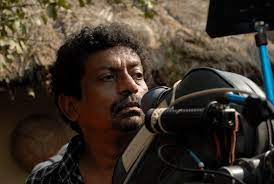
Goutam Ghose. Courtesy: Creative Commons

In Conversation with Goutam Ghose, multiple award-winning filmmaker, writer, actor discusses his films, film-books and journey as a humanitarian artiste who makes cross cultural films across all boundaries. Click here to read.

Poetry

Akbar Barkzai’s Songs of Freedom translated from Balochi by Fazal Baloch. Click here to read.

Poems by Jaydeep Sarangi: Click here to read

For Danish Siddiqui by Sutputra Radheye: Click here to read.

The Equalizer by Nazrul translated from Bengali to English by Shahriyer Hossain Shetu from Sammyabadi. Click here to read.

Deliverance by Tagore translated from Bengali to English from Tran (Sanchayita). Click here to read.

Non-Fiction

In The Idea of India: Bharata Bhagya Bidhata – The Making of a Motherland Anasuya Bhar explores the history around the National Anthem of India which started as a song, composed by Tagore. Only the first paragraph of the whole song in Bengali was adapted as the National Anthem. We include the translations of the complete song both by Tagore and by Aruna Chakravarti. Click here to read.

In An August Account of ‘Quit India’ Movement Ratnottama Sengupta,  translates from Bengali the excerpts recorded by Sandhya Sinha (1928-2016), who witnessed an upsurge in the wake of the Quit India Movement. Click here to read.

Temples & Mosques by Nazrul has been translated by Sohana Manzoor. Click here to read.

In Seventy-four Years After Independence…“Mil ke rahe gi Azadi” (We will get our Freedom), Aysha Baqir muses on Pakistani women’s role in the independence movement and their current state. Click here to read.

 In 2147 without Borders, Devraj Singh Kalsi meanders over Partitions, borders and love stories and looks for an amicable solution in a happier future. Click here to read.

Fiction

Bundu, Consoler of the Rich is a story based on memories of Partition by Nadir Ali, translated from Punjabi by Amna Ali. Click here to read.

In The Best Word, Maliha Iqbal explores the impact of wars in a spine chilling narrative, journeying through a range of emotions. Click here to read.

In Do Not Go!, Moazzam Sheikh explores dementia, giving us a glimpse of the lives of Asian immigrants in America. Click here to read.

In The Chained Man Who Wished to be Free, Sunil Sharma explores freedom and democracy versus conventions. We are left wondering is this the freedom we fought for? Click here to read. 

Categories
Editorial

Triumph of the Human Spirit

On August 8th 2021, the chief of the International Olympic Committee, Thomas Bach, pointed out during the closing ceremony that these games were “unprecedented” and brought messages of “hope, solidarity and peace” into a world torn with the desolation generated by the pandemic. It was a victory of the human spirit again, a precursor of what is to come. That the Japanese could get over their pandemic wrought hurdles, just as they did post the nuclear disasters wrought by the Second World War and by the 2011 earthquake-tsunami at Fukushimaya, to host something as spectacular and inspiring as these international games reflects, as the commentators contended, a spirit of ‘harmony and humility’. The last song performed by many youngsters seemed to dwell on stars in the sky — not only were the athletes and organisers the stars but this also reminded of unexplored frontiers that beckon mankind, the space.What a wonderful thing it was to see people give their best and unite under the banner of sports to bring messages of survival and glimpses of a future we can all share as human beings! Our way of doing things might have to evolve but we will always move forward as a species to thrive and expand beyond the known frontiers.

One such explorer of yet unknown frontiers who mingles the historic with the contemporary, Goutam Ghose, an award-winning filmmaker and writer, has honoured our pages with an extensive interview showing us how art and harmony can weave lores that can help mankind survive. This is reinforced by the other interview with Singaporean academic, Dr Kirpal Singh, whose poetry reflects his convictions of a better world. With our intelligence, we can redefine processes that hold us back and grind our spirits to dust — be it the conventional ‘isms’ or norms that restrict our movement forward – just as Tagore says in the poem, we have translated this time, ‘Deliverance’.

…On this auspicious dawn,
Let us hold our heads high in the infinite sky 
Amidst the light of bounteousness and the heady breeze of freedom.

As the Kobiguru mentioned earlier in the poem, the factors that oppress could be societal, political, or economic. Could they perhaps even be the fetters put on us by the prescribed preconceived definition of manmade concepts like ‘freedom’ itself? Freedom can be interpreted differently by multiple voices.

This month, on our pages, ‘freedom’ has found multiple interpretations in myriad of ways — each voice visualising a different dream; each dream adding value to the idea of human progress. We have discussions and stories on freedom from Nigeria, Argentina, India, Pakistan, Myanmar, Malaysia and more. Strangely enough, August holds multiple independence/ national days that are always for some reason seen as days of being ‘freed’ by many — at least from oppression. But is that true?

From Malaysia, Julian Matthews and Malachi Edwin Vethamani cry out against societal, religious and political bindings – quite a powerful outcry at that with a story and poems. Akbar Barakzai continues his quest with three poems around ideas of freedom translated from Balochi by Fazal Baloch. Jaydeep Sarangi and Joan Mcnerny pick up these reverberations of freedom, each defining it in different ways through poetry.

Jared Carter takes us back to his childhood with nostalgic verses. Ryan Quinn Flanagan, Michael Lee Johnson, Vandana Sharma and many more sing to us with their lines. Rhys Hughes has of course humour in verse that makes us smile as does Jay Nicholls who continues with her story-poems on Pirate Blacktarn – fabulous pieces all of them. The sport of hummingbirds and cats among jacaranda trees is caught in words and photographs by Penny Wilkes in her Nature’s Musings. A poetic tribute to Danish Siddiqui by young Sutputra Radheye rings with admiration for the Pulitzer prize-winning photographer who met his untimely end last month on 16th while at work in Afghanistan, covering a skirmish between Taliban and Afghanistan security forces. John Linwood Grant takes up interesting issues in his poetry which brings me back to ‘freedom’ from colonial regimes, perhaps one of the most popular themes for writers.

Indo-Pak independence, celebrated now on 14th (Pakistan) and 15th August (India), reflects not only the violence of the Partition which dislocated and killed millions historically but also the trauma caused by the event. Capturing this trauma is a short story based on memories of Partition by Nadir Ali, translated from Punjabi by his daughter, Amna Ali. Ratnottama Sengupta translates from the diary of Sandhya Sinha (1928-2016), a woman’s voice from the past that empathises with the subjugated who were subdued yet again after an upsurge of violence during the Quit India Movement (1942) against the colonials. Sinha contends that though the movement frittered away, the colonials were left with an after-taste of people hankering for self-rule. A thought-provoking short story by Sunil Sharma explores the results of self-rule in independent India.

Alluding to Jinnah’s vision for women, Aysha Baqir muses emotionally about the goals that remain yet to be fulfilled 74 years after independence. Moazzam Sheikh’s story of immigrants explores dementia, giving us a glimpse of the lives of Asian immigrants in America, immigrants who had to find a new home despite independence. Was this the freedom they dreamt of — all those who fought against various oppressive regimes or colonialism?

Tagore’s lyrics might procure a few ideas on freedom, especially in the song that India calls its National Anthem. Anasuya Bhar assays around the history that surrounds the National Anthem of India, composed by Tagore in Bengali and translated to English by the poet himself and more recently, only by Aruna Chakravarti. We also carry Dr Chakravarti’s translation of the National Anthem in the essay. Reflecting on the politics of Partition and romance is a lighter piece by Devraj Singh Kalsi which says much. ‘Dinos in France’ by Rhys Hughes and Neil Reddick’s ‘The Coupon’ have tongue-in-cheek humour from two sides of the Atlantic.

A coming-of-age story has been translated from Nepali by Mahesh Paudyal – a story by a popular author, Dev Kumari Thapa – our first Nepali prose piece.  We start a four-part travelogue by John Herlihy, a travel writer, on Myanmar, a country which has recently been much in the news with its fight for surviving with democracy taking ascendency over the pandemic and leaving the people bereft of what we take for granted.

Candice Louisa Daquin discusses a life well-lived in a thought provoking essay, in which she draws lessons from her mother as do Korean poet, Ihlwha Choi, and Argentinian writer, Marcelo Medone. Maybe, mothers and freedom draw similar emotions, of blind love and adulation. They seem to be connected in some strange way with terms like motherland and mother tongue used in common parlance.

We have two book excerpts this time: one from Beyond the Himalayas by the multi-faceted, feted and awarded filmmaker we have interviewed, Goutam Ghose, reflecting on how much effort went in to make a trip beyond boundaries drawn by what Tagore called “narrow domestic walls”. We carry a second book excerpt this time, from Jessica Muddit’s Our Home in Myanmar – Four years in Yangon. Keith Lyons has reviewed this book too. If you are interested in freedom and democracy, this sounds like a must read.

Maithreyi Karnoor’s Sylvia: Distant Avuncular Ends, is a fiction that seems to redefine norms by what Rakhi Dalal suggests in her review. Bhaskar Parichha has picked a book that many of us have been curious about, Arundhathi Subramaniam’s Women Who Wear Only Themselves. Parichha is of the opinion,Elevated or chastised, exonerated or condemned, the perturbation unworldly women in India face is that they have never been treated as equal to men as spiritual leaders. This lack of equality finds its roots not only in sociological and cultural systems, but more particularly at the levels of consciousness upon which spirituality and attitudes are finally based.”One wonders if this is conclusive for all ‘unworldly women’ in India only or is it a worldwide phenomenon or is it true only for those who are tied to a particular ethos within the geographical concept of India? The book reviewed by Meenakshi Malhotra,  Somdatta Mandal’s The Last Days of Rabindranath Tagore in Memoirs, dwells on the fierce independence of the early twentieth century women caregivers of the maestro from Bengal. These women did not look for approval or acceptance but made their own rules as did Jnadanandini, Tagore’s sister-in-law. Bhaskar Parichha has also added to our Tagore lore with his essay on Tagore in Odisha.

As usual, we have given you a peek into some of our content. There is more, which we leave for our wonderful readers to uncover. We thank all the readers, our fantastic contributors and the outstanding Borderless team that helps the journal thrive drawing in the best of writers.

I wish you all a happy August as many of the countries try to move towards a new normal.

Mitali Chakravarty

Borderless Journal, August 2021

Categories
Poets, Poetry & Rhys Hughes

Dinosaurs in France

Eiffel Tower Paris. Courtesy: Creative Commons

I am still confused as to how many continents there are. Is Oceania the same as Australasia? Do North and South America count as two or just one? Is Antarctica a proper continent and not just a frozen phoney? What about the subcontinent of India? Does that count as half, quarter, or some other fraction? What continent does Greenland belong to? And the islands of the mid Atlantic, what about them?

When I was younger the issue was simpler. There were six continents, Africa, America, Asia, Australasia, Europe and Great Britain. There was absolutely no doubt that Britain was separate from Europe geographically and spiritually. In fact, the mainland of Europe was the continent and things that came from it were ‘continental’ and mostly malodorous, quilts and kisses on the hand being exceptions.

In Europe people did peculiar things; they spread chocolate on bread for breakfast and melted cheese in communal pots in the evenings. Or so it was said. Europe was a place of mystery, a patchwork of suspense, and crossing its multifarious internal borders wasn’t likely to be easy. If you had to travel there, a large vulcanite suitcase that could be plastered with triangular destination labels was the minimum requirement. Better not to go at all! The greasy food, cooked in nasty olive oil, was certain to upset your stomach. And there were yodellers.

My great childish dream back then was to build a raft and paddle it to France. There were enough fallen trees in the forest near my home to provide wood for the construction. France seemed an incredibly exotic destination and my enthusiasm was increased rather than diminished when I was told that dinosaurs existed there. They had become extinct everywhere else but still flourished in France. Thus, I couldn’t wait to drag my raft ashore and encounter my first stegosaurus. Other lies that adults told me about France included the assertion that the Eiffel Tower was something that horses jumped over in the Grand National. Having no idea what a ‘Grand National’ was I felt only a vague sense of awe. It was many years before I learned that it is a horse race famous for being dangerous to horses and for the ludicrous hats worn by upper class drunken women who watch it and chortle.

Adults in those days told outrageous untruths as a matter of course. It was an accepted part of life. I grew up in an environment where no one said anything sensible but instead would make the most absurd statements with a straight face. It was an uncle who claimed that France was jammed with dinosaurs. He also informed me that we were living in Australia, not Britain, but that everyone else would try to trick me into thinking it was Britain and that they were all in the joke together and I shouldn’t believe them. The truth of the matter, he added, was that Britain was a fiction, it didn’t exist, or it had sunk beneath the sea, it was a joke or a memory and nothing more. This was Australia and when he was my age, he had made a raft, from twigs, and sailed it around the world and started a successful property business with a gorilla in a jungle.

And he told me that he once pulled the plug out of the bath while he was still in it and got sucked down the hole and ended up at the bottom of the sea where he lived in a gigantic air bubble with a dolphin who taught him dolphin language and how to make crêpes. None of this was said in a joking manner but in a tone of utter seriousness. Everyone was like this. The postman once told me that he lived in a marshmallow house and was terrified of lightning strikes because the heat would alter the flavour of his roof and that people were taxed on the flavours of their roofs, so for him it was a major concern that his tiles weren’t toasted.

One of my favourite absurdities concerned the International Date Line. Because Australia was so many hours in the future, people who lived there (like ourselves) could phone relatives in Europe with the results of football matches, horse races and boxing competitions that hadn’t yet happened, enabling those relatives to make a big profit at the betting shop. These European relatives could then phone America to pass on the same information, enabling friends over there to also make money through betting. However, because of the Date Line it wasn’t possible for America to do any such favours for any countries west of them. In other words, America took but didn’t give, and as a consequence, was building up a large debt to the rest of the world.

One day all the other nations of the world, all those living in a future time relative to America, would form an alliance and invade America and loot all its treasures in retaliation. I am fairly sure it was one of my schoolteachers who told me all this. Even supposedly ‘responsible’ adults liked to be ridiculous in a blasé manner and play jokes on children. I remember one outing to a pond in a park as part of a nature class. We were required to sketch any animals that we might encounter, and, in my mind, I can still see the teacher crouching over a child’s sketch pad and pointing to a duck that was paddling slowly on the water.

“What it that, boy?”

“A duck, sir.”

“No, boy, it’s a fish.”

“But it has a beak and wings, sir!”

“Yes, but it has a tail too. Can’t you see the tail? Fish have tails, don’t they? That means it’s a fish. Draw it exactly as you see it and write the word ‘fish’ under the drawing and tomorrow I will hand your work to the headmaster so he can form a judgment of your educational progress and I am sure the result will interest him.”

That’s how life was in Britain when I was younger. Practical jokes and getting other people into trouble for the purposes of comedy was standard behaviour. If you didn’t tell amusing fabrications then you were regarded as rather odd, dubious even, a spoilsport and also, perhaps, a saboteur or foreigner. I would look at adults in the street and wonder if any of them were French and on familiar terms with dinosaurs.

Then everything changed and the countries and cultures of Europe became much more accessible. Going to Paris, Madrid or Lisbon for a weekend took no more effort than visiting Weymouth, Blackpool or Margate. In fact, it usually took less effort. I began to genuinely feel like a European citizen, something generally considered not feasible for a British fellow, but I am Welsh, not English, and the Welsh, who are the original Britons, are hardly British. To feel European required only my desire and acquiescence, and I had that desire and yes, I was willing to acquiesce. Feeling European wasn’t an option denied to me at that time and I never thought it would be, at least not until plate tectonics reformed the continents and Europe ceased to physically exist.

It sounds ludicrously obvious, but it still apparently needs to be said. Britain isn’t a continent by itself. That was just a childhood myth, similar to the story that if you swallow an apple pip a tree will grow inside you, and in fact I once deliberately swallowed many pips in order to have an orchard in my stomach and never grow hungry. I would only have to jump up and down at mealtimes for the fruit to fall from the branches. Because the fruit was already in my stomach, actually eating it would be unnecessary. It seemed such a wonderful solution that I couldn’t work out why everyone didn’t do it. I supposed that maybe adults didn’t really like convenience. But no, we can’t have trees growing inside us. And sadly, dolphins don’t know how to make crêpes.

Politely we call such things myths. They are deceits, of course. But the world seems to have gone back in time. Travelling abroad is truly difficult again, impossible in many instances. I spend my days bewailing the reversal. I have started wondering if my old plan of building a raft might be my best option of leaving these shores and visiting other lands. There might be dangerous dinosaurs off the coast of France, those long-necked plesiosaurs, but I will take a big detour around them. I will steer by the light of the stars and satisfy my hunger by eating the walls of my marshmallow cabin. Everything will work out fine.

Rhys Hughes has lived in many countries. He graduated as an engineer but currently works as a tutor of mathematics. Since his first book was published in 1995 he has had fifty other books published and his work has been translated into ten languages.

.

PLEASE NOTE: ARTICLES CAN ONLY BE REPRODUCED IN OTHER SITES WITH DUE ACKNOWLEDGEMENT TO BORDERLESS JOURNAL

Categories
Review

Where Buddhist Monks’ Voices Ring

Book review by Keith Lyons

Title: Our Home in Myanmar – Four years in Yangon

Author: Jessica Mudditt

Publisher: Hembury Press, May 2021

Our Home in Myanmar – Four years in Yangon by Jessica Mudditt is a thought-provoking memoir about a foreigner’s experience as a journalist and outsider in Myanmar, a country emerging from decades of military rule and international isolation.

Australian Jessica Mudditt arrives in the former Burmese capital of Yangon in 2012 with her Bangladeshi husband Sherpa just as the nation is moving towards greater democracy and opening up to the world after decades of oppression, dictatorships, civil wars, and economic sanctions.

Newly arrived Mudditt discerns a fresh optimism and hope for transformation in Yangon as she negotiates the culture shocks and cultural quirks of enigmatic Myanmar (also known as Burma). Yet there are few happy endings in ‘Our Home in Myanmar’, just some sobering realities.

While their outward quest is to find a place to call home (and secure visas to legally work), the couple’s inner journey is about trying to understand the complexities and contradictions of a largely Buddhist country where monks are among the most vocal protestors — and the daughter of the independence leader and founder of the armed forces had been under house arrest for 15 years.

Covering a speech by Aung San Suu Kyi is just one of the assignments Jessica undertakes; her role as a journalist for various publications and organisations gives her access to the newsmakers as well as those seldom featured in the media. But for every door that opens, another one slams shut. Nevertheless, the reader gets a window into the machinations, superstitions, and craziness of the military regime in what appeared to be its decline. Spoiler alert: in light of current events, it turned out to be a false spring.

She gets a frosty reception from the old-hand expat editors at the major English language newspaper co-owned by an Australian maverick media mogul, but later one of the most emotional high points comes in 2015 when Suu Kyi’s National League for Democracy (NLD) gets a landslide victory while Mudditt worked as the first foreign editor at the newspaper considered the propaganda mouthpiece of the junta.

This underlying theme contrasting expectations and realities gives the book momentum, as do the challenges and hurdles for a naïve foreign journalist struggling to comprehend the strange yet fascinating aspects of Burmese life and governance during this turbulent time. While many visiting media have fawned over Aung San Suu Kyi, she finds the NLD leader lacking charisma, in contrast to the vibrant President Barack Obama who champions Myanmar’s freedoms during a landmark visit.

The book weaves personal narratives with political backstories and cultural backgrounders. The author’s vulnerability and bravery make it a riveting read, with the reader drawn into the risky plight of the writer as well as the precarious situation of her host country. With a clear empathetic voice, attention to detail, and well-crafted chapters, Mudditt, who has written for The Telegraph, Marie Claire, GQ, and CNN, reveals she is not just a good storyteller but has something to say. She survives sudden earthquakes, dilapidated hospitals, and tropical turbulence, often finding solace in cigarettes, alcohol, and her Sherpa. She is a social butterfly with the cool expats who have arrived in Yangon, but her work for the UN and the British Embassy shatters the dream that Myanmar has broken free of its backwardness and nastiness. Amid the moments of despair and farce, thankfully there are dashes of absurdity and humour.

The author left Myanmar in 2016 amid a rise in Buddhist nationalism, but an ‘Epilogue’ has been added to highlight the unexpected but not unsurprising military coup earlier this year. The book concludes with a ‘where are they now’ update on some of the key people depicted in its pages.

Perhaps without realising it, Mudditt has chronicled a significant period in Myanmar’s modern history. Our Home in Myanmar is a good introduction to Myanmar, as it sheds light on the intriguing former British colony, its rocky road towards freedom and democracy.  The author was fortunate to be in Myanmar during a small window of opportunity.

With Myanmar’s military leader Min Aung Hlaing declaring himself prime minister at the start of this month, but promising to hold elections by 2023, Myanmar remains out-of-bounds for any outsiders. By the middle of August 2021 as much as half of Myanmar’s 55 million population could have Covid-19, experts reckon.

Burma-watchers will find it nostalgic and insightful, while democracy-watchers and those concerned about press freedoms, will find information and substance. Intrepid travellers to the Land of Golden Pagodas will find the book provides a fresh perspective on modern Myanmar, a troubled country facing a difficult uncertain future. Given Myanmar’s strategic buffer location between superpowers China and India, the former British colony will continue to play a significant role in the region’s development, direction and alliances. That’s why anyone with an interest in South Asia and South-east Asia should read this perceptive and illuminating book.

(Click here to read an excerpt of the book.)

Keith Lyons (keithlyons.net) is an award-winning writer, author and creative writing mentor, who gave up learning to play bagpipes in a Scottish pipe band to focus on after-dark tabs of dark chocolate, early morning slow-lane swimming, and the perfect cup of masala chai tea. Find him@KeithLyonsNZ or blogging at Wandering in the World (http://wanderingintheworld.com).

.

PLEASE NOTE: ARTICLES CAN ONLY BE REPRODUCED IN OTHER SITES WITH DUE ACKNOWLEDGEMENT TO BORDERLESS JOURNAL

Categories
Essay

A Life Well-Lived

By Candice Louisa Daquin

A life well-lived tends to be interpreted by cultural needs. In China, maybe it is portrayed as the accumulation of wealth and taking care of ones’ family; in Africa it may be about survival, integrity, and hard work; in Italy, possibly about how many friends you have, how often you laugh, if you feed stray animals.  No one country shares a defined concept of what a well-lived life looks like, but as we are more homogenized than ever before we’re all cross-influenced by other cultures.

The other day I was watching a travel documentary about The Silk Road. The idea of so many foreign countries we’ve never visited, nor know very much about, can be incredibly humbling. We talk in international terms; we talk as if we alone have the right to proclaim for the rest of the world. Even the most avid traveler hasn’t been steeped in a culture long enough to make those assumptions, nor have they visited every shore, every mountain, every tribe. As that is impossible, no one culture or group should claim to speak for what is a universal truth, there is no such thing. How can meaning being separated from being human, thus subjective?

Growing up I was deeply influenced by my mother. She didn’t live with me, but she wrote me letters from all parts of the globe she visited with amazing letterheads and stamps. Eventually this became more than an expensive hobby, she opened a travel company that published newsletters and books on high end travel. In my teen years, I might not have appreciated what she did from afar because I felt ‘high end’ was exclusionary, and it is. But despite this, I have grown to respect what my mom did, because it wasn’t for a living, it was for passion, and in this, I felt she has always lived her life to the full.

True, who wouldn’t like traveling for a living? In high end hotels? Isn’t she just another example of privilege? But she wasn’t. She created this from scratch, having left a highly successful career in media that she attained on her own merit. I think if it were not for my mom, I would not understand how far people can go if they are determined and hard working. It’s definitely why I work hard. However, my own journey has been vastly different. I found it challenging enough at times, to get through life, let alone to thrive. I recall my mom saying love what you do, feel passion in what you do! I felt I was missing a magical ingredient.

Eventually, health issues seemed to close that door to a passion-driven dimension, and I began to be more pragmatic. My thoughts were more along the lines of: how can I support myself and ensure I will have enough to survive? What can I do to overcome or compensate for my shortcomings in health? I lost the advantage of just being able to dream, because I had to survive, and sometimes for many of us, we simply don’t have the luxury to dream. That led me to understand, a life worth living is necessarily subjective. Unequal life chances versus individual effort play a bigger role in the outcome.

Even so, the question of what a well lived life looks like, is one worthy of examination. In the world there are women who are essentially still indentured to their husbands. There are castes and groups who will never be able to rise above other castes and groups because of their birth. There are those so poor they couldn’t attend school if they wanted to. I think of how the girls of Afghanistan will fare with the UK and US leaving and the Taliban gaining their former foothold. Will girls be safe? It doesn’t seem likely nor permitted their former right to education. I envision a similar outcome to what happened to women in Iran. And then there are the fabulously wealthy and the comfortable middle class. We simply don’t all have the same access to a well-lived life to begin with!

Within all these groups lie many variables, not least, our physical and mental state, our chosen career(s), where we live and how expensive it is to survive there. Then there’s just the fickleness of luck, who gets to live, who does not. To boldly state a life worth living is any one of these options, belies the truth of our differences. A child born with HIV may have a different life than one born healthy; a child born blind might have different outcomes than a child born with athletic prowess. Even then, one advantage may be nothing, we may need more advantages. To proclaim as self-help books and life coaches do, that there is one way, seems redundant and missing out on the diversity of our experiences. You can do everything right and still not succeed.

We get older and we think back and wonder, did I make the right choices, was this the direction I intended? Am I satisfied or disappointed? When we’re very young, these considerations are rarely as important, as such we simply experience. Maybe in youthful hedonism, we miss the very moment we should be thinking of the future. Some cultures do a better job of forcing their young to consider the future, such as Germany, who asks the very young to pick a career before they are even in their teens, to help mold an often vocational direction rather than leaving them to decide many years later when it could be too late?

For example, if you had a child, would you wish for the child to take philosophy or neuroscience in university? Which would be more likely to land them a secure job? This surely is part of our role as parents, to ensure our children will be financially safe when growing up. At the same time, we know the potential value of philosophy, but how translatable is that value in today’s world?

I grew up very aspirant-minded because my mom was very successful. Even as I didn’t live with her, I saw her as a role model and believed naively I could follow in her footsteps. There were many reasons I did not. The locations and cultures had changed. The times had changed as in her day it was easier to walk into jobs. By the time I was looking for work, there were thousands clamouring for fewer positions. Often people cannot understand this change because they only have their experience to refer to, but things change a lot, including what was possible and what is no longer possible. 

One might argue, then you just must be better, to do better. This is true in India, China (a Confucian principle) and many other Asian countries, where an excellent and high achieving work ethic coupled with a huge population, causes young people to be under more pressure than ever to attain those coveted positions. This causes one of the following two things as en masse more people do excellently, the bar gets pushed higher, and people from such countries can often cherry pick jobs in other countries because they excel; or a greater division between those who succeed (the minority) and those who traditionally speaking do not (the majority). It’s about sorting out the reality from the stereotype.

America, a country long thought to possess no caste or class system, perpetuates other countries’ histories by having a quiet class system that is denied by the mainstream but very alive. For many families with money, sending their kids to schools that will guarantee the best universities and thus, the best networking and jobs, there is an obvious bias. We talk of ‘The American Dream’, but for the majority, the advantages they are born into, play an equal if not larger role in determining their outcome.

This is partly why discussions about reparation exist, because if families that were traditionally exploited are now generationally paying the price by not having generational wealth and influence to hand down to their children, they come from a position of inequality and inequity even as the American dream continues to be touted. And if those families are mostly families of colour, even more so, as you must consider the racial injustice of the past, which has been carried into the future by this ongoing inequity. The same is true in other countries, the idea we’re born equal and thus, we all have the same chance at a dream is naïve at best.

But how much does this play into a life well-lived? Is it essential to be conventionally successful to achieve such a goal? I would argue it is not. Whilst there are basic essentials coined by Psychologist Abraham Maslow (Hierarchy of Needs) that must be met to even be in the running. In other words, if you cannot afford the basics such as healthcare, economic security, education etc, you’re still stuck on trying to survive. In that sense, it’s a luxury for most to even consider a life well lived, because they are too busy surviving.

Let’s assume however, some of us reach that position of being economically sound enough to consider beyond the mechanisms of survival. Then let us ask ourselves what is a life well lived? Should it be like that of my mother? Being somewhat hedonistic but, true to myself, by doing exactly what she wanted and traveling the world where she could expand. When she passes, will she have felt her life was well lived? I’m guessing she will.

That’s because of a process called reconciliation. One must reconcile one’s regrets or things we were judged for, and if we are able to do this (many of us fail), then we find inner peace. With peace comes a sense of no matter what, we did the best we could, we gave it all we could, we’re glad for the life we lived. In a sense, this summation of a life well lived, is rooted in our self-perception and then that perception projected into a larger context. It takes a lot to consider more than our immediate circle. Perhaps if we could, we would be less fractured as a planet. Less liable to turn the other cheek when atrocities occur,  or put our head in the sand and not think of future generations.

By coming together, universally, thinking in terms of all of us, not just as an individual, as touted so long by the West, we consider wholeness. Can we be whole if others are not? Should we be? And at the same time, not going so far as to lose a sense of ourselves or be merged into a homogenised, possibly too socialised loss of self? In other words, balance.

As you age you realise what mattered then doesn’t matter as much now. Or maybe, you come to realise that what you have always cared about, still matters. For myself, I am very different from my 15-year-old self, where I lived relatively hedonistically, caring about animals and injustice, but not doing enough about it. I see that at 15 , I thought mostly of having fun and generally being a little unrealistic about life. Some 15-year-olds aren’t that way. Why do some children grow up responsible and mature before their time, whilst others can be 30 and still fail to launch?

We can blame parenting, modern society, all sorts of things, but it’s probably more complicated than that. In Japan, many young people are literally shut-ins, (known as hikikomori) living on the cud of their parents income, rarely leaving their room, immersed in an unrealistic life, mostly online. Why do so few Japanese marry or have relationships comparatively speaking? Did the parents mess up? Or is this a symptom of a bigger sense of futility and despair felt by the young because some do think of the future?

I recall as a child I was unrealistic in my expectations, I truly thought I could do anything, be anything and this just wasn’t an honest evaluation of my situation. For some children, they knew they would be dentists at fifteen. For others, they did drugs and lived lost lives, before reinventing themselves. That’s the luxury of youth. But it’s not a permanent state. When you are older you realise, there isn’t as much time to ‘do anything / be anything’ and maybe that’s why I find some self-help/life coaches a little jarring. How long can we ‘do anything’ for realistically? Especially now, where different types of jobs are less than ever before, we’re being asked to homogenise into ever decreasing employment options. Many graduate law schools, formerly considered the pinnacles for employment, find no openings in an already saturated market, but should we doom a child’s dream if that’s what they want to do? The labour market doesn’t have a skills gap, it has an opportunity gap.

Many young people want to be famous, emulate some truly scary people, be unrealistically rich and have celebrity status. Less people want to heal, they want to make big bucks. Maybe they have it right. After all, when we do altruistic things but remain poor, how good does that feel when we can’t afford a car? With price hikes, standard of living seems to be improving because people have technology, but actually, we’re more in debt, without savings and living on a razor’s edge. Which might work at 25, but at 45 with children ready for college?

Again, I hark back to ‘balance’ and the need to live within one’s means, to have dreams that are capable of being pursued, and to help our kids dream up realistic jobs. The younger generations do not have the inherited wealth of the older, and immigrants often come with nothing to a country, depending upon the charity of that country, which is shrinking as our social services are overwhelmed and underfunded, even as immigration is on the rise.

Is the answer to print money? As has been discussed among Democrats? Or tax the rich and risk them leaving? Or is that a myth? With Covid 19 recently closing everything down, many formerly low wage workers were given monetary Covid compensations due to extended unemployment, which ended up being more than they were making as a badly paid waitress or shop worker. With some of those jobs vanishing forever, those that do return, see no employees willing to work for those wages again, and rightly so. But can we sustain a country if we pay what economists would consider a living wage? When $15 is already too little for someone to live on once tax and benefits are removed.

Increasingly we’re seeing a rise in people who fall through the cracks, they are the invisible workers whom we don’t know about, the underemployed, the fragile self-employed. That micro economy might not even show up on official statistics but look around, it exists. How likely can those people consider retiring in 30 years’ time? Can we blame those generations who are trapped by a system that doesn’t make it very likely to find an American Dream and what of the rest of the world, where survival comes long before the luxury of dreaming?

Where in this do we find concepts of lives well-lived? I think no such thing exists fundamentally but individually as we age, we should consider are we congruent to our concept of what a life well-lived means to us? Can we do anything to get closer to it? If so, what?

Recently I thought about this a lot and realised struggling with my health was my tipping point. For some that’s not their tipping point. A friend of mine said hers was losing her home. For me it was being told I was developing premature Macular Degeneration and with no treatment for Dry MD would lose my sight whilst still young. Facing those kinds of things forces us to consider what matters, what does not, and really think about how we value existence.

When I talk to people today, I recognise the value of clarity of purpose. When we know how best to direct our lives, we can spend more time on being the kind of person we want to be, rather than picking up the pieces from a series of failed impulses. If we remember how lucky we are to even have choices, when so many do not, even reading this on a computer puts us in a position of privilege, so rather than lamenting about what you do not have, consider what you need to live a life worth living and then do your best. Even half-way there might be enough to one day say, I have lived a life well-lived.

 .

Candice Louisa Daquin is a Psychotherapist and Editor, having worked in Europe, Canada and the USA. Daquins own work is also published widely, she has written five books of poetry, the last published by Finishing Line Press called Pinch the Lock. Her website is www thefeatheredsleep.com

.

PLEASE NOTE: ARTICLES CAN ONLY BE REPRODUCED IN OTHER SITES WITH DUE ACKNOWLEDGEMENT TO BORDERLESS JOURNAL.