Farouk Gulsara discussed William Dalrymple’s latest book
Growing up in the later part of the 1970s, kids of my generation were drilled with stories that India was a subcontinent of poverty, filth, and pickpockets. Even our history books taught us that it was a land of darkness, living in its myths, superstitions, and cults, waiting to be civilised by the mighty European race and their scientific discoveries.
That was what was impressed upon us as we sauntered into adulthood. The media did not help either. With eye-catching news like a particular Indian Prime Minister having his daily dose of gau mutra[1] for breakfast and another ousted after thirteen days of taking oath as the Prime Minister, India was made out to be just another third-world country. Then came the 21st century and the turn of tides. Locally bred academicians started teasing deeper into India’s forgotten history. They started doubting the self-deprecating history that was taught to them by leftist historians in the textbooks.
Like many historians before him, historian William Dalrymple, in his latest book, The Golden Road: How Ancient India Transformed the World outlines the importance of India as a cradle of knowledge that peddled wisdom to regions near and far. Its scientific knowledge was far ahead of its time. This know-how was put into practice and spread via trade routes. Their port of entry received not just their goods but also their culture and way of life.
Enduring attack after attack from foreign invaders, Indians had already forgotten their glorious past by the time of the British Raj. A tiger hunting expedition inadvertently brought British hunters to various beautiful cave carvings and Buddhist sculptures. That kind of rekindled India’s history, which had disappeared from the Indian imagination.
India had been a crucial economic fulcrum and a civilisational engine in early world history. As early as 31BCE, Indians had learnt to manipulate the monsoonal winds to steer their ship to the West to the prosperous kingdom of Ethiopia, Egypt and subsequent access to the Mediterranean. With their mammoth merchant ships, they transported pearls, spices, diamonds, incense, slaves and even exotic animals like elephants and tigers in exchange for gold. Trade favoured India so much that a Roman Naval Commander, Pliny the Elder, lamented the unnecessary spicing of the food and the almost transparent Indian fabric that left nothing to the imagination. It is said Buddhism reached the shores of Egypt through these ships. The Christian monastic way of life is said to have been influenced by these monks.
With seasonal monsoon winds, Indian ships brought not just trade but philosophy, politics, and architectural ideas to Southeast Asia, China, and even Japan. All this cultural allure and sophistication did not happen through conquest. Sanskrit was the language of knowledge and a conduit for spreading knowledge.
Buddhism emerged in the 5th century BCE as an alternative to caste-centred and animal sacrifice-filled rituals. Unlike Jainism’s strict austerities, it offered a middle path. Due to King Ashoka’s untiring efforts, Buddhism spread beyond its borders. Contrary to the belief that Buddhism promotes an impoverished way of living, early Buddhists drew interests (and resources) from the merchant group, as evidenced by the Ajanta Caves’ findings. Buddhism drew many Chinese scholars to India’s centres of higher learning in Nalanda and Kanchipuram in the South to get first-hand experience reading Buddhist scriptures in Sanskrit. India’s universities later became the template for other varsities the world over.
Ajanta CavesAjanta Painting inside the caveFrom Public Domain
India’s cultural influence on South Sea Asia is phenomenal. Stories from Indian epics, Ramayana and Bhagvad Gita, are told and retold in children’s stories, plays and cultural art forms. Their ruling elites were Hindus. The biggest Hindu and Buddhist temples are not in India but in Cambodia and Java, respectively, as Angkor Wat and Borobudur. Marvellous stony statues and temple are similar to those in India. At a time when the Byzantines were presiding over Europe, the Suryavarman clan was ruling a Hindu Empire so huge it would dwarf their European counterpart.
The 5th to 7th century of the common era was the golden age of Indian mathematics. Between Aryabhata and Brahmagupta, their knowledge of the nine-number system (and zero) brought them the know-how of negative numbers, algebra, trigonometry, algorithms and astronomy far ahead of their time. They understood that Earth was a sphere spinning on its axis, about the eclipse, gravity and planetary rotations. The Indians even built a space observatory tower in Ujjain to study constellations and devise a solar calendar. The idea of a prime meridian arose from here.
In the 8th century, the Abbasids exerted control over the Afghanistan region through treaties with local viziers. At that time, the Bamiyan region in Afghanistan had over 460 monasteries and 10,000 monks. A member of an influential Buddhist family, the Barmakid, converted to Islam to establish his family in the Abbasid fold. They brought Indian medicines, texts, and scholars with them and encouraged and promoted Islamic engagement with the East. Sanskrit texts were translated into Arabic. It is said that the Barmakids were instrumental in the building of Baghdad.
The Islamic hegemony spread, as did the scholarship it had built.
The Bamakid-Abbasid liaison met a tragic end due to palace power dynamics. The Abbasids started looking at the Romans for inspiration. Many Europeans were drawn to the Golden Age of Islam. Many texts were translated into Latin. Toledo of Andalusia introduced the science of timekeeping from Ujjain to Oxford. A particular young Italian named Leonardo of Pisa picked up the beauty of Mathematics during his stay in Algeria. He returned to publish ‘Liber Abaci‘ (The Book of Calculation) in 1202, which introduced Europe to the sequence of Fibonacci numbers and the mystic power of mathematics. This sudden gush of knowledge spurred the European Renaissance.
First published in 1202, Liber abaci was one of the most important books on mathematics in the Middle Ages, introducing Arabic numerals and methods throughout Europe. Its author, Leonardo Pisano of Pisa is known today as Fibonacci .Stature of Fibonacci (1170-1240/50) in PisaFrom Public Domain
The whole cycle completed its full arc when European powers rose to great heights. Benefitting from the knowledge from India that layered its way through, passing from hand to hand, the colonial masters returned to chop off[2]the hands that had nourished it.
Emerging rejuvenated from their occupation-induced slumber, with their Anglophilic familiarity, Indians have risen from the ashes to claim their status in the Indosphere[3], a world where Indian influences permeated every layer of society.
This well-researched, unputdownable book is for all history buffs. Infused with little nuggets from cover to cover that would excite nerds, it is a joy to read about the history of India in a way that is not often told in the mainstream.
[1]Gau mutra, cow urine, has a sacred role in some forms of Hinduism and Zoroastrianism and is used for medicinal purposes and in some Hindu ceremonies.
[3]Indosphere is a collective linguistic term for areas under Indian linguistic influence. It includes countries in the Southern, Southeast, and East Asian regions. 22 languages, including Indo-European and Dravidian languages, are recognised under this category and are considered to have originated in India.
Farouk Gulsara is a daytime healer and a writer by night. After developing his left side of his brain almost half his lifetime, this johnny-come-lately decided to stimulate the non-dominant part of his remaining half. An author of two non-fiction books, Inside the twisted mind of Rifle Range Boy and Real Lessons from Reel Life, he writes regularly in his blog, Rifle Range Boy.
.
PLEASE NOTE: ARTICLES CAN ONLY BE REPRODUCED IN OTHER SITES WITH DUE ACKNOWLEDGEMENT TO BORDERLESS JOURNAL
Rajorshi Patranabis shares the philosophy and lore of Wiccans
What, if I say that 68% of the universe is dark? Well, this is not my statement. This is a scientifically proven fact. What is there inside the darkness? Sceptics will say, let science find it out. The spirituals will say there’s mysticism. A Wiccan will say there’s mystical magic. Magic, as in common parlance is entertainment, in Wiccan philosophy, it’s the basis of existence. Magic can be best explained as something that’s occurs yet cannot be fathomed.
The term, Wicca, came was popularised by Gerald Gardiner with his books. Many said, it was misogynistic. To be fair to him, 1925 was not as open as it is today, as far as societal norms were concerned. It is more accepted today. I, a practicing Wiccan, follow a way that is more open, more aligned to nature, supernature and the supernatural. What I follow was introduced into India by Ma’am Ipsita Roy Chakraverti.
While this movement may well be termed as historically the first ever feminist movement, the pagan practices involved are more than a thousand years old. Ritualistic worshipping of nature is seamlessly integrated into Wiccan practices. The ancient knowledges that had trickled down through generations are put together in the modern Wiccan practices. Wicca is a philosophy, and I detest calling it a religion. Here, we don’t believe, we seek. We use the knowledge to try and to unfathom mysteries that lie within the dark spheres of nature. Albeit, a miniscule bit, but we do delve into that 68% of darkness, once in a while.
From shamanism to voodoo, from the ancient Egyptian ways of healing to the 64 yoginis, this school covers every way by which the human soul and body can be healed. They say the basic apothecary of life is to align oneself to the directions given by nature. Manifestation of the female power of nature (shakti) forms the essence of this philosophy. The mind, the body and the soul form the complete sphere of the universe. Wicca believes that nothing is inanimate and that everything has a consciousness draped in a veil of conscience.
Everything that’s around us has been derived from this planet, and if this planet is living, Mother Earth is living, then, everything that comes out of it is also living. As the Law of Conservation of Energy says, the total energy is constant, it can neither be created, nor be destroyed. Hence, the body might change, the forms change but the energy remains. Energy is eternal. The metamorphic energy inside a human body that has derived its form mostly from the magnetic or the electric energies of this planet is called the soul. The soul thinks and decides with the mind and the body giving them a presence. A purified soul is the spirit and when this spirit raises itself to survive in unison with the nature, we call that person spiritual.
Chakraverti says every strong woman is a witch. The word ‘witch’ comes from the old English word ‘wik’, which means wise. A female spirit is more nuanced, stubborn, flexible and erudite. A witch is that wise woman who takes on her challenges head on. A witch or a wizard work on the same footing of aligning mankind to the deluges of nature to heal the spirit, the mind, which in turn takes care of the body. Historically, a Wiccan considers Joan of Arc, Robin Hood, Noor Jehan as witches / wizards. Witches were killed at a point due to patriarchal fears of powerful women. These women had been portrayed as negative women in many of the kindergarten folklores.
The Greek goddess, Diana, was worshiped by Wiccan by Budapest Wiccans. Did she metamorphose to Dayaan[1], when she travelled east? Dayaans were to be feared, to be killed if possible. We have come a long way, no doubt, but sporadic news of such killings are still rampant.
There are also certain myths about witches, one being, flying on the broom. The broom is symbolic of cleanliness — cleaning a society of the cobwebs of false beliefs and weak minds. Broom becomes synonymous with power. Flight is of the spirit. A potent spirit reaches places in such time that the body can never think of. There are innumerable examples of saints and sages being spotted at two or more places at the same time. Advanced Wicca philosophy is inclusive of the powers of Hatyoga and Tantra.
Wiccans are the worshippers of the mother Goddess Isis of Egypt. She’s the moon Goddess and the wife of Lord Osiris, the lord of the dark world. She’s the quintessential witch, the Goddess of magic, the Goddess of strength. Indian Wiccans are influenced by forms of Shakti known as Kamala and the Bhubaneswari. The most ancient traces of worship of the raw female power of nature can be found in Kali. Wiccans are also influenced by the Tibetan Tara and the concept of Dakini (the divine witch).
The basic Wiccan principle of worship is through sound vibrations. Chants take the centre stage. Chants of Buddhism are also regularly practiced as are those of Vodun faith with drumbeats. Healing is practiced with chants, as was a common practice in ancient Egypt. The sound of the singing bowl is potent in helping heal.
They have tools that help focus energies of the Earth. Some sound like falling rain. Then there are stones, as in a crystal, a rose quartz, an obsidian, the lapiz lazuli and so on. But the most important tool is the Athame. This is a blunt long knife that is charged and is used to tap the powers of the nature.
One of the oft asked questions is do Wiccans delve into the ‘other dimension’? Physicists have claimed for long, the existence of a celestial plane. Scientists have even said, that, there is a time difference between the celestial and the terrestrial plane. Dreams are said to be in the celestial plane, and hence, time moves differently in dreams. But in effect all humans would have had a brush with the two worlds through dreams. Wiccans believe the veil between the two worlds becomes very thin in autumn. Thus we have All Soul’s Day, Halloween, Bhoot Chaturdashi (holy night of the ghosts) all around the same time, in the autumn of the Northern hemisphere.
I would like to share a few supernatural experiences that I have had myself. These are all first-hand experiences, and I share them with no intention to influence the readers.
A psychic expedition at the Rabindra Sarovar Lake in Kolkata at around 9.30 am on a November morning revealed a figure in my camera. The lake was the psychiatric hospital for the American Soldiers during the 2nd world war. The spirit communicated with us and what could generally be fathomed was, ‘ 1942, Michael James, Death nail through my heart’.
Another time, I rode in an e-rickshaw with someone who had crossed over 20 years before. The driver was very much in congruence with my story when he said, he takes a ride every other evening. This place is a traditionally haunted village in East Midnapore district of West Bengal, India. And yet again, at one of the famous 5-star hotels in Delhi, I could feel someone removing the sacred thread[2] from my body.
I can go on and on. But when it’s Wicca, it’s the strength of Isis that needs to be manifested for healing. And as a true Wiccan, I take leave with, Tebua Netr Anset (You’re the Isis, we know).
[2] A thread worn by Brahmins after they go through an initiation ceremony in their teens.
Rajorshi Patranabisis a poet, critic, reviewer and translator. A Wiccan by philosophy and belief, he is a food consultant by profession with 10 books of poetry and 4 books of translation.
.
PLEASE NOTE: ARTICLES CAN ONLY BE REPRODUCED IN OTHER SITES WITH DUE ACKNOWLEDGEMENT TO BORDERLESS JOURNAL.
Painting by Georges Seurat(1859-1891). From the Public Domain.
Parasols? Seriously? Such were my thoughts when I first arrived in Japan one summer over twenty years ago. How quaint, I thought. How old fashioned! If a lady was worried about preserving her lily-white complexion, why not just slather on sunscreen and wear a hat?
In South Carolina, where I’d just come from, the only time I ever saw women wielding parasols was when I visited antebellum mansions. There, tour guides flounced around plantations in hoopskirts, twirling parasols as part of their period costumes. In real life, no one used them.
Back then, many of my friends spent hours laying out in the sun, in pursuit of the perfect tan. In the United States, people found my skin to be too pale, but in Japan women wore long white gloves and smeared their faces with whitening cream. And they carried parasols to ward off the sun.
Parasols have actually been in use in the Middle East and Asia for a very long time. They are depicted in ancient art in India, Egypt, Mesopotamia, and Greece, and are mentioned in a divination book from the Chinese Song Dynasty printed in 1270. Although alternative uses have been discovered for the parasol – for example, in 1902, ladies were advised by The Daily Mirror to use their parasols to fend off ruffians — the basic design is much the same as that of first century China.
A postcard from the turn of the 20th century. From the Public Domain
The only parasol I’d ever owned was a bright red one made of paper, bought from a souvenir shop in Southeast Asia, which I displayed in a corner as an ethnic accent to my home décor. I never thought of using it outside.
Parasols were fussy and cumbersome, I thought. How could you do anything with your hands if you were holding one? They were a nuisance, and yet when I went to a baseball game with my mother-in-law in mid-summer, and the hot sun beat down upon us, I was grateful to share the shade of her black umbrella.
Ever conscious of my carbon footprint, I walk to the neighbourhood store with my eco-bags. One sweltering day last summer, I started to reach for my hat on my way out the door, but grabbed an umbrella instead. It really was cooler underneath! And carrying a parasol helps cut down on the new freckles. Today I browsed online for a new parasol. A number of new vendors have popped up in the West offering a variety of designs – Battenburg Lace for outdoor weddings, solid team colours for stadium sports, and more. Could it be that the parasol is about to come into fashion again in my native country? Here in Japan, it has never gone out of style.
From the Public Domain
Suzanne Kamatawas born and raised in Grand Haven, Michigan. She now lives in Japan with her husband and two children. Her short stories, essays, articles and book reviews have appeared in over 100 publications. Her work has been nominated for the Pushcart Prize five times, and received a Special Mention in 2006. She is also a two-time winner of the All Nippon Airways/Wingspan Fiction Contest, winner of the Paris Book Festival, and winner of a SCBWI Magazine Merit Award.
PLEASE NOTE: ARTICLES CAN ONLY BE REPRODUCED IN OTHER SITES WITH DUE ACKNOWLEDGEMENT TO BORDERLESS JOURNAL
Ratnottama Sengupta in conversation with Sohini Roychowdhury, who uses dancing to build bridges across cultures
“Meet my daughter Sohini,” Uma Di was introducing the dancer who then lived in Madrid. And my first response was, “Why isn’t she in the movies?!”
Sohini Roy Chowdhury. Courtesy: Sohini Roy Chowdhury
Tall, fair, lissome, agile, Sohini Roychowdhury is the stuff beauty queens and show stoppers are made of. That wasn’t surprising: after all, Uma Roychowdhury herself is the picture of perfection in aesthetics.
It didn’t take me long to realise that, much like the well regarded sculptor’s bronzes, her daughter too was made of enduring stuff. One day she was teaching Bharatanatyam to French, Spanish, and Italian enthusiasts. The next day she was lecturing on mythology in New York. One day she was dancing to ‘Jai Ho![1]’ for the director of the Oscar winning Hollywood movie[2]. Another day she was delineating Durga in an Anthropology Museum…
None of these saw her run out of breath. Nor does she, ever, run out of time. When she’s not holding her fingers in a dance mudra, she is holding a metaphoric pen. This month she unveiled her second book, Dance of Goddess Kali. Yes, she has rings on her fingers and bells on her toes — and wherever she goes, there’s dance on the cards!
Here is what she had to say when I spoke to her:
The Dance of Kali follows Dancing with the Gods. How are the two books different?
Dancing With the Gods and The Dance of Kali are two distinct works, each focusing on different aspects of my artistic and spiritual journey.
Conceived by Monideepa Mukherjee and Sutapa Sengupta, featuring photos from Sohinimoksha
Dancing With the Godsis a pictorial, coffee-table book stemming from my journey as a classical Indian dancer with a multinational dance troupe. Its vivid visuals showcase my onstage performances and behind-the-scenes moments. These are highlights of my career as a dancer, both solo and with Sohinimoksha World Dance and Communications[3].
This visually captivating book focuses on imagery and aesthetics. It offers glimpses into my artistic expression through dance, celebrates my journey around the world, and highlights my life-mantra of connecting civilisations through my craft. This tracing of Sohinimoksha’s journey is for a broader audience: Indian dance enthusiasts, art lovers, and individuals interested in my achievements. The aim is to inspire through visually compelling storytelling.
In contrast, The Dance of Kali is a treatise on the ethos of Goddess Kali and Shaktism. It delves into the deeper spiritual and philosophical aspects associated with the goddess, exploring Kali’s symbolism, mythology, and significance within the context of Shaktism, a Hindu tradition of worshiping the divine feminine energy. The tone of this work is contemplative, as it delves into the profound symbolism and the spiritual aspects associated with the Goddess. It incorporates scholarly research, analysis, and interpretations from various perspectives. Hopefully it offers readers a deeper understanding of Kali’s significance in Hindu spirituality.
May I point out here that The Dance of Kali is not a religious book. It is for readers with a specific interest in Hindu mythology, spirituality, or the myths and legends around the resident Goddess of Kolkata. Those seeking a deeper understanding of Kali’s symbolism and philosophical underpinnings within the context of Shaktism, will find this book dispels disrespectful misrepresentations and unfounded Western misconceptions surrounding the images of Kali as a demonic goddess.
To sum up: both the books reflect different facets of my artistic and spiritual journey. However, they differ significantly in their subject matter, focus, tone, and intended audience. One celebrates my achievements as a dancer through captivating visuals. The other is an academic tome exploring the profound symbolism and spirituality associated with Goddess Kali.
What prompted you, an international dancer, to pick such a rooted in mythology subject?
I have always had a personal affinity with or inclination towards Goddess Kali. Many artistes draw inspiration from their own beliefs, experiences, and cultural backgrounds when choosing subjects for their work. I am no different. For me the depiction of the Goddess is an opportunity for artistic exploration. Kali, with her complex symbolism and multifaceted persona, offers rich material for creative interpretation through the arts, be it dance, literature or visual arts.
This book also celebrates India’s rich mythological heritage and the way it connects to other ancient cultures, in Mesopotamia, Egypt, Spain and France. Kali, with her global soul sisters Ishtar or Sara La Kali, holds significant cultural and religious importance, not just in Hinduism, but other cultures as well, particularly within the contexts of worshipping Mother Goddesses. I delve into Kali’s mythology and symbolism to honour this aspect of Indian life, and its universal resonance.
Yes, Goddess Kali is rooted in Indian mythology. But the themes she embodies — feminine power, transformation, and liberation —transcend cultural boundaries. I hope this book will serve to explore universal themes of empowerment and spirituality. It also aims to provide a deeper understanding of Hindu mythology, and the symbolism associated with the Dark Goddess. Effectively I seek to promote intercultural dialogue and foster greater appreciation for diverse religious traditions. Most significantly, I hope to dispel the uneducated interpretations of Kali as a horrific, savage, demonic goddess. How often she is typecast as a symbol of evil — in popular Western films, books and even as Halloween costumes for disrespectful celebrities like Heidi Klum!
I have witnessed your performance as Durga in an anthropology museum in Madrid. I have noted your commitment to meaningful, even profound themes in your endeavours. What has been your grooming in dance?
I started dancing at a young age under renowned Bharatanatyam Guru, Thankamany Kutty. Later I learnt from Kalamandalam Venkitt in Kolkata. I received rigorous training in Bharatanatyam, the dance that originated in the temples of Tamil Nadu. My dedication to classical art led me to delve deep into its nuances. I mastered intricate footwork, expressions, and storytelling techniques. Over the years, I refined my technique and expression through consistent practice and performance and came to embody the essence of Bharatanatyam.
Your father was a renowned sitarist living in Germany. Your mother is a reputed sculptor of Kolkata. Why did you, an only child, not take to any of these streams of creative expression?
Indeed I was born into a family of accomplished artists. My father, Pandit Subroto Roychowdhury was a renowned sitarist, and my mother, Uma Roychowdhury, is a reputed sculptor. But I chose a different path for myself.
As an only child, I was exposed to various forms of creative expression. But my passion for dance was ignited after watching a riveting performance by Yamini Krishnamurthy when I was about four years old. While I deeply respect my family’s artistic legacy, I followed my own calling and embarked on a journey to carve my niche in the world of dance.
What are the values you have imbibed from them individually?
My father’s sitar schools in Germany have produced hundreds of students — including distinguished sitar players. From him I imbibed a profound appreciation for music and rhythm. I learned discipline, dedication, and the importance of perseverance in mastering an art form. From my sculptor mother I inherited a keen love for aesthetics and eye for details. I learned the importance of expressing emotions and stories through visual and performing arts.
Together these values have steered me towards excellence and innovation in my journey as a dancer and communicator.
Mixed genre performance by Sohini Roychowdhury. Courtesy: Sohini Roy Chowdhury
You have lived in Moscow and Madrid. You are guest professor in far-flung Universities, in America and Columbia. You have danced Bharatanatyam and you have danced to Jai ho! at the premiere of Slumdog Millionaire. What have you gained through your international exposure?
My international exposure has enriched me both personally and professionally. Living in cultural environments as diverse as Moscow and Madrid have broadened my perspectives and deepened my understanding of global arts and communication.
More than 2000 students have ‘graduated’ through my two dance schools in Spain — Casa Asia and Sohinimoksha Artes de la India. In Moscow, more than 80 Russian students performed with me on stage at the Embassy of India and Nehru Centre at the end of their course. As a guest professor in universities across Europe, USA and Latin America, teaching dance, Natyashastra [theory of dance] and Indology, I have not only shared my expertise — I have learnt from students, artistes and scholars from different backgrounds.
Through my performances of Bharatanatyam, and collaborations with international artists, have bridged cultural divides. My dancing to Jai Ho! at the European premiere of Slumdog Millionaire showcased the universal appeal of Indian dance and music. It highlighted its ability to connect with people across borders. Today I can confidently claim to have promoted cross-cultural exchange globally.
Coming from an aristocratic, old Calcutta background, what merit do you see in Bollywood dancing?
Despite coming from an aristocratic background rooted in old Calcutta, I recognise the merit in Bollywood dancing which has become a global phenomenon. Not surprising. For, characterised by vibrant energy, expressive movements, and fusion of multiple dance styles — from Salsa to Tango, Twist to ChaChaCha – Bollywood dancing holds mass appeal. It serves as a platform for artists to showcase their talents to diverse audiences and has contributed to the popularization of Indian culture worldwide. It is rooted in traditional Indian dance forms, yet embraces modern influences. And it reflects the evolving tastes of contemporary audiences.
Since the 1960s, Bollywood has drawn inspiration from various musical traditions across the world. This imparted its films a rich tapestry of global influences. This fusion of world music and dance enriched the aesthetic of Bollywood — and in turn contributed to its cultural significance and global appeal.
In the 1960s, Indian cinema underwent a transformation with the emergence of filmmakers like Guru Dutt and Raj Kapoor, who infused their films with elements of Western music and dance. The most iconic example of this is seen in the song Mera joota hai Japani [my shoes are Japanese] from Shree 420 (1955): here Raj Kapoor’s character sings about wearing Japanese shoes, English pantaloons, and Russian caps — all of which symbolised the growing influence of the West in post-colonial India. And yet, as the song stresses, at core these films are Hindustani — Indian.
Throughout the ’60s, ’70s and ’80s, the industry witnessed the rise of dance and music directors who played a pivotal role in incorporating world music and dance forms into Hindi cinema. Composers like OP Nayyar, Shankar Jaikishan, SD Burman, C Ramachandran, Kalyanji Anandji, RD Burman, Laxmikant-Pyarelal, and Bappi Lahiri experimented with disparate musical styles. These ranged from rock-n-roll, rumba, flamenco to disco, reggae and jazz. This infused their compositions with international flavours.
Similarly, choreographers Sohanlal, PL Raj, Herman Benjamin, Suresh Bhatt, Saroj Khan, Chinni and Rekha Prakash, Shiamak Davar, Farah Khan, Remo D’Souza, Terence Lewis, Vaibhavi Merchant, and Prabhu Deva have blended Indian classical dance with Western styles. This has created the unique dance style that is now identified as Bollywood dancing. It has homogenised movements from hip-hop to salsa and contemporary dance.
Soon stars like Shammi Kapoor, Helen, Asha Parekh, Hema Malini, Rishi Kapoor, Mithun Chakraborty, Jeetendra, Govinda, Hrithik Roshan, Madhuri Dixit, and Sridevi became synonymous with Bollywood’s larger-than-life dance numbers. For, it showcased their versatility and flair for different dance steps. Embracing the twist and turn era of the ’60s to the disco craze of ’70s and the hip-hop-inspired moves of the 2000s, Bollywood stars captivated audiences with their energy and charisma.
Along with Western influences, Bollywood also drew from traditional Indian dances. Its choreography incorporated elements of Bharatanatyam, Kathak, and Odissi. Dance sequences like Dola Re Dola from Devdas (2002) and Pinga from Bajirao Mastani (2015) exemplify the fusion of classical and contemporary dances, blending intricate footwork with dynamic movements and expressions.
In recent years, Bollywood has continued to evolve, reflecting the changing tastes and preferences of global audiences. Directors, like Sanjay Leela Bhansali and Farah Khan, have pushed the boundaries of traditional filmmaking, creating visually stunning spectacles that showcase the diversity of world music and dance. Stars like Priyanka Chopra, Deepika Padukone, and Ranveer Singh have embraced this eclectic mix of styles, bringing their own unique interpretations to the screen.
Spanish, Bulgarian and other European dancers from my own troupe, Sohinimoksha World Dance, have performed specially choreographed fusion dance items set to popular Bollywood tracks. Kristina Veselinova danced toMere Dholnafrom Bhool Bhulaiya; Violeta Perez and Lola Martin to Senorita! from Zindagi Na Milegi Dobara and Maria Sanz on Padmavat’s Ghoomer on stages across India and the world. So I readily acknowledge the significance of Bollywood dance in preserving India’s cultural heritage while adapting to changing times.
Would you say our films are taking our dance traditions to votaries abroad? Just as Indian musicians of the 1960s had taken our ragas to the West?
In the 1960s, Ravi Shankar, Ali Akbar Khan and other maestros played a crucial role in initiating the West in the rich notes of Indian classical music — and that had enriched the global cultural landscape. My own father, Pandit Subroto Roychowdhury, spent more than 40 years in Germany and other European countries, spreading and popularising Indian classical music through concerts and classes. Today Indian films, particularly Bollywood, are carrying forward this legacy. They are showcasing the wealth that is Indian dance — often fused with world dance influences. Just as our musicians shared the wealth of ragas with the West, Bollywood films are spreading the infectious exuberance of Indian dance to enthusiasts around the globe. This is fostering cultural exchange on an international scale. Small wonder that Bollywood is now acknowledged as India’s most potent soft power.
What, in your opinion, is needed to make GenNext learn from our past traditions?
If we want GenNext to learn from our past traditions, we must provide them with comprehensive exposure to our rich cultural heritage. For this, we must integrate our arts and cultural practices into educational curricula. We must foster appreciation through interactive experiences — workshops, performances, cultural events. Additionally we must leverage modern technologies and platforms to disseminate information. Let’s make traditional arts more accessible and engaging for the young. Let’s cultivate mentorship programs and intergenerational exchanges. For, we must bridge the gap between past traditions and contemporary lifestyles, to ensure their relevance and continuity for the generations to come.
Sohini I have seen you at close quarters, as a mother, wife, daughter, and daughter-in-law even as you criss-cross the world for your dance. How do you still find time to write, which is such a demanding, reflective expression?
I am fortunate to be able to balance my roles as a mother, wife, daughter, daughter-in-law, and a performing artiste. My experience as much as my dedication to my craft honed my time-management skills. Despite crisscrossing the world for performances, lecture tours, and other professional commitments, I carve out time to write, for I recognise its significance as a reflective form of expression.
To effectively manage my time, I set priorities, create schedules, and maximize productivity during the available windows of time. I designate specific periods for writing, be it early mornings, late evenings, or during travel downtime. I try to integrate writing into my daily routine, seizing moments of inspiration and reflection to jot down ideas or draft passages.
My passion for writing is a driving force — it motivates me to make time for it amidst my busy schedule. Writing provides a creative outlet for introspection, and intellectual exploration. It complements my artistic endeavours and enriches my personal and professional growth.
I am grateful for the support I receive from the network of my family, friends, and collaborators. They play a crucial role in facilitating my writing pursuits. My latest book, The Dance of Kali, was co-written with my son Rishi Dasgupta, an Economics MSc from the University of St Andrews, UK.
However, at the end of the day, that I find time to write amidst my multifaceted life, reflects my passion for engaging in reflective expression. Because? It contributes to my holistic development as an artist and an individual.
[1] A song from the 2008 Bollywood movie, Slumdog Millionaire
[3] A dance troop started by Sohini Roychowdhury with presence in Madrid, Berlin and Kolkata
.
Ratnottama Sengupta, formerly Arts Editor of The Times of India, teaches mass communication and film appreciation, curates film festivals and art exhibitions, and translates and write books. She has been a member of CBFC, served on the National Film Awards jury and has herself won a National Award.
.
PLEASE NOTE: ARTICLES CAN ONLY BE REPRODUCED IN OTHER SITES WITH DUE ACKNOWLEDGEMENT TO BORDERLESS JOURNAL
Translations bridge borders, bring diverse cultures to our doorstep. But here is a translation of a man, who congealed diversity into his very being — Syed Mujtaba Ali (1904-1974), a student of Tagore, who lived by his convictions and wit. Like his guru, Mujtaba Ali, was a well-travelled polyglot, who till a few years ago was popular only among Bengali readers with his wide plethora of literary gems that can never be boxed into genres precisely. People were wary of translating his witty but touching renditions of various aspects of life, including travel and history from a refreshing perspective, till Nazes Afroz, a former BBC editor, took it up. His debut translation Mujtaba Ali’s Deshe Bideshe as In a Land Far from Home: A Bengali in Afghanistan in 2015 was outstanding enough to be nominated for the Crossword Prize. Recently, he has translated another book by Mujtaba Ali, Tales of a Voyager (Joley Dangay[1]), a book that takes us back a hundred years in time — a travelogue about a sea voyage to Egypt and travel within.
This narrative almost evokes a flavour of Egypt as depicted by Agatha Christie’s Death on the Nile (1937) or The Mummy (film, set in 1932), simply because it is set around the same time period. Afroz in his introduction sets the date of Mujtaba Ali’s travels translated here between 1935 and 1939. The book was published in 1955. This book is a treasure not only because it gives a slice of historic perspective but also weaves together diverse cultures with syncretism.
Mujtaba Ali has two young travel companions, Percy and Paul, who despite being British (one of them is on the way to study in Oxford) seem to have a fair knowledge of Indian lore and there is the inimitable Abul Asfia Noor Uddin Muhammad Abdul Karim Siddiqi, who almost misses a train while trying to argue about the discrepancies shown in the time between his Swiss watch and the clock at Cairo. The description is sprinkled with tongue-in-cheek humour.
The voyage starts at Sri Lanka and sails through the Arabian Sea to Africa, where the ship pauses at Djibouti. Here, Mujtaba Ali expands his entourage with the addition of the long-named Abul Asfia, well-described in the blurb as a man who “carried toffees, a gold cigarette case, and other sundry items in his capacious overcoat pocket and who had the answer to all problems though he barely spoke a word ever.” Afroz himself has given an excellent introduction to the writer and the book — almost in the style of Mujtaba Ali himself. This is a necessary addition as it highlights Mujtaba Ali’s perspectives and gives his background to contextualise the relevance of this translation.
Mujtaba Ali’s style is poetic and humorous. It demystifies erudition and touches the heart simultaneously. His ability to laugh at himself is inimitable. He tells us a story about how the giraffe from Africa was introduced to China by a king from Bengal. At the end, he and his companions reflect about the tallness of this tale!
Mujtaba Ali contends: “‘…One of my friends is learning Chinese in order to read Buddhist scriptures in that language. Possibly you know that many of our ancient scriptures were destroyed with the decline of Buddhism in India. But they are still available in Chinese translations. My friend came across this story while searching for Buddhist scriptures. He had it translated and published in Bengali with the copy of the painting in a newspaper. Or else Bengalis would never have known of this because there is no mention of it in our history books or documents in the archives in Bengal.’”
The irony is not lost that Buddha is of Indian origin and yet an Indian has to learn Chinese to read the scriptures. The narrative continues with more dialogues:
“Percy said, ‘But sir, it didn’t sound like history. It [the giraffe’s story] exceeds fiction.’
“I [Mujtaba Ali] replied, ‘Why, brother? There is the saying in your language, ‘Truth is stranger than fiction.’
“And my personal opinion was that if the narrative of an event could not rouse interest in someone more than fiction, then that event had no historical value. Or I would say that the narrator was not a true historian. In our land, most of our historians are such dry bores.”
As Mujtaba Ali’s renditions are colourful – is he a ‘true historian’ by his own definition? Such narratives dot the travelogue, generating curiosity about major issues in a light vein and linking ancient cultures with the commonality of human needs, creating bridges, taking us to another time, finding parallels and making learned, hard concepts comprehensible by the simplicity of his observations.
Similarly, he says of the rose: “The Mughal-Pathan era of India ended a long time ago, but can we say for how long the roses brought by them will continue to give us fragrance?”
Some of his renditions are poetic and beautiful. Mujtaba Ali watches the sunrise by the pyramids and describes it: “Streaks of light were gradually lighting up the liquid darkness. The white parting in the middle of black hair was becoming visible. There was a light daubing of vermillion on that.”
Borrowing from diverse cultures, Mujtaba Ali skilfully weaves the commonality of cultures, customs and countries into his narrative under the umbrella of humanity. Afroz with his journalistic background and a traveller himself, is perhaps the best person to translate this narrative of another traveller from the past. The depth of erudition simplified with humour has been well captured in this translation too. In this interview, Afroz discusses more about the author, his new translation and the relevance of the book in the present context.
Nazes Afroz
You have translated two books by Mujtaba Ali. Is he essentially an essayist? Were there many essayists and travel writers at that point, especially from within Bengal? Where would you place him as a writer in the annals of Bengali literature?
I don’t think that ‘essentially an essayist’ is the right description of Mujtaba Ali. Of course he wrote many essays but his repertoire included novels, short stories, funny anecdotal pieces based on his experiences (in Bangla they are called romyorochona) and stories from his travels, his encounters with extremely interesting people across the globe. He was deeply interested in culinary experiences. So he wrote a lot about food habits, multitude of cuisine and also gave recipes. Hence, it is difficult to box him into one genre of writing. With the publication of his first book, Deshe Bideshe, (serialised in 1948 in Bangla literary magazine Desh and as a book in 1949) he instantly occupied a significant place in Bengali literature.
Syed Mujtaba Ali
His Bangla prose, steeped in effortless and seamless multilingual and multicultural references, swept the discerning readers of Bangla literature off their feet. It was not only the prose that he created but the breadth and depth of subjects his pen touched was unparalleled. No author in Bangla language has been able to write on such a wide range of topics till date.
Coming to the other part of the question about travel writers and essayist in Bengal in early part of the twentieth century: the short answer is, yes there were many. Travel writing has been an important genre in Bangla literature. Bengalis had been travelling – for pilgrimage, for rest and recuperation following illnesses, or just for pleasure since the middle of the nineteenth century, which was the time of Bengal renaissance. Writers who undertook such journeys, wrote about their travels too. So Mujtaba Ali is no exception in that regard. He followed in the footsteps of his predecessors and also his peers.
You have called the book ‘Tales’ of the Voyager — would you say that some of the stories are like tall tales here — perhaps tales to convey an idea or a thought which in itself would be larger than history in explaining the truth of a civilisation, like the tale of the giraffe? Would you see this as a comment on the gap between popular and documented narratives in history and on the different interpretations of history?
Ali was an excellent raconteur. He was also gifted with an almost eidetic memory. This allowed him to learn a dozen languages – some with native proficiency. He was a voracious reader too. So, not only did he read tomes on history and philosophy in many languages across cultures but also he gathered fascinating tales from many corners of the world as he loved storytelling. Whenever opportunities came, he masterfully wove those stories into his writing. Thus the tale of the giraffe’s journey from Africa to China via Bengal found its way in this book as he was narrating stories from the east coast of Africa. There is another thing that makes Ali’s writing attractive. He weaves in fascinating quirky funny stories while discussing something apparently dense and dry. I have not come across many writers who have done that. I don’t know whether to name it as his comment on bridging the gap between popular and documented history. There’s no evidence to prove that he was trying to achieve that as he never mentioned it. We could only conclude that it was a style that he invented and mastered in an effort to engage with his readers.
A writer that came to mind while reading this book of Mujtaba Ali is, one who is really more entertaining than accurate –Marco Polo. We know he lived five centuries before Mujtaba Ali. Mujtaba Ali of course is erudite, a scholar, but he seems to have a similar fire within him, a wanderlust. Do you think he would have been impacted by the writings of Marco Polo? Was wanderlust not a very typical phenomenon that was part of the culture that had evolved in Bengal post the Tagorean renaissance? Did Mujtaba Ali also travel for wanderlust?
Reading Ali’s books, one may think that he had wanderlust in the true sense. It will be correct to assume that he was fidgety; he refused to settle down; he moved jobs; he moved cities and even continents. But to be truly smitten by wanderlust, one has to enjoy the travel, which wasn’t possibly the case for Ali. His son told me that even though he travelled extensively, Ali didn’t enjoy travelling much. There had been many, of his time, who were really smitten by wanderlust — like Rahul Sankrityayan (1893-1963, walked to Tibet twice and wrote only in Hindi), Bimal Mukherjee (1903-1996, a true globetrotter who cycled to London from Kolkata), Umaprasad Mukhopadhyay (1902-1997, who crisscrossed the Himalayas from one end to another), Probodh Kumar Sanyal (1905-1983, his travelogues of the Himalayas), Premankur Atorthi (1890-1964, author of Mahasthobir Jatok) — to name a few. While these authors were inherently bohemian and were drawn towards travelling only for the sake of it, Ali was more of an unsettled soul who travelled with a particular purpose and wrote about his experiences as he had picked up fascinating stories and observed connections between cultures. Because he loved to tell stories and also because he was infused with the idea of internationalism that he inculcated from Tagore, there was no way he could escape but narrating the stories and cultural experienced from his travels.
Tales of a Voyager takes us on a sea voyage to Egypt. Did you travel to Egypt while translating the book? Would you say that the Egypt of those times still resonates in the present day — especially after the 2011 uprising?
Even before his one night stopover in Cairo that he narrated in Tales of a Voyager, Ali had previous experience of Cairo where he spent a year as a post-doctoral scholar in 1933-34 at the Al-Azhar University. So there are many short pieces on Cairo and Egypt by him in his other books. He raved about the café-culture of Cairo and came to the conclusion that Egyptians surpassed the Bengali in terms of adda—hours of the purposeless sessions of chitchat and chinwag. I have been to Cairo at least half a dozen times and realised how acute his observation was. I witnessed in person why Ali mentioned that this was a city that never slept. The cafes and shops were open all night and the streets were full of people with families including children until well past midnight.
Late night, a cafe in Cairo. Photo Courtesy: Nazes Afroz
As expected, the political landscape that you mention in the question, would be completely different between Ali’s time in the 1930s and in 2010 when I started visiting Cairo. When Ali first went to Cairo in 1933, Cairo had just gained full independence from the forty years of British occupation (not as an annexed state but more of a protectorate). So there are some references of the political figures like Sa’ad Zaghloul Pasha[2] in his various writings but the main focus was on its cultures.
When I started travelling to Cairo from 2010, I witnessed some similarities in the cultural traits as elaborated by Ali. But politically by then, Egypt had moved far from where it was in the 1930. It had become an architect of the Non-Aligned Movement in the 1950s. It was the most prosperous country in North Africa and an important leader among the Arab nations. But it was also reeling under the oppression of one party rule and the youth were bubbling to break away from that. This is something we witnessed unfolding from 2011.
What were the challenges you faced while translating this book? Was it easier to handle as it was the second book by the same author?
The main challenge of translating Mujtaba Ali is transposing his unique language steeped in multi-lingual references into English. Also to get his oblique sense of wit and puns from Bangla into another language, which at times, may not have the right words for them. Translating the second book of the same author doesn’t make it easier as the challenges I just mentioned remain for every book.
Tell us what spurs you on to continue translating Mujtaba Ali. Please elaborate.
Syed Mujtaba Ali’s writing had a huge influence on me from my young age. His writing shaped my worldview, planted the seeds of curiosity about many societies, taught me how to make friends in distant lands and start making connections between cultures. So what I’m today is largely due to his writing. As an avid reader of his texts, I felt that it was my duty to introduce him to a wider readership. That’s the motivation of my taking up the translation of Ali. It is also a tribute to a writer who had such an impact on me.
In your introduction you have written of Mujtaba Ali and his writing. What had he written to be put on the Pakistani watchlist in 1950s?
He had penned an essay opposing the imposition of Urdu as Pakistan’s national language on the Bengalis who were in majority in the newly created East Pakistan. He even predicted how the Bengalis would rebel against such a policy, which came true in 1952 in the form of the Language Movement. He wrote this when he was the principal of a government college in Bogura. So he drew wrath of the Pakistani leaders and an arrest warrant was issued against him. That was the time when he left Pakistan and returned to India in 1949.
There also the other difficult personal situation. His wife (married in 1951) who was from Dhaka and was working in the education ministry, continued to live in East Pakistan with their two sons while he lived in India working for the Indian Government. So Pakistanis always thought he was an Indian spy while he was under suspicion in India that he was on the side of Pakistan!
Did Mujtaba Ali participate in the political upheaval between Pakistan and Bangladesh? Please elaborate if possible.
Ali was hugely affected in 1971 because of his personal situation as I just mentioned. I don’t know how deeply he was involved with the liberation war in Bangladesh but he wrote a novel, Tulonaheena (his last novel), against that backdrop – based in Kolkata, Shillong and Agartala and told through the story of a lover couple – Shipra and Kirti. So it is likely that he was involved in some capacity with the war efforts.
Tulonaheen( Incomparable), Syed Mujtaba Ali’s last novel Gurudeb and Santiniketan by Syed Mujtaba AliMore books by Syed Mujtaba Ali
Mujtaba Ali studied in Santiniketan — that would have been in the early days of the university. Would he have been influenced by Tagore himself and the other luminaries who were in Santiniketan at that time? Can you tell us how? And did that impact his work and outlook?
The simple answer is: it was huge. Tagore was the polar star for Mujtaba Ali, which he acknowledged every now and then in his writing. This experience also decided his life’s journey. He imbibed humanism and internationalism as a direct student of Tagore in Santiniketan. He also developed deep apathy towards all sorts of bigotry. So it was not surprising that he would find it very difficult to accept a country that was created on the basis of religion.
Do you find him relevant in the present-day context? Is your writing influenced or inspired by his style?
I feel that his relevance will never fade. His ability to create cultural connection from different corners of the world will continue to fascinate readers for generations. Yes, in this globalised world when information from around the world are at our finger tips with the click of a button but one also needs to learn how to look at those information beyond mere facts and go deep underneath to make a sense. Apart from being fun and entertaining read, I feel his writing is one such training tool to learn how to make cultural connections. This way, if one wants, one can truly become a global citizen.
As for me, my outlook towards the world is massively influenced by Ali’s writing but not my writing style. It’s simply because I’m not a polyglot like him! I’ll not be able to come anywhere close to his style even if I try.
Well, that is for the reader to judge I guess! You have books on Afghanistan. But you do travel with your camera often. Will you write of your own travels at some point — like Mujtaba Ali but in English?
I have only one book on Afghanistan – a cultural guide book that I co-authored with an Afghan friend. I was working on my own book on Afghanistan, which would have capture one decade of Afghan history and interspersed with my own direct experiences of the country between 2002 and 2015. But the research got stalled for lack of funding. I hope to revive it at some point. And, yes I would like to do my own writing from my travels. That’s there in the wish list.
What are your future plans as a journalist, writer and photographer?
Travel more, see the world more, make more friends and photograph more!
Thanks a lot for giving us your time and the wonderful translation.
[1] Literal translation from Bengali, In Water and On Land
[2] 1857-1957, Egyptian revolutionary and statesman
An Indian newspaper published an article about adults who still read Tintin and I realised that although I would have liked to be interviewed for that article, my qualifications were inadequate, for there is no ‘still’ in my particular case. I only began reading the comic when I was grown up. In fact, I only read it properly in the past few years, and I am more than half a century old. True, I did read one or two of his adventures when I was young, but I read them half-heartedly, I don’t know why, instead of with unalloyed delight, as they ought to be read. Possibly they were too elaborate for me back then.
Yes, Tintin is elaborate, but this doesn’t mean it isn’t simple. Yet it has the kind of simplicity that seems complex to the very young reader. There are plots and subplots, conspiracies and clues, and all of this is perhaps a bit much for the mind of a child more familiar with the primitive antics of Dennis the Menace or The Bash Street Kids from The Beano. Each of Tintin’s exploits seemed beyond reasonable length to me, too adult and requiring a heavy investment of my time and intelligence. I speak, naturally enough, only from a personal perspective. In some households, Tintin was read by minds younger than mine, understood and enjoyed too. I was clearly a late developer.
Thanks to a remarkable bookshop in Bangalore, I have been able to obtain the comic books in omnibus editions and catch up with what I missed out on. It intrigued me to learn that the elements I had regarded as impossibly modern in my youth are now quaintly dated. Tintin’s adventures are not hugely dissimilar in tone and setting to the adventure stories of John Buchan1 and they even put me in mind of Somerset Maugham2 at his most sensational, with their heavy reliance on seaplanes and tramp steamers and open-topped automobiles. The pacing is as fast as The Thirty-Nine Steps or Greenmantle, the atmosphere as exotic-colonial as The Moon and Sixpence or The Narrow Corner. There are differences too, of course, but the differences are less surprising.
The pacing is incredibly fast and Tintin blunders his way into scrapes and pickles almost as if destiny has chosen him for the role of spanner in the cogs of the workings of villains, which in a way it has (if we regard Hergé as Fate). He is highly competent most of the time, but can also be inefficient and even inept, often hampered as well as helped by his dog, Snowy. But no quantity or quality of hampering can keep him down for long, he is deft at seizing the opportunities of coincidence that extreme contrivance throws his way. He is fully the equal of any ancient hero from legend or mythology.
And he is mentally strong: no amount of trauma, no near-death incidents or hair-breadth escapes affect him psychologically. He falls out of an aeroplane, an assassination attempt by a dastardly pilot, and his parachute malfunctions. A flat character on a flat page is about to be flattened on the flat ground, but no, he has the singular good fortune to land in a hayrick being transported on a cart. There are no broken bones and no gasping for breath. He picks himself up, dusts off a few straws, resumes his mission with perfect aplomb. One might even say he is inhuman in his attitude to danger. A touch of psychopathy, perhaps? But he is a friend of goodness, an enemy of criminality.
He is also weirdly tolerant of the pompous ineffectiveness of all the sundry supporting characters who populate his existence. Thomson and Thompson, the detectives who never get it right but always take credit for cases solved in their vicinity, provide comic relief, which justifies itself, but even a cursory analysis of their deeds raises a few awkward questions. How on earth are they entrusted continually with missions requiring the utmost delicacy, tact and cunning? They are negative factors in the field of detection, hindrances rather than boons, a pair of slim buffoons (we normally regard buffoons as portly) with a strange sartorial taste and peculiar speech patterns, dramatically underperforming sleuths who are prone to take what they are told at face value. They are worse than useless; they are beneficial to the continuance of evil.
It was a long time before I was able to tell them apart but now, I know they are doubles rather than twins, and that the one with the drooping moustache is Thompson and the one with the flaring moustache is Thomson. In the original French, they were Dupont and Dupond, which is a little less confusing but not much. Tintin ought to have nothing to do with them, but he is always delighted to see them and treats them as highly competent and valuable colleagues. This is a symptom of his own occasional incompetence. But this has nothing to do with India and so we must regretfully forget them.
Tintin travels to India on several occasions. In Egypt, he daringly escapes a firing squad, requisitions an aeroplane, a 1929 de Hallivand DH-80 Puss Moth, one of the highest performing aircraft of its time, with a 130 hp (97 kW) Gipsy Major engine (this aircraft is also notable for being the first to cross the Atlantic from east to west, in 1932) and he courageously, some might say foolishly, sets off for India. Unlike the pilot Nevill Vintcent3, who flew the exact same aircraft from Britain to Sri Lanka (Ceylon, as it once was) without crashing, Tintin runs out of fuel and comes down in the jungle.
Although extremely absurd, the idea of piloting such a plane so far isn’t as implausible as it might appear. We should remember Maurice Wilson4, that very noble but eccentric mystic who planned to climb Mount Everest solo in 1934, forty-six years before Reinhold Messner5 managed the feat, and of course it was inevitable that he would fail, for all the odds were against him. Despite his lack of flying experience, he purchased a de Havilland DH.60 Moth, a more rickety aircraft than the one Tintin used, and flew it from Britain to India in a series of hops. It was a lunatic thing to attempt and yet he succeeded. His failure was on the mountainside, not in the air. Therefore, we have established that Tintin really could have flown to India from Egypt.
Tintin, after his crash landing, meets elephants in the jungle and he wishes to solicit their aid but he doesn’t know their language. He decides to learn it and improvises a trumpet in order to do so, carving the instrument from a block of wood with a penknife, an amazing feat of carpentry (but in Land of the Soviets he creates a new propeller in a similar manner). Now he can fluently talk to all elephants in their own tongue, for elephants apparently speak in a kind of jazz. It is good to have such magnificent animals on your side. One elephant is worth a dozen human friends when it comes to strength and endurance. And they will never forget a service rendered. That, as far as I’m aware, was Tintin’s first visit to India, but he had another a little later.
Tintin in Tibet, often regarded as his finest adventure, finds Tintin visiting Delhi in the company of Captain Haddock, that boisterous, drunken, bumbling, loquacious master mariner who frequently makes matters worse rather than better. They admire the Qutab Minar, as I did, awestruck, when I was in Delhi. I have since learned that the Qutab Minar was based on a tower in Afghanistan, the Minaret of Jam, which must be the most marvellous name ever devised for a tower. I imagine it is made from apricots and strawberries and I lick my lips as I contemplate it. But this has nothing to do with Tintin, who after leaving Delhi travels to Kathmandu and then overland into the mountains. He meets a Yeti and scares it off with the flash of his camera.
The Tintin comics always had a very substantial fanbase in India and letters from Indian readers often were mailed to Hergé. It is therefore unfortunate that a Tintin adventure set entirely in India doesn’t exist. Personally, I would be happy to see one set in Goa. In the 1990s, a nameless artist designed a series of t-shirts bearing images that are parodies of the Tintin book covers with the title “Tintin in Goa” on them. They show the intrepid reporter doing nothing intrepid at all, simply lounging about the beach or going for a joy ride on a motorcycle. Even a comic character as psychologically resolute as Tintin needs a holiday once in a while. What better place for a relaxing stay?
John Buchan ((1875–1940), Scottish peer, writer and editor ↩︎
Neville Vintcent (!902-1942), South African aviator ↩︎
Maurice Wilson (1898-1934), British soldier, mystic and aviator, who died trying to climb Mt Everest solo ↩︎
First mountaineer to ascend Mt Everest solo, without oxygen in 1970 ↩︎
Rhys Hughes has lived in many countries. He graduated as an engineer but currently works as a tutor of mathematics. Since his first book was published in 1995 he has had fifty other books published and his work has been translated into ten languages.
.
PLEASE NOTE: ARTICLES CAN ONLY BE REPRODUCED IN OTHER SITES WITH DUE ACKNOWLEDGEMENT TO BORDERLESS JOURNAL
I saw her again. She was wearing dark slacks and a loose top she was blowing leaves off her lawn and into a corner with a blower. I had been seeing her daily for almost six months now, mostly in her front yard or her porch, or sometimes slowly driving to or from her house. She also seemed to be of Indian descent, as I could make out from her features, and as was confirmed when once her Amazon package that was wrongly delivered to our house. When I had gone to return it, she had been pleasantly surprised, telling me that it was an expensive coffee maker she had ordered, and not everyone would have sought out the rightful owner.
That’s how we got talking. After that, I would always wave to her — when I saw her doing her yard work, on my evening walks or when either of us drove by, on our way to get groceries. In the spring she would plant colourful flower beds, and could often be seen cleaning and watering them. On sunny days, she would be mowing her lawn or talking to the college kids who sometimes came to do her yard work. In autumn, I saw her raking out leaves, putting the garden waste into large brown disposal bags and decorating her porch with colourful wreaths of maple leaves and berries. Winter saw her blowing fresh snow off her porch and lawn and clearing and salting her driveway, so that the garage pathway would be clear for her to take out her car. She would often be seen driving to and from the local grocery stores, where I met her at times. Gradually, as we got friendlier, she invited me over for tea and then later for potluck lunches and sometimes just for sharing something special she had made that day, or a new recipe she had tried.
I had a hectic schedule, with frequent out of town work trips. She would often tell me, “Tara, you eat very less! You should take care of yourself; you should put on a little weight.” and more along the same lines. My usual replies were, “Mrs. Sen, I can’t cook yummy food like yours!” or “I don’t usually have time to cook!” accompanied by an indulgent smile. Of course, these reasons were true, but there was also the fact that I really did not enjoy cooking. I would much rather spend my time reading a good book or indulging my leisure time activity of writing poetry, than slaving over a hot oven or cooktop! She, on the other hand, was an excellent cook and baker, having picked up various tips and tricks for making the most mouth-watering dishes out of almost the most basic ingredients. She shared these with her book club members in their weekly meetups as well as with some lucky neighbours, me being one of them.
One day, as we sat talking on her porch, surrounded by the sweet smells of the lush lavender growing in one of a flower beds, she shared, “I came to Canada with my husband, after my marriage in 1988. Two years later, my brother and my uncle shifted here to, along with their families. Those early years were beautiful. Although we didn’t have much back then, we were happy, happy to have each other in a new land. Many of us were not fluent in English, coming from rural Indian backgrounds. We practised with each other, to gain confidence in social interactions as gradually we enlarged our social circles. Once everyone started on their respective jobs, they also shifted to other places. One of my sons is now in California, the older one. The younger one is in Vancouver.”
We were interrupted by the barking of her tiny wire-haired terrier who was fiercely protective of her. Mostly, he was almost like a therapy dog, sitting on her lap, or somewhere near her, where she could reach out and pet him often. Right now, he had seen a delivery guy approaching the house. She took a parcel from him, offered it to Mickey, her tiny self-appointed protector, to sniff and judge okay, for that was her practice, which she said made him feel included in all her day-to-day activities and interactions.
Placing it aside, she thanked the delivery guy with a smile. Sitting down on one of the two cherry red Adirondack chairs on her porch, she told me, “Nowadays I prefer having as much delivered as I can: it’s easier, particularly for the stuff not readily available at Costco or Home Depot.” I could only imagine how difficult it must be for a lady of advanced years living by herself.
“I go to Toronto almost once a week and also to one of the farmer’s markets nearby. If you want, you could come along if you have some work or want to buy something from there. I could even bring it for you if you so wish.”
Although it was not my intention to cause her any kind of pain, what I had said had seemingly touched her, for as she looked up at me, she had tears shining in her eyes. “Thank you, my dear, I can’t tell you how much it means to me. It has been more than five years that I have been by myself now. Usually it’s okay, but some days are just harder. When Sudhakar passed away I lost my best and oldest friend. He used to tell me – Maya, you should make more friends; you should have your own life too.”
I do have friends here, my book club people too, plus some relatives living in Toronto and some other nearby places, but it’s not the same.”
“I understand”, I could only pat her hand helplessly, wishing I could do more. Going with the change of mood, we picked up the tea things as the breeze turned colder and went inside. It was nearly autumn again and the October evenings were getting quite chilly. The red, orange and yellow autumn foliage had its own grace and beauty, but I would miss the long summer evenings, when I could just sit out on the patio or enjoy working in the backyard garden or water the front lawn barefoot. Not to mention, the beautiful flowers summer brought. Mrs. Sen, or rather, Maya, as she had instructed me to call her, had beautiful gardens, both at the front and back of her house. These she tended meticulously, taking care of her perennials through the change of seasons and making sure to plant various varieties of seasonal flowers and shrubs. She had two gorgeous Japanese maples in her front yard, and had a beautiful weeping willow in her back yard that fascinated me. The flowerbeds were populated with multiple herbs like lavender, thyme, sage and rosemary, as well as flowers like peonies, roses, pansies, violets, lilies, hydrangea etc. She also had some beautiful shrubs and flowering trees like lilacs and magnolias. It was a veritable dream for the most discerning of botanists, at the very least!
As we entered the house, I realised that this was the first time I had been inside her home. Somehow, most of our conversations till date had been outside, on our patios or in one of our backyards, while one of us worked in the garden. She had successfully transmitted her enthusiasm for flora to me too. This was a first for us. As I placed the tray of biscuits and cookies on the kitchen counter, I noticed the wall next to it filled with lots of pictures — pictures of Tara with her family and of her visits back to India and their travels to various places. I could see pictures in front of the Taj Mahal, the Notre Dame, the Sydney Harbour and more.
“Oh, these are so beautiful! It seems you travelled quite a bit!”
“Oh yes, when the children were young, we travelled during the winter and summer breaks. Mostly to India, sometimes to America and Mexico, sometimes to more exotic places like Egypt, Bulgaria etc. It was only when the children started their own careers and moved away that we stopped our frequent travels.”
She went quiet for a bit, looking off into the distance, reliving the past perhaps. Maybe a past that brought back bittersweet memories. I felt a little guilty for having asked her about the pictures. Some moments later, I took her leave, wishing her well and promising to meet her soon after having mastered the new biscuit recipe she had shared.
As fall turned to winter and I returned from some work-related travel, I thought of her as soon as I had settled back into my regular routines. I decided to meet her in the evening, but being severely jet-lagged, had to postpone it a little.
I finally went after three days. I noticed that her driveway was freshly shovelled and salted. As I rang the bell, I admired the beautiful wreath on her door, with her trademark red winter berries and green ribbons. I knew that nearer to Christmas, she would add some striped candy canes to it.
I heard some shuffling steps and she came to the door.
“Oh hello Tara! It’s been quite a while! Were you out of town?”, came her cheerful greeting.
She did seem a little frailer to me, and I noticed her favouring one leg more than the other.
“Hello! Yes, I came back from a ten-day work trip three days ago. Sorry I couldn’t visit earlier. How have you been? Is anything the matter with your leg?”
“Yes, I fell down and hurt myself. There was a patch of black ice in the driveway. Although I had cleared and salted it, there were more flurries that day, followed by some rainfall. When I came back from visiting a friend, who dropped me back to my place, she had to hurry back as she had received a phone call, and I got down from the car and had barely taken a step when I slipped and fell. I hurt my leg and my back. Worse was that after the fall, the ice was so slippery that I couldn’t get back up. I walked like a four-legged animal for a few steps till some neighbours who had seen me fall rushed out and helped me back up and took me inside the house. This was two days ago. Since then I have been resting. Yesterday I got groceries delivered here, once the snow stopped.”
Feeling bad that I had not been there for her at such a time, I escorted her inside and shut the door. I gave her a little Reiki healing and made her a little tea after the session. We sat and chatted for a little while, and then I came back.
As I was on the way back her word echoed in my head, “No one knows what life might bring. I had never thought I’d be alone at this age. Back in India, people say that a lady who has sons is very fortunate. Well, I have two sons. When I called them, they said that they were sorry to hear about my fall, but they would not be able to come till the weekend. For the first two days, during which it snowed heavily, the neighbours who had seen me fall were kind enough to bring food over, two times a day. I am fortunate to have good people around me.”
I reflected on my own situation. I was separated, with no chances or desire of a reconciliation. Having decided that I did not need anyone in my life who had the power to hurt me, I had walled myself off, interacting briefly with people and that too, only to the extent needed. Very rarely did I venture out of my comfort zone; letting people within my walls was a risk which I could not bear to take. Maya was the first person in the last three years that I had spoken to with such an open heart. Maybe it was because I felt such comfort in her presence and understood subconsciously that she would never hurt me.
When I thought about her, I remembered all her acts of kindness – the food drives for the homeless, the collection drives for clothes for refugees she ran, offering to collect all the donated clothes at her house and later on sort through them for distribution, her gardening and plantation drives etc. This year, on Canada Day, she had gifted many trees and plants to her neighbours, as per their choice and need. I had received a beautiful Japanese maple, a sapling from her one of her own trees. She had said that the trees were saplings created from the tree that she had planted in her first home in Canada. The sapling she gave me looked very promising and would definitely turn out to be a beautiful and healthy tree, vibrant with its deep red leaves. Whenever I looked at it, I was reminded of Mrs Sen’s spirit and her welcoming smile.
Through the next few days, I kept a regular check on Mrs. Sen. She recovered quite well and was soon back to her usual tasks.
One day as I came to her place to meet her before going away on another work trip, she opened the door with a big smile. I smiled and asked her, “Wow! You are really glowing today! What’s up?”
“I am going to visit my son in California. He is coming over the next week for some work to Canada. After that, I plan to take him to see our beautiful Niagara-on-the-Lake, then I’ll accompany him back to California. I plan to stay there for almost a month.”
“That’s great news! You haven’t meet him for such a long time!”
“Yes! I’m so excited I will get to meet the grandchildren again!”
The rest of my visit passed in discussions of her upcoming trip. I promised to take care of her mail and plants while she was away, then left.
When I came back from my office trip, she had already left for California. I dutifully collected her mail, laying it aside on my hall table to give to her once she was back. I took special care of her two red maples, knowing that she was especially fond of them. They stood to either side of her driveway, forming a delicate arch over her garage door.
The season changed again and spring blossomed, bringing with it fresh leaves on all the plants. The Japanese maples sprang fresh with vibrant leaves. I liked overseeing her yard work, paying the college students who came to clean it every week from the fund she had left with me when she met the last time.
Sitting there on her porch, reading a book while waiting for the boys to finish, I often looked at the trees, which seemed like two sentient sentinels. Now lush, they merrily waved their branches with their cherry-red leaves in the spring breeze.
“How happy Maya would be when she comes back and looks at them again!” She had shared some photos of her son’s house in California; it was a condo — no garden or even house plants; ‘they didn’t have the time for frivolities’, as her son had said.
“That is the one thing I’m really going to miss when I’m there — my garden. These plans that I choose every year with care and the perennials are like my children too. I love them all — the daisies, the sunflowers, the weeping willow at the other end of my lawn, the many seasonal flowers I like to keep in my window planters, all of them! I’m really going to miss them all!
“Don’t worry, you’re coming back before spring will have passed. You’ll still have your lilacs in bloom when you come back, and your begonias, petunias and lilies would all be in full bloom too.”
She smiled but seemed a little unconvinced.
That day, she was supposed to return. She had been in the habit of brining me warm meals the days I returned from one of my trips, so that I would not have to cook immediately after having journeyed, and also to ensure that I ate well. Taking a leaf out of her book, I thought I would return the favour and cooked a hearty soup, along with some homemade pasta. Balancing the bag with the food, I rang her bell but receiving no reply, thought maybe she was sleeping and came back, thinking that I would try again a little later, or maybe the next day.
The same thing happened the next day and the next; no reply to the doorbell. I had tried calling her cell phone, but it always went to voicemail. The three messages I had sent were delivered but not answered. Now I was truly worried, but there was little I could do except wait. Maybe she had extended her stay, because she certainly didn’t seem to be in the house. Although the lights turned on and off, I knew it was the automated system I had helped her install before leaving, so that the house would not seem empty.
I continued the upkeep of her garden in the meantime, hoping that she would show up any day and sit blissfully once again, in her lovingly created garden. I missed her more than I thought I would. She had taught me a lot, even without my knowing.
Feeling a little bit like a stalker, I went to her Facebook profile and also the profile on the neighbourhood app, and found her sons’ profiles and dropped them both messages related to the wellbeing of Mrs. Sen. After a week, I still hadn’t received any replies. Almost a month passed. One day, I saw a ‘For Sale’ sign put up in her garden, right in front of one of the maples. Shocked, I called the agent’s number written on the board and was told that her son had made the decision to sell the house. All her stuff would be going to Goodwill as both her sons had no intention of coming back there to live.
I was broken-hearted that they cared so little for the place hey had grown up in, and which was so loved by their mother. She would never again get to see her garden. The flowers were all there; the garden still bloomed, but its creator had gone.
Two days later, I got a letter from her in my mailbox. It was dated a month and a half ago, so as per my calculations, must have been written mere days before she passed away. In it, she had thanked me for taking such good care of her garden in her absence. Showering me with love and blessings, entreating me to take good care of myself, she ended her letter with something that surprised me. She mentioned that there was a key enclosed; indeed, there was a small but intricate key in one corner of the envelope, that must have slipped back when I pulled out the letter. She had written that it was the key to a post office box in her name. She had said, “If I do not return, please collect whatsoever is there and distribute it to all our neighbours. It is nothing that my sons would value, as I have set aside all else for them, except this mail box and its contents, that I will to my neighbours, who have loved and supported me through my last years.”
With tears in my eyes, I clutched the key to my heart and remembered her love for all her neighbours, sent across the border, across the bounds of life itself.
The next day, I went to the post office to collect the gifts. To my surprise, they were heirloom seeds, along with carefully collected and preserved flower bulbs, both of which she had painstakingly collected over the years. I remembered her getting some from as far as Vancouver and Montreal; some were tulip bulbs from Holland. Coming back home with the precious living gifts, I framed a message to post on the neighbourhood app. Hitting send, I looked out of my window. My beautiful Japanese maple was dancing in the breeze; her blessings and legacy would live on, spreading to the four winds.
.
Shivani Shrivastav is a Reiki Master and Osho sannyasin. By profession she’s a UK CGI Chartered Secretary and a Governance Professional/CS. She loves meditation, photography, writing and French jazz.
PLEASE NOTE: ARTICLES CAN ONLY BE REPRODUCED IN OTHER SITES WITH DUE ACKNOWLEDGEMENT TO BORDERLESS JOURNAL
Title:Ashoka and the Maurya Dynasty: The History and Legacy of Ancient India’s Greatest Empire
Author: Colleen Taylor Sen
Publisher:Speaking Tiger Books
In The Outline of History, H. G. Wells wrote of Ashoka: “In the history of the world, there have been thousands of kings and emperors who called themselves their highnesses, their majesties their exalted majesties and so on. They shone for a brief moment, and as quickly disappeared. But Ashoka shines and shines brightly like a bright star, even unto this day.”
Ashoka and The Maurya Dynasty: The History and Legacy of Ancient India’s Greatest Empire by Colleen Taylor Sen is a refreshingly ravishing account of the Mauryan empire. Two things stand out prominently in the book: flawless and wide-ranging. Sen has done something extraordinary in dealing with the most powerful empire in India – the amount of material she has used to write the book.
Says the blurb: “At its peak in 250 BCE the Maurya Empire was the wealthiest and largest empire in the world, extending across much of modern India, except a small area in the far south, Pakistan, and parts of Afghanistan up to the Iranian border. The Maurya capital, Pataliputra, was one of the largest cities of antiquity. India (although it was not yet called by that name) was a global power that traded and maintained peaceful diplomatic relations with its neighbors, as far afield as Greece and Egypt.”
Chicago-based, Dr. Colleen Taylor Sen is a culinary historian – having authored several books on food from across continents. A widely translated author, this book does full justice to the subject.
Says the book: “[O]f the seven or eight Maurya emperors, two are remembered today as among India’s greatest leaders: Chandragupta Maurya and his grandson Ashoka. Chandragupta, the founder of the Maurya dynasty, created his empire through both war and peaceful means. He was the first Indian leader known to have signed an international treaty (with the Greeks in the northwest). His grandson Ashoka, after conquering Kalinga in a bloody war in 261 BCE, renounced violence. He then spent the rest of his life advocating and propagating a policy of religious tolerance, kindness to all creatures, and peaceful coexistence in a multicultural society—a policy he called Dhamma.”
Sen discusses Emperor Ashoka’s life, achievements, and his legacy in her book. It also explores the legacy and influence of the Mauryas in politics throughout Southeast Asia, China, and India, as well as in contemporary popular culture. That makes the book broad-based.
An anecdotal reference to the book is in order. While searching for food histories in India, Sen found herself intrigued by Ashoka and began exploring more about him. After conquering Kalinga in a bloody war in 261 BCE, Ashoka renounced violence. He spent the rest of his life propagating religious tolerance and peaceful coexistence in a multicultural society.
In a book of about two hundred sixty adrenaline-charged pages, Sen deals with the rise, the highest point it reached, and the fall of the dynasty. She focuses on the accomplishments of Ashoka. In addition to a truthful account, she discusses Buddhist legends, the legacy of the Mauryas, and colonial South Asia. A captivating add-on tells the story of the rediscovery of the long-forgotten historical Mauryas in the 19th and 20th centuries. The intricacies of Mauryan historiography do not take her away from storytelling and she tells it rather profoundly. The result is a glowing record of one of the world’s most remarkable political eras.
The appendix to the book is as fascinating as it is inquisitive. She does a thorough analysis of how several historians unearthed the Mauryas and what led to those explorations. In her view, the post-Independent Indian historians took a ‘patriotic line’ and presented Ashoka as a ruler free of foreign influences. India’s first Prime Minister, Jawaharlal Nehru, saw in Ashoka the embodiment of a secular role. The Marxist historian, DD Kosambi, wrote that the Ashoka edicts were the first bill of rights for citizens. Then she says, despite extensive scholarship, many questions about the Mauryan empire remain unanswered. For example, what did the city of Pataliputra look like, and will it ever be excavated?
The book is a brilliant addition to the existing literature on Ashoka and the Mauryan Empire. A must-read for history professionals and general book lovers.
.
Bhaskar Parichha is a journalist and author of Unbiased, No Strings Attached: Writings on Odisha and Biju Patnaik – A Political Biography. He lives in Bhubaneswar and writes bilingually. Besides writing for newspapers, he also reviews books on various media platforms.
PLEASE NOTE: ARTICLES CAN ONLY BE REPRODUCED IN OTHER SITES WITH DUE ACKNOWLEDGEMENT TO BORDERLESS JOURNAL
Anthony Sattin, an award winning journalist and travel writer in conversation about Nomads: The Wanderers Who Shaped our World, his recent book published by Hachette, India.
A breath-taking narrative that travels with the freedom of nomads, drawing from folklore, history and modern movements to give voice to an idea that might help move towards a more progressive and hopeful future — Anthony Sattin has achieved all this in a single book called Nomads: The Wanderers Who Shaped our World, a non-fiction that touches the heart with the concept of unifying humanity beyond the borders of ‘isms’ drawn over time. It explores the history of people who often have not been chronicled in conventional texts.
We are living in times where floods, forest fires, wars and divides are ravaging humanity as it wakes up from the coils of a pandemic that had almost stilled all normal interactions and economic activities for more than two years. The unrests and the changes attributed to “climate change” call for “continued solidarity” and a united front from all humanity as indicated by UN Secretary-General Antonio Gueterres and global guru Harari. In times such as these, an attempt to revive the concept of asabiyya, or bonds based on felt interests, is laudable and a necessity for the world to move forward. And that is exactly what Sattin has done in his recent book.
He has travelled with nomads; folklores, starting with Cain and Abel, Gilgamesh and Enkidu; history, Gobelki Tepe or Potbelly Hill, the place where he locates what might have been Eden, Achaemenid kings, Persian nomads, Mongols, Mughals to global nomads — spanning 12, 000 years of history.
In his book, Sattin tells us: “We are living at a time when the world — our world — shaped by the age of Reason and Enlightenment, powered by industrial and technological revolutions is faltering. Social contracts are fraying and communications are breaking down. The raw materials and natural resources are becoming scarce, and the consequence of our actions … are written large across landscapes, the climate, the fabric of our lives…Change is needed.”
Sattin “traces the shifting relationships between people who move and those who were settled” to find the concept of asabiyya or the sense of bonding popularised by an Arab philosopher called Ibn Khaldun (1332-1406). Perhaps, this is an ideal that could benefit humankind if we were all to see ourselves as one tribe. He has mentioned modern attempts at asabiyya, like the call given by ‘Black Lives Matter’, to contextualise the concept for us and to show how a movement born from within the hearts of people could touch and change attitudes.
The book is divided into three parts after an initial introduction from Mount Zagros, where Sattin was rescued from a bout of sunstroke by nomads: the first part is called ‘The Balancing Act’, where he explores ancient folklore and history, Huns, Hyksos, Scythians, Xiongnu and more: the second part is called ‘The Imperial Act’, from ‘The rise of the Arabs to the Fall of Mongols’ where kingdoms and world history is brought into play and the importance of asabiyya is introduced with historic instances and the last part is called ‘The Act of Recovery’, where changes towards redefining the world in terms of ideals aligned with asabiyya are explored.
The scope of the non-fiction is clarified at the start of the book from Mount Zagros. He starts the first section interestingly in a locale, termed by him as “Paradise” in 10,000 BC with a global population of ‘Perhaps 5 million’, of which he lists the nomad population as ‘Most of the number’. As he unfolds the history of mankind, from the past we find echoes of what could be called mobile or nomadic bonds that embrace to expand and heal civilisations. Sattin has been exploring such bonds for the last forty years.
Described as “a cross between Indiana Jones and a John Buchan hero” and “one of the key influences on travel writing today”, Sattin started his interactions with bedouins at age nineteen and found them nurturing. He elucidates: “After I left school, I went travelling in the Middle East. In the Sinai Peninsula, at that time, there were no hotels or other facilities outside of Sharm el Sheikh. So, I and the friend I was travelling with relied on the Bedouins for many things — they brought us fish and other food, they told us stories about the magical places in the desert mountains and although we had been told that they would rob us, they looked after us.”
Anthony Sattin. Photo Courtesy. John Murray/Hachette India.
Sattin has several non-fictions under his belt and is an award-winning journalist, who writes in a number of well-known journals, like the Sunday Times, the Conde Nast Traveller and the Financial Times. An editorial advisor to the Geographical magazine, he is also a fellow of the Royal Geographical Society and a founder-member of Travel Intelligence and ASTENE (the Association for the Study of Travel in Egypt and the Near East). He was the director of the Principal Film Company, has written, advised and presented on television and radio productions, including the BBC.
In this exclusive conversation, Sattin discusses Nomads, and tells us how the book came to be.
What made you think of writing a book on nomads, who — you have stated in your book — now constitute only 40 million in a world of 7.8 billion humans?
Every book has its moment, and this is the right time for Nomads. It came out of a lifelong interest in people who live on the move and on the problems of settled society, especially with cities – some of the first thoughts in Nomads occurred decades back when I read Lewis Mumford’s The City in History[1]. But I also have many ideas for books in my head at any one time and they don’t all get written! And some of them sit around for ages and then it seems to me to be the right moment to write. The way our world has changed in the past decade helped shape my sense that this is the moment to write about open borders and freedom of movement. I also wanted to write something that would stretch me more than anything else I had written. Twelve thousand years of history seemed like a big enough challenge…
How long did it take you to research and write the book? What kind of research did you do?
I began shaping the idea nine years ago, after I finished my previous book, Young Lawrence[2], about how the second son of an anonymous, middle class Oxford family became Lawrence of Arabia. The proposal took more than a year to get right – as my editor at WW Norton in New York pointed out, a subject this big can be about everything and nothing. Then there were years of research, particularly in the Bodleian Library at Oxford and the London Library, which is a wonderful place, the largest private library in the world and which serves as my home from home. I had many conversations over the years with scholars, people in publishing, fellow writers, travellers and nomads. And then there was the travelling with nomads, the writing and rewriting.
You travelled and lived among nomads for some time? How many years? Were your travels affected by the pandemic? If so, how did you bypass that?
I have been meeting nomads for more than forty years, particularly in North Africa and the Middle East, where I have travelled extensively. When I was 19, I was looked after by Bedouin in the Sinai Desert. In 2010, I was back there on a camel trek with a guide who impressed me because he knew every mountain, every watering place and every cave, including one which he pointed out as the place where he was born.
In Mali, I spent time with Touareg nomads, who came together each year at a place in the desert beyond Timbuktu – these tribes used to be at war with central government (and are again), but a treaty had been brokered and one of the terms was that tribal and government leaders would meet once a year to sort out grievances. They also played music, danced, raced camels… How could one not be swept away?
Specifically for Nomads, I went to Iran to spend some time with the Bakhtiari, a large nomad tribe who I had chosen in part because they claim lineage that goes back millennia, because they had played a part in the making of modern Iran but also because in the 1920s, a movie[3] was made of their annual migration into the Zagros Mountains, amazingly by the director and producer[4] whose next movie was the original King Kong! The Bakhtiari taught me much about the challenges facing nomads today.
Can you tell us of a few interesting experiences while moving with nomads which are not part of the book?
When I first went into the Zagros Mountains to meet the Bakhtiari, I was taken by a guide (being British, I had to have a guide for my entire stay in Iran) and he could not understand why I would waste my money and my time going into the mountains. He was from the city and exhibited age-old prejudices against people who lived on the move, whom he called ‘primitives”. But I am not a nomad and although I don’t find them primitive, I do find some aspects of their lives very challenging: years ago, on a camel trek in the Thar Desert, I caught what I now assume was sunstroke and thought I was going to pass out. My guide – there were just the two of us travelling – got me out of the desert. At the first village we reached, he had someone bring a bed out of a house and placed in the shade of a tree. I lay down and remember no more until about four hours later when I woke to find myself surrounded by the whole village. They had been angry with the guide for bringing me to them – think of all the trouble they would face if I died! When I woke, in the middle of this scene, the whole crowd burst into cheers like a scene out of a Bollywood movie.
You have spoken of ‘asabiyya’ taught by Ibn Khaldun. Can you explain the concept briefly and tell us if this can be of relevance in the current global situation?
Asabiyya is a sense of group feeling, something that binds people together. Ibn Khaldun thought it had shaped the world and found that it was most powerful among nomads and people who lived in the desert, in part because they must rely absolutely on each other. When this group feeling is channelled by a leader – the Prophet Muhammed, for instance – it can lead the group towards extraordinary achievements, as when the first Arabs overcame the might of the better-trained and armed Byzantine and Persian armies. It might all sound like something from long ago but I think there is a sense, in our own time, of someone like Greta Thurnberg having channelled that same feeling to force our leaders to pay attention to the climate emergency.
At a point you tell us that “…cities posed existentialist risks, and their temptations could overwhelm the asabiyya and nomads would lose their identity.” Why was maintaining their identity for the nomads so essential? Do you think this is something that needs revival in the present?
The existential risks I mention are the ones that rob nomads of their asabiyya and therefore of their power. Ibn Khaldun had seen this first hand: in North Africa, several small reformist movements had come out of the harsh desert or mountains to the south and overwhelmed the courts and kingdoms along the north coast. But each of those movements had fallen apart within a few generations as the pure people of the desert found themselves corrupted by living in cities. As for identity, it is important for all of us to know who we are and where we have come from — that was one reason to write the book, because very little is taught about nomads in western schools.
Your book touches upon number of issues — including faith. Given the fact that the great Khan had a Nestorian church, a mosque and a Buddhist temple in his capital city despite following the Shamanistic faith, would you say that an openness or tolerance in beliefs and faiths led to a more strongly tethered kingdom, as they did not really seem to have concepts of permanent national boundaries then? Is this not a dichotomy that you create a strongly tethered kingdom and yet are open to move on, leaving the old capital behind? And is it not wasteful?
I think there are two things going on here. On the one hand, a belief in freedom of conscience, the right to follow any or no religion. This was certainly something the great Mongol khans believed in. They were mostly animists, believing in the Sky Father and reliant on signs and omens, but they were not adverse to being prayed for and blessed by an imam or priest. Even the Ottomans, who came out of a nomadic tradition and were clearly Muslims, thought it important to allow freedom of conscience in their empire. What mattered was not who you prayed to, but whether you were prepared to acknowledge the sovereignty of the khan or the sultan. Some of the most successful periods in human history have flourished because of this idea.
A strongly tethered kingdom is another issue. For nomads, cities and capitals were not as important as lands, particularly hunting and grazing lands. The Mongol khans, like ancient Persian emperors and many other nomad leaders, recognised the need for a pivotal meeting place, a capital, but they were mostly more interested in spending time elsewhere and on the move. A leader such as Attila, the Hun ruler, had no interest in the cities he conquered.
You mention British author,Bruce Chatwin(1940-1989), as having said “we are born to move, that we must move or die.” Can you explain what that would mean? In the current context, people talk of roots and homeland. If they keep moving what happens to their firm conviction in homeland?
It depends what sort of ‘moving’ we are talking about. On a mundane and personal level, research now tells us that we are less likely to get ill and more likely to live longer if we walk 10,000 steps a day. On a national and global scale, we need interaction, we need to live lighter, we need to be nimble on our feet and in our thoughts.
You have divided the world into two groups — nomads and settlers — and said we need a bit of both. Can you tell us how and why?
Humans began to settle and cultivate some 12,000 years ago and since then, like Cain and Abel, humans have broadly been divided into those who stay in one place, usually either cultivating the land or living in towns/cities, and those who live on the move. For most of history they have lived in a state of mutual dependence and often even in harmony. A world without nomads, with everyone fixed in one place – which seems to be where we are heading – is a smaller, less rich, less fertile world.
In a post-pandemic world, would the nomadic lifestyle you have written of be feasible, especially with all the governmental issues creeping in?
The word nomad comes from a very old Indo-European word meaning pasture or a fixed area, which suggest the right to graze. But if you take a broad view of what it means to be a nomad in the 21st century, you might also include digital nomads and others who move to work or just because that is how they want to or have to live. That might not have been possible during the pandemic, when we were all locked down, but the number of people on the move now in many parts of the world is right back up and that can only be a good thing – we need to mix and meet, to exchange experiences and opinions.
If we opt for a mobile lifestyle, would we need to redefine borders as of old? Would that take us back to a pre-nationalistic era? Do you think we should be redefining our mindsets and our isms? Do you suggest we all go back to an intermittent nomadic lifestyle?
We should always be questioning mindsets and isms! Happily, we are living through a golden age of revisionist history shaped by a number of forces, decolonialism, Black Lives Matter and #MeToo among them. We also live in an age of misinformation on a massive scale. Nomads has come out of a need I had to shine some light on a way of life that is either entirely missing, or misrepresented in our histories.
Are you planning to write more on this issue or move on to something else? Would you share with us your next project?
There is much more to be written about this issue, but after spending most of the past eight years working on Nomads, it is time for me to look elsewhere. I hope I have stimulated a debate about nomads that will encourage others to look further. Meanwhile my thoughts are turning to Egypt — and to Italy, from where I am writing today.
Thanks for giving us your time during your travels.
I have long been fascinated by the International Date Line, which I have never yet crossed but still intend to. I have unreasonable qualms that crossing it will change a person in some way, will project them into the past or future by a day and that some part of them will always remain displaced from the present. Even if they cross the line again in the opposite direction, they won’t entirely be back in alignment with themselves. It is difficult to explain without resorting to vague words such as ‘soul’ and the idea is without any basis in fact anyway. Yet it is a feeling that persists beyond logical thought.
I suppose that the origins of my excessive interest in the Date Line can be found in one of Jules Verne’s best novels, Around the World in Eighty Days, a book with one of the best twist endings ever devised. Phileas Fogg the explorer makes a bet that he can circumnavigate the Earth in only eighty days and thanks to an unfortunate set of circumstances he fails by one day. Or does he? He has crossed the Date Line from the east in order to enter the western hemisphere and thus has gone back in time one day. When he realises this fact, he uses the extra day to win the bet. Geometry saves him.
For a long time, I wondered why Verne wasn’t praised more highly for this brilliant plot device, but now I ask myself if it wasn’t a conceit he borrowed from Edgar Allan Poe, of whom he was a great admirer. Verne’s novel was first published in 1872 but thirty years earlier Poe’s short story ‘Three Sundays in a Week’ utilised the same ingenious idea for quite a different purpose. When the name of Poe is mentioned, we imagine tales of horror and bitter despair, morbid scenes, grotesque irony, but he also wrote strange comedies and ‘Three Sundays in a week’ is one of his lightest and happiest.
The narrator, Bobby, wishes to marry Kate, but her obstreperous father, Mr Rumgudgeon, is against the match while pretending to approve of it. He offers a generous dowry with his blessings but when Bobby asks that a date be fixed for the wedding, Mr Rumgudgeon replies that it will happen “when three Sundays come together in a week!”. This impossible condition is a cruelly humorous attempt to forestall the wedding. But Bobby is a clever young man. He knows a way in which the unfair condition can be met.
He arranges a dinner for himself, Kate and her father, and two guests, both of them sea captains who had lately returned from voyages around the world. The crucial point is that Captain Smitherton and Captain Pratt sailed in different directions while circumnavigating the globe. The dinner is held on a Sunday, but it is only Sunday for Bobby, Kate and Mr Rumgudgeon: for Captain Smitherton yesterday was Sunday and for Captain Pratt the next day would be Sunday. Thus, the impossible condition is met. It is a week with three Sundays in it and no further objection to the marriage can be made.
Poe was very clear in his mind about the technicalities of time difference in such voyages, as was Verne, but confusion about east/west crossings of the Line forms one of the recurrent absurdist jokes in W.E. Bowman’s The Cruise of the Talking Fish, in which the crew of a pioneering raft accidentally disrupt, at great cost, the launching of an experimental rocket from a remote Pacific island. This book was published in 1957 (one century after the midpoint date between Poe’s short story and Verne’s novel). It is a magnificent comedy that manages to make the reader doubt their own knowledge of how the Date Line works. And in truth the mechanics of the crossing still confuse me.
Yet another novel that utilises the Date Line and the oddities surrounding it is Umberto Eco’s The Island of the Day Before in which a becalmed sailor on a ship near an island that lies on the other side of the Line indulges in speculation as to the physical and metaphysical significance of our conventions of time. The island is unreachable but remains as an anchor that tethers his mind to the topic and he is unable to stop wondering (and extrapolating this wonder) until flights of fancy turn into mathematically-based obsessions. There is always the lurking suspicion that the Line is not just a human convention but something true that is now embedded in nature as a thriving paradox.
Deep down, I still believe that crossing the Line is an act of time travel, not only in terms of human timekeeping but also in relation to the natural world, so that a man who sails into tomorrow can find out the news of the day and learn such things from the newspapers or radio as to who has won a cricket match, then recross the Line in the opposite direction and lay bets on that team, raking in huge winnings. Or a man who has suffered an accident and is badly wounded can be carried back one day into the past, where he is well again and when the following day dawns, he can take evasive action.
I know that none of this is true, but I feel it is right nonetheless, and I have written my own stories in which the Date Line features, one of them being ‘The International Geophysical Ear’, which is about a gigantic ear positioned on the Line itself that can hear both backwards and forwards in time, and another being ‘The Chopsy Moggy’, concerning a talking cat who unfortunately turns up late for an inter-species conference that will determine the future of humanity. There are others and undoubtedly more will be written.
The Date Line has been host to rather strange happenings in reality as well as in fiction. On the map, it is no longer a straight line that follows the longitude of 180 degrees east and west. It veers abruptly to avoid landmasses, taking wide detours around islands. But once it deviated not one inch. It speared through the atolls and islands it encountered, dividing them in half, so that a person had the opportunity of standing with one leg in today and the other in yesterday or even tomorrow. Wrangel Island in the Arctic Ocean, the last dwelling place of woolly mammoths (still around when the pyramids were being constructed in Egypt), was one of these special places. Three Fijian islands too: Vanua Levu, Taveuni and Rambi, where unscrupulous plantation owners forced workers to cross the Line on Sundays to prevent them having a day off.
There is also the interesting fact that the equator crosses the Date Line and that a point therefore exists where it is summer and winter simultaneously while also being today and tomorrow (or yesterday). The SS Warrimoo was a ship that routinely travelled between Canada and Australia. On the last day of December 1899, the ship was very close to the point where the equator meets the Date Line and Captain Phillips realised that if he positioned the SS Warrimoo exactly on that point, something very curious could be achieved. He gave instructions for this to happen and on the stroke of midnight his vessel lay at 0 degrees latitude and 180 degrees longitude. Magical coordinates…
The forward part of the ship was now in the southern hemisphere and thus in summer while the rear remained in the northern hemisphere and in winter. Half of the SS Warrimoo was in the year 1899 (December) while the other half was now in the year 1900 (January). Captain Philipps was skipper of a vessel that was in two different days, two different months, two different seasons, two different hemispheres and two different centuries. Of course, the objection can be raised that December 30 is not the last day of a year. But the Captain waited until midnight before reaching the miracle point. December 31 did come but it flashed past in less than the blink of a mermaid’s eye. The ship leapfrogged an entire day, or at least the vast majority of it.
My hope is that there was a copy of Around the World in Eighty Days on board the ship when it made that spectacular crossing, or maybe a collection of the short stories of Poe. It is highly unlikely this was the case, of course. And I have just now had another thought. Suppose you are reading Verne’s novel on a ship that crosses the Line in an easterly direction. You have been reading it all day and have reached the last few chapters. Suddenly the ship crosses the Line and you are back in yesterday and find yourself only on the first page again. You might be frustrated not to know the ending to the book. Let me assist you. The hero and the heroine do get married.
Rhys Hughes has lived in many countries. He graduated as an engineer but currently works as a tutor of mathematics. Since his first book was published in 1995 he has had fifty other books published and his work has been translated into ten languages.
.
PLEASE NOTE: ARTICLES CAN ONLY BE REPRODUCED IN OTHER SITES WITH DUE ACKNOWLEDGEMENT TO BORDERLESS JOURNAL
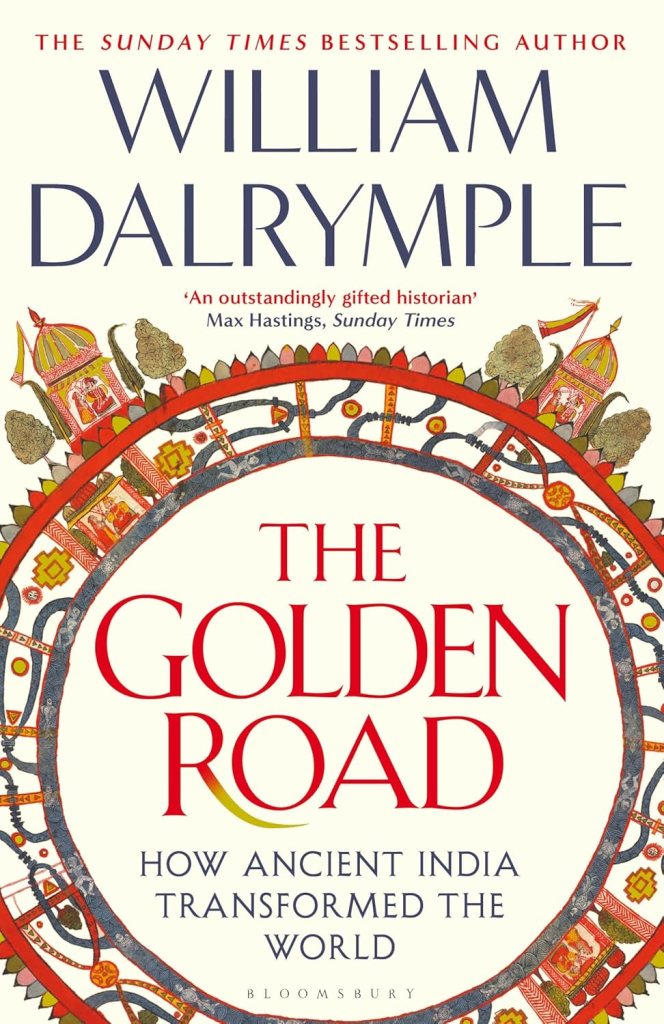

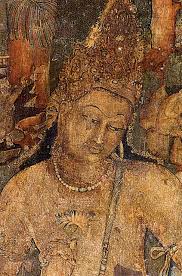


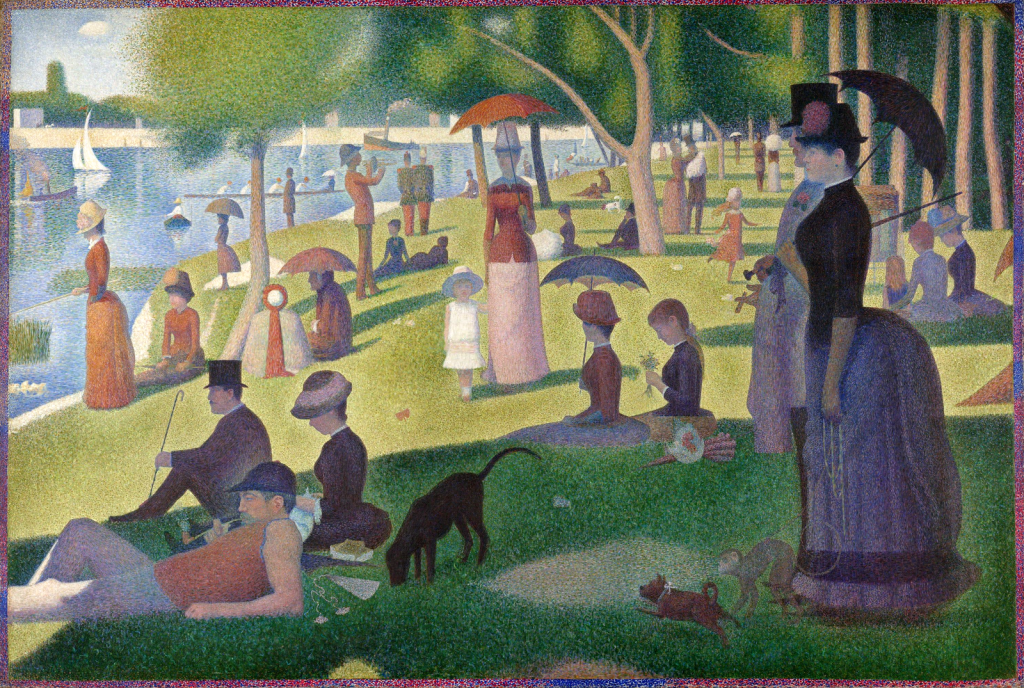
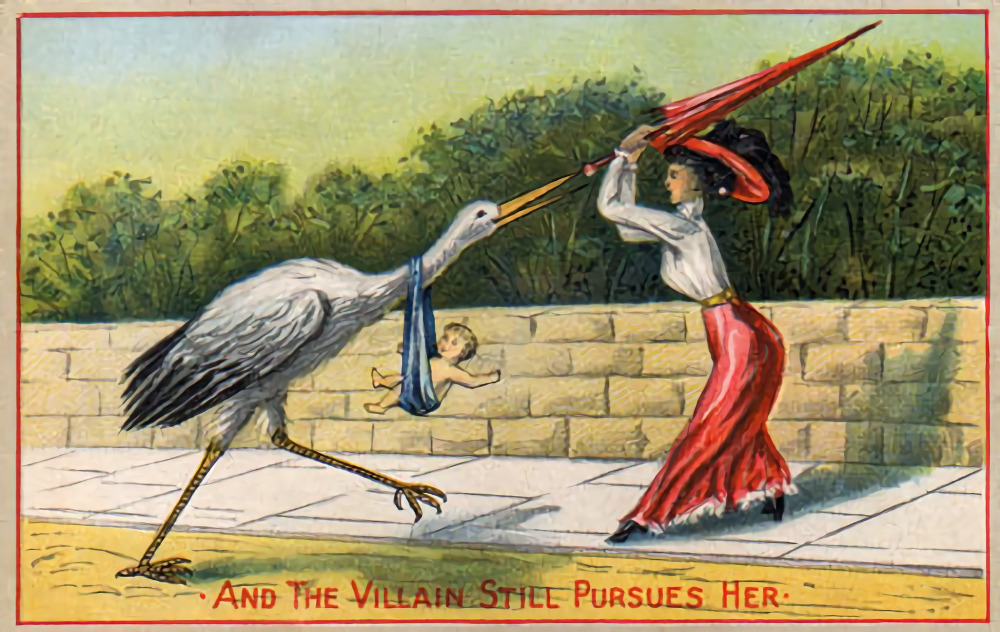
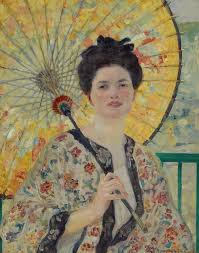




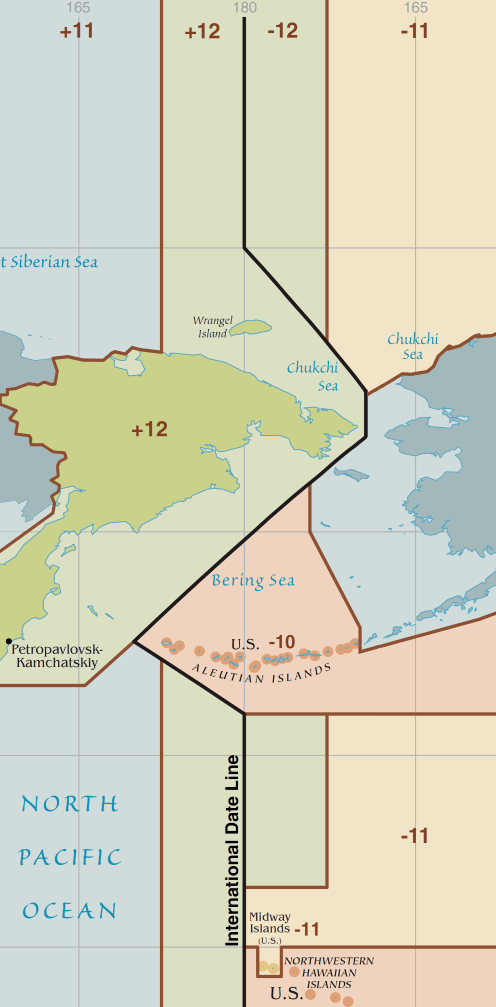
 Borderless