Categories
Review

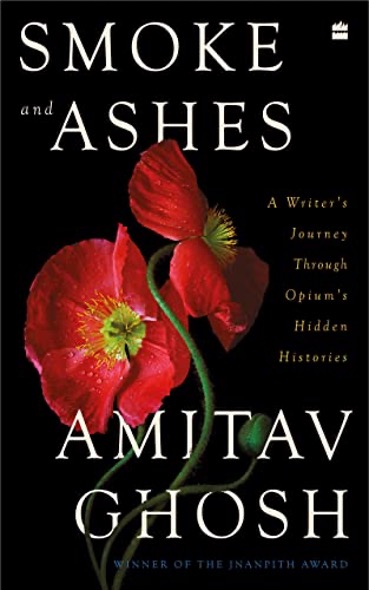
Smoke & Ashes

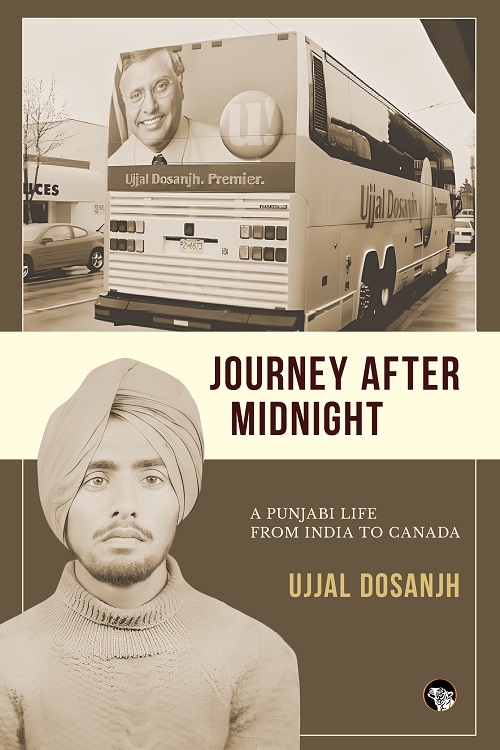
Book Review by Somdatta Mandal

Title: Smoke and Ashes: A Writer’s Journey Through Opium’s Hidden Histories

Author: Amitav Ghosh

Publisher: HarperCollins India

Amitav Ghosh has been traversing the boundaries between fiction, non-fiction, history, anthropology with ease for a long time. After the publication of his Ibis Trilogy [Sea of Poppies (2008), River of Smoke (2011) and Flood of Fire (2012)] more than a decade earlier, he has been primarily focusing on issues related to environment, global warming and ecology in his later novels like Gun Island (2019), The Nutmeg’s Curse: Parables for a Planet in Crisis (2021), a non-fiction like The Great Derangement (2016), and two slim volumes of fables, Jungle Nama (2021)  and The Living Mountain (2022). Now in his latest book Smoke and Ashes: A Writer’s Journey Through Opium’s Hidden Histories (2023), he blends travelogue, memoir, and historical tract into a multi-textured narrative that tells us about how ‘opium is a historical force in its own right’ and ‘must be approached with due attention to the ways in which it has interacted with humans over time.’ When he began his research for the Ibis Trilogy, he was startled to find how the lives of the nineteenth-century sailors and soldiers he wrote of were dictated not only by the currents of the Indian Ocean, but also by a precious commodity carried in enormous quantities on those currents: opium. Through both economic and cultural history, Ghosh traces the transformative effect the opium trade had on Britain, India and China; the trade and its revenues were essential to the Empire’s survival.

Of the eighteen chapters of the book, the first two enlighten the reader about little knowledge of China and the way tea (cha or chai) became an inevitable part of living both in the West and in India. It was after Ghosh’s first trip to Guangzhou (anglicized later to Canton) that the epiphany occurred about the very subtle influence of China and how the British actually stole the technology of tea plantation to make it flourish in the colonies. Thus ‘tea came to India as a corollary of a sustained contest – economic, social and military – between the West and China.’

From the third chapter onwards Ghosh gives us the history of the opium poppy and how social conventions that had developed through centuries of exposure to opium may have helped to protect some parts of Eurasia from highly addictive forms of opioid use and also how the drug was instrumental in the creation of a certain kind of colonial modernity. We get to know how it was the Dutch who led the way in enmeshing opium with colonialism, and in creating the first imperial narco-state, heavily dependent on drug revenues. But in India, the model of the colonial narco-state was perfected by the British. In the entire region of Purvanchal, the British created a system that was coercive to its core. The growth and cultivation of opium poppy was entirely controlled by them and the drug was mass produced in the two largest factories in Patna and Ghazipur. Though the dangers of opium were certainly no secret to the British government, yet they did not bat an eyelid in exporting the drug to China, knowing fully well it was a criminal enterprise utterly indefensible by the standards of its own time as well as ours.

Ghosh then gives details of the poppy cultivation in Malwa and the western provinces of India. By thwarting the British efforts to impose a monopoly on the trade, Malwa opium sustained Bombay and left a large share of the profits to remain in indigenous hands. Throughout the colonial era therefore, Calcutta and Bombay defined the two opposite poles of India’s political economy; the way in which business was conducted in the two cities were completely different and soon the Parsis turned out to be the maximum number of the non-western merchants who were present in Guangzhou in the years before the First Opium War. Thus, Bombay and its hinterlands benefited from Malwa’s opium in multiple ways. From Mumbai’s Parsis we go to the horticulturists and weavers, potters and painters of China, especially of the great city of Guangzhou. The intricacies of the Parsi Gara saris are traced back to weavers of Guangzhou, and so are the origins of an artistic ferment in Bombay when Jamsetji Tata, the founder of the Taj Mahal Hotel in Mumbai, brought back many paintings to India from China. The idea for an art school in Bombay came to Jamstjee Jejeebhoy after his Guangzhou visits, and the JJ School of Art came about.

Ghosh describes how opium money seeped so deeply into nineteenth century Britain that it essentially became invisible through ubiquity. After Britain, the country that benefited the most from the China trade and therefore, the global traffic in opium, was none other than the United States and the beneficiaries included many of the prominent families, institutions, and individuals in the land. By 1818 Americans were smuggling as much as a third of all the opium consumed in China thereby posing a major challenge to the East India Company’s domination of the market. Known as the Boston Concern, all the rich families from Boston, Massachusetts and the fortunate Americans were a series of names from the Northeastern upper crust — Astor, Cabot, Peabody, and so on. The young returnees from China ploughed their opium money into every sector of the rapidly expanding American economy. Even the opium money used in the railroad industry also came from China. “Opium was really a way that America was able to transfer China’s economic power to America’s industrial revolution”. In the United States the connection between opium and philanthropy has endured till the present day. It also left a distinct stamp on American architectural styles, modes of consumption, interior décor, philanthropy, and forms of recreation. Interestingly, Ghosh’s narrative keeps circling back to the present, when in the US as well in many countries around the world including India, the opioid crisis has reached epic proportions and the American government is bullish about its “War on Drugs”. Ghosh candidly states, “The ideology of Free Trade capitalism sanctioned entirely new levels of depravity in the pursuit of profit and the demons that were engendered as a result that have now so viscerally taken hold of the world that they can probably never be exorcised.”

Ghosh reiterates through the book that binary narratives about countries and culture — like, China is evil — that is entrenched in popular perception is misleading and takes away the historical context of trade relations among nations. “The staggering reality is that many of the cities that are now pillars of the modern globalised economy — Mumbai, Singapore, Hong Kong and Shanghai — were initially sustained by opium.”

There are many places in the book where Ghosh skilfully refers to his actual borrowing of historical details in his Ibis trilogy and these interjections add flavour to the non-fiction narration. Chapter Eight again is a memoir of Ghosh’s own lineage and how that has connections with the opium trade. Moving away from their ancestral home in East Bengal, it was the opium industry that took his ancestors to Chhapra in Bihar and kept them there. Like the millions of people that opium trading affected, uprooted, and dehumanised, his father told him stories of growing up in Chhapra and seeing opium ruin as well as make lives. These digressions add zing to the often-monotonous narration of facts and figures of the opium trade.

Ghosh goes on to devote pages to the nature of grassroots psychoactive substances and how opium was different in this class of psychoactive because it became a mainstay among pharmaceuticals too: “The reality is that all other efforts at curbing the spread of opioids have failed: the opium poppy has always found a way of circumventing them.” Towards the end of the book, after Ghosh finds that the wealthy and powerful people of the world to be suicidally indifferent to the prospect of a global catastrophe vis-s-vis the drug scenario, he asks a seminal question: “In such a world does it serve any purpose to recount this bleak and unedifying story?” Apparently, this question had haunted him since he first started working on the book, many years ago. It was the reason why, at a certain point, he felt he could not go on, even though he had already accumulated an enormous amount of material. It seemed to him then that Tagore had got it exactly right when he wrote: ‘in the Indo-China opium traffic, human nature itself sinks down to such a depth of despicable meanness, that is hateful even to follow the story to its conclusion.’ So persuaded was he of this that he decided to abandon the project: he cancelled the contracts he had signed and returned the advances he had been paid by his publishers.

Now we are happy that the story of the opium poppy had its cathartic effect upon Ghosh and in retrospect, after a period of more than a decade, he could give us the story from multiple perspectives today. Like his other books, this text is also accompanied by voluminous end notes which will deter the layman reader from enjoying the book. The amount of material and the different issues that Ghosh mentions is fit for at least four books but it is to his credit that he manages to present to us this world-roving tale in his signature method of weaving diverse narrative strands together into this book. How Ghosh establishes the interconnectedness of economic agency with geopolitics, a plant with human flourishing and wreckage and produces a narrative as luxuriant as it is painstaking in detail and density is his mastery as a prose writer and thinker.

.

Somdatta Mandal, author, academic and translator is former Professor of English at Visva-Bharati, Santiniketan, India.

PLEASE NOTE: ARTICLES CAN ONLY BE REPRODUCED IN OTHER SITES WITH DUE ACKNOWLEDGEMENT TO BORDERLESS JOURNAL

Click here to access the Borderless anthology, Monalisa No Longer Smiles

Click here to access Monalisa No Longer Smiles on Kindle Amazon International

Categories
Stories

Mister Wilkens

By Paul Mirabile

Courtesy: Creative Commons

 “Indeed, so fierce was this sense of resistance to change, and so universal were the powers ascribed to it, that in reading the Orientalists one understands that the apocalypse to be feared was not the destruction of Western civilisation but rather the destruction of the barriers that kept East and West from each other.

This unreferenced passage was found upon the mangled body of a certain Mister Wilkens after he had thrown himself from a speeding night express from Paris to Madrid. I, riding on that train, and possessing a peculiar nature for the bizarre, decided to investigate rhe reasons for such a gruesome suicide. Fortunately, upon arriving in Madrid, I ran into the Englishman who had shared the compartment in which Mister Wilkens had been travelling on that memorable night. I had seen him on the railway tracks whilst the train officials searched the surrounding embankments for the body of the poor man. Apparently, it had been Mister Wilkens’ travelling companion who had alerted the officials. He knew why Mister Wilkens had killed himself but seemed rather parsimonious with the details when questioned by the police or the press, feigning that he was about to fall asleep when the tragic event occurred, and was only awakened by a terrible laugh or scream. (Which we shall soon learn was a blatant lie!)

When I met him in Madrid by some extraordinary chance and bought him a drink at the famous beer saloon at the Plaza Santa Anna, made famous by its association with Ernest Hemingway who drank and got rowdy there, I offered the man money to divulge the reason for the suicide to me. He bluntly refused. I explained my idiosyncrasies towards the bizarre and he, smiling a wicked smile, promised to tell me only if I would not submit the story for publication or spread its contents orally to the press, friends or family until he authorised me to do so. As to my offer of payment, he suggested two hundred quid would do! I agreed all agog, albeit the amount of money seemed to be rather steep. In any case, I assured him that I had neither friends nor family, and that I had no great love for journalists. His story, thus, would be perfectly safe with me.

This was how I came to be the first to put into writing the nature of Mister Wilkens and the reasons for his suicide. Now if readers ask themselves how I’ve managed to publish the testimony without breaking my solemn oath, I would then have to elaborate on the unforeseeable and tragic end of my informer (whose name, by the way, I never learned). But that is yet another story. Permit me to recount this one first.

*

“We were the only two in the compartment.” My English informant began smugly in a slightly high nasal tone while the air smelt somewhat of that Cambridge midnight lamp oil. “I can genuinely recollect at the train station in Paris that his personality was of a sullen, meek sort, one of a man who had fallen hard, got up, but only to fall again. He wore a tragic, tormented face, and if I recall correctly, every two or three minutes suffered an unsightly twitch under his left eye that made the other eye seem exorbitant. Anyway, once we had left Paris far behind, he engaged in the most singular gambit as regards the way in which he sought to enlist my attention : ‘Have you ever travelled to the Orient ?’ The gambit put so bluntly shook me out of my dreamy thoughts. I noted that his left eye began to twitch as if it sought to put me out even before I ventured an answer.

“‘No I haven’t, although I’ve read many travel writers and adventurers’ tales of the Orient.’

“‘Oh really !’ he snorted in overt contempt. ‘For example ?’

“ ‘Well … there’s Marco Polo.’

“He guffawed : ‘He never left his dingy cell in Venice, the seedy bugger !’ I shrugged my shoulders.

“ ‘I have perused Sir Richard Burton[1].’

“He lifted an appraising eyebrow : ‘Yes, a remarkable polyglot and reader of the Oriental heart ; an ethnologist and anthropologist avant la lettre. He was, nevertheless, a man fraught with prejudices and terribly dogmatic. Alas, a man of his times. Yet, his writings do hold much insight, and so humorous at that. Did he not say that England was just a tiny island ? He secretly despised it for he breathed more spacious air in Asia, Africa and Continental Europe.’ He adjusted his badly knotted tie. ‘Go on …’

“ ‘I’ve read all of Alexandra David-Néel’s novels[2]?’ I pursued with an amused air of a child.

“ ‘Ah ! Now there’s an outstanding, pugnacious explorer ! She outstrips them all — except Burton of course — in intrepidity, intelligence, will-power and writing style. Her sarcasm and irony suit my humour, whilst her practice and research into Buddhism bear the seriousness of any so called specialist or expert.’ He smiled a self-congratulatory smile as if he had brought up the name himself. I must admit that I too was pleased at his overt approval; indeed, to have outsmarted the Brits and the Tibetans through cunning and acumen in order to reach Lhasa on foot safe and sound was a fantastic feat.

“My travelling companion lifted his chin for me to continue my enumeration : ‘Pierre Loti[3] ?’

“He snorted : ‘Please be serious, sir.’ And he yawned.

“‘André Malraux[4],’ I jested.

“He threw up his hands : ‘His novels are wonderful, but his Orient is as imaginary as his imaginary museums.’

“‘Pearl Buck[5] ?’ I countered with excessive decorum as if all this were just a parlour game.

“ ‘Hum … yes, she is the only Westerner who really knew China, more so than the American journalists Louis Strong and Edgar Snow. Read her Nobel Prize speech, it’s an incredible lesson in Chinese literature. Yes, Pearl Buck had a genuine love for the East. Her books plunge us into the remotest depths of twentieth century rural China. The Mother is a sparkling piece of penmanship …’

“ ‘I shall not name all the modern travel-writers to the East whom I have read on my train rides, many of whose narratives are quite dull and stereotyped.’ I rejoined, hoping to put an end to this ridiculous ‘parlour game’.

“ ‘So right you are, sir,’ he beamed. He sat back in his seat fidgeting with the buttons on his vest, some of which were missing. ‘I noted, too ….’

“Our compartment door slid open violently. The conductor practically jumped in demanding our tickets. My heart almost jumped with his jump ! Anyway, we dutifully showed them to him. When he had jumped out, so to speak, Mister Wilkens, although unperturbed by all this jumping about, seemed, none the less, beset by something, his eyes staring blankly at the table aside the window where he had placed a shoulder-bag, perhaps because he had lost the thread of our conversation. He looked up and blurted out: ‘You know sir, I spent over forty years living in the East : Turkey, Syria, Armenia, India, China, Laos, Mongolia, not as a conquering dolt, a cosmopolitan snob or a professional prig, but as a pilgrim in quest of my humane origins.’

“My travelling companion was in a state of unusual excitement. ‘Humane origins ?’ I repeated with a soupçon of irony.

“ ‘Yes, humane origins. I see that you fail to grasp the essence of that formula. Humane is another word for Humanism, my dear fellow. Humane defines our human heritage, the fount of our soul and spirit.’

“Just at that moment several French customs officials slid our door open and asked for our passports. When they were examined and returned, a few minutes later the Spanish police entered and inspected them in the same taciturn manner. As soon as these formalities had been completed we leaned back in our seats.

“I sat politely, absorbed in Mister Wilkens’ rather dark comments, exposed with such bursts of emotion. I swallowed every word he said, albeit the digestion caused me great discomfort. Be that as it may, sceptical at first, I grew somewhat more interested as he rambled on, amused at the man’s gyrating gesticulations, wondering, however, if he had gleaned his monologue from a book or from his own experiences as he so pompously pretended. This being said, I did feel a certain fraternal respect for him, although I will confess that he annoyed me with that composed self-sufficient poise. A poise I had stupidly preened in my old university days at Cambridge; you know, the eloquence of words, however boastful and bombastic, hollowing out dismal logic and stale equations. But I was dead sure that if I hadn’t been to Cambridge, this man would have never even addressed a single word to me. He sniffed out his ‘own kind’ ! But of this ‘kind’ I was particularly sceptical and mistrustful, especially of pedants like him. A sentiment of distrust one encounters in people who throw themselves upon you, spilling out their watered down philosophies or immature phantasies during long hours in trains. To be fair though, I did not detect this incorrigible comportment in Mister Wilkens’ hurried, but measured spurts. His words were solid, linked together like the shiny mail-coats of those fine mediaeval smithies.

“ ‘Are you then not content with your many years spent amongst the populations of Asia ?’ It was a mundane question but… 

“ ‘Disorientation …’

“ ‘What ? Disorientation ?’

“ ‘Yes, disorientation, sir. Look at the word closely : ‘dis-‘ apart from and ‘orient’ … I am separated from the Orient … my Orient ; like dis-order, out of order, or dis-jointed, out of joint. Or how does disease appeal to you : out of or separated from ‘ease’, or disaster, out of the harmonious movements of the ‘astres‘ or stars ? The Eastern stars of course. Have I made myself understood ?’ He sneezed.

“I nodded without conviction. That pedantic tone, plus his semantic shenanigans unnerved me as well as that left eye of his which had been twitching with each jerky gesture of head and hands. He then began wringing those hands of his like some sort of maniac, gazing at the top berth above me, starry-eyed.

“ ‘Were you there on mission ?’ I ventured, hoping to regain his attention.

“ ‘Mission ? Yes, my mission ; not there, but here in Europe. I must relocate my orientation here in the West, if that is at all possible, given the fact that I am completely disorientated.’ He scratched that twitching eye peevishly. ‘So many languages and cultures studied and taught all gone up in smoke. A tragic fire has set aflame my life since returning to Europe; it has turned all my dreams to ashes. All my written and spoken words wrapped in the flame of a setting sun! And I can assure you sir, no phoenix will ever arise from them. Once disorientated, always disorientated as they say.’ He reached for his shoulder-bag, pulled out a soft-covered book, opening it at random with a look of disdain.

“I must admit that I found it painstaking to follow Mister Wilkens’ histrionic tirade with any seriousness. There he sat, lofty and smile-less, his head swaying listlessly from one side to the other like a puppet. His twitching eye had become intolerable to look at; I turned my head away and peered out of the window. Darkness had mantled the low-lying countryside in a softness that diverted my attention momentarily from those inflamed words. During this dream-like state, the darkness absorbing me within her lush, humid vortex, it seemed to me — though I am hardly a psychologist — that my travelling companion had experienced a traumatic relationship crisis with peoples of very alien values to his own European ones, a crisis that exhausted and put to trial his intellectual and emotional limits, exhausting him of any margin of repartee, driving him to self-accusation, even to self-maceration. His ‘Oriental’ experiences hardly broadened his vision of the world; on the contrary, they left him in an utter state of culpability. I felt that all his monologuing, if I may use that ugly word, was a confession pronounced before the hour of death. This may be an exaggeration, but I did sense that Mister Wilkens had been touched by some unknown madness, perhaps a loss of identification or an explosion of a multitude of identifications with which he could not cope … nor wished to cope! He made weird grimaces, sighed, fidgeted about in his seat, ignoring me completely until the train pulled into a station. Three minutes later we pulled out.  Mister Wilkens had not once raised his eyes from that book, which I am sure he was not reading at all.

“If I remember correctly it was a very cold night, the sky, a crisp, obsidian black, the stars, frozen, and the moon, full and bright. I dare say our compartment was so cold that we were forced to bundle up in our overcoats. Mister Wilkens looked up at me several times from his pretended book-reading, though he displayed no desire for conversation. I broke in on him once, rather bombastically, lauding the French railway system. He nodded apathetically, then plunged his pug nose back into those pages. A few moments later the conductor poked his head in to apologise about the heating that, he promised, should be coming on shortly. I sighed in relief for I was freezing.

“Mister Wilkens cast me a cursory glance: ‘Have you studied things seriously, sir ?  I mean the things in life, yourself, for example ?’

“I found the question impertinent, but answered, none the less: ‘Yes I have as a matter of fact … including myself,’ I retorted, holding my head haughtily high. ‘I too have travelled widely.’ He snorted. I remember at that point I had taken off my overcoat, for the heating was slowly coming back on. Mister Wilkens, however, kept his on in spite of the beads of sweat rising to the surface of his high, furrowed forehead. He offered no repartee, thumbing nervously through that book of his.

“I thought to retaliate, judging him an unmannerly upstart: ‘So you consider yourself an Orientalist ?’

“He looked up from his ‘perusing’ and stared at me as if I had insulted him with the grossest of four-lettered words. ‘That is an ugly word,’ he sneered. ‘All your years at Cambridge have taught you nothing.  Anyway, to answer your question: no, I am not an Orientalist. Alas, as I have just finished explaining, everything has gone up into smoke: to have learned all those languages for nothing… to have undertaken all those voyages for nothing; to have taught and written for nothing ! Do you understand, sir … For nothing …’

“ ‘But …’

“ ‘But what ? Please, don’t pretend to console or pamper me, I abhor puerile commiseration. For nothing, sir. Do you realise that besides this train from Paris to Madrid back and forth, back and forth …’  A woman threw open our compartment door to step in, but when she saw Mister Wilkens’ twisted face and his twitching eye, she gasped and slammed it shut. He scoffed, fell mute and turned to the window.  

“Large snowflakes fell. They formed little rims of melting sleet on the window. The wind whipped them about, giving an impression of so many odd geometric configurations. During that uneasy interlude I searched frantically for something to say. I couldn’t bear that slice of silence arching over us, that biting irony of contempt.

“Before I was able to say what I had finally conjured up to say, he burst brusquely into my crowded thoughts: ‘I must tell you a little story about Sandy, a mate of ours at Cambridge with whom we would go out on Saturday nights to “drink up the town” as the Americans say! There we were, a bit tipsy, carousing with the crowd, having a jolly good time, and Sandy, making a perfect bore of himself. So, to enliven the ambience I mustered everyone’s attention to inform them that I had stuck up for Sandy a week ago. Hearing his name suddenly mentioned, he raised his fat face out of the beer mug and looked blankly at me. I turned to Sandy and said : ”Sandy, how ungrateful you are, just think, I stuck up for you the other day, someone said that Sandy wasn’t fit to live with the pigs and I said that he certainly was !” All of us roared with laughter whilst poor Sandy buried his pasty face in the froth of his beer. In fact the whole pub was howling with laughter. It was truly a smashing night out.’

“Mister Wilkens was choking with laughter. He appeared so pathetic to me. He wore such a cretinous smirk on his twitching face. That revolting anecdote of his was cheap and full of childish contempt. Was he doing this purposely to disgust me, to urge me to get up and leave the compartment? He calmed down and eyed me with a sort of conspiratorial smile: ‘Have you ever thought of taking the Leap, sir ?’ He pushed his tortured face forward waiting for an answer. His hysterical tone had shaken me up a bit. I wished only now to be left alone. 

“ ‘The leap ?’ I asked, examining him rather warily. It was an odd word which he emphasised with an accompanying gesture of his hand raised high overhead. He noted the tint of circumspection in my voice. He sneered and threw open our compartment window. Stretching his hand out, he caught the flakes of snow that shone in the half-lit wintry night. I made no move. Cold air rushed into the warmth of the compartment. I nodded towards the window. He feigned to ignore me and his sneer erupted into a series of ugly snickers. I snuggled up in a corner and for an instant thought it best to leave him to his madness. It was becoming frightfully cold, and furthermore, his attitude frightened me, his gestures were nervous, erratic. His face, morose, spiteful. He kept tapping his feet and hands, playing nervously with the frayed ends of the cuffs of his shirt. Was it because of the cold or some inner anxiety? I sensed that he was displeased with the tone of my voice and most probably even disgusted with my company, and was undoubtedly endeavouring to communicate it to me. I sprang to my feet to take leave of him. He grasped my shoulder. His fingers were wiry, hard as steel.

“ ‘Yes, the leap, my good fellow. Leaps are like twilights and rainbows, terribly brief. Do you understand who all those peanuts in a jar are ? No, you have understood absolutely nothing of what I have been saying.’ I stood gaping at him, frozen in terror. He released his grip and in one violent movement pushed me aside against the compartment door. ‘You may plead in my favour that I’ve had my day in the sun; I shan’t disapprove of that banality. But tell me, sir, you, so well cultivated, was it all then just fairy dust ? A forty-year timeless fairy tale existence before … before the plunge into this nightmare, waking up into a dank, grim prison of biological and material utility ? Are we all forbidden to accomplish our dreams ? Must we live out our lives in a stifling cocoon of time- and energy-consuming survival of the fittest ? Well sir, yes, I’ve had my day in the bold, rising sun, but it has since sunk …’ Mister Wilkens threw back his head in the most theatrical fashion, grabbed his book, leapt up on to the table aside the window then rolled out of it without uttering the slightest sound. Confounded, I made no effort to stop him. At length, coming to myself, I ran for the conductor. The rest of the story you know.”

When he had finished his account and his fifth beer (which I had been paying for) I again promised him that I would neither write nor mention this unusual event to anyone. I enquired, however, about  the book he had been reading or pretended to be reading in the train. My informer said that he had tumbled out of the window with it cradled in his arms, but no one, apparently, made any effort to find it. I paid him, and without another word, he stood and left the beer-hall.

At this point the reader is undoubtedly eager to know why I have broken my vow and have divulged the tragic end of Mister Wilkens. Well, let me record without going into details that a similar tragedy befell my English informer some months ago on the December 9, 1976, on a night train between Paris and Madrid, so reported El Pais[6]. A large photo of him reminded me that I had never asked him his name, and it was only by the photo that I knew it was my informer. Perhaps he, like Mister Wilkens, had also made the leap, although I doubt whether he dabbled in the field of Orientalism. This being said, I hope these suicides are not contagious, and that because of poor Mister Wilken’s embryonic virus, I too have been contaminated by his travelling companion! To look at it from another point of view, however, I have often wondered about that book; that is, Mister Wilkens’ book which he had held in his arms when he leapt out of the speeding train. My guess is that it may be the key in understanding the reason for killing himself, that and the citation found on him, which I have put into quotation as an epigraph to my narrative, and unfortunately –I must confess– whose author I have never been able to discover. I’m sure the key to the mystery lies in that name of the book.

[1]    (1821-1890) British military officer, explorer, erudite, writer and polyglot.

[2]    (1868-1969) French explorer, intellectual and writer.

[3]    (1850-1923) French military officer, traveller and writer.

[4]    (1901-1976) French writer, traveller and Minister of Culture under President General De Gaulle.

[5]    (1892-1973) American writer, winner of the Nobe Prize for Literature in 1938, born in China.

[6]   The national newspaper of Spain (The Nation)

Paul Mirabile is a retired professor of philology now living in France. He has published mostly academic works centred on philology, history, pedagogy and religion. He has also published stories of his travels throughout Asia, where he spent thirty years.

.

PLEASE NOTE: ARTICLES CAN ONLY BE REPRODUCED IN OTHER SITES WITH DUE ACKNOWLEDGEMENT TO BORDERLESS JOURNAL

Click here to access the Borderless anthology, Monalisa No Longer Smiles

Click here to access Monalisa No Longer Smiles on Kindle Amazon International
Categories
Musings

Should I Stay or Should I Go?

When and how do you know when it is time to change your life, job, relationship, friends, plans or location? Keith Lyons examines the push and pull factors of change

Courtesy: Creative Commons

If you ever feel trapped in a predictable, boring routine, or wake with a nagging feeling that something isn’t quite right with your life, perhaps it is time to take action. But how can you decide to leave your familiar workplace, hometown, or social networks and start a fresh career, move to another place, or find new friends? And what happens if the grass isn’t greener on the other side – and it doesn’t work out? 

These are the dilemmas many of us face at different stages of our lives. The challenge when we’ve got just a bit too comfortable and lazy in our comfort zone. The inner voice that whispers of incredible opportunities in other places. The gut feeling that reminds us that right here and now we aren’t living our best life. 

If most Sunday evenings a sense of dread creeps up on you, and you feel you aren’t able to be your true self, maybe it is time for a change. But how can you escape the harsh circumstances of your life, whether it is your fate or misfortune, largely out of your control? 

I believe there are many aspects of our lives that we can influence. We can be the architects of better lives, authors of inspiring life stories, creators of meaningful existences. 

But first, we need to take stock, and clearly identify what the problem is, so we can find solutions that will work. A useful exercise is to write down all the things which are making us unsatisfied.

A list makes tangible our concerns, showing not just the things which irk us, but also providing guidance on what we are seeking on the other side. Whether it is a relationship, role or place which is the issue, it could be because you don’t feel fulfilled, engaged, valued/appreciated or inspired where you are right now.

For some, it is the negativity of the environment or culture, while others are held back from being their authentic selves by too much drama, toxicity, and hostility. Ultimately it might come to whether you like the person you are right now. 

If you are shrinking rather than growing, and bending over instead of standing tall, it might be time to move on, if you can. Looking back on my life, in my late 30s my significant long-term relationship ended, and as I came to the end of a job contract, I didn’t feel in a good space, living in a damp house, feeling depressed about how things had worked out and the gloom of winter. I thought back to the last location I felt content and happy, and booked a flight to get back to a place where I’d lingered while on holiday. That move — to a place some 10,000kms away — did work out, but I had never imagined previously that I would end up moving to live and work in a very foreign, yet welcoming, country that was a world away from my mundane existence.

Let’s also acknowledge that in some circumstances, you can’t easily extricate yourself from ties, responsibilities, relationships and locations. For example, you might have duties to your family, expectations around obligations to others, or constrains on moving — ranging from financial and political to cultural and social.

Ideally, you want to find your place, your tribe. You want to be surrounded by others who understand and support you. That could mean hoping for a geographic cure, or even finding your community of peers whose values align with yours online. 

The hardest part is overcoming your fears and anxieties going from the familiar to the unknown. You might have the concern that things won’t work out. Or the worry that you will never be happy, and that there is something wrong with you. That’s perfectly normal. No, there isn’t something wrong with you — this is just a reality of our existence. Change is scary. 

Those who’ve made tough choices in their lives report it does take courage to put into action the difficult decisions, but once the first step is made towards a fresh start, it can be liberating and empowering beyond expectation. 

.

Keith Lyons (keithlyons.net) is an award-winning writer and creative writing mentor originally from New Zealand who has spent a quarter of his existence living and working in Asia including southwest China, Myanmar and Bali. His Venn diagram of happiness features the aroma of freshly-roasted coffee, the negative ions of the natural world including moving water, and connecting with others in meaningful ways. A Contributing Editor on Borderless journal’s Editorial Board, his work has appeared in Borderless since its early days, and his writing featured in the anthology Monalisa No Longer Smiles.

.

PLEASE NOTE: ARTICLES CAN ONLY BE REPRODUCED IN OTHER SITES WITH DUE ACKNOWLEDGEMENT TO BORDERLESS JOURNAL. 

Click here to access the Borderless anthology, Monalisa No Longer Smiles

Click here to access Monalisa No Longer Smiles on Kindle Amazon International

Categories
Essay

‘Wormholes to other Worlds’

Ravi Shankar writes about museums in Kuala Lumpur

Perdana Botanical Gardens. Courtesy: Creative Commons

I had a feeling of quiet satisfaction. I was finally able to locate the passage. I had spent a few weeks trying to do so without success. At ten in the morning, the iron gates of the passage/tunnel under the busy road were open as mentioned in the video on YouTube.  I could see the lakes of the Perdana Gardens ahead. The Perdana Botanical Gardens is one of the major attractions of Kuala Lumpur.

There are also several attractions located around the garden. Among these are the KL Bird Park, the Butterfly Park, the National Planetarium, the Islamic art museum, the Royal Police Museum, and the Tun Razak Memorial. I visited these museums over several weekends. Walking to and from and within these museums keeps me active. Many are located around the Perdana Botanical Garden. Two are around the Dataran Merdeka, the Merdeka Square. The Royal Museum is separate but not very far from these two locations. KL has several other museums that we will examine in a later article.

The pandemic had created a sense of fear within me. In late 2000, COVID was still under control in Malaysia and the national museum was open with pandemic protocols. I was apprehensive but my entry to the museum was smooth. The National Museum of Malaysia (Muzium Negara in Malay) is an impressive structure inaugurated in 1963. The museum was designed in the style of a Malay palace and UNESCO had provided consultants from different countries. The museum is impressive and modern.

The ground floor details the history of Malaysia from ancient times to the Sultanate of Melaka. Kedah in the north was a major historical centre. Excavations have revealed old civilisations. Melaka was a major trading post. Various European colonial powers had fought over the state.  The second-floor deals with the colonial and modern history of the country. I was fascinated by images of the Japanese occupation and the civil war. There are various exhibits located outside on the museum grounds. As the pandemic has slowly declined, the museum has come to life again attracting crowds, especially on weekends. There are local crafts and food items on display and sale.

There is a museum café on the premises that serves good Malay food. I often have lunched there while visiting the botanical garden and surrounding attractions. The textile museum or Muzium Tekstil is in a beautiful old heritage building near Merdeka Square, the country’s historical heart. The building started as the headquarter of the Federated Malay states railways and served later as the main office for different government entities.

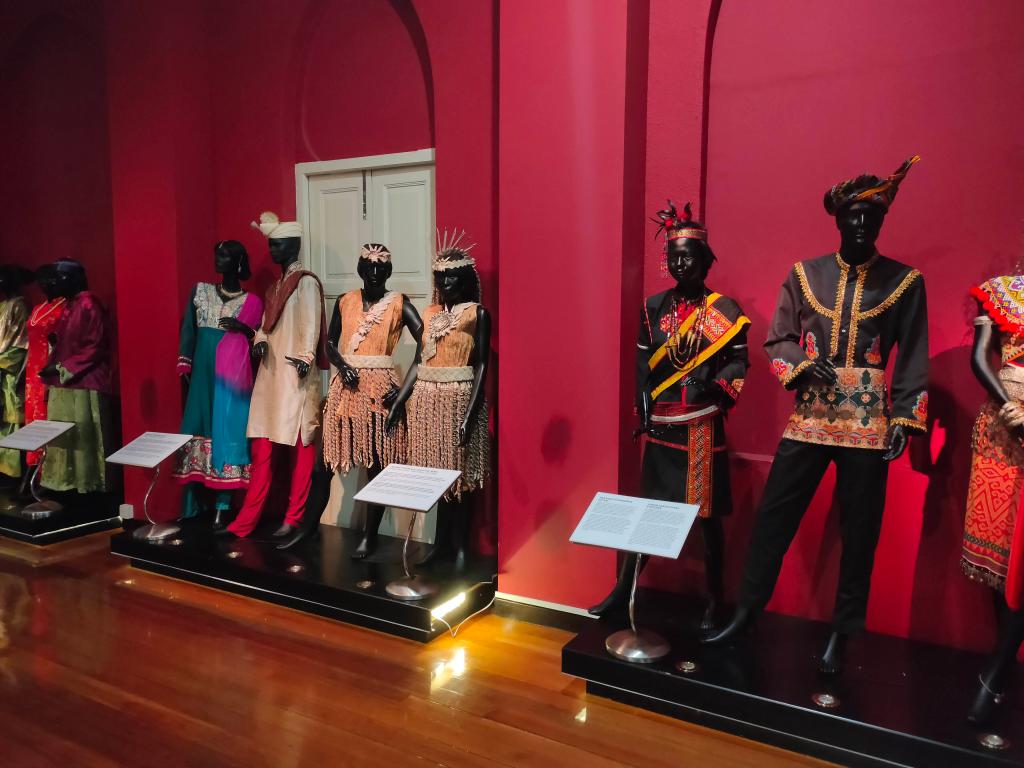
The textile museum was opened in 2010. There are four galleries over two floors. The Pohon Budi Gallery deals with the tools, materials, and techniques of textile making over the ages. The Pelangi Gallery deals with batik. I visited the museum with a friend who hailed from Gujarat, and he was fascinated by how batik had been adopted here . The Teluk Berantai gallery concentrates on the teluk berantai (interlocking bays), a harmonious motif made up of individual flower designs stitched together into geometric patterns. The Ratna Sari gallery is also located upstairs. The British had brought in artists and artisans mainly from India to construct several colonial-era buildings in the Mughal style. The museum is within walking distance from the Masjid Jamek station on the Sri Petaling line.

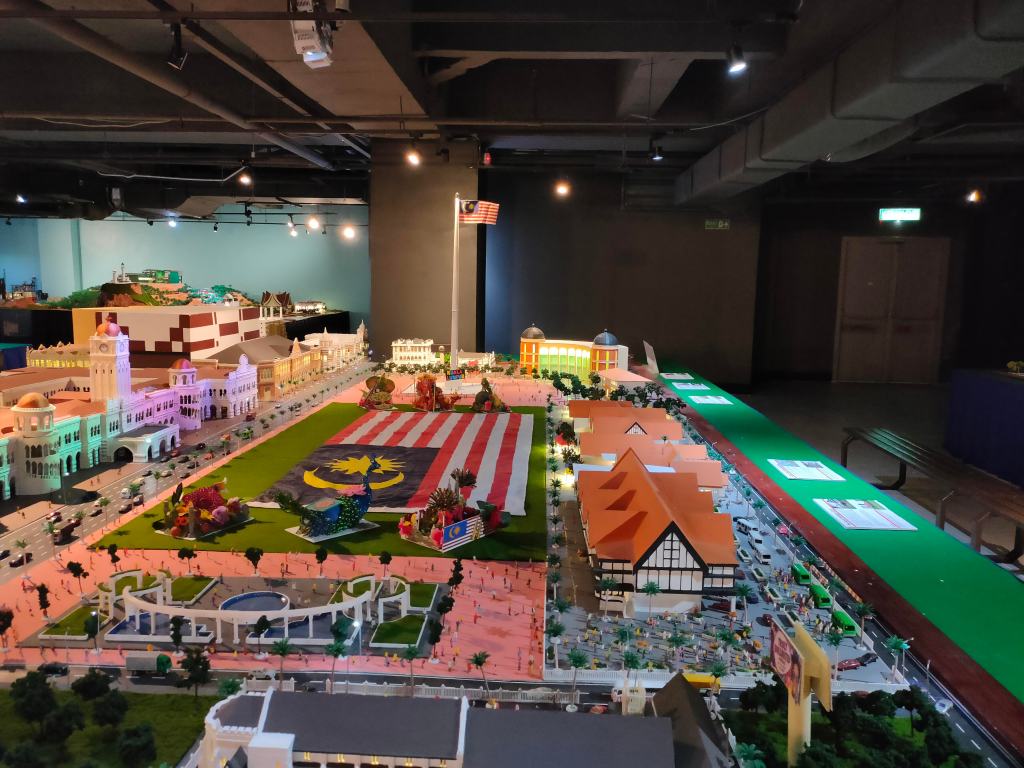
The KL City Gallery tells the story of the city from its founding as a tin mining town to eventually becoming the capital of British Malaya and modern Malaysia. Kuala Lumpur comes from two Malay words meaning the muddy confluence of two rivers. The town at the confluence of the Gombak and the Klang rivers grew rapidly into a modern metropolis. The gallery is operated by ARCH, a Malaysian brand making hand-assembled collectibles and gifts. The story of the city is told through old prints, miniatures, and photos. The centrepiece is the hand-assembled KL City model with over 5000 miniature buildings. The gallery has a café, and the city’s love of food is well showcased. At the entrance there is an I love KL sign popular with tourists and locals as a backdrop for photos.

The National art gallery (Balai Seni Negara) is within walking distance from the KL Hospital station on the newly opened Putrajaya line. The gallery is designed as spaces flanking the circular ramp to serve as exhibition areas for more intimate and contemplative viewing. The spiral ramp in the middle provides a dynamic visual experience to visitors showcasing the building from different angles at every level.  There are galleries located on three levels. There is a mixture of different media like paintings, a few miniature paintings, sculptures, installations, and projected images among others. I love the space and feel of the building. There is a good collection of paintings and other works by Malaysian artists. British colonial artists and their impressions of life in colonial Malaysia are also featured. The gallery makes for an interesting and contemplative outing. 


Minnature Gallery advertises itself not as a museum as the pieces on display were all created specifically and are not of historical value. There are thousands of miniature pieces, and the buildings were 3D printed. The location is within the Sungai Wang Plaza, near the Merdeka Square. The recreation of the Dataran Merdeka or the Independence Square and the light show at this historic location (in miniature) is impressive. are miniature models of several locations in the country. While the pandemic protocols lasted, these served as a good introduction for me to the attractions of other states in the country. They have a small store selling merchandise. Most museums in Malaysia have a gift shop and a dining area. The models of different foods from Malaysia in the Minnature gallery are impressive though I am not sure if there is a restaurant on the premises. The amount of detail is huge and the proportions of the structure correspond to the real world.

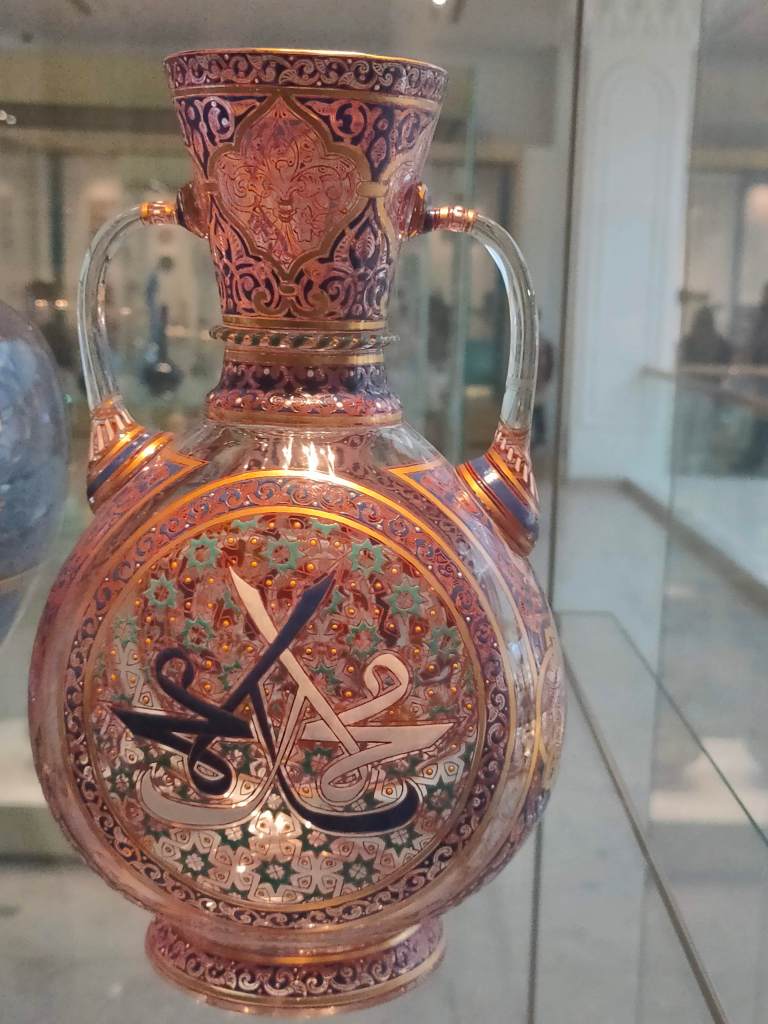
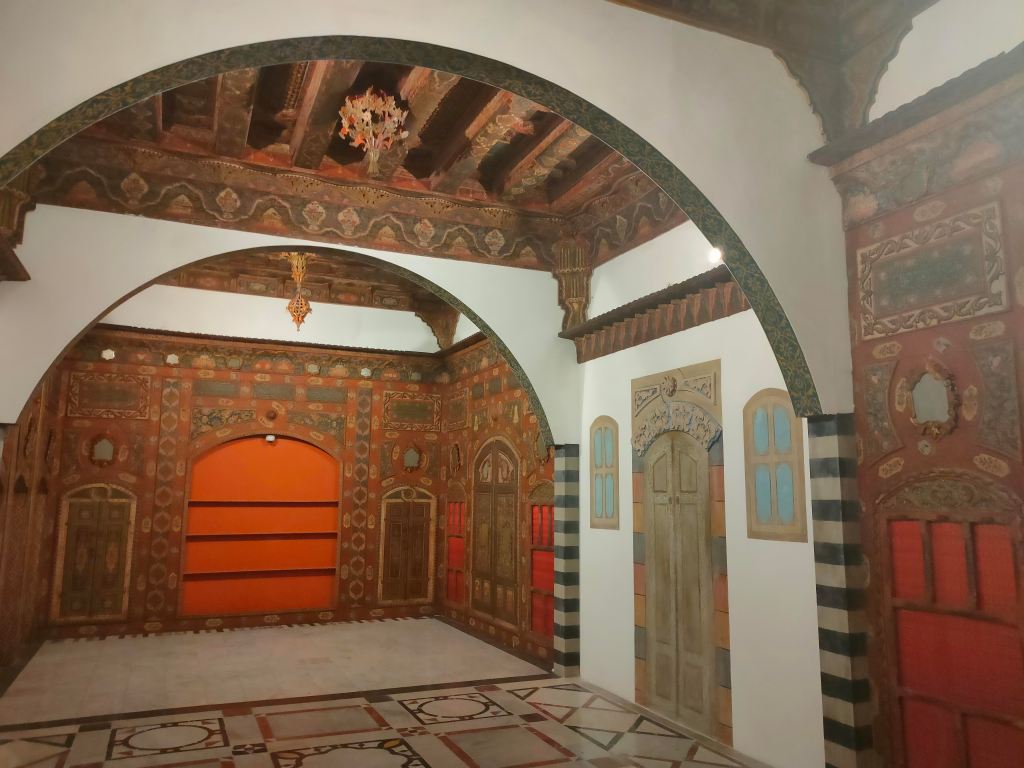
An artifact from the Islamic Museum. Photo Courtesy: Ravi Shankar

The Islamic Arts Museum (Muzium Kesenian Islam Malaysia) is located around the perimeter of the Perdana Garden. The museum claims to be the largest one on Islamic art in Southeast Asia. The Nusantara region including Malaysia and Indonesia claims to have the largest Muslim population in the world. There are more than 7000 artefacts. The building is spacious with large glass frames letting in plenty of light. The museum is spread over two levels. Level one contains galleries devoted to architecture, the Quran, and other manuscripts, and a gallery each for the art of India, China, and the Malay Peninsula. The second level is dedicated to Arms and Armours, Textiles, Jewelry, and Coins, and three galleries consisting of artworks categorised by their materials – Metal, Wood, and Ceramics. The craftsmanship of some of the pieces is sublime. The dedication of the craftsmen and the time they devoted to their tasks has to be admired. The highlight of the gallery to me was the delightful and elaborate roofs. Each is a masterpiece of design! There is also a fine dining restaurant on the premises.

The original Royal Malaysia police museum (Muzium Polis di Raja Malaysia) was built in 1958. The new building located on the outskirts of Perdana Garden was inaugurated in 1998. There are three galleries: one deals with policing during the early days of the Malay sultanate, the other, with the Colonial Era and the last with the period called Emergency, the Anti–British National Liberation War (1948-1980) which involved guerrilla warfare. There are a variety of materials used by the police force over the ages in the collection. There is a good collection of motorcycles and other vehicles. The police persons on duty at the museum are very friendly. There is a large collection of armoured vehicles and cars and a plane model on the grounds of the museum.

The Royal Museum (Muzium di Raja) was inaugurated in 2013 and was the residence of the King of Malaysia till the royal family moved to a new residence. The huge two-story property was built in 1928 by a Chinese mining tycoon for his huge family and was one of the biggest residences in Kuala Lumpur (KL). The museum provides a glimpse into the life of the royal family though most rooms can only be seen from the walkway. There is a good view of the KL skyline, including the iconic Petronas Tower.

All these museums are visitor friendly and provide a unique glimpse into the history of the city, the state of Selangor, and Malaysia. Tourists might need around three or four days to do justice to the richness on offer. Museums take you to other worlds and times. The American art critic, Jerry Saltz says, “Don’t go to a museum with a destination. Museums are wormholes to other worlds. They are ecstasy machines. Follow your eyes to wherever they lead you…and the world should begin to change for you.”  

A restored museum room in the Islamic Arts Museum. Photo Courtesy: Ravi Shankar

Dr. P Ravi Shankar is a faculty member at the IMU Centre for Education (ICE), International Medical University, Kuala Lumpur, Malaysia. He enjoys traveling and is a creative writer and photographer.

.

PLEASE NOTE: ARTICLES CAN ONLY BE REPRODUCED IN OTHER SITES WITH DUE ACKNOWLEDGEMENT TO BORDERLESS JOURNAL

Click here to access the Borderless anthology, Monalisa No Longer Smiles

Click here to access Monalisa No Longer Smiles on Kindle Amazon International
Categories
Essay

No Bucket Lists, No Regrets

Does having a to-do list help or hinder your journey, whether it be exploring the world or having a sense of achievement in your life? Keith Lyons ponders on the pointlessness and purpose of such lists.

Courtesy: Creative Commons

In an article I recently came across on how to live with no regrets, it started out with the words ‘Make a bucket list’. 

I admit, I didn’t read further. I dislike the term ‘bucket list’. Whether it is a list of random destinations you want to visit before you die, or some vague wish list of goals and accomplishments, there is something fundamentally flawed about creating ‘The List’. 

So what’s so bad about coming up with a list of goals and experiences you’d like to complete in your lifetime? I have several qualms about this approach to life. 

Firstly, bucket lists imply that you have to be close to actually ‘kicking the bucket’  before you start working on that list. That means they can be put off until there is time. Wait til you’ve raised your family. Defer til you’ve retired from work. Pull out the list when your doctor gives you half a year to live. 

The second issue I have about bucket lists is we never know when we are doing to die. The assumption of a bucket list is often that we will live well into old age. Perhaps even make it to 100. But as Allen Saunders pointed out in 1957 Reader’s Digest (and John Lennon later echoed), ‘Life is what happens while you’re busy making other plans’. The upshot is that by ‘kicking the can down the road’ , we end up putting off what we desire the most. 

Thirdly, often the formation of these lists comes from fantasy, illusion and magical thinking. We add sights or experiences to the list not from our own innermost selves, but to conform to the aspirations, social norms, and dreams of others. We might hear about a friend’s amazing holiday experiences, be inspired by a travel documentary, or adopt someone’s wish list items, without having compelling reasons or an authentic ownership of the list. 

I’ve seen how this plays out in my previous roles as a professional tour guide and travel writer. Some readers have admitted to me that after coming across an article I’ve written about a remote island eco-resort in the Andaman Sea or a Buddhist temple on the hill flanks of a bamboo forest where monks serve green tea to pilgrims that they’ve added the location to their bucket list. But given that we all experience places differently, how can they hope to replicate my (peak) experience? The other problem with having a bucket list is that it creates great expectations, and those perfect ideals might not match the harsh realities. 

I believe we shouldn’t focus so much on external achievements and tick-box experiences because often the joy and satisfaction they possibly offer can sometimes be fleeting, ephemeral or non-existent. I’ll give you three examples from my own life of some bucket list goals and how their attainment wasn’t all it was made out to be. Maybe you have the same three on your list: running a marathon, seeing the Taj Mahal, and having a story published in a major newspaper. 

Crossing the finish line after 42.195km is a wonderful feeling of completion and exhaustion, and while I still look back on that marathon and marvel at how I managed to sustain my effort over three plus hours, I gained greater satisfaction in training for the run on the coastal hills near my hometown. Perhaps it was the ‘runners high’ and the feelings of agency, freedom and bodily locomotion. I do know the day after the marathon I couldn’t walk up any stairs. 

Not all bucket list endeavours are over-hyped. When I finally made it to Agra to witness for myself the immense white marble mausoleum of the Taj Mahal, I got the standard photo sitting on a bench in front of the reflected structure. But just as memorable were the hours I spent on-site before the tourist throngs packed the grounds, meditatively wandering and pausing to observe and appreciate the monument as the sun rose over the Yamuna River. For me, my time and experience there exceeded my expectations. But other visitors I met during my travels reported vastly different perceptions of the heritage ‘Wonder of the World’.

When I was studying post-graduate journalism at university, I had a bet with a colleague about paying our fees by selling articles to newspapers. The first story I had published took up the front page of the features section of the newspaper, and I got two copies of the newspaper to keep for posterity’s sake. So, imagine how I felt the next day seeing a discarded newspaper floating in the lake beside the university library. Working on bigger projects such as books can also be a roller coaster of emotions varying from elation and excitement to anxiety and relief. Still harbour the deep desire to turn your life story into a book? If so, what have you done lately to put your pen to paper?

As you can see from my examples — and from your lived experience — there is often a gap between how we reckon things will be and how they pan out in the end. There are also another couple of issues with having bucket lists. What we want and truly desire can change over time. What’s important in our 20s or what we are expected to do by our peers and communities can evolve over the decades. Swimming with dolphins might drop from the list if you learn about the treatment of marine mammals. Driving on Route 66 might not have that allure and mystique when you look at the practicalities. Crashing a stranger’s wedding to object to the coupling might have other consequences. As we mature, we might find that our achievement orientation and ambition for success wanes, and that being becomes more important than doing. 

I suspect that many people who do have bucket lists don’t actually do many of the things they have declared will signal they have accomplished something in their lives. They might talk about the things they want to have and exotic places they wish to see, but it is easy to have those items on the list unfulfilled. Not today. Maybe later. 

By the same token, there are many, many people who aspire to better themselves by getting their dream job, migrating to a faraway country, or winning the lottery who never succeed. Having a bucket list is a First World problem. Going through a divorce, developing an addiction, and clocking up debt might be other life experiences we didn’t think we’d signed up for. 

The term bucket list comes from the Justin Zackham’s screenplay which was made into the 2007 film featuring Jack Nicholson and Morgan Freeman as two terminally ill guys making a list of things to do before they die. In another (better-known) movie, The Shawshank Redemption, Freeman as Red is told by Andy Dufresne (played by Tim Robbins) the sage advice ‘Get busy living or get busy dying’. Perhaps that is the answer to living in the now without regret, rather than having a list of unobtainable items. What’s the best motivation for you?

Palliative nurse Bronnie Ware compiled a list, but it wasn’t a bucket list. Instead, through her work with the ill and dying, she put together their top five regrets. Number one was ‘I wish I’d had the courage to live a life true to myself, not the life others expected of me’. The second was ‘I wish I hadn’t worked so hard’ — every male patient said this, missing their children’s youth and their partner’s companionship.

Third on the list was ‘I wish I’d had the courage to express my feelings’. Many people suppressed their feelings in order to keep peace with others. As a result, they settled for a mediocre existence and never become who they were truly capable of becoming. According to Ware, many developed illnesses relating to the bitterness and resentment they carried as a result.

Number four on the list of regrets was ‘I wish I’d stayed in touch with my friends’, while the fifth regret was ‘I wish I’d let myself be happier’. “Many did not realise until the end that happiness is a choice. Fear of change had them pretending to others and their selves, that they were content, when deep within, they longed to laugh properly and have silliness in their life again.”

How about you? Anything on this list that resonates with you? Carpe the hell out of this Diem (Don’t let life pass you by!)

.

Keith Lyons (keithlyons.net) is an award-winning writer and creative writing mentor originally from New Zealand who has spent a quarter of his existence living and working in Asia including southwest China, Myanmar and Bali. His Venn diagram of happiness features the aroma of freshly-roasted coffee, the negative ions of the natural world including moving water, and connecting with others in meaningful ways. A Contributing Editor on Borderless Journal’s Editorial Board, his work has appeared in Borderless since its early days, and his writing featured in the anthology Monalisa No Longer Smiles.

.

PLEASE NOTE: ARTICLES CAN ONLY BE REPRODUCED IN OTHER SITES WITH DUE ACKNOWLEDGEMENT TO BORDERLESS JOURNAL

Click here to access the Borderless anthology, Monalisa No Longer Smiles

Click here to access Monalisa No Longer Smiles on Kindle Amazon International
Categories
Stories

The Mysterious Murder of Adamov Plut

By Paul Mirabile


Vanitas Still Life, painting by Evert Collier(1640 –1708). Courtesy: Creative Commons

Back home in Madrid, having abandoned Adamov Plut to his posthumous fate, I was a bit surprised that neither the New York Times nor the Washington Post reported anything about the murder, not even a paragraph, or as the French so imagitively put it, an entre-filet ! I soon realised, due to this journalistic silence, that the time had come for me to give a full account of my relation to Mr Plut ; that the time had come for me to expose, publicly, by way of this revelation, his ‘mysterious murder’.

My information is of the surest sources for the simple reason that it was I who had Mr Plut murdered ! Yes, I ! And for reasons that shall be shortly disclosed. A mysterious man he might have been; however, his methods of acquiring priceless books and other inestimable valuables can hardly be called mysterious: Mr Plut was a vulgar thief, a scoundrel, an ingenious trickster whose singular flair caused much grief to many individuals, enraged those whose trust had been flouted.

It was in Istanbul, where I was invited to sojourn with an Armenian merchant, that I witnessed Mr Plut’s dupery. And if my naive friend fell for his crooked smile, I certainly didn’t swallow his high tale of returning to pay him for the two illuminated manuscripts my friend had graciously offered the blighter on condition that he be held accountable for them. His thick, coarse lips translated a smile that held contempt and disdain towards those who trusted him. So infuriated and insulted did I feel on behalf of my friend that that I reacted on a lightning urge and decided to follow him. I said nothing of this to my disbelieving companion, but left immediately in pursuit of my game — and game it was — for I, to tell the truth, had nothing more substantial to do at the moment and felt disposed for a good hunt.

I said that Mr Plut was a genius. Yes, in his own way. However, genius has its limitations. His arrogance and haughtiness knew no bounds, although he knew that his foul doings had attracted the attention of police and Interpol. Some may surmise that a certain paranoia drove him to invent individuals tracking him down like a wild boar or moose. No, no one was tracking him down except me, and that as subtlety as possible. In Uzbekistan, I actually chatted with him over a cup of coffee on two occasions disguised as a professor of Slavic philology, dressed in a quilted chapan robe and silk embroidered tubeteyka cap. There we sat in Samarkand, sipping our thick beverages in the vaulted bazaar at one of the storied cafés that dot the town. He was all smiles, obsequious and gold-toothed. I had the impression that I was dealing with a child or a mentally-dwarfed man whose sense of reality lacked all discernment or sagacity. I concluded that he had come into quite a bit of money, and never having had to work for a livelihood, traipsed about the world at his leisure, buying or stealing books, cheating people out of their invaluable collections. So self-indulgent and confident was he that he never saw through my masquerade as we conversed in broken Russian.

It was at that café where I learned about his fabulous treasure, as he called his book hoard. Only an idiot would have divulged this information to a perfect stranger, but as I said, Mr Plut’s contemptible demeanour caused him to fall into the most infantile traps. Traps that I began laying out for him, and that would lead to his downfall. For I had begun to design my own plan to relieve the rogue of his fabulous possessions, all the more so since he also let slip that his parents had passed away, and he had inherited the house. How I would make his treasure mine and ‘disinherit’ the  owner  still remained vague in my mind.

We departed as ‘friends’, as two strangers seeking an answer to the mystery of their existence. Or so I made him believe. Mr Plut appeared to me a dying species, a worldly aesthete, in spite of his extreme vulgarity and ponderous gait, whose debonair demeanour masked a loathing for his victims, a bent for the lowest duplicity, a gratification in spinning the most treacherous stratagems in order to allay his desire to prevail.

Mr Plut slipped out of Uzbekistan without my knowing it. He probably used his Russian passport, one of the four of five in his possession. I felt a twinge of misgiving. Had the fat fellow got on to me? After many enquiries, I finally discovered that he had crossed into China at the Xinjiang border, and was hastening towards the Yunnan. Why ? I hadn’t the faintest idea …

His brief sojourn in the town of Lijiang enabled me to catch up with him. My Chinese was fluent enough not only to query his whereabouts in that lovely town, but more important still, to learn of his new ‘purchases’, once I had questioned the director of the Dongba Museum of Culture. Mr Plut had planned to gone there to acquire several Naxi pictographic sacred books, which he did from a rather corrupt priest with whom he had been corresponding for some time, using a special code so as not to be unmasked by the Chinese authorities of the Centre. The director only learned of this a week after the unlawful negotiations had occurred, and three or four very valuable Dongba liturgical books had been stolen. It goes without saying that the rapacious priest was severely punished.

I immediately left Lijiang much to my displeasure for it was indeed a quiet, pleasant place, and set out in hot pursuit of the marauder. I followed his all too familiar scent through Nepal into North-western India to the Zanskar region where he put up for a while at the Phuktal Gompa[1], a strange spot to make a halt. But a perfect hideout to gain time in order for planning his next move, whilst at the same time inveigling in the most repulsive manner his generous hosts.

The monastery is nestled in the most remotest of valleys, ensconced within a cliff of tuft of fairy chimneys, crags and honey-combed spires which bulge black and red against the background of sandy, dazzling ash and cinerous tones of hemp. I had trekked there from Lamayuru in twenty days, and as I was to learn, Mr Plut had arrived there three days ahead of me, but by way of Padum. To gain the main entrance of the gompa, the pilgrim had to climb a steep path, keeping his or her right shoulder to the seventeen chortens[2] that mark the steep climb towards the vaulted entrance. I had shaved my head, grown a long beard and donned a woollen chuba tightened around my waist with a long colourful sash. It kept me warm, for in spite of it being Summer, the nights were very cold, and my cell had only a small wood-burning stove to keep me warm.

I spent three weeks at the monastery, sleeping on a ratten matting, eating skieu, tsampa and chappatti, drinking steaming salt-buttered tea off a chopsey — a low, small table — reading or gazing out of the little window that offered me a full view of the dusty, treeless courtyard below, where monks would mutter their mantras, and beyond into soundless nights whose stars were generally veiled.

Without Mr Plut’s slightest suspicions, I assisted at all the ceremonies, mornings and evenings, even vigils, while in the afternoon, I would venture out into the monastic complex, twisting and turning in the warren of lanes, under the low archways and high ladders, at times pursuing my promenades upon the rather precipitous mountain paths. As to Mr Plut, he hardly left his cell, and when we did cross paths, he most probably took me for a Buddhist pilgrim. Once or twice I sat near him in the prayer hall in the meditation grotto, but he never attempted to communicate with me, albeit he did not seem very deep in prayer or contemplation. He was probably scheming his next miserable move. His face had become terribly pale and flabby. His darting, black eyes seemed to have sunk deeper into their sockets. Unable to sit cross-legged on the low benches at the back of the prayer hall, he sat ‘western style’, staring off into the clusters of chanting monks, tilting his huge, bobbing head every so often to the banging drums, blowing ox-horns and tinkling triangles. Observing him from afar, I sought to sound his soul, to wring out his innermost thoughts, to extract from his evident lassitude and apathy his flight from both his victims and himself. But Mr Plut was a sphinx. Would he rise out of his own ashes when his hour came ?

I left the good monks three days after his departure, a hasty one indeed. And they were furious! The scoundrel had stolen several pustuks[3] and thangkas, and failed to pay for the prayer masks that he ‘purchased’. They implored me to find the culprit, inform the police and recover their stolen property. It was perhaps the beseeching words of the infuriated monks, after having received such incomparable hospitality from them, that my plans to have the thief killed began to germinate ! The theft was not only gratuitous, it exposed the very ugliness of the man’s heart, blackened by greed, cynicism and remorselessness. It would only be a matter of time before he tasted a soupçon of his own medicine.

Meanwhile the cat would play with the mouse, a rather fat mouse at that ! I boarded the cargo ship that took the fugitive from Karachi to Oakland via Japan. On the long, monotonous voyage across the Pacific, my ominous shadow crossed his at the most unsuspecting moments. Attired as a Pashtun merchant, bearded, long-haired and turbaned, Mr Plut sensed an onerous presence whenever he laboriously carried his huge body across the decks. How many times had my eyes penetrated his anguish, his torment, his pangs, not of compunction, but of incomprehension. He scented a sleepless menace pressing him. Fear inflamed his dark, beady, mirthless eyes like the burning incision of the trenchant knife.

Oakland … Sacramento … Reno … Tombstone … Boulder … Santa Fe … Saint Louis … Chicago … New Orleans … Birmingham … Miami … Atlanta and finally New York. Yes, New York, where the curtains would finally fall on this tragic fat figure. Where upon the stage of 8 million walk-ons, and against the backdrop of the grottiest of hotels, the last act of Mr Plut’s abominable performance would be played out.

His infatuation with Louis Wolfson amused me, as well as his grandiose project to write twelve stories in twelve different languages signed by twelve different authors. I found all this quite pompous and pathetic. A real exercise in self-indulgence to say the least. All this information I culled when I ‘accidentally’ met him in the ill-lit corridor of that hotel on Water street in downtown Manhattan. In New York, I played the role of a French researcher in mediaeval literature, a field that he completely ignored, in spite of possessing several manuscripts of Anglo-Norman stamp, apparently purchased (so he said ?) from a London book-seller. I pretended to be interested, taking the opportunity to study him closely. Besides, he was such an inveterate liar how could one believe anything he said ? He lied to curry favour and win confidence, only to swindle and steal from the naive and simple-hearted. Better to observe his eyes, his gestures, his bouncing from one tongue to another. These were all genuine signs of his distorted psychological make-up. To play my part well, I sported an immaculate white suit, orange tie, a pair of silver-rimmed glasses and spanking new alligator shoes. I had shaved my beard and moustache and had my hair cut very short, leaving a few gossamer wisps which touched the tips of my ears and fell bouncily on my forehead.

Every day I followed his Humpty Dumpty gait as he waddled to and from the public library, in and out of Central Park. And it was there, in Central Park, that I noted two blond-haired rough fellows slouching on a bench, eating the remains of fried chips or chicken sandwiches, cursing and making gross signs at the passers-by, drinking beer and spitting. They were seated at the same bench daily — the bench that Mr Plut walked by every day. They seemed to know him because they would hoot at him, call him names and ask for money. Fatso passed by without even a glance at them.

One Saturday, I decided to approach the two ruffians. They sized me up with obvious contempt, and made it perfectly clear that I was intruding on their ‘territory’. I sat down none the less, and exposed my scheme to be rid of Mr Plut once and for all, explaining how the culprit had cheated and robbed so many people. The two burly blokes, former marines in the Green Beret (or so they vaunted!) listened attentively as I unfolded my plan: Three thousand dollars for each if they would simply walk up to his room in the early morning hours, the night porter always being asleep, knock at his door and kill him, however, without any blood shed or theft of his belongings. It must be a murder without reason, without any sign of bestial violence. One of them suggested strangulation. Yes, excellent idea. It would thus be a ‘clean’ murder.

And so it was, very professional at that I must say. They were paid off, as agreed. And I left New York two days later, as planned, a very satisfied man indeed …

This all happened five years ago. Now … well, here is where my account ends and my confession begins. For you see, Mr Plut was never really murdered ! Those two ‘ruffians’ were in fact F.B.I. agents who had been trailing me since disembarking in California. To tell the truth, Interpol and local police had been following me since the Istanbul affair. How and why they began doing so I cannot say. During my trial neither the judge nor the prosecuting attorney afforded any information as how the F.B.I. learnt of my scheme, nor why they had decided, at one point in time, to cooperate with Plut. What was I convicted of ? What was my indictment ? As to my appointed lawyer, a young short-sighted clerk more than a seasoned lawyer, who could be easily cajoled by the ‘evidence’ against me, pliantly manipulated by the prosecutor, after he had taken the floor and had made an absolute fool of himself. He let out a sigh of relief when the judge pronounced a sentence of fifteen years instead of twenty-five! The wigged judge, a grotesque figure studded with huge warts, yawned throughout my lawyer’s deplorable speech for the defense, as well as during my feeble plea. There was no jury either to lament or to applaud his verdict. It was a trial held at ‘huis clos’[4], military style. I buried my face in my hands. As expected, my lawyer made no effort to appeal.

Had Plut sensed my innermost aversion towards him ? Or seen through my many disguises ? He was a clever man, and probably had hired detectives to learn why I was following him. The hotel room murder was staged. Plut lay recumbent on the floor, waiting for me to steal his papers so that I would be indicted for premeditated murder (although there was no murder!), of paying off hoodlums to commit this murder (although they were F.B.I. agents!) and the theft, which indeed it was (but fifteen years for that?) of his household papers, keys, and other official documents concerning his inheritance … and that vile short story of his.

So here I sit in my rancid smelling cell in Madrid, having been arrested at the aeroport on my arrival some five years ago, writing out this confession. I do not to repent mind you, I have no intention of atoning for my doings, nor avowing my sins. These words wrenched from my pen seek to vent the animosity and hatred I harbour towards that fat impostor who had the cheek to write me a letter from the Seychelles revealing how he had got on to me since Uzbekistan, and how our little cat and mouse game had amused him greatly : “You thought me a fool, deary, but I saw through your pusillanimous scheme in Samarkand ; that was some outfit, but you forgot the galoshes ! Not to mention your pilgrim weeds at Phuktal which truly charmed me, and your blazing orange tie in New York. Come, come, what French professor would ever sport an orange tie with a badly tailored, cheap white suit ?” The vicious irony underlining these sentences, along with a soupçon of cynicism caused me to gag. The blighter added in a post-script that he had sold all his books for a fabulous sum of money, and had retired from the world’s wearisome fair. In the envelope I found a photo of him sipping coconut juice, lying on the golden sands of a crescent-shaped beach under groves of swaying palm trees and an indigo blue sky. I laughed bitterly, and yet, in spite of my nettled nerves, pinned up the blasted photo in my lonely cell, a sort of souvenir of our enshrouded relationship …

One day at the prison library, browsing idly through a dull, detective story, I thought of Plut’s or Hilarius Eremita’s story The Enchanted Garden, which I had taken and read to amuse myself on the aeroplane to Buenos Aires. Had anyone ever published such ridiculous trash? To my horror, the answer came three days later whilst I rummaged through a new batch of literary magazines, some of which contained short stories in English, French and German. And there it was — The Enchanted Garden, by Hilarius Eremita, Plut’s pen name. I couldn’t believe my eyes — someone had published that rubbish ! Plut indeed had the last laugh, adding insult to injury, salt to my festering wounds.

I savagely tore out the pages of his story from the magazine, went to the toilet, ripped them into tiny pieces and flushed the filth down the bowl. So much for hiss ‘first of the twelve’ ! I shan’t be punished for it, no inmate in this prison reads any language besides Spanish, and that with a dictionary … I’m sure it was Plut who sent me that magazine to drive the knife deeper into my wounded pride. The miserable rat !

So here I sit at my iron table, staring at Plut’s photo as he sips his coconut drink under the blue skies and swaying palm trees whilst I sip my wretched thin noodle soup with strips of hard, nervy beef under a cracked, peeling, dirty grey prison ceiling …

.

[1]          Monastery in Tibet

[2]          The Tibetan word for stûpa, a Buddist shrine which initially housed the relics of the Buddha.

[3]          Books used for Buddhist ceremonies written in Tibetan.

[4]          Behind closed door without any public participation or observers. It is a French legal term.

Paul Mirabile is a retired professor of philology now living in France. He has published mostly academic works centred on philology, history, pedagogy and religion. He has also published stories of his travels throughout Asia, where he spent thirty years.

.

PLEASE NOTE: ARTICLES CAN ONLY BE REPRODUCED IN OTHER SITES WITH DUE ACKNOWLEDGEMENT TO BORDERLESS JOURNAL

Click here to access the Borderless anthology, Monalisa No Longer Smiles

Click here to access Monalisa No Longer Smiles on Kindle Amazon International
Categories
Poetry

Poems by Gale Acuff

Gale Acuff
I don't want to die, not any more than                                         

anyone else, but in my Sunday 
School class are ten-year-old girls who say they
can't wait and would can themselves except that
they'd go to Hell and burn forever, what
they want is to die and live with Jesus
and when they asked me if I do as well
I said Well, maybe, if I won't get bored
and one got angry and said You're going
to fry in Hell for that someday and her friend
added in the oil of your own skin yet
you'll never be consumed completely and
I said Well, I'm not afraid and she said
We're more afraid for you than you are so
I said How about a kiss? That killed me.


No one wants to die--well, I take that back:

My Sunday School teacher’s sure keen on death
and talks about it every class, she knows
that we're all getting older and some day
we'll all die though probably not the same
day and same way but make no mistake, death
is unavoidable so prepare ye
now to be good enough at least to go
to Heaven and dwell there for eterni
-ty instead of Hell (ditto for Eter
-nity) and we never know when God will
snatch us from life back to Heaven to be
judged a saint or sinner and I want to
see you all in Heaven with me someday.
I added If you go. She has good teeth.

Gale Acuff has had hundreds of poems published in a dozen countries and has authored three books of poetry. He has taught tertiary English courses in the US, PR China, and Palestine.

PLEASE NOTE: ARTICLES CAN ONLY BE REPRODUCED IN OTHER SITES WITH DUE ACKNOWLEDGEMENT TO BORDERLESS JOURNAL

Click here to access the Borderless anthology, Monalisa No Longer Smiles

Categories
Conversation

How Curiosity Opens Windows to New Worlds

Heidi North in conversation with Keith Lyons

Heidi North

When New Zealand author Heidi North won an international Irish Poetry Prize in 2007, and was told by the Nobel Laureate, Seamus Heaney, to keep writing, it made her realise that not everyone wrote the way she did. Further recognition and confirmation of her own unique voice came just before Covid hit, when the band U2 used one of her poems in their Joshua Tree Tour on a gigantic screen before audiences of thousands. The writer of poems and fiction has been published in anthologies, journals and magazines around the world, but underlying her writing is a fascination with the human condition and how out of grief we make parcels of light.  

When did you first start writing?

I’ve always been writing. I think I thought everyone just wrote poems and stories the way I did, when I was a kid. But as to when I started taking writing more seriously, that was when I won an Irish poetry prize in 2007 (The Feile Filiochta International Poetry), that’s when I realised that perhaps not everyone wrote quite the way I did.

What cultivated your love of words and storytelling?

My mother was a great storyteller and she often told me stories, especially family stories, growing up. In fact, a lot of those have made their way into an essay collection that I’m currently working on, a few decades later. My dad was an architect and artist, and my step mum is an artist, too so I grew up surrounded by creative people and books and a feeling that creativity was valued. 

What do you enjoy about the process of writing?

It can be a frustrating one at times, there’s the gap between what you want things to be and where they are and finding the way to work from that point to another can be a challenge. But the great joy comes from the flow state, when you’re in that state, time and space are nothing, there is just you and the page and it’s joyful. You have to hold onto that as a writer, because a lot of the time is spent berating yourself for not actually writing, feeling deep despair about your work, and the process of editing, which can be joyful and painful too.

What differences are there between writing poetry and writing short stories/novels? Do you have to put a different haton to create?

For me, it’s sort of instinctual, I just know when what form things I want to explore will take. I was a poet first, so I did have to go through a process of really learning to write fiction. John Cranna from The Creative Hub (Auckland, New Zealand) really taught me how to bolt my fiction writing down. I feel like fiction adheres to the rules of gravity whereas poetry doesn’t have to. But writing both has made each form stronger, my poetry has become more narrative and my fiction benefits from the stripping back you do in poetry.

I wrote my second poetry collection, We are tiny beneath the light, as a sort of side project while I was working on my bigger project for my Masters. And it’s more a narrative than my first collection, Possibility of flight, which I published in 2015, for that reason.

How do you go about your writing? With planning, spontaneous, inspiration or contemplation?

These days, between work and kids and the obligations of adulthood, the writing has to be planned and I have to give myself deadlines and hold myself accountable to them. But in terms of what I want to write, that still is fairly spontaneous. I have never felt like I choose what I write about, things just tug at me until I make something out of them.

Does being a writer make you more observant, mindful or aware, or does noticing details and recording them make you a writer?

What a chicken and egg! My dad always says I was fascinated by why people did things, so I think writing perhaps helps me make sense of the world.

What did you gain from studying creative writing at university?

Every time I’ve done any writing study, there have been two great gifts of it; one, it ringfences writing time and gives me deadlines, and a place to play with writing, to read and to really think hard about both. But the second, and perhaps the greater gift, is the cohort. I finished my Master of Creative Writing at Auckland University in 2017, and that cohort of writers, and our lecturer, Paula Morris, have been so valuable to me since. Plus, I still keep in contact with, and champion writers from other courses I’ve taken along the way. I’ve taken several short courses at the IIML at Victoria University of Wellington and those always gave me new inspiration and introduced me to new writers, many of whom have stayed friends.

What was your experience in China/Shanghai like?

Being in Shanghai for the International Writers Program in 2016 was just such a wonderful, stimulating creative time. I’d lived in China, in Huizhou, 12 years earlier for a year teaching English at a language school there, so I had a bit of an idea of what China was like, so while in some ways I was prepared, it was also so different. I loved spending two months there. I loved having the time dedicated to writing and to being in a different culture and to be being part of a group of 10 writers from around the world and to spend time with Chinese writers and particulate in many literary events. I feel so very lucky and thankful to the Michael King Centre in New Zealand for the exchange.

It was also hard and challenging and bizarre to be away from home. I had a small daughter at home and my marriage had recently broken up. So it was many things, all at once.  

How do you go about getting published?

Just sending things out and keep sending things out. Hopefully, you send things out that people like and they get published. I’ve had a lot of rejection letters, and I’ve also learnt that some people will love your work and some people won’t. It’s true what they say that everything is subjective. I’ve had work rejected by someplace that ends up winning a prize somewhere else.

How do you think writing can address difficult subjects, such as your ‘We are tiny beneath the light’?

Your hope as a writer, when you write about difficult subjects, such as I did in, ‘We are tiny beneath the light’, which is about the breakdown of my marriage and the process of rebuilding myself after that, is that it illuminates something for someone else. Maybe someone else going through a hard time reads my poems and it gives them a foothold into their own life, or a way to express their grief, or offers a sliver of hope. I go to hard writing in hard times, and it gives me great comfort. 

Does writing from your own experience mean being vulnerable on the page? If so, how do you live with that?

It would be easier to step back from your work and say it’s not you, and in ‘We are tiny beneath the light’, I could no longer do that. Was I scared of being vulnerable? Yes, I was terrified. My publisher and editor Mary McCallum was invaluable through that process and trusting in her careful guidance helped me get to the heart of the story I was telling.

The other thing is, that writing anything truthful always contains poetic license, and even if it’s not about you people will make assumptions anyway, so that’s freeing in a way. And you have to get past what you think people might think of you if you’re a writer, or you’ll never write anything.

Being vulnerable is something I find quite difficult, and yet, both of the projects I’m currently working on have memoir elements, so demand a level of vulnerability. In the end, I think all good writing is an act of vulnerability of some kind, and when I’m scaring myself that’s when I know I’m going in the right direction.

How do you make a bridge with the reader for them to get into your writing?

I think it’s vulnerability. You don’t have to agree with me or like me, but you have to know I’m telling some kind of truth – which is widely subjective, but that’s what the reader is here for, to see the writer tell the truth they have in the best way they can.

How useful are deadlines, goals, and writing groups to writing and improving your work?

They cannot be underestimated! It’s not an understatement that the process of getting to the desk is extraordinary hard. It would be such a relief not to want to write, because it’s so fraught just getting to the page. You have to really want to write to overcome that dread. It makes absolutely no sense that something you love is so intensely hard to do. This is where deadlines and writing groups, that come with deadlines come in. And it’s great to be able to talk about the craft with people who care about it as much as you do.

How rewarding does it feel seeing your work and name in print?

Holding the copy of your book in your hands for the first time is such a wonderful feeling. And when you get accepted for any kind of publication there is just this instant bubble of joy. And you have to hold onto that, because the slog is hard, and the rejections keep coming. It can be hard to savour the feeling of reward that comes with seeing your work published, but it is why we continue writing, so that someone will read it.

How has your writing ended up being shared to the wider world? Is it true that U2 used your poem Piha Beach, two years onin its New Zealand concert screen images?

Yes! Isn’t that just wild? Having my poem picked up and used by U2 is one of the most unexpected and wonderful things that being a writer has led to. I wrote about it — the surreal joy of having my poem selected to play on the largest screen I’ve ever seen – may ever see – in my life, to a crowd of thousands here: When one of the biggest bands in the world bought my tiny poem

If you cant make a living from writing poetry, what other benefits are there from publishing poetry?

You don’t write poetry or short stories in New Zealand for the money, but being a writer has lead me to some extraordinary experiences, like an all-expenses-paid trip to Bali when I won the Asia New Zealand Foundation Short Story Competition, going to the Shanghai Writers Programme and all the wonderful experiences I had there, meeting Seamus Heaney and having him tell 26-year-old me sternly to keep writing when I picked up the Feile Filiochta poetry award in Ireland, and spending the evening in the Friends and Family lounge before the U2 concert in Auckland.

So, it’s not bought me great monetary riches, but it’s bought me great dinner party stories. 

How important is winning awards, and getting feedback from readers in keeping your writing?

Really, really important. I’d like to say I don’t care what people think, but I do. I don’t mean in the way it stops me from writing hard things, but in the way that if I’d never had any positive feedback at all the doubt would have gotten the better of me and I would have stopped writing long ago.

How do you use your writing skills in your day job?

I work in strategic communications and engagement, which is all about how to communicate the bigger story and connect with people. It’s fulfilling to tell stories in different capacities.

How do you juggle your life and other responsibilities with making time to write?

I’ve learnt to write in snatches, when kids are playing noisily around me, when I don’t want to, when I’m too tired, when I’m feeling flat. There’s always something writing or writing-adjacent you can do, even when you may not be at your best and that way you keep a toe in the water. I do everything I can just to keep a toe in the water, and then sometimes that leads to full body immersion, but with kids and a job and a house there isn’t much glorious uninterrupted time these days.

What are you currently working on?

I always have multiple things on the go at the same time, so one project I’m working on is a personal essay collection about childhood, family politics, parenting and love. And the other is my Shanghai project, a hybrid novel memoir about a runaway bride who finds herself hiding in Shanghai – the last place she remembers being happy, and it’s also about me, on the Shanghai writers programme grappling with where I was in my life post-separation.

Whats your advice for aspiring writers?

Read, read, read. Do interesting things. Find your own voice. Allow yourself to write things without expectations or limits. Write into the things that make you scared. Then go deeper. Keep going.

What advice would you give to your younger self?

Don’t agonise so much, and just keep going.

How does writing make you a global citizen better connected to the world?

Participating in literary events and publications and exchanges creates so much connection and empathy with different cultures and ideas. It’s so important.

New Zealand writer Heidi North has won awards for both her poems and short stories, including an international Irish Poetry Prize, and has been published in anthologies and magazines around the world. Heidi was the New Zealand fellow in the Shanghai International Writers Programme in 2016. The same year she was awarded the Hachette/ NZSA mentorship to work on her first novel. Heidi has a Masters in Creative Writing from the University of Auckland and lives in Auckland with her family. Her first poetry collection, Possibility of flight was published by Makaro Press in 2015. Her second collection, We are Tiny Beneath the light (The Cuba Press 2019), was launched by U2 when they used one of her poems from the collection in their 2019 Joshua Tree Tour.

‘Piha Beach, two years on’ by Heidi North

My feet punch bruises in the black sand
and I am back in the burn of childhood summers
 
the circle of sentinel gulls
their grey wings tipped to catch the light
 
warn me back
but I go down to the white foam edge
 
bluebottles bloated with their pretty poison
yield to the sharp edge of my stick
 
I go down to the place
where the wind kicks holes through my heart
 
and there is a child down there
too close to the ribbony horizon line
 
holding his blue kite
towards the updraft
 
still smiling as it lurches
against the wide white blaze of sky –

and I smile and laugh and I run with him because how can I tell him
all the brutal things are yet to come

(‘We are tiny beneath the light’ has been published with permission from The Cuba Press)

Keith Lyons (keithlyons.net) is an award-winning writer, author and creative writing mentor, who gave up learning to play bagpipes in a Scottish pipe band to focus on after-dark tabs of dark chocolate, early morning slow-lane swimming, and the perfect cup of masala chai tea. Find him@KeithLyonsNZ or blogging at Wandering in the World (http://wanderingintheworld.com).

PLEASE NOTE: ARTICLES CAN ONLY BE REPRODUCED IN OTHER SITES WITH DUE ACKNOWLEDGEMENT TO BORDERLESS JOURNAL

Click here to access the Borderless anthology, Monalisa No Longer Smiles

Categories
Essay

Taiping of the Raj Era

Travelogue & Photographs by P Ravi Shankar

Lotuses in Taiping

We were traveling at over 140 kmph. The train felt stable and comfortable. We were just entering the state of Perak, just north of Selangor state in Malaysia. Perak means silver in Bahasa Melayu. Getting out of Kuala Lumpur (KL) was slow with several stops for signal clearance and the train was now making up for lost time. The Electric Train Service covers the distance between Bandar Tasik Selatan and Taiping in around three hours and ten minutes. The train is an electric multiple unit and accelerates and brakes quickly.

My friend, Binaya and I were on the evening train to Butterworth scheduled to reach Taiping at 9.22 pm with a bunch of students. We were making excellent speed. Watching the progress on Google Maps reminded me how far we had come technologically. We pulled into the new Taiping railway station only about two minutes behind schedule. The creation of the railway line right to the Thai border was a major technological achievement and the electrified line offers quick and reliable transportation. The old railway station was next door and we resolved to come visit this heritage property during our stay.

By the time we reached the hotel, it was after ten at night and our first task was to grab some dinner. We thought the huge shopping malls would offer us some choices. A chain restaurant called Nasi Kandar Pelita was open. We ordered rice with chicken curry and vegetables there. While waiting for the food, we noticed they had a website giving the origin of the name — nasi kandar. This was the name given to hawkers who would walk through the streets, door to door, bearing rice (nasi), vegetables, curries and meats in vessels suspended on a yoke (kandar). Eventually many of these hawkers settled down and opened their own stores.

Old lores always interest me. I tried researching the name of the town. The name is said to be derived from two Chinese characters, tai (great) and ping (peace). The discovery of tin in the nineteenth century attracted immigrants from China. For several years, there was a bitter war between rival factions. The colonials eventually restored peace and named the first capital of the state of Perak.

Taiping was among the first town established by the British in Malaysia and was near important tin mines. The first railway was constructed to transport tin ore to the coast. The abandoned tin mines were converted in the 1880s to Malaysia’s first public gardens. The gardens have a well-earned reputation of being well-maintained.

We started by visiting the Taiping War Cemetery. Over 800 soldiers, who lost their lives during World War II, are commemorated here. We visited the Burmese pool and slowly walked back to the Lake Gardens. The area was vast, the sun was becoming hot, and I was soon tired. The garden, spread over 64 acres of land, is famous for the rain trees and angsana trees. Many poems have been written about the splendid rain trees. After wandering through the gardens, we took a ride to the Perak Museum. The museum is the oldest in Malaysia and was founded in 1883 by the British resident, Sir Hugh Low. The museum mainly concerns itself with natural history and the history of the area. There are some excellent assembled animal skeletons. The museum is located in a heritage building opposite the Taiping goal. There are four galleries, Nature Gallery, Cultural Gallery, Indigenous People Gallery and a Temporary Gallery.

 The sun had grown very warm, and the weather was humid throughout our stay. Taiping is famous as the place with the highest rainfall (over 400 cm) but we did not see much of a downpour.

Dataran Warisan

In the evening we went to the Dataran Warisan Taiping, the main public square. The land and district office across the square is a heritage building completed in 1897. Across the street was a lively market with many photo opportunities. As one of the first towns to be established by the colonials, Taiping has several other old institutions including the King Edward VII school and the St George’s institution. Our dinner was again at Nasi Kandar Pelita.

The Taiping Zoo was our primary focus the next morning. The zoo was established in 1961 and is the oldest zoo in the country. The zoo is spread over 36 acres and has over 180 species of animals. We opted to walk around the different enclosures. The orangutang were a major attraction as were the tigers and the giraffes. Animals have enough space to move around, and care has been taken to recreate their natural habitat as much as possible. The zoo also conducts a night safari with animals seen in lighting that replicates natural moonlight. We debated whether to take the night safari, but we did not have our own vehicle and we were not sure if taxis would still be operating at 11 pm when the safari ends. Discretion won and we stayed back in our hotel. 

 After the zoo we went to the Lake Gardens in Kamunting. The gardens are still being developed. The Lotus flowers growing in muddy water are a major attraction at both lake gardens. In the evening, we went to the old railway station and were glad we did. The first railway in Malaysia was built in 1885 to the port of Kuala Sepatang to transport tin. The current old station was built in 1893. The old signalling equipment and the old photographs transport you back in time. Most of the station has been transformed into cafes. We had a wonderful cendol[1] at one of the cafes. Binaya was reminiscing about his university trip to Melaka. The girls in his student group had cendol while he stuck with watermelon juice. We also had a roti tisu [2]at one of the stalls and bamboo puttu[3]. Puttu never fails to transport me back to Kerala.

We were taking a bus to KL next morning. We went to the bus station at Kamunting but our bus was around twenty minutes late. The ride along the expressway was smooth as highways in Malaysia are excellent. We had spent a delightful three days in the oldest town in Malaysia with several firsts to its credit. The town is not on the circuit of most tourists but is well worth a visit due to its historic attractions, old architecture, the lake gardens, the zoo and the friendly people!  


[1] Iced dessert

[2] Sweet flatbread from Malaysia

[3] A South Indian food made of portioned rice and sweet or savoury filling

.

Dr. P Ravi Shankar is a faculty member at the IMU Centre for Education (ICE), International Medical University, Kuala Lumpur, Malaysia. He enjoys traveling and is a creative writer and photographer.

.

PLEASE NOTE: ARTICLES CAN ONLY BE REPRODUCED IN OTHER SITES WITH DUE ACKNOWLEDGEMENT TO BORDERLESS JOURNAL

Click here to access the Borderless anthology, Monalisa No Longer Smiles

Categories
Editorial

When Autumn Leaves Start to Fall…

                     “Where are the songs of Spring? Ay, where are they?
                      Think not of them, thou hast thy music too…”

                                 — John Keats (1795-1851), To Autumn
Art by Sybil Pretious

For long writers have associated autumn with “mellow wistfulness”. That loss of spring, or loss of youth is not bleak or regretful has been captured not just by Keats but also been borne out by historical facts. Anthropocene existence only get better as the human race evolves … If we view our world as moving towards an autumn, we perhaps, as Keats suggests, need to find the new “music” for it. A music that is ripe and matures with the passage of time to the point that it moves more towards perfection. Though sometimes lives fade away after autumn gives way to winter as did those of  Queen Elizabeth II (April 21st 1926 – September 8th 2022) after a reign of seventy historic years and Mikhail Gorbachev (2nd March 1931 – 30thAugust 2022) with his admirable efforts to bridge divides. Both of them have left footprints that could be eternalised if voices echo in harmony. Thoughts which create bonds never die – they live on in your hearts and mine.

Imagine… ten thousand years ago, were we better off? Recorded history shows that the first war had already been fought 13,000 years ago. And they have continued to rage – but, at least, unlike the indomitable Gauls in Asterix[1] comics – not all jumped into the fray. They did during the last World Wars — which also led to attempts towards institutionalising humanitarian concerns and non-alignment. Yes, we have not had a perfect world as yet but as we age, the earth matures and we will, hopefully, move towards better times as we evolve. Climate change had happened earlier too. At a point, Sahara was green. Continental shifts split Pangaea  into seven continents – that was even earlier. That might have driven the dinosaurs to extinction. But I am sure mankind will find a way out of the terror of climate change and wars over a period of time, as long as we believe in deciphering the sounds of autumn as did Keats in his poem.

Tagore had also sung of the joys of autumn which happens to be a time for festivities. Professor Fakrul Alam has translated three such songs, reflecting the  joie de vivre of the season, The translation of a small poem, Eshecche Sarat[2], brings the beauty of the season in Bengal to the fore. We have a celebration of youth and romance in a Balochi folksong, an anti-thesis to autumn and aging, translated for us by Fazal Baloch and also, poetic prose in quest of God and justice by Haneef Sharif, translated from Balochi by Mashreen Hameed. Lost romance recapitulated makes interesting poetry is borne out by Ihlwha Choi’s translation of his own poem from Korean. But the topping in our translation section is a story called ‘Nagmati[3]’ by eminent Bengali writer, Prafulla Roy, translated by no less than a Sahitya Akademi winning translator – Aruna Chakravarti. This story illustrates how terrifying youthful follies can lead to the end of many young lives, a powerful narrative about the snake worshipping community of Bedeynis that highlights destruction due to youthful lusts and an inability to accept diverse cultures.  

When this cultural acceptance becomes a part of our being, it creates bonds which transcend manmade borders as did the films of Satyajit Ray. His mingling was so effective that his work made it to the zenith of an international cinematic scenario so much so that Audrey Hepburn, while receiving the Oscar on his behalf, said: “Dear Satyajit Ray. I am proud and privileged to have been allowed to represent our industry in paying tribute to you as an artist and as a man. For everything you represent I send you my gratitude and love.”

This and more has been revealed to us in a book, Satyajit Ray: The Man Who Knew Too Much, authored by a protagonist from Ray’s film, Barun Chanda. This book brought out by Om Books International reflects not just Ray as a person but also how he knitted the world together with his films and took the Indian film industry to an international level. Barun Chanda has been interviewed with a focus on Satyajit Ray. Keith Lyons has also interviewed a man who has defied all norms and, in the autumn of his life, continues his journey while weaving together cultures across, China, India and Thailand by his ethnographic studies on tribes, Jim Goodman. Goodman says he left America when speaking for a war-free world became a cause for censorship. This makes one wonder if war is a game played for supporting a small minority of people who rule the roost?  Or are these ramblings of a Coleridge writing ‘Kubla Khan’ under the influence of narcotics?

Poetry also brings the season into our pages with an autumnal interpretation of life from Michael Burch. More poetry from Sunil Sharma, Ryan Quinn Flanagan, Gayatri Majumdar, George Freek, Ron Pickett, Sutputra Radheye, Marianne Tefft brings a wide range of concerns to our pages – from climate to the vagaries of human nature. Poetry by an Albanian writer, Irma Kurti, and photographs by her Italian spouse, Biagio Fortini, blend together the colours of humanity. Rhys Hughes as usual, makes it to the realm of absurd – perhaps voicing much in his poetry, especially about the environment and human nature, though he talks of woodpeckers on Noah’s ark (were there any?) and of cows, yetis, monkeys and cakes… He has also given us a hilarious cat narrative for his column. Can that be called magic realism too? Or are the edges too abstract?

A book excerpt from Hughes’ Comfy Rascals Short Fiction and a review of it by Rakhi Dalal makes us wonder with the reviewer if he is a fan of Kafka or Baudelaire and is his creation a tongue-in-cheek comment on conventions? A book review by Hema Ravi of Mrutyunjay Sarangi’s A Train to Kolkata and Other Stories and another by Bhaskar Parichha of Netaji Subhash Chandra Bose’s Life, Struggle and Politics, authored by Netaji’s nephew’s wife, Krishna Bose, translated and edited by her son, Sumantra Bose, unveils the narratives around his life and death.

A leader who quested for freedom and roamed the world after being passed over by the Congress in favour of Nehru, Netaji raised an army of women who were trained in Singapore – not a small feat in the first half of the twentieth century anywhere in the world. His death in an air crash remained an unsolved mystery — another one of those controversies which raged through the century like the Bhawal case. In his review, Parichha spells out: “Aiming to bring an end to the controversies and conspiracy theories surrounding the freedom fighter, the over 300-page book gives a detailed and evidence-based account of his death in one of its chapters.”

Our book excerpts in this edition both feature writers of humour with the other being the inimitable Ruskin Bond. We have an excerpt of Bond’s nostalgia from Between Heaven and Earth: Writings on the Indian Hillsedited by Ruskin Bond and Bulbul Sharma.

Our non-fiction also hosts humour from Devraj Singh Kalsi about his interactions with birds and, on the other hand, a very poignant poetic-prose by Mike Smith reflecting on the vagaries of autumn. From Japan, Suzanne Kamata takes us to the Rabbit Island – and murmurings of war and weapons. We have the strangest story about a set of people who are happy to be ruled by foreign settlers – we would term them colonials – from Meredith Stephens. G Venkatesh delights with a story of love and discovery in Korea, where he had gone in pre-pandemic times. Paul Mirabile travels to Turkey to rediscover a writer, Sait Faik Abasiyanik (1906-1954). And Ravi Shankar gives us an emotional story about his trek in the Himalayas in Nepal with a friend who has passed on. Candice Louisa Daquin has written of the possibilities towards integrating those who are seen as minorities and marginalised into the mainstream.

The edition this time is like Autumn – multi-coloured. Though I am not able to do justice to all our contributors by mentioning them here, my heartfelt thanks to each as every piece only enriches our journal. I urge you to take a look at the September edition.

I would like to give huge thanks to our readers and our team too, especially Sohana Manzoor and Sybil Pretious for their artwork. We could not have come this far without support from all of you.

Thank you.

Happy Reading!

Mitali Chakravarty

borderlessjournal.com


[1] The men in the indomitable Gaulish village (which the Romans failed to conquer) in times of Julius Caesar loved to jump into a fight for no reason…Asterix was the protagonist of the comics along with his fat friend Obelix

[2] Arrival of Autumn

[3] Snake Maiden