Last month the Doomsday Clock had moved closer to midnight than at any point since it was created in 1947. Maintained by the Bulletin of the Atomic Scientists, the clock is meant to signal how close humanity stands to destroying itself, whether through nuclear conflict, climate breakdown or new technologies. Its latest shift suggests that we are living through a particularly dangerous moment.
That is one way to look at the year ahead.
Another comes from a friend of mine who follows astrology. “2026 will be intense,” she told me after we had worked out the time difference to talk. “There are major planetary shifts happening. But that also means there is potential for growth.”
Between scientific warning and planetary symbolism sits a familiar question. Are we heading towards catastrophe, or simply moving through another period of change?
It is difficult to judge the scale of events while we are inside them. Perspective usually comes later. At the time, everything feels amplified. The media leans towards urgency. Our own thoughts do the same. The expectation of upheaval can sometimes be more overwhelming than the experience itself.
In recent weeks there have been many reminders of transition: the turning of the calendar year; the Lunar New Year observed across China, parts of Southeast Asia, Korea and the Himalayan region; the beginning of Ramadan for Muslims around the world. These moments draw people together in ritual and reflection. They offer continuity, even when the wider world feels unstable.
At the same time, global leaders speak in stark terms. The Secretary-General of the United Nations recently described a world marked by conflict, inequality and unpredictability. Climate scientists warn that we have entered uncharted territory. Heat records continue to fall. Rain arrives in sudden deluges. Winters in some places are no longer as cold as they once were.
For centuries, seasonal rhythms have provided reassurance. Spring follows winter. Festivals return at roughly the same time each year. Even the Gregorian calendar, introduced in 1582, was an attempt to bring order to time.
The Greek philosopher, Heraclitus, wrote that no person steps into the same river twice. The water flows on, and so do we. It is a simple image, but it captures something steady and true about human life.
What feels different now is the speed. Changes that once unfolded across generations now seem compressed into years. Climate patterns shift within decades. Technology reshapes industries almost overnight. Artificial intelligence systems are altering the nature of work, leaving some people optimistic and others uncertain. I know people who are struggling to find employment, both those nearing the end of long careers and those only just starting out.
My friend attributes the turbulence to a conjunction of Saturn and Neptune. She links economic instability and political upheaval to movements in the sky. When she mentioned the recent increase in visible auroras, I thought of astronomers pointing out that the Sun is nearing the peak of its eleven-year solar cycle. Different explanations, same phenomena.
Whether we turn to science, philosophy or astrology, the underlying experience is similar. Things feel unsettled. Time feels faster. The future feels closer than it used to.
It is tempting either to tune out the warnings or to become consumed by them. Neither response changes what is happening. Ignoring risk does not reduce it. Constant alarm does not resolve it either.
We cannot return to a previous version of stability. The seasons will continue to shift, though perhaps less predictably. Technologies will continue to develop. Political arrangements will evolve. Some changes are small and gradual. Others are abrupt and disorienting.
The real question is how we live through them.
After our conversation, my friend sent a message: “Changes aren’t endings, but thresholds.” It is a hopeful way to think about uncertainty. Crossing a threshold suggests movement rather than collapse.
Perhaps this year calls for small, steady practices. Paying attention to what we consume, digitally and otherwise. Slowing down our thinking when everything pushes us to react. Staying connected to the people around us. These are modest responses, but they are within reach.
We step into the river again. The water is different. So are we.
.
Keith Lyons (keithlyons.net) is an award-winning writer and creative writing mentor originally from New Zealand who has spent a quarter of his existence living and working in Asia including southwest China, Myanmar and Bali. His Venn diagram of happiness features the aroma of freshly-roasted coffee, the negative ions of the natural world including moving water, and connecting with others in meaningful ways. A Contributing Editor on Borderless journal’sEditorial Board, his work has appeared in Borderless since its early days, and his writing featured in the anthology Monalisa No Longer Smiles.
.
PLEASE NOTE: ARTICLES CAN ONLY BE REPRODUCED IN OTHER SITES WITH DUE ACKNOWLEDGEMENT TO BORDERLESS JOURNAL.
Keith Lyons in conversation with Natalie Turner, author of The Red Silk Dress
Natalie Turner in Lisbon
Tell us about your background and life. If you had to give a relatable elevator pitch to readers, what would you say?
I was born in 1968, a year of social upheaval, into a life shaped early by movement, belief, and questioning. My parents were Christian missionaries, so I grew up immersed in faith, travel, and a strong inner world. From a young age, I wanted to be a writer. I was also restless, resistant to fixed paths, and fiercely independent, which meant that desire took many shapes before it found its way home.
As a young adult, I travelled and worked across Asia and Latin America, experiences that expanded my worldview and quietly dismantled many of the belief systems I had inherited. I later studied politics, economics, and social psychology, worked in Parliament, and then moved into business and innovation, where I continue to help organisations navigate change. Writing stayed alive throughout, mostly through journals and ideas, even when it wasn’t centre stage.
The red thread running through my life has always been transformation. A willingness to question what no longer fits, and the courage to follow what is asking to emerge. Writing fiction felt like the most honest way to bring that thread home.
What first inspired The Red Silk Dress?
The inspiration came from living inside a world that looked complete from the outside but felt fractured beneath the surface. In Southeast Asia, I was surrounded by what’s often called the expat life, glamorous settings, elegant events, and success on display. Yet in quieter moments, especially in conversations with women, a very different story would surface.
Many were intelligent, capable, outwardly fulfilled, yet privately wrestling with a sense of loss. They had raised families and built impressive lives, yet somewhere along the way they felt they had misplaced themselves. The contrast between the polished exterior and the unspoken interior stayed with me.
At the same time, I recognised a parallel in myself. From the outside, my life also looked full and successful. Inside, I sensed something unfinished, something buried. The novel grew from that convergence. From the tension between what we show the world and what quietly asks for attention. Cambodia, and a writing retreat in Siem Reap, became the place where that question could no longer be ignored.
Why did you choose Claudette, a French woman living overseas, as the heart of this story?
I didn’t choose Claudette in a deliberate way. I wasn’t designing a character or thinking about nationality or backstory. She arrived. On the outskirts of Angkor Wat, during a writing retreat, surrounded by experienced writers and acutely aware of my own inexperience, this woman appeared fully formed in my imagination.
She was elegant and guarded, wearing a wide-brimmed white hat and dark glasses. She introduced herself as Claudette, from Paris, and asked me to write her story. When she removed her glasses, what struck me was the sadness in her eyes. That moment carried a quiet insistence. It wasn’t dramatic, but it was unmistakable.
I wrote the opening paragraph that day, and it remains the opening paragraph of the novel. Claudette wasn’t invented to make a point. She was the right vessel for the story that wanted to be told.
The novel explores longing, desire, and reinvention. What drew you to these themes?
Reinvention has always fascinated me because I’ve lived it. I’ve moved countries, changed careers, and rebuilt my life more than once. That capacity for agency, for choosing to become something new, has been a quiet through-line in my work and my thinking.
Longing and desire entered the novel more subtly. At the time, I was living in Penang, Malaysia, immersed in colour, texture, heat, and beauty. I began to experience desire not as something reckless or romanticised, but as a form of intelligence. A way back into memory, creativity, and the parts of us that go dormant when life becomes crowded with too much to do.
Longing, for me, is a signal. If we ignore it, we stay as we are. If we listen, it draws us inward, into an interior journey that can quietly change the course of our lives.
Is The Red Silk Dress a love story, or is it really about something deeper?
It’s about something deeper than a conventional love story. The love affair in The Red Silk Dress isn’t a romance in the usual sense, and it isn’t about escape or transgression for its own sake. It functions as a catalyst. Love, in Claudette’s case, is what wakes her up to herself.
What interested me was eros in its older meaning. A sensual awakening of the body and the senses, of attention and aliveness. A pause that draws us back into ourselves and allows us to inhabit moments more fully.
In that sense, eros doesn’t just awaken desire. It awakens attention. And sustained attention inevitably sharpens conscience. When we feel more alive, more present, more attuned, we become more aware of misalignment. Of what we are complicit in. Of what no longer feels bearable. That awareness naturally turns outward into questions of responsibility.
Places feel very alive in the book. Why were Cambodia, Malaysia, and Paris important settings?
The places are alive in the novel, as much a character as the people who inhabit it. Geography isn’t a backdrop for Claudette’s journey; it actively shapes it.
Cambodia is where the story begins because it is where her inner life is first disturbed and opened. I was deeply affected by Cambodia’s layers of history, from the ancient Angkor civilisation to the energy of contemporary artists, designers, and entrepreneurs rebuilding culture with pride and imagination. There is a sensuality and generosity in the country that opens Claudette.
Malaysia is her lived world. It is where I spent many years, moving between lush, gated communities, international enclaves, and the daily crossings into Singapore. That environment, with its contrasts between order and improvisation, privilege, and dislocation, shaped how Claudette learned to belong and not belong at the same time.
Paris represents origin and memory. It carries sensuality, identity, and an earlier version of herself. It is where Claudette must reckon with who she has been and who she is becoming, not nostalgically, but honestly.
And then there is Portugal, which sits quietly behind the book rather than inside the story. It is where the novel was edited, refined, and completed. After the intensity of Asia, it offered a different rhythm. More space. More listening. It was here that what had been awakened elsewhere could be integrated and shaped with patience.
For me, the locale is never decorative. Each country asks something different of Claudette. Cambodia opens her. Malaysia tests her sense of belonging. Paris calls her to reckon with her past.
What’s your connection with Malaysia, Cambodia, and Singapore, and what was your experience living and working there?
I moved to Singapore in 2010, initially for work. It was still a time when the traditional expat package existed, and the city was dazzling, ordered, and highly curated. I was fascinated by it, not because it was my life, but because of what it revealed about status, success, and performance.
We moved to Malaysia largely for practical reasons. In Johor Bahru, we became part of a more entrepreneurial, improvised community, shaped by people building lives across borders. I crossed into Singapore several times a week, so the contrast between those two societies became part of my daily rhythm.
Penang was where something settled. It was slower, textured, steeped in history. It was also where I returned fully to writing and committed to the novel. After years of living between worlds, Penang became the place where the book could finally be written.
You’ve lived and worked across many countries. How has that shaped the way you write about identity and belonging?
Living across countries has made identity feel less fixed and more relational. Belonging isn’t something you arrive at once and for all. It shifts depending on place, people, and season of life.
Being immersed in different cultures sharpened my sensitivity to belief systems, values, and the ways we construct meaning. Living now in Portugal has added another layer. After years of movement, it has offered a sense of feeling grounded without confinement. A rhythm where I can listen differently.
I now find myself writing more reflective cultural pieces that explore place, memory, and creativity. Belonging, I’ve learned, is not about fitting in neatly. It’s about learning how to be changed by place while remaining true to yourself.
You often write about moments when life quietly asks us to change. Where does that fascination come from?
From my own life. I’ve reinvented not just what I do, but how I think. What interests me most are the subtle moments when something no longer fits and begins to ask different questions.
Real change rarely arrives loudly. It comes as a discomfort, a quiet misalignment. Innovation, like personal change, requires the courage to step beyond conformity and tolerate uncertainty. I’ve always been drawn to that edge because it is where life becomes most alive.
Your professional work focuses on creativity and transformation. Did those ideas find their way into this story?
Yes, though not in a literal way. My work has always been about how change unfolds as lived experience. Claudette’s journey follows that inner arc. Awareness, awakening, investigation, and consequence.
Creativity also enters the novel through the senses. Fabric, silk, touch, style. I wanted creativity to live in the body, not just the mind. In that sense, the story becomes a meeting place between beauty and transformation.
Did writing The Red Silk Dress change how you see yourself or your work?
The act of writing, and the way the book moved me emotionally and sensorially, awakened a level of creative energy I hadn’t experienced before. When I finished the novel, I realised I had opened a door into a new phase of my life.
It also reoriented my work. I no longer separate creativity, leadership, and transformation into neat categories. They belong together. Writing the novel didn’t replace my previous work. It gave it a deeper centre.
In parallel, I continue my work with women in leadership, creating spaces where they can step back from performance and certainty and listen more deeply to themselves. In many ways, those spaces and the novel are in a subtle, mutually reinforcing conversation. Both are about reconnecting with agency, voice, and purpose, not as theory but as lived experience.
Who do you think this book is for?
It will likely resonate most strongly with women who are curious, reflective, and drawn to immersive stories. Readers who want to be transported into another world and enjoy discovering history, culture, and meaning through story.
That said, men have responded deeply too. Several have shared how meaningful it was to inhabit a woman’s inner world so intimately. While it is a woman’s journey, the relationships and portrayals of masculinity are layered and intentional.
At heart, it’s for readers standing at a threshold. Those who sense a quiet unease and are open to being moved by a story that stays with them.
If a reader recognises themselves in Claudette’s struggle, what would you want them to take from her story?
I would want them to pause first. To take a breath and turn inward. Claudette’s story isn’t a prescription or a manifesto. It’s an invitation to reflect.
If there is one thing I hope readers take from her journey, it’s the understanding that feeling trapped does not mean being powerless. Agency often begins quietly, with hope, courage, and a willingness to trust what is asking to emerge.
And that emergence isn’t just personal. It shapes how we show up in our families, our work, our communities. Change, in this story, is not about abandoning life, but about stepping back into it with greater responsibility for the world we are helping to shape.
What do you hope readers feel or reflect on after turning the final page?
Above all, I hope the book creates a pause. A moment of deeper listening. Not a rush to act or decide, but an invitation to sit with what is emerging.
What’s your advice to aspiring writers?
I think writing begins with attention. Being open to life, to what keeps circling at the edges of consciousness, to the story that wants to be told. Craft matters enormously, of course. Writing a novel asks for depth, endurance, and commitment well beyond beautiful prose. Technique only comes alive when it is in the service of something true, something rooted in vulnerability. Finding your story is about learning how to listen, and then having the courage and patience to give it form.
.
Keith Lyons (keithlyons.net) is an award-winning writer and creative writing mentor originally from New Zealand who has spent a quarter of his existence living and working in Asia including southwest China, Myanmar and Bali. His Venn diagram of happiness features the aroma of freshly-roasted coffee, the negative ions of the natural world including moving water, and connecting with others in meaningful ways. A Contributing Editor on Borderless journal’s Editorial Board, his work has appeared in Borderless since its early days, and his writing featured in the anthology Monalisa No Longer Smiles.
Incomplete statues of Michelangelo in Accademia Gallery, Florence
In the Accademia Gallery, Florence, are housed incomplete statues by Michelangelo that were supposed to accompany his sculpture of Moses on the grand tomb of Pope Julius II. The sculptures despite being unfinished, incomplete and therefore imperfect, evoke a sense of power. They seem to be wresting forcefully with the uncarved marble to free their own forms — much like humanity struggling to lead their own lives. Life now is comparable to atonal notes of modern compositions that refuse to fall in line with more formal, conventional melodies. The new year continues with residues of unending wars, violence, hate and chaos. Yet amidst all this darkness, we still live, laugh and enjoy small successes. The smaller things in our imperfect existence bring us hope, the necessary ingredient that helps us survive under all circumstances.
Imperfections, like Michelangelo’s Non-finito statues in Florence, or modern atonal notes, go on to create vibrant, relatable art. There is also a belief that when suffering is greatest, arts flourish. Beauty and hope are born of pain. Will great art or literature rise out of the chaos we are living in now? One wonders if ancient art too was born of humanity’s struggle to survive in a comparatively younger world where they did not understand natural forces and whose history we try to piece together with objects from posterity. Starting on a journey of bringing ancient art from her part of the world, Ratnottama Sengupta shares a new column with us from this January.
Drenched in struggles of the past is also Showkat Ali’s The Struggle: A Novel, translated from Bengali by V. Ramaswamy and Mohiuddin Jahangir. It has been reviewed by Somdatta Mandal who sees it a socio-economic presentation of the times. We also carry an excerpt from the book as we do for Anuradha Marwah’s The Higher Education of Geetika Mehendiratta. Marwha’s novel has been reviewed by Meenakshi Malhotra who sees it as a bildungsroman and a daring book. Bhaskar Parichha has brought to us a discussion on colonial history about Rakesh Dwivedi’s Colonization Crusade and Freedom of India: A Saga of Monstrous British Barbarianism around the Globe. Udita Banerjee has also delved into history with her exploration of Angshuman Kar’s The Lost Pendant, a collection of poems written by poets who lived through the horrors of Partition and translated from Bengali by multiple poets. One of the translators, Rajorshi Patranabis, has also discussed his own book of supernatural encounters, Whereabouts of the Anonymous: Exploration of the Invisible. A Wiccan by choice, Patranbis claims to have met with residual energies or what we in common parlance call ghosts and spoken to many of them. He not only clicked these ethereal beings — and has kindly shared his photos in this feature — but also has written a whole book about his encounters, including with the malevolent spirits of India’s most haunted monument, the Bhangarh Fort.
Bringing us an essay on a book that had spooky encounters is Farouk Gulsara, showing how Dickens’ A Christmas Carolrevived a festival that might have got written off. We have a narrative revoking the past from Larry Su, who writes of his childhood in the China of the 1970s and beyond. He dwells on resilience — one of the themes we love in Borderless Journal. Karen Beatty also invokes ghosts from her past while sharing her memoir. Rick Bailey brings in a feeling of mortality in his musing while Keith Lyons, writes in quest of his friend who mysteriously went missing in Bali. Let’s hope he finds out more about him.
Charudutta Panigrahi writes a lighthearted piece on barbers of yore, some of whom can still be found plying their trade under trees in India. Randriamamonjisoa Sylvie Valencia dwells on her favourite place which continues to rejuvenate and excite while Prithvijeet Sinha writes about haunts he is passionate about, the ancient monuments of Lucknow. Gulsara has woven contemporary lores into his satirical piece, involving Messi, the footballer. Bringing compassionate humour with his animal interactions is Devraj Singh Kalsi, who is visited daily by not just a bovine visitor, but cats, monkeys, birds and more — and he feeds them all. Suzanne Kamata takes us to Kishi, brought to us by both her narrative and pictures, including one of a feline stationmaster!
We've run away from the simmering house
like milk that is boiling over. Now I'm single again.
The sun hangs behind a ruffled up shed,
like a bloody yolk on a cold frying pan
until the nightfall dumps it in the garbage…

('A Poet in Exile', by Dmitry Blizniuk, translated from Ukranian by Sergey Gerasimov)
In translations, we have Professor Fakrul Alam’s rendition of Nazrul’s mellifluous lyrics from Bengali. Isa Kamari has shared four more of his Malay poems in English bringing us flavours of his culture. Snehaparava Das has similarly given us flavours of Odisha with her translation of Pravasini Mahakuda’s Odia poetry. A taste of Balochistan comes to us from Fazal Baloch’s rendition of Sayad Hashumi’s Balochi quatrains in English. Tagore’s poem ‘Kalponik’ (Imagined) has been rendered in English. This was a poem that was set to music by his niece, Sarala Devi.
After a long hiatus, we are delighted to finally revive Pandies Corner with a story by Sumona translated from Hindustani by Grace M Sukanya. Her story highlights the ongoing struggle against debilitating rigid boundaries drawn by societal norms. Sumana has assumed a pen name as her story is true and could be a security risk for her. She is eager to narrate her story — do pause by and take a look.
In fiction, we have a poignant narrative about befriending a tramp by Ross Salvage, and macabre and dark one by Mary Ellen Campagna, written with a light touch. It almost makes one think of Eugene Ionesco. Jonathan B. Ferrini shares a heartfelt story about used Steinway pianos and growing up in Latino Los Angeles. Rajendra Kumar Roul weaves a narrative around compassion and expectations. Naramsetti Umamaheswararao gives a beautiful fable around roses and bees.
With that, we come to the end of a bumper issue with more than fifty peices. Huge thanks to all our fabulous contributors, some of whom have not just written but shared photographs to illustrate the content. Do pause by our contents page and take a look. My heartfelt thanks to our fabulous team for their output and support, especially Sohana Manzoor who does our cover art. And most of all huge thanks to readers whose numbers keep growing, making it worth our while to offer our fare. Thank you all.
Here’s wishing all of you better prospects for the newborn year and may we move towards peace and sanity in a world that seems to have gone amuck!
Ubud: Where Dean and Keith Stayed. Photo by Keith Lyons
So many questions remain about Dean. Many remain unanswered. Top of that list would have to be “Is Dean still alive?”, followed by “How and when did Dean die?”
But underlying all those questions about a gentleman I met in Indonesia in the late 2010s is the fact that I, along with many others who encountered him on the island of Bali, regard him as a ‘good man’ and miss his presence.
“Have you ever wondered if he is still alive but just can’t communicate?” suggested an associate; a possible scenario, given Dean was in his seventh decade on this Earth. “What would happen if he just turns up again? Wouldn’t that be funny?” another pondered.
I first met Dean a couple of years after I moved to the cultural heart of Bali, Ubud, a small town a couple of hundred metres above sea level, a place sometimes with its head in the clouds. When I moved into a room overlooking the rice paddies, just 10 minutes’ walk from the centre of town, I heard about Dean before I first met him in person. Staff mentioned the other ‘permanent’ residing in the neighbouring bungalow. Later that day, in the turquoise waters of the infinity pool that overlooked the gully cloaked in jungle, I saw a figure glide underwater from one end to the other, dive flippers giving the impression the creature was both extraordinarily tall and also well-suited to amphibious life.
Dean, as I was later to learn, was both frugal and generous. I never quite worked out if he was living off savings or a veteran’s benefit. Or if he served in the military or actively tried to avoid it. When I first met him on the pathway that connects our respective residences to the main path that straddles the accommodation and the rice fields, he told me how he would eat lunch at a local food stall, known as a warung, with it being as little as 10,000 rupiah — less than US$1 — for a simple rice-based meal.
He cared less for the plethora of cute Instagram cafes and foodie-recommended ‘must-try’ restaurants that catered to the tourists who thronged the central market and motorcycle-packed streets of Jalan Raya Ubud. Though, there was one exception. Every so often, sometimes to mark his arrival back from a visa-run to Malaysia (most foreigners living in Bali usually have to exit every three or six months depending on their visas), or at the end of his long stay, when he was about to travel elsewhere in south east Asia, as the end of year rainy season ramped up — then Dean displayed his munificence. He would treat the staff — and a few hangers on — to a calzone from a long-established pizza joint that prided itself on its secret sauce. Being a folded-over pizza, the fillings remain hot during its journey in the box on the back of a Honda Vario scooter.
I got invited to join in one of those calzone feasts. We sat under a long pagoda looking out across beyond the pool and jungle to the terraces and the ridge where silhouettes were just visible in the twilight. Dean was very much a global citizen, well-travelled, and scuba diving in almost as many countries as he had visited. He had worked as a dive instructor at schools and resorts. He still had with him equipment for aqua-living, along with other items stored in other places where he had lived and worked.
Just as scuba diving requires adherence to safe practices and procedures, Dean’s life on terra firma also followed routines and habits, which he hoped would ensure his longevity. One day he asked me to check an unusual skin condition with white patchiness on his upper arm, which he had convinced himself by Googling might be pre-cancerous. He was going to have it checked out, but on closer inspection, I thought it might just be a local fungal infection. Fortunately, it cleared up a week or so later, so he didn’t have to visit a clinic.
Because Dean seemed to live such an active life and appeared fitter and healthier than most of the visitors to Bali, it seemed like he was in a sweet spot: retired but active, living a simple life of contentment, sharing good vibes with all and sundry.
So, it was a surprise, after the COVID pandemic with its travel restrictions, that I didn’t hear from Dean, and later, concluded he must have left us. It was only a few months ago when I returned to Bali that the reality of his absence became more evident. When I visited, instead of my usual room at the end of the block overlooking the jungle, I was given the next upstairs bungalow, the one Dean usually stayed in.
Staff, as well as the former ‘manager’ and one of his closest friends, told me they hadn’t heard from him for more than a year. He’d moved to a coastal settlement, closer to the sea, and there were rumours he’d met someone. “Perhaps she was a gold-digger,” suggested his local friend, who I’ll call No. 4. “But I don’t think Dean had much gold for her to mine.”
As we sat under the gazebo, gazing out at the perfect postcard scene of harmony between humans and nature, No. 4 confided that if Dean had already died, he had a rather onerous duty. Dean had asked him to dispose of his body. I thought perhaps that the American might have requested a cremation ritual, common on the island, which has evolved a blend of Hinduism, animism, and Buddhism into a rich mix of ceremony and devotion. But no, instead, he had requested that No.4 deal with his bodily form in another way. “See those coconut trees,” No.4 pointed towards the tall palm trees in the gully, which rose high up to their crown canopy of green fronds sheltering its fruit orbs. “Dean wanted to be strung up in one of those.”
We talked about the practicality of somehow hauling his body up 25 metres or more, and then about what processes and creatures might consume his corpse. It was quite a natural way to go, we concluded, though we did wonder about the sight, smell and impact on other guests staying in the bungalows.
“Dean also had another option, he mentioned to me a few times,” said No. 4, who seemed troubled by the responsibility. Plan B involved Dean’s body being fed to the lions at Bali Zoo. Dean had obviously given this some thought, and it weighed heavily on No.4, not just his role as Dean’s body caretaker, but what the duty might entail.
The following evening, my last before heading back home, I invited No.4 and some of others who knew Dean to get together. Amid the chat and speculation, the cool drinks and spicy snacks, as the breeze picked up and swayed the coconut trees gently this way and that, we had an informal farewell to Dean. Another of his friends — let’s call him Guitar Man — nominated one coconut tree and reckoned with some rope it would be possible to string up a body. No one wanted to try calling Dean’s phone, so I did again, just to confirm it was true. The number was out of service.
Another who knew Dean, let’s call him TaxiMan, talked through what Plan B might involve: chopping up with a machete Dean’s corpse, putting it into bags, visiting the zoo during its 9am to 5pm opening hours, and either throwing the parts over into the lion’s enclosure, or joining the special ‘Lion Feeding’ session (US$5). “I can find out what times they feed the lions and tigers,” he said, having worked out the practicality of this option. No. 4 looked nervous. There was more risk attached with this option, not just from a lion’s fangs, but from the law. How would you explain bags of body parts?
Then, just in time, I heard the strain of the motor-scooter coming up the rise of the terrace towards our place. It was the pizza delivery guy bearing two boxes with calzones I’d ordered.
As for Dean, we still don’t know for sure if he has died. We don’t know the circumstances of his death, or what remains of his body. What we do know is that he is still cherished and remembered. And that there can be few better legacies than to have friends fondly recall a person with a blend of missing, gratitude, and humour.
.
Keith Lyons (keithlyons.net) is an award-winning writer and creative writing mentor originally from New Zealand who has spent a quarter of his existence living and working in Asia including southwest China, Myanmar and Bali. His Venn diagram of happiness features the aroma of freshly-roasted coffee, the negative ions of the natural world including moving water, and connecting with others in meaningful ways. A Contributing Editor on Borderless journal’s Editorial Board, his work has appeared in Borderless since its early days, and his writing featured in the anthology Monalisa No Longer Smiles.
.
PLEASE NOTE: ARTICLES CAN ONLY BE REPRODUCED IN OTHER SITES WITH DUE ACKNOWLEDGEMENT TO BORDERLESS JOURNAL.
Keith Lyons in conversation with Harry Ricketts, a writer and mentor who found himself across continents and oceans
Harry Ricketts has authored thirty books and mentored many writers, including Keith Lyons. Photo Courtesy: Robert Cross
Harry Ricketts is a New Zealand poet, essayist, and literary biographer whose work has gained recognition for its wit, lyricism, and insight into memory, identity, and everyday life. He has published widely across poetry, biography, and literary criticism, and his writing blends formal elegance with accessibility. After studying at Oxford University, he taught in the UK and Hong Kong before moving to New Zealand in the early 1980s. A respected teacher and mentor, Ricketts has shaped both the literary culture of New Zealand and the broader English-language literary world through his poetry, essays, and guidance to emerging writers. His works include a major biography of the British India-born journalist, novelist, poet, and short-story writer Rudyard Kipling, The Unforgiving Minute, Strange Meetings: The Poets of the Great War, and his most recent books, the memoir First Things, and the poetry collection Bonfires on the Ice. His How to Live Elsewhere (2004) is one of twelve titles in the Montana Estates essay series published by Four Winds Press. The press was established by Lloyd Jones to encourage and develop the essay genre in New Zealand. In his essay, Ricketts reflects on his move from England to New Zealand. In this interview, he brings to us not only on his writerly life but also his journey as a mentor for other writers.
KL: Tell us about your early life?
HR: My father was a British army officer, and we moved every two years till I was ten: England, Malaysia, two different parts of England, Hong Kong, England. My first words were probably Malay. From eight to eighteen, I went to boarding schools in England; apart from the cricket and one or two teachers, this was not a positive experience.
KL: How do you think moving around affected you, and your sense of self and being in the world? Does that transience shape your perspective and writing now?
HR: I think constantly moving around gave me a very equivocal sense of belonging anywhere and also a strong sense of needing to adapt (up to a point) to wherever I found myself. I was an only child, and friendship became and remains incredibly important to me. Perhaps this hard-wired sense of temporariness has contributed to my trying to produce as many different kinds of books as possible, but eventually you discover what you can and can’t do: I can’t write novels.
KL: How has your sense of ‘home’ evolved in your work over the years?
HR: As above, but I’ve lived in New Zealand for more than forty years, so that must count for something. My second wife, Belinda, was a Kiwi; for thirty years, she was a lovely person to share the world with. I’d say I like to live slightly at an angle to whatever community I’m in.
KL: How did books and poems come into your life, and what do you think have been influences on your later work?
HR: My mother was a great reader and read me Beatrix Potter, A.A. Milne etc as a child. When I was seven, I had measles and had to stay in bed for a fortnight. I read Arthur Ransome’s Peter Duck and then I couldn’t stop. Books were a protection and a passion at boarding school. As for poetry, at school we had to learn poems by heart which I enjoyed and later recited them in class which was nerve-wracking. When I was fifteen – like many others – I fell in love with Keats, then a few years later it was Sylvia Plath, Ted Hughes, T.S. Eliot, Gerard Manley Hopkins, C.P. Cavafy ….. I was also listening to a lot of music, particularly singer songwriters like Bob Dylan, Leonard Cohen, Richard Thompson, Joni Mitchell.
Everything you read and listen to is an influence. My mind is a lumber-room of things I’ve read and listened to, things other people have said, things that have happened to me and to others, places I’ve been, love and friendship – and all that crops up in my poems in one way or another. Plath and Hughes were a wrong trail. It took me a while to work that out. Well into my twenties, I couldn’t stand Philip Larkin, but not now. I like witty, melancholy poets.
KL: Your first book, People Like Us: Sketches of Hong Kong was published when you were 27. How did that come about.? What satisfaction did you get from seeing your name in print?
HR: People Like Us is a mixture of short stories and song lyrics. Hong Kong, as I experienced it in the 1970s, (still very much a British colony) was a heterogeneous mishmash of styles, and I tried to mimic that mishmash in the pieces I wrote. I was pleased when it got published but it wasn’t much good.
KL: Can you describe your writing space?
HR: I have a small study, but since Belinda died two years ago, I’ve shifted to the kitchen table. She wouldn’t have approved, but the kitchen is light and airy and the stove-top coffee-maker close by.
KL: What is your writing process from start to finish?
HR: I do a lot of drafts. First thoughts can almost always be improved. A friend likes to say, ‘It’s not the writing; it’s the rewriting’, and I agree. But some poems have come quite quickly. When I’m writing prose, I often play music, but not when I’m working on a poem.
KL: What usually sparks a new poem for you: an image, a phrase, or a rhythm?
HR: It can be anything really. I’m usually doing something else entirely – writing an email or some piece of prose or just walking around – and something will interrupt me. It’s often a phrase which for some reason acts like a magnet, attracting another phrase or an images or an idea. It might be something I’m reading; this has happened with English poets like Edward Thomas, Philip Larkin, James Fenton, Hugo Williams and Wendy Cope and New Zealand poets like Bill Manhire, Fleur Adcock and Nick Ascroft. Occasionally, I’ve written a commissioned poem: for a friend’s wedding, say.
KL: How do you balance experimentation with accessibility in your work?
HR: I don’t think like that, but I do try not to repeat myself if I can help it. However, several poems of mine have had successors; so I wrote a poem in the mid-1980s about my six-year-old daughter Jessie called ‘Your Secret Life’, imagining her as a teenager and me waiting up late for her to return home, and my latest collection contains a ‘Your Secret Life 5’, written when she was forty. I’ve found myself writing a few poem-sequences recently, including one about an imaginary New Zealand woman poet. That was quite new for me.
KL: How do your roles as poet, biographer, and critic feed into each other?
HR: Constructively, I hope. I think you can always get prose out of yourself if you sit there long enough (fiction writers might disagree), but not poems. Some initial reverberation/interruption has to happen, some ‘spark’, as you put it. It’s all writing, of course, and writing is a habit. You have to keep doing it, otherwise that part of you switches itself off or attends to other things.
KL: Looking back across more than thirty books, what evolution do you see in your writing life, and what themes do you keep on coming back to?
HR: I think lots of writers (except the very vain ones) suffer from versions of ‘imposter syndrome’ and have problems with their personal myth — that they are a writer. I’ve got a bit more confident that I am a writer and in particular that I can write poems. Getting published helps a lot with the personal myth: something you’ve done is now out in the world. Once you publish a book, though, you lose any control you had over it. People may love it, hate or, worst of all, ignore it. But that’s just the deal.
I prefer the term preoccupations to themes. I’m preoccupied with people, places, trying to make sense of the past, happiness, the role of luck, life’s oddities, incongruities and ambiguities….
KL: You often talk about ‘gaps’, doubt, and ambiguity as central to your work. How do these function in your poetry today?
HR: To measure gaps, to be in doubt, to see the ambiguity in things: that just seems to me to be human. Poems can be acts of discovery or at least partial clarification. They can also simply preserve something: an experience, a moment, a realisation, some sense of those we love.
KL: You describe teaching as a kind of midwifery: helping writers bring out what is already within them. How did you arrive at that approach?
HR: Decades of teaching suggest to me that encouragement is more likely to help someone tell the stories they have it in them to tell rather than giving them a hard time. Writing can be a bit like giving birth and, for some, having support and encouragement is more helpful than trying to do it all on your own. Of course, in the end you do have to do most of it on your own.
KL: What advice did you find yourself giving students most often, and does it still hold true for you?
HR: I have taught poetry courses, but over the last twenty-five years I’ve mostly taught creative non-fiction. I often quote Lytton Strachey’s comment that ‘Discretion is not the better part of biography’ and then add: ‘Nor the better part of autobiography.’ I also suggest that mixed feelings are more interesting to write out of and about than clearcut ones. If you’re writing about someone else, pure admiration tends to produce hagiography, pure dislike a vindictive portrait – all warts, rather than warts and all. Serious doesn’t mean earnest; you can be serious and funny at the same time.
KL: What is the best advice you’ve received as a writer?
HR: The best advice it would have been helpful to be given (but no one did) would have been: ‘Don’t eat your heart out trying to be a kind of writer you aren’t (say, a novelist). Try to find out what kind of writer you are and pursue that as hard as you can.’ Chaucer knew: ‘The lyf so short, the craft so long to lerne.’
KL: Which authors do you most often recommend to students or emerging poets?
HR: I mostly suggest they should read as widely as they can and that they should read as a writer.
KL: What writers are you returning to most these days?
HR: I often go back to Montaigne’s essays and Orwell’s and Virginia Woolf’s. Poets I often reread include: Derek Mahon, Hugo Williams, Thomas Gray, Wendy Cope, Fleur Adcock, Edward Thomas, Andrew Marvell, Seamus Heaney, Lauris Edmond, Anne French, Robert Browning, Thomas Hardy, Philip Larkin …
KL: What responsibilities do reviewers have to writers, and what responsibilities do they have to readers?
HR: Reviewers have an obligation to be fair-minded towards their subject and to write something as worth reading (ie well-written and enjoyable) as any other piece of prose.
KL: How can reviewers give criticism that is honest yet constructive?
HR: They should try to understand what the writer was aiming at (rather than the thing they think the writer should have been aiming at) and judge the work accordingly. This is easier said than done. Writers rarely remember the positives reviewers say, and rarely forget the negatives. Reviewing is hard, if you’re trying to do a good job. In a small country like New Zealand, there’s only one-and-a-half degrees of separation, which makes puffing and pulling your punches a tempting prospect.
KL: What kind of legacy do you hope to leave through your poetry and teaching?
HR: Whatever legacy you might leave (and few writers or teachers in the scale of things leave any) is not up to you. But of course writers hope people will positively remember something they’ve written and that their work will continue to be read after their death. When I think of the teachers who have matter to me, I think of them with immense gratitude and I hope some of my pupils might feel something of that, too.
KL: Is there a question about your work that you wish people asked more often?
HR: Interesting question, but I don’t really have an answer. Perhaps ‘Why, given that you also write plenty of poems in free verse, do you still think that there are possibilities in fixed poetic forms like the sonnet, villanelle and triolet?’ I could talk about that for a long time.
KL: If your life was a movie, what would the audience be screaming out to you now?
HR: Keep going! Well, I’d like to think they might.
KL: What’s next for you? What are you working on now?
HR: I’m threequarters of the way through a second volume of memoirs and about to write about a particularly difficult part of my life. I want to finish that and then a third volume, if I can. And write more poems.
*This interview has been conducted through emails.
Keith Lyons (keithlyons.net) is an award-winning writer and creative writing mentor originally from New Zealand who has spent a quarter of his existence living and working in Asia including southwest China, Myanmar and Bali. His Venn diagram of happiness features the aroma of freshly-roasted coffee, the negative ions of the natural world including moving water, and connecting with others in meaningful ways. A Contributing Editor on Borderless journal’sEditorial Board, his work has appeared in Borderless since its early days, and his writing featured in the anthology Monalisa No Longer Smiles.
.
PLEASE NOTE: ARTICLES CAN ONLY BE REPRODUCED IN OTHER SITES WITH DUE ACKNOWLEDGEMENT TO BORDERLESS JOURNAL
Storytelling is central to the life and work of Malaysian author, editor and teacher, Daphne Lee. Keith Lyons finds out what keeps her up at night.
When I1 first met Daphne Lee in person, in a Chinese Buddhist cafe in Christchurch, New Zealand, on a summery day. I was struck by her curiosity. And I came away impressed, not just by how she delights in hearing ghost stories, myths, supernatural tales, and folklore but how she makes connections to the universality of storytelling, and what lies beneath.
Daphne Lee
As well as being a collector and curator of stories, she’s a writer, a creative writing teacher, and an editor—since 2009 she’s been consulting editor at Scholastic Asia. She’s been active in supporting the work of writers and illustrators of children’s and young adult literature with Asian content. Daphne curated and edited Malaysian Tales: Retold & Remixed (ZI Publications) in 2011 and Remang: An Anthology of Ghostly Tales (Terrer Books) in 2018, while Bright Landscapes, Daphne’s first collection of short stories, was published in 2019. She’s working on a new short story collection, and her first novel, which she is currently revising while in New Zealand on a writing retreat, far from the streets of Kuala Lumpur and her Roman Catholic school upbringing.You can find out more about the multi-talented Daphne at her website https://daphnelee.org/.
Interview with Keith Lyons
What inspired you to create Remang: An Anthology of Ghostly Tales?
Malaysians love ghost stories. We would rather any misfortune or unusual occurrence be caused by a spirit or other supernatural phenomena than try to figure out a logical reason. Having said that, I don’t believe in ghosts, but I do enjoy ghost stories. I thought it would be fun to edit a collection of these, but I was wrong …
How do you approach writing and curating ghost stories? What elements do you feel make a truly eerie and memorable tale?
I prefer a story to suggest a mood and to be atmospherically or suggestively spooky than to be full of gory and blood-curdling details. I like the sort of ghost stories that are frightening only if you read between the lines or that seem unremarkable at first, but months later, you suddenly realise what it all means.
Your work often draws from Asian folklore and supernatural beliefs. Are there any particular myths or legends that have influenced your storytelling?
Nothing in particular, but I have heard the same stories all my life and with surprisingly few variations and differences. I enjoy retelling the old tales or building on elements in them. Hopefully, I make a completely new story, but with recognisable features because I like reading stories in which there are some familiar details.
Do you have a personal ghost story or supernatural experience that shaped your interest in this genre?
My family lived in a haunted house in my hometown (Segamat in Johor, the peninsula’s southern-most state) and we experienced things like lights going on and off, footsteps, odd, unexplained sounds, and so on. I can’t remember much, but I don’t think any of us ever felt threatened during the eight years we lived there. If there were spirits, they were not malevolent. My interest in the supernatural was probably more shaped by the films I watched as a child, including The Exorcist and the Hammer House of Horror — Dracula films starring Christopher Lee.
As an editor, what do you look for in a compelling ghost story?
The problem with the ghost stories we tell one another is that they are usually just anecdotal fragments. I look for fully-formed stories with well-developed characters—the ghostly element might even seem merely incidental to the plot yet be significant enough to make an impression. It should haunt you a long time after you’ve stopped reading.
How do you balance creative freedom with maintaining a strong thematic or narrative structure in an anthology?
I’ve curated two anthologies—one of ghost stories and the other of retellings of folktales, myths and legends. For both the brief was quite open and I welcomed a variety of styles and voices.
What are some of the challenges you face when working with authors, particularly in speculative fiction and folklore-based stories?
I find that when it’s an open call, it can be challenging to gather enough suitable stories for an anthology. Once you’ve made the selection, the editing process is usually long and laborious, with more back and forth than the deadline allows. It’s a much more straightforward process when experienced authors are invited to contribute to an anthology. With the authors published by my day-job (at Scholastic Asia), the major challenge is when the author is too precious about what they’ve created and is adamant about retaining something that doesn’t work or refuses to/is unable to develop a half-formed idea. Fortunately, that has rarely been the case. It’s imperative that authors trust their editors and, thankfully, I’ve had a good relationship with most of the writers with whom I’ve worked.
You’ve been deeply involved in the Malaysian publishing scene. How has the landscape for local horror and supernatural fiction evolved over the years?
I’m not directly involved in the scene as most of my work as an editor is with an American publishing house, albeit its Asian imprint. However, I am a reader of locally published books and do read some supernatural fiction written in the Malay language. When I was a teenager, I was a fan of a series of books with the series title Bercakap Dengan Jin (Talking with a Jinn)—they were dark tales that featured a witch doctor, set in rural Malaysia, with lurid covers and badly designed interior pages. The production value of horror fiction has improved, but the stories that are most popular are still the ones we are familiar with, especially about the ghosts that haunt every school and hospital in the country. They are hastily written and barely edited, with high print runs—horror sells, second only to romance novels.
How important is it for Malaysian and Asian supernatural stories to be represented in the broader literary world?
The world needs to realise that there is more to Asia than just what the West is showing it. Right now, a handful of houses controls what most of us are exposed to and end up reading. Even if Asian fiction is getting on the shelves, it’s only what these publishing houses have decided is worthy. In Asia, especially those countries that were colonised, readers are still stuck with the idea that books out of the UK and the US are better than those published locally. In Malaysia, we have some authors who have ‘made it’ in the West—people like Tan Twan Eng, Tash Aw, Preeta Samarasan and Zen Cho. They are excellent writers, but I don’t know if many Malaysians would pay attention to their work if they were published by Malaysian houses. Unfortunately, we don’t appear to be very discerning readers. Penguin Random House SEA, which runs out of Singapore and is riding on the Penguin brand, fails to offer sufficient editorial support to its authors and seems to be prioritising marketability and quantity over quality. Readers buy the books because Penguin is supposed to equal quality. Writers sign contracts with the house because they recognise PRH as a popular brand with a great reputation. They complain about the poor editing but choose to stay with the company. This is a kind of horror story too!
Do you think traditional ghost stories still resonate with modern readers? How do you adapt them to contemporary audiences?
I think so. I think part of the attraction of ghost stories is that people like to be scared as long as they can also feel safe while feeling terrified. Traditional ghost stories are the perfect comfort reads. They are thrilling yet familiar. You know what’s coming—all the scary bits, but there’s usually a happy ending too, when the ghosts are put to rest and the humans go back to their boring lives.
Many Western readers are familiar with ghosts like the vengeful spirit or the haunted house trope. What uniquely Malaysian or Asian ghostly elements do you wish more people knew about?
The Asian ghosts most familiar to Western readers are probably the Japanese yokai. Once again, there is a degree of gatekeeping going on. A Malaysian author I know was looking for a lit agent and was told that although her writing was good, her stories were ‘too South-east Asian’. What does that even mean? Western publishers and agents underestimate the ability of readers to relate to subjects unfamiliar, especially when they originate in South-east Asia. Often you hear that a publisher or agent already has a South-east Asian on their list and does not have room for more. Yet, there are officially eleven countries that make up the region. They are not interchangeable, and do not share a common language, history or culture. Malaysia has many types of ghosts and they each reflect the various beliefs and attitudes Malaysians have towards life and all its big and petty questions. To know these spirits is to know the fears and anxieties of the common Malaysian.
You’re planning an online archive of Malaysian folktales. Could you share more about this project and why it’s important to preserve these stories?
I was recently on a panel about folktales with two other Malaysian authors who write books that draw on folktales for inspiration and one of them said that the folktales that stick around are the ones that mean something to the community. This may have been true in the past when folktales were shared orally. These days, the ones that survive are those that get included in collections or are retold and reimagined into films etc. The same ones get recycled time and time again, probably because they are the most dramatic or sentimental. Collecting as many folktales as possible and storing them online gives them all a fair chance of surviving. What may be insignificant to one generation, may resonate for another. The main thing is to let each generation decide, and for the stories to be available and accessible.
Bright Landscapes was your first personal collection of short stories. How did that experience differ from curating Remang?
For Bright Landscapes I had only myself with whom to argue and disagree. My editor and I were, fortunately, on the same wavelength, but she really helped me improve on the quality of the stories. I wouldn’t undertake another project like Remang unless more time and more resources were available.
Can you share any details about your upcoming novel? What themes or ideas are you exploring?
During the pandemic I completed a novel but on reading it, I realised how rubbish it was. It’s very close to my heart, but I think it’s not quite the right time for a rewrite. It needs to ‘cook’ more, in my subconscious. That novel is set in a world where gods and humans live side-by-side, during a time of religious reform. The protagonists are a priest and a deity, and the story deals with questions of friendship, integrity, religious belief, and faith. I have a second novel that I am currently working on—a coming-of-age story set in a convent school in a small Malaysian town in the 1980s. It also explores questions of friendship and faith. I attended two Convent schools from age five to seventeen, and I was raised Roman Catholic. I did think of becoming a nun when I was in my early teens, like the protagonist of my novel, but I have been an atheist since my early twenties, although I am now probably more agnostic than anything. Religious belief and faith are subjects fascinating to me.
As a creative writing teacher, what advice would you give to aspiring writers interested in supernatural fiction?
The same advice I would give any aspiring writer: Read widely and voraciously. And write every day, about anything and everything.
If you could collaborate with any author—living or deceased—on a ghost story, who would it be and why?
I don’t want to collaborate with anyone, but I would like to have a conversation with Elizabeth Bowen about the handful of ghost stories she published. They are my favourites—quiet, mysterious, melancholy, sardonic. I have questions about them that still keep me up at night, decades after I first read them.
Keith Lyons (keithlyons.net) is an award-winning writer and creative writing mentor originally from New Zealand who has spent a quarter of his existence living and working in Asia including southwest China, Myanmar and Bali. His Venn diagram of happiness features the aroma of freshly-roasted coffee, the negative ions of the natural world including moving water, and connecting with others in meaningful ways. A Contributing Editor on Borderless Journal’s Editorial Board, his work has appeared in Borderless since its early days, and his writing featured in the anthology Monalisa No Longer Smiles.
.
PLEASE NOTE: ARTICLES CAN ONLY BE REPRODUCED IN OTHER SITES WITH DUE ACKNOWLEDGEMENT TO BORDERLESS JOURNAL.
We live on a huge planet, a watery world, which is a small cosmos in itself.Keith Lyons discovers humanity in his local swimming pool.
In recent years, I’ve increasingly sought an elixir of life. Even though I know this magical potion won’t grant me eternal life — not even eternal youth. The elixir doesn’t even promise to cure all diseases, though it seems a lot of other people are taking this tonic as treatment for every kind of ailment.
My pursuit of this higher realm means that most days, if I am able, I take a break from work, life and the busy-ness of it all to replenish, relax, and rejuvenate. My woo-woo astrological friend reckons that because my star sign is Cancer (one of the three water signs along with Pisces and Scorpio), I am drawn to water. But then, we all need water. Water is Life. It keeps all life going – for without water, life cannot exist. As the saying goes, “No Blue – No Green.” We need water to survive, to thrive, for our hygiene, for our wellbeing, and for the ice cubes in our virgin piña colada cocktails.
When I heard about the prospect of a new swimming pool opening up nearby my home, in the dark days of the Covid-pandemic, I was doubly happy and expectant. I even turned up to the new venue before it had actually opened, when they were still finishing the build and checking all the systems worked. The local government funded facility offered not only a swimming pool, but also a point of contact for interactions with the council, and the pool was twinned with a modern library. In my mind, I imagined that it might be possible to go swimming, then to glide over to a cafe or bar to get a drink, and then to select a book to read while reclining on an in-water lounger. Could it possible? I know I had stayed at a fancy hotel with a wet bar in Macau, where the bartender served cocktails to me and a photographer as we lived our best lives — until the next morning when we didn’t feel so flash.
Water, as you may know, makes up over 70% of the Earth’s surface. Up to 60% of the human body is actually water — depending on how much fluids you’ve drunk. A cucumber is made up of around 96% water. I recall these facts from a high school science project as I push the button of the water dispenser and a half circle of cool water arcs up for me to catch as much as I can in my mouth. I’m thirsty and know I need to drink lots of fluids, as I’ve just spent the last 80 minutes exercising and soaking in warm water. And I feel like I’m dehydrated from all the exertion.
Ever since a new indoor swimming pool opened in my neighbourhood, I’ve been making the effort to go as often as I can, to move and stretch in the warm hydrotherapy pool and then relax in the even-hotter spa. It has become something of a pilgrimage for me, even on the coldest, rainy days of winter. My route there from my house goes along a new cycleway, through a park (where a dog recently tried to attack me on my bike) cuts through a local ‘secret shortcut’ beside offices and a new church, then tracks along an industrial area of factories, warehouses, and commercial premises. After 6pm, the road to the pool has little traffic, just the occasional truck and security vehicle. If road conditions, traffic and winds are favourable, I can be door-to-door in under 10 minutes. But once I enter the new complex, change into my swimming gear, and walk down the ramp of the hydrotherapy pool, time becomes less important. I change from the demands of a busy world to more me-time.
But there’s more than devoting an hour to honour and exercise one’s physical body. Moving in water offers benefits beyond the physical realm, whether one’s aim is to help the heart, the waistline or the body’s strength. Because water is a lot denser than air, water provides more resistance — around 12-14% — compared to doing the same exercises on land. That resistance assists cardio and strength training. There’s another factor for water-based activities: buoyancy. The feeling of being lighter or weightless when submerged in water means you take the pressure off bones, joints and muscles. It is the closest thing you or I might get to being in space. You don’t even need one of those NASA t-shirts with the iconic blue, red and white logo of the National Aeronautics and Space Administration.
The 1.4-metre-deep hydrotherapy pool, which is kept at 33-36C, sits alongside the traditional 25-metre swimming pool, which is kept at 26-28C. The therapeutic pool’s inclusion in the new community complex was the result of lobbying by locals, who previously had to drive across to the opposite side of the city to access a suitably warm pool.
Photo Courtesy: Keith Lyons
It has only been a few months since the pool opened, but already many come to the waters, from when it opens at 5.30am each weekday (7am weekends) to when the last are forced to leave at 9.30pm (8pm in weekends). I’m more of an afternoon and evening swimmer, preferring to go to the pool after work or at the end of the day. Some attend the twice-a-week gentle exercise class, where the average age is 65+. Others visit almost every day at nearly the same time.
Some arrive in wheelchairs, pushing walking frames, or hobbling on crutches. Others walk from the changing rooms to the water smiling expectantly as they pace towards the transformative pool. At mid-morning, with the light from the wall-to-ceiling windows slanting across the pool, it could easily be a scene from the 1985 movie, Cocoon, where the retirement home pool helped them rediscover their youth (it was full of aliens). If you had to paint the scene, there would be a lot of blue hues, along with off-white and grey tones, with silvery reflections off the water.
While some exercise by themselves, focusing on their routines, the set prescribed by their physiotherapist, or whatever takes their fancy, for many it is also a social time, as they aqua jog up and down the lengths, or stand at the sides doing calisthenics. If you listen carefully over the music soundtrack of upbeat, positive songs playing over the public speakers, you can hear the water gushing and flowing. It bubbles up from the floor of the pool. Jets roll in from the sides of the hydrotherapy pool. In the spa pool, there’s a force field strategically placed around the pool. Modern water treatment means there’s no smell of chlorine.
The pool is a very tactile, sensual in-body experience. It is also somewhat humbling. Patrons must change into suitable bathing costumes, which can be as skimpy and revealing as bikinis and togs, though some prefer full body covering for modesty or self-perceptions. The water in the hydrotherapy pool is so warm that there’s never any hesitation on entering. People are only limited by the speed at which they can move from the air environment to the watery world of buoyancy and drag.
My local swimming pool is a microcosm of the wider community, and the big wide world. As where I live has experienced significant migration in recent decades, it is certainly a diverse multi-national cross-section of the community. Chinese are the largest group, with a swim school, coached sometimes in Mandarin, operating most weeknights. There are also families from the Philippines, a group of learn-to-swimmers from Nepal, and occasionally a non-swimmer from India who needs to be rescued from the deep end of the main pool by lifeguards. On one afternoon and evening, the whole pool becomes ‘women-only’, with the blinds drawn so women can use the pools without the glare of men. With more refugees from other countries now making up our neighbourhood, there are often people from Afghanistan, Eritrea, Kurdistan, Ethiopia, Somalia and Bhutan venturing into the pools for the first time.
Is the swimming pool I go to special? Can such a multi-sensory, multi-cultural, relaxing-yet-reviving experience only be found in my swimming pool? Nope. Seek out a public swimming pool in your area and discover another world.
Photo Courtesy: Keith Lyons
.
Keith Lyons (keithlyons.net) is an award-winning writer and creative writing mentor originally from New Zealand who has spent a quarter of his existence living and working in Asia including southwest China, Myanmar and Bali. His Venn diagram of happiness features the aroma of freshly-roasted coffee, the negative ions of the natural world including moving water, and connecting with others in meaningful ways. A Contributing Editor on Borderless journal’sEditorial Board, his work has appeared in Borderless since its early days, and his writing featured in the anthology Monalisa No Longer Smiles.
.
PLEASE NOTE: ARTICLES CAN ONLY BE REPRODUCED IN OTHER SITES WITH DUE ACKNOWLEDGEMENT TO BORDERLESS JOURNAL.
American film-maker Morgan Spurlock, best known for ‘Super Size Me’ didn’t want to be remembered as just the guy who ate burgers for a month. He had other plans, as Keith Lyons discovered…
Photo from Public Domain
It was almost 20 years ago I first met the film-maker Morgan Spurlock. As part of a global tour promoting his newly released participatory documentary Super Size Me he was in New Zealand’s capital Wellington. While he told me about how he hatched the ‘really great, bad idea’ of the movie, I too came up with the crazy plan to get him into a nearby McDonald’s for a suitable photo for the magazine I was writing for.
Morgan’s film idea came after a Thanksgiving dinner at his parent’s place. While lying on a couch having eaten his fill, he was watching TV when there was a story about two people who had sued McDonald’s, claiming that the fast-food chain had misled them about the nutritional value of its burgers, fries and sodas, causing them health problems as well as a to gain significant weight. As part of the story, a spokesman for McDonald’s came on, saying there was no link between their obesity and the food at McDonald’s which was healthy and nutritious. Morgan figured that if he ate McDonald’s every day, there shouldn’t be a problem.
For 30 days, he ate nothing but McDonald’s food and drink, trying everything on the menu at least once, and accepting any super-size portions when offered. He gained weight and got sick. At the end of the month, he appeared puffy faced. His liver function was impaired, and he was depressed. The doctors monitoring his state advised him not to continue damaging his health (later, he confided to me that it took him more than a year to get back to his original weight — with help from his girlfriend Alexandra Jamison — also known as Healthy Chef Alex).
The film about the promotion of fast foods and American eating habits went on to win the best directing prize at Sundance Film Festival and was nominated for an Oscar. It capitulated the docu-prankster into being a household name.
A few years after the movie came out, he had married Alexandra (his second of three marriages which ended in divorce), who came up with the book, The Great American Detox Diet. Morgan told me about his other projects he’d been working on. After Super Size Me, he developed an unscripted documentary-style series. His 30 Days was based on putting a person in a different environment from their upbringing, beliefs, religion or profession for a month to see how exposure to opposite worldviews altered prejudice. “Yeah, I spent 25 days in a jail in Virginia,” he once emailed me casually, when he had become the person embedded in a community very different from his own. “Just so I could experience life as an inmate.” He wanted the reality TV series to explore how people might challenge their now stereotypes, so had a devout Christian living with a Muslim family, and a homophobe staying with a homosexual.
From the Public Domain
Morgan, who had been likened to a budding Michael Moore ‘for a Jackass generation’[1], went on to direct and produce more movies, including about terrorism and the fight against it in Where in the World is Osama bin Laden (2008), What Would Jesus Buy (2007), and even One Direction: This is Us (2013), and The Simpsons 20th Anniversary Special – In 3-D! On Ice! His interests were eclectic, making a documentary about comic book convention fans as well as one on men’s grooming, and another on product placement. His long-awaited Super Size Me 2: Holy Chicken!, where he looked at how the fast food industry had changed, came out in 2019, but by then his career had waned, following an admission of sexual misconduct which included being unfaithful to every wife and girlfriend he ever had, and also a long term problem with alcohol.
I lost contact with Morgan a few years ago, but still have memories of the time we walked up the stairs into McDonald’s in central Wellington. No security guards came to stop us from taking photos. No manager yelled at us. He stood smiling with that broad goofy smile of his and his trademark handlebar moustache as I snapped away taking pictures of him with the backdrop of the McDonald’s counter and menu board. He had been worried that we wouldn’t be allowed inside McDonald’s, or to take any photos. In the US, he told me, security alerts meant he couldn’t step into any Golden Arches without being challenged.
I was saddened to hear that Morgan recently died, of complications from cancer, aged 53. Many newspapers headline the news: ‘Documentarian who ate McDonald’s for 30 days and changed fast food industry’. His brother Craig said Morgan “gave so much through his art, ideas and generosity. The world has lost a true creative and a special man”.
In the late-2000s, after the success of Super Size Me, Morgan told me of his ambitions, and reminded me that he didn’t want to be typecast for just Super Size Me. “I hope I am remembered for more than just as the guy who ate hamburgers for a month.”
Keith Lyons (keithlyons.net) is an award-winning writer and creative writing mentor originally from New Zealand who has spent a quarter of his existence living and working in Asia including southwest China, Myanmar and Bali. His Venn diagram of happiness features the aroma of freshly-roasted coffee, the negative ions of the natural world including moving water, and connecting with others in meaningful ways. A Contributing Editor on Borderless journal’s Editorial Board, his work has appeared in Borderless since its early days, and his writing featured in the anthology Monalisa No Longer Smiles.
.
PLEASE NOTE: ARTICLES CAN ONLY BE REPRODUCED IN OTHER SITES WITH DUE ACKNOWLEDGEMENT TO BORDERLESS JOURNAL.
How can anybody comprehend one of the largest and most ancient cities in the world? Keith Lyons goes up high, underground, underwater and down some dead-end alleyways as he tries to understand in just three days what took 3,000 years of history to create.
Day One*
My fascination with China started at an early age. I remember as a child leaving through the Time-Life World Library series volume for China (1965); its photographs grainy black and white, and tinted colour, only serving to increase the mystique about the nation then isolated behind the Bamboo Curtain at the height of Mao’s Cultural Revolution. Back then, to be able to stand on the Great Wall of China, or to see the vastness Tiananmen Square seemed as probable as going on a school trip to the Moon.
I was in my late 20s when I first visited the Middle Kingdom, and through a series of events, choices, and decisions, later found myself living and working in the ethnic borderlands of southwest China for more than a dozen years from the mid-2000s. During that time in-country, as well as before and after during my various travels throughout China, how many times do you think I visited the capital, Beijing? Half-a-dozen times? Or at least 10 times? Sorry. I have to confess, even though I ‘knew’ Beijing through books and documentaries — and creating travel itineraries for tour groups — I never once visited in person the Chinese capital.
Yes, that’s right. I crafted detailed, tailor-made itineraries for first-time visitors to Beijing, to give them an insider’s experience of the capital, without getting within a thousand kilometres of the great city. My excuses include:
1 – China is vast, and almost the same size as Europe;
2 – It would take 3 days by train from my courtyard house in Yunnan’s Lijiang to the Forbidden City, and I wasn’t up for such a long journey
3 – To be honest, I wasn’t as enthralled about Beijing after hearing mixed reports from other travellers, so I decided I could live (and/or die) without casting my eyes upon the sights and wonders of Beijing.
A small window of opportunity opened to me recently when the stars aligned between jobs and other responsibilities. I had turned down the invitation to speak at a national tourism conference about the future of China’s tourism development post-pandemic, but I got to visit China for the first time since 2019, making an extended stopover in the capital. A visa-exemption initiative recently re-instated to encourage tourism without the need for pre-approved visas meant I could theoretically apply for a 144-hour transit stamp.
So, I touched down at Beijing’s Capital International Airport (IATA code PEK) early one morning after an overnight flight from the southern hemisphere. This being my first time without a pre-approved (and expensive) visa I was a little nervous, and my fears were not allayed when no one was staffing the 144-hour visa desk. Was this the first great wall I had to overcome? I got sent from one immigration queue to another, a couple of times having to go against the flow of newly-arriving passengers and slip upstream through security. When eventually an official arrived to process the paperwork and issue the transit stamp, I had to show all my flight and accommodation bookings; not an easy task when you can’t connect to the airport wi-fi.
I was sweating, not just because of the late summer heat, but also because I had booked a bus tour to the Great Wall that was leaving at 8 a.m. from central Beijing, a train and subway ride away. “Dear Sir, our assembly point is at Exit C of Dengshikou Subway Station on Line 5,” read my instructions. “You can see the guide wearing a blue vest. Please arrived at the assembly point 10 minutes early.”
Having a Chinese bank card, a map preloaded onto my phone, and some decent residual Mandarin skills, along with no reservations about queue-jumping as payback for being delayed, I found an ATM, and headed to the exit of the massive airport. There were only a few seconds to admire the impressive roof arching over Terminal 3, designed by Sir Norman Foster for the 2008 Beijing Olympics as I marched across the marble floors towards the Capital Airport Express. It was just after 7 a.m. but already I could see how Beijing Capital Airport is — or was — the second busiest airport in the world.
Transferring from the airport line train downtown to the metro, the time on my phone was counting down towards the departure time. I worried that if I missed my bus, my whole trip would be ruined; and that such an inauspicious start to my Beijing exploration would cause a chain reaction of delays, missed opportunities and regret. Maybe I’d never make it to the Wall. Then I thought: take it easy, it’s not the destination, it’s the journey. I studied the Chinese characters for Dengshikou, recognising the first Sinogram as meaning light or lantern.
Arriving at the subway station, I quickened my pace up the stairs and escalators to emerge into sunlight at Exit C. It was 7:59. Fortunately, a blue-vested person was standing in the middle of the carpark. “Do I have time to grab something to eat or drink?” I asked the ZANbus guide in my slightly rusty Mandarin. “No. We’re leaving right now,” she said, ushering me onto the bus.
“But we have bottles of water on sale onboard.”
My online booked tour, a bare basics budget-friendly US$25 including admission ticket, offered three advantages: visiting a less-visited section of the Great Wall a mere 70km from Beijing, arriving before the ‘other tourists’, and being a strictly ‘no shopping’ experience (many tours visit several stores where guides and drivers make huge commissions). As the only non-Chinese person on the coach, the guide (who was supposed to speak some English) gave me a special briefing (in Mandarin), explaining the options for going up and coming down from the Mutianyu section of the wall, as we sped out of the metropolis heading towards the green rolling hills in the hazy distance.
As we passed orchards, with growers selling freshly-picked fruits and nuts, I secretly wished we could stop for some shopping, not just to support the locals, but to ease my rumbling empty stomach. A nearby passenger, a man in his 20s visiting from a central province, whom I later dubbed ‘Running Man’, live-streamed the succession of farmer’s markets we zoomed past, in between video-chatting to his girlfriend. “There’s apples, pears, apricots, plums, grapes, persimmon, walnuts and huge peaches,” I heard him say. Since the bus driver didn’t once slow down, I justified to myself that, even though probably quite delicious, that produce would probably be exorbitantly over-priced for day-tripping Great Wallers like myself.
By 9.30am I was striding along an arcade of mainly unopened shops past the visitor centre, stopping to buy more water, and some snacks. “How about an ice cream?”one vendor asked me after I looked into his glass-top freezer. “Later, OK?” A cafe offered a latte coffee, but the US$8.25 price tag reminded me that China gives too much status to the beverage, which is sometimes just instant coffee and creamer. A Chinese family, long-resident in the UK, gave me a fuller rundown on the logistics for sightseeing, where to meet the guide for the trip back to Beijing (the waiting hall just near Burger King), and most importantly, when the bus driver would be leaving (4pm sharp). “Also, if you tell them you are with this bus company, there’s a discount at Subway,” the teenage son chimed in as we boarded an electric vehicle for a short ride to the base station for the ascent of the crestline high above us. Looking along the line of the hills, I could just make out the crenellated up-and-down patterns of the walls, stretching off into the far distance.
Now you’ve probably heard it many times, but let’s dispel the myth: the Great Wall of China is not visible from space. It is not visible from the Moon. It isn’t even visible to the naked eye from the low-orbit International Space Station. The popular myth goes back centuries, and more recently has been part of the propaganda of modern China to state that the wall was the only human-made structure that could be seen from space. The myth was challenged when Apollo 12 lunar module pilot Alan Bean said, “The only thing you can see from the Moon is a beautiful sphere, mostly white, some blue and patches of yellow, and every once in a while, some green vegetation. . . No man-made object is visible at this scale.”
Some artificial structures such as cities, highways and dams are visible from space, but the Great Wall is only visible from low Earth orbit with magnification or high-powered camera lenses. This was confirmed by China’s own first astronaut who went around planet Earth 14 times in 2003 on Shenzhou 5. “The Earth looked very beautiful from space, but I did not see our Great Wall.”
Photographs provided by Keith Lyons
To get personal and up-close with the Great Wall, other passengers decided to get a chairlift up and traipse further along between watchtowers and then take a toboggan (“speed slide”) down for 5 minutes of excitement. Rather than hike up (crazy in the heat), I opted to take the same cable car up and down (less than US$20 return).
Within minutes we could look down on the graceful, curved line of each section of the wall as it gently arched from one watchtower to the next. Wow! As the cable car reached its terminus near watchtower 14, the extent of the Great Wall to the north was revealed, fading to the horizon as vegetation and battlement became indistinguishable.
The Mutianyu section extends some 5.4km, and though work began in the 6th century, much of it was rebuilt or renovated in the 15th and 16th centuries. In the 1980s about 2.3 km of that section was restored, so over the last three decades, more and more people have been able to visit the less crowded and commercialised alternative to the more famous, most-restored, scenically magnificent Badaling section.
At Mutianyu, constructed of granite blocks, the wall has been made pedestrian-friendly and smooth, though there were steps, some steep in parts as they climb to the series of watchtowers. My fellow passenger Running Man darted around taking selfies and videos, as if he had only 24-hours left to live. Couples set off to the best spots to take photos, while a group of three university students set their sights on the highest watchtower, No.20, which could take one or two hours return depending on speed, stops and stamina. The path climbs from the low of watchtower 17, with the steepest leg between 19 and 20.
Being something of a mountain goat myself, you might expect me to join them purposefully climbing towards the much-talked-about ’20’, but this goat was tired, jet-lagged, and hungry. Instead, I wandered along to the next abutments and decided to just sit in the shade admiring the view. This is just what I had envisioned, I wrote in my journal. And it was. Just like in the photos. Actually, I had expected the Great Wall might be more crowded with jostling visitors, but less than half those getting off the cable car ventured beyond watchtower 16 — and it wasn’t a weekend or holiday.
At watchtower 17, it was so quiet and still that I could hear cicadas in the pine and chestnut trees flanking the wall. A pair of sparrows darted around, a plane flew overhead, and I watched the slow progress of a centipede across the path from the inner parapet to the invader-facing crenelation, a distance of four or five metres. Surely, the centipede hadn’t climbed all the way up the seven or eight metres of the Wall’s walls, five times the height of an adult? During its construction, which went until the mid-1600s, parts of the wall were made with bricks, held together by a durable glutinous rice mortar — arsenic was used to prevent insects from eroding away the wall.
An old man, who has been sitting nearby in the shade while his adult son and grandchildren went on further, finishes drinking from a plastic water bottle and discards it over the side. I feel like saying something, but stop myself, realising that some attitudes and behaviours are slow to change. He probably thinks the Great Wall was visible from space, I confide to myself.
The Wall’s modest width, no bigger than a road, was probably why it couldn’t be easily spotted from above. However, it did provide a fast means of travel and transportation for troops. Officially, the Great Wall was some 21,198 km long – that’s equivalent to half the equator – but up to a third of the structure has disappeared over time. It’s not just one continuous wall either, with sidewalls, parallel walls, enclosing walls, and even sections where there are no walls, just high mountain ridges, rivers, ditches or moats as the barriers. The Wall can lay claim to being the longest man-made structure as well as the largest building construction project ever undertaken. On a blank page I start a rough sketch of the section in front of me, trying to get my head around how this is just a tiny fraction of the longer, greater wall.
As well as being for border defence, the Great Wall also served to transmit messages, using watchtowers and beacon towers. From the next watchtower, the grandson of the bottle-litter-man waves but failing to catch the attention of the old man, he runs back along the wall path yelling, “Yéye – Granddad! Did you see me waving to you at the next castle?”
There is a certain irony about this extensive bulwark constructed across northern China and southern Mongolia up to two millennia ago to keep out invaders which now every day is climbed over by tourists from Mongolia, Russia, Eurasia and beyond. This is supposed to keep us out. But here we are, on the top of the wall and fortifications, having invaded, not from beyond, but from the downtown of the capital of the nation. So much for the upright projections, resembling teeth bared at the enemies.
Other travel experts and expats living in Beijing tell me if I visited Mutianyu a month later, I would see the surrounding maple, oak and chestnut trees in their autumn splendour. In winter, snow transforms the scene. But on this day, I am just happy to be present, to take on the literal meaning of Mutianyu — Admire Fields Valley — as I take the cable car down to the bountiful valley, snack on a corn cob sprinkled with chilli, and some fresh walnuts. As the clouds turn to a sudden rainstorm, in the comfort of the waiting hall, after savouring an ice cream, I let the day catch up on me.
Photo provided by Keith Lyons
Back on the bus at 4pm, Running Man is sunburnt red and sweaty — but still grinning as he sorts through his photos and videos. The mother hen guide gives us all a small memento of the day, a fridge magnet of the Great Wall, as a reward for all making it back on time.
The next thing I recall is being woken by the guide. I must have drifted off to sleep. “We’ve arrived,” she says, pointing towards an entrance to the Beijing metro which seems different from the starting point. For a moment, I wonder if I have been dreaming it all: the Great Wall, the perfect day, how everything worked out in the end. Then I realised it was all true: I’ve just seen and been on the Great Wall. And I have the fridge magnet in my pocket to prove it. I turn to say goodbye to Running Man, but he’s already exited the bus, and is making for the escalator down.
Keith Lyons (keithlyons.net) is an award-winning writer and creative writing mentor originally from New Zealand who has spent a quarter of his existence living and working in Asia including southwest China, Myanmar and Bali. His Venn diagram of happiness features the aroma of freshly-roasted coffee, the negative ions of the natural world including moving water, and connecting with others in meaningful ways. A Contributing Editor on Borderless journal’s Editorial Board, his work has appeared in Borderless since its early days, and his writing featured in the anthology Monalisa No Longer Smiles.
.
PLEASE NOTE: ARTICLES CAN ONLY BE REPRODUCED IN OTHER SITES WITH DUE ACKNOWLEDGEMENT TO BORDERLESS JOURNAL.
When and how do you know when it is time to change your life, job, relationship, friends, plans or location? Keith Lyons examines the push and pull factors of change
If you ever feel trapped in a predictable, boring routine, or wake with a nagging feeling that something isn’t quite right with your life, perhaps it is time to take action. But how can you decide to leave your familiar workplace, hometown, or social networks and start a fresh career, move to another place, or find new friends? And what happens if the grass isn’t greener on the other side – and it doesn’t work out?
These are the dilemmas many of us face at different stages of our lives. The challenge when we’ve got just a bit too comfortable and lazy in our comfort zone. The inner voice that whispers of incredible opportunities in other places. The gut feeling that reminds us that right here and now we aren’t living our best life.
If most Sunday evenings a sense of dread creeps up on you, and you feel you aren’t able to be your true self, maybe it is time for a change. But how can you escape the harsh circumstances of your life, whether it is your fate or misfortune, largely out of your control?
I believe there are many aspects of our lives that we can influence. We can be the architects of better lives, authors of inspiring life stories, creators of meaningful existences.
But first, we need to take stock, and clearly identify what the problem is, so we can find solutions that will work. A useful exercise is to write down all the things which are making us unsatisfied.
A list makes tangible our concerns, showing not just the things which irk us, but also providing guidance on what we are seeking on the other side. Whether it is a relationship, role or place which is the issue, it could be because you don’t feel fulfilled, engaged, valued/appreciated or inspired where you are right now.
For some, it is the negativity of the environment or culture, while others are held back from being their authentic selves by too much drama, toxicity, and hostility. Ultimately it might come to whether you like the person you are right now.
If you are shrinking rather than growing, and bending over instead of standing tall, it might be time to move on, if you can. Looking back on my life, in my late 30s my significant long-term relationship ended, and as I came to the end of a job contract, I didn’t feel in a good space, living in a damp house, feeling depressed about how things had worked out and the gloom of winter. I thought back to the last location I felt content and happy, and booked a flight to get back to a place where I’d lingered while on holiday. That move — to a place some 10,000kms away — did work out, but I had never imagined previously that I would end up moving to live and work in a very foreign, yet welcoming, country that was a world away from my mundane existence.
Let’s also acknowledge that in some circumstances, you can’t easily extricate yourself from ties, responsibilities, relationships and locations. For example, you might have duties to your family, expectations around obligations to others, or constrains on moving — ranging from financial and political to cultural and social.
Ideally, you want to find your place, your tribe. You want to be surrounded by others who understand and support you. That could mean hoping for a geographic cure, or even finding your community of peers whose values align with yours online.
The hardest part is overcoming your fears and anxieties going from the familiar to the unknown. You might have the concern that things won’t work out. Or the worry that you will never be happy, and that there is something wrong with you. That’s perfectly normal. No, there isn’t something wrong with you — this is just a reality of our existence. Change is scary.
Those who’ve made tough choices in their lives report it does take courage to put into action the difficult decisions, but once the first step is made towards a fresh start, it can be liberating and empowering beyond expectation.
.
Keith Lyons (keithlyons.net) is an award-winning writer and creative writing mentor originally from New Zealand who has spent a quarter of his existence living and working in Asia including southwest China, Myanmar and Bali. His Venn diagram of happiness features the aroma of freshly-roasted coffee, the negative ions of the natural world including moving water, and connecting with others in meaningful ways. A Contributing Editor on Borderless journal’s Editorial Board, his work has appeared in Borderless since its early days, and his writing featured in the anthology Monalisa No Longer Smiles.
.
PLEASE NOTE: ARTICLES CAN ONLY BE REPRODUCED IN OTHER SITES WITH DUE ACKNOWLEDGEMENT TO BORDERLESS JOURNAL.

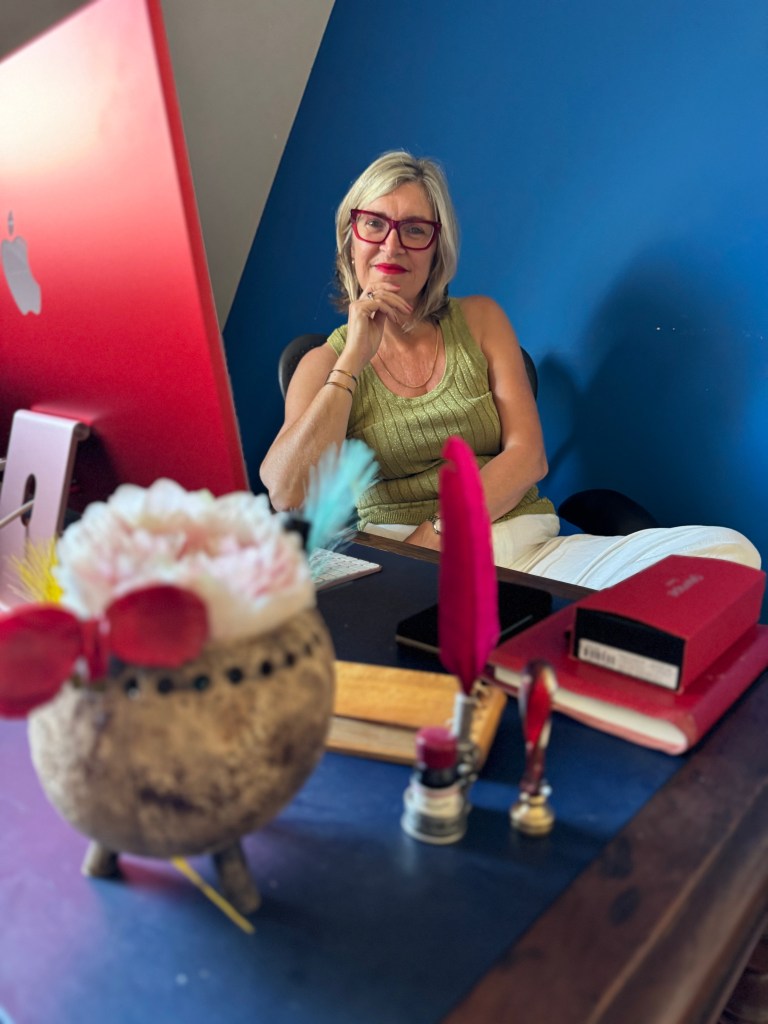
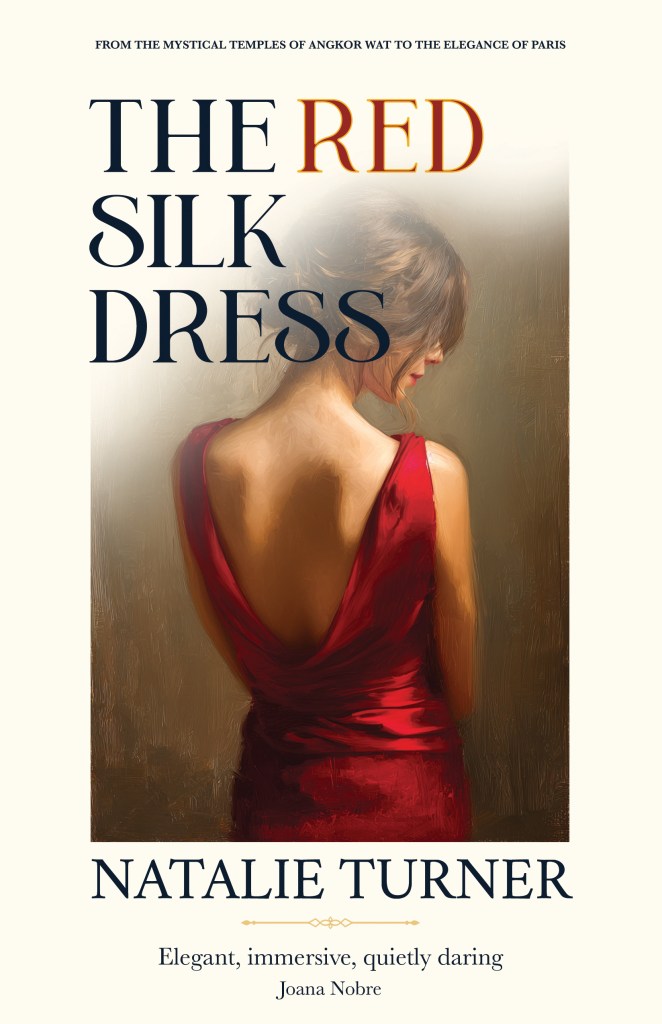
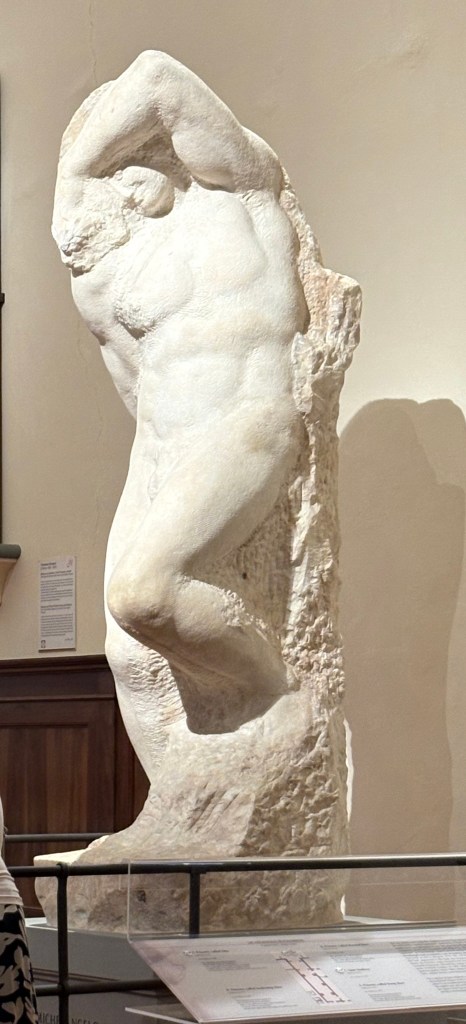
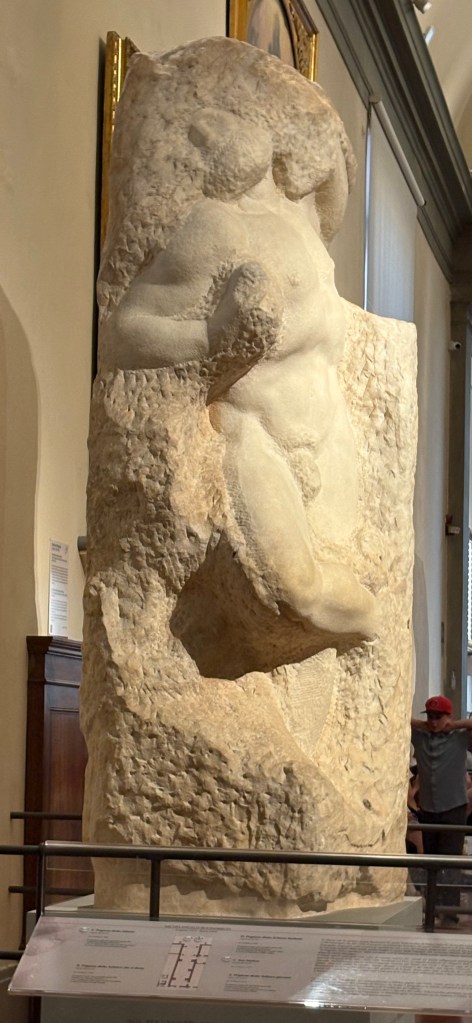
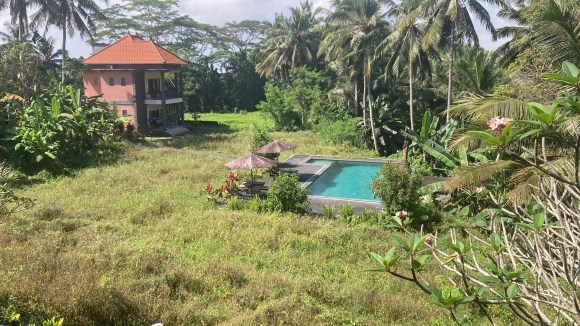
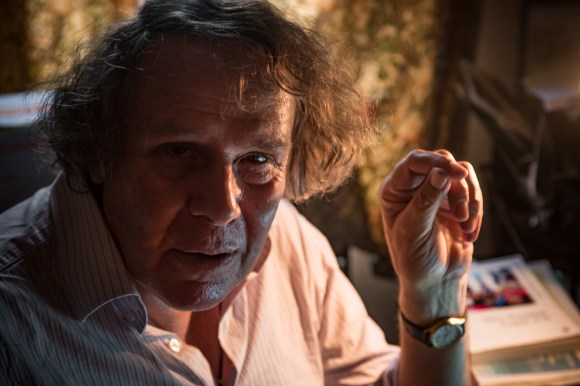
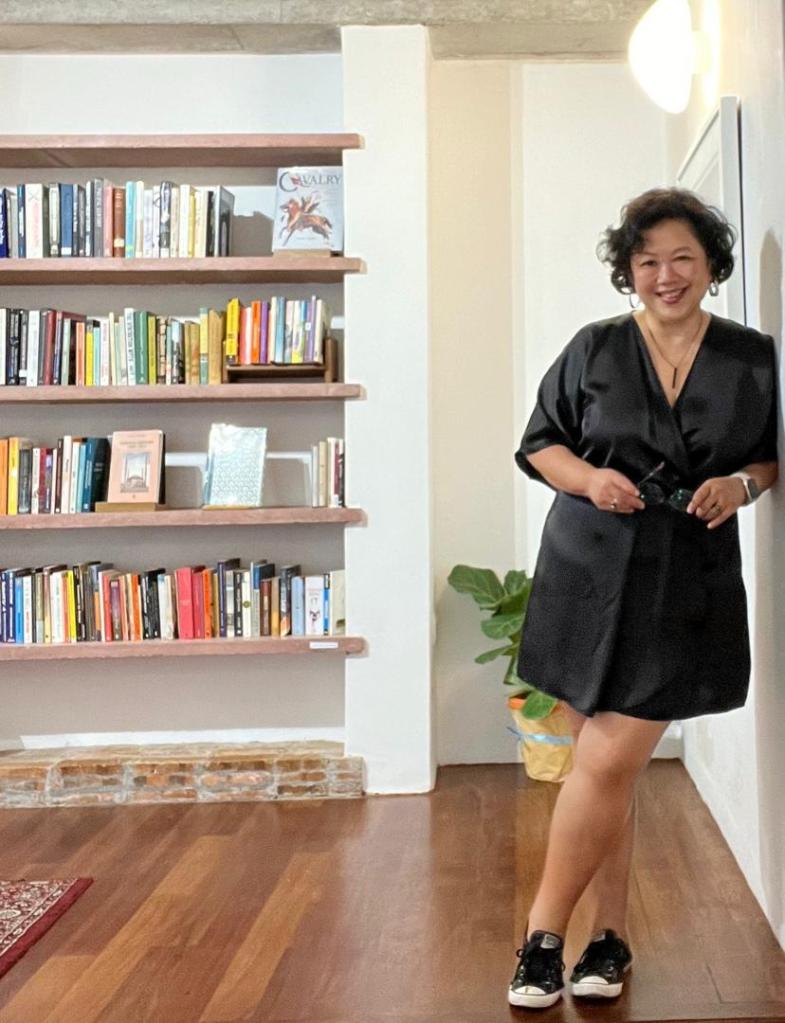
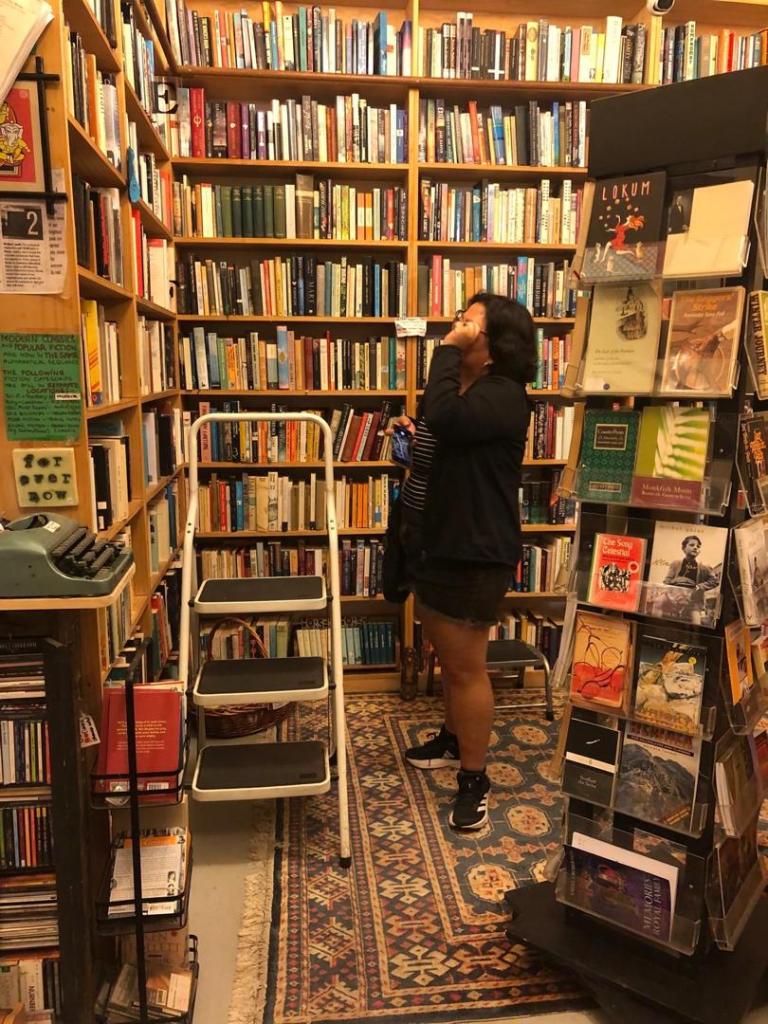
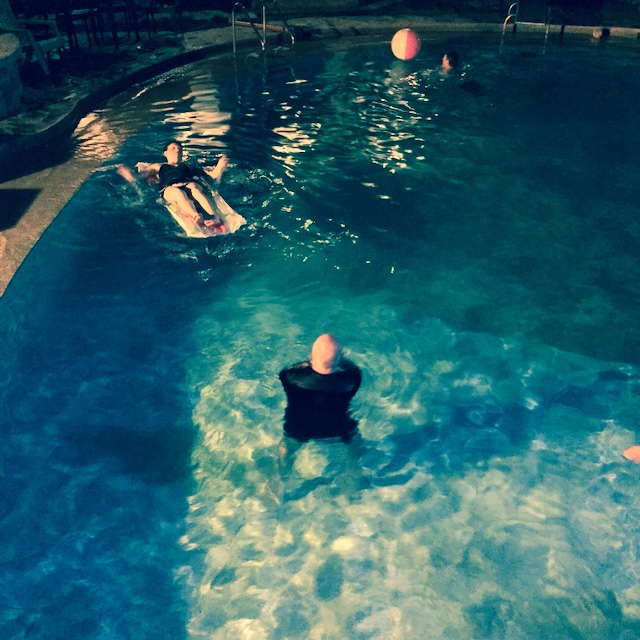
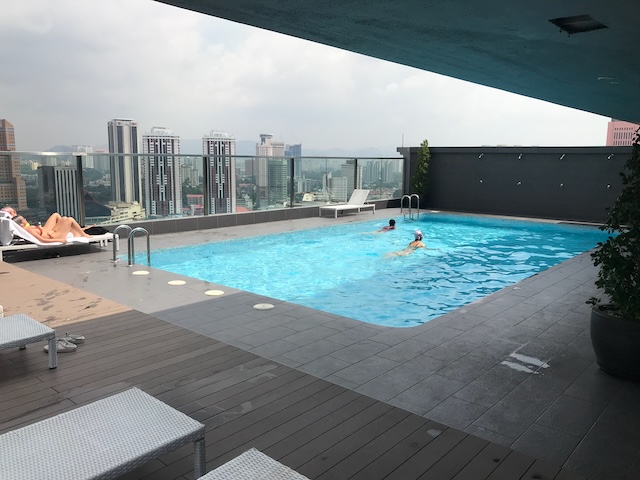
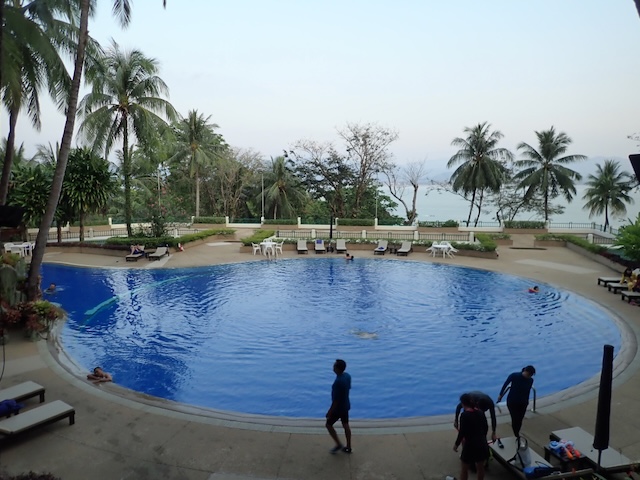




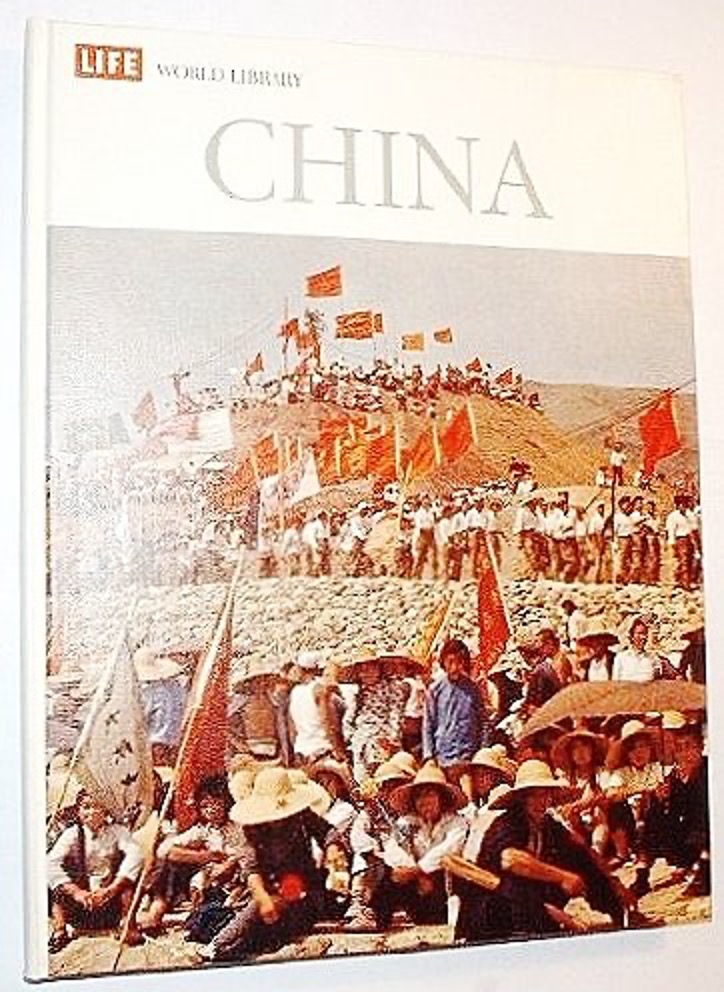
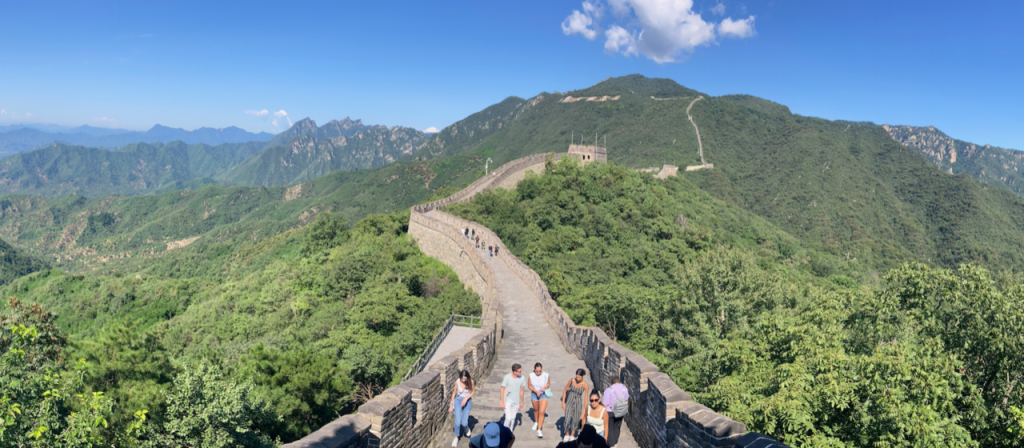
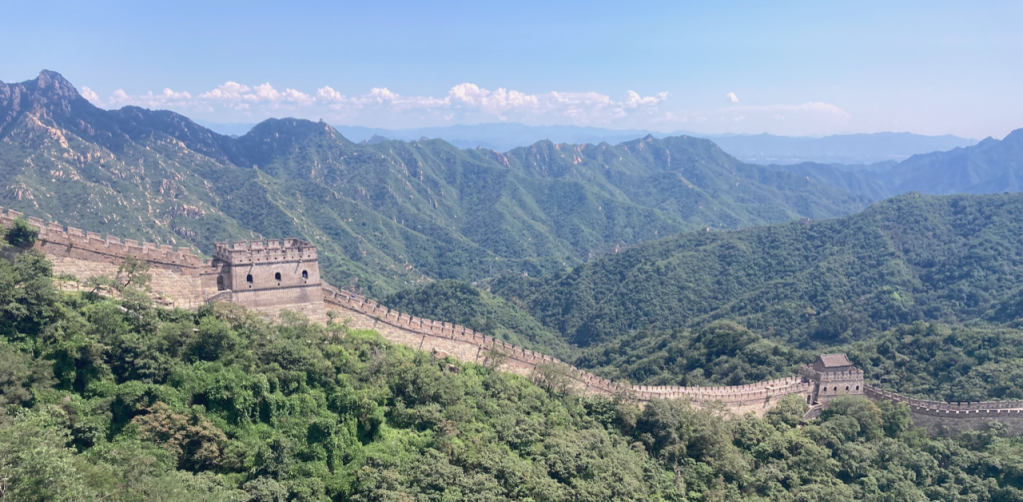
 Borderless