Categories
Editorial

Yesterday, Today & Tomorrow…

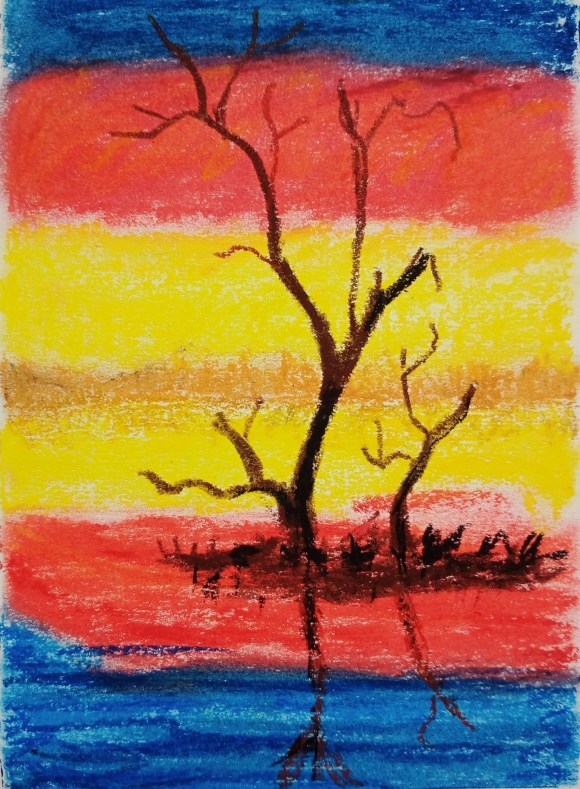
Art by Sohana Manzoor

In a world torn by conflict, why would one mention hope or compassion? In an age of dystopian scenarios, why would we dream of utopias?

Perhaps it’s wishful musings, but at some level what people need to survive is probably something to look forward to — a speck of light — a wishful idea called hope. Hope builds resilience. Utopias are built on hope, on love and compassion. Dystopias are built on desperation and despair. They take fear or horror to the extreme and play on people’s vulnerabilities. They might induce a cathartic effect and one might say— we are better off as we are in the present or we must act so that this never happens. Is that something we can really say in a world where wars are disrupting peace and lives of all humanity, where violence against civilians is becoming an accepted norm, where shortages could also be a reality for most of us? Utopias, on the other hand, build on the element of an ideal, a dream towards which we can move on the bleakest day of our existence. They could be used to stir hope and envision a reality devoid of violence. And perhaps, some of it would congeal into a real-world scenario with smaller doses of the bad and ugly.  In a conflict-ridden world, which almost feels like a reenactment of George Orwell’s 1984 (only about four and a half decades after his predicted date) what would touch your heart, give you a sense of relief— hope for a better future or dwelling on doomsday predictions? What would you want for your progeny?

Just before the pandemic changed our lives, a book was published where while questing for their own utopia, a group of young people became part of a dystopian reality. They were known as the ULFA rebels[1] and their story was told in Bulletproof: A Journalist’s Notebook on Reporting Conflict by Teresa Rehman. The current relevance of this book cannot be undermined because not only does it humanise the insurgents perspective, but it also shows how a centrist set up can neglect the needs of particular fringe communities. In addition, Rehman’s heartrending stories of poachers and people who live unaccepted in the margins only strengthen the need for an unboxed world where tolerance and compassion would transcend these artificially created fences that divide and lead to violence. This issue features Rehman’s book and an online discussion with her which stretches beyond the confines of pages.

Suggesting the same need to make sense in a world torn by violence and conflict is Snigdha Agrawal’s poem, ‘Inflation of Memory’.

Yesterday…
Life seemed well-orchestrated…

Today…
In an astonishing volte-face,
Markets are down.
People are finding it hard
to make both ends meet…


Tomorrow…
Perhaps we’ll download hope in an update…
And we’ll stand in queues again,
this time for optimism…

In our poetry section, we have variety with writings from across the world with Luis Cuauhtémoc Berriozábal, A Jessie Michael, Brenton Booth, Momina Raza, Pete Peterson, Mitra Samal, Ron Pickett, Anjana Vipin Edakkunny, John Swain, Prithvijeet Sinha and Md Mujib Ullah. Ryan Quinn Flanagan brings art into play in his poem.  Keith Lyons has surprised us – not with non-fiction — but with a flavourful poem on autumn in New Zealand, which is about now. And Rhys Hughes has amazing poems which through humour make us reimagine effusions on flowers and ghosts in socks!

We have more poetry in our translations, some sombre and some funny. A Bengali poem written as a tribute by Nazrul on the death of his older friend, Rabindranath Tagore, has been rendered into English by Professor Fakrul Alam. To add a lighter touch, we have translated a fun-filled poem by Tagore. Isa Kamari continues to translate his own Malay poems to bring in flavours of the culture. This time his poems seem to urge a need to transcend age-old stratifications. We also have a Balochi human-interest story by Younus Hussain brought to us in English by Fazal Baloch.

Hughes’ column too has fiction. His humorous and absurdist fables continue to urge re-evaluation of the world as well as genres. We also have a poignant narrative built around a Vietnamese migrant family by Mario Fenech. Sayan Sarkar shares a tale upending norms set in Kolkata while Naramsetti Umamaheswararao narrates a story about a young boy overcoming his fears. Abhik Ganguly gives us a strange fiction set in the future in a different galaxy, where Earth is seen as the original planet of human evolution.

C Christine Fair, who is an established translator, has surprised us — like Lyons — this time with a personal memoir which dwells on the deeply annihilating impact of norms that define gender roles. Upending the idea of an immutable ruler who can overpower us, is an essay by Ravi Varmman K Kanniappan with its roots in the ruins Rameses II — known as Ozymandias too — and Shelley’s poem of the same name.

We have had an overflow of writing about the unusual and redefining norms in our non-fiction section. Odbayar Dorj weaves an unusual narrative and shares photographs from a village of scarecrows in Japan that has a population of 27 humans and 370 scarecrows. She tells us: “In a place where people and scarecrows live side by side, I began to understand something simple but profound: sometimes, when human presence fades, we find our own ways to fill the silence with memories, imagination, and love.” Humanity never ceases to hope. Filling in silences are narratives by Arathi Devandran and Mubida Rohman on how they deal with the quietness left by departed loved ones.

We have more from Meredith Stephens with photographs by Alan Noble on their trip to Vietnam — as they travel to places that are less touristy while Gower Bhat explores the Sunday Book Bazaar at Old Delhi. Farouk Gulsara travels back to Penang where he spent his childhood and reflects on changes. Are they always for the best?

Suzanne Kamata takes up changes with a soupçon of humour as she writes of how the AI finally conceded to her husband, “Your wife is not wrong…” while Jun A. Alindogan writes of how social media can create mayhem if misused to spread fake news. Devraj Singh Kalsi resorts to sardonic humour of a darker hue as he explores ways to make a living.

Gulsara has also explored Sam Dalrymple’s Shattered Lands: Five Partitions and the Making of Modern Asia which starts with the extent of the British Empire with its western-most point at Aden and stretching in the east to Burma. There was a period from 1839 to 1867, when it stretched from Aden to Singapore[2], which was a part of Malaya, leaving out Siam or Thailand which never succumbed to colonial rule. The book starts at a later date — 1928 — and talks of the piecing of the British Empire, with questionable stances taken by historically heroic figures, thus urging a critical relook at our own past — just over the last hundred years.

We run excerpts from Nirmala Thomas’s Snowed Under, translated from Malayalam by Radhika P Menon, a poignant story about battling cancer, and Nikhil Kulkarni’s My Summer of Cricket: Three Tests, One Fan and Decades of Stories.

Our reviews include Rakhi Dalal’s take on Maithreyi Karnoor’s rather unusual stories from Gooday Nagar. Bhaskar Parichha has wandered back to non-fiction with the late Kaukub Talat Quder Sajjad Ali Meerza’s Wajid Ali Shah: A Cultural and Literary Legacy, translated from Urdu by Talat Fatima, a history that makes us reassess views on the last of the Awadhi nawabs. Somdatta Mandal has also shares a discussion on Sushila Takbhaure’s My Shackled Life, translated from Hindi by Deeba Zafir and Preeti Dewan, a narrative that showcases the resilience of the author.

This issue could not have been put together without all our wonderful contributors. Heartfelt thanks for sharing your gems with us. Huge thanks to the Borderless team too who continue to support bringing in variety, colour and reinforcing our values. Much thanks to Sohana Manzoor for the fabulous cover art and to all those who share vibrant visuals with their writing. Many thanks to our readers too who make our efforts worthwhile. Do write in with your comments.

Look forward to greeting you all again next month!

Mitali Chakravarty,

borderlessjournal.com

[1] United Liberation Front of Asom

[2] Aden was brought under the British Raj in 1839 as part of Bombay Presidency. Singapore was part of the Bengal Presidency from 1830-1867.

CLICK HERE TO ACCESS THE CONTENTS FOR THE MAY 2026 ISSUE

.

READ THE LATEST UPDATES ON THE BORDERLESS ANTHOLOGIES BY CLICKING ON THIS LINK
Categories
Tribute

Into the Wilderness…

By Arathi Devandran

There is a particular irony in the kindness we reserve for the dead.

Take my mother’s family, for example. They save their best tenderness for those who are no longer around to receive it, with the weeping, the gathering, the annual prayers and the grand tombstones. When my grandmother, Aatha, was still alive, bedridden for years as dementia slowly took her away from the land of the living, she was largely left to the quiet, exhausted devotion of my aunt. The one child, out of the eight, who stayed. Many of them only really appeared to mourn Aatha with great feeling, when she was gone.

I have been trying to understand this for many years now. I think it has something to do with the fact that grief is legible. It has a script, a set of gestures, a social permission, while love, the daily unglamourous kind, does not. We do not have good language for tending to the difficult, complicated people in our lives while they are still here. We struggle to hold the simmering resentment that comes with prolonged caregiving and the guilt of watching death slowly reach for someone we love. We struggle, so we disassociate. And we wait. When they are gone, when they are finally dead, we feel freed to perform our feelings that we could not manage to express while it still mattered.

Aatha died on 2 October 2021. I was in the US, as were my parents, who had come to stay with me while my husband was away. At 6a.m. that morning, I stumbled out of bed to a strange wailing in the air. My little dog was whining frantically. In the living room, my mother lay sprawled on the couch, near catatonic, while my father was rubbing her back. Aatha has stopped breathing, my mother’s words were garbled. The paramedics have just arrived.

Soon after, when Aatha arrived at the hospital, they declared her dead. Months later, my aunt would tell me that she had intuited Aatha’s passing, long before the paramedics were called.

My mother fainted when she heard the news. My ears were roaring.

Things have to happen when people die – administrative things. And we were miles away from all of it, as Aatha and the rest of my mother’s family were in Singapore. The pandemic was still raging; international travel was complicated and limited. Returning travelers had to face stringent rules in Singapore; they would have to serve a ten-day quarantine on return, it would take my parents two days to get back to Singapore because of the time difference between the two countries, and the funeral had to happen soon because dead bodies cannot be preserved for too long.

In my ears, there was still that roaring, while I made phone calls, found out about provisions for compassionate travel, more phone calls to authorities both in the US and in Singapore. My grief, a balloon I swallowed while I dealt with wailing aunts, wailing uncles, wailing cousins. So much wailing, so much noise.

The balloon of sadness grew in me as I made the conscious decision not to return to Singapore for the funeral. I knew that if I did go back, that I would not have been given the space to grieve Aatha the way that I wanted to, befitting of the quality of love she had showered upon me most of my life.

The balloon grew even more as I sent my parents off at the airport and returned home.

Alone, it burst. The grief shrieked like a banshee. And with the grief, came anger.

Watching the funeral proceedings through a makeshift livestream, I watched my family gather and perform their grief. I wondered, where was all this familial love when she was alive? Where had the support been for her caretaking, which had fallen entirely on my aunt, who had given up so many daily luxuries so that she could be Aatha’s primary caretaker? The cousins and aunts and uncles now publicly lamenting this loss – where had they been during the years Aatha needed to be fed, to be held, to be simply know she was not forgotten?

This is the shape of so many families, I think. Not uniquely cruel or negligent but somehow trapped within this vicious nexus of selfishness and socio-cultural hierarchies that make it easier for people to show up for death than for life. We are taught the rituals of mourning. We are not taught, with anywhere near the same care, how to sit with the difficulty of loving someone whose needs are inconvenient, whose decline is unglamorous, or maybe whose complicated history with us makes the love feel tangled and hard.

Intergenerational relationships in particular seem to resist articulation. There is no vocabulary handed down for how to love an ageing parent when your relationship with them has always been fraught. There is no cultural script for how to be present for a grandmother who favoured the child that stole from her, or an uncle whose ego consumed the family’s peace for decades, or an aunt whose sacrifices everyone silently depended upon while loudly overlooking. The relationships are real and irreducible and often painful, and yet we are expected to show up at the funeral and weep as though none of that history exists. As though grief were simple. As though love ever is.

My extended family decided that Aatha should be buried. I raged about this too, from my solitude. Why bury her, when no one in the family goes to the cemetery? There were already three other graves, that of my grandfather, my eldest step-uncle, and my grand-aunt, that had been all but abandoned for thirty years. In all this time, the only people who had tended to those tombstones were my parents: two people, in their 70s, braving the heat and the mosquitoes and the long drives to the far ends of the island, quietly faithfully paying their respects. My mother has seven other siblings. The family in its totality numbers perhaps 50 or 60 people across four generations. And still: two people.

When they were debating the type of tombstone Aatha should have, the consensus was that it must be grand, majestic. I laughed until I cried.

For Aatha’s first death anniversary, my husband and I were in Singapore. I had just been diagnosed with cancer, and we had recently returned from the US to rebuild our life back home. It was the first time I visited Aatha’s grave. My heart was in pieces.

Yet, her death anniversary was celebrated with real joy – loudly, warmly, with food and people and in the way Aatha herself had lived her life: feeding people, showering uncomplicated love wherever she went.

I only wish we, all of us, had done more of this while she was still here to enjoy and understand it.

These days, my husband and I join my parents in grave sweeping. The total tally of the guardians of the tombstones has effectively doubled. We go many times a year, always with sweets and murukku and agarbathi and sambrani [1]and flowers and food. We clean out the weeds. We wash the gravestones with panneer[2]. We lay out the food on fresh banana leaves. We pray, we smile, we get bitten by mosquitoes. Sometimes, my aunt joins us, and we make a quiet outing of it afterwards.

Each visit to the cemetery, we see something beautiful: a wild boar’s eye winking from the undergrowth; a large eagle swooping silently overhead; a flower that has no business growing in a cemetery among the weeds, but there it is. Aatha was a naturalist, a woman with earth magic in her hands. I choose to believe these are her way of telling us she sees us. That she is happy.

I don’t have a clean resolution for any of this. I am still angry, in a low, intermittent way, at a family that did not know how to show up for someone until she was beyond receiving. I am still sad about the years my aunt spent largely alone in her devotion. I am still unsure what to do with the frustration I feel toward the people who loved her badly, because I know that love badly given, is still, often love. That families cannot be easily typecasted as villains, that we are often the by-product of inherited patterns we did not choose.

I will not be lying when I say that I am trying to let the anger go. I acknowledge the injustice of Aatha’s life and death, and then I try to release it into the wilderness. She was not an angry woman, for all the terrible things she witnessed and went through in her life. If her blood runs in my veins, then perhaps, slowly, so can her grace.

In the meantime, I try to practice what I think she was quietly modelling all along: to be kinder to the living than to the dead; to show up before it is too late; to say the things, do the things, cook the food and sit beside the person and make it to the thing, not because death is coming, but because life is already here.

[1] Murruku – snack

Agarbathi – Incense stick

Sambrani – aromatic resin

[2] Panneer – rose water

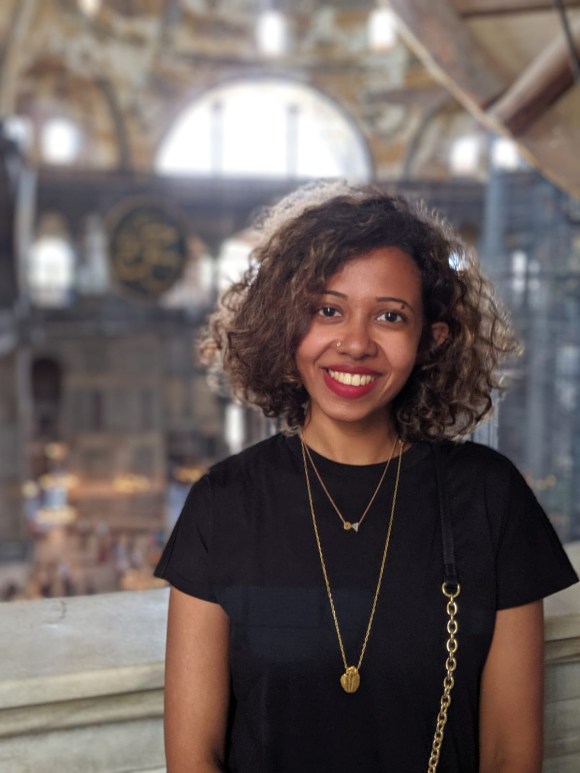
Arathi Devandran is a Singapore-based writer whose work explores identity, culture, and politics. Her writing has appeared in CNA, Singapore At Home: Life Across Lines, and RIC Journal, among others.  She is on substack at  https://abookotheheart.substack.com/ 

PLEASE NOTE: ARTICLES CAN ONLY BE REPRODUCED IN OTHER SITES WITH DUE ACKNOWLEDGEMENT TO BORDERLESS JOURNAL

Click here to access Wild Winds: The Borderless Anthology of Poems

Click here to access the Borderless anthology, Monalisa No Longer Smiles