Categories
Contents

Borderless, August 2025

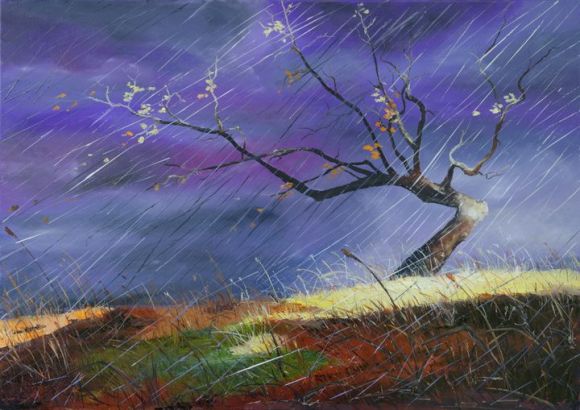
Art by Sohana Manzoor

Editorial

Storms that Rage… Click here to read.

Translations

Nazrul’s Jonomo, Jonomo Gelo (Generations passed) has been translated from Bengali by Professor Fakrul Alam. Click here to read and listen to a rendition by the famed Feroza Begum.

Ajit Cour‘s short story, Nandu, has been translated from Punjabi by C Christine Fair. Click here to read.

The Scarecrow by Anwar Sahib Khan has been translated from Balochi by Fazal Baloch. Click here to read.

Five poems by Aparna Mohanty have been translated from Odia by Snehprava Das. Click here to read.

Angshuman Kar has translated some of his own Bengali poems to English. Click here to read.

Sunflower, a poem by Ihlwha Choi,  has been translated from Korean by the poet himself. Click here to read.

Tagore’s Shaishabshanda (Childhood’s Dusk) has been translated from Bengali by Mitali Chakravarty. Click here to read.

Poetry

Click on the names to read the poems

Ron Pickett, Fakrul Alam, William Miller, Meetu Mishra, Heath Brougher, Laila Brahmbhatt, Luis Cuauhtémoc Berriozábal, Snigdha Agrawal, George Freek, Ashok Suri, Scott Thomas Outlar, Dustin P Brown, Rajorshi Patranabis, Ryan Quinn Flanagan

Poets, Poetry & Rhys Hughes

From the Vale of Glamorgan are two poems on the place where Rhys Hughes grew up. Click here to read.

Musings/Slices from Life

Menaced by a Marine Heatwave

Meredith Stephens writes of how global warming is impacting marine life in South Australia. Click here to read.

The Man from Pulwama

Gowher Bhat introduces us to a common man who is just kind. Click here to read.

More than Words

Jun A. Alindogan writes on his penchant for hardcopy mail. Click here to read.

To Bid or Not to Bid… the Final Goodbye?

Ratnottama Sengupta ponders on Assisted Dying. Click here to read.

Musings of a Copywriter

In Syrupy Woes, Devraj Singh Kalsi looks at syrupy health antidotes with a pinch of humour. Click here to read.

Essays

‘Verify You Are Human’

Farouk Gulsara ponders over the ‘intelligence’ of AI and humans. Click here to read.

Does the First Woman-authored Novel in Bengali Seek Reforms?

Meenakshi Malhotra explores Somdatta Mandal’s translation of Manottama, the first woman-authored Bengali novel published in 1868. Click here to read.

Bhaskar’s Corner

In Bidyut Prabha Devi – The First Feminist Odia Poet, Bhaskar Parichha pays a tribute to the poet. Click here to read.

Stories

The Sixth Man

C. J. Anderson-Wu tells a story around disappearances during Taiwan’s White terror. Click here to read.

I Am Not My Mother

Gigi Baldovino Gosnell gives a story of child abuse set in Philippines where the victim towers with resilience. Click here to read.

The Archiver of Shadows

Hema R explores shadows in her story set in Chennai. Click here to read.

Ali the Dervish

Paul Mirabile weaves the strange adventures of a man who called himself Ali. Click here to read.

The Gift

Naramsetti Umamaheswararao moulds children’s perspectives. Click here to read.

Notes from Japan

In American Wife, Suzanne Kamata gives a short story set set in the Obon festival in Japan. Click here to read.

Conversation

Neeman Sobhan, author of Abiding City: Ruminations from Rome, discusses shuttling between multiple cultures and finding her identity in words. Click here to road.

Book Excerpts

An excerpt from M.A.Aldrich’s From Rasa to Lhasa: The Sacred Center of the Mandala. Click here to read.

An excerpt from Neeman Sobhan’s An Abiding City: Ruminations from Rome. Click here to read.

Book Reviews

Somdatta Mandal reviews Chhimi Tenduf-La’s A Hiding to Nothing. Click here to read it.

Madhuri Kankipati reviews O Jungio’s The Kite of Farewells: Stories from Nagaland. Click here to read.

Bhaskar Parichha reviews Snehaprava Das’s Keep it Secret: Stories. Click here to read.

.

Click here to access the Borderless anthology, Monalisa No Longer Smiles

Click here to access Monalisa No Longer Smiles on Amazon International

Categories
Editorial

Storms that Rage

Storm in purple by Arina Tcherem. From Public Domain

If we take a look at our civilisation, there are multiple kinds of storms that threaten to annihilate our way of life and our own existence as we know it. The Earth and the human world face twin threats presented by climate change and wars. While on screen, we watch Gaza and Ukraine being sharded out of life by human-made conflicts over constructs made by our own ‘civilisations’, we also see many of the cities and humankind ravaged by floods, fires, rising sea levels and global warming. Along with that come divides created by economics and technology. Many of these themes reverberate in this month’s issue.

From South Australia, Meredith Stephens writes of marine life dying due to algal growth caused by rising water temperatures in the oceans — impact of global warming. She has even seen a dead dolphin and a variety of fishes swept up on the beach, victims of the toxins that make the ocean unfriendly for current marine life. One wonders how much we will be impacted by such changes! And then there is technology and the chatbot taking over normal human interactions as described by Farouk Gulsara. Is that good for us? If we perhaps stop letting technology take over lives as Gulsara and Jun A. Alindogan have contended, it might help us interact to find indigenous solutions, which could impact the larger framework of our planet. Alindogan has also pointed out the technological divide in Philippines, where some areas get intermittent or no electricity. And that is a truth worldwide — lack of basic resources and this technological divide.

On the affluent side of such divides are moving to a new planet, discussions on immortality — Amortals[1] by Harari’s definition, life and death by euthanasia. Ratnottama Sengupta brings to us a discussion on death by choice — a privilege of the wealthy who pay to die painlessly. The discussion on whether people can afford to live or die by choice lies on the side of the divide where basic needs are not an issue, where homes have not been destroyed by bombs and where starvation is a myth, where climate change is not wrecking villages with cloudbursts.  In Kashmir, we can find a world where many issues exist and violences are a way of life. In the midst of such darkness, a bit of kindness and more human interactions as described by Gower Bhat in ‘The Man from Pulwama’ goes some way in alleviating suffering. Perhaps, we can take a page of the life of such a man. In the middle of all the raging storms, Devraj Singh Kalsi brings in a bit of humour or rather irony with his strange piece on his penchant for syrups, a little island removed from conflicts which seem to rage through this edition though it does raise concerns that affect our well-being.

The focus of our essays pause on women writers too. Meenakshi Malhotra ponders on Manottama (1868), the first woman-authored novel in Bengali translated by Somdatta Mandal whereas Bhaskar Parichha writes on the first feminist Odia poet, Bidyut Prabha Devi.

Parichha has also reviewed a book by another contemporary Odia woman author, Snehaprava Das. The collection of short stories is called Keep it Secret. Madhuri Kankipati has discussed O Jungio’s The Kite of Farewells: Stories from Nagaland and Somdatta Mandal has written about Chhimi Tenduf-La’s A Hiding to Nothing, a novel by a global Tibetan living in Sri Lanka with the narrative between various countries. We have an interview with a global nomad too, Neeman Sobhan, who finds words help her override borders. In her musing on Ostia Antica, a historic seaside outside Rome, Sobhan mentions how the town was abandoned because of the onset of anopheles mosquitos. Will our cities also get impacted in similar ways because of the onset of global ravages induced by climate change? This musing can be found as a book excerpt from Abiding City: Ruminations from Rome, her book on her life as a global nomad. The other book excerpt is by a well-known writer who has also lived far from where he was born, MA Aldrich. His book, From Rasa to Lhasa: The Sacred Center of the Mandala is said to be “A sweeping, magnificent biography—which combines historical research, travel-writing and discussion of religion and everyday culture—Old Lhasa is the most comprehensive account of the fabled city ever written in English.”

With that, we come to our fiction section. This time we truly have stories from around the globe with Suzanne Kamata sending a story set in the Bon festival that’s being celebrated in Japan this week for her column. From there, we move to Taiwan with C. J. Anderson-Wu’s narrative reflecting disappearances during the White Terror (1947-1987), a frightening period for people stretched across almost four decades.  Gigi Gosnell writes of the horrific abuse faced by a young Filipino girl as the mother works as a domestic helper in Dubai. Paul Mirabile gives us a cross-cultural narrative about a British who opts to become a dervish. While Hema R touches on women’s issues from within India, Sahitya Akademi Award Winner, Naramsetti Umamaheshwararao, writes a story about children.

We have a powerful Punjabi story by Ajit Cour translated by C.Christine Fair. Our translations host two contemporary poets who have rendered their own poems to English: Angshuman Kar, from Bengali and Ihlwha Choi, from Korean. Snehaprava Das has brought to us poetry from Odia by Aparna Mohanty. Fazal Baloch has translated ‘The Scarecrow’, a powerful Balochi poem by Anwar Sahib Khan. While Tagore’s Shaishabshandha (Childhood’s Dusk) has been rendered to English, Nazrul’s song questing for hope across ages has been brought to us by Professor Fakrul Alam.

Professor Alam has surprised us with his own poem too this time. In August’s poetry selection, Ron Pickett again addresses issues around climate change as does Meetu Mishra about rising temperatures. We have variety and colour brought in by George Freek, Heath Brougher, Laila Brahmbhatt, Luis Cuauhtémoc Berriozábal, Snigdha Agrawal, William Miller, Ashok Suri, Scott Thomas Outlar, Dustin P Brown, and Ryan Quinn Flanagan. Rajorshi Patranabis weaves Wiccan lore of light and dark, death and life into his delicately poised poetry. Rhys Hughes has also dwelt on life and death in this issue. He has shared poems on Wales, where he grew up— beautiful gentle lines.

 In spring warm rain will crack
the seeds of life: tangled
roots will grow free again.

('Tinkinswood Burial Chamber' by Rhys Hughes)

With such hope growing out of a neolithic burial chamber, maybe there is hope for life to survive despite all the bleakness we see around us. Maybe, with a touch of magic and a sprinkle of realism – our sense of hope, faith and our ability to adapt to changes, we will survive for yet another millennia.

We wind up our content for the August issue with the eternal bait for our species — hope. Huge thanks to the fantastic team at Borderless and to all our wonderful writers. Truly grateful to Sohana Manzoor for her artwork and many thanks to all our wonderful readers for their time…

We wish you all a wonderful reading experience!

Gratefully,

Mitali Chakravarty.

borderlessjournal.com

[1] Homo Deus: A Brief History of Tomorrow (2015) by Yuval Noah Harari

.

Click  here to access the contents for the August 2025 Issue

.

READ THE LATEST UPDATES ON THE FIRST BORDERLESS ANTHOLOGY, MONALISA NO LONGER SMILES, BY CLICKING ON THIS LINK.

Categories
Stories

Nandu by Ajit Cour

Translated from Punjabi by C. Christine Fair

His name was “Nandu”.  He was a servant in our neighbour’s house, where he did all of the household chores. He was a smallish boy. Who knows what his actual name was. Everyone just called him Nandu.

Sometimes he would finish his work in the afternoon and would come sit with me. Although he was from Garhwal, he spoke Punjabi well, albeit haltingly. His face always made it appear as though he were laughing. We gave him the nickname “Laughing Man.”

“Nandu, how many brothers and sisters do you have?”

“Four sisters and three brothers. All of the sisters are older than I am, and the brothers are younger.”

Then Nandu fell silent. It was as if he were thinking that if his brothers were older, they would be working, and Nandu would not have cuts on his hands from washing vessels all day at such a young age. Nor would he have been forced to leave his small house nestled in the mountains.

“Nandu, how did you manage to leave your parents and everyone else to come here?”

Then he smiled, and his lips spread out.  “Who knows why?” he smiled, but it seemed as if the smile was trying to convince me that it doesn’t matter whether you want to or don’t want to do all of this work, you still have to do it. Right?

“Madam, back there, we barely eat twice a day. We cooked once a day, and we ate the leftovers for a second meal. Moreover, I was not free there at all. I would take the cows outside for grazing. I also bathed them sometimes. I would also feed them fodder. When my mother would milk the cows, I wanted to drink the milk fresh from the bucket. But madam…if we don’t sell the milk, then maybe we won’t even be able to cook one meal.

“And there, people must have their own lands?”

“What kind of lands, Madam? Just small parcels. And then you have to pay land tax and interest on the loan.”

When Nandu spoke like this, it seemed to me that this child was a fifty-year-old man. Yet he was hardly thirteen years old. He was eight or nine when he ran away from his village to come here.  Perhaps, he couldn’t tolerate hunger. There had been a time when he had been self-respecting. He would go on saying, “Where I used to work before, the old woman was angry with me one day. And I left.”

I was astonished that now he is verbally abused all day long, but he has gone nowhere. The reason may be that he had grown accustomed to it.

Nandu only spoke Punjabi. He would say that he had forgotten Garhwali. And he never posted letters to his family.  He would say that he only knew his father’s name and the name of his village. Nothing else. And the villages in Garhwal had such long addresses. Sometimes he would become very sad thinking of his mother and father. Once, I saw him outside, wiping his eyes with his dirty Ludhiana shirt. But usually, he would try to hide his pain in a smile from which his broad lips would stretch wide. He said carelessly, “According to them, I died long ago.”

Our neighbors were Sikhs. And Nandu bought a gutka[1] with his salary, even though he was completely illiterate. (He only took that part of his salary that he needed for necessities.)  He also bought a picture of Guru Gobind Singh Ji and wrapped it in his spare shirt to keep it safe. When the shirt he is wearing gets dirty, he washes it, wraps the picture of Guru Gobind Singh in it, and wears the other shirt.

Over time, he began imitating the children of his boss, a Sikh man, and began wearing a turban. He also got the worn-out turban of his boss’s youngest son. For two annas, he bought some grey dye and dyed the turban. He also acquired a small kirpan[2], which he did not remove while bathing or sleeping. He went from Nandu to Nand Singh.

One time, a man from his village came to find him.

“Does someone by the name of Nandu live here?
“There’s no one here by that time. You’ve come here by mistake,” Nandu said with deliberation. He was already afraid that if some man from the village recognised him, he would have to send money home. And maybe he would have to return to that place, where, after caring for the cows all day, he got only one meal, and for the second meal, he was given dried pieces of roti. Here, he could satisfy his hunger at least twice a day. He didn’t need to worry a bit about work. And what about scolding and abuse? Ultimately, a person learns to tolerate these things.

Even though Nandu’s face had completely changed, seeing his wide laughing lips, the man from his village recognised him. He said something to Nandu in Garhwali. Nandu began to say somewhat angrily, “I don’t understand what you are saying. Don’t talk nonsense. Speak correctly.”

And the next day in the afternoon, when he told me that he no longer understood Garhwali, I suddenly let out a sigh. Maybe I sighed because Nandu had forgotten his mother tongue, which must have been the first words he heard when God threw him on this planet, thinking him to be disposable.

“What did he say to you, Nandu?”

“Nothing. He said only that ‘your mother is missing you a lot.’ But I know no one is crying for me. She must be thankful that there is one less hungry mouth to feed. She used to always say to me, ‘May you die.’”

But that man from Nandu’s village kept coming around. Over time, Nandu’s heart softened. Nandu remembered his mother, he remembered his elderly father, who must no longer be able to work the fields. And Nandu remembered his small, dirt shack, whose outside wall was plastered with rocks. The fragrance of fresh soil and paste made of cow dung and mud floated to his mind. And now Nandu was constantly sad. In the end, he was still a child, all of thirteen years old.

Then one day, who knows what happened, but cysts appeared near his ear. The boss, the Sikh, was charry of the illness, thinking no one would keep a sick man in his house. He tossed Nandu out. While leaving, Nandu cried copiously! He gave me the gutka and the picture of Guru Gobind Singh. He was going back to his village.  He said he would take them back when he returned from his village.

So much time had passed without hearing from him. On several occasions, my eyes would well up looking at his things. Poor Nandu.

Then one day, there was a knock at my door. It was the afternoon. I opened the door. A smallish boy was standing there wearing a dirty hat and a filthy shirt, and in his hands was a smallish bundle. I thought someone must have come to meet our servant. But seeing those wide lips smiling in his laughter, I immediately recognised him. It was him. Nandu.

Nandu had cut his long hair. Now his name was Anand Ram. I asked him how he was doing and gave him some water. He spoke haltingly. While speaking, he said some words that I had difficulty understanding. In the end, embarrassed, he began to explain that due to living in his village, it was hard for him not to speak Garhwali. In the end, he was still Nandu, who had come to me in the afternoon and to tell me all of his sorrows.

“Your things are still with me, Nandu.”

“You keep them.” It seemed as if words were not coming to him. He didn’t know what to say, “I have another photo.” He began to open his bundle. There were a few pieces of clothing from which Nandu withdrew a picture. It was a picture of Lord Krishna.

I kept on thinking that hunger knows no religion. Wherever one gets food, one adopts that religion and that language.  Then what is the essence of a person? A cog that has to fit into every machine because a cog outside of a machine doesn’t get oil, and it becomes rusty. And Nandu? What was Nandu? A thing without life? He was a ball rolling down the mountainside, which, moving very quickly down the hill, would get stuck on a rock momentarily, then again begin rolling. Maybe Nandu was like that same wind-up doll that my little brother has. The only difference is that the wind-up doll is fat, whereas every one of Nandu’s ribs could be counted.

After two years, Nandu came yesterday. There was barely any difference in his build. I recognised him immediately. But he could not recognise my little brother. In those two years, he had grown a lot. The wheels of time leave different marks on different people.

Now Nandu spoke Hindi. He spoke some words very quickly, which I had difficulty understanding.

“So Nandu, where are you these days?”

“I’m working for a woman from Madras. She’s terrible. She harasses me a lot. Otherwise, everything is fine. Initially, I couldn’t eat their food, but now I can.”

Then I thought he was doing this just to keep his belly full, just like sparrows and crows who eat to keep their bellies full. Just like wild dogs roaming the streets to fill their bellies. What is a meal? Whatever you get, you eat, whether it’s leftover food or something else. Something just to fill one’s stomach. But to feed himself, one has to sell himself.

I had thought that Nandu had sometimes become Nand Singh and sometimes Anand Ram. There was a time when he kept a picture of Guru Gobind and a gutka. Now he keeps a picture of Krishna. Sometimes he spoke Garhwali, sometimes Punjabi, and now Hindi. But Nandu kept on washing dishes. Nandu kept on sweeping. He kept on washing clothes. He went on cooking.  And he continued to be scolded. Still, he’s a child. Poor Nandu!

“Sister, are you still writing stories?”

“Yes, Nandu. I’m writing now.”

“And you were saying that you were going to write my story?”

I smiled. Feeling demoralized, he began to ask, “But who will read it?”

Then it occurred to me that Nandu couldnot read his story himself, but many others would read it.

“Nandu, the people of future generations will read about Nandu and thousands of Nandus, just like the Bible.  And these stories will be worshiped just like you worship these pictures. Because you all strengthen the foundations of the new world.”

Who knows whether he understood what I was saying, but he smiled.

[1] A quid of betel and tobacco

[2] Small dagger, a ritualistic thing carried by Sikh men

Ajit Cour

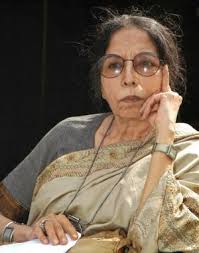
Ajeet Cour (born 1934) is an Indian writer who writes in Punjabi. She is a recipient of the Sahitya Akademi Award and the Padma Shri, the fourth-highest civilian award by the Government of India. She is the author of twenty-two books, including novels, novellas, short stories, biographical sketches, and translations. Her novellas include Dhup Wala Shehar (The town with Sunshine) and Post Mortem. Her novel, Gauri, was made into a film, while her short story Na Maaro (Don’t Beat) was serialised for television. Her works have been translated into English, Hindi, and several other languages.

C. Christine Fair (born 1968) did her Ph.D. in South Asian Languages and Civilizations at the University of Chicago. She is currently a professor of Security Studies at Georgetown University. Her translations have appeared in Muse India, Orientalia Suecana, The Bangalore Review, Borderless, The Punch Magazine, The Bombay Literary Magazine, and The Bombay Review.

Categories
Contents

Borderless, January 2024

Art by Sohana Manzoor

Editorial

Imagine all the People, Sharing All the World’Click here to read

Conversations

Interviewing Bulbul: Remembering Mrinal SenRatnottama Sengupta introduces Bulbul Sharma to converse with her on Mrinal Sen, the legendary filmmaker, reflecting on Bulbul Sharma’s experience as an actress in his film, Interview. Click here to read.

In conversation with Gajra Kottary, eminent screenplay writer, and a brief introduction to her recent book of short stories, Autumn Blossoms. Click here to read.

Translations

Nazrul’s poem, Samya or Equality, has been translated from Bengali by Niaz Zaman. Click here to read.

Masud Khan’s Fire Engine has been translated from Bengali by Fakrul Alam. Click here to read.

Short Poems by Mulla Fazul have been translated from Balochi by Fazal Baloch. Click here to read.

Disaster Alert by Ihlwha Choi has been translated from Korean by the poet himself. Click here to read.

Prarthona or Prayer by Rabindranath Tagore has been translated from Bengali by Mitali Chakravarty. Click here to read.

Poetry

Click on the names to read the poems

Radha Chakravarty, David Skelly Langen, Urmi Chakravorty, Avantika Vijay Singh, JM Huck, Isha Sharma, Stuart McFarlane, Saranyan BV, Ron Pickett, Mereena Eappen, Ahmad Al-Khatat, Ganesh Puthur, George Freek, Rhys Hughes

Poets, Poetry & Rhys Hughes

In Some Differences Between India and Sri Lanka, Rhys Hughes relates his perceptions of the two countries with a pinch of humour. Click here to read.

Musings/Slices from Life

When the Cobra Came Home

Antara Mukherjee nostalgically recalls her past and weaves it into the present. Click here to read.

The Old Man

Munaj Gul Muhammad describes his encounter with an old Balochi man. Click here to read.

Corner

Anita Sudhakaran muses on the need for a quiet corner. Click here to read.

Musings of a Copywriter

In Taking Stock…Finally, Devraj Singh Kalsi writes of stocks that defy the laws of gravity. Click here to read.

Notes from Japan

In A Sombre Start, Suzanne Kamata talks of the twin disasters in Japan. Click here to read.

Essays

Abol Tabol: No Nonsense Verses of Sukumar Ray

Ratnottama Sengupta relives the fascination of Sukumar Ray’s Abol Tabol, which has  just completed its centenary. Click here to read.

Peeking at Beijing: Fringe-dwellers and Getting Centred

Keith Lyons shares the concluding episode of his trip to Beijing. Click here to read.

Stories

The Gift

Rebecca Klassen shares a sensitive story about a child and an oak tree. Click here to read.

Healing in the Land of the Free

Ravi Shankar gives the story of a Nepali migrant. Click here to read.

Pigeons & People

Srinivasan R explores human nature. Click here to read.

Phôs and Ombra

Paul Mirabile weaves a dark tale about two people lost in a void. Click here to read.

Book Excerpts

An excerpt from Srijato’s A House of Rain and Snow, translated from Bengali by Maharghya Chakraborty. Click here to read.

An excerpt from The Kidnapping of Mark Twain: A Bombay Mystery by Anuradha Kumar. Click here to read.

Book Reviews

Somdatta Mandal reviews Sudha Murty’s Common Yet Uncommon: 14 Memorable Stories from Daily Life. Click here to read.

Meenakshi Malhotra reviews Rhys Hughes’ The Coffee Rubaiyat. Click here to read.

Rakhi Dalal reviews Ajit Cour’s Life Was Here Somewhere, translated by Ajeet Cour and Minoo Minocha. Click here to read.

Bhaskar Parichha reviews Scott Ezell’s Journey to the End of the Empire: In China Along the Edge of Tibet. Click here to read.

.

Click here to access the Borderless anthology, Monalisa No Longer Smiles

Click here to access Monalisa No Longer Smiles on Kindle Amazon International