Categories
Interview

Where the Whole World Meets in a Single Nest

In Conversation with Somdatta Mandal
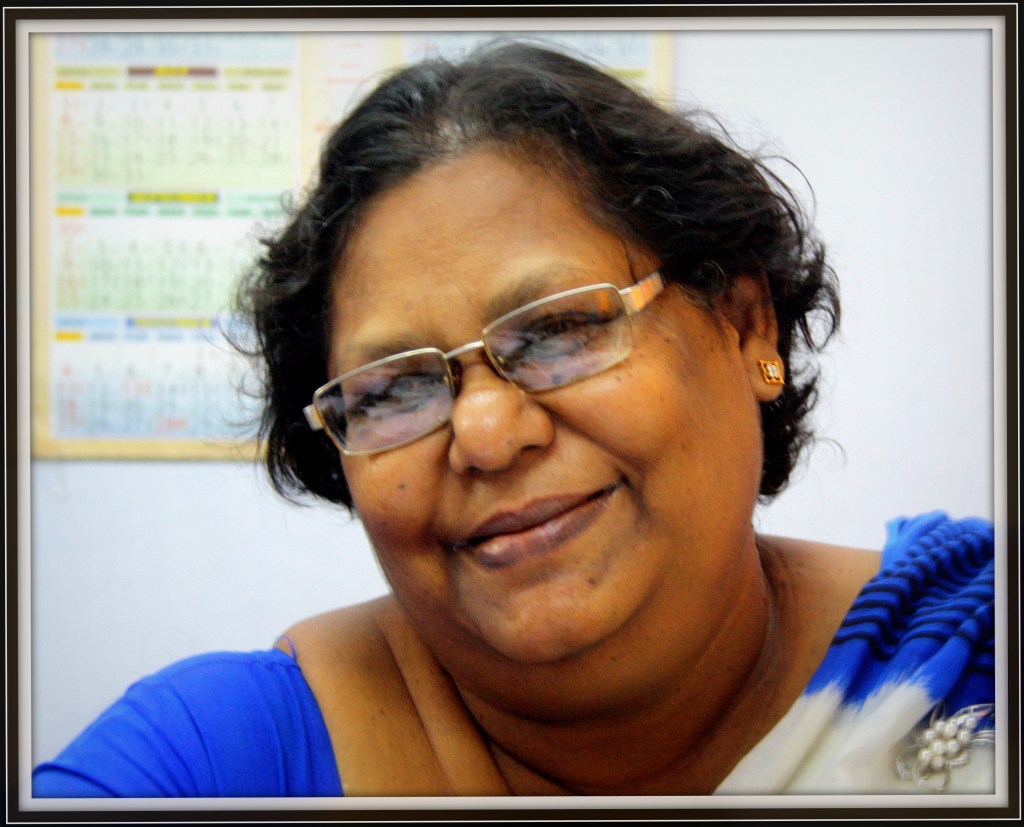
Professor Somdatta Mandal

Somdatta Mandal, an eminent academic, has translated so many books and writers that it is difficult to pin her down as a doyen of one great. Her extensive work amazes with its variety intercepted with humour. Reading through her translations, Nirmalakumari’s account of how Tagore was manipulated by Mussolini, is like comprehending and living through history. It adheres and makes an impact to lead to the realisation that history is often repeated, only the cast of characters and locations change. That Tagore could put that behind him and rise above this incident (hyped by the media then) to connect with his vision reflected not just in his writings but also in the institution (Santiniketan) he created and which he reached out for help to keep intact. All this is brought home to us through just one of Mandal’s many translations, Kobi and Rani.
She talks more of her extensive findings while translating and experiencing the world from writings across the ages. She reflects on how Tagore’s vision for Santiniketan remains to be yet realised. Her answers showcase a scholar who shines in any setting not just with reflected light of others she translates but with her own inner convictions laced with a rare sense of humour. She has much to say and share in this extensive interview. We are happy to project her voice to you.

You were teaching in Santiniketan. Tell us a bit about the legendary university. How is it different from others? Has it lived up to what the Kobiguru visualised?

I retired from Visva-Bharati two years ago after teaching in the English Department there for about eighteen years. My area of specialization has been American Literature, Film and Culture Studies and Diaspora Literature. I started teaching in Santiniketan initially thinking of it as a new job at a university, but soon realised that away from the cacophony of life in Kolkata where I was born and bred, working and living all that while, the place would gradually exert its own idyllic charm upon me. Now in my retirement I want to live there in peace and use the place as a writer’s retreat. In spite of being in the news at present for all the wrong reasons, Santiniketan has its own charm, lifestyle and culture that grows within you and cannot be imposed from outside.

I think most people know, but nevertheless let me reiterate a few facts about Santiniketan. Kobiguru had visualized the institution to be different from other standard ones so that away from rote learning methods, students could imbibe the fresh ambience of studying in the lap of nature. As publicity pictures still project it, the classes in the school section are still held open air under the trees, but the university section is similar to other standard institutions.

In fact, ever since Visva-Bharati was established in 1921, it was considered to be a special place of learning inviting teachers and students from all over the world. The poet selected for its motto an ancient Sanskrit verse, Yatra visvam bhavatieka nidam, which means, ‘where the whole world meets in a single nest’.“Visva-Bharati,” he declared, ” represents India where she has her wealth of mind which is for all. Visva-Bharati acknowledges India’s obligation to offer to others the hospitality of her best culture and India’s right to accept from others their best.” The institution has excelled in areas of fine arts, singing, painting, dance, different Indian and foreign languages, and especially in the idea of rural reconstruction.

Tagore laid great emphasis on universal humanism, internationalism and trans-culturalism. He sought a positive outcome from the East-West encounters. This syncretic culture imbues the vast oeuvre of his work: it has propelled his activism and lives in his pragmatic projects today. His vision was to ultimately strengthen the fundamental conditions of world peace through the establishment of free communication of ideas between the two hemispheres.

Since 1951, when Visva-Bharati was considered as an institution of special eminence by an act of Parliament and was turned into a Central University, problems started creeping out gradually from Pandora’s box. On the one hand, it had to abide by the rules laid down by the University Grants Commission (UGC), follow its basic dictates of syllabi formulation etc. and on the other, the old ashramites and others consistently worried about the institution losing its special character to become like any other run-of-the-mill university. This dichotomy has not been resolved till date and sometimes the conflict between ‘insiders’ and ‘outsiders’ takes an ugly shape. Apparently, Tagore had made a special rule that in order to generate local employment people residing within the radius of twenty kilometres of the university should be given jobs but according to Central Government dictates, it should have a pan-Indian profile and recruit people from all over the country. This turmoil has resulted in a sort of stalemate for the past few years.

I mention all this to emphasise that the glory of erstwhile Santiniketan and Visva-Bharati has diminished greatly in the process, and it is no longer the experimental school that Tagore had initially wanted it to be. Even during his lifetime, he went from country to country delivering lectures to generate funds for his dream project and had realised how difficult it was becoming to sustain the institution financially. There is the famous saying that he had even requested Mahatma Gandhi to help and run the institution in his absence. In 1940 a year before he died, he put a letter in Gandhi’s hand,

“Visva-Bharati is like a vessel which is carrying the cargo of my life’s best treasure, and I hope it may claim special care from my countrymen for its preservation.”

Anyhow, after joining Visva-Bharati, I realised that apart from some cursory reading, I hardly knew anything about this great man, this polymath, someone who queried some interpretations of his life and work through a holistic perspective. Also, interdisciplinary seminars and interactions with faculty members of other departments made me aware of many new areas that I was oblivious of. It was quite unconsciously that little by little the spirit of Tagore, his work, his culture, seeped into my veins as it did into that of many of my city-bred colleagues.

My impetus to read and translate Tagore also gained momentum when we had to work for the academic excellence of our department by working for the UGC SAP (Special Assistance Programme). The thrust area of this Departmental Research Scheme was “Tagoreana” – we started visiting libraries and academic institutions all over India and began compiling all available material on Tagore in English. It gave us a clear picture that in reality very few critical books had been written on him in English and the plight of translated volumes was even worse. It seemed as if the work done till date was equal to a few pebbles lying on the vast seashore of knowledge. Along with this comprehensive checklist, at the end of each year, we organised a seminar on different perspectives related to Tagore and his work. Also, in order to justify the seriousness of the project, we started bringing out a book publication every year, with each teacher contributing to it. This was when I got interested in reading and translating Tagore’s non-fiction, his selected letters, his humorous pieces of dramatic skits known as Hasyakoutuk, and different essays and travel narratives. It was a vast gold mine in front of me just waiting to be explored. Here was a man of all seasons and gradually by default, being in Visva-Bharati, all of us gradually veered away from our initial area of expertise and got seeped into reading, writing and translating him. I remembered how in a light vein a professor of the Hindi department saw our first publication on ‘Tagoreana’ and told me, “Even you English professors have now got stuck in the old man’s beard!!”

You have translated lot of Tagore. What got you interested in translation — and as tough a writer as the maestro in English?

Before coming to my translation work on Tagore and how it began, I need to mention here that my role as a translator began in a strange way with a commissioned piece of work many years ago. Professor Sukumari Bhattacharya had an interesting Bengali book entitled Ramayan O Mahabarater Anupratik Jonopriyota (The Comparative Popularity of the Ramayana and the Mahabharata) and she wanted it to be translated into English. Her daughter Tanika Sarkar had begun doing the first few chapters but could not complete it. So, she was looking for a competent translator whose style would not clash with the earlier section already translated. I was given a sample chapter to work on and had to literally go and face her in a serious interview before being assigned the job. She went through my translation meticulously, pencilled a few changes, and gave me the green signal to go on. Translating very difficult Sanskritised Bengali was a real challenge in my life which very often had to be combatted armed with a thesaurus and dictionary. Sometimes, I found that after a whole afternoon’s labour I had proceed only two sentences. Anyhow, after I eventually submitted the entire work, the file somehow got lost. In a bed-ridden state Professor Bhattacharya went through the entire manuscript and approved it, often suggesting a few changes in the use of words. A few months later she passed away and nothing was heard of that translation anymore. For almost five years I would brood over the fate of my unborn first child. Fortunately, when her house was being cleaned and vacated, the lost file was recovered, and the book was published by Anustoop under the joint names of Tanika Sarkar and me.

That difficult initiation as a translator gave me tremendous moral boost and confirmed my capability as a serious translator. Tagore was no longer a problem. The only fear that I had was being too close to the original text as taking liberties with such a canonical writer was unthinkable for me. But times changed. I realised that readability of a translated text was a very important criterion than mere literal translation. So gradually I started becoming even more colloquial with Tagore’s texts. It should read as if it was written in English itself and not in the convoluted style of late 19th century or early 20th century. Contributing to The Essential Tagore volume brought out by Harvard University Press and Visva-Bharati in 2011, to commemorate the sesquicentennial anniversary of Rabindranath Tagore, was also an eye-opener for me. The extremely meticulous editors Fakrul Alam and Radha Chakravarty made me revise my entries several times in order to make the text read not like a vintage piece but a living vibrant text. Translating some of the skits from Hasyakoutuk was challenging and fun at the same time, as we could come across a different Rabindranath, full of pun, wit and satire, and quite different from the serious philosophical poet he is usually considered to be.

Again, teaching the very poor quality of translation of Tagore’s Home and the World done by Surendranath Tagore during the poet’s lifetime to graduate and undergraduate students at the university made me realise why so many of my non-Bengali professor friends spoke so badly about the text.  Gradually I found myself translating many more different areas of Tagore’s writing. The essays of Pother Sonchoy (Gleanings of the Road) that Tagore wrote during his 1912 visit to England were not travel pieces per se and often ventured into philosophical musings. Niyogi Books readily brought out the volume and it was released in Kolkata at the Oxford Book Store with a lot of fanfare by Sankhya Ghosh and many others.

In the meantime, along with many lesser-known letters, early essays on travel by Rabindranath, Visva-Bharati Publications Department brought out the book Wanderlust: Travels of the Tagore Family that contains entries of travel essays written by nineteen members of the Tagore family beginning from Dwarkanath Tagore to Sumitendranath Tagore. Incidentally, among these nineteen entries, nine were by women of the Tagore family. So you see, translating travel writing and Tagore somehow overlapped without any conscious effort on my part.

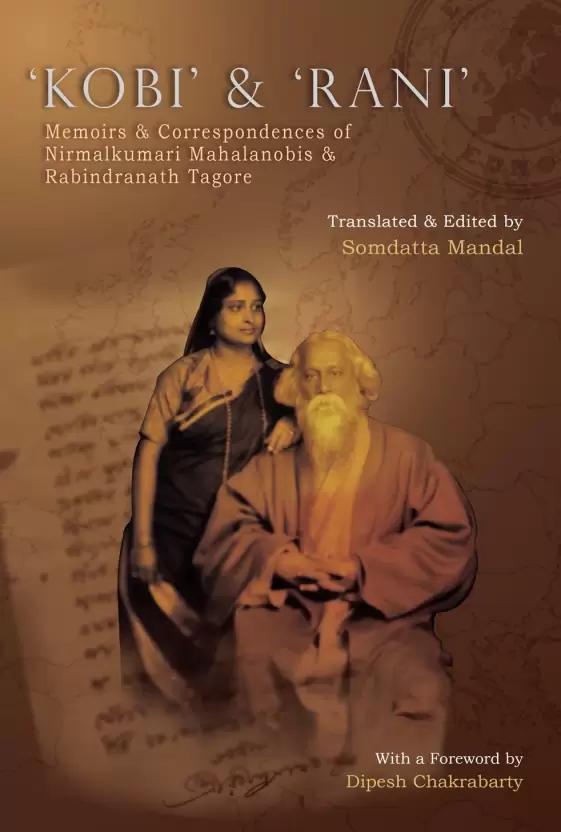
Again, translating two travel narratives by Nirmalkumari Mahalanobis (aka Rani) is equally important because they are memoirs based on her travels with Tagore. Kobir Shonge Europey (With the Poet in Europe) and Kobir Shonge Dakshinnatey (With the Poet in the South) narrate the incidents of the poet’s tour to Europe in 1926 and to South India and Sri Lanka in 1928 respectively. Incidentally, though written many years later, the first narrative is the only account of the important seven-month trip that Rabindranath undertook to Europe where he met Mussolini and many important political and social stalwarts of the day. Both these travelogues are included in my present volume of translation entitled Kobi’ and ‘Rani’: Memoirs and Correspondences of Nirmalkumari Mahalanobis and Rabindranath Tagore.

Other than Tagore, you have translated more writers from colonial times to English. Why do you translate mainly travel-related writing from the past? What got you interested in this period and in travel-writing?

My interest in travel writing began many years earlier when it was not even recognised as a canonical enough genre. In a seminar on ‘Travel Writing’ that I had organized in our department, I received a great impetus when Mushirul Hasan, the famous historian and then Vice Chancellor of Jamia Millia Islamia, Delhi, attended as the chief-guest and delivered the keynote address. He had already worked and edited several volumes of travel narratives especially in Urdu and made it clear that this area of study upheld immense possibilities.
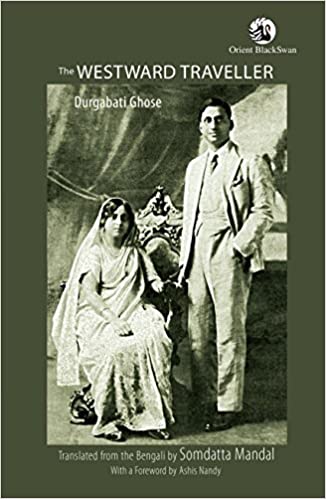
Now let me mention how apart from the writings of Tagore and his family members, my interest in travel literature grew. After work hours, I started spending the late afternoons in our university library and found immense treasure of travel books in Bengali among the unkept dusty stacks, books which had not been issued for as long as fifty years. No one gave me any computerised list of what texts were available and this manual hunting revealed many unheard names of writers. I just picked them up, issued them and dumped them in my car. Some of the books were brittle, some never issued at all. In this way I had picked up Paschimjatriki by a lady called Durgabati Ghose who went for a tour to Europe with her husband in 1932. I liked the text very much and translated it and Orient Blackswan published it as The Westward Traveller with a foreword by Ashis Nandy. Anyhow, in due course of time, I had developed a handsome collection of travel texts and my interest increased with time. In the meantime, to digress a little, I have edited three volumes on Indian Travel Writing, and one special issue of an online journal, the first one in 2010 and the last one in November 2020. The number of abstracts that flooded my mailbox everyday was unusual and in spite of strict deadlines, I had to reject many good papers due to lack of space. I remember the publisher of the first volume returned 90 copies of the book as he said that since travel writing was not included in any university syllabi or course, they were not selling, and he lacked space in his warehouse. Within a span of a decade, the genre has gained a lot of popularity and many scholars are now keenly pursuing their research in this area. 

Speaking about translating writers from the past I find it safer as in most cases the copyright period is over and seeking permission is easier. Also, I must confess how I underwent a personal trauma after translating a living writer. Let me be a bit more specific. Nabaneeta Deb Sen’s Koruna Tomar Kone Path Diye is an excellent narrative about her visit to a seminar in Hyderabad and her sudden decision to travel to the Kumbh Mela. This book interested me a lot and I went through a publisher seeking her permission to translate the text. She asked me to submit two sample chapters and then gave the green signal to go ahead. I completed the entire translation within the stipulated time and sent it to her. Now began the difficult part. She did not like certain sections (“I don’t see myself in it as I should”, she explained) and the manuscript went through innumerable revisions and alterations, often with the consultation of family members and other editors. The cheeky, colloquial tone of the original Bangla text was lost – one perennial problem of translation for sure. Anyhow, the publisher introduced two more editors and in the end the book did come out under a different translator’s name with a due acknowledgement in the foreword for all my effort! So, it was a wise decision on my part henceforth to stick to older writers from the past.
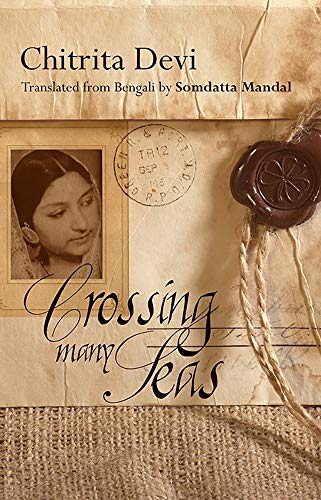
Also, though for a long time, travel writing had been relegated as an inferior form of literature, I found in many texts what I call little nuggets of history. For example, in Durgabati Ghose’s text there is a hilarious incident about her going to meet Sigmund Freud in Vienna. As the daughter of the famous psychoanalyst Girindra Sekhar Bose, she went to meet Professor Freud who was her father’s friend, and what emerged in that meeting is something unusual when Durgabati felt that Freud himself should be psychoanalyzed for his excessive love of dogs. When I mentioned that incident, Ashis Nandy regretted that if he knew about this incident earlier, he would have definitely included it in his book, The Savage Freud. Again, in Crossing Many Seas, Chitrita Devi tells us how she went to visit the British Parliament in 1947 and on that very day saw the white paper of independence being granted to India. Many other such interesting historical events and significant people are often found in very ordinary travel narratives.

What are the challenges you face while translating Bengali to English? How do you solve them?

Basically, I still consider mine as literal translations and do not venture out into bringing in radical changes. The basic challenge I face is maintaining a readable sentence structure as the English and Bengali have different methods of composition. I don’t translate directly into the computer, rather I prefer to do it in long hand. Though it entails more work, I find that I end up usually reversing the order of the sentence when I am correcting and keying it in the computer. If possible, I then ask any friend of mine to read the translation and offer any necessary suggestions for change. This system works well for me. Also, now I usually try and translate everything in the past tense and that makes it more readable. Breaking up long, convoluted sentences into shorter readable ones is another method I tend to adopt. With time and experience, I feel more confident in making such alterations.

Why do you think translating is important? What is the role of translations in a world with 6500 languages?

In spite of all its drawbacks, translation is the only way in which we can open out to other people, whether in regional languages in India or in other languages across the world. Let me give you an interesting example. Recently I reviewed a book called Rebati: Speaking in Tongues. ‘Rebati’ is a famous short story written in 1898 by the famous Odia writer Fakir Mohan Senapati. It is a tragic tale in which the dream of self-actualisation of a young girl through education comes crashing down as much due to a rampaging epidemic as due to a mindset deeply hostile to change. In this particular book, the editor, Manu Dash, has managed to bring in 36 different incarnations of the story. Arranged alphabetically, ‘Rebati’ is presented in twenty-four Indian and twelve foreign languages in all. As the editor informs us, most of the writers commissioned to translate it in different languages have taken the English or the Hindi version as their source text. For the lay reader therefore, it is not possible to vouch for the quality of the translated text. But that we are able to understand the significance of this late nineteenth century story across so many countries and cultures across the globe is what is more significant than the actual quality of the translation.

Is it possible to have cultural exchanges among languages without losing out nuances in translation?

Translation and its problems, especially when the translated pieces are twice or thrice removed from the original source text, is nothing unique and hence even labelled by terms like ‘transliteration’ and ‘transcreation’. In one of his earlier semiotic investigations, ‘The Search for the Perfect Language’, Umberto Eco argued that the Book of Genesis charts the decline of humanity into the chaos of Babel. The poly-linguistic world we live in is one more punishment from God for our baseness and general nastiness. In ‘Mouse or Rat?: Translation As Negotiation’, Eco is back on the subject of this post-lapsarian movement between different tongues, the perilous attempt to express concepts from one language into another. He suggests that translation is a negotiation’ not just between words but between cultures – “Translation is always a shift, not between two languages but between two cultures. A translator must take into account rules that are not strictly linguistic but, broadly speaking, cultural.”

As a translator I am very conscious about this kind of cultural exchange. Maintaining culture-specific words within the translated version, but at the same time making its meaning clear for the reader to understand, is probably one way of retaining this culture specificity. The lesser the use of glossary the better. Jhumpa Lahiri in her latest novel Whereabouts which she self-translated from Italian into English attests to the fact: “Translation shows me how to work with new words, how to experiment with new styles and forms, how to take greater risks, how to structure and layer my sentences in different ways.”

Which is your favourite writer to translate? And why?

None in particular. I just sometimes happen to like a piece of work and feel it should be translated for a greater pan-Indian readership. Sometimes the reverse is also true. In the summer of 2004, I was residing at Bellagio in Italy on a Rockefeller Fellowship when the latest issue of the New Yorker magazine published a new short story by Jhumpa Lahiri called ‘Heaven-Hell’. Upon reading the story about the protagonist called Pranab-Kaku, I was so taken aback by its Bengaliness, I felt that every Bengalis who usually do not read English fiction and yet basked in the glory that a Bengali girl had recently won the Pulitzer prize should immediately read it.  Without a second thought or even seeking any permission from anyone, I instantly sat down and translated the story into Bangla. Later when I returned to Kolkata and gave it to a senior professor to read. he was so impressed that without even informing me he sent it to the magazine Kali O Kolom which published it. I am lucky that no one sued me for copyright violation.

Recently I read a short story called ‘Barnabaad’ (Casteism) by Manoranjan Byapari in the Sunday supplement of Pratidin newspaper called Robbar and felt the urge to translate into English immediately. Dalit writing in Bengali is slowly gaining academic attention and I immediately asked someone to seek permission from the writer to allow me to translate it into English. Byapari, busy with his own electioneering campaign at that time, was thrilled and immediately gave me the permission. The translated story has been accepted by the international journal Transnational Literature and will see the light of day soon. So, you see there is no special or favourite writer for me to translate. Way back in the nineties, I remember I had voluntarily translated some essays on cinema that Satyajit Ray published in Bishoy Challachitra, but I was too naïve to know then that you needed his wife’s permission to do so. The translated pages therefore travelled to the wastepaper basket in due course.

Was it different translating Bengali women from translating Tagore? How did the experience differ?

Usually, the tone of Bengali women’s writing that I have translated to date is much more colloquial and homely, but we cannot always make generalisations. Many women wrote their travelogues at the request of family and friends and not for public consumption. But some women like Krishnabhabini Das took her job of imparting knowledge rather seriously. Also, we should not make the mistake of assuming that all Tagore’s works are of high philosophical and moral content. There are many pieces of Tagore’s writing which are also simple, homely, easy to translate and again there are places where he often quotes from the Upanishads and one needs the help of Sanskrit scholars to understand the real meaning of those quotations. So, there is no such hard and fast rule, and it all depends on what particular work and by which writer we are translating.
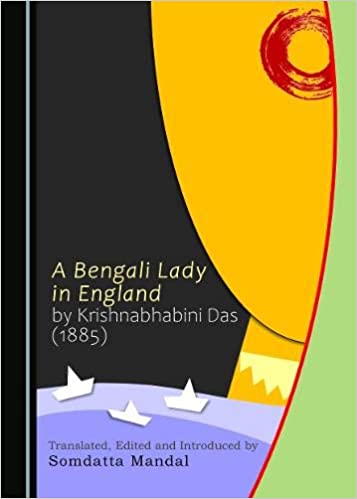
Were the Bengali women, like Krishnabhabini Das, you translated any different from the women associated with Tagore? How and why?

This question is more or less a repetition of the last question. Each woman’s writing has a different aim and purpose and so they cannot be clubbed together under some general definitions. The reason for the travel and the target readership is different in each individual case. Published in 1885, Krishnabhabini Das’s England-e-Bongomohila (A Bengali Lady in England) was published in Calcutta originally without her name in the title. Her identity was just that of a Bengali woman who chanced to go to England along with her husband. Her book was not a travelogue in the true sense of the term, but her aim was to seriously convey the social conditions of England at that time and to educate her sisters back home who were still in fetters and did not know much about female emancipation. Her writing is serious in nature, and she took the help of other sources and books to authenticate and explain everything in detail.
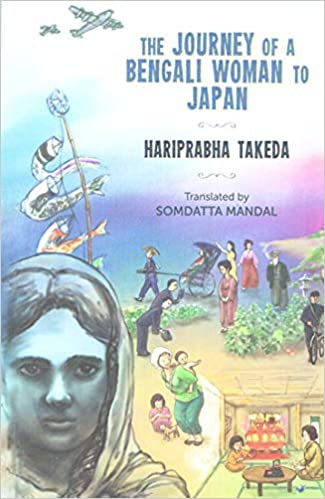
For Hariprabha Takeda, a Bengali Brahmo woman, who went to Japan in 1912 for four months along with her husband to meet her Japanese in-laws there, it was a totally personal affair.  Thus, even though language was a big bar, Bongomohilar Japanjatra [The Journey of A Bengali Woman to Japan] is more intimate in tone and narration where she tries to define the idea of ‘home’ to her readers. For Chitrita Devi, sister of Maitreyi Devi, Onek Sagor Periye (Crossing many Seas) narrates travels to different places in the world in seven different segments. As a member of the P.E. N. network, her outlook and narration is much more erudite and polished than others.
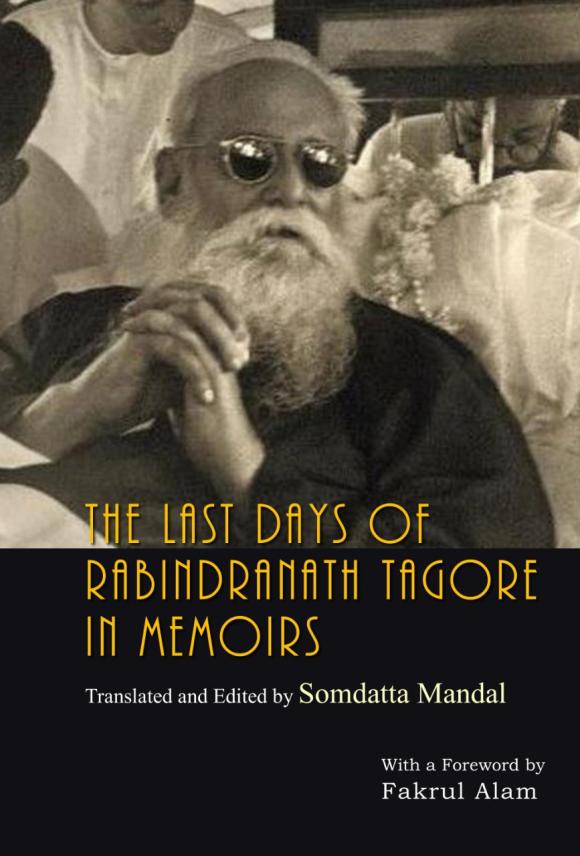
I can go on citing more examples but the basic point I want to make is that the social class and status of the woman narrator is different in each case. For women associated with Tagore, this becomes even more clearly marked. Rabindranath’s daughter-in-law, Protima Devi, wrote Nirbaan (Nirvana) immediately after the poet’s death. This text is very different from the four other women who narrated the last days of their association with Rabindranath. Though the incidents are the same, each woman’s narration comes in different styles. Thus, Rani Chanda or Maitreyi Devi or Nirmalkumari Mahalanobis’s narration have to be read side by side to understand what I mean as to the relationship of the subject to the narrator. My book The Last Days of Rabindranath Tagore in Memoirs does exactly that. Translating each woman’s narration separately was a challenge no doubt but when they are juxtaposed together, the point-of-view of each narrator becomes clearer.

Why do you stick to women and Tagore only? Have you ever thought of exploring translations of other writers like Nazrul or Jibonanondo?

As I have already mentioned, this was not a deliberate choice. I am not a feminist as such but somehow at the end of the day I find that I have translated the works of more women than men. Since none of the translations that I have done till date have been commissioned projects by publishers or authors themselves, I just translate what and when I fancy reading and feel inspired to translate. You know translation has often been called ‘transcreation’ and this creative process is something that interests me very much. Though not a creative writer per se, the translating process also gives me liberty in selecting words, style and that grants me a lot of freedom which is no less important than creative writing. About translating Nazrul or Jibonanando, I must admit that I am not very comfortable with translating poetry. I prefer to stick to prose, whether fiction or non-fiction. The more difficult the prose style, the more challenging the translating process becomes. Also, in hindsight I feel since women were marginalised in the creative process and often not taken seriously at all, as a woman myself, it is my duty to explore and translate the writings of women even more.

Have you ever thought of writing yourself?

I have written a lot of critical essays and articles but when it comes to creative writing, my contribution is negligible. However, for a long period of time I wrote small features for the ‘Now and Again’ column published in the Op-ed section of The Statesman. These pieces made me quite popular as often when introduced to strangers for the first time, I would be asked whether I was the same person who wrote that column. Occasionally, I wrote several short entries about any and everything in life that interested me or I experienced first-hand without any false attributes in them. They were written primarily to divert myself from boring academic schedules and I called them ‘Vignettes of Life’when it was first published. Later it expanded into another edition called ‘More Vignettes of Life’ and the last one being called ‘Vignettes of Life Once More’. They contain any and everything that happened to me and in places around me, I am the narrator and the protagonist, and the result is that I have been able to make people laugh. In this troublesome and problem-ridden world, pure laughter and fun are vanishing so fast that I consider these short entries to be really cathartic. As for serious creative writing like writing short stories or poems, I never attempted to do that. Perhaps I am too prosaic a person you might say with very little imagination. 

What is your next project? Tell us a bit about it.

I am at present involved in a voluminous project which I began at least five years ago about different Bengalis from colonial times travelling to Vilayet or England and narrating their experiences in different genres of writing. Though I had to be selective in choosing the travellers over their two-hundred-year time span, sometimes unavailability of the primary texts made things more difficult. I am at present working on approximately forty such travellers, some of whom had written their memoirs in English. For those who wrote in Bengali, I am translating selected portions of their work for the purpose. So it is a quite laborious and time-consuming work but at the same time, very interesting because the multifarious reasons for each person’s travel to the coloniser’s land is mind-boggling. The structure of the book includes a brief bio-note of each traveller along with several sample pages from the actual narrative so that the reader can savour their experiences first-hand. I hope it sees the light of day soon.

(This is an online interview conducted by Mitali Chakravarty)

PLEASE NOTE: ARTICLES CAN ONLY BE REPRODUCED IN OTHER SITES WITH DUE ACKNOWLEDGEMENT TO BORDERLESS JOURNAL

Categories
Review

Letters between Tagore & Nirmalkumari Mahalanobis 

Book Review by Himadri Lahiri

Title: ‘Kobi’ and ‘Rani’: Memoirs and Correspondences of Nirmalkumari Mahalanobis and Rabindranath Tagore

Translator/Editor: Somdatta Mandal; Foreword by Dipesh Chakrabarty.

Publisher: Bolpur: Birutjatiya Sammiloni.

Memoirs and correspondences constitute two alternative sources for reconstructing historical narratives. Generally kept outside the pale of mainstream history, memoirs, such as those included in the volume under review, can offer significant insights into the reading of important public figures and their activities. Despite the charges of ‘unreliability’ of memories with the help of which personal narratives are constructed, memoirs contribute to the understanding of a historical period with the help of small, apparently insignificant, details which can offer penetrating insights into reality. Personal correspondences with a public figure, preserved in family archives, too may contain interesting facts, figures and episodes which may help constructing their lives and recreating the social and intellectual environment of the time. Due to their very subjective nature, which mostly flouts the norms of objectivity, these genres may provide unique dimensions to the familiar historical narratives.

Somdatta Mandal’s book ‘Kobi’ and ‘Rani’: Memoirs and Correspondences of Nirmalkumari Mahalanobis and Rabindranath Tagore (2020), selected, translated and edited by her, is an important source, particularly for non-Bengali readers, for comprehending Rabindranath Tagore, the Nobel Prize winning poet from Bengal who continues in global limelight. It unearths hitherto unknown facts, some activities of ‘small’ actors who played a role in history and ‘trivial’ details which help us view Rabindranath Tagore and his contemporaries from fresh perspectives.  Written from an informed woman’s point of view, the narratives offer us opportunities for discovering ‘the lighter’ and homelier aspects of Tagore’s life – this is something “which is sorely missed in other serious narratives and biographies” (Mandal xvii).

The publication of this book is timely for yet another reason. Tagore’s tirade against fascism, unfettered authoritarianism, aggressive nationalism and his advocacy for personal freedom, national independence, universal humanism and global understanding have much relevance in our times. Reading Kobir Shonge Europey (With the Poet in Europe, 1969) in particular, one understands how a public figure with an impeccable record of liberal philosophical practices and humanist activities can be duped by the machination of fascist agents and utilised for fascist propaganda to the consternation of liberal intellectuals and common citizens across the world. For this very reason we need Tagore more than ever before. This is a point strongly emphasised by historian Dipesh Chakrabarty in his ‘Foreword’ to the book.

‘Kobi’ and ‘Rani’ anthologises English translation of two memoirs of Nirmalkumari Mahalanobis — Kobir Shongey Dakshinatte (With the Poet in the South) and Kobir Shongey Europey (With the Poet in Europe). The European tour took place in 1926 while Tagore travelled to South India and Ceylon in 1928. In her valuable Introduction to the book, Mandal raises the question of difficulty of determining the genre of the narratives. These are, according to her, not just memoirs, they are travelogues as well. Through them, one gets the feeling of following the trajectory of the author’s journey. But a reader also feels how Rani’s journey, along with her husband, revolves round an iconic personality whom they revered and valued. From this point of view, the memoirs often read like hagiographies as well.

In addition to these two memoirs, the anthology includes Pathe O Pather Prante (On the Road and Beyond It),a collection of sixty letters Tagore wrote to Nirmalkumari whom he affectionately called Rani. In the Appendices, we find three other articles on Tagore written by Nirmalkumari: “Om Pita Nohosi,” “Tamaso Ma Jyotirgamaya,” and an essay written for children and originally published in Anandamela, a children’s magazine published by the Anandabazar Patrika. All these make the book voluminous and largely comprehensive. It may be mentioned here that Mandal has recently translated and edited another volume on Tagore entitled The Last Days of Rabindranth Tagore in Memoirs (April 2021). It includes memoirs by Pratima Thakur, Rani Chanda, Maitrayei Devi, Nirmalkumari Mahalanobis, and Amita Thakur.

Interestingly, all these memoirs were written by women who either belonged to the Tagore family or were in close contact with the poet. Dipesh Chakrabarty, in the ‘Foreword’ to Kobi  and Rani, raises the issue of his “friendship with women that Tagore sought and sustained throughout his life” (iv), and mentioned in this context the names of Ranu Adhikari, Maitreyi Devi, Hemantabala Devi and Kadambari Devi. He observes that “a feeling of respectful affection and concern for the poet finds a deeply gendered and womanly expression in this book. It oozes out of each page” (iv). The above statement is true of The Last Days of Rabindranath Tagore in Memoirs too. Taken together, these two anthologies provide a very intimate and comprehensive account of one of the greatest poets of our time.

Tagore felt the need for recording the accounts of his travels in writing. That would be, in his opinion, a valuable source of literary and historical information in future. He was particularly sensitive about his European tour during which he met several well-known intellectuals. In the ‘Introduction’ to On the Road and Beyond It, he asserts, “the value of the narration of my European tour that has not been published anywhere is enormous” (391). Similarly, Tagore said in the Foreword to With the Poet in the South, “They [the details of his tour] should not be lost” (317). This sense of preservation of history is also present in Kobir Shonge Europey (With the poet in Europe). Here in the ‘Foreword’, Rani notes that Tagore, in a letter published in Prabasi, complained, “Those who had accompanied me during my foreign travel did not take the responsibility of protecting my travelogue, and that is why this chapter remains unknown to people, etc.” (3). As both her ‘Foreword’ and Prasantachandra Mahalanobis’s ‘Preface’ to the same memoir indicate, it was clearly the result of a misunderstanding for which Tagore apologised later.

The history of this misunderstanding goes deeper. The couple suspected the involvement of some insider in the loss of the file containing the manuscript of the despatches sent by Prasantachandra from Europe for publication in Visva-Bharati Bulletin. The file containing Nirmalkumari’s letters were also lost. Although retrieved afterwards, some valuable letters were never found.  Rani narrates in detail how the tour to Europe was mired in controversy and conspiracy right from the beginning. Rani’s narrative convincingly proves that Professor Guiseppe Tucci and Professor Carlo Formichi, two visiting professors at Visva-Bharati, functioned as Mussolini’s spies.

They were instrumental in Tagore being invited to Italy by Mussolini. Formichi who oversaw the arrangements of the tour conspired to exclude the Mahalanobis couple from the entourage. He also severely censored the list of Tagore’s visitors in Italy. How Benedetto Croce could meet Tagore with the help of Captain Rapicavoli reads like a detective story. Formichi wilfully misinterpreted Tagore’s messages to the press to create an impression that Tagore supported Mussolini’s fascist regime. The twisted versions were published in newspapers, and these spread across Europe, misrepresenting Tagore’s views.

When Tagore met Romain Rolland in Switzerland, Rolland was initially not well-disposed to Tagore because of the fake news stories in circulation. Nirmalkumari records all the details of Formichi’s machination in Kobir Shonge Europey (With the Poet in Europe). For this alone, if not for anything else, this book will provide invaluable materials to historians and common readers alike.

Although the narrative of the poet’s European tour will be of paramount interest particularly to non-Bengali readers who will try to visualize the poet from the East in the maelstrom of radical politics in Europe and to place him in the interface of East-West cultural encounter, his tour of Southern India will be of immense importance to readers intent on knowing the background history of two of his important novels Jogajog (Relationships) and Sesher Kobita (The Last Poem). This is provided in Kobir Shonge Dakshinatte (With the Poet in the South) which also brings to public knowledge intimate details such as how Tagore was affected by the Jalianwalla Bag killings, and how his interaction with Chittaranjan Das went on, C.F. Andrews’ meeting with Mahatma Gandhi as Tagore’s emissary, how intensely engaged Tagore himself had been in writing Lipika and so on. Tagore felt that all these should be preserved as “very important historical documents” (317). The poet’s meeting with Sri Aurobindo in Pondicherry is also an important part of the memoir.

Trivial but amusing incidents such as the idiosyncrasies of C.F. Andrews, Tagore’s own obsessions and childlike behaviour – all come out with a touch of humour. These correspond to Rani’s power of observation and sense of humour evident in the descriptions in Kobir Shonge Europey (With the Poet in Europe). She describes how a fancy dress ball was arranged aboard the ship Orama which took the Mahalanobis couple to Europe (36), how Rani was initially afraid of a large shark swimming on the water near Port Said (37), how Rani and her female companions, dressed in typical Indian attires and decked with heavy ornaments, became a public spectacle in Naples (39-40), how the unhygienic packaging of chocolates in Turin caused repulsion in Rani (70), and several other incidents.

Mandal has done well by including On the Road and Beyond It, Tagore’s collection of sixty letters, in the volume. Tagore wrote these letters to Rani after his return from Europe. He observes in the ‘Introduction’ to the collection, “I continued to keep our relationship alive through letters” (390-91). It, therefore, is intimately connected in spirit with the memoir With the Poet in Europe. The letters, the best medium for conveying emotional exuberance, testify to Tagore’s great affection for, and dependence on, Rani.

The book includes some black and white photographs of important persons and places. Two images of the first edition of Bangla Pathe O Pather Prante (On the Road and Beyond It) have found their place in the anthology. Mandal’s criteria for selection of texts are quite appropriate, her translation is smooth and editing praiseworthy. Her erudite Introduction will help the readers contextualising the texts included in the volume. The paratextual components of the book are aesthetically pleasing. On the whole, the production of the book is superb. This volume will be a valuable resource for Tagore Studies.

.

Himadri Lahiri is former Professor of English, University of Burdwan, West Bengal. Currently, he is Professor of English at the School of Humanities, Netaji Subhas Open University, Kolkata. Asia Travels: Pan-Asian Cultural Discourses and Diasporic Asian Literature/s in English (Bolpur: Birutjatiyo Sahitya Sammiloni, 2021) and Diaspora Theory and Transnationalism (Hyderabad: Orient Blackswan, 2019) are his latest books. He writes book reviews for academic journals and newspapers. He also writes poetry.

.

PLEASE NOTE: ARTICLES CAN ONLY BE REPRODUCED IN OTHER SITES WITH DUE ACKNOWLEDGEMENT TO BORDERLESS JOURNAL

Categories
Tribute

In Memory of Peace

My friend, you would not tell with such high zest
To children ardent for some desperate glory,
The old Lie: Dulce et decorum est
Pro patria mori*.
-- Dulce et Decorum Est, Wilfred Owen (1893-1918)

*Translated: "It is sweet and fitting to die for the homeland."

On 11th November, we remember the men who gave up their lives to win wars for those in power. Remembrance Day started as an annual event after the First World War (28th July, 1914- 11the November, 1918) more than a hundred years ago, in memory of soldiers — some of who were lost in the battle grounds, whose remains never got back to their families. Some of these men who fought were from countries that were subservient to colonial powers who started the war and some, like the soldier-poet, Wilfred Owen, were from conquering nations.

This was much before atom bombs were dropped on Hiroshima and Nagasaki. Eventually, a nuclear armistice was declared. Mahatma Gandhi (1869-1948), an internationally acknowledged apostle of peace, had an opinion on this: “‘The very frightfulness of the atom bomb will not force non-violence on the world? If all nations are armed with the atom bomb, they will refrain from using it as it will mean absolute destruction for all concerned?’ I am of the opinion that it will not.” Has this nuclear armistice made the world more peaceful? And if so, what is the quality of peace that has been wrought by drumming fears of annihilation in human hearts? Could the ‘fakir…striding half-naked up the steps of the viceregal palace’ be right after all?

Here we have collected a few stories and poems around ongoing conflicts and wars which stretch to the present day, some old and some new… some even written by men who faced battle…

Poetry

A poem and art by Sybil Pretious in memory of soldiers who died in the World War I.

Soldiers & Missives by Prithvijeet Sinha … Click here to read.

Our Children by Bijan Najdi, translated from Persian by Davood Jalili. Click here to read.

Prose

Line of Control by Paresh Tiwari, a story about the life of soldiers set in the Indo-Pak border… Click here to read.

I am a Coward with Priorities by Tejaswinee Roychowdhury, a story from a soldier’s perspective. Click here to read.

From the Pages of a Soldier’s Diary… by Mike Smith takes you on a journey through the pages of a colonial diary and muses on choices he has made. Click here to read.

Bundu, Consoler of the Rich is a story based on memories of the Partition by Nadir Ali, translated from Punjabi by Amna Ali. Click here to read.

In a Land Far From Home: A Bengali in Afghanistan, an excerpt from an account by Syed Mujataba Ali, translated from Bengali by Nazes Afroz. Click here to read.

Categories
Poetry

Soldiers and Missives

By Prithvijeet Sinha

Ships and Soldiers: Courtesy: Creative Commons
THE MISSIVE

I send a letter to you,

with drops of blood dyed purple,

your favourite flowers pressed with them

and the smell of musk on this dog-eared paper,

to remind you of me.


In return,

send back

my whole hometown's exuberance,

a box of saffron

to entwine me to my land

and a promise to pray

and never blame God.


With deliverances of freedom,

pray for peacetime

to gallop

like a glorious stallion

on open land

and set me back home.


MACBETH C. 2021

It's so easy to wash one's hands,

rinse off all the blood

in a ceramic bowl

but the splotches will still show.

Look what war has made

of this home.

The blood on our hands

traverses the atlas,

open like a dusty tapestry

in the drawing room.


Blood on the table,

blood on the windowsill,

splotches here and there,

stuck like evanescence

on doorknobs,

not one corner spared from ghosts.


**

Smell of napalm wafts in the air

and the burning monk's images

make it obvious for him,

tiger eyes peek from beyond

the page

and mortal danger orchestrates stealth,

amidst the overgrown elephant grass

of forests now turned into

a battlefield in his mind.


When the world goes to war,

all the loons by the lakes

go dead silent,

as if on some suicidal spree

and the shore,

abuzz with their beck and call,

becomes scorching dry,

turned from fertile land

to sand dunes.


There is no sinister time for him

to lose his mind

because there has to be no greater

pressure-point than this war for sanity.


The blood on our hands

is dried clean

but the splotches still show.

Greater than a bullet wound

and far more sinister than the

general's fallacies from the front lines.


The War At Home starts from his bunker.

The clawing back to his room

ends in loud laughter

and then rage

and then death by combat

with his own ghosts.

The war at home begins there.

Prithvijeet Sinha has been prolifically publishing works of various hues in journals and magazines like   Cafe Dissensus, Confluence, The Medley, Borderless, Wilda Morris’ Poetry Blog, Screen Queens, Rhetorica Quarterly, Lothlorien, Chamber Magazine, Livewire  among others. He believes writing to be the true music of the soul.

.

PLEASE NOTE: ARTICLES CAN ONLY BE REPRODUCED IN OTHER SITES WITH DUE ACKNOWLEDGEMENT TO BORDERLESS JOURNAL. 

Categories
Greetings

Festival of Lights

After welcoming the dark half of the year with Halloween, we light lamps to observe yet one more homecoming festival — that of the legendary Rama. Though Diwali or Deepavali is interpreted variously in different parts of India, in the North, Rama’s homecoming after fourteen years of exile and victory over various demons is celebrated with the lighting of lamps and fireworks. Simultaneously, in Eastern India, they celebrate the victory of good over evil with the worship of Goddess Kali. In the Southern part, the victory of Krishna over a demon or asura known as Narakasura is jubilated. This festival is observed as a national holiday across a dozen countries now. There are a dozen different rituals, Gods and Goddesses correlated with the festivities. But victory of good over evil is a concurrent narrative along with prayers for prosperity and well being of the world. Both of these themes are a felt need in the present times.

In keeping with the theme of light, at Borderless, we celebrate this season with stories and poems connected with lights or lamps along with narratives around the festivals themselves… all from within our treasury.

Poetry

Light a Candle by Ameenath Neena. Click here to read.

One Star by Ihlwha Choi. Click here to read.

The Candle by Matthew James Friday. Click here to read.

The Starry Night by Sunil Sharma. Click here to read.

Prose

What Ramayan taught me about my parents: Smitha R gives a humorous recap of how the legendary epic brought the family together. Click here to read.

How a dark Goddess lights up a Fallen World: Meenakshi Malhotra talks of Kali and the narrative of the festival that lights up during this festive season. Click here to read.

The Dark House: A Balochi folk tale translated by Fazal Baloch that reflects on the crucial role of light in a young girl’s life. Click here to read.

Categories
Halloween Greetings

Ghosts, Spooks and Pirates

Why do we enjoy literature on spooks and ghosts?

A million dollar question that seems to have no satisfactory answers. While around October-November, many cultures pay respects to the departed, there are those who do pray at a different time of the year. Is there a link between that and the fun of disguising and collecting candy or playing tricks on Halloween? There are no conclusive answers or evidence to link these.

In this special edition, we decided to have a bit of fun with imps, pirates, ghost, zombies and spooks brought to you from across the world on Halloween as well as a concluding essay on the reasons we celebrate spooks. Enjoy!

Poetry

Witchy Halloween: Michael Lee Johnson gives us a magical glimpse into Halloween night. Click here to read.

Pirate Poems: Jay Nicholls brings us fun-filled ‘spooky-gooky’ adventures across the Lemon Sea. Click here to read.

The Tickle Imp: Is this horrific, funny or what? Only can be had from the bizarre or genius pen of Rhys Hughes. Click here to read.

Prose

The Turret: An eerie story by Niles M Reddick that seems to be right out of an edition of The Most Haunted Houses. Click here to read.

The Return of the Dead: Gita Vishwanath explores spooks in afterlife in a short story. Do we become zombies? Click here to find out.

Ketchup: A scintillating ghost story by Rakhi Pandey, set in the old Residency at Lucknow. Click here to read.

When Two or Three are Gathered: A weird dark tale from Tan Kaiyi where a victims of a virus mutate. What kind of fear is instilled by this situation? Click here to find out.

Welcoming the Dark Half of the Year: Winding up the section is Candice Louisa Daquin’s essay that takes a relook at the evolution of Halloween historically. Click here to read.

Categories
Slices from Life

Welcoming the Dark Half of the Year

By Candice Louisa Daquin

Halloween is one of the oldest fire festivals in the world, perhaps because it considers the relationship between the living and the dead and that has been a primal theme in all human’s lives. Ancient people were more connected to the changing of seasons because their lives literally depended upon it in a way many of us cannot understand today. Most festivals have their origins in food and seasons for this reason. Ancient observations of the dead exist in nearly every recorded culture. Where I live Dias De Los Muertos is as popular as Halloween because we have a 70 percent Hispanic population. Some (though it’s growing smaller) groups of Christians refuse to celebrate Halloween as they feel they are celebrating something Pagan.

True, the celebrations held on October 31, known to exist as far back as the 5th century, were traditionally a Pagan ancient Celtic festival called Samhain. Samhain was not some Devil worshipping name as was incorrectly assumed, but actually ‘Summers End’ in Celtic. The tradition of “dumb supper” included eating but only after inviting ancestors to join in, giving families a chance to interact with people they knew who had died and returned that night as spirits. Children entertained the dead with games while adults would update those who had passed with news. On that night, doors and windows were left open for the dead to eat cakes that had been left for them.

This night was also when people would light bonfires and wear costumes to ward off ghosts. In many ways sharing the idea of remembering the dead with Dias De Los Muertos. Most ancient cultures bred superstition alongside remembrance into a festival of some kind. If you’ve ever been to New Orleans, you’ll know about All Saints Day (and martyrs) which began during the eighth century when Pope Gregory III decided November 1 would be a time to honour all saints who did not have their own holiday. This Catholic holiday caught on in New Orleans in America and is still celebrated today. Many believe the Christian church was deliberately supplanting Pagan festivals of the dead with Christian ones that emphasised more church-related themes. The evening before All Saints Day (el Dia de los Inocentes in Mexico was day of the children also held on November 1) had been known as All Hallows Eve, and later became Halloween. All Hallows came from Middle English with Alholowmesse meaning All Saints’ Day.

Samhain traditionally marked the end of summer and the beginning of winter, which back then was often associated with human death. Harvest was considered a thriving time, Winter, the dying before Spring. Ancient Celts believed Samhain was a special night where the boundary between the worlds of the living and the dead was closer together and the ghosts of the dead could walk the earth. This is where we retain the fearfulness of subjects like death and ghosts in modern times.

Sacred festivals and rituals were part of many Pagan cultures, and Samhain was no exception. The fearfulness was countered with large bonfires (the name bonfire comes from ‘bone fire’ which related to the slaughter of cattle and burning of their bones at this time of year) and druids warded off evil spirits with sacrifices. As blasphemous as that may seem to some modern religions, it was the way ancient people understood things and brought them a sense of control. Not so different really when all things are considered. It is human nature to observe or remember the dead, it is also our tendency to wish to see them again, which is ideal in this ‘thin time of year’.

The Roman’s had celebrated Feralia which was traditionally a commemoration of the passing of the dead, Lemuria, placating the restless dead and Parentalia, honoring the spirits of ancestors. Combining these with Pomona who was the Roman Goddess of fruit and trees, they melded their traditional festivals with more Dias De Los Muertos themes and added apples, which we now incorporate with apple bobbing at Halloween. Apples are also historically connected to the ‘otherworld’ throughout history. It’s fascinating to know these extremely ancient practices are still practiced today, even as we may not know why.

Although we think of modern Halloween as originating from America as modern Christmas (Father Christmas and Christmas fir Trees) from Germany, the truth is American’s got many of their Halloween ideas from ancient European traditions, including ‘trick or treating’. But America definitely made those traditions wide-spread and thus, known worldwide. In the end, it was from America the rest of the world got their cue.

Scottish poet Robert Burns’s poem of the same name helped popularize the actual word Halloween in his poem of the same name. The modern name is two words pushed together. “Hallow” — or holy person — refers to the saints celebrated on All Saints’ Day, (November 1) and the “een” is a contraction of “eve” — or evening before. Thus, the evening before All Saints’ Day.

The Puritans of New England, refused to observe any holidays which might be associated with pagan beliefs – including Christmas, Easter and Halloween, but the Irish, who had always celebrated, shifted North America’s idea of Halloween when they arrived in large numbers after the Potato Famine. The jack o’ lantern which became our carved pumpkin originated from the Irish folk tale of Stingy Jack, a drunk and man who fooled the devil into banning him from hell but due to being a sinner could not enter heaven. When he died, he roamed the world carrying a small lantern made of a turnip with a hot ember from hell inside to light his way. People carved pumpkins or similar to ward off the ghost of Stingy Jack.

Halloween today is a giant commercial day, with companies selling more confectionary on Halloween than any other period in the year. Costumes and parties abound and adults now get into Halloween as much as children. Films specifically for this time of year are made and people relish the more secularised version of Halloween that doesn’t stand for anything that would threaten a family’s value system.

‘Trick or treating’ might have come from an English tradition on All Soul’s Day of giving soul cakes to those who promised to pray for the dead. Churches also gave out food, by way of appeasing spirits, and children would visit houses on Halloween and receive food or drink. Perhaps because food and drink were often scarce in the olden days, this was akin to eating pancakes on ‘Fat Tuesday’ before fasting. The value of food cannot be unappreciated and it features in every festival in some way, irrespective of culture.

The wearing of masks was to make oneself unrecognizable to those spirits who might return on Halloween. Originally called ‘guising’ (later, disguising) people used ash and then later, made masks. A disguise would ensure the Aos Sí, (fairies/spirits/ghosts) wouldn’t take you back with them to the ‘otherworld.’ Many cultures offer food to the dead as a way of respecting them or keeping them from taking the lives of the living.

Mumming, was the art of dressing up, often to act in skits to entertain others. Using anything available, people dressed up on Halloween to disguise themselves and ask for food. In later days, both at Halloween and other events, some people spent a lot of money on elaborate costumes. Like with anything, this was a status symbol, though the core remains the same; dressing up for fun. Allhallowtide was the old name for the originally three-day festival where such things occurred. Allhallowtide included All Saints’ Eve, All Saints’ Day, and the subsequent All Souls’ Day.

Black cats are often not sold at Halloween for fear of people purchasing them for sacrifice or mistreatment. The fear of black cats actually goes back to times where those deemed witches were thought to be able to turn themselves into a black cat. It’s a horrible stigma on innocent creatures, who have often found themselves tortured for the colour of their fur.

A revival of Samhain began in the 1980s with the growing popularity of Wicca. Modern Pagan’s and Wiccans today also observe Samhain as part of their faith. Celtic Reconstructionists celebrate by creating an altar for the dead where a feast is held in honour of loved ones who have died. It is not devil worship but far more an observance of an ancient time of transformation and understanding of the relationship between life and death. Samhain was never about worshipping death or evil. It was about the changing of seasons and preparing for the dying and rebirth of nature as the seasons changed. Through time ancient festivals held around this time of year influenced one another until they merged together and modern times developed the theme commercially. It’s a nice idea to imagine when we send our kids out trick or treating, we’re not worshipping Devils but we are remembering ancient rites held thousands of years ago.

Candice Louisa Daquin is a Psychotherapist and Editor, having worked in Europe, Canada and the USA. Daquins own work is also published widely, she has written five books of poetry, the last published by Finishing Line Press called Pinch the Lock. Her website is www thefeatheredsleep.com

.

PLEASE NOTE: ARTICLES CAN ONLY BE REPRODUCED IN OTHER SITES WITH DUE ACKNOWLEDGEMENT TO BORDERLESS JOURNAL

Categories
Tribute

Poetry of Jibonananda Das

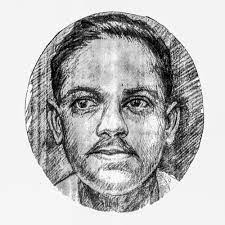
Jibonanada Das. Courtesy: Creative Commons

Jibonanada Das (1899-1954) was a Bengali writer, who now is named as one of the greats after Tagore and Nazrul. During his life he wrote beautiful poetry, novels, essays and more. He believed: “Poetry and life are two different outpouring of the same thing; life as we usually conceive it contains what we normally accept as reality, but the spectacle of this incoherent and disorderly life can satisfy neither the poet’s talent nor the reader’s imagination … poetry does not contain a complete reconstruction of what we call reality; we have entered a new world.”

Motorcar (1934) … Translated by Rakibul Hasan Khan from Bengali. Click here to read.

Banalata Sen and 1946-47… Translated by Suparna Sengupta from Bengali. Click here to read.

Categories
Poetry of Jibananda Das

Motorcar by Jibonananda Das

A translation of Jibonananda Das’s “OOnishsho Choutrish” (1934) by Rakibul Hasan Khan

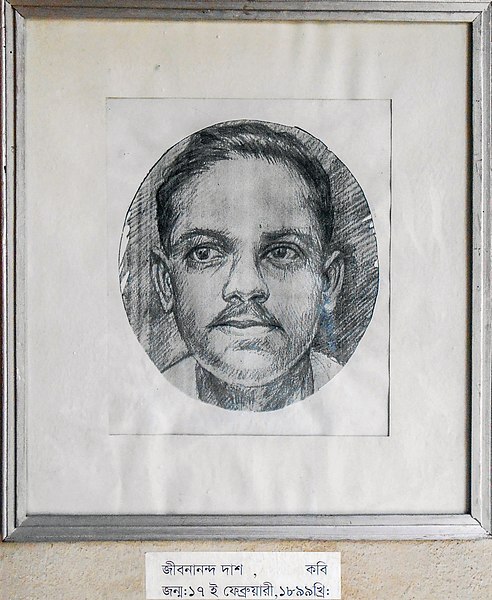
Jibananda Das: Courtesy: Creative Commons

Jibonanada Das (1899-1954) was a writer from Bengal, who has now joined the pantheon as one of the greats. During his life he wrote beautiful poetry, novels, essays and more. He believed: “Poetry and life are two different outpouring of the same thing; life as we usually conceive it contains what we normally accept as reality, but the spectacle of this incoherent and disorderly life can satisfy neither the poet’s talent nor the reader’s imagination … poetry does not contain a complete reconstruction of what we call reality; we have entered a new world.”

Motorcar

A motorcar
Fills the mind with misgivings.
A motorcar is always a thing of darkness,
Though its name is the first
Among the children of light
In the bright streets of daylight
And glowing gas lamps at night.


It's a creature of the dark:
In clear dawn light
While walking past green corn fields
I look at a motorcar in amazement
And see a 1934 model --
Glimmering, causing a dust storm,
Rushing on a red brick-built road
Going underneath two hijal trees;
Streets, fields and dew disappear.
The morning light suddenly vanishes,
Like a shy bride
Faced with a contrary view,
The field and river, as if, lifeless,
Suddenly lose poise.
This motorcar is a trailblazer,
It's rushing in the direction
Where everyone is supposed to be going;
The course of a motorcar
Fills the mind with misgivings,
Just like darkness.
In the stands

Beside footpaths
On the East and West sides of the city's main field
Are motorcars;
Soundless.
Heads covered,
Seats decorated and cavernous
Steering wheels and headlights polished;
Why are they so still?
A tree of a Kolkata park is still as well
But for other reasons;
I too am still but for another reason;
The stillness of a motor is for some dark reason

 
It is a dark thing:
In night's darkness, thousands of cars
Dash past
Paris-New York-London-Berlin
Vienna-Kolkata
On this and that shore of the sea
Like myriads of wires,
Like meteors of night,
Like endless enigmas
And with the endless resolve of men and women
They also run
But where they head to I don't know.

 
The destination of a motorcar – a motorcar itself
Has always been a mystery to me,
It seems to move towards some darkness.


I don't want to go anywhere so fast;
I have the leisure to walk to wherever I want,
The leisure to wait and lounge for a long time after reaching my destination.
Let other people be excited
About all kinds of amazing feats – I don't feel the need for them!  
I am a hopelessly outdated man
In this new century
Underneath the stars!

Rakibul Hasan Khan is an academic, poet, and translator. He is currently pursuing his PhD in English at the University of Otago, New Zealand. This translation was first published in Daily Star, Bangladesh.

.

PLEASE NOTE: ARTICLES CAN ONLY BE REPRODUCED IN OTHER SITES WITH DUE ACKNOWLEDGEMENT TO BORDERLESS JOURNAL

Categories
Contents

Borderless, October 2021

An Ode to Autumn: Painting by Sohana Manzoor.

Editorial

Making a Grecian Urn… Click here to read.

Interviews

Unveiling Afghanistan: In Conversation with Nazes Afroz, former editor of BBC and translator of a book on Afghanistan which reflects on the present day crisis. Click here to read.

The Traveller in Time: An interview with Sybil Pretious who has lived through history in six countries and travelled to forty — she has participated in the first democratic elections in an apartheid-worn South Africa and is from a time when Rhodesia was the name for Zimbabwe. Click here to read.

Translations

Travels & Holidays: Humour from Rabindranath

Translated from the original Bengali by Somdatta Mandal, these are Tagore’s essays and letters laced with humour. Click here to read.

The Quest for Home

Nazrul’s Kon Kule Aaj Bhirlo Tori translated from Bengali by Professor Fakrul Alam. Click here to read.

Mysteries of the Universe

Akbar Barakzai’s poetry in Balochi, translated by Fazal Baloch. Click here to read.

Gandhi & Robot

A poem reflecting the state of Gandhi’s ideology written in Manipuri by Thangjam Ibopishak and translated from the Manipuri by Robin S Ngangom. Click here to read.

Sorrows Left Alone

A poem in Korean, written & translated by Ihlwha Choi. Click here to read.

The Song of Advent by Tagore

Written by Tagore in 1908, Amaar Nayano Bhulano Ele describes early autumn when the festival of Durga Puja is celebrated. It has been translated from Bengali by Mitali Chakravarty. Click here to read.

Poetry

Click on the names to read

Michael R Burch, A Jessie Michael, John Grey, Rupali Gupta Mukherjee, Mike Smith, Saranyan BV, Tony Brewer, Baisali Chatterjee Dutt, Jay Nicholls, Beni S Yanthan, Luis Cuauhtémoc Berriozábal, Pramod Rastogi, Jason Ryberg, Michael Lee Johnson, Oormila Vijayakrishnan Prahlad, Rhys Hughes

Animal Limericks by Michael R Burch. Click here to read.

Nature’s Musings

In The Lords of Lights, with photographs and a story, Penny Wilkes makes an interesting new legend. Click here to read.

Poets, Poetry & Rhys Hughes

In Pessoa and Cavafy: What’s in a Name?, Rhys Hughes comically plays with the identity of these two poets. Click here to read.

Musings/ Slices From Life

At the Doctor’s

In this lighthearted narration, Farouk Gulsara uses humour to comment on darker themes. Click here to read.

Taking an unexpected turn

Nitya Pandey talks of a virtual friendship that bloomed across borders of countries during the pandemic. Click here to read.

Travel in the Time of Pandemics: Select Diary Entries of an Urban Nomad

Sunil Sharma gives us a slice from his travels with vibrant photographs, changing continents and homes during the pandemic. Click here to read.

Musings of a Copywriter

In Surviving to Tell a Pony-taleDevraj Singh Kalsi journeys up a hill on a pony and gives a sedately hilarious account. Click here to read.

Essays

A Season of Magical Mellow Wistfulness

Meenakshi Malhotra through folk songs that are associated with Durga Puja explores the theme of homecoming. Click here to read.

What Gandhi Teaches Me

Candice Louisa Daquin applies Gandhiism to her own lived experiences. Click here to read.

How Women’s Education Flourished in Aligarh Muslim University

Sameer Arshad Khatlani dwells on the tradition of education among Muslim women from early twentieth century, naming notables like Ismat Chughtai and Rashid Jahan. Click here to read.

Once Upon a Time in Burma: Of Friendships & Farewells

John Herlihy takes us through more of Myanmar with his companion, Peter, in the third part of his travelogue through this land of mystic pagodas. Click here to read.

When Needles Became Canons…

Ratnottama Sengupta, who has edited an encyclopaedia on culture and is a renowned arts journalist, gives us the role ‘kanthas’ (hand-embroidered mats, made of old rags) played in India’s freedom struggle. Click here to read.

Stories

Lunch with Baba Rinpoche in Kathmandu

Steve Davidson takes us for a fictitious interview with a Tibetan guru in Nepal. Click here to read.

The Tree of Life

An unusual flash fiction by Parnil Yodha about a Tibetan monk. Click here to read.

Odysseus & Me: A Quest for Home

A short fiction from Bangladesh by Marzia Rahman on immigrants. Click here to read.

Dawn in Calicut

Krishna Sruthi Srivalsan writes of a past that created the present. Click here to read.

I am a Coward with Priorities

Tejaswinee Roychowdhury tells a story from a soldier’s perspective. Click here to read.

The Literary Fictionist

In Bapu, Denied, Sunil Sharma explores the fate of Gandhiism in a world where his values have been forgotten. Click here to read.

Book Excerpts

An excerpt of In a Land Far From Home: A Bengali in Afghanistan by Syed Mujtaba Ali, translated by Nazes Afroz. Click here to read.

An excerpt from letters written by Tagore from Kobi & Rani, translated by Somdatta Mandal. Click here to read.

Book Reviews

Aruna Chakravarti reviews Golden Bangladesh at 50: Contemporary Stories & Poems edited by Shazia Omar. Click here to read.

Somdatta Mandal reviews Wooden Cow by T. Janakiraman, translated from Tamil by Lakshmi Kannan. Click here to read.

Gracy Samjetsabam reviews Suzanne Kamata’s The Baseball Widow. Click here to read.

Bhaskar Parichha reviews Mohona Kanjilal’s A Taste of Time: A Food History of Calcutta. Click here to read.