What can be more scary and life-threatening than the risk of getting Covid-19? Keith Lyons finds how his daily joy has menacing dangers
Cycling in New Zealand. Photo shared by Keith Lyons
“When the spirits are low, when the day appears dark, when work becomes monotonous, when hope hardly seems worth having, just mount a bicycle and go out for a spin down the road, without thought on anything but the ride you are taking.”
While out cycling recently with a friend on a weekend ride, I was reminded that the Covid-19 pandemic has been raging waning and morphing for the last two years. With Covid cases set to peak this week in my part of the world, optimistically we hope that we’ll be in a post-pandemic world by the time 2023 starts.
Many of us are wishing for a return to normal, to the good old days of 2019. But we know deep down that while enterprise and everyday life may resume again, there is no return to normal. We can’t turn back the clock. My parents in a retirement village and rest home are still shielded to ensure the virus doesn’t spread. I have people I’m close to who have died from Covid. On both hands I can count how many friends and acquaintances continue to live despite the pandemic.
Looking back on the last two- and a-bit years, one of the good things to come out of it was that I bought a bike and got into cycling. The first bicycle I found abandoned during my lockdown walks. The second one, an e-bike, I bought in mid-2020, and last year got its mountain-bike sibling, With public transport more inconvenient as well as slightly hazardous, biking would seem to be an ideal solution for commuting and recreation. I do like the freedom it gives me, though as I found out yesterday, cycling in the rain loses its romantic notions when your every item of clothing is sodden.
Cycling has been a great vehicle of joy for me, not just for the quick run to the greengrocer, or an outing to a beach, a cafe or the hills. So today when I met a buddy for an easy ride beside a meandering river to the sea, I couldn’t but feel happy to be freewheeling along, appreciating the clarity of the river, the trees turning into autumn colours, the pleasantness of it all.
However, for me, the joy of cycling has a flip side. Even in a flat city like the one I live in, which seems so well suited to cycling. Even with its network of cycle lanes and dedicated cycle paths. I’ll be honest with you, cycling scares me like nothing else in my life. What terrifies me is the vulnerability I feel when on my bike in traffic. I feel small, insignificant and sometimes invisible.
Cars, buses and trucks speed by at 50-80km/hr within touching distance away. Not only are they travelling three or fours times faster than me, but they also weigh 15 or so times my weight. If a driver is inattentive or distracted (for example, on the phone), and I get hit or clipped or rammed by a vehicle, I know that I will unlikely be able to walk away from the crash.
My rational mind fights with my fearfulness. After all, studies show that cycling is more likely to extend your life than to shorten it — physical inactivity contributes to 1-in-8 deaths. And cyclists can fall off bikes by themselves with no other vehicles around. Yet almost every time I venture out on my bike, I have a near-miss. It could be a motorist running a red light, making a turn cutting me off, opening a car door without checking, or exiting a driveway too fast.
It is not just cyclists who are vulnerable. Walkers, children, the elderly, and motorcyclists are all neglected in transport planning, where motorised vehicles are given priority over other users who aren’t shielded or protected from impact. Recent research estimates that an adult pedestrian has around 20% of dying if struck by a car at 60km/hr. The odds are worse if it is a truck. Have you ever heard of a cyclist crashing into a motorised vehicle and causing damage or injury? Probably not.
Yet, for health and fitness, for reducing emissions and for the good of the planet, getting on your bike is good for your being, your body and the world. I cycle cautiously, wishing that my fellow road users are exercising the same alertness and consideration.
Keith Lyons (keithlyons.net) is an award-winning writer, author and creative writing mentor, who gave up learning to play bagpipes in a Scottish pipe band to focus on after-dark tabs of dark chocolate, early morning slow-lane swimming, and the perfect cup of masala chai tea. Find him@KeithLyonsNZor blogging at Wandering in the World (http://wanderingintheworld.com).
Keith Lyons in conversation with Ivy Ngeow, author and editor of a recent anthology of Asian writing
Ivy Ngeow
Ivy Ngeow has interesting perspectives on writing which would resonate with many. She started writing at a young age. With a novel in circulation, this is her first attempt to create an anthology which would unite writers and the English language variously interpreted. She has collected stories with a variety of dialects in English, retaining the differences with each telling. Her editorial experiment is unusual. She tells us, “The Asian words in the anthology are similarly seamless threads sewn into the prose. It would be oppressive to correct the patois and italicise words which are not even foreign to the characters and the narrative. Instead, they are made part of the author’s tongue and means of communication. It is how I’d develop writers writing in English.” And she is bold enough to admit, “Anyway, all writers are outsiders. That is why we write.” Keith Lyons had a candid and interesting conversation with her.
What’s your background, and writing career?
I have an MA in Writing from Middlesex University and my first novel, which won the International Proverse Prize, was published in 2017. I have been in the industry of architecture and interior design for almost 30 years, but I have been writing since I could hold a pencil. I’ve always had that sense of a writing urge which came and went depending on what I was going in my life at the time. I always wrote, whenever I could, on the plane, in hotel rooms, at home in bed. From the time I won my first commendation as a teenager in a Straits Times national competition, I felt that writing was something real, and not imaginary.
Where is home for you, how do you identify, and where’s home for you now?
I live in London. Most of the time I identify as a regular working suburban Asian mum. The long days and short-term challenges I face are just like any other family woman’s.
How did you get the idea for producing an anthology of Asian writing?
The idea was to welcome more books which I loved to read but felt were lacking: beautiful, diverse and eclectic books by the culturally underrepresented. These are the kinds of books that I was raised with — international stories with imaginative storytelling on multiple themes such as the diaspora, culture and identity, and not even necessarily Asian. It is in our collective interest, as readers and writers, to hear more diverse voices.
What was the process for seeking submissions and then selecting the featured stories for Asian Anthology: New Writing Vol. 1: Stories by Writers from Around the World?
I put out a call for submissions in October with a closing date in December. We received more than a hundred entries. Apart from the requirement for the writing to be set in Asia, writers of any nationality or gender were eligible to submit for this publication, in keeping with Leopard Print’s inclusion and diversity policy. The contributors in this book have come from Malaysia, Singapore, India, Myanmar, Hong Kong, Serbia, Austria, France, the United Kingdom and the United States of America. Although it was my first attempt at doing selection and curation, I could tell the strength of the piece from the first line or first paragraph. This is a good tip for writers. Nail that first line, then sculpt that first paragraph, so that the hook is sharp.
So was this the first time you’ve done something like this, or have you had experience in editing and publishing?
This was my first time doing a large-ish body of work. I have written and edited single stories and non-fiction pieces, newsletters, articles, blogs etc.
What’s been the response from the authors featured in the first volume?
The authors are thrilled to have a book out in the UK. They understand that getting a book out means endorsement by their readership and by the editorial team. They also appreciate that they will be receiving a share of royalties.
How do you think the book explores issues of culture and conflict, as well as insider and outsider views?
The cultural insights and conflicts are depicted through the exploration of ideas and storytelling. Only through stories and characterisation do we make sense of reality. Through the microcosms of scenarios, the viewpoints of characters are at the heart of emotional conflict and tension, whether or not it’s viewed by an outsider. Anyway, all writers are outsiders. That is why we write.
Tell us about why you decided to have a reasonably hands-off editorial stance, allowing both American and UK English, as well as use of local non-English words?
It’s hands-on, not hands off, as I feel I assimilated worlds within those literary worlds. Each story required editorial decision based on the cultural stance of the author. The language they have written in reflects their education, their origins and their own decisions. It would have been wrong to choose one English over another. The “Englishes”, colloquialism and vernacular are a reflection of our times and the modern movement. During my MA in Writing, my subject matter was patois and post-colonial literature. I have a whole story written in dialect which won the Middlesex University Literary Prize. Middlesex made me the writer that I am, because I learned that foreign is actually a very loose and relative term. What is foreign to someone is not foreign to another. The true English language is an assimilative one. It is Saxon, French and German. Later it has Portuguese, Indian, Chinese and Malay words too. Where the British sailed through, words sailed through. Are kowtow, verandah, bungalow, croissant and spaghetti still foreign? At which point did they become non-italicised? The Asian words in the anthology are similarly seamless threads sewn into the prose. It would be oppressive to correct the patois and italicise words which are not even foreign to the characters and the narrative. Instead, they are made part of the author’s tongue and means of communication. It is how I’d develop writers writing in English.
One story appears in both Malay and with its English translation – why did you decide to do that?
Most readers in Asia are bilingual if not trilingual. I feel that for the intended audience, there would be scope for a bilingual story because it is one that is about a young Muslim girl’s glimpse of her oppressors. Her language was fluid and poetic, bleeding into the English translation naturally.
One of the themes throughout the book is the conflict over tradition and duty to family, do you think this is more evident throughout Asia as it modernises and opens up?
I think so. Family and tradition create natural tension and conflict in any form of literature. Part of introducing this anthology is that Asia is modern. But. It is a modern that holds onto a traditional world that is in part dying, like dialects, foods of poverty, too much or too little education, breakdown of families. These will always be the recurrent themes in modern Asian literature.
Do you think the first volume achieved its aim to showcase new and established writers from across Asia as well as non-Asians writing about Asia?
Some have never been published or have not written for ten years. Some are published and/or award-winning. We are giving them this platform and opportunity. Reading and writing is a community, a two-way street. By giving writers online and in-person presence to raise their profiles, and readers a channel through which they not only discover and read, they can also hear, see and watch the authors.
The connection is further strengthened by organising online events, real “live” performance readings and book-signings by four of the authors in London, and distribution in real physical bookshops like Daunt in the UK and Silverfish Books in KL, and online print distribution on Waterstones, Barnes and Noble, Amazon, and online digital distribution on Scribd, Googleplay Apple Books, Barnes and Noble Nook, Kobo and Apple Books.
Social media posts which increase visibility for the authors and their audience engagement. More engagement will encourage the writers to write more and secure the notion that we as readers and writers, are not alone.
These ways of connections and relationships are long term. Our mission was to showcase and be showcased and we have done that.
What’s reception to the book been so far, with it only just appearing in hard copy and available in Malaysia and soon the UK?
From the Goodreads reviews, it has been well-received. It is unique in the sense that the strong original voices and the different “Englishes” of the writers have been retained, with foreign words not italicised. It is a true reflection of society and of our cultural diversity. The paperback version sold out within a weekend at Silverfish Books, Kuala Lumpur. Now it is on its second print run. Print copies are now available worldwide in both paperback and in ebook versions.
Do you have any plans to produce more volumes, and if so, when will you open submissions?
We will look at the profits and losses, whether it would be viable, but it is likely that we will go ahead with Vol. 2 despite global uncertainties and crises. In autumn we may put out the call for submissions for release in spring. We are also considering focusing on fiction only for Vol. 2 to further “niche down”. (I made that up but I hope it is a verb.) However, we know the economic challenges are vast. With the world only just recovering from the blight of 2020-21, now we are also seeing the consequences of the war in Europe, with purse strings being tightened. As readers and writers, we are conflicted by these factors, because more than ever, people need stories. Stories of escape, frustration, humour, darkness, love, hope. All stories are about our humanity.
Keith Lyons (keithlyons.net) is an award-winning writer, author and creative writing mentor, who gave up learning to play bagpipes in a Scottish pipe band to focus on after-dark tabs of dark chocolate, early morning slow-lane swimming, and the perfect cup of masala chai tea. Find him@KeithLyonsNZor blogging at Wandering in the World (http://wanderingintheworld.com).
"Against the assault of Laughter, nothing can stand." -- Mark Twain, The Mysterious Stranger
A sketch by Edward Lear: Courtesy: Creative Commons
Imagine… if there were a world where laughter could help collapse the human construct of war! If only leaders of opposing factions could meet in a match of laughter and resolve their differences with guffaws instead of weapons that kill, maim destroy…
Imagine… if each cannon chortled with hilarity, shooting absurd images to evoke fun instead of destroying buildings, nature and fauna, the concept of war could be annihilated. To build a new world based on love and harmony, old harmful constructs need to be erased — and battles, weapons and war are exactly that. Hundred years ago, Nazrul wrote about destroying walls and differences in his famous poem ‘Rebel or Bidrohi’ to create new civilisation based on love and acceptance.
For a world we dream of building with love, peace and hope, here is a deluge of laughter from our treasure chests to help heal gloom, doom and hate, often the tools of warlords. Let us step into the realm of the fantastic where with a dash of humour the pen creates Pirate Blacktarn who sails the Lemon seas to meet strange creatures, mermaids and Gods and battles pollution with catfish! Let us laugh while we battle Gretchums, go on pony rides or drives and pay a tribute to the great Lear who created limericks. On April 1st, 2022, let us with a pinch of humour and lot of laughter thaw warmongers and wall builders by making them snigger away their grouches with the aid of the tickle imp so that battles collapse into peaceful resolutions. Let us cheer war victims and recreate a beautiful imaginary world. To that end, we have the humorous writing of Tagore to start us out on our cheerful voyage towards a beautiful world…
Prose
Humour from Rabindranath: Translated from the original Bengali by Somdatta Mandal, these are Tagore’s essays and letters laced with humour. Clickhere to read.
Surviving to Tell a Pony-tale: Devraj Singh Kalsi journeys up a hill on a pony and gives a sedately hilarious account. Click here to read.
Driving with Murad: Sohana Manzoor unfolds her experiences while learning to drive with a dash of humour. Click hereto read.
Lear And Far: Rhys Hughes on Edward Lear who wrote fabulous humorous verses to laugh away our fears and founded the popular genre of limericks. Click here to read.
Poetry
Pirate Blacktarn poems … Wander into the fantastical world of Pirate Blacktarn, terror of the Lemon seas with twelve story poems by Jay Nicholls. Click here to read.
Walking Gretchums… Saptarshi Bhattacharya takes us into a land of the fantastical… Do such creatures exist and can we battle them? Click here to read.
Animal Limericks… Michael Burch introduces the absurd in the format created by Lear. Click here to read.
The Tickle Imp… Rhys Hughes introduces us to an imp who tickles… a most powerful weapon. Click here to read.
A LAUGHING LIMERICK
(With Due Apologies to the Maker of Prufock)

Let us go there you and I...
Where laughter etches out against the sky
To a fun-tastical world of the absurd —
Fun-loving creatures, animals and birds.
Let us replace gloom with laughter. Let us do, you and I...

-- Mitali Chakravarty
Translated by Sarmishta Mukhopadhyay, edited by Nabendu Ghosh’s daughter, Ratnottama Sengupta, to mark his birth anniversary, Siri Beye Nichey (Down the Stairs) was first published in the Bengali weekly, Sharadiya Bartaman (1998) and subsequently in the anthology, Paresh Mandaler Laash ( Paresh Mandal’s Corpse, Publisher: Mitra & Ghosh).
A page from Down the Stairs in BengaliParesh Mandal’s Corpse by Nabendu GhoshPhoto Courtesy: Ratnottama Sengupta
“This does not feel like Bangur Hospital, Jibu,” Judhistir said to his son.
Jiban was leading the way. Sunayani was following with her husband, holding his hand to lend him support.
Jiban replied in a very low voice, “This is Bangur…”
“Can you again see with your eyes?” Sunayani snubbed her husband. On hearing this Judhistir fell silent.
But he was right: it was not Bangur, it was Chittaranjan Cancer Hospital.
Jiban and Sunayani did not utter ‘Cancer’ lest the word put a scare in Judhistir and he refused to go for the required tests. Of late Judhistir would cough continuously and groan, feeling pain on the right side of his back. So initially he was taken to Bangur Hospital. After the preliminary tests they referred him to this hospital for the final detection. That’s how they were all here this morning.
Judhistir was not blind by birth. He lost his eyesight when he was sixty — a fallout of Glaucoma. But he has implanted in his mind whatever he has seen over the last sixty years, so he can still make out where he is and which way he is going.
It took about four hours to finish all the tests. The results would be known to them in another three days. They all came out of the hospital.
At around two in the afternoon, they returned to their single bricked home in a Jadavpur shanty. A rented space where they’ve been living for the last thirty years, paying Rs 50 a month.
Their poverty set in when Judhistir went blind some fifteen years ago. That’s when they rented out two of their rooms and a small corner of the veranda to Shibnath for Rs 30 a month, to supplement their income.
Jiban’s four-year-old son, Nantu, was playing in the courtyard with Shanti’s eight-year-old daughter, Ritu. As soon as he saw his grandparents he ran up to them, hugged his grandma and asked, “What have you brought for me Thamma?”
With a smile Sunayani brought out a small parcel of sweets from her bag and gave Nantu and Ritu a piece each. She had bought these on her way back. It made both the kids very happy.
Judhistir coughed a couple of times and flopped on the bench in the veranda.
Shibnath’s widowed sister Shanti came out. Casting a glance at Judhistir she asked Sunayani, “What did the doctors say, Mashima?”
“They carried out the tests,” Jiban answered. “Nothing serious or to be scared of.” As he spoke, he looked at his mother, then at Shanti. Eye to eye they had a silent communication. Then Shanti said, “Well then Mashima, finish your bath and have your lunch. It’s already very late.”
“Yes Ma, I’m going in,” Sunayani said stepping towards her room. “Let me arrange for your Mesho Mashai’s bath first.”
When Jiban and Sunayani were by themselves she whispered to her son, “I’m scared for your father Jibu…”
“If you fear from now Maa, how will you survive?” Jiban smiled. “We will worry about fear after three days.”
*
After lunch when Sunayani brought the medicines to her husband, Judhistir said slowly, “Because of me both Jibu and you had to skip work today.”
Sunayani placed a hand on his shoulder as she said, “One of us stayed away for his father, another for her husband, so don’t you worry.”
Judhistir smiled. And repeated the words he always uttered, whenever he was happy or sorrowful: “Hari Hari Hari!”
*
Judhistir had been blind for the last 15 years but before that he had seen and enjoyed life. So even now, when the light was switched off he could feel the darkness deepen and when the sun rose he can feel that too, and his dull eyes shimmered with life. Slowly he rose from his bed and called out, “Jiban’s Maa, d’you hear me?”
“Coming dear,” her trembling voice answered.
The sweet smell of something frying in the pan entered his nostrils — it signalled that a new day had started.
Sunayani came and stood by him. The heat of the stove imparted a blush of pink to her fair skin. Her forehead gleamed with beads of sweat. Her face, though lined with wrinkles, showed that she was once a beautiful lady.
“Awake? Are you feeling well?”
“Yes dear, I am fine.”
Combing his unruly hair with her fingers, Sunayani said, ” Wait, I’ll get you your tea.”
“Is Jiban up?”
“Still lying in. I will wake him up with his morning cup.”
“Where’s Nantu?”
“Sleeping in Shanti’s room, next to Ritu.”
“Hari Hari Hari!”
*
The clock hands were racing. Judhistir realised that Jiban was up. Shanti’s brother Shibnath, his wife Jaba, Nantu and Ritu were all awake.
Shibnath worked as a salesman in a stationary shop at Gariahat. He was ready to leave. Jaba served as a maidservant in three houses in Jadavpur itself. She too would leave to be back by five in the evening. Sunayani would finish her cooking and go to one Sanjay Chatterjee’s house where she supervised the kitchen. Jiban, a peon in an advertising firm, was also preparing to leave. Sunayani and Jiban respectively brought home Rs 500 and Rs 800. This 1300/- was their total source of livelihood.
Sunayani helped her husband to wash up and take a bath. Then she fed him some roti and tea. She finished all her chores and kept lunch ready for him. Shanti had become like their daughter. All through the day she took care of not only Judhistir but also of Nantu. In her spare time she made paper bags. Every Saturday a man stopped by to collect them. The profit wasn’t much but even Rs 100 was not to be sneezed at.
By this time Jiban and Sunayani were ready to leave. “I’m off Baba,” he said to his father. “All right son — Hari Hari Hari!” “I’m off too — you take care.”
“Hyan, you too. Hari Hari Hari…”
*
Mother and son headed out of the house together. Once on the main road, they took a bus to Lord’s Crossing. Within five minutes they arrived at the junction. From there they reached the Lake Gardens Super Market where Sunayani sat down under a leafy tree near the eastern gate.
“Okay Maa, I’ll carry on now,” Jiban said to her.
“Hyan,” Sunayani nodded to him, “but be very careful while on work.”
“Yes Maa,” Jiban went his way.
Sunayani had come in a worn out, soiled sari. She pulled the pallu over her head and sat down. The bindi on her forehead was bright crimson. She leaned against the wall with the palm of her right arm stretched out. The passers-by, in a rush to get to the market, didn’t even cast a glance at her. But those coming out with their hands laden with purchases all noticed her saddened, poverty stricken beautiful face. Some of them stopped to drop ten paisa, 20 paisa or a quarter too in her outstretched hand. At times some of them moved on and then came back to give her something.
This was a daily occurrence. Sometimes two or three shoppers dropped even a rupee each while five-six others happily parted with 50 p coins. “May God bless you!” Sunayani gratefully muttered. Or she varied the blessing: “May you be victorious!”
In other words, Sunayani neither cooked nor supervised the kitchen in any house. She had taken to begging because she did not get a suitable job. But she did not tell this to Judhistir whose self-respect was intense although Shibnath, Jaba and Shanti were aware of this. This job easily earned her 300 to 400 rupees every month.
*
By now it was around 8 am. Jiban could be spotted in Lake Gardens. He had come out of the house wearing a dhoti and kurta. Now he had put the kurta away in a plastic bag and in its place, covered himself with a thin white cotton drape. His hair was ruffled. He’d not shaven since the previous day. In his underarm he was holding a rolled straw mat. He had grief writ over his face.
He entered a three-storeyed building and climbed up the stairs.
There were three flats on each floor. He pressed the first bell.
A lady opened the door. “What d’you want?”
“I’ve lost my mother Madam! Please help me, I’m too poor to observe the rituals of mourning.”
With sharp eyes the lady looked at Jiban. The sadness on his lean and tender face touched the mother in her. “Wait,” she told him and went indoors. A minute later she emerged with an almost-torn two rupee note.
Jiban bowed low as he took the money and slowly walked towards the staircase. As soon as the lady shut her door he turned around and pressed the bell on the second door.
*
“Who’s there?” A heavy voice floated out moments before the door opened. A thickset Punjabi gentleman in his mid-fifties came out.
“What do you want?” The gentleman asked with a frown, then repeated the question in Bengali, “Ki chai?”
A charming teenaged girl came and stood behind him. Jiban repeated what he’d just phrased: “I’ve lost my mother Sir! Please help me, I’m too poor to observe the rituals of Matridaay.”
“Matridaay?!” The Punjabi gentleman could not comprehend the term.
“Papa, his mother is dead,” the girl helpfully interpreted. “He needs money for her shraddha. He seeks some help.”
“Rubbish!” The man uttered and went in.
The girl stepped forward and asked in unaccented Bengali, “When did your mother die?”
“Day before yesterday sister.”
“What happened?”
“She had cancer.”
“Oh!” she said, and shouted, “Papa, his mother died of cancer.”
“Okay okay…” Once again the man stood framed by the doorway. He handed his daughter a two-rupee coin and said, “Go give it to him.”
The girl gave him the two rupees and said, “Our sympathy is with you.”
“Thank you sister, thank you.”
The girl closed the door.
*
Now the third flat. The door was opened by a bespectacled Bengali gentleman in pajama kurta. He would be in his forties.
The moment he saw Jiban he harshly demanded, “What d’you want? Help? Money?”
“Yes sir, for my mother’s last rites I need some help.”
“Help? No hope of that here.”
“Have pity on me sir!”
“No, I never pity anybody. Asking for pity is your business but not showing pity is my belief. Go, get lost.”
Jiban looked at the man as if crestfallen. He shut the door with a bang.
Defeated, Jiban slowly started to walk away. Just then the same gentleman opened the door again.
“Hey, come here.”
Giving him a rupee coin he ordered, “Scoot!”
Again the door closed with a bang.
*
Jiban climbed one floor down.
The door to the first flat was opened by a Bengali youth. He smiled as he asked, “Mother’s dead, isn’t that so?”
“Yes sir, my mother…”
“Oh what a truthful Yudhisthir!” he mocked. “Get lost!”
The door closed on Jiban’s face.
The next flat was opened by an elderly lady. She was saddened by Jiban’s mourning uniform and grief stricken appearance. “Wait,” she said before disappearing inside. She returned with a five rupee note.
The lady in the third flat also gave him a rupee.
Finally Jiban came to the ground floor. An elderly Marwari opened the first door. Patiently he listened to what Jiban parroted, then with a stern face and a quiet voice he said, “You cheat! Bolt – or I’ll call the police.” The door banged shut.
The next flat yielded Re 1, and a paan-chewing Marathi in the last flat also parted with a rupee.
Coming out of the building he counted his earning — Rs 13.
From one building to another, Jiban roamed about in the Lake Gardens area till 12.30 pm. Then he halted – “All the ranting will start now,” he thought to himself. So he counted his net collection of the morning – Rs 30.50. Not bad at all. Satisfied, he returned to the supermarket where his mother was waiting.
*
“Had your lunch?” Sunayani asked.
“No. What about you?”
“No. Come let’s eat together.” Both of them took out their tiffin boxes filled with three rotis each, some dry vegetables, and molasses. They ate, then had their fill of water. Aah! Deep satisfaction.
“How much did you earn this morning?”
“Good intake Maa, about Rs 30. And you?”
“Rs 11.”
A moment’s hesitation, then Sunayani said, “Sometimes I fear for you… This profession…”
“Maa, people are still kind,” Jiban reassured her, “if they hear something has happened to your parents they take pity on you.”
Sunayani fell silent. Then both of them rested under the same tree. It was 4 pm but the market was still dozing, the shops had their shutters down. Sunayani would stretch out her arms again at 5 but Jiban carried on. He tried his luck in ten-twelve other houses and stopped after sunset. This round fetched him another Rs 15. It would take another week to complete Lake Gardens. This was a classy area, and people still respect the word ‘Maa’. So his earning was bound to be good despite all the abuses.
*
It was late evening when Jiban returned home. Shanti was at the door, she gave him a sweet smile. At about twenty eight Shanti was lean, carelessly dressed, had no time for grooming and still was nice looking. They stared at each other for a few seconds, conveying their feelings to each other through their eyes. Then Jiban went in.
Judhistir heard Jiban’s footsteps and asked, “Jibu, hasn’t your mother come home yet?”
“No Baba but she will any minute now.”
“I was just a little worried. It’s a bit late today, isn’t it? Past 7…”
“No! It’s just 6.30…”
Judhistir kept quiet.
Jiban washed, bathed, put on a rather old but cheerful lungi and a fresh shirt. Cautiously he went out of the house, came to the main road and sat in Anil’s Tea Stall. “Come friend!” Anil invited him in. Jiban sat in a corner, picked up the day’s newspaper and started going through the headlines.
Half an hour later he asked his friend for a cup of tea. Like every other day Anil put two cups of tea next to him at one go. Jiban sat there till 9 pm. In between he lit up a cigarette, his one luxury. He sat there listening to all the conversations between the other customers. He set out for home when Anil closed shop for the day. This has become his daily routine.
Back home he played with Nantu and Ritu, he chit-chatted with Shibnath and Jaba, had small talk with the others. Then came dinner. After washing up, it was time to go to bed.
But for some reason Jiban couldn’t sleep. As on other days he woke up in the middle of the night. The fears that were buried deep within now started to haunt him. Images of his past life surfaced on the screen of his mind like scenes from a movie.
Jiban had studied up to class nine when he landed his first job — in a decent steel factory. In four years he mastered the job but just as he was to be made permanent in employment the Employees Union declared a strike. Jiban had played an active role in the strike. The labourers won after a month of striking work but six months down Jiban was laid off for a small mistake. The Union sympathized with him but did not come to his help as he was a “casual worker.” He was twenty six then.
After this he got a job as a peon in an office at Dharamtala. Around this time he married Shipra from his neighbourhood. His mother did not consent to the marriage but he was adamant. A year later Nantu was born and two years later Shipra eloped with the local hooligan, Paresh. What shame! No one knew their whereabouts now.
From then on his life changed. Unsuccessfully he tried his hand at different jobs and several businesses — all in vain. At last when he found no other way he took to earning by deceiving others. But now what?
His blind father’s condition was deteriorating by the day, his mother’s health was failing yet she had taken to begging on the streets under the open sky. And Nantu was growing up. What does the future hold for him?
The thought made him restless. Edgy. He got out of his bed and lit a cigarette — the second luxury of the day.
*
Old people don’t easily fall asleep, either.
From his bed Jiban could hear his parents talk.
Judhistir was whispering to his wife, “I feel nervous when you are gone from home for so long. I get depressed. I can’t see you even when you are at home but I feel…”
“Don’t I know that!” Sunayani placed a hand on his mouth. “And am I happy staying away from home for hours on end? But now please be quiet. Sleep…”
*
The next morning Jiban went to the Cancer Hospital to collect his father’s test report.
A long queue.
After about half an hour the doctor summoned him.
“Who are you to Judhistir Das? Any blood relation?”
“Yes, I’m his son.”
The doctor was sympathetic. “I’m sorry to inform you,” he shook his head, “your father has cancer in his right lungs and it has reached the terminal stage. You should have started the treatment long ago. Now he has a very limited his time span.”
Jiban gulped twice before speaking, “Even so, how many more years doctor?”
With a sombre face the doctor replied, “Six to seven months, at the most a year.”
It took Jiban some time to find his voice, “Any possible treatment?”
“Your father is beyond any treatment,” the doctor said, “but if, for your peace of mind, you wish to go for an operation, it would cost approximately Rs 20-25,000 here in Kolkata and about Rs 60-70,000 in Mumbai. It is for you to decide. Anyway, here are the reports and a prescription of the medicines he will need right away.”
As he took the reports Jiban felt as helpless as his blind father. When he staggered out of the hospital it was 11 am. It was late, still he went about his business as usual. He did the rounds of 10-12 houses in Lake Gardens repeating the same story of his mother’s death and managed to earn Rs 16.
Sunayani was anxiously waiting for her son. The moment she sighted him she eagerly asked, “Got the report?”
“Yes Ma,” he flopped next to his mother.
“What is ailing him?”
Jiban could not utter the ‘Cancer’ word.
“Why aren’t you answering? What’s wrong?”
Jiban recounted everything he’d heard from the doctor. Sunayani stared vacantly at him, then lay down on the ground.
“Maa!”
Sunayani did not respond.
“Maa it won’t do to break down. Oh Maa!”
“Let me get my breath back son…”
“Don’t breathe a word of this to him,” Jiban said, “not even by mistake.”
“But we must try to save him.”
“Yes Maa, we must. But if we break down who will try?”
Sunayani nodded, “Right.”
*
As soon as Sunayani entered the house in the evening Shanti rushed out and told her, “Mashima some relative of yours had come today — he saw you begging in the Lake Gardens Super Market and gave the news to Mesho Mashai. Since then he is livid and ranting like a madman.”
Sunayani thought it would be better not to face Judhistir then. She wanted to talk to Jiban first and decide how to deal with the situation.
Judhistir’s voice could be heard calling out, “Shanti! Ma Shanti!”
Shanti walked up to his room, “What d’you want Mesho Mashai?”
“Isn’t your Mashima home yet?”
“Shanti looked at Sunayani who shook her head to say “No.”
Shanti replied, “No Mesho Mashai.”
“And Jiban? He isn’t back too?”
“No Mesho Mashai, Jiban Da isn’t back either.”
“Hari Hari Hari! Oh god, please take me to you!”
Hearing his anguished cry Sunayani was reminded of the report from the hospital and tears welled up in her eyes. Somehow she controlled herself.
Nantu and Ritu were still playing in the courtyard. Shibnath returned from work followed by Jaba. In a low voice Shanti told them not to ask Sunayani anything.
After a while Judhistir again called out, “Shanti! O Ma Shanti!”
“Yes Mesho Mashai?”
“Your Mashima…”
“Still not back — nor is Jiban Da -“
“Why is Jiban’s mother so late today?”
At that very moment Jiban entered the house. Sunayani gestured to him to be quiet, drew him aside and told him all the developments. “What will happen now Jiban?” she asked him in despair.
Jiban thought for a while, then said, “We’ve lied to Baba all these years but now it’s time to tell him the truth.”
Again Judhistir called out, “Shanti! O my Shanti Ma!”
“Yes Mesho Mashai, tell me…” She came out of her room and spotted Jiban.
“Aren’t they home yet? Jiban? His mother?”
“Yes we’re home!” Sunayani spoke up. “What’s the matter? Why are you so agitated?”
“Both of you come to me right away,” the blind man’s voice resounded with sternness.
“Yes we’re here,” Sunayani came and stood near her husband.
Judhistir couldn’t see her but his sense of smell recognized her presence. Rudely he asked her, “Have I ever sinned against anyone? Have I committed any crime? Did I ever steal or pick any pocket?”
Sunayani stiffened, “Why? What happened?”
“Answer me first!”
“No you’ve not. True to your name you are truthful, pious.”
Jiban came and stood behind his mother, behind him stood Shanti. “Indeed!” Judhistir’s stern voice rose a pitch higher, “now you’re spewing sarcasm! Tell me, did I ever beg before anybody on the streets?”
“Never.”
“Then why do you?”
“Who gave you this news?”
“Sudhir, my first cousin. He saw you with outstretched arms. Tell me, is that true?”
“Yes, I was begging. But not just today, I’ve been doing that for the last two years, stretching out my hands to arouse pity in passers-by. Every human has God inside him, I spread my arms to that God. Because I want to live. I didn’t get any other job and I don’t have the strength to roam about in search of a new job. I have done no crime. If begging was a crime, people would not give me any money.”
Judhistir was dumbfounded. He remained speechless for some time, then said, “You… Are you preaching to me?”
“No, only you men can preach — tell us what to do and what not to do. You taught me all these years, and I lived the way you wanted me to. Now I will do as my conscience dictates. Yes I will beg — and you don’t say one more word on this.”
Judhistir suddenly screamed out, “Jiban!”
He stepped forward, “Yes Baba?”
“Do you know about your mother’s job?”
“Yes I do,” Jiban replied. “I also beg but in a different way, to earn our upkeep,” he went on. “We didn’t tell you because it would not be to your liking.”
Speechless, Judhistir stared vacantly into air.
Jiban continued to speak, “Baba don’t carry on like this, don’t be angry. This is where Fate has taken us. Now even if you want us to stop, we’ll carry on doing the same work.”
“What are you saying?!! You…y-o-u…”
“Yes, we’ll continue to do whatever we’re doing. I haven’t done what so many others are doing out of sheer necessity — hooliganism, thievery, hijacking, murder…”
Judhistir saw red. “Go away, get lost!” he screamed at the top of his voice. “You too go away, go away. I will not say a word more, not a word..”
Jiban moved out of the room, Shanti too returned to her room.
Sunayani stared at her husband for a few seconds, then she too slowly walked out.
*
Jiban didn’t care. Like every other day he put on his cheerful old lungi and a fresh kurta; went to Anil’s Tea Stall, stayed there till 9 pm and returned home.
Judhistir now started on a new track — hunger strike.
Sunayani came asking him to have his dinner and he declined. The more she asked him to have his meal the more vigorously he refused it, “No – no – no.”
Then Shanti came to plead with him, “Mesho Mashai don’t be angry, not with food!”
Judhistir folded his hands and shook his head, “No!”
Shibnath and Jaba came with the same request, and got the same reply, “No.”
“Oh Mesho Mashai…”
Before they could say anything else Judhistir folded his hands and shook his head, “My dears, please don’t ask me to eat. Why worry? I am not committing hara kiri — but I simply can’t swallow a morsel today.”
*
Only Jiban didn’t utter a single word.
Like every other day he went to bed but couldn’t sleep. The chronology of his failures danced before his eyes like a movie and then evaporated in thin air with his cigarette smoke.
Today he tried to listen in but couldn’t hear his parents talk. Instead he could hear his father cough. He was coughing incessantly. He must collect money for his father’s treatment. By hook or crook. He has made some friends in Anil’s Tea Stall — three of them were daredevils. They’re crazed by want — poverty — and greed. What if he planned with them to rob a bank in the suburbs of Kolkata?
But what if he could not do that? His father’s death would draw closer. It would be sooner, faster. “But what can be done?” Jiban thought philosophically. Humans came into this world and, like any creature big or small, like mosquitoes, house flies, cockroaches or ants, they die…
Irrelevant, but he also thought, “Will it be appropriate to marry Shanti before robbing the bank?”
*
In the morning Sunayani brought a cup of tea and sat next to her husband. Judhistir turned his face away from her. “What happened? You won’t have tea? Still angry?! Okay,” she said, “if you don’t, I’ll stop eating and drinking too. But do remember that I will not stop doing the work I do, because I’m doing it for our grandson.”
Sunayani stood up to go. Suddenly Judhistir reached out and caught hold of her hand. “Give me the tea,” he said.
Though Judhistir started to eat he didn’t speak with anybody. He simply couldn’t accept the fact that his wife was begging on the streets for a livelihood.
*
For ten days Jiban begged with everyone to help him in his ‘mother’s death’. After ten days he shaved off his beard. Now started another chapter of his life: he was collecting money for ‘Sri Gourango Ashram of Basirhat.’
This time around he was to be spotted in the Paikpara and Lake Town areas of North Kolkata. He was donning a white dhoti and a handwoven khadi kurta. He had a namavali – a folded stole printed with the name of gods – over one shoulder and on the other a white cotton sling bag. Inside the bag he had two receipt books and a pen. He sported a sandalwood tilak on his forehead and was singing the Vaishnav chant in praise of ‘Nitai Gaur Radhe Shyam’.
In this avatar Jiban collected donations from more or less everyone — even aetheists give him a rupee! When he plays this role Jiban went by the name of ‘Gobinda Das.’ He was very professional about the job: he signed a receipt for whoever donated some money, big or small. Then he folds his hands and humbly salutes like a born Vaishnav, “Jai Nitai Gaur!”
He spent ten days in this manner and then stopped. Next Jiban thought of another way to earn money. With his father’s cancer report and the prescriptions for medicines he went from door to door in the aristocratic area of Alipore. And he collected quite a bit of money. On the last day he did not shave. The next day he went back to the original strategy of seeking money on the pretext of “Matridaay”. “Mother’s funeral… Please help!” This time he chose to operate in the upper crust area of Ballygunge.
*
Jiban pressed the bell on the first door. It was opened by a handsome man in a dressing gown. “What d’you want?” he asked in Bengali. Jiban lowered his head, “My mother passed away the day before yesterday. I’m in mourning…”
“Silent!” The man roared like a blood hound. “Not a word more — just go out!”
The next door was opened by an aged lady. She heard Jiban out and handed him Rs 2.
A sober Punjabi gentleman emerged from the third door. On hearing what Jiban said he sighed. “Mother! Oh! Hold on son.” He went indoors and came out with a fiver. Handing it over he said, “May your mother find peace.”
The fourth door was opened by a Bengali youth in his twenties. Soon as Jiban uttered the word ‘Maatriday’ he lost his cool. “You cheat! Aren’t you tired of lying?” he shouted.
“What’s the matter Apurbo?” Another young man of his age came out.
This guy who lived in the Lake Gardens area recognized Jiban — he’d seen Jiban in his house in the same attire. “Yaar this man had come to our house a month back. What’s he saying now? His mother’s dead and he needs money for her funeral?”
“Correct. He’s saying he needs help for her shraddha.”
“No Apurbo, we must do a funeral for this cheat,” the boy angrily spewed out. “His mother’s been dying through an entire month!”
“No sir, you’re mistaken,” Jiban said with an innocent face.
“Cheat! You’ve the gumption to say I’m mistaken!” The Lake Gardens boy came out aggressively.
Sensing trouble, Jiban retreated and broke into a run. Now the Ballygunge boy came out.
“Grab him! Don’t let the cheat get away…” The Lake Gardens boy chased Jiban saying, “He deceives people by saying his mother’s dead and swindles them out of money!”
As the cousins ran after Jiban some boys on the street also joined the chase. Before they could lay their hands on him Jiban felt a stab of pain in his chest. He stopped running, tumbled, fell on the road and lost consciousness.
*
Jiban did not return home that night. When he remained missing the next morning Shibnath set out to lodge a ‘Missing’ diary at the Police Station. Just then a young man came with the news that Jiban was admitted in Dr K Basu’s private clinic. He’d suffered a heart attack but at present he was stable.
This worried Sunayani. She joined Shibnath and they followed the youth to Dr Basu’s clinic at Gariahat.
On seeing his mother Jiban gave her a wan smile.
Sunayani and Shibnath met Dr Basu. Before they could reveal their identities Dr Basu explained, “Yesterday I witnessed some commotion on the road and then saw this man lying on the footpath. I went to him and realised he’d had a heart attack. He would have died on the spot if he’d not been taken to a hospital. Since the government facilities were at quite a distance I brought him here to my clinic. Now his condition is under control. You can take him home after two days.”
The doctor continued to speak, “From his attire I can see his mother’s dead. I can also make out from his condition that he’s not well off. So you don’t need to pay me anything. But make sure he gets complete rest for at least two months. And he must be given proper food and medicine. He must undergo some tests as well.”
After two days Jiban came home in a taxi. He entered to see Nantu and Ritu playing in the courtyard. He kissed them both, went to his room holding Shanti’s hand and lay down in his bed.
Judhistir rushed out of his room to meet his son and collided against the wall. Sunayani led him by his hand and made him sit on Jiban’s bed. Judhistir scrambled around and placed his hand on his son’s head.
Two days passed.
Sunayani returned to her normal routine. She gave Judhistir and Jiban their morning tea, and their medicine; she finished cooking, fed her husband, gave some instructions to Shanti, then stood at the door of Judhistir’s room. “We’re in need of money,” she told him. “So I’m going to work, okay?”
Judhistir did not reply. Sunayani turned around to leave. But before she could cross the threshold Judhistir suddenly called out, “Listen Jiban’s Maa…”
*
Two boys in late teens were entering the Lake Gardens Super Market. Suddenly one of them started searching his pocket for his shopping list.
” Did you misplace it somewhere?” the other boy asked.
“No, here it is. Got it.”
Hearing their voices a beggar spoke from the corner, “Have mercy on me sons!”
The boys turned around to see the beggar.
“New face?”
“Blind.”
“Is he really blind or just acting?”
“Yes sons, I’m really blind,” the beggar said.
“Really?!” Suddenly the first boy swished out a knife and made to strike him on his nose. But the beggar did not react. He didn’t draw back or turn away his face. No expression.
“Oh, he’s really blind,” the second boy said.
” Then we must give him some alms.” The boy fished out a coin, “Here grandpa, stretch out your hand.”
They placed the coin in his palm.
Judhistir felt a deep satisfaction as he held the 50 p in his hand. It was his earning after long years, he sighed. And he thought to himself: “All these years my wife and my son have begged for my sake. Now on I will beg for my son and grandson.”
Glossary:
Thamma — Grandma
Mashima — aunty
Mesho moshai — uncle
Hyan — Yes
Pallu — the loose part of a sari, can be worn over the head or just left hanging over the shoulder like a scarf
Maatriday, Shraddha — Death rituals
Judhishtir or Yudhishtra, the eldest of the Pandavas in Mahabharta, was known for his legendary honesty.
Nabendu Ghosh & his daughter, Ratnottama Sengupta. Photo shared by Ratnottama Sengupta
Nabendu Ghosh’s (1917-2007) oeuvre of work includes thirty novels and fifteen collections of short stories. He was a renowned scriptwriter and director. He penned cinematic classics such as Devdas, Bandini, Sujata, Parineeta, Majhli Didi and Abhimaan. And, as part of a team of iconic film directors and actors, he was instrumental in shaping an entire age of Indian cinema. He was the recipient of numerous literary and film awards, including the Bankim Puraskar, the Bibhuti Bhushan Sahitya Arghya, the Filmfare Best Screenplay Award and the National Film Award for Best First Film of a Director.
Sarmishtha Mukhopadhyay is a retired teacher who has taken to translations and to writing travel blogs.
Ratnottama Sengupta, formerly Arts Editor of The Times of India, teaches mass communication and film appreciation, curates film festivals and art exhibitions, and translates and write books. She has been a member of CBFC, served on the National Film Awards jury and has herself won a National Award. Ratnottama Sengupta has the rights to translate her father, Nabendu Ghosh.
.
PLEASE NOTE: ARTICLES CAN ONLY BE REPRODUCED IN OTHER SITES WITH DUE ACKNOWLEDGEMENT TO BORDERLESS JOURNAL
At a time, while a war is challenging the freedom of humanity, it is necessary to celebrate the past victories that freed humankind from different kinds of hegemony and oppression, especially with poetry and prose that brings this struggle to the fore. Bangladesh was declared an independent entity on 26th March, 1971. For this occasion powerful poetry that rebels against injustices from the pen of Kazi Nazrul Islam, the writer who Bangladesh has adopted as their national poet, has been translated by Professor Fakrul Alam. More writing from emerging writers of Bangladesh showcase the same spirit mingled with rebellion and a love for justice.
Maya and the Dolphins: Mohin Uddin Mizan creates a flash fiction on dolphin sightings in the crowded Cox Bazar at Dhaka. Click here to read.
Henrik’s Journey: Farah Ghuznavi follows a conglomerate of people on board a flight to address issues ranging from Rohingyas to race bias. Click hereto read.
The Doll: Sohana Manzoor tells a story around the awakening of a young woman. Click here to read.
Remembering Rokeya: Patriarchy, Politics, and Praxis: Azfar Hussain takes us on a journey into the world of Madam Rokeya who wrote more than a century ago in English, Urdu and Bengali. Her books talked of women, climate and issues related to patriarchy. Click here to read.
Born in united Bengal, long before the Partition, Kazi Nazrul Islam(1899-1976) was known as the Bidrohi Kobi, or “rebel poet”. Nazrul is now regarded as the national poet of Bangladesh though he continues a revered name in the Indian subcontinent. In addition to his prose and poetry, Nazrul wrote about 4000 songs. ‘Manush‘ or ‘Mankind’ was published in Nazrul’s collection called Sanchita.
MANKIND

Of equality I sing.
There isn’t anything greater or nobler than a human being.
Wipe all distinctions based on country, period and situation.
Let all religions and countries be one.
In all nations, ages, and homes let God be your companion.

Arising from a dream, a zealous priest opens the temple door and exclaims:
“Devotee, open doors,
The God of Hunger stands outside; time now to pray to Him.”
Surely, he thinks, God’s Grace will transform him into a King!
Wearing tattered clothes, emaciated, and voice enfeebled by hunger,
A wayfarer pleads: “Open the door, I’ve been hungry the whole week.”
Instantly, the door is shut, the hungry one is turned away.
In the darkness of night his hungry eyes glare all the way.
The beggar mutters, “Lord, the temple seems to be his, and not yours!”

Yesterday the mosque was full of sweets and meat and bread,
This day the sight of the leftovers makes the Mullah glad!
Just then a hungry man comes in, sores on his skin,
He says, “Sir, for the seventh day I’m starving!
Enraged, the Mullah exclaims, “So what, if you are hungry?
Go and lie down where carcasses of cattle are cast away!
By the way, do you pray?” The wayfarer confesses, “No Sir!”
The Mullah swears, “Swine, time then for you to scram!”
Picking up all leftovers, the mullah the mosque gate slams!

The hungry one turns back, muttering, “I can claim,
Eighty years I survived without ever invoking your name
How come, from me, Lord, you never withdrew your bounty?
Should I conclude mosques and temples are not for me?
That Mullahs and Brahmins have shut their doors to the poor?
Where are you, Chengiz, Mahmud of Ghazni, and Kalapahar?
Storm all doors of these so-called houses of prayer!

Who bolts the House of God? Who locks its portals?
All doors force open, smash ’em with hammers and crowbars.
Alas House of Prayer
Aloft on your minarets charlatans flaunt themselves,
Disdaining mankind!
Who could these people be, loathing man,
But kissing ostentatiously the Vedas, the Bible, and the Quran?
Snatch from their lips all the holy books.
Don’t forget their originators perished in the hands of such crooks!
Hypocrites always prosper thus! Listen all you fools,
Men brought books into being; books didn’t create men!
Adam, David, Moses, Abraham, Jesus and Mohammed,
Krishna, Buddha, Nanak, and Kabir are our ancestors.
Their blood course through us, we are their successors,
We are their kin; our bodies are like theirs.
It is possible that one day we will achieve their statures!
Don’t laugh, friends. My self stretches to infinity,
None -- not even I -- knows what greatness lies within me.
Perhaps within me is Kalki, in you Mehdi or Jesus,
Who knows where one begins and ends; who can limit us?
Why loathe the man so, brother, why kick him at will?
It could be that even in him God keeps vigil!
Or even if he is nobody, no one exalted or great,
See him as a man besmeared and completely shattered.
And yet no house of worship or sacred book on earth
Can measure up to that small body’s worth!
It could be that in his humble hut one day will be born
Someone who in his unique way the world will adorn!
The message the world awaits, the superman not yet glimpsed,
Perhaps will appear in this very hut someday soon!

Is he untouchable? Does he put you off? But he isn’t reprehensible!
He could be Harishchandra or Lord Shiva!
An untouchable today could be Emperor of all Yogis tomorrow.
Tomorrow, you will eulogise him, will praise him to the skies
Who is that you call a rustic, who is it that you despise?
It could be Lord Krishna in a cowherd’s guise!
And what if the one you hated as a peasant so
Was King Janaka or Lord Balaram incognito?
Prophets were once shepherds, once they tilled fields,
But they brought us news of eternity—which will forever be.
Male or female, you kept refusing all beggars every day
Could it be that Bholanath and Girjaya were thus sent away?
Lest feeding a beggar makes you feast less,
Your porter punished the beggar at your door,
What if you thus drove a deity away?
What punishment will lie for you then who can say?
What if the goddess thus insulted never forgives you?
If your heart wasn’t so greedy, so obsessed with only what you need,
Friend, you would see that in serving you the gods became impoverished!
Beast that you are, will you abuse the God within your heart
To swallow the nectar distilled from human misery and hurt?
Will that drink make you happy? Will that satiate your lust?
Only your evil angel knows what food will please you most.
One your evil angel knows how you can self-destruct best!
Through ages, beast, know that what thrusts you to death is lust!
And as imagination bodies forth
The forms of things unknown, the poet's pen
Turns them to shapes and gives to airy nothing
A local habitation and a name.

-- Midsummer Night's Dream (premiered 1605)by William Shakespeare
Imagine… if words could weave a world in harmony! Perhaps… then as Shakespeare declared and more recently John Lennon wrote in his song ‘Imagine’ (1971), we might have constructed a new world…
In hope of the same perhaps, Nazrul had published his poem, ‘Bidrohi‘ or the rebel a hundred years ago, a few months before TS Eliot published Wasteland, again a poem raising humane concerns and reinforcing values post the First World War. More recently Akbar Barakzai who has passed on at the start of this month, wrote about a better world in his poem, ‘We are all Human‘. And yet we have a war …
In response to the war, we have modern voices that ring out in harmony, including the voice of a Ukranian refugee. In reaffirmation of a world that can transcend divisions created by human constructs and soar in a virtual world, we also present to you interviews of half-a-dozen poets.
From the Treasury
Rebel or ‘Bidrohi’: Nazrul’s signature poem from 1922, ‘Bidrohi‘, translated by Professor Fakrul Alam. Click here to read.
A Special Tribute
We are All Humanby Akbar Barkzai, translated by Fazal Baloch, has been published as not only a tribute to the poet who left us forever on 7/3/2022, but also as his paean to humanity to rise about differences which lead to war and horror, to unite us as one humankind. Clickhere to read.
War, Peace and Poetry
Poetry from across the world in support of peace and voicing concerns over the humanitarian crisis in Ukraine, we have Ukranian Lesya Bakun give us poetry as a war victim, a refugee. Rhys Hughes, Ron Pickett, Michael R Burch, Kirpal Singh, Malachi Edwin Vethamani, Suzanne Kamata, Mini Babu, Sybil Pretious and Mitali Chakravarty have contributed poetry written for the Ukraine crisis. Click here to read.
Poets across Borders
Half-a-dozen poets from different continents tell us about their poetry. The poets include Ryan Quinn Flanagan, George Freek, Luis Cuauhtémoc Berriozabal, Ihlwha Choi, Sutputra Radheye, Anusuya Bhar. Click here to read.
Featuring poetry by Lesya Bakun, Rhys Hughes, Ron Pickett, Michael R Burch, Kirpal Singh, Suzanne Kamata, Mini Babu, Malachi Edwin Vethamani, Sybil Pretious and Mitali Chakravarty
These fragments I have shored against my ruins
…
Datta. Dayadhvam. Damyata.
 Shantih shantih shantih

-- Wasteland (1922) by TS Eliot
These lines from a hundred year old poem by TS Eliot continue to cry out to be part of our civilisation’s ethos as do the lyrics of Bob Dylan’s pacifist song, ‘Blowin’ in the Wind‘ which wonders : “Yes, and how many times must the cannonballs fly/Before they’re forever banned?” The world continues to war destroying nature, lives and a common human’s need to exist in peace and go about his daily tasks, secure that the family will meet in their home for dinner and a good night’s rest. Cries of humanity in crisis from the battle grounds of Ukraine take precedence as Ukrainian Lesya Bakun writes about the plight of the people within the country stalked by violence and death.
REFUGEE IN MY OWN COUNTRY/ I AM UKRAINEBy Lesya Bakun (07.03.2022, Ukraine)
I am Kharkiv.
I am Volnovakha.
I am Kyiv.
I am the blocked Mariupol on the verge of humanitarian catastrophe.
I am the completely destroyed
City of Shchastia --
That is literally translated as "happiness" --
Where people have to sit in the bomb shelters,
Because nothing else is preserved.
The Russian troops are not letting them out.
I am Ukraine.
I am a fighter.
I am a refugee
In my own country.
What's in the minds of Russians?
Nine years ago, I was in Strasbourg, France.
Seven years ago, I was in Dublin, Ireland.
Two years ago, I was in Istanbul, Turkey.
Today, I am
In an internally displaced people’s centre --
In a city that I cannot even publicly disclose
For the security of too many families
Who are fleeing to remain safe.
"The Ukrainian IT company N has left the markets of Russia and Belarus forever".
We should have done it eight years ago.
We should have done it thirty-one years ago.
A lot of my friends are switching from Russian to Ukrainian.
We should have done that thirty-one years ago
So that no one comes to "protect us".
I am the gasoline
that NATO sent us
Instead of closing the sky --
Apparently so that we can burn
The Budapest Memorandum
We have seen the real face of Russians
Again
They negotiated green corridors
And started shelling from the heavy weaponry.
Evacuation is cancelled.
"I wish you survival,
Health
And the closed sky above you."
As the battle rages and razes, some react to what we have gleaned from media reports, some of which move hearts with stories of bravery and the spirit of the people battling the invaders who kill and destroy what they cannot possess… But can freedom of thought and resilience ever be destroyed?
THEY SHALL NOT PASSBy Rhys Hughes
They shall not pass
we cried as we held the pass
against the enemy.
And our sleepy student
days in sunlight
suddenly seemed long gone
and very far away
though it was only
a few weeks since war began.
Would such times
ever return? We had no idea.
Now the conflict is over
and the years pass
with increasing velocity
and right here
in the rebuilt city I am young
no longer. I am
the teacher: it is my turn.
And as I watch my students
dozing in sunlight
instead of revising for exams
an old refrain fills
my head: They shall not pass.
ADVANTAGE INTRUDERBy Ron Pickett
The sun edges over the cluttered horizon.
The cell towers, eucalyptus and large water tank are comforting.
The sun slowly fills the dark.
Life is safe and warm and good – for now.
The sun slides below the western horizon in Kyiv and darkness returns.
The dark brings its special unseen terrors.
The rumble and rattle of distant rockets and bombs.
The roar of jets and the throb of helicopters.
Flashes of light fill the night sky but there are no storms in the distance.
The earth trembles: the people quiver.
Daylight is ten long hours away, we who have been there remember, and shudder.
There are patches of dirty snow on the ground.
On trees and shrubs and the Peoples Friendship Arch.
And under the rubble of bombed buildings.
The snow is marked by the black stains of explosions and the red stains.
The snow will melt with the coming of spring, but the stains will remain.
The stains are physical and psychological and deep.
Dark is the province of the predator.
Dark is a comforting cover for the aggressor.
Dark is the source of fear and anguish for the weak.
This predator is man who can see in the dark.
To see at night is a huge advantage.
Advantage intruder.
FRAIL ENVELOPE OF FLESHBy Michael R Burch
for the mothers and children of Ukraine
Frail envelope of flesh,
lying cold on the surgeon’s table
with anguished eyes
like your mother’s eyes
and a heartbeat weak, unstable ...
Frail crucible of dust,
brief flower come to this—
your tiny hand
in your mother’s hand
for a last bewildered kiss ...
Brief mayfly of a child,
to live two artless years!
Now your mother’s lips
seal up your lips
from the Deluge of her tears ...
FOR A UKRANIAN CHILD WITH BUTTERFLIESBy Michael R Burch
Where does the butterfly go ...
when lightning rails ...
when thunder howls ...
when hailstones scream ...
when winter scowls ...
when nights compound dark frosts with snow ...
where does the butterfly go?
Where does the rose hide its bloom
when night descends oblique and chill,
beyond the capacity of moonlight to fill?
When the only relief’s a banked fire’s glow,
where does the butterfly go?
And where shall the spirit flee
when life is harsh, too harsh to face,
and hope is lost without a trace?
Oh, when the light of life runs low,
where does the butterfly go?
THE TIMES, THE MORALSBy Kirpal Singh
(After Ee Tiang Hong)
Testy times
Tempers flake, bruise
Blood swells veins
As memories burn.
Times were
When reason prevailed
And men talked --
Eyes glittering.
Now it’s tit for tat
No relenting
Frayed nerves
Know no restraint.
We pray n plead
For sanity’s return
As pall bearers
Carry another dead.
When will all this horror, violence and sorrow end? Will there be peace anytime soon… many voices across the globe join in quest of harmony.
Mt Fuji: Photo Courtesy: Suzanne Kamata
A VIEW OF MT. FUJI (March 3, 2022)
By Suzanne Kamata

On the third day
of the third month
of the fourth year of
Beautiful Harmony (Reiwa)
which followed the era of
Heiwa (Peaceful Harmony)
my husband, son, and I traveled to Gotemba.
We checked into our mostly vacant hotel
wandered the grounds amongst
oaks and bamboo and volcanic rocks
gazed upon the majestic mountain
symbol of Japan.
Mt. Fuji stood
calm and dormant and frilled by cloud
spotlit by late afternoon sun.

As we stared in wonder and awe
   BOOM!
an explosion resounded.
A black helicopter
like the ones over Kyiv
flew into view.
I recalled the military vehicles
we’d passed on the highway
those young men driving to
practice for self-defence.

When will there be peace in Ukraine?
When will there be peace in the world?

RUSSIA AND UKRAINE
By Mini Babu

After the war,
the repose of the dead,
settles over the nations.
The leaders will smile,
shake hands and
interchange the bodies
of the dead, maimed,
captives and,
each will dust
that which belongs to
the other, wash
their hands and
walk away.

Children hold on
expecting their fathers,
unknowing that
fathers never come back
after war.

And I, the ordinary,
instruct my children
how historic these names
are for examination.
Putin and Zelensky.

PEACE TALKS IN THE FOREST
By Sybil Pretious

I breathe
I sit on the hard cushion of root, foundation of growth
Peace talks to me  in the forest
Leaning against the rough trunk  bark,  feeling of strength
Peace talks to me in the forest
Above the leaves, cover me with a protective shade
Peace talks to me in the forest
Flowers flutter giving a splash of colour
Peace talks to me in the forest
Seeds heralding new life hang, dispersed on the wind
Peace talks to me in the forest
And I wonder
Why do warring nations not meet in forests
For peace talks
 where peace talks.


PRICE OF PEACE
By Malachi Edwin Vethamani

(I)

Peace is
a gentle brook,
natural and real.

Peace is
not things to come,
not imagined.

We arrive as beings of peace.
One with all around us,
same flesh, same blood.

Then labels are thrust upon us.
baptised into communities,
branded as nations.

Essentialist labels
bind us and blind us.
We shed our individual beings,
stitched into communities.

If you are not with us
You are against us, they say.
Taking a stand
comes with a price.

The price is often peace.


(II)

This is yet another call to stop a war.
A new plea for peace.
A shout out for prayers.

The callers change
with each new
war cry.

This too will pass.
How much will remain?
How much decimated?

Then these cries will be repeated.
What is lost?
Is anything ever gained?

We will smell
the stink of death
and see the rubble of destruction.

All the display of human unkindness
we inflict on our fellow beings.


(III)

What new enterprise,
what profiteering,
has brought on this new war?
Surely, no noble cause
can condone this waste of lives.

Whose monuments will we pull down now?
What new statues will we raise for self-proclaimed heroes?

What of the spouses who lost their partners?
What of the parents who lost their children?
Children and citizenry
casualties all.
Crushed and broken.


WASTELAND REVISITED AFTER A CENTURY
By Mitali Chakravarty

The river flowed with debris, with bodies
of the dead. When the waters reddened
with corpses crossing borders on a train,
nightmares haunted myriads of lives.

The undead cried till infecting more, the
anger, the hatred spread. That was more than
seven decades ago. History repeats itself.
Will it ever stop? This hatred? This war?

Does killing, destroying ever help? Does
it dissolve the buried hate, the anger, the
deaths? Swigging blood like vodka, the madmen
brew war with oil, weapons, the threat of nukes
to annihilate all lives — make barren the Earth.

Cosmic clouds gather to thunder,
‘Da, datta, dayadham, damyata’ till peace
comes with love songs that echo through the
Universe. A Brahmic vision of kalpas like waves
ebb and flow, calming the cries of tortured souls.

Oh God! Help us learn Mercy. When will the
white horse ride to our rescue? Or was that all
a myth? Kalki? Does the white horse ride out of each
soul to form a lightening that dispels mushroom clouds?

Peace be unto you.
Om Shantih, Shantih, Shantih!
PLEASE NOTE: ARTICLES CAN ONLY BE REPRODUCED IN OTHER SITES WITH DUE ACKNOWLEDGEMENT TO BORDERLESS JOURNAL
Poem by Akbar Barakzai, translated from Balochi by Fazal Baloch
Akbar Barakzai (1939-2022)
WE ARE ALL HUMAN

Russia, China and India,
Arabs and the New World*,
Africa and Europe,
The land of the Baloch and Kurds --
Indeed, the whole world is ours.
We are all human.
We are all human.

Of blood and brotherhood,
We share common traits and ties.
Love is all we harvest.
On freedom our faith does rest.
Indeed, the whole world is ours.
We are all human.
We are all human.

A life free from strife,
A world blooming with
Dreams and desires,
Happiness and delight --
This is all we seek.
Indeed, the whole world is ours.
We are all human.
We are all human.


From murderers and tyrants,
Like Genghis,
With our swords and soul,
We protect the beautiful Earth.
Indeed, the whole world is ours.
We are all human.
We are all human.

Together along with the downtrodden,
The wretched of the Earth,
We shall wage a war
Against brutes of the world,
And for truth we shall lay our lives.
Indeed, the whole world is ours.
We are all human.
We are all human.

With the stars of our blood,
Like our beloveds, we shall adorn
The night-bitten cities and valleys.
The dark night will vanish forever.
Indeed, the whole world is ours.
We are all human.
We are all human.

The sun will rise from our blood,
the prophet of glory will appear,
The night will pass into dawn --
There will be happiness everywhere.
Indeed, the whole world is ours
We are all human.
We are all human.

*By the New World, the poet means the continents of Americas and Australia.
Akbar Barakzai (1939-2022) was born in Shikarpur, Sindh. He is ranked amongst the proponents of modern Balochi literature. His poetry reflects the objective realities of life. Love for motherland, peace and prosperity and dignity of a man are the recurrent themes of his poetry. His love for human dignity transcends all geographical and cultural frontiers. Barakzai is not a prolific poet. In a literary career which spans over half a century, Barakzai has managed to bring out just two anthologies of his poems, but his poetry has depth and reaches out to human hearts with its profundity. Last year, Barakzai rejected the Pakistan Academy of Letters (PAL) award, quoting the oppressive policies meted out to his region by the government as the reason.
Fazal Baloch is a Balochi writer and translator. He has translated many Balochi poems and short stories into English. His translations have been featured in Pakistani Literature published by Pakistan Academy of Letters and in the form of books and anthologies. Fazal Baloch has the translation rights to Barakzai’s works and is in the process of bringing them out as a book.
.
PLEASE NOTE: ARTICLES CAN ONLY BE REPRODUCED IN OTHER SITES WITH DUE ACKNOWLEDGEMENT TO BORDERLESS JOURNAL
We surfed virtually around the globe to gather half-a-dozen poets for the lovely lines they write to ask them what makes them write as such. We start from the top of the cold frozen north to travel down to warmer climes where birds and bees have started singing tunes of a vibrant spring. Meet some of the moderns who contribute towards a world undivided by manmade constructs...
Ryan Quinn Flanagan is a Canadian-born author residing in Elliot Lake, Ontario, Canada with his wife and many bears that rifle through his garbage. His work can be found both in print and online. He is truly prolific and his poetry endears as you read it repeatedly. Click here to read a poem by him.
Why do you write poetry?
Writing, particularly the physical mechanism, has always been something I enjoyed. It is a solitary act that I derive great enjoyment from. To be able to sit down and create something seems a wonderful thing to me, regardless of medium. I love fine art as you know, but cannot paint. Writing is my music, my form of painting I guess. It is a great release as well. To be able to create and express as I wish is the ultimate freedom.
What is your poetic process?
I may have a few rough notes and ideas/titles, but nothing really fleshed out. I get up and never shower on a writing day. I don’t know why, but it seems to get me in the right head space. Then I listen to the same music and eat the same thing I have for years. For writing days, that is oatmeal. Then I head upstairs and sit down to write with some wine. I tend to put on some classical music so that my voice is the only one, but I can still zone out to the musicality of what is playing. I tend to do that for about six hours at a time. That is the same writing process I have followed for years now.
Do you believe in inspiration and the Muse? Or is it the sweat of your brow alone?
I most definitely believe in inspiration and the Muse. That is why I repeat the same processes, to put myself in the right inspirational mood or be ready for the Muse or whatever you wish to call it. I believe that things are created in a certain time and space and once created, belong to that specific time and space. You can never really return to that exact place, but you can look back on it through the work for sure. Other things are then created in a whole other head space and the process continues. Sweat of the brow or hard work is also important though, not only in creation but in submissions, building and assembling, as well as editing books. There is a lot of work that goes into everything, so hard work must be there to compliment any inspiration that may come.
Do you think what can be said in poetry can be said in prose too?
I think so. I don’t really differentiate between poetry and prose that much. It’s all a voice and time and expression to me, so whatever way it chooses to come out is not overly importance to me. For me, it is much more to get it out instead of caring much about how or why. And to enjoy the mechanism while doing so.
George Freek is a poet and playwright living in Illinois. His poetry and plays have been widely published. His plays have been performed by the Milwaukee Repertory Theatre, the Changing Scene in Denver, and the Organic Theatre in Chicago, among others. He has also received grants from the Illinois Arts Council and The National Endowment for the Arts. His poetry is modelled often after Chinese poets of the Tang and Song dynasty. Click here to read his poem.
Why do you write poetry?
I write poetry because it’s the form that best suits my thoughts and feelings.
What is your poetic process?
The process begins with the need to express an emotion. Then it’s work to find the appropriate “objective correlative” in T.S. Eliot’s words.
Do you believe in inspiration and the Muse? Or is it the sweat of your brow alone?
I don’t necessarily believe in “Inspiration” unless that means simply the initial urge to express the emotion or the thought. After that it’s mostly work to make it sound right and unpretentious and yet avoid banality.
Do you think what can be said in poetry can be said in prose as well?
I think my response to your last question is included in my first statement. If something can be expressed in prose, it’s not poetry, although there is some prose which has the quality of poetry, e.g. Joseph Conrad!
Luis Cuauhtémoc Berriozabal is a Mexican-born author, who resides in California and works in the mental health field in Los Angeles. He is prolific and often his poetry shuttles is enriched by his ability to assimilate varied cultures into one lore. Click here to read his poetry.
Why do I write poetry?
I write poetry because I like to read it. In the many years I have been reading poetry, I continue to find new writers, some no longer in this world. These writers have influenced my work over the years. I write poetry because I enjoy writing it. Sometimes I write personal poetry. It is a sort of catharsis. It is a way describing how I am feeling about myself, about others, and about the world. Sometimes I write nonsense and rubbish, which I try to keep away from readers.
What is your poetic process?
My poetic process is writing one poem a day. It is really that simple for me. It could be a three liner, a ten liner, or a long poem of more than 20 to 30 lines. If a poem comes out like rubbish or a journal entry, I try my best to come up with something better the next time around. There are times I get lucky, and a keeper comes along. I am not writing to impress anyone. I am writing for myself most of all and I share my words with readers. If some like what I have written, then that makes me feel good. If someone hates what I have written, I could not care less. I will not lose any sleep over it. I will continue to write as long as I have breath or until something else comes along that takes up my interest.
Do you believe in inspiration and the Muse? Or is it the sweat of your brow alone?
I do believe in inspiration and the Muse. I am inspired by everything and everyone I come in contact with: nature, night and day, moon and sun, the stars and the rain; the woman I love and the dreams that come along, some haunting and some sublime. I am inspired by the poetry, art, lyrics, and music of others. I am inspired by the news of the world, by the clients I work with in mental health, and those close to me that care for me (my family and friends). I am influenced by the birds in flight, the landscape of Los Angeles, trees, flowers, and animals. The sweat of my brow alone only comes into play when you consider everything else that provides knowledge to one’s mind. Whether clever or strange, imagination is also a great thing to have.
Do you think what can be said in poetry can be said in prose as well?
While poetry is brief and concise as opposed to prose, what can be said in poetry can also be said in prose. Authors writing prose can be poetic in their words and have been throughout the years. If I had more patience, I would give prose a try one day. I am more comfortable in poetry, where I can express something in a few words. Get in, write it, and get it out.
Ihlwha Choi is a South Korean poet. He has published multiple poetry collections and what is most interesting is that he translates his own Korean poetry to English to reach out to the world. Click here to read his poetry.
Why do you write poetry?
I grew up in the countryside. Most of the people at that time were poor agriculturists. I was accustomed to the lifestyle of a farmer. I couldn’t access musical instruments or painting equipment. I naturally expressed my thoughts and feeling with my pencils on the notebook. During my middle school, I fell in love with a popular girl. She was popular because she received a poetry award. I fell in love with her, but my love was unrequited. I was very disappointed, so I began to write something on the paper. Most of them were poems but I have never learned the method of poetry writing. There were no teachers around me who taught me about poetry. I tried hard to write good poetry but always failed. After that period, I was very busy studying for university entrance exam and military service. In our country, all young men must go to the army or navy or air force. I served as a sergeant in the army for three years. Then, I had another problem of earning a living and marriage. My passion for writing poetry revived after I married. I don’t think that I had been born with lot of poetic talent. I don’t want to be famous but try hard to write better poetry for my own satisfaction.
What is your poetic process?
Usually, I do not sit in front of the desk to write a poetry. When I brush my teeth, wash dishes or read, one line of a poem comes to me and I catch it in my memory or on the memo of cell phone. I call it the seed of poetry. Later, when I sit in front of my personal computer, I write a poem based on that line. Sometimes I write a poem very quickly because of the first line and sometimes it is a longer process.
Do you believe in inspiration and the Muse? Or is it the sweat of your brow alone?
I think both sides are necessary. Inspiration gives the poet pleasure and happiness. But if he does not try hard, he will not be able to write poetry.
Do you think what can be said in poetry can be said in prose too?
Yes, what we say in a poetry can be said in prose. The only difference is the form of expression. One poet said that when you want to know if a poem is good or not, it is necessary to rewrite it in prose. Some poems are so difficult to understand that ordinary reader cannot grasp it. When a poetry can be explained meaningfully into prose they are recognised as good poetry. But every prose cannot be changed into poetry. Poetry needs symbol, metaphor, rhythm, simile, compression etc. Though nowadays a poems are sometimes written like a prose without any stanza or poetic line. There should at least be some rhythm to make it into a poem, even though it is written like a prose.
Sutputra Radheye is a poet from India. He has published two poetry collections — Worshipping Bodies (Notion Press) and Inqalaab on the Walls (Delhi Poetry Slam). His works are reflective of the society he lives in and tries to capture the marginalised side of the story. Click here to read his poetry.
Why do you write poetry?
I write poetry because it gives me a voice. For me, it is a personal and intimate affair. In poems, I can be naked. I can roam naked on the streets of my mind without pretending. I can be blunt, and raw without filtering myself. I feel safe in my poetry and so I write.
What is your poetic process?
There is no such process for me. I write when I feel something. I write when I am angry. I write when I am happy (though this only happens sometimes). I write when I am depressed and pessimistic. I write to unleash my demons on paper so that I don’t need to carry them to bed with me. It is more like a release for me. Sometimes, I find it to be metaphysical where you can just leave everything behind once you write it down. But not always. The process keeps changing. I used to listen to music while writing two years back. Now, I don’t. What has remained constant is this burst of raw feelings.
Do you believe in inspiration and the Muse? Or is it the sweat of your brow alone?
Yes. I believe in inspiration and muse. As human beings with different tastes or choices, we will get intrigued by different things in life and they somehow become a part of our poetry. It is those things that separates our poetry, I believe.
Do you think what can be said in poetry can be said in prose too?
Yes it can be said in prose too. But, the way it will be said will be different. It will lose certain elements that poetry brings but will gain what prose has to offer.
Anasuya Bhar is an academic teaching English literature in St. Paul’s Cathedral Mission College, Kolkata, India. She would also want to be known as a poet. She writes lovely essays and has written on eminent voices like Tagore and Satyajit Ray. Click here to savour her poetry.
Why do you write poetry?
I write poetry merely to unburden. In many ways, poetry is also therapeutic for me. The motive impulse for my poetry is mostly a moment of pain and sorrow. I feel that the best way to come to terms with such moments is to weave words around them in comfort, camaraderie and friendship. My poetry usually concentrates on the self and its many experiences, moods and flavours.
What is your poetic process?
Most commonly, poetry comes to me in a whiff of words, pluri-significant and usually in a gust, like a burst of fresh air, triggered by memory. I also often get excited by particular and occasional colours, shades of light, and even smells, because they bring with them a certain cosiness, which is both intimate and personal. It is only in moments of calm and silence, when my mind usually processes these sudden words into some kind of meaning, trying to give concrete forms to fleeting bouts of impressions. My poems are usually ready after one, or two revisions, but they do need tending and pruning.
Do you believe in inspiration and the Muse? Or is it the sweat of your brow alone?
Yes, I do believe in inspiration and the concept of the Muse. My poetry is imbued with a feminine presence – that of warmth, care, nurture, protection and sometimes even passion. Such a presence has sometimes found embodiment but, almost always remains elusive and a figment of my imagination, unseen but, powerfully felt. This has always remained with me; it is only now that it has compelled me to express myself in words and through poetry. My muse is a picture of beauty and charm and sometimes even of spirituality.
Do you think what can be said in poetry can be said in prose too?
Yes, at times, perhaps. But poetry is metaphorical, and one can suppress as well as express oneself in it. Prose might prove to be more probing at times. I feel that there are subtle differences between prose and poetry, even though prose can be poetic and philosophical.
We are grateful to all the poets for sharing with us their personal journeys.
The poets have been interviewed online by Mitali Chakravarty.
PLEASE NOTE: ARTICLES CAN ONLY BE REPRODUCED IN OTHER SITES WITH DUE ACKNOWLEDGEMENT TO BORDERLESS JOURNAL.


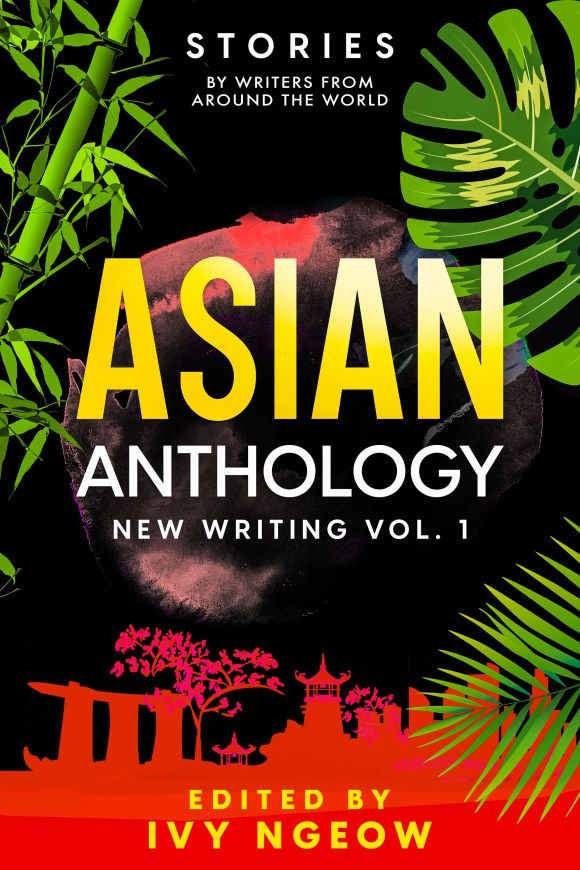





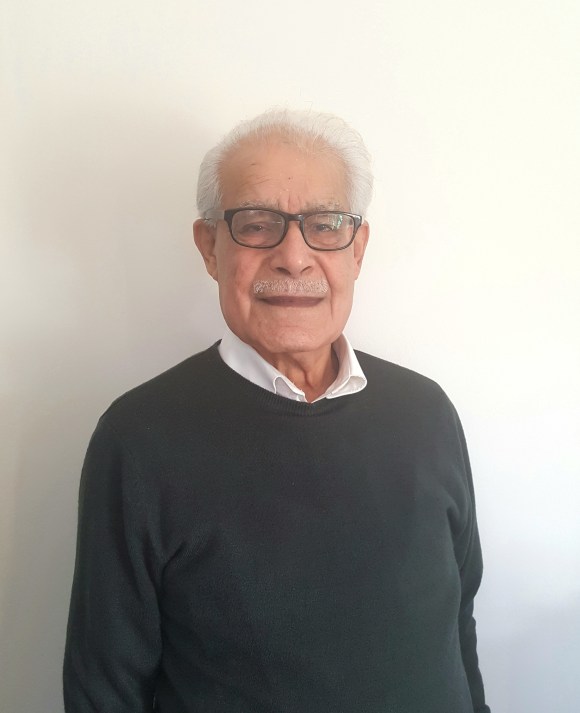




 Borderless