Categories
Poetry

Whir in the Orbit

By  K.S. Subramanian

WHIR IN THE ORBIT  

The fans' blades are still. 
They sense they will swing
only when I want to warm up,
be ready to set about my day.

When still they look like Yogis,
In evanescent reverie, 
unblemished lotuses in the pond,
 
Untroubled or undismayed by
the coagulating dust on their frame,                                                     
Any more than shrivelled leaves 
Eviscerate the lotus in the pond. 
Time breathes on them,                                                     
leaves no moss on their being.

The day comes alive only 
when they set on their toes. 
Else they are as just vivacious 
as the whir in the orbit. 

 K.S.Subramanian, a retired Senior Asst. Editor from The Hindu, has published two volumes of poetry titled Ragpickers and Treading on Gnarled Sand through the Writers Workshop, Kolkata, India.   His poem “Dreams” won the cash award in Asian Age, a daily published from New Delhi. His essays and blogs can be found under his name in http://www.boloji.com.

.

PLEASE NOTE: ARTICLES CAN ONLY BE REPRODUCED IN OTHER SITES WITH DUE ACKNOWLEDGEMENT TO BORDERLESS JOURNAL

Click here to access the Borderless anthology, Monalisa No Longer Smiles

Click here to access Monalisa No Longer Smiles on Kindle Amazon International

Categories
Slices from Life

‘I am in a New York state of mind’

Narrative and photographs by Ravi Shankar

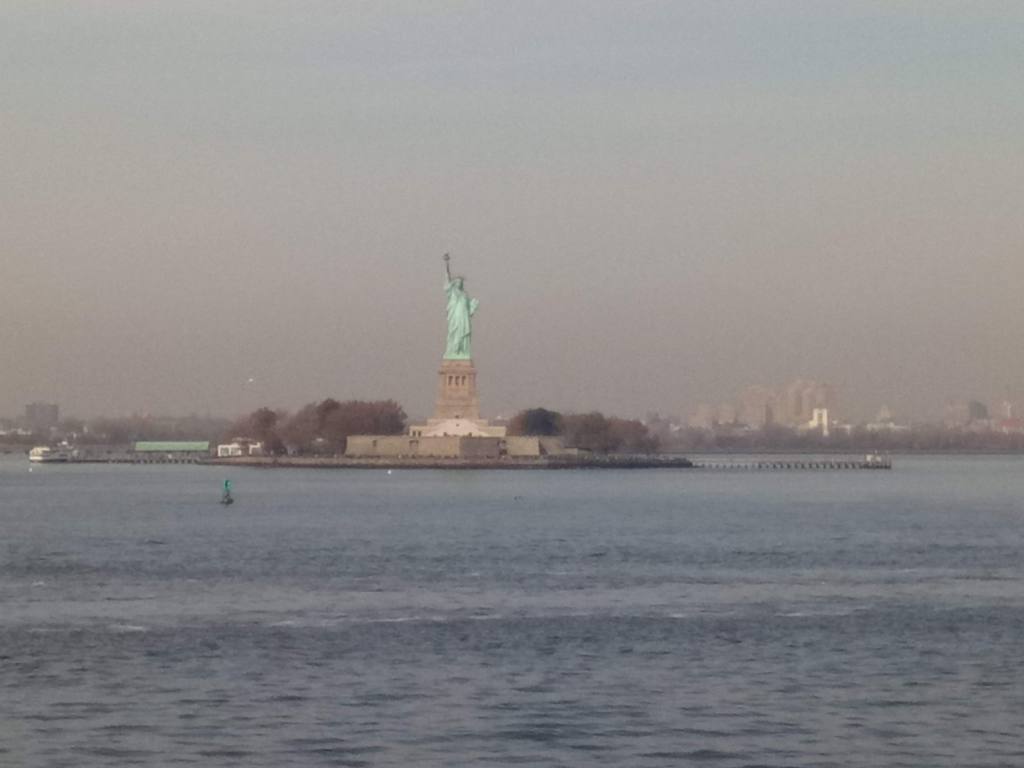
New York Skyline from a ferry

The new Oculus transportation hub was spectacular! Spacious, roomy, bright, and inviting. A vision in white. The building was designed by the Spanish architect, Santiago Calatrava and consists of interlocking ribs that meet high above the ground. I was visiting the One World Trade Center and had taken the New York metro to the station.

One World Trade Centre

Built on the site of the twin towers, it is the tallest building in the western hemisphere. The height is 1776 feet, a reference to the year of American independence. The One World observatory is right at the top (100 to 102nd floors). The elevator ride to the observatory was fast. The history of New York is shown on the elevator panels during the 47-second ride to the hundred and second floor. The view of the New York skyline from the observatory was spectacular. The observatory has a lot to offer but most extra attractions are charged.

New York is infamous for even charging passengers to use the baggage trolleys at JFK airport. This is a service that is free in most of the world and something I could never get used to. The 22-story Flatiron building was the first skyscraper completed in 1903. Many iconic New York skyscrapers were seen, and their history was explained. The view down to the street level projected to the floor in the Skyportal was scary. City Pulse provided an opportunity to interact with the city ambassadors (locals with an intimate knowledge of the city). The collection of high-definition monitors provided me with an intriguing view of New York.  

I enjoyed taking the New York (NY) buses. There are different types of buses; most allow for easy wheelchair access. The next bus stop is displayed on the screen of the bus. Bus stops also have screens showing when the next bus is expected. Jamaica, where I was staying, had articulated buses. I did go on some long walks in the city. The weather was getting colder but was still tolerable. Cold is something you must factor in when visiting New York in the winter. The trees become bare ghosts stripped off their leaves. With the advent of spring, the dormant trees wake up. Coming from tropical climes a tree totally devoid of leaves, fruits, and flowers was a unique sight. 

The Baisley Pond Park was very near where I was staying. The 109-acre park includes the 30-acre Baisley Pond in the centre. Most trees were already bare. The park is a popular venue for sporting events and get-togethers in the summer. The weather greatly influences people’s lives in the northern climes. I enjoyed taking long walks in the park. Jamaica had people from all regions. There were African Americans, Hispanics, South Asians, East Asians, Africans, and others. I was staying in an AirBnB (a house owned by an African American gentleman named Kevin). The room was in the basement of Kevin’s house. We eventually became good friends. There were a few eating places located around Kevin’s house.

I decided to spend a few days in the quietest borough in New York, Staten Island. NY has five boroughs – the Bronx, Brooklyn, Manhattan, Queens, and Staten Island. Staten Island is the southernmost and for a long time was predominantly agricultural. Staten Island is not commonly visited by tourists. I took the bright, orange-coloured Staten Island ferry. The travel time is about twenty minutes. The ferry travels close to the Statue of Liberty, a gift from

Statue of Liberty from the ferry

the French people to the people of the United States. I took a bus from the ferry terminal to the house where I would be staying. The area had a large Hispanic population and I enjoyed food from the Dominican Republic and Mexico. The room was nice and warm, and the bay windows provided a good view of the street.

The Staten Island Zoo is an eight-acre urban zoo open throughout the year. The zoo is also called Barrett Park and is located on the estate grounds of a US war hero, Colonel Harden. The zoo is run by the Staten Island zoological society founded in 1933. The zoo holds frequent educational sessions. Winter was starting and many animals had been shifted to warmer enclosures. A lot of effort had been expended on recreating the native environment of most animals. Zoologists now know a lot about different animals and their habitats. I had seen similar effort being put in at the zoos in Taiping.

One of the highlights of my visit was the afternoon spent at Richmond Old Town. The site was for more than two centuries the seat of the Staten Island government. The government was shifted to the northern part of the island after the island became one of the boroughs of New York. The former county clerk’s office serves as a historic museum. I enjoyed stepping back in time. The visitor’s centre is in the third county courthouse. There are several historic structures.

There were individuals dressed as historical characters enacting different roles and speaking the lingua of the past. One of the highlights of the afternoon was the guided tour of different properties led by the museum curator. New York was originally settled by the Dutch and called New Amsterdam. The houses were built in the old Dutch style. People lived much more simply in those days and closer to the land. I saw straw beddings that attracted vermin easily and had to be disposed of periodically. I was reminded of a night spent sleeping on a straw mattress in a Nepalese trekking lodge when I was devoured alive by bed bugs. Bed bugs are a resilient species and I read they were making a comeback even in upmarket hotels in developed nations. The massive brick ovens used to bake bread were intriguing as was the old, solid furniture.

The afternoon was getting cloudy and windy as I took the bus back to my room. The next morning, I took the ferry back to Queens. Soon it was time for me to fly back. Terminal 4 at JFK airport can be very crowded. Luckily due to my frequent flier status with Kuwait airways, I had access to the Etihad lounge. Dusk was slowly settling on the airport and the sleek modern control tower was being lit in various fluorescent colours. This was an interesting visit to the Big Apple. NY is sprawling, rough, busy, rushed, kind, and individualistic.

People come to chase their dreams from all over the world. I was reminded of the famous song by Billy Joel and Tony Bennett titled ‘Í am in a New York state of mind’ as the plane gathered height and slowly left the lights of the big apple far, far below!     

.

Dr. P Ravi Shankar is a faculty member at the IMU Centre for Education (ICE), International Medical University, Kuala Lumpur, Malaysia. He enjoys traveling and is a creative writer and photographer.

.

PLEASE NOTE: ARTICLES CAN ONLY BE REPRODUCED IN OTHER SITES WITH DUE ACKNOWLEDGEMENT TO BORDERLESS JOURNAL

Click here to access the Borderless anthology, Monalisa No Longer Smiles

Categories
Poetry

The Party is Over

Poetry By Michael R Burch

Courtesy: Creative Commons
THE CENTURY’S WAKE
(Lines written on New Year’s Day at the close of the 20th century and introduction of the 21st century)

Take me home. The party is over,
the century passed—no time for a lover.
And my heart grew heavy
as the fireworks hissed through the dark
over Central Park,
past high-towering spires to some backwoods levee,

hurtling banner-hung docks to the torchlit seas.
And my heart grew heavy; 
I felt its disease—
its apathy,
wanting the bright, rhapsodic display
to last more than a single day.

If decay was its rite,
now it has learned to long
for something with more intensity,
more gaudy passion, more song—
like the huddled gay masses,
the wildly-cheering throng.

You ask me—
“How can this be?”
A little more flair,
or perhaps just a little more clarity.
I leave her tonight to the century’s wake;
she disappoints me.

(Originally published by The Centrifugal Eye)

PREMONITION
Now the evening has come to a close and the party is over ...
we stand in the doorway and watch as they go—
each stranger, each acquaintance, each casual lover.  

They walk to their cars and they laugh as they go,
though we know their forced laughter’s the wine ...
then they pause at the road where the dark asphalt flows 
endlessly on toward Zion ...

and they kiss one another as though they were friends,
and they promise to meet again “soon” ...
but the rivers of Jordan roll on without end,
and the mockingbird calls to the moon ...

and the katydids climb up the cropped hanging vines,
and the crickets chirp on out of tune ...
and their shadows, defined by the cryptic starlight,
seem spirits torn loose from their tombs.

And we know their brief lives are just eddies in time,
that their hearts are unreadable runes
to be wiped clean, like slate, by the dark hand of Fate
when their corpses lie ravaged and ruined ...

You take my clenched fist and you give it a kiss
as though it were something you loved,
and the tears fill your eyes, brimming with the soft light
of the stars winking sagely above ...

Then you whisper, "It's time that we went back inside;
if you'd like, we can sit and just talk for a while."
And the hope in your eyes burns too deep, so I lie
and I say, "Yes, I would," to your small, troubled smile.

Michael R. Burch’s poems have been published by hundreds of literary journals, taught in high schools and colleges, translated into fourteen languages, incorporated into three plays and two operas, and set to music by seventeen composers.

PLEASE NOTE: ARTICLES CAN ONLY BE REPRODUCED IN OTHER SITES WITH DUE ACKNOWLEDGEMENT TO BORDERLESS JOURNAL

Click here to access the Borderless anthology, Monalisa No Longer Smiles

Categories
Review

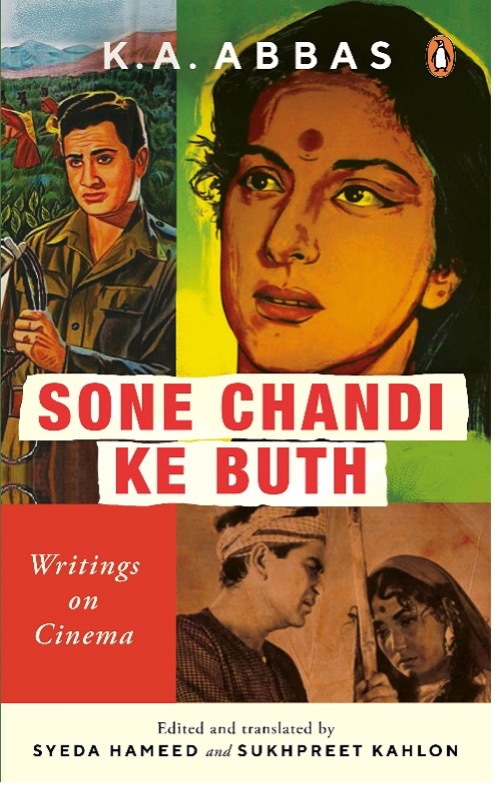
Writings on Cinema by KA Abbas

Book review by Gracy Samjetsabam

Title: Sone Chandi Ke Buth: Writings on Cinema

Author: K. A. Abbas

Editors and Translators: Syeda Hameed and Sukhpreet Kahlon

Publisher: Penguin Vintage

Khwaja Ahmed Abbas’s[1] Sone Chandi Ke Buth:[2]Writings on Cinema (2022), edited and translated by Syed Hameed and Sukhpreet Kahlon is truly, “an insider’s view of the ‘Sitaron Ki Duniya’[3]”.

The book is a constellation of Bollywood stories about moviemaking, film personalities, incidents, and fateful moments straight from the horse’s mouth. The book is divided into four sections – Funn Aur Funkaar[4], Kahaaniyaan[5], Articles, and Bombay Chronicle Articles. Abbas was often addressed as the “Human Dynamo” by his closest friends for his spontaneity and dexterity in churning out forms of expression such as short stories, novels, dramas, and films, which manifested whenever he pronounced, “Mujhe Kuch Kehna Hai[6]. He embodies a different time and sensibility, making the man and his work a treasure from the bygone days. Professor and scholar Ira Bhaskar aptly describes, “K. A. Abbas represents a crucial figure of the Indian modern who believed that critics and artists had a responsibility towards society.”      

K.A. Abbas, who was adept in Urdu, Hindi and English made the most of his multilingual skills to contribute thousands of articles on popular media including the longest-running weekly column, 46 years as a contributor in Blitz, writing for the Bombay Chronicle, 40 movies, short stories, and 74 books in 73 years. Sone Chandi ke Buth (2022) is Abbas’s last book on filmi duniya, the world of movies. The book throws a glimpse into Abbas’s journey from the young and aspiring journalist who wrote paltry salaried publicity blurbs to a scriptwriter, filmmaker and film critic of great repute  who made a tradition of his own offering “love” for the art and to everyone who lovingly called him “KAA”. Bollywood’s Big B, the Mahanayak[7], the megastar fondly admires Abbas’s “unrelenting spirit” and recalls, “K. A. Abbas gave me my first film, Saat Hindustani. I call him Mamujan.”

Syeda Hameed and Sukhpreet Kahlon labelled Sone Chandi ke Buth (2022) as “adhbudh[8]”, for the book is a testimony of the contribution of the man and his craftmanship. Coming from a family of poets and writers, Abbas walked along with the stars of the industries in its golden and the silver eras and yet was a man who could make jokes of himself, give sincere criticism on the quality of an artist’s work or the movie, speak of Bollywood as a unifying factor of pluralism in India, and suggest the importance of understanding truth for a greater cause. Intelligently and humorously, the book opens a window to fascinating instances and anecdotes of his life experiences and his encounters with the people who made history in the world of movies in India via Bollywood that were crucial to the industry or the personalities. With each turn of the pages, the narrative unravels interesting stories and junctures like how in writing about V Shantaram, whom he calls “Sadabahar” or evergreen, he goes on to describe his “crashing” into the world of film and becoming a film critic through film publicity, how his editor’s advice at the Bombay Chronicle opened his wings of  liberty to be critical but to do it prudently.

Drawing a fine veil between the reel life and the real life of the people with whom he manoeuvred in the film industry, the book “revealed more than concealed” the human aspects of greatness and flaws of each amidst their roles as heroes, villains or side characters in the movies. The book is filled with incredible stories of towering Bollywood personalities through Abbas’s eyes. Revelations in the section “Funn and Funkaar” captivatingly describe why he referred to V Shantaram as “The Evergreen Filmmaker”, Prithviraj Kapoor as “The Shahenshah[9]”, Raj Kapoor as “An extraordinary Karmayogi[10]”, Dilip Kumar as “Loss of a national treasure”, Meena Kumari as “The Muse of Ghazals”, Balraj Shani as “The People’s Artist”, Amitabh Bachchan as “Himmatwala[11]”, Sahir Ludhianvi as “The Lover and the Beloved”, Rajinder Singh Bedi as “The Guru”, and Satyajit Ray as “Mahapurush[12]”. The section “Kahaaniyan” sheds light on the ironies of the glamour and glitz in the film industry and on special days on the movie sets.

The section on “Articles” presents his thoughts on the relationship of filmmaking with business and its impact on society. Each article is a critical discussion of aspects of a good film, and he strongly opposes scripts that succumb to commercial sensibilities and powerfully voices the need for for “a good story” that “lies at the heart of a good film”. The section “Bombay Chronicles articles” compiles some of the finest articles of his passionate and flourishing days at the Bombay Chronicle in the 1930s as a film journalist. The articles in the concluding section continue to bring forth memorable facets of the world of films in India of the man and his times, and at the same time keep the spirit of enquiry burning in all movie enthusiasts and scholars to reflect on how much has changed over the years. Sone Chandi ke Buth brings into play Abbas, the man, the artiste and his style to showcase what a perfect blend of the head and the heart can do in film making.

If you are looking for a must-have book on Bollywood, filmmaking and movie criticism, then Sone Chandi ke Buth offers you an ample amount of it and more. Timeless memories of photos of the movies: Awara[13] (1951), written by him; Anhonee[14] (1952), a film he made on Nargis’s request; Rahi[15] (1953), a movie based on Mulk Raj Anand’s Two Leaves and a Bud starring Dev Anand and Nalini and Jaywant; Munna (1954), the first songless film of Indian cinema under the Naya Sansar banner; Pardesi [16](1957), the first Indo-Soviet production in a collaborative work of the Naya Sansar banner and Mosfilm Studio; Char Dil Char Rahein [17](1959), Abbas’s first multi-starrer movie; Chaar Shehar Ek Kahani[18] (1968), Abbas’s best-known political documentary; Saat Hindustani [19](1969), a movie on comradeship; and also, personal photos of Abbas’s self,  with his family and on film sets, enhances the aesthetic of the book.

The book has a phenomenally exciting set of stories about the famous and the lesser known faces of the movie industry in India, as people with ordinary life and circumstances amid their successes and failures. The translators and editors — his niece, Padmashri Syeda Hameed, an activist, educationist, writer and a former member of the Planning Commission of India, and Sukhpreet Kahlon, a researcher on cinema studies at the School of Arts and Aesthetics, Jawaharlal Nehru University — need to be thanked for collating these wonderful writings that touch our hearts while forging new bonds and links through the medium of films.

[1] Indian Film Director, 1914-1987

[2] Translates to: Statues of Gold and Silver

[3] World of stars

[4] Fun and Fun makers

[5] Stories

[6] I have to say something

[7] The great actor, refers to Amitabh Bachchan

[8] Amazing

[9] The Emperor

[10] A person who believes the ultimate panacea lies in devotion to work

[11] Courageous

[12] Superman

[13] The Vagabond

[14] The Untoward

[15] Traveler

[16] Foreigner

[17] Four Hearts, Four Paths

[18] Four towns, One story

[19] Seven Hindustanis

.

Gracy Samjetsabam  is a freelance writer and copy editor. Her interest is in Indian English Writings, Comparative Literature, Gender Studies, Culture Studies, and World Literature. 

.

PLEASE NOTE: ARTICLES CAN ONLY BE REPRODUCED IN OTHER SITES WITH DUE ACKNOWLEDGEMENT TO BORDERLESS JOURNAL

Click here to access the Borderless anthology, Monalisa No Longer Smiles
Categories
Poetry

Shadow by Jared Carter

Courtesy: Creative Commons
SHADOW

Oh no, not so, and now you say
          that it could not
Have possibly occurred that way,
          the merest thought

It could be otherwise must be
          dismissed. It was
Illusion of some sort -- to see
          the moment pause,

That face appear. You knew how far
          she'd come, but when
You failed to speak, the way things are
          flowed back again.

Jared Carter’s most recent collection, The Land Itself, is from Monongahela Books in West Virginia. His Darkened Rooms of Summer: New and Selected Poems, with an introduction by Ted Kooser, was published by the University of Nebraska Press in 2014. A recipient of several literary awards and fellowships, Carter is from the state of Indiana in the U.S.

.

PLEASE NOTE: ARTICLES CAN ONLY BE REPRODUCED IN OTHER SITES WITH DUE ACKNOWLEDGEMENT TO BORDERLESS JOURNAL

Click here to access the Borderless anthology, Monalisa No Longer Smiles

Categories
Greetings from Borderless

Happy New Year

Art by Sohana Manzoor

As the old year winds up, we wait for the new year in anticipation… We wait to see how the new born blossoms as each year takes a unique form. This year, while we strengthened the population with vaccines, other kind of politics set in, which finally found fruition in a war that has perhaps been one of the saddest events of human history — people made homeless, towns erased, lives lost, nature polluted with gunpowder and shreds of machinery along with the ultimate threat of nuclear weapons erupting every now and then. What could possibly give hope amidst the darkness of the receding year with price hikes, the threat of looming hunger, joblessness, more conflicts and fear?

The fact that we have survived for more than 200,000 years in our current form is heartening. That we have lived through wars, plagues and disasters without being erased out of existence only highlights the resilience of our species to adapt to all kinds of contingencies. Perhaps, with the current crises, we will move towards new world orders…perhaps, we will find hope in creating and evolving new ways of living in consonance with nature and more by our need than greed.

With that hope in heart, we wish you a wonderful start to the New Year with a few interesting pieces from our journal, including a highly entertaining piece by Suzanne Kamata on how the Japanese traditionally, literally make a clean start each New Year and Michael Burch’s fun poems and a translation of Tagore’s adaptation of the traditional year-end Auld Lang Syne. We have sprinkled more humour in poetry by Rhys Hughes and Santosh Bakaya and, in prose, by Tagore, translated by Somdatta Mandal, Ruskin Bond and Devraj Singh Kalsi. Laughter at the this juncture will hopefully give us a year with more shades of happiness.

Poetry 

Tagore’s Purano Sei Diner Kotha or ‘Can old days ever be forgot?’ based on Robert Burn’s Auld Lang Syne, translated from Bengali by Mitali Chakravarty. Click here to read.

Fun Poems for the New Year by Michael R Burch… Click here to read.

Kissing Frogs by Rhys Hughes… Click here to read.

The Recliner by Santosh Bakaya… Click here to read.

Prose

Travels & Holidays: Humour from Rabindranath: Translated from the original Bengali by Somdatta Mandal, these are Tagore’s essays and letters laced with humour. Click here to read.

A short tale from Friends in Wild Places: Birds, Beasts and Other Companions by Ruskin Bond. Click here to read.

In A Clean Start, Suzanne Kamata tells us how the Japanese usher in a new year. Click here to read.

In The New Year’s Boon, Devraj Singh gives a glimpse into the projection of a new normal created by God. Click here to read.

Art by Sohana Manzoor

Click here to access the Borderless anthology, Monalisa No Longer Smiles

Book Talks

Categories
Greetings from Borderless

Carolling Christmas

Painting by Sybil Pretious

Christmas is a time of loving and giving — values which cannot be reiterated often enough. It is a time when people meet friends and relatives, a tradition that had been hampered by the pandemic and one that will hopefully be resumed with gusto this year.

Many celebrate the season but not the religiosity of the festival as they are from cultures that give precedence to other religious events — Eid, Hanukkah, Durga Puja or Diwali — to name a few. But the spirit of the season affects us all. As the year draws towards its close, Christmas becomes a time for reaffirmation of the human spirit across the globe. We celebrate it everywhere and in any season — in summer, winter or in tropical climes where the weather stays the same round the year. Perhaps… because it is the last major event of the ripened year…

Wishing you joy, we invite you to savour of our fare — including poetry, not just describing Christmas but of compassion. We have humour in prose, essays on great writings that have survived more than a century, and a translation of a poem that was published a hundred years ago.

Poetry

Christmas Poem: A fresh fun poem by Rhys Hughes… Click here to read.

Poems by Sukrita Paul Kumar: A tribute to our fellow humans in war-torn Ukraine… Click here to read.

Prose

My Christmas Eve “Alone” : Erwin Coomb has an unusual adventure on Christmas Eve… Is it friendly or spooky? Click here to read.

Yule Do Nicely: Hilarious short stories from Rhys Hughes‘ funny Christmas collection. Click here to read.

Completing a Century

Rebel or ‘Bidrohi’: Nazrul’s signature poem, ‘Bidrohi‘, completed one hundred years of publication, translated by Professor Fakrul Alam. Click here to read.

T.S Eliot’s The Waste Land: Finding Hope in Darkness: Dan Meloche muses on the century-old poem and its current relevance. Click here to read.

Me and James Joyce in Trieste: Mike Smith makes a trip to Trieste, where the hundred year-old Ulysees was written. Click here to read.

Ivory Ivy & Stephen Dedalus: Paul Mirabile explores James Joyce’s Stephen Dedalus and his passion for words keeping in mind the hundred year old Ulysees & the even older, A Portrait of the Artists as a Young Man. Click here to read.

Courtesy: Creative Commons

Click here to access the Borderless anthology, Monalisa No Longer Smiles

Categories
Tribute

Celebrating Freedom

Painting by Sohana Manzoor

The right to exist with freedom to choose is threatened when dictatorial regimes try to erase a culture or linguistic group as we can see in the current conflict that rages between Russia and Ukraine. In 1971, Bangladesh came into existence over a similar issue. The colonials had divided the Indian subcontinent on the basis of religion — not culture. Before this division, Bengal was a whole. In 1905, Tagore had marched against the British directive to divide Bengal and Lord Curzon, the Viceroy of India. In 1911, Bengal was reunited to be slashed again in 1947 and made a part of Pakistan with Urdu as its national language. Bangladesh fought a war to find the right to exist as an entity outside of Pakistan — adopting their favoured language Bangla. Throwing off the yoke of Urdu, Bangladesh came to its own. On 16th December, the battle against cultural hegemony was won with warplanes drawing to a halt.

Celebrating freedom from oppression, we have an article by Fakrul Alam giving the historical background of the struggle. A musing from across the border about the 1971 refugee exodus into India has been written by Ratnottama Sengupta. Asad Latif muses on the need to identify with a culture. We have translations of poetry by Nazrul to add a dash of seasoning.

Poetry

Translations of Nazrul Islam, the rebel poet of Bangladesh… Click here to read.

Prose

The Birth of Bangladesh & the University of Dhaka: Professor Fakrul Alam takes us through the Partitions of Bengal which ultimately led to the creation of Bangladesh, with focus on the role of Dhaka University. Click here to read.

Joy Bangla: Memories of 1971: Ratnottama Sengupta recaptures a time when as a teenager she witnessed a war that was fought to retain a culture. Click here to read.

Epaar Bangla, Opaar Bangla:  Bengals of the Mind: Asad Latif explores the need of a person to exist as belonging to a particular cultural group, in this case Bengal. Click here to read. 

Categories
Contents

Borderless, December 2022

Art by Sohana Manzoor

Editorial

It’s Only Hope… Click here to read.

Conversations

Shantanu Ray Chaudhari converses with writer Gajra Kottary, a well-known writer of Indian TV series, novels and stories. Click here to read.

A discussion on Samaresh Bose’s In Search of the Pitcher of Nectar, a book that takes us to the heart of the Kumbh Mela, a festival recognised by the UNESCO as an Intangible Cultural Heritage, with the translator, Nirmal Kanti Bhattacharjee. Click here to read.

Translations

Nazrul’s Why Provide Thorns has been translated by Professor Fakrul Alam. Click here to read.

Mercy, a story be P. F. Mathews, has been translated from Malayalam by Ram Anantharaman. Click here to read.

Even A Simurgh Cannot Change Destiny, a Balochi folktale translated and retold by Fazal Baloch. Click here to read.

Confessions, a poem written by and translated from Korean by Ihlwha Choi. Click here to read.

The Sun on the First Day, a translation of Tagore’s Prothom Diner Shurjo by Mitali Chakravarty. Click here to read.

Pandies’ Corner

Songs of Freedom: Vikalangta or Disability is an autobiographical narrative by Kajal, translated from Hindustani by Janees. These narrations highlight the ongoing struggle against debilitating rigid boundaries drawn by societal norms, with the support from organisations like Shaktishalini and Pandies. Click here to read.

Poetry

Click on the names to read

Jared Carter, Sukrita Paul Kumar, Rhys Hughes, Asad Latif, Luis Cuauhtémoc Berriozábal, Santosh Bakaya, Phil Wood, Sharanya B, George Freek, Saibal Chatterjee, Jonathan Chan, Sutputra Radheye, Shambhu Nath Banerjee, Michael Burch

Poets, Poetry & Rhys Hughes

In Some Differences Between Wales and India, Rhys Hughes makes some hilarious comparisons. Click here to read.

Musings/ Slices from Life

Near-Life Experiences: Hiking in New Zealand

Keith Lyons escapes city life to find his happy place while hiking in New Zealand. Click here to read.

The Seven Grandfather Teachings

Saeed Ibrahim introduces us to Native Indian lore from Canada and shows its relevance in the current times. Click here to read.

Dismasted in Bass Strait

Meredith Stephens takes us for a sailing adventure with photographs in the Southern Hemisphere. Click here to read.

Musings of a Copywriter

In Of Mice & Men, Devraj Singh Kalsi talks of his encounters with rats. Click here to read.

Notes from Japan

In A Clean Start, Suzanne Kamata tells us how the Japanese usher in a new year. Click here to read.

Stories

Annapurna Bhavan

Lakshmi Kannan closes class divides in Chennai over a meal. Click here to read.

Two Faces of a Mirror

Tulip Chowdhury gives us a story set in a Bangladeshi village. Click here to read.

The Slip

Sushma R Doshi takes a look at the pandemic against an Indian middle-class set up. Click here to read.

Till Life Do Us Part

Devraj Singh Kalsi explores a strange new trend. Click here to read.

Essays

Orangutans & a School at Sarawak

Christina Yin, a conservationist, travels to Borneo in an attempt to create awareness for conserving the Orangutan. Click here to read.

Taiping of the Raj Era

Ravi Shankar explores Taiping in Malaysia with a camera and words. Click here to read.

Ivory Ivy & Stephen Dedalus

Paul Mirabile explores James Joyce’s Stephen Dedalus and his passion for words keeping in mind the hundred year old Ulysees & the even older, A Portrait of the Artists as a Young Man. Click here to read.

Book Excerpts

An excerpt from Radha Chakravarty’s translation of Tagore’s Farewell Song. Click here to read.

An excerpt or two short narratives from Rhys Hughes’ Yule Do Nicley. Click here to read.

Book Reviews

Somdatta Mandal reviews The Shaping of Modern Calcutta: The Lottery Committee Years, 1817 – 1830 by Ranabir Ray Chaudhury. Click here to read.

Rakhi Dalal reviews Freny Manecksha’s Flaming Forest, Wounded Valley: Stories from Bastar and Kashmir. Click here to read.

Basudhara Roy reviews Manoranjan Byapari’s How I Became a Writer: An Autobiography of a Dalit. Click here to read.

Bhaskar Parichha reviews In Search of the Divine: Living Histories of Sufism in India by Rana Safvi. Click here to read.

.

Click here to access the Borderless anthology, Monalisa No Longer Smiles

You are all welcome to the book talks of our first anthology

Categories
Editorial

Its Only Hope…

Painting by Sybil Pretious

New year, like a newborn, starts with hope.

The next year will do the same – we will all celebrate with Auld Lang Syne and look forward to a resolution of conflicts that reared a frightening face in 2022 and 2021. Perhaps, this time, if we have learnt from history, there will not be any annihilation but only a movement towards resolution. We have more or less tackled the pandemic and are regaining health despite the setbacks and disputes. There could be more outbreaks but unlike in the past, this time we are geared for it. That a third World War did not break out despite provocation and varied opinions, makes me feel we have really learnt from history.

That sounds almost like the voice of hope. This year was a landmark for Borderless Journal. As an online journal, we found a footing in the hardcopy world with our own anthology, Monalisa No Longer Smiles: Writings from Across the World, which had a wonderful e-launch hosted by our very well-established and supportive publisher, Om Books International. And now, it is in Om Book Shops across all of India. It will soon be on Amazon International. We also look forward to more anthologies that will create a dialogue on our values through different themes and maybe, just maybe, some more will agree with the need for a world that unites in clouds of ideas to take us forward to a future filled with love, hope and tolerance.

One of the themes of our journal has been reaching out for voices that speak for people. The eminent film critic and editor, Shantanu Ray Chaudhuri , has shared a conversation with such a person, the famed Gajra Kottary, a well-known writer of Indian TV series, novels and stories. The other conversation is with Nirmal Kanti Bhattajarchee, the translator of Samaresh Bose’s In Search of a Pitcher of Nectar, a book describing the Kumbh-mela, that in 2017 was declared to be an Intangible Cultural Heritage of Humanity by UNESCO. Bhattacharjee tells us how the festival has grown and improved in organisation from the time the author described a stampede that concluded the festivities. Life only gets better moving forward in time, despite events that terrorise with darkness. Facing fear and overcoming it does give a great sense of achievement.

Perhaps, that is what Freny Manecksha felt when she came up with a non-fiction called Flaming Forest, Wounded Valley: Stories from Bastar and Kashmir, which has been reviewed by Rakhi Dalal. Basudhara Roy has also tuned in with a voice that struggled to be heard as she discusses Manoranjan Byapari’s How I Became a Writer: An Autobiography of a Dalit. Somdatta Mandal has reviewed The Shaping of Modern Calcutta: The Lottery Committee Years, 1817 – 1830 by Ranabir Ray Chaudhury, a book that explores how a lottery was used by the colonials to develop the city. Bhaskar Parichha has poured a healing balm on dissensions with his exploration of Rana Safvi’s In Search of the Divine: Living Histories of Sufism in India as he concludes: “Weaving together facts and popular legends, ancient histories and living traditions, this unique treatise running into more than four hundred pages examines core Sufi beliefs and uncovers why they might offer hope for the future.”

In keeping with the festive season is our book excerpt from Rhys Hughes’ funny stories in his Christmas collection, Yule Do Nicely. Radha Chakravarty who brings many greats from Bengal to Anglophone readers shared an excerpt – a discussion on love — from her translation of Tagore’s novel, Farewell Song.

Love for words becomes the subject of Paul Mirabile’s essay on James Joyce’s Stephen Dedalus, where he touches on both A Portrait of the Artist as a young Man and  Ulysees, a novel that completed a century this year. Love for animals, especially orangutans, colours Christina Yin’s essay on conservation efforts in Borneo while Keith Lyons finds peace and an overwhelming sense of well-being during a hike in New Zealand. Ravi Shankar takes us to the historical town of Taiping in Malaysia as Meredith Stephens shares more sailing adventures in the Southern hemisphere, where it is summer. Saeed Ibrahim instils the seasonal goodwill with native Indian lores from Canada and Suzanne Kamata tells us how the Japanese usher in the New Year with a semi-humorous undertone.

Humour in non-fiction is brought in by Devraj Singh Kalsi’s ‘Of Mice and Men’ and in poetry by Santosh Bakaya. Laughter is stretched further by the inimitable Rhys Hughes in his poetry and column, where he reflects on his experiences in India and Wales. We have exquisite poetry by Jared Carter, Sukrita Paul Kumar, Asad Latif, Luis Cuauhtémoc Berriozábal, Michael R Burch, Sutputra Radheye, George Freek, Jonathan Chan and many more. Short stories by Lakshmi Kannan, Devraj Singh Kalsi, Tulip Chowdhury and Sushma R Doshi lace narratives with love, humour and a wry look at life as it is. The most amazing story comes from Kajal who pours out the story of her own battle in ‘Vikalangta or Disability‘ in Pandies’ Corner, translated from Hindustani by Janees.

Also touching and yet almost embracing the school of Absurd is PF Mathew’s story, ‘Mercy‘, translated from Malayalam by Ram Anantharaman. Fazal Baloch has brought us a Balochi folktale and Ihlwha Choi has translated his own poem from Korean to English. One of Tagore’s last poems, Prothom Diner Shurjo, translated as ‘The Sun on the First Day’ is short but philosophical and gives us a glimpse into his inner world. Professor Fakrul Alam shares with us the lyrics of a Nazrul song which is deeply spiritual by translating it into English from Bengali.

A huge thanks to all our contributors and readers, to the fabulous Borderless team without who the journal would be lost. Sohana Manzoor’s wonderful artwork continues to capture the mood of the season. Thanks to Sybil Pretious for her lovely painting. Please pause by our contents’ page to find what has not been covered in this note.

We wish you all a wonderful festive season.

Season’s Greetings from all of us at Borderless Journal.

Cheers!

Mitali Chakravarty

borderlessjournal.com

.

Click here to access the Borderless anthology, Monalisa No Longer Smiles